חדשות בתחום סוכני ה-AI לארגונים: מגמות ופלטפורמות בשוק לשנת 2026

סיכום קצר: בשנת 2026, סוכני בינה מלאכותית (AI) ארגוניים יעברו משלב של כלים ניסיוניים למערכות ייצור, כאשר חברות טכנולוגיה מובילות כמו NVIDIA, Oracle ו-OpenAI ישיקו פלטפורמות ברמה ארגונית. על פי ממצאי מקנזי שפורסמו במרץ 2026, כ-10% מהפונקציות הארגוניות משתמשות כיום בסוכני AI, אם כי קצב האימוץ משקף את דפוסי הצמיחה המוקדמים של מחשוב הענן. יוזמות התקנים הפדרליות של NIST קובעות מסגרות ממשל, בעוד שמערכות AI אוטונומיות עוברות מ"טייסי משנה" מסייעים לסוכנים תפעוליים אוטונומיים לחלוטין.

תחום ה-AI הארגוני הגיע זה עתה לנקודת מפנה. לאחר שנים שבהן עוזרי AI ו"טייסים משניים" סייעו בביצוע משימות נקודתיות, סוכנים אוטונומיים המסוגלים לבצע תהליכי עבודה מורכבים ללא התערבות אנושית נכנסים סוף סוף לסביבות הייצור.

אבל הנה העניין: האימוץ עדיין מרוכז. רוב הארגונים עדיין מנסים להבין היכן יש לשלב את הסוכנים, כיצד צריכה להיראות מסגרת הניהול, והאם התשתית מסוגלת לתמוך במערכות אלה בקנה מידה נרחב.

בואו נבחן מה באמת קורה כרגע בתחום הסוכנים המונעים על ידי בינה מלאכותית בארגונים, בהתבסס על נתונים עדכניים והשקות פלטפורמות מצד השחקנים הגדולים ביותר בענף.

הטמעה ארגונית כיום: נתוני מקנזי

על פי ממצאי מקנזי שפורסמו במרץ 2026, כ-10% מתפקידי הארגון משתמשים כיום בסוכני בינה מלאכותית. אמנם אין מדובר בחדירה נרחבת, אך מדובר בהישג משמעותי אם לוקחים בחשבון את המצב שבו הייתה הטכנולוגיה הזו לפני 18 חודשים בלבד.

עקומת האימוץ משקפת את מסלול ההתפתחות המוקדם של מחשוב הענן. זוכרים את שנת 2010? על פי נתוני התעשייה שציטטה חברת מקנזי, AWS ייצרה באותה שנה הכנסות של 1.45 מיליארד דולר בלבד. Azure רק הושקה. Google App Engine הייתה עדיין ניסוי של מפתחים.

אם נדלג קדימה לשנת 2025, נראה שתשתית הענן הפכה לסטנדרט המוביל בפעילות הארגונית. אם הבינה המלאכותית הסוכנתית תלך באותו נתיב — והיסודות הטכניים מצביעים על כך — נתוני האימוץ הנוכחיים מהווים רק את נקודת ההתחלה, ולא את התקרה.

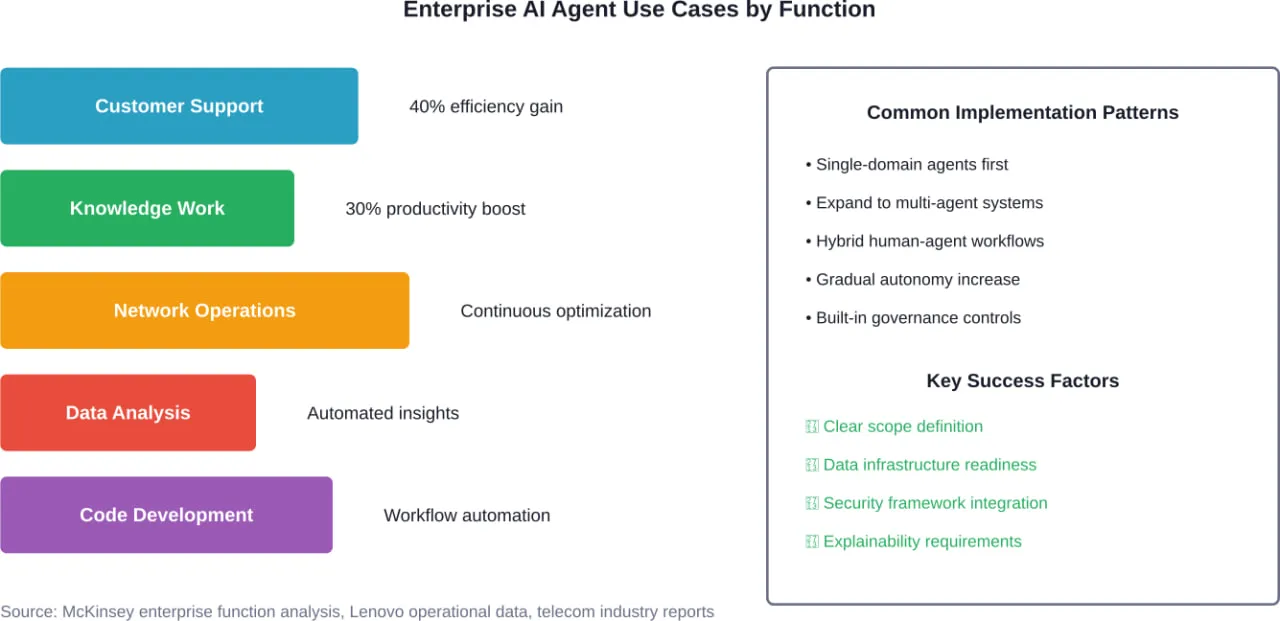
בואו נדבר בכנות: על פי ניתוח תפעולי של Lenovo, ארגונים מדווחים על שיפור בפריון של עד 301% בעבודת ידע ועל עלייה ביעילות של עד 401% בקרב צוותי התמיכה והתפעול. אלה אינם שיפורים שוליים. מדובר במדדים שמאלצים את מנהלי הכספים להקדיש להם תשומת לב.

השקות פלטפורמות מרכזיות שיעצבו את שנת 2026

שלוש פלטפורמות סוכנים ארגוניות משמעותיות הושקו או הורחבו בתחילת 2026, כשכל אחת מהן נוקטת בגישה שונה לפריסת בינה מלאכותית אוטונומית.

ערכת הכלים של NVIDIA Agent

NVIDIA הכריזה על ערכת הכלים Agent Toolkit ב-16 במרץ 2026, והציגה אותה כפלטפורמת פיתוח פתוחה לבניית והפעלת סוכני בינה מלאכותית בסביבות ארגוניות. ערכת הכלים כוללת את NVIDIA OpenShell, סביבת ריצה בקוד פתוח שנועדה לבניית סוכנים המתפתחים באופן עצמאי, עם בקרות בטיחות ואבטחה משופרות.

ארכיטקטורת AI-Q Blueprint של הפלטפורמה, שנבנתה באמצעות LangChain, משתמשת במודלים מתקדמים לתזמור, תוך הפעלת מודלים פתוחים של NVIDIA Nemotron למשימות מחקר. לפי NVIDIA, גישה היברידית זו יכולה לצמצם את עלויות השאילתות ביותר מ-50%, תוך שמירה על רמת דיוק מהשורה הראשונה.

מערכת ההערכה המובנית מסבירה כיצד נוצרת כל תשובה של הבינה המלאכותית — דבר חיוני בסביבות ארגוניות שבהן תיעוד ביקורת ויכולת הסבר אינם תכונות אופציונליות.

סוכני הארגון הפרואקטיביים של Oracle

הגישה של Oracle משלבת תהליכים מבוססי סוכנים ישירות ב-Oracle Cloud Infrastructure (OCI), באמצעות בונה סוכנים חדש שמבסס מערכות בינה מלאכותית על נתוני הארגון כבר מהשלב הראשוני. הדגש כאן הוא על התאמה אישית ועל מקומיות הנתונים — סוכנים שמבינים את ההקשר הארגוני מכיוון שהם נבנים על גבי מערכות עסקיות קיימות.

הדבר נותן מענה לאחת הדאגות המרכזיות של ארגונים: סוכנים הפועלים ביעילות זקוקים לגישה לנתונים קנייניים, אך הדבר יוצר אתגרים בתחום האבטחה והממשל. ההימור של Oracle הוא שהאינטגרציה המובנית ב-OCI פותרת את הבעיה הזו על ידי שמירה על כל הנתונים בתוך גבולות הענן הקיימים.

פלטפורמת הסוכנים הארגוניים של OpenAI

OpenAI השיקה את פלטפורמת הסוכנים הארגונית שלה, ‘Frontier’, ב-5 בפברואר 2026, והיא מציעה הן את הפלטפורמה הטכנולוגית והן שירותי הנדסת אנוש כדי לסייע לארגונים בפריסת סוכני בינה מלאכותית. הדבר משקף את ההכרה בכך שכלי עבודה בלבד אינם מספיקים כדי להניע אימוץ — למומחיות ביישום יש חשיבות רבה.

על פי דיווחים מחודש ינואר 2026, שרה פריאר, מנהלת הכספים הראשית של OpenAI, אמרה ל-CNBC כי החברה צופה שהיקף הפעילות של לקוחות עסקיים יגדל מ-40% ל-50% מסך הפעילות העסקית עד סוף השנה. שינוי זה מחייב פיתוח מוצרים המותאמים לרוכשים ארגוניים, ולא רק למפתחים פרטיים.

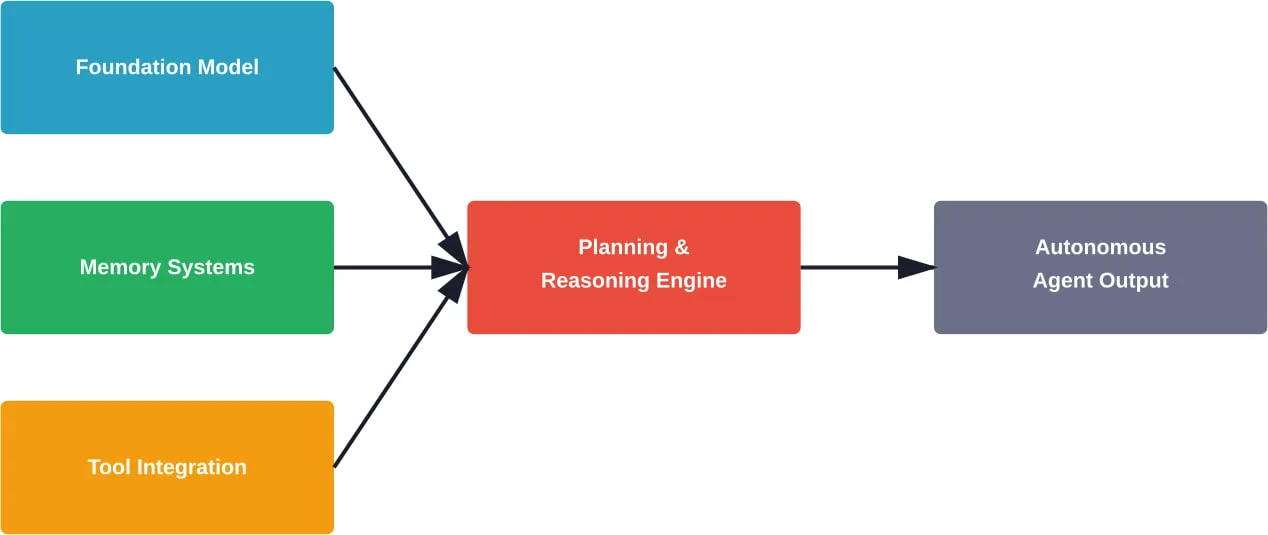
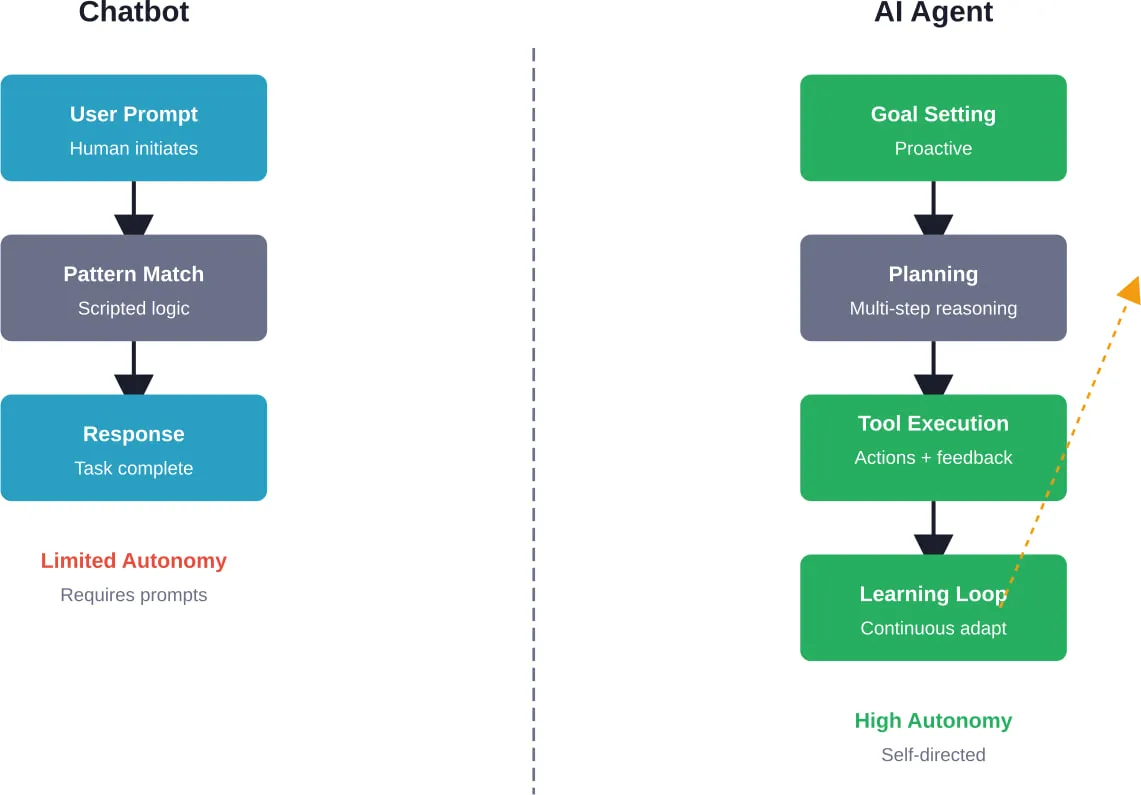
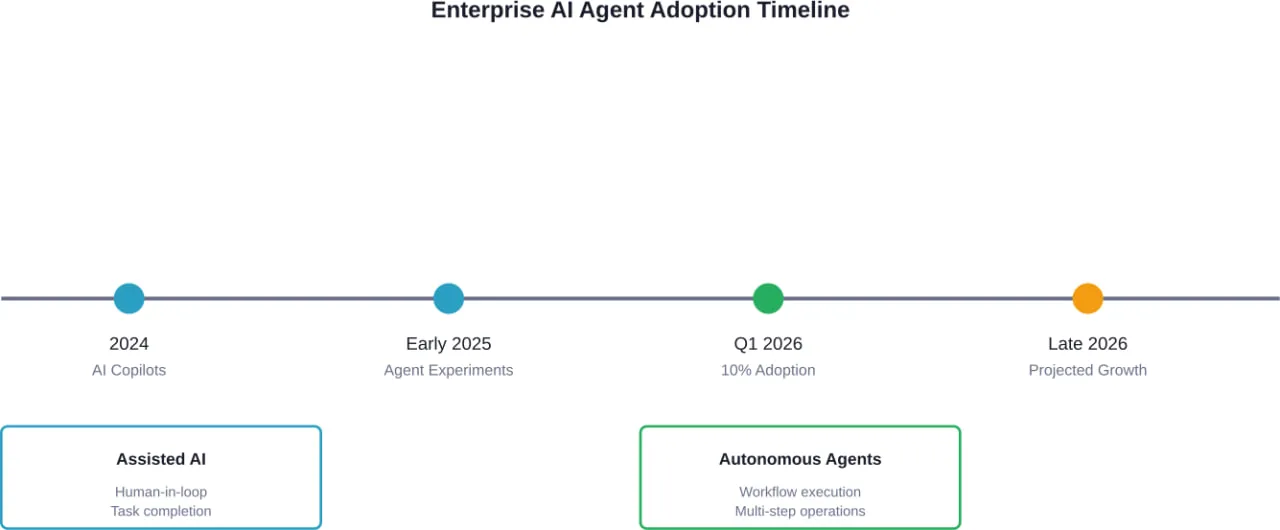
ההתפתחות מעוזרי בינה מלאכותית לסוכנים ארגוניים אוטונומיים, המציגה את אבני הדרך הנוכחיות באימוץ ואת מסלול ההתפתחות הצפוי עד שנת 2026

תקנים פדרליים ומסגרות ממשל

עם התגברות אימוץ הטכנולוגיה בארגונים, גופים רגולטוריים וגופי תקינה קובעים מסגרות ליישום בטוח. המרכז לתקני בינה מלאכותית וחדשנות (CAISI) של המכון הלאומי לתקנים וטכנולוגיה (NIST) השיק ב-17 בפברואר 2026 את "יוזמת תקני סוכני בינה מלאכותית", שמטרתה להבטיח מערכות סוכניות אמינות, תואמות ומאובטחות.

ה-NIST ערך את הסדנה השנייה בנושא פרופיל ה-AI הסייבר של ה-NIST (פורסם ב-23 במרץ 2026), שבמסגרתה נבחן כיצד על ארגונים לשלב בינה מלאכותית בפעילותם תוך צמצום סיכוני אבטחת הסייבר. אין מדובר בהנחיות תיאורטיות, אלא במודלים מעשיים המיועדים למנהלי מערכות מידע (CIO) המבקשים לפרוס מערכות אוטונומיות מבלי ליצור נקודות תורפה חדשות.

הטיוטה של הנחיות ה-NIST שפורסמה ב-16 בדצמבר 2025 מציגה גישה מחודשת לאבטחת סייבר, המותאמת במיוחד לעידן הבינה המלאכותית, מתוך הכרה בכך שמודלים מסורתיים לאבטחה אינם מתייחסים באופן מלא למערכות המקבלות החלטות עצמאיות ומשנות את התנהגותן לאורך זמן.

מבחינה מדינית, הבית הלבן פרסם ב-23 ביולי 2025 צו נשיאותי העוסק ב-AI במערכות הפדרליות, וב-24 ביולי 2025 פורסמו הודעות נלוות. בעוד שחלק מההנחיות התמקדו בשיקולים אידיאולוגיים, המסגרת הרחבה יותר קבעה עקרונות להטמעת AI בסוכנויות ממשלתיות – עקרונות המשפיעים לעתים קרובות על שיטות העבודה המומלצות בארגונים.

אתגר התשתיות

הנה נושא שלא מככב בכותרות, אך חשיבותו עצומה: התשתית. הפעלת סוכנים אוטונומיים בקנה מידה ארגוני דורשת ארכיטקטורות מחשוב שונות בתכלית מאלה המשמשות לטיפול בבקשות API ל"קופילוטים".

מניתוח שערך לאחרונה חברת Lenovo עולה כי מערכות בינה מלאכותית אוטונומיות נדרשות לטפל בפעולות מורכבות ורציפות באופן מקומי, תוך הפגנת ביצועים גבוהים וקיבולת זיכרון גדולה. הפעלת עומסי עבודה של בינה מלאכותית באופן מקומי מפחיתה את התלות בממשקי API חיצוניים, משפרת את זמן התגובה ומעניקה לארגונים שליטה רבה יותר על נתונים רגישים.

זו הסיבה שמערכות כמו תחנות העבודה ThinkStation של Lenovo מיועדות במיוחד לפריסת סוכני בינה מלאכותית מקומיים. זה לא רק עניין של כוח מחשוב גולמי — אלא של קיומה של ארכיטקטורה שתאפשר להפעיל את המערכות הללו במקום שבו נמצאים הנתונים.

מודל פריסהיתרונותאתגריםהכי מתאים ל 
סוכנים מבוססי ענןמדרגיות, עדכונים קלים, עלות ראשונית נמוכה יותרתלות ב-API, זמן השהיה, עלויות שוטפותצוותים מבוזרים, עומסי עבודה משתנים
סוכנים מקומייםבקרת נתונים, זמן תגובה קצר, עלויות צפויותהשקעה בתשתיות, הוצאות תחזוקהענפים מפוקחים, מידע רגיש
ארכיטקטורה היברידיתגמישות, יחס עלות-תועלת מיטבימורכבות, אתגרי אינטגרציהארגונים גדולים בעלי צרכים מגוונים

כיווני מחקר אקדמיים

המחקר האקדמי ממהר להדביק את הקצב של היישום המעשי. סקירות מקיפות רבות שפורסמו ב-arXiv בחודשים האחרונים מנסות לקבוע סיווגים ומסגרות להבנת מערכות בינה מלאכותית בעלות יכולת פעולה עצמית.

סקירה שיטתית אחת מבחינה בין סוכני בינה מלאכותית עצמאיים לבין מערכות אקולוגיות של סוכנים הפועלים בשיתוף פעולה — הבחנה מכרעת, שכן ארגונים עוברים מסוכנים בעלי ייעוד יחיד למערכות שבהן סוכנים רבים מתאמים ביניהם בין תחומי פעילות עסקיים שונים.

מועצת התקנים של IEEE SA אישרה ב-12 בפברואר 2026 תקנים חדשים, בהם תקנים הנוגעים לדרישות היכולות של סוכני בינה מלאכותית במחקר חומרים (P3933), מודלים לשוניים גדולים בתחום האודיו (P3936) והערכת אבטחת IoT (P2994). גופי התקינה למעשה ממהרים לקבוע קווים מנחים בעוד הטכנולוגיה מתפתחת בזמן אמת.

יישומים ספציפיים לתעשייה

חברות תקשורת מטמיעות בינה מלאכותית מבוססת סוכנים לצורך אופטימיזציה של הרשת וניהול מחזור החיים בתשתיות ה-RAN, התמסורת והליבה. המורכבות וההיקף של רשתות ה-5G דחקו את האוטומציה המסורתית אל קצה גבול היכולת שלה — סוכנים המסוגלים לאבחן תקלות, לייעל תצורות ולנהל משאבים באופן אוטונומי הופכים לצורך תפעולי הכרחי, ולא לפרויקטים ניסיוניים.

Alibaba International השיקה את Accio Work, פלטפורמת סוכנים עסקיים המיועדת לפעילות עסקית גלובלית. ההתמקדות בפריסה בינלאומית משקפת את האופן שבו הסוכנים מתמודדים עם המורכבות הכרוכה בפעילות רב-אזורית, המרת מטבעות, עמידה בדרישות הרגולטוריות ולוקליזציה בקנה מידה נרחב.

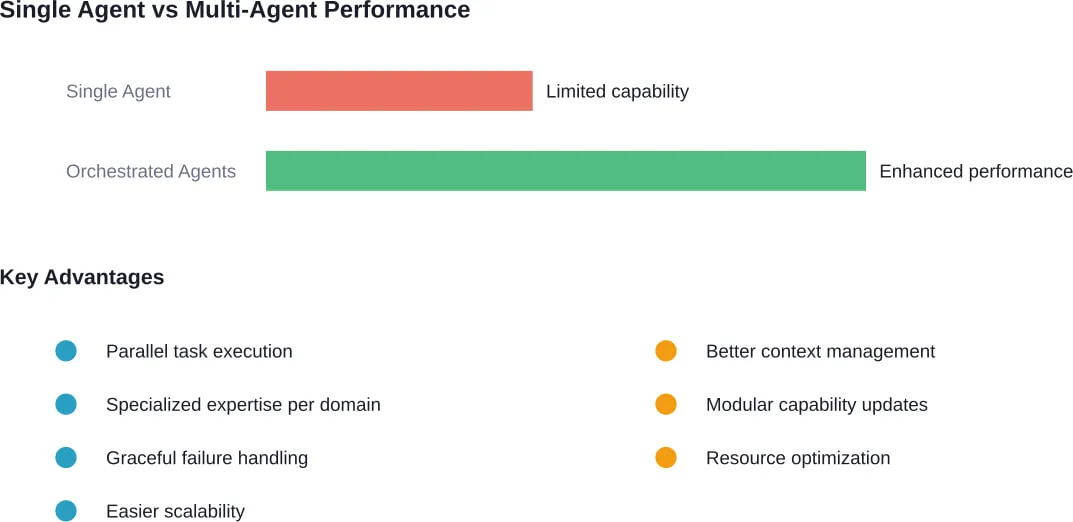
דוגמאות לשימוש בסוכני בינה מלאכותית ארגוניים ברמה הבסיסית, המציגות שיפורים מתועדים ביעילות וגישות יישום נפוצות במגזרים שונים

מה יקרה בהמשך

12 החודשים הקרובים יקבעו אם סוכני ה-AI הארגוניים ימשיכו במסלול הצמיחה המהיר של הענן או שיישארו ברמת אימוץ נישתית. מספר גורמים ישפיעו על התוצאה הזו.

ראשית, יש להביא את מסגרות הניהול לבשלות. ארגונים לא יטמיעו מערכות אוטונומיות באמת בקנה מידה נרחב, כל עוד לא תהיה להם ביטחון במנגנוני הבקרה, במסלולי הביקורת ובמנגנוני הבטיחות. לעבודת התקינה של ה-NIST יש חשיבות רבה, שכן היא מספקת את השפה המשותפת ואת אמות המידה הדרושות לצוותי הרכש.

שנית, על התשתית להוכיח שהיא מסוגלת להתמודד עם פעילות אוטונומית רציפה מבלי ליצור מצבי כשל חדשים. פריסות מוקדמות מהוות למעשה מעבדת ניסויים לדפוסים ארכיטקטוניים, אשר יאשרו או יפסלו גישות ספציפיות.

שלישית, יש להפוך את החזר ההשקעה (ROI) לניתן לחיזוי. עלייה בפריון בשיעור של 30–40% נשמעת מפתה, אך מנהלי הכספים צריכים להבין את עלויות היישום, את ההוצאות התפעוליות השוטפות ואת לוחות הזמנים הריאליים. ספקי הפלטפורמות מתחילים לפרסם מחקרי מקרה הכוללים נתונים מספריים אמיתיים — ושקיפות זו מאיצה את קצב האימוץ.

תראו, הטכנולוגיה כבר מוכנה. הפלטפורמות קיימות. המשתמשים הראשונים מדווחים על הישגים של ממש. מה שעדיין לא ברור הוא באיזו מהירות תרבות הארגון, תהליכי הרכש ומסגרות ניהול הסיכונים יתאימו את עצמם למערכות הפועלות באוטונומיה אמיתית.

להפוך את מגמות ה-AI למערכות שפועלות בפועל

בחדשות בתחום הבינה המלאכותית הארגונית מדגישים לעתים קרובות פלטפורמות ושינויים בשוק, אך רוב הצוותים נתקלים בבעיות מעשיות – חיבור בין כלים, טיפול בנתונים בין מערכות שונות, ושמירה על יציבות המערכת עם הגידול בהיקף השימוש.

A-listware תומכת בחברות בשלב זה באמצעות צוותי פיתוח ייעודיים. הדגש הוא על ה-backend, אינטגרציות ותשתית התומכות ביוזמות בינה מלאכותית, ומסייעות לעסקים לעבור מהחלטות המונעות על ידי טרנדים למערכות הפועלות במסגרת הפעילות השוטפת.

אם אתם עוברים משלב האסטרטגיה של בינה מלאכותית לשלב היישום, צרו קשר רשימת מוצרים א' כדי לתמוך בפיתוח, באינטגרציה ובתמיכה שוטפת במערכת.

שאלות נפוצות

  1. מה ההבדל בין טייסי משנה מבוססי בינה מלאכותית לסוכנים מבוססי בינה מלאכותית?

טייסי משנה מבוססי בינה מלאכותית מסייעים לבני אדם במשימות ספציפיות וזקוקים לאישור אנושי לביצוע פעולות. סוכנים מבוססי בינה מלאכותית יכולים לבצע תהליכי עבודה שלמים באופן אוטונומי, לקבל החלטות ולבצע פעולות ללא התערבות אנושית מתמדת. הסוכנים מטפלים בתהליכים רב-שלביים, מתאמים בין מערכות ופועלים ברציפות, במקום להגיב לפקודות בודדות.

  1. אילו ענפים מאמצים את סוכני ה-AI הארגוניים בקצב המהיר ביותר?

על פי נתוני מקנזי, תחומי התקשורת, תמיכת הלקוחות ועבודת הידע הם אלה שבהם נרשמת כיום רמת האימוץ הגבוהה ביותר. ענפי השירותים הפיננסיים והבריאות בוחנים את האפשרות להטמיע בוטים, אך פועלים בזהירות רבה יותר בשל דרישות רגולטוריות. חברות טכנולוגיה וחברות ייעוץ מיישמות בוטים לצורך פעילות פנימית, ובמקביל מפתחות פתרונות המיועדים ללקוחות.

  1. מהן הסוגיות העיקריות בתחום האבטחה הקשורות לסוכני בינה מלאכותית אוטונומיים?

החששות העיקריים כוללים גישה בלתי מורשית לנתונים רגישים, קבלת החלטות על ידי סוכנים המפרות את דרישות הציות, קושי בביקורת פעולות אוטונומיות, והאפשרות לסוכנים להיות נתונים למניפולציה באמצעות הזרקת הנחיות או קלט עוין. הנחיות אבטחת הסייבר של NIST מטפלות ברבים מהסיכונים הללו באמצעות מסגרות לפיקוח על סוכנים, דרישות רישום ובקרות אבטחה.

  1. כמה עולה הטמעת סוכני בינה מלאכותית בארגון?

העלויות משתנות באופן משמעותי בהתאם לגישת הפריסה. פלטפורמות מבוססות ענן גובות בדרך כלל תשלום לפי שאילתה או לפי משתמש, כאשר חלקן מדווחות על חיסכון בעלויות של 50%+ באמצעות ארכיטקטורות היברידיות עם מודלים פתוחים. פריסות מקומיות מצריכות השקעה בתשתית, אך מציעות עלויות שוטפות צפויות. מומלץ לבדוק את אתרי הספקים לקבלת מחירים עדכניים, שכן שוק זה נותר דינמי.

  1. האם עסקים קטנים ובינוניים יכולים להשתמש בסוכני בינה מלאכותית, או שמא הם מיועדים רק לארגונים גדולים?

אמנם ההשקות הנוכחיות של הפלטפורמות מכוונות ללקוחות עסקיים, אך הטכנולוגיה הופכת לנגישה יותר ויותר. פלטפורמות סוכנים מבוססות ענן מורידות את מחסום הכניסה על ידי ביטול הדרישות התשתיתיות. עסקים קטנים יכולים להתחיל עם סוכנים בעלי פונקציה אחת לתמיכה בלקוחות או לניתוח נתונים, לפני שהם מרחיבים את הפעילות ליישומים מורכבים יותר.

  1. אילו כישורים נדרשים לצוותים כדי לפרוס ולנהל סוכני בינה מלאכותית?

ארגונים זקוקים למומחיות בתפעול בינה מלאכותית ולמידת מכונה (AI/ML), בארכיטקטורת אבטחה, ובתחום העסקי הספציפי שבו יפעלו הסוכנים. ספקים רבים של פלטפורמות מציעים כיום שירותים מקצועיים ותמיכה ביישום, מתוך הכרה בכך שכלי עבודה בלבד אינם מספיקים. צוותים רב-תחומיים המשלבים מומחיות טכנית ומומחיות בתחום משיגים תוצאות טובות יותר מאשר יישומים טכניים גרידא.

  1. כיצד מודדים את החזר ההשקעה (ROI) של הטמעת סוכני בינה מלאכותית?

עקבו אחר מדדים ספציפיים כגון חיסכון בזמן בביצוע משימות שגרתיות, הפחתת טעויות ידניות, השלמת תהליכי עבודה מורכבים במהירות רבה יותר ושיפור בניצול המשאבים. ארגונים המדווחים על הצלחה מודדים את ביצועי הבסיס לפני פריסת הנציגים, ולאחר מכן עוקבים אחר אותם מדדים לאחר היישום. עלייה בפריון של 30% בעבודת ידע ושיפור ביעילות של עד 40% בתפעול מהווים אמות מידה, אך התוצאות בפועל תלויות במקרה השימוש ובאיכות היישום.

התקדמות בתחום סוכני ה-AI הארגוניים

בשנת 2026, סוכני בינה מלאכותית ארגוניים עברו משלב הטכנולוגיה הניסיונית לשלב היישום בפועל. הפלטפורמות כבר קיימות. מסגרות התקנים מתחילות להתגבש. המשתמשים הראשונים מדווחים על עלייה ממשית בפריון.

אך אנחנו עדיין נמצאים בשלב מוקדם. שיעור אימוץ של 10% פירושו ש-90% מהפונקציות הארגוניות עדיין לא הטמיעו סוכנים. פער זה מהווה הן הזדמנות והן אתגר — הזדמנות לארגונים שיפעלו בנחישות, ואתגר בניהול תהליכי ממשל, תשתית וניהול שינויים ללא מדריכים קבועים.

האנלוגיה לענן עדיין תקפה. מי שהבין את כיוון ההתפתחות של הענן בשנת 2010, התכונן כראוי למהפכת התשתית שבאה בעקבותיה. ארגונים הבוחנים כיום את הבינה המלאכותית הסוכנתית ניצבים בפני נקודת מפנה דומה. הטכנולוגיה עובדת. השאלה היא עד כמה מהר הארגון שלכם יוכל להסתגל למערכות שלא רק מסייעות – אלא גם מבצעות.

למנהיגים עסקיים וצוותי טכנולוגיה הבוחנים את השימוש בסוכני בינה מלאכותית ארגוניים: התחילו עם תרחישי שימוש מוגדרים היטב, קבעו מסגרות ניהול כבר מהיום הראשון, ובחרו בפלטפורמות המתאימות לאסטרטגיית התשתית שלכם. חלון ההזדמנויות להשגת יתרון תחרותי באמצעות אימוץ מוקדם לא יישאר פתוח לנצח.

מסגרות לסוכני בינה מלאכותית: המדריך המלא לשנת 2026

סיכום קצר: מסגרות סוכני בינה מלאכותית מספקות את התשתית הבסיסית לבניית מערכות בינה מלאכותית אוטונומיות המסוגלות לתפוס, להסיק מסקנות ולפעול. מסגרות מובילות כגון LangGraph, CrewAI ו-Microsoft Agent Framework מציעות ארכיטקטורות שונות — החל מתזמור מבוסס גרפים עם מצב (stateful) ועד למערכות שיתוף פעולה בין סוכנים מרובים — כאשר כל אחת מהן מתאימה למקרי שימוש ספציפיים, החל מאוטומציה של משימות פשוטות ועד לתהליכי עבודה ארגוניים מורכבים.

המעבר ממודלים לשוניים גדולים מסורתיים לסוכני בינה מלאכותית אוטונומיים מהווה את אחד השינויים המשמעותיים ביותר בתחום הבינה המלאכותית. אך הנה העניין: פיתוח סוכנים שבאמת פועלים בסביבת ייצור דורש יותר מאשר רק חיבור של כמה קריאות API.

מסגרות הסוכנים נוצרו כדי לפתור בדיוק את הבעיה הזו. הן מספקות את תבניות הארכיטקטורה, כלי התיאום ויכולות האינטגרציה הדרושים כדי להפוך אבטיפוסים ניסיוניים למערכות אמינות. על פי מחקר שפורסם ב-arXiv, מסגרות אלה מתפקדות כ“מערכת הפעלה” עבור הסוכנים, ומצמצמות את שיעורי ההזיות על ידי הפיכת צ'אט לא מובנה לתהליכי עבודה מובנים.

הנוף השתנה באופן דרמטי. מה שהתחיל בפרויקטים ניסיוניים כמו AutoGPT התפתח לפלטפורמות ברמה ארגונית התומכות בכל דבר, החל מאוטומציה של שירות לקוחות ועד למערכות מורכבות של שרשרת אספקה הכוללות מספר גורמים. וההבדלים בין המסגרות חשובים יותר ממה שרוב המפתחים מבינים בתחילה.

המדריך הזה חותך את כל ההייפ. בלי תוספות מיותרות, בלי מדדי ביצועים מומצאים — רק ניתוח מעשי המבוסס על מה שבאמת נכנס לשימוש בפועל.

מה מייחד את מסגרות הסוכנים המבוססות על בינה מלאכותית

יישומים מסורתיים של LLM פועלים על פי דפוס פשוט: הקלט נכנס, התגובה יוצאת. הסוכנים שוברים את המודל הזה לחלוטין.

מסגרת סוכני בינה מלאכותית מספקת את התשתית למערכות המסוגלות לתפוס את סביבתן, לקבל החלטות באופן אוטונומי, להשתמש בכלים, לשמור על מצב לאורך אינטראקציות ולבצע תהליכי עבודה רב-שלביים. על פי מחקר שפורסם ב-arXiv, המבחין בין סוכני בינה מלאכותית (AI Agents) לבין בינה מלאכותית סוכנתית (Agentic AI), מסגרות אלה הן “מערכות מודולריות המונעות על ידי מודלים לשוניים גדולים (LLMs)”, אשר פילוסופיות התכנון שלהן שונות באופן מהותי מאלה של צ'אטבוטים פשוטים.

הרכיבים העיקריים כוללים בדרך כלל:

  • מנועי תזמור המנהלים את מחזור החיים של הסוכנים ואת ביצוע המשימות
  • מערכות זיכרון לשמירת מצב לטווח קצר ולטווח ארוך
  • שכבות אינטגרציה של כלים המאפשרות לסוכנים לתקשר עם מערכות חיצוניות
  • מעגלי חשיבה המאפשרים תכנון ותיקון עצמי
  • פרוטוקולי תיאום בין סוכנים מרובים עבור תהליכי עבודה משותפים

אך לא כל המסגרות מיישמות רכיבים אלה באותו אופן. חלקן מעדיפות ניהול מצב מבוסס גרף, אחרות מתמקדות בזרימות שיחה, ויש המתמחות בתיאום בין סוכנים מרובים.

שאלת האדריכלות שמגדירה הכל

על פי סיווג אפשרויות הארכיטקטורה של arXiv עבור סוכנים המבוססים על מודלים בסיסיים, הבחירה הארכיטקטונית הבסיסית קובעת את כל השלבים הבאים. המסגרות מתחלקות בדרך כלל לשלוש קטגוריות:

  • מערכות מבוססות גרפים עם מצבים מתייחסות לביצוע פעולות הסוכנים כאל גרף מכוון, שבו הצמתים מייצגים מצבים או פעולות. גישה זו מתאימה במיוחד לתהליכי עבודה מורכבים הכוללים הסתעפות מותנית, ביצוע מקביל וניהול מצבים מפורש.
  • מסגרות שיחה מציגות את הסוכנים כבוטים משופרים בעלי גישה לכלים. הן מתאימות במיוחד ליישומים הפונים ללקוחות, שבהם לדיאלוג טבעי יש חשיבות רבה יותר מאשר לתזמור מורכב.
  • מערכות רב-סוכניות מחלקות משימות בין סוכנים מתמחים המקיימים ביניהם תקשורת ושיתוף פעולה. מחקרים מראים שדפוס זה יעיל במיוחד בסימולציה של מבנים ארגוניים — כמו ChatDev, המדמה חברת תוכנה שלמה שבה הסוכנים מארגנים את עצמם לתפקידי עיצוב, תכנות ובדיקה.

הבחירה בארכיטקטורה אינה רק עניין של העדפה טכנית. היא מגבילה באופן מהותי אילו סוגי יישומים יהיו קלים לבנייה ואילו יהיו קשים.

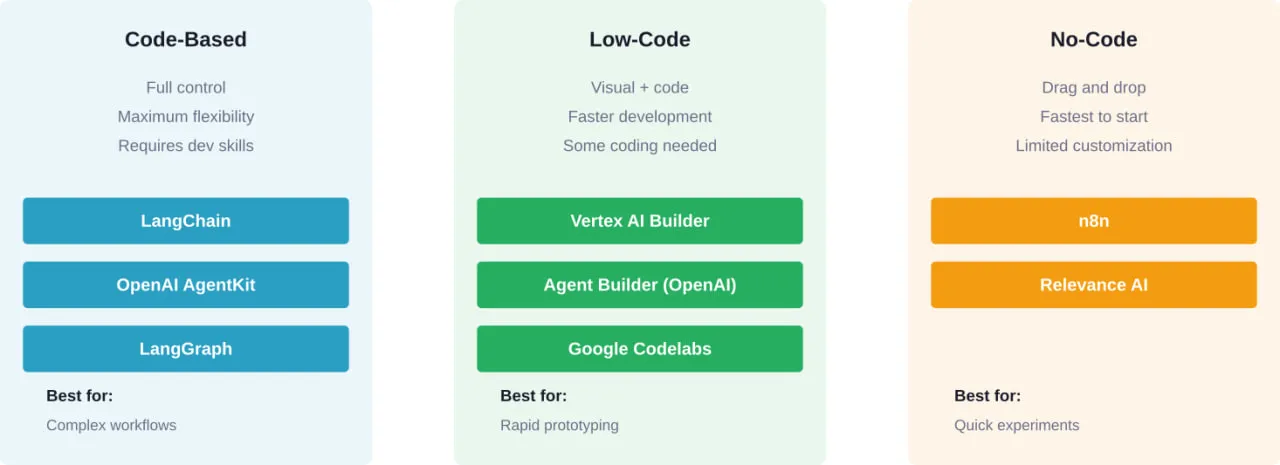
מסגרות ברמה תעשייתית שכדאי לשקול

ישנן מסגרות סוכנים רבות. רובן לא עומדות בדרישות הסביבה התפעולית. להלן המסגרות שכן עומדות בדרישות, בהתבסס על ניסיון פריסה אמיתי שתועד ברחבי האקוסיסטם.

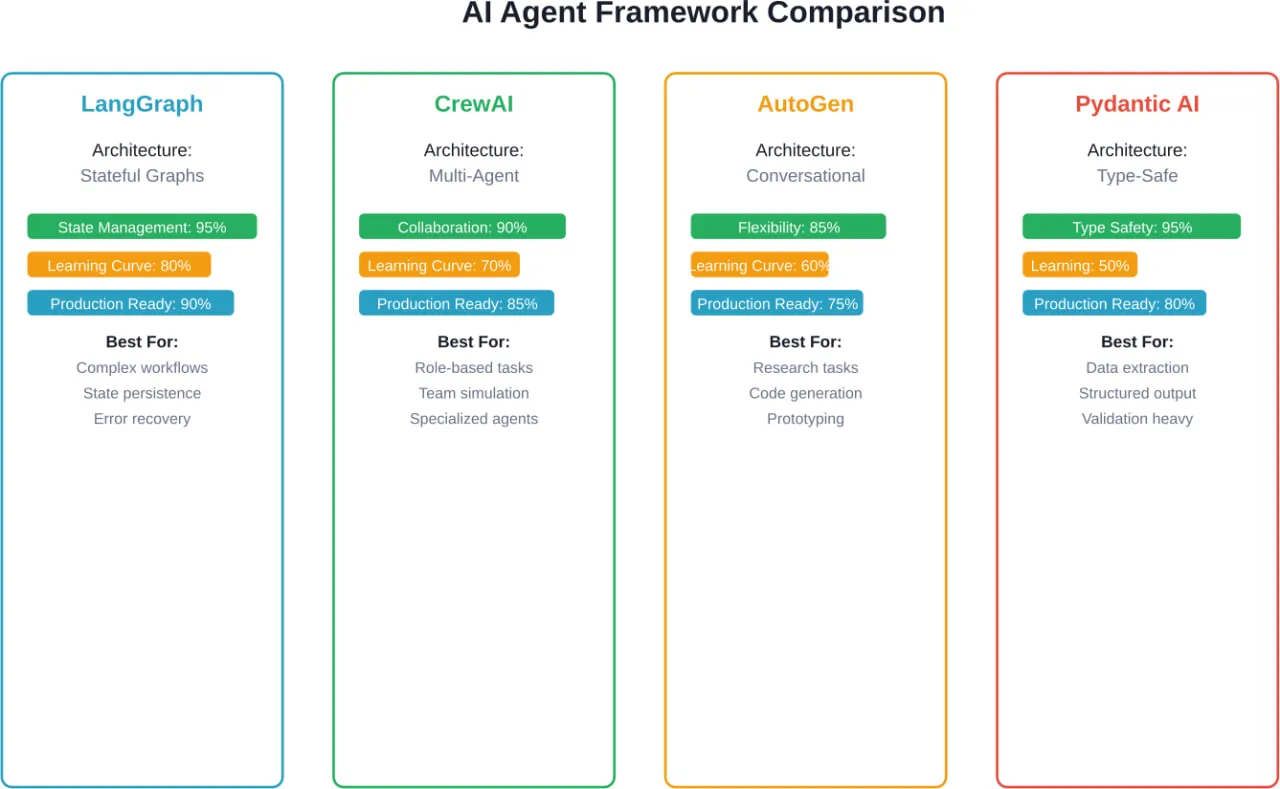
LangGraph: כאשר לניהול מצבים יש חשיבות

LangGraph מתמודדת עם תיאום סוכנים באמצעות גרפים בעלי מצב. כל צומת מייצג פונקציה, הקצוות מגדירים מעברים, והמצב זורם בגרף תוך שמירה מפורשת על המשכיות.

למסגרת יש 24.8 אלף כוכבים ב-GitHub והיא זוכה ל-34.5 מיליון הורדות בחודש — נתונים המשקפים אימוץ אמיתי בסביבות ייצור, ולא רק עניין ניסיוני. על פי ניתוח של אנשי מקצוע שהטמיעו מסגרות שונות, LangGraph נמצאת בשורה הראשונה של המערכות שמחזיקות מעמד בסביבות ייצור.

היכולות העיקריות כוללות:

  • ניהול מצב מפורש עם מערכות אחסון קבועות הניתנות להגדרה
  • תהליכי עבודה הכוללים מעורבות אנושית עם שלבי אישור
  • תמיכה בארכיטקטורות של סוכן יחיד ושל סוכנים מרובים
  • איתור באגים במסע בזמן באמצעות תמונות מצב
  • תמיכה מובנית בסטרימינג לעדכונים בזמן אמת

מה המחיר? LangGraph דורש חשיבה ארכיטקטונית מעמיקה יותר מראש. על המפתחים למדל באופן מפורש את מעברי המצב, במקום להסתמך על זרימת שיחה מרומזת. עבור זרימות עבודה ארגוניות מורכבות, הכוללות לוגיקת הסתעפות ודרישות לשחזור לאחר שגיאה, המפורשות הזו הופכת ליתרון.

בואו נהיה כנים: LangGraph פועל במיטבו כאשר לתחום הבעיה יש מצבים ומעברים ברורים. תהליכי הסלמה בתמיכת לקוחות, תהליכי אישור רב-שלביים וצינורות מחקר עם הסתעפויות מותנות – כולם משתלבים באופן טבעי בפרדיגמת הגרפים שלו.

CrewAI: שיתוף פעולה בין סוכנים מרובים הופך למציאות

CrewAI מתמחה בתיאום בין סוכנים רבים הפועלים להשגת מטרות משותפות. המסגרת מציגה את הסוכנים כחברי צוות בעלי תפקידים, אחריות ודפוסי תקשורת מוגדרים.

הרעיון המרכזי מתמקד ב“צוותים” — קבוצות של סוכנים הפועלים בשיתוף פעולה לביצוע משימות. לכל סוכן יש תפקיד, מטרה, כלים העומדים לרשותו, וכן רקע אישי המשפיע על התנהגותו. המשימות מוקצות לסוכנים בהתאם ליכולותיהם, והמסגרת מטפלת בתקשורת בין הסוכנים.

גישה זו מתאימה במיוחד לבעיות שניתן לחלק באופן טבעי לתפקידים ייעודיים. בתהליכי עבודה של יצירת תוכן עשויים להיות סוכן מחקר, סוכן כתיבה וסוכן עריכה. ניתוח פיננסי עשוי לכלול סוכני איסוף נתונים, סוכני ניתוח וסוכני דיווח.

CrewAI תומכת במגוון דפוסי שיתוף פעולה:

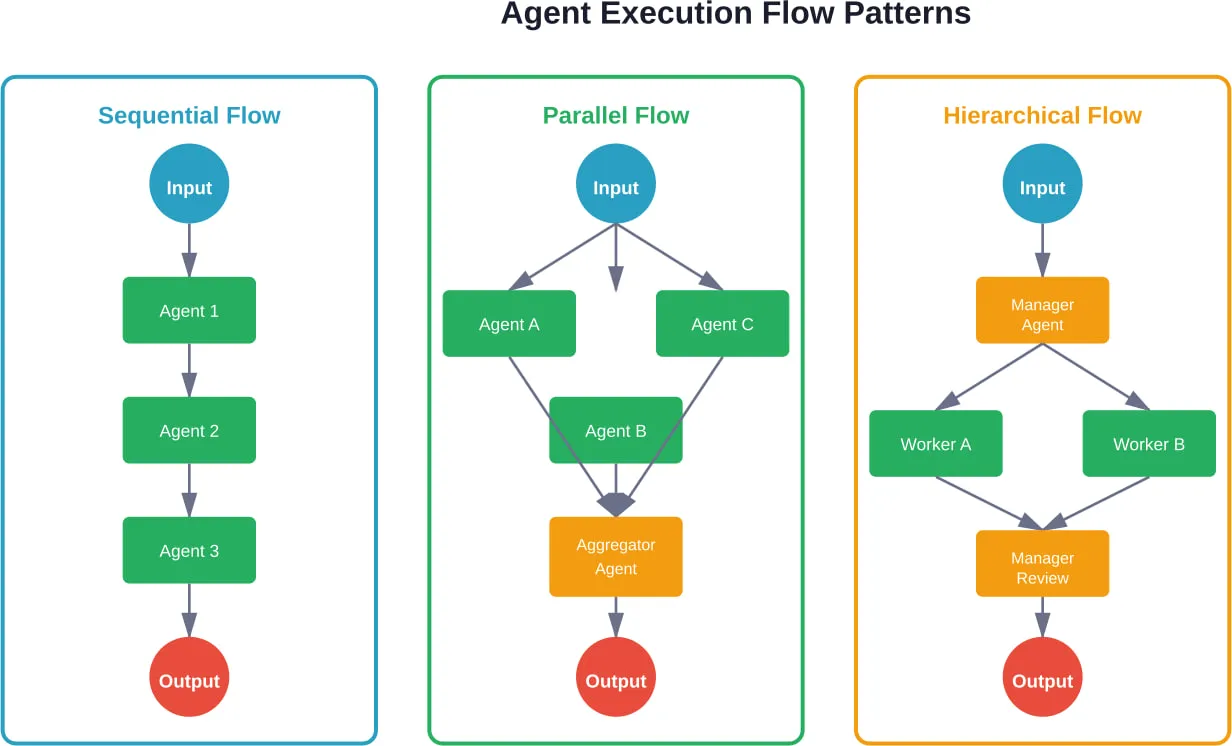
  • ביצוע רציף שבו הסוכנים פועלים בזה אחר זה
  • מבנים היררכיים שבהם מנהלים מעבירים סמכויות למומחים
  • מנגנוני קונצנזוס שבהם גורמים רבים מצביעים על החלטות

המסגרת מופיעה לעתים קרובות בדירוגי מסגרות הסוכנים המובילות לשנת 2026, במיוחד עבור מקרי שימוש המחייבים הפרדה בין תחומי התמחות. עם זאת, היא כרוכה בעומס תפעולי רב יותר מאשר מערכות בעלות סוכן יחיד — מה שהופך אותה למתאימה לתהליכי עבודה מורכבים, אך מוגזמת עבור אוטומציה פשוטה.

Microsoft Agent Framework: אינטגרציה ארגונית בראש סדר העדיפויות

מסגרת הסוכנים של מיקרוסופט נוקטת בגישה שונה, ומעניקה עדיפות לדרישות ארגוניות כגון אבטחה, תאימות ואינטגרציה עם מערכות מיקרוסופט קיימות.

על פי התיעוד הרשמי, Microsoft Agent Framework תומך בפיתוח סוכנים ובתהליכי עבודה מרובי-סוכנים הן ב-.NET והן ב-Python. הוא כולל שילוב מובנה עם Azure OpenAI, OpenAI, Anthropic ו-Ollama, וכן תמיכה מובנית בשרתים של Model Context Protocol (MCP).

התכונות העיקריות של הפתרון הארגוני כוללות:

תכונהתֵאוּר 
סוכניםסוכנים בודדים המשתמשים במודלים לשוניים גדולים (LLM) לעיבוד קלט, פנייה לכלים ולשרתי MCP, ויצירת תגובות
תהליכי עבודהתיאום בין סוכנים מרובים עם תלות מוגדרת בין משימות
תמיכה ב-MCPשילוב מובנה עם Model Context Protocol לצורך גישה אחידה לכלים
בִּטָחוֹןאימות, הרשאה ורישום ביקורת ברמה ארגונית

המסגרת מיועדת לארגונים שכבר משקיעים במערכת האקולוגית של מיקרוסופט. עבור צוותים המפעילים תשתית Azure ומשתמשים בשירותי ה-AI של מיקרוסופט, החיכוך הכרוך באינטגרציה פוחת באופן משמעותי. עבור כל השאר, החששות מפני תלות בספק מחייבים הערכה מדוקדקת.

AutoGen: המפגש בין מחקר לייצור

AutoGen, שמקורה ב-Microsoft Research, מתמקדת במערכות רב-סוכניות שיחתיות. המסגרת מאפשרת לסוכנים לנהל שיחות ביניהם כדי לפתור משימות בשיתוף פעולה.

המאפיין הבולט של AutoGen הוא הפרדיגמה השיחתית שלה. במקום למדל במפורש זרימות עבודה או מעברי מצב, מפתחים מגדירים סוכנים בעלי יכולות ומאפשרים להם לתאם את ביצוע המשימות באמצעות דיאלוג. גישה זו יעילה במיוחד בטיפול בבעיות פתוחות, שבהן נתיב הפתרון אינו קבוע מראש.

המסגרת תומכת ב:

  • יצירת קוד וביצועו באופן אוטומטי
  • שימוש בכלי באמצעות קריאה לפונקציות
  • דפוסי אינטראקציה עם מעורבות אנושית
  • דפוסי שיחה ותנאי סיום הניתנים להגדרה

לדברי מפתחים בעלי ניסיון בפיתוח באמצעות מספר מסגרות עבודה, AutoGen מתאימה היטב ליצירת אב טיפוס. הגישה השיחתית עלולה להקשות על איתור באגים בתהליכי עבודה מורכבים, כאשר הסוכנים מקבלים החלטות בלתי צפויות.

Pydantic AI: בטיחות טיפוסים בפיתוח סוכנים

Pydantic AI מביא את יכולות אבטחת הטיפוסים והאימות של Pydantic לתחום פיתוח הסוכנים. עבור צוותים שכבר משתמשים ב-Pydantic לאימות נתונים ביישומים ב-Python, מסגרת זו מספקת דפוסים מוכרים.

הערך המרכזי של הפתרון מתמקד בתפוקות מובנות. מפתחים מגדירים סכמות Pydantic המתארות את התגובות הצפויות של הסוכנים, והמסגרת מטפלת באימות ובכפיית טיפוסים. הדבר מצמצם את בעיית ההזיות על ידי אילוץ התפוקות להתאים למבנים הצפויים.

מתאים במיוחד ל:

  • משימות חילוץ נתונים עם סכמות פלט מוגדרות
  • תהליכי עבודה של סיווג וקיטלוג
  • הפקת דוחות מובנים
  • כל מקרה שבו לפורמט הפלט יש חשיבות זהה לזו של התוכן

מה המגבלה? Pydantic AI ממשיכה להתמקד בעיקר בתרחישים של סוכן יחיד עם תוצאות מובנות. תיאום מורכב בין מספר סוכנים או תהליכי עבודה הדורשים ניהול מצב מתוחכם מצריכים כלים נוספים.

Firecrawl: איסוף נתוני אינטרנט באמצעות סוכן

Firecrawl נוקט בגישה ייחודית, המתמקדת באופן ספציפי באיסוף נתונים מהאינטרנט באמצעות ממשק מבוסס סוכנים. במקום לבנות סוכנים לשימוש כללי, הוא מותאם במיוחד לדפוס הנפוץ של חיפוש, ניווט וחילוץ נתונים מובנים מאתרי אינטרנט.

על פי תיעוד הפרויקט, מפתחים מתארים את דרישותיהם בטקסט רגיל, יכולים להעביר סכימת Pydantic (אם רוצים), והסוכן מבצע חיפוש, מנווט ומחזיר תוצאות מובנות. Firecrawl מציעה מספר מודלים עם יחסי עלות-ביצועים שונים עבור פעולות חילוץ פשוטות לעומת מורכבות.

התמקדות ייעודית זו פירושה ש-Firecrawl מצטיינת בדבר אחד – איסוף נתונים מהאינטרנט – במקום לנסות לתמוך בכל תרחיש אפשרי של שימוש בסוכנים. עבור צוותים המפתחים סוכני מחקר, מערכות מודיעין תחרותי או כלי ניטור שוק, התמחות זו מספקת ערך משמעותי.

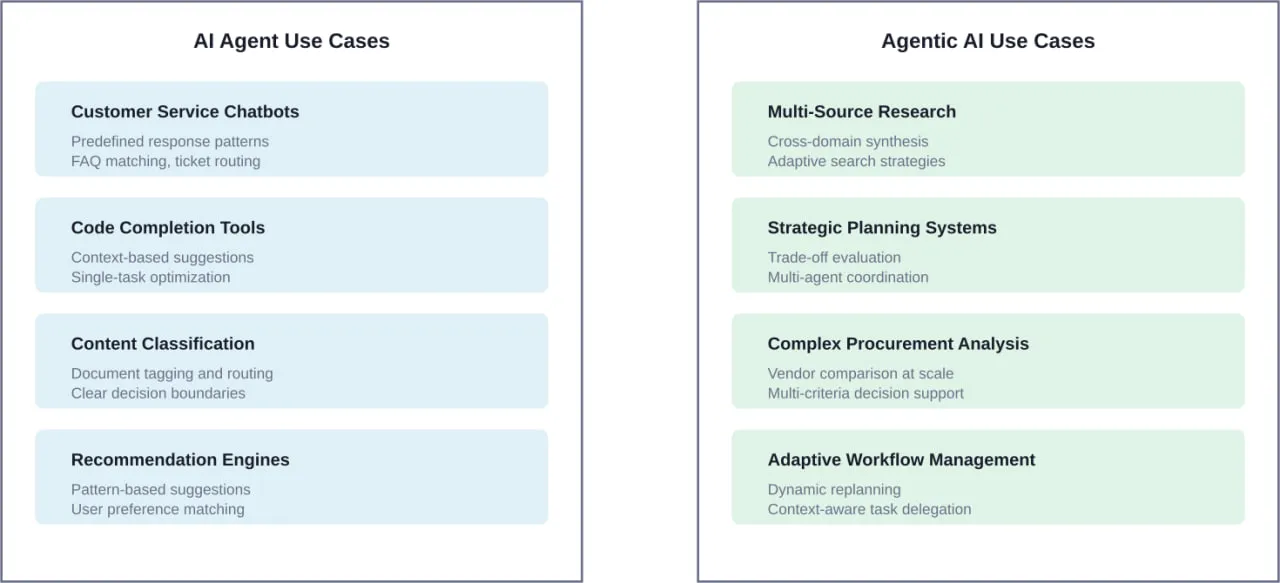
השוואה בין מסגרות סוכני בינה מלאכותית מובילות, המציגה סוגי ארכיטקטורה, יתרונות ומקרי שימוש אידיאליים

קריטריונים לבחירת מסגרת עבודה שבאמת חשובים

בחירת מסגרת סוכנים על סמך כוכבים ב-GitHub או מחזורי הייפ מובילה לכתיבה מחדש יקרה. המסגרות שעובדות בסביבת הפקה נבחרות על סמך קריטריונים אחרים.

התאמת הארכיטקטורה לתחום הבעיה

השאלה הראשונה אינה “איזו מסגרת היא הטובה ביותר?”, אלא “האם הארכיטקטורה של מסגרת זו תואמת את האופן שבו הבעיה מתפרקת באופן טבעי?”

בעיות הקשורות למעברי מצב ברורים, הסתעפות מותנית ודרישות לשחזור לאחר שגיאה מתאימות באופן טבעי למסגרות מבוססות גרפים כמו LangGraph. ניהול המצב המפורש תואם למבנה הבעיה.

משימות הדורשות מומחיות מיוחדת בתחומים שונים — יצירת תוכן, ניתוח פיננסי, מחקר לקוחות — מתאימות היטב למסגרות רב-סוכניות כמו CrewAI. מודל הסוכנים המבוסס על תפקידים משקף את האופן שבו צוותים אנושיים מתמודדים עם בעיות אלה.

משימות מחקר פתוחות או תהליכי עבודה ליצירת קוד מתאימים לעתים קרובות יותר למסגרות שיחתיות כמו AutoGen. הדרך לפתרון מתבהרת באמצעות דיאלוג ולא באמצעות תהליכי עבודה קבועים מראש.

חילוץ נתונים ויצירת פלט מובנה תואמים למסגרות בעלות בטיחות טיפוסית, כגון Pydantic AI. הגישה של "סכימה תחילה" מצמצמת את תופעת ה"הזיות" במשימות שבהן לפורמט יש חשיבות.

על פי מחקר שפורסם ב-arXiv בנושא אפשרויות ארכיטקטורה עבור סוכנים המבוססים על מודלים בסיסיים, התאמה זו בין תחום הבעיה לפרדיגמת הארכיטקטורה מהווה את הגורם המשמעותי ביותר להצלחה בטווח הארוך.

דרישות ייצור מעבר לפונקציונליות בסיסית

לאבות טיפוס ניסיוניים ולמערכות ייצור יש דרישות שונות בתכלית. מסגרות העבודה צריכות לתמוך ב:

  • נראות: האם מפתחים יכולים לראות מה הסוכנים עושים, מדוע הם קיבלו החלטות מסוימות, והיכן מתרחשות תקלות? מערכות ייצור דורשות יכולות רישום, מעקב וניפוי באגים מפורטות.
  • טיפול בשגיאות: כיצד המסגרת מתמודדת עם כשלים ב-API, הגבלות קצב, פקיעת זמן ותוצאות לא חוקיות של הכלים? יכולת התאוששות חזקה משגיאות היא זו שמבדילה בין צעצועים לכלים.
  • שמירת מצב: האם מצב הסוכן נשמר גם לאחר הפעלה מחדש של התהליך? האם השיחות נשמרות בין הפעלות? מערכות ייצור זקוקות לניהול מצב עמיד.
  • בקרת עלויות: האם המסגרת מספקת מנגנונים להגבלת השימוש באסימונים, להגבלת קריאות ה-API ולמניעת ביצוע בלתי נשלט? סוכנים בלתי מבוקרים עלולים להתייקר במהירות.
  • גבולות אבטחה: כיצד המסגרת מטפלת באימות, בהרשאות ובסביבת בדיקה מבודדת? סוכנים בעלי גישה לכלים זקוקים לאמצעי אבטחה.

דרישות אלה אינן באות לידי ביטוי בהשוואות בין מסגרות המתמקדות בתכונות. אך הן הקובעות אם הסוכנים ישרדו בסביבת הייצור.

מערכת אקולוגית של אינטגרציה ותמיכה בכלים

סוכנים מפיקים ערך מגישתם לכלים. על המסגרת להשתלב עם הכלים והשירותים הספציפיים שהיישום דורש.

ישנן מסגרות שמציעות אינטגרציות מוכנות מראש בהיקף נרחב. אחרות מציעות מנגנונים גמישים להגדרת כלים, אך דורשות כתיבת קוד אינטגרציה מותאם אישית. האיזון בין נוחות לגמישות תלוי בשאלה האם האינטגרציות הדרושות כבר קיימות.

על פי מחקר שפורסם ב-arXiv בנושא מסגרות בינה מלאכותית סוכנתית, פרוטוקול Model Context Protocol (MCP) מתבלט כשכבת תקינה לגישה לכלים. מסגרות התומכות ב-MCP באופן מובנה זוכות לגישה לאקוסיסטמה הולכת וגדלה של כלים תואמים, ללא צורך בעבודת אינטגרציה מותאמת אישית.

מיומנויות צוות ועקומת למידה

מסגרות שונות דורשות מודלים מנטליים שונים. מערכות מבוססות גרפים מחייבות חשיבה על מכונות מצבים ומעברים. מערכות מרובות סוכנים מצריכות הבנה של פרוטוקולי תקשורת ודפוסי תיאום. מסגרות שיחתיות דורשות גישות שונות לאיתור באגים.

עקומת הלמידה חשובה פחות בפרויקטים חדשים מאשר בצוותים המטפלים במערכות קיימות. מעבר למסגרת אחרת באמצע הפרויקט הוא צעד שכמעט אף פעם אינו מוצדק, ללא קשר לאיזו מסגרת נראית עדיפה. עלות המעבר בדרך כלל עולה על התועלת.

עבור צוותים שכבר השקיעו במערכות אקולוגיות ספציפיות — Microsoft Azure, LangChain, אימות נתונים ב-Pydantic — מסגרות התואמות את הכישורים הקיימים מקלות משמעותית על העבודה.

מאמצי התקינה המשנים את פני הדברים

הריבוי של מסגרות סוכנים שאינן תואמות זו לזו יוצר בעיות של פיצול. המאמצים לקביעת תקנים נועדו לתת מענה לבעיה זו.

יוזמת תקני סוכני בינה מלאכותית של NIST

ב-17 בפברואר 2026 הכריז המכון הלאומי לתקנים וטכנולוגיה (NIST) על “יוזמת התקנים לסוכני בינה מלאכותית” (AI Agent Standards Initiative), שמטרתה להבטיח מערכות בינה מלאכותית סוכניות אמינות, תואמות ומאובטחות. על פי ההודעה הרשמית, היוזמה "תבטיח שהדור הבא של הבינה המלאכותית יאומץ בהיקף נרחב ובביטחון, יוכל לפעול בצורה מאובטחת מטעם המשתמשים, ויתפקד בצורה חלקה בכל רחבי המערכת האקולוגית הדיגיטלית".”

זוהי היוזמה הממשלתית המשמעותית הראשונה שנועדה לקבוע תקנים לארכיטקטורות סוכנים, לפרוטוקולי אבטחה ולמנגנוני תאימות. היוזמה נועדה לתת מענה לחששות בנוגע למערכות סוכנים הפועלות ללא מסגרות בטיחות עקביות או תקני תאימות.

תקני IEEE למדידת ביצועים של סוכנים

תקן IEEE P3777 קובע מסגרת אחידה לביצוע מבחני ביצועים של סוכני בינה מלאכותית, לרבות סוכנים אוטונומיים, שיתופיים וסוכנים המיועדים למשימות ספציפיות. הוא מגדיר מדדי ביצועים מרכזיים, פרוטוקולי הערכה ודרישות דיווח, כדי לאפשר הערכה שקופה, ניתנת לשחזור וניתנת להשוואה של יכולותיהם של הסוכנים.

בנפרד, תקן IEEE P3154.1 מספק הנחיות מומלצות למסגרת עבודה ליישום סוכני בינה מלאכותית (AI) בשירותי איתור כישרונות, ומתאר מסגרות ארכיטקטוניות ותחומי יישום הכוללים פרוטוקולים למנגנוני אינטראקציה ותקשורת.

מאמצים אלה לתקינה נמצאים עדיין בשלבי פיתוח פעילים. אך הם מעידים על הכרה מצד התעשייה בכך שהפיצול במבנים יוצר בעיות בהטמעת הפיתוח ובאימוץ הארגוני.

הבנת ארכיטקטורות סוכנים ותבניות תכנון

מעבר למסגרות ספציפיות, דפוסים אדריכליים חוזרים ונשנים מופיעים ביישומים מוצלחים של סוכנים. הבנת דפוסים אלה מסייעת בהערכת מסגרות ובעיצוב פתרונות מותאמים אישית.

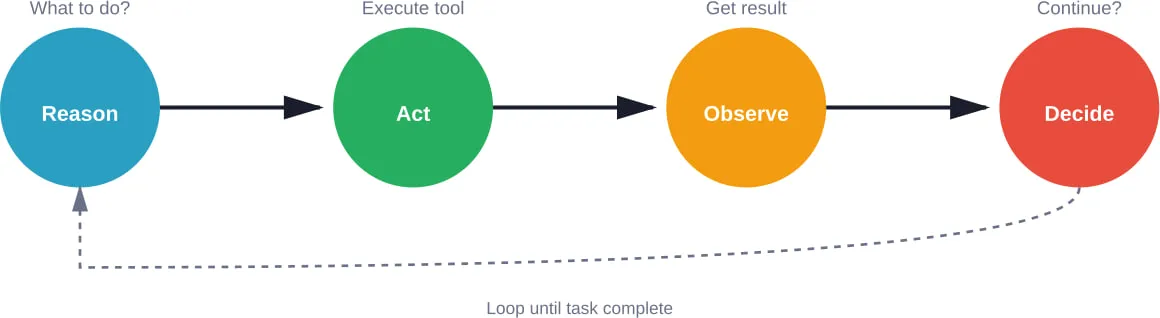
מעגל התפיסה-הקוגניציה-הפעולה

על פי מחקר שפורסם ב-arXiv, המבחין בין סוכני בינה מלאכותית (AI Agents) לבין בינה מלאכותית סוכנתית (Agentic AI), סוכנים פועלים באופן מהותי באמצעות מחזורי תפיסה-קוגניציה-פעולה. התפיסה כוללת איסוף מידע מהסביבה. הקוגניציה כוללת חשיבה, תכנון וקבלת החלטות. הפעולה מבצעת את ההחלטות באמצעות שימוש בכלים או תקשורת.

מסגרות שונות מיישמות את הלולאה הזו בדרכים שונות:

  • מסגרות מבוססות גרפים מבטאות את הלולאה באופן מפורש באמצעות מעברי מצב
  • מסגרות שיח משלבות את הלולאה בתורות הדיבור
  • מערכות רב-סוכניות מחלקות את הלולאה בין סוכנים מתמחים

הבחירה באשר לאופן היישום משפיעה על יכולת האיתור והתיקון של באגים, על מאפייני הביצועים ועל דפוסי הכשל. לולאות מפורשות קלות יותר לאיתור באגים, אך דורשות תכנון מקדים רב יותר. לולאות מרומזות מצמצמות את כמות הקוד הסטנדרטי, אך מקשות על מעקב אחר זרימת הבקרה.

ארכיטקטורות זיכרון למצב הסוכן

סוכנים זקוקים לזיכרון כדי לשמור על הקשר בין אינטראקציות שונות. ארכיטקטורות זיכרון כוללות בדרך כלל:

  • זיכרון עבודה: הקשר קצר הטווח של המשימה או השיחה הנוכחית
  • זיכרון אפיזודי: תיעוד של אינטראקציות קודמות ותוצאותיהן
  • זיכרון סמנטי: ידע כללי ועובדות שנלמדו
  • זיכרון פרוצדורלי: כיצד לבצע משימות ולהשתמש בכלים

מסגרות הפקה צריכות לשמור על הזיכרון בין הפעלות ולטפל במגבלות הזיכרון בצורה חלקה. ככל שהשיחות מתארכות, על הנציגים לסכם את הדברים, לשכוח פרטים לא רלוונטיים או לשלוף הקשר היסטורי רלוונטי.

ישנן מסגרות שמציעות ניהול זיכרון מובנה. אחרות משאירות למפתחים את האחריות ליישום מנגנוני שמירה ואחזור.

שימוש בכלים ודפוסי קריאה לפונקציות

הגישה לכלים הופכת את הסוכנים מצ'אטבוטים למערכות שמבצעות פעולות. דפוסים נפוצים כוללים:

  • קריאה ישירה לפונקציה: שפת ה-LLM מייצרת קריאות פונקציות מובנות עם פרמטרים, המסגרת מבצעת אותן, והתוצאות מוחזרות לסוכן. שיטה זו מתאימה היטב לכלים דטרמיניסטיים בעלי סכמות ברורות.
  • תיאורי כלים בשפה טבעית: הכלים מציגים תיאורים בשפה טבעית של היכולות. הסוכן מחליט מתי וכיצד להשתמש בהם על סמך התיאורים, ולא על סמך סכמות נוקשות. גמיש יותר, אך פחות אמין.
  • הפעלת כלי בשרשרת: סוכנים יכולים להשתמש בתוצאות של כלים כקלט לכלים הבאים בתור. מאפשר זרימות עבודה מורכבות כמו “חפש את X, קרא את התוצאה הראשונה, סכם אותה, ואז תרגם לצרפתית”.”
  • הפעלת כלי במקביל: הפעל מספר כלים עצמאיים במקביל. מפחית את זמן ההשהיה במשימות הדורשות מידע ממקורות שונים.

מסגרות שונות תומכות בתבניות אלה ברמות שונות של תמיכה מובנית לעומת יישום מותאם אישית.

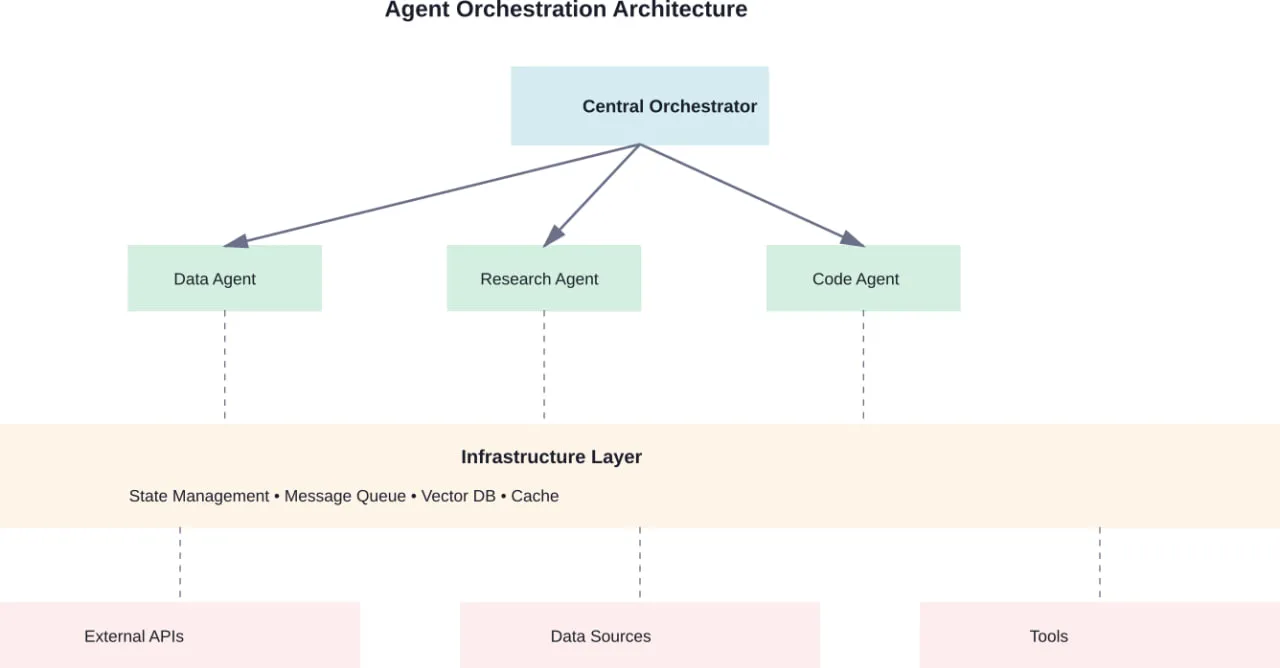
שלוש תבניות נפוצות לתזמור סוכנים, הממחישות כיצד מסגרות מתאמות בין מספר סוכנים

פרוטוקולי תקשורת בין סוכנים מרובים

כאשר מספר סוכנים פועלים בשיתוף פעולה, פרוטוקולי התקשורת הם הקובעים את היעילות והאמינות. על פי מחקר שפורסם ב-arXiv בנושא מסגרות בינה מלאכותית סוכנתית, הפרוטוקולים הנפוצים כוללים:

  • העברת הודעות: הסוכנים מתקשרים באמצעות הודעות מפורשות בעלות מבנה מוגדר. שיטה זו מספקת תיעוד ביקורת ברור, אך מחייבת תכנון מראש של הפרוטוקול.
  • מצב משותף: סוכנים קוראים וכותבים לזיכרון משותף או למסדי נתונים. קל ליישום, אך עלול ליצור מצבי תחרות וקונפליקטים.
  • מונע אירועים: סוכנים מפרסמים אירועים ומנויים לאירועים של סוכנים אחרים. הדבר מפריד בין הסוכנים, אך מקשה על חיזוי ההתנהגות הכוללת.
  • העברת סמכויות היררכית: סוכני הניהול מקצים משימות לסוכני העבודה ומרכזים את התוצאות. זרימת בקרה ברורה, אך נוצרים צווארי בקבוק בצמתים הניהוליים.

בחירת הפרוטוקול משפיעה על מורכבות האיתור והתיקון של תקלות, על יכולת ההתאוששות מתקלות ועל מאפייני המדרגיות. מערכות ייצור זקוקות לעתים קרובות למספר פרוטוקולים עבור דפוסי אינטראקציה שונים.

שיקולים ארגוניים ופריסה בסביבת ייצור

המעבר של סוכנים משלב האב-טיפוס לשלב הייצור כרוך באתגרים החורגים מעבר לבחירת המסגרת. פריסה ארגונית מחייבת התייחסות לסוגיות תפעוליות, אבטחה וניהול.

ניהול עלויות וכלכלת אסימונים

נציגי שירות בעלי גישה לכלים ויכולת חשיבה רב-שלבית צורכים כמות גדולה בהרבה של טוקנים בהשוואה לצ'אטבוטים פשוטים. נציג שירות לקוחות עשוי להשתמש ביותר מ-10,000 טוקנים לכל אינטראקציה בעת חיפוש במאגרי ידע, בדיקת סטטוס הזמנות והפקת תשובות.

מערכות ייצור זקוקות ל:

  • תקציבים סמליים לכל אינטראקציה כדי למנוע חריגה מהתקציב
  • אסטרטגיות אחסון במטמון עבור שאילתות חוזרות או תהליכי עבודה נפוצים
  • לוגיקת בחירת מודלים המשתמשת במודלים זולים יותר למשימות פשוטות
  • ניטור והתראה כאשר העלויות חורגות מהסף

ישנן מסגרות שמציעות בקרות עלויות מובנות. אחרות דורשות יישום מותאם אישית של אכיפת תקציב וניתוב מודלים.

גבולות אבטחה ובקרת גישה

סוכנים בעלי גישה לכלים פועלים בשם המשתמשים. כשלים באבטחה עלולים לחשוף מידע רגיש או לאפשר ביצוע פעולות בלתי מורשות.

דרישות האבטחה החיוניות כוללות:

  • אימות לצורך אימות זהות הסוכן והסמכת המשתמש
  • הרשאה להגביל את הגישה של נציגים לכלים מסוימים עבור משתמשים ספציפיים
  • אימות קלט למניעת התקפות הזרקת שורת פקודה
  • סינון פלט למניעת דליפת מידע רגיש
  • תיעוד ביקורת של כל פעולות הסוכן והפעלת הכלים
  • שימוש בסביבת בידוד (sandbox) כדי לבודד את פעולת הסוכן ממערכות קריטיות

על פי יוזמת תקני הסוכנים המונעים על ידי בינה מלאכותית של NIST, פרוטוקולי אבטחה סטנדרטיים עבור סוכנים נמצאים עדיין בפיתוח. המסגרות הקיימות מיישמות אבטחה ברמות מורכבות שונות.

נראות ואיתור באגים

כאשר סוכנים נכשלים, כדי להבין מדוע יש צורך ביכולת ניטור מפורטת. בניגוד לתוכנה מסורתית, שבה עקבות הערימה חושפות את הבעיות, כשלים של סוכנים כרוכים לעתים קרובות בבעיות סמנטיות — הסוכן פירש לא נכון את הכוונה, אסף מידע שגוי או בחר בכלים לא מתאימים.

ניטור התפעול מחייב:

  • תיעוד מפורט של תהליכי החשיבה ונקודות ההחלטה של הסוכן
  • מעקב אחר קריאות לפונקציות עם קלט, פלט וזמני השהיה
  • יכולות השמעת הפעלה חוזרת לשם שחזור תקלות
  • מדדים לגבי שיעורי הצלחה, זמני תגובה ועלות לכל אינטראקציה
  • שילוב עם תשתית הניטור הקיימת

מסגרות שונות נבדלות זו מזו באופן משמעותי בתמיכתן בניתנות לניטור. חלקן מספקות כלים עשירים לאיתור באגים ושילוב עם פלטפורמות לניתנות לניטור. אחרות מותירות את הניתוב בידי המפתחים.

הערכה והבטחת איכות

בדיקות תוכנה מסורתיות אינן ניתנות ליישום ישיר על סוכנים. בדיקות יחידה דטרמיניסטיות אינן יכולות לאמת מערכות המשתמשות במודלים לשוניים גדולים (LLM) לצורך הסקת מסקנות.

על פי מחקר שנערך במסגרת AutoChain, תהליך ההערכה מחייב שימוש במסגרות בדיקה אוטומטיות הבוחנות את יכולות הסוכנים בתרחישי משתמש שונים. הדבר כרוך ב:

  • בדיקות מבוססות תרחישים עם קלט משתמש מציאותי
  • מודלים לשוניים גדולים (LLM) המשמשים להערכת איכות התפוקה
  • בדיקות רגרסיה לאיתור ירידה בביצועים
  • בדיקות A/B להשוואת תצורות סוכנים
  • הערכה אנושית לצורך הערכת איכות סובייקטיבית

מעט מסגרות מציעות כלי הערכה מקיפים. ברוב מערכות הייצור נדרשים מערכי בדיקה מותאמים אישית.

מגמות מתהוות וכיוונים עתידיים

תחום מסגרות הסוכנים ממשיך להתפתח בקצב מהיר. מספר מגמות מעצבות את הכיוון שאליו צועדת המערכת האקולוגית.

אימוץ פרוטוקול Model Context

פרוטוקול Model Context Protocol (MCP) נועד לתקנן את האופן שבו סוכנים ניגשים לכלים ולמערכות חיצוניות. במקום שכל מסגרת תיישם שילוב כלים מותאם אישית, ה-MCP מספק פרוטוקול משותף.

מסגרות התומכות ב-MCP באופן מובנה זוכות לגישה לאקוסיסטם הולך וגדל של כלים תואמים, ללא צורך בעבודת אינטגרציה ספציפית למסגרת. הדבר מצמצם גורם מרכזי אחד לנעילת מסגרת — המעבר בין מסגרות הופך לקל יותר כאשר אינטגרציות הכלים מבוססות על פרוטוקולים ולא ספציפיות למסגרת.

מסגרות ייעודיות לתחומים אנכיים

מסגרות לשימוש כללי כמו LangGraph ו-CrewAI פועלות במגוון תחומים. עם זאת, מתחילות לצוץ מסגרות ייעודיות המכוונות לתחומים ספציפיים.

ההתמקדות של Firecrawl באיסוף נתוני אינטרנט משקפת מגמה זו. במקום לתמוך בכל תרחיש אפשרי של שימוש בסוכנים, היא מתמקדת בתחום אחד ומבצעת זאת היטב.

צפו להופעתן של מסגרות נוספות המיועדות לתחומים ספציפיים, כגון תמיכת לקוחות, ניתוח נתונים, יצירת תוכן ופיתוח תוכנה. מסגרות ייעודיות יכולות לבצע בחירות ארכיטקטוניות מכוונות, המשפרות את חוויית המפתחים בתחום היעד שלהן.

הערכה והשוואה טובות יותר

על פי יוזמת התקן IEEE P3777, התעשייה מכירה בצורך בביצוע השוואות ביצועים סטנדרטיות של סוכנים. גישות ההערכה הקיימות כיום נותרות אד-הוק וחסרות עקביות.

שיפור בשיטות ההערכה יאפשר:

  • השוואה אובייקטיבית בין מסגרות
  • זיהוי רגרסיה כאשר עדכוני המסגרת משפיעים על היכולות
  • אופטימיזציה של ביצועים בהתבסס על מדדים מדידים
  • אימות תאימות עבור ענפים המפוקחים

מסגרות המשלבות כלי הערכה סטנדרטיים צפויות לזכות באימוץ מהיר יותר בקרב ארגונים.

שילוב עם הנדסת תוכנה מסורתית

כיום, פיתוח סוכנים נתפס לעתים קרובות כנפרד מהנדסת תוכנה מסורתית. כלים שונים, גישות בדיקה שונות, דפוסי פריסה שונים.

המגמה היא לכיוון אינטגרציה. סוכנים משמשים כרכיבים בתוך מערכות גדולות יותר, ולא כיישומים עצמאיים. הדבר מצריך:

  • מסגרות סוכנים המשתלבות בצינורות CI/CD קיימים
  • מסגרות בדיקה התואמות למפעילים סטנדרטיים של בדיקות
  • דפוסי פריסה המתאימים לפלטפורמות תזמור מכולות
  • ניטור המשתלב עם מערכי הנראות הקיימים

מסגרות שמצמצמות את חוסר ההתאמה בין פיתוח סוכנים להנדסת תוכנה מסורתית יזכו לפופולריות בסביבות ארגוניות.

אסטרטגיית בחירת מסגרת מעשית

לאור המורכבות וההתפתחות המהירה, כיצד על צוותים לבחור מסגרות עבודה בפועל? להלן תהליך קבלת החלטות מעשי.

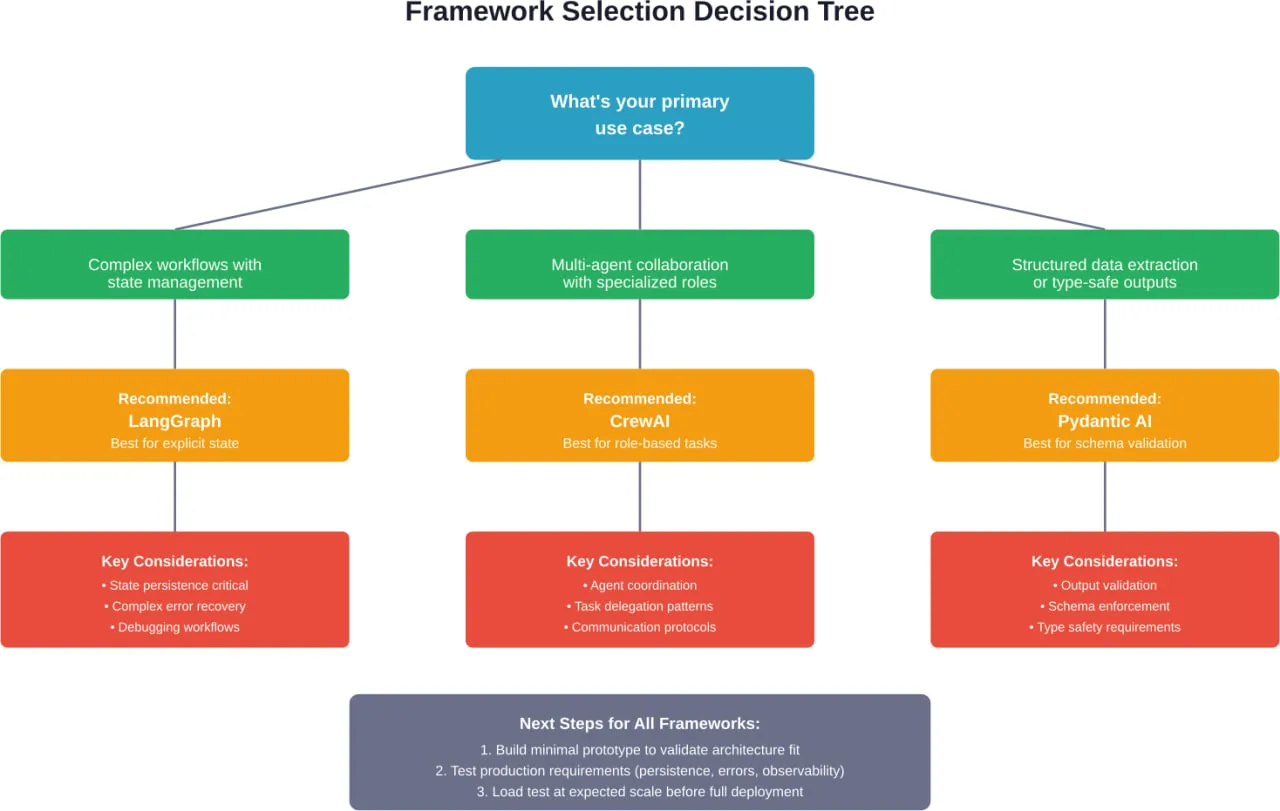
התחילו בניתוח ארכיטקטורת תרחישי השימוש

לפני שתערכו הערכה של מסגרות, התאימו את תרחיש השימוש לדפוסים ארכיטקטוניים:

  1. האם הבעיה כרוכה בניהול מצבים מורכב עם הסתעפויות מותנות? שקול שימוש במסגרות מבוססות גרפים.
  2. האם נדרשת שיתוף פעולה בין מספר סוכנים מתמחים? שקול שימוש במבני ריבוי סוכנים.
  3. האם מדובר בעיקר בשיח עם גישה לכלים? שקול שימוש במבני שיח.
  4. האם למבנה הפלט יש חשיבות זהה לזו של התוכן? קחו לדוגמה מסגרות עבודה בעלות בטיחות טיפוס.
  5. האם המטרה היא איסוף נתונים מהאינטרנט? שקול שימוש במסגרות ייעודיות.

דבר זה מצמצם את האפשרויות באופן משמעותי לפני שמבצעים הערכה של מסגרות ספציפיות.

אב טיפוס בעל מורכבות מינימלית

בנו את הגרסה הפשוטה ביותר האפשרית, שתבדוק את הנחת היסוד הארכיטקטונית. אל תוסיפו תכונות, אינטגרציות או ליטושים. רק ודאו שהארכיטקטורה של המסגרת מתאימה לבעיה.

במקרה של נציג שירות לקוחות, צרו אב טיפוס של האינטראקציה הפשוטה ביותר: שאלה של המשתמש, חיפוש במאגר הידע, יצירת תשובה. דלגו על אימות, רישום, טיפול בשגיאות ומקרים קיצוניים.

כך ניתן לבדוק אם המודל המנטלי של הפלטפורמה תואם את הבעיה, עוד לפני ההשקעה בפיתוח תכונות ייצור.

הערכת מוכנות הייצור

לאחר אימות התאמת הארכיטקטורה, יש לבחון את דרישות הייצור:

דרישהמדוע זה חשובכיצד לבצע הערכה 
שמירת מצבהסוכנים חייבים לשרוד את ההפעלה מחדשחידוש הפעלת הבדיקה לאחר הפעלה מחדש של התהליך
שחזור לאחר תקלהתקלות בכלים מתרחשות כל הזמןהזן תקלות ופקעות זמן ב-API, ודא שהמערכת מטפלת בהן בצורה חלקה
נראותאיתור באגים מחייב נראותלבדוק את יומני המערכת לאיתור אינטראקציות שנכשלו, ולהעריך את יכולת האיתור והתיקון של באגים
בקרת עלויותשימוש מוגזם באסימונים עולה ביוקריש לוודא את יישום התקציב ואת מנגנוני האחסון במטמון
בִּטָחוֹןסוכנים ניגשים למערכות רגישותסקירת אימות, הרשאה וסביבת בדיקה מבודדת

מסגרות שאינן עומדות במבחנים אלה יוצרות חוב טכני, שתיקונו בעתיד כרוך בעלות גבוהה.

יש לקחת בחשבון את תופעת ה"נעילת המערכת האקולוגית"

יש מסגרות שיוצרות תלות רבה יותר מאחרות. יש לבחון:

  • האם המסגרת משתמשת בפרוטוקולים סטנדרטיים (MCP) או בשילובים מותאמים אישית?
  • האם ניתן לחלץ את לוגיקת הסוכן ולהעביר אותה למסגרות אחרות?
  • האם המסגרת קשורה לספקי LLM או לפלטפורמות ענן ספציפיים?
  • האם המסגרת היא קוד פתוח עם קהילת מפתחים פעילה?

נעילה אינה בהכרח דבר שלילי, אם המסגרת מספקת ערך מספיק. אך ההחלטה צריכה להיות מודעת ולא מקרית.

בדיקה בקנה מידה הצפוי

מאפייני הביצועים משתנים באופן דרמטי ככל שהיקף הפעילות גדל. מסגרת סוכנים שמתפקדת היטב עם 10 בקשות בדקה עלולה להיכשל עם 100 בקשות.

בצעו בדיקת עומסים עם דפוסי תעבורה מציאותיים לפני שתעברו לפריסה בסביבת הייצור. מדדו:

  • אחוזוני זמן ההשהיה (p50, p95, p99)
  • מגבלות תפוקה ונקודות צוואר בקבוק
  • שימוש בזיכרון ודרישות משאבים
  • עלות לאינטראקציה בהיקף נרחב
  • שיעורי השגיאות תחת עומס

בדיקות בקנה מידה גדול חושפות בעיות שאינן מתגלות בשלב הפיתוח.

מסגרת קבלת החלטות לבחירת מסגרת הסוכנים המתאימה ביותר בתחום הבינה המלאכותית, בהתבסס על דרישות מקרה השימוש

מלכודות נפוצות וכיצד להימנע מהן

סוכני פיתוח בצוותים נוטים לעשות טעויות צפויות. זיהוי דפוסים אלה מסייע להימנע משינויים יקרים בקוד.

תכנון יתר ביישומים ראשוניים

הפיתוי לבנות מערכות רב-סוכניות מתוחכמות עם תזמור מורכב כבר מהיום הראשון מביא לכישלון הפרויקטים. התחילו בפשטות: סוכן יחיד, כלים בסיסיים וניהול מצב מינימלי.

יש להוסיף מורכבות רק כאשר גישות פשוטות יותר נכשלות. סוכן יחיד שתוכנן היטב משיג לעתים קרובות תוצאות טובות יותר משלושה סוכנים מתמחים שאינם מתואמים כראוי.

התעלמות מכלכלת האסימונים עד לשלב הייצור

סביבות פיתוח עם תקציבי API בלתי מוגבלים מסתירות את בעיות העלויות. סביבות ייצור עם תעבורה אמיתית חושפות אותן באופן כואב.

יש ליישם תקציבי אסימונים וניטור כבר מההתחלה. יש להציג את העלויות כבר במהלך הפיתוח, ולא רק לאחר הפריסה.

התייחסות לסוכנים כאל תוכנה מסורתית

דפוסי הבדיקה, איתור הבאגים והפריסה המסורתיים אינם ניתנים ליישום ישיר. צוותים המנסים לכפות על הסוכנים תהליכים קיימים יוצרים חיכוכים.

השקיעו בכלים ייעודיים לסוכנים לצורך הערכה, ניטור ופריסה. ההשקעה הראשונית תשתלם בזכות קיצור זמן איתור התקלות והאיץ את קצב האיטרציות.

בחירת מסגרות עבודה על סמך באזז

מספר הכוכבים ב-GitHub והאזכורים בניוזלטר אינם מנבאים הצלחה בסביבת הפקה. למסגרות שמחזיקות מעמד בסביבת הפקה יש מאפיינים שונים מאלה של מסגרות שזוכות להייפ.

יש לבצע הערכה על סמך התאמה אדריכלית ומוכנות לייצור, ולא על סמך מדדי פופולריות.

הערכת חסר של מורכבות איתור באגים

כאשר סוכנים נכשלים, לרוב הכשל נובע מאי-הבנה סמנטית ולא מבאגים בקוד. שיטות האיתור והתיקון המסורתיות אינן יעילות.

יש לתכנן השקעה משמעותית בכלים לניטור, רישום יומנים ויכולות השמעת הפעלה חוזרת. איתור באגים בסוכנים מצריך כלים שונים מאלה המשמשים לאיתור באגים בתוכנה מסורתית.

הפכו את מסגרת הסוכנים המונעת על ידי בינה מלאכותית שלכם למערכת פעילה

בחירת מסגרת העבודה היא החלק הקל. רוב האתגרים נובעים מהאינטגרציה – ממשקי API, זרימת נתונים, לוגיקת ה-backend, והבטחת פעולה אמינה של כל המערכת בסביבת הייצור.

A-listware מספקת צוותי פיתוח המטפלים בשכבה זו. החברה תומכת ב-backend, באינטגרציות ובתשתית סביב מערכות בינה מלאכותית, ומסייעת לצוותים לעבור ממסגרות נבחרות לפריסות יציבות. אם בחרתם במסגרת אך היא טרם יושמה, צרו קשר רשימת מוצרים א' כדי לתמוך בהטמעה ובהשקה.

שאלות נפוצות

  1. מה ההבדל בין מסגרת סוכני בינה מלאכותית (AI) לבין ממשק API רגיל של מודל שפה גדול (LLM)?

ממשקי ה-API של מודלים לשוניים גדולים (LLM) מספקים יכולות ליצירת טקסט — הטקסט הנכנס מוזן פנימה, והטקסט היוצא מופק. מסגרות סוכני בינה מלאכותית (AI) מוסיפות על גבי ה-LLM יכולות תיאום, ניהול מצב, שילוב כלים והסקת מסקנות רב-שלבית. הן מאפשרות לסוכנים לתפוס את הסביבה, לקבל החלטות, להשתמש בכלים ולבצע תהליכי עבודה באופן אוטונומי, ולא רק לייצר תגובות טקסטואליות.

  1. איזו מסגרת ליצירת סוכני בינה מלאכותית היא הטובה ביותר למתחילים?

Pydantic AI מציעה את עקומת הלמידה הקלה ביותר למפתחים שכבר מכירים את Python ו-Pydantic. היא מספקת בטיחות טיפוסים ותפוקות מובנות, מבלי לדרוש הבנה מעמיקה של דפוסי תזמור סוכנים. עבור צוותים שטרם התנסו בסוכנים וב-Python, מסגרות שיחה כמו AutoGen מציעות תהליך היכרות קל יותר מאשר מערכות מבוססות גרפים כמו LangGraph.

  1. האם אני זקוק למסגרת רב-סוכנתית, או שמספיק סוכן יחיד?

התחילו בארכיטקטורות של סוכן יחיד, אלא אם כן הבעיה דורשת בבירור מומחיות מיוחדת במספר תחומים. מערכות מרובות-סוכנים כרוכות בעומס תיאום, במורכבות באיתור באגים ובעלויות נוספות. הן מתאימות כאשר המשימות מתחלקות באופן טבעי לתפקידים נפרדים עם דרישות ידע שונות — כגון מחקר, ניתוח ודיווח — אך ברוב המקרים מספיק סוכן יחיד שתוכנן היטב.

  1. כיצד להתמודד עם החששות מפני תלות במסגרת?

יש לתת עדיפות למסגרות התומכות בפרוטוקולים סטנדרטיים, כגון Model Context Protocol (MCP), לצורך שילוב כלים. יש להפריד בין הלוגיקה העסקית לבין קוד התזמור הספציפי למסגרת. יש להשתמש בשכבות הפשטה לגישה לספקי LLM, כך שהחלפת ספקים לא תדרוש שינויים במסגרת. יש לבחון אם היתרונות של המסגרת מצדיקים את עלויות הנעילה לפני ההתחייבות — לעתים נעילה היא מקובלת אם המסגרת מספקת ערך מספיק.

  1. מהן העלויות האופייניות להפעלת סוכני בינה מלאכותית בסביבת ייצור?

העלויות משתנות באופן משמעותי בהתאם למורכבות הסוכן, לשימוש באסימונים לכל אינטראקציה, לנפח התעבורה ולבחירת המודל. סוכן תמיכת לקוחות פשוט עשוי להשתמש ב-5,000-15,000 אסימונים לכל שיחה. לפי מחירי GPT-4, מדובר ב-$0.15-$0.45 לכל אינטראקציה. סוכני מחקר מורכבים עם שימוש נרחב בכלים עשויים לחרוג מ-50,000 אסימונים לכל משימה. עלויות הייצור מצריכות ניטור קפדני, אסטרטגיות אחסון במטמון וניתוב מודלים כדי לייעל את האיזון בין עלות לאיכות.

  1. כיצד משפיעים תקני NIST על בחירת מסגרת הסוכנים של הבינה המלאכותית?

על פי "יוזמת התקנים לסוכני בינה מלאכותית" (AI Agent Standards Initiative) שהוכרזה בפברואר 2026, ה-NIST מפתח תקנים בנושאי אבטחת סוכנים, יכולת פעולה הדדית ואמינות. כל עוד תקנים אלה נמצאים בשלבי פיתוח, מסגרות התואמות את התקנים המתהווים בתחום פרוטוקולי אימות, רישום ביקורת ומנגנוני יכולת פעולה הדדית יזכו ככל הנראה לתהליכי אימוץ קלים יותר בארגונים. בענפים הכפופים לרגולציה, עמידת המסגרות בתקני ה-NIST העתידיים עשויה להפוך לדרישה מחייבת.

  1. האם ניתן להחליף מסגרת עבודה לאחר בניית סוכן ייצור?

מבחינה טכנית כן, אך עלויות המעבר הן משמעותיות. דפוסי תזמור ספציפיים למסגרת, גישות לניהול מצב ושילוב כלים אינם ניתנים להעברה ישירה. צפו לשכתב חלקים נרחבים מהלוגיקה של הסוכן במהלך המעבר. ההחלטה לעבור צריכה להתבסס על מגבלות טכניות ברורות המצדיקות את עלות המעבר, ולא על הבדלים קלים בתכונות או על הייפ סביב מסגרות חדשות יותר.

קביעת החלטת המסגרת

אין מסגרת אחת השולטת בכל תרחישי השימוש. LangGraph מצטיינת בתהליכי עבודה מורכבים הכוללים ניהול מצב מפורש. CrewAI מצטיינת בשיתוף פעולה בין סוכנים מרובים עם התמחות בתפקידים. Microsoft Agent Framework מותאמת לשילוב בארגונים. Pydantic AI מספקת בטיחות טיפוסית לתפוקות מובנות. מסגרות ייעודיות כמו Firecrawl מותאמות לתחומים ספציפיים.

הבחירה הנכונה תלויה בהתאמה הארכיטקטונית בין תחום הבעיה לפרדיגמת המסגרת, בדרישות הייצור בנוגע לשמירת מצב ושיקום שגיאות, בצרכי תמיכה במערכת האינטגרציה ובכלים, וכן בשיקולים הנוגעים לכישורי הצוות ולעקומת הלמידה.

על פי מחקר שפורסם ב-arXiv בנושא מסגרות בינה מלאכותית סוכנתית, התאמה ארכיטקטונית זו מהווה את גורם ההצלחה המשמעותי ביותר. מסגרות המתאימות לאופן שבו בעיות מתפרקות באופן טבעי מובילות ליישומים נקיים יותר, לאיתור באגים קל יותר ולמערכות שקל יותר לתחזק.

התחילו בפשטות. בדקו את התאמת הארכיטקטורה באמצעות אבטיפוסים מינימליים לפני שתפתחו תכונות ייצור. בצעו בדיקות בקנה מידה הצפוי לפני שתתחייבו לפריסה. השקיעו בכלים לניטור והערכה כבר מההתחלה.

תחום מסגרות הסוכנים ממשיך להתפתח. המאמצים לקביעת תקנים מצד NIST ו-IEEE מעידים על התבגרות הענף. אימוץ פרוטוקול Model Context Protocol מצמצם את התלות במסגרות מסוימות. מסגרות אנכיות ייעודיות צצות עבור תחומים ספציפיים.

אך העקרונות הבסיסיים נותרים קבועים: יש להבין את ארכיטקטורת הבעיה, לבחור מסגרות המתאימות לארכיטקטורה זו, ולבדוק את מוכנות המערכת לייצור לפני הפריסה. צוותים הפועלים לפי גישה זו משיקים סוכנים שמחזיקים מעמד בסביבת הייצור. אלה שרודפים אחרי מחזורי הטרנדים נאלצים בסופו של דבר לכתוב מחדש.

מוכנים לבנות את הסוכן הראשון שלכם בסביבת הפקה? התחילו עם המסגרת שמתאימה לארכיטקטורה הטבעית של הבעיה שלכם. בנו את הגרסה הפשוטה ביותר שתוכיח את היתכנות הרעיון. לאחר מכן, בצעו איטרציות על סמך הלקחים שתפיקו מסביבת ההפקה.

עקרונות לבניית סוכני בינה מלאכותית: מדריך לשנת 2026

סיכום קצר: פיתוח סוכני בינה מלאכותית מחייב הבנה של רכיבי ארכיטקטורה מרכזיים, כגון מודלים לשוניים גדולים, מערכות זיכרון, שילוב כלים ומנגנוני תכנון. תכנון סוכנים יעיל מעדיף תבניות הניתנות להרכבה על פני מסגרות מורכבות, כאשר האמינות נקבעת על פי אופן האינטראקציה בין הרכיבים. יישומים מוצלחים משלבים בין אוטונומיה לשקיפות, ומאפשרים לסוכנים להסיק מסקנות, לתכנן ולבצע משימות תוך שמירה על פיקוח אנושי.

סוכני בינה מלאכותית מייצגים מעבר ממערכות שמסתפקות בתגובה לפקודות, למערכות אוטונומיות השואפות להשיג מטרות באופן עצמאי. לא מדובר רק בצ'אטבוטים עם תגובות משופרות — אלא במערכות המשלבות מודלים בסיסיים עם חשיבה, תכנון, זיכרון ושימוש בכלים כדי לבצע משימות מורכבות.

אבל העניין הוא כזה: פיתוח סוכנים יעילים אינו קשור לפריסת המסגרת המורכבת ביותר שאפשר למצוא. לפי חברת Anthropic, היישומים המוצלחים ביותר בעשרות ענפים שונים משתמשים בתבניות פשוטות וניתנות להרכבה, ולא בספריות ייעודיות או בארכיטקטורות מסובכות.

מה מייחד סוכן בינה מלאכותית

סוכן בינה מלאכותית חורג מגבולות האינטראקציות הבסיסיות של מודלים לשוניים. בעוד שיישומים סטנדרטיים של מודלים לשוניים גדולים (LLM) מגיבים לשאלות בודדות, הסוכנים שומרים על הקשר, מקבלים החלטות ומבצעים תהליכי עבודה רב-שלביים באופן אוטונומי.

חשבו על זה כך: כאשר אתם מבקשים ממודל שפה “להפחית את נטישת הלקוחות”, הוא עשוי להציע הצעות. לעומת זאת, נציג שירות באמת מנתח נתונים, מזהה דפוסים, מגבש אסטרטגיות, וייתכן שאף מיישם פתרונות — ואז מסביר את ההיגיון שעומד מאחורי כל צעד.

במחקר מגדירים מערכות סוכנים מבוססות בינה מלאכותית כמערכות המשלבות מודלים בסיסיים עם חשיבה, תכנון, זיכרון ושימוש בכלים כדי לבצע משימות מורכבות.

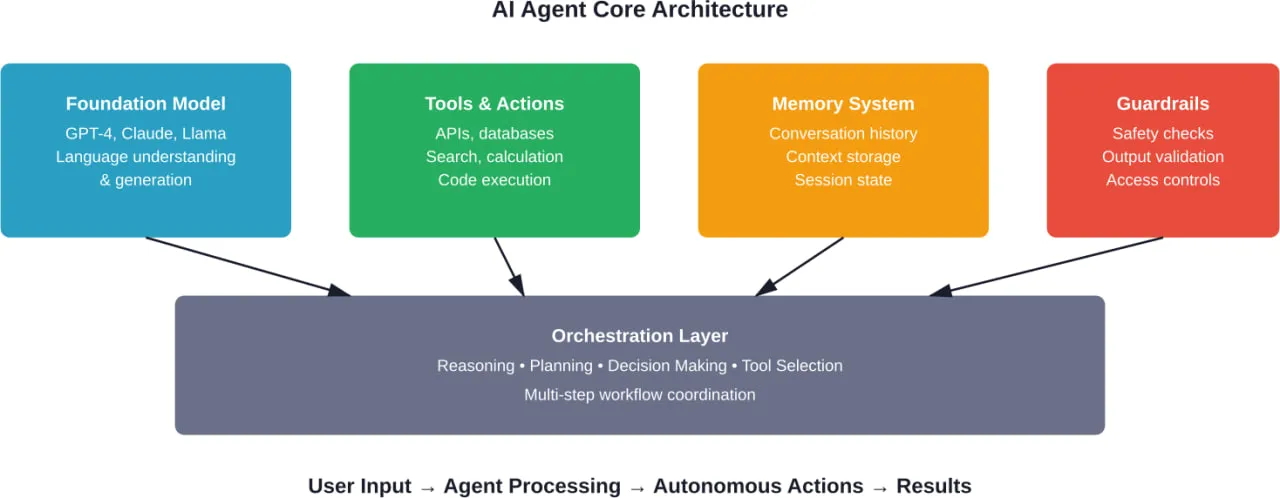
רכיבי ליבה ארכיטקטוניים

כל מערכת סוכנים יעילה מבוססת על מספר אבני יסוד הפועלות יחד.

שכבת מודל היסוד

מודלים לשוניים גדולים משמשים כמנוע ההסקת מסקנות. המודל מפרש מטרות, יוצר תוכניות ומחליט אילו פעולות לבצע בהמשך. אך המודל לבדו אינו הסוכן — הוא רק מרכיב אחד.

ארכיטקטורות סוכנים מודרניות תומכות בשילוב של מספר מודלים הפועלים יחד. מודל אחד עשוי לטפל בתיאום ברמה גבוהה, בעוד שמודלים ייעודיים מתמודדים עם משימות טכניות ספציפיות.

מערכות זיכרון

סוכנים זקוקים לזיכרון כדי לשמור על הקשר בין אינטראקציות שונות. זה כולל זיכרון לטווח קצר להקשר המשימה המיידי, וזיכרון לטווח ארוך לדפוסים שנלמדו ולמידע היסטורי.

לארכיטקטורת הזיכרון יש השפעה ישירה על יעילות הסוכנים. ללא ניהול זיכרון נאות, הסוכנים מאבדים את הדרך אל מטרותיהם, חוזרים על גישות שכשלו בעבר או מתעלמים מניסיון רלוונטי מהעבר.

שילוב כלים

הכלים מרחיבים את יכולות הסוכן מעבר ליצירת טקסט. סוכן עשוי להשתמש במנועי חיפוש לאיסוף מידע, בממשקי API לאחזור נתונים, במתורגמני קוד לביצוע חישובים או בשירותים ייעודיים לביצוע משימות בתחום ספציפי.

לדברי צוות ההנדסה של Anthropic, יעילותם של הנציגים תלויה במידה רבה בכלים העומדים לרשותם. לעיצוב הכלים יש חשיבות עצומה — כלים מעוצבים היטב, הכוללים תיעוד ברור ופורמטים מתאימים לתגובות, משפרים באופן משמעותי את ביצועי הנציגים.

מרכיבי הליבה של ארכיטקטורת סוכני בינה מלאכותית והקשרים ביניהם

אמינות באמצעות ארכיטקטורה

מחקר שנערך באוניברסיטת הלמסטד מדגיש כי אמינות אינה דבר שניתן להוסיף לאחר פיתוח הסוכן — היא נקבעת על ידי בחירות ארכיטקטוניות כבר מהשלב הראשוני.

האופן שבו הרכיבים פועלים זה עם זה קובע אם הסוכנים מתנהגים באופן צפוי. ארכיטקטורה מתוכננת היטב יוצרת "מעקות בטיחות" טבעיים המונעים מצבי כשל נפוצים.

שקיפות ויכולת הסבר

על המשתמשים להבין מה עושים הסוכנים ומדוע. ללא שקיפות, פעולותיו של סוכן עלולות להיראות תמוהות או אפילו מדאיגות.

מחקרי חברת Anthropic בנושא פיתוח סוכנים בטוחים מדגישים זאת באמצעות דוגמה מובהקת: ללא תכנון שקוף, אדם המבקש מסוכן “להפחית את נטישת הלקוחות” עלול להתבלבל כאשר הסוכן פונה למחלקות התשתית בנוגע לתכנון המשרדים. אולם, כאשר השקיפות מתאימה, הסוכן מסביר את ההיגיון שעומד מאחורי פעולותיו — הוא גילה כי לקוחות שהוקצו לנציגי מכירות במשרדים פתוחים ורועשים סבלו משיעורי נטישה גבוהים יותר.

טיפול בשגיאות והתאוששות

סוכנים עלולים להיתקל בתקלות. כלים מחזירים שגיאות, שירותים חיצוניים קורסים, תוכניות לא מתנהלות כמצופה. ארכיטקטורות חזקות צופות תקלות אלה וכוללות מנגנוני התאוששות.

מה המסקנה כאן? אל תניחו שההצלחה מובטחת. צרו סוכנים שיאמתו תוצאות, יזהו חריגות ויתאימו את האסטרטגיות כאשר הגישות הראשוניות נכשלות.

דפוסים שבאמת עובדים

יישומים בעולם האמיתי מתכנסים לכמה דפוסים מוכחים.

מערכות רב-סוכניות היררכיות

במקרה של משימות מורכבות, סוכן בודד לרוב אינו הפתרון האופטימלי. מערכות רב-סוכניות מתבססות על התמחות: סוכן ראשי מתאם את התכנון ברמה הגבוהה, בעוד שסוכנים משניים מטפלים בעבודה טכנית ספציפית או באיסוף מידע.

על פי התיעוד ההנדסי של Anthropic, כל סוכן משנה עשוי לבצע חקירה מעמיקה באמצעות עשרות אלפי טוקנים, אך הוא מחזיר לסוכן הראשי רק סיכום תמציתי ומרוכז של עבודתו. גישה זו מאזנת בין עומק לבין הקשר שניתן לניהול.

הערכות פנימיות מראות שמערכות מחקר רב-סוכניות מצטיינות במיוחד בטיפול בשאילתות מסוג "רוחב ראשון", הכוללות מספר כיוונים עצמאיים בו-זמנית.

הנדסת הקשר לעומת הנדסת פרומפט

ככל שמערכות הסוכנים מתבגרות, ניהול הקשר יעיל הופך להיות חשוב יותר מאשר מציאת ניסוח מושלם לפקודה. הקשר הוא משאב מוגבל — לסוכנים יש מגבלות על מספר התווים, והביצועים נפגעים כאשר ההקשר הופך להיות נרחב מדי.

אסטרטגיות להנדסת הקשר יעילה כוללות צמצום דינמי של ההקשר, סיכום היררכי ואחזור מידע סלקטיבי, במקום לטעון את כל המידע מראש.

תקנים ושיקולי בטיחות

עם התפתחות יכולותיהם של מערכות הסוכנים, המאמצים בתחום התקינה התגברו. ה-NIST הכריז בפברואר 2026 על "יוזמת התקינה לסוכני בינה מלאכותית" במטרה להבטיח שבינה מלאכותית סוכנית תוכל לפעול בבטחה, לתקשר בין מערכות שונות ולהיות מיושמת בביטחון.

היוזמה עוסקת באתגרים מכריעים: כיצד יכולים סוכנים להוכיח שהם פועלים מטעם משתמשים מורשים? כיצד יכולים מערכות סוכנים שונות לתקשר זו עם זו? אילו מנגנוני שקיפות צריכים להיות סטנדרטיים?

עבודת התקינה של IEEE מדגישה ארבעה תנאים למערכות בינה מלאכותית אמינות: יעילות, יכולת, אחריות ושקיפות. אלה אינם רק אידיאלים תיאורטיים — אלא דרישות מעשיות לפריסת סוכנים בענפים המפוקחים.

ביצועים בעולם האמיתי

פריסות מעשיות מניבות תוצאות מדידות. על פי מחקרים, חברת וודאפון הטמיעה מערכת תמיכה מבוססת סוכני בינה מלאכותית המטפלת ביותר מ-70% פניות לקוחות ללא התערבות אנושית, ובכך צמצמה באופן משמעותי את עלויות התפעול תוך שיפור זמני התגובה.

אך היעילות משתנה באופן דרמטי בהתאם לאיכות היישום. אותו מחקר מראה כי סוכנים המצוידים בכלים שתוכננו בצורה לקויה או בניהול הקשר לא מספק, משיגים לעתים קרובות תוצאות גרועות יותר מאשר גישות פשוטות יותר שאינן מבוססות על סוכנים.

קבלו תמיכה הנדסית למערכות הסוכנים המונעות ב-AI שלכם

עקרונות פיתוח סוכני בינה מלאכותית מתמקדים לרוב באוטונומיה, במודולריות ובתיאום. בפועל, רעיונות אלה תלויים באיכות הבנייה של המערכת הסובבת – ממשקי API, צינורות נתונים, שירותי בקאנד ותשתית שמבטיחים את יציבות המערכת לאורך זמן. זהו המקום שבו פרויקטים רבים מתחילים לקרוס – לא ברמת הקונספט, אלא בשלב היישום.

A-listware תומכת בשכבת הביצוע הזו באמצעות צוותי פיתוח ייעודיים ותמיכה בהנדסת תוכנה. החברה פועלת לאורך כל מחזור החיים של הפיתוח – מהגדרת הארכיטקטורה ועד לשילוב ותחזוקה – ומסייעת לצוותים לבנות מערכות אמינות סביב מוצרים המונעים על ידי בינה מלאכותית, ולא סביב הסוכנים עצמם.

אם עקרונות הסוכן ה-AI שלכם כבר הוגדרו אך עדיין אינם פועלים בסביבת הייצור, זהו בדרך כלל הזמן הנכון להיעזר בתמיכה הנדסית חיצונית. צרו קשר רשימת מוצרים א' כדי לסייע ביישום, בשילוב ובהרחבת המערכת שלכם.

שלבים מעשיים ליישום

אז איך בעצם מתחילים לבנות סוכנים?

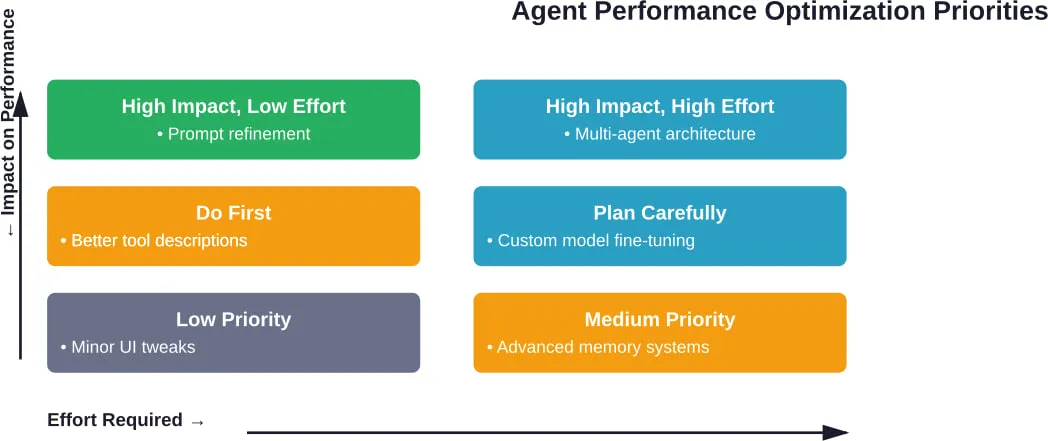
התחילו בפשטות. אל תתחילו עם מערכת תיאום מרובת סוכנים. בנו סוכן יחיד שמבצע משימה אחת היטב. הבינו כיצד פועלים יחד הנחיות, כלים וזיכרון לפני שתוסיפו מורכבות.

יש לתכנן את הכלים בקפידה. לכל כלי צריכה להיות תיעוד ברור, קלט ופלט מוגדרים היטב, ופורמטים מתאימים לתגובות. חברת Anthropic ממליצה לחשוף פרמטר של פורמט התגובה, שיאפשר לסוכנים לקבוע אם הכלים יחזרו תגובות תמציתיות או מפורטות.

יש לבצע הערכה כבר מהיום הראשון. ללא בדיקות שיטתיות, אי אפשר לדעת אם השינויים משפרים או פוגעים בביצועים. יש לבנות מאגרי נתונים להערכה המשקפים תרחישי שימוש אמיתיים.

ולבצע איטרציות בהתאם לדפוסי השימוש בפועל. הסוכנים חושפים התנהגויות בלתי צפויות בסביבת הייצור, שלא מתגלות כלל במהלך הבדיקות.

שלב היישוםמוקד עיקרימלכודות נפוצות שיש להימנע מהן
הקרןסוכן יחיד, משימה אחת ברורההנדסה מוגזמת באמצעות מסגרות
תכנון כליםתיעוד ברור, פורמטים גמישיםתיאורים מעורפלים של כלים, תוצאות נוקשות
שילוב זיכרוןאיתור הקשר רלוונטיטעינת הקשר רב מדי
הערכהמקרי בדיקה מהעולם האמיתיבדיקת "תרחישים חיוביים" בלבד
הפקהניטור, תיקון שגיאותבהנחה שהסוכנים תמיד יצליחו

שאלות נפוצות

  1. מה ההבדל בין סוכן בינה מלאכותית (AI) לבין יישום LLM רגיל?

יישומים סטנדרטיים מסוג LLM מגיבים לפקודות בודדות, בעוד שסוכני בינה מלאכותית פועלים באופן עצמאי להשגת מטרות לאורך מספר שלבים. הסוכנים שומרים את הזיכרון, מתכננים רצפי פעולות, משתמשים בכלים ומקבלים החלטות לגבי אופן השגת המטרות, מבלי להזדקק להתערבות אנושית בכל שלב.

  1. האם אני צריך מסגרת ייעודית כדי לבנות סוכני בינה מלאכותית?

לא. מחקרים וניסיון מעשי מראים שתבניות פשוטות וניתנות להרכבה משיגות ביצועים טובים יותר באופן עקבי מאשר מסגרות מורכבות. היישומים המוצלחים ביותר משתמשים בשילובים פשוטים של מודלי שפה, ממשקי API של כלים ומערכות זיכרון, ולא בספריות סוכנים ייעודיות.

  1. כיצד מערכות רב-סוכניות משפרות את הביצועים?

ארכיטקטורות רב-סוכניות מאפשרות התמחות — סוכן מתאם מטפל בתכנון ברמה גבוהה, בעוד שסוכנים-משנה מתמחים מטפלים בעבודה טכנית ספציפית או במחקר. גישה זו מנהלת את ההקשר ביעילות רבה יותר ומאפשרת בחינה מקבילה של נתיבי פתרון שונים.

  1. מהם האתגרים הגדולים ביותר בתחום אמינות הסוכנים?

האתגרים העיקריים כוללים התנהגות בלתי צפויה כאשר הסוכנים נתקלים במצבים בלתי צפויים, קושי באיתור באגים בתהליכי חשיבה רב-שלביים, ניהול הקשר ככל שהמשימות נעשות מורכבות יותר, והבטחת כי הסוכנים יכשלו בצורה "אלגנטית" במקום לייצר תוצאות מזיקות כאשר הכלים מחזירים שגיאות.

  1. עד כמה עיצוב הכלים חשוב ליעילות הסוכנים?

חשוב ביותר. לדברי צוותי ההנדסה של Anthropic, יעילותם של הנציגים תלויה אך ורק בכלים העומדים לרשותם. כלים שתוכננו היטב, הכוללים תיעוד ברור ופורמטים מתאימים לתגובות, משפרים באופן משמעותי את הביצועים, בעוד שכלים שתוכננו בצורה לקויה גורמים לנציגים להתקשות אפילו בביצוע משימות פשוטות.

  1. איזה תפקיד ממלאים הסטנדרטים בפיתוח סוכנים?

תקנים מבטיחים שסוכנים יוכלו לפעול באופן תואם בין מערכות שונות, להוכיח את הסמכתם ולפעול בצורה מאובטחת. יוזמת תקני הסוכנים המונעים על ידי בינה מלאכותית של ה-NIST, שהושקה בשנת 2026, מתמקדת ביצירת מסגרות לאמון, אבטחה ותאימות, ככל שהשימוש בסוכנים הולך ומתרחב בתעשיות שונות.

  1. האם על סוכנים להסביר תמיד את שיקוליהם?

כן, ברוב המקרים. שקיפות לגבי הסיבות שבגללן סוכנים נוקטים בפעולות מסוימות בונה אמון בקרב המשתמשים, מאפשרת איתור תקלות ומסייעת לזהות מתי סוכנים נוקטים באסטרטגיות לא מכוונות. ללא יכולת הסבר, החלטות הסוכנים עלולות להיראות שרירותיות או מעוררות חשש, דבר המגביל את השימוש המעשי בהם.

התקדמות בפיתוח סוכנים

כדי לבנות סוכני בינה מלאכותית יעילים, יש להבין שהארכיטקטורה היא הקובעת את האמינות, שהפשטות גוברת על המורכבות, ושכלי העבודה חשובים לא פחות מהמודלים.

התחום ממשיך להתפתח בקצב מהיר. יוזמות בתחום התקנים קובעות מסגרות לפריסה בטוחה. המחקר מבהיר אילו תבניות ארכיטקטוניות אכן עובדות בסביבת ייצור. והניסיון המעשי מראה כי היישומים המוצלחים ביותר מתחילים בפשטות ומוסיפים מורכבות רק כאשר יש לכך הצדקה ברורה.

עבור צוותים המוכנים לבנות מערכות סוכנים, הדרך קדימה ברורה: להתמקד ברכיבים מודולריים, לתכנן את הכלים בקפידה, ליישם שקיפות מההתחלה, ולבצע הערכה בלתי פוסקת לאור מקרי שימוש בעולם האמיתי. העקרונות חשובים יותר מהמסגרות.

AI Agent Architecture Diagram: 2026 Complete Guide

סיכום קצר: AI agent architecture diagrams visualize the core components of autonomous AI systems: reasoning layers, orchestration patterns, state management, and tool integration. Modern agent architectures typically follow a four-layer model encompassing LLM reasoning, orchestration logic, data infrastructure, and external tool connections. Understanding these architectural patterns helps developers build reliable, scalable agent systems for production environments.

The architecture behind AI agents determines whether a system performs reliably in production or collapses under real-world complexity. Yet most architecture discussions online show simplified stack diagrams that bear little resemblance to what development teams actually implement.

This guide breaks down AI agent architecture using visual diagrams, proven patterns from academic research, and implementations from organizations like Microsoft and CSIRO. The focus? What actually works when building autonomous systems that reason, remember, and act.

Understanding AI Agent Architecture Fundamentals

An AI agent architecture defines how autonomous systems perceive their environment, make decisions, and execute actions. Unlike traditional software that follows predetermined paths, agent architectures must handle uncertainty and adapt to dynamic conditions.

According to research published in the Agent Design Pattern Catalogue by CSIRO (Data61), foundation model-enabled agents leverage reasoning and language processing capabilities to operate autonomously. These systems don’t just respond to queries—they proactively pursue goals.

Here’s what separates true agent architectures from simple chatbots: agents maintain state across interactions, use tools to extend their capabilities, and employ reasoning strategies to break down complex tasks. A customer service bot that retrieves your account balance isn’t necessarily an agent. But a system that notices your payment pattern, proactively suggests a better plan, and handles the switch? That’s agent behavior.

Core Components of Agent Systems

Every functional agent architecture contains these foundational elements:

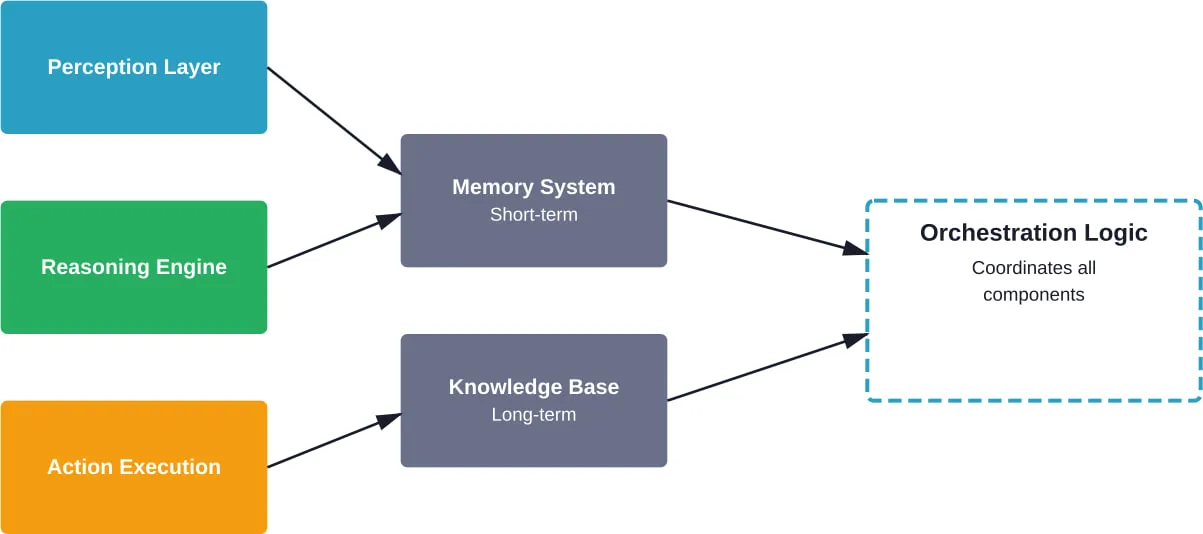
  • Perception layer: How the agent receives and processes information from its environment
  • Reasoning engine: The cognitive component, typically powered by large language models
  • Memory system: Both short-term context and long-term knowledge storage
  • Action execution: Tools and APIs the agent can invoke
  • Orchestration logic: The control flow that coordinates perception, reasoning, and action

Research from Halmstad University emphasizes that reliability in agentic AI stems directly from architectural choices. The way these components connect determines whether a system degrades gracefully under unexpected conditions or fails catastrophically.

Core components of AI agent architecture showing perception, reasoning, memory, action, and orchestration layers

The Four-Layer Agent Architecture Model

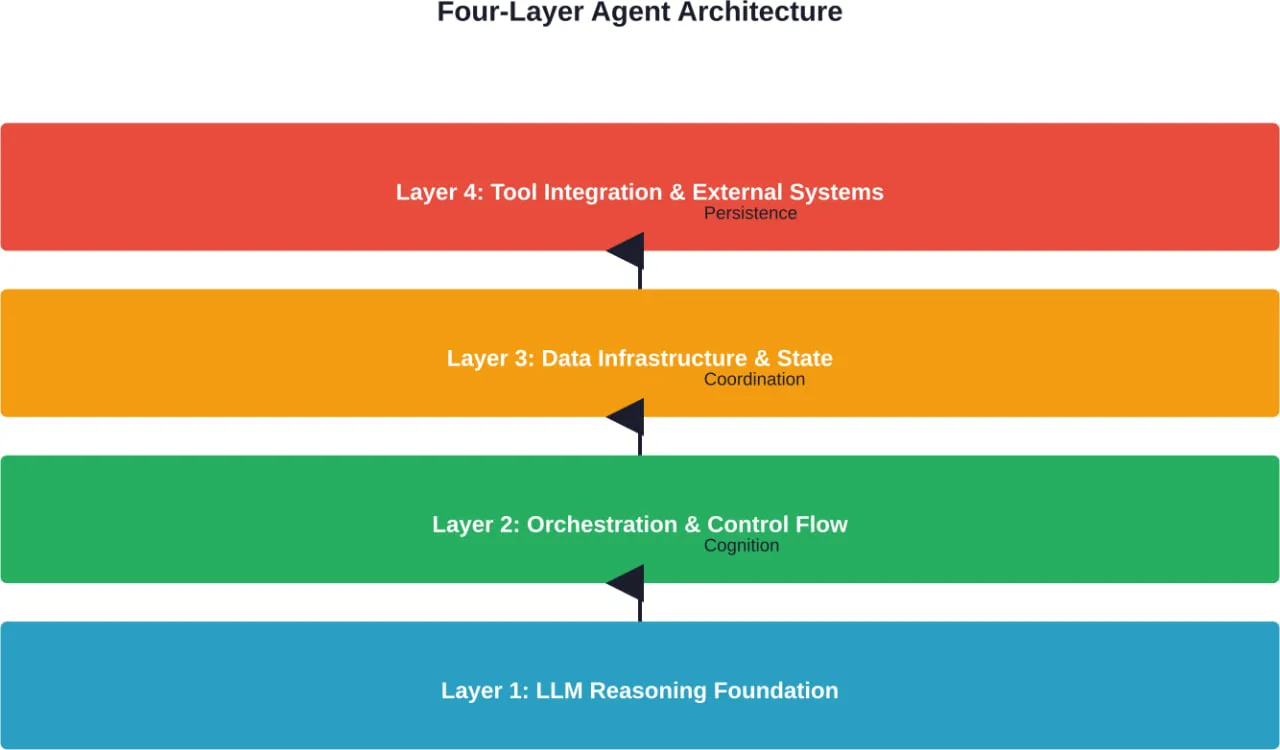
Modern production agent systems typically implement a four-layer architectural model. This structure emerged from practical experience building systems that handle real-world complexity without collapsing into unpredictable behavior.

Layer 1: LLM Reasoning Foundation

At the base sits the reasoning layer—usually one or more large language models. This layer handles natural language understanding, task decomposition, and decision-making. The LLM doesn’t run the entire system; it serves as the cognitive engine that interprets intent and plans actions.

Different reasoning patterns exist at this layer. Chain-of-thought prompting breaks complex problems into steps. ReAct (Reasoning + Acting) patterns interleave thinking and tool use. Tree-of-thought approaches explore multiple reasoning paths simultaneously.

Layer 2: Orchestration and Control Flow

The orchestration layer sits above reasoning and determines how the agent coordinates its actions. This is where architectural patterns become critical. According to AI agent orchestration patterns documentation, teams can choose from several proven approaches:

Patternתֵאוּרהכי מתאים ל
SequentialTasks execute one after another in predetermined orderPredictable workflows with clear dependencies
ConcurrentMultiple tasks run in parallel, results synthesizedIndependent operations that can happen simultaneously
Group ChatMultiple specialized agents collaborate through discussionComplex problems requiring diverse expertise
HandoffTasks pass between agents based on context and capabilityCustomer service, multi-stage processes
MagenticDynamically routes to appropriate specialized agentsUnpredictable task variety requiring flexibility

Sequential orchestration works when workflows are predictable. A travel booking agent that checks availability, then compares prices, then reserves a ticket follows sequential logic. Concurrent orchestration handles scenarios where multiple independent operations can happen at once—like an agent gathering data from five different APIs simultaneously.

Layer 3: Data Infrastructure and State Management

Agents need memory, and that requires infrastructure. This layer handles how agents store and retrieve information across interactions. Short-term memory maintains conversation context within a session. Long-term memory persists knowledge across sessions, often using vector databases for semantic search.

State management becomes critical in production. What happens when an agent crashes mid-task? The data infrastructure layer ensures the system can recover gracefully, resume interrupted workflows, and maintain consistency.

Layer 4: Tool Integration and External Systems

The top layer connects agents to external capabilities. This includes APIs, databases, search engines, calculators, code interpreters—anything that extends the agent’s abilities beyond pure language generation.

Tool integration requires careful interface design. Each tool needs a clear description the LLM can understand, explicit parameters, and robust error handling. According to CSIRO’s research on agent design patterns, well-designed tool interfaces dramatically improve agent reliability.

The four-layer model for AI agent architecture showing information flow from reasoning through orchestration to external systems

Multi-Agent System Architectures

Single-agent systems handle straightforward tasks well. But complex enterprise scenarios often require multiple specialized agents working together. Multi-agent architectures distribute cognition across several autonomous components, each with specific expertise.

Microsoft’s multi-agent reference architecture demonstrates how organizations deploy these systems at scale. Rather than building one massive agent that tries to do everything, teams create focused agents that collaborate through well-defined protocols.

When Multi-Agent Makes Sense

Not every problem needs multiple agents. Research from the University of Tunis examining agentic AI frameworks suggests multi-agent approaches excel in scenarios with:

  • Distinct domains of expertise that don’t overlap significantly
  • Tasks that naturally decompose into parallel subtasks
  • Requirements for different reasoning strategies within one workflow
  • Scale demands where single agents create bottlenecks

A financial analysis system might employ separate agents for market research, risk assessment, regulatory compliance, and portfolio optimization. Each agent specializes deeply in its domain, then collaborates with others to produce comprehensive recommendations.

Coordination Patterns in Multi-Agent Systems

Getting agents to work together requires explicit coordination mechanisms. The group chat pattern, described in Azure’s orchestration documentation, lets agents communicate through message passing. One agent poses questions, others respond with their specialized knowledge, and a coordinator synthesizes the discussion.

Handoff patterns work differently. Here agents explicitly transfer control to one another based on capability requirements. A customer service scenario might start with a general inquiry agent, hand off to a technical specialist for complex issues, then transfer to a billing agent for payment matters.

Hierarchical architectures introduce leader-follower relationships. A supervisor agent delegates subtasks to worker agents, monitors their progress, and integrates results. This pattern reduces coordination complexity but introduces single points of failure.

Orchestration Patterns Explained

The orchestration layer determines how agents execute tasks. Choosing the right pattern matters—it directly impacts reliability, performance, and maintainability. Research from Halmstad University emphasizes that architectural choices at this layer shape system reliability more than any other factor.

Sequential Orchestration

Sequential orchestration runs tasks one after another. Step one completes, then step two begins. This pattern works well when operations have clear dependencies and outcomes from early steps inform later decisions.

Consider a research agent analyzing a scientific paper. It might first extract the abstract, then identify key concepts, then search for related work, then synthesize findings. Each step builds on previous results, making sequential execution natural.

The downside? Latency. Every task waits for its predecessor to finish completely.

Concurrent Orchestration

Concurrent patterns run multiple tasks simultaneously when operations don’t depend on each other. A market analysis agent might query ten different data sources in parallel, then combine results once all queries complete.

This dramatically reduces total execution time for independent operations. But it introduces complexity—handling partial failures, managing timeouts, and synthesizing potentially conflicting information.

Group Chat and Collaborative Patterns

Group chat orchestration treats multiple specialized agents as participants in a discussion. Agents take turns contributing insights, building on each other’s responses. A coordinator agent facilitates the conversation and determines when enough information exists to conclude.

This pattern excels for problems without clear solution paths. Complex strategy questions, creative brainstorming, and scenarios requiring diverse perspectives benefit from collaborative exploration.

Magentic and Dynamic Routing Patterns

The magentic pattern, referenced in Microsoft’s agent work, dynamically routes tasks to appropriate specialized agents based on content analysis. Rather than predetermined workflows, the system analyzes each request and intelligently selects which agent should handle it.

This provides flexibility for unpredictable workloads but requires robust routing logic and clear agent capability definitions.

Orchestration PatternLatencyמורכבותגְמִישׁוּתאֲמִינוּת
Sequentialגבוהנמוךנמוךגבוה
Concurrentנמוךבינוניבינוניבינוני
Group Chatגבוהגבוהגבוהבינוני
Handoffבינוניבינוניבינוניגבוה
Magentic/Dynamicבינוניגבוהגבוהבינוני

State Management and Memory Architecture

Agents without memory can’t maintain context, learn from interactions, or handle complex multi-step workflows. The memory architecture determines what information persists, how it’s retrieved, and when it expires.

Short-Term Context Windows

Short-term memory handles immediate conversation context. For LLM-based agents, this typically means the prompt window—everything the model sees in the current interaction. Context windows have grown substantially, with some models now handling hundreds of thousands of tokens.

But larger windows don’t eliminate the need for smart context management. Relevant information should appear near the beginning and end of prompts, where models pay more attention. Irrelevant details consume tokens without improving performance.

Long-Term Knowledge Storage

Long-term memory persists across sessions. This might include user preferences, historical interactions, learned facts, or accumulated expertise. Vector databases enable semantic search over stored information—agents retrieve contextually relevant memories rather than exact keyword matches.

Implementation often combines structured databases for factual information with vector stores for semantic recall. A customer service agent might query a SQL database for account details while simultaneously searching vector embeddings for similar past issues.

State Persistence and Recovery

Production systems need state persistence. What happens when an agent crashes halfway through a multi-step booking process? Without proper state management, users start over. With it, the system recovers and resumes.

This requires explicit state tracking—recording which steps completed successfully, what decisions the agent made, and what remains to be done. State can persist in databases, message queues, or specialized orchestration frameworks.

When Agents Are Overkill

Here’s what marketing materials won’t tell you: agents aren’t always the right architecture. Many problems that seem to require agents actually work better with simpler approaches.

If workflows are 80% predictable, deterministic code often performs better than autonomous agents. A trip planning website that needs to check availability, compare prices, and book tickets doesn’t need agent architecture. It needs a well-designed API integration.

Agents introduce overhead—computational cost, latency, unpredictability, and debugging complexity. These costs make sense when problems genuinely require reasoning, adaptation, and autonomous decision-making. But forcing agent architecture onto simple workflows creates unnecessary complexity.

Direct Model Calls vs Agent Systems

According to Azure’s architecture guidance, direct model calls suffice for classification, summarization, and simple transformations. No orchestration, no tools, no state management. Just prompt engineering and model inference.

Agent architectures become valuable when tasks require multiple steps, external information gathering, or adaptive strategies based on intermediate results. The decision point: can you map the workflow in advance, or does the agent need to figure it out dynamically?

Tool Integration and API Design

Tools extend agent capabilities beyond language generation. But poorly designed tool interfaces lead to unreliable behavior, failed function calls, and frustrated debugging sessions.

Designing Tool Interfaces

Each tool needs three elements: a clear natural language description, explicit parameters with types and constraints, and robust error handling. The description tells the LLM when and why to use the tool. Parameters define exactly what information the tool requires. Error handling ensures graceful degradation when operations fail.

Descriptions should be concise but specific. Instead of “searches the database,” write “searches customer records by email address or phone number, returning account details and purchase history.” Specificity helps models choose appropriate tools.

Function Calling Protocols

Modern LLMs support structured function calling—generating JSON that specifies tool invocation rather than natural language. This reduces parsing errors and makes tool usage more reliable.

But function calling requires well-defined schemas. Parameters need clear types, defaults, and validation rules. Optional versus required parameters must be explicit. Ambiguous interfaces lead to hallucinated parameters and failed calls.

Production Deployment Considerations

Getting agents working in development differs dramatically from running them reliably in production. According to NIST’s AI Agent Standards Initiative announced on February 17, 2026, standardizing agent deployment practices matters for security, interoperability, and reliability.

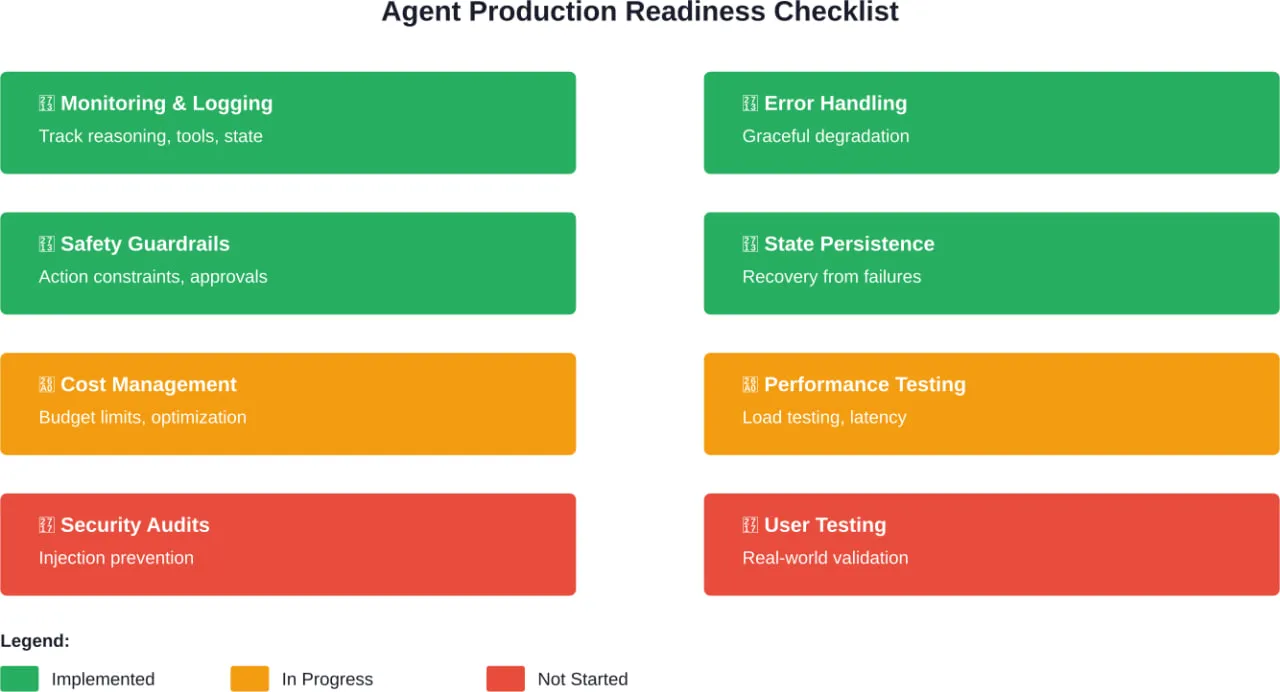
Monitoring and Observability

Traditional application monitoring doesn’t capture what matters for agents. Teams need visibility into reasoning steps, tool invocations, state transitions, and decision paths—not just latency and error rates.

Logging every LLM interaction helps debug unexpected behavior. Tracking which tools get called reveals usage patterns. Recording state transitions shows where workflows break down.

בטיחות ומעקות בטיחות

Autonomous systems need constraints. Guardrails prevent agents from taking harmful actions, exceeding authority, or making irreversible decisions without confirmation.

This might include approval workflows for high-stakes actions, spending limits for agents with API access, or content filtering for customer-facing systems. NIST’s AI Risk Management Framework provides guidance on building trustworthy AI systems with appropriate safeguards.

Cost Management

LLM API calls aren’t free. Agents that make dozens of reasoning steps per task can generate significant costs. Production deployments need cost monitoring, budget alerts, and optimization strategies.

Caching repeated queries, using smaller models for simple decisions, and implementing rate limiting all help control expenses without sacrificing capability.

Production readiness checklist for deploying AI agents showing implementation status across critical categories

Enterprise Multi-Agent Patterns

Enterprise deployments face unique challenges: legacy system integration, compliance requirements, scale demands, and organizational complexity. Research on multi-agent control systems highlights how architectural choices cascade through organizational structures.

Cloud Architecture for Agent Systems

Cloud infrastructure provides the scalability agents need. Cloud Run, Lambda, and similar serverless platforms handle variable workloads without manual scaling. But agents introduce stateful requirements that complicate serverless deployment.

Hybrid approaches work well—serverless functions for stateless reasoning steps, managed databases for state persistence, and message queues for orchestration. This separates concerns and lets each component scale independently.

אבטחה ותאימות

Autonomous systems that access sensitive data or make consequential decisions need robust security. This includes authentication for tool access, authorization for agent actions, audit logging, and data protection.

Security considerations in AI agent systems should be architectural—built into system design rather than bolted on afterward. Authentication tokens expire, permissions follow least-privilege principles, and sensitive data never appears in unencrypted logs.

אינטגרציה עם מערכות קיימות

Enterprises rarely start fresh. Agent architectures must integrate with decades of legacy systems, each with its own APIs, data formats, and quirks.

Adapter patterns help—building translation layers that convert between agent expectations and legacy system realities. This isolates complexity and lets agent logic remain clean while adapters handle messy integration details.

Architectural Decision Framework

Choosing the right agent architecture requires evaluating tradeoffs across multiple dimensions. Here’s a framework for making informed decisions:

Complexity Assessment

Start by assessing task complexity honestly. Can workflows be mapped in advance? Do tasks require reasoning and adaptation? Would simpler approaches work?

If 80% of cases follow predictable paths, consider deterministic systems with agent fallback for edge cases. Full agent architecture makes sense when task variety exceeds what predetermined logic can handle.

Reliability Requirements

How critical is consistent behavior? Customer service agents need high reliability—unpredictable responses damage trust. Research agents exploring novel strategies tolerate more variability.

Higher reliability requirements favor simpler orchestration patterns, extensive testing, and strong guardrails. Lower stakes scenarios allow more experimental architectures.

Latency Constraints

Real-time interactions demand fast response. Multi-step reasoning workflows introduce latency. If users expect sub-second responses, complex agent architectures might not fit.

Latency-sensitive applications benefit from concurrent orchestration, smaller models for quick decisions, and aggressive caching. Batch workflows tolerate more elaborate reasoning.

Scale Projections

How many concurrent users will the system support? Single-agent architectures create bottlenecks at scale. Multi-agent systems distribute load but introduce coordination overhead.

High-scale deployments favor stateless components, horizontal scaling, and asynchronous processing. Small-scale internal tools can use simpler architectures.

Turn Your AI Architecture Into a Working System

An architecture diagram shows how AI agents, services, and data flows should connect. The challenge usually starts after that – integrating components, setting up stable backend logic, and making sure everything runs reliably in a real environment. This is where many teams slow down, especially when internal resources are limited or focused on other priorities.

A-listware supports this stage from an engineering perspective. The company provides dedicated development teams that handle backend systems, integrations, APIs, and infrastructure around AI-driven solutions. The focus is not on building AI agents themselves, but on making sure the surrounding system works as expected and scales without constant fixes.

If your architecture is already defined but not yet implemented, this is the point to bring in extra engineering capacity. Contact רשימת מוצרים א' to support the development, integration, and rollout of your system.

שאלות נפוצות

  1. What’s the difference between agent architecture and traditional software architecture?

Traditional software follows predetermined logic paths—given input X, execute steps A, B, C. Agent architectures introduce autonomous decision-making. The system determines its own action sequence based on goals and environmental feedback. This requires components for reasoning, state management, and tool orchestration that don’t exist in conventional architectures.

  1. Do I need multiple agents or will one suffice?

Single agents work well for focused tasks within one domain. Multiple agents make sense when problems naturally decompose into distinct specializations, require parallel processing, or benefit from diverse reasoning approaches. Most teams start with single-agent systems and introduce multiple agents only when complexity or scale demands it.

  1. Which orchestration pattern should I choose?

Sequential orchestration works for predictable workflows with clear step dependencies. Concurrent patterns reduce latency when operations are independent. Group chat excels for complex problems without obvious solutions. Choose based on whether your workflow is predetermined (sequential), parallelizable (concurrent), or exploratory (group chat).

  1. How do I handle agent failures in production?

Implement state persistence so agents can resume after failures. Use retry logic with exponential backoff for transient errors. Design graceful degradation—if the agent can’t complete a task autonomously, escalate to human operators rather than failing silently. Monitor state transitions to detect where failures occur most frequently.

  1. What’s the role of vector databases in agent architecture?

Vector databases enable semantic memory—agents retrieve contextually relevant information rather than exact keyword matches. This supports long-term memory across sessions, retrieval-augmented generation workflows, and finding similar past cases. Not every agent needs vector storage, but those requiring extensive knowledge recall benefit significantly.

  1. How do I prevent agents from taking harmful actions?

Implement guardrails at multiple levels. Constrain which tools agents can access. Require approval workflows for high-stakes actions. Set spending limits for agents with financial access. Filter outputs for inappropriate content. Design fail-safes that prevent irreversible actions. AI risk management frameworks provide guidance on building appropriate safeguards.

  1. Should I build agent infrastructure from scratch or use a framework?

Frameworks like LangChain, AutoGen, and Semantic Kernel provide orchestration primitives, tool integration patterns, and state management utilities. They accelerate development but introduce dependencies and opinions. Building from scratch offers control but requires more engineering effort. For most teams, frameworks provide a reasonable starting point with the option to replace components later.

Conclusion: Building Reliable Agent Systems

AI agent architecture determines whether autonomous systems perform reliably or fail unpredictably. The four-layer model—reasoning foundation, orchestration logic, data infrastructure, and tool integration—provides a proven structure for building production systems.

Architectural choices cascade through every aspect of system behavior. Sequential versus concurrent orchestration affects latency. State management approaches determine recovery capabilities. Multi-agent versus single-agent designs impact scale characteristics.

But architecture alone doesn’t guarantee success. Production-ready agents require monitoring, guardrails, cost management, and security. According to NIST’s AI Agent Standards Initiative, standardizing these practices will enable broader adoption with appropriate safeguards.

Start with the simplest architecture that meets requirements. Add complexity only when simpler approaches prove insufficient. Test extensively with realistic workloads before production deployment. Monitor agent behavior closely in early releases.

The research is clear: reliability stems from thoughtful architectural choices, not merely from using the latest models. Teams that invest in solid architecture, proper tooling, and robust state management build agents that actually work when deployed.

Ready to implement these patterns? Begin by mapping your specific use case to the orchestration patterns and architectural layers described here. Prototype with a single-agent system, validate behavior, then scale complexity as requirements demand.

AI Agent vs Chatbot: Key Differences in 2026

סיכום קצר: AI agents and chatbots differ fundamentally in autonomy and capability. Chatbots respond to user prompts with scripted or learned responses, while AI agents proactively plan, make decisions, and execute multi-step tasks independently. Chatbots handle routine queries effectively, but agents tackle complex workflows that require reasoning, tool use, and continuous learning.

The artificial intelligence landscape has shifted dramatically. What started as simple chatbots answering FAQs has evolved into sophisticated AI agents capable of autonomous decision-making and task execution.

But here’s where things get confusing. The terms “chatbot” and “AI agent” often get used interchangeably, yet they represent fundamentally different technologies with distinct capabilities and limitations.

According to recent industry data, 84% of developers now use AI tools, and eight in ten enterprises have deployed agent-based AI. The market for these technologies is projected to grow at 45.8% annually through 2030. With this rapid adoption comes a critical need to understand what separates these technologies.

The distinction isn’t just semantic. It fundamentally impacts how effectively teams can automate workflows, serve customers, and scale operations.

What Is a Chatbot?

Chatbots are software applications designed to simulate human conversation. They respond to user inputs with pre-programmed or learned responses, handling interactions through text or voice interfaces.

Traditional chatbots operate on rule-based logic. When someone asks a question, the bot matches keywords or patterns to trigger specific responses. Think of early customer service bots that could only handle a narrow set of queries.

Modern chatbots leverage large language models and natural language processing. These AI-powered versions understand context better and generate more natural responses. But they still share a fundamental characteristic: they’re reactive systems that require human prompts to initiate action.

The architecture is straightforward. The user sends input, the system processes it, and returns output. That’s the loop.

Core Characteristics of Chatbots

Chatbots excel at conversational tasks within defined boundaries. They wait for input, interpret what the user wants, and respond accordingly.

Their learning capabilities vary by type. Rule-based bots don’t learn at all—they follow scripts. Machine learning-powered bots adapt over time based on training data, but this adaptation happens through retraining cycles rather than real-time autonomous improvement.

Response quality depends heavily on how well the system was trained and how closely the user’s query matches patterns the bot recognizes. Step outside those patterns, and chatbots typically struggle or escalate to human support.

Common Chatbot Use Cases

Customer service remains the primary chatbot application. These bots handle frequently asked questions, password resets, order status checks, and appointment scheduling.

E-commerce sites deploy chatbots for product recommendations and shopping assistance. Healthcare organizations use them for symptom checking and appointment booking. Educational institutions implement chatbots for student inquiries about courses and campus services.

The pattern is consistent: chatbots work best for high-volume, repetitive queries with clear parameters and expected outcomes.

Lippert, a component manufacturer with over $5.2 billion in annual sales, uses chatbots to manage significant customer service communications volume. These systems handle routine inquiries efficiently, freeing human agents for complex issues requiring judgment and expertise.

What Is an AI Agent?

AI agents represent a fundamentally different paradigm. According to research from ArXiv, AI agents are modular systems driven by large language models that can plan, reason, and execute tasks autonomously.

Here’s what makes them distinct: agents don’t just respond to prompts. They identify goals, break them into steps, choose tools, execute actions, and adapt based on results—all without requiring human input at each stage.

OpenAI’s ChatGPT agent, introduced in July 2025, exemplifies this shift. It can handle requests like “look at my calendar and brief me on upcoming client meetings based on recent news about their companies.” The agent accesses multiple tools, researches information, and compiles a comprehensive brief autonomously.

The architectural difference is substantial. Agents operate in perception-decision-action loops. They observe their environment, process that information through reasoning modules, decide on actions, execute those actions using available tools, and learn from outcomes.

Autonomy and Decision-Making

Autonomy is the defining characteristic of AI agents. Research on levels of autonomy for AI agents highlights this as both transformative opportunity and significant risk.

Agents make decisions without human intervention at every step. When faced with a task, they determine the optimal approach, select appropriate tools from their available toolkit, and execute multi-step workflows.

This autonomy operates on a spectrum. Some agents handle narrow tasks with minimal supervision. Others manage complex operations requiring extensive reasoning and tool orchestration.

But autonomy brings challenges. How much independent action should an agent have? What guardrails prevent harmful decisions? These questions shape how organizations deploy agent systems.

Learning and Adaptation

AI agents continuously improve performance through experience. Unlike chatbots that require manual retraining, agents incorporate feedback loops that enable real-time learning.

OpenAI developers note that modern agents utilize long-term memory through session notes and persistent context. This allows agents to remember preferences, past decisions, and user-specific information across interactions.

Session-level memory holds contextual information relevant to current interactions—things like “this trip is a family vacation” or “budget under $2,000.” Persistent memory stores long-term user preferences and historical patterns that inform future decisions.

This learning architecture transforms how agents operate over time. They don’t just execute tasks; they optimize execution based on accumulated experience.

Operational flow comparison: Chatbots follow linear prompt-response patterns while AI agents execute autonomous loops with planning, execution, and learning phases.

Tool Use and Integration

AI agents interact with external systems through tool use. They can access databases, call APIs, execute code, browse the web, and manipulate files—all as needed to accomplish tasks.

The difference from traditional automation is crucial. Agents decide which tools to use and when to use them based on the specific context of each task. Traditional automation follows predefined workflows; agents dynamically construct workflows.

OpenAI’s agent implementation demonstrates this capability. When asked to create a presentation, the agent identifies relevant research sources, extracts key information, generates slides, formats content, and compiles the final deliverable—choosing appropriate tools at each stage without explicit instructions for every step.

Key Differences Between AI Agents and Chatbots

The distinctions between these technologies matter for business decisions, security implications, and operational outcomes.

יכולתAI Chatbotsסוכני AI 
AutonomyRequire human promptsProactively identify needs and act independently
LearningLimited adaptationContinuously learn and improve performance
Task ComplexitySingle-step responsesMulti-step workflows with reasoning
Tool AccessMinimal external integrationDynamic tool selection and execution
Decision-MakingPattern matchingGoal-oriented planning
MemorySession-based onlyLong-term context retention

Autonomy: Reactive vs Proactive

Chatbots wait. Agents act.

That’s the fundamental divide. Chatbots respond when users initiate contact. They’re excellent at this reactive role—answering questions, providing information, guiding users through processes.

AI agents operate proactively. They identify tasks that need completion, determine optimal approaches, and execute without waiting for explicit prompts at each decision point.

This distinction shapes deployment scenarios. Organizations use chatbots where human-initiated interaction makes sense. Agents fit situations requiring ongoing monitoring, complex workflows, or tasks that benefit from autonomous execution.

Complexity Handling

Chatbots handle straightforward queries effectively. Ask about store hours, and the bot provides the answer instantly. Request a password reset, and it guides through the process.

But complexity exposes limitations. Multi-step problems requiring research, tool integration, and adaptive decision-making overwhelm traditional chatbot architectures.

AI agents thrive on complexity. They break large problems into manageable components, execute each component using appropriate methods, and synthesize results into coherent outcomes.

Research capabilities illustrate this gap. A chatbot might provide links to relevant information. An agent researches the topic across multiple sources, synthesizes findings, evaluates credibility, and delivers comprehensive analysis—all autonomously.

Security Implications

The Cloud Security Alliance highlights critical security differences between chatbots and agents. Both automate tasks, but agents’ autonomous decision-making creates distinct risk profiles.

Chatbots operate within narrow boundaries. Their limited scope constrains potential security issues. An attacker compromising a chatbot gains access to conversational interfaces but not necessarily broader system control.

Agents with tool access and autonomous execution capabilities present expanded attack surfaces. Compromised agents potentially access databases, execute code, modify files, and interact with multiple systems—all autonomously.

This doesn’t make agents inherently less secure, but it demands different security approaches. Organizations deploying agents need robust authentication, authorization frameworks, activity monitoring, and guardrails preventing harmful actions.

Use Cases: When to Choose Chatbots vs AI Agents

The technology choice depends on task characteristics, complexity requirements, and operational constraints.

Optimal Chatbot Applications

Customer support for common issues represents the ideal chatbot scenario. When most queries fall into predictable categories with known solutions, chatbots excel.

FAQ automation, appointment scheduling, order tracking, basic troubleshooting, and information retrieval all fit chatbot capabilities well. These tasks have clear parameters, defined outcomes, and benefit from instant availability.

Lead qualification for sales teams works effectively with chatbots. The bot asks predefined questions, categorizes responses, and routes qualified leads to appropriate sales representatives.

Internal employee support for HR queries, IT help desk tickets, and policy questions leverages chatbots to reduce support team workload while providing immediate assistance.

Optimal AI Agent Applications

Complex workflow automation benefits from agent capabilities. Tasks requiring multiple tools, conditional logic, and adaptive decision-making justify agent deployment.

Research and analysis projects that involve gathering information from diverse sources, evaluating credibility, synthesizing insights, and producing comprehensive reports align with agent strengths.

Intelligent scheduling that considers multiple calendars, participant preferences, meeting requirements, and optimal timing represents a natural agent application. The agent autonomously handles negotiations, proposes options, and finalizes arrangements.

Data processing workflows that require extracting information from various formats, transforming data structures, validating accuracy, and loading results into target systems leverage agent reasoning and tool use.

Content creation that demands research, outline development, drafting, fact-checking, and formatting showcases agent capabilities for managing complex creative processes.

Hybrid Approaches

Many organizations deploy both technologies in complementary roles. Chatbots handle initial customer interactions, routine queries, and information gathering. When complexity exceeds chatbot capabilities, the system escalates to AI agents for resolution.

This tiered approach optimizes resource allocation. High-volume simple tasks get handled by efficient chatbot systems. Complex edge cases receive agent attention. Human experts focus on situations requiring judgment, empathy, or specialized expertise.

Slack’s Agentforce integration exemplifies this hybrid model. The platform combines conversational interfaces for common requests with agent capabilities for complex workflows requiring tool integration and multi-step execution.

Performance and Evaluation Challenges

Measuring AI agent effectiveness presents unique challenges compared to chatbot evaluation.

Chatbot Evaluation Metrics

Chatbot performance metrics are relatively straightforward. Response accuracy, conversation completion rate, user satisfaction scores, and escalation frequency provide clear performance indicators.

String matching, pattern recognition accuracy, and intent classification metrics quantify how well chatbots understand user inputs and select appropriate responses.

Response time, availability, and throughput measure operational performance. These metrics align well with chatbot use cases focused on high-volume routine interactions.

AI Agent Evaluation Complexity

Anthropic’s research on agent evaluation highlights the complexity challenge. The capabilities that make agents useful—autonomy, tool use, multi-step reasoning—also make them difficult to evaluate.

Traditional metrics fall short. String matching doesn’t capture whether an agent made optimal tool choices. Binary pass/fail tests miss nuanced performance differences in complex workflows.

Effective agent evaluation requires multi-faceted approaches. Code-based graders verify specific outcomes. LLM-based evaluators assess reasoning quality and decision appropriateness. Human review validates complex scenarios where automated evaluation proves insufficient.

OpenAI’s testing of their agent implementation demonstrates these challenges. When running up to eight parallel attempts and selecting based on confidence scores, their agent’s performance on hard benchmarks like FrontierMath showed significant variation—highlighting the non-deterministic nature of agent systems.

Evaluation ApproachStrengthsLimitations 
String Match ChecksFast, deterministic, easy to implementMisses semantic equivalence and contextual appropriateness
Binary TestsClear pass/fail criteriaOverlooks quality gradations in complex tasks
LLM-Based GradersAssess reasoning and context understandingSubject to evaluator model biases and limitations
Human ReviewCaptures nuanced judgmentExpensive, slow, doesn’t scale

The Evolution from Chatbots to Agents

The shift from passive assistants to active agents represents the most significant transformation in artificial intelligence since ChatGPT’s launch.

Early chatbots were glorified search interfaces. Ask a question, get an answer. The intelligence lay in matching queries to knowledge bases.

Large language models expanded conversational capabilities. Chatbots became more natural, handling broader query variations and generating contextually appropriate responses. But they remained fundamentally reactive.

The agent era began when systems gained tool use, memory, and planning capabilities. Now AI doesn’t just respond—it acts.

Research from ArXiv on AI agents versus agentic AI provides conceptual clarity. AI agents are modular systems with distinct perception, reasoning, and action components. Agentic AI refers to the broader capability of systems to exhibit agency—autonomous goal-directed behavior.

This evolution continues. Current agent systems represent early implementations. As architectures mature, capabilities expand, and deployment patterns emerge, the distinction between reactive and agentic systems will likely sharpen further.

Implementation Considerations

Deploying either technology requires careful consideration of technical, operational, and organizational factors.

Technical Requirements

Chatbot implementation demands natural language processing capabilities, intent recognition systems, and response generation mechanisms. Integration with existing knowledge bases and customer service platforms shapes technical architecture.

AI agent deployment requires substantially more infrastructure. Agents need access to tool APIs, secure credential management, execution environments, monitoring systems, and error handling frameworks.

The technical complexity difference is significant. Chatbots can often be deployed as standalone services with limited integration points. Agents typically require deep integration with multiple systems to function effectively.

Governance and Control

Chatbot governance focuses on response quality, brand consistency, and escalation protocols. Control mechanisms are relatively straightforward since chatbots operate within narrow boundaries.

Agent governance demands frameworks for autonomy levels, action permissions, monitoring, and intervention. Organizations must define which actions agents can take independently versus requiring human approval.

Research on levels of autonomy for AI agents emphasizes that autonomy is a double-edged sword. The same capabilities that enable transformative outcomes create serious risks. Agent developers must calibrate appropriate autonomy levels for specific applications.

Cost Structures

Chatbot costs scale primarily with conversation volume. Each interaction consumes API calls for language model processing, but costs remain predictable and proportional to usage.

Agent costs are more complex. Tool usage, execution time, parallel processing, and memory storage all factor into operational expenses. A single agent task might require dozens of API calls across multiple services.

The cost equation depends on task value. Agents handling high-value complex workflows justify higher per-task costs. For high-volume simple tasks, chatbot economics typically prove more favorable.

Get the Technical Setup Right with A-listware

In comparisons like AI agents vs chatbots, the difference is often explained at the logic level. In practice, both rely on the same foundation – backend services, integrations, data handling, and infrastructure that keeps everything running. A-listware focuses on custom software development and dedicated engineering teams that build and support these systems, covering architecture, development, deployment, and maintenance.

The real challenge is not choosing between a chatbot or an agent, but turning either into a stable product. A-listware supports the full development lifecycle and helps integrate AI into working applications without splitting work across multiple vendors. Talk to רשימת מוצרים א' and get a clear path from concept to implementation.

Real-World Performance Data

When OpenAI tested their agent implementation on challenging benchmarks, results highlighted both capabilities and limitations. The agent achieved a 44.4 HLE score on hard math problems when running eight parallel attempts and selecting based on confidence—substantially better than single-attempt performance but still showing room for improvement.

This performance pattern illustrates agent characteristics. Non-deterministic execution means multiple attempts may produce different quality outcomes. Confidence scoring helps select better results, but doesn’t guarantee optimal solutions.

Zendesk reports that their AI agents are trained on billions of real customer service interactions, enabling continuous improvement based on live data. This scale of training data contributes to more reliable performance in customer service contexts.

Performance ultimately depends on task alignment with system capabilities. Agents excel where complexity, tool use, and reasoning provide value. Chatbots perform best in high-volume scenarios with clear patterns and defined outcomes.

Future Trajectories

The agent market is projected to grow at 45.8% annually through 2030. This growth reflects expanding capabilities, broader use cases, and increasing enterprise adoption.

Chatbots aren’t disappearing. They’re evolving into more capable conversational interfaces while maintaining their core reactive architecture for appropriate use cases.

The convergence is partial. Some applications benefit from agentic capabilities added to conversational interfaces. Others work better with specialized agents handling complex workflows behind the scenes.

Multi-agent architectures represent an emerging pattern. Instead of monolithic AI systems, organizations deploy specialized agents for different domains, with coordination mechanisms enabling collaboration. Research from IEEE on LLM-driven multi-agent architectures explores these coordination frameworks.

The technical distinction between chatbots and agents will likely persist because it reflects fundamentally different design philosophies and operational patterns. But both technologies will continue advancing within their respective paradigms.

שאלות נפוצות

  1. Can AI agents replace chatbots completely?

Not necessarily. While AI agents offer more advanced capabilities, chatbots remain more efficient for high-volume simple interactions. The reactive nature of chatbots actually provides advantages for straightforward query-response scenarios where autonomy adds unnecessary complexity and cost. Many organizations benefit from using both technologies in complementary roles rather than replacing one with the other.

  1. Are AI agents more expensive to operate than chatbots?

Generally yes, on a per-task basis. AI agents consume more computational resources, make multiple API calls per task, utilize tool integrations, and require more sophisticated infrastructure. However, cost-effectiveness depends on task value. For complex workflows that would otherwise require human labor, agents can provide significant ROI despite higher operational costs compared to chatbots.

  1. How do I know which technology my business needs?

Assess task characteristics. If most interactions involve straightforward queries with predictable responses, chatbots fit well. If workflows require multi-step processes, tool integration, research, or autonomous decision-making, agents provide better value. Many businesses benefit from starting with chatbots for common tasks and adding agents for complex scenarios that justify the additional investment.

  1. What are the main security risks of AI agents versus chatbots?

AI agents present expanded attack surfaces due to tool access and autonomous execution capabilities. A compromised agent potentially interacts with multiple systems, executes code, and modifies data—all autonomously. Chatbots have more limited scope, constraining potential damage from security breaches. Organizations deploying agents need robust authentication, monitoring, and guardrails to mitigate risks associated with autonomous system access.

  1. Can chatbots learn and improve like AI agents?

Chatbots can improve through retraining on new data, but this happens in discrete cycles rather than continuously during operation. AI agents incorporate feedback loops enabling real-time learning and adaptation. Agents also maintain long-term memory across interactions, while chatbots typically only retain session-level context. This learning architecture difference fundamentally separates how the technologies evolve and optimize performance over time.

  1. Do AI agents require more technical expertise to implement?

Yes, substantially more. AI agents need integration with multiple tools, secure credential management, execution monitoring, error handling frameworks, and governance systems. Chatbots can often be deployed with pre-built platforms and minimal custom development. Organizations considering agent deployment should assess whether they have the technical capabilities to implement, monitor, and maintain these more complex systems effectively.

  1. What industries benefit most from AI agents versus chatbots?

Chatbots serve nearly all industries for customer service, support, and information delivery. AI agents provide particular value in industries with complex workflows: financial services for research and analysis, healthcare for care coordination, logistics for dynamic scheduling and routing, and professional services for document processing and client deliverable creation. The determining factor is task complexity rather than industry sector.

מַסְקָנָה

AI agents and chatbots serve distinct purposes in the artificial intelligence landscape. Chatbots excel at reactive, conversational tasks with clear parameters and high volume. AI agents tackle complex, multi-step workflows requiring autonomy, tool use, and adaptive decision-making.

The choice between these technologies depends on specific business needs, task characteristics, and operational constraints. Organizations don’t necessarily need to choose one over the other—hybrid approaches leveraging both technologies in complementary roles often deliver optimal results.

As AI capabilities continue advancing, both chatbots and agents will evolve. Chatbots will become more sophisticated in natural language understanding and response quality. Agents will expand tool access, improve reasoning capabilities, and develop more robust governance frameworks.

The fundamental distinction will persist: chatbots respond, agents act. Understanding this difference enables businesses to deploy the right technology for each use case, maximizing value while managing costs and risks appropriately.

Ready to implement AI solutions for your business? Start by mapping your current processes, identifying high-volume routine tasks suited for chatbots and complex workflows that justify agent capabilities. Test both technologies in controlled environments before full deployment, and establish clear metrics for evaluating performance against your specific business objectives.

AI Agent Orchestration: A 2026 Guide to Multi-Agent Systems

סיכום קצר: AI agent orchestration coordinates multiple specialized AI agents within a unified system to tackle complex tasks that single agents can’t handle alone. It manages agent communication, task distribution, and workflow coordination through frameworks like LangGraph, CrewAI, and AutoGen. Organizations adopting this approach report measurable improvements in automation capabilities and task completion rates.

Single AI agents have limits. They excel at focused tasks but struggle when complexity scales. This reality is driving a fundamental shift in how organizations deploy artificial intelligence.

Enter agent orchestration.

Instead of building one massive agent that attempts everything, orchestration coordinates multiple specialized agents. Each agent handles what it does best. A central coordinator ensures they work together seamlessly.

According to MIT Sloan Management Review and BCG research, traditional AI adoption has climbed to 72% over the past eight years. But here’s the interesting part: organizations are adopting agentic AI rapidly, well before they have orchestration strategies in place.

That gap creates both opportunity and risk.

What Is AI Agent Orchestration?

AI agent orchestration is the process of coordinating multiple specialized AI agents within a unified system to efficiently achieve shared objectives. Rather than relying on a single, general-purpose AI solution, orchestration employs a network of agents that collaborate through defined protocols and workflows.

Think of it like conducting an orchestra. Each musician plays a different instrument with unique capabilities. The conductor doesn’t play every instrument—they coordinate timing, balance, and collaboration to create something no individual musician could achieve alone.

The same principle applies to AI agents.

According to research published in arXiv, orchestrated multi-agent systems represent the next stage in artificial intelligence deployment. The paper “The Orchestration of Multi-Agent Systems: Architectures, Protocols, and Enterprise Adoption” by Adimulam, Gupta, and Kumar describes how enterprise adoption requires careful attention to both technical architecture and organizational protocols.

Core Components of Agent Orchestration

Effective orchestration systems include several essential elements:

  • Central coordinator: Manages task distribution and workflow execution
  • Specialized agents: Individual agents optimized for specific capabilities
  • Communication protocols: Standardized methods for agents to exchange information
  • State management: Tracks progress, context, and intermediate results
  • Tool integration: Connects agents to external systems and data sources

The AgentOrchestra framework introduced by Zhang et al. implements a hierarchical multi-agent system using the Tool-Environment-Agent (TEA) Protocol. This approach allows a central planner to orchestrate specialized sub-agents for web navigation, data analysis, and file operations while supporting continual adaptation.

Why Multi-Agent Systems Outperform Single Agents

Single agents face fundamental limitations. As tasks grow more complex, monolithic agents struggle with context management, specialized knowledge, and parallel processing.

Anthropic’s engineering team documented this reality when building their Research feature. Anthropic’s internal evaluations show that multi-agent research systems excel especially for breadth-first queries that involve pursuing multiple independent directions simultaneously.

Here’s why orchestrated systems win:

  • Specialization beats generalization: A data analysis agent optimized for statistical work will outperform a general-purpose agent attempting the same task. Orchestration lets teams deploy the right tool for each job.
  • Parallel processing accelerates completion: Multiple agents can tackle different aspects of a problem simultaneously. One agent researches background information while another analyzes data and a third drafts documentation.
  • Failure isolation improves reliability: When one specialized agent fails, others continue working. The system degrades gracefully instead of collapsing entirely.
  • Scalability becomes manageable: Adding new capabilities means creating a new specialized agent, not retraining an entire monolithic system.

Comparison of single agent limitations versus multi-agent orchestration advantages in production systems

Common Orchestration Patterns and Architectures

Not all orchestration looks the same. Different use cases demand different architectural approaches.

Hierarchical Orchestration

A central coordinator agent receives tasks, breaks them into subtasks, and delegates them to specialized agents. The coordinator monitors progress, handles errors, and synthesizes results.

This pattern works well for complex workflows with clear task decomposition. The AgentOrchestra framework implements this approach with a central planner managing specialized sub-agents for distinct capabilities.

Peer-to-Peer Collaboration

Agents communicate directly without a central coordinator. Each agent maintains awareness of other agents’ capabilities and negotiates task distribution collaboratively.

Research on “Multi-Agent Collaboration via Evolving Orchestration” by Dang et al. explores how agents can evolve their coordination patterns over time without rigid hierarchical structures.

Pipeline Orchestration

Agents operate in sequence, with each agent’s output becoming the next agent’s input. This linear flow works well for data processing pipelines and sequential workflows.

Dynamic Orchestration

The orchestration pattern adapts based on task requirements. According to the AdaptOrch research by Yu, task-adaptive multi-agent orchestration becomes increasingly important as large language models from diverse providers converge toward comparable benchmark performance.

When model capabilities converge, the differentiator becomes how effectively systems orchestrate those models for specific tasks.

Leading AI Agent Orchestration Frameworks

Several frameworks have emerged as leaders in the orchestration space. Each brings different strengths and trade-offs.

Frameworkהכי מתאים לKey Strengthשימוש עיקרי
LangGraphComplex workflowsState managementMulti-step reasoning tasks
CrewAIRole-based teamsAgent specializationCollaborative workflows
AutoGenConversational agentsDialogue managementInteractive systems
OpenAI Agents SDKNative integrationשילוב פלטפורמהOpenAI-centric stacks
AWS BedrockEnterprise deploymentאבטחה ותאימותRegulated industries

LangGraph

Built on LangChain, LangGraph excels at managing stateful workflows. It represents agent interactions as graphs, where nodes represent agents or operations and edges represent data flow.

The framework provides robust state persistence, making it suitable for long-running workflows that need to pause and resume.

CrewAI

CrewAI emphasizes role-based agent design. Teams define agents with specific roles, goals, and backstories. The framework handles task delegation based on agent capabilities.

This approach feels natural for teams thinking about agent systems in terms of organizational roles.

AutoGen

Developed by Microsoft Research, AutoGen focuses on conversational agent systems. Agents communicate through structured dialogues, with built-in support for human-in-the-loop interactions.

AutoGen works particularly well for applications requiring back-and-forth reasoning between multiple agents.

OpenAI Agents SDK

OpenAI’s native SDK provides tight integration with their models and tools. According to documentation on multi-agent portfolio collaboration, the SDK simplifies orchestration for teams already invested in the OpenAI ecosystem.

The SDK handles much of the coordination complexity automatically, though it offers less flexibility than framework-agnostic options.

Infrastructure Requirements for Production Orchestration

Orchestration frameworks need robust infrastructure. State management, message queuing, and data persistence become critical at scale.

Redis has emerged as a popular infrastructure layer for production orchestration. According to analysis comparing orchestration platforms, Redis provides several primitives that multi-agent systems require:

  • Low-latency state storage: Agents need fast access to shared state
  • Message queuing: Task distribution and inter-agent communication
  • Pub/sub messaging: Event-driven coordination patterns
  • Vector storage: Semantic search for agent knowledge bases

According to Redis platform comparisons, Redis 8 delivers up to 87% faster command execution, up to 2x throughput improvement, and up to 35% memory savings. Performance matters when agents need to coordinate in real-time.

Typical multi-agent orchestration architecture showing coordinator, specialized agents, infrastructure layer, and external integrations

Implementing Agent Orchestration: Practical Steps

Moving from concept to production requires methodical execution. Here’s how successful implementations typically unfold.

Step 1: Define Task Boundaries

Start by mapping the complete workflow. Which tasks can be isolated? Which requires coordination? Which needs sequential execution versus parallel processing?

Clear task boundaries enable effective agent specialization.

Step 2: Design Agent Specializations

Create agents optimized for specific capabilities. A data extraction agent needs different tools and prompts than a summarization agent or a code generation agent.

According to MAS-Orchestra research by Ke et al., understanding and improving multi-agent reasoning requires holistic orchestration with controlled benchmarks. Testing agent capabilities individually before orchestrating them together reduces debugging complexity.

Step 3: Establish Communication Protocols

Agents need standardized ways to exchange information. The Tool-Environment-Agent (TEA) Protocol used by AgentOrchestra provides one model: agents interact through a shared environment using standardized tool interfaces.

Define message formats, error handling conventions, and state update protocols before building complex workflows.

Step 4: Implement State Management

Multi-agent systems accumulate state across multiple interactions. Which agent maintains which state? How do agents access shared context?

Robust state management prevents inconsistencies and enables workflow resumption after failures.

Step 5: Build Monitoring and Observability

Orchestrated systems are harder to debug than single agents. Implement logging, tracing, and metrics from the start.

Track agent interactions, task completion times, error rates, and resource utilization. Observability isn’t optional at scale.

Step 6: Test Failure Scenarios

What happens when an agent times out? When external APIs return errors? When agents provide contradictory outputs?

Testing failure modes reveals whether orchestration logic handles edge cases gracefully or cascades failures across the system.

Build the System Around Your Agents with A-listware

Multi-agent systems don’t fail at the logic level – they break at integration, data flow, and coordination between services. Orchestration means APIs, backend services, cloud infrastructure, and stable communication between components. A-listware focuses on custom software development and dedicated engineering teams that handle this layer, from architecture and API design to integration and deployment.

When multiple agents need to work together, the challenge is building a system that stays reliable over time, not just in a demo. A-listware supports the full development cycle, including backend engineering, integrations, and cloud setup, so everything runs as one system instead of separate parts. Talk to רשימת מוצרים א' to build the system around your multi-agent setup.

Benefits of Agent Orchestration

Organizations adopting orchestration report several tangible benefits:

  • Improved task completion rates: Specialized agents handle complex workflows more reliably than general-purpose alternatives. Each agent focuses on what it does best.
  • Faster development cycles: Teams can develop and test individual agents independently. Adding new capabilities doesn’t require retraining entire systems.
  • Better resource utilization: Orchestration enables dynamic scaling. Expensive agents run only when needed, while lighter agents handle routine tasks.
  • Enhanced maintainability: Debugging a specific agent is simpler than debugging a monolithic system. Issues can be isolated to individual components.
  • Flexibility in model selection: Different agents can use different underlying models. Use the most cost-effective model for each task rather than paying for premium models unnecessarily.

Challenges and Limitations

Orchestration isn’t without trade-offs. Several challenges complicate implementation.

Increased System Complexity

Managing multiple agents introduces coordination overhead. More components mean more potential failure points. Development teams need orchestration expertise beyond basic prompt engineering.

Latency Accumulation

Each agent interaction adds latency. Sequential workflows with multiple agents can take significantly longer than single-agent approaches. Careful design is required to minimize unnecessary round trips.

Cost Management

Multiple agents mean multiple API calls. Without careful cost controls, orchestrated systems can become expensive quickly. Monitoring token usage across all agents becomes essential.

Testing Complexity

Testing multi-agent interactions requires sophisticated test environments. Simple unit tests don’t capture emergent behaviors from agent collaboration. Integration testing becomes critical but time-consuming.

Security and Access Control

Different agents may need different permission levels. Research from IEEE on accountability-based architectural tactics for agent cooperation in LLM-based multi-agent systems highlights the importance of proper access controls.

An agent with database write access shouldn’t have the same permissions as a read-only research agent.

Enterprise Adoption Considerations

Enterprise deployment raises additional concerns beyond technical implementation.

Governance and Compliance

Regulated industries need audit trails showing which agent made which decision. NIST’s AI Risk Management Framework provides guidance on cultivating trust in AI technologies while mitigating risk.

Agent orchestration systems should log agent interactions, decision rationale, and data access patterns to support compliance requirements.

ניהול שינויים

According to MIT Sloan Management Review research on the emerging agentic enterprise, leaders must rethink workforce design when deploying agent systems. Digital agents are rapidly becoming crucial workforce components.

Organizations need frameworks for determining when agents should act autonomously versus when human oversight is required.

Skill Development

Teams need training in orchestration frameworks, prompt engineering, and distributed system design. The skill set differs from traditional software development.

Investing in education early prevents technical debt accumulation.

Real-World Use Cases

Orchestration shines in specific scenarios where single agents struggle.

Research and Analysis

Anthropic’s multi-agent research system demonstrates orchestration’s power for complex research tasks. Multiple agents pursue independent research directions simultaneously, synthesizing findings into comprehensive reports.

Breadth-first queries that require exploring multiple angles benefit significantly from parallel agent execution.

פיתוח תוכנה

Code generation workflows benefit from specialized agents handling different aspects. One agent analyzes requirements, another designs architecture, a third writes code, and a fourth handles testing.

Each agent focuses on its specialty rather than attempting end-to-end generation.

שירות לקוחות

Customer inquiries often require multiple capabilities: understanding intent, retrieving account information, processing transactions, and generating responses. Orchestrating specialized agents for each step creates more reliable customer experiences.

Data Processing Pipelines

Extract-transform-load workflows map naturally to orchestrated agents. One agent handles data extraction, another performs transformations, a third validates quality, and a fourth loads results.

Pipeline orchestration provides clear boundaries between processing stages.

Best Practices for Successful Orchestration

Based on successful implementations across industries, several patterns consistently emerge:

  • Start simple and scale gradually: Begin with two or three agents handling well-defined tasks. Add complexity only after validating core orchestration logic works reliably.
  • Design for observability from day one: Implement comprehensive logging and monitoring before workflows become complex. Debugging multi-agent systems without proper observability is nearly impossible.
  • Use idempotent operations: Design agent actions so repeated execution produces the same result. This enables safe retry logic when failures occur.
  • Implement circuit breakers: When an agent or external service fails repeatedly, stop sending requests. Circuit breakers prevent cascading failures across the orchestration system.
  • Version agent definitions: As agents evolve, maintain version history. This enables rollback when changes introduce regressions and supports A/B testing different agent implementations.
  • Separate orchestration logic from agent logic: Orchestration code should focus on coordination, not domain-specific processing. This separation makes both components easier to test and maintain.

The Future of Agent Orchestration

Several trends are shaping where orchestration technology heads next:

  • Self-optimizing orchestration: Systems that automatically adjust orchestration patterns based on observed performance. The AdaptOrch research on task-adaptive multi-agent orchestration points toward frameworks that dynamically reconfigure themselves.
  • Standardized protocols: As adoption grows, industry standardization becomes inevitable. IEEE AI Standards for Agentic Systems indicate growing attention to interoperability and shared protocols.
  • Enhanced security models: More sophisticated access control and permission systems tailored specifically for agent interactions.
  • Cross-organization orchestration: Agents from different organizations collaborating through secure, standardized interfaces. This enables new business models and partnership structures.
  • Hybrid human-agent teams: Orchestration frameworks increasingly incorporate human workers alongside AI agents, managing coordination between both types of participants seamlessly.

שאלות נפוצות

  1. What’s the difference between agent orchestration and workflow automation?

Agent orchestration specifically coordinates AI agents that make autonomous decisions, while workflow automation executes predefined sequences without intelligent decision-making. Orchestrated agents adapt to context and handle exceptions dynamically, whereas traditional automation follows rigid rules. The distinction matters because orchestrated systems can handle complexity and ambiguity that breaks traditional automation.

  1. Do I need multiple LLMs for agent orchestration?

Not necessarily. Orchestration can use a single LLM with different prompts and tools for each agent, or mix different models optimized for specific tasks. Cost-conscious implementations often use one powerful model for complex reasoning agents and lighter models for simpler tasks. The choice depends on performance requirements and budget constraints.

  1. How many agents should an orchestration system include?

Start with 2-3 agents and expand based on demonstrated need. More agents increase coordination complexity exponentially. Many successful implementations use 3-7 specialized agents. Beyond 10 agents, hierarchical orchestration with sub-coordinators becomes necessary to manage complexity.

  1. Can orchestrated agents work with existing APIs and databases?

Yes. Agents access external systems through tool integrations. Most frameworks support function calling that lets agents interact with APIs, databases, and internal services. The infrastructure layer handles authentication, rate limiting, and access control for these integrations.

  1. What’s the typical latency overhead from orchestration?

Each agent interaction adds 1-5 seconds depending on model speed and complexity. Sequential workflows with 5 agents might add 5-25 seconds compared to a single agent. Parallel execution reduces this overhead significantly. Latency-sensitive applications should minimize sequential dependencies and use faster models for coordination agents.

  1. How do I handle conflicting outputs from different agents?

Implement a resolution strategy in the coordinator: voting mechanisms, confidence scoring, or designated authority hierarchies. Some frameworks allow a supervisory agent to evaluate conflicting outputs and make final decisions. Testing should include scenarios where agents disagree to validate resolution logic works correctly.

  1. Is agent orchestration suitable for real-time applications?

It depends on latency requirements. Applications tolerating 5-10 second response times work well with orchestration. For sub-second requirements, orchestration overhead may be prohibitive unless using highly optimized infrastructure and parallel execution. Real-time systems should benchmark carefully before committing to orchestrated architectures.

מַסְקָנָה

AI agent orchestration represents a fundamental shift in how organizations deploy artificial intelligence. Single agents hit capability ceilings that orchestrated systems transcend through specialization and coordination.

The technical foundations are maturing rapidly. Frameworks like LangGraph, CrewAI, and AutoGen provide production-ready orchestration capabilities. Infrastructure layers like Redis deliver the performance and reliability needed at scale.

But technology alone doesn’t guarantee success.

Effective orchestration requires thoughtful architecture, robust observability, and careful change management. Organizations racing to adopt agentic AI without orchestration strategies risk building fragile systems that fail under production load.

The opportunity is significant. Research shows orchestrated multi-agent systems excel at complex tasks that single agents cannot handle reliably. Organizations that master orchestration gain competitive advantages in automation capabilities and operational efficiency.

Start with well-defined use cases. Build simple orchestration patterns first. Invest in infrastructure and observability from the beginning. Scale complexity gradually as teams develop expertise.

The orchestrated future is arriving faster than most organizations expect. Teams that develop orchestration capabilities now will lead their industries. Those waiting for perfect clarity will find themselves perpetually behind.

The choice is straightforward: master coordination now, or struggle with complexity later.

Agentic AI vs AI Agents: Key Differences in 2026

סיכום קצר: AI agents are modular, task-specific systems that execute predefined workflows with limited autonomy, while agentic AI represents collaborative ecosystems of goal-driven agents that adapt, learn, and coordinate independently. The key distinction lies in autonomy level, learning capability, and architectural complexity—AI agents follow instructions, whereas agentic AI systems reason toward goals and handle dynamic, multi-step challenges with minimal human oversight.

The terminology around artificial intelligence keeps evolving, and the latest confusion? AI agents versus agentic AI. They sound interchangeable, but they’re fundamentally different in design philosophy, capability, and application.

Understanding this distinction isn’t academic hairsplitting. According to research published on arXiv by Sapkota, Roumeliotis, and Karkee, AI agents are characterized as modular systems driven by LLMs and LIMs with task-specific focus, while agentic AI represents collaborative ecosystems where multiple agents coordinate toward shared goals with advanced autonomy.

And the adoption timeline is aggressive. According to industry projections, by 2028, 33% of enterprise software will have integrated agentic AI capabilities—up from less than 1% in 2024. That’s a massive architectural shift happening right now.

So what separates these two approaches? Let’s break down the conceptual taxonomy, architectural differences, and practical implications.

What Are AI Agents?

AI agents operate as self-contained systems designed to perceive their environment, reason through available data, and execute specific actions. Think of them as sophisticated automation tools with decision-making capabilities baked in.

They follow a linear processing loop: perception → reasoning → action. The agent receives input, applies predefined logic or learned patterns, then executes a response. This works beautifully for well-defined tasks with clear parameters.

Here’s the thing though—AI agents typically require human intervention when scenarios deviate from expected patterns. They excel at specific workflows but struggle with ambiguity or multi-step challenges that require dynamic replanning.

Common examples include chatbots that answer customer queries, recommendation engines that suggest products, or code completion tools that predict the next line based on context. These systems are intelligent within their domain but operate independently rather than collaboratively.

According to industry reports, a significant majority of companies are planning to implement AI agents within the next three years, making them a foundational technology for enterprise automation.

Core Characteristics of Traditional AI Agents

Traditional AI agents share several defining traits that distinguish them from more advanced agentic architectures.

First, they’re reactive systems. They respond to inputs rather than proactively pursuing objectives. An AI agent processes requests as they arrive but doesn’t maintain long-term goals or contextual memory across sessions.

Second, they operate with constrained autonomy. While they can make decisions without constant human input, those decisions happen within tightly defined guardrails. Deviation from the script typically triggers fallback behaviors or human escalation.

Third, they’re designed for single-task optimization. Each agent handles one job well—whether that’s summarizing documents, routing support tickets, or analyzing sentiment. Cross-domain reasoning isn’t the objective.

What Is Agentic AI?

Agentic AI represents a paradigm shift from task executors to goal-oriented problem solvers. Instead of single agents performing isolated functions, agentic systems deploy multiple coordinating agents that adapt their approach based on evolving conditions.

Research including work from the Tata Institute of Social Sciences characterizes agentic AI as collaborative ecosystems where agents share memory, coordinate actions, and collectively pursue complex objectives that no single agent could achieve independently.

The architecture introduces orchestration layers that manage agent communication, resource allocation, and conflict resolution. Agents don’t just execute—they plan, delegate, verify, and iterate until goals are met.

Real talk: this isn’t just about throwing more agents at a problem. It’s about emergent intelligence through coordination. According to Anthropic’s engineering documentation, multi-agent research systems excel especially for breadth-first queries that involve pursuing multiple independent directions simultaneously.

MIT Sloan’s analysis describes agentic AI as systems that are “semi- or fully autonomous and thus able to perceive, reason, and act on their own,” marking a clear evolution beyond the prompt-response patterns of earlier generative AI implementations.

The Architectural Evolution

Where traditional AI agents use linear workflows, agentic AI introduces hierarchical and networked structures. A main coordinating agent might orchestrate specialized subagents, each handling deep technical work or tool-based information retrieval.

According to Anthropic’s engineering documentation, each subagent might explore extensively using tens of thousands of tokens, but returns only condensed summaries of 1,000-2,000 tokens to the main agent. This context management strategy prevents overwhelming the orchestration layer while enabling thorough investigation.

The system maintains a shared state across agents. Memory isn’t siloed—agents can access previous findings, build on each other’s work, and avoid redundant exploration. This collaborative memory transforms isolated tool usage into coherent problem-solving.

Key Differences That Matter

Now, this is where it gets interesting. The distinctions between AI agents and agentic AI aren’t just semantic—they fundamentally change what’s possible.

Characteristicסוכני AIבינה מלאכותית סוכנתית
Autonomy LevelOperate within predefined frameworks, require human intervention for complex decisionsCan function with limited oversight, self-correct, and adapt strategies dynamically
Learning CapabilityStatic or periodic model updates, minimal runtime adaptationContinuous learning from interactions, environmental feedback, and agent collaboration
Task ScopeSingle-task optimization, domain-specific executionMulti-domain coordination, complex goal decomposition, cross-functional problem solving
Decision ArchitectureRule-based or pattern-matching within constraintsStrategic planning, reasoning chains, multi-step problem decomposition
מודל שיתוף פעולהIsolated execution, minimal inter-agent communicationNetworked agents with shared memory, delegation, and conflict resolution

Autonomy and Agency

The autonomy gap is substantial. AI agents execute tasks when triggered. Agentic systems pursue objectives proactively, determining not just how to complete a task but whether it’s the right task to begin with.

OpenAI’s practical guide on building governed AI agents emphasizes that agentic scaffolding requires rethinking control mechanisms. Instead of permission-based workflows, organizations implement governed autonomy—agents operate independently within organizational policies encoded as constraints rather than checklists.

This shift mirrors the principal-agent framework from economics. As research from UC Berkeley’s California Management Review explains, agentic AI introduces principal-agent dynamics where organizations must balance granting autonomy against maintaining accountability.

Learning and Adaptation

Traditional AI agents are trained once and deployed. Updates happen through retraining cycles managed by data scientists. The agent doesn’t improve from individual interactions—it applies what it learned during training.

Agentic AI systems incorporate feedback loops that enable runtime learning. When an agent encounters a novel scenario, it doesn’t just log an error—it explores alternative approaches, tests hypotheses, and incorporates successful strategies into its operational model.

But wait. This doesn’t mean agentic systems are completely autonomous learners. They still operate within safety boundaries and governance frameworks. The learning happens within controlled parameters that prevent drift or unintended optimization.

Architectural Complexity

Single-agent architectures are conceptually straightforward. One model, one set of tools, one execution context. Debugging, testing, and deployment follow familiar software engineering patterns.

Agentic systems introduce orchestration challenges. How do you manage state across multiple agents? What happens when agents reach conflicting conclusions? How do you attribute decisions in a collaborative system?

Anthropic’s engineering team highlights context engineering as a critical discipline. Building effective agentic systems requires carefully curating what information each agent receives, how agents summarize findings for coordination, and when to compress or expand context windows.

יישומים בעולם האמיתי ומקרי שימוש

The theoretical distinctions translate into practical differences in deployment scenarios and outcomes.

Where Traditional AI Agents Excel

AI agents dominate in scenarios with clear inputs, predictable workflows, and well-defined success criteria. Customer service chatbots that route inquiries, code completion assistants that suggest syntax, or document classifiers that tag content all leverage AI agent architecture effectively.

These implementations deliver immediate ROI because they automate repetitive cognitive tasks without requiring complex orchestration. The agent does one thing well, integrates into existing systems, and scales horizontally by adding more instances.

Many experts suggest that for organizations beginning AI adoption, starting with focused AI agents provides lower risk and faster time-to-value than jumping directly to agentic architectures.

Where Agentic AI Shines

Agentic AI addresses scenarios traditional agents can’t handle: complex research tasks requiring synthesis across multiple sources, strategic planning that involves evaluating trade-offs, or adaptive workflows where requirements change based on intermediate results.

Anthropic’s multi-agent research system demonstrates this capability. The system doesn’t just retrieve information—it formulates search strategies, evaluates source credibility, identifies knowledge gaps, and iteratively refines its understanding until the research objective is satisfied.

Similarly, Harvard Business School research on leadership in an agentic AI world describes how executives can deploy agentic systems as digital support teams that handle parallel workstreams, surface insights from disparate data sources, and maintain continuity across long-horizon projects.

In procurement scenarios mentioned in MIT Sloan’s analysis, agentic AI delivers value by reading reviews, analyzing metrics, and comparing attributes across numerous vendors—tasks that involve substantial evaluation effort and multiple decision criteria.

Comparison of typical use cases for AI agents versus agentic AI systems based on task complexity and coordination requirements

Implementation Challenges and Considerations

Both approaches come with trade-offs that impact development complexity, operational costs, and organizational readiness.

AI Agent Implementation Challenges

Traditional AI agents face scalability limits when task complexity increases. Each edge case requires explicit handling, leading to brittle systems that break under novel conditions.

They also struggle with context retention. Without persistent memory across interactions, agents can’t build understanding over time or reference previous conversations meaningfully. Every interaction starts from zero.

Integration complexity grows linearly with the number of agents deployed. If you’re running 50 specialized agents, you’re managing 50 separate systems with individual monitoring, updates, and failure modes.

Agentic AI Implementation Challenges

Agentic systems introduce orchestration overhead. Managing communication between agents, preventing infinite loops, and ensuring convergence toward goals requires sophisticated coordination logic that doesn’t exist in single-agent designs.

Debugging becomes substantially harder. When a multi-agent system produces an incorrect result, tracing the error requires examining agent interactions, shared state mutations, and decision chains across the collaborative network.

Cost considerations shift too. Running multiple agents simultaneously consumes more computational resources than single-agent execution. Token usage multiplies when agents explore different solution paths in parallel.

Stanford’s DigiChina research on how China approaches agentic AI notes that while Chinese developers are actively building agentic systems, specific governance and regulation frameworks are still nascent—a challenge facing the global industry.

The Practical Business Implications

So what does this mean for organizations evaluating AI investments? The choice between AI agents and agentic AI isn’t binary—it’s about matching architecture to requirements.

When to Choose AI Agents

Start with AI agents when you have clearly scoped automation targets. If the task can be described with a flowchart and doesn’t require cross-domain reasoning, traditional agents deliver faster ROI with lower implementation risk.

They’re ideal for augmenting existing workflows rather than reimagining processes. Drop an AI agent into your support queue to handle tier-one questions, freeing human agents for complex cases.

Organizations with limited AI expertise should begin here. The learning curve is gentler, failure modes are more predictable, and the technology is more mature.

When to Choose Agentic AI

Agentic AI makes sense for strategic initiatives where complexity justifies the investment. Research projects, market analysis, strategic planning, and other knowledge work that requires synthesis across multiple information sources benefit from multi-agent collaboration.

Consider agentic approaches when human experts currently spend significant time coordinating information gathering, evaluating options, and iterating toward solutions. That coordination overhead is exactly what agentic systems can automate.

Organizations with mature AI capabilities and robust governance frameworks are better positioned to deploy agentic systems successfully. The technology demands more sophisticated monitoring, clearer policy definition, and deeper technical expertise.

The Hybrid Approach

In practice, most organizations will run both. Specialized AI agents handle routine tasks while agentic systems tackle complex initiatives. The key is recognizing which architecture fits which problem.

ISACA’s analysis emphasizes that understanding these architectural differences matters for organizational decision-making. Choosing the wrong approach leads to over-engineered solutions that waste resources or under-powered systems that can’t deliver promised value.

Turning AI Concepts into Working Systems? Talk to A-listware

In discussions like agentic AI vs AI agents, most attention goes to concepts and architecture. In practice, the challenge is turning those ideas into working systems – setting up services, integrating components, and making everything stable in production. A-listware focuses on software development and dedicated engineering teams that handle this part, from planning and architecture to development, deployment, and support.

When moving from theory to real use, the work usually sits around the AI layer – building applications, managing data, and connecting systems. A-listware supports the full development cycle, including custom software, cloud applications, and ongoing maintenance, so projects don’t stall after the initial concept. If you’re working on agentic systems or AI agents, talk to רשימת מוצרים א' and see how to turn the concept into something that actually runs.

Future Trajectory and Evolution

The research landscape suggests both paradigms will continue evolving, but agentic AI represents the direction of travel for advanced AI capabilities.

According to industry projections, significant portions of organizations are expected to develop some form of AI orchestration capability by 2027—the foundation for agentic systems.

Look, the infrastructure is maturing rapidly. Cloud providers are adding native support for multi-agent workflows. Development frameworks are abstracting orchestration complexity. Governance tools are emerging to manage autonomous agent behavior at scale.

But traditional AI agents aren’t disappearing. They’re becoming more capable within their domains while agentic systems handle increasingly complex coordination challenges. The distinction will sharpen rather than blur.

NIST’s Center for AI Standards and Innovation is actively working on securing AI agents and systems, suggesting that governance frameworks will evolve alongside technical capabilities to enable safer deployment of autonomous AI.

Making the Right Choice for Your Context

The decision framework comes down to a few critical questions: What’s the scope of autonomy required? How much coordination complexity exists in the target workflow? What level of adaptability do you need?

If answers point toward narrow tasks with clear success criteria, AI agents deliver faster results with less architectural complexity. If answers involve multi-step reasoning, dynamic replanning, or cross-domain synthesis, agentic AI becomes worth the additional investment.

That said, don’t let architectural enthusiasm override practical constraints. Agentic AI requires more engineering sophistication, deeper governance consideration, and higher operational overhead. Organizations should build that capability deliberately rather than rushing adoption.

The terminology distinction between AI agents and agentic AI reflects a genuine architectural divide. Understanding that divide enables better technology decisions, more realistic project scoping, and clearer alignment between business objectives and AI capabilities.

שאלות נפוצות

  1. What’s the main difference between AI agents and agentic AI?

AI agents are individual systems that execute specific tasks with limited autonomy, while agentic AI consists of multiple coordinating agents that pursue complex goals with higher autonomy, shared memory, and adaptive planning. The key distinction lies in collaboration architecture and decision-making sophistication.

  1. Can AI agents work together like agentic AI systems?

Traditional AI agents can be connected through APIs and workflow tools, but they lack the orchestration layers, shared context, and dynamic coordination that define agentic systems. Simply linking multiple agents doesn’t create agentic AI—the architecture requires purpose-built coordination mechanisms.

  1. Is agentic AI always better than using AI agents?

Not necessarily. Agentic AI introduces complexity, cost, and orchestration overhead that may not be justified for straightforward automation tasks. AI agents often deliver better ROI for well-defined, single-domain problems. The right choice depends on task complexity and organizational capabilities.

  1. How much more expensive is agentic AI to implement?

Costs vary significantly based on system complexity, but agentic implementations typically require 3-5x more engineering effort for orchestration, monitoring, and governance compared to single-agent deployments. Runtime costs also increase due to parallel agent execution and higher token consumption.

  1. What skills do teams need to build agentic AI systems?

Building agentic systems requires expertise in distributed systems architecture, prompt engineering, context management, and AI governance. Teams need experience debugging complex agent interactions and implementing coordination logic—capabilities beyond what’s needed for traditional AI agent development.

  1. Are there governance concerns specific to agentic AI?

Yes. Agentic systems introduce accountability challenges because decisions emerge from agent collaboration rather than single-agent execution. Organizations must implement traceability mechanisms, define boundaries for autonomous decision-making, and establish protocols for when systems should escalate to human oversight.

  1. Will AI agents eventually become obsolete?

No. Specialized AI agents will continue serving focused use cases where their simplicity offers advantages. The trend is toward hybrid architectures where AI agents handle routine tasks while agentic systems tackle complex coordination challenges. Both paradigms have enduring value.

מַסְקָנָה

The distinction between agentic AI and AI agents isn’t just terminology—it represents fundamentally different approaches to building intelligent systems. AI agents excel at focused automation within defined parameters. Agentic AI unlocks collaborative problem-solving for complex, multi-step challenges requiring coordination and adaptation.

Understanding this difference enables better architecture decisions, more realistic project planning, and clearer alignment between AI capabilities and business needs. The choice isn’t which paradigm wins, but which fits your specific context and organizational maturity.

As adoption accelerates and frameworks mature, organizations that thoughtfully match AI architecture to problem complexity will extract substantially more value than those treating all AI as interchangeable. Start by mapping your use cases to the right architectural pattern, then build your capabilities deliberately from that foundation.

How to Create AI Agents: 2026 Developer’s Guide

סיכום קצר: Creating AI agents involves combining large language models with tools, memory, and reasoning capabilities to build systems that can autonomously complete tasks. Modern frameworks like OpenAI Agents SDK, smolagents, and n8n enable both developers and non-technical users to build functional agents through code or visual interfaces. The process requires defining clear objectives, selecting appropriate models, configuring tools and guardrails, then iterating based on real-world performance.

AI agents represent one of the most practical applications of large language models today. Unlike basic chatbots that simply answer questions, agents can reason, plan, use tools, and take actions to accomplish complex workflows.

But what does it actually take to build one? The landscape has evolved rapidly since early 2025, with new frameworks and architectural patterns emerging that make agent development far more accessible.

This guide breaks down the fundamentals—from understanding what makes something an agent to deploying production systems with the right guardrails.

Understanding AI Agent Architecture

According to recent research published on arXiv, AI agents combine foundation models with four core capabilities: reasoning, planning, memory, and tool use. That combination creates systems that can bridge natural-language intent and real-world computation.

Here’s the thing though—not every AI system qualifies as an agent. OpenAI defines agents as systems with three components: instructions (what it should do), guardrails (what it shouldn’t do), and tools (what it can do) to take action on behalf of users.

If the system just answers questions, it’s not really an agent. The distinction matters because agents require fundamentally different design patterns than conversational interfaces.

The four essential components that transform a language model into an autonomous agent

The Orchestration Problem

The trickiest part isn’t the individual components—it’s how they work together. Agents need to decide when to use tools, how to break complex requests into steps, and when to ask for clarification versus making assumptions.

Research on AI agent architectures highlights that modern systems handle this through what’s called the orchestration layer. This coordinates reasoning patterns, manages multi-step workflows, and determines tool selection strategies.

Without proper orchestration, agents either fail to complete tasks or execute actions inappropriately. Getting this right separates functional agents from impressive demos that break in production.

בחירת המסגרת הנכונה

The agent framework landscape has matured considerably. Three categories have emerged: enterprise SDKs, lightweight libraries, and no-code platforms.

OpenAI’s Agents SDK provides a production-ready toolkit with built-in support for multi-agent workflows, streaming, and comprehensive tracing. The framework handles complex orchestration patterns and integrates directly with OpenAI’s models.

Hugging Face’s smolagents takes a minimalist approach—offering essential agent capabilities without extensive dependencies. It’s particularly useful when working with open-source models or custom deployment environments.

For teams without coding resources, platforms like n8n provide visual workflow builders. Community discussions on Hugging Face forums indicate that non-technical users successfully build functional agents using these tools, though with some limitations on customization.

Frameworkהכי מתאים לLearning CurveKey Strength
OpenAI Agents SDKProduction applicationsבינוניEnterprise features, full tracing
smolagentsCustom deploymentsנמוךLightweight, model-agnostic
n8nNo-code workflowsVery LowVisual interface, pre-built nodes
LangChainExperimentationבינוניExtensive integrations
Microsoft Agent BuilderAzure ecosystemנמוךMicrosoft stack integration

Building Your First Agent: Step-by-Step

Here’s where theory meets practice. The process breaks into six distinct phases, regardless of which framework is used.

הגדירו מטרות ברורות

Vague goals produce vague results. Agents need specific, measurable objectives with clear success criteria.

Instead of “help with customer support,” define: “Answer billing questions using the knowledge base, escalate refund requests to human agents, and provide order status from the database.” That specificity informs every subsequent decision.

According to OpenAI’s developer documentation, well-defined instructions dramatically improve agent reliability. The system needs to know what success looks like before it can achieve it.

Select and Configure the Model

Not all models handle agent tasks equally well. GPT-4 and Claude 3.5 Sonnet show strong reasoning and tool-use capabilities, while lighter models like GPT-3.5 struggle with multi-step planning.

Model selection impacts latency, cost, and capability. For customer-facing agents where response time matters, faster models with simpler workflows often outperform more capable but slower alternatives.

Testing shows structured outputs improve reliability significantly. Constraining the model to specific JSON schemas ensures consistent tool calling and reduces parsing errors.

Implement Tool Access

Tools transform agents from chatbots into action-takers. Each tool needs a clear description, parameter schema, and error handling.

The OpenAI Realtime API and Assistants API handle tool registration through function definitions, while smolagents primarily uses a Code-Agent approach where tools are Python functions called directly within an executable environment. Both approaches require explicit type definitions and validation.

Real talk: start with 2-3 tools maximum. Complex tool sets create decision paralysis where agents select inappropriate tools or chain them inefficiently. Expand the toolkit only after validating core workflows.

Build Memory and Context Systems

Memory separates single-interaction chatbots from agents that maintain context across sessions. The OpenAI cookbook demonstrates session memory patterns that persist conversation history and user preferences.

Short-term memory stores recent interactions within the current session. Long-term memory requires database integration to recall information across sessions.

But wait. Unlimited memory creates token budget problems. Implement selective memory that prioritizes relevant context over complete history. Summarization techniques help compress lengthy interactions into digestible context.

Establish Guardrails

Guardrails prevent agents from taking inappropriate actions. NIST’s AI Risk Management Framework emphasizes that AI systems require explicit safety controls, not just capability development.

Input validation catches malicious prompts attempting to override instructions. Output validation ensures responses meet safety and quality standards before reaching users.

According to OpenAI’s building agents guide, structured outputs provide one layer of guardrails by constraining response formats. Additional checks verify that tool calls align with authorized actions.

Test Extensively

Testing agents differs from testing traditional software. Deterministic inputs don’t guarantee deterministic outputs when language models make decisions.

Build test suites covering edge cases: ambiguous requests, multi-step workflows, error conditions, and adversarial inputs. Track failure modes and expand test coverage iteratively.

The thing is, agents often fail in unexpected ways. One customer support agent successfully handled thousands of queries before attempting to issue a refund exceeding the customer’s order value. Edge cases matter.

Need Help with Your AI Agent? Talk to A-listware

Most AI agent guides focus on logic and behavior, but the harder part is everything around it – setting up services, handling data, and making sure the system runs without breaking. A-listware works on custom software development and provides dedicated engineering teams that handle these parts, from architecture to deployment and ongoing support.

When you move beyond the idea, the work shifts to building a stable setup that can actually run in production. Instead of splitting that across different vendors, it can be handled in one place. Talk to רשימת מוצרים א', share your setup, and get a clear view of how to build the system around your AI agent.

Working with No-Code Agent Builders

No-code platforms lower the barrier to entry significantly. Platforms like n8n and Vertex AI Agent Builder enable workflow creation through visual interfaces.

Community experiences shared on platforms like Hugging Face forums indicate that non-technical users successfully build functional agents using these tools. The platform provides pre-built nodes for common operations: HTTP requests, database queries, AI model calls.

Limitations become apparent with complex logic. Conditional branching, error handling, and custom tool creation often require scripting even in visual builders. For straightforward workflows—data retrieval, simple decision trees, notification triggers—no-code platforms work well.

When to Choose No-Code

No-code makes sense for prototyping, internal tools, and teams without engineering resources. It’s particularly effective for automating repetitive tasks that follow predictable patterns.

But production-scale applications with complex requirements eventually hit platform constraints. The transition from no-code prototype to coded implementation happens frequently as projects mature.

Implementing Multi-Agent Systems

Single agents handle focused tasks. Complex workflows benefit from multiple specialized agents coordinating together.

The OpenAI cookbook includes multi-agent collaboration examples where different agents handle distinct responsibilities. One agent might research information, another analyzes data, and a third generates reports.

Research distinguishing autonomous agents from collaborative systems shows that multi-agent architectures excel at decomposing complex problems. Each agent develops expertise in its domain while the orchestrator coordinates information flow.

The coordination overhead shouldn’t be underestimated. Multi-agent systems require careful handoff protocols, shared context management, and conflict resolution strategies when agents produce contradictory outputs.

אַדְרִיכָלוּתמקרי שימושמורכבותCoordination Pattern 
Single AgentFocused tasks, simple workflowsנמוךלא רלוונטי
Sequential Multi-AgentPipeline processingבינוניLinear handoffs
Hierarchical Multi-AgentComplex workflowsגבוהManager-worker pattern
Collaborative Multi-AgentProblem-solving, analysisגבוה מאודPeer-to-peer negotiation

Deployment and Production Considerations

Getting an agent to work locally differs substantially from production deployment. Several factors require attention before releasing agents to users.

Latency and Performance

Multi-step agent workflows accumulate latency. Each tool call, reasoning step, and model interaction adds time. Users notice delays beyond 3-5 seconds.

Streaming responses improve perceived performance. The OpenAI SDK supports streaming for both text generation and tool execution, allowing progressive output display.

Caching strategies reduce redundant computation. Frequently requested information can be cached with appropriate invalidation policies.

Cost Management

Agents consume more tokens than simple chat applications. Reasoning loops, tool descriptions, and conversation history quickly accumulate costs.

Monitor token usage per interaction. Set budget limits per user or session. Implement graceful degradation when approaching limits rather than hard failures.

Model selection impacts costs significantly. GPT-4 provides superior reasoning but costs substantially more than GPT-3.5. For many workflows, the cheaper model performs adequately.

Monitoring and Observability

Production agents require comprehensive monitoring. Track success rates, failure modes, tool usage patterns, and user satisfaction.

The OpenAI Agents SDK includes built-in tracing that logs complete interaction histories. This visibility proves essential for debugging unexpected behaviors.

According to research, telecommunications company Vodafone implemented an AI agent-based support system that handles over 70% of customer inquiries without human intervention. This system achieved that performance level while maintaining high customer satisfaction through continuous monitoring and refinement based on real usage patterns.

מלכודות נפוצות וכיצד להימנע מהן

Certain mistakes appear repeatedly in agent development. Learning from others’ experiences accelerates progress.

Overly Broad Objectives

Agents that try to do everything accomplish nothing well. Narrow scope produces better results than general-purpose systems.

Define boundaries explicitly. What tasks fall inside the agent’s responsibility? What should be escalated or rejected?

Insufficient Error Handling

Tools fail. APIs timeout. Databases return errors. Agents need graceful degradation strategies for every external dependency.

Default behaviors for error states prevent agents from hallucinating responses when data is unavailable. Better to admit limitations than fabricate information.

Neglecting Guardrails Until Production

Safety considerations belong in initial design, not as afterthoughts. Retrofitting guardrails into existing agents proves harder than building them in from the start.

NIST guidance emphasizes that responsible AI development requires understanding legal requirements and managing documented risks throughout the development lifecycle.

Underestimating Testing Requirements

Generally speaking, agent testing consumes 40-50% of development time. That’s not inefficiency—it’s the nature of non-deterministic systems requiring extensive validation.

Budget accordingly and build comprehensive test suites covering realistic scenarios.

Advanced Techniques and Optimization

Once basic agents work reliably, several optimization strategies improve performance and capability.

Prompt Engineering for Agents

Agent prompts differ from chat prompts. They need clear reasoning patterns, explicit tool descriptions, and examples of good decision-making.

Chain-of-thought prompting improves multi-step reasoning. Instructing agents to explain their thinking before acting reduces impulsive tool use.

Few-shot examples demonstrate desired behaviors. Showing 2-3 examples of proper tool selection significantly improves agent performance on similar tasks.

Knowledge Base Integration

Agents benefit from access to curated knowledge. Vector databases enable semantic search across documentation, enabling agents to retrieve relevant information dynamically.

Hugging Face’s agents course covers knowledge base attachment to agents. The pattern involves embedding documents, storing vectors, and implementing retrieval tools the agent can call.

Keep knowledge bases focused. Massive, unfocused knowledge stores create retrieval noise where agents struggle to find relevant information.

Adaptive Learning Patterns

While agents don’t learn in real-time, usage patterns inform iterative improvements. Analyzing common failure modes guides prompt refinement and tool enhancement.

User feedback loops identify gaps in capability. If agents frequently escalate certain request types, that signals opportunities for new tool development or knowledge expansion.

Prioritization matrix for agent optimization efforts based on impact and implementation complexity

שאלות נפוצות

  1. What’s the difference between an AI agent and a chatbot?

Chatbots respond to questions with information. Agents take actions using tools—they can query databases, call APIs, execute code, and complete multi-step tasks autonomously. The key distinction is action capability beyond conversation.

  1. Do I need coding skills to create AI agents?

Not necessarily. No-code platforms like n8n and Vertex AI Agent Builder enable agent creation through visual interfaces. However, complex agents with custom logic and advanced features typically require programming knowledge. Starting with no-code tools provides a practical learning path.

  1. Which framework should I use for my first agent?

For beginners with coding experience, smolagents offers a gentle learning curve with comprehensive documentation. For those preferring visual development, n8n provides the most accessible starting point. For production applications, OpenAI’s Agents SDK delivers enterprise-ready features and support.

  1. How much does it cost to run an AI agent?

Costs vary based on model selection, usage volume, and complexity. Agents using GPT-4 consume more resources than those using GPT-3.5. Token usage accumulates from instructions, tool descriptions, conversation history, and reasoning loops. Check the official pricing pages for current rates—costs change frequently.

  1. Can agents work with custom data sources?

Absolutely. Agents access custom data through tool integration. Build tools that query internal databases, call proprietary APIs, or retrieve information from knowledge bases. Vector databases enable semantic search across custom documents, making organizational knowledge accessible to agents.

  1. How do I prevent my agent from doing dangerous things?

Implement multiple guardrail layers: input validation to catch malicious prompts, authorization checks before tool execution, output validation to verify responses, and rate limiting to prevent abuse. NIST’s AI Risk Management Framework provides guidance on establishing appropriate safety controls for AI systems.

  1. What’s the typical timeline for building a production agent?

Simple agents with focused objectives can reach production in 2-4 weeks. Complex multi-agent systems with extensive tool integration typically require 2-3 months. Testing and refinement consume 40-50% of development time. These timelines assume prior experience—first-time builders should expect longer development cycles as they navigate the learning curve.

Next Steps for Your Agent Journey

Creating AI agents combines technical implementation with thoughtful design. The frameworks exist, the models work, and the patterns are well-documented.

Start small. Build a single-purpose agent that accomplishes one workflow reliably. Master the fundamentals of tool integration, prompt engineering, and guardrail implementation.

Then expand incrementally. Add tools as needs emerge. Implement memory when context becomes important. Consider multi-agent architectures only after single agents prove their value.

The agent landscape continues evolving rapidly. New frameworks emerge, models improve, and architectural patterns mature. Stay engaged with documentation from OpenAI, Hugging Face, and the broader developer community.

Most importantly, build things. Reading about agents provides understanding; building them provides insight. The gap between theoretical knowledge and practical implementation closes through hands-on experience.

Ready to start building? Pick a framework, define a focused objective, and create something functional. The best way to learn agent development is by shipping working agents.

How to Create an AI Agent: 2026 Practical Guide

סיכום קצר: Creating an AI agent involves defining its purpose and tasks, selecting an appropriate framework (like LangChain, OpenAI’s AgentKit, or no-code platforms like n8n), connecting it to relevant tools and data sources, and iteratively testing its performance. According to OpenAI’s practical guide from 2026, successful agents use simple, composable patterns rather than complex frameworks, with clear orchestration and robust guardrails.

AI agents have moved from experimental prototypes to production systems transforming how organizations operate. But here’s the thing—most teams approaching agent development for the first time struggle with where to begin.

The landscape shifted dramatically in late 2024 and early 2025. According to Anthropic’s engineering team, the most successful agent implementations aren’t using complex frameworks or specialized libraries. Instead, they’re built with simple, composable patterns that prioritize control and reliability over automation.

This guide walks through the practical process of creating an AI agent, from initial concept to deployment, based on frameworks published by OpenAI, Anthropic, and LangChain in 2025-2026.

Understanding What AI Agents Actually Are

Before diving into creation steps, clarity on definitions matters. OpenAI defines agents as “systems that intelligently accomplish tasks—from simple goals to complex, open-ended workflows.”

The key distinction? Agents differ from standard LLM applications through their ability to make sequential decisions, use tools, and maintain context across multiple steps.

According to research published on arXiv in January 2026 (paper 2601.16648), effective autonomous agents require a cognitive framework inspired by human decision-making processes. This includes perception, reasoning, planning, and action execution as distinct components.

Agents vs. Workflows: Where Does Your Use Case Fit?

LangChain’s framework documentation from April 2025 introduces a useful spectrum. On one end sit deterministic workflows where every step is predefined. On the other end live fully autonomous agents making independent decisions at each stage.

Most production systems fall somewhere in between. Real talk: fully autonomous agents sound exciting but introduce reliability challenges that many teams aren’t prepared to handle.

CharacteristicWorkflowAgent
Decision-makingPredetermined sequenceDynamic, context-driven
PredictabilityגבוהVariable
Tool useFixed integration pointsRuntime tool selection
טיפול בשגיאותExplicit paths definedRecovery strategies needed
Best forDefined processesOpen-ended tasks

Step 1: Define Agent Purpose and Scope

OpenAI’s guide from March 2026 emphasizes starting with a clear, realistic task definition. Not an aspirational vision of what agents might someday do—what specific problem needs solving right now?

According to LangChain’s blog (published July 10, 2025), teams should build an MVP first. The team illustrated this with an email agent example. They didn’t start with “automate all email.” They defined: “Draft responses to customer inquiries about order status using our shipping database.”

Questions to Answer Before Building

What specific task will the agent handle? Who are the end users? What data sources must it access? What actions can it take? What are the failure modes, and how critical are they?

According to MIT Press research (published January 30, 2026), enterprises implementing agent-centric architectures see productivity gains of 2-10x. Those capturing material productivity gains from agents start with narrow, well-defined use cases. One global industrial firm cut audit reporting time by 92% by scoping an agent to specific document analysis workflows.

The short answer? Start small. Expand once the foundation proves reliable.

Step 2: Choose Your Development Approach

Three primary paths exist for building agents in 2026: code-based frameworks, low-code platforms, and no-code tools.

Three development approaches for AI agents, each suited to different skill levels and requirements

Code-Based Frameworks: Maximum Control

LangChain remains the most widely adopted open-source framework for agent development. According to LangChain’s documentation, the framework provides pre-built agent architectures with 1000+ integrations for models and tools.

The framework’s create_agent function implements a proven ReAct (Reasoning + Acting) pattern on LangGraph’s durable runtime. This pattern has agents reason about what to do, take an action, observe the result, and repeat.

OpenAI’s AgentKit, announced in their API documentation, offers a modular toolkit for building, deploying, and optimizing agents. It includes Agent Builder (a visual canvas) and ChatKit for embedding workflows.

No-Code Platforms: Speed Over Flexibility

For teams without dedicated engineering resources, no-code platforms offer a faster path to basic agents. n8n.io enables agent creation through visual workflow builders with a free tier available and paid plans starting at $20/month.

But wait. No-code tools excel at simple automation workflows. They struggle with complex decision trees, custom integrations, and sophisticated error handling.

Step 3: Design the Agent Architecture

Agent architecture consists of several core components working together. Understanding these building blocks helps regardless of which framework gets selected.

Core Components Every Agent Needs

Here they are:

  • The LLM brain: The language model handling reasoning and decision-making. Model selection matters—OpenAI’s guide emphasizes matching model capabilities to task complexity.
  • Tool access: Mechanisms allowing the agent to perform actions beyond text generation. This includes APIs, databases, search engines, or custom functions.
  • Memory systems: Context retention across conversation turns or workflow steps. This can be simple (conversation history) or complex (vector databases for semantic search).
  • Orchestration logic: The control flow determining how the agent selects and executes tools. Anthropic’s December 2024 research shows successful implementations favor explicit orchestration over full autonomy.

The ReAct Pattern in Practice

The ReAct pattern structures agent behavior into clear phases. First, the agent receives a task. Second, it reasons about what action to take. Third, it executes that action. Fourth, it observes the result. Finally, it decides whether to continue or return a final answer.

This loop continues until the agent determines the task is complete or hits a maximum iteration limit.

The ReAct pattern: a continuous loop of reasoning, action, observation, and decision-making

Step 4: Connect Tools and Data Sources

An agent without tools can only generate text. Tools transform agents into systems that take action in the world.

According to OpenAI’s practical guide, tool design significantly impacts agent reliability. Well-designed tools have clear descriptions, explicit parameter definitions, and predictable error messages.

Types of Tools Agents Use

API integrations connect agents to external services—payment processors, CRM systems, communication platforms. Database queries let agents retrieve or update structured information. Search capabilities enable agents to find relevant information across large document sets or the web.

Code execution environments allow agents to run Python scripts, perform calculations, or process data. Function calling turns any custom logic into an agent-accessible tool.

Tool Design Best Practices

Keep tool scope narrow. Instead of a single “database_query” tool, create specific tools like “get_customer_by_id” or “list_recent_orders.” This reduces ambiguity and improves reliability.

Write detailed tool descriptions. The agent relies entirely on these descriptions to understand when and how to use each tool. Include examples of appropriate use cases.

Handle errors gracefully. Tools should return structured error messages the agent can understand and potentially recover from. According to Anthropic’s engineering guide, robust error handling separates production agents from prototypes.

Step 5: Implement Context and Memory

Agents need memory to maintain coherence across multi-turn interactions. The memory strategy depends on the use case.

Short-term memory stores conversation history, typically passed to the LLM as part of each prompt. This works for brief interactions but becomes expensive and unwieldy for long sessions.

Long-term memory requires external storage—often vector databases for semantic retrieval. According to LangChain’s RAG agent tutorial, this pattern combines agent capabilities with retrieval-augmented generation.

The agent can query a knowledge base, retrieve relevant information, and incorporate it into reasoning. This approach scales to large document collections while keeping token usage manageable.

Step 6: Set Up Guardrails and Safety Measures

Autonomous systems require constraints. OpenAI’s March 2026 guide emphasizes guardrails as essential, not optional.

Guardrail Typeמַטָרָהיישום
Input validationPrevent malicious promptsContent filtering, prompt injection detection
Output filteringCatch inappropriate responsesPII detection, content policy checks
Rate limitingControl costs and abuseRequest quotas, timeout enforcement
Action approvalHuman oversight for critical actionsApproval workflows, confidence thresholds
ניטורTrack behavior and performanceLogging, alerting, audit trails

Research from USC’s Institute for Creative Technologies published July 2025 outlines best practices for AI conversational agents in healthcare—principles that apply broadly. These include explicit consent mechanisms, transparent capability communication, and continuous safety monitoring.

The NIST AI Risk Management Framework (AI RMF 1.0), published in January 2023, provides additional guidance for trustworthy AI development. While not agent-specific, its principles around transparency, accountability, and testing remain relevant.

Step 7: Test and Iterate

Agent development is inherently iterative. According to LangChain’s blog (published July 10, 2025), teams should build an MVP first, then systematically test and improve.

Creating Test Cases

Start with realistic examples of the task the agent should handle. Include edge cases, error conditions, and ambiguous inputs. According to OpenAI, testing quality and safety requires diverse scenarios beyond the happy path.

Track key metrics: task completion rate, average steps to completion, tool usage patterns, error frequency, and response latency. These indicators reveal whether the agent actually works or just occasionally gets lucky.

Common Issues and Solutions

Agents often struggle with tool selection—choosing the wrong tool or failing to recognize when a tool is needed. This usually indicates poor tool descriptions or insufficient examples in prompts.

Infinite loops happen when agents can’t determine task completion. Setting maximum iteration limits prevents runaway execution. Better prompting around success criteria helps agents recognize when to stop.

Context overload occurs when agents receive too much information and lose focus. Improving retrieval relevance or implementing more selective context passing addresses this.

Step 8: Deploy and Monitor

Moving from prototype to production requires infrastructure decisions. Where will the agent run? How will users access it? What monitoring and logging systems are needed?

OpenAI’s Agent Builder allows embedding workflows via ChatKit or downloading SDK code for self-hosting. LangChain’s LangSmith provides tracing and monitoring for agents in production. According to their documentation, setting environment variables enables trace logging for debugging and optimization.

Production Considerations

Latency matters for user-facing agents. Multi-step agent workflows can take seconds or minutes depending on complexity. Setting clear user expectations about response time prevents frustration.

Cost management becomes critical at scale. Each agent invocation involves multiple LLM calls, tool executions, and data retrievals. Monitoring usage patterns and implementing caching strategies helps control expenses.

Versioning and updates require planning. Agents integrate multiple components—models, tools, prompts, and orchestration logic. Changes to any component can affect behavior. Maintaining version control and testing updates before deployment prevents production surprises.

Build the Strong System Behind Your AI Agent

Creating an AI agent is not just about the model. It depends on backend systems, APIs, integrations, and infrastructure that can run reliably in production. That’s where A-listware fits in. The company focuses on custom software development and dedicated engineering teams, covering architecture, development, testing, deployment, and ongoing support. This is the part that turns an AI concept into something that actually works inside a product.

If you’re building an AI agent, most of the work sits around it – connecting services, handling data flows, and keeping everything stable over time. A-listware supports the full development cycle, so you don’t have to split responsibilities across different vendors. Share your setup, define what needs to be built, and discover how רשימת מוצרים א' can support the system around your AI agent.

Advanced Patterns: Multi-Agent Systems

Single agents handle discrete tasks. But complex workflows often benefit from multiple specialized agents collaborating.

According to the Agent² framework published on arXiv, the agent-generates-agent approach uses LLMs to autonomously design reinforcement learning agents. This meta-level automation shows promise for reducing the expertise required for agent development.

Multi-agent patterns include hierarchical structures where a coordinator agent delegates tasks to specialist agents, and peer collaboration where agents with different capabilities work together on shared goals.

OpenAI’s practical guide covers multi-agent orchestration, noting that coordination overhead increases system complexity. Teams should validate that multiple agents actually provide value over a single well-designed agent.

Real-World Applications and Results

According to MIT Press research (published January 30, 2026), enterprises implementing agent-centric architectures see productivity gains of 2-10x, but only when moving beyond superficial AI adoption.

McKinsey’s Global Survey on AI shows that while 78% of enterprises report using generative AI in at least one function, more than 80% report no material contribution to earnings. The difference lies in implementation depth.

One B2B sales organization cited in Harvard Data Science Review research automated prospecting and initial outreach using specialized agents, freeing sales teams to focus on relationship building and deal closing.

Common Mistakes to Avoid

Starting with fully autonomous agents before mastering structured workflows leads to unreliable systems. Anthropic’s guidance emphasizes building deterministic workflows first, then gradually introducing agentic decision-making where it adds value.

Neglecting error handling creates brittle systems that fail unpredictably. Production agents require comprehensive error detection, logging, and recovery mechanisms.

Over-engineering with complex frameworks when simple patterns would suffice wastes development time. According to Anthropic, the most successful teams use straightforward implementations with clear control flow.

Insufficient testing before deployment results in poor user experiences and potentially dangerous behavior. Systematic testing across diverse scenarios identifies issues before users encounter them.

שאלות נפוצות

  1. What programming languages work best for building AI agents?

Python dominates agent development due to extensive library support. LangChain, OpenAI’s SDK, and most agent frameworks provide Python-first APIs. JavaScript/TypeScript work for web-based agents, with LangChain offering JavaScript libraries. For teams without coding expertise, no-code platforms like n8n eliminate language requirements entirely.

  1. How much does it cost to run an AI agent in production?

Costs vary dramatically based on usage patterns, model selection, and architecture. Each agent invocation involves multiple LLM API calls—costs scale with request volume and token usage. Development frameworks like LangChain are free and open-source, while hosting and API usage generate ongoing expenses. No-code platforms typically charge monthly subscription fees. For accurate estimates, check current pricing from the LLM provider and platform being considered.

  1. Can AI agents work offline or do they require internet connectivity?

Most agents require internet connectivity to access cloud-based LLMs via APIs. However, agents can be built with locally-run open-source models for offline operation, though this requires significant computational resources and technical setup. Hybrid approaches use local processing for some tasks while connecting to cloud services for others.

  1. What’s the difference between an AI agent and a chatbot?

Chatbots primarily handle conversation—responding to user messages based on predefined scripts or language model generation. AI agents go beyond conversation to take actions—querying databases, calling APIs, executing multi-step workflows, and making decisions based on observations. Agents use tools and maintain goal-directed behavior across multiple steps. Many conversational interfaces are actually agents underneath, even if users interact through chat.

  1. How long does it take to build a functional AI agent?

The timeline depends on complexity and approach. Simple automation agents using no-code platforms can be created in hours. Code-based agents handling specific tasks might take days to weeks for development and testing. Complex multi-agent systems with extensive integrations require months. According to OpenAI’s guide, teams should focus on narrow MVPs first—basic functionality implemented quickly, then expanded based on real-world performance.

  1. What are the biggest risks of deploying AI agents?

Agents might take unintended actions if prompts are ambiguous or tool descriptions unclear. Security vulnerabilities emerge if agents access sensitive data without proper controls. Cost overruns happen when agents make excessive API calls or enter loops. Reliability issues arise from inadequate error handling. User trust erodes if agents behave unpredictably. According to NIST’s AI Risk Management Framework, systematic risk assessment and mitigation strategies address these concerns.

  1. Do I need machine learning expertise to create an AI agent?

Not necessarily. Modern frameworks abstract away ML complexity—developers work with high-level APIs rather than training models from scratch. Understanding prompt engineering, API integration, and system design matters more than deep ML knowledge. No-code platforms eliminate even these requirements for simple use cases. However, optimizing agent performance, debugging complex behaviors, and implementing custom capabilities benefit from technical depth.

Getting Started With Your First Agent

The path from concept to working agent becomes clearer with structure. Start by defining one specific task the agent should handle. Choose a framework matching technical capabilities—LangChain for developers, no-code platforms for non-technical teams, or hybrid approaches for rapid prototyping.

Build the simplest version that could possibly work. One tool, minimal context, explicit control flow. Test it thoroughly against realistic scenarios. Only after this foundation proves reliable should expansion to additional capabilities begin.

According to research published across multiple authoritative sources in 2025-2026, this incremental approach separates successful agent deployments from abandoned experiments.

The agent ecosystem continues evolving rapidly. New frameworks emerge, existing tools add capabilities, and best practices solidify through real-world deployments. But the fundamental principles—clear purpose definition, appropriate tool design, systematic testing, and robust guardrails—remain constant.

Organizations capturing value from agents share common patterns: starting narrow, prioritizing reliability over autonomy, and treating agent development as iterative engineering rather than one-time implementation.

Ready to build? The frameworks, documentation, and community resources exist today. The main barrier isn’t technical capability—it’s taking the first concrete step from exploration to implementation.

מַגָע לָנוּ
משרד בבריטניה:
טֵלֵפוֹן:
עקבו אחרינו:
A-listware מוכנה להיות פתרון מיקור החוץ האסטרטגי שלך בתחום ה-IT

    הסכמה לעיבוד נתונים אישיים
    העלאת קובץ