סיכום קצר: הטרנספורמציה הדיגיטלית בתהליכים עסקיים מגדירה מחדש את אופן הפעולה של ארגונים באמצעות שילוב טכנולוגיות מתקדמות כגון בינה מלאכותית, אוטומציה וענן בתהליכי העבודה. היא משפרת את היעילות, את חוויית הלקוח ואת תהליכי קבלת ההחלטות, ובמקביל מאפשרת לעסקים להסתגל לשינויים בשוק. הצלחה בתחום זה מחייבת תכנון אסטרטגי, שינוי תרבותי ושיפור מתמיד — ולא רק אימוץ טכנולוגי.
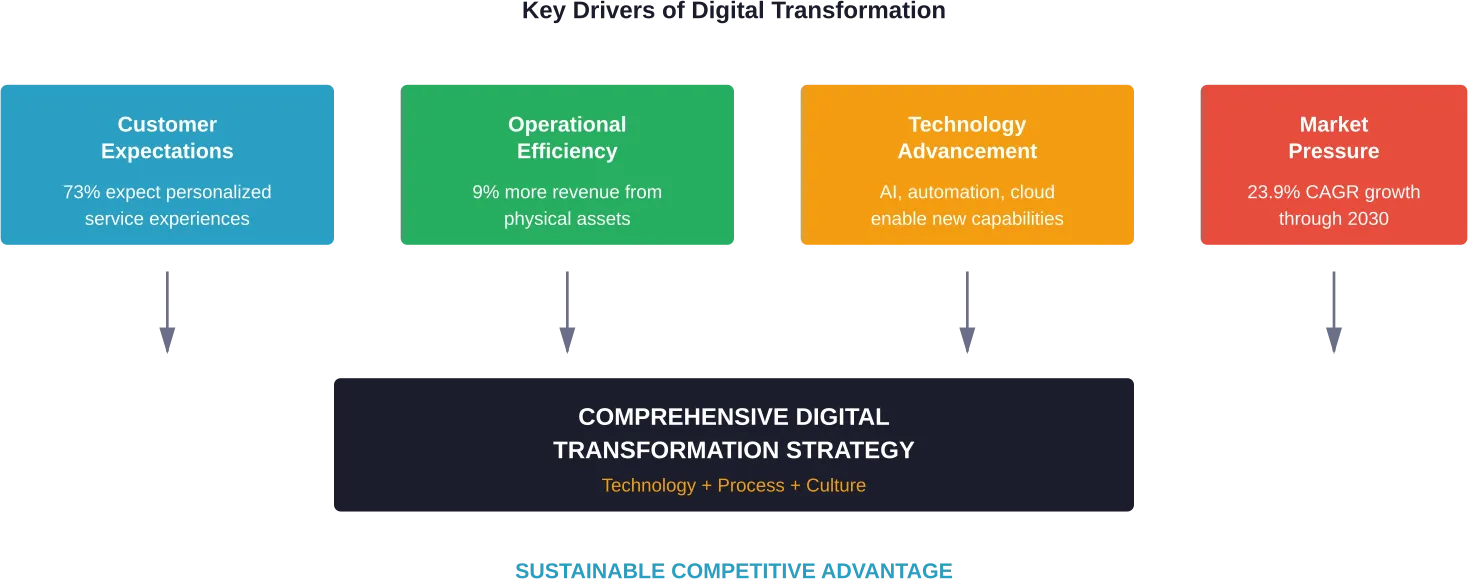
על פי התחזיות, שוק הטרנספורמציה הדיגיטלית צפוי לצמוח בקצב צמיחה שנתי מורכב (CAGR) של 23.91% בין השנים 2024 ל-2030, כאשר ההוצאות העולמיות צפויות להגיע ל-3.9 טריליון דולר עד שנת 2027. המספרים הללו מספרים סיפור: החברות כבר לא מסתפקות בניסויים. הן מהמרות על עתידן על השינוי הדיגיטלי.
אבל העניין הוא כזה: טרנספורמציה דיגיטלית אינה רק הוספת תוכנה חדשה לתהליכים ישנים. זוהי חשיבה מחודשת מהיסוד על האופן שבו מתבצעת העבודה. היא משפיעה על התפעול, על האינטראקציות עם הלקוחות, על קבלת ההחלטות ואפילו על תרבות הארגון.
ומה לגבי ההשלכות? הן חמורות מתמיד. מחקר של Salesforce מצא כי 73% מהלקוחות מצפים מחברות להבין את הצרכים הייחודיים שלהם, ו-66% יעברו למתחרים לאחר חוויה שלילית אחת. "אפקט אמזון" שינה את ציפיות הלקוחות בכל ענף וענף.
מדריך זה מפרט מה משמעותו האמיתית של השינוי הדיגיטלי עבור תהליכים עסקיים, מדוע הוא חשוב וכיצד להטמיע אותו בהצלחה.
מה משמעותה של טרנספורמציה דיגיטלית עבור תהליכים עסקיים
הטרנספורמציה הדיגיטלית היא הרבה יותר מסתם אימוץ טכנולוגיות חדשות. זוהי שילוב של יכולות דיגיטליות בכל היבט של פעילות העסק — משירות הלקוחות בקו הקדמי ועד לשרשראות האספקה מאחורי הקלעים.
שינוי תהליכים מתמקד באופן ספציפי בעיצוב מחדש של זרימות עבודה, מערכות קבלת החלטות ומבנים תפעוליים באמצעות כלים דיגיטליים. המטרה? ליצור פעילות תפעולית יעילה יותר, גמישה יותר וממוקדת יותר בלקוח.
מחקרים בנושא טרנספורמציה דיגיטלית עמידה מדגישים כי על ארגונים לפתח יכולות שיאפשרו להם לקיים יוזמות דיגיטליות בטווח הבינוני. הטכנולוגיה לבדה אינה מספיקה. ארגונים זקוקים ליכולת הסתגלות, חדשנות ומדרגיות כבסיס טכנולוגי, בשילוב עם מסגרות ניהול יעילות ופיתוח מתמשך של כוח העבודה.
בואו נדבר בכנות: חברות בעלות בשלות דיגיטלית מפיקות 91% יותר הכנסות מנכסיהן הפיזיים ומדווחות על שיעורי רווח גבוהים יותר בהשוואה למתחרות בענף. זו לא שיפור זניח. זהו יתרון תחרותי.
מרכיבי הליבה של טרנספורמציה בתהליכים עסקיים
תהליך של שינוי ארגוני כרוך בדרך כלל בשילוב של מספר מרכיבים מרכזיים:
- אוטומציה: ביטול משימות ידניות וחוזרות על עצמן באמצעות תוכנה ובינה מלאכותית
- אינטגרציית נתונים: פירוק מחסומים כדי לאפשר תובנות בזמן אמת
- מעבר לענן: מעבר לתשתיות גמישות וניתנות להרחבה
- בינה מלאכותית ולמידת מכונה: הטמעת ניתוח נתונים חיזויי וקבלת החלטות חכמה
- תכנון מחדש של תהליכים: חשיבה מחודשת על תהליכי העבודה מהיסוד, ולא רק דיגיטציה של תהליכים קיימים
ההבדל בין תהליכי שינוי מוצלחים לכאלה שנכשלו מתמצה לעתים קרובות בגישה המתייחסת אליהם כאל מרכיבים קשורים זה לזה, ולא כאל פרויקטים נפרדים.
מדוע הטרנספורמציה הדיגיטלית חשובה כל כך בימים אלה
תנאי השוק יצרו סביבה שבה בשלות דיגיטלית אינה דבר אופציונלי. מספר גורמים מובילים את השינוי הזה.
ציפיות הלקוחות השתנו
"אפקט אמזון" לא רק שינה את ענף הקמעונאות — הוא שינה את הציפיות בכל הענפים. שירות מהיר, חלק ומותאם אישית הוא כיום הסטנדרט. חברות שאינן מסוגלות לספק זאת מאבדות לקוחות במהירות.
על פי מחקרים אחרונים, אחוז ניכר מהצרכנים מצהיר על נכונות לשלם יותר תמורת חוויות מותאמות אישית. צ'אטבוטים מבוססי בינה מלאכותית, אפליקציות סלולריות ומנועי המלצות כבר אינם רק "תוספות נחמדות". הם מהווים כלים שלומדים את העדפות הלקוחות ויוצרים בידול תחרותי.
יעילות תפעולית מובילה לרווחיות
אוטומציה ובינה מלאכותית מצמצמות עלויות ומשפרות את הדיוק. משימות שבעבר דרשו שעות של עבודה ידנית מתבצעות כעת תוך שניות. אך זה לא מסתכם רק בחיסכון בעלויות.
כלים דיגיטליים מאפשרים הקצאה יעילה יותר של משאבים, זמני תגובה קצרים יותר וקבלת החלטות מושכלת יותר. ארגונים משפרים את התהליכים שלהם באופן מתמיד באמצעות אוטומציה, כדי לשמור על יתרונם התחרותי.
קבלת החלטות מונעת נתונים
חברות מודרניות מייצרות כמויות אדירות של נתונים. האתגר? להפוך את הנתונים הללו לתובנות שניתן לפעול על פיהן.
הטרנספורמציה הדיגיטלית מספקת את התשתית — מחסני נתונים, פלטפורמות ניתוח נתונים וכלי ויזואליזציה — הממירה מידע גולמי למידע אסטרטגי. צוותים יכולים לזהות מגמות, לחזות תוצאות ולהתאים אסטרטגיות בזמן אמת.
מיטוב תהליכים עסקיים באמצעות טרנספורמציה דיגיטלית
שיפור תהליכים עסקיים מחייב מערכות שמבצעות אוטומציה, אינטגרציה והתרחבות ביעילות. A-listware מספקת צוותי הנדסה ייעודיים לתכנון, יישום ותחזוקה של פתרונות אלה.
תחומי התמחות עיקריים:
- אוטומציה של תהליכי עבודה
- ניהול נתונים ודיווח
- שיתוף פעולה מבוסס ענן
- ניטור ואופטימיזציה של תהליכים
הצוות יכול לתגבר את צוות העובדים שלכם או לנהל פרויקטים דיגיטליים מלאים. התחילו לייעל את התהליכים העסקיים שלכם באמצעות רשימת מוצרים א' עכשיו.
חמישה סוגים של טרנספורמציה דיגיטלית
לא כל תהליכי הטרנספורמציה הדיגיטלית נראים זהים. ארגונים מתמקדים בדרך כלל באחד או יותר מחמשת הסוגים הללו, בהתאם לסדר העדיפויות האסטרטגי שלהם.
טרנספורמציה של תהליכים
תהליך זה כרוך בעיצוב מחדש של תהליכי עבודה ונהלים תפעוליים באמצעות כלים דיגיטליים. מחלקות הכספים מבצעות אוטומציה של תהליכי ציות באמצעות מערכות ERP (Enterprise Resource Planning). שרשראות האספקה מיישמות מעקב בזמן אמת וניהול מלאי מבוסס חיזוי.
שינוי תהליכים מביא לשיפורים ניכרים במהירות, בדיוק וביעילות העלויות.
שינוי מודל עסקי
יש ארגונים שמגדירים מחדש לחלוטין את האופן שבו הם יוצרים ומספקים ערך. קמעונאים מסורתיים משיקים פלטפורמות מסחר מקוון. חברות ייצור מוסיפות מודלים של שירותים מבוססי מנוי.
שינוי מודל עסקי דורש יותר מטכנולוגיה בלבד — הוא מחייב חשיבה מחודשת על מקורות ההכנסה, על קשרי הלקוחות ועל הצעת הערך.
שינוי דומיין
חברות מתרחבות לשווקים סמוכים או לתחומים חדשים לחלוטין באמצעות יכולות דיגיטליות. רשת מלונות עשויה להשיק פלטפורמת הזמנות הכוללת גם את המתחרות. יצרן עשוי להקים זירת מסחר למוצרים של צד שלישי.
טרנספורמציה בתחום מנצלת נכסים דיגיטליים קיימים כדי להיכנס לתחומים תחרותיים חדשים.
שינוי תרבותי/ארגוני
הטכנולוגיה לא תשנה דבר אם אנשים לא ישנו את אופן העבודה שלהם. השינוי התרבותי מתמקד בשינוי תפיסתי, בפיתוח מיומנויות ובמבנים ארגוניים התומכים בדרכי עבודה דיגיטליות.
זה כולל אימוץ מתודולוגיות אג'יליות, טיפוח תרבות של קבלת החלטות מבוססת נתונים, וטיפוח אוריינות דיגיטלית בכל הצוותים.
טרנספורמציה טכנולוגית
מודרניזציה של התשתית מהווה את הבסיס לכל השאר. מעבר לענן, פיתוח ממשקי API, שיפורים בתחום אבטחת הסייבר והחלפת מערכות ישנות נכללים בקטגוריה זו.
הטרנספורמציה הטכנולוגית מאפשרת את ארבעת הסוגים האחרים, אך לעיתים רחוקות מספקת ערך בפני עצמה.
טכנולוגיות מרכזיות המניעות את השינוי התהליכי
ישנן מספר טכנולוגיות המופיעות באופן קבוע ביוזמות מוצלחות של טרנספורמציה דיגיטלית. הבנת תפקידיהן מסייעת לארגונים לבצע השקעות אסטרטגיות.
מחשוב ענן
פלטפורמות ענן מספקות תשתית הניתנת להרחבה ללא הוצאות הון עצומות. הן מאפשרות פריסה מהירה, נגישות גלובלית ושילוב חלק בין מערכות.
ארגונים מעבירים עומסי עבודה לסביבות ענן כדי לשפר את הגמישות ולהפחית את עלויות התחזוקה.
בינה מלאכותית ולמידת מכונה
הבינה המלאכותית מאפשרת אוטומציה של תהליכי קבלת החלטות מורכבים וזיהוי תבניות. מודלים של למידת מכונה חוזים את התנהגות הלקוחות, מייעלים את שרשראות האספקה, מאתרים הונאות ומותאמים אישית את חוויות המשתמשים.
על פי ניתוח של IEEE, שוק ה-AI העולמי צפוי להגיע להיקף של 1.77 טריליון דולר עד שנת 2032, דבר המשקף את תפקידו המרכזי באסטרטגיות של טרנספורמציה דיגיטלית.
אוטומציה ואוטומציה רובוטית של תהליכים (RPA)
RPA מטפלת במשימות חוזרות ונשנות המבוססות על כללים — הזנת נתונים, עיבוד חשבוניות והפקת דוחות. הדבר מאפשר לעובדים להתפנות לפעילויות בעלות ערך מוסף גבוה יותר, תוך צמצום הטעויות.
האוטומציה חורגת מעבר לתפקידי הניהול הפנימי. צ'אטבוטים לשירות לקוחות, קמפיינים שיווקיים אוטומטיים ופורטלי שירות עצמי נכללים כולם תחת קטגוריה זו.
ניתוח נתונים ובינה עסקית
פלטפורמות ניתוח נתונים הופכות נתונים גולמיים לתובנות שניתן לפעול על פיהן. לוחות מחוונים מספקים תמונת מצב בזמן אמת על הפעילות התפעולית. ניתוח נתונים חיזויי משמש בסיס לתכנון אסטרטגי.
האתגר אינו ביצירת נתונים, אלא בהבנתם. כלי בינה עסקית מגשרים על הפער הזה.
האינטרנט של הדברים (IoT)
מכשירים מחוברים מייצרים זרמי נתונים רציפים הנובעים מפעילות פיזית. יצרנים עוקבים אחר תקינות הציוד. חברות לוגיסטיקה עוקבות אחר משלוחים. קמעונאים מנתחים דפוסי תנועת מבקרים.
ה-IoT יוצר מעגלי משוב המאפשרים אופטימיזציה מתמשכת של התהליכים.
| טֶכנוֹלוֹגִיָה | שימוש עיקרי | ההשפעה העסקית |
|---|---|---|
| מחשוב ענן | תשתית הניתנת להרחבה | הפחתת עלויות ההון, שיפור הגמישות |
| בינה מלאכותית/למידת מכונה | ניתוח נתונים חיזויי, אוטומציה | החלטות טובות יותר, חוויות מותאמות אישית |
| RPA | אוטומציה של משימות חוזרות | הפחתת עלויות, מניעת טעויות |
| ניתוח נתונים | הפקת תובנות | אסטרטגיה מבוססת נתונים, נראות בזמן אמת |
| האינטרנט של הדברים | פעולות מקושרות | תחזוקה מונעת, אופטימיזציה |
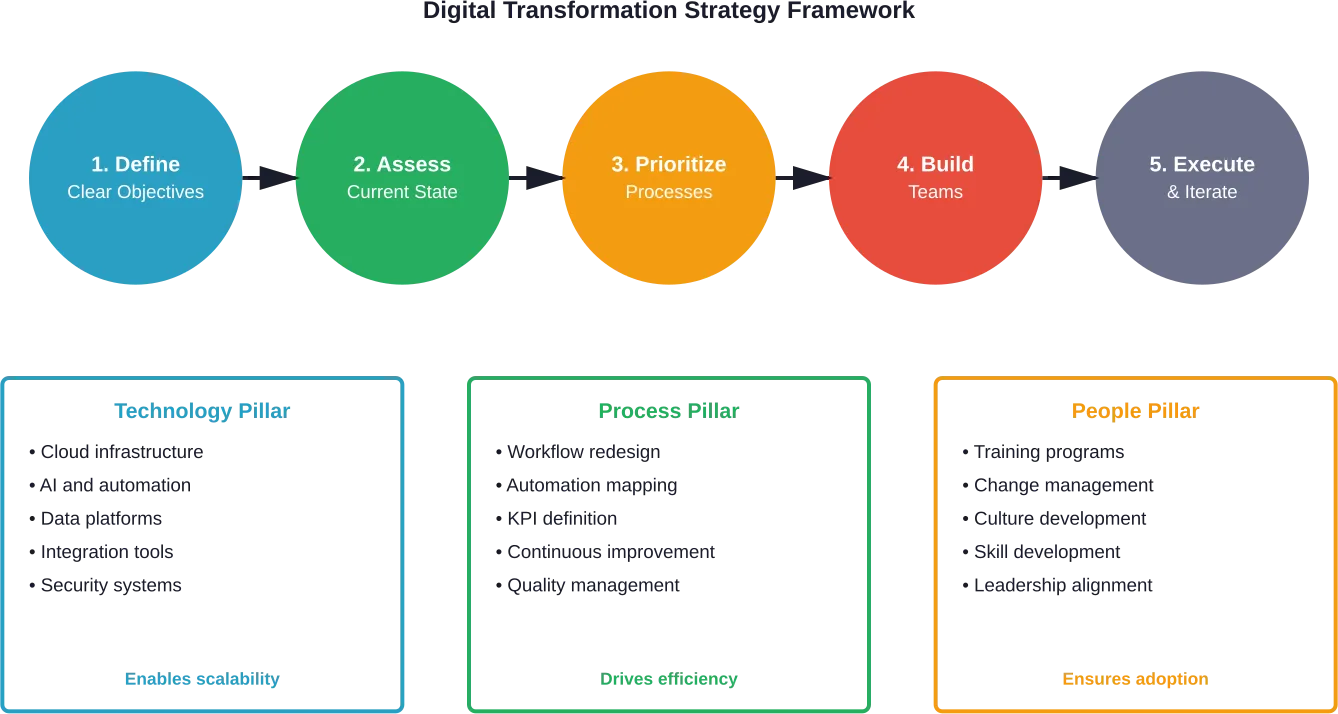
גיבוש אסטרטגיית טרנספורמציה דיגיטלית
האסטרטגיה היא זו שמבדילה בין תהליכי טרנספורמציה מוצלחים לבין כישלונות יקרים. נתוני השוואה ענפיים עדכניים לשנת 2025 מראים כי 42% מיוזמות הטרנספורמציה הדיגיטלית מגיעות כיום ליעדיהן המתוכננים או אף עולות עליהם, הודות לאימוץ נרחב של ‘כריית תהליכים’ (Process Mining) המונעת על ידי בינה מלאכותית (AI) וכלי ניהול שינויים אוטומטיים. מה ההבדל? משמעת בתכנון ובביצוע.
התחילו ביעדים ברורים
יעדים מעורפלים מביאים לתוצאות מעורפלות. הגדירו תוצאות ספציפיות וניתנות למדידה: קיצור זמן הטיפול ב-40%, העלאת ציון שביעות הרצון של הלקוחות ב-15 נקודות, וקיצוץ עלויות התפעול ב-$2 מיליון דולר בשנה.
היעדים צריכים להיות מותאמים לאסטרטגיה העסקית הרחבה יותר. הטרנספורמציה הדיגיטלית משרתת את היעדים העסקיים, ולא להפך.
הערכת המצב הנוכחי
ארגונים רבים מתמודדים עם נתונים מפוצלים ומדדי בסיס לא ברורים. למעשה, 42% מהארגונים מדווחים כי הם מתמודדים עם "סילואים" של נתונים, ו-47% מציינים בעיות באיכות הנתונים כמכשולים עיקריים.
לפני שתתחילו לשנות תהליכים, יש למפות את זרימות העבודה הקיימות, לזהות את נקודות התורפה ולקבוע מדדי ביצוע בסיסיים. כך תיצרו את הבסיס למדידת השיפור.
תנו עדיפות לתהליכים בעלי השפעה רבה
לא כל תהליך מצריך שינוי מיידי. יש לזהות את החסמים, את נקודות התורפה של הלקוחות ואת התחומים שבהם הכלים הדיגיטליים מציעים יתרונות ברורים.
הישגים מהירים יוצרים מומנטום. התחילו בתהליכים שיכולים להראות שיפור מדיד בתוך 3–6 חודשים.
הקמת צוותים רב-תחומיים
הטרנספורמציה הדיגיטלית נכשלת כאשר מחלקת ה-IT פועלת בבידוד. יוזמות מוצלחות כוללות, כבר מהשלב הראשוני, מנהיגים עסקיים, בעלי תהליכים, צוותי טכנולוגיה ומשתמשי קצה.
מחקרים בנושא מעורבות בעלי עניין מראים כי 20% מאנשי המקצוע בתחום השינוי מציינים את המעורבות הבלתי מספקת של בעלי העניין כמכשול הגדול ביותר העומד בפניהם. צוותים רב-תחומיים מתמודדים עם בעיה זו על ידי הבטחת מגוון נקודות מבט ותמיכה רחבה.
תוכנית לשיפור מתמשך
הטרנספורמציה הדיגיטלית אינה פרויקט חד-פעמי — זוהי יכולת מתמשכת. יש לבנות מעגלי משוב, לקבוע מחזורי בדיקה קבועים וליצור מנגנונים לייעול מתמשך.
ארגונים המתייחסים לשינוי כאל מסע ולא כאל יעד, שומרים על יתרונות תחרותיים לאורך זמן.
אתגרים נפוצים ודרכים להתגבר עליהם
הבנת המכשולים בטרם יטרפדו את היוזמות מעניקה לארגונים יתרון משמעותי. מספר אתגרים חוזרים על עצמם שוב ושוב בפרויקטי טרנספורמציה.
התנגדות לשינוי
אנשים נוטים באופן טבעי להתנגד לשיבושים בתהליכי העבודה המוכרים להם. עובדים חוששים לביטחון תעסוקתי, מתקשים להתמודד עם כלים חדשים או מטילים ספק בצורך בשינוי.
ניהול שינויים יעיל מתמודד עם אתגר זה באמצעות תקשורת שקופה, מעורבות בשלב מוקדם, הכשרה מקיפה והדגמת הישגים מהירים המוכיחים את הערך.
איכות הנתונים ומחסומים ארגוניים
נתונים לקויים מובילים לתוצאות גרועות. ארגונים אינם יכולים לבצע טרנספורמציה בתהליכים ביעילות כאשר הם עובדים עם מידע חלקי, לא עקבי או שאינו נגיש.
התמודדות עם אתגרי נתונים מחייבת מסגרות ממשל, יוזמות לניהול נתוני אב ופלטפורמות אינטגרציה המקשרות בין מערכות שונות.
מגבלות של טכנולוגיה מיושנת
למערכות מיושנות לרוב אין ממשקי API, הן פועלות על פלטפורמות מיושנות או מכילות לוגיקה עסקית קריטית שתועדה בצורה לקויה. המעבר כרוך בסיכונים, אך שמירה על המצב הקיים מגבילה את הפוטנציאל.
גישות מודרניזציה הדרגתיות — פיתוח יכולות חדשות במקביל למערכות הקיימות, לפני המעבר ההדרגתי — מפחיתות את הסיכון ומאפשרות התקדמות.
מעורבות לא מספקת של בעלי העניין
כאשר מנהלים תומכים ביוזמות אך אינם לוקחים בהן חלק פעיל, או כאשר לא מתייעצים עם המשתמשים הסופיים במהלך התכנון, הפרויקטים עלולים לאבד מהרלוונטיות שלהם.
יצירת מבני ממשל הכוללים אחריות ברורה ונקודות קשר קבועות מסייעת לשמור על מעורבותם של בעלי העניין לאורך כל תהליך השינוי.
תשואה על ההשקעה (ROI) ומדדים לא ברורים
יוזמות טרנספורמציה מצריכות השקעה ניכרת. ללא מדדי הצלחה ברורים, ארגונים אינם יכולים לקבוע אם הם משיגים תוצאות או להצדיק המשך המימון.
קביעת מדדי בסיס, הגדרת תוצאות יעד ומעקב אחר ההתקדמות ביחס למדדי ביצוע מרכזיים (KPI) יוצרים אחריות ומאפשרים תיקון מסלול.
פערי מיומנויות
כלי עבודה דיגיטליים מצריכים כישורים דיגיטליים. ארגונים מגלים לעתים קרובות כי לעובדיהם חסרים הכישורים הדרושים להפעלת מערכות חדשות או לעבודה במסגרת תהליכים שעברו שינוי.
תוכניות הכשרה מקיפות, גיוס עובדים לתפקידים חדשים ויצירת מסלולי פיתוח מיומנויות מהווים מענה לאתגר זה.
| אֶתגָר | השפעה | גישת הפתרון |
|---|---|---|
| התנגדות לשינוי | שיעורי אימוץ נמוכים | ניהול שינויים, תקשורת, הדרכה |
| סילוסים של נתונים | תובנות חלקיות | פלטפורמות אינטגרציה, ניהול נתונים |
| מערכות ישנות | יכולות מוגבלות | מודרניזציה הדרגתית, פיתוח ממשקי API |
| מעורבות נמוכה | פתרונות שאינם מותאמים | מבני ממשל, משוב שוטף |
| מדדים לא ברורים | אין אחריות | מסגרות KPI, מדידת בסיס |
| פערי מיומנויות | כלים שאינם מנוצלים כראוי | תוכניות הכשרה, גיוס אסטרטגי |
תפקידו של ניהול השינוי
הטכנולוגיה מאפשרת שינוי. האנשים הם שמביאים אותו לידי מימוש. ניהול השינוי מגשר על הפער בין היכולות החדשות לבין יישומן בפועל.
על פי מחקרים בתחום, מעורבות לא מספקת של בעלי העניין נחשבת לאחד המכשולים העיקריים להצלחה. ניהול שינויים מתמודד עם בעיה זו באמצעות גישות מובנות.
אסטרטגיות תקשורת
תקשורת יעילה מסבירה מדוע השינוי הכרחי, מה עומד להשתנות, כיצד הוא ישפיע על כל אחד ואחת, ואילו אמצעי תמיכה עומדים לרשותם. המסרים צריכים להיות עקביים, תכופים, ומועברים בערוצים שונים.
לנראות של ההנהלה יש חשיבות רבה. כאשר מנהלים בכירים תומכים בתהליך השינוי ומעורבים בו באופן גלוי, שיעורי האימוץ עולים באופן משמעותי.
הדרכה ותמיכה
מתן כלים ללא הדרכה גורם לתסכול. תוכניות מקיפות צריכות לכלול תרגול מעשי, תרחישים המותאמים לתפקידים ספציפיים ומשאבי תמיכה שוטפים.
למידה "בזמן הנכון" — מתן הדרכה כאשר אנשים זקוקים לה, ולא חודשים מראש — משפרת את שימור הידע ויישומו.
מנגנוני משוב
משתמשי הקצה מזהים בעיות שמתכננים מפספסים. יצירת ערוצים למשוב ופעולה על סמך המשוב מעידה על יכולת תגובה ומשפרת את הפתרונות.
סקרי דופק קבועים, קבוצות מיקוד ופורומים פתוחים מאפשרים תקשורת דו-כיוונית.
יישומים ספציפיים לתעשייה
הטרנספורמציה הדיגיטלית מתבטאת באופן שונה בכל מגזר. הבנת היישומים הספציפיים לכל ענף מסייעת לארגונים לזהות אסטרטגיות רלוונטיות.
פיננסים ובנקאות
שירותים פיננסיים מתמקדים בעיקר באוטומציה של תהליכי ציות, בזיהוי הונאות ובשיפור חוויית הלקוח. דרישות הרגולציה עומדות בבסיס יוזמות רבות.
מערכות ERP מבצעות אוטומציה של תהליכי תאימות מורכבים. הבינה המלאכותית מנתחת דפוסי עסקאות כדי לאתר חריגות. אפליקציות סלולריות מספקות שירות לקוחות חלק.
ייצור
מפעלים חכמים משתמשים בחיישני IoT כדי לפקח על תקינות הציוד ולחזות את צרכי התחזוקה. "תאומים דיגיטליים" מדמים תרחישי ייצור. פלטפורמות לניהול שרשרת האספקה מייעלות את המלאי והלוגיסטיקה.
הטרנספורמציה בתעשיית הייצור שמה דגש על יעילות תפעולית ויכולות חיזוי.
שירותי בריאות
תיקים רפואיים אלקטרוניים, פלטפורמות לרפואה מרחוק ואבחון בסיוע בינה מלאכותית משנים את פני הטיפול בחולים. אוטומציה של תהליכים מנהליים מפחיתה את עלויות התפעול.
השינוי בתחום הבריאות משלב בין יעילות תפעולית לבין שיפור בתוצאות הטיפול בחולים ועמידה בדרישות הרגולטוריות.
קִמעוֹנִי
חוויות רב-ערוציות, המלצות מותאמות אישית ומיטוב המלאי הם המרכיבים המרכזיים של המהפכה בתחום הקמעונאות. פלטפורמות נתוני לקוחות מספקות תמונת מצב אחידה בכל נקודות המגע.
תחום הקמעונאות מתמקד בחוויית הלקוח ובגמישות תפעולית כדי להתחרות בחברות שנוסדו בעידן הדיגיטלי.
חינוך
בתי ספר למנהל עסקים ואוניברסיטאות משתמשים בכלים דיגיטליים כדי לצמצם משימות חוזרות ונשנות, לשפר את תהליכי קבלת ההחלטות ולעקוב אחר יוזמות בעלות השפעה. פלטפורמות מבוססות בינה מלאכותית משפרות את המחקר בכך שהן מאפשרות לסגל האקדמי לנתח כמויות עצומות של נתונים.
מוסדות חינוך משלבים בין יעילות תפעולית לבין תוצאות הממוקדות במשימה, כגון הצלחת הסטודנטים והשפעת המחקר.
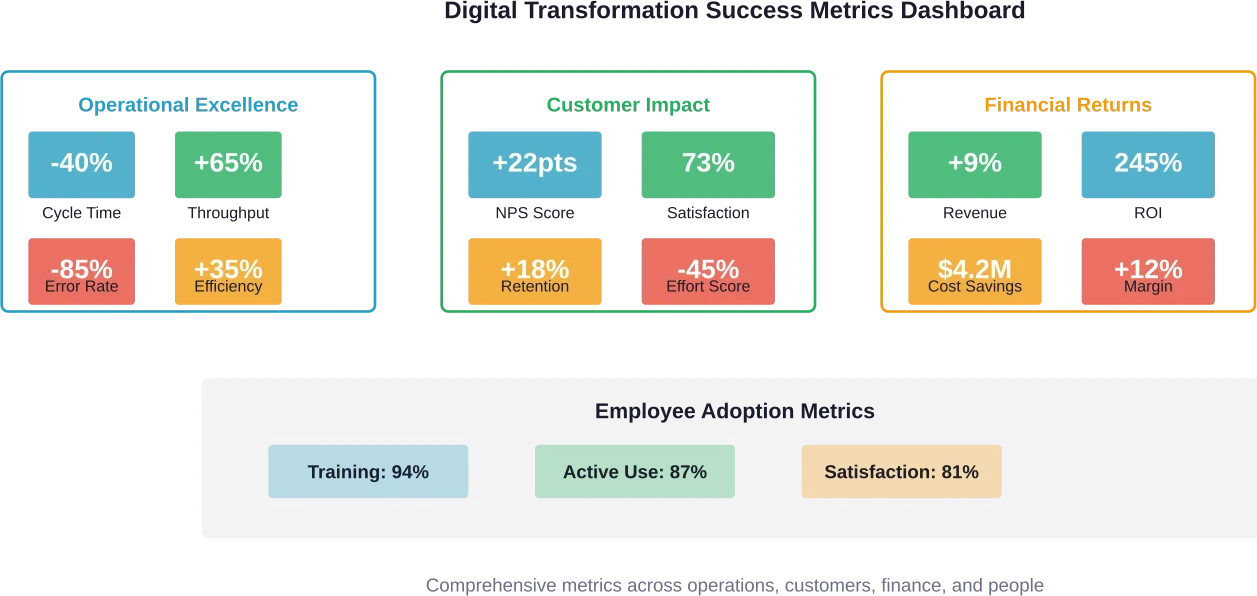
מדידת הצלחתו של תהליך השינוי
מה שנמדד – מנוהל. תהליכי שינוי מוצלחים קובעים מדדים ברורים ומעקבים בקפדנות אחר ההתקדמות.
מדדי ביצועים תפעוליים
מדדי היעילות התהליכית כוללים קיצור משך המחזור, שיעורי השגיאות, התפוקה וניצול המשאבים. מדדים אלה בוחנים האם מתרחשים שיפורים תפעוליים.
מדדים פיננסיים
חיסכון בעלויות, צמיחה בהכנסות, שיפור בשיעור הרווחיות ותשואה על ההשקעה (ROI) מדגימים את הערך העסקי. מדדים פיננסיים מקשרים בין מאמצי השינוי לתוצאות בשורה התחתונה.
מדדי לקוחות
ציוני שביעות הרצון, מדד נטו פרומוטור (NPS), שיעורי השימור וציוני המאמץ של הלקוח מצביעים על כך שהשינוי משפר את חוויית הלקוח.
מדדי עובדים
שיעורי אימוץ, מדדי פרודוקטיביות, ציוני שביעות רצון ופיתוח מיומנויות משקפים את ההיבט האנושי של תהליך השינוי. מעורבות גבוהה של העובדים קשורה להצלחת תהליך השינוי.
מדדי חדשנות
זמן ההגעה לשוק של מוצרים חדשים, מספר השיפורים התהליכיים שיושמו וקצב הניסויים הם המדדים המעידים אם השינוי הארגוני תורם לזריזות הארגונית.
העתיד של הטרנספורמציה הדיגיטלית
המהפכה הדיגיטלית לא מאטה את קצב התקדמותה. מספר מגמות מעצבות את העתיד.
בינה מלאכותית סוכנתית ומערכות אוטונומיות
מערכות בינה מלאכותית מתפתחות מכלי עזר לתהליכי קבלת החלטות אנושיים לסוכנים המקבלים החלטות באופן אוטונומי במסגרת פרמטרים מוגדרים. שינוי זה מעביר את המיקוד מאוטומציה של משימות להאצלת סמכויות על תהליכים שלמים.
התאמה אישית ברמה גבוהה בקנה מידה נרחב
ניתוח נתונים מתקדם ובינה מלאכותית מאפשרים יצירת חוויות מותאמות אישית לכל לקוח, תוך שמירה על יעילות תפעולית. התאמה אישית המונית הופכת לציפייה סטנדרטית.
פעילות דיגיטלית עמידה
מחקרים בנושא טרנספורמציה דיגיטלית גמישה מדגישים כי על ארגונים לפתח יכולות שיאפשרו להם לקיים יוזמות דיגיטליות גם לנוכח שיבושים מתמשכים. יכולת הסתגלות, חדשנות ומדרגיות הופכות לכישורים מרכזיים, ולא רק לתכונות טכנולוגיות.
טכנולוגיה בת-קיימא ואתית
הטרנספורמציה הדיגיטלית משלבת יותר ויותר יעדי קיימות ומסגרות אתיות. ארגונים רואים בהשפעה סביבתית, בהטיה אלגוריתמית ובאחריות חברתית קריטריונים מרכזיים בתהליך הטרנספורמציה.
תרבות של שינוי מתמשך
הרעיון של שינוי כפרויקט חד-פעמי מפנה את מקומו להתפתחות מתמשכת כיכולת ארגונית. חברות בונות מערכות ותרבויות שנועדו להתאמה מתמדת.
שלבים מעשיים ליישום
המעבר מאסטרטגיה ליישום מחייב נקיטת צעדים קונקרטיים. ארגונים המתחילים את מסע השינוי שלהם צריכים להתמקד בצעדים המעשיים הבאים.
לבצע הערכת בשלות דיגיטלית
יש לבחון את היכולות הקיימות בתחומי התשתית הטכנולוגית, יעילות התהליכים, ניהול הנתונים ומיומנויות דיגיטליות. יש לזהות את הפערים בין המצב הנוכחי למצב הרצוי בעתיד.
להבטיח תמיכה מצד ההנהלה הבכירה
תהליך השינוי לא יצלח ללא תמיכה גלויה ופעילה מצד ההנהלה. על ההנהגה להקצות משאבים, להסיר מכשולים ולהוביל את השינוי בכל רחבי הארגון.
התחילו בפרויקט פיילוט
יש לבחון את הגישות בקנה מידה מצומצם לפני הפריסה בכל הארגון. פיילוטים מפחיתים את הסיכון, מספקים תובנות ומניבים תוצאות מוכחות המסייעות ליצירת מומנטום.
לגבש תוכנית אסטרטגית בתחום הטכנולוגיה
תכננו את ההשקעות בתשתיות, פיתוח היישומים, עבודות האינטגרציה ובניית היכולות לטווח של 12–36 חודשים. מצאו את האיזון בין הישגים מהירים לבין העבודה הבסיסית.
השקיעו בתשתית נתונים
נתונים נקיים, נגישים ומשולבים הם הבסיס לכל השאר. יש לתת עדיפות לאיכות הנתונים, לניהול הנתונים ולפיתוח הפלטפורמה כבר בשלבים המוקדמים של התהליך.
לפתח מיומנויות דיגיטליות
העריכו את פערי הכישורים וצרו תוכניות פיתוח. שלבו בין הכשרה, גיוס ושותפויות כדי לבנות את היכולות הנדרשות.
קביעת מסגרת ניהול ומדדים
יש ליצור מסגרות לקבלת החלטות, להקצאת משאבים ולמעקב אחר ההתקדמות. יש להגדיר מדדי הצלחה ולבדוק אותם באופן קבוע.
תקשרו באופן קבוע
הדגישו שוב ושוב את החזון, את ההתקדמות ואת ההישגים. התייחסו לחששות בשקיפות. הקפידו שהשינוי יישאר בראש סדר העדיפויות בכל רחבי הארגון.
שאלות נפוצות
- מה ההבדל בין דיגיטציה לבין טרנספורמציה דיגיטלית?
דיגיטציה היא תהליך של המרת מידע אנלוגי לפורמט דיגיטלי — למשל, סריקת מסמכים מנייר. טרנספורמציה דיגיטלית משנה באופן מהותי את אופן הפעולה של עסקים ואת הדרך שבה הם מספקים ערך באמצעות טכנולוגיות דיגיטליות. דיגיטציה היא לרוב מרכיב בטרנספורמציה, אך אינה מהווה טרנספורמציה כשלעצמה.
- כמה זמן נמשך בדרך כלל תהליך הטרנספורמציה הדיגיטלית?
הטרנספורמציה הדיגיטלית היא מסע מתמשך ולא פרויקט עם תאריך סיום קבוע. השלבים הראשוניים עשויים להניב תוצאות בתוך 6–12 חודשים, אך פיתוח יכולות דיגיטליות בוגרות דורש בדרך כלל 3–5 שנים. ארגונים הרואים בטרנספורמציה תהליך מתמשך של פיתוח יכולות זוכים לתוצאות טובות יותר בטווח הארוך מאלה המתייחסים אליה כאל יוזמה חד-פעמית.
- מהו אחוז הכישלונות של תהליכי טרנספורמציה דיגיטלית?
ממחקרים עולה כי רק 35% מיוזמות הטרנספורמציה הדיגיטלית מגיעות ליעדיהן. בין הגורמים הנפוצים לכישלון נמנים מעורבות לא מספקת של בעלי העניין, ניהול שינויים לקוי, יעדים לא ברורים, והתייחסות לטרנספורמציה כאל בעיה טכנולוגית גרידא, במקום כאל שינוי עסקי ותרבותי.
- כמה כסף צריכים ארגונים להקצות לתקציב הטרנספורמציה הדיגיטלית?
רמות ההשקעה משתנות באופן דרמטי בהתאם לגודל הארגון, לענף התעשייה ולהיקף השינוי. יש ארגונים המקצים 5–10% מההכנסות ליוזמות דיגיטליות, בעוד שאחרים משקיעים סכומים גדולים יותר בתקופות מפתח של שינוי. המפתח הוא להבטיח משאבים מספיקים לטכנולוגיה, הדרכה, ניהול שינויים ותמיכה שוטפת — מימון חסר של יוזמות שינוי מבטיח כמעט בוודאות כישלון.
- האם עסקים קטנים יכולים להפיק תועלת מהטרנספורמציה הדיגיטלית?
בהחלט. עסקים קטנים עוברים שינוי במהירות רבה יותר מאשר ארגונים גדולים, בשל פחות מגבלות היסטוריות ומבני קבלת החלטות פשוטים יותר. כלים מבוססי ענן, פלטפורמות אוטומציה ושירותי ניתוח נתונים הופכים לנגישים יותר ויותר, במחירים המתאימים לארגונים קטנים. העקרונות נשארים זהים ללא קשר לגודל: התמקדות בתוצאות עסקיות, מעורבות של העובדים ושיפור שיטתי של התהליכים.
- איזה תפקיד ממלא אבטחת הסייבר בתהליך הטרנספורמציה הדיגיטלית?
אבטחת סייבר היא מרכיב בסיסי בתהליך הטרנספורמציה הדיגיטלית, ולא תוספת של הרגע האחרון. ככל שארגונים מרחיבים את נקודות המגע הדיגיטליות, מאמצים את הענן ומשלבים נתונים, הם מגדילים את שטח החשיפה להתקפות. ההנחיות של ה-NIST מדגישות את הצורך לשלב אבטחה במערכות דיגיטליות כבר מהשלב הראשוני, כולל אימות זהות, אימות משתמשים ופרוטוקולי פדרציה. על ארגונים לשלב שיקולי אבטחה לאורך כל תהליך התכנון והביצוע של הטרנספורמציה.
- איך מודדים את החזר ההשקעה (ROI) של טרנספורמציה דיגיטלית?
מדידת החזר ההשקעה (ROI) צריכה לכלול הן יתרונות מוחשיים והן יתרונות בלתי מוחשיים. המדדים המוחשיים כוללים חיסכון בעלויות, צמיחה בהכנסות, שיפור ביעילות והפחתת טעויות. היתרונות הבלתי מוחשיים כוללים שיפור בשביעות רצון הלקוחות, שיפור בחוויית העובדים, גמישות מוגברת ומיצוב תחרותי. יש לקבוע מדדי בסיס לפני תחילת התהליך, ולאחר מכן לעקוב אחר ההתקדמות ביחס למדדי ביצוע מרכזיים (KPI) שהוגדרו במישורים התפעולי, הפיננסי, הלקוחות והעובדים.
סיכום: כיצד להבטיח את הצלחתו של המעבר לדיגיטל
הטרנספורמציה הדיגיטלית בתהליכים עסקיים מהווה את אחד השינויים המשמעותיים ביותר באופן הפעולה של ארגונים. עם צמיחה שנתית של 23.91% בשוק והיקף הוצאות שצפוי להגיע ל-3.9 טריליון דולר עד שנת 2027, אין ספק שהמומנטום בתחום זה הוא בלתי ניתן להכחשה.
אך הטכנולוגיה לבדה אינה מובילה להצלחה. הארגונים שמפיקים 9% יותר הכנסות מנכסים פיזיים ומשיגים שיעורי רווח גבוהים יותר מארגונים דומים, עושים זאת באמצעות איזון בין השקעות בטכנולוגיה לבין עיצוב מחדש של תהליכים ושינוי תרבותי.
הם מודעים לכך ש-73% מהלקוחות מצפים לחוויות מותאמות אישית, ו-66% יעברו למתחרה לאחר אינטראקציה אחת שלילית. הם מבינים ששיעורי ההצלחה של 35% משקפים את הקושי שבשינוי — ואת החשיבות של יישום נכון של האסטרטגיה, ניהול השינוי והביצוע.
הצלחה מחייבת יעדים ברורים, מעורבות של בעלי העניין, איכות נתונים, בחירות טכנולוגיות נכונות, הכשרה מקיפה ומדדים המעודדים אחריות. היא מחייבת להתייחס לתהליך השינוי כאל מסע מתמשך ולא כאל יעד סופי.
ארגונים המפתחים יכולות דיגיטליות גמישות — המשלבות יכולת הסתגלות טכנולוגית עם זריזות ארגונית ויכולת תגובה לסביבה — מבטיחים לעצמם יתרונות תחרותיים לאורך זמן גם לנוכח שינויים מתמשכים.
השאלה אינה האם יש לבצע טרנספורמציה דיגיטלית. כוחות השוק, ציפיות הלקוחות והדינמיקה התחרותית הופכים אותה להכרחית. השאלה היא כיצד לבצע את הטרנספורמציה בצורה יעילה, בת-קיימא ובעלת השפעה עסקית אמיתית.
התחילו בתוצאות העסקיות, ולא בטכנולוגיה. שיתפו את האנשים לאורך כל התהליך. מדדו את ההתקדמות בקפדנות. למדו ללא הרף. והבינו כי פיתוח בשלות דיגיטלית הוא יכולת ארגונית מתמשכת, ולא פרויקט חד-פעמי.
מוכנים לצאת למסע הטרנספורמציה הדיגיטלית שלכם? התחילו בהערכה מעמיקה של היכולות הקיימות, הגדירו יעדים עסקיים ברורים, והבטיחו תמיכה מצד ההנהלה הבכירה לקראת השינוי הצפוי. הארגונים שיצליחו בשנת 2026 ואילך הם אלה שמתחייבים כבר היום להתפתחות דיגיטלית מתמשכת.


