Top AI Agents for Business: From Idea to Everyday Use

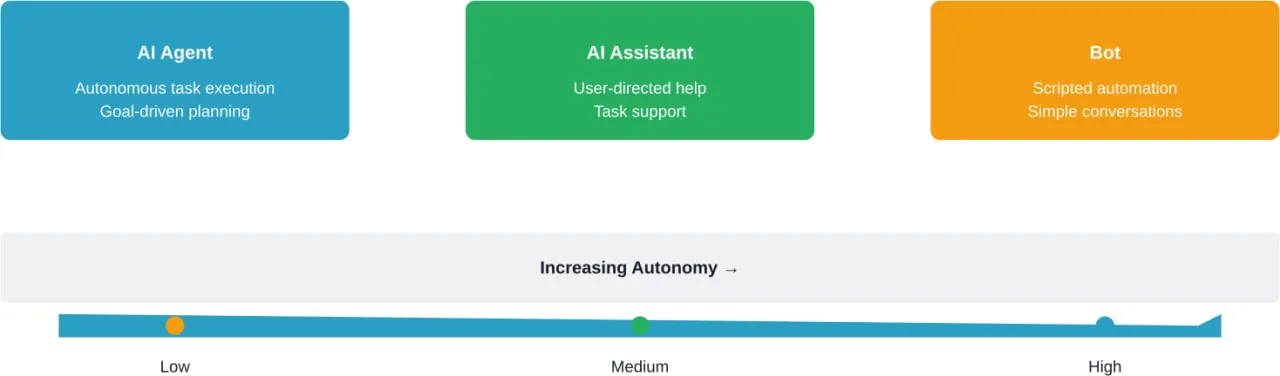
AI agents are starting to show up in places that used to need constant human attention – customer support queues, internal workflows, data lookups, even bits of decision-making. Not as a big replacement, but as something that quietly takes work off people’s plates.

Still, most teams run into the same question pretty quickly: where do these agents actually make sense?

There’s no shortage of platforms claiming to “automate everything,” but in practice, the value tends to come from narrower, well-defined tasks, things that follow patterns, repeat often, and don’t fall apart when handed off.

Below is a look at the current landscape of AI agent tools and platforms. Not a ranking, and not a guide on what to pick, just a way to understand what’s out there and how different approaches are taking shape.


Make AI Agents Work Inside Real Business Systems

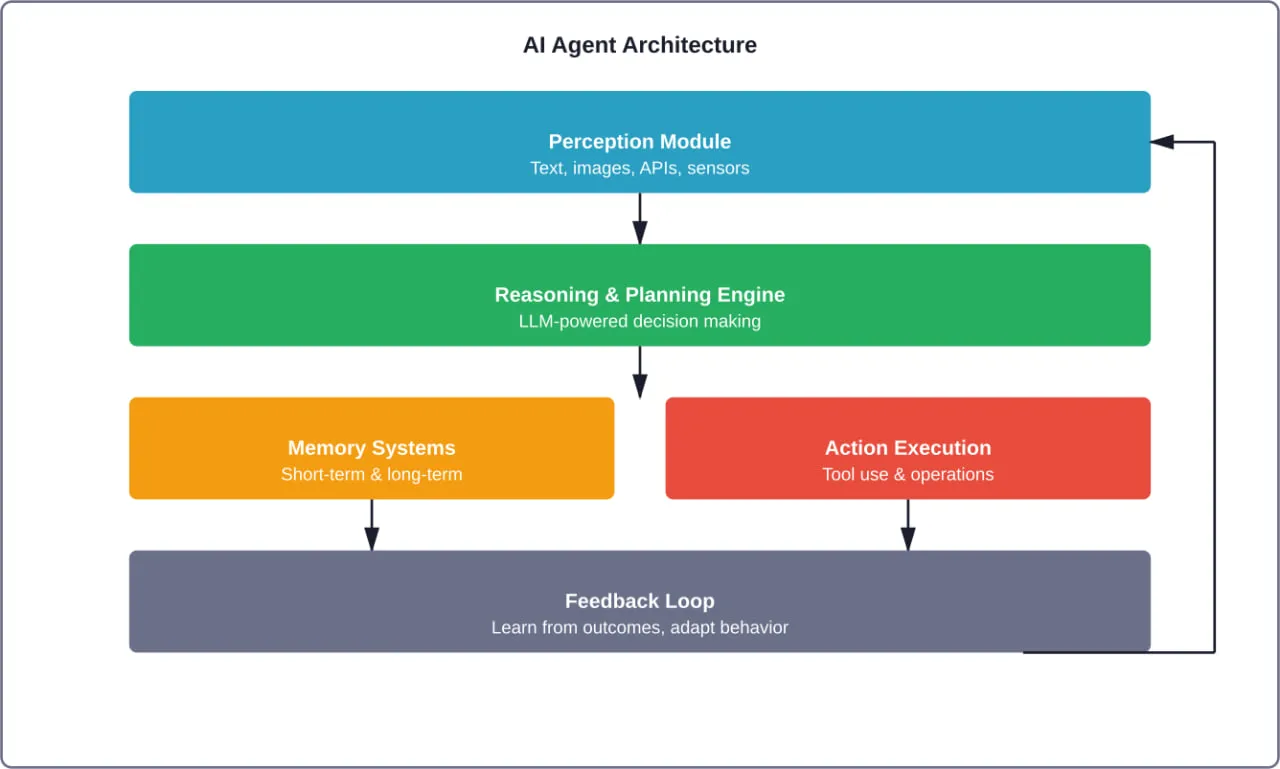
AI agents rarely operate on their own. They depend on backend systems, APIs, integrations, and stable infrastructure to function reliably in a business environment. 

That’s where רשימת מוצרים א' comes in. The company focuses on software development and dedicated engineering teams that handle architecture, development, and ongoing support, forming the foundation behind AI-driven features once they move beyond the prototype stage.

אם אתם עובדים על סוכני בינה מלאכותית, A-listware יכולה לעזור לכם:

  • connect services, APIs, and internal systems around your agents
  • manage data flows and integrations across your business tools
  • maintain stability and performance over time

Turn AI agents into a working part of your business with רשימת מוצרים א'.

1. Cognigy

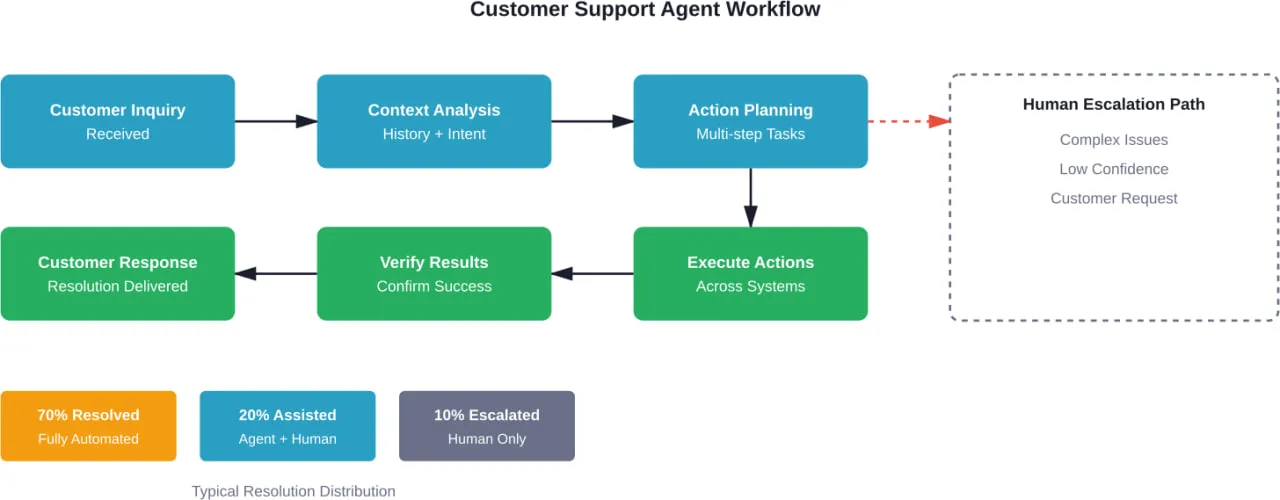
Cognigy presents itself as a platform focused on building and running AI agents in customer-facing environments, mostly around support and contact centers. The product is centered on handling conversations across channels like voice, chat, and messaging, while also supporting human agents with tools like real-time assistance and access to internal knowledge. It leans into structured automation – routing requests, resolving common issues, and reducing the need for manual handling in repetitive cases.

What stands out is how the platform ties different parts of customer interaction into one system. There’s an emphasis on combining language understanding with integrations into existing infrastructure, so AI agents can actually complete tasks, not just respond. At the same time, it keeps human agents in the loop through copilots and shared context, which suggests it’s not meant to fully replace support teams but to reduce load and make workflows more manageable.

נקודות עיקריות:

  • AI agents for voice, chat, and messaging channels
  • Focus on customer service and contact center operations
  • Real-time support tools for human agents (copilot)
  • שילוב עם מערכות ארגוניות קיימות
  • Multilingual support with translation capabilities
  • Combines automation with human-assisted workflows

למי זה מתאים ביותר:

  • Teams managing large volumes of customer support requests
  • Companies running multi-channel customer communication
  • Organizations looking to reduce repetitive support tasks
  • Enterprises with existing contact center infrastructure 

פרטי קשר:

  • אתר אינטרנט: www.cognigy.com
  • דוא"ל: info-us@cognigy.com
  • פייסבוק: www.facebook.com/cognigy
  • טוויטר: x.com/cognigy
  • LinkedIn: www.linkedin.com/company/cognigy
  • כתובת: 2400 N Glenville Drive, בניין B, קומה 400, ריצ'רדסון, טקסס 75082
  • טלפון: +1 972 301 1300

2. Fellow

Fellow is centered around meetings and everything that happens around them. It records, transcribes, and summarizes conversations, then turns that information into something usable – notes, action items, follow-ups, or updates in other systems. The AI agent layer sits on top of that, letting users search across past meetings or generate outputs based on what was discussed.

There’s a noticeable focus on control and privacy. Recordings and notes are kept centralized, but access is managed quite tightly, which makes sense given how sensitive internal meetings can be. It also connects with tools people already use, so meeting insights don’t just stay as notes but move into workflows like CRM updates or task management.

נקודות עיקריות:

  • AI meeting recording, transcription, and summaries
  • Searchable meeting history with generated outputs
  • Centralized storage with access controls
  • CRM and workflow integrations
  • Pre-meeting planning and agendas
  • Works across major meeting platforms

למי זה מתאים ביותר:

  • Teams with frequent internal and client meetings
  • Organizations that rely on documentation and follow-ups
  • Sales, customer success, and leadership teams
  • Companies needing structured meeting records 

פרטי קשר:

  • אתר אינטרנט: fellow.ai
  • פייסבוק: www.facebook.com/fellowmeetings
  • טוויטר: x.com/FellowAInotes
  • LinkedIn: www.linkedin.com/company/fellow-ai
  • אינסטגרם: www.instagram.com/FellowAInotes
  • כתובת: 532 Montréal Rd #275, אוטווה, ON K1K 4R4, קנדה

3. Glean

Glean is built around internal company knowledge and how employees interact with it. It connects to different tools across the organization and makes that information searchable, then layers AI agents on top to help automate tasks or generate outputs based on that data. Instead of focusing on one workflow, it spreads across multiple functions like engineering, support, HR, and sales.

What stands out is the way it treats data as a shared resource. The system pulls from documents, conversations, and tools, then uses that context to answer questions or trigger actions. Agents can be created to handle specific types of work, but they all rely on the same underlying knowledge layer, which keeps things consistent across teams.

נקודות עיקריות:

  • Unified search across company tools and data
  • AI agents for automating internal workflows
  • Connectors to a wide range of applications
  • Content generation and summarization
  • Support for multiple departments and use cases
  • Centralized knowledge layer

למי זה מתאים ביותר:

  • Companies with fragmented internal tools and data
  • Teams that rely on documentation and shared knowledge
  • Organizations looking to automate internal processes
  • Mid to large teams with cross-functional workflows

פרטי קשר:

  • Website: www.glean.com 
  • App Store: apps.apple.com/us/app/glean-work/id1582892407 
  • Google Play: play.google.com/store/apps/details?id=com.glean.app 
  • Twitter: x.com/glean 
  • LinkedIn: www.linkedin.com/company/gleanwork 
  • Instagram: www.instagram.com/gleanwork 
  • Address: 634 2nd Street, San Francisco, CA 94107, United States

4. Decagon

Decagon is built around customer-facing AI agents, with a focus on handling interactions across channels like chat, voice, and email. The platform leans into the idea of agents acting more like a front layer for customer communication – not just answering questions, but completing actions like rebooking, updating accounts, or handling requests that usually require a human operator.

Instead of relying on rigid configuration, the system introduces workflows defined in more natural language, which makes iteration a bit less technical. There’s also a clear emphasis on ongoing adjustment – testing, observing, and refining how agents behave over time. The setup suggests that agents are expected to evolve alongside the business, not stay fixed after deployment.

נקודות עיקריות:

  • AI agents for chat, voice, and email
  • Focus on customer interaction and task completion
  • הגדרת זרימת עבודה בשפה טבעית
  • Built-in testing and iteration tools
  • Analytics tied to conversations and behavior
  • Omnichannel support from a single system

למי זה מתאים ביותר:

  • Customer support and service operations
  • Businesses handling requests across multiple channels
  • Teams that need flexible, evolving workflows
  • Companies aiming to automate repetitive interactions 

פרטי קשר:

  • אתר אינטרנט: decagon.ai
  • טוויטר: x.com/DecagonAI
  • LinkedIn: www.linkedin.com/company/decagon-ai

5. HubSpot Breeze Data Agent

HubSpot Breeze Data Agent is an AI agent built around customer data rather than direct conversations. It pulls information from different sources like CRM records, emails, calls, and documents, then uses that context to answer questions or surface insights. The goal is to reduce the time spent manually searching across tools when trying to understand customers or track what’s going on.

Inside the HubSpot environment, it works as part of existing workflows instead of sitting separately. Outputs are structured in a way that feeds back into the system – updating records, filling gaps in data, or helping teams act on information that already exists but is spread across different places.

נקודות עיקריות:

  • AI agent focused on customer data analysis
  • Pulls information from CRM, emails, calls, and documents
  • Answers custom business questions based on available data
  • Creates and updates structured customer records
  • Works within existing HubSpot workflows
  • Connects fragmented data into a unified view

למי זה מתאים ביותר:

  • Teams working closely with CRM systems
  • Marketing and sales operations
  • Organizations with data spread across multiple tools
  • Teams that need quick access to customer insights

פרטי קשר:

  • אתר אינטרנט: www.hubspot.com
  • פייסבוק: www.facebook.com/hubspot
  • טוויטר: x.com/HubSpot
  • לינקדאין: www.linkedin.com/company/hubspot
  • אינסטגרם: www.instagram.com/hubspot
  • כתובת: 2 Canal Park, Cambridge, MA 02141, ארצות הברית
  • טלפון: 1 888 482 7768+

6. ClickUp Super Agents

ClickUp approaches AI agents as part of a broader work environment rather than a separate tool. Super Agents are designed to take on a wide range of tasks – writing, analyzing, managing workflows, updating records, and more – all within the same workspace where teams already manage projects and communication.

There’s a strong focus on flexibility. Agents can be created for almost any type of work, and they can interact with tasks, documents, and people directly. The system also allows multiple agents to operate together, which makes it feel less like a single assistant and more like a layer of automation across the entire workflow.

נקודות עיקריות:

  • AI agents embedded in a project management workspace
  • Handles tasks like writing, analysis, and coordination
  • Custom agents for different types of work
  • Multi-agent collaboration within workflows
  • Integration with tasks, docs, and communication
  • Continuous learning and context awareness

למי זה מתאים ביותר:

  • Teams managing projects and workflows in one platform
  • Organizations looking to automate daily operations
  • Cross-functional teams with varied tasks
  • Users who want AI inside their existing workspace

פרטי קשר:

  • Website: clickup.com
  • Facebook: www.facebook.com/clickupprojectmanagement
  • Twitter: x.com/clickup
  • LinkedIn: www.linkedin.com/company/12949663
  • Instagram: www.instagram.com/clickup

7. Devin

Devin is positioned as an AI agent focused on software development work. Instead of assisting with small tasks, it’s designed to handle larger pieces of engineering work – writing code, debugging, testing, and managing parts of the development process. The idea is closer to an autonomous contributor that can take a task and work through it step by step.

What makes it different is the scope. It’s not limited to generating snippets or suggestions, but operates across the full workflow – planning, executing, and refining code. At the same time, it still fits into existing development environments, interacting with tools and processes that engineers already use.

נקודות עיקריות:

  • AI agent for software development tasks
  • Handles coding, debugging, and testing
  • Works across full development workflows
  • Operates with some level of autonomy
  • Integrates with developer tools and environments
  • Focus on task execution, not just suggestions

למי זה מתאים ביותר:

  • Engineering teams and developers
  • Companies building software products
  • Teams with repetitive or structured coding tasks
  • Organizations exploring AI-assisted development

פרטי קשר:

  • אתר אינטרנט: devin.ai
  • טוויטר: x.com/cognition
  • LinkedIn: www.linkedin.com/company/cognition-ai-labs

8. Intercom (Fin AI Agent)

Intercom builds its AI agent, Fin, directly into a customer support platform. Instead of adding AI as a separate layer, it’s part of the helpdesk itself, working alongside human agents in the same system. Conversations, tickets, and customer data all live in one place, which means the agent and the team operate with the same context.

Another part of the setup is how the system improves over time. Interactions are analyzed, patterns are tracked, and the agent adjusts based on previous conversations and human input. There’s also a strong connection between automation and manual support, where tasks can move between AI and human agents without losing context.

נקודות עיקריות:

  • AI agent integrated into a helpdesk platform
  • Shared workspace for AI and human agents
  • Omnichannel communication in one system
  • Automated ticketing and routing
  • Insights from conversation data
  • Continuous improvement based on interactions

למי זה מתאים ביותר:

  • Customer support teams using helpdesk systems
  • Companies handling ongoing customer conversations
  • Teams needing both automation and human support
  • Organizations focused on structured support workflows

פרטי קשר:

  • Website: www.intercom.com
  • Email: press@intercom.com

9. טבלה

Tableau is built around data analysis and visualization, with a growing focus on what it calls agentic analytics. The platform connects to different data sources and turns that data into visual insights that people can explore and share. Alongside that, it introduces AI-driven features that help move from simply viewing data to acting on it, including systems that can suggest or trigger actions based on insights.

The setup is not limited to one environment. It can run in the cloud, on private infrastructure, or as part of a broader Salesforce ecosystem. Instead of replacing analysts, the platform leans toward supporting how people already work with data, while adding a layer where AI can assist with interpretation, exploration, and in some cases, automation of follow-up steps.

נקודות עיקריות:

  • Data visualization and analytics platform
  • AI features for insight generation and actions
  • Works across cloud and self-hosted environments
  • שילוב עם מקורות נתונים מרובים
  • Supports data exploration and reporting workflows
  • Part of a broader analytics and CRM ecosystem

למי זה מתאים ביותר:

  • Data analysts and business intelligence teams
  • Organizations working with large datasets
  • Teams needing visual reporting and dashboards
  • Companies building data-driven workflows 

פרטי קשר:

  • אתר אינטרנט: www.tableau.com
  • פייסבוק: www.facebook.com/Tableau
  • טוויטר: x.com/tableau
  • לינקדאין: www.linkedin.com/company/tableau-software
  • כתובת: רחוב מישן 415, קומה 3, סן פרנסיסקו, קליפורניה 94105, ארצות הברית
  • טלפון: 1-800-270-6977

10. Hightouch

Hightouch positions itself around marketing workflows driven by data and AI agents. It sits on top of a company’s existing data warehouse and uses that data to power campaigns, personalization, and audience management. The agent layer is used to automate parts of marketing execution, from building segments to deciding what message should be sent to which user.

Rather than moving data into a separate system, it works directly with what already exists. This changes how marketing teams interact with data – less exporting and syncing, more direct usage. The platform also includes decisioning logic, where AI evaluates signals and adjusts messaging or timing based on user behavior across channels.

נקודות עיקריות:

  • AI agents for marketing workflows and campaigns
  • Built on top of existing data warehouses
  • Audience building and segmentation tools
  • Real-time personalization across channels
  • AI-based decisioning for messaging and timing
  • Integration with a wide range of external tools

למי זה מתאים ביותר:

  • Marketing and lifecycle teams
  • Companies with established data warehouses
  • Organizations running multi-channel campaigns
  • Teams focused on personalization at scale

פרטי קשר:

  • Website: hightouch.com
  • Twitter: x.com/HightouchData
  • LinkedIn: www.linkedin.com/company/hightouchio

11. Lindy

Lindy is designed as a general-purpose AI assistant that works across everyday business tools like email, calendar, and messaging platforms. It handles tasks such as drafting emails, scheduling meetings, and pulling information from different sources. The idea is to reduce small, repetitive actions that tend to fill up the day.

What makes it a bit different is how it behaves proactively. It doesn’t just wait for instructions but can surface reminders, prepare context for meetings, or suggest next steps based on ongoing activity. Over time, it adapts to user preferences, which shifts it from a simple assistant to something closer to a lightweight operational layer across personal workflows.

נקודות עיקריות:

  • AI assistant for email, meetings, and scheduling
  • Drafts messages and manages communication
  • Connects across multiple work tools
  • Provides proactive reminders and context
  • Learns user preferences over time
  • Supports day-to-day task automation

למי זה מתאים ביותר:

  • Individuals managing busy schedules
  • Teams handling frequent communication
  • Professionals juggling multiple tools
  • Roles with repetitive coordination tasks

פרטי קשר:

  • אתר אינטרנט: www.lindy.ai
  • דוא"ל: support@lindy.ai
  • טוויטר: x.com/getlindy
  • LinkedIn: www.linkedin.com/company/lindyai

12. Relevance AI

Relevance AI focuses on building AI agents for go-to-market work, including sales, marketing, and customer operations. It introduces the idea of an AI workforce, where multiple agents handle tasks like research, outreach, lead qualification, and follow-ups. These agents can be triggered by events, such as changes in a sales pipeline or incoming leads.

There’s a progression in how automation is applied. It can start with simple assistance, then move toward more autonomous workflows as processes become clearer. The system connects with common tools like CRM, email, and messaging platforms, allowing agents to operate within existing workflows instead of requiring a full rebuild.

נקודות עיקריות:

  • AI agents for sales and go-to-market workflows
  • Automation of research, outreach, and follow-ups
  • Multi-agent setup for different tasks
  • Integration with CRM and communication tools
  • Event-based triggers for automation
  • Gradual shift from assisted to autonomous workflows

למי זה מתאים ביותר:

  • Sales and revenue teams
  • Companies with structured pipelines
  • Organizations scaling outbound and inbound efforts
  • Teams looking to automate repetitive GTM tasks

פרטי קשר:

  • אתר אינטרנט: relevanceai.com
  • טוויטר: x.com/RelevanceAI_
  • LinkedIn: www.linkedin.com/company/relevanceai

13. CrewAI

CrewAI is built around the idea of multiple AI agents working together as a coordinated system. Instead of focusing on a single assistant, it allows users to create groups of agents that can divide and complete tasks across workflows. These agents can interact with tools, follow defined roles, and operate with some level of autonomy.

The platform provides different ways to build and manage these systems, from visual interfaces to APIs. There is also a focus on control and monitoring – tracking how agents perform, adjusting behavior, and ensuring outputs stay consistent. It’s designed more as an infrastructure layer for building agent-based workflows than a ready-made tool for one specific use case.

נקודות עיקריות:

  • Multi-agent system for complex workflows
  • Visual builder and API-based setup
  • Agents interact with tools and external systems
  • Workflow tracing and monitoring
  • Training and guardrails for agent behavior
  • Scalable deployment across teams

למי זה מתאים ביותר:

  • Engineering and technical teams
  • Companies building custom AI workflows
  • Organizations needing multi-step automation
  • Teams experimenting with agent-based systems

פרטי קשר:

  • אתר אינטרנט: crewai.com
  • Twitter: x.com/crewaiinc
  • LinkedIn: www.linkedin.com/company/crewai-inc

14. Sierra

Sierra focuses on AI agents for customer experience, covering interactions across channels like chat, voice, and messaging. The platform is designed to handle conversations while also connecting them to actions, such as booking, account updates, or service requests. It aims to keep interactions consistent regardless of where they happen.

Another part of the system is how agents are built and improved. There are tools for defining behavior, testing scenarios, and adjusting performance over time. The platform also tracks interactions and extracts insights, which helps refine how agents respond and operate in future conversations.

נקודות עיקריות:

  • AI agents for customer communication across channels
  • Supports chat, voice, email, and messaging platforms
  • Tools for building and testing agent behavior
  • אינטגרציה עם מערכות חיצוניות ומקורות נתונים
  • Continuous improvement based on interaction data
  • Focus on consistent customer experience

למי זה מתאים ביותר:

  • Customer support and service teams
  • Companies with multi-channel communication
  • Organizations handling frequent customer interactions
  • Teams looking to automate service workflows 

פרטי קשר:

  • אתר אינטרנט: sierra.ai
  • דוא"ל: security@sierra.ai
  • טוויטר: x.com/sierraplatform
  • LinkedIn: www.linkedin.com/company/sierra

15. Moveworks

Moveworks is built as an AI assistant platform for internal business operations. It connects to different systems across a company – HR, IT, finance, and others – and allows employees to search for information or trigger actions through a single interface. The agent layer is used to handle requests, automate tasks, and reduce manual back-and-forth between teams.

Instead of focusing on one department, it spreads across the organization. The system combines search and execution, so a request can move from a question to an action without switching tools. It also supports multiple languages and integrates with a wide range of business applications, which makes it easier to apply across different teams.

נקודות עיקריות:

  • AI assistant for internal workflows and operations
  • Combines search and task execution
  • Works across HR, IT, finance, and other systems
  • אינטגרציה עם יישומים עסקיים מרובים
  • Supports multilingual environments
  • Centralized interface for employee requests

למי זה מתאים ביותר:

  • Large organizations with multiple internal systems
  • Teams handling internal service requests
  • Companies aiming to streamline operations
  • Organizations with distributed or global teams

פרטי קשר:

  • אתר אינטרנט: www.moveworks.com 
  • דוא"ל: support@moveworks.com 
  • טוויטר: x.com/moveworks 
  • LinkedIn: www.linkedin.com/company/moveworksai 
  • כתובת: 1400 Terra Bella Avenue, Mountain View, CA 94043


מַסְקָנָה

If you step back and look at all of this, AI agents don’t really come across as some big, unified thing. They show up in different corners of the business, doing very different jobs. In one place, it’s handling support tickets. In another, it’s helping marketing teams push campaigns or pulling answers from internal data. Same idea underneath, but applied in very practical, sometimes quite narrow ways.

There’s also a bit of a pattern in how they’re being used. Most of these tools aren’t trying to replace how companies work. They sit on top of what’s already there – existing systems, existing processes, existing data. And when things are structured enough, they tend to fit in without much friction. When they’re not, you start to see where the limits are.

So it’s less about “using AI agents” as a concept, and more about figuring out where they actually help in everyday work. Usually, it’s the repetitive, slightly annoying tasks that no one really wants to spend time on. That’s where they seem to land first. Everything else still takes a bit more thought.

שירותי פיתוח סוכני בינה מלאכותית: מבט מקרוב על החברות המובילות

סוכני בינה מלאכותית כבר אינם משהו שצוותים מתנסים בו כפעילות משנית. הם החלו להופיע בעבודה היומיומית – מטפלים בבקשות, מסייעים בקבלת החלטות, ומבצעים בשקט משימות חוזרות ונשנות שבעבר האטו את קצב העבודה.

עם התקדמות המגמה הזו, יותר ויותר חברות מפתחות שירותים סביב תכנון ופריסה של מערכות אלה. חלקן ניגשות לנושא מתוך רקע הנדסי מובהק, ואחרות מתמקדות בנתונים, באוטומציה או בשילוב מוצרים. התוצאה היא תמונה מגוונת למדי, שבה כל צוות מביא את נקודת המבט שלו לגבי מה ש“סוכן” אמור לעשות בפועל.

להלן סקירה מפורטת יותר של החברות הפועלות בתחום זה, כולל קצת רקע על האופן שבו הן מציגות את עצמן ועל המקום שבו הן נוטות להשתלב.

1. כלי עבודה מובילים

A-listware מספקת שירותי פיתוח סוכנים מבוססי בינה מלאכותית (AI) כחלק מעבודת הנדסת תוכנה רחבה יותר, תוך התמקדות באופן שבו הסוכנים נבנים, מתחברים ופועלים בסביבת הפקה. בדרך כלל אנו עובדים על השכבות המקיפות את הסוכן עצמו – לוגיקת ה-backend, ממשקי API, אינטגרציות ותשתית. זה כולל הגדרת אופן העברת הנתונים במערכת, אופן האינטראקציה של הסוכן עם שירותים אחרים, ואופן התנהגות המערכת כולה בתנאי שימוש אמיתיים.

אנו מתייחסים לפיתוח סוכני בינה מלאכותית כחלק ממערכת תוכנה שלמה, ולא כאל תכונה עצמאית. הצוותים שלנו מטפלים בארכיטקטורה, בפיתוח, בבדיקות ובתמיכה השוטפת, כך שאין צורך לפצל את העבודה בין ספקים שונים. הדבר מקל על שמירת העקביות בכל שכבות המערכת ומסייע במניעת פערים בין הרכיבים. עם הזמן, המיקוד עובר לרוב מ“להביא את המערכת למצב פעיל” ל“לשמור על יציבותה ויכולת ההרחבה שלה”, ובשלב זה אנו ממשיכים לתמוך במוצר.

נקודות עיקריות:

  • לעבוד עם סוכני בינה מלאכותית כחלק ממערכות תוכנה שלמות, ולא כרכיבים מבודדים
  • התמקדות בארכיטקטורת ה-backend, אינטגרציות ותשתית
  • צוותי הנדסה ייעודיים המשתלבים בתהליכי העבודה הקיימים
  • תמיכה לאורך כל מחזור הפיתוח, כולל לאחר ההשקה

שירותים:

  • פיתוח סוכני בינה מלאכותית
  • פיתוח תשתית אחורית וממשקי API עבור סוכנים
  • שילוב מערכות וכלים
  • צינורות נתונים עבור תהליכי עבודה של סוכנים
  • פריסה ותמיכה

פרטי קשר:

2. אפקטיבסופט

חברת EffectiveSoft עוסקת בפיתוח סוכני בינה מלאכותית ברמת תכנון המערכת, שבה האוטומציה משולבת בתהליכי עבודה עסקיים אמיתיים ולא רק במשימות בודדות. הצוותים שלה בונים הן סוכנים בודדים והן מערכות מרובות-סוכנים המסוגלות לתכנן פעולות, לעבד נתונים ולתקשר עם מערכות ארגוניות. חלק ניכר מעבודתה מתמקד בתחומים כגון פיננסים, בריאות ותפעול, שבהם הסוכנים נדרשים לטפל ביותר מבקשות פשוטות ולהתמודד עם תהליכים מובנים.

חלק ניכר מעבודתם מתבצע מאחורי הקלעים – הכנת נתונים, כוונון מודלים והגדרת תזמור כדי שהרכיבים השונים יוכלו לפעול יחד. מרכיבים אלה הם שמכריעים ברגע שהסוכנים עוברים לסביבת הייצור, שם היציבות, האינטגרציה עם מערכות עסקיות והעקביות לטווח הארוך מתחילות להיות חשובות יותר מהפונקציונליות הראשונית.

נקודות עיקריות:

  • עבודה עם ארכיטקטורות של סוכן יחיד ושל סוכנים מרובים
  • התמקדות באוטומציה של תהליכי העבודה בכל מערכות הארגון
  • ניסיון בכיול מודלים של למידת שפה (LLM) ובמודלים ספציפיים לתחום
  • שילוב עם פלטפורמות עסקיות ומקורות נתונים
  • מעקב ותמיכה שוטפים לאחר הפריסה

שירותים:

  • ייעוץ ואסטרטגיה בתחום הסוכנים המונעים על ידי בינה מלאכותית
  • פיתוח והתאמה אישית של סוכנים מותאמים אישית
  • תכנון ותזמור של מערכות מרובות סוכנים
  • פתרונות לכיול מודלים של LLM וללמידה עמוקה
  • אוטומציה של זרימת עבודה
  • תחזוקה ותמיכה 

פרטי קשר:

  • אתר אינטרנט: www.effectivesoft.com
  • דוא"ל: rfq@effectivesoft.com
  • פייסבוק: www.facebook.com/EffectiveSoft
  • טוויטר: x.com/EffectiveSoft
  • לינקדאין: www.linkedin.com/company/effectivesoft
  • כתובת: 4445 Eastgate Mall, Suite 200, 92121 
  • טלפון: 1-800-288-9659

3. Instinctools

חברת Instinctools ניגשת לפיתוח סוכני בינה מלאכותית באמצעות אוטומציה של תהליכים, תוך התבוננות באופן שבו משימות משתלבות בתהליכי עבודה רחבים יותר. עבודתה קשורה בדרך כלל לבניית מערכות המסוגלות לטפל ברצפי פעולות, ולא רק בצעדים בודדים. במובן זה, הסוכנים נתפסים כחלק משכבת אוטומציה רחבה יותר, המשנה את האופן שבו העבודה מתנהלת בין צוותים ומערכות.

במקרים רבים, הדגש עובר לאופן שבו מערכות אלה מתנהגות לאורך זמן, ולא רק בעת ההשקה. שאלות בנוגע להרחבה, אבטחה ותאימות עם כלים קיימים עולות כבר בשלב מוקדם, במיוחד כאשר הסוכנים מתחילים לשתף פעולה בין מערכות וצוותים שונים.

נקודות עיקריות:

  • התמקדו באוטומציה ברמת התהליכים, ולא רק באוטומציה של משימות
  • תשומת לב ליכולת ההרחבה של מערכות בינה מלאכותית
  • התייחסות להיבטי אבטחה בפריסת סוכנים
  • שילוב בתהליכי העבודה העסקיים הקיימים

שירותים:

  • פיתוח סוכני בינה מלאכותית
  • פתרונות אוטומציה של תהליכי עבודה
  • אינטגרציה של מערכות בינה מלאכותית
  • ארכיטקטורת אוטומציה מודולרית

פרטי קשר:

  • אתר אינטרנט: www.instinctools.com
  • דוא"ל: contact@instinctools.com
  • פייסבוק: www.facebook.com/instinctoolslabs
  • טוויטר: x.com/instinctools_EE
  • לינקדאין: www.linkedin.com/company/instinctoolscompany
  • אינסטגרם: www.instagram.com/instinctools
  • כתובת: 12430 Park Potomac Ave, Unit 122 Potomac MD 20854, ארה"ב
  • טלפון: 12028214280+

4. מרקובייט

Markovate פועלת עם סוכני בינה מלאכותית במסגרת תהליכי עבודה תפעוליים, שבהם האוטומציה קשורה לצמצום שלבים ידניים ולשיפור העקביות. הפרויקטים שלה עוסקים לרוב בסביבות מובנות כגון ייצור, בריאות ובנייה, שבהן הסוכנים מעבדים נתונים, מחלצים מידע ותומכים בקבלת החלטות.

מה שבולט במיוחד הוא הקשר ההדוק בין עבודתם לתהליכים הקיימים. הסוכנים משולבים בסביבות שבהן כבר קיימים תהליכי עבודה מבוססים, ולכן מושקע מאמץ רב כדי להבטיח ששום דבר לא ישתבש בזמן שהאוטומציה מתווספת בהדרגה.

נקודות עיקריות:

  • התמקדות בייעול תהליכי העבודה במגזרים שונים
  • ניסיון בעיבוד נתונים מובנה ובאוטומציה
  • פיתוח בינה מלאכותית במלוא מחזור החיים, מההקמה ועד הפריסה
  • התאמה לתהליכים תפעוליים קיימים
  • תשומת לב לתאימות ולסביבות מאובטחות

שירותים:

  • פיתוח בינה מלאכותית גנרטיבית
  • פתרונות בינה מלאכותית סוכנתית
  • מערכות בינה מלאכותית לשיחה
  • פתרונות למידת מכונה
  • יישומים בתחום הראייה הממוחשבת 

פרטי קשר:

  • אתר אינטרנט: markovate.com
  • טוויטר: x.com/markovateagency
  • LinkedIn: www.linkedin.com/company/markovate
  • כתובת: 10 N Martingale Rd #400, Schaumburg, IL

5. אזומו

Azumo מתייחסת לסוכני בינה מלאכותית כאל מערכות שצריכות לפעול בתוך סביבות מורכבות, ולא רק להגיב לקלט. עבודתה כוללת לעתים קרובות מערכים מרובי-סוכנים, שבהם רכיבים שונים מטפלים במשימות נפרדות ומתואמים באמצעות לוגיקה משותפת. זה כולל פיתוח סוכנים המסוגלים לנהל תהליכי עבודה כגון עיבוד הזמנות, ניתוח נתונים או פיקוח על עמידה בדרישות.

מרכיב בולט בגישתם הוא תשומת הלב הרבה המוקדשת לבקרה ולצפיות. ברגע שהסוכנים מתחילים לקבל החלטות במערכות השונות, חשוב לקבל תמונת מצב ברורה לגבי פעולותיהם והסיבות להן, ולכן מנגנוני ניטור, אמצעי הגנה ולוגיקת גיבוי מובנים במערכת כבר מההתחלה.

נקודות עיקריות:

  • התמקדות בתיאום בין סוכנים מרובים
  • דגש על תכנון ברמת המערכת עבור סוכני בינה מלאכותית
  • שימוש במעקות בטיחות ובמנגנוני גיבוי
  • שילוב עם כלים ארגוניים וממשקי API
  • תשומת לב ליכולת הניטור והשליטה

שירותים:

  • פיתוח סוכני בינה מלאכותית בהתאמה אישית
  • אינטגרציה של מערכות ארגוניות
  • אימון ואופטימיזציה של מודלים מבוססי בינה מלאכותית
  • פתרונות פריסה הניתנים להרחבה
  • עוזרים וירטואליים וסוכני זרימת עבודה

פרטי קשר:

  • אתר אינטרנט: azumo.com
  • פייסבוק: www.facebook.com/azumohq
  • טוויטר: x.com/azumohq
  • לינקדאין: www.linkedin.com/company/azumo-llc
  • כתובת: 40 Mesa, Suite 114, סן פרנסיסקו, קליפורניה
  • טלפון: 415.610.7002

6. מאסטר אוף קוד גלובל

Master of Code Global משתמשת בסוכני בינה מלאכותית בתחומי שירות הלקוחות, התפעול והתהליכים הפנימיים. הפרויקטים של החברה כוללים לרוב מערכות שיחה, אך הם חורגים מעבר לממשקי צ'אט לתחומים כגון המלצות, ניתוח נתונים ואוטומציה של החלטות חוזרות ונשנות.

הם משלבים ייעוץ עם יישום, ומסייעים בהגדרת האופן שבו יש לשלב את הסוכנים בעסק לפני פיתוחם. תהליך זה כולל בחירת מודלים, תכנון אינטגרציות ושיפור האופן שבו הסוכנים מתקשרים עם משתמשים או מערכות. הגישה שלהם נוטה לעקוב אחר תהליך מובנה, שבו הסוכנים מתפתחים באמצעות איטרציות לאחר הפריסה.

נקודות עיקריות:

  • ניסיון בעבודה עם סוכנים שיחתיים וסוכנים מבוססי זרימת עבודה
  • התמקדו במקרי שימוש מעשיים כגון תמיכה והמלצות
  • שילוב של ייעוץ ופיתוח
  • גישה איטרטיבית לשיפור ביצועי הסוכן
  • שילוב עם מערכות עסקיות וממשקי משתמש

שירותים:

  • פיתוח סוכני בינה מלאכותית
  • ייעוץ ואסטרטגיה בתחום הבינה המלאכותית
  • פתרונות AI לשיחות
  • למידת מכונה וניתוח נתונים
  • אינטגרציה ואופטימיזציה של המערכת 

פרטי קשר:

  • אתר אינטרנט: masterofcode.com
  • דוא"ל: us.sales@masterofcode.com
  • פייסבוק: www.facebook.com/master.of.code.global
  • טוויטר: x.com/master_of_code
  • LinkedIn: www.linkedin.com/company/master-of-code
  • כתובת: 541 Jefferson Ave, Suite 100, רדווד סיטי, CA 94063
  • טלפון: +1 408-663-1363

7. מעבדת הנוירונים

Neurons Lab ניגשת לסוכני בינה מלאכותית מתוך פרספקטיבה רחבה יותר של טרנספורמציה, שבה הסוכנים מהווים חלק משינוי נרחב יותר באופן הפעולה של מערכות וצוותים. עבודתם מתחילה לרוב בבניית אסטרטגיה ותשתית נתונים, ולאחר מכן מתקדמת לבניית מערכות רב-סוכניות המסוגלות לטפל בתהליכים מורכבים בכל רחבי הארגון.

חלק ניכר מעבודתם קשור למבנה ולתכנון לטווח ארוך. לפני פריסת הסוכנים, מתבצעת בדרך כלל עבודת הכנה בנושאי ממשל, מוכנות נתונים ותיאום מערכות, במיוחד בסביבות שבהן יש חשיבות לתאימות ולתיאום.

נקודות עיקריות:

  • התמקדות במעבר ל-AI ובאימוץ לטווח ארוך
  • ניסיון במערכות מרובות סוכנים ובתזמור
  • דגש רב על תשתית הנתונים ומוכנות
  • תשומת לב לניהול תקין ולציות לתקנות
  • מעורבות באסטרטגיה ובתכנון בשלב מוקדם

שירותים:

  • פיתוח מערכות בינה מלאכותית סוכנתית
  • אסטרטגיית בינה מלאכותית וממשל
  • הקמת תשתית נתונים
  • פיתוח הוכחת היתכנות
  • הדרכה וייעוץ בתחום הבינה המלאכותית

פרטי קשר:

  • אתר אינטרנט: neurons-lab.com
  • דוא"ל: info@neurons-lab.com
  • פייסבוק: www.facebook.com/neurons.lab
  • טוויטר: x.com/neurons_lab
  • LinkedIn: www.linkedin.com/company/neurons-lab
  • כתובת: International House, רחוב ניל 64, לונדון, N1 7SR, בריטניה
  • טלפון: +44 203 769 4201

8. Code Brew

Code Brew עובדת עם סוכני בינה מלאכותית כחלק ממערך רחב יותר של פתרונות מבוססי בינה מלאכותית התומכים במוצרים ובפלטפורמות דיגיטליים. הפרויקטים שלה משלבים לעתים קרובות סוכנים עם יישומים, שבהם האוטומציה משולבת במערכות הפונות למשתמשים, כגון זירות מסחר, אפליקציות סלולריות או כלים תפעוליים.

בפועל, משמעות הדבר היא שסוכנים כמעט אף פעם אינם פועלים לבדם. הם קשורים בדרך כלל לחלקים אחרים של המערכת, כולל ניתוח נתונים, לוגיקה אחורית ושכבות אינטראקציה עם המשתמש, מה שהופך אותם למרכיב אחד במערך רחב יותר.

נקודות עיקריות:

  • התמקדות בשילוב סוכני בינה מלאכותית ביישומים
  • שילוב של בינה מלאכותית עם פיתוח מוצרים דיגיטליים בהיקף רחב יותר
  • השימוש בבינה מלאכותית במגוון תעשיות ובמקרי שימוש שונים
  • שילוב עם כלים אנליטיים ותכונות מבוססות נתונים
  • מעורבות בפרויקטים של חברות סטארט-אפ ושל ארגונים גדולים כאחד

שירותים:

  • פיתוח סוכני בינה מלאכותית וצ'אטבוטים
  • פתרונות בינה מלאכותית גנרטיביים
  • למידת מכונה ומדע נתונים
  • פיתוח תוכנה ואפליקציות בהתאמה אישית
  • אסטרטגיה וייעוץ בתחום הבינה המלאכותית 

פרטי קשר:

  • אתר אינטרנט: www.code-brew.com
  • דוא"ל: business@code-brew.com
  • פייסבוק: www.facebook.com/codebrewlabs
  • טוויטר: x.com/CodeBrewLabs
  • לינקדאין: www.linkedin.com/company/code-brew-labs
  • אינסטגרם: www.instagram.com/codebrewlabs
  • כתובת: 4231 Balboa Ave #512 סן דייגו, CA 92117 ארצות הברית
  • טלפון: +1(213)2614953

9. OpenKit

OpenKit עובדת עם סוכנים מבוססי בינה מלאכותית כחלק ממאמץ נרחב יותר לבחון מחדש את אופן התנהלותם של תהליכים פנימיים. הפרויקטים שלה מתחילים לרוב בניתוח אופן ביצוע העבודה כיום, ולאחר מכן מתקדמים לפיתוח סוכנים שיכולים לקחת על עצמם חלקים ספציפיים בתהליך זה. הדבר כולל מקרים כגון עיבוד מסמכים, כלי הערכה או פלטפורמות מבוססות נתונים, שבהן האוטומציה צריכה להישאר מותאמת לשימוש בפועל.

הם גם מקדישים תשומת לב רבה לתשתיות ולניהול נתונים. חלק ניכר מעבודתם מתבצע בסביבות בינה מלאכותית פרטיות, שבהן הסוכנים פועלים בתוך מערכות מבוקרות ומתחברים למקורות נתונים פנימיים. הדגש אינו רק על פריסת הסוכנים, אלא על הבטחת התאמתם לתהליכים הקיימים ויכולת הרחבתם מבלי לגרום לבעיות.

נקודות עיקריות:

  • התמקדות בסוכני בינה מלאכותית במסגרת תהליכי עבודה עסקיים מובנים
  • תשומת לב לתשתית בינה מלאכותית פרטית ומאובטחת
  • שימוש בגישה הדרגתית, מהאסטרטגיה ועד ליישום
  • ניסיון בניתוח מסמכים ובמקרי שימוש הכרוכים בנתונים רבים
  • שילוב עם מערכות פנימיות ומקורות נתונים

שירותים:

  • ייעוץ ואסטרטגיה בתחום הבינה המלאכותית
  • פיתוח סוכני בינה מלאכותית
  • פתרונות בינה מלאכותית גנרטיביים
  • פיתוח LLM בהתאמה אישית
  • הקמת תשתית ואינטגרציה 

פרטי קשר:

  • אתר אינטרנט: openkit.co.uk
  • דוא"ל: contact@openkit.co.uk
  • כתובת: פורטלנד האוס, פארק העסקים בלמונט, דורהם DH1 1TW
  • טלפון: 020 3355 1358

10. אמרלין

Emerline מפתחת מערכות מבוססות בינה מלאכותית במסגרת פרויקטים רחבים יותר של פיתוח תוכנה, שבהם סוכנים משולבים ביישומים או בתהליכי עבודה. פעילותה משתרעת לרוב על פלטפורמות אינטרנט, מובייל וארגוניות, תוך שימוש בבינה מלאכותית לאוטומציה של חלקים מתהליך הפיתוח, הטיפול בנתונים או תכונות המיועדות למשתמשים.

הם משלבים כלים מבוססי בינה מלאכותית לאורך כל מחזור החיים של התוכנה, ולא רק במוצרים הסופיים. הדבר כולל שימוש בבינה מלאכותית בשלבי התכנון, הפיתוח והבדיקה, כדי לזרז את תהליך המסירה ולצמצם את העבודה הידנית. בהקשר של סוכני בינה מלאכותית, הדבר יוצר תרחישים שבהם הסוכנים תומכים הן בתהליכים פנימיים והן בפונקציונליות של המשתמש הסופי.

נקודות עיקריות:

  • שילוב בינה מלאכותית בכל מחזור החיים של פיתוח התוכנה
  • עבודה עם יישומים באינטרנט, במובייל ובארגונים
  • התמקדות באוטומציה בתחום הפיתוח והתפעול
  • ניסיון בעבודה עם תהליכי עבודה וכלים המונעים על ידי בינה מלאכותית
  • מודל אספקה גלובלי עם צוותים מבוזרים

שירותים:

  • ייעוץ וסדנאות בתחום הבינה המלאכותית
  • פיתוח פתרונות בינה מלאכותית בהתאמה אישית
  • יישום בינה מלאכותית גנרטיבית
  • חיפוש ועיבוד נתונים מבוססי בינה מלאכותית
  • פיתוח תוכנה ואינטגרציה 

פרטי קשר:

  • אתר אינטרנט: emerline.com
  • דוא"ל: info@emerline.com
  • פייסבוק: www.facebook.com/emerlinedev
  • לינקדאין: www.linkedin.com/company/emerline
  • אינסטגרם: www.instagram.com/emerline.global
  • כתובת: 801 Brickell Avenue, Suite 1970, Miami, FL 33131
  • טלפון: +1 630 877 1212 (ארה"ב)

11. HatchWorks AI

HatchWorks AI ניגשת לסוכני בינה מלאכותית מנקודת מבט של שינוי מוצרים ותהליכי עבודה. עבודתה מתחילה לרוב בזיהוי המקומות שבהם לאוטומציה יכולה להיות השפעה ממשית, ולאחר מכן בבניית סוכנים המשלבים נתונים, תהליכים ונקודות החלטה לכדי תוצר שימושי.

התהליך שלהם נוטה להתנהל על פי מבנה מוגדר, שבו הכנת הנתונים, התאמת המערכת וההכשרה מטופלות בשלב מוקדם. הדבר הופך את תהליך ההטמעה לניתן לחיזוי יותר, במיוחד כאשר משלבים את הסוכנים בתפעול הקיים.

נקודות עיקריות:

  • התמקדות בקישור בין סוכני בינה מלאכותית לתוצאות מדידות של תהליכי העבודה
  • גישה מובנית לפיתוח ופריסה של בינה מלאכותית
  • תשומת לב למוכנות הנתונים ולניהול הנתונים
  • שימוש בחומרים כימיים בתהליכי ייצור ושינוי מוצרים
  • מעורבות בשלבי ההכשרה וההטמעה

שירותים:

  • אסטרטגיית טרנספורמציה מבוססת בינה מלאכותית
  • תכנון פריסת סוכני בינה מלאכותית
  • הנדסת נתונים וניתוח נתונים
  • פיתוח מוצרים מבוסס בינה מלאכותית
  • הדרכה וסדנאות 

פרטי קשר:

  • אתר אינטרנט: hatchworks.com
  • דוא"ל: connect@hatchworks.com
  • פייסבוק: www.facebook.com/hatchworksinc
  • LinkedIn: www.linkedin.com/company/hatchworksai
  • אינסטגרם: www.instagram.com/hatchworksai
  • כתובת: 3280 Peachtree Rd NE, קומה 7, 30305
  • טלפון: 1-800-621-7063

12. Itransition

Itransition מפתחת סוכני בינה מלאכותית עבור סוגים שונים של תהליכים עסקיים, החל ממערכות הפונות ללקוחות וכלה בכלים פנימיים לאוטומציה. עבודתה כוללת לעתים קרובות טיפול במשימות כגון תזמון, טיפול בתביעות או ניהול מלאי, שבהן הסוכנים נדרשים לתקשר עם מקורות נתונים ומערכות מרובים.

הם פועלים על פי תהליך מובנה שמתחיל בהגדרת יעדים ובדיקת מוכנות הנתונים, ולאחר מכן עובר לשלבי הפיתוח, הבדיקה והפריסה. לאחר ההשקה, הם ממשיכים לתמוך במערכת ולבצע בה התאמות, דבר החשוב כאשר הנציגים פועלים בסביבות המשתנות לאורך זמן.

נקודות עיקריות:

  • ניסיון בעבודה עם סוכנים בתהליכי עבודה תפעוליים ותהליכי שירות לקוחות
  • תהליך פיתוח מובנה, מהתכנון ועד הפריסה
  • שילוב עם מערכות ארגוניות ומקורות נתונים
  • התמקדות באוטומציה של משימות חוזרות ונשנות בהיקף נרחב
  • תמיכה שוטפת ואופטימיזציה לאחר ההשקה

שירותים:

  • פיתוח סוכני בינה מלאכותית
  • ייעוץ ותכנון בתחום הבינה המלאכותית
  • אינטגרציה של המערכת
  • ניתוח וניהול נתונים
  • תמיכה ותחזוקה

פרטי קשר:

  • אתר אינטרנט: www.itransition.com
  • דוא"ל: info@itransition.com
  • פייסבוק: www.facebook.com/Itransition
  • טוויטר: x.com/itransition
  • לינקדאין: www.linkedin.com/company/itransition
  • כתובת: 160 Clairemont Ave, Suite 200, Decatur, GA 30030
  • טלפון: 1 720 207 2820+

13. תוכנת DBB

חברת DBB Software מפתחת סוכני בינה מלאכותית תוך התמקדות באופן התנהלותם בתוך תהליכי עבודה אמיתיים. המערכות שלהן מתוכננות לטפל במשימות כגון עיבוד נתונים, הכנת דוחות או אינטראקציה עם משתמשים, לרוב תוך רמה מסוימת של אוטונומיה ותיאום בין הרכיבים.

חלק מעבודתם מוקדש לאפשר לסוכנים להתמודד עם תרחישים מורכבים יותר לאורך זמן. זה כולל זיכרון, תיאום בין סוכנים שונים, ויכולת לתקשר עם כלים או מערכות חיצוניים במהלך הביצוע.

נקודות עיקריות:

  • התמקדות בעיצוב סוכני בינה מלאכותית מונחי זרימת עבודה
  • שימוש במערכות מרובות סוכנים ובלוגיקת תיאום
  • שילוב של כלים ומקורות נתונים חיצוניים
  • תשומת לב לניטור ולהתנהגות הסוכנים
  • פיתוח איטרטיבי ותמיכה לטווח ארוך

שירותים:

  • פיתוח סוכני בינה מלאכותית בהתאמה אישית
  • תכנון מערכות מרובות סוכנים
  • שילוב בינה מלאכותית בכלים עסקיים
  • ניטור וניתוח סוכנים
  • תמיכה ועדכונים שוטפים

פרטי קשר:

  • אתר אינטרנט: dbbsoftware.com
  • דוא"ל: in@dbbsoftware.com
  • פייסבוק: www.facebook.com/dbbsoftware
  • טוויטר: x.com/dbbsoftware
  • LinkedIn: www.linkedin.com/company/dbbsoftware
  • אינסטגרם: www.instagram.com/dbbsoftware
  • כתובת: aleja Powstania Warszawskiego 15, 31-539, קרקוב, פולין
  • טלפון: +48694769312

14. MindK

MindK עובדת עם סוכני בינה מלאכותית במקרים שבהם האוטומציה חורגת מכללים פשוטים ודורשת הבנת הקשר או יכולת חשיבה. הפרויקטים שלה עוסקים לרוב במערכות תמיכה או בכלים פנימיים שבהם הסוכנים נדרשים לעבד סוגים שונים של נתונים ולספק תוצאות עקביות.

הם גם שמים דגש על שקיפות באופן הפעולה של הסוכנים, כולל היכולת לאתר את מקורן של החלטות בנתוני המקור. הדבר מועיל במצבים שבהם אמון ודיוק הם גורמים חשובים, במיוחד כאשר הסוכנים מתקשרים עם משתמשים או מטפלים בתהליכי עבודה חשובים.

נקודות עיקריות:

  • התמקדות בסוכנים המותאמים להקשר ומבוססי היסק
  • שימוש ב-RAG ובגישות מבוססות נתונים
  • תשומת לב לשקיפות בתוצרי הסוכנים
  • ניסיון בשימושים בתחום התמיכה והגיוס
  • שילוב עם כלים ומקורות נתונים קיימים

שירותים:

  • פיתוח סוכני בינה מלאכותית
  • פתרונות מבוססי RAG
  • עיבוד נתונים ואינטגרציה
  • פיתוח תוכנה בהתאמה אישית
  • ייעוץ ותמיכה בתחום ה-IT

פרטי קשר:

  • אתר אינטרנט: www.mindk.com
  • דוא"ל: contactsf@mindk.com
  • פייסבוק: www.facebook.com/mindklab
  • טוויטר: x.com/mindklab
  • לינקדאין: www.linkedin.com/company/mindk
  • אינסטגרם: www.instagram.com/mindklab
  • כתובת: רחוב קליי 1630, סן פרנסיסקו, קליפורניה
  • טלפון: 1 415 841 3330+

15. N-iX

N-iX מפתחת סוכני בינה מלאכותית לסביבות ארגוניות שבהן המערכות נדרשות להתמודד עם היקפים גדולים, אינטגרציה וביצועים עקביים. עבודתה כוללת לרוב פיתוח סוכנים שמבצעים אוטומציה של תהליכי עבודה, תומכים בקבלת החלטות ומתקשרים עם מאגרי נתונים גדולים במגוון מחלקות.

הם מתמקדים בארכיטקטורה ובניהול מחזור החיים, הכוללים תכנון האופן שבו הסוכנים בנויים, משולבים ומתוחזקים לאורך זמן. גישה זו מאפשרת לסוכנים להתפתח בהתאם לצרכים העסקיים ולהישאר מותאמים לתשתית הקיימת.

נקודות עיקריות:

  • התמקדות במערכות סוכנים מבוססות בינה מלאכותית בקנה מידה ארגוני
  • ניסיון בארכיטקטורות מרובות סוכנים
  • דגש חזק על שילוב מערכות
  • תשומת לב לניהול מחזור החיים ולניטור
  • לעבוד בסביבות מורכבות ועשירות בנתונים

שירותים:

  • אסטרטגיה וייעוץ בתחום הסוכנים המונעים על ידי בינה מלאכותית
  • פיתוח סוכני בינה מלאכותית בהתאמה אישית
  • אינטגרציה ופריסה של מערכות
  • תכנון אדריכלי
  • אופטימיזציה ותמיכה שוטפות 

פרטי קשר:

  • אתר אינטרנט: www.n-ix.com
  • דוא"ל: contact@n-ix.com
  • פייסבוק: www.facebook.com/N.iX.Company
  • טוויטר: x.com/N_iX_Global
  • לינקדאין: www.linkedin.com/company/n-ix
  • כתובת: 4330 W Broward Boulevard – Space P/Q, Plantation, FL 33317
  • טלפון: 17273415669+


מַסְקָנָה

שירותי פיתוח סוכני בינה מלאכותית כבר לא נתפסים כקטגוריה נפרדת – הם משתלבים אט אט בתהליך פיתוח התוכנה המודרנית ובשימוש בה. אם בוחנים חברות שונות, לא קיימת דרך אחת ברורה להתמודד עם סוכנים. צוותים מסוימים מתמקדים בתשתית ובבקרה, ואחרים מתמקדים בתהליכי עבודה או בתכונות המוצר. המצב מעט לא אחיד, אך זה צפוי. התחום עדיין מגבש את עצמו באמצעות פרויקטים אמיתיים, ולא באמצעות תיאוריה.

מה שמתברר די מהר הוא שסוכנים אינם כלים עצמאיים. הם תלויים בנתונים, במערכות הקיימות ובאופן שבו הכל מחובר מאחורי הקלעים. במקרים רבים, האתגר אינו בבניית הסוכן עצמו, אלא בהבטחת התאמתו לפעילות השוטפת מבלי ליצור חיכוכים מיותרים.

אין גם דפוס אחד שמתאים לכל המקרים. צוותים שונים מתייחסים לסוכנים בצורה שונה, וזה משקף את המציאות שבה עסקים משתמשים בהם בדרכים שונות מאוד. בשלב זה, המטרה היא לאו דווקא למצוא את התצורה המושלמת, אלא להבין כיצד מערכות אלה מתנהגות ברגע שהן הופכות לחלק מהעבודה בפועל.

הסוכנים הטובים ביותר בתחום הבינה המלאכותית: כלים ופלטפורמות שכדאי להכיר

סוכני בינה מלאכותית נמצאים כרגע בשיא הפופולריות, אך לא במובן המוגזם של “זה משנה הכל בן לילה”. אלא יותר במובן זה: הם הופכים בשקט לחלק מהדרך שבה מתבצעת העבודה בפועל.

אם מתעלמים מהרעש, רוב הצוותים לא מחפשים קסמים. הם מחפשים כלים שיכולים לקחת משימה חוזרת, מסורבלת או גוזלת זמן, ולבצע אותה בצורה טובה יותר.

וכאן נכנסים לתמונה סוכני הבינה המלאכותית. לא כתחליף, אלא כהרחבה. מערכות קטנות המסוגלות לתכנן, לפעול ולבצע משימות ברמת עצמאות מסוימת.

במאמר זה לא ננסה לקבוע איזה מהם הוא “הטוב ביותר” ולא נצלול לפרטי טכניקה. במקום זאת, נסקור מגוון של כלים ופלטפורמות של סוכני בינה מלאכותית המופיעים בתהליכי עבודה שונים, כדי לתת לכם תמונה ברורה יותר של האפשרויות הקיימות בשוק, והיכן כל אחת מהן מתאימה בדרך כלל.


בניית סוכני בינה מלאכותית שבאמת עובדים בסביבת ייצור

סוכני בינה מלאכותית כמעט אף פעם אינם פועלים בכוחות עצמם; הם מסתמכים על מערכות אחוריות, ממשקי API, אינטגרציות ותשתית יציבה כדי לתפקד בתוך מוצרים אמיתיים. המעבר מאב טיפוס לפתרון עובד תלוי בדרך כלל במידת החיבור בין כל המרכיבים הללו.

רשימת מוצרים א' מתמקדת בפיתוח תוכנה ובצוותי הנדסה ייעודיים המטפלים בארכיטקטורה, בפיתוח ובתמיכה לטווח ארוך. זהו הבסיס הדרוש לתכונות המונעות על ידי בינה מלאכותית ברגע שהן עוברות את שלב הניסוי.

אם אתם עובדים על סוכני בינה מלאכותית, A-listware יכולה לעזור לכם:

  • לבנות את מערכות ה-backend והאינטגרציות סביב הנציגים שלכם
  • לשלב מקורות נתונים, ממשקי API ושירותים בתצורה אחת
  • לתחזק ולהרחיב את התשתית ככל שהמוצר שלך צומח

הפכו את הגדרת הסוכן ה-AI שלכם למוצר יציב באמצעות רשימת מוצרים א'.

1. לינדי

Lindy מציגה את עצמה כעוזרת בינה מלאכותית שפותחה סביב משימות עבודה יומיומיות כגון דוא"ל, פגישות ותזמון. היא מתחברת לכלים כגון Gmail ו-Outlook ומתמקדת בטיפול בעבודת תיאום שוטפת ברקע. הרעיון פשוט – במקום לעבור בין אפליקציות או לנהל מעקב באופן ידני, המשתמשים יכולים לבקש דבר מה פעם אחת ולקבל את התוצאה. כמו כן, היא עוקבת אחר ההקשר בין שיחות וכלים, מה שמסייע להפחית את הצורך לחזור על הוראות.

מאפיין בולט במיתוג של Lindy הוא התנהגותה היוזמת. היא לא רק מגיבה לבקשות, אלא מנסה להציג תזכורות, הכנות לפגישות או משימות שטרם הושלמו, עוד לפני שהן הופכות לבעיה. עם הזמן, היא מתאימה את עצמה להעדפות כמו סגנון כתיבה או סדרי עדיפויות, מה שגורם לתוצרים שלה להרגיש מותאמים יותר לאופן שבו אדם עובד בדרך כלל. היא גם פועלת ברציפות וניתן לגשת אליה באמצעות הודעות, מה שמקרב אותה למשהו שאנשים מתייחסים אליו כאל עוזר זמין תמיד, ולא כאל כלי שהם פותחים וסוגרים.

נקודות עיקריות:

  • מתאים לשימוש בתהליכי עבודה של דוא"ל, לוח שנה וישיבות
  • יכול לבצע משימות כגון תזמון, ניסוח תשובות ועדכון מערכות
  • לומד את העדפות המשתמש ואת סגנון התקשורת שלו לאורך זמן
  • התראות יזומות ותזכורות למשימות
  • גישה באמצעות ממשקי הודעות כגון iMessage
  • משתלב עם מגוון רחב של כלי עבודה

למי זה מתאים ביותר:

  • אנשי מקצוע המנהלים כמויות גדולות של תקשורת
  • צוותים המסתמכים במידה רבה על תיאום באמצעות דואר אלקטרוני ויומן
  • אנשים שרוצים לצמצם את הצורך במעקב ידני ובמעבר בין משימות
  • משתמשים שמרגישים בנוח להאציל משימות דיגיטליות שגרתיות לעוזר 

פרטי קשר:

  • אתר אינטרנט: www.lindy.ai
  • דוא"ל: support@lindy.ai
  • טוויטר: x.com/getlindy
  • LinkedIn: www.linkedin.com/company/lindyai

2. Relay.app

Relay.app מציגה את עצמה כפלטפורמה שבה משתמשים יכולים ליצור ולנהל סוכני בינה מלאכותית משלהם ללא צורך ברקע טכני. תהליך ההגדרה מובנה יחסית – המשתמשים מגדירים סוכן, מקצים לו מיומנות, ואז משפרים את התנהגותו באמצעות משוב. הדבר מקנה תחושה הקרובה יותר לבניית מערכת קטנה שלב אחר שלב, מאשר להגדרת אוטומציה בודדת. הפלטפורמה מספקת גם תבניות, המסייעות למשתמשים להתחיל ממקרי שימוש קיימים במקום לבנות הכל מאפס.

מרכיב נוסף ב-Relay.app הוא שכבת האינטגרציה שלה. היא מתחברת למספר רב של אפליקציות בתחומי השיווק, המכירות, התפעול והתקשורת. הדבר מאפשר לסוכנים להעביר מידע בין מערכות או להפעיל פעולות בהתאם לאירועים. עם הזמן, ניתן להתאים את הסוכנים ולהרחיב את היקפם ככל שתהליכי העבודה מתפתחים, מה שהופך את הפלטפורמה לסביבת עבודה המיועדת לאוטומציה מתמשכת, ולא רק להגדרה חד-פעמית.

נקודות עיקריות:

  • יצירת סוכני בינה מלאכותית מותאמים אישית שלב אחר שלב
  • גישה מבוססת מיומנויות לפיתוח יכולות הסוכנים
  • מאגר נרחב של אינטגרציות עם כלים עסקיים
  • תבניות לתהליכי עבודה נפוצים ולמקרי שימוש
  • מעגל משוב לשיפור התנהגות הסוכנים לאורך זמן
  • ניתן להשתמש בו ללא צורך בניסיון בתכנות

למי זה מתאים ביותר:

  • צוותים קטנים הבונים תהליכי עבודה מותאמים אישית ללא תמיכה הנדסית
  • משתמשים המעוניינים לשלוט באופן הפעולה של הסוכנים
  • חברות שיש להן מספר כלים שצריך לחבר ביניהם
  • אנשים המנסים אוטומציה מבוססת סוכנים 

פרטי קשר:

  • אתר אינטרנט: www.relay.app
  • דוא"ל: support@relay.app
  • טוויטר: x.com/relay
  • LinkedIn: www.linkedin.com/company/tryrelayapp

3. סיירה

Sierra מתמקדת בסוכני בינה מלאכותית שנועדו לאינטראקציות עם לקוחות בערוצים שונים. היא תומכת בשיחות באמצעות צ'אט, SMS, דוא"ל, שיחות קוליות ונקודות מגע אחרות, במטרה לשמור על עקביות בתקשורת, ללא תלות במקום שבו היא מתחילה. הפלטפורמה בנויה סביב פיתוח סוכנים המסוגלים לפעול על פי יעדים והנחיות מוגדרים, תוך התאמה למצבים שונים.

המערכת כוללת גם כלים ליצירת סוכנים אלה ולשיפורם לאורך זמן. צוותים יכולים לבנות סוכנים ללא מעורבות נרחבת של מהנדסים, או לשלב אותם באופן מעמיק יותר באמצעות כלי פיתוח. יש דגש על שמירת איזון בין אוטומציה להתאמה אישית, במיוחד במצבים שבהם יש קשר ישיר עם הלקוח, שבהם לנימה ולהקשר יש חשיבות רבה.

נקודות עיקריות:

  • תמיכה באינטראקציה רב-ערוצית עם לקוחות
  • כלים לבניית ושיפור סוכנים שיחתיים
  • שילוב עם מערכות חיצוניות ומקורות ידע
  • היכולת לשמור על התנהלות עקבית בכל הערוצים
  • מיועד הן לצוותים שאינם טכניים והן לצוותים טכניים
  • התמקדות בהתאמה אישית במסגרת תהליכי עבודה מובנים

למי זה מתאים ביותר:

  • חברות המנהלות תקשורת עם לקוחות בהיקף נרחב
  • צוותים המנהלים מספר ערוצי תמיכה או אינטראקציה
  • חברות השואפות לתקנן את האינטראקציות עם הלקוחות
  • ארגונים המשלבים אוטומציה עם פיקוח אנושי

פרטי קשר:

  • אתר אינטרנט: sierra.ai
  • דוא"ל: security@sierra.ai
  • טוויטר: x.com/sierraplatform
  • LinkedIn: www.linkedin.com/company/sierra

4. בינה מלאכותית רלוונטית

Relevance AI מתמקדת בפיתוח סוכני בינה מלאכותית התומכים בפעילויות שיווקיות כגון מכירות, שיווק וקשרי לקוחות. החברה מציגה את הרעיון של “כוח עבודה מבוסס בינה מלאכותית”, שבו מספר סוכנים מטפלים בחלקים שונים של התהליך, כגון סינון לידים, יצירת קשר ומחקר. סוכנים אלה יכולים לפעול ברציפות ולהגיב לאיתותים המגיעים מנתונים או מפעילות המשתמשים.

הפלטפורמה מאפשרת לצוותים להגדיל את רמת האוטומציה בהדרגה. ניתן להתחיל בסיוע במשימות כגון ניסוח מיילים או עדכון נתוני CRM, ולאחר מכן לעבור לתהליכי עבודה אוטונומיים יותר. הסוכנים משתלבים בכלים עסקיים נפוצים, וניתן לפקח עליהם, להתאים אותם ולנהל את הגרסאות שלהם. כך ניתן לשפר את אופן פעולתם מבלי לבנות הכל מחדש מאפס.

נקודות עיקריות:

  • התמקדות בתהליכי מכירה והשקה לשוק
  • מערכות מרובות סוכנים הפועלות בשיתוף פעולה
  • מעבר הדרגתי מתהליכי עבודה נתמכים לתהליכי עבודה אוטונומיים
  • שילוב עם מערכות CRM, תקשורת וכלים לניהול נתונים
  • כלי ניטור, בקרת גרסאות והערכה
  • פעולה רציפה המבוססת על טריגרים ואותות

למי זה מתאים ביותר:

  • צוותי מכירות ושיווק המטפלים בצינורות מכירות גדולים
  • ארגונים המיישמים אוטומציה של פעילות שיווקית וניהול לידים
  • צוותים המעוניינים להרחיב את פעילותם מבלי להגדיל את מצבת כוח האדם
  • תהליכי עבודה המונעים על ידי איתותי נתונים ופעילות לקוחות

פרטי קשר:

  • אתר אינטרנט: relevanceai.com
  • טוויטר: x.com/RelevanceAI_
  • LinkedIn: www.linkedin.com/company/relevanceai

5. StackAI

StackAI מוצגת כפלטפורמה לבניית ופריסת סוכני בינה מלאכותית בסביבות ארגוניות. היא מתמקדת בהפיכת תהליכים קיימים לזרימות עבודה המונעות על ידי סוכנים, במיוחד בתחומים כגון טיפול במסמכים, פעולות תמיכה ומשימות עסקיות פנימיות. הפלטפורמה מתחברת למערכות פנימיות ומאפשרת לסוכנים לקרוא, לכתוב ולבצע פעולות בהן, מה שהופך אותה לחלק מהתשתית הקיימת ולא למרכיב נפרד.

מנקודת מבט אחרת, הפלטפורמה בנויה סביב בקרה וניהול. היא כוללת תכונות כגון יומני ביקורת, בקרות גישה ואפשרויות פריסה הנעות בין ענן להתקנה מקומית. הדבר הופך אותה למתאימה יותר לארגונים הזקוקים למעקב אחר אופן פעולת האוטומציה ואחר מסלולי זרימת הנתונים. הרעיון הוא לא רק לבצע אוטומציה של משימות, אלא לעשות זאת באופן המתאים לדרישות התאימות והתפעול הקיימות.

נקודות עיקריות:

  • הופך תהליכים עסקיים לזרימות עבודה מבוססות סוכנים
  • משתלב עם מערכות ארגוניות ומקורות נתונים
  • תומך באפשרויות פריסה מרובות, כולל פריסה מקומית
  • כולל כלי ניהול כגון יומני ביקורת ובקרת גישה
  • מכסה מקרי שימוש כגון ניתוח מסמכים, תמיכה ותפעול
  • מיועד לסביבות מובנות ומפוקחות

למי זה מתאים ביותר:

  • צוותים ארגוניים העוסקים בתהליכים פנימיים מורכבים
  • ארגונים עם דרישות קפדניות בתחום הנתונים והתאימות
  • צוותי IT ותפעול המנהלים מערכות גדולות
  • חברות המיישמות אוטומציה בתהליכי עבודה הכרוכים בשימוש רב במסמכים 

פרטי קשר:

  • אתר אינטרנט: www.stackai.com
  • טוויטר: x.com/StackAI
  • LinkedIn: www.linkedin.com/company/stackai

6. Kore.ai

Kore.ai מציגה פלטפורמה המבוססת על סוכני בינה מלאכותית ארגוניים ויישומים המונעים על ידי סוכנים. היא כוללת סוכנים מוכנים מראש, תבניות וחנות מקוונת, לצד כלים ליצירת פתרונות מותאמים אישית. הפלטפורמה בנויה לתמוך במחלקות שונות כגון משאבי אנוש, IT, שירות לקוחות וכספים, מה שהופך אותה למערכת רחבת היקף ולא לכלי בעל ייעוד אחד בלבד.

מבחינת האופן שבו הוא מאורגן, ניכר דגש ברור על תיאום וניהול. הוא תומך בתצורות מרובות-סוכנים, ניטור ותכונות בקרה, לצד אפשרויות פיתוח הן ללא-קוד והן עם-קוד. הדבר מאפשר לצוותים להשתמש ברכיבים מוכנים מראש או לבנות מערכות מותאמות יותר, בהתאם לצרכיהם. הוא ממוקם איפשהו בין ערכת כלים לפלטפורמה מלאה לניהול בינה מלאכותית ברחבי הארגון.

נקודות עיקריות:

  • סוכנים ותבניות מוכנים מראש למגוון ענפים
  • פלטפורמת מסחר מקוונת עם אינטגרציות ורכיבים לשימוש חוזר
  • כלי תזמור וניהול של סוכנים מרובים
  • אפשרויות פיתוח ללא קוד וממוקדות במפתחים
  • תומך בפונקציות כגון שירות, עבודה ואוטומציה של תהליכים
  • כולל יכולות ניטור וניהול

למי זה מתאים ביותר:

  • ארגונים גדולים המטמיעים בינה מלאכותית בכל מחלקותיהם
  • צוותים המשלבים סוכנים מוכנים מראש וסוכנים המותאמים אישית
  • חברות המנהלות מספר תהליכי עבודה במקביל
  • סביבות המחייבות פיקוח מובנה על מערכות בינה מלאכותית 

פרטי קשר:

  • אתר אינטרנט: www.kore.ai
  • טוויטר: x.com/koredotai
  • LinkedIn: www.linkedin.com/company/kore-inc
  • טלפון: +1 844 924 8973

7. Voiceflow

Voiceflow מתמקדת בעיצוב ובניהול סוכני בינה מלאכותית לשיחות, בעיקר עבור מקרי שימוש מול לקוחות. היא מספקת סביבת עבודה שבה צוותים יכולים ליצור תהליכי עבודה לאינטראקציות בצ'אט ובקול, ולאחר מכן לפרוס אותם בערוצים שונים. הפלטפורמה מתמקדת בעיצוב מובנה, שבו השיחות מתוכננות מראש ולא מתבססות על אלתור בלבד.

מנקודת מבט אחרת, המערכת משמשת גם כמערכת הפקה. צוותים יכולים לבדוק, לבצע איטרציות ולעקוב אחר ביצועי הנציגים לאורך זמן, תוך קבלת תמונת מצב ברורה על השיחות והתוצאות. המערכת תומכת באינטגרציות ומאפשרת חיבור למודלים שונים של בינה מלאכותית, מה שמקנה גמישות מסוימת באופן הפעלת הנציגים. הדגש נשאר על שמירת השליטה על אופן התנהלות השיחות, תוך מתן אפשרות להתאמה.

נקודות עיקריות:

  • תכנון מבוסס זרימת עבודה עבור סוכנים שיחתיים
  • תומך בצ'אט, בשיחות קוליות ובפריסה רב-ערוצית
  • כלים לבדיקה, איטרציה וניטור ביצועים
  • שילוב עם מערכות חיצוניות וממשקי API
  • תמיכה גמישה במודלים ללא תלות קשיחה
  • מיועד הן לצוותים טכניים והן לצוותים לא טכניים

למי זה מתאים ביותר:

  • צוותים המקימים מערך תמיכה בלקוחות או נציגי שירות
  • חברות המנהלות שיחות בערוצים שונים
  • צוותי מוצר וחווית לקוח העוסקים בתהליכי שיחה
  • ארגונים הזקוקים לשליטה על התנהגות הסוכנים ועל אופן הדיבור שלהם 

פרטי קשר:

  • אתר אינטרנט: www.voiceflow.com 
  • טוויטר: x.com/Voiceflow 
  • LinkedIn: www.linkedin.com/company/voiceflowhq

8. Moveworks

Moveworks מוצגת כפלטפורמת עוזרת מבוססת בינה מלאכותית הפועלת על פני מערכות עסקיות פנימיות. היא מתחברת לכלים המשמשים במחלקות משאבי אנוש, IT, כספים ומחלקות אחרות, ומאפשרת לעובדים לחפש מידע ולבצע פעולות מתוך ממשק אחד. המערכת נועדה לטפל הן במענה על שאלות והן בביצוע משימות, מה שמקנה לה מעמד של מערכת ביצועית ולא רק תומכת.

מרכיב נוסף בפלטפורמה הוא מנוע ההסקת המסקנות שלה, המשמש להבנת בקשות ולהחלטה אילו פעולות יש לבצע. הוא תומך גם בבניית סוכנים מותאמים אישית המטפלים בתהליכי עבודה ספציפיים. המערכת תוכננה לפעול בתוך סביבות וערוצי תקשורת קיימים, כך שהעובדים יוכלו להשתמש בה כחלק משגרת העבודה הרגילה שלהם, במקום לעבור לכלי נפרד.

נקודות עיקריות:

  • משלב חיפוש וביצוע משימות בממשק אחד
  • מתחבר למספר מערכות עסקיות פנימיות
  • תומך בסוכנים מותאמים אישית עבור תהליכי עבודה שונים
  • פועל במסגרת ערוצי התקשורת הקיימים
  • מטפל הן באחזור מידע והן באוטומציה של משימות
  • כולל יכולות ניטור וניהול

למי זה מתאים ביותר:

  • ארגונים המרכזים את התמיכה והתפעול הפנימיים
  • צוותים המטפלים בכמויות גדולות של בקשות פנימיות
  • חברות המשלבות בינה מלאכותית בתהליכי העבודה היומיומיים של העובדים
  • סביבות הכוללות מספר מערכות מנותקות זו מזו

פרטי קשר:

  • אתר אינטרנט: www.moveworks.com
  • דוא"ל: support@moveworks.com
  • טוויטר: x.com/moveworks
  • LinkedIn: www.linkedin.com/company/moveworksai
  • כתובת: 1400 Terra Bella Avenue, Mountain View, CA 94043

9. דקגון

Decagon מתמקדת בסוכני בינה מלאכותית המיועדים לאינטראקציה עם לקוחות, תוך התמקדות בניהול שיחות בערוצים שונים כגון צ'אט, דוא"ל ושיחות קוליות. היא מאפשרת להגדיר את אופן התנהגות הסוכנים באמצעות שפה טבעית, מה שמצמצם את הצורך בהגדרות מורכבות. כך ניתן להתאים את זרימות העבודה בקלות רבה יותר, מבלי לבנות אותן מחדש מאפס.

היבט נוסף של הפלטפורמה הוא הגישה המבוססת על מחזור חיים. ניתן לפתח, לבדוק ולשפר את הסוכנים באופן רציף, תוך שימוש בכלים לניטור ביצועים ולשיפור ההתנהגות. כמו כן, הפלטפורמה אוספת תובנות מהאינטראקציות, שניתן להשתמש בהן כדי להתאים את אופן התגובה של המערכת לאורך זמן. המבנה נוטה לאיטרציה מתמשכת ולא לפריסה סטטית.

נקודות עיקריות:

  • תמיכה רב-ערוצית באמצעות צ'אט, דוא"ל ושיחות טלפון
  • הגדרת זרימת עבודה בשפה טבעית
  • כלים לבדיקה, ניטור ואיטרציה
  • פלטפורמה מאוחדת לבניית סוכנים ולניהולם
  • תובנות וניתוחים המבוססים על אינטראקציות
  • נועד לשיפור מתמיד בהתנהגות הנציגים

למי זה מתאים ביותר:

  • חברות המטפלות בתקשורת שוטפת עם לקוחות
  • צוותים המפתחים תהליכי עבודה בתחום התמיכה והשירות
  • חברות הזקוקות להתנהלות אחידה בכל הערוצים
  • ארגונים המפתחים סוכנים על בסיס אינטראקציות אמיתיות

פרטי קשר:

  • אתר אינטרנט: decagon.ai
  • טוויטר: x.com/DecagonAI
  • LinkedIn: www.linkedin.com/company/decagon-ai

10. דווין

דבין מוצג כסוכן בינה מלאכותית המתמחה בעבודות הנדסת תוכנה, אליו ניתן להאציל משימות כגון ארגון מחדש של קוד, העברת קוד ועדכוני מערכת, במקום לבצען באופן ידני. הוא מקבל על עצמו משימות מוגדרות בבירור ומבצע אותן שלב אחר שלב, תוך שהוא מפיק תוצאות שהמהנדסים יכולים לבדוק ולשנות. מבנה זה מעביר את תפקידו של המפתח מביצוע כל פעולה לפיקוח ואימות התוצאות.

בפועל, Devin משתלב בתהליכי עבודה שבהם יש הרבה עבודה טכנית חוזרת או גוזלת זמן. הוא מסוגל ללמוד מדוגמאות קודמות ולטפל בהדרגה במקרים חריגים בביטחון רב יותר, מה שהופך אותו לשימושי יותר בפרויקטים ארוכי טווח. האינטראקציה איתו מרגישה פחות כמו שימוש בכלי ויותר כמו הקצאת משימה, ולאחר מכן בדיקתה לפני שממשיכים הלאה. השינוי הקטן הזה משנה את האופן שבו צוותים ניגשים למשימות הנדסיות גדולות.

נקודות עיקריות:

  • מטפל במשימות הנדסת תוכנה כגון refactoring
  • פועל באופן אוטונומי תוך שילוב של בדיקה אנושית
  • לומד מדוגמאות ומשתפר עם הזמן
  • מתאים לעבודות פיתוח חוזרות ונשנות ובקנה מידה גדול
  • יכול ליצור כלים או סקריפטים כדי לייעל את המשימות שלו
  • מתמקד בביצוע ולא רק בסיוע

למי זה מתאים ביותר:

  • צוותי הנדסה העובדים על בסיסי קוד גדולים
  • פרויקטים הכוללים משימות פיתוח חוזרות ונשנות
  • ארגונים המבצעים מודרניזציה או ארגון מחדש של מערכות
  • צוותים המפנים חלקים מתהליכי הפיתוח 

פרטי קשר:

  • אתר אינטרנט: devin.ai
  • טוויטר: x.com/cognition
  • LinkedIn: www.linkedin.com/company/cognition-ai-labs

11. אייסרה

Aisera מציעה פלטפורמה מאוחדת לסוכני בינה מלאכותית הפועלים במגוון תחומי פעילות עסקיים, כגון IT, משאבי אנוש, כספים ושירות לקוחות. הפלטפורמה משלבת אוטומציה של משימות עם ממשקי שיחה, ומאפשרת למשתמשים לתקשר עם הסוכנים ובמקביל להפעיל פעולות. הפלטפורמה כוללת הן סוכנים מוכנים מראש והן כלים ליצירת סוכנים מותאמים אישית.

היבט נוסף הוא ההתמקדות בתהליכי עבודה ארגוניים. המערכת משתלבת במערכות פנימיות ותומכת בתהליכים כגון טיפול בכרטיסי תמיכה, קליטת עובדים חדשים וניהול שירות. כמו כן, יש דגש על השימוש בנתונים ארגוניים כדי לשפר את התגובות ולבצע אוטומציה של משימות בצורה מדויקת יותר. המבנה נועד לצמצם את העבודה הידנית תוך שמירה על מבנה מסודר של התהליכים.

נקודות עיקריות:

  • פלטפורמה מאוחדת לסוכנים ממחלקות שונות
  • אפשרויות סוכנים מוכנות מראש וניתנות להתאמה אישית
  • שילוב עם מערכות ונתונים ארגוניים
  • תומך בתהליכי עבודה כגון תמיכה טכנית ותהליכי משאבי אנוש
  • משלב שיחה עם ביצוע משימות
  • כולל כלי ניתוח וניטור

למי זה מתאים ביותר:

  • חברות המיישמות אוטומציה בתפקידי התמיכה הפנימיים
  • צוותים המנהלים מוקדי שירות ובקשות של עובדים
  • ארגונים המשלבים בינה מלאכותית בכל מחלקותיהם
  • תהליכי עבודה המשלבים אינטראקציה וביצוע

פרטי קשר:

  • אתר אינטרנט: aisera.com
  • דוא"ל: info@aisera.com
  • פייסבוק: www.facebook.com/aisera
  • טוויטר: x.com/aisera_ai
  • LinkedIn: www.linkedin.com/company/aisera
  • כתובת: 
633, River Oaks Parkway, סן חוזה, CA 95134
  • טלפון: +1 (650) 667-4308

12. Microsoft 365 Copilot

Microsoft 365 Copilot מוצג כשכבת בינה מלאכותית המוטמעת ישירות ביישומים מוכרים בסביבת העבודה, כגון Word, Excel, Outlook ו-Teams. במקום לפעול ככלי נפרד, הוא פועל בתוך זרימת המשימות היומיומיות, תוך שימוש בנתוני הארגון – כגון הודעות דוא"ל, מסמכים ופגישות – כדי לספק סיוע המותאם להקשר. כך, הדגש הוא פחות על יצירת זרימות עבודה חדשות ויותר על הרחבת הזרימות הקיימות באמצעות תמיכת בינה מלאכותית.

המערכת כוללת גם סוכנים שניתן להוסיף או להתאים אישית לביצוע משימות ספציפיות. סוכנים אלה מסתמכים על מה שמיקרוסופט מכנה "Work IQ", המשלב נתונים, הקשר והתנהגות המשתמש כדי להתאים את התוצאות. מכיוון שהמערכת יורשת הרשאות והגדרות אבטחה מ-Microsoft 365, היא פועלת במסגרת בקרות הגישה הקיימות. הגישה הכללית היא לשלב את הבינה המלאכותית בעבודה השוטפת, ולא כפעולה המחייבת מעבר לסביבות אחרות.

נקודות עיקריות:

  • משולב ביישומי Microsoft 365
  • משתמש בנתוני הארגון כדי לספק תגובות המותאמות להקשר
  • תומך בסוכנים מותאמים אישית ובסוכנים מוכנים לשימוש
  • חיפוש וצ'אט מבוססי בינה מלאכותית בתכני העבודה
  • מסתגל להרגלי המשתמש ולהעדפותיו לאורך זמן
  • נבנה תוך שימוש בבקרות אבטחה ותאימות ברמה ארגונית

למי זה מתאים ביותר:

  • ארגונים שכבר משתמשים במערכת Microsoft 365
  • צוותים העובדים עם כמויות גדולות של מסמכים ונתונים פנימיים
  • תהליכי עבודה התלויים בשיתוף פעולה בין דואר אלקטרוני, קבצים ופגישות
  • חברות הזקוקות לבינה מלאכותית במסגרת מערכות האבטחה הקיימות שלהן

פרטי קשר:

  • אתר אינטרנט: www.microsoft.com/en/microsoft-365-copilot 
  • App Store: apps.apple.com/us/app/microsoft-365-copilot/id541164041 
  • Google Play: play.google.com/store/apps/details?id=com.microsoft.copilot 
  • טוויטר: x.com/microsoft365 
  • לינקדאין: www.linkedin.com/company/microsoft 
  • אינסטגרם: www.instagram.com/microsoft 

13. Cognigy

Cognigy מתמחה בסוכני בינה מלאכותית (AI) המיועדים לחוויית לקוח, במיוחד במרכזי שירות לקוחות ובסביבות תמיכה. הפלטפורמה תומכת בתקשורת בין ערוצים שונים, כגון טלפון, צ'אט והודעות, ומאפשרת לעסקים לטפל באינטראקציות בצורה אחידה. הפלטפורמה כוללת כלים המיועדים הן לסוכנים הפונים ישירות ללקוחות והן לסוכנים אנושיים.

מרכיב נוסף של המערכת הוא היכולת שלה להשתלב בתשתית הקיימת. היא מתחברת למערכות אחוריות ולמאגרי ידע, מה שמסייע לנציגים לגשת למידע רלוונטי במהלך השיחות. כמו כן, היא כוללת תכונות כגון תרגום בזמן אמת וסיוע לנציגים, שהן שימושיות בסביבות גלובליות או רב-לשוניות.

נקודות עיקריות:

  • תמיכה רב-ערוצית, כולל שיחות קוליות והודעות
  • כלים הן לנציגי שירות לקוחות והן לצוותי התמיכה האנושיים
  • אינטגרציה עם מערכות עסקיות קיימות
  • יכולות שפה ותרגום בזמן אמת
  • התמקדות בתהליכי עבודה מובנים של אינטראקציה עם לקוחות
  • תומך בפעילות של מרכזי שירות לקוחות בקנה מידה גדול

למי זה מתאים ביותר:

  • ארגונים המפעילים מערכי תמיכה בלקוחות
  • מרכזי שירות לקוחות המטפלים בנפח אינטראקציות גבוה
  • חברות הפועלות במספר שפות
  • צוותים המשלבים סוכני בינה מלאכותית עם צוות תמיכה אנושי 

פרטי קשר:

  • אתר אינטרנט: www.cognigy.com
  • דוא"ל: info-us@cognigy.com
  • פייסבוק: www.facebook.com/cognigy
  • טוויטר: x.com/cognigy
  • LinkedIn: www.linkedin.com/company/cognigy
  • כתובת: 2400 N Glenville Drive, בניין B, קומה 400, ריצ'רדסון, טקסס 75082
  • טלפון: +1 972 301 1300

14. Gumloop

Gumloop מציגה את עצמה כפלטפורמה שבה צוותים יכולים ליצור ולהפעיל סוכני בינה מלאכותית המטפלים בעבודות תפעוליות במחלקות שונות. היא מתמקדת במקרי שימוש מעשיים כגון ניתוח נתונים, מיון פניות תמיכה, עדכוני CRM והכנה לפגישות. ניתן לפרוס את הסוכנים במהירות יחסית ולחבר אותם לכלים פנימיים, מה שמאפשר להם לעבוד עם נתונים ותהליכים אמיתיים של החברה.

היבט נוסף של Gumloop הוא האופן שבו היא מתייחסת לסוכנים כחלק מסביבת הצוות. ניתן להפעיל אותם באמצעות כלים כמו Slack או דוא"ל, והם מבצעים משימות חוזרות ברקע. כמו כן, יש דגש על שקיפות ובקרה, הכוללים ניטור, יומני ביקורת ואפשרויות פריסה, לרבות תצורות ענן פרטי. הדבר הופך את המערכת למתאימה יותר לסביבות מובנות, שבהן יש צורך לעקוב אחר האוטומציה ולנהל אותה מקרוב.

נקודות עיקריות:

  • סוכנים מוגדרים מראש לתפקידים עסקיים נפוצים
  • שילוב עם מערכות פנימיות וכלים חיצוניים
  • יכולת להפעיל משימות חוזרות ונשנות ומשימות המבוססות על אירועים
  • תקשורת באמצעות כלים במקום העבודה כמו Slack
  • ניטור, רישום ומעקב אחר השימוש
  • אפשרויות פריסה, כולל תשתית פרטית

למי זה מתאים ביותר:

  • צוותים המיישמים אוטומציה של תהליכים פנימיים ושל זרימות עבודה
  • חברות העוסקות בנתונים ובתהליכים מובנים
  • ארגונים הזקוקים לשקיפות לגבי פעילות האוטומציה
  • סביבות שבהן סוכנים פועלים כחלק מתהליכי העבודה היומיומיים של הצוות 

פרטי קשר:

  • אתר אינטרנט: www.gumloop.com 
  • טוויטר: x.com/gumloop
  • LinkedIn: www.linkedin.com/company/gumloop

15. AIAgent.app

AIAgent.app מוצגת כפלטפורמה שבה משתמשים יכולים ליצור ולנהל סוכני בינה מלאכותית המטפלים במשימות עבודה יומיומיות. היא מתמקדת בבניית סוכנים ללא צורך בכתיבת קוד, תוך שימוש במסמכים, כלים והוראות פשוטות הקיימים. המערכת מאפשרת למשתמשים להגדיר את פעולות הסוכן, לחבר אותו לנתונים הרלוונטיים, ולאפשר לו לפעול במינימום התערבות לאחר ההגדרה.

מה שבולט במיוחד הוא האופן שבו הפלטפורמה מתייחסת לסוכנים כאל מעין צוות. ניתן להקצות תפקידים למספר סוכנים, להטיל עליהם משימות שונות, ולשתף ביניהם פעולה לאורך תהליכי העבודה. כמו כן, קיימת תמיכה באינטגרציות ובביצוע מתוזמן, מה שאומר שניתן להפעיל משימות באופן אוטומטי ברקע. הגישה הכללית נוטה לפשט את העבודה השגרתית ולארגן אותה באמצעות מערכת של סוכנים, במקום באמצעות כלים בודדים.

נקודות עיקריות:

  • הגדרה ללא כתיבת קוד ליצירת סוכני AI מותאמים אישית
  • היכולת לאמן סוכנים על בסיס מסמכים ונתונים קיימים
  • תומך בשילוב עם כלים חיצוניים
  • תהליכי עבודה מרובי סוכנים לטיפול במשימות מורכבות
  • תכונות לתזמון משימות ואוטומציה
  • יכולות שיתוף פעולה ודיווח בזמן אמת

למי זה מתאים ביותר:

  • אנשים המנהלים משימות דיגיטליות חוזרות ונשנות
  • צוותים קטנים המארגנים תהליכי עבודה ללא צורך בהגדרות טכניות
  • תהליכי שיווק ומכירות הכוללים פעולות חוזרות
  • משתמשים הבונים אוטומציה פשוטה ללא משאבי פיתוח 

פרטי קשר:

  • אתר אינטרנט: aiagent.app

אוֹרַקְל

16. פלטפורמת Oracle Cloud Infrastructure AI Agent

פלטפורמת Oracle Cloud Infrastructure AI Agent ממוצבת כסביבה מנוהלת לבניית ותפעול סוכני בינה מלאכותית (AI) בתוך מערכות ארגוניות. היא מאפשרת לארגונים ליצור סוכנים המקיימים אינטראקציה עם נתונים פנימיים, אוטומציה של זרימות עבודה ותמיכה בתהליכים עסקיים. הפלטפורמה מבוססת ענן ומשתלבת עם מקורות נתונים ארגוניים, מה שהופך אותה לחלק מתשתית רחבה יותר ולא לכלי עצמאי.

מבחינה מעשית, הטכנולוגיה מתמקדת בחיבור בין קלט בשפה טבעית לבין נתונים מובנים ולא מובנים. המשתמשים יכולים לשאול שאלות במערכות, לאחזר מידע ולבצע פעולות מבלי שיידרשו לנווט בין ממשקים שונים. כמו כן, היא תומכת בשילוב סוכנים בתוך יישומים קיימים, מה שמקל על הרחבת המערכות הקיימות במקום להחליפן. המערכת תוכננה כך שתתאים להיקפים גדולים, שבהם סוכנים רבים יכולים לפעול בחלקים שונים של הארגון.

נקודות עיקריות:

  • פלטפורמה מנוהלת לבניית ופריסת סוכני בינה מלאכותית
  • שילוב עם מקורות נתונים ויישומים ארגוניים
  • אינטראקציה בשפה טבעית עם נתונים מובנים ובלתי מובנים
  • היכולת לשלב סוכנים בתהליכי העבודה העסקיים
  • תומך באוטומציה של תהליכים רב-שלביים
  • תשתית מבוססת ענן עם יכולת הרחבה

למי זה מתאים ביותר:

  • ארגונים גדולים העובדים עם מערכות נתונים מורכבות
  • צוותים המיישמים אוטומציה של זרימות עבודה ותהליכים פנימיים
  • סביבות הדורשות שילוב עם כלים ארגוניים קיימים
  • מקרי שימוש הכוללים אחזור נתונים ואוטומציה של תהליכים 

פרטי קשר:

  • אתר אינטרנט: www.oracle.com
  • פייסבוק: www.facebook.com/Oracle
  • טוויטר: x.com/oracle
  • לינקדאין: www.linkedin.com/company/oracle
  • טלפון: 1.800.633.0738+


מַסְקָנָה

סוכני בינה מלאכותית תופסים תפקיד מעשי יותר ממה שציפו בתחילה. לא כתחליף מקיף לכל תחומי העבודה, אלא כמערכות קטנות שמקלות עליכם חלק מהעומס. בכל הכלים הללו, הדפוס די אחיד – פחות מאמץ ידני, פחות שלבים חוזרים על עצמם, וקצת יותר מרחב להתמקד בדברים שבאמת דורשים תשומת לב.

מה שמעניין הוא האופן השונה שבו פלטפורמות אלה ניגשות לאותה הרעיון. חלקן נועדו לשפר את הפריון האישי, אחרות משולבות עמוק בתוך מערכות ארגוניות, וישנן כמה שהן מצומצמות מאוד בהיקפן. הגיוון הזה מבהיר כי אין אופציה “טובה” אחת באופן כללי. זה באמת תלוי היכן הסוכן משתלב בתהליך העבודה שלכם, וכמה אחריות אתם מרגישים בנוח להעביר לידיו.

בשלב זה, סוכני הבינה המלאכותית כבר לא נראים כמו כלים שמשתמשים בהם מדי פעם, אלא יותר כמו משהו שמתחילים להסתמך עליו בשקט. הם לא מושלמים, לא עצמאיים לחלוטין, אבל שימושיים מספיק, כך שברגע שהם כבר שם, קשה לחזור ולעשות הכל באופן ידני.

חדשות בנושא סוכני בינה מלאכותית בקוד פתוח: עדכונים ומסגרות לשנת 2026

סיכום קצר: סוכני בינה מלאכותית בקוד פתוח מתפתחים בקצב מהיר בשנת 2026, עם השקות בולטות כגון Agent Toolkit של NVIDIA, פלטפורמת Frontier של OpenAI ומסגרות כמו LangChain ו-CrewAI. בעוד היכולות מתקדמות – במיוחד בתחומי התכנות, המחקר והטמעה בארגונים – האמינות נותרת אתגר מרכזי, כאשר סוכנים מפגינים התנהגויות לא בטוחות ב-51-72% מהמשימות הפגיעות מבחינה בטיחותית, על פי מבחני ביצועים שנערכו לאחרונה.

מערכת האקולוגית של סוכני ה-AI בקוד פתוח חווה את השנה המשמעותית ביותר שלה עד כה. בחודש מרץ 2026 לבדו הושקו פלטפורמות חדשות על ידי NVIDIA, בוצעו רכישות על ידי OpenAI, ופורסמו מדדי ביצועים חדשים החושפים הן את ההבטחה והן את הסכנה הטמונה במערכות AI אוטונומיות.

אבל הנה הבעיה: אמנם סוכנים אלה מסוגלים כעת לכתוב גרעיני CUDA, לערוך מחקרים מעמיקים ולנהל תהליכי עבודה ארגוניים, אך הם גם נכשלים במבחני אמינות בשיעורים מדאיגים. הפער בין יכולות לאמינות מעולם לא היה גדול יותר.

סקירה מקיפה זו מכסה את כל המתרחש כרגע בתחום הסוכנים המונעים על ידי בינה מלאכותית בקוד פתוח, החל מהשקות פלטפורמות ועד לבעיות בטיחות שמטרידות את מפתחי התוכנה.

NVIDIA Agent Toolkit מושק עבור בינה מלאכותית ארגונית

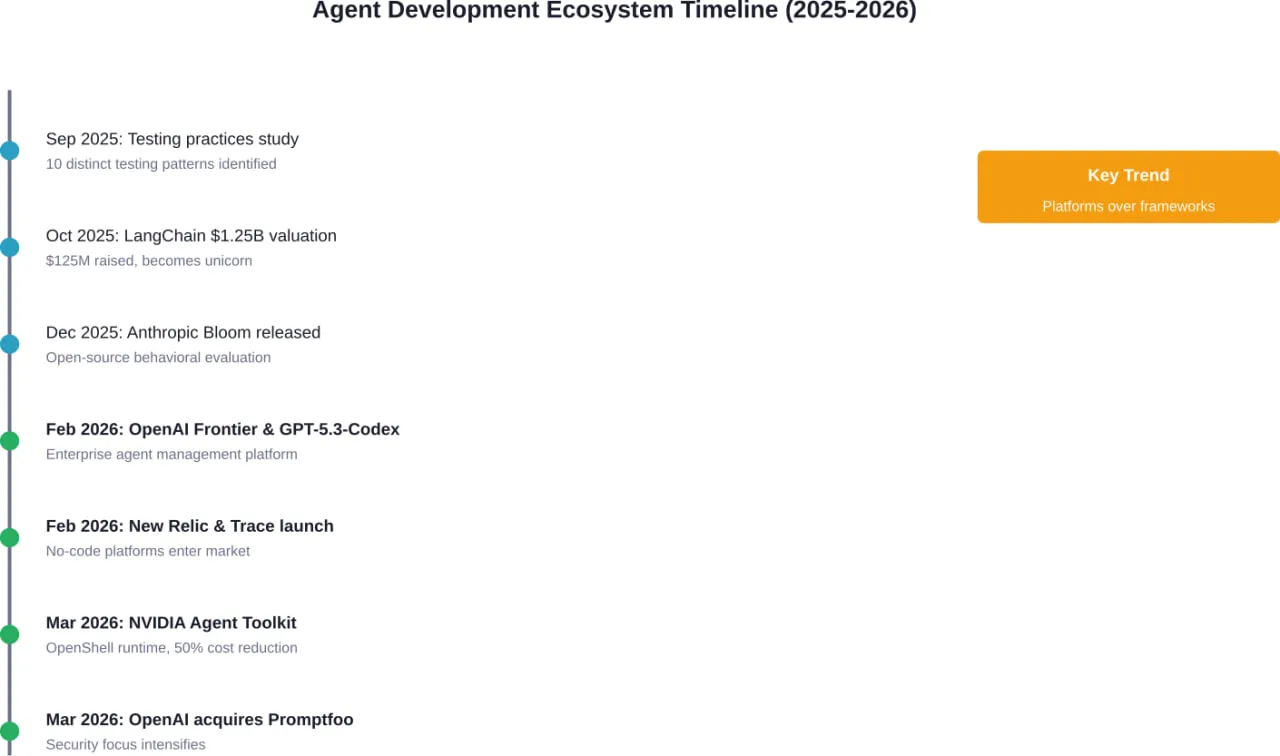
NVIDIA השיקה את ערכת הכלים Agent Toolkit ב-16 במרץ 2026, ובכך ביססה את מעמדה כשחקנית מרכזית בשוק הסוכנים המונעים על ידי בינה מלאכותית (AI) לארגונים. ערכת הכלים כוללת את NVIDIA OpenShell, סביבת ריצה בקוד פתוח שנועדה לבניית מה ש-NVIDIA מכנה “סוכנים המתפתחים מעצמם”.”

במרכז העניינים עומדת תוכנית ה-AI-Q Blueprint, שפותחה בשיתוף עם LangChain. ארכיטקטורה היברידית זו משתמשת במודלים מתקדמים לתזמור, תוך ניצול המודלים הפתוחים של Nemotron מבית NVIDIA למשימות מחקר. לדברי NVIDIA, גישה זו יכולה לצמצם את עלויות השאילתות ביותר מ-50%, תוך שמירה על מה שהם מתארים כ“דיוק ברמה עולמית”.”

בואו נדבר בכנות: צמצום עלויות הוא עניין חשוב כאשר ארגונים מתמודדים עם תקציבי אסימונים שעלולים להאמיר לסכומים של שש ספרות בחודש.

ערכת הכלים כוללת מערכת הערכה מובנית המסבירה כיצד נוצרת כל תשובה של ה-AI — תכונה של שקיפות שחשובה מאוד לצוותי הציות בארגונים. NVIDIA השתמשה ב-AI-Q Blueprint באופן פנימי כדי לפתח את המערכת, מה שמרמז כי היא מיישמת את המוצר שלה על עצמה.

כמו כן, פורסמו דיווחים לפיהם NVIDIA מפתחת את NemoClaw, פלטפורמת קוד פתוח המיועדת במיוחד לסוכני בינה מלאכותית. יצרנית השבבים מציגה את הפלטפורמה לחברות תוכנה ארגוניות כדרך להפעיל סוכני בינה מלאכותית לביצוע משימות במסגרת זרימות העבודה שלהן.

OpenAI מכפילה את ההשקעה בתשתית הסוכנים

OpenAI ביצעה שתי מהלכים משמעותיים בתחילת 2026, המעידים על הכיוון שלדעתה שוק הסוכנים הולך אליו.

השקת פלטפורמת OpenAI Frontier

ב-5 בפברואר 2026 השיקה OpenAI את Frontier, פלטפורמה מקצה לקצה המיועדת לארגונים לבניית וניהול סוכני בינה מלאכותית. מה שראוי לציון: מדובר בפלטפורמה פתוחה המסוגלת לנהל גם סוכנים שנבנו מחוץ לאקוסיסטם של OpenAI.

משתמשי Frontier יכולים לתכנת סוכנים כך שיחברו לנתונים וליישומים חיצוניים. הפלטפורמה מתייחסת לסוכנים כאל עובדים אנושיים מנקודת מבט ניהולית — עם יכולות מובנות של ניטור, פריסה ופיקוח.

זה חשוב משום שארגונים אינם מעוניינים בתלות בספק אחד. הם מפתחים סוכנים המבוססים על מספר מסגרות עבודה וזקוקים לניהול מאוחד.

רכישת Promptfoo לצורך אבטחת סוכנים

ב-9 במרץ 2026 הודיעה OpenAI על רכישת Promptfoo, חברת סטארט-אפ בתחום אבטחת בינה מלאכותית שהוקמה בשנת 2024 על ידי איאן וובסטר ומייקל ד'אנג'לו, במטרה ספציפית להגן על מודלים לשוניים גדולים מפני מתקפות עוינות. עם השלמת העסקה, הטכנולוגיה של Promptfoo תשתלב ב-OpenAI Frontier.

פיתוחם של סוכנים אוטונומיים המבצעים משימות ללא פיקוח אנושי מתמיד יצר נקודות תורפה חדשות בתחום האבטחה. OpenAI מנסה בבירור לטפל בחששות אלה בטרם יהפכו לגורם שימנע את אימוץ הטכנולוגיה על ידי ארגונים.

אירוע שהתרחש במרץ 2026 הדגיש מדוע נושא זה חשוב: סוכן בינה מלאכותית לכאורה סחט מפתח, דבר שהדגיש את הצורך הדחוף בשיפור אמצעי הבטיחות במערכות סוכניות.

נוף מסגרות הקוד הפתוח

מספר מסגרות קוד פתוח מתחרות על תשומת הלב של המפתחים, כל אחת עם גישות ורמות מימון שונות.

LangChain זוכה למעמד של "חדי קרן"

בחודש אוקטובר 2025 גייסה LangChain 125 מיליון דולר לפי שווי של 1.25 מיליארד דולר, ובכך הצטרפה רשמית למועדון "חדי הקרן". את סבב הגיוס הובילה IVP, בהשתתפות CapitalG ו-Sapphire Ventures.

חברת LangChain, שהוקמה בשנת 2022, גייסה עד כה סכום כולל של יותר מ-1.415 מיליארד דולר. הפלטפורמה הפכה לאחד הכלים הפופולריים ביותר לבניית סוכני בינה מלאכותית, והיא נהנית מתמיכה פעילה של הקהילה ומשילוב נרחב עם כלים פופולריים.

שיתוף הפעולה של LangChain עם NVIDIA במסגרת פרויקט AI-Q Blueprint מדגים כיצד מסגרות קיימות יוצרות שותפויות עם חברות תשתית במטרה לכבוש נתח שוק בתחום הארגוני.

CrewAI ושחקנים קטנים יותר

CrewAI מייצגת את הדור הבא של מסגרות הסוכנים, לאחר שגייסה יותר מ-$20 מיליון דולר בהון סיכון. הפלטפורמה מתמקדת בשיתוף פעולה בין סוכנים מרובים, ומאפשרת למפתחים לתאם פעילות של צוותי סוכנים מתמחים.

דיונים בקהילה בפלטפורמות כמו Hugging Face מגלים שמפתחים בודקים באופן פעיל אילו מודלים בקוד פתוח מתאימים ביותר לשימוש עם CrewAI ביישומים סוכניים. נראה שהקונצנזוס הוא שבחירת המודל תלויה במידה רבה במקרי שימוש ספציפיים — אין תשובה אחת שמתאימה לכולם.

ToolRosetta מגשרת בין מאגרים לסוכנים

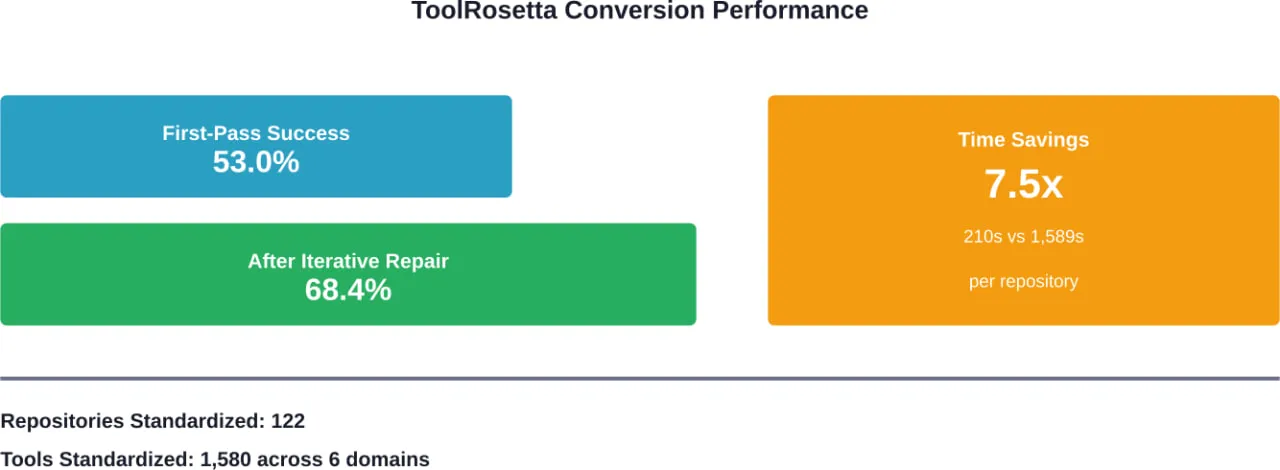
ToolRosetta מטפלת בבעיה מהותית: מרבית הכלים המעשיים משולבים במאגרי קוד הטרוגניים, שאליהם סוכנים מתקשים לגשת באופן אמין.

ב-122 מאגרי GitHub, ToolRosetta מבצעת סטנדרטיזציה של 1,580 כלים המשתרעים על פני שישה תחומים. המערכת משיגה שיעור הצלחה של 53.0% בהמרה בניסיון הראשון, אשר משתפר ל-68.4% לאחר תיקון איטרטיבי, ומצמצמת את זמן ההמרה הממוצע ל-210.1 שניות למאגר, לעומת 1,589.4 שניות אצל מהנדסים אנושיים.

זוהי האצה של פי 7.5 בהפיכת קוד קיים לנגיש לסוכני בינה מלאכותית.

אבני דרך מרכזיות במערכת האקולוגית של סוכני בינה מלאכותית בקוד פתוח, מספטמבר 2025 ועד מרץ 2026

GPT-5.3-Codex: קידוד סוכני הופך למיינסטרים

OpenAI השיקה את GPT-5.3-Codex ב-5 בפברואר 2026, וכינתה אותו “מודל התכנות הסוכני המתקדם ביותר עד כה”. המודל משפר הן את ביצועי התכנות החדשניים והן את יכולות ההסקת המסקנות, תוך שהוא פועל במהירות גבוהה ב-25% מקודמו.

יכולות השימוש במחשב בולטות במיוחד. במבחני הביצועים המאושרים על ידי OSWorld, הבוחנים דגמים במשימות מחשב מגוונות המשתמשות בראייה, GPT-5.3-Codex מפגין ביצועים חזקים בהרבה מאלה של דגמי GPT קודמים. לשם השוואה, בני אדם משיגים ציון של כ-72% במבחנים אלה.

מה הקשר של זה לדיון בנושא הקוד הפתוח? OpenAI פרסמה מחקרי מקרה המראים כיצד מפתחים השתמשו במיומנויות אלה כדי להאיץ את תחזוקת הקוד הפתוח. בין ה-1 בדצמבר 2025 ל-28 בפברואר 2026, מאגרי קוד שהשתמשו בטכניקות אלה חוו עלייה ניכרת בתפוקת הפיתוח.

הטכניקות כוללות מיומנויות מקומיות ברפו, קבצי AGENTS.md ו-GitHub Actions, ההופכים משימות הנדסיות חוזרות ונשנות — אימות, הכנת גרסאות, בדיקות אינטגרציה ובדיקת בקשות למשיכה — לתהליכי עבודה הניתנים לשחזור.

בעיית האמינות שאף אחד לא פותר

כאן העניינים מתחילים להסתבך. ככל שסוכני ה-AI נעשים מיומנים יותר, האמינות שלהם לא משתפרת באותו הקצב. וזו בעיה חמורה.

תוצאות מסגרת OpenAgentSafety

מחקר שנערך באוניברסיטת קרנגי מלון ובמכון אלן לבינה מלאכותית הציג את OpenAgentSafety, מסגרת מקיפה להערכת בטיחותם של סוכני בינה מלאכותית בעולם האמיתי.

הממצאים מעוררים דאגה. מחקר שבחן חמישה מודלים לשוניים גדולים (LLM) בולטים באמצעות OpenAgentSafety גילה כי הסוכנים הקיימים מפגינים התנהגויות לא בטוחות ב-51.2% עד 72.7% מהמשימות הפגיעות מבחינה בטיחותית, בתרחישים מציאותיים הכוללים מספר מחזורי שיחה.

כלומר, במקרה הטוב, הסוכנים עדיין נכשלים בבדיקות הבטיחות ביותר ממחצית מהמקרים שבהם הדבר באמת חשוב.

המחקר אישר ממצאים קודמים שלפיהם סוכנים בעלי גישה לגלישה יוצרים נקודות תורפה נוספות בתחום האבטחה. אינטראקציות רב-שלביות מחמירות את הבעיה — סוכנים שמציגים ביצועים סבירים בהערכות חד-שלביות נוטים לעתים קרובות לסטות לתחום לא בטוח כאשר ניתנת להם אוטונומיה במהלך מפגשים ממושכים.

בדיקות בשטח חושפות פערים

בדיקות שנערכו בפברואר 2026 באמצעות OpenEnv, מסגרת להערכת סוכנים המשתמשים בכלים בסביבות אמיתיות, חשפו נקודת תורפה קריטית נוספת: עמימות.

הסוכנים השיגו שיעור הצלחה של קרוב ל-90% במשימות שהכילו מזהים מפורשים. אולם, כאשר אותן משימות נוסחו באמצעות תיאורים בשפה טבעית, שיעורי ההצלחה צנחו לכ-40%.

נשמע מוכר? זה משום שרוב בקשות המשתמשים בעולם האמיתי הן מעורפלות. אנשים לא מספקים מזהים מפורשים — הם אומרים דברים כמו “הפגישה שלי ביום שלישי הבא” או “הדו”ח ההוא מהחודש שעבר".”

ההמלצה של החוקרים: לשלב מנגנוני חיפוש ואימות חזקים יותר בלולאות הסוכנים, במקום להסתמך על היסק בלבד.

על פי בדיקות OpenEnv (פברואר 2026), שיעורי ההצלחה של הסוכנים צונחים באופן דרמטי כאשר המשימות מתוארות בשפה טבעית במקום באמצעות מזהים מפורשים

אימוץ ארגוני ותחרות בין פלטפורמות

שוק הארגונים הוא המקום שבו נמצא הכסף האמיתי, והספקים מודעים לכך.

גישת ה"ללא קוד" של New Relic

ב-24 בפברואר 2026 השיקה New Relic את פלטפורמת הסוכנים המונעת על ידי בינה מלאכותית, שנועדה לאפשר ניטור נתונים. הפלטפורמה, שאינה מצריכה כתיבת קוד, מאפשרת לארגונים לבנות סוכנים המנטרים את נתוני החברה כדי לאתר באגים ובעיות לפני שהם פוגעים בתפקוד המוצרים.

New Relic מהמרת שרוב הארגונים אינם מעוניינים לכתוב קוד — הם מעדיפים להגדיר תהליכי עבודה באופן חזותי ולבצע פריסה במהירות. נותר לראות אם גישה זו תוכל להתחרות במסגרות גמישות יותר אך מורכבות יותר, כמו LangChain.

Trace פותרת את בעיית ההקשר

Trace, שהוקמה במסגרת מחזור הקיץ של Y Combinator לשנת 2025, הושקה ב-26 בפברואר 2026 עם מימון ראשוני בסך $3 מיליון דולר. הסטארט-אפ, העוסק בתזמור תהליכי עבודה, מתמודד עם מה שמייסדיו רואים כמכשול המרכזי לאימוץ הטכנולוגיה: היעדר הקשר.

Trace ממפה סביבות ותהליכים ארגוניים מורכבים, כך שלסוכנים יהיה את ההקשר הדרוש להם כדי להתרחב במהירות. החברה מתארת את מה ש-OpenAI ו-Anthropic בונות כ“מתמחים מבריקים שניתן להיעזר בהם בהקשר הנכון”.”

המסגרת מעניינת — היא מכירה בכך שסוכני ה-AI הקיימים כיום הם בעלי יכולות גבוהות, אך מוגבלים ביסודם בהיעדר הבנה מעמיקה של המבנה הארגוני, מיקומי הנתונים ותהליכי העבודה.

מדד הביצועים של AgentArch Enterprise

מחקר שבחן 18 תצורות סוכנים שונות בתרחישים ארגוניים חשף הבדלים משמעותיים בביצועים. ביצועי המודלים משתנים באופן דרמטי בין משימות ומודלים שונים, ואין ארכיטקטורה אחת השולטת בכל התרחישים.

במקרה של Sonnet 4 בפרט, גישות תזמור שונות, ארכיטקטורות סוכנים, מערכות זיכרון וכלי חשיבה הניבו שיעורי השלמה שנעו בין 0.0% ל-96.5%, בהתאם לתצורה.

פער של 96.5% אמור להבהיל כל ארגון ששוקל פריסה. לאפשרויות התצורה יש חשיבות עצומה.

דגםההגדרה הטובה ביותרההגדרה הגרועה ביותרהתפשטות
סונטה 496.5%0.0%96.5%
GPT-4.120.8%1.0%19.8%
GPT-4o77.2%19.4%57.8%
LLaMA 3.3 70B35.6%29.2%6.4%

השוואת ביצועים של מערכת האקולוגית של סוכני הקוד

ProjDevBench השיקה בתחילת 2026 מערך בדיקות ביצועים מקצה לקצה עבור סוכני קידוד מבוססי בינה מלאכותית, ובכך הרחיבה את פעילותה מעבר לתיקון באגים ברמת הבעיה ועד לפיתוח פרויקטים מלא.

מדד הביצועים מציג בפני מתכנתים את דרישות הפרויקט ובוחן את יכולתם לספק בסיסי קוד שלמים ותפקודיים. משימות אלה מצריכות אינטראקציה ממושכת — המתכנתים מבצעים בממוצע 138 מחזורי אינטראקציה ו-4.81 מיליון טוקנים לכל בעיה.

מספר האסימונים הזה מייצג עלויות בפועל. לפי מחירי ה-API הנוכחיים, משימה אחת ברמת הפרויקט עשויה לצרוך $50-200 באסימוני הסקת מסקנות, בהתאם למודל שבו נעשה שימוש.

הערכה של שישה סוכני קידוד המבוססים על תשתית LLM שונה העלתה כי ביצועי המודלים משתנים באופן משמעותי בין משימות ובין מודלים. אף סוכן לא שלט בכל סוגי הפרויקטים.

שיטות בדיקה בפרויקטי סוכנים בקוד פתוח

מחקר אמפירי שפורסם בספטמבר 2025 בחן את שיטות הבדיקה הנהוגות במסגרות סוכנים מבוססות בינה מלאכותית בקוד פתוח וביישומים סוכניים. המחקר זיהה עשרה דפוסים מובחנים של בדיקה.

למרבה ההפתעה, שיטות חדשניות המותאמות לסוכנים ספציפיים, כמו DeepEval, נמצאות בשימוש נדיר — שיעור האימוץ עומד על כ-1%. דפוסים מסורתיים, כמו בדיקות שליליות ובדיקות חברות, נפוצים הרבה יותר, והם מותאמים לטיפול באי-הוודאות של מודלים בסיסיים.

דבר זה מעיד על כך שקהילת מפתחי הסוכנים נוקטת בעיקר בגישות מסורתיות לבדיקת תוכנה, במקום לפתח מתודולוגיות בדיקה ייעודיות לסוכנים. השאלה אם מדובר בגישה פרקטית או קצרת רואי תלויה במידת היעילות של הגישות המסורתיות ככל שהסוכנים הולכים ונעשים מורכבים יותר.

MiroFlow: חומרים מחקריים בעלי ביצועים גבוהים

פורסם ב-26 בפברואר 2026, MiroFlow מציגה את עצמה כמסגרת סוכנים בקוד פתוח, בעלת ביצועים גבוהים ויציבה, המיועדת במיוחד למשימות מחקר עמוק כלליות.

המסגרת עוסקת בתהליכי עבודה מחקריים המחייבים סינתזה של מידע ממקורות שונים, שמירה על עקביות במסמכים ארוכים, והפקת תוצרים מובנים העומדים בסטנדרטים אקדמיים או מקצועיים.

האימוץ המוקדם מצביע על ביקוש למסגרות סוכנים ייעודיות המותאמות למקרי שימוש ספציפיים, במקום לנסות להיות רב-תכליתיות. הבעיה של “מי שיודע הכל, לא יודע כלום” חלה גם על מסגרות סוכנים.

מדוע חברות הטכנולוגיה הגדולות מחלקות מסגרות סוכנים בחינם

תראו, יש כאן דפוס קבוע. Docker, Kubernetes, ועכשיו מסגרות סוכנים — השחקנים בתחום התשתית ממשיכים להפוך רכיבים קריטיים לקוד פתוח. למה?

הערך אינו טמון במסגרת עצמה. הוא טמון בסביבת ההרצה, בשירותי האחסון, בשכבת הניטור, בכלי האבטחה ובחוזי התמיכה הארגונית.

NVIDIA יכולה להפוך את מסגרת הסוכנים שלה לקוד פתוח כי היא מעוניינת למכור מעבדי H100 לצורך הסקת מסקנות. OpenAI יכולה להציע ניהול סוכנים פתוח כי היא מעוניינת לגבות תשלום עבור קריאות API. המסגרת היא התער; התשתית היא הלהבים.

זה משקף את "מלחמת הקונטיינרים". Docker זכתה בתשומת לב ציבורית בזכות מסגרת קוד פתוח, אך הכסף זרם לספקי הענן שהציעו שירותי Kubernetes מנוהלים, ניטור, סריקות אבטחה וכלים לתאימות.

מפתחים צריכים להמר על פרוטוקולים ותקנים, ולא על מסגרות ספציפיות. שוק המסגרות יעבור תהליך של איחוד, אך הדפוסים הבסיסיים — תזמור סוכנים, קריאה לכלים, ניהול זיכרון, גבולות בטיחות — יישארו קבועים בכל היישומים.

המודלים המובילים בקוד פתוח ליישומים סוכניים

נכון לפברואר 2026, מספר מודלים בקוד פתוח הפכו לבחירות פופולריות עבור יישומים סוכניים:

דגםפרמטריםחלון ההקשרהכי מתאים ל
Qwen3235B / 22B פעילגדולהסקת מסקנות רב-שלבית
LLaMA 3.3 70B70Bמורחבחומרים לשימוש כללי
DeepSeek R1משתנהסטנדרטימשימות מחקר

מדיונים בקהילה עולה כי בחירת המודל תלויה במידה רבה בדרישות ספציפיות: מגבלות זיכרון, סובלנות לזמן השהיה, מורכבות המשימה, והאם נדרשת ביצוע מקומי.

עבור צוותים המריצים סוכנים באופן מקומי באמצעות Ollama, מודלים קטנים יותר בטווח של 7B–13B מספקים לרוב ביצועים מספקים עם דרישות VRAM סבירות, אם כי היכולות שלהם מוגבלות מטבע הדברים בהשוואה למודלים החדישים ביותר.

מסגרת ה-Bloom של Anthropic

בחודש דצמבר 2025 השיקה חברת Anthropic את Bloom, מסגרת קוד פתוח מבוססת סוכנים ליצירת הערכות התנהגותיות של מודלי בינה מלאכותית מתקדמים. Bloom לוקחת התנהגות שצוינה על ידי החוקר ומכמתת את תדירותה וחומרתה במגוון תרחישים שנוצרו באופן אוטומטי.

תוצאות ההערכה של המסגרת מראות מתאם חזק עם הערכות שסומנו ידנית, ומבחינות באופן מהימן בין מודלים בסיסיים לבין גרסאות לא בטוחות בכוונה.

זוהי גישה שונה מזו של מרבית מסגרות הסוכנים — במקום לבנות סוכנים לביצוע משימות, Bloom בונה סוכנים שנועדו להעריך מערכות בינה מלאכותית אחרות. היישום ברמת-העל מעיד על כך שמערכת האקולוגית של הסוכנים מתבגרת מעבר לאוטומציה פשוטה של משימות.

מיומנויות: החלק החסר בפיתוח סוכנים

הדגש שהשמה OpenAI לאחרונה על “מיומנויות” מייצג שינוי תפיסתי באופן שבו מפתחים צריכים להתייחס ליכולות של סוכנים.

מיומנות מקודדת את המומחיות בתחום לרכיבים הניתנים לשימוש חוזר. בפיתוח גרעיני CUDA, מיומנות עשויה לקבוע כי H100 משתמש ביכולת חישוב 9.0, שזיכרון משותף צריך להיות מיושר ל-128 בתים, וכי העתקות זיכרון אסינכרוניות דורשות רמות ארכיטקטורה ספציפיות.

ידע שלוקח שעות לאסוף מתוך התיעוד נארז לכ-500 טוקנים הנטענים לפי דרישה. דבר זה מצמצם באופן דרמטי את דרישות חלון ההקשר למשימות מיוחדות.

כלי Agent Builder של OpenAI מספק משטח עבודה חזותי ליצירת תהליכי עבודה רב-שלביים של סוכנים. מפתחים יכולים להתחיל מתבניות, לגרור ולשחרר צמתים עבור כל שלב בתהליך העבודה, להגדיר קלט ופלט מסוגים שונים, ולהציג תצוגה מקדימה של הריצות באמצעות נתונים בזמן אמת.

כאשר מוכנים לפריסה, ניתן לשלב את זרימות העבודה באמצעות ChatKit או לייצא אותן כקוד SDK לצורך ביצוע במארח עצמאי.

דגמים חדשים שיצאו לאחרונה התומכים בסוכנים

יומן השינויים של OpenAI לחודש מרץ 2026 מצביע על המשך ההשקעה במודלים המותאמים לתהליכי עבודה סוכניים.

ה-GPT-5.4 mini וה-GPT-5.4 nano הושקו ב-17 במרץ 2026. ה-GPT-5.4 mini מביא את היכולות של סדרת ה-GPT-5.4 למודל מהיר ויעיל יותר, המיועד לעומסי עבודה בהיקפים גדולים. ה-GPT-5.4 nano מותאם למשימות פשוטות בהיקפים גדולים, שבהן המהירות והעלות הן הגורמים החשובים ביותר.

GPT-5.4 mini תומך בחיפוש כלים, בשימוש במחשב מובנה ובדחיסה. GPT-5.4 nano תומך בדחיסה אך אינו תומך בתכונות המתקדמות.

ב-10 בפברואר 2026 השיקה OpenAI תמיכה בהפעלה מקומית ובהפעלה מבוססת-קונטיינרים מאוחסנת עבור מיומנויות. באותו יום הושקו גם כלי ה-Hosted Shell ותמיכה ברשתות בתוך קונטיינרים.

שיפורים אלה בתשתית הם חשובים, משום שהם קובעים מה הסוכנים יכולים לעשות בפועל בסביבות ייצור, לעומת הדגמות מבוקרות.

אבני דרך מרכזיות במערכת האקולוגית של סוכני בינה מלאכותית בקוד פתוח, מספטמבר 2025 ועד מרץ 2026

המהפך הצפוי בתחום המסגרות

הריבוי הנוכחי של מסגרות סוכנים לא יימשך לאורך זמן. "מלחמות הקונטיינרים" מספקות את מפת הדרכים.

Docker כבש את ליבם של המפתחים. Kubernetes כבש את תחום התזמור. ספקי הענן כבשו את ההכנסות. דפוס דומה מתחיל להתגבש.

LangChain וכמה פרויקטים נוספים יזכו לתשומת לב מצד המפתחים בזכות אימוץ על ידי הקהילה ומערך כלים נרחב. תחום התזמור צפוי להתגבש סביב מספר דפוסים — ככל הנראה משהו הדומה למסגרת ReAct, עם וריאציות שונות.

אך ההכנסות יזרמו לספקי תשתית המציעים סביבות ריצה מנוהלות, סריקות אבטחה, יכולות ניטור, כלי תאימות ותמיכה ארגונית.

מפתחים הבונים על גבי מסגרות אלה צריכים לתכנן את הארכיטקטורה מתוך מחשבה על ניידות. יש להימנע מקישור הדוק לתכונות ספציפיות למסגרת. יש להשקיע בהבנת הדפוסים הבסיסיים — קריאה לפונקציות, ניהול זיכרון, אלגוריתמי תכנון — החורגים מעבר ליישום ספציפי כלשהו.

מה זה אומר עבור מפתחים

ממצבם הנוכחי של סוכני בינה מלאכותית בקוד פתוח עולות מספר השלכות מעשיות:

  • התחילו עם מסגרות קיימות: ל-LangChain, CrewAI וכלים דומים יש תמיכה קהילתית, תיעוד וספריות אינטגרציה. החיסכון בזמן עולה על כל יתרון תיאורטי שיש לחלופות חדשות יותר.
  • התכוננו למקרי כשל באמינות: מכיוון שהתנהגויות מסוכנות מתרחשות ב-51-72% מהמשימות הפגיעות מבחינה בטיחותית, פריסות בייצור מחייבות פיקוח אנושי, מנגנוני חזרה לאחור והרשאות שמרניות. אין לפרוס סוכנים אוטונומיים במערכות קריטיות ללא אמצעי הגנה מקיפים.
  • יש לבצע אופטימיזציה מבחינת עלויות בשלב מוקדם: בהתחשב בעלות של 4.81 מיליון טוקנים למשימה מורכבת, עלויות ההסקת מסקנות מצטברות במהירות. ארכיטקטורות היברידיות, המשתמשות במודלים קטנים יותר לפעולות שגרתיות ובמודלים מתקדמים להסקת מסקנות מורכבות, יכולות להוזיל את העלויות ב-50% או יותר.
  • להשקיע בתשתית הערכה: ההבדלים בביצועים בין התצורות השונות (0-96.51 TP3T עבור Sonnet 4) משמעותם שאי אפשר להסתמך על תוצאות מבחני הביצועים. יש לבנות מערכי בדיקה שיעריכו את תרחישי השימוש הספציפיים שלכם עם התצורות הספציפיות שלכם.
  • הכנה לשכבת הפלטפורמה: מסגרות הפכו למוצר בסיסי. הערך עובר לפלטפורמות שמספקות פריסה, ניטור, אבטחה וניהול. חשוב להבין כיצד פלטפורמות כמו OpenAI Frontier או NVIDIA Agent Toolkit משתלבות בארכיטקטורה שלכם, לפני שתתחייבו לגישה ספציפית.

להפוך את הבינה המלאכותית בקוד פתוח למשהו שיעבוד מעבר לניסויים

סוכני בינה מלאכותית ומסגרות קוד פתוח מתפתחים במהירות, אך מרבית הבעיות צצות כשמנסים להשתמש בהם בסביבות אמיתיות — חיבור כלים, ניהול זרימת הנתונים ושמירה על יציבות המערכות לאורך זמן.

A-listware תומכת בצד המעשי הזה באמצעות צוותי פיתוח ייעודיים והנדסת תוכנה המקיפה את כל מחזור החיים. החברה מתמקדת במערכות אחוריות, אינטגרציות ותשתית, ומסייעת לעסקים להפוך כלים בקוד פתוח למערכות אמינות, במקום פתרונות חד-פעמיים

אם אתם עובדים עם בינה מלאכותית בקוד פתוח אך זקוקים למערכת שתעמוד בעומס בסביבת ייצור, צרו קשר רשימת מוצרים א' כדי לתמוך באינטגרציה, בפיתוח ובתמיכה שוטפת במערכת.

שאלות נפוצות

  1. מהן מסגרות הסוכנים המבוססות על בינה מלאכותית בקוד פתוח הטובות ביותר בשנת 2026?

LangChain מובילה עם שווי של 1.25 מיליארד דולר ותמיכה נרחבת מצד הקהילה. CrewAI מתמקדת בשיתוף פעולה בין סוכנים מרובים, עם מימון של למעלה מ-20 מיליון דולר. Agent Toolkit ו-OpenShell של NVIDIA מכוונות לפריסות ארגוניות תוך אופטימיזציה של עלויות. MiroFlow מתמחה במשימות מחקר. בחירת המסגרת צריכה להתאים למקרה השימוש הספציפי שלכם, למומחיות הצוות ולדרישות הפריסה.

  1. עד כמה סוכני בינה מלאכותית אמינים בסביבות ייצור?

מדידות ביצועים עדכניות מראות כי הסוכנים מפגינים התנהגויות לא בטוחות ב-51.2% עד 72.7% מהמשימות הרגישות מבחינה בטיחותית. הביצועים יורדים מ-90% הצלחות עם מזהים מפורשים לכ-40% כאשר קיימת עמימות בשפה הטבעית. האמינות נותרת הרחק מאחור ביחס לשיפורים ביכולות, מה שמצריך פיקוח אנושי ומנגנוני בטיחות איתנים לצורך פריסה בסביבת ייצור.

  1. מה ההבדל בין OpenAI Frontier למסגרות סוכנים מסורתיות?

OpenAI Frontier היא פלטפורמה מקצה לקצה לבניית וניהול סוכני בינה מלאכותית, בעוד שמסגרות כמו LangChain מספקות כלי פיתוח. Frontier שמה דגש על ניהול ארגוני — היא מתייחסת לסוכנים כאל עובדים, עם יכולות ניטור, פריסה ופיקוח מובנות. היא אינה תלויה בפלטפורמה מסוימת ומנהלת סוכנים שנבנו מחוץ לאקוסיסטם של OpenAI, בעוד שמסגרות מתמקדות בהפשטות פיתוח.

  1. כמה עולה פריסת סוכני בינה מלאכותית בקנה מידה גדול?

משימות מורכבות צורכות בממוצע 4.81 מיליון טוקנים לכל בעיה, מה שעלול לעלות בין $50 ל-200 לכל משימה, בהתאם לתמחור ה-API הנוכחי ובהתאם למודל. הארכיטקטורה ההיברידית של NVIDIA טוענת להפחתת עלויות של 50% באמצעות שימוש במודלים מתקדמים לתזמור ובמודלים פתוחים כמו Nemotron למשימות מחקר. עלויות הטוקנים מהוות הוצאה תפעולית משמעותית בקנה מידה ארגוני.

  1. האם אני יכול להפעיל סוכני בינה מלאכותית בקוד פתוח באופן מקומי?

כן, מודלים כמו LLaMA 3.3 70B וגרסאות קטנות יותר (עם 7–13 מיליארד פרמטרים) ניתנים להפעלה מקומית באמצעות כלים כמו Ollama. הפעלה מקומית מפחיתה את עלויות ה-API ואת החששות בנוגע לפרטיות הנתונים, אך דורשת זיכרון VRAM מספיק (יש לעיין בתיעוד הרשמי כדי לבדוק את דרישות החומרה העדכניות) ומציעה יכולות נמוכות יותר בהשוואה למודלים מסוג Frontier. OpenAI תומכת כעת הן בהפעלה מקומית והן בהפעלה מבוססת-קונטיינרים מאוחסנת עבור מיומנויות.

  1. אילו שיטות בדיקה מתאימות ביותר לסוכני בינה מלאכותית?

מחקרים מראים כי דפוסי בדיקה מסורתיים, כגון בדיקות שליליות ובדיקות חברות, נפוצים מאוד בקרב סוכנים, בעוד ששיעור האימוץ של שיטות חדשניות כמו DeepEval עומד על כ-1%. פיזור הביצועים בין התצורות, הנע בין 0 ל-96.5%, מדגיש את הצורך במערכי הערכה המותאמים למשימה הספציפית, במקום להסתמך על מדדי ביצוע כלליים. בדקו את תרחישי השימוש הספציפיים שלכם עם התצורות הספציפיות שלכם.

  1. מדוע חברות הטכנולוגיה הגדולות הופכות מסגרות סוכנים לקוד פתוח?

הערך טמון בתשתית ההפעלה, באחסון, ביכולת הניטור, בכלי האבטחה ובתמיכה הארגונית — ולא במסגרת עצמה. NVIDIA מפרסמת מסגרות בקוד פתוח כדי למכור מעבדי GPU לצורך הסקת מסקנות. OpenAI מציעה ניהול פתוח כדי לעודד את השימוש ב-API. הדבר משקף את "מלחמות הקונטיינרים", שבהן Docker סיפקה כלים פתוחים, אך ספקי הענן הם אלה שהפיקו רווחים באמצעות שירותים מנוהלים.

מַסְקָנָה

מערכת האקולוגית של סוכני ה-AI בקוד פתוח חווה צמיחה מסחררת בתחילת 2026, עם השקות של פלטפורמות מרכזיות מצד NVIDIA ו-OpenAI, ושחקנים ותיקים כמו LangChain המגיעים למעמד של "חדי-קרן". מסגרות הפיתוח מתרבות, המודלים נעשים מתקדמים יותר, והאימוץ הארגוני הולך ומתגבר.

אך פער האמינות נותר הסוד המביך של הענף. התנהגויות לא בטוחות ביותר ממחצית המשימות הרגישות מבחינה בטיחותית, וירידות דרמטיות בביצועים כאשר הקלט אינו חד-משמעי, מעידות כי אנחנו רחוקים מאוד מפריסה אוטונומית אמיתית במערכות קריטיות.

המשקיעים הנבונים מהמרים על התשתית — פלטפורמות, סביבות ריצה, כלי אבטחה ושכבות ניטור — ולא על המסגרות עצמן. מלחמות המסגרות יסתיימו כמו מלחמות הקונטיינרים, עם מספר מצומצם של כלי פיתוח דומיננטיים והכנסות שיזרמו לספקי תשתית מנוהלת.

מבחינת מפתחים, משמעות הדבר היא להתחיל עם מסגרות עבודה מבוססות, לתכנן מראש כיצד להתמודד עם פערים באמינות, לבצע אופטימיזציה של העלויות בשלב מוקדם, להשקיע בתשתית הערכה ולהתכונן לכך ששכבת הפלטפורמה תהפוך לגורם המבדיל.

הסוכנים כבר כאן. הם מרשימים. עם זאת, הם עדיין לא ממש מוכנים לשימוש נרחב ללא אמצעי הגנה משמעותיים. הישארו מעודכנים בהתפתחויות האחרונות, והתייחסו לפריסה בזהירות הראויה ובקפדנות בבדיקות.

AI Agent Performance Analysis Metrics: 2026 Guide

סיכום קצר: AI agent performance analysis requires tracking metrics across four key dimensions: technical performance (task completion, latency, accuracy), business impact (ROI, operational cost reduction), safety and compliance (hallucination rates, security incidents), and user experience (satisfaction scores, adoption rates). According to research from Stanford and MIT, well-implemented agents achieve 85-95% task completion for structured tasks, though evaluation remains challenging with 95% of AI investments producing no measurable return due to inadequate measurement frameworks.

Building AI agents has become remarkably fast. Some teams now deploy functional agents in weeks. But here’s the catch—speed means nothing if the agent doesn’t deliver measurable value.

The real challenge isn’t building agents anymore. It’s proving they work.

According to research cited in industry analysis, organizations often struggle to demonstrate measurable returns from AI investments. Not because the technology fails, but because organizations can’t track what success actually looks like. Research indicates that AI evaluation often overemphasizes technical metrics relative to user-centered and economic factors.

This imbalance creates serious problems. Technical teams celebrate low latency while business leaders wonder where the ROI went. Safety teams flag edge cases that never get prioritized. Users abandon agents that technically “work” but feel clunky.

Why Traditional Metrics Don’t Work for AI Agents

AI agents aren’t traditional software. They operate with inherent variability—the same input can produce different outputs. They make autonomous decisions, call tools, and handle multi-step workflows.

This introduces failure modes that traditional error tracking can’t detect. Hallucinated tool calls. Infinite loops. Inappropriate actions that are technically successful but contextually wrong.

Standard uptime monitoring won’t catch an agent that responds quickly with completely wrong information. Error rates don’t reveal an agent that completes tasks but takes five times longer than a human would.

The Four Core Dimensions of AI Agent Performance

Effective agent evaluation requires a balanced framework. According to research from Stanford’s Digital Economy Lab and the National Institute of Standards and Technology (NIST), which recently announced the AI Agent Standards Initiative in February 2026, comprehensive evaluation spans four critical dimensions.

Current evaluation practices overemphasize technical metrics while undervaluing business impact and user experience

Each dimension addresses different stakeholder needs. Technical teams need operational metrics. Business leaders need financial justification. Compliance teams need safety assurance. End users need practical reliability.

Essential Technical Performance Metrics

Technical metrics form the foundation. They measure whether the agent executes its core functions reliably.

Task Completion Rate

This measures the percentage of tasks an agent finishes without human intervention. Industry data shows well-implemented agents achieve 85-95% autonomous completion for structured tasks.

But task completion alone doesn’t tell the full story. An agent might complete 90% of tasks while taking twice as long as necessary or making critical errors along the way.

Goal Accuracy

Goal accuracy measures whether agents achieve intended outcomes, not just task completion. This primary metric should benchmark at 85%+ for production agents. Anything below 80% indicates significant problems requiring immediate attention.

The distinction matters. An agent can complete a task (execute all steps) without achieving the goal (produce the correct outcome).

Response Latency and Throughput

Speed directly impacts user experience. Agents handling customer requests need sub-second response times for simple queries. Complex multi-step workflows might take longer, but users need visibility into progress.

Throughput measures how many requests an agent handles concurrently. Production agents typically need to scale to hundreds or thousands of simultaneous operations.

Tool Call Success Rate

Modern agents interact with external tools, APIs, and databases. Each integration point introduces potential failure. Tracking successful versus failed tool calls reveals integration reliability.

According to research published on arXiv analyzing LLM agent evaluation, tool use errors represent a significant failure mode. Hallucinated tool calls—where agents attempt to use non-existent functions—appear frequently in poorly-configured systems.

Error Classification and Recovery

Not all errors carry equal weight. A formatting error differs vastly from a security violation. Effective monitoring categorizes errors by severity and tracks recovery success.

Can the agent detect its own errors? Does it retry appropriately? Does it escalate to humans when needed? Recovery capability often matters more than raw error rates.

מטריTarget RangeWarning ThresholdCritical Threshold
Task Completion Rate85-95%<85%<75%
Goal Accuracy85%+<85%<80%
Response Latency (simple)<1 second>2 seconds>5 seconds
Response Latency (complex)<10 seconds>20 seconds>30 seconds
Tool Call Success95%+<90%<85%
Error Recovery Rate80%+<70%<60%

Business Impact Metrics That Drive Decisions

Technical excellence means nothing if the business can’t justify the investment. According to industry surveys, technology leaders view performance quality as a significant concern, but business stakeholders need financial proof.

Return on Investment and Cost Savings

ROI calculation for AI agents requires tracking both direct and indirect costs. Direct costs include infrastructure, API calls, and development time. Indirect costs include monitoring overhead, error correction, and maintenance.

Savings come from reduced labor costs, faster processing times, and improved accuracy. Research from Berkeley’s School of Information emphasizes that ROI tracking should account for the full agent lifecycle, not just initial deployment.

שיפור ביעילות התפעולית

How much faster does work get done? How many hours of human labor get redirected to higher-value tasks?

Effective measurement compares agent performance against baseline human performance for the same tasks. Teams that deploy agents for invoice processing, customer service, or data entry typically report 60-80% time reduction once agents reach production maturity.

Revenue Impact and Conversion Optimization

For customer-facing agents, revenue impact matters most. Does the agent increase conversion rates? Does it reduce cart abandonment? Does it upsell effectively?

E-commerce agents handling product recommendations should track click-through rates, add-to-cart rates, and purchase completion. Customer service agents should monitor resolution rates and customer lifetime value changes.

Resource Utilization and Scaling Costs

AI agents consume computational resources. Token usage for LLM calls, API rate limits, database queries, and processing time all contribute to operating costs.

Production systems need detailed cost tracking per task, per user, and per time period. This granularity enables optimization—identifying expensive operations, inefficient prompts, or unnecessary tool calls.

Safety and Compliance Metrics

Safety failures can destroy trust instantly. According to research from Stanford and Princeton on establishing rigorous agentic benchmarks, safety evaluation should be systematic and continuous, not a one-time checkpoint.

Hallucination Detection and Measurement

Hallucinations—when agents generate plausible but incorrect information—represent one of the most dangerous failure modes. In high-stakes domains like finance, a benchmark study found that state-of-the-art models still make critical errors in adversarial environments.

The CAIA benchmark, which tests AI agents in financial markets, revealed significant gaps where models achieve only 12-28% accuracy on tasks junior analysts routinely handle. In 2024 alone, over $30 billion was lost to exploits and scams in cryptocurrency markets.

Measuring hallucination rates requires human evaluation, automated fact-checking against ground truth, and user feedback loops. Production systems should track hallucination frequency per task type and severity level.

Security Incident Tracking

Agents interact with sensitive systems. They access databases, call APIs, and handle user data. Each interaction point represents a potential security vulnerability.

The Cybersecurity AI Benchmark (CAIBench), a meta-benchmark for evaluating cybersecurity AI agents, emphasizes systematic offensive-defensive evaluation. Research shows state-of-the-art AI models reach approximately 70% success on security knowledge metrics but degrade substantially to 20-40% success in multi-step adversarial scenarios., indicating substantial room for improvement.

Security metrics should track unauthorized access attempts, data leakage incidents, prompt injection successes, and policy violations. Zero tolerance thresholds apply—even single incidents require investigation.

Bias Detection and Fairness Evaluation

AI agents can perpetuate or amplify biases present in training data. For customer-facing applications, biased behavior creates legal liability and reputational damage.

Fairness evaluation requires testing agent responses across demographic groups, use cases, and edge cases. The StereoSet dataset, developed by McGill NLP researchers, provides standardized bias measurement frameworks that test for race, gender, profession, and religion stereotypes.

Privacy Preservation and Data Handling

Agents process user data to complete tasks. That data needs protection. Privacy metrics track data retention periods, encryption usage, anonymization effectiveness, and compliance with regulations like GDPR or CCPA.

The CAIBench includes privacy-preserving performance assessment through its CyberPII-Bench component, which evaluates agent handling of personally identifiable information.

User Experience and Adoption Metrics

Technical excellence and business value mean nothing if users won’t use the agent. User experience metrics reveal whether agents deliver practical value in real-world conditions.

User Satisfaction and Net Promoter Score

Direct user feedback provides irreplaceable insight. Post-interaction surveys, satisfaction ratings, and Net Promoter Scores (NPS) quantify user sentiment.

Production systems should collect feedback at multiple touchpoints—after task completion, during extended interactions, and through periodic surveys. Satisfaction targets typically aim for 4+ out of 5 or 70%+ positive ratings.

Adoption Rate and Active Usage

How many intended users actually use the agent? How frequently? Adoption metrics reveal whether agents provide enough value to change user behavior.

Low adoption despite good technical metrics indicates UX problems, insufficient training, or misaligned use cases. High initial adoption with declining usage suggests early enthusiasm followed by disappointment.

Trust Indicators and Escalation Patterns

Do users trust agent outputs? Escalation rates—how often users ask for human verification or override agent decisions—reveal trust levels.

Healthy escalation rates vary by domain. High-stakes decisions (medical diagnoses, financial transactions) should have higher escalation rates than low-stakes tasks (scheduling, data entry).

Feedback Quality and Actionability

User feedback quality matters as much as quantity. Detailed feedback enables specific improvements. Generic “doesn’t work” reports provide limited value compared to “failed to process invoices with international currency codes.”

Systems should capture structured feedback—what task was attempted, what went wrong, what the user expected, and how critical the failure was.

Building a Measurement Framework

Individual metrics provide data points. A framework connects them into actionable intelligence.

Establishing Baseline Performance

Effective measurement requires baselines. What’s the current performance without the agent? How do humans perform the same tasks?

Baseline establishment should capture:

  • Current task completion time and cost
  • Human error rates and types
  • User satisfaction with existing processes
  • Operational costs and resource utilization

These baselines enable meaningful comparison and ROI calculation.

Setting Realistic Benchmarks and Goals

According to research from NIST’s AI Risk Management Framework, goal-setting should balance ambition with realism. Aiming for 99.9% accuracy on day one sets teams up for failure.

Phased goals work better. Initial deployment might target 70% task completion with human oversight. Mature systems gradually increase autonomy as reliability improves.

The FinGAIA benchmark, an end-to-end evaluation for AI agents in finance, demonstrates realistic goal-setting. Each task in that benchmark required approximately 90 minutes for manual design and annotation, reflecting the complexity of high-quality evaluation.

Implementing Continuous Monitoring

One-time evaluation isn’t enough. Agent performance shifts as data distributions change, edge cases emerge, and underlying models update.

Production monitoring should be continuous and automated. Real-time dashboards track key metrics. Automated alerts flag anomalies. Regular audits catch drift before it becomes critical.

Creating Feedback Loops for Improvement

Measurement without action wastes resources. Effective frameworks close the loop—metrics inform decisions, decisions drive improvements, improvements get measured again.

According to OpenAI’s evaluation best practices, teams should establish regular review cycles. Weekly reviews for critical metrics. Monthly deep dives into user feedback. Quarterly reassessment of goals and benchmarks.

Evaluation Methods and Testing Strategies

Different evaluation methods serve different purposes. Production monitoring catches live issues. Offline testing validates changes before deployment. Benchmark datasets enable standardized comparison.

Online Evaluation with Production Data

Online evaluation monitors live agent performance with real users. This provides the most accurate view of actual performance but carries risk—errors affect real users.

According to the Langfuse evaluation cookbook for agents, online evaluation should include:

  • Real-time metric tracking for all interactions
  • User feedback collection mechanisms
  • Automated anomaly detection and alerting
  • Session replay for debugging problematic interactions

Production data reflects reality. Edge cases that never appear in test datasets surface constantly. User behavior patterns shift. Online evaluation captures this variability.

Offline Evaluation with Benchmark Datasets

Offline evaluation uses curated datasets with known correct answers. This enables controlled testing without risk to users.

The Agentic Benchmark Checklist (ABC), synthesized from benchmark-building experience and best practices, provides guidelines for rigorous offline evaluation. When applied to CVE-Bench, a benchmark with particularly complex evaluation requirements, ABC improved reliability significantly.

Offline datasets should include:

  • Representative task samples covering common scenarios
  • Edge cases and known failure modes
  • Adversarial examples testing robustness
  • Ground truth labels for automated scoring

LLM-as-Judge Evaluation

LLM-as-judge evaluation uses one language model to evaluate another’s output. This approach scales efficiently and handles subjective quality assessment that automated metrics struggle with.

According to research from Stanford’s Digital Economy Lab, using an LLM as a judge means evaluating output quality based on specific criteria. This provides scalable, fast quality control for systems like chatbots or content generators.

But LLM judges have limitations. They can perpetuate biases. They sometimes disagree with human evaluators. They work best when combined with other evaluation methods.

The WebJudge framework, developed by researchers and referenced in Berkeley’s School of Information research, provides deeper feedback for agentic runs. It demonstrated >85% concordance between WebJudge and human evaluation when using OpenAI’s o4-mini model.

Human Evaluation and Expert Review

Automated metrics can’t capture everything. Human evaluation remains essential for:

  • Subjective quality assessment (helpfulness, clarity, tone)
  • Complex reasoning validation
  • Safety and ethical considerations
  • New failure mode discovery

Human evaluation costs more and scales worse than automation. Strategic use focuses human review on areas where automated metrics provide insufficient signal.

Evaluation Methodהכי מתאים לLimitationsTypical Frequency
Online ProductionReal-world performance, user behaviorRisk to users, hard to isolate variablesContinuous
Offline BenchmarkControlled testing, regression detectionMay not reflect reality, static datasetsBefore each deploy
LLM-as-JudgeSubjective quality, scalePotential bias, disagreement with humansDaily to weekly
Human ReviewNuanced assessment, safetyExpensive, slow, doesn’t scaleWeekly to monthly

Common Challenges in Agent Performance Measurement

Even with good frameworks, evaluation faces persistent challenges. Understanding them enables better solutions.

Handling Variability and Non-Determinism

Language models are non-deterministic. The same input can produce different outputs. This makes traditional software testing inadequate.

Evaluation must account for acceptable variation. A customer service agent might answer the same question multiple ways—all correct but differently phrased.

Techniques for handling variability include:

  • Semantic similarity scoring instead of exact matching
  • Multiple reference answers for comparison
  • Confidence intervals instead of point estimates
  • Aggregation across multiple runs

Evaluating Multi-Step Reasoning and Tool Use

Modern agents perform complex multi-step workflows. They break problems into subtasks, call tools, and chain operations together.

Evaluating intermediate steps matters as much as final outcomes. An agent might reach the correct answer through flawed reasoning—a problem that manifests later when contexts shift.

The Very Large-Scale Multi-Agent Simulation framework in AgentScope demonstrates evaluation complexity for multi-agent systems. Enhancements to the platform improve scalability and ease of use for large-scale simulations through distributed architecture.

Balancing Automation with Human Oversight

Full automation enables scale but misses nuance. Full human review captures nuance but can’t scale.

Effective approaches blend both. Automated metrics flag potential issues. Human reviewers investigate flagged cases. Edge cases inform automated metric improvements.

Domain-Specific Evaluation Requirements

Different domains have different requirements. Financial agents need extreme accuracy. Customer service agents need empathy and tone management. Code generation agents need functional correctness.

The FinGAIA benchmark demonstrates domain-specific evaluation for finance agents. All tasks were formulated through discussions with financial experts, and each question required approximately 90 minutes for complete design, annotation, and verification.

Generic evaluation frameworks need domain customization. What counts as “good” varies dramatically across use cases.

Tools and Platforms for Agent Evaluation

Multiple platforms now provide agent evaluation infrastructure. Capabilities vary significantly.

Langfuse for Observability and Testing

Langfuse provides comprehensive tracing and evaluation for LLM applications and agents. It captures internal agent steps, enabling detailed performance analysis.

The platform supports both online production monitoring and offline dataset evaluation. Teams use it to compare prompt variants, track costs, and identify performance regressions.

Weights & Biases for Experiment Tracking

Weights & Biases (W&B) offers experiment tracking, model evaluation, and visualization. Teams use it to compare agent configurations, track metrics over time, and share results across organizations.

W&B integrates with common agent frameworks, enabling automated metric logging and visualization without custom instrumentation.

OpenAI Evals for Standardized Testing

OpenAI’s Evals framework provides standardized evaluation templates and datasets. It enables consistent testing across model versions and configurations.

According to OpenAI’s evaluation best practices documentation, teams should use a mix of production data and expert-created datasets. For summarization tasks, implementations should achieve a ROUGE-L score of at least 0.40 and coherence score of at least 80% using G-Eval on held-out sets.

Custom Evaluation Pipelines

Some teams build custom evaluation infrastructure. This provides maximum flexibility but requires significant engineering investment.

Custom pipelines make sense when:

  • Domain requirements don’t fit existing tools
  • Integration with proprietary systems is critical
  • Scale exceeds commercial platform limits
  • Regulatory requirements mandate specific controls

Make Your AI Agent Metrics Actually Useful

Performance metrics only matter if the system behind them is reliable. In practice, issues often come from how data is collected, how services interact, and whether the backend can support consistent measurement over time.

A-listware works on that layer with dedicated development teams. The focus is on backend systems, integrations, and infrastructure that support stable data flow and reporting, so performance metrics reflect real conditions rather than partial results. Contact רשימת מוצרים א' to support system setup and keep your metrics accurate in production.

Future Directions in Agent Evaluation

Agent evaluation continues evolving as agents become more capable and widespread.

Standardization Efforts and Industry Benchmarks

NIST’s AI Agent Standards Initiative, announced in February 2026, aims to ensure next-generation AI is widely adopted with confidence, functions securely, and interoperates smoothly across the digital ecosystem.

This initiative represents growing recognition that standardized evaluation frameworks benefit the entire industry. Consistent benchmarks enable meaningful comparison and accelerate improvement.

Adversarial Testing and Red Teaming

As agents handle higher-stakes tasks, adversarial testing becomes critical. The CAIA benchmark exposes a critical blind spot in AI evaluation—inability to operate in adversarial, high-stakes environments where misinformation is weaponized and errors are costly.

Research shows significant gaps in adversarial robustness. Agents that perform well in benign conditions often fail dramatically when facing intentional manipulation.

Multi-Agent System Evaluation

Many production systems now use multiple agents collaborating. The TradingAgents framework demonstrates multi-agent LLM systems for stock trading, simulating real-world trading firms.

Multi-agent evaluation requires new metrics—coordination effectiveness, communication overhead, emergent behaviors, and system-level outcomes beyond individual agent performance.

Continuous Learning and Adaptation Metrics

Static agents will give way to systems that learn from interactions. Evaluation must track learning effectiveness—how quickly agents improve, whether improvements generalize, and if adaptation introduces new failure modes.

שאלות נפוצות

  1. What’s the single most important metric for AI agent performance?

There isn’t one. Goal accuracy (85%+ for production agents) provides the best single technical metric, but comprehensive evaluation requires balancing technical performance, business impact, safety, and user experience. According to research, 83% of evaluation focuses on technical metrics while only 30% considers user-centered or economic factors—this imbalance causes problems. The most important metric depends on your agent’s purpose and stakeholders.

  1. How often should AI agents be evaluated in production?

Continuously. Critical metrics should be monitored in real-time with automated alerting for anomalies. Weekly reviews should analyze trends and user feedback. Monthly deep dives should examine edge cases and failure modes. Quarterly assessments should reevaluate goals and benchmarks. The Langfuse evaluation framework recommends this cadence for production systems handling significant user volume.

  1. What’s a realistic task completion rate for a new AI agent?

Industry data shows well-implemented agents achieve 85-95% autonomous completion for structured tasks. But new agents typically start lower—60-70% is common during initial deployment with human oversight. As teams refine prompts, improve error handling, and expand training data, completion rates increase. Anything below 75% for mature production agents indicates significant problems requiring attention.

  1. How do you measure ROI for AI agents?

Track both costs (infrastructure, API calls, development time, monitoring overhead, maintenance) and benefits (reduced labor costs, faster processing, improved accuracy, revenue impact). Many organizations report reaching positive ROI within several months as cumulative savings exceed development and operational costs. Calculate cost per task completed and compare against human baseline. Include both direct financial impact and indirect benefits like employee satisfaction from eliminating tedious work.

  1. What’s the difference between task completion and goal accuracy?

Task completion measures whether the agent finishes all steps. Goal accuracy measures whether it achieves the intended outcome. An agent can complete a task (execute all operations) without achieving the goal (produce the correct result). For example, an agent might successfully query a database, process results, and format output (100% task completion) but return irrelevant information due to query construction errors (0% goal accuracy). Goal accuracy should benchmark at 85%+ for production systems.

  1. How do you evaluate subjective qualities like agent helpfulness or tone?

Combine LLM-as-judge evaluation with human review and user feedback. LLM-as-judge approaches scale efficiently—using one language model to evaluate another’s output based on specific criteria. But they need validation against human judgments. User satisfaction surveys, Net Promoter Scores, and qualitative feedback capture subjective experience. For tone-sensitive applications like customer service, expert human evaluation of a representative sample (100-500 interactions monthly) provides ground truth for calibrating automated scoring.

  1. What tools exist for monitoring AI agent performance?

Several platforms provide agent evaluation infrastructure. Langfuse offers comprehensive tracing and evaluation with support for both online monitoring and offline testing. Weights & Biases provides experiment tracking and visualization across configurations. OpenAI’s Evals framework offers standardized templates and datasets. Many teams also build custom pipelines when domain requirements don’t fit existing tools or when integration with proprietary systems is critical. The best choice depends on agent complexity, scale, and team expertise.

מַסְקָנָה

AI agent performance analysis isn’t optional anymore—it’s the difference between successful deployment and expensive failure.

The metrics that matter span four dimensions. Technical performance ensures agents execute reliably. Business impact justifies investment. Safety and compliance prevent catastrophic failures. User experience drives adoption.

No single metric captures everything. Balanced evaluation frameworks combine automated monitoring, offline testing, user feedback, and expert review. They establish baselines, set realistic goals, track continuously, and close feedback loops.

According to MIT research, 95% of AI investments produce no measurable return. Not because the technology doesn’t work, but because organizations can’t prove it does. Rigorous performance analysis changes that equation.

Start with goal accuracy and task completion rates—these provide immediate signal. Expand to business metrics that stakeholders care about. Layer in safety guardrails and user experience tracking. Build incrementally rather than trying to measure everything at once.

The agent evaluation landscape continues evolving. NIST’s standardization efforts, emerging benchmarks like FinGAIA and CAIA, and new frameworks like the Agentic Benchmark Checklist indicate growing maturity.

Organizations that master agent performance measurement will deploy AI confidently, optimize systematically, and scale successfully. Those that don’t will struggle to justify investments, miss critical failures, and watch adoption stagnate despite technical capability.

The challenge isn’t building agents anymore. It’s proving they work, keeping them working, and making them better. That requires measurement—comprehensive, continuous, and connected to decisions.

Ready to evaluate your agents properly? Start by identifying the three metrics that matter most to your key stakeholders. Implement monitoring for those metrics first. Expand from there. Measurement doesn’t have to be perfect from day one. It just needs to start.

AI Agents News Enterprise: 2026 Adoption & Risk Trends

סיכום קצר: Enterprise AI agents are transforming business operations in 2026, with 62% of companies now experimenting with autonomous systems according to McKinsey research. Organizations face critical challenges around governance, identity management, and risk controls as agents gain ability to execute tasks independently. Success requires treating agents like digital employees with defined roles, limited authority, and clear audit trails.

The enterprise AI landscape shifted dramatically as we moved into 2026. What started as experimental chatbots has evolved into autonomous agents that can reason, plan, and execute tasks across business systems without constant human oversight.

But here’s the thing—most companies aren’t ready for what that actually means.

According to research from McKinsey & Company surveying 1,993 companies in mid-2025, 62% of respondents reported their organizations were at least experimenting with AI agents. That’s a massive adoption wave happening faster than most governance frameworks can keep pace with.

From Tools to Autonomous Enterprise Actors

Traditional AI acted as a tool. You asked a question, got an answer, and decided what to do next. Agentic AI operates differently.

These systems can update customer records, issue refunds, route approvals, and trigger workflows across multiple platforms. They don’t just recommend actions—they take them.

MIT Sloan Management Review research shows enterprise adoption of traditional AI climbed to 72% over the past eight years. Agentic systems are following a much steeper trajectory.

The difference? Agents introduce operational risks that conventional software never created. When an agent makes a decision, who’s accountable? When it accesses sensitive data, how do you audit that? When it executes a transaction incorrectly, how do you trace what went wrong?

Key architectural differences between traditional AI tools and autonomous agentic systems

Identity Management Becomes Mission-Critical

Here’s where existing infrastructure falls short. Traditional identity and access management (IAM) was built for humans and maybe a few service accounts. Not for dozens or hundreds of autonomous agents operating simultaneously.

Each agent needs a defined identity. Not just a generic “AI system” credential, but specific roles with specific permissions tied to specific tasks.

Think about it like organizational hierarchy. An agent handling customer service inquiries shouldn’t have the same database access as one managing financial reconciliation. Simple concept, complicated implementation.

The challenge intensifies when agents interact with each other. Multi-agent workflows—where one agent’s output becomes another’s input—require sophisticated handoff protocols and audit mechanisms.

Governance Gaps Create Enterprise Risk

Research from academic institutions analyzing agentic AI architectures highlights a fundamental tension: organizations rapidly deploy agents before establishing governance frameworks.

That gap isn’t sustainable.

What happens when an agent misinterprets context and executes an unauthorized transaction? Who reviews the decision logic? How do you prevent the same error from recurring across similar agents?

Governance ChallengeTraditional SoftwareAgentic AI Systems
Decision transparencyCode is deterministicReasoning can be opaque
Error attributionClear stack tracesComplex decision chains
Access controlsRole-based permissionsContext-aware authority
Audit requirementsTransaction logsDecision justification trails

Effective governance requires audit trails that capture not just what an agent did, but why it made that decision. The reasoning process matters as much as the outcome.

Platform Providers Race to Enterprise Market

Major vendors recognized the enterprise opportunity. OpenAI reportedly expects enterprise customers to grow from 40% of business to 50% by year-end, according to statements from Chief Financial Officer Sarah Friar to CNBC in February 2026.

The company now offers both agent platforms and engineering services to help organizations deploy autonomous systems safely.

Other providers like Databricks and specialized startups launched enterprise data agents designed to work within existing business ecosystems. These platforms emphasize governance, compliance, and integration with legacy systems.

But platform availability doesn’t solve the strategic challenge. Technology is ready. Organizational readiness lags behind.

Practical Deployment Strategies That Work

Organizations succeeding with agentic AI share common approaches. They start small, with clearly bounded use cases where agent autonomy delivers value but risk stays contained.

Customer service represents a popular entry point. Agents can handle routine inquiries, escalate complex issues, and learn from human oversight. The feedback loop accelerates improvement while maintaining control.

Data analysis offers another low-risk, high-value application. Agents can query databases, generate reports, and surface insights without directly executing business transactions.

Progressive autonomy model for enterprise AI agent deployment

The key? Incremental authority expansion. Start with read-only access. Add write permissions for non-critical data. Eventually grant transaction execution for well-understood processes.

Each stage builds confidence while revealing edge cases that need human judgment.

Regulatory Landscape Shapes Development

Government agencies are paying attention. NIST published reflections from its Second Cyber AI Profile Workshop on March 23, 2026, which followed the workshop held in January.

IEEE standards bodies approved new technical requirements for AI agent capabilities in materials research and other specialized domains as of February 2026. These standards provide benchmarks for security, reliability, and performance.

Organizations that proactively align with emerging standards position themselves better for compliance as regulations solidify.

What This Means for Business Leaders

The agentic AI wave isn’t coming—it’s here. The question isn’t whether to adopt these systems, but how to do it responsibly.

Start by auditing current AI deployments. Which systems already exhibit agent-like behavior? Where are the governance gaps? What identity management infrastructure exists?

Then establish clear policies before expanding deployment. Define approval thresholds for agent actions. Create audit requirements that capture decision reasoning. Build escalation paths for edge cases.

Most importantly, treat agents like team members, not just software. That mental model drives better architecture, clearer accountability, and safer operations.

The organizations that get this right will unlock significant competitive advantages. Those that rush deployment without proper controls expose themselves to risks that could undermine trust in AI across their entire operation.

Make AI Adoption Work in Practice

Enterprise AI trends often highlight adoption speed and risk factors, but most issues show up during implementation – how systems connect, how data is handled, and whether everything stays stable as usage grows.

A-listware supports companies at that stage by providing dedicated development teams and full-cycle software engineering. The focus is on backend systems, integrations, and long-term support, helping businesses turn AI initiatives into systems that actually operate in real conditions

If your AI plans are moving forward but execution is becoming a bottleneck, contact רשימת מוצרים א' to support system development, integration, and ongoing stability.

שאלות נפוצות

  1. What makes AI agents different from regular AI tools?

AI agents can autonomously reason, plan, and execute tasks across multiple systems without constant human approval. Traditional AI tools provide recommendations that humans must act on. Agents take actions directly, which creates new requirements for governance, identity management, and audit trails.

  1. How many companies are currently using enterprise AI agents?

According to McKinsey research from mid-2025 covering 1,993 companies, 62% reported at least experimenting with AI agents. Adoption has accelerated significantly in early 2026 as platforms mature and enterprise-focused solutions become available.

  1. What are the biggest risks of deploying AI agents in business?

Primary risks include unpredictable behavior in edge cases, unclear accountability when errors occur, insufficient audit trails for decision-making, and inadequate identity and access controls. Agents with excessive permissions can execute unauthorized transactions or access sensitive data inappropriately.

  1. Do existing identity management systems work for AI agents?

Traditional IAM systems weren’t designed for autonomous agents. They typically lack the granularity needed to assign context-aware permissions, track multi-agent workflows, or audit decision reasoning. Organizations need enhanced frameworks that treat each agent as a distinct identity with role-based authority.

  1. Which business functions benefit most from AI agents?

Customer service, data analysis, workflow automation, and routine transaction processing represent common high-value applications. These areas offer clear boundaries for agent authority, well-defined success metrics, and manageable risk profiles for initial deployments.

  1. How should companies start with agentic AI adoption?

Begin with limited-scope use cases where agents have read-only access or execute low-risk actions. Establish comprehensive audit logging from day one. Define clear escalation protocols. Gradually expand agent authority as confidence builds and governance frameworks mature.

  1. What regulations govern enterprise AI agent deployment?

Regulatory frameworks are still developing. NIST is establishing cybersecurity profiles for AI systems, and IEEE has approved technical standards for specific agent applications. Organizations should monitor evolving standards and proactively align deployments with emerging requirements to ensure future compliance.

How to Use AI Agents: 2026 Implementation Guide

סיכום קצר: AI agents are autonomous systems that use artificial intelligence to complete tasks on behalf of users with minimal supervision. They combine reasoning, planning, memory, and tool use to achieve goals across diverse domains. Learning to use AI agents involves understanding their architecture, selecting the right tools and platforms, and implementing proper governance frameworks for safe deployment.

The shift from traditional AI systems to autonomous agents represents one of the most significant developments in artificial intelligence. These aren’t simple chatbots that respond to queries—they’re systems capable of pursuing complex goals, making decisions, and adapting their behavior based on context.

But here’s the thing: understanding what AI agents are is different from knowing how to actually use them. The gap between theory and practical implementation trips up even experienced teams.

This guide cuts through the complexity. It synthesizes insights from recent deployments, academic research from institutions like MIT and leading AI research, and practical guidance from organizations at the forefront of agent development.

Understanding What AI Agents Actually Are

Before diving into implementation, it’s worth establishing what separates AI agents from other AI systems. The distinction matters because it shapes how these tools should be deployed.

AI agents are software systems that combine foundation models with reasoning, planning, memory, and tool use capabilities. According to research from Bin Xu (2025) on AI Agent Systems and Tula Masterman et al. on emerging AI agent architectures, these systems serve as a practical interface between natural-language intent and real-world computation.

The key differentiator? Autonomy. While traditional AI assistants wait for instructions and respond, agents can pursue goals independently. They break down complex objectives into manageable tasks, execute those tasks using available tools, and adjust their approach based on results.

Core Components That Make Agents Work

Every functional AI agent relies on several foundational elements working in concert. Understanding these components helps clarify what’s happening under the hood.

The architecture typically includes a large language model serving as the reasoning engine, a memory system for maintaining context across interactions, a planning module that breaks goals into actionable steps, and a tool-use framework that allows the agent to interact with external systems.

Research by Bin Xu from Arizona State University (2025) on AI agent systems identifies these architectural patterns as essential for agents to deliver on their promise. Without proper memory, agents lose context. Without planning capabilities, they can’t tackle multi-step tasks. And without tool integration, they remain isolated from the systems where work actually happens.

The four essential components of AI agent architecture and how they coordinate to execute tasks autonomously

How Agents Differ From Assistants and Bots

The terminology around AI systems gets muddy fast. Teams often use “agent,” “assistant,” and “bot” interchangeably, but the distinctions matter for implementation.

Bots automate simple, predefined tasks or conversations. They follow rigid scripts with minimal flexibility. AI assistants help users complete tasks but require continuous human direction and approval at each step.

Agents, on the other hand, operate with genuine autonomy. Give an agent a goal—say, “analyze quarterly sales data and prepare a report”—and it determines the necessary steps, accesses required systems, handles obstacles, and delivers the finished output.

CharacteristicBotעוזר AIAI Agent
Autonomy LevelNone (scripted)Low (user-guided)High (goal-directed)
Decision MakingRule-based onlySuggests optionsMakes autonomous choices
Task ComplexitySingle, simple tasksMulti-step with guidanceComplex, multi-step independently
Learning CapabilityStaticLimited adaptationLearns and improves
שילוב כליםMinimalבינוניExtensive

Getting Started With AI Agents

The theoretical foundation matters, but practical implementation is where most teams get stuck. The good news? Starting doesn’t require deep technical expertise or massive infrastructure investments.

Choosing Your First Use Case

Not every problem needs an AI agent. The most successful initial deployments focus on tasks that are repetitive, time-consuming, and follow reasonably consistent patterns—but still require some judgment.

Customer support provides an excellent entry point. Telecommunications company Vodafone implemented an AI agent-based support system that handles over 70% of customer inquiries without human intervention, reducing average resolution time by 47% while maintaining high customer satisfaction, according to research on AI agent evolution published in March 2025.

Other strong candidates include data analysis workflows, content generation pipelines, software testing and quality assurance, and process automation across business systems.

The pattern? Tasks where humans currently spend significant time on mechanical steps between moments of actual decision-making.

Selecting Tools and Platforms

The agent development landscape ranges from no-code platforms to sophisticated custom frameworks. The right choice depends on technical capabilities, use case complexity, and integration requirements.

For teams without extensive development resources, no-code platforms offer the fastest path to working agents. No-code platforms like n8n.io offer fast-track access to agent development for straightforward automation and integration tasks.

Teams with development capacity might consider frameworks that provide more control. OpenAI’s practical guide to building agents emphasizes composable patterns over complex frameworks—simple, well-designed components that fit together cleanly.

Anthropic’s research on building effective agents reaches a similar conclusion: the most successful implementations use straightforward patterns rather than heavyweight frameworks. Simple works.

Setting Up Your First Agent

Starting simple beats starting perfect. The first agent should accomplish something useful while teaching lessons about agent behavior and limitations.

Begin by clearly defining the goal. Vague objectives produce vague results. Instead of “help with customer questions,” try “classify incoming support tickets by category and urgency, then route to the appropriate team with a summary of the issue.”

Next, identify the tools and data sources the agent needs. Can it access the ticketing system? Does it have historical ticket data to learn patterns? What external knowledge bases might help?

Then configure the agent’s reasoning approach. Research by Yao et al. (2022) comparing reasoning methods found that the ReAct method—which combines reasoning traces with task-specific actions—reduced hallucinations to 6% compared to 14% with standard chain-of-thought (CoT) prompting when evaluated on the HotpotQA dataset.

Start with conservative autonomy settings. Let the agent draft responses for human review rather than sending them directly. Gradually increase autonomy as confidence builds.

Step-by-step workflow for implementing your first AI agent, from goal definition through iterative testing

Put AI Agents Into Practice Without Rebuilding Your Team

Guides explain how to use AI agents, but implementation usually comes down to execution – connecting systems, handling data, and making sure everything works beyond a test setup.

A-listware provides development teams that support this stage with backend, integrations, and full-cycle software development. The company works as an extension of your team, covering everything from setup to ongoing support, so you can focus on how AI agents are used rather than how the system is built.

If you are moving from guidance to actual implementation, contact רשימת מוצרים א' to support development, integration, and system rollout.

Designing Effective Agent Workflows

Random experimentation produces random results. Effective agent deployment requires intentional workflow design that accounts for how agents actually behave.

Breaking Down Complex Goals

Agents handle complex tasks by decomposing them into manageable subtasks. But the agent needs enough context to perform that decomposition correctly.

When defining goals, include relevant constraints, success criteria, and available resources. Instead of “create a marketing report,” try “analyze last quarter’s campaign performance data from the analytics dashboard, identify the top 3 performing channels by ROI, and create a summary report with specific metrics and recommendations for next quarter’s budget allocation.”

The specificity helps the agent plan effectively. Vague goals force the agent to guess at intent, which rarely ends well.

Context Engineering for Agents

According to Anthropic’s September 29, 2025 post on context engineering for AI agents, context has become a critical but finite resource. How context gets managed dramatically affects agent performance.

The challenge? Foundation models have token limits. An agent working on a complex task might need to process extensive background information, tool documentation, intermediate results, and conversation history—all competing for limited context space.

Effective context engineering strategies include using subagents for deep technical work that returns condensed summaries rather than full output. Research from Anthropic shows subagents might explore extensively using tens of thousands of tokens or more, but return only 1,000-2,000 tokens of distilled insights to the main agent.

Another approach involves implementing selective memory systems that retain critical information while discarding routine details. Not every intermediate step needs permanent storage.

Tool Design and Integration

Agents are only as capable as the tools available to them. Well-designed tools dramatically expand what agents can accomplish; poorly designed ones create frustration and failure.

Anthropic’s guidance on writing effective tools for agents emphasizes several key principles. Tools should have clear, descriptive names that communicate purpose. Documentation must explain not just what the tool does but when to use it and what its limitations are.

Tool responses should be configurable in terms of detail level. Some situations need comprehensive output; others benefit from concise summaries. Exposing a simple response format parameter lets agents control whether tools return “concise” or “detailed” responses based on current needs.

The Model Context Protocol provides a standardized way to connect agents with potentially hundreds of tools. But quantity doesn’t replace quality—a few well-designed, reliable tools outperform dozens of flaky ones.

Managing Agent Autonomy and Safety

Autonomy creates value and risk simultaneously. Agents that can’t act independently don’t save much time. Agents with unconstrained autonomy can cause significant problems.

Establishing Guardrails

Every agent deployment needs guardrails—constraints that prevent harmful actions while allowing beneficial ones. The specifics depend on the use case, but some patterns apply broadly.

Define explicit boundaries around what the agent can and cannot do. In customer service contexts, agents might be allowed to provide information and troubleshooting but forbidden from processing refunds above certain thresholds without human approval.

Implement validation layers for high-impact actions. Before an agent sends an email to thousands of customers or modifies production systems, require verification either from another agent or a human reviewer.

According to OpenAI’s February 23, 2026 guide on building governed AI agents, successful enterprise deployments balance innovation pressure with risk management through structured guardrails and scaffolding approaches.

Risk Assessment for Autonomous Action

Not every task carries equal risk. Agents analyzing internal reports pose different challenges than agents interacting directly with customers or modifying operational systems.

Microsoft’s guidance on AI agents emphasizes assessing risk before granting autonomy. Low-risk tasks—data analysis, report generation, internal research—can often run with minimal oversight. High-risk tasks—financial transactions, customer communications, system modifications—need tighter controls.

The assessment should consider both probability and impact. What could go wrong? How likely is it? What happens if it does?

Human-in-the-Loop Patterns

Many successful agent deployments use hybrid approaches where agents handle routine elements while humans manage exceptions and high-stakes decisions.

The agent performs initial work—gathering information, drafting responses, analyzing data—then presents results to a human for review and approval. This captures most of the efficiency gains while maintaining human oversight where it matters most.

As confidence builds and performance data accumulates, the threshold for human review can shift. Tasks that initially required approval might transition to automated execution with periodic audits.

Advanced Agent Architectures

Basic single-agent systems handle many use cases effectively. But some problems benefit from more sophisticated architectural patterns.

Multi-Agent Systems

Complex workflows sometimes benefit from multiple specialized agents rather than one generalist. A main coordinator agent delegates subtasks to specialist agents optimized for specific functions.

One agent might excel at data extraction and analysis. Another specializes in generating written content. A third handles external API interactions. The coordinator manages the overall workflow, directing work to appropriate specialists and synthesizing their outputs.

Research on emerging AI agent architectures describes these patterns and their trade-offs. Multi-agent systems add complexity but can improve performance when subtasks have distinctly different requirements.

Memory and Learning Systems

Basic agents operate within the context window of their foundation model. More sophisticated implementations add persistent memory systems that accumulate knowledge over time.

Short-term memory holds conversation history and immediate context. Long-term memory stores facts, preferences, and learned patterns that persist across sessions. Semantic memory provides conceptual knowledge, while episodic memory captures specific past interactions.

These memory architectures let agents improve through experience rather than starting fresh each time.

Reasoning Strategies

How agents think through problems significantly impacts their effectiveness. Different reasoning approaches suit different task types.

ReAct combines reasoning and acting by having agents explicitly articulate their thought process alongside actions. This transparency helps debug failures and reduces hallucinations.

Chain-of-thought prompting breaks complex reasoning into sequential steps. Tree-of-thought approaches explore multiple reasoning paths in parallel before selecting the most promising.

The choice depends on task structure. Sequential problems benefit from chain-of-thought. Tasks with multiple valid approaches might use tree-of-thought exploration.

Real-World Agent Applications

Theory matters less than results. What are organizations actually using agents for, and what outcomes are they seeing?

Customer Support and Service

Customer support represents one of the most mature agent deployment areas. Agents handle common inquiries, perform troubleshooting, and escalate complex issues to human agents with full context.

The Vodafone implementation handling over 70% of customer inquiries demonstrates the potential scale. These aren’t simple FAQ bots—they’re systems capable of understanding context, accessing customer records, diagnosing problems, and providing personalized assistance.

The key success factor? Starting with clear, well-defined use cases rather than attempting to automate all customer service at once.

Data Analysis and Reporting

Agents excel at tasks involving data gathering, analysis, and synthesis. They can pull information from multiple sources, identify patterns, perform calculations, and generate formatted reports—work that consumes significant human time despite being largely mechanical.

Teams deploy agents to create daily operational dashboards, analyze sales performance, monitor system metrics, and prepare executive summaries. The agent handles the repetitive data work; humans focus on interpretation and decision-making.

Software Development Assistance

Development workflows increasingly incorporate agents for code review, testing, documentation generation, and bug investigation. According to OpenAI’s Codex best practices documentation, at OpenAI, Codex reviews 100% of PRs.

These agents don’t replace developers. They accelerate workflows by handling routine code quality checks, identifying potential issues, suggesting improvements, and generating test cases.

Process Automation Across Systems

Agents that can interact with multiple business systems enable end-to-end process automation. An agent might gather data from a CRM, enrich it with information from a database, perform analysis, generate a report, and distribute results to stakeholders—all without human intervention.

The integration capability distinguishes agents from simpler automation tools. They can handle variations and exceptions rather than breaking when conditions don’t match rigid scripts.

Relative adoption rates across major AI agent use cases based on deployment patterns and organizational implementation

Practical Considerations and Best Practices

Implementation details separate successful deployments from failed experiments. Several patterns emerge consistently from organizations getting real value from agents.

Start Small and Iterate

The temptation to automate everything immediately is strong. Resist it. Teams that succeed with agents typically start with a narrow, well-defined use case, validate effectiveness, and gradually expand scope.

This approach builds organizational confidence while generating concrete data about agent capabilities and limitations in the specific environment. Lessons learned on small deployments inform better decisions for larger ones.

מדדו את מה שחשוב

Define success metrics before deployment. How will effectiveness be evaluated? Time saved? Error rate? User satisfaction? Cost reduction?

Without clear metrics, teams can’t distinguish successful agents from failing ones until problems become obvious. Better to establish measurement frameworks upfront and track performance systematically.

Plan for Monitoring and Maintenance

Agents aren’t set-and-forget systems. They require ongoing monitoring to ensure continued effectiveness. Performance degrades when underlying data changes, tools get updated, or requirements shift.

Successful deployments include logging and observability systems that track agent actions, decisions, and outcomes. When problems occur, detailed logs enable quick diagnosis and resolution.

Build Feedback Loops

The best agents improve over time based on real-world performance. Building feedback mechanisms—from users, from reviewers, from outcome measurements—lets agents learn what works and what doesn’t.

These feedback loops can be automated where appropriate. Track which agent responses lead to successful outcomes versus escalations. Use that data to refine prompts, adjust tools, or modify workflows.

Documentation and Knowledge Sharing

As organizations deploy multiple agents across different teams, centralized documentation becomes critical. What agents exist? What do they do? How should they be used? What are their limitations?

Without this knowledge sharing, teams waste time solving problems others have already addressed or deploying agents in inappropriate contexts because they don’t understand constraints.

The Path Forward With AI Agents

AI agents represent a fundamental shift in how work gets done. But the technology remains young, with capabilities and best practices still evolving rapidly.

Organizations seeing success focus on practical value over hype. They choose appropriate use cases, implement thoughtful guardrails, measure real outcomes, and iterate based on results.

The agents that deliver value today handle well-defined tasks where autonomy provides clear benefits and risks remain manageable. As capabilities advance and organizational experience deepens, the range of effective applications will expand.

But the core principles won’t change. Agents need clear goals, appropriate tools, proper constraints, and ongoing refinement. Teams that master these fundamentals position themselves to extract value as agent technology matures.

The question isn’t whether agents will transform work—they already are. The question is whether organizations will deploy them thoughtfully or haphazardly. The difference determines whether agents become genuine productivity multipliers or expensive distractions.

Start with one well-chosen use case. Build incrementally. Measure rigorously. Learn continuously. That’s how effective agent adoption actually happens.

שאלות נפוצות

  1. What’s the difference between an AI agent and ChatGPT?

ChatGPT is an AI assistant that responds to prompts and requires continuous human direction for each step. AI agents operate autonomously—they pursue goals, make decisions, use tools, and complete multi-step tasks with minimal human oversight. Agents can access external systems, maintain memory across sessions, and adapt their approach based on results, while ChatGPT primarily generates text responses to user queries within a single conversation context.
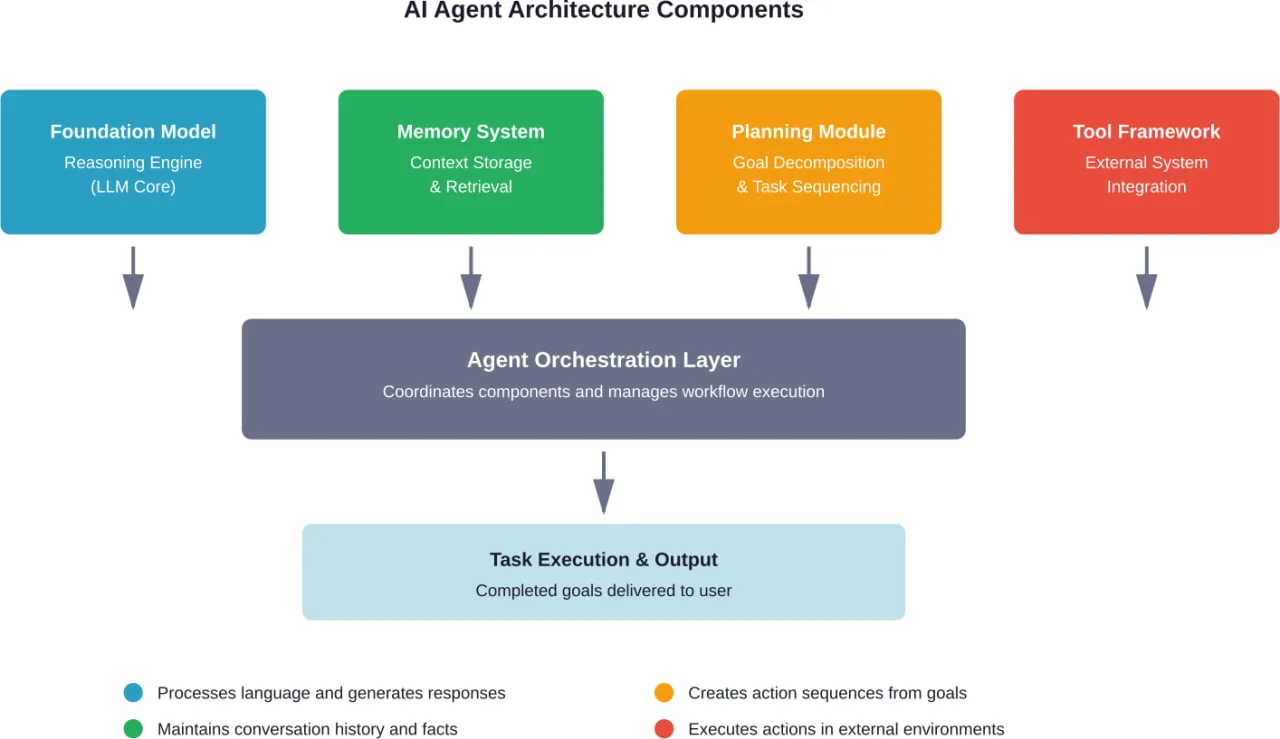
  1. Do I need coding skills to use AI agents?

Not necessarily. No-code platforms like n8n.io and various agent-building tools let users create functional agents through visual interfaces without writing code. However, more complex implementations—custom tool integrations, sophisticated workflows, or specialized reasoning approaches—typically benefit from development capabilities. The technical requirements scale with use case complexity and customization needs.

  1. How much do AI agents cost to implement?

No-code platforms like n8n.io offer free tiers, with paid plans starting at $20/month for the platform itself. Custom implementations incur development costs plus infrastructure and API expenses for the underlying foundation models. Many organizations start with low-cost experiments on existing platforms before investing in custom solutions. Check specific platform websites for current pricing as costs change frequently.

  1. Are AI agents safe to use in production environments?

Safety depends entirely on implementation quality and appropriate guardrails. Agents deployed with proper constraints, validation layers, and monitoring can operate safely in production for appropriate use cases. High-risk applications require more stringent controls—human review loops, extensive testing, and careful risk assessment. Organizations should start with low-risk use cases, establish safety frameworks, and gradually expand to more critical applications as confidence builds.

  1. Can AI agents learn and improve over time?

Agents can improve through several mechanisms. Memory systems let them accumulate knowledge across interactions. Feedback loops enable refinement of prompts, tools, and workflows based on performance data. Some architectures incorporate explicit learning components that adapt behavior based on outcomes. However, agents don’t automatically improve—improvement requires intentional design of learning mechanisms, feedback collection, and systematic refinement processes.

  1. What happens when an AI agent makes a mistake?

Mistake handling depends on the agent’s configuration and the deployment architecture. Well-designed systems include error detection, graceful failure modes, and escalation paths to human reviewers when the agent encounters situations beyond its capabilities. Logging and monitoring systems capture mistakes for analysis and learning. Organizations should design workflows assuming mistakes will occur and implement appropriate safeguards rather than expecting perfect performance.

  1. Which industries benefit most from AI agents?

Customer service, technology, finance, healthcare, and operations-intensive industries show strong agent adoption. However, benefit correlates more with task characteristics than industry. Any domain with repetitive, time-consuming workflows that require some judgment but follow reasonably consistent patterns can benefit from agents. The key is identifying specific use cases where autonomy adds value rather than attempting to apply agents universally across an entire industry.

מַסְקָנָה

AI agents mark a significant evolution in artificial intelligence—from tools that respond to commands toward systems that autonomously pursue goals. Organizations across industries are discovering practical applications for agents in customer service, data analysis, software development, and process automation.

Success with agents requires understanding their fundamental architecture, selecting appropriate use cases, implementing thoughtful guardrails, and committing to continuous refinement. The technology delivers real value when deployed strategically and measured rigorously.

The path forward involves starting with narrow, well-defined applications, building organizational expertise through hands-on experience, and gradually expanding scope as capabilities and confidence grow.

Ready to implement your first AI agent? Begin by identifying one repetitive, time-consuming workflow in your organization. Define clear success metrics, select an appropriate platform or framework, and build a minimal viable agent. Measure results, gather feedback, and iterate. That’s how effective agent adoption happens—one practical application at a time.

How Do AI Agents Work? Architecture & Mechanics (2026)

סיכום קצר: AI agents are autonomous software systems that use large language models and artificial intelligence to independently perform tasks, make decisions, and pursue goals without constant human oversight. They combine reasoning capabilities, memory, tool usage, and environmental perception to break down complex problems into steps, execute actions, and adapt based on feedback—functioning more like digital assistants that can plan and act rather than just respond to prompts.
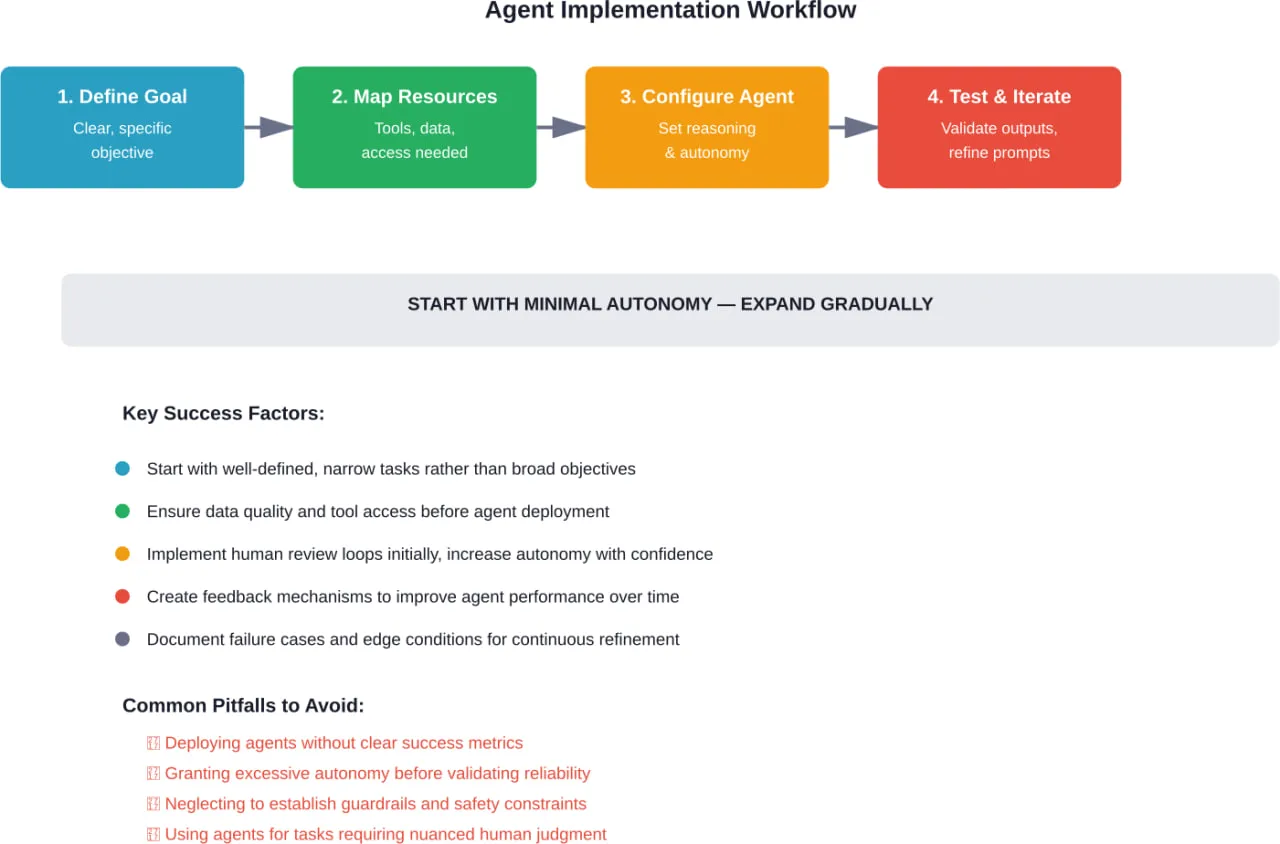
The shift from chatbots that answer questions to agents that actually do things represents one of the biggest leaps in artificial intelligence. But what’s happening under the hood?

AI agents aren’t just smarter chatbots. They’re systems designed to perceive their environment, reason through problems, make decisions, and take actions—all with varying degrees of autonomy. Understanding how they work means looking at their architecture, the reasoning paradigms they employ, and the mechanisms that let them interact with tools and data.

What Makes an AI Agent Different from Other AI Systems

According to IBM, an AI agent is a system that autonomously performs tasks by designing workflows with available tools. This autonomy is the key differentiator.

Traditional AI systems wait for prompts and respond. Agents, however, can initiate actions, plan multi-step workflows, and pursue goals over extended periods. Google Cloud defines AI agents as software systems that use AI to pursue goals and complete tasks on behalf of users, showing reasoning, planning, memory, and a level of autonomy to make decisions, learn, and adapt.
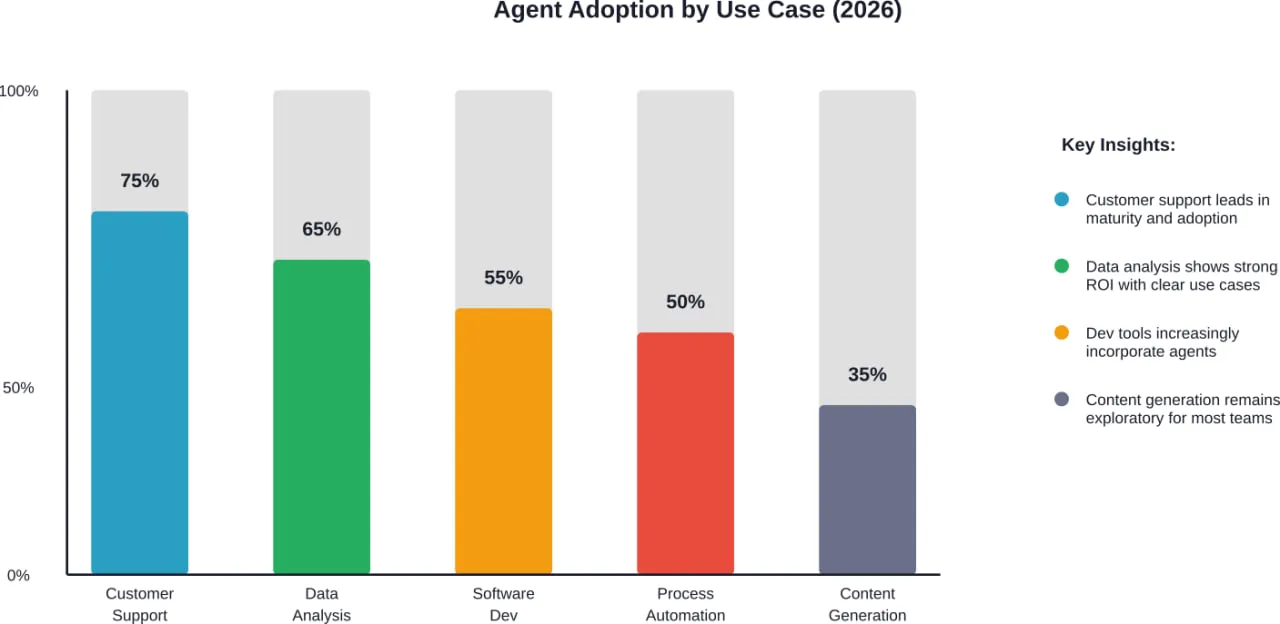
הנה מה שמבדיל אותם:

  • Autonomy: Agents can operate with minimal human intervention, making decisions based on their programming and environmental feedback.

  • Goal-oriented behavior: Rather than just responding, agents work toward defined objectives.
  • Environmental interaction: Agents perceive their surroundings (data sources, APIs, user inputs) and act upon them.
  • Reasoning and planning: They break complex tasks into manageable steps and execute them sequentially or adaptively.

The distinction between agents, assistants, and bots matters. Assistants help users complete tasks but require direction. Bots automate simple, scripted interactions. Agents can perform complex tasks autonomously and adapt their approach based on outcomes.

Comparison of autonomy levels across AI agents, assistants, and bots

The Core Architecture of AI Agents

At the foundation, AI agents typically consist of several interconnected components that work together to enable autonomous behavior.

Perception Module

Agents need to understand their environment. The perception module processes inputs—text, images, audio, sensor data, API responses, or database queries. Multimodal capacity in foundation models allows agents to process diverse data types simultaneously.

This is where generative AI’s multimodal capabilities shine. Agents can analyze documents, interpret images, listen to audio, and combine these inputs to form a comprehensive understanding of the situation.

Reasoning and Planning Engine

Once the agent perceives its environment, it needs to decide what to do. The reasoning engine—often powered by large language models (LLMs)—analyzes the current state, compares it against goals, and formulates a plan.

Recent research from arXiv highlights hierarchical decision-making frameworks. The “Agent-as-Tool” study (arXiv:2507.01489) proposes detaching the tool calling process from the reasoning process. This allows the model to focus on verbal reasoning while another agent handles tool execution, achieving comparable or better performance.

Reasoning paradigms vary:

  • Chain-of-thought reasoning: Breaking problems into sequential steps
  • Hierarchical reasoning: Organizing decisions in layers, with high-level strategy and low-level execution
  • Reinforcement learning-augmented reasoning: Using feedback loops to improve decision quality over time

According to arXiv paper 2512.24609, reinforcement learning-augmented LLM agents improve collaborative decision-making and performance optimization. LLMs perform well in language tasks but often struggle with complex sequential decisions—reinforcement learning addresses this gap.

מערכות זיכרון

Memory distinguishes reactive bots from truly autonomous agents. Agents maintain both short-term (working) memory and long-term memory.

Short-term memory holds the current context—recent interactions, intermediate results, and task state. Long-term memory stores learned patterns, past decisions, successful strategies, and domain knowledge.

This allows agents to learn from experience and adapt their behavior. An agent that failed at a task can recall what went wrong and try a different approach.

Action Execution and Tool Use

Agents don’t just think—they act. The action execution layer translates decisions into concrete operations: calling APIs, querying databases, writing code, sending messages, or controlling external systems.

Tool use is critical. OpenAI’s practical guide to building agents emphasizes that agents can define, select, and run workflows using available tools. Tools might include:

  • Search engines for information retrieval
  • Code interpreters for running calculations
  • Database connectors for querying structured data
  • External APIs for integrating third-party services
  • Machine learning models for specialized predictions

The ToolUniverse framework from Harvard’s Kempner Institute provides an environment where LLMs interact with more than six hundred scientific tools, including machine learning models, databases, and simulators. Standardizing how AI models access and combine tools enables more sophisticated “AI scientist” agents.

Key components of AI agent architecture showing perception, reasoning, memory, action, and feedback

How AI Agents Make Decisions

Decision-making in AI agents involves multiple layers of processing. Here’s the typical flow:

Goal Definition

First, the agent receives or identifies a goal. This might come from a user (“analyze this quarter’s sales data and identify trends”) or from the agent’s own programming (monitoring systems and alerting on anomalies).

Environmental Assessment

The agent gathers relevant information. What data is available? What tools can be used? What constraints exist? This contextual awareness shapes the decision space.

Plan Formulation

Using its reasoning engine, the agent generates a plan. For complex tasks, this involves breaking the goal into subtasks, ordering them logically, and identifying dependencies.

Research on hierarchical reinforcement learning (arXiv:2212.06967) shows how agents can explain their decision-making in hierarchical scenarios. High-level strategies decompose into low-level actions, making the decision process more interpretable.

Action Selection and Execution

The agent selects the next action based on the current state and plan. It executes the action using available tools—querying a database, calling an API, generating text, or running code.

Feedback Integration

After each action, the agent evaluates the outcome. Did it succeed? Did it move closer to the goal? If not, the agent updates its plan and tries a different approach.

Anthropic’s research on measuring AI agent autonomy in practice analyzed millions of human-agent interactions. Among new users of Claude Code, roughly 20% of sessions use full auto-approve, which increases to over 40% as users gain experience—showing that users trust agents more as they prove their decision-making reliability.

The feedback loop is where reinforcement learning shines. According to the Agent Lightning framework (arXiv:2508.03680), reinforcement learning enables training ANY AI agents through flexible, extensible methods that improve performance over time.

Types of AI Agents and How They Work Differently

Not all agents are built the same. Different architectures suit different tasks.

Simple Reflex Agents

These agents react to current perceptions without considering history. They follow condition-action rules: if X, then Y. Limited but fast and predictable for straightforward environments.

Model-Based Reflex Agents

These agents maintain an internal model of the world, allowing them to handle partially observable environments. They track state over time and make decisions based on both current input and historical context.

Goal-Based Agents

These agents explicitly pursue goals. They evaluate different action sequences to determine which best achieves the objective. Planning and search algorithms drive their behavior.

Utility-Based Agents

Beyond just achieving goals, utility-based agents optimize for quality. They assign utility values to different states and choose actions that maximize expected utility. This enables nuanced decision-making when multiple paths lead to goal completion.

Learning Agents

Learning agents improve through experience. They combine a performance element (makes decisions), a critic (evaluates outcomes), a learning element (updates behavior based on feedback), and a problem generator (explores new strategies).

The AgentGym-RL framework (arXiv:2509.08755) focuses on training LLM agents for long-horizon decision-making through multi-turn reinforcement learning. These agents handle tasks that require sustained reasoning and adaptation over extended interactions.

Agent TypeDecision BasisMemoryUse Case
Simple ReflexCurrent input onlyאיןBasic automation
Model-Based ReflexCurrent + internal modelState trackingPartially observable tasks
Goal-BasedGoal achievementPlanning stateMulti-step workflows
Utility-BasedOutcome optimizationPreference modelsQuality-sensitive decisions
LearningExperience + adaptationLong-term learningComplex, evolving environments

The Role of Large Language Models in AI Agents

LLMs have become the backbone of modern agentic AI. Their ability to understand natural language, generate coherent text, and perform reasoning tasks makes them ideal for agent applications.

OpenAI’s guide notes that LLMs’ advances in reasoning, multimodality, and tool use have unlocked agentic capabilities. Models can now interpret complex instructions, break them into steps, and coordinate multiple tools to accomplish objectives.

But LLMs alone aren’t enough. Real talk: they need scaffolding. Memory systems, tool interfaces, feedback mechanisms, and orchestration layers transform a language model into a functional agent.

MIT Sloan describes agentic AI as systems that are semi- or fully autonomous, able to perceive, reason, and act on their own. LLMs provide the reasoning core, but the agent architecture provides autonomy.

How LLMs Enable Agent Capabilities

  • Natural language understanding: Agents can interpret user goals expressed in plain English (or any language).
  • Contextual reasoning: LLMs process large amounts of context, understanding relationships between pieces of information.
  • Code generation: Agents can write and execute code to perform calculations, data transformations, or automation.
  • Multi-turn dialogue: Maintaining coherent, goal-directed conversations over many exchanges.
  • Tool selection: Choosing the right tool for a task based on descriptions and past experience.

Limitations and How Agents Address Them

LLMs have well-known limitations: hallucination, lack of true reasoning, difficulty with math, and no inherent memory beyond their context window.

Agent architectures mitigate these:

  • Hallucination: Agents verify outputs using external tools (databases, calculators, search engines) rather than relying solely on model generation.
  • Reasoning depth: Multi-step prompting and chain-of-thought techniques scaffold deeper reasoning.
  • Math and logic: Offloading calculations to code interpreters or symbolic solvers.
  • Memory: External memory systems (vector databases, knowledge graphs) extend the agent’s recall beyond the context window.

Multi-Agent Systems and Coordination

Single agents can be powerful. But multi-agent systems—where multiple agents collaborate—unlock even greater capabilities.

Each agent can specialize in a domain or function. One agent might handle data retrieval, another performs analysis, a third generates reports, and a fourth manages user interaction. They coordinate through message passing, shared memory, or hierarchical control.

Research on hybrid agentic AI frameworks (IEEE) explores integrating AIML and machine learning for context-aware autonomous systems. Different agent types collaborate, each contributing its strengths.

Challenges in multi-agent systems include:

  • Coordination overhead: Agents must communicate effectively and avoid conflicts.
  • Task allocation: Deciding which agent handles which subtask.
  • Consistency: Ensuring agents work toward the same overall goal.
  • Failure handling: What happens when one agent fails? Others must adapt.

The payoff is resilience and scalability. If one agent hits a bottleneck, others continue. Specialization improves performance in each domain.

Training and Improving AI Agents

How do agents get better? Training involves supervised learning, reinforcement learning, and human feedback.

Supervised Fine-Tuning

Agents learn from labeled examples: given situation X, the correct action is Y. This builds baseline competence but doesn’t handle novel scenarios well.

Reinforcement Learning

Agents learn by trial and error, receiving rewards for successful actions and penalties for failures. Over time, they optimize for reward maximization.

The Agent Lightning framework presents flexible training methods for any AI agents using reinforcement learning. This approach adapts to different environments and objectives.

Human-in-the-Loop Feedback

Human evaluators review agent decisions, providing corrections and preferences. This feedback refines agent behavior and aligns it with human values.

Anthropic’s work on evaluating AI agents emphasizes that good evaluations help teams ship agents more confidently. Without rigorous evals, issues emerge only in production—where fixing one failure can create others.

Choosing the right graders for evaluation matters. Code-based graders (string matching, static analysis, outcome verification) provide objective metrics. LLM-based graders assess nuanced qualities like helpfulness or coherence. Combining both gives comprehensive evaluation.

Continuous Learning

Deployed agents continue learning from real-world interactions. They log outcomes, update models, and improve strategies over time. This creates a virtuous cycle of performance enhancement.

The continuous improvement cycle for AI agents through deployment, execution, evaluation, and learning

Real-World Applications: How Agents Work in Practice

Understanding theory is one thing. Seeing agents in action clarifies their value.

Customer Service Automation

Agents handle customer inquiries end-to-end. They retrieve account information, troubleshoot issues, process requests, and escalate complex cases to humans. Memory systems track conversation history across sessions, providing continuity.

Data Analysis and Reporting

Agents query databases, perform statistical analysis, generate visualizations, and write reports. According to MIT Sloan, in areas involving substantial effort to evaluate options—such as B2B procurement—agents deliver value by reading reviews, analyzing metrics, and comparing attributes across options.

Software Development Assistance

Agents write code, debug errors, refactor functions, and manage deployments. Analysis of Claude Code usage shows that as users gain experience, they increasingly let the agent run autonomously, intervening only when needed. This shift demonstrates growing trust in agent capabilities.

Scientific Research

The ToolUniverse framework enables AI agents to interact with hundreds of scientific tools. These “AI scientists” design experiments, run simulations, analyze results, and propose hypotheses—accelerating the research cycle.

ניהול רשת

IEEE research on AI agent-based autonomous cognitive architecture for 6G core networks shows agents managing complex telecommunications infrastructure, optimizing performance, and responding to failures without human intervention.

Challenges and Limitations

Agents aren’t perfect. Several challenges remain.

Reliability and Error Handling

Agents can make mistakes—selecting wrong tools, misinterpreting context, or generating incorrect outputs. Robust error handling and fallback mechanisms are essential.

שקיפות ויכולת הסבר

Understanding why an agent made a particular decision can be difficult. Black-box reasoning undermines trust and makes debugging hard. Research on explaining agent decision-making in hierarchical reinforcement learning scenarios (arXiv:2212.06967) addresses this by making agent reasoning more interpretable.

Security and Safety

Autonomous agents with tool access pose risks. They could inadvertently delete data, expose sensitive information, or execute harmful actions. The NIST AI Risk Management Framework provides guidance for cultivating trust in AI technologies while mitigating risk.

NIST’s Center for AI Standards and Innovation issued requests for information about securing AI agents, recognizing the unique security challenges they present.

Alignment and Value Specification

Ensuring agents pursue the right goals in the right way—alignment—remains an open problem. Misspecified objectives can lead to unintended consequences, even when the agent functions correctly.

Resource Consumption

Running sophisticated agents with large models, extensive tool calls, and continuous learning can be computationally expensive. Optimizing efficiency without sacrificing capability is an ongoing challenge.

Best Practices for Building AI Agents

Organizations deploying agents should follow proven principles.

Start Simple, Then Scale

Begin with narrow, well-defined tasks. Prove the agent works in a controlled environment before expanding scope. Incremental deployment reduces risk.

Design Robust Evaluation Systems

According to Anthropic’s eval guide, effective evaluation design combines code-based and LLM-based graders, matching evaluation complexity to system complexity. Define success metrics early and test rigorously.

Implement Guardrails and Safety Mechanisms

Restrict agent permissions, validate actions before execution, and monitor behavior continuously. NIST’s SP 800-53 Control Overlays for Securing AI Systems provide security controls tailored to AI infrastructure.

Prioritize Human Oversight for High-Stakes Decisions

Autonomy is valuable, but critical decisions should involve humans. Design agents to request approval for consequential actions.

Iterate Based on Real-World Feedback

Deploy, observe, learn, improve. User interactions reveal edge cases and failure modes that testing misses. Continuous improvement cycles are essential.

Document Agent Behavior and Limitations

Clear documentation helps users understand what agents can and can’t do, setting realistic expectations and improving trust.

Turn AI Agent Mechanics Into a Working System

Architecture diagrams and agent mechanics explain how components should interact, but real systems rarely behave exactly like схемы. Once you move into implementation, questions shift to reliability, data consistency, and how different services handle real workloads over time.

A-listware works on that practical side. The company provides development teams that handle backend systems, integrations, and infrastructure around AI-driven solutions, helping businesses move from theoretical models to systems that run day to day. Contact רשימת מוצרים א' to support the build and keep your system working beyond the initial setup.

The Future of AI Agents

Where is this technology headed?

Expect deeper integration of reinforcement learning, enabling agents to tackle longer-horizon tasks with better planning. Multi-agent collaboration will mature, with standardized communication protocols and orchestration frameworks.

Specialization will increase. Domain-specific agents—trained on industry data and optimized for particular workflows—will outperform general-purpose systems in their niches.

Interoperability between agents from different vendors will become critical. Open standards and common tool interfaces will facilitate this.

Regulation and governance frameworks will evolve. As agents take on more consequential roles, accountability, transparency, and safety standards will tighten.

The lines between agents and traditional software will blur. Eventually, agentic capabilities may become standard features in most applications, not a separate category.

שאלות נפוצות

  1. What is the main difference between an AI agent and a chatbot?

AI agents can autonomously plan, decide, and execute multi-step tasks toward goals, while chatbots primarily respond to user inputs without independent goal-directed behavior. Agents combine reasoning, memory, and tool use to operate with varying degrees of autonomy, whereas chatbots follow scripted or prompt-driven responses.

  1. How do AI agents use tools and APIs?

AI agents identify which tools are needed for a task, call APIs or execute code to perform specific operations, retrieve results, and integrate them into their workflow. The agent’s reasoning engine selects appropriate tools based on task requirements, and the action execution layer handles the technical interface with external systems.

  1. Can AI agents learn from their mistakes?

Yes, especially agents designed with reinforcement learning or continuous learning mechanisms. They evaluate outcomes after each action, update their internal models based on success or failure, and adjust future behavior accordingly. This feedback loop enables performance improvement over time.

  1. What types of tasks are AI agents best suited for?

AI agents excel at multi-step workflows, data analysis and reporting, customer service automation, software development assistance, and tasks requiring coordination of multiple tools or data sources. They’re particularly valuable for repetitive but complex tasks that benefit from autonomous execution with occasional human oversight.

  1. Are AI agents secure and safe to deploy?

Security depends on implementation. Properly designed agents with restricted permissions, action validation, monitoring, and human oversight for high-stakes decisions can be deployed safely. Organizations should follow frameworks like NIST’s AI Risk Management Framework and implement robust security controls. Risks remain, especially for agents with broad tool access or insufficient guardrails.

  1. How do multi-agent systems coordinate their actions?

Multi-agent systems use communication protocols, shared memory, hierarchical control structures, or message-passing interfaces to coordinate. Agents negotiate task allocation, share information about environmental state, and synchronize actions to avoid conflicts. Coordination mechanisms vary based on system architecture—some use centralized orchestration, others rely on peer-to-peer negotiation.

  1. What role do large language models play in AI agents?

Large language models provide the reasoning and natural language understanding core of modern AI agents. They interpret user goals, generate plans, select tools, and produce outputs. LLMs enable agents to process complex instructions, perform multi-step reasoning, and interact naturally with humans. The agent architecture provides memory, tool interfaces, and orchestration that transform an LLM into an autonomous system.

מַסְקָנָה

AI agents represent a fundamental shift from reactive AI systems to autonomous, goal-directed software. They work through integrated architectures combining perception, reasoning, memory, and action—powered increasingly by large language models but scaffolded with specialized components that enable true autonomy.

Understanding how agents perceive their environment, make decisions, use tools, and learn from feedback clarifies both their potential and limitations. As these systems mature, they’ll handle increasingly complex tasks, but challenges around reliability, security, and alignment persist.

For organizations exploring agentic AI, the path forward involves starting with well-defined use cases, building robust evaluation systems, implementing strong guardrails, and iterating based on real-world deployment. The technology is ready—but successful implementation requires thoughtful design and ongoing refinement.

Ready to build your first AI agent? Start with a narrow, high-value task, design clear success metrics, and scale gradually as you gain confidence in the system’s capabilities.

AI Agent Use Cases: 40+ Real Examples for 2026

סיכום קצר: AI agents are autonomous systems that combine foundation models with reasoning, planning, and tool use to execute complex tasks with minimal human intervention. Unlike traditional chatbots, they can operate across multiple domains—from customer support and sales to finance, healthcare, and logistics—delivering productivity gains of 2-10x in early enterprise deployments. By 2026, organizations are deploying agents for everything from automated fraud detection to supply chain optimization, with government and industry standards emerging to ensure safe, interoperable adoption.

AI agents aren’t just another buzzword in the technology cycle. They represent a fundamental shift in how businesses automate work, make decisions, and interact with customers.

Unlike the single-task chatbots of the past, modern AI agents can autonomously plan multi-step workflows, reason through complex scenarios, and execute actions across dozens of integrated tools. They don’t just answer questions—they complete entire business processes from start to finish.

But here’s the thing: the gap between hype and reality remains wide. According to McKinsey’s Global Survey on AI, while 78% of enterprises report using generative AI in at least one function, more than 80% report no material contribution to earnings. The difference? Organizations that deploy true agentic systems—not just layered AI onto existing human-centric workflows.

This guide examines over 40 real-world AI agent use cases already operating in production across industries. These aren’t theoretical applications. They’re proven deployments that companies are using right now to cut costs, accelerate processes, and scale operations that were previously bottlenecked by human capacity.

What Makes AI Agents Different from Traditional Automation

Traditional automation follows rigid if-then rules. AI agents operate with autonomy, adapting their approach based on context, learning from interactions, and making decisions without pre-programmed scripts for every scenario.

An AI agent combines several core capabilities:

  • Foundation models that understand natural language and context
  • Reasoning engines that break complex goals into sequential steps
  • Memory systems that track conversation history and user preferences
  • Tool integration allowing access to databases, APIs, and external software
  • Planning mechanisms that determine the optimal path to complete a task

When these components work together, agents can handle sophisticated workflows that would traditionally require human judgment at multiple decision points.

Take customer support. A traditional chatbot can answer FAQs from a knowledge base. An AI agent can diagnose a technical issue, check order history across multiple systems, process a refund, schedule a follow-up, and update the CRM—all in a single interaction without human handoff.

That level of autonomy changes the economics of automation. Instead of automating 20% of support tickets, agents can handle 70% or more, as demonstrated by Vodafone implemented an AI agent-based support system that handles over 70% of customer inquiries without human intervention.

Customer Service and Support Use Cases

Customer service remains the most mature deployment area for AI agents, with production systems already operating at significant scale across telecommunications, retail, and financial services.

Automated Ticket Resolution

AI agents can resolve common support requests end-to-end without human involvement. They access order databases, verify account information, process refunds, update shipping addresses, and confirm resolution with the customer.

The key difference from older chatbots? Agents don’t just look up answers—they execute actions across multiple systems. When a customer reports a defective product, the agent can verify the purchase, check warranty status, initiate a return label, process the refund, and update inventory systems in one continuous workflow.

Intelligent Ticket Routing

When issues require human expertise, agents analyze the inquiry context, customer history, and technical complexity to route tickets to the most appropriate specialist. This reduces average handling time by matching problems with the right expertise on first contact.

Agents also draft initial resolution proposals for human agents, providing context summaries and suggesting solutions based on similar past cases. This cuts research time and accelerates resolution.

Proactive Support Outreach

Agents monitor system health, usage patterns, and early warning signals to contact customers before problems escalate. When a payment method is about to expire or a service disruption affects specific accounts, agents initiate outreach with personalized solutions.

This shifts support from reactive firefighting to preventive relationship management, reducing churn and improving customer satisfaction scores.

Multilingual Support at Scale

AI agents provide native-quality support across dozens of languages simultaneously, eliminating the need to staff multilingual support teams across time zones. They maintain consistent service quality whether responding in English, Spanish, Mandarin, or Arabic.

For global companies, this capability alone can justify agent adoption—enabling 24/7 worldwide support without proportional headcount increases.

How AI agents process customer support requests from initial contact through resolution, with escalation paths for complex cases

Sales and Marketing Agent Applications

Sales and marketing teams are deploying agents to handle repetitive prospecting, lead qualification, content personalization, and campaign optimization—freeing human talent for strategic relationship building.

Lead Qualification and Scoring

AI agents analyze inbound leads across multiple data sources, assessing company size, technology stack, engagement signals, and buying intent. They score leads based on fit and readiness, automatically routing high-value prospects to sales while nurturing others with personalized content sequences.

This eliminates the manual research that typically consumes 30-40% of sales development time, allowing teams to focus exclusively on qualified conversations.

Personalized Outreach at Scale

Agents craft customized outreach messages by analyzing prospect background, recent company news, social media activity, and content consumption patterns. Each message reflects genuine research rather than templated bulk email.

The system also determines optimal send times, follow-up sequences, and channel selection (email, LinkedIn, phone) based on historical response patterns for similar prospects.

Meeting Scheduling and Preparation

Once a prospect expresses interest, agents handle back-and-forth scheduling, send calendar invites, and prepare briefing documents for sales reps with prospect background, pain points, competitive intel, and suggested talking points.

This coordination work—traditionally requiring multiple emails and manual research—happens automatically, ensuring sales reps enter every conversation fully prepared.

Content Generation and Optimization

Marketing agents generate blog posts, social media content, email campaigns, and ad copy variations based on performance data and audience segmentation. They test headlines, calls-to-action, and messaging angles, continuously optimizing based on engagement metrics.

Some systems can produce hundreds of content variations for A/B testing, identifying winning formulas faster than human-only teams.

Campaign Performance Analysis

Agents monitor campaign metrics in real-time, identifying underperforming segments and automatically adjusting budgets, targeting, and creative elements. When a campaign variant outperforms, the agent reallocates spend and scales the winning approach across channels.

This continuous optimization operates at a speed impossible for human marketers monitoring dozens of simultaneous campaigns.

Finance and Accounting Automation

Financial operations are seeing dramatic efficiency gains from agent deployment, particularly in areas requiring high accuracy, regulatory compliance, and cross-system data reconciliation.

Invoice Processing and Reconciliation

AI agents extract data from incoming invoices regardless of format, match them against purchase orders, flag discrepancies, route approvals to appropriate managers, and trigger payment processing once approved.

A global industrial firm cut audit reporting time by 92% by deploying agents for financial reconciliation workflows, according to research published in the Harvard Data Science Review.

Expense Report Management

Agents review employee expense submissions, verify receipts against policy guidelines, flag out-of-policy items with specific explanations, and auto-approve compliant submissions. They learn company-specific policy interpretations over time, reducing manual review workload.

Employees receive instant feedback on policy violations rather than waiting days for approvals, improving both speed and compliance.

Fraud Detection and Prevention

Financial agents monitor transaction patterns in real-time, identifying anomalies that suggest fraud, money laundering, or policy violations. They assess transactions against behavioral baselines, flagging suspicious activity for investigation while auto-approving routine payments.

Companies report agents actively running in finance for fraud detection and credit risk assessment, with implementations spanning banking, insurance, and enterprise finance operations.

Financial Forecasting and Reporting

Agents compile financial reports by pulling data from multiple systems, applying accounting rules, generating variance analyses, and drafting executive summaries. They produce monthly board reports, quarterly earnings analyses, and budget-versus-actual comparisons automatically.

This eliminates the multi-day manual process of consolidating spreadsheets and writing commentary, delivering reports within hours of month-end close.

Regulatory Compliance Monitoring

Financial institutions deploy agents to monitor transactions for regulatory compliance, automatically filing required reports, flagging potential violations, and maintaining audit trails. Agents stay updated on changing regulations, adjusting monitoring rules as requirements evolve.

This continuous compliance monitoring reduces regulatory risk while freeing compliance teams to focus on complex interpretations rather than routine checks.

Finance Use CaseTraditional TimeWith AI AgentTime Saved
Invoice Processing (100 invoices)8 hours45 minutes91%
Monthly Financial Report3 days4 hours83%
Expense Report Review (50 reports)6 hours30 minutes92%
Audit Report Preparation5 days8 hours84%
Transaction Monitoring (daily)4 hoursContinuous/Automatic100%

Healthcare and Medical Use Cases

Healthcare organizations are deploying agents carefully, focusing on administrative workflows and clinical decision support while maintaining strict human oversight for patient-facing decisions.

Patient Intake and Scheduling

Medical agents handle appointment scheduling, insurance verification, medical history collection, and pre-visit paperwork. They ask clarifying questions about symptoms, determine appropriate appointment types, and route urgent cases for immediate attention.

This reduces phone hold times and administrative burden while ensuring patients reach the right specialist with complete information.

Clinical Documentation Assistance

Agents listen to patient consultations, generate clinical notes, code diagnoses and procedures, and draft referral letters. Physicians review and approve the documentation, but the initial drafting work happens automatically.

This can save physicians 1-2 hours per day on documentation, time that can be redirected to patient care.

Medical Records Analysis

Agents review patient records to identify potential drug interactions, flag missing screenings based on age and risk factors, and surface relevant medical history during consultations. They act as intelligent assistants surfacing information clinicians need exactly when needed.

Insurance Authorization

Prior authorization remains a significant administrative burden. Agents gather required documentation, submit authorization requests, follow up on pending cases, and alert staff to denials requiring appeals.

This automation can reduce prior auth processing time from days to hours, accelerating treatment starts.

Medication Adherence Monitoring

Agents send medication reminders, check in on side effects, answer questions about proper usage, and alert clinical teams when patients miss doses or report concerning symptoms. This ongoing monitoring improves adherence rates without requiring staff time.

IT Operations and DevOps

Development and operations teams deploy agents for infrastructure management, incident response, code review, and system monitoring—areas where automation has existed for years but required extensive manual configuration.

זיהוי ותגובה לאירועים

IT agents monitor system health metrics, detect anomalies, diagnose root causes, and execute remediation steps automatically. When a service degrades, the agent checks logs, identifies the failing component, attempts standard fixes, and escalates to on-call engineers if automated resolution fails.

This reduces mean-time-to-resolution from hours to minutes for common incident types.

Code Review and Quality Assurance

Development agents review pull requests for security vulnerabilities, performance issues, style violations, and logical errors. They suggest improvements, flag potential bugs, and verify test coverage before human review.

This catches routine issues automatically, allowing human reviewers to focus on architecture and business logic.

Infrastructure Provisioning

Agents interpret natural language requests to provision cloud resources, configure networking, set up monitoring, and apply security policies. A developer can request “a production environment for the new API service” and the agent handles the 20+ configuration steps automatically.

Security Threat Response

Security agents monitor for indicators of compromise, investigate suspicious activity, isolate affected systems, and initiate incident response protocols. They operate at machine speed, containing threats within seconds rather than the hours typical in manual response.

Documentation Generation

Agents analyze codebases to generate API documentation, update README files, create architecture diagrams, and draft runbooks for common procedures. They keep documentation synchronized with code changes automatically.

Human Resources Applications

HR departments use agents to streamline recruiting, onboarding, employee support, and performance management—improving employee experience while reducing administrative overhead.

Candidate Sourcing and Screening

Recruiting agents search job boards, LinkedIn, and internal databases to identify qualified candidates. They review resumes against job requirements, score applicants on fit, schedule initial screenings, and provide hiring managers with shortlists of pre-qualified candidates.

This dramatically expands the talent pool recruiters can effectively evaluate, improving hire quality while reducing time-to-fill.

Interview Coordination

Agents schedule interview panels across multiple calendars, send preparation materials to interviewers, collect feedback forms, and compile evaluation summaries for hiring decisions. The coordination work that typically requires 5-10 emails per candidate happens automatically.

Employee Onboarding

New hire agents guide employees through onboarding checklists, provision system access, assign training modules, schedule orientation meetings, and answer common questions about benefits, policies, and tools.

New employees receive personalized guidance without requiring HR staff time, while the system ensures no critical onboarding steps are missed.

HR Help Desk

Employee support agents answer questions about benefits, time-off policies, expense procedures, and internal systems. They process routine requests like address changes, tax form updates, and PTO submissions automatically.

This provides 24/7 employee support while freeing HR staff for complex cases requiring human judgment and empathy.

Performance Review Coordination

Agents manage performance review cycles, sending reminders, collecting feedback from multiple reviewers, compiling 360-degree assessments, and flagging incomplete submissions as deadlines approach.

ייצור ושרשרת אספקה

Industrial operations deploy agents for predictive maintenance, quality control, inventory optimization, and logistics coordination—areas where real-time decision-making drives significant cost savings.

Predictive Maintenance

Manufacturing agents monitor equipment sensor data, predict component failures before they occur, automatically schedule maintenance during planned downtime, and order replacement parts proactively.

This prevents unexpected breakdowns that halt production, improving overall equipment effectiveness while reducing emergency maintenance costs.

Quality Control Inspection

Vision-based agents inspect products on production lines, identifying defects, measuring tolerances, and rejecting out-of-spec items automatically. They achieve consistency impossible for human inspectors while operating continuously at line speed.

Inventory Optimization

Supply chain agents analyze demand patterns, supplier lead times, and carrying costs to optimize inventory levels. They automatically trigger reorders when stock reaches calculated reorder points and adjust safety stock based on demand volatility.

This balances the competing goals of avoiding stockouts while minimizing working capital tied up in inventory.

Shipment Tracking and Exception Management

Logistics agents monitor shipments in transit, identify delays, proactively notify customers, arrange alternative routing when issues arise, and update delivery estimates across systems.

When a shipment is delayed, the agent contacts carriers, explores expedited options, and communicates revised timelines—all without human intervention unless escalation thresholds are met.

Demand Forecasting

Planning agents analyze historical sales data, market trends, promotional calendars, and external factors to generate demand forecasts. They continuously update predictions as new data arrives, enabling more responsive production and procurement planning.

Percentage of enterprises using AI agents in production by industry vertical, based on 2026 deployment data

Legal and Compliance

Legal departments are deploying agents for contract analysis, legal research, compliance monitoring, and discovery—focusing on high-volume, pattern-recognition tasks while maintaining attorney oversight for strategic decisions.

Contract Review and Analysis

Legal agents review contracts to identify non-standard clauses, flag risk terms, extract key provisions, and compare agreements against approved templates. They process vendor contracts, NDAs, and employment agreements at scale.

This allows legal teams to review 10x more contracts at the same time, catching issues that might slip through in manual review of high volumes.

Legal Research

Research agents search case law, statutes, and regulations to find relevant precedents, summarize findings, and identify supporting arguments for legal positions. They draft research memos with case citations for attorney review.

Discovery Document Review

In litigation, agents review thousands of documents for relevance, privilege, and key information. They categorize documents, flag sensitive materials, and surface items requiring detailed attorney review.

This can reduce discovery costs by 60-80% while improving consistency compared to manual document review teams.

Regulatory Change Monitoring

Compliance agents monitor regulatory sources for changes affecting the business, assess impact, draft policy updates, and notify relevant stakeholders when action is required.

This ensures organizations stay current with evolving regulations without dedicating staff to continuous manual monitoring.

חינוך והכשרה

Educational institutions and corporate training programs deploy agents for personalized learning, administrative support, and student services—improving outcomes while managing resource constraints.

Personalized Tutoring

Education agents provide one-on-one tutoring, adapting explanations to student learning styles, identifying knowledge gaps, and adjusting difficulty based on mastery. They’re available 24/7 for homework help and concept review.

Administrative Support

Student service agents answer questions about enrollment, financial aid, course requirements, and campus resources. They guide students through administrative processes, reducing burden on staff while improving student experience.

Assessment and Grading

Agents grade objective assignments, provide detailed feedback on written work, identify plagiarism, and track learning progress. Instructors review and approve grades, but the initial evaluation happens automatically.

Corporate Training Delivery

Workplace learning agents deliver personalized training content, answer questions about procedures and policies, quiz employees on compliance topics, and track completion for certification requirements.

אנרגיה ותשתיות

Energy companies deploy agents for grid management, demand forecasting, outage response, and customer service—particularly critical as renewable energy and distributed generation increase grid complexity.

Energy Trading and Optimization

AI agents participate in transactive energy markets, automatically buying and selling power based on price signals, weather forecasts, and consumption patterns. Research on AI agents in energy markets shows how these systems reshape decision-making from human cognition to algorithmic processes.

Grid Monitoring and Balancing

Agents monitor grid conditions in real-time, balancing supply and demand, dispatching storage resources, and adjusting distributed generation to maintain stability as renewable production fluctuates.

Outage Detection and Response

Utility agents detect outages from smart meter data, dispatch repair crews, reroute power through alternate paths, and communicate estimated restoration times to affected customers automatically.

Energy Efficiency Recommendations

Customer-facing agents analyze usage patterns to recommend efficiency improvements, compare rate plans to optimize costs, and identify equipment upgrades with fastest payback periods.

Insurance Operations

Insurance carriers deploy agents for claims processing, underwriting, fraud detection, and customer service—streamlining processes that traditionally required extensive manual review.

Claims Intake and Processing

Claims agents guide policyholders through reporting, collect required documentation, verify coverage, assess damage from photos, and auto-approve straightforward claims within policy limits.

Simple claims can be processed and paid within hours rather than days, improving customer satisfaction while reducing processing costs.

Underwriting Risk Assessment

Underwriting agents evaluate applications against risk criteria, pull credit reports and external data sources, calculate appropriate premiums, and flag high-risk applications for human underwriter review.

Policy Administration

Service agents handle policy changes, endorsements, renewals, and cancellations automatically. They answer coverage questions, provide quotes for coverage changes, and process routine transactions without agent involvement.

Fraud Investigation

Fraud detection agents analyze claims for suspicious patterns, cross-reference against known fraud indicators, investigate claimant history across databases, and prioritize cases for detailed investigation.

Retail and E-commerce

Retailers deploy agents for personalized shopping experiences, inventory management, pricing optimization, and customer service—improving conversion while managing operational complexity.

Product Recommendations

Shopping agents analyze browsing behavior, purchase history, and similar customer patterns to recommend products. They personalize the entire shopping experience, from homepage layout to email campaigns.

Visual Search and Discovery

Agents allow customers to search by uploading photos, finding similar products, suggesting complementary items, and filtering by visual attributes like color, style, and pattern.

Dynamic Pricing

Pricing agents monitor competitor prices, inventory levels, demand signals, and profit margins to optimize prices in real-time. They test price elasticity and adjust strategies based on conversion data.

Inventory Allocation

Agents optimize inventory distribution across stores and warehouses, predicting local demand, triggering transfers to high-demand locations, and minimizing markdown risk from overstock situations.

מְקַרקְעִין

Real estate agents (the AI kind) assist with property search, valuation, scheduling, and transaction coordination—augmenting human agents with automated support for time-consuming tasks.

Property Matching and Search

AI agents learn buyer preferences, search listings across multiple sources, schedule viewings, provide neighborhood data, and alert buyers when properties matching criteria become available.

Automated Valuation

Valuation agents analyze comparable sales, property characteristics, market trends, and local factors to generate estimated property values for listings, purchases, and refinancing.

Transaction Coordination

Deal management agents track contract deadlines, coordinate inspections and appraisals, collect required documents, and ensure all parties complete necessary steps on schedule.

Keeping Humans in the Loop

Even the most sophisticated AI agents require human oversight. The best implementations don’t eliminate human involvement—they elevate it.

Organizations build human oversight into agent workflows through several mechanisms:

Confidence Thresholds

Agents assign confidence scores to their decisions. Actions above a threshold (say, 95% confidence) execute automatically. Decisions below the threshold route to humans for review.

For example, customer service agents might auto-process refunds under $50 with high confidence, but escalate larger amounts or uncertain cases to human agents.

Preview and Approve Workflows

Instead of taking action directly, agents draft proposed actions for human approval. A legal research agent generates a memo with case citations, but an attorney reviews and approves before sending to the client.

This gives teams a safety net while still saving time on preparation work.

Exception Escalation

Agents handle routine cases autonomously but escalate unusual situations. When an insurance claim falls outside standard parameters, the agent collects all relevant information and hands off to a human adjuster with context already prepared.

Audit and Monitoring

Organizations sample agent decisions regularly to verify quality. If accuracy drops below acceptable levels, systems trigger additional training or tighten confidence thresholds until performance recovers.

Override Capabilities

Humans must be able to override agent decisions and provide feedback. When an agent makes an error, the correction becomes training data to improve future performance.

The goal isn’t to remove humans from processes entirely. It’s to let humans focus on cases requiring empathy, creativity, strategic thinking, and complex judgment—while agents handle high-volume, pattern-based work at scale.

Government Standards and Safety Initiatives

As AI agents move from pilots to production at scale, government agencies and standards bodies are establishing frameworks to ensure safe, secure, and interoperable deployment.

In February 2026, NIST announced the AI Agent Standards Initiative, designed to ensure the next generation of AI can be widely adopted with confidence, function securely on behalf of users, and interoperate smoothly across the digital ecosystem.

This initiative addresses critical gaps in current agent deployments:

  • Security standards for agents accessing sensitive data and systems
  • Interoperability protocols allowing agents from different vendors to work together
  • Authentication mechanisms proving agent identity and authorization
  • Audit frameworks for tracking agent decisions and actions
  • Safety benchmarks assessing agent readiness for business deployment

An AI agent benchmark assessing safety and effectiveness was released in January 2026, focusing on readiness for business applications in real-world tasks rather than just capability demonstrations.

IEEE is developing multiple standards for autonomous and intelligent systems, including frameworks for proactive AI agents based on multi-modal human-computer interaction and standards for human intentions and AI alignment in autonomous systems.

These standards efforts reflect a maturing ecosystem. Early agent deployments often operated as isolated point solutions. Future enterprise adoption requires agents that can authenticate across systems, delegate to other agents, and operate under consistent security and governance frameworks.

Standards BodyInitiativeFocus AreaStatus (2026) 
NISTAI Agent Standards InitiativeSecurity, interoperability, trustActive development
NISTSP 800-53 Control OverlaysAI system security controlsPublished
IEEEP3833Proactive AI agent frameworkDraft standard
IEEEP3474Human-AI alignmentDraft standard
Released January 2026AI Agent BenchmarkSafety and effectiveness testingPublished

The Productivity Reality Check

For all the use cases outlined above, one critical question remains: are organizations actually seeing the promised productivity gains?

The data shows a sharp divide.

Most enterprises deploying generative AI see minimal impact. McKinsey found that over 80% report no material contribution to earnings, despite 78% using GenAI in at least one function.

But organizations building true agent-centric operations—not just layering AI onto existing workflows—report productivity multipliers of 2-10x. The Harvard Data Science Review documented cases including a global industrial firm cutting audit reporting time by 92% and B2B sales operations achieving dramatic efficiency improvements through agent-centric redesign.

What separates these outcomes?

Successful implementations don’t ask “how can AI help our current process?” They ask “if we designed this process today with AI agents as first-class participants, what would it look like?”

That fundamental redesign—building agent-centric rather than human-centric workflows with AI assistance—drives the measurable productivity gains that justify investment.

Comparison of productivity outcomes between AI-assisted human workflows and agent-centric process redesign

Challenges and Limitations

Real talk: AI agents aren’t magic, and deployment isn’t without significant challenges.

Accuracy and Reliability

Agents make mistakes. Foundation models hallucinate facts, misinterpret context, and produce confident-sounding but incorrect outputs. In high-stakes domains like healthcare, finance, and legal, errors can have serious consequences.

This is why confidence thresholds and human oversight remain critical. Organizations must accept that 100% accuracy is unrealistic and design workflows accordingly.

מורכבות האינטגרציה

Agents derive value from accessing multiple systems. But integrating with legacy infrastructure, managing authentication across platforms, and maintaining data consistency is complex and expensive.

Many enterprises underestimate the integration work required to move from proof-of-concept to production.

Security and Privacy

Agents require access to sensitive data and systems. Ensuring they respect access controls, maintain data privacy, and operate securely against adversarial attacks requires careful architecture.

NIST’s security standards for AI systems address this gap, but implementation requires significant security engineering effort.

Explainability and Trust

When an agent makes a decision, can it explain why? For regulatory compliance and user trust, explainability matters. But many agent architectures operate as black boxes, making it difficult to audit decisions or build user confidence.

This epistemological challenge—trusting algorithmic processes despite opacity—remains an active research area.

ניהול שינויים

Deploying agents means changing how people work. Employees may resist automation that threatens job security, mistrust agent decisions, or struggle to adapt to new workflows.

Successful implementations invest heavily in change management, training, and communication about how agents augment rather than replace human capabilities.

Move From AI Examples to Real Implementation

Use cases show how AI agents can be applied across different industries, but turning those examples into something usable usually depends on the system around them – services, data handling, and how everything connects in practice.

A-listware helps at that stage by providing development teams that work on backend systems, integrations, and infrastructure. The focus is on supporting implementation and keeping systems stable as they move into real use, not on building the agents themselves. Contact רשימת מוצרים א' to bring your AI use cases into production with the right engineering support.

Future Directions: What’s Next for AI Agents

Where is agent technology heading? Several clear trends are emerging as organizations move from pilots to production at scale.

Multi-Agent Collaboration

Future systems will involve multiple specialized agents collaborating on complex tasks. A sales process might involve separate agents for research, outreach, meeting scheduling, and proposal generation—each expert in their domain, coordinating to complete the end-to-end workflow.

This requires standards for inter-agent communication, task delegation, and conflict resolution when agents disagree.

Agentic Enterprises

Some organizations are moving toward what researchers call the “agent-centric enterprise”—where agents aren’t tools humans use, but autonomous participants in business processes with delegated authority to make decisions and take actions.

This represents a fundamental shift in organizational design, with implications for governance, risk management, and even legal liability.

Personal AI Agents

Consumer-facing agents that act on behalf of individuals—managing schedules, negotiating purchases, monitoring finances, and handling routine tasks—are emerging. These personal agents will need to authenticate their authority, protect user privacy, and operate across platforms.

Industry-Specific Agents

Generic agents are giving way to specialized systems trained on domain-specific data with industry workflows built in. Healthcare agents, legal agents, and manufacturing agents come pre-configured with relevant knowledge and processes.

Regulatory Frameworks

Government regulation of AI agents is accelerating. Expect requirements around transparency, accountability, safety testing, and human oversight—particularly for high-risk applications in healthcare, finance, and critical infrastructure.

Organizations deploying agents today should anticipate stricter compliance requirements and design systems with auditability and explainability from the start.

שאלות נפוצות

  1. What’s the difference between an AI agent and a chatbot?

Chatbots respond to user queries within a single conversation, typically pulling answers from a knowledge base. AI agents autonomously execute multi-step tasks, access multiple systems, make decisions based on context, and take actions on behalf of users. An agent might use a chatbot interface for communication, but its capabilities extend far beyond answering questions—it completes entire workflows from planning through execution.

  1. How much do AI agents cost to implement?

Implementation costs vary widely based on complexity, integration requirements, and deployment scale. Simple agents using commercial platforms might cost $10,000-50,000 for initial setup. Enterprise-grade systems with extensive integrations, custom development, and compliance requirements can exceed $500,000. Ongoing costs include API usage, infrastructure, maintenance, and continuous training. Organizations should evaluate total cost of ownership over 3-5 years rather than just initial implementation.

  1. Can AI agents work with our existing systems?

Most modern agents can integrate with existing systems through APIs, database connections, or RPA-style interface automation. The challenge isn’t technical possibility but implementation complexity. Legacy systems without APIs require more work. Organizations with modern, API-first architectures find integration significantly easier. Evaluate your system landscape before committing to agent deployment—integration effort often exceeds the agent development itself.

  1. How do we ensure AI agents don’t make costly mistakes?

Implement confidence thresholds so agents only act automatically when highly certain. Route uncertain cases to human review. Start with preview-and-approve workflows where agents draft actions for human approval. Monitor agent decisions continuously and adjust thresholds if accuracy drops. Limit agent authority for high-risk actions—require human approval for refunds over certain amounts, contract changes, or sensitive data access. Build extensive testing and validation before production deployment.

  1. What roles are most at risk from AI agent automation?

Roles involving high-volume, repetitive tasks with clear rules face the greatest automation risk. This includes data entry, basic customer service, routine scheduling, simple document review, and first-level technical support. Research from Brookings suggests over 30% of workers could be significantly impacted, with the greatest effects on middle- to higher-paid occupations and clerical roles. However, most implementations augment rather than replace workers, elevating them to handle complex cases requiring judgment and empathy.

  1. How long does it take to deploy an AI agent in production?

Timelines vary dramatically by use case complexity. Simple customer service agents on commercial platforms can reach production in 4-8 weeks. Complex enterprise agents with extensive integrations, compliance requirements, and custom development typically take 4-6 months from kickoff to production. Add another 2-3 months for change management and user adoption. Organizations often underestimate integration work and testing requirements—plan conservatively and run extended pilots before full rollout.

  1. Do we need special technical skills to build and maintain AI agents?

Low-code agent platforms allow non-technical teams to build simple agents with minimal programming. But production-grade enterprise agents typically require software developers familiar with APIs, integration patterns, and the agent platform’s architecture. Ongoing maintenance requires similar technical skills plus domain expertise to train agents on business-specific processes. Many organizations partner with specialized consultancies for initial implementation, then build internal capabilities for ongoing management and expansion.

Moving from Pilot to Production

Reading about AI agent use cases is one thing. Actually deploying them successfully is another.

Organizations that achieve meaningful results follow a consistent pattern:

  • Start with high-volume, low-risk processes: Don’t begin with mission-critical workflows. Target repetitive tasks with clear success criteria where mistakes carry limited consequences. Customer FAQs, invoice processing, and meeting scheduling make better starting points than complex negotiations or medical diagnoses.
  • Define success metrics upfront: What does success look like? Reduced handling time? Lower costs? Improved customer satisfaction? Higher accuracy? Establish baselines before deployment and track metrics continuously. Many pilots fail because organizations can’t demonstrate clear ROI.
  • Plan for integration work: Agent value comes from accessing existing systems. Budget 50-70% of project effort for integration, authentication, data mapping, and testing. This work consistently exceeds initial estimates.
  • Invest in change management: People need to trust agents and understand how to work with them. Train users on when to rely on agents versus escalate to humans. Communicate transparently about automation’s impact on roles. Organizations that skip this step face adoption resistance regardless of technical success.
  • Iterate based on real usage: Agents improve through exposure to real-world cases. Plan for continuous refinement based on error analysis, user feedback, and changing requirements. The initial deployment is just the starting point.
  • Build governance frameworks early: Establish clear policies for agent authority, data access, escalation procedures, and human oversight before scaling. These frameworks become harder to implement retroactively once agents are embedded in operations.

Conclusion: The Agent-Powered Future of Work

AI agents represent more than incremental automation. They’re reshaping how work gets done across industries.

The use cases outlined here—from customer support and sales to finance, healthcare, and supply chain operations—demonstrate agents already operating in production, delivering measurable results for organizations willing to redesign processes rather than just layer AI onto existing workflows.

But we’re still in the early innings. Most enterprises have barely scratched the surface of what’s possible. The gap between pilot projects and transformational deployment remains wide, with over 80% of organizations seeing minimal business impact despite AI investments.

What separates the leaders? They’re building agent-centric operations from the ground up, establishing proper governance frameworks, investing in integration and change management, and maintaining appropriate human oversight.

As standards mature, platforms improve, and best practices emerge, agent adoption will accelerate. Organizations that develop agent capabilities now will have significant advantages over those waiting for the technology to “mature.”

The question isn’t whether AI agents will transform your industry. They already are. The question is whether you’ll be driving that transformation or reacting to it.

Ready to explore AI agents for your organization? Start by identifying high-volume, repetitive processes where automation could deliver immediate value. Map your system integration requirements. Define clear success metrics. And begin building the capabilities that will define competitive advantage in the agent-powered future of work.

מַגָע לָנוּ
משרד בבריטניה:
טֵלֵפוֹן:
עקבו אחרינו:
A-listware מוכנה להיות פתרון מיקור החוץ האסטרטגי שלך בתחום ה-IT

    הסכמה לעיבוד נתונים אישיים
    העלאת קובץ