PHP Web Development Companies in India You Can Actually Work With

There’s no shortage of PHP developers in India, and that’s exactly the problem. On paper, almost every company can build a website or an app, but once you get into timelines, communication, and ongoing support, the differences start to show. Some teams move fast but cut corners. Others are solid technically but hard to coordinate with once the project grows.

What tends to matter more over time isn’t just how well they write code, but how they handle everything around it – updates, bugs, small changes that weren’t in scope, and those moments when things don’t go as planned. The companies in this space vary a lot in how they approach that. Some integrate closely with your team, others stay more independent, but the better ones usually have one thing in common: they make the work feel manageable, not heavier.

1. כלי עבודה מובילים

At A-listware, we approach PHP web development as part of a broader system. We work on web portals, business websites, and web applications that often need to connect with existing tools or internal systems. In practice, that usually means dealing with things like data flows, user roles, and integrations that don’t always behave perfectly on the first try. We provide our services in India, supporting companies that need both initial development and ongoing adjustments after launch.

What tends to define our work is how we manage the process around development. We spend time on scoping and communication early on, mostly to avoid situations where expectations drift halfway through the project. Some clients come to us with a clear idea, others with something more vague, and we’ve had to adapt to both. We also stay involved after delivery – not in a heavy way, but enough to handle updates, fixes, or small changes that naturally come up once the system is in use.

נקודות עיקריות:

  • Work on web portals for customers, partners, and internal teams
  • Experience building both simple websites and more complex web applications
  • Involvement across the full development cycle, from analysis to support
  • Flexible communication setup depending on project size and structure

שירותים:

  • PHP web development
  • פיתוח אפליקציות אינטרנט
  • פיתוח פורטל אינטרנט
  • פיתוח מסחר אלקטרוני
  • פיתוח אחורי ואינטגרציות
  • עיצוב ממשק משתמש ו-UX
  • בדיקות ואבטחת איכות
  • תמיכה ותחזוקה שוטפים

פרטי קשר:

2. SunTec India

SunTec India works across a mix of PHP web development and broader digital engineering services, and that mix shows in how they approach projects. They don’t just focus on building a single application – their work often includes CMS platforms, APIs, and integrations that need to function across different systems. SunTec India tend to work with both business-facing platforms and internal tools where data handling and structure matter just as much as the interface.

One thing that stands out is how much of their PHP work connects to ongoing changes rather than one-time builds. They mention re-engineering, migration, and extension development quite often, which suggests they deal with projects that already exist and need adjustments rather than starting from zero every time. In real terms, that usually means fixing older code, adapting to new frameworks, or adding features without breaking what’s already there – something that sounds simple but rarely is.

נקודות עיקריות:

  • Work across PHP web apps, CMS, and business platforms
  • Experience with migration and re-engineering of existing systems
  • Involvement in API development and multi-system integrations
  • Focus on maintaining compatibility across platforms

שירותים:

  • PHP web development
  • פיתוח ואינטגרציה של API
  • PHP application re-engineering
  • הגירה והעברה
  • תמיכה ותחזוקה

פרטי קשר:

  • אתר אינטרנט: www.suntecindia.com
  • דוא"ל: info@suntecindia.com
  • פייסבוק: www.facebook.com/SuntecIndia
  • טוויטר: x.com/SuntecIndia
  • LinkedIn: www.linkedin.com/company/suntecindia
  • אינסטגרם: www.instagram.com/suntec_india
  • כתובת: קומה 3, Vardhman Times Plaza, מגרש 13, DDA Community Centre Road 44, פיטמפורה, ניו דלהי – 110 034
  • טלפון: +91 11 4264 4425

3. Binstellar

Binstellar focuses on PHP development with a noticeable emphasis on how systems behave under real usage conditions. Their work often relates to platforms that need to handle changing loads – for example, e-commerce systems during peak traffic or content-heavy applications that grow over time. Their approach leans toward building solutions that can be adjusted without needing full rebuilds later.

Instead of keeping things generic, Binstellar seems to tie development closely to industry-specific use cases. They talk about education platforms, real estate systems, and manufacturing tools, which suggests they adapt the structure of the application depending on how it will actually be used. In practice, that often means dealing with details like filtering large datasets, managing content flows, or making sure interfaces make sense for non-technical users – things that don’t always show up in a feature list but affect the final result.

נקודות עיקריות:

  • Work on industry-specific PHP applications across different sectors
  • Use of frameworks like Laravel and CodeIgniter in development
  • Focus on scalability and handling varying traffic loads

שירותים:

  • Custom PHP web application development
  • PHP CMS development
  • פיתוח CRM ו-ERP
  • PHP API development and integration
  • Migration and upgrade of existing applications
  • Backend development for mobile apps

פרטי קשר:

  • אתר אינטרנט: www.binstellar.com
  • דוא"ל: hello@binstellar.com
  • פייסבוק: www.facebook.com/BinStellarTechnologies
  • טוויטר: x.com/binstellartech
  • LinkedIn: www.linkedin.com/company/binstellar-technologies-pvt-ltd
  • אינסטגרם: www.instagram.com/lifeatbinstellar
  • כתובת: D-402 גנש מרידיאן, מול תחנת הדלק קרגיל, כביש סרקג' – גנדינאגר, סולה, אחמדאבאד, גוג'ראט 380061
  • טלפון: +91 8866-8877-26

4.  N-iX

N-iX approaches PHP development as part of a larger engineering setup rather than a separate service. They work on backend systems, application architecture, and integrations, often in environments where PHP is just one part of a broader stack. N-iX provides services in India alongside other regions, which gives them a distributed delivery model that can be useful for companies running projects across time zones.

Their work tends to involve both building new systems and adapting older ones. There’s a noticeable focus on modernization and performance tuning, which usually comes up when applications have been running for a while and start showing limitations. N-iX often works on restructuring parts of the system, improving APIs, or adjusting architecture so the application can keep evolving without constant rewrites.

נקודות עיקריות:

  • Work on backend systems and application architecture using PHP
  • Experience with modernization of legacy PHP applications
  • Involvement in API development and system integrations
  • Flexible cooperation models including team extension

שירותים:

  • Custom PHP development
  • PHP consulting
  • מודרניזציה של יישומים
  • CMS and CRM development

פרטי קשר:

  • אתר אינטרנט: www.n-ix.com
  • דוא"ל: contact@n-ix.com
  • פייסבוק: www.facebook.com/N.iX.Company
  • טוויטר: x.com/N_iX_Global
  • לינקדאין: www.linkedin.com/company/n-ix
  • Address: No.121, Estate Building 7th Floor, Dickenson Road Yellappa Garden, Bangalore, India
  • טלפון: 17273415669+

5. OrangeMantra

OrangeMantra works with PHP as part of a broader development setup that includes web platforms, enterprise tools, and customer-facing systems. Their projects often sit somewhere between standard websites and more structured business applications, where workflows, permissions, and integrations matter just as much as the interface. OrangeMantra is involved in building systems that support ongoing business operations rather than one-off launches.

Their PHP work usually connects to larger digital initiatives, so it’s not uncommon for a simple request to turn into something more layered over time. For example, a basic portal might later require integration with internal systems or additional user roles. OrangeMantra tends to approach this by keeping the architecture flexible enough to expand without needing a full rebuild, which is often where projects start to get complicated.

נקודות עיקריות:

  • Work on PHP-based web platforms and business applications
  • Experience with systems that require integrations and role-based access
  • Involvement in projects that evolve beyond initial scope
  • Focus on maintaining adaptable architecture

שירותים:

  • PHP web development
  • פיתוח יישומים מותאמים אישית לאינטרנט
  • פיתוח אפליקציות ארגוניות
  • פיתוח ואינטגרציה של API

פרטי קשר:

  • אתר אינטרנט: www.orangemantra.com
  • דוא"ל: contact@orangemantra.com
  • פייסבוק: www.facebook.com/OrangeMantraIndia
  • טוויטר: x.com/OrangeMantraggn
  • LinkedIn: in.linkedin.com/company/orangemantra
  • אינסטגרם: www.instagram.com/orange_mantra
  • כתובת: יחידה מס' 650, קומה 6, מגדל A, פארק Spaze iTech, כביש Sohna – Gurgaon, בלוק S, מגזר 49, גורוגראם, הריאנה 122018
  • טלפון: +919870289050

6. Vofox Solutions

Vofox Solutions focuses on PHP development alongside a wider mix of web and software services. Their work ranges from smaller websites to more complex web applications and portals, often built using frameworks like Laravel or CodeIgniter. Vofox Solutions also handles offshore development setups, which means part of their work includes coordinating teams and managing delivery across different locations, not just writing code.

A noticeable part of their PHP work is tied to ongoing updates and changes. They highlight migration, upgrades, and maintenance quite heavily, which usually points to projects that have been running for a while and need to be adjusted rather than replaced. In practical terms, that might involve improving performance, updating frameworks, or fixing parts of the system that no longer fit current requirements.

נקודות עיקריות:

  • Work with PHP frameworks such as Laravel, CodeIgniter, and Symfony
  • Experience with both new builds and existing application upgrades
  • Involvement in offshore development and distributed teams
  • Focus on testing and quality checks throughout development

שירותים:

  • PHP web application development
  • פיתוח מסחר אלקטרוני
  • פיתוח ואינטגרציה של API
  • PHP migration and upgrades
  • פיתוח CMS

פרטי קשר:

  • אתר אינטרנט: vofoxsolutions.com
  • דוא"ל: info@vofoxsolutions.com
  • פייסבוק: www.facebook.com/vofox
  • טוויטר: x.com/VofoxS
  • LinkedIn: www.linkedin.com/company/vofox-solutions-pvt-ltd
  • כתובת: VIP Road, תחנת המטרו JLN Stadium, קאלור, קוצ'י - 682017 קראלה, הודו
  • טלפון: +91-484-4049006

7. Pixlogix

Pixlogix works on PHP projects that are often closely tied to websites, e-commerce platforms, and content-driven systems. Their work leans toward building applications that need to be updated regularly, which is why CMS development and integrations show up quite often in their services. Pixlogix also works with different PHP frameworks, adapting the structure depending on the project rather than sticking to a single approach.

There’s also a noticeable focus on how projects behave after launch. Pixlogix puts effort into things like performance tuning, version control, and ongoing maintenance, which usually becomes important once traffic grows or new features are added. In smaller projects, that might mean simple updates.

נקודות עיקריות:

  • Work on PHP-based websites, CMS platforms, and e-commerce systems
  • Experience with frameworks like Laravel, Symfony, and CodeIgniter
  • Involvement in both development and post-launch improvements

שירותים:

  • Custom PHP web development
  • PHP website development
  • פיתוח CMS
  • פיתוח מסחר אלקטרוני
  • פיתוח API ואינטגרציות
  • PHP migration and upgrades
  • תחזוקה ותמיכה

פרטי קשר:

  • Website: www.pixlogix.com
  • E-mail: info@pixlogix.com
  • Facebook: www.facebook.com/pixlogix
  • Twitter: x.com/pixlogix
  • LinkedIn: www.linkedin.com/company/pixlogix
  • Instagram: www.instagram.com/pixlogix
  • Address: 704, Zion Z1, Nr. Avalon Hotel, Sindhu Bhavan Road, Bodakdev, Ahmedabad, Gujarat 380054, India
  • Phone: +91 7778865391

8. Dynamic Dreamz

Dynamic Dreamz works mainly with PHP and MySQL, and their projects often stay close to practical use cases like e-commerce stores, CMS-based websites, and custom web apps. A lot of their work is tied to platforms like Laravel, Craft CMS, and Prestashop, which suggests they focus on building systems that clients can manage and extend later without too much friction. Dynamic Dreamz handles both standalone projects and white-label work, so some of what they build ends up being delivered under another company’s name.

Their development process is fairly straightforward – planning, building, testing, and then staying involved after launch. What stands out is the amount of ongoing support they include, especially for CMS and e-commerce systems where small issues tend to appear over time. That might mean fixing a plugin conflict, updating a module, or adjusting how an API behaves when something external changes.

נקודות עיקריות:

  • Work with PHP and MySQL for web applications
  • Experience with Laravel, Craft CMS, and Prestashop
  • Involvement in white-label development projects
  • Focus on maintenance for CMS and e-commerce platforms

שירותים:

  • Custom PHP development
  • Laravel application development
  • פיתוח ואינטגרציה של API
  • פיתוח CMS
  • פיתוח מסחר אלקטרוני
  • פיתוח תוספים ומודולים

פרטי קשר:

  • Website: www.dynamicdreamz.com
  • E-mail: info@dynamicdreamz.com
  • LinkedIn: www.linkedin.com/company/dynamic-dreamz-websolutions
  • Instagram: www.instagram.com/dynamicdreamz_surat
  • Address: Balaji House, Chamunda Restaurant Lane, Opp. Sub Jail, Near Udhna Darwaja, Surat, Gujarat 395002, India
  • Phone: +91 9327642007

9. טכנולוגיות קלריון

Clarion Technologies approaches PHP development as part of outsourced engineering teams rather than isolated projects. Their work often involves building or extending teams that handle web applications, CRM systems, and internal platforms over a longer period. Instead of focusing only on delivery, Clarion Technologies puts effort into how teams are structured and managed, which becomes more noticeable in projects that run for months rather than weeks.

They also work quite a bit with existing systems. Modernization, upgrades, and migrations come up frequently, which usually means stepping into projects that already have some history behind them. Work is less about building something new and more about improving stability, updating frameworks, or making sure the system can handle future changes without constant rework.

נקודות עיקריות:

  • Work through dedicated teams and long-term collaboration models
  • Experience with modernization of existing PHP applications
  • Use of frameworks such as Laravel, Symfony, and CodeIgniter
  • Focus on structured development processes and team setup

שירותים:

  • Custom PHP development
  • פיתוח מלא-סטאק
  • פיתוח ואינטגרציה של API
  • CMS and platform development
  • Application migration and upgrades

פרטי קשר:

  • אתר אינטרנט: www.clariontech.com
  • דוא"ל: info@clariontech.com
  • טוויטר: x.com/Clarion_Tech
  • LinkedIn: in.linkedin.com/company/clariontechnologies
  • אינסטגרם: www.instagram.com/clarion_technologies
  • כתובת: The Hive, Raja Bahadur Mill Rd, ליד מלון שרתון גרנד, Sangamvadi, פונה – 411001
  • טלפון: 1 (888)-551-0371+

10. IndiaInternets

IndiaInternets focuses on PHP development with a strong emphasis on frameworks like Laravel, CodeIgniter, and Yii. Their work includes web portals, CMS platforms, and e-commerce solutions, often built with both frontend and backend considerations in mind. IndiaInternets also spends time on selecting the right framework for each project, which can make a difference when the requirements are not fully defined at the start.

They have been working with PHP for a long time, and that shows in how they handle common issues like bugs, performance, and updates. Instead of treating development as a one-time process, they include support and maintenance as part of the workflow.

נקודות עיקריות:

  • Work with multiple PHP frameworks including Laravel and CodeIgniter
  • Experience building web portals, CMS, and e-commerce systems
  • Involvement in both development and post-launch support

שירותים:

  • Custom PHP development
  • פיתוח אפליקציות אינטרנט
  • פיתוח API
  • PHP customization
  • הגירה ומודרניזציה
  • ייעוץ
  • תמיכה ותחזוקה 

פרטי קשר:

  • Website: www.indiainternets.com
  • E-mail: sales@indiainternets.com
  • Facebook: www.facebook.com/indiainternets
  • LinkedIn: www.linkedin.com/company/alliance-web-solution-pvt-ltd
  • Instagram: www.instagram.com/indiainternets
  • Address: Alliance Tower, 112, B Block Rd, B Block, Sector 64, Noida, Uttar Pradesh 201309, India
  • Phone: +91 956 043 3318

11. Vrinsoft

Vrinsoft focuses a lot on providing PHP developers as part of a flexible team setup rather than only delivering fixed projects. Their work includes web applications, portals, CMS platforms, and API-based systems, often built through dedicated or extended teams.

They also seem comfortable working across different stages of a project. Some clients come in with early ideas, others with existing systems that need restructuring or scaling. Vrinsoft handles both, which in practice can mean building something from scratch in one case and refactoring an older system in another.

נקודות עיקריות:

  • Work through dedicated developers and flexible hiring models
  • Experience with both new builds and legacy system updates
  • Involvement in API development and system integrations
  • Focus on structured development and code quality

שירותים:

  • Custom PHP development
  • פיתוח אפליקציות אינטרנט
  • CMS and portal development

פרטי קשר:

  • אתר אינטרנט: www.vrinsofts.com
  • דוא"ל: sales@vrinsofts.com
  • פייסבוק: www.facebook.com/vrinsofts
  • טוויטר: x.com/Vrinsofts
  • LinkedIn: www.linkedin.com/company/vrinsoft-technologies-pvt-ltd
  • אינסטגרם: www.instagram.com/vrinsofts
  • כתובת: 707, פארק העסקים Elite, רחוב אולם התצוגה של AUDI – Shapath Hexa, כביש S G, אחמדאבאד – 380060, גוג'ראט, הודו
  • טלפון: +91 7227 906118

12. mTouch Labs

mTouch Labs works with PHP in a more structured, process-driven way, following a clear sequence from planning through to post-launch support. Their projects typically include business websites and web applications where performance and usability need to be balanced. They rely on frameworks like Laravel and Symfony, which suggests they prefer organized architectures.

One thing that stands out is how they treat post-launch work as part of the same cycle rather than a separate phase. That usually matters when applications start to evolve – new features, small fixes, or performance tweaks.

נקודות עיקריות:

  • Use of structured development process from planning to support
  • Experience with frameworks such as Laravel, Symfony, and CodeIgniter
  • Focus on performance, testing, and usability
  • Involvement in post-launch updates and improvements

שירותים:

  • PHP web development
  • פיתוח יישומים מותאמים אישית לאינטרנט
  • עיצוב ממשק משתמש ו-UX
  • Testing and optimization
  • Deployment and launch support
  • תחזוקה שוטפת

פרטי קשר:

  • Website: www.mtouchlabs.com
  • E-mail: contact@mtouchlabs.com
  • Facebook: www.facebook.com/MTouchLabs
  • Twitter: x.com/mtouchlabs
  • LinkedIn: www.linkedin.com/company/mtouchlabs
  • Instagram: www.instagram.com/mtouch_labs
  • Address: Manjeera Trinity Corporate, 514, JNTU – Hitech City Rd, Kukatpally Housing Board Colony, K P H B Phase 3, Kukatpally, Hyderabad, Telangana 500072, India
  • Phone: +91 9390683154

13. MetaDesign Solutions

MetaDesign Solutions works on PHP development with a focus on web applications, CMS platforms, and e-commerce systems. Their work tends to combine backend functionality with practical business use cases, where the system needs to handle content, transactions, or internal workflows without becoming overly complex.

Their approach seems to follow a structured path from planning through to deployment, with attention to code structure and maintainability. That often becomes important later – when teams need to update features, connect new systems, or scale the application without rewriting everything. MetaDesign Solutions appears to work with that longer-term view in mind rather than focusing only on the initial release.

נקודות עיקריות:

  • Work on PHP-based web applications, CMS, and e-commerce platforms
  • Use of structured development approach with focus on maintainability
  • Flexible engagement models depending on project scope

שירותים:

  • Custom PHP development
  • פיתוח CMS
  • פיתוח מסחר אלקטרוני
  • פיתוח אפליקציות אינטרנט
  • שילוב API
  • הגירה ושדרוגים

פרטי קשר:

  • Website: www.metadesignsolutions.com
  • E-mail: sales@metadesignsolutions.com
  • LinkedIn: www.linkedin.com/company/metadesign-solutions
  • Instagram: www.instagram.com/metadesign_solutions
  • Address: Plot 28, 29, Electronic City, Phase IV, Udyog Vihar, Sector 18, Gurugram, Haryana 122001 India
  • Phone: +91-76-69-913462

14. Intellistall

Intellistall positions its PHP work around building full web systems rather than just standalone websites. Their projects often include applications like ERP systems, CRMs, and e-commerce platforms, which suggests they work on solutions tied closely to internal business processes, not only public-facing interfaces. They also reference API development and integrations, which usually means their projects need to connect with other tools, platforms, or services.

Another noticeable aspect is their focus on newer approaches like headless CMS setups and serverless environments. In practice, this points to projects where scalability or multi-channel delivery matters, for example when the same backend supports web, mobile, or third-party integrations. Alongside that, they mention structured architectures and security practices, which typically become important once systems grow and need to be maintained over time.

נקודות עיקריות:

  • Work on ERP, CRM, and e-commerce systems using PHP
  • Experience with API development and third-party integrations
  • Use of modern approaches like headless CMS and serverless setups
  • Focus on scalable architecture and security practices

שירותים:

  • Custom PHP application development
  • פיתוח מסחר אלקטרוני
  • פיתוח ואינטגרציה של API
  • פיתוח אפליקציות אינטרנט
  • פיתוח CMS
  • תחזוקה ותמיכה 

פרטי קשר:

  • Website: www.intellistall.com
  • E-mail: info@intellistall.com
  • Facebook: www.facebook.com/intellistall.digitalmarketing
  • Twitter: x.com/intellistall
  • LinkedIn: www.linkedin.com/company/intellistall
  • Instagram: www.instagram.com/intellistall
  • Address: SCO 84, 1st & 2nd Floor, Jagadhari Rd, Adjoining Gagan Banquets, Ambala Cantt, Haryana 133001
  • Phone: +917494955535

15. AMITKK

AMITKK focuses on PHP development for business websites and web applications, often combining development with redesign or improvement of existing platforms. Their work includes building custom applications, CMS-based websites, and e-commerce solutions, with an emphasis on keeping projects adaptable as requirements evolve.

They also highlight ongoing involvement through maintenance, testing, and updates, which suggests they work with clients beyond the initial launch. In many cases, this kind of setup works for businesses that expect to keep adjusting their platform over time, whether that means adding features, improving performance, or adapting to new requirements.

נקודות עיקריות:

  • Work on both new builds and redesign of existing platforms
  • Experience with CMS, CRM, and e-commerce solutions
  • Focus on scalability and adaptability of web applications
  • Ongoing support, testing, and updates after launch

שירותים:

  • Custom PHP development
  • פיתוח אפליקציות אינטרנט
  • פיתוח ואינטגרציה של API
  • פיתוח CMS
  • CRM and portal development
  • פיתוח מסחר אלקטרוני
  • הגירה ושדרוגים

פרטי קשר:

  • Website: www.amitkk.com
  • E-mail: amit@amitkk.com
  • Facebook: www.facebook.com/Amitkk-110578507216727
  • LinkedIn: www.linkedin.com/in/amitkhare588
  • Instagram: www.instagram.com/_amitkk_
  • Address: Second Floor, 1172, Sector-45, Near DPS School, Gurgaon, Haryana-122002
  • Phone: +91-9695 871 040

16. Webindia Master

Webindia Master approaches PHP development mainly from the perspective of building business websites and web applications that need to remain flexible and relatively easy to manage. Their work covers a range of projects, including CMS platforms, e-commerce solutions, and custom web applications, often tailored to different business sizes.

They also emphasize compatibility and cross-platform support, which usually matters when projects need to run across different environments or integrate with common systems. Their experience with frameworks like Laravel, CodeIgniter, and Magento suggests they work within established ecosystems rather than building everything from scratch.

נקודות עיקריות:

  • Work on websites, CMS platforms, and e-commerce solutions
  • Experience with frameworks like Laravel, CodeIgniter, and Magento
  • Focus on compatibility across platforms and environments

שירותים:

  • Custom PHP development
  • פיתוח אפליקציות אינטרנט
  • פיתוח CMS
  • פיתוח מסחר אלקטרוני
  • עיצוב ופיתוח אתרים
  • Framework-based development

פרטי קשר:

  • Website: www.webindiamaster.com
  • E-mail: info@webindiamaster.com
  • Facebook: www.facebook.com/Webindia.Master
  • Twitter: x.com/webindiamaster
  • LinkedIn: in.linkedin.com/company/webindiamaster
  • Instagram: www.instagram.com/webindia_master
  • Address: 1201 Tower-S3, Cloud 9, Sector-1 Vaishali, Ghaziabad – 201010 Uttar Pradesh, India
  • Phone: +91 98712 82862


מַסְקָנָה

If you look across these PHP web development companies, the differences aren’t really about the language itself – PHP is just the baseline. What actually separates them is how they approach real projects. Some lean into long-term systems like CRMs or internal tools, others focus more on e-commerce or fast-moving web platforms. And that’s usually where the decision starts to make sense. It’s less about finding “the best” company and more about finding one that already works in the kind of environment you’re dealing with.

There’s also something worth noticing – a lot of these teams aren’t just building from scratch anymore. They’re stepping into existing systems, cleaning things up, extending them, or slowly modernizing them without breaking everything in the process. That’s often the harder job. So if you’re choosing a partner, it helps to look beyond the tech stack and pay attention to how they handle change, maintenance, and growth over time. Because in most cases, the real work starts after the first version goes live.

קורס סוכני בינה מלאכותית: התמחות בבינה מלאכותית סוכנית בשנת 2026

סיכום קצר: קורסים בנושא סוכני בינה מלאכותית מלמדים מפתחים ואנשי עסקים כיצד לבנות מערכות חכמות המסוגלות לבצע משימות באופן אוטונומי באמצעות מודלים לשוניים גדולים, יכולות חשיבה ושילוב כלים. התוכניות המובילות של אוניברסיטאות כמו אוניברסיטת טקסס באוסטין, אוניברסיטת ג'ונס הופקינס ואוניברסיטת טמפל מציעות הכשרה מעשית במסגרות של בינה מלאכותית סוכנית, הנדסת פרומפט ותיאום בין סוכנים מרובים, עם אפשרויות הנעות מקורסי מתחילים חינמיים ועד הסמכות מתקדמות.

המעבר ממודלים סטטיים של בינה מלאכותית לסוכנים דינמיים בעלי יכולת חשיבה מהווה אחת ההתפתחויות המשמעותיות ביותר בתחום הבינה המלאכותית. סוכני בינה מלאכותית אינם מסתפקים בתגובה לפקודות בלבד — הם מתכננים, מבצעים תהליכי עבודה רב-שלביים, משתמשים בכלים ומתאימים את התנהגותם על סמך תצפיות.

ומה לגבי הביקוש לאנשי מקצוע שיכולים לבנות מערכות אלה? הוא בשמיים.

על פי המדריך המעשי של OpenAI (שפורסם בסוף 2024), מודלים לשוניים גדולים פתחו את הדלת לקטגוריה חדשה של מערכות המכונה "סוכנים", בזכות התקדמות בתחומי ההסקת מסקנות, רב-מודליות ושימוש בכלים. זה כבר לא עניין תיאורטי. ארגונים מכל ענפי התעשייה מטמיעים כבר כעת פתרונות מבוססי סוכנים.

מה מייחד את סוכני ה-AI

מודלים מסורתיים של בינה מלאכותית מייצרים תוצאות על סמך נתונים נכנסים. זה די פשוט. סוכני בינה מלאכותית לוקחים את העניין כמה צעדים קדימה, בכך שהם פועלים במחזורים של חשיבה, פעולה ותצפית.

הנה מה שמבדיל אותם:

  • שימוש בכלים: סוכנים יכולים לקרוא ל-API חיצוניים, לבצע שאילתות במסדי נתונים, להריץ קוד ולתקשר עם מערכות תוכנה
  • הסקת מסקנות רב-שלבית: הם מפרקים משימות מורכבות לשלבים בר-ביצוע ומתאימים את הגישה שלהם בהתאם לתוצאות
  • זיכרון והקשר: הסוכנים שומרים על מצב לאורך האינטראקציות, תוך שהם לומדים מפעולות קודמות
  • פעולה אוטונומית: ברגע שנקבעת להם מטרה, הסוכנים יכולים לפעול באופן עצמאי כדי להשיג אותה

המכון הלאומי לתקנים וטכנולוגיה (NIST) הכריז בפברואר 2026 על "יוזמת התקנים לסוכני בינה מלאכותית", מתוך הכרה בצורך הקריטי במערכות סוכניות תואמות ומאובטחות. תמיכת הממשל מעידה על הרצינות שבה מתייחסת התעשייה לטכנולוגיה זו.

בנו אבטיפוסים של סוכני בינה מלאכותית בעזרת מפתחים ייעודיים

למידת פיתוח סוכני בינה מלאכותית היא הצעד הראשון, אך המעבר מפרויקט לימודי למערכת מוכנה לייצור דורש יכולות הנדסיות עקביות. חברות רבות מגלות שהמכשול העיקרי בפריסת סוכנים אוטונומיים הוא הקושי בגיוס מפתחים המסוגלים להתמודד עם שילובים ותשתיות מורכבות של מודלים לשוניים גדולים (LLM). A-Listware מספקת צוותי פיתוח ייעודיים ותגבור כוח אדם בתחום ה-IT, ומציעה לכם את הכישרון הטכני הדרוש להפיכת קונספטים של סוכני בינה מלאכותית לתוכנה תפקודית, ללא העיכובים הכרוכים בגיוס מסורתי.

  • כוח אדם מיומן בתחום הבינה המלאכותית: היעזרו במפתחים בעלי מומחיות ב-Python, למידת מכונה וארכיטקטורת API-first.
  • פיתוח מהיר יותר: דלגו על תהליך הגיוס הארוך והתחילו לבנות את פתרונות ה-AI שלכם כבר עכשיו.
  • הנדסה מודולרית: הגדילו או צמצמו את גודל הצוות בהתאם לשלב הפיתוח הנוכחי שלכם.
  • שיתוף פעולה ישיר: מומחים מסורים פועלים כשלוחה של הצוות שלכם כדי לתחזק ולעדכן את סוכני ה-AI שלכם.

התחילו את תהליך הטרנספורמציה הדיגיטלית שלכם עם A-Listware.

הקורסים המובילים בתחום הבינה המלאכותית לשנת 2026

תחום הכשרת סוכני בינה מלאכותית התפתח בקצב מסחרר בשנה האחרונה. אוניברסיטאות, חברות טכנולוגיה ופלטפורמות מקוונות מתחרות ביניהן על מתן הכשרה מקיפה בתחום זה.

תוכניות הנתמכות על ידי האוניברסיטה

מוסדות אקדמיים השיקו תוכניות ייעודיות המשלבות יסודות תיאורטיים עם יישום מעשי. לקורסים אלה יש משקל רב בקורות החיים, והם מציעים מסלולי לימוד מובנים.

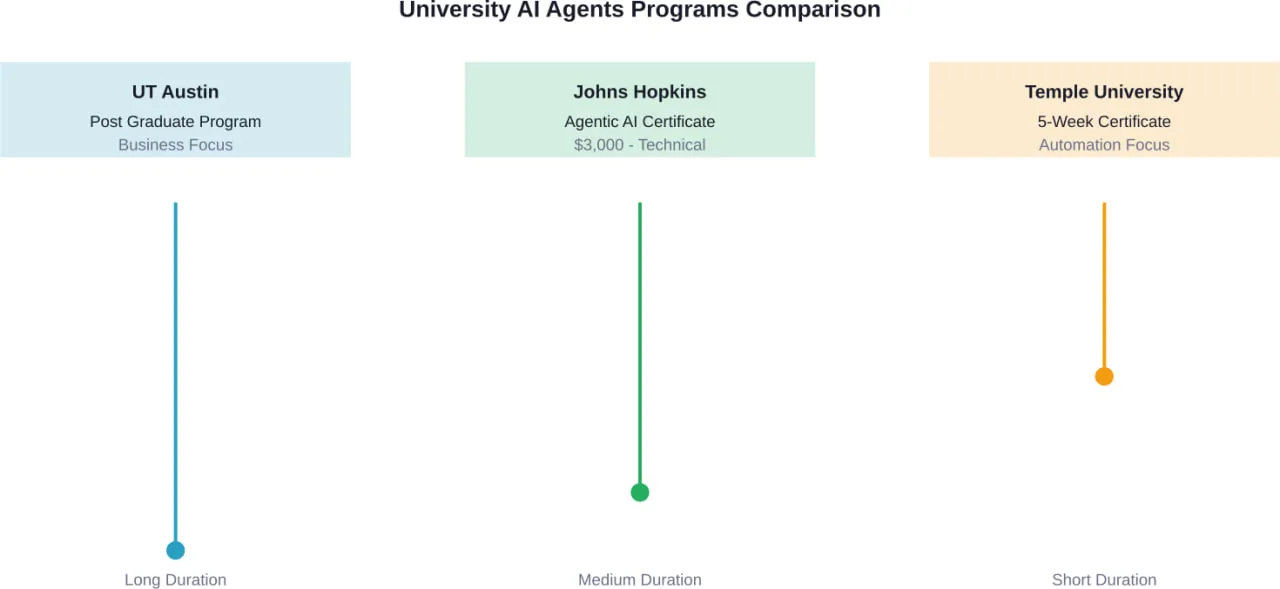
אוניברסיטת טקסס באוסטין מציעה תוכנית לתואר שני בנושא סוכני בינה מלאכותית ליישומים עסקיים, במסגרת בית הספר למנהל עסקים מקומבס. תוכנית מקוונת זו, הנמשכת 12 שבועות, מתמקדת בניצול בינה מלאכותית סוכנית לקידום יעילות וחדשנות, ומציעה מסלולי לימוד גמישים הן לסטודנטים בעלי רקע טכני והן לאלה ללא רקע כזה. הסטודנטים לומדים לבנות סוכני בינה מלאכותית המונעים על ידי בינה מלאכותית גנרטיבית ומודלים לשוניים גדולים, תוך מתן דגש מיוחד על יישומים עסקיים אמיתיים.

תוכנית ההסמכה ב-Agentic AI של אוניברסיטת ג'ונס הופקינס נוקטת בגישה מעשית. עלות התוכנית היא 14,300 דולר, וניתן לקבל אפשרויות מימון באמצעות שותפים חיצוניים כגון Affirm או Climb, כולל תוכניות תשלום של עד 12 תשלומים חודשיים. הסטודנטים בונים סוכני בינה מלאכותית באמצעות פרויקטים מעשיים שנועדו לפתח מיומנויות רלוונטיות לעולם האמיתי.

אוניברסיטת טמפל מציעה קורס הסמכה בן 5 שבועות בנושא "אוטומציה מבוססת בינה מלאכותית ויסודות בינה מלאכותית סוכנתית" (מחיר: 1,420 דולר, כרגע 1,170 דולר עם הנחה של 261 דולר עבור המפגשים הקרובים באפריל, מאי ויוני 2026) בשיתוף עם Ziplines Education. התוכנית כוללת הן תוכן לפי דרישה והן מפגשים חיים (מפגשים מקוונים בני שעתיים פעם בשבוע) עם מומחים בתחום ה-AI, המסייעים לסטודנטים לכוונן את תהליכי העבודה שלהם לצורך הגשת מועמדות מיידית למשרות. האוניברסיטה מנפיקה תעודת סיום המעידה על ניסיון מעשי במושגי מפתח בתחום האוטומציה באמצעות בינה מלאכותית.

השוואת משך הלימודים ותחומי ההתמחות בתוכניות המובילות ללימודי בינה מלאכותית באוניברסיטאות

מסלולי לימוד חינמיים

לא כולם זקוקים לתעודה בתשלום כדי להתחיל לבנות סוכנים. ישנם מספר קורסים חינמיים ואיכותיים המספקים בסיס איתן.

הקורס "סוכני בינה מלאכותית למתחילים" של מיקרוסופט מציע 10 שיעורים המלווים את הלומדים מהרעיון ועד לכתיבת הקוד, וכוללים טקסט, דוגמאות קוד ותכני וידאו. תוכנית הלימודים מכסה את היסודות של בניית סוכני בינה מלאכותית. כל שיעור מתבסס על קודמו, מה שהופך את הקורס לנגיש גם למי שרק מתחיל את דרכו בתחום הבינה המלאכותית הסוכנית.

Hugging Face מציעה קורס בנושא סוכני בינה מלאכותית, המכסה כלים, תפיסות, פעולות ותצפיות — המרכיבים המרכזיים בארכיטקטורות של סוכנים. הקורס מספק ללומדים את הכלים והפלטפורמות הדרושים, וכולל תרגילים מעשיים לאורך כל הדרך.

Salesforce מציעה הכשרה חינמית בנושא סוכני בינה מלאכותית באמצעות Trailhead, המלמדת כיצד לבנות, לייעל ולהטמיע תהליכי עבודה חכמים. הקורס מתמקד באופן שבו סוכני בינה מלאכותית מבצעים אוטומציה של משימות, מקבלים החלטות ומתקשרים עם נתונים כדי לשפר את היעילות.

הכשרה ייעודית למפתחים

למי שמעוניין לפתח מערכות סוכנים המוכנות ליישום, קיימים קורסי מפתחים ייעודיים המציעים הכשרה טכנית מתקדמת.

Coursera מציעה את התכנית "התמחות בפיתוח סוכני בינה מלאכותית" בהנחיית ד"ר ג'ולס ווייט (סדרה של 6 קורסים, רמת מתחילים, משך הלימודים כ-2 חודשים), המתמקדת בתכנון, בבנייה ובשיפור של סוכני תוכנה חכמים באמצעות Python, בינה מלאכותית גנרטיבית וארכיטקטורות סוכניות. לאורך התכנית, הלומדים מבצעים פרויקטים מעשיים הכוללים בניית סוכני בינה מלאכותית תפקודיים לפתרון בעיות מהעולם האמיתי במגוון תעשיות.

Coursera מציעה מגוון קורסים בתחום הבינה המלאכותית, אך התוכנית ‘בניית סוכני בינה מלאכותית עם התמחות ב-OpenAI’ אינה תוכנית המשותפת ל-Edureka בפלטפורמה זו. מומלץ להיות בעלי ידע בסיסי בתכנות ב-Python ולהכיר ממשקי API, אך אין צורך בניסיון קודם בעבודה עם מסגרות סוכנים.

מיומנויות הליבה הנלמדות בקורסים בנושא סוכני בינה מלאכותית

בין אם תבחרו בתוכנית זו או אחרת, כישורים מסוימים מופיעים באופן עקבי בכל הכשרה איכותית של סוכני בינה מלאכותית.

קטגוריית מיומנותמה זה מכסהמדוע זה חשוב
הנדסת פרומפטהכנת הוראות המנחות את התנהגות הסוכנים, הנחיית שרשרת מחשבות, למידה מבוססת דוגמאות מועטותקובע עד כמה הסוכנים מבינים ומבצעים משימות ביעילות
שילוב כליםחיבור סוכנים לממשקי API, מסדי נתונים, סביבות ביצוע קוד ומערכות חיצוניותמאפשר לסוכנים לבצע פעולות ממשיות מעבר ליצירת טקסט
יישום RAGיצירה בתמיכת אחזור לצורך ביסוס תגובות הסוכן בבסיסי ידע ספציפייםמפחית הזיות ומשפר את הדיוק בביצוע משימות ספציפיות לתחום
תיאום בין סוכנים מרוביםתיאום בין מספר גורמים מקצועיים כדי שיפעלו יחד בתהליכי עבודה מורכביםמרחיב את יכולות הסוכנים מעבר למה שסוכן בודד יכול להשיג
בטיחות ומעקות בטיחותהטמעת אילוצים, ניטור ובקרות למניעת התנהגות מזיקה של סוכניםחיוני לפריסת מערכות ייצור ולעמידה בדרישות הרגולטוריות

ממשק ה-API של Deep Research ו-SDK של Agents מבית OpenAI מספקים מסגרות לבניית תהליכי מחקר מבוססי סוכנים, ומדגימים כיצד כישורים אלה משתלבים בפועל. ה-SDK מאפשר למפתחים לתאם צינורות עבודה של סוכן בודד ושל מספר סוכנים באמצעות כלים מובנים.

בחירת הקורס המתאים למטרותיך

הקורס הטוב ביותר לסוכני בינה מלאכותית תלוי בנקודת ההתחלה שלך ובמטרה שאליה אתה שואף להגיע.

למתחילים מוחלטים ללא רקע בתכנות, תוכניות כמו הקורס בן חמישה שבועות של אוניברסיטת טמפל או "Trailhead" של Salesforce מהוות נקודת כניסה נגישה. תוכניות אלה מתמקדות במושגים ובכלים שאינם מצריכים תכנות לפני שהן עוברות ליישום הטכני.

מפתחים בעלי ניסיון ב-Python אך חסרי ניסיון בתחום הבינה המלאכותית (AI) מוזמנים לשקול את הקורס החינמי של מיקרוסופט או את תוכנית הלימודים של Hugging Face. שניהם מספקים בסיס טכני איתן, מבלי להניח שיש למשתתפים ידע קודם בתחום הבינה המלאכותית.

אנשי עסקים המעוניינים ליישם סוכנים בהקשרים ארגוניים יפיקו את המרב מתוכנית הלימודים של אוניברסיטת טקסס באוסטין, המתמקדת בעסקים ומגשרת בין מושגים טכניים ליישום אסטרטגי.

אנשי מקצוע מנוסים השואפים לרכוש מומחיות בתחום מסוים מוזמנים לבדוק את תוכנית ההסמכה של אוניברסיטת ג'ונס הופקינס או את מסלול ההתמחות למפתחים ב-Coursera. תוכניות אלה מניחות ידע בסיסי ב-AI ועוברות במהירות לדפוסי יישום מתוחכמים.

שיקולים בנוגע לזמן ולתקציב

קורסים חינמיים מתאימים היטב לחקירה וללימוד בסיסי. אך לרוב הם אינם כוללים תמיכה מסודרת, שירותי ייעוץ תעסוקתי ותעודות מוכרות.

עלות תעודות האוניברסיטה נעה בין כמה מאות לכמה אלפי דולרים. מומלץ לבדוק את המחירים העדכניים באתרים הרשמיים, שכן התעריפים ואפשרויות המימון משתנים תדיר. תוכניות אלה מציעות תוכניות לימוד מובנות, הוראה מקצועית ותעודות בעלות ערך רב בעיני מעסיקים.

היקף הזמן הנדרש משתנה במידה ניכרת. קורסים קצרים נמשכים 5–10 שבועות, בהיקף של מספר שעות בשבוע. התמחויות מקיפות עשויות לדרוש 3–6 חודשים של מאמץ עקבי.

מהי משמעותה של יוזמת תקני הסוכנים המונעים על ידי בינה מלאכותית

יוזמת תקני סוכני הבינה המלאכותית של NIST, שהוכרזה בפברואר 2026, שואפת להבטיח שהדור הבא של הבינה המלאכותית יוכל לפעול בבטחה למען המשתמשים ולפעול בצורה חלקה בכל רחבי המערכת האקולוגית הדיגיטלית.

עבור הלומדים, הדבר חשוב משום שקורסים העומדים בסטנדרטים החדשים יספקו ערך מתמשך יותר. היוזמה מתמקדת ב:

  • מסגרות אבטחה ואמון למערכות אוטונומיות
  • פרוטוקולי תאימות, כדי שסוכנים מפלטפורמות שונות יוכלו לעבוד יחד
  • הנחיות בטיחות למערכות סוכנים פרוסות
  • הגנה על הפרטיות באינטראקציות המתווכות על ידי סוכנים

קורסים איכותיים משלבים יותר ויותר שיקולים אלה בתכניות הלימודים שלהם, ומכינים את הסטודנטים למערכת אקולוגית סוכנותית אחידה.

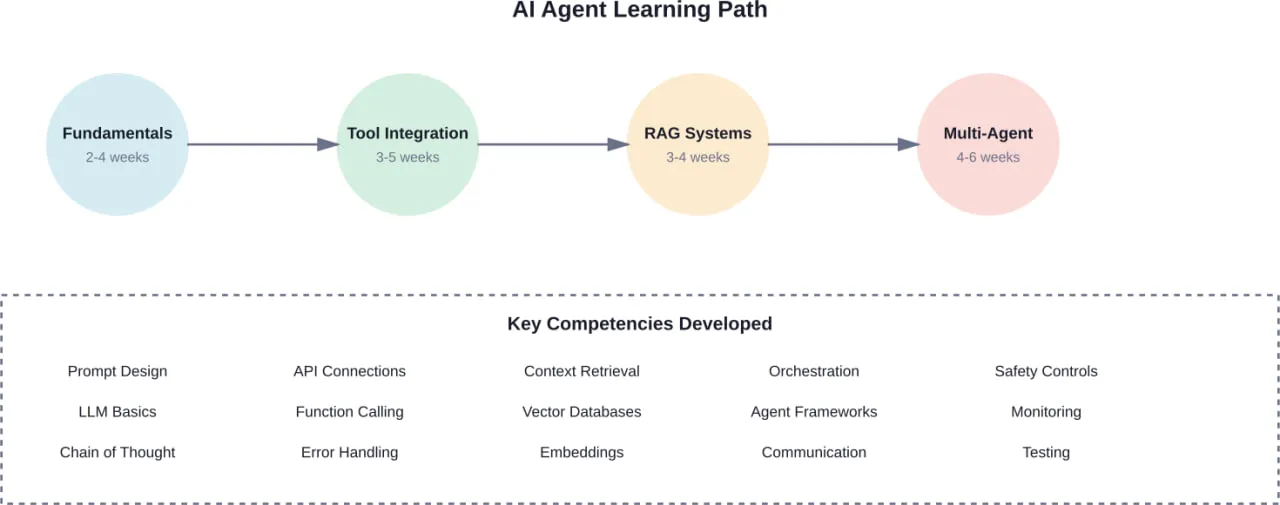
מסלול למידה הדרגתי לשליטה בפיתוח סוכני בינה מלאכותית

יישומים מעשיים שתבנו

הקורסים הטובים ביותר שמים דגש על פרויקטים מעשיים המשקפים מקרי שימוש מהעולם האמיתי.

סוגי הפרויקטים הנפוצים כוללים:

  • סוכני מחקר המאספים מידע ממקורות שונים, מסכמים את הממצאים ומפיקים דוחות מקיפים. אלה מדגימים חשיבה רב-שלבית ושימוש בכלים.
  • נציגי שירות לקוחות המטפלים בפניות, ניגשים למאגרי ידע ומפנים בעיות מורכבות לגורמים המתאימים. אלה מדגימים את השימוש ב-AI שיחתי ואת שילובו בעסקים.
  • סוכני יצירת קוד שמנתחים דרישות, כותבים קוד, בודקים אותו ומבצעים איטרציות בהתאם לתוצאות. אלה מדגישים יכולות לפתרון בעיות באופן עצמאי.
  • סוכני ניתוח נתונים שמבצעים שאילתות במסדי נתונים, מבצעים חישובים, יוצרים הדמיות ומסבירים תובנות. תפקידים אלה משלבים כישורים טכניים עם כישורי תקשורת.

ביצוע פרויקטים אלה מספק עבודות לתיק העבודות, המדגימות את היכולות בפני מעסיקים או לקוחות פוטנציאליים.

שאלות נפוצות

  1. האם נדרש ניסיון בתכנות כדי להשתתף בקורס בנושא סוכני בינה מלאכותית?

זה תלוי בקורס. תוכניות כמו תעודת ההסמכה של אוניברסיטת טמפל ו-Trailhead של Salesforce פונות ללומדים ללא רקע טכני ומציעות גישות ללא כתיבת קוד. עם זאת, ברוב הקורסים המקיפים נדרשת לפחות היכרות בסיסית עם שפת Python. בתוכניות המיועדות למפתחים, כמו אלה של אוניברסיטת ג'ונס הופקינס או ההתמחויות של Coursera, ניסיון בתכנות הוא הכרחי.

  1. כמה זמן לוקח ללמוד פיתוח סוכני בינה מלאכותית?

ניתן לרכוש ידע בסיסי תוך 5–10 שבועות באמצעות קורסים מובנים. פיתוח מיומנויות ברמה של מוכנות ליישום מעשי דורש בדרך כלל 3–6 חודשים של למידה ותרגול עקביים. שליטה מתקדמת בתזמור רב-סוכני ובמסגרות ייעודיות עשויה לארוך 6–12 חודשים, בהתאם לניסיון קודם בתחום הבינה המלאכותית.

  1. מה ההבדל בין בינה מלאכותית סוכנתית לבינה מלאכותית רגילה?

מודלים רגילים של בינה מלאכותית מייצרים תגובות על סמך קלט, אך אינם נוקטים פעולות מעבר ליצירת טקסט או חיזויים. מערכות בינה מלאכותית בעלות יכולת סוכנתית (Agentic AI) מסוגלות לתכנן תהליכי עבודה רב-שלביים, להשתמש בכלים חיצוניים, לשמור על זיכרון בין אינטראקציות ולעבוד באופן עצמאי להשגת מטרות. דמיינו את ההבדל בין מחשבון הפותר משוואה אחת לבין מערכת המזהה אילו משוואות יש לפתור ומבצעת את הניתוח המלא.

  1. האם קורסים חינמיים בנושא סוכני בינה מלאכותית טובים כמו הקורסים בתשלום?

קורסים חינמיים של Microsoft, Hugging Face ו-Salesforce מספקים ידע בסיסי איתן ומהווים דרך מצוינת להתנסות בתחום. תוכניות אוניברסיטאיות בתשלום מציעות תוכניות לימוד מובנות, הדרכה על ידי מומחים, תמיכה בקריירה ותעודות מוכרות. הקורסים החינמיים מתאימים במיוחד ללומדים בעלי מוטיבציה עצמית, שמרגישים בנוח עם לימוד עצמאי. התוכניות בתשלום מספקות תמיכה רבה יותר ואימות של הכישורים.

  1. אילו כלים ומסגרות נלמדים בקורסים בנושא סוכני בינה מלאכותית?

רוב הקורסים עוסקים ב-API וב-AgentKit של OpenAI, ב-LangChain לתיאום סוכנים, במסדי נתונים וקטוריים ליישום RAG, ובמסגרות Python לבניית סוכנים מותאמים אישית. תוכניות לימודים באוניברסיטאות כוללות לעתים קרובות מספר מסגרות כדי לספק חשיפה רחבה יותר. הכלים הספציפיים משתנים בהתאם לתחום ההתמחות של הקורס ולעדכניותו.

  1. האם אני יכול לקבל הסמכה בתחום סוכני בינה מלאכותית?

כן, מספר אוניברסיטאות מעניקות תעודות בסיום הקורס, ביניהן אוניברסיטת ג'ונס הופקינס, אוניברסיטת טקסס באוסטין ואוניברסיטת טמפל. תעודות אלה מעידות על ניסיון מעשי וידע. פלטפורמות מסוימות, כגון Coursera, מעניקות גם הן תעודות, אך בדרך כלל לתעודות המונפקות על ידי אוניברסיטאות יש משקל רב יותר בעיני מעסיקים.

  1. אילו משרות אוכל למצוא לאחר סיום קורס בסוכני בינה מלאכותית?

תפקידים נפוצים כוללים מפתח סוכני בינה מלאכותית, מהנדס למידת מכונה המתמחה במערכות סוכניות, אדריכל פתרונות בינה מלאכותית, מהנדס אוטומציה המתמקד בתהליכי עבודה מבוססי בינה מלאכותית, וחוקר בינה מלאכותית יישומית. תוכניות לימודים המתמקדות בעסקים מכשירות את הלומדים לתפקידים בתחום אסטרטגיית בינה מלאכותית, ניהול יישום וטרנספורמציה דיגיטלית.

התחילו עוד היום

מהפכת הסוכנים לא עומדת להגיע — היא כבר כאן. ארגונים כבר מטמיעים מערכות אלה, ופער הכישורים הוא מציאותי.

התחילו בקורס חינמי אם אתם רק מתחילים להתעניין בתחום או לא בטוחים לגבי מחויבותכם. תוכנית ה-10 שיעורים של מיקרוסופט או תוכנית הלימודים של Hugging Face מספקות בסיס איתן ללא סיכון כלכלי.

אם אתם רציניים לגבי קידום בקריירה או יישום ארגוני, השקיעו בתוכנית הסמכה מוכרת. הלמידה המובנית, ההדרכה המקצועית והתעודה יאיצו את התקדמותכם באופן משמעותי.

כך או כך, המפתח הוא להתחיל. ארכיטקטורות סוכנים הופכות לבסיס ליישומי בינה מלאכותית בכל ענפי התעשייה. הידע שתצברו כעת יצבור תאוצה ככל שהטכנולוגיה תתבגר והתקנים יתגבשו.

מומלץ לבדוק באתרי התוכניות הרשמיים את המחירים העדכניים, מועדי ההרשמה ודרישות הקדם. אוניברסיטאות רבות מציעות מפגשי מידע שבהם מועמדים יכולים לשאול שאלות ולבחון את התאמתם לתוכנית לפני שהם מתחייבים.

הכלים קיימים. הקורסים זמינים. הביקוש הולך וגדל. מה שיקרה בהמשך תלוי בפעולה.

Digital Transformation for NGOs: A 2026 Practical Guide

סיכום קצר: Digital transformation for NGOs involves strategically adopting technology to streamline operations, enhance donor engagement, and maximize mission impact. The journey requires focusing on three core elements—people, process, and platform—while addressing challenges like limited budgets and technical expertise. Successful digital transformation can reduce operational costs by 40% and support wait times by 87%, enabling nonprofits to serve more beneficiaries with fewer resources.

Nonprofit organizations and NGOs face mounting pressure to do more with less. Donor expectations are rising, beneficiaries need faster support, and operational complexity keeps growing. Technology isn’t optional anymore—it’s fundamental to survival.

But here’s the thing: digital transformation isn’t about buying the latest software or moving everything to the cloud. It’s about fundamentally rethinking how an organization operates, serves its community, and achieves its mission through strategic technology adoption.

Many NGOs struggle with where to start. The good news? Organizations that get this right are seeing remarkable results.

What Digital Transformation Actually Means for NGOs

Digital transformation represents the process of making operations easier and more effective through technology. For nonprofits, this goes far beyond digitizing paperwork or setting up a website.

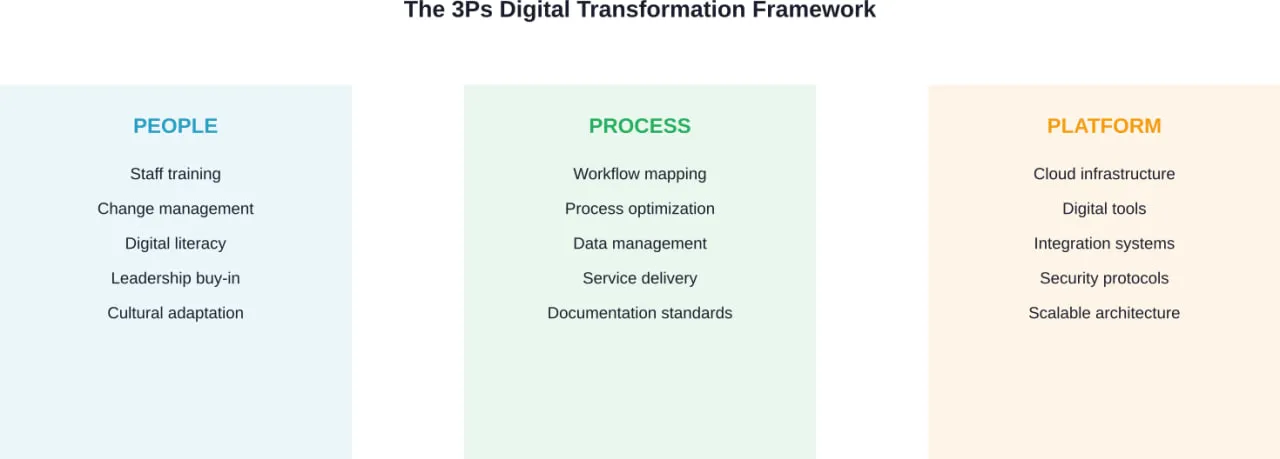
The transformation journey consists of three elements, known as the 3Ps: people, process, and platform and technology. Each component plays an essential role, and neglecting any one of them undermines the entire effort.

People are the foundation. Staff need training, support, and buy-in. Without addressing the human element, even the best technology sits unused.

Process optimization comes next. Before implementing new tools, organizations must examine current workflows. Automating a broken process just creates digital chaos faster.

Platform and technology selection matters, but it’s the final piece—not the starting point. The right technology supports the people and processes already in place.

Modernize Your NGO Operations with Specialized Technical Teams

Implementing digital tools for donor management, field data collection, or automated reporting requires technical expertise that many non-profits lack internally. Hiring full-time, in-house developers can be cost-prohibitive and slow, delaying essential updates to mission-critical systems. A-Listware helps NGOs bridge this gap by providing dedicated development teams and staff augmentation that align with specific project goals and budget constraints.

  • Targeted Expertise: Access developers experienced in cloud platforms, mobile apps, and data security.
  • Cost Management: Reduce the overhead associated with traditional recruitment and office space.
  • פריסה מהירה: Scale your technical capacity quickly to meet grant deadlines or emergency needs.
  • מעורבות גמישה: Dedicated specialists work as an extension of your team for as long as required.

התחילו את תהליך הטרנספורמציה הדיגיטלית שלכם עם A-Listware.

Why NGOs Can’t Afford to Ignore Digital Transformation

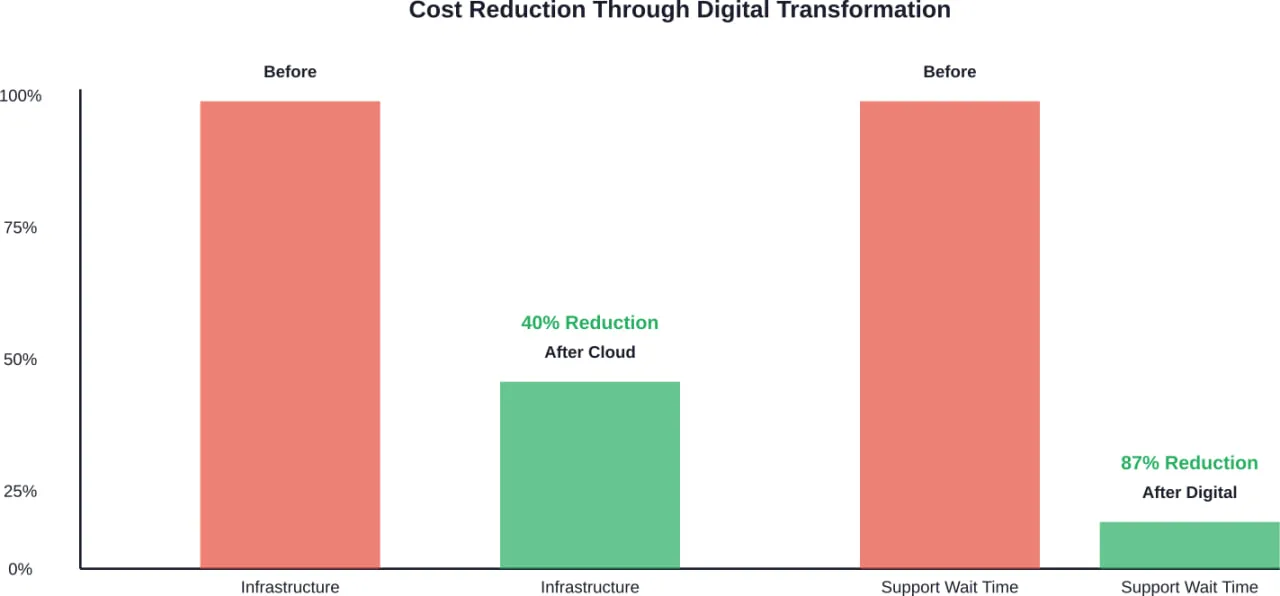
The numbers tell a compelling story. Organizations that embrace cloud technology report a 40 percent reduction in infrastructure costs. That’s significant when every dollar counts toward mission delivery.

Operational efficiency improvements are even more dramatic. Streamlining internal processes through cloud-based collaboration tools reduced support wait times by an estimated 87% for some nonprofits. Think about what that means for beneficiaries in crisis situations.

Generally speaking, sustainability-focused organizations face unique challenges. Environmental NPOs and NGOs work on conservation, restoration, and research projects that generate massive amounts of data. Managing this information without modern digital infrastructure becomes nearly impossible at scale.

The three interdependent pillars of successful digital transformation in nonprofit organizations

Key Steps to Developing a Digital Transformation Strategy

There are 10 key steps to developing a digital transformation program, though not every organization needs to follow them sequentially. The journey looks different for a small local charity versus an international NGO.

הערכת רמת הבשלות הדיגיטלית הנוכחית

Understanding where an organization stands is critical. This means taking honest stock of existing technology, staff capabilities, and process efficiency.

Many nonprofits discover significant gaps during this assessment. That’s actually good news—it identifies exactly where to focus resources for maximum impact.

Define Clear Objectives Aligned With Mission

Technology for technology’s sake wastes money and frustrates staff. Every digital initiative should connect directly to mission outcomes.

Want to serve more beneficiaries? Improve donor retention? Increase program transparency? Those specific goals drive technology decisions, not the other way around.

Prioritize Quick Wins and Long-Term Investments

Balancing immediate improvements with strategic infrastructure is tricky but essential. Quick wins build momentum and demonstrate value to skeptical stakeholders.

Cloud migration might be a long-term project, but implementing a donor management system could show results within weeks.

Build Internal Capacity and Skills

Training isn’t a one-time event. Digital transformation requires ongoing learning and adaptation as technology evolves.

Organizations that invest in building internal technical capacity reduce dependence on expensive consultants and respond faster to changing needs.

Select Technology That Scales

Small NGOs often start with free or low-cost tools, which makes sense. But outgrowing those tools and migrating data later creates headaches.

Choosing platforms that can scale—even if all features aren’t needed immediately—prevents costly future migrations.

אֶתגָרהגישה המסורתיתפתרון דיגיטליהשפעה
Donor communicationManual emails, spreadsheetsCRM with automationIncreased retention rates
Program data collectionPaper forms, manual entryMobile apps, cloud databasesReal-time insights, reduced errors
Financial trackingLocal accounting softwareפלטפורמות מבוססות ענןTransparency, remote access
Beneficiary supportPhone, in-person onlyMulti-channel digital serviceFaster response, broader reach

The Role of Cloud Technology in Nonprofit Transformation

Cloud infrastructure has become foundational for modern NGO operations. It provides scalability and cost-efficiency that on-premises systems simply can’t match.

Achieving scalability with cloud platforms means organizations pay only for resources they use. During fundraising campaigns or disaster response, capacity expands instantly. During slower periods, costs decrease automatically.

Security concerns often arise, but major cloud providers invest far more in security than individual nonprofits ever could. For organizations handling sensitive beneficiary data, this actually improves protection.

Streamlining internal processes through cloud collaboration tools enables distributed teams to work effectively. This became especially apparent during global disruptions that forced remote work—organizations already using cloud platforms adapted seamlessly.

Digital Tools That Drive Social Impact

The right digital tools amplify an organization’s ability to deliver on its mission. But “right” varies dramatically based on sector and size.

Environmental sustainability organizations benefit from data analytics platforms that process research findings and track conservation metrics across vast geographical areas. These tools foster research and innovation that would be impossible with manual methods.

Service delivery nonprofits need case management systems that track beneficiary interactions, outcomes, and program effectiveness. These platforms reduce administrative burden while improving service quality.

Social media and communication platforms extend reach beyond what traditional methods allow. Community discussions around nonprofit work happen online, and organizations that participate effectively build stronger supporter networks.

Documented cost and efficiency improvements from digital transformation initiatives in nonprofit organizations

Challenges Nonprofits Face During Digital Transformation

Real talk: this journey isn’t easy. NGOs face obstacles that for-profit companies don’t encounter.

Limited budgets top the list. Technology requires investment, and convincing boards to allocate scarce resources to infrastructure instead of direct services is challenging.

But wait—there’s a counterargument. Technology that reduces operational costs by 40% actually frees up resources for programs. It’s an investment that pays dividends.

Technical expertise gaps create another barrier. Small nonprofits often lack dedicated IT staff. Relying on volunteers or overextended administrators to manage complex systems isn’t sustainable.

Resistance to change affects organizations of all sizes. Long-tenured staff comfortable with existing processes may view new technology as threatening rather than enabling.

Addressing these challenges requires patience, clear communication about benefits, and involving staff in the selection and implementation process.

Building Donor Trust Through Digital Transparency

Full transparency for donors is crucial for maintaining trust and engagement. Digital platforms make this easier than ever.

Cloud-based financial systems provide real-time access to how funds are used. Donors increasingly expect this level of openness, and organizations that provide it strengthen relationships.

Program impact tracking through digital tools creates compelling stories backed by data. Instead of vague claims about helping communities, organizations can show specific metrics and outcomes.

This approach optimized costs and provided the accountability that modern philanthropy demands.

שאלות נפוצות

  1. What is digital transformation for NGOs?

Digital transformation for NGOs is the strategic process of integrating technology across all areas of nonprofit operations to improve efficiency, reduce costs, and enhance mission impact. It encompasses the 3Ps framework: people, process, and platform technology working together to fundamentally change how organizations operate and deliver value.

  1. How much does digital transformation cost for small nonprofits?

Costs vary widely based on organization size and existing infrastructure. Many cloud platforms offer nonprofit discounts or free tiers for smaller organizations. The investment can range from minimal (using free tools and existing staff) to significant (comprehensive platform migrations). However, organizations report 40% infrastructure cost reductions through cloud adoption.

  1. What are the biggest barriers to digital transformation in NGOs?

The primary barriers include limited budgets, lack of technical expertise, staff resistance to change, and difficulty prioritizing technology investments over direct program spending. Many organizations also struggle with legacy systems and data migration challenges. Successful transformations address these through phased implementation, staff training, and demonstrating quick wins that build organizational buy-in.

  1. How long does digital transformation take for nonprofits?

Digital transformation is an ongoing journey rather than a destination. Initial implementations of specific tools might take weeks to months, while comprehensive organizational transformation typically unfolds over 2-3 years. The timeline depends on organization size, complexity, existing technical maturity, and available resources. Starting with high-impact quick wins creates momentum for longer-term initiatives.

  1. Can digital transformation actually improve program outcomes?

Absolutely. Organizations that streamline processes through digital tools report support wait time reductions by an estimated 87%, allowing them to serve more beneficiaries with existing staff. Data analytics enable evidence-based program adjustments, while communication platforms expand reach. The technology itself doesn’t improve outcomes—but it enables staff to work more effectively and make better-informed decisions.

  1. What technology should NGOs prioritize first?

Priorities depend on organizational pain points. Organizations struggling with donor relationships should focus on CRM systems. Those with data management challenges benefit from cloud storage and collaboration platforms. Service delivery organizations might prioritize case management tools. The key is assessing current needs and selecting technology that addresses the most pressing operational bottlenecks affecting mission delivery.

  1. How do NGOs measure digital transformation success?

Success metrics should align with mission objectives. Common measures include operational cost reductions, time saved on administrative tasks, increased donor retention rates, faster beneficiary response times, expanded program reach, and improved data accuracy. Organizations should establish baseline metrics before implementation and track changes over time to demonstrate ROI and justify continued investment.

התקדמות בתהליך הטרנספורמציה הדיגיטלית

Digital transformation represents both a challenge and an opportunity for nonprofit organizations. The path forward requires strategic thinking, careful planning, and commitment to organizational change.

Organizations that embrace this journey position themselves to maximize impact in an increasingly digital world. Those that delay risk falling behind in operational efficiency, donor expectations, and program effectiveness.

The evidence is clear: technology reduces costs, improves service delivery, and strengthens mission achievement. But technology alone isn’t the answer—it’s the combination of people, process, and platform working together that creates lasting change.

Start with an honest assessment of where the organization stands today. Identify the biggest pain points affecting mission delivery. Then take one step forward, whether that’s implementing a single new tool or launching a comprehensive transformation program.

The time to begin is now. Every day spent with inefficient systems is a day with reduced impact for the communities nonprofits serve.

Digital Transformation for Healthcare Payers in 2026

סיכום קצר: Digital transformation for healthcare payers involves modernizing operations through AI, cloud computing, and interoperability standards like FHIR to improve member experiences, reduce administrative costs by up to 30%, and enable real-time data exchange. With CMS regulatory requirements driving adoption and telehealth utilization having surged 3,800% during the pandemic, payers must shift from technology experimentation to value-driven implementation focused on outcomes, simplified communications, and integrated care coordination.

Healthcare payers are operating in an environment that’s fundamentally different from just a few years ago. The pandemic forced rapid digitalization—telehealth exploded, member expectations shifted overnight, and regulatory bodies started demanding interoperability at scale.

But here’s the thing: many payers invested heavily in digital tools without seeing the returns they expected. Bold investments were made, systems were upgraded, and apps were launched. Yet member confusion persists, administrative costs remain stubbornly high, and data still sits in silos.

The question isn’t whether digital transformation is necessary. It’s how to execute it in a way that delivers actual value—not just technology for technology’s sake.

What Digital Transformation Means for Healthcare Payers

Digital transformation in healthcare payer services goes beyond implementing new software. It’s about fundamentally rewiring operations to be data-driven, member-centric, and interoperable with the broader healthcare ecosystem.

According to CMS, the agency is taking bold steps to modernize the nation’s digital health ecosystem with a focus on empowering Medicare beneficiaries through greater access to innovative health technologies. Outdated infrastructure and disconnected data have made it harder for patients and providers to access critical information.

For payers specifically, transformation touches everything: claims processing, member communications, provider networks, care coordination, and regulatory compliance. The Centers for Medicare & Medicaid Services (CMS) has established interoperability requirements as a series of mandatory regulations (such as the CMS Interoperability and Patient Access Final Rule).

Real talk: this isn’t about chasing the latest tech trends. It’s about solving persistent operational inefficiencies and member experience problems that have plagued the industry for decades.

The Core Components of Payer Digital Transformation

Several technology pillars underpin successful healthcare payer digital transformation:

  • Interoperability and data exchange: Implementing FHIR-based standards to share data seamlessly with providers, patients, and other payers
  • AI and automation: Reducing manual work in claims processing, prior authorization, and member services
  • Cloud infrastructure: Enabling scalability, real-time analytics, and faster innovation cycles
  • Member engagement platforms: Providing transparent, personalized digital experiences through apps and portals
  • Data analytics: Leveraging predictive tools to identify high-risk members and optimize care pathways

The HL7 FHIR Implementation Guide for Payer Data Exchange defines a standard interface to health insurers’ insurance plans, their associated networks, and the organizations and providers that participate in these networks. This standardization enables third parties to develop applications that help patients understand their coverage options.

Build Scalable Healthtech Solutions with Dedicated Engineering Teams

Modernizing claims processing and member engagement platforms requires specialized technical expertise and high standards for data security. Finding and retaining local talent with experience in healthcare interoperability and cloud architecture can be a slow and expensive process. A-Listware addresses this by providing dedicated development teams and IT staff augmentation, allowing healthcare payers to accelerate their digital roadmaps without the overhead of traditional recruitment.

  • מומחיות טכנית בתחומים ספציפיים: גישה למפתחים שנבדקו בקפידה, בעלי מומחיות בבינה מלאכותית, ביג דאטה ותשתית ענן מאובטחת.
  • Efficient Scaling: Quickly expand your engineering capacity to meet project deadlines or regulatory changes.
  • שילוב ישיר: Dedicated teams that work as a seamless extension of your internal IT department.
  • Resource Optimization: Reduce operational costs by utilizing a flexible, high-performance delivery model.

התחילו את תהליך הטרנספורמציה הדיגיטלית שלכם עם A-Listware.

Why Payers Struggled with Early Digital Investments

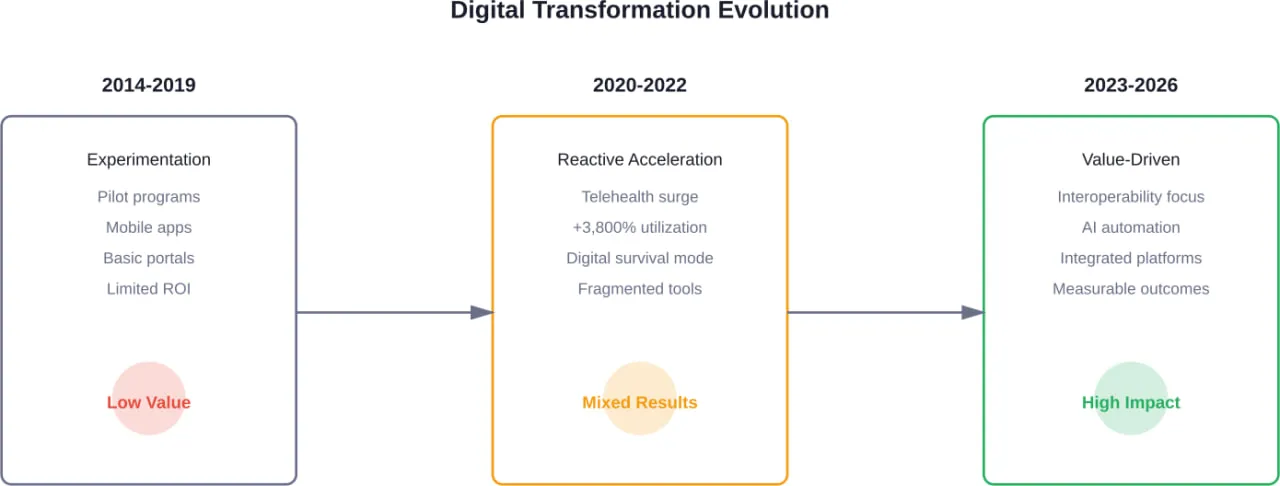
The healthcare industry made bold digital investments over the past several years, accelerated by the pandemic and a growing need to modernize. Telehealth utilization rose by over 3,800% between February and April 2020 at the pandemic’s peak.

But today, many organizations are reflecting on a critical question: Are we truly realizing the value we envisioned?

Several factors contributed to underwhelming results:

  • Technology without strategy. Payers deployed digital tools reactively—implementing telehealth, member apps, and home pharmacy services just to survive—without integrating them into a cohesive member journey.
  • Data fragmentation persisted. New front-end systems were built on top of legacy infrastructure. Data remained trapped in silos, preventing the seamless experience members expected.
  • Complex communications continued. According to research, 51% of insured adults have at least some difficulties understanding their health insurance eligibility. When members don’t understand their coverage, they make suboptimal healthcare decisions and lose trust in their payers.

The short answer? Many payers focused on digitizing existing processes rather than fundamentally rethinking how those processes should work in a digital-first world.

The evolution of digital transformation in healthcare payers from experimental phase to value-focused implementation

The Regulatory Push: CMS Requirements Driving Change

Regulatory requirements are now a major catalyst for digital transformation. The CMS Interoperability Framework represents a call to action for health data networks that want to move faster—to make what should already work, actually work.

Participation in TEFCA is voluntary for non-federal entities, but CMS mandates specific interoperability standards (API access) for regulated payers regardless of network alignment. It’s open, standards-based, and market-friendly, designed so the industry can stop theoretical planning and start executing.

Key Interoperability Mandates

CMS has established several programs and policies aimed at improving patient care through secure data exchange:

  • The Promoting Interoperability Program is a quality program with the goal of driving quality improvement, safety, and efficiency of healthcare by promoting and prioritizing interoperability and the exchange of health care data through certified electronic health record technology.
  • TEFCA (Trusted Exchange Framework and Common Agreement) operates in the United States as a nationwide framework for health information sharing. Created by the Department of Health & Human Services, TEFCA was designed to remove barriers for sharing health records electronically among healthcare providers, patients, public health agencies, and payers.

CMS-0057 (CMS Interoperability and Prior Authorization Final Rule) includes requirements for payers to implement FHIR-based APIs for patient data access, provider directory information, and payer-to-payer data exchange. As of January 2026, the healthcare industry continues to move from planning to active implementation of standardized data exchange, with the first phase of CMS-0057-F having taken effect.

According to Health IT data, nearly half (46%) of HIOs mapped from non-standard laboratory test or result codes to LOINC codes when accessing data from labs. Health information organizations were more likely to send data that adheres to USCDI v1 or v2, but less likely to receive data from participants that adheres to these standards.

This gap between sending and receiving capabilities highlights the ongoing challenge of achieving true bidirectional interoperability across the healthcare ecosystem.

Simplifying Healthcare Communications to Build Trust

Complex healthcare communications cause member confusion and payer inefficiencies. Simplifying products, standardizing documents, and using AI automation can improve operations and satisfaction.

The problem is significant: lack of clarity in complex, confusing language leads to misinterpretations, unexpected costs, and diminished trust between members and payers. When members don’t understand their coverage, they’re less likely to seek preventive care, more likely to face surprise bills, and increasingly frustrated with their payer.

Six Measures to Simplify Health Insurance Documents

Simplification isn’t just about plain language—it requires systematic changes to how payers structure and deliver information:

Simplification Strategyגישת היישוםMember Impact 
Standardize document templatesCreate consistent layouts across all member materialsEasier navigation and comparison
Use plain languageReplace industry jargon with clear explanationsBetter comprehension of coverage
Visualize complex informationUse charts, icons, and graphics for key conceptsFaster understanding of benefits
Personalize communicationsTailor information based on member needs and usageRelevant, actionable guidance
Implement AI-powered toolsChatbots and virtual assistants for instant answers24/7 support without wait times
Test with actual membersUser testing and feedback loops before wide releaseCommunications that actually work

Health insurance digital transformation can enable personalized care and proactive member guidance through integrated data. When payers connect claims history, clinical data, and member preferences, they can deliver communications that anticipate needs rather than simply responding to inquiries.

AI and Automation: Where the Real Savings Happen

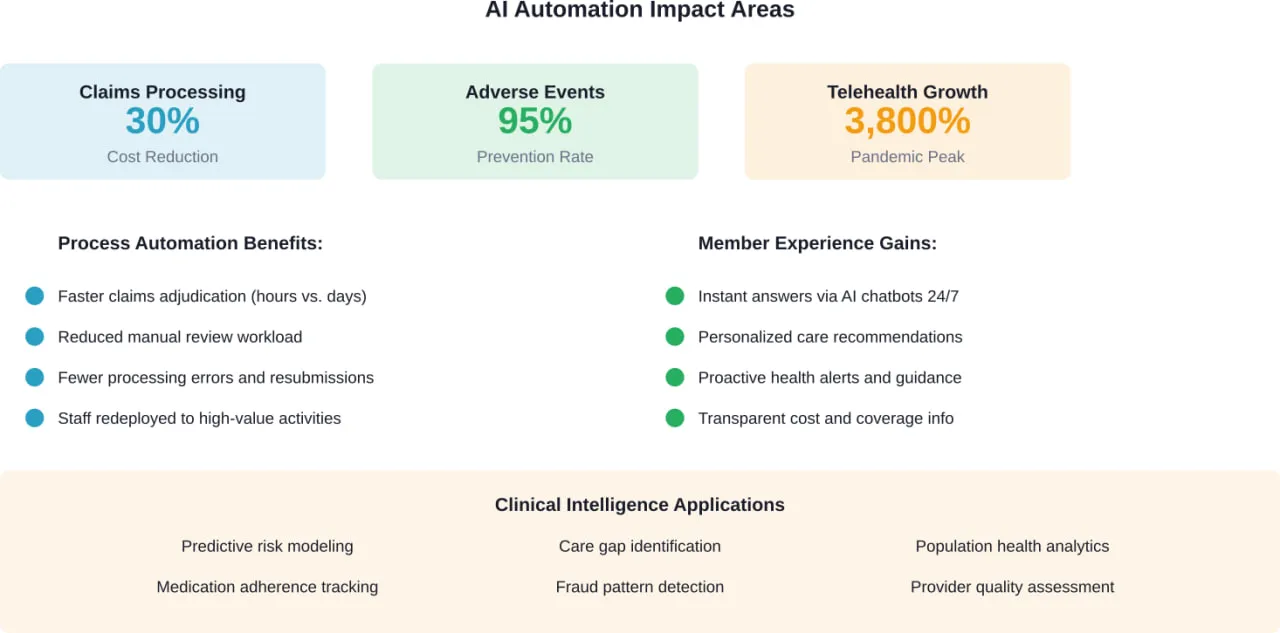
Automation is where digital transformation moves from “nice to have” to “essential for survival.” When automation is scaled properly, payers can achieve up to 30% admin cost savings in claims processing.

But wait—automation isn’t just about cost reduction. It’s about redeploying human talent from repetitive tasks to complex problem-solving and member advocacy.

High-Impact Automation Use Cases

  • Claims processing and adjudication. AI can review claims against policy rules, flag anomalies, and auto-approve straightforward cases. The result: faster processing times, fewer errors, and reduced administrative burden.
  • Prior authorization. This has long been a pain point for providers and patients. Automated systems can evaluate requests against clinical criteria in real-time, approve routine cases instantly, and route complex cases to clinical reviewers with relevant context already assembled.
  • Member service inquiries. Natural language processing enables chatbots to handle common questions about benefits, claims status, and provider networks. When escalation is needed, the system routes members to the right specialist with full conversation history.
  • Fraud detection. Machine learning models can identify suspicious patterns across millions of claims—patterns that would be impossible for human reviewers to spot at scale.

By leveraging digital tools, healthcare providers can enhance the quality of care they provide and improve patient outcomes. This includes preventing up to 95% of adverse drug events and reducing duplicate testing.

Key areas where AI and automation deliver measurable impact for healthcare payers

Data Integration and Analytics: The Foundation

None of the fancy front-end experiences matter if the data foundation is broken. Streamlining data operations is essential for improved business agility.

Real-time data access can both speed up and improve decision-making. Digital transformation has led 65% of U.S. hospitals to use AI-assisted predictive tools embedded in their EHR systems.

For payers, integrated data platforms enable:

  • Unified member profiles combining claims, clinical, pharmacy, and social determinants data
  • Real-time eligibility verification and benefits checking
  • Predictive analytics to identify members at risk for high-cost events
  • Performance dashboards tracking quality measures and outcomes
  • Population health management at scale

CMS continues to evolve Meaningful Measures 2.0 and the Cascade of Meaningful Measures framework to reflect the quality measurement priorities of the agency. When first introduced in 2017, the Meaningful Measures objective was to reduce the number of Medicare quality measures and ease the burden on measured entities.

This shift toward streamlined, meaningful measurement requires payers to have clean, integrated data that can feed reporting requirements without manual intervention.

The FHIR Standard: Making Interoperability Real

HL7 FHIR (Fast Healthcare Interoperability Resources) has emerged as the standard for health data exchange. The Da Vinci Project provides implementation guides specifically designed for payer use cases:

  • Payer Data Exchange (PDex): Enables payers to share clinical and claims data with members and other payers
  • Coverage Requirements Discovery (CRD): Helps providers understand coverage requirements during care planning
  • Prior Authorization Support (PAS): Automates prior authorization submission and status checking
  • Documentation Templates and Rules (DTR): Streamlines documentation collection for prior auth

These aren’t theoretical specifications. They’re battle-tested implementation guides with real-world adoption across major payers and health systems.

Member Experience: Personalization at Scale

Benefits of simplification include personalized products and care delivered through digital channels. Members expect the same level of digital experience from their health plan that they get from retail and banking apps.

Sound familiar? Members want to:

  • Check benefits and coverage with a few taps
  • Compare costs for different providers and treatment options
  • Access virtual care when and where they need it
  • Receive proactive guidance about preventive care and medications
  • Understand their bills without needing a decoder ring

The way forward for health insurers involves building these capabilities on top of integrated data platforms. Personalization requires understanding each member’s unique health journey, preferences, and needs.

Building Effective Member Engagement Platforms

Effective member portals and apps go beyond basic features like ID card access and claims history. They provide:

  • Contextual information. Rather than generic educational content, members receive information relevant to their conditions, medications, and care plan.
  • Cost transparency. Before scheduling a procedure, members can see estimated costs based on their specific benefits and deductible status.
  • Care navigation. Guided pathways help members find the right care at the right time—whether that’s a telehealth visit, urgent care, or specialist referral.
  • Health action plans. Personalized reminders for preventive screenings, medication refills, and chronic condition management.

Now, this is where it gets interesting: when these digital touchpoints are connected to care management teams, they create a seamless hybrid experience. Digital tools handle routine interactions, while human support is available when complexity or empathy is needed.

Value-Based Care and Outcomes Measurement

Digital transformation enables payers to participate more effectively in value-based care arrangements. With integrated data and analytics, payers can:

  • Track quality metrics in real-time rather than retrospectively
  • Identify care gaps and coordinate outreach to close them
  • Attribute outcomes to specific interventions and providers
  • Share actionable insights with provider partners
  • Adjust care strategies based on what’s working

The shift from fee-for-service to value-based payment models requires this level of operational sophistication. Payers can’t just pay claims differently—they need to fundamentally change how they manage populations and partner with providers.

Traditional Payer ModelDigitally Transformed Model
Reactive claims processingProactive care management
Provider as vendorProvider as partner
Volume-based paymentsOutcome-based contracts
Annual quality reportingReal-time performance tracking
Siloed data systemsIntegrated health information
Generic member communicationsPersonalized engagement
Manual workflowsאוטומציה מבוססת בינה מלאכותית

אתגרי יישום ודרכים להתמודדות עמם

Okay, so what about the obstacles? Healthcare payers face several significant challenges when executing digital transformation:

שילוב מערכות מדור קודם

Most payers operate on core administration platforms that are decades old. These systems contain critical business logic and historical data that can’t simply be replaced overnight.

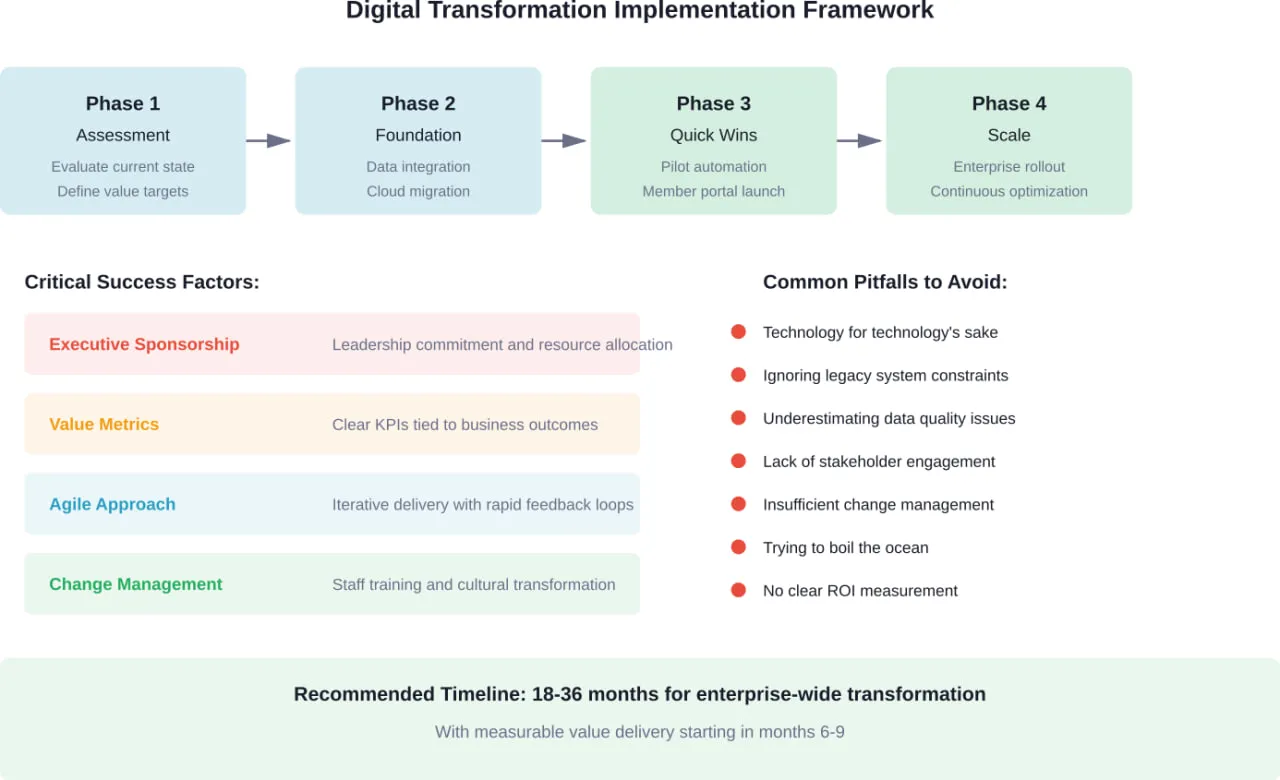
The solution isn’t always rip-and-replace. Many successful transformations use an incremental approach: building modern API layers on top of legacy systems, gradually migrating functionality to cloud-based microservices, and maintaining parallel systems during transition periods.

Data Quality and Standardization

Even with FHIR standards, data quality remains a challenge. Nearly half of HIOs must map from non-standard codes to standardized formats. Incomplete member records, inconsistent provider directories, and fragmented care histories all undermine digital initiatives.

Addressing this requires dedicated data governance: establishing master data management processes, implementing validation rules at point of entry, and continuous monitoring of data quality metrics.

Change Management and Culture

Technology is often the easy part. The harder challenge is getting people to change how they work. Staff members who’ve processed claims manually for years may resist automation. Clinical teams might be skeptical of AI recommendations.

Successful transformations invest heavily in change management: communicating the vision clearly, involving frontline staff in design decisions, providing thorough training, and celebrating early wins to build momentum.

Security and Privacy Concerns

Healthcare data is among the most sensitive information that exists. Any digital transformation must maintain rigorous security and privacy protections while enabling data flow.

This requires a zero-trust security architecture, comprehensive encryption, regular audits, and privacy-preserving technologies that allow data use for analytics while protecting individual identities.

A phased approach to healthcare payer digital transformation with key success factors and pitfalls

Looking Ahead: The Future of Payer Digital Transformation

As we move deeper into 2026, several trends are shaping the next phase of healthcare payer digital transformation:

  • Generative AI for documentation and communications. Large language models can draft member correspondence, summarize clinical documentation for care managers, and even assist with appeals and grievance responses—all while maintaining compliance and appropriate oversight.
  • Real-time benefit authorization. As interoperability matures, the vision of real-time benefit checking and prior authorization at the point of care becomes achievable. Providers get instant answers, members avoid surprise denials, and payers reduce administrative rework.
  • Social determinants integration. Digital platforms are beginning to incorporate data on housing, food security, transportation, and other social factors that heavily influence health outcomes. This enables more holistic member support.
  • Ecosystem partnerships. Payers are moving beyond bilateral integrations to participate in multi-party data networks. TEFCA and CMS-Aligned Networks represent the infrastructure for this connected ecosystem.

The healthcare industry continues to move from planning to active implementation. Organizations that execute well on digital transformation fundamentals—interoperability, automation, data integration, and member experience—will be positioned to lead.

שאלות נפוצות

  1. What is digital transformation for healthcare payers?

Digital transformation for healthcare payers involves modernizing core operations through cloud computing, AI automation, interoperability standards like FHIR, and integrated data platforms. The goal is to improve member experiences, reduce administrative costs (up to 30% in claims processing), enable value-based care models, and meet regulatory requirements for data exchange. It’s not just about implementing new technology—it’s about fundamentally rewiring how payers operate to be data-driven and member-centric.

  1. Why are healthcare payers investing in digital transformation now?

Several factors are driving urgency: CMS regulatory requirements for interoperability and data exchange that took effect in recent years, the pandemic’s acceleration of telehealth and digital expectations (telehealth use rose 3,800% at peak), persistent member confusion with 51% of insured adults struggling to understand their coverage, competitive pressure from digitally-native entrants, and the opportunity to reduce administrative costs through automation. Payers that don’t modernize risk regulatory non-compliance and member attrition.

  1. What are the biggest challenges in healthcare payer digital transformation?

The primary challenges include integrating with decades-old legacy core administration systems, ensuring data quality and standardization (nearly half of health information organizations must map from non-standard codes), managing organizational change and culture resistance, maintaining security and privacy while enabling data flow, and demonstrating clear ROI to justify continued investment. Technical implementation is often easier than getting people and processes to change.

  1. How does FHIR enable payer digital transformation?

HL7 FHIR provides standardized APIs for healthcare data exchange, enabling payers to share information with providers, members, and other payers without custom integrations. The Da Vinci Project offers payer-specific implementation guides for use cases like member data access, prior authorization, coverage requirements discovery, and payer-to-payer exchange. FHIR compliance is now required by CMS regulations, making it essential infrastructure rather than optional. It allows systems to “speak the same language” for health data.

  1. What ROI can payers expect from digital transformation?

When scaled properly, automation can deliver up to 30% cost savings in claims processing, while AI can prevent up to 95% of adverse drug events. Beyond direct cost reduction, benefits include improved member retention through better experiences, reduced manual rework through automation, faster claims processing (hours vs. days), fewer prior authorization delays, and better performance in value-based contracts through real-time quality tracking. The key is focusing on high-impact use cases rather than trying to transform everything at once.

  1. How long does healthcare payer digital transformation take?

Enterprise-wide transformation typically requires 18-36 months, but value delivery should start much earlier—within 6-9 months for initial pilots and quick wins. The most successful approaches are phased: assessment and planning (months 1-3), foundational data and cloud work (months 3-12), pilot automation and member portal launches (months 6-15), and enterprise scaling (months 12+). Attempting to transform everything simultaneously usually fails. Incremental delivery with measurable milestones maintains momentum and executive support.

  1. What role does AI play in payer digital transformation?

AI powers multiple high-value use cases including claims auto-adjudication, prior authorization evaluation against clinical criteria, fraud detection through pattern analysis, member service chatbots using natural language processing, predictive modeling to identify at-risk members, personalized care recommendations, and documentation summarization. The technology has matured significantly, with 65% of U.S. hospitals now using AI-assisted predictive tools. For payers, AI enables both cost reduction through automation and quality improvement through better decision support.

Conclusion: From Strategy to Execution

Digital transformation for healthcare payers has moved from strategic aspiration to operational necessity. CMS regulations require it, members expect it, and economic pressures demand it.

The payers that will succeed aren’t necessarily those with the biggest technology budgets. They’re the ones that maintain ruthless focus on value delivery—measuring outcomes, iterating based on results, and avoiding the temptation to chase every new technology trend.

The fundamentals remain critical: interoperability that enables seamless data flow, automation that reduces administrative burden, integrated data platforms that provide a single source of truth, and member experiences that are simple, transparent, and personalized.

As the healthcare ecosystem continues evolving toward value-based care and integrated delivery models, digitally mature payers will be positioned as strategic partners rather than transactional processors. The work of transformation is challenging, but the cost of standing still is far greater.

The question isn’t whether to transform—it’s how quickly and effectively your organization can execute on the fundamentals while maintaining focus on measurable business value.

Next.js לעומת React: בחירת הכלי המתאים לפרויקט שלכם

אם אתם עובדים עם יישומי אינטרנט מודרניים, סביר להניח שנתקלתם בשאלה "Next.js או React?". על פניו, זה נשמע כמו השוואה בין שני כלים מתחרים. אך במציאות, מדובר יותר בהבנת השכבות והפשרות מאשר בבחירת מנצח.

React היא ספריית ממשק משתמש גמישה המעניקה לכם שליטה מלאה על אופן בניית האפליקציה שלכם. Next.js מבוססת על React ומוסיפה מבנה, הגדרות ברירת מחדל ויכולות בצד השרת, שצוותים רבים זקוקים להן ככל שהפרויקטים הולכים וגדלים. הבחירה הנכונה תלויה פחות במגמות ויותר במה שאתם בונים בפועל, כיצד ייעשה בו שימוש, וכמה מורכבות אתם מעוניינים לנהל בעצמכם.

מאמר זה מציג מבט מעשי על Next.js ו-React, ללא סיסמאות שיווקיות או תיאוריות קיצוניות. המטרה פשוטה: לעזור לכם לקבל החלטה בטוחה ומעשית, המבוססת על מקרי שימוש אמיתיים, שיקולים טכניים וקל לתחזוקה בטווח הארוך.

הבנת React מהיסוד

React היא ספריית JavaScript שנועדה לבניית ממשקי משתמש באמצעות רכיבים הניתנים לשימוש חוזר. עוצמתה נובעת מהאופן שבו היא מנהלת את מצב ממשק המשתמש ומעדכנת את הדפדפן ביעילות כאשר מתרחש שינוי.

בעיקרו של דבר, React הציגה מודל חשיבתי שהרגיש שונה כשהיא הופיעה לראשונה. במקום לשנות את ה-DOM באופן ידני, אתה מתאר כיצד הממשק צריך להיראות במצב נתון, ו-React דואגת לעדכן את הדף כאשר המצב הזה משתנה.

במה React באמת מצטיינת

React מצטיינת כאשר התנהגות האפליקציה היא אינטראקטיבית ביותר. לוחות מחוונים, כלים פנימיים, פלטפורמות מדיה ומוצרי SaaS תלויים לעתים קרובות בעדכונים תכופים של ממשק המשתמש, בעיבוד מותנה ובלוגיקה מורכבת בצד הלקוח.

המאפיינים העיקריים של React כוללים:

  • ארכיטקטורה מבוססת רכיבים המעודדת שימוש חוזר.
  • DOM וירטואלי לעדכונים יעילים של ממשק המשתמש.
  • זרימת נתונים חד-כיוונית השומרת על צפיות המצב.
  • מערכת אקולוגית גמישה המאפשרת לכם לבחור את הכלים המתאימים לכם.

React אינה מכתיבה כיצד לארגן קבצים, כיצד לטפל בניתוב או כיצד לאחזר נתונים. חופש זה הוא גם נקודת החוזק הגדולה ביותר שלה, וגם – עבור צוותים מסוימים – האתגר הגדול ביותר שלה.

היכן ש-React מתחיל להראות את מגבלותיו

React כשלעצמה מתמקדת אך ורק בצד הלקוח. במצבה הבסיסי, היא אינה תומכת בעיבוד בצד השרת, ביצירת תוכן סטטי או בניתוב. אף אחד מהדברים הללו אינו מהווה חסרון, אך הם כרוכים בעבודה נוספת ככל שהפרויקט שלך הולך וגדל.

ברוב יישומי React בעולם האמיתי, הצוותים מוסיפים בסופו של דבר:

  • ספריית ניתוב.
  • הגדרת בנייה ואריזה.
  • שכבת בקאנד או שכבת API.
  • אופטימיזציות ביצועים.
  • אסטרטגיות תצוגה הקשורות לקידום אתרים.

זה המקום שבו מסגרות כמו Next.js נכנסות לתמונה. הן אינן מחליפות את React. הן מסדירות ומאוטומטיות את הרכיבים שצוותים נוהגים להוסיף בשלב מאוחר יותר.


מה Next.js מוסיף ל-React

Next.js היא מסגרת המבוססת על React ומתמקדת בסוגיות הקשורות ליישום בסביבת הפקה. היא מספקת תשובות לשאלות ש-React בכוונה משאירה פתוחות.

במקום לבקש מהמפתחים להגדיר את הכל בעצמם, Next.js מספקת הגדרות ברירת מחדל שמתאימות היטב למגוון רחב של תרחישים נפוצים. זה כולל אסטרטגיות רינדור, ניתוב, אופטימיזציות ביצועים ואפילו יכולות צד שרת.

Next.js לא משנה את אופן הכתיבה של רכיבי React. אתם עדיין משתמשים ב-JSX, ב-hooks ובדפוסים המוכרים. מה שמשתנה הוא האופן שבו רכיבים אלה מוצגים ומועברים.


תמיכה בפרויקטי אינטרנט בכל שלב של הסטאק

ב רשימת מוצרים א', אנו מסייעים ללקוחות לבנות ולתחזק אפליקציות אינטרנט מודרניות באמצעות מהנדסי תוכנה מנוסים, מעצבי UI/UX וצוותי פיתוח מלאים. אמנם הבחירה בין כלים כמו React ו-Next.js תלויה לעתים קרובות במודלים של עיבוד תצוגה, בצרכי ניתוב או ביעדי SEO, אך ההצלחה תלויה גם בביצוע. כאן אנחנו נכנסים לתמונה.

אנו תומכים בפיתוח frontend ו-backend כאחד, תוך התמקדות בתחזוקה לטווח ארוך, בשילוב חלק בצוות ובתמיכה בתשתית. המומחים שלנו פועלים במגוון רחב של טכנולוגיות, הכולל את האינטרנט, המובייל, פלטפורמות ענן ומסדי נתונים. בין אם לקוחותינו בונים ממשקים של עמוד אחד, מרחיבים פלטפורמות ארגוניות או משדרגים מערכות ישנות, אנו מסייעים להם להתקדם בעזרת האנשים והשיטות הנכונים.

במקום לבחור בין גמישות למבנה, צוותים מסוימים זקוקים לשניהם בשלבים שונים. אנו נכנסים לתמונה עם מהנדסים שיכולים לעבוד במסגרת הארכיטקטורה שבחרתם ולהניב תוצאות עקביות, בין אם הפרויקט שלכם נוטה לכיוון ספריית ממשק משתמש גמישה או מסגרת Full-Stack מובנית.

מאפיינים עיקריים שיש לקחת בחשבון בהשוואה

React ו-Next.js חולקות את אותו הליבה – שתיהן מסתמכות על רכיבים, JSX וה-DOM הווירטואלי – אך הדרך שבה הן מטפלות בתכונות קריטיות כמו עיבוד, ניתוב, ביצועים ושילוב עם ה-backend היא המקום שבו הדברים מתחילים להתפצל. אלה אינם רק פרטים טכניים. הם קובעים כיצד תבנה את בסיס הקוד שלך, איזה סוג של כישרונות תזדקק, וכיצד תפעל האפליקציה שלך בעולם האמיתי.

הסבר על מודלים לרינדור בלי מונחים מקצועיים

אחד ההבדלים החשובים ביותר בין Next.js ל-React הוא האופן שבו הדפים מוצגים. נושא זה לרוב עטוף במונחים מקצועיים, ולכן כדאי להאט את הקצב ולהסביר אותו בצורה ברורה.

עיבוד בצד הלקוח

זהו המודל המוגדר כברירת מחדל ב-React. הדפדפן טוען קובץ HTML מינימלי, מוריד את קובץ ה-JavaScript, ואז מציג את הממשק.

שיטה זו מתאימה ליישומים שבהם קידום אתרים (SEO) אינו חיוני והמשתמשים כבר עברו אימות, כגון לוחות מחוונים או כלים פנימיים.

עיבוד בצד השרת

במסגרת עיבוד בצד השרת, קוד ה-HTML של הדף נוצר בשרת עבור כל בקשה. הדפדפן מקבל דף מוכן, ולאחר מכן React לוקח את הפיקוד בצד הלקוח.

Next.js תומך בזה באופן מובנה. הדבר משפר את מהירות הטעינה הראשונית ומקל על מנועי החיפוש לאנדקס את התוכן.

יצירת אתרים סטטיים

יצירה סטטית פירושה שהדפים נבנים מראש במהלך הפריסה. הם מהירים, ניתנים לאחסון במטמון, וזולים להפעלה.

Next.js מאפשר ליצור דפים באופן סטטי תוך שימוש ב-React לצורך אינטראקטיביות.

React אינו תומך כברירת מחדל בעיבוד צד שרת או ביצירת אתרים סטטיים. גישות אלה מצריכות ספריות או מסגרות חיצוניות, כגון ReactDOMServer או Next.js.

ניתוב: גמישות לעומת מוסכמות

תכנון מסלולים הוא תחום נוסף שבו ההבדל בין React ל-Next.js מתבלט לעין.

בהתקנה סטנדרטית של React, הניתוב הוא מפורש. מגדירים מסלולים בקוד, בוחרים ספריית ניתוב ושולטים בכל התהליך באופן ידני. זהו כלי רב עוצמה, במיוחד עבור יישומים עם דפוסי ניווט יוצאי דופן.

Next.js משתמש בניתוב מבוסס קבצים. מבנה התיקיות מגדיר את כתובות ה-URL. בהתחלה זה נראה מגביל, אך הדבר חוסך כמות רבה של קוד סטנדרטי ומקל על הבנת הנתיבים.

הפשרה נראית כך:

  • React מעניק לך שליטה וגמישות.
  • Next.js מספק לך מהירות ועקביות.

אף אחת מהגישות אינה טובה יותר מטבעה. הבחירה הנכונה תלויה במידת המורכבות האמיתית של צרכי הניתוב שלכם.

ביצועים בפועל, לא בתיאוריה

בהשוואות ביצועים בין React ל-Next.js לעתים קרובות מתעלמים מנקודה חשובה. React אינה איטית. Next.js אינה מהירה באופן פלאי.

ההבדל האמיתי הוא כמה עבודה על הביצועים תצטרך לעשות בעצמך.

Next.js כולל כברירת מחדל פיצול קוד אוטומטי, אופטימיזציה של תמונות ואסטרטגיות טעינה חכמות. חשיבותן של תכונות אלה הולכת וגדלה ככל שהאפליקציות מתרחבות.

ב-React ניתן להשיג תוצאות דומות, אך יש להרכיב את החלקים בעצמכם. עבור צוותים מנוסים, הדבר עשוי להוות יתרון. עבור צוותים קטנים יותר או פרויקטים המתנהלים בקצב מהיר, הדבר עלול להפוך לנטל.

שיקולים בתחום קידום אתרים שבאמת חשובים

בשיחות על React לעומת Next.js מרבים להזכיר את SEO, ולעתים ללא התייחסות לדקויות.

אפליקציות React ניתנות לאינדוקס על ידי מנועי חיפוש, אך לעתים קרובות נדרשת הגדרה נוספת כדי להבטיח אמינות, במיוחד עבור תוכן דינמי או כזה שמשתנה תדיר. Next.js מצמצם סיכון זה באמצעות העברת HTML ישירות באמצעות עיבוד בשרת או יצירת תוכן סטטי.

אם תנועת חיפוש אורגנית מהווה חלק משמעותי במודל העסקי שלכם, בדרך כלל כדאי לבחור ב-Next.js. אם קידום אתרים (SEO) אינו רלוונטי, כמו במקרה של כלים פנימיים או פלטפורמות הדורשות אימות, לרוב מספיק להשתמש ב-React בלבד.

יכולות ה-Backend ונתיבי ה-API

Next.js מספקת נתיבי API למשימות אחוריות קלות כגון טיפול בטפסים או תיווך, אך אלה אינם מהווים תחליף מלא למערכות אחוריות ייעודיות.

שימושים נפוצים כוללים:

  • לוגיקת אימות.
  • שליחת טפסים.
  • אינטגרציות קלות.
  • שימוש בפרוקסי עבור ממשקי API חיצוניים.

ב-React אין דבר דומה לכך. יש צורך במערך אחורי נפרד או במסגרת שרתים.

ההבדל הזה לבדו יכול להשפיע על החלטות אדריכליות, במיוחד בפרויקטים קטנים עד בינוניים.

כלי עבודה, מערכת אקולוגית ועקומת למידה

ל-React יש מערכת אקולוגית גדולה יותר ומאגר כישרונות רחב יותר. יש בו יותר ספריות, יותר מדריכים ויותר מפתחים שמכירים אותו.

Next.js מבוסס על בסיס זה, אך מציג מוסכמות משלו. מפתחים שכבר מכירים את React מסתגלים בדרך כלל במהירות, אך למתחילים הרעיונות הנוספים עלולים להיראות מאיימים בהתחלה.

מנקודת המבט של גיוס וקליטה:

  • קל יותר למצוא אנשים בעלי כישורי React.
  • מיומנויות ב-Next.js הופכות נפוצות יותר ויותר, אך הן עדיין נחשבות למיומנויות ייעודיות.

Next.js לעומת React: השוואה זה לצד זה

קָטֵגוֹרִיָהלְהָגִיבNext.js
סוגספריית ממשק המשתמשמסגרת המבוססת על React
עיבודכברירת מחדל בצד הלקוחSSR, SSG והיברידי
ניתובהגדרה ידניתניתוב מבוסס קבצים
SEOנדרשת הגדרה נוספתמותאם ל-SEO כברירת מחדל
כלי ביצועיםהגדרה ידניתאופטימיזציות מובנות
תמיכה בצד השרתלשימוש חיצוני בלבדנתיבי API מובנים
גְמִישׁוּתגבוה מאודמובנה אך ניתן להתאמה
עקומת למידהנמוך יותר בהתחלהקל יותר עם ידע ב-React


מתי React לבדו הוא הבחירה הטובה יותר

ישנם מצבים רבים שבהם אין טעם להוסיף את Next.js.

React לבדו הוא לרוב הבחירה הנכונה כאשר:

  • אתה בונה יישום בעל עמוד אחד.
  • קידום אתרים אינו בראש סדר העדיפויות.
  • כבר יש לכם תשתית אחורית.
  • אתה זקוק לשליטה מלאה על התוואי והארכיטקטורה.
  • אתה מכוון לאינטרנט ולמובייל באמצעות לוגיקה משותפת.

React מצטיינת כבסיס ליישומים אינטראקטיביים במיוחד, שבהם ממשק המשתמש הוא המוצר העיקרי.


מתי Next.js היא הבחירה הטובה יותר

Next.js נוטה להבריק כאשר זמן הטעינה והביצועים חשובים לא פחות מהלוגיקה של ממשק המשתמש.

Next.js היא בדרך כלל האפשרות הטובה יותר כאשר:

  • ל-SEO יש תפקיד משמעותי.
  • מהירות הטעינה הראשונית של הדף היא גורם חשוב.
  • אתה זקוק לדפים סטטיים עם אלמנטים דינמיים.
  • אתה רוצה שילוב של ה-backend וה-frontend בסטאק אחד.
  • אתה מעדיף הגדרות ברירת מחדל הגיוניות במקום להגדיר הכל בעצמך.

אתרי שיווק, בלוגים, פלטפורמות מסחר מקוון ויישומים עתירי תוכן נהנים לעתים קרובות מיתרונות אלה.


השאלה שצוותים באמת צריכים לשאול

במקום לשאול אם Next.js עדיף על React, השאלה המועילה יותר היא זו:

כמה סדר אנחנו רוצים, וכמה אנחנו מוכנים לנהל בעצמנו?

React מעניק לך חופש וגמישות, בעוד ש-Next.js מספק מבנה והגדרות ברירת מחדל הגיוניות. שתי הגישות יכולות להוביל לתוצאות מצוינות כאשר משתמשים בהן בתבונה.


האם Next.js תחליף את React?

לא, ואין בכך צורך. React נותר הבסיס. Next.js תלוי בו. כל עוד React קיים, מסגרות כמו Next.js ימשיכו להתפתח סביבו.

עבור צוותים רבים, התהליך נראה כך: מתחילים עם React. מוסיפים מורכבות. מאמצים את Next.js כאשר הפרויקט מחייב זאת. התקדמות זו היא טבעית, ואינה מהווה כישלון של אף אחד מהכלים.


מחשבות אחרונות

Next.js לעומת React זו לא יריבות. זו החלטה בנוגע לשכבות. React עוסק בבניית ממשקים. Next.js עוסק בהפצתם ביעילות. ברגע שמפסיקים להתייחס לבחירה כאל תחרות, קל יותר לבחור את התצורה הנכונה לכל פרויקט. ההחלטה הטובה ביותר היא זו שתואמת את המטרות שלכם, את הניסיון של הצוות שלכם ואת הדרישות האמיתיות של המוצר שלכם, ולא את הדעות הרועשות ביותר ברשת. אם אתם מבינים את הגורמים הללו, גם React וגם Next.js יכולים להיות כלים מצוינים בהקשר הנכון.


שאלות נפוצות

  1. האם Next.js הוא רק תחליף ל-React?

לא בדיוק. Next.js בנוי על גבי React, ולכן הוא לא מחליף אותו, אלא מרחיב אותו. אתם עדיין כותבים רכיבי React, משתמשים ב-JSX ומנהלים את המצב (state) באותו אופן. מה ש-Next.js מביא לשולחן הוא כל מה שמסביב: ניתוב, רינדור, תכונות ביצועים ויכולות בצד השרת. אם React הוא המנוע, Next.js הוא הרכב השלם.

  1. האם עליי ללמוד React לפני שאני מתחיל לעבוד עם Next.js?

כן, ובכנות, תודה לעצמך על זה אחר כך. Next.js מניח שאתה כבר מבין איך React עובד. אם אתה עדיין לא מרגיש בנוח עם רכיבים, props ו-state, כנראה שתחוש קצת אבוד. אבל ברגע שתשלוט ביסודות של React, Next.js ירגיש כמו שדרוג טבעי.

  1. מה עדיף לקידום אתרים: React או Next.js?

Next.js, ללא ספק. אפליקציות React פועלות כברירת מחדל בצד הלקוח, מה שעלול להקשות על מנועי החיפוש לסרוק אותן באופן אמין. Next.js תומך ברינדור בצד השרת וביצירת תוכן סטטי באופן מובנה, מה שאומר שהדפים שלכם מועברים עם תוכן HTML אמיתי שכבר נמצא במקום. זהו יתרון משמעותי מבחינת הנראות ברשת.

  1. האם ניתן להשתמש ב-Next.js ליישומים בקנה מידה גדול?

בהחלט. Next.js נועד לשימוש בסביבת הפקה, וחברות רבות מפעילות עליו אפליקציות גדולות ומורכבות, כולל פלטפורמות עם תוכן דינמי, מסחר אלקטרוני וצרכים של רינדור היברידי. עם זאת, עדיין צריך לתכנן את הארכיטקטורה כראוי. זהו מסגרת עבודה, לא קסם.

  1. מה אם כבר יש לי מערכת אחורית? האם אני עדיין צריך את Next.js?

אולי כן, אולי לא. אם ה-backend שלכם כבר מטפל היטב בניתוב, ב-API וברינדור נתונים, ייתכן ש-React לבדו יספיק. אבל אם אתם מחפשים חווית frontend חלקה יותר, הכוללת תכונות כמו ניתוב מבוסס קבצים, טעינת דפים מהירה ו-SEO משופר, ייתכן ש-Next.js עדיין שווה את המעבר, גם אם יש לכם כבר backend קיים.

  1. האם React מתה אם כולם משתמשים כיום במסגרות כמו Next.js?

לא קרוב אפילו. React עדיין מהווה את הליבה של אפליקציות אינטרנט מודרניות רבות, כולל אלה שנבנו באמצעות Next.js. מסגרות פיתוח באות והולכות, אך הספרייה שעליהן הן מבוססות נוטה להישאר. React לא הולכת לשום מקום – היא פשוט מתפתחת עם כלים חדשים שמוספים עליה.


חלופות ל-Zipkin המתאימות למערכות מבוזרות מודרניות

Zipkin סייע לצוותים רבים לעשות את צעדיהם הראשונים בתחום המעקב המבוזר. הוא פשוט, מבוסס קוד פתוח ומבצע היטב את הפעולות הבסיסיות. אך ככל שהמערכות הופכות מורכבות יותר, הפשטות הזו עלולה להתחיל להרגיש מגבילה. יותר שירותים, יותר סביבות, יותר רעש – ופתאום המעקב כבר לא מסתכם רק בצפייה בנתיב הבקשה.

כיום, צוותים רבים מעוניינים במעקב שמתאים באופן טבעי לאופן שבו הם מפתחים ומשווקים תוכנה. פחות הגדרות ידניות, פחות חלקים נעים לתחזוקה והקשר טוב יותר בין יומנים, מדדים ותשתית. כאן נכנסות לתמונה החלופות ל-Zipkin. חלקן מתמקדות ביכולת תצפית מעמיקה יותר, אחרות בקלות השימוש או בשילוב הדוק יותר בענן. הבחירה הנכונה תלויה בדרך כלל בקצב העבודה של הצוות שלכם ובכמות העלויות שאתם מוכנים לשאת רק כדי לראות מה קורה בתוך המערכת שלכם.

1. AppFirst

AppFirst ניגשת לנושא המעקב מזווית יוצאת דופן. הם לא מנסים להחליף את Zipkin תכונה אחר תכונה. במקום זאת, הם מתייחסים לנראות כאל משהו שצריך להיות קיים כבר בעת הפעלת היישום, ולא כאל משהו שהצוותים מוסיפים מאוחר יותר. מעקב, יומנים ומדדים מתקיימים בתוך תצורה רחבה יותר, שבה המפתחים מגדירים את צרכי היישום שלהם, והפלטפורמה מטפלת בתשתית שמאחוריו. בפועל, זה אומר שנתוני המעקב מופיעים כחלק ממחזור החיים של היישום, ולא כמערכת נפרדת שמישהו צריך לחבר ביחד.

מה שבולט הוא האופן שבו AppFirst מעביר את האחריות. המפתחים שומרים על הבעלות על האפליקציה מקצה לקצה, אך הם לא נגררים לקבצי Terraform, למדיניות הענן או לבקשות pull של התשתית רק כדי לקבל נראות. עבור צוותים שהורגלו ל-Zipkin כעוד שירות אחד לתחזוקה, זה יכול להרגיש כמו התחלה מחדש. מעקב הוא פחות עניין של ניהול אספנים ואחסון ויותר עניין של התבוננות בהתנהגות בהקשר – איזה שירות, איזו סביבה וכמה עולה להפעיל אותו. זה לא כלי מעקב טהור, אבל עבור צוותים מסוימים זה בדיוק העניין.

נקודות עיקריות:

  • גישה הממוקדת ביישומים לניטור ותשתית
  • מעקב מובנה לצד רישום וניטור
  • נתיבי ביקורת מרכזיים עבור שינויים בתשתית
  • נראות עלויות הקשורה לאפליקציות וסביבות
  • פועל ב-AWS, Azure ו-GCP
  • אפשרויות פריסה SaaS ופריסה עצמית

למי זה מתאים ביותר:

  • צוותי מוצר שאינם מעוניינים לנהל תשתית מעקב
  • צוותים המשלחים במהירות עם רוחב פס DevOps מוגבל
  • ארגונים המגדירים סטנדרטים לאופן פריסת האפליקציות וניטורן
  • מפתחים המעוניינים במעקב ללא צורך ללמוד את כלי הענן

פרטי קשר:

2. יגר

Jaeger הוא לרוב האלטרנטיבה הרצינית הראשונה שצוותים בוחנים ל-Zipkin, במיוחד כאשר מערכות מבוזרות מתחילות להיות מסובכות. הם מתמקדים אך ורק במעקב: מעקב אחר בקשות בין שירותים, הבנת זמן ההשהיה וזיהוי מקומות שבהם הדברים מאטים או נכשלים. Jaeger בדרך כלל מספק יותר שליטה, יותר אפשרויות תצורה וראות טובה יותר בגרפים מורכבים של שירותים.

יש גם היבט קהילתי חזק. Jaeger הוא קוד פתוח, מנוהל באופן פתוח, ומותאם באופן הדוק ל-OpenTelemetry. זה חשוב לצוותים שרוצים להימנע מנעילה או להסתמך על סטנדרטים מקובלים. התמורה היא מאמץ. הפעלה תקינה של Jaeger מחייבת מחשבה על אחסון, דגימה וסקלביליות. זה מתאים לצוותים שמרגישים בנוח עם מורכבות זו ומכוונים אותה לאורך זמן, במקום לצפות שהמעקב יופיע כברירת מחדל.

נקודות עיקריות:

  • פלטפורמת מעקב מבוזרת בקוד פתוח
  • מיועד לשירותי מיקרו ולזרימות עבודה מורכבות
  • אינטגרציה עמוקה עם OpenTelemetry
  • ניתוח תלות בשירותים ועיכובים
  • קהילה פעילה ובגרות ארוכת טווח של הפרויקט

למי זה מתאים ביותר:

  • צוותי הנדסה שכבר מפעילים מיקרו-שירותים בקנה מידה גדול
  • ארגונים המחויבים לכלים בקוד פתוח
  • צוותים המעוניינים בשליטה מדויקת על התנהגות המעקב

פרטי קשר:

  • אתר אינטרנט: www.jaegertracing.io
  • טוויטר: x.com/JaegerTracing

גרפנה

3. Grafana Tempo

Grafana Tempo נוקט בגישה שונה מזו של מערכות קלאסיות בסגנון Zipkin. במקום לאנדקס כל עקבות, הוא מתמקד באחסון כמויות גדולות של נתוני עקבות בעלות נמוכה ובקישורם למדדים וליומנים בעת הצורך. עבור צוותים שהגיעו לגבולות ההרחבה של Zipkin, גישה זו עשויה להיראות מעשית יותר, במיוחד כאשר נפח העקבות גדל מהר מהצפוי.

Tempo משמש בדרך כלל יחד עם כלים אחרים של Grafana, מה שמשפיע על אופן העבודה של הצוותים איתו. לא תמיד עקבות הן הדבר הראשון שאתה מחפש. במקום זאת, מהנדסים קופצים מזינוק במדד או משורת יומן ישירות לעקבות. זרימת עבודה זו הופכת את Tempo לפחות לכלי לגלישה בעקבות ויותר לכלי לחיבור אותות. זה עובד היטב אם אתה כבר משתמש בלוחות המחוונים של Grafana, אבל זה עלול להרגיש לא מוכר אם אתה מצפה שגילוי עקבות יהיה חוויה עצמאית.

נקודות עיקריות:

  • מערכת מעקב בקנה מידה גדול שפותחה לאחסון אובייקטים
  • תומך בפרוטוקולים Zipkin, Jaeger ו-OpenTelemetry
  • אינטגרציה הדוקה עם Grafana, Loki ו-Prometheus
  • מיועד לטיפול בנפחי עקבות גדולים מאוד
  • קוד פתוח עם אפשרויות לניהול עצמי וענן

למי זה מתאים ביותר:

  • מערכות המייצרות כמויות גדולות של נתוני עקבות
  • ארגונים המתמקדים באחסון ארוך טווח חסכוני
  • מהנדסים המשווים עקבות עם יומנים ומדדים במקום לעיין רק בעקבות

פרטי קשר:

  • אתר אינטרנט: grafana.com
  • פייסבוק: www.facebook.com/grafana
  • טוויטר: x.com/grafana
  • LinkedIn: www.linkedin.com/company/grafana-labs

4. SigNoz

SigNoz נחשב בדרך כלל כחלופה להפעלת Zipkin באופן עצמאי. הוא מתייחס למעקב כחלק מגישה רחבה יותר של נראות, ומשלב אותו עם יומנים ומדדים במקום להפריד ביניהם. עבור צוותים שהשתמשו בתחילה ב-Zipkin ולאחר מכן שילבו כלים אחרים, SigNoz הופך לעתים קרובות לרלוונטי כאשר מערך הכלים שלהם מרגיש מנותק. העיצוב שלו סובב סביב OpenTelemetry מההתחלה, ומשפיע על איסוף הנתונים ועל האותות השונים במהלך איתור באגים.

צוותים מבחינים במהירות ביתרונות של זרימת העבודה. במקום לעבור בין כלי מעקב, רישום ומדידה שונים, SigNoz משלב את כל התצוגות הללו. נקודת קצה איטית יכולה להוביל ישירות למעקב, ואז לרישומים קשורים מבלי לאבד את ההקשר. הוא אינו קל משקל כמו Zipkin, וזהו יתרון וחסרון כאחד. אתם זוכים להקשר רחב יותר, אך גם צריכים להפעיל מערכת גדולה יותר. צוותים מסוימים מוצאים זאת מקובל, שכן המערכות שלהם חורגות מצרכי המעקב הבסיסיים.

נקודות עיקריות:

  • עיצוב ילידי OpenTelemetry עבור עקבות, יומנים ומדדים
  • משתמש במסד נתונים עמודי לטיפול בנתוני נראות
  • ניתן לארח באופן עצמאי או להשתמש בשירות מנוהל
  • התמקדו בקורלציה בין אותות במהלך איתור באגים

למי זה מתאים ביותר:

  • צוותים שכבר משתמשים ב-OpenTelemetry בכל השירותים
  • מהנדסים שנמאס להם לחבר בין מספר כלי ניטור
  • צוותים שמרגישים בנוח להפעיל מערך נראות רחב יותר

פרטי קשר:

  • אתר אינטרנט: signoz.io
  • טוויטר: x.com/SigNozHQ
  • LinkedIn: www.linkedin.com/company/signozio

5. OpenTelemetry

OpenTelemetry אינו כלי בודד שאתה פורס, אלא מספק שפה משותפת ליצירה ולהעברה של עקבות, מדדים ויומנים. צוותים רבים מחליפים את Zipkin על ידי סטנדרטיזציה של OpenTelemetry לצורך מכשור, ולאחר מכן בוחרים בקוד מאחורי הקלעים.

גישה זו משנה את אופן קבלת ההחלטות בנוגע למעקב. במקום להיקבע מראש על מערכת אחת, הצוותים מבצעים את ההתקנה פעם אחת ומשאירים את האפשרויות פתוחות. שירות יכול להתחיל בשליחת מעקבים למערכת אחורית פשוטה, ולאחר מכן לעבור למערכת מתקדמת יותר מבלי לגעת בקוד היישום. גמישות זו אטרקטיבית, אך היא כרוכה באחריות. מישהו עדיין צריך להחליט לאן יועברו הנתונים וכיצד יאוחסנו. OpenTelemetry לא מבטל את העבודה הזו, אלא רק מונע תלות קשה.

נקודות עיקריות:

  • API ו-SDK ניטרליים מבחינת ספקים עבור מעקב, יומנים ומדדים
  • תומך בשפות ומסגרות רבות באופן מיידי
  • תוכנן לעבוד עם מספר מערכות אחוריות, ולא להחליף אותן
  • קוד פתוח עם פיתוח מונחה קהילה

למי זה מתאים ביותר:

  • צוותים המתכננים לעבור מ-Zipkin ללא נעילת backend
  • ארגונים המיישמים סטנדרטיזציה של מכשור בכל השירותים
  • קבוצות הנדסה המעוניינות בגמישות בכלים לניטור

פרטי קשר:

  • אתר אינטרנט: opentelemetry.io

6. Uptrace

Uptrace נלקח בדרך כלל בחשבון כאשר צוותים רוצים יותר מ-Zipkin, אך אינם מעוניינים להרכיב בעצמם מערך ניטור מלא. הם מתמקדים בעיקר במעקב מבוזר, אך שומרים על מדדים ורישומים קרובים מספיק כדי שהאיתור והתיקון של תקלות יישאר מעשי. המעקבים מאוחסנים ונשאבים באופן שעובד היטב גם כאשר בקשות בודדות הופכות לגדולות, דבר שחשוב כאשר השירותים מתחילים להתפזר על פני תלות רבות.

דבר אחד שבולט הוא האופן שבו Uptrace מאזן בין שליטה לנוחות. צוותים יכולים להפעיל אותו בעצמם או להשתמש בהגדרה מנוהלת, אך החוויה נשארת דומה למדי. מהנדסים מתארים לעתים קרובות את המעבר מ-Zipkin כפחות כואב מהצפוי, בעיקר מכיוון ש-OpenTelemetry מטפל במכשור ו-Uptrace מתמקד במה שקורה לאחר הגעת הנתונים. זה מרגיש קרוב יותר למערכת של מעקב ראשון מאשר לפלטפורמה של הכל-באחד, שצוותים מסוימים מעדיפים.

נקודות עיקריות:

  • מעקב מבוזר המבוסס על OpenTelemetry
  • תומך בעקבות גדולות עם טווחים רבים
  • פועל כאופציה עצמית ומנוהלת כאחד
  • עקבות, מדדים ויומנים זמינים במקום אחד

למי זה מתאים ביותר:

  • מערכות עם נתיבי בקשה מורכבים ועקבות גדולות
  • מהנדסים שרוצים OpenTelemetry מבלי לבנות הכל בעצמם

פרטי קשר:

  • אתר אינטרנט: uptrace.dev
  • דוא"ל: support@uptrace.dev

7. Apache SkyWalking

Apache SkyWalking נלקח בדרך כלל בחשבון כאשר Zipkin מתחיל להיראות מצומצם מדי ביחס לצרכים היומיומיים של הצוותים. הם מתייחסים למעקב כחלק מתמונה רחבה יותר של ביצועי היישומים, במיוחד עבור מיקרו-שירותים ומערכות מבוססות Kubernetes. במקום להתמקד רק בנתיבי בקשות, SkyWalking מתמקד בטופולוגיית השירותים, בתצוגות התלות ובאופן שבו השירותים מתנהגים כמקשה אחת. בפועל, צוותים משתמשים בו לעתים קרובות כדי לענות על שאלות כמו מדוע שירות אחד מאט את כל השאר, ולא רק היכן נכשל מעקב בודד.

מה שהופך את SkyWalking לשונה הוא היקף הכיסוי שהוא מנסה להשיג במקום אחד. עקבות, מדדים ויומנים יכולים לעבור באותה מערכת, גם אם הם מגיעים ממקורות שונים כמו Zipkin או OpenTelemetry. היקף זה יכול להיות שימושי, אך הוא גם אומר ש-SkyWalking עובד הכי טוב כאשר מישהו לוקח עליו אחריות.

נקודות עיקריות:

  • מעקב מבוזר עם תצוגות טופולוגיית שירות
  • מיועד לשירותי מיקרו ולסביבות עתירות קונטיינרים
  • תומך במספר פורמטים של טלמטריה, כולל Zipkin ו-OpenTelemetry
  • סוכנים זמינים במגוון רחב של שפות
  • צינורות התראה וטלמטריה מובנים
  • אפשרות מסד נתונים מקורי לצפייה

למי זה מתאים ביותר:

  • צוותים המפעילים ארכיטקטורות מיקרו-שירותים מורכבות
  • סביבות שבהן יחסי שירות חשובים לא פחות מעקבות אישיות
  • ארגונים המעוניינים במעקב וב-APM במערכת אחת
  • צוותי הנדסה שמרגישים בנוח לנהל פלטפורמת נראות גדולה יותר

פרטי קשר:

  • אתר אינטרנט: skywalking.apache.org
  • טוויטר: x.com/asfskywalking
  • כתובת: 1000 N West Street, Suite 1200 Wilmington, DE 19801 ארה"ב

דאטדוג

8. Datadog

Datadog ניגשת לחלופות Zipkin מנקודת מבט של פלטפורמה. מעקב מבוזר נמצא לצד יומנים, מדדים, פרופילים ורשימה ארוכה של אותות אחרים. צוותים פונים בדרך כלל ל-Datadog כאשר Zipkin עונה על כמה שאלות, אך משאיר יותר מדי פערים בהקשר, במיוחד כאשר המערכות משתרעות על פני מספר עננים או צוותים.

בשימוש אמיתי, מעקב Datadog מופיע לעתים קרובות במהלך בדיקות תקלות. מישהו מתחיל עם פעולה איטית של המשתמש, עוקב אחר המעקב, ואז קופץ לרישומים או למדדי תשתית מבלי להחליף כלים. הנוחות הזו נובעת מהאינטגרציה ההדוקה בין כל המרכיבים, אך היא גם משמעותה ש-Datadog פחות מודולרי מכלי מעקב בקוד פתוח. אתם מאמצים את המעקב כחלק ממערכת אקולוגית רחבה יותר, ולא כשירות עצמאי.

נקודות עיקריות:

  • מעקב מבוזר המשולב ביומנים ובמדדים
  • תמיכה באינסטרומנטציה אוטומטית עבור שפות רבות
  • חקירת עקבות חזותיות באמצעות תצוגות שירות ותלות
  • קורלציה בין נתוני היישום לתשתית

למי זה מתאים ביותר:

  • צוותים המעוניינים בקשר הדוק בין מעקב לנתוני נראות אחרים
  • ארגונים המנהלים סביבות ענן גדולות או מעורבות
  • קבוצות הנדסה המעדיפות פלטפורמה אחת על פני מספר כלים

פרטי קשר:

  • אתר אינטרנט: www.datadoghq.com
  • דוא"ל: info@datadoghq.com
  • טוויטר: x.com/datadoghq
  • לינקדאין: www.linkedin.com/company/datadog
  • אינסטגרם: www.instagram.com/datadoghq
  • כתובת: 620 8th Ave 45th Floor New York, NY 10018 USA
  • טלפון: 866 329 4466

9. חלת דבש

Honeycomb מתמקדת בעיקר בנתונים בעלי קרדינליות גבוהה ובאפשרות של מהנדסים לשאול שאלות לאחר מעשה, ולא רק להציג לוחות מחוונים מוגדרים מראש. המעקב ב-Honeycomb נוטה להיות חקרני. המשתמשים לוחצים על מעקב, מחלקים אותו לפי שדות מותאמים אישית ועוקבים אחר דפוסים במקום אחר תקלות בודדות.

החוויה היא יותר חקירתית מאשר תפעולית. צוותים מתארים לעתים את Honeycomb ככלי שהם פותחים כאשר מתעוררת בעיה מוזרה או קשה לשחזור. זה הופך אותו לכלי מתאים לאיתור באגים בהתנהגות לא מוכרת, אך הוא יכול להרגיש שונה מכלי ניטור מסורתיים. לא רק צופים בעקבות גוללות על המסך, אלא גם מתעמקים בהן.

נקודות עיקריות:

  • מעקב מבוזר המבוסס על נתונים בעלי קרדינליות גבוהה
  • התמקדות חזקה בתהליכי עבודה של איתור באגים
  • שילוב הדוק עם מכשור OpenTelemetry
  • תצוגות מעקב המיועדות לחקירה ברמת הצוות

למי זה מתאים ביותר:

  • צוותים המאתרים באגים בהתנהגות מערכת מורכבת או בלתי צפויה
  • תרבויות הנדסיות המעריכות חקירה מעמיקה על פני לוחות מחוונים

פרטי קשר:

  • אתר אינטרנט: www.honeycomb.io
  • LinkedIn: www.linkedin.com/company/honeycomb.io

10. סנטי

Sentry נוטה להיכנס לשיח על החלפת Zipkin מזווית של איתור באגים. הם מתמקדים בחיבור עקבות לבעיות אמיתיות ביישומים, כמו נקודות קצה איטיות, משימות רקע שנכשלו או קריסות שחווים המשתמשים בפועל. מעקב אינו מטופל כמפה עצמאית של שירותים, אלא כהקשר סביב שגיאות ובעיות ביצועים. מפתח שעוקב אחר תהליך תשלום איטי, למשל, יכול לקפוץ מפעולה בחזית למעבר אחורי ולראות היכן הזמן הולך לאיבוד.

מה שמייחד את Sentry הוא האופי הדוגמטי של זרימת העבודה. במקום לעיין בעקבות למען עצמן, צוותים נוטים להגיע לעקבות באמצעות בעיות, התראות או רגרסיות לאחר פריסה. זה יכול להיות מרענן עבור צוותים המתמקדים במוצר, אך פחות אטרקטיבי אם אתם מעוניינים במעקב כדרך ניטרלית להציג את התשתית. Sentry פועל בצורה הטובה ביותר כאשר המעקב הוא חלק מתהליך האיתור והתיקון היומיומי, ולא משהו שרק SREs פותחים.

נקודות עיקריות:

  • מעקב מבוזר הקשור קשר הדוק לשגיאות ולבעיות ביצועים
  • הקשר מקצה לקצה, מפעולות frontend ועד שירותי backend
  • מדדי רמת טווח עבור מעקב אחר חביון וכשלים
  • עקבות הקשורות לפריסות ושינויים בקוד

למי זה מתאים ביותר:

  • צוותי מוצר מבצעים ניפוי באגים בבעיות אמיתיות של המשתמשים
  • מפתחים המעוניינים במעקב המקושר ישירות לשגיאות
  • צוותים שמעדיפים לפתור בעיות על פני בחינת מפות השירות

פרטי קשר:

  • אתר אינטרנט: sentry.io
  • טוויטר: x.com/sentry
  • LinkedIn: www.linkedin.com/company/getsentry
  • אינסטגרם: www.instagram.com/getsentry

11. דאש 0

Dash0 מציג את המעקב כפעולה שצריכה להיות מהירה כדי להפיק ממנה ערך, ולא כפעולה שצריך להשקיע בה שבועות שלמים. הם בונים את הכל סביב OpenTelemetry ומניחים שהצוותים כבר מעוניינים במכשור סטנדרטי במקום בסוכנים ספציפיים לספקים. עקבות, יומנים ומדדים מוצגים יחד, אך המעקב משמש לעתים קרובות כעמוד השדרה שמחבר את כל השאר. מהנדסים מתחילים בדרך כלל בבקשה חשודה ומשם מתפזרים.

החוויה מותאמת בכוונה. סינון עקבות לפי תכונות דומה יותר לחיפוש בקוד מאשר להגדרת לוחות מחוונים, והגדרה כקוד מופיעה בשלב מוקדם בתהליך העבודה. Dash0 מתמקד פחות בניתוח היסטורי ארוך טווח ויותר בתשובות מהירות במהלך פיתוח ותקריות. זה הופך אותו לאטרקטיבי עבור צוותים שמרגישים שכלי ניטור מסורתיים כבדים או איטיים לניווט.

נקודות עיקריות:

  • OpenTelemetry-native על פני עקבות, יומנים ומדדים
  • סינון עקבות בעל קרדינליות גבוהה וחיפוש מהיר
  • תמיכה בתצורה כקוד עבור לוחות מחוונים והתראות
  • קורלציה הדוקה בין אותות ללא חיווט ידני

למי זה מתאים ביותר:

  • צוותים שכבר עברו סטנדרטיזציה ל-OpenTelemetry
  • מהנדסים שמעדיפים חקירה מהירה על פני לוחות מחוונים מורכבים
  • צוותי פלטפורמה שרוצים שהנראות תטופל כמו קוד

פרטי קשר:

  • אתר אינטרנט: www.dash0.com
  • דוא"ל: hi@dash0.com
  • טוויטר: x.com/dash0hq
  • LinkedIn: www.linkedin.com/company/dash0hq
  • כתובת: 169 Madison Ave STE 38218 ניו יורק, NY 10016 ארצות הברית

12. APM אלסטי

Elastic APM מחליף לעתים קרובות את Zipkin כאשר יש צורך לבצע מעקב לצד חיפוש, יומנים ונתוני מערכת נרחבים יותר. הם מתייחסים למעקב מבוזר כאל אות אחד במערך נראות נרחב יותר המבוסס על מודל הנתונים של Elastic. ניתן לעקוב אחר עקבות בין שירותים, ואז לקשר אותם ליומנים, מדדים או אפילו שדות מותאמים אישית שהצוותים כבר מאחסנים ב-Elastic.

מה שבולט הוא הגמישות. Elastic APM מתאים היטב לסביבות מעורבות, שבהן חלק מהשירותים הם מודרניים וחלקם לא. המעקב אינו מחייב גישה של "לוח נקי". צוותים יכולים לבצע את ההטמעה בהדרגה, להביא נתוני OpenTelemetry ולנתח את הכל באמצעות ממשק מוכר. זה לא מינימלי, אבל זה מתאים באופן טבעי לארגונים שכבר משתמשים ב-Elastic מסיבות אחרות.

נקודות עיקריות:

  • מעקב מבוזר המשולב ביומנים ובחיפוש
  • תמיכה במכשור מבוסס OpenTelemetry
  • ניתוח תלות בשירותים ועיכובים
  • עובד עם יישומים מודרניים ויישומים ישנים

למי זה מתאים ביותר:

  • ארגונים עם מערכות מגוונות או כבדות
  • מהנדסים המעוניינים לקשר את המעקב לחיפוש וליומנים

פרטי קשר:

  • אתר אינטרנט: www.elastic.co
  • דוא"ל: info@elastic.co
  • פייסבוק: www.facebook.com/elastic.co
  • טוויטר: x.com/elastic
  • לינקדאין: www.linkedin.com/company/elastic-co
  • כתובת: 5 Southampton Street London WC2E 7HA


13. קמון

Kamon מתמקדת בסיוע למפתחים להבין את זמן ההשהיה והכשלים ללא צורך במומחיות מעמיקה בתחום הניטור. המעקב משולב עם מדדים ויומנים, אך ממשק המשתמש מכוון את המשתמשים לשאלות מעשיות כגון איזה קצה נקודה האט את הקצב או איזו קריאה למסד הנתונים גרמה לעלייה חדה לאחר פריסה.

יש גם דגש חזק על מערכות אקולוגיות ספציפיות. Kamon משתלב באופן טבעי בערימות שנבנו עם Akka, Play או שירותים מבוססי JVM, שבהם מכשור אוטומטי מפחית את החיכוך בהגדרה. בהשוואה לפלטפורמות רחבות יותר, Kamon מרגיש צר יותר, אך זה יכול להיות יתרון. צוותים מאמצים אותו לעתים קרובות מכיוון שהוא עונה על השאלות היומיומיות שלהם מבלי לבקש מהם לעצב מחדש את גישת הניטור שלהם.

נקודות עיקריות:

  • מעקב מבוזר המתמקד בשירותי backend
  • תמיכה חזקה ב-JVM ובסטקים מבוססי Scala
  • מדדים ועקבות מתואמים לניתוח חביון
  • תשתית מינימלית ועלויות התקנה נמוכות

למי זה מתאים ביותר:

  • צוותי פיתוח עם דגש על backend
  • מערכות מבוססות JVM ו-Akka
  • מפתחים המעוניינים במעקב פשוט ופרקטי ללא כלים מורכבים

פרטי קשר:

  • אתר אינטרנט: kamon.io
  • טוויטר: x.com/kamonteam


מַסְקָנָה

לסיכום, מעבר ל-Zipkin אינו קשור לרדיפה אחר תכונות, אלא יותר להחלטה כיצד ברצונכם לשלב את המעקב בעבודה היומיומית. צוותים מסוימים מעוניינים בקשר הדוק בין מעקב לשגיאות ולפריסות, כך שהאיתור והתיקון של באגים יישארו קרובים לקוד. צוותים אחרים מעוניינים יותר לראות כיצד שירותים מתקשרים בקנה מידה גדול, או לאחד את המעקב עם יומנים ומדדים מבלי להחליף בין כלים.

מה שבולט בכל האלטרנטיבות הללו הוא שאין מסלול שדרוג אחד שמתאים לכולם. הבחירה הנכונה משקפת בדרך כלל את האופן שבו צוות מפתח, משווק ומתקן תוכנה, ולא את המראה המרשים של ממשק המשתמש של המעקב. 

מַגָע לָנוּ
משרד בבריטניה:
טֵלֵפוֹן:
עקבו אחרינו:
A-listware מוכנה להיות פתרון מיקור החוץ האסטרטגי שלך בתחום ה-IT

    הסכמה לעיבוד נתונים אישיים
    העלאת קובץ