סיכום קצר: Digital transformation for training providers involves modernizing learning delivery through technology adoption, data-driven decision-making, and skills-based approaches. Success requires measuring employee readiness beyond attendance, addressing infrastructure gaps, and aligning training programs with employer needs to create tangible workforce impact.
Training providers face a defining moment. The shift to digital isn’t just about uploading courses to a platform anymore.
The COVID-19 pandemic forced rapid adoption of online learning across education and training institutions globally. Many struggled. But that struggle revealed something critical: technical deployment doesn’t equal transformation success.
Real digital transformation for training providers means rethinking how learning connects to employment outcomes, how readiness gets measured, and how infrastructure limitations get addressed. Here’s what actually works in 2026.
Why Traditional Training Metrics Miss the Mark
Most organizations treat digital transformation as a technical task. They check the “training complete” box while ignoring the human element.
The problem? Completion rates don’t measure capability. Someone can sit through a module and still lack the proficiency to apply those skills in real work contexts.
According to recent surveys, fewer than 40 percent of automation initiatives deliver measurable value. The McKinsey Global AI Survey found that only 30 percent of AI pilots transition to scaled impact. The gap isn’t technical—it’s readiness.
The Six Metrics That Actually Matter
Training providers need to move beyond attendance records. A comprehensive readiness framework tracks six crucial metrics that reveal whether learning translates to real-world system adoption.
| Readiness Stage | מטרי | What It Measures |
|---|---|---|
| Exposure | Coverage & Completion | Did training reach the target audience? |
| Knowledge Transfer | Proficiency | Did content turn into capability? |
| Application | System Utilization | Are learners using tools in real scenarios? |
| הִשׁתַלְבוּת | Workflow Adoption | Is learning embedded into daily practice? |
| תמיכה | Help Desk Volume | What barriers persist post-training? |
| השפעה | Performance Outcomes | Did training change results? |
When tracked together, these metrics provide a comprehensive picture of true readiness. They expose where training investments actually generate returns versus where they fall short.
Without this approach, training providers face low utilization, costly workarounds, and a significant hit to their technology ROI.
The Infrastructure Challenge in Developing Contexts
Digital transformation sounds straightforward until infrastructure realities enter the picture.
A situational analysis of technical and vocational education and training systems in Africa highlighted that a lack of basic infrastructure remains a fundamental barrier to digitalizing TVET. Reliable electricity and widespread broadband Internet access simply don’t exist in many regions.
Malawi’s poor Internet connectivity exemplifies this challenge. Training providers can’t implement sophisticated learning management systems when learners can’t maintain consistent online access.

Bridging the Digital Divide Through Partnerships
Enterprise-TVET provider partnerships offer strategic pathways forward. When training institutions collaborate with private sector organizations, they gain access to technology resources, industry-validated skill frameworks, and real-world application contexts.
These partnerships work best when they address specific infrastructure gaps rather than attempting wholesale transformation. Incremental improvements compound over time.
Training providers should prioritize partnerships that deliver tangible infrastructure support—not just curriculum alignment.
Building a National Skills Currency
Here’s where things get interesting. The disconnect between training credentials and employer needs creates massive inefficiency in talent marketplaces.
A 2023 UPCEA report shows 65% of employers want more data to validate non-degree credentials. A full 44% of employers said they have never been asked to participate in the design of such programs.
That’s a fundamental design flaw. Training providers develop programs without consulting the industries those programs serve.
The Talent Marketplace Challenge
The United States faces a defining workforce challenge. The U.S. labor force participation rate peaked at 67.3 percent in early 2000 and stands at 62.7 percent as of early 2024 (with forecasts for 2026 projecting a further decline toward 62.0-62.4 percent). Returning to that high-water mark would add more than 10 million workers to the economy.
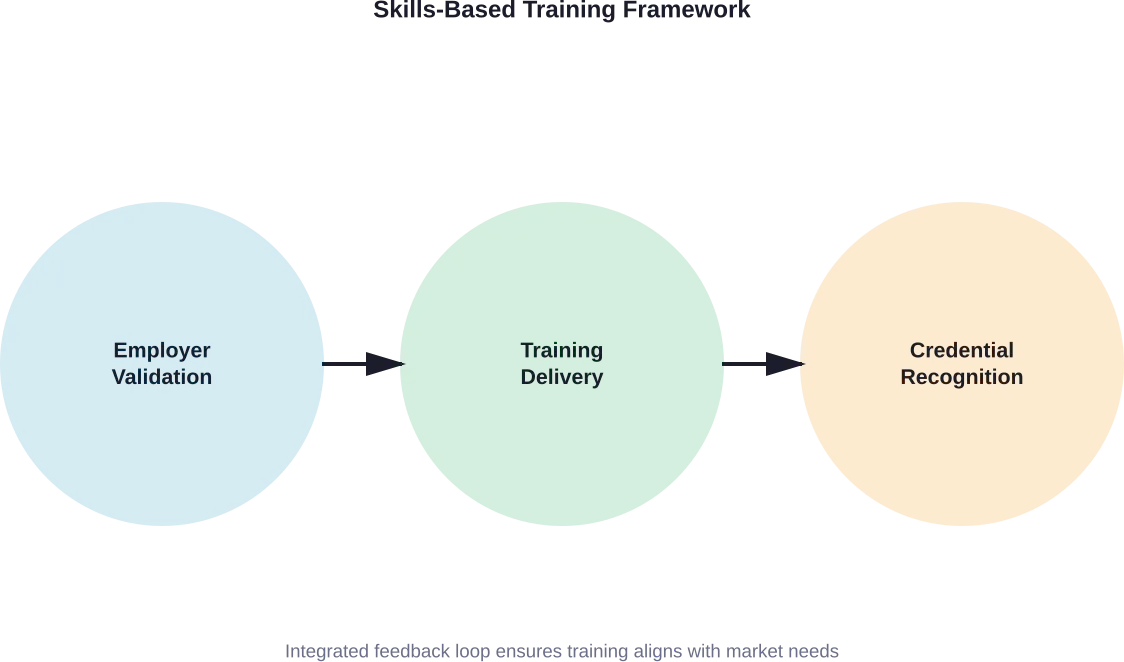
The Connecting Talent to Opportunity: A National Challenge to Build Talent Marketplaces represents a federal initiative to address this gap. The approach? Integrated Talent Marketplaces that make learning count wherever it occurs—whether through degrees, certificates, apprenticeships, military service, or on-the-job experience.
For training providers, this means shifting toward skills-based frameworks that translate across contexts. A welding certificate needs to communicate transferable competencies in ways automotive employers can understand and validate.
What Digital Transformation Actually Requires
So what does successful digital transformation look like for training providers? It’s not just technology deployment.
Digital tools should reduce repetitive tasks, improve decision-making, support faculty well-being, and track societal impact initiatives. AI-driven platforms can enhance research by enabling faculty to analyze vast amounts of data and collaborate more effectively.
But technology serves the strategy—not the other way around.
The Missing Middle Problem
Research consistently highlights the gap in AI scaling. The “missing middle” sits between ambitious pilots and scaled impact.
Training providers often launch innovative digital initiatives that work beautifully in controlled settings. Then those initiatives fail to scale across the broader organization. Why? Because readiness, infrastructure, and cultural adoption weren’t addressed systematically.
An evidence-based framework for scalable adoption focuses on three elements: technical capability, organizational readiness, and stakeholder engagement. Skip any of those three, and transformation stalls.
Post-Pandemic Learning Realities
Student perceptions of online learning reveal important insights for training providers. Research on university students’ experiences in the post-COVID era found that eLearning was enjoyable by 73% of respondents.
That’s higher than many assumed. But students also claimed that online education has lower levels of engagement compared to traditional learning.
The takeaway? Digital delivery works when designed well, but it requires intentional engagement strategies that compensate for reduced face-to-face interaction.
| אזור האתגר | Student Perception | Provider Response |
|---|---|---|
| אירוסין | Lower than in-person | Interactive elements, synchronous sessions |
| Enjoyment | 73% positive | Maintain quality, improve UX |
| Effectiveness | Mixed results | Competency-based assessment |
| Access | Infrastructure dependent | Offline options, mobile-first design |
Designing for Effectiveness, Not Just Delivery
The rapid advancement of digital technologies has ushered in a transformative era in education. Training providers can’t just digitize existing content and expect transformation.
Effective digital learning requires rethinking pedagogy. Microlearning modules, scenario-based assessments, peer collaboration tools, and real-time feedback mechanisms all contribute to outcomes that match or exceed traditional delivery.
But only when implemented with clear learning objectives tied to performance outcomes.
The Role of Soft Skills in Digital Environments
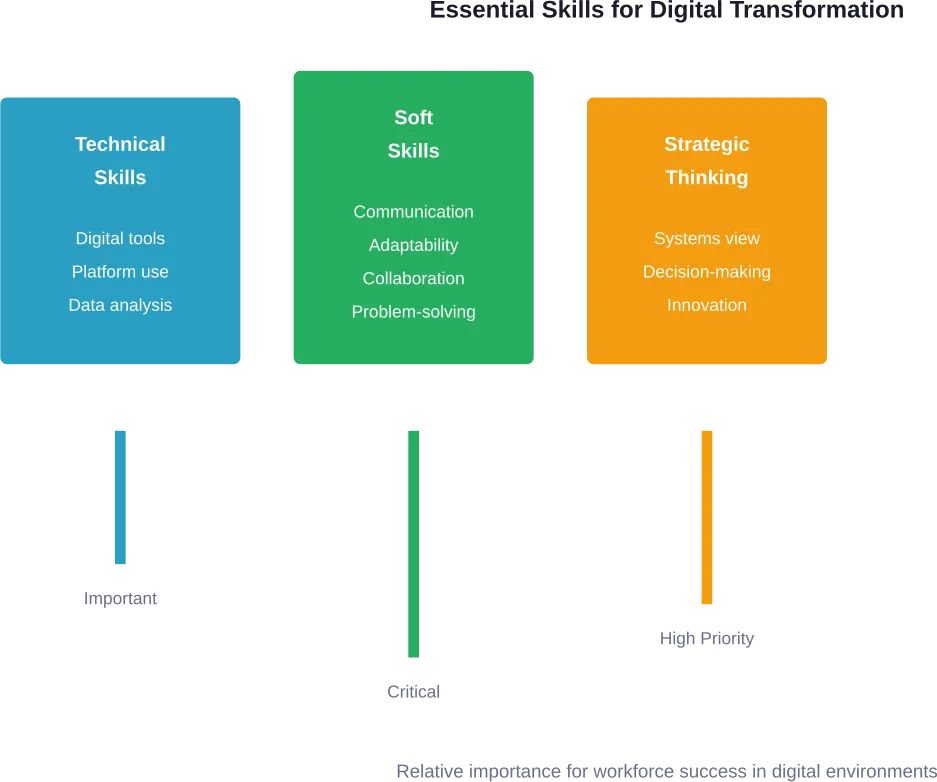
Technical training alone doesn’t prepare learners for digitally transformed workplaces. Soft skills matter more as automation handles routine tasks.
Investing in soft skills through training boosts digital transformation success and builds a resilient, agile workforce for future growth. Communication, adaptability, problem-solving, and collaboration capabilities become differentiators when technical skills commoditize.
Training providers should integrate soft skills development throughout technical curricula rather than treating them as separate modules.
שלבים מעשיים ליישום
Theory is useless without execution. Training providers need concrete steps to begin digital transformation effectively.
Start by auditing the current state across three dimensions: technology infrastructure, content quality, and learner outcomes. Where do gaps exist between what’s delivered and what employers need?
Then prioritize quick wins that demonstrate value. A fully transformed learning ecosystem takes years. But targeted improvements in high-impact areas build momentum and stakeholder confidence.
Building Cross-Functional Teams
Digital transformation can’t live in the IT department. Successful initiatives require cross-functional teams that include instructional designers, subject matter experts, technology specialists, and industry partners.
These teams should own specific outcomes—not just project tasks. When accountability ties to learner performance and employer satisfaction rather than system deployment dates, priorities naturally align with transformation goals.
Make Training Delivery and Operations Work Together
Training providers often struggle when content, scheduling, reporting, and learner data sit across disconnected systems, making delivery harder to manage as programs grow. A-listware works with organisations to bring structure to these environments by reviewing how systems and processes currently operate, then building a clear plan to improve how everything connects.
Their approach typically includes analysing the current setup, defining a practical transformation strategy, implementing the solution, and staying involved to support it over time. This helps reduce inefficiencies, improve data handling, and make day-to-day operations more consistent.
If your current setup makes delivery harder than it should be, contact רשימת מוצרים א' and get a clear, practical view of what can be improved next.
שאלות נפוצות
- What’s the biggest obstacle to digital transformation for training providers?
Infrastructure limitations and readiness gaps create the biggest obstacles. Technology deployment is straightforward compared to changing organizational culture, building digital literacy, and ensuring consistent access. Training providers must address these foundational elements before advanced digital initiatives can succeed.
- How do training providers measure digital transformation success?
Success requires tracking six key metrics: coverage and completion, proficiency development, system utilization, workflow adoption, support requirements, and performance outcomes. Together these reveal whether training translates to real capability rather than just attendance. Traditional completion rates miss the actual impact on learner readiness.
- Can small training providers compete in digital transformation?
Absolutely. Small providers often move faster and adapt more easily than large institutions. The key is focusing on specific high-value improvements rather than attempting wholesale transformation simultaneously. Strategic partnerships with enterprises and technology vendors can provide resources that level the playing field.
- What role do employers play in training provider transformation?
Employers should validate skill frameworks and credential value. Research shows 44% of employers have never been asked to participate in training program design. Training providers that actively engage industry partners create programs aligned with actual workforce needs rather than theoretical curricula.
- How important are soft skills in digitally delivered training?
Critically important. As automation handles routine technical tasks, soft skills like communication, adaptability, and problem-solving become workforce differentiators. Training providers should integrate soft skills throughout technical programs rather than treating them as separate content. Digital transformation success depends on building resilient, agile learners.
- What infrastructure is essential for effective digital training?
Reliable electricity and broadband Internet access form the foundation. Without these, sophisticated learning platforms can’t function. Training providers in regions with infrastructure limitations should prioritize offline-capable solutions, mobile-first design, and partnerships that provide technology access points for learners.
- How long does digital transformation take for training providers?
Complete transformation typically requires 3-5 years, but measurable improvements can happen within months. The timeline depends on starting infrastructure, organizational readiness, and scope of change. Quick wins in high-impact areas build momentum while longer-term initiatives develop. Incremental progress compounds faster than delayed comprehensive overhauls.
התקדמות בתהליך הטרנספורמציה הדיגיטלית
Digital transformation for training providers isn’t optional anymore. Labor force participation challenges, credential validation demands, and learner expectations all point toward digitally enabled, skills-based training ecosystems.
But success requires moving beyond technology checklists to genuine readiness, validated skill frameworks, and measurable performance outcomes.
Training providers that prioritize employer engagement, infrastructure solutions, and comprehensive readiness metrics will create competitive advantages while delivering tangible workforce impact. Those that treat transformation as purely technical will struggle with adoption and ROI.
The path forward starts with honest assessment of current capabilities, strategic partnerships that address gaps, and relentless focus on outcomes that matter to learners and employers alike.
Ready to move beyond training completion metrics? Start measuring readiness, validating skills with industry partners, and addressing infrastructure barriers that limit access. That’s where transformation becomes real.


