סיכום קצר: Digital transformation for dealerships means modernizing sales, service, and customer interactions through smart technology adoption. Success requires leadership buy-in, the right tools (DMS, CRM, AI), measurable goals, and team training. Dealerships that embrace digital strategies see higher lead conversion, faster service times, and better customer retention.
The automotive retail industry faces unprecedented pressure to modernize. Customer expectations have shifted dramatically, profit margins continue tightening, and traditional dealership models struggle to keep pace.
Digital transformation isn’t just about adding technology. It’s about fundamentally rethinking how dealerships operate, sell vehicles, and serve customers. The stakes are high—dealerships that fail to adapt risk losing ground to more agile competitors.
But here’s the thing: transformation done right creates measurable advantages. According to industry data, Renault automated video creation across its used inventory, generating over 34,000 views and 212 hours of watch time in one month and achieving a 20.5 percent increase in used vehicle enquiries and a 29.5 percent jump in engagement.
So what does successful digital transformation actually look like for dealerships?
Understanding What Digital Transformation Really Means
Digital transformation goes beyond installing new software. It’s a complete reimagining of dealership operations through technology.
For car dealerships, this means integrating systems that connect every customer touchpoint—from initial online research through purchase and ongoing service. Today’s customers navigate over 400 digital touchpoints during the car buying journey, moving rapidly between OEM websites, dealer platforms, and used car listings.
The shift requires dealerships to move from disconnected systems to unified digital ecosystems. This integration enables real-time data sharing, automated workflows, and seamless customer experiences across channels.
Accelerate Dealership Innovation with Dedicated Engineering Teams
Modernizing the car-buying experience requires seamless integration between inventory management systems, CRM platforms, and customer-facing digital showrooms. Finding the right technical talent to build and maintain these systems is often the primary bottleneck for automotive groups. A-Listware solves this by providing dedicated development teams and IT staff augmentation, allowing dealerships to deploy custom software solutions without the delays of traditional hiring.
- Vetted Technical Talent: Access developers experienced in cloud architecture, mobile apps, and AI-driven analytics.
- יעילות תפעולית: Reduce the high overhead and recruitment costs associated with in-house IT departments.
- התאמת גודל גמישה: Quickly expand your technical capacity for specific digital projects or long-term maintenance.
- Seamless Integration: Dedicated specialists work as a direct extension of your business to modernize legacy software.
התחילו את תהליך הטרנספורמציה הדיגיטלית שלכם עם A-Listware.
Essential Tools That Drive Transformation
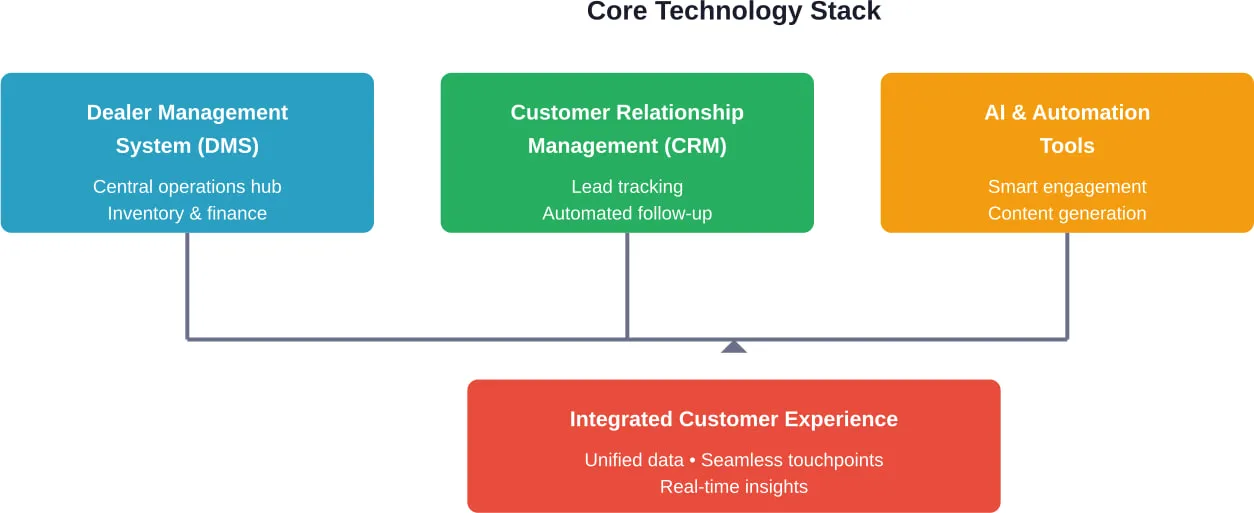
Successful digital transformation relies on selecting the right technology stack. Here are the core tools reshaping dealership operations:
Dealer Management Systems (DMS)
Modern DMS platforms serve as the central nervous system for dealership operations. These systems manage inventory, sales processes, service scheduling, and financial reporting in one unified platform.
The best DMS solutions integrate with other tools to eliminate data silos and manual entry errors. This connectivity allows information to flow seamlessly between departments.
ניהול קשרי לקוחות (CRM)
CRM systems track every customer interaction, from initial inquiry through repeat purchases. They enable personalized follow-up, automated communication, and data-driven sales strategies.
Advanced CRM platforms now incorporate AI to predict customer needs, optimize outreach timing, and prioritize high-value leads.
No-Code and Low-Code Development Tools
No-code applications revolutionize how automotive professionals conduct daily operations by making it simple to digitize previously manual processes. These tools allow dealerships to create custom digital workflows without extensive programming knowledge.
Website generators, form builders, and automation platforms empower staff to build solutions tailored to specific operational needs.
Creating a Roadmap for Implementation
Digital transformation requires strategic planning. Random tool adoption without clear direction leads to wasted resources and frustrated teams.
Securing Leadership Buy-In
Transformation initiatives fail without executive support. Leadership must champion the vision, allocate budget, and communicate why change matters.
Present the business case clearly: reduced operational costs, higher customer satisfaction scores, improved staff productivity, and competitive positioning. Frame digital transformation as essential for survival, not optional enhancement.
Setting Measurable Goals
Avoid digitizing for the sake of it. Establish concrete targets that tie technology adoption to business outcomes:
- Reduce average service check-in time by 30%
- Increase lead conversion by 15% in 6 months
- Eliminate 90% of manual invoicing errors
- Automate 100% of service follow-ups
Track performance regularly and adjust based on what actually delivers results. Data-driven decision making separates successful transformations from expensive failures.
Mapping the Customer Journey
Understanding how customers interact with the dealership reveals where digital tools create the most value. Map every touchpoint from awareness through purchase and service.
Identify friction points where customers experience delays, confusion, or frustration. These pain points represent prime opportunities for digital solutions to make immediate impact.
| Journey Stage | Traditional Pain Points | Digital Solutions |
|---|---|---|
| Research | Limited inventory visibility | Real-time online inventory with AI-generated videos |
| Inquiry | Slow response times | AI chatbots for instant engagement |
| Visit | Manual paperwork | Digital forms and eSignatures |
| Purchase | Complex financing | Online calculators and digital F&I |
| שֵׁרוּת | Unclear scheduling | Online booking and status updates |
Compliance and Data Security Requirements
Digital transformation comes with significant regulatory obligations. Dealerships handle sensitive customer information, making compliance non-negotiable.
The Gramm-Leach-Bliley Act requires financial institutions—including dealerships offering financing—to explain information-sharing practices and safeguard sensitive data. The FTC’s Safeguards Rule was amended in 2021 and further amended in 2023 to require covered entities to report certain data breaches and security incidents, with breach notification requirements taking effect on May 13, 2024.
According to the Federal Trade Commission, automobile dealers must implement comprehensive security programs including encryption, access controls, and regular security assessments. Non-compliance risks substantial penalties and reputational damage.
When selecting digital tools, verify that vendors meet current security standards and provide clear documentation of their compliance measures. Data breaches cost far more than investing in proper security upfront.
Preparing Teams for Change
Technology alone doesn’t transform dealerships—people do. Staff resistance represents one of the biggest obstacles to successful digital adoption.
Start preparing teams early. Communicate why changes are happening, how new tools will make their jobs easier, and what support will be available during transition.
Provide comprehensive training before rolling out new systems. Identify tech-savvy staff members who can serve as internal champions and peer support resources.
Real talk: some resistance is inevitable. Address concerns openly and demonstrate quick wins that prove the value of new approaches.
Working With the Right Partners
No dealership can manage complex digital transformation alone. The right technology partners make the difference between success and costly failure.
Look for vendors with deep automotive industry experience. Generic business software rarely addresses the unique workflows and compliance requirements dealerships face.
Evaluate partners based on implementation support, training resources, integration capabilities, and long-term commitment to the automotive sector. Check references from other dealerships of similar size.
שאלות נפוצות
- How long does digital transformation take for dealerships?
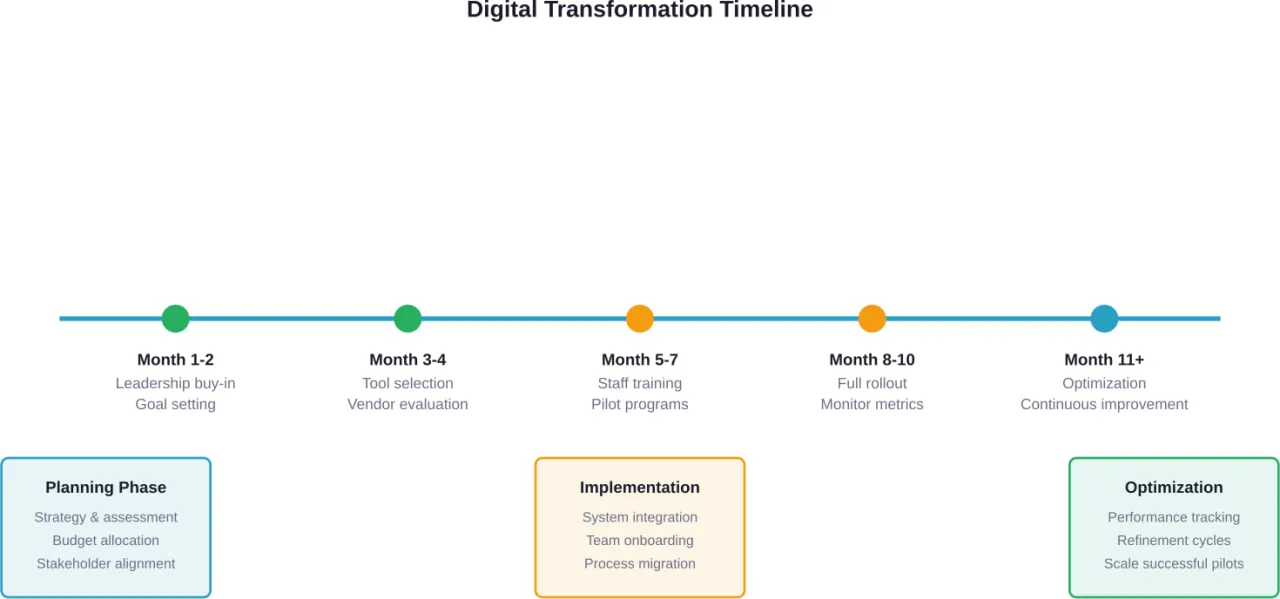
Most dealerships require 6-12 months for initial implementation of core systems, with ongoing optimization continuing indefinitely. The timeline depends on dealership size, existing technology infrastructure, and scope of transformation.
- What’s the typical cost of digital transformation?
Investment varies widely based on dealership size and chosen solutions. Check with specific vendors for current pricing, as costs depend on user counts, feature requirements, and integration complexity.
- Do we need to replace all systems at once?
No. Phased implementation works better for most dealerships. Start with highest-impact areas like CRM or DMS, then expand to additional tools as teams adapt and demonstrate ROI.
- How do we handle staff resistance to new technology?
Involve staff early in the selection process, provide comprehensive training, identify internal champions, and demonstrate quick wins that make daily work easier. Communication about why changes matter reduces resistance.
- What compliance requirements apply to dealership digital tools?
Dealerships must comply with the Gramm-Leach-Bliley Act and FTC Safeguards Rule when handling customer financial information. This includes implementing encryption, access controls, and regular security assessments. Verify that technology vendors meet these requirements.
- Can small dealerships afford digital transformation?
Many digital tools now offer scalable pricing models suitable for dealerships of all sizes. No-code platforms and cloud-based solutions reduce upfront costs. Focus on high-impact areas first rather than attempting comprehensive transformation immediately.
- How do we measure ROI from digital transformation?
Track the specific metrics tied to your initial goals: lead conversion rates, service appointment efficiency, customer satisfaction scores, operational cost reductions, and revenue per employee. Compare performance before and after implementation.
מתקדמים בביטחון
Digital transformation represents both challenge and opportunity for automotive dealerships. The competitive landscape demands modernization, but success requires strategic planning rather than random technology adoption.
Start with clear goals tied to business outcomes. Secure leadership support and budget. Choose tools that integrate seamlessly and address real pain points in the customer journey.
Most importantly, invest in preparing teams for change. Technology amplifies human capability—it doesn’t replace it.
The dealerships that thrive through 2026 and beyond will be those that embrace digital transformation strategically, measure results rigorously, and adapt continuously based on data.
Ready to modernize operations and deliver better customer experiences? Start by assessing current processes, identifying the biggest friction points, and selecting one high-impact area for initial digital investment.


