AI Agents Enterprise News: 2026 Market Trends & Platforms

Kurze Zusammenfassung: Enterprise AI agents are transitioning from experimental tools to production systems in 2026, with major tech companies like NVIDIA, Oracle, and OpenAI launching enterprise-grade platforms. According to McKinsey findings reported in March 2026, roughly 10% of enterprise functions currently use AI agents, though adoption mirrors early cloud computing growth patterns. Federal standards initiatives from NIST are establishing governance frameworks as autonomous AI systems move from assisted copilots to fully autonomous operational agents.

The enterprise AI landscape just hit an inflection point. After years of AI assistants and copilots helping with discrete tasks, autonomous agents that can execute complex workflows without human intervention are finally entering production environments.

But here’s the thing—adoption remains concentrated. Most organizations are still figuring out where agents fit, what governance looks like, and whether the infrastructure can handle these systems at scale.

Let’s break down what’s actually happening in enterprise AI agents right now, backed by recent data and platform launches from the industry’s biggest players.

Current Enterprise Adoption: The McKinsey Data

According to McKinsey findings reported in March 2026, roughly 10% of enterprise functions currently use AI agents. That’s not massive penetration, but it’s significant when you consider where this technology was just 18 months ago.

The adoption curve mirrors cloud computing’s early trajectory. Remember 2010? AWS generated just $500 million in revenue that year, according to industry data cited by McKinsey. Azure had barely launched. Google App Engine was still a developer experiment.

Fast forward to 2025, and cloud infrastructure became the default for enterprise operations. If agentic AI follows the same path—and the technical fundamentals suggest it will—current adoption numbers represent the ground floor, not the ceiling.

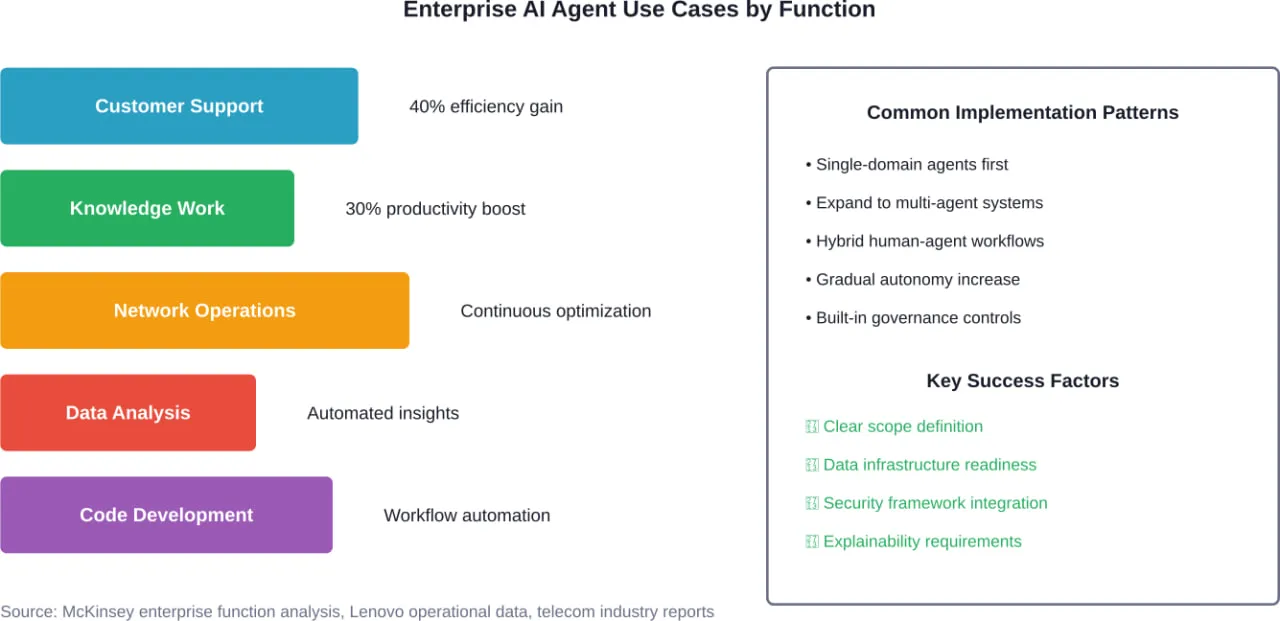
Real talk: According to Lenovo operational analysis, organizations report productivity improvements of up to 30% in knowledge work and efficiency gains of up to 40% across support and operational teams. Those aren’t marginal improvements. They’re the kind of metrics that force CFOs to pay attention.

Major Platform Launches Shaping 2026

Three significant enterprise agent platforms launched or expanded in early 2026, each taking a different approach to autonomous AI deployment.

NVIDIA Agent Toolkit

NVIDIA announced its Agent Toolkit on March 16, 2026, positioning it as an open development platform for building and running AI agents in enterprise environments. The toolkit includes NVIDIA OpenShell, an open source runtime designed for building self-evolving agents with enhanced safety and security controls.

Built with LangChain, the platform’s AI-Q Blueprint architecture uses frontier models for orchestration while running NVIDIA Nemotron open models for research tasks. This hybrid approach can cut query costs by more than 50% while providing world-class accuracy, according to NVIDIA.

The built-in evaluation system explains how each AI answer is produced—critical for enterprise environments where audit trails and explainability aren’t optional features.

Oracle’s Proactive Enterprise Agents

Oracle’s approach integrates agentic processes directly into Oracle Cloud Infrastructure (OCI), with a new agent builder that grounds AI systems in enterprise data from the start. The emphasis here is on customization and data locality—agents that understand organizational context because they’re built on top of existing business systems.

This addresses one of the bigger enterprise concerns: agents that operate effectively need access to proprietary data, but that creates security and governance challenges. Oracle’s bet is that native OCI integration solves this by keeping everything inside the existing cloud perimeter.

OpenAI’s Enterprise Agent Platform

OpenAI launched its enterprise agent platform ‘Frontier’ on February 5, 2026, offering both the technical platform and human engineering services to help organizations deploy AI agents. It’s a recognition that tooling alone doesn’t drive adoption—implementation expertise matters.

According to reporting from January 2026, OpenAI CFO Sarah Friar told CNBC the company expects enterprise customers to increase from 40% to 50% of total business by year-end. That shift requires products tailored for organizational buyers, not just individual developers.

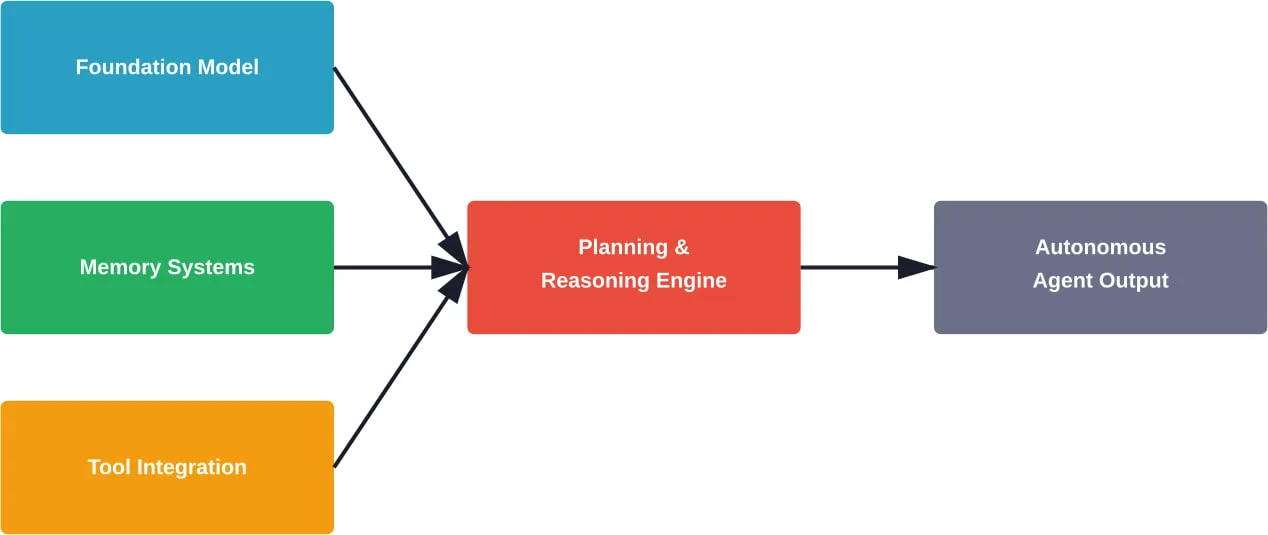
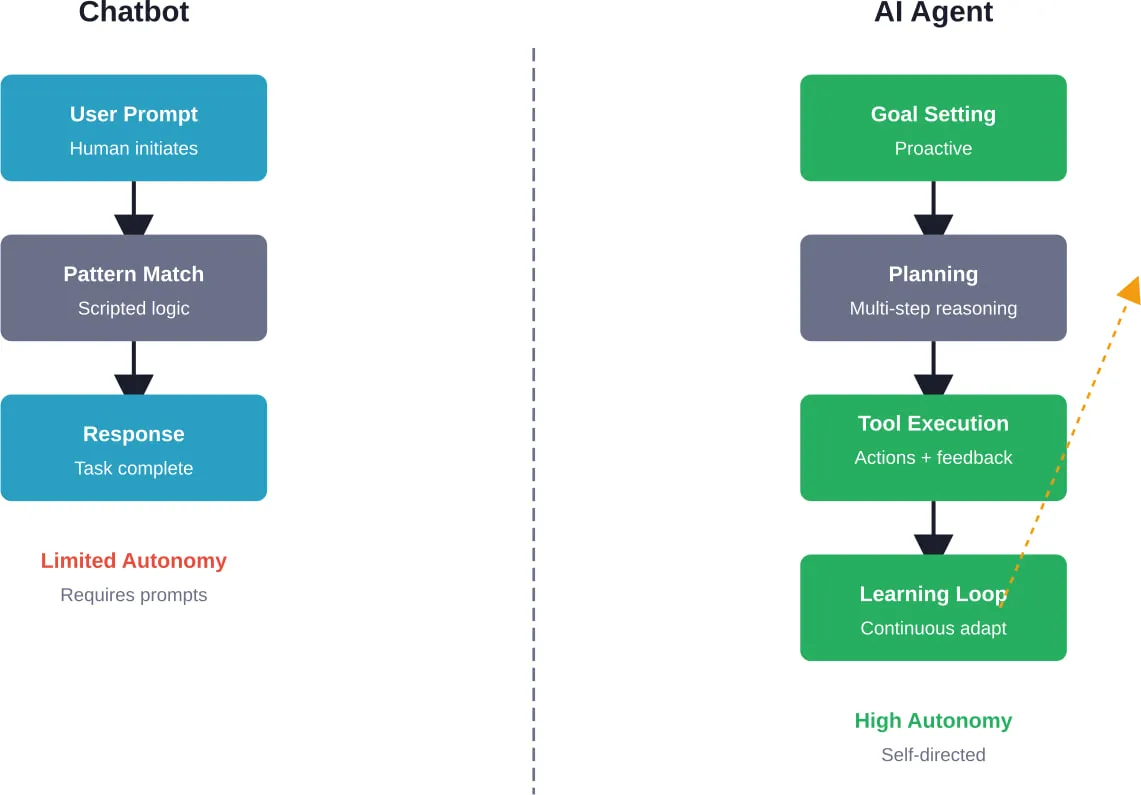
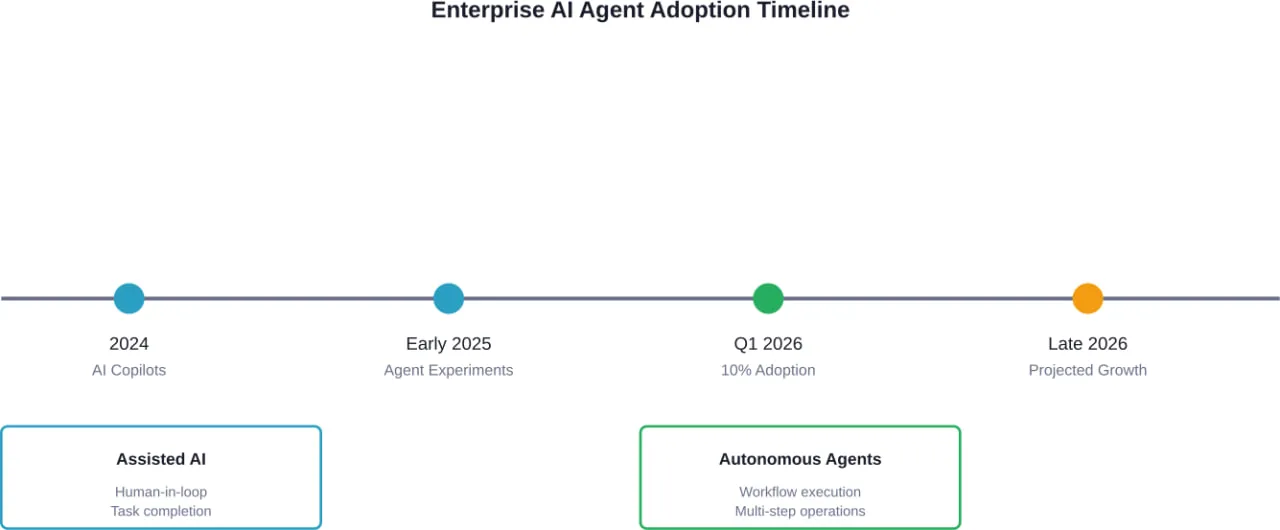
Evolution from AI assistants to autonomous enterprise agents, showing current adoption milestone and projected trajectory through 2026

Federal Standards and Governance Frameworks

As enterprise adoption accelerates, regulatory and standards bodies are establishing frameworks for safe deployment. The National Institute of Standards and Technology (NIST) Center for AI Standards and Innovation (CAISI) launched the AI Agent Standards Initiative on February 17, 2026, focused on ensuring trusted, interoperable, and secure agentic systems.

NIST held the Second NIST Cyber AI Profile Workshop (published March 23, 2026), addressing how organizations should incorporate AI into operations while mitigating cybersecurity risks. This isn’t theoretical guidance—it’s practical frameworks for CIOs trying to deploy autonomous systems without creating new attack surfaces.

Draft NIST Guidelines released December 16, 2025 rethink cybersecurity specifically for the AI era, acknowledging that traditional security models don’t fully account for systems that make independent decisions and modify their own behavior over time.

On the policy side, the White House issued an executive order on July 23, 2025 addressing AI in federal systems, with related announcements on July 24, 2025. While some directives focused on ideological concerns, the broader framework established principles for AI deployment across government agencies—principles that often influence enterprise best practices.

The Infrastructure Challenge

Here’s what doesn’t make headlines but matters enormously: infrastructure. Running autonomous agents at enterprise scale requires fundamentally different compute architectures than serving API requests to copilots.

Lenovo’s recent analysis points out that autonomous AI systems need to handle complex, continuous operations locally, with high performance and large memory capacity. Running AI workloads locally reduces reliance on external APIs, improves responsiveness, and gives organizations stronger control over sensitive data.

That’s why systems like Lenovo’s ThinkStation workstations are being positioned specifically for local AI agent deployment. It’s not just about raw compute power—it’s about having the architecture to run these systems where the data lives.

Deployment ModelVorteileChallengesAm besten für 
Cloud-Based AgentsScalability, easy updates, lower upfront costAPI dependency, latency, ongoing costsDistributed teams, variable workloads
On-Premises AgentsData control, low latency, predictable costsInfrastructure investment, maintenance overheadRegulated industries, sensitive data
Hybrid ArchitectureFlexibility, optimized cost/performanceComplexity, integration challengesLarge enterprises with diverse needs

Academic Research Directions

Academic work is rushing to catch up with practical deployment. Multiple comprehensive reviews published on arXiv in recent months attempt to establish taxonomies and frameworks for understanding agentic AI systems.

One systematic review distinguishes between standalone AI agents and collaborative agentic ecosystems—a critical distinction as enterprises move beyond single-purpose agents to systems where multiple agents coordinate across different business functions.

IEEE SA Standards Board approved new standards on February 12, 2026 including standards for AI agent capability requirements in materials research (P3933), audio large language models (P3936), and IoT security assessment (P2994). Standards bodies are essentially racing to establish guidelines while the technology evolves in real-time.

Branchenspezifische Anwendungen

Telecom operators are deploying agentic AI for network optimization and lifecycle management across RAN, transport, and core infrastructure. The complexity and scale of 5G networks have pushed traditional automation to its limits—agents that can diagnose issues, optimize configurations, and manage resources autonomously are becoming operational necessities rather than experimental projects.

Alibaba International launched Accio Work, an enterprise work agent platform, targeting global business operations. The focus on international deployment reflects how agents handle the complexity of multi-region operations, currency conversions, regulatory compliance, and localization at scale.

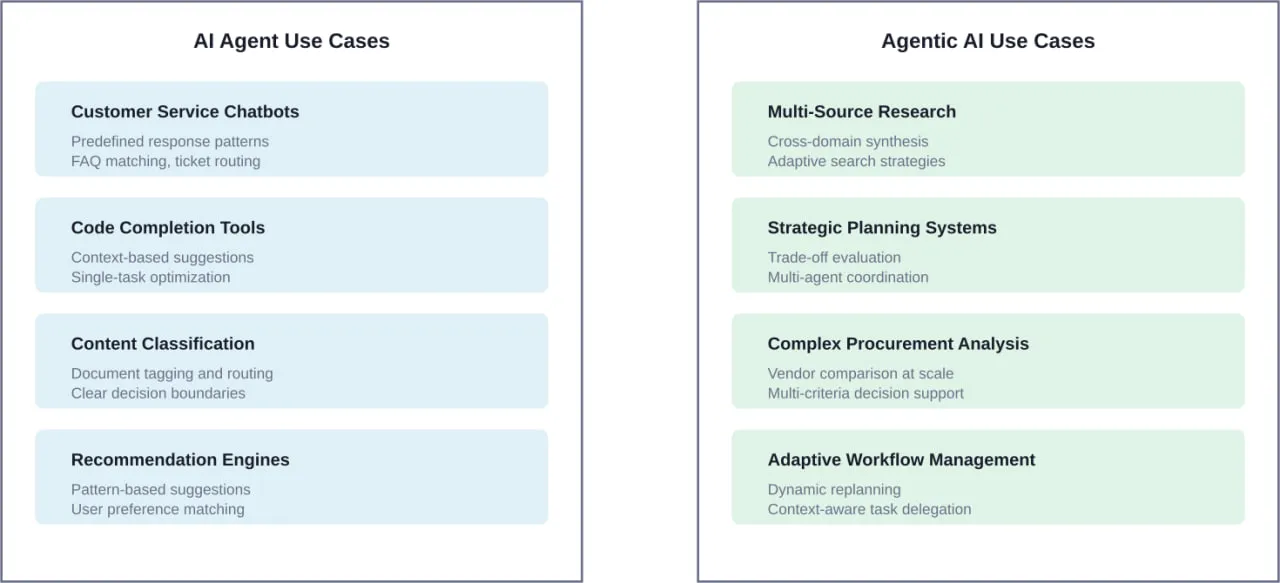
Primary enterprise AI agent use cases showing documented efficiency gains and common implementation approaches across industries

What Comes Next

The next 12 months will determine whether enterprise AI agents follow cloud’s explosive growth trajectory or plateau at niche adoption. Several factors will influence that outcome.

First, governance frameworks need to mature. Organizations won’t deploy truly autonomous systems at scale until they have confidence in control mechanisms, audit trails, and safety guardrails. NIST’s standards work matters because it provides the common language and benchmarks that procurement teams require.

Second, the infrastructure must prove it can handle continuous autonomous operations without creating new failure modes. Early deployments are essentially proving grounds for architectural patterns that will either validate or invalidate specific approaches.

Third, ROI needs to become predictable. Productivity gains of 30-40% sound compelling, but CFOs need to understand implementation costs, ongoing operational expenses, and realistic timelines. Platform vendors are starting to publish case studies with actual numbers—that transparency accelerates adoption.

Look, the technology is ready. The platforms exist. The early adopters are reporting real gains. What remains uncertain is how quickly enterprise culture, procurement processes, and risk management frameworks adapt to systems that operate with genuine autonomy.

Turn AI Trends Into Systems That Actually Run

Enterprise AI news often highlights platforms and market shifts, but most teams run into practical issues – connecting tools, handling data across systems, and keeping everything stable once usage grows.

A-listware supports companies at that stage with dedicated development teams. The focus is on backend, integrations, and infrastructure that sit around AI initiatives, helping businesses move from trend-driven decisions to systems that work in day-to-day operations.

If you are moving from AI strategy to implementation, contact A-listware to support development, integration, and ongoing system support.

Häufig gestellte Fragen

  1. What’s the difference between AI copilots and AI agents?

AI copilots assist humans with specific tasks and require human approval for actions. AI agents can execute complete workflows autonomously, making decisions and taking actions without constant human intervention. Agents handle multi-step processes, coordinate across systems, and operate continuously rather than responding to individual prompts.

  1. Which industries are adopting enterprise AI agents fastest?

Telecommunications, customer support operations, and knowledge work functions show the highest current adoption according to McKinsey data. Financial services and healthcare are exploring agent deployment but moving more cautiously due to regulatory requirements. Technology companies and consulting firms are implementing agents for internal operations while also building client-facing solutions.

  1. What are the main security concerns with autonomous AI agents?

Key concerns include unauthorized access to sensitive data, agents making decisions that violate compliance requirements, difficulty auditing autonomous actions, and potential for agents to be manipulated through prompt injection or adversarial inputs. NIST’s cybersecurity guidelines address many of these risks through frameworks for agent oversight, logging requirements, and security controls.

  1. How much does it cost to implement enterprise AI agents?

Costs vary significantly based on deployment approach. Cloud-based platforms typically charge per-query or per-user fees, with some reporting 50%+ cost savings using hybrid architectures with open models. On-premises deployments require infrastructure investment but offer predictable ongoing costs. Check vendor websites for current pricing as this market remains dynamic.

  1. Can small and medium businesses use AI agents or are they only for enterprises?

While current platform launches target enterprise customers, the technology is becoming more accessible. Cloud-based agent platforms lower the barrier to entry by eliminating infrastructure requirements. Small businesses can start with single-function agents for customer support or data analysis before expanding to more complex implementations.

  1. What skills do teams need to deploy and manage AI agents?

Organizations need expertise in AI/ML operations, security architecture, and the specific business domain where agents will operate. Many platform vendors now offer professional services and implementation support recognizing that tooling alone isn’t sufficient. Cross-functional teams combining technical and domain expertise achieve better outcomes than purely technical implementations.

  1. How do you measure ROI for AI agent implementations?

Track specific metrics like time saved on routine tasks, reduction in manual errors, faster completion of complex workflows, and improved resource utilization. Organizations reporting success measure baseline performance before agent deployment, then monitor the same metrics post-implementation. Productivity gains of 30% in knowledge work and efficiency improvements of up to 40% in operations provide benchmarks, but actual results depend on use case and implementation quality.

Moving Forward with Enterprise AI Agents

Enterprise AI agents shifted from experimental technology to production reality in 2026. The platforms exist. The standards frameworks are emerging. Early adopters are documenting real productivity gains.

But this remains early days. Ten percent adoption means 90% of enterprise functions haven’t deployed agents yet. That gap represents both opportunity and challenge—opportunity for organizations that move decisively, challenge in navigating governance, infrastructure, and change management without established playbooks.

The cloud analogy holds. Those who recognized cloud’s trajectory in 2010 positioned themselves for the infrastructure revolution that followed. Organizations evaluating agentic AI today face a similar inflection point. The technology works. The question is how quickly your organization can adapt to systems that don’t just assist—they execute.

For business leaders and technology teams exploring enterprise AI agents, start with clearly defined use cases, establish governance frameworks from day one, and choose platforms that align with your infrastructure strategy. The window for competitive advantage through early adoption won’t stay open indefinitely.

AI Agent Frameworks: Complete Guide for 2026

Kurze Zusammenfassung: AI agent frameworks provide the foundational infrastructure for building autonomous AI systems that can perceive, reason, and act. Leading frameworks like LangGraph, CrewAI, and Microsoft Agent Framework offer different architectures—from stateful graph-based orchestration to multi-agent collaboration systems—each suited for specific use cases ranging from simple task automation to complex enterprise workflows.

The shift from traditional large language models to autonomous AI agents represents one of the most significant transformations in artificial intelligence. But here’s the thing—building agents that actually work in production requires more than just stringing together a few API calls.

Agent frameworks emerged to solve this exact problem. They provide the architectural patterns, orchestration tools, and integration capabilities needed to transform experimental prototypes into reliable systems. According to research published on arXiv, these frameworks function as an “operating system” for agents, reducing hallucination rates by transforming unstructured chat into rigorous workflows.

The landscape has evolved dramatically. What started with experimental projects like AutoGPT has matured into enterprise-grade platforms supporting everything from customer service automation to complex multi-agent supply chain systems. And the differences between frameworks matter more than most developers initially realize.

This guide cuts through the hype. No fluff, no invented benchmarks—just practical analysis based on what actually ships to production.

What Makes AI Agent Frameworks Different

Traditional LLM applications follow a simple pattern: input goes in, response comes out. Agents break that model entirely.

An AI agent framework provides the infrastructure for systems that can perceive their environment, make autonomous decisions, use tools, maintain state across interactions, and execute multi-step workflows. According to arXiv research distinguishing AI Agents from Agentic AI, these frameworks are “modular systems driven by LLMs” with fundamentally different design philosophies than simple chatbots.

The core components typically include:

  • Orchestration engines that manage agent lifecycles and task execution
  • Memory systems for short-term and long-term state persistence
  • Tool integration layers that let agents interact with external systems
  • Reasoning loops that enable planning and self-correction
  • Multi-agent coordination protocols for collaborative workflows

But not all frameworks implement these components the same way. Some prioritize graph-based state management, others focus on conversational flows, and some specialize in multi-agent orchestration.

The Architecture Question That Defines Everything

According to arXiv’s taxonomy of architecture options for foundation model-based agents, the fundamental architectural choice determines everything downstream. Frameworks generally fall into three categories:

  • Stateful graph-based systems treat agent execution as a directed graph where nodes represent states or actions. This approach excels at complex workflows with conditional branching, parallel execution, and explicit state management.
  • Conversational frameworks model agents as enhanced chatbots with tool access. They work well for customer-facing applications where natural dialogue matters more than complex orchestration.
  • Multi-agent systems distribute tasks across specialized agents that communicate and collaborate. Research shows this pattern works particularly well for simulating organizational structures—like ChatDev, which simulates an entire software company where agents self-organize into design, coding, and testing roles.

The architecture choice isn’t just technical preference. It fundamentally constrains what types of applications become natural versus painful to build.

The Production-Grade Frameworks Worth Considering

Plenty of agent frameworks exist. Most don’t survive contact with production requirements. Here are the ones that do, based on actual deployment experience documented across the ecosystem.

LangGraph: When State Management Matters

LangGraph approaches agent orchestration through stateful graphs. Each node represents a function, edges define transitions, and state flows through the graph with explicit persistence.

The framework has 24.8k GitHub stars and sees 34.5 million monthly downloads—numbers that reflect genuine production adoption, not just experimental interest. According to analysis from practitioners who’ve shipped with multiple frameworks, LangGraph sits in the top tier for systems that survive production.

Key capabilities include:

  • Explicit state management with configurable persistence backends
  • Human-in-the-loop workflows with approval gates
  • Support for both single-agent and multi-agent architectures
  • Time-travel debugging through state snapshots
  • Native streaming support for real-time updates

The trade-off? LangGraph requires more upfront architectural thinking. Developers need to explicitly model state transitions rather than relying on implicit conversational flow. For complex enterprise workflows with branching logic and error recovery requirements, that explicitness becomes an advantage.

Real talk: LangGraph works best when the problem domain has clear states and transitions. Customer support escalation workflows, multi-step approval processes, and research pipelines with conditional branching all map naturally to its graph paradigm.

CrewAI: Multi-Agent Collaboration Made Practical

CrewAI specializes in coordinating multiple agents working toward shared goals. The framework models agents as team members with defined roles, responsibilities, and communication patterns.

The core abstraction centers on “crews”—groups of agents that collaborate on tasks. Each agent has a role, a goal, tools they can use, and a backstory that influences their behavior. Tasks get assigned to agents based on their capabilities, and the framework handles inter-agent communication.

This approach shines for problems that naturally decompose into specialized roles. Content creation workflows might have a researcher agent, a writer agent, and an editor agent. Financial analysis might involve data collection agents, analysis agents, and reporting agents.

CrewAI supports multiple collaboration patterns:

  • Sequential execution where agents work one after another
  • Hierarchical structures with manager agents delegating to specialists
  • Consensus mechanisms where multiple agents vote on decisions

The framework appears frequently in rankings of top agent frameworks for 2026, particularly for use cases requiring domain expertise segregation. But it carries more orchestration overhead than single-agent systems—appropriate for complex workflows, overkill for simple automation.

Microsoft Agent Framework: Enterprise Integration First

Microsoft’s Agent Framework takes a different approach, prioritizing enterprise requirements like security, compliance, and integration with existing Microsoft ecosystems.

According to official documentation, Microsoft Agent Framework supports building agents and multi-agent workflows in both .NET and Python. It includes built-in integration with Azure OpenAI, OpenAI, Anthropic, and Ollama, plus native support for Model Context Protocol (MCP) servers.

Key enterprise features include:

MerkmalBeschreibung 
AgentsIndividual agents using LLMs to process inputs, call tools and MCP servers, generate responses
WorkflowsMulti-agent orchestration with defined task dependencies
MCP SupportNative integration with Model Context Protocol for standardized tool access
SicherheitEnterprise-grade authentication, authorization, and audit logging

The framework targets organizations already invested in Microsoft’s ecosystem. For teams running Azure infrastructure and using Microsoft’s AI services, the integration friction drops significantly. For everyone else, the vendor lock-in concerns require careful evaluation.

AutoGen: Research Meets Production

Originally from Microsoft Research, AutoGen focuses on conversational multi-agent systems. The framework enables agents to have conversations with each other to solve tasks collaboratively.

AutoGen’s distinctive feature is its conversational paradigm. Rather than explicitly modeling workflows or state transitions, developers define agents with capabilities and let them negotiate task execution through dialogue. This works particularly well for open-ended problems where the solution path isn’t predetermined.

The framework supports:

  • Automated code generation and execution
  • Tool use through function calling
  • Human-in-the-loop interaction patterns
  • Configurable conversation patterns and termination conditions

According to practitioners who have shipped with multiple frameworks, AutoGen works well for prototyping. The conversational approach can make debugging complex workflows challenging when agents make unexpected decisions.

Pydantic AI: Type Safety for Agent Development

Pydantic AI brings the type safety and validation capabilities of Pydantic to agent development. For teams already using Pydantic for data validation in Python applications, this framework provides familiar patterns.

The core value proposition centers on structured outputs. Developers define Pydantic schemas describing expected agent responses, and the framework handles validation and type coercion. This reduces the hallucination problem by constraining outputs to match expected structures.

Works well for:

  • Data extraction tasks with defined output schemas
  • Classification and categorization workflows
  • Structured report generation
  • Any use case where output format matters as much as content

The limitation? Pydantic AI remains primarily focused on single-agent scenarios with structured outputs. Complex multi-agent orchestration or workflows requiring sophisticated state management need additional tooling.

Firecrawl: Web Data Collection as an Agent

Firecrawl takes a specialized approach, focusing specifically on web data collection through an agentic interface. Rather than building general-purpose agents, it optimizes for the common pattern of searching, navigating, and extracting structured data from websites.

According to the project documentation, developers describe what they want in plain text, optionally pass a Pydantic schema, and the agent searches, navigates, and returns structured results. Firecrawl offers multiple models with different performance-cost trade-offs for straightforward versus complex extractions.

This specialized focus means Firecrawl excels at one thing—web data collection—rather than trying to support every possible agent use case. For teams building research agents, competitive intelligence systems, or market monitoring tools, that specialization provides significant value.

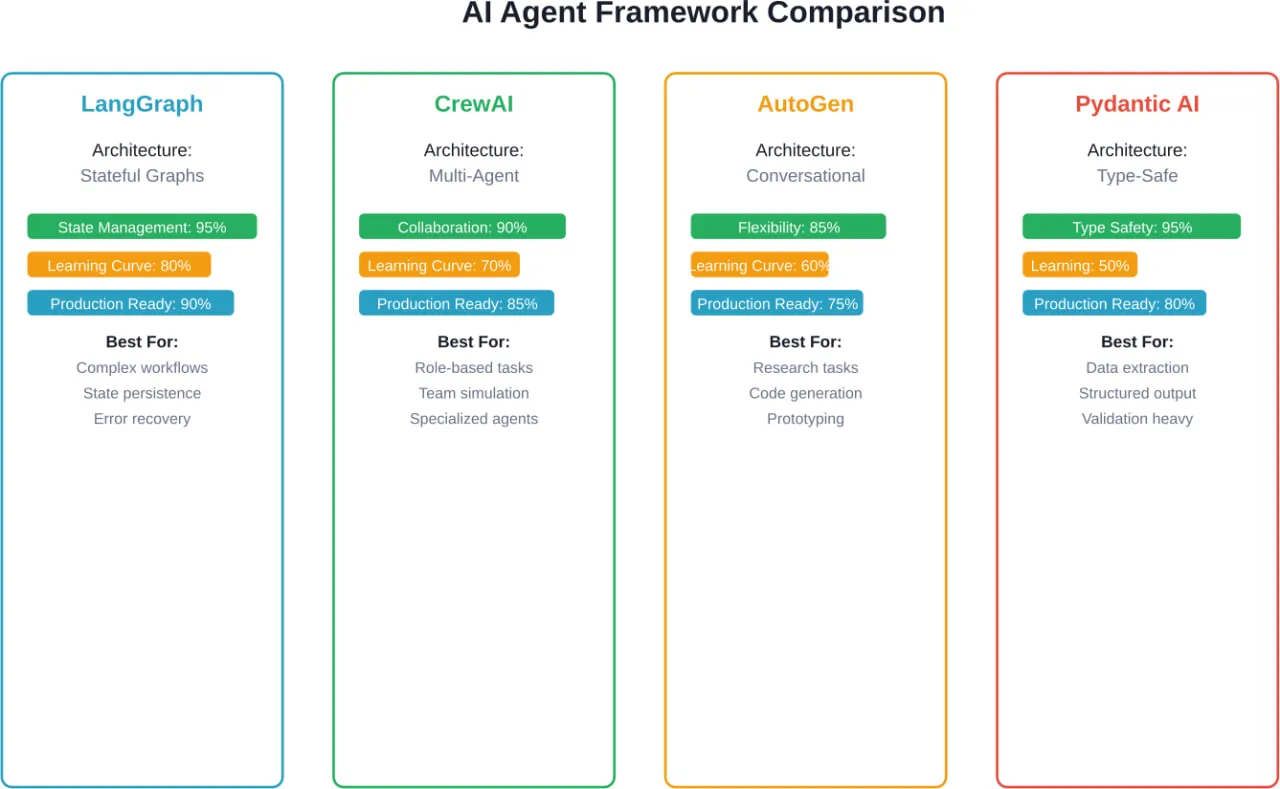
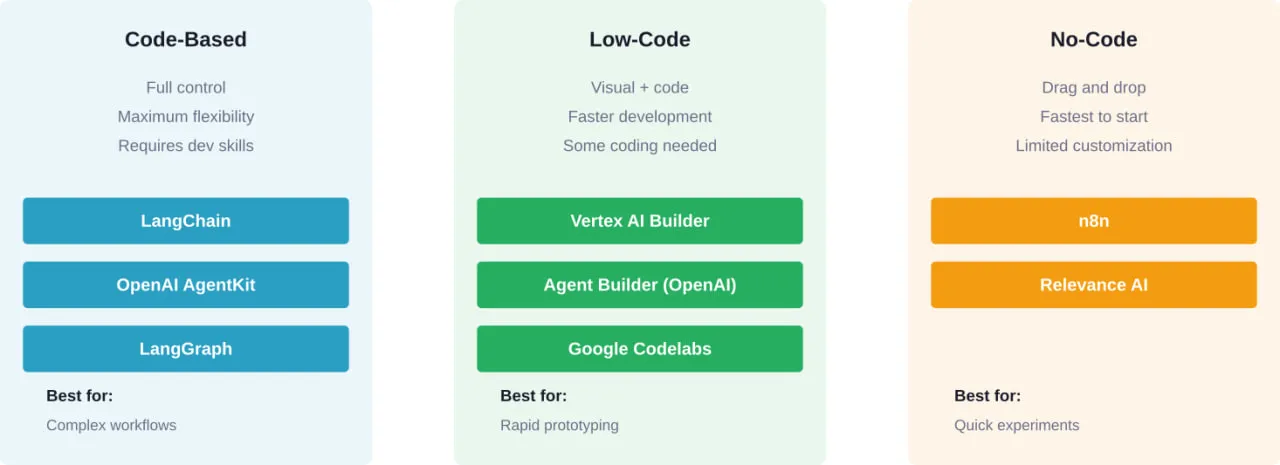
Comparison of leading AI agent frameworks showing architecture types, strengths, and ideal use cases

Framework Selection Criteria That Actually Matter

Choosing an agent framework based on GitHub stars or hype cycles leads to expensive rewrites. The frameworks that work in production get selected based on different criteria.

Architecture Alignment With Problem Domain

The first question isn’t “which framework is best?” It’s “does this framework’s architecture match how this problem naturally decomposes?”

Problems with clear state transitions, conditional branching, and error recovery requirements map naturally to graph-based frameworks like LangGraph. The explicit state management matches the problem structure.

Tasks requiring specialized expertise in different domains—content creation, financial analysis, customer research—work well with multi-agent frameworks like CrewAI. The role-based agent model mirrors how human teams tackle these problems.

Open-ended research tasks or code generation workflows often fit conversational frameworks like AutoGen better. The solution path emerges through dialogue rather than predetermined workflows.

Data extraction and structured output generation align with type-safe frameworks like Pydantic AI. The schema-first approach reduces hallucinations for tasks where format matters.

According to arXiv research on architecture options for foundation model-based agents, this alignment between problem domain and architectural paradigm represents the most significant factor in long-term success.

Production Requirements Beyond Basic Functionality

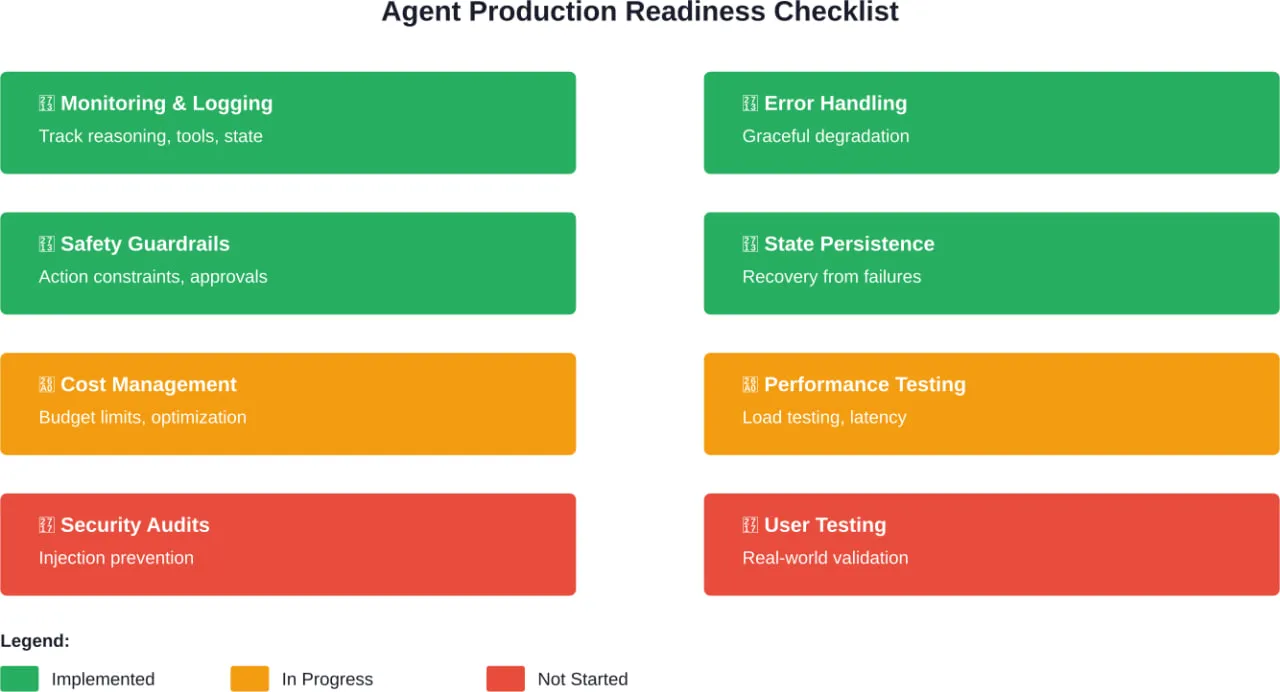
Experimental prototypes and production systems have fundamentally different requirements. Frameworks need to support:

  • Observability: Can developers see what agents are doing, why they made decisions, and where failures occur? Production systems require detailed logging, tracing, and debugging capabilities.
  • Error handling: How does the framework handle API failures, rate limits, timeouts, and invalid tool outputs? Robust error recovery separates toys from tools.
  • State persistence: Can agent state survive process restarts? Do conversations persist across sessions? Production systems need durable state management.
  • Cost control: Does the framework provide mechanisms to limit token usage, cap API calls, and prevent runaway execution? Uncontrolled agents get expensive fast.
  • Security boundaries: How does the framework handle authentication, authorization, and sandboxing? Agents with tool access need security controls.

These requirements don’t show up in framework comparisons focused on features. But they determine whether agents survive in production.

Integration Ecosystem and Tool Support

Agents derive value from tool access. The framework needs to integrate with the specific tools and services the application requires.

Some frameworks provide extensive pre-built integrations. Others offer flexible tool definition mechanisms but require custom integration code. The trade-off between convenience and flexibility depends on whether needed integrations already exist.

According to arXiv research on agentic AI frameworks, the Model Context Protocol (MCP) is emerging as a standardization layer for tool access. Frameworks with native MCP support gain access to a growing ecosystem of compatible tools without custom integration work.

Team Skills and Learning Curve

Different frameworks require different mental models. Graph-based systems require thinking about state machines and transitions. Multi-agent systems need understanding of communication protocols and coordination patterns. Conversational frameworks need different debugging approaches.

The learning curve matters less for new projects than for teams maintaining existing systems. Switching frameworks mid-project rarely makes sense, regardless of which framework looks better. The migration cost usually exceeds the benefit.

For teams already invested in specific ecosystems—Microsoft Azure, LangChain, Pydantic data validation—frameworks that align with existing skills reduce friction significantly.

Standardization Efforts Reshaping the Landscape

The proliferation of incompatible agent frameworks creates fragmentation problems. Standards efforts aim to address this.

NIST AI Agent Standards Initiative

On February 17, 2026, the National Institute of Standards and Technology (NIST) announced the AI Agent Standards Initiative for ensuring trusted, interoperable, and secure agentic AI systems. According to the official announcement, the initiative will “ensure that the next generation of AI is widely adopted with confidence, can function securely on behalf of its users, and can interoperate smoothly across the digital ecosystem.”

This represents the first major government effort to establish standards for agent architectures, security protocols, and interoperability mechanisms. The initiative addresses concerns about agent systems operating without consistent safety frameworks or interoperability standards.

IEEE Standards for Agent Benchmarking

The IEEE P3777 standard establishes a unified framework for benchmarking AI agents, including autonomous, collaborative, and task-specific agents. It defines core performance metrics, evaluation protocols, and reporting requirements to enable transparent, reproducible, and comparable assessment of agent capacities and capabilities.

Separately, IEEE P3154.1 provides a recommended practice for a framework when applying AI agents for talent services, describing architectural frameworks and application domains with protocols for interaction and communication mechanisms.

These standardization efforts remain in active development. But they signal industry recognition that framework fragmentation creates problems for production deployment and enterprise adoption.

Understanding Agent Architectures and Design Patterns

Beyond specific frameworks, recurring architectural patterns appear across successful agent implementations. Understanding these patterns helps evaluate frameworks and design custom solutions.

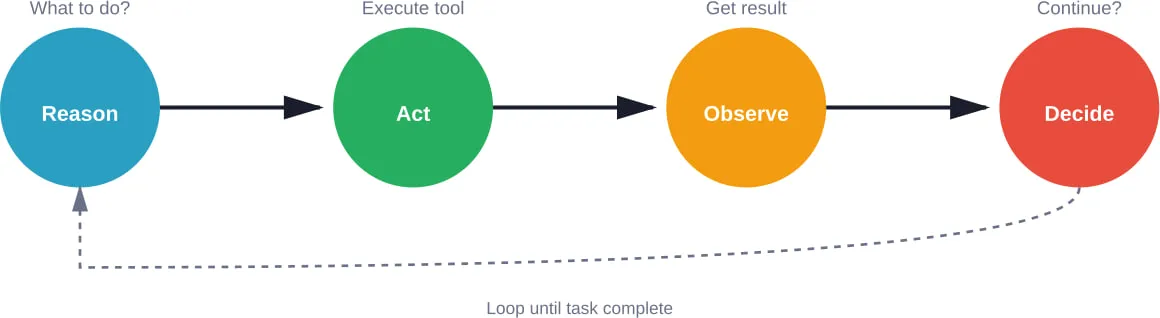
The Perception-Cognition-Action Loop

According to arXiv research distinguishing AI Agents from Agentic AI, agents fundamentally operate through perception-cognition-action cycles. Perception involves gathering information from the environment. Cognition encompasses reasoning, planning, and decision-making. Action executes decisions through tool use or communication.

Different frameworks implement this loop differently:

  • Graph-based frameworks make the loop explicit through state transitions
  • Conversational frameworks embed the loop in dialogue turns
  • Multi-agent systems distribute the loop across specialized agents

The implementation choice affects debuggability, performance characteristics, and failure modes. Explicit loops are easier to debug but require more upfront design. Implicit loops reduce boilerplate but make control flow harder to trace.

Memory Architectures for Agent State

Agents need memory to maintain context across interactions. Memory architectures typically include:

  • Working memory: Short-term context for the current task or conversation
  • Episodic memory: Records of past interactions and their outcomes
  • Semantic memory: General knowledge and learned facts
  • Procedural memory: How to perform tasks and use tools

Production frameworks need to persist memory across sessions and handle memory limits gracefully. As conversations grow, agents must summarize, forget irrelevant details, or retrieve relevant historical context.

Some frameworks provide built-in memory management. Others leave it to developers to implement persistence and retrieval mechanisms.

Tool Use and Function Calling Patterns

Tool access transforms agents from chatbots into action-taking systems. Common patterns include:

  • Direct function calling: The LLM generates structured function calls with parameters, the framework executes them, and results return to the agent. This works well for deterministic tools with clear schemas.
  • Natural language tool descriptions: Tools expose natural language descriptions of capabilities. The agent decides when and how to use them based on descriptions rather than rigid schemas. More flexible but less reliable.
  • Chained tool execution: Agents can use tool outputs as inputs to subsequent tools. Enables complex workflows like “search for X, read the top result, summarize it, then translate to French.”
  • Parallel tool invocation: Execute multiple independent tools concurrently. Reduces latency for tasks requiring information from multiple sources.

Different frameworks support these patterns with varying levels of native support versus custom implementation.

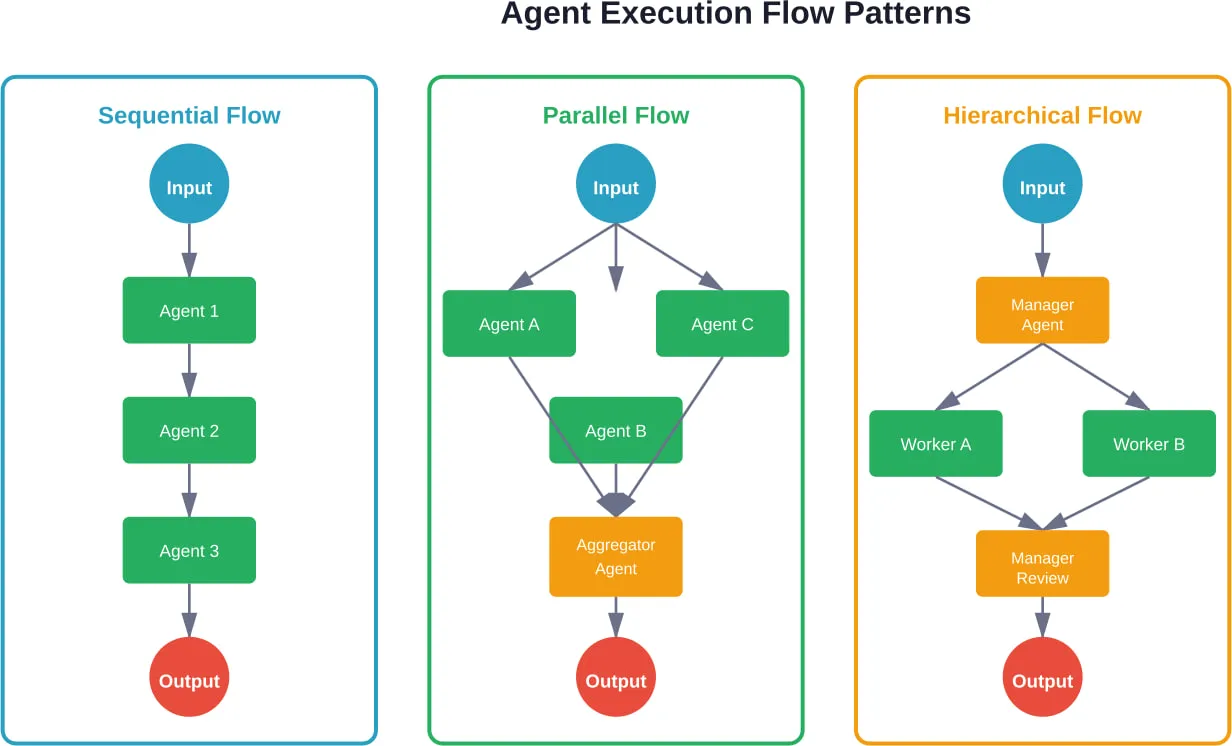
Three common agent orchestration patterns showing how frameworks coordinate multiple agents

Multi-Agent Communication Protocols

When multiple agents collaborate, communication protocols determine efficiency and reliability. According to arXiv research on agentic AI frameworks, common protocols include:

  • Message passing: Agents communicate through explicit messages with defined schemas. Provides clear audit trails but requires upfront protocol design.
  • Shared state: Agents read and write to shared memory or databases. Simple to implement but creates potential race conditions and conflicts.
  • Event-driven: Agents publish events and subscribe to events from other agents. Decouples agents but makes overall behavior harder to predict.
  • Hierarchical delegation: Manager agents assign tasks to worker agents and aggregate results. Clear control flow but creates bottlenecks at manager nodes.

The protocol choice affects debugging complexity, failure recovery, and scalability characteristics. Production systems often need multiple protocols for different interaction patterns.

Enterprise Considerations and Production Deployment

Getting agents from prototype to production involves challenges beyond framework selection. Enterprise deployment requires addressing operational, security, and governance concerns.

Cost Management and Token Economics

Agents with tool access and multi-step reasoning consume significantly more tokens than simple chatbots. A customer support agent might use 10,000+ tokens per interaction when searching knowledge bases, checking order status, and generating responses.

Production systems need:

  • Token budgets per interaction to prevent runaway costs
  • Caching strategies for repeated queries or common workflows
  • Model selection logic that uses cheaper models for simple tasks
  • Monitoring and alerting when costs exceed thresholds

Some frameworks provide built-in cost controls. Others require custom implementation of budget enforcement and model routing.

Security Boundaries and Access Control

Agents with tool access operate on behalf of users. Security failures can expose sensitive data or enable unauthorized actions.

Critical security requirements include:

  • Authentication to verify agent identity and user authorization
  • Authorization to limit which tools agents can access for specific users
  • Input validation to prevent prompt injection attacks
  • Output filtering to prevent leaking sensitive information
  • Audit logging of all agent actions and tool invocations
  • Sandboxing to isolate agent execution from critical systems

According to NIST’s AI Agent Standards Initiative, standardized security protocols for agents remain under development. Current frameworks implement security with varying levels of sophistication.

Observability and Debugging

When agents fail, understanding why requires detailed observability. Unlike traditional software where stack traces reveal problems, agent failures often involve semantic issues—the agent misunderstood intent, retrieved wrong information, or made poor tool choices.

Production observability requires:

  • Detailed logging of agent reasoning and decision points
  • Tracing of tool calls with inputs, outputs, and latencies
  • Session replay capabilities to reproduce failures
  • Metrics on success rates, latencies, and cost per interaction
  • Integration with existing monitoring infrastructure

Frameworks differ significantly in observability support. Some provide rich debugging tools and integration with observability platforms. Others leave instrumentation to developers.

Evaluation and Quality Assurance

Traditional software testing doesn’t translate directly to agents. Deterministic unit tests can’t validate systems that use LLMs for reasoning.

According to research from the AutoChain framework, evaluation requires automated testing frameworks that assess agent ability under different user scenarios. This involves:

  • Scenario-based testing with realistic user inputs
  • Evaluator LLMs that assess output quality
  • Regression testing to catch capability degradation
  • A/B testing for comparing agent configurations
  • Human evaluation for subjective quality assessment

Few frameworks provide comprehensive evaluation tooling. Most production systems require custom test harnesses.

Emerging Trends and Future Directions

The agent framework landscape continues evolving rapidly. Several trends shape where the ecosystem is heading.

Model Context Protocol Adoption

The Model Context Protocol (MCP) aims to standardize how agents access tools and external systems. Rather than each framework implementing custom tool integration, MCP provides a common protocol.

Frameworks with native MCP support gain access to a growing ecosystem of compatible tools without framework-specific integration work. This reduces one major source of framework lock-in—moving between frameworks becomes easier when tool integrations are protocol-based rather than framework-specific.

Specialized Frameworks for Vertical Domains

General-purpose frameworks like LangGraph and CrewAI work across domains. But specialized frameworks targeting specific verticals are emerging.

Firecrawl’s focus on web data collection represents this trend. Rather than supporting every possible agent use case, it optimizes for one domain and does it well.

Expect more vertical-specific frameworks for domains like customer support, data analysis, content creation, and software development. Specialized frameworks can make opinionated architectural choices that improve developer experience for their target domain.

Better Evaluation and Benchmarking

According to the IEEE P3777 standard effort, the industry recognizes the need for standardized agent benchmarking. Current evaluation approaches remain ad-hoc and inconsistent.

Improved evaluation methodologies will enable:

  • Objective comparison between frameworks
  • Regression detection when framework updates affect capabilities
  • Performance optimization based on measurable metrics
  • Compliance verification for regulated industries

Frameworks that integrate standardized evaluation tooling will likely see faster enterprise adoption.

Integration With Traditional Software Engineering

Currently, agent development often feels separate from traditional software engineering. Different tools, different testing approaches, different deployment patterns.

The trend moves toward integration. Agents as components within larger systems rather than standalone applications. This requires:

  • Agent frameworks that integrate with existing CI/CD pipelines
  • Testing frameworks compatible with standard test runners
  • Deployment patterns that work with container orchestration platforms
  • Monitoring that integrates with existing observability stacks

Frameworks that reduce the impedance mismatch between agent development and traditional software engineering will gain traction in enterprise environments.

Practical Framework Selection Strategy

Given the complexity and rapid evolution, how should teams actually choose frameworks? Here’s a practical decision process.

Start With Use Case Architecture Analysis

Before evaluating frameworks, map the use case to architectural patterns:

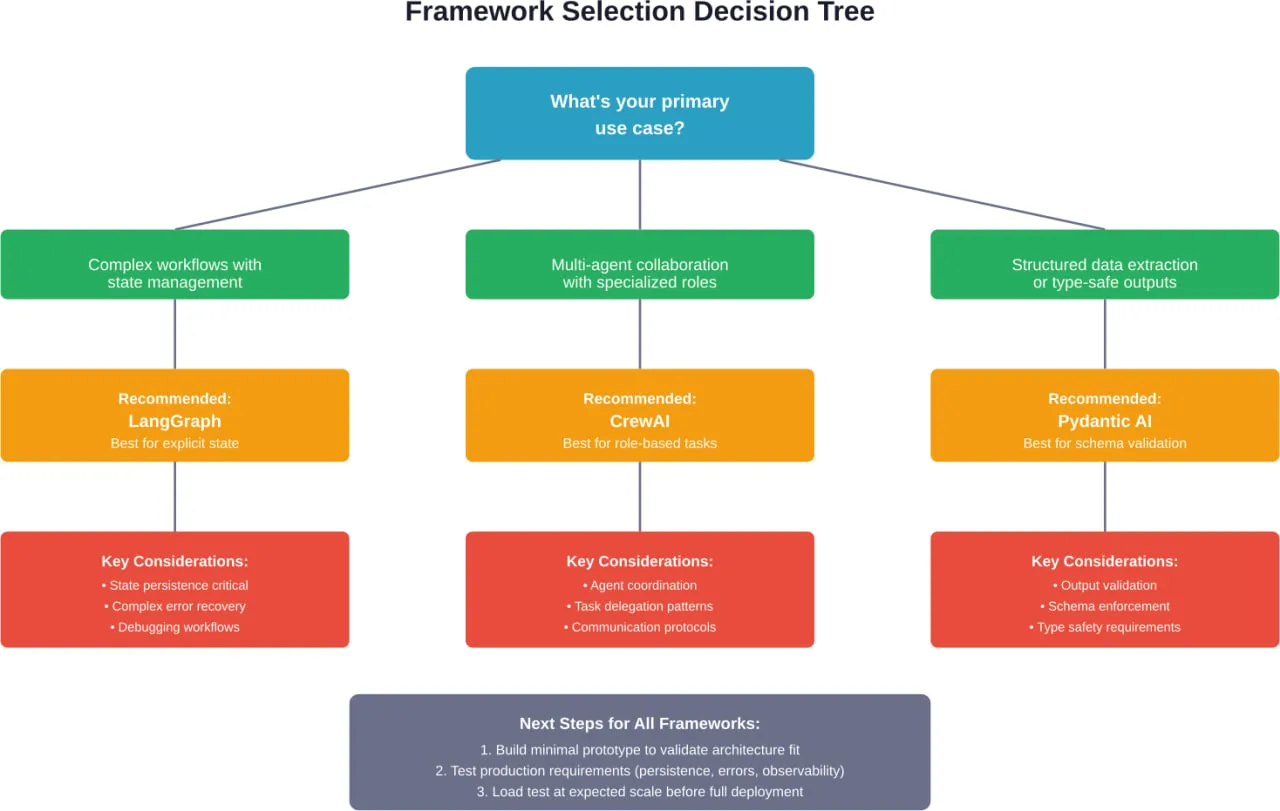
  1. Does the problem involve complex state management with conditional branching? Consider graph-based frameworks.
  2. Does it require multiple specialized agents collaborating? Consider multi-agent frameworks.
  3. Is it primarily conversational with tool access? Consider conversational frameworks.
  4. Does output structure matter as much as content? Consider type-safe frameworks.
  5. Is it focused on web data collection? Consider specialized frameworks.

This narrows the field significantly before evaluating specific frameworks.

Prototype With Minimal Complexity

Build the simplest possible version that tests the core architectural assumption. Don’t add features, integrations, or polish. Just validate that the framework’s architecture fits the problem.

For a customer support agent, prototype the simplest interaction: user question, knowledge base search, response generation. Skip authentication, logging, error handling, edge cases.

This reveals whether the framework’s mental model matches the problem before investing in production features.

Evaluate Production Readiness

Once architectural fit is validated, evaluate production requirements:

RequirementWarum es wichtig istHow to Evaluate 
State PersistenceAgents must survive restartsTest session resumption after process restart
Error RecoveryTool failures happen constantlyInject API failures and timeouts, verify graceful handling
ObservabilityDebugging requires visibilityExamine logs for failed interactions, assess debuggability
Cost ControlRunaway token usage gets expensiveVerify budget enforcement and caching mechanisms
SicherheitAgents access sensitive systemsReview authentication, authorization, and sandboxing

Frameworks that fail these evaluations create technical debt that becomes expensive to fix later.

Consider Ecosystem Lock-In

Some frameworks create more lock-in than others. Evaluate:

  • Does the framework use standard protocols (MCP) or custom integrations?
  • Can agent logic be extracted and ported to other frameworks?
  • Does the framework tie to specific LLM providers or cloud platforms?
  • Is the framework open source with active community development?

Lock-in isn’t necessarily bad if the framework provides sufficient value. But the decision should be deliberate rather than accidental.

Test at Expected Scale

Performance characteristics change dramatically at scale. An agent framework that works well for 10 requests per minute might fail at 100.

Load test with realistic traffic patterns before committing to production deployment. Measure:

  • Latency percentiles (p50, p95, p99)
  • Throughput limits and bottlenecks
  • Memory usage and resource requirements
  • Cost per interaction at scale
  • Error rates under load

Scale testing reveals problems that don’t appear in development.

Decision framework for selecting the right AI agent framework based on use case requirements

Häufige Fallstricke und wie man sie vermeidet

Teams building agents make predictable mistakes. Recognizing these patterns helps avoid expensive rewrites.

Over-Engineering Initial Implementations

The temptation to build sophisticated multi-agent systems with complex orchestration from day one kills projects. Start simple. Single agent, basic tools, minimal state management.

Add complexity only when simpler approaches fail. A single well-designed agent often outperforms three poorly coordinated specialized agents.

Ignoring Token Economics Until Production

Development environments with unlimited API budgets hide cost problems. Production environments with real traffic reveal them painfully.

Implement token budgets and monitoring from the start. Make cost visible during development, not after deployment.

Treating Agents Like Traditional Software

Traditional testing, debugging, and deployment patterns don’t translate directly. Teams that try to force agents into existing processes create friction.

Invest in agent-specific tooling for evaluation, observability, and deployment. The upfront cost pays off in reduced debugging time and faster iterations.

Choosing Frameworks Based on Hype

GitHub stars and newsletter mentions don’t predict production success. Frameworks that survive production have different characteristics than frameworks that generate hype.

Evaluate based on architectural fit and production readiness, not popularity metrics.

Underestimating Debugging Complexity

When agents fail, the failure mode often involves semantic misunderstanding rather than code bugs. Traditional debugging approaches don’t work.

Plan for significant investment in observability tooling, logging, and session replay capabilities. Debugging agents requires different tools than debugging traditional software.

Turn Your AI Agent Framework Into a Working System

Choosing a framework is the easy part. Most challenges come from integration – APIs, data flow, backend logic, and making everything run reliably in production.

A-listware provides development teams to handle that layer. The company supports backend, integrations, and infrastructure around AI systems, helping teams move from selected frameworks to stable deployments. If your framework is chosen but not implemented, contact A-listware to support integration and rollout.

Häufig gestellte Fragen

  1. What is the difference between an AI agent framework and a regular LLM API?

LLM APIs provide text generation capabilities—input text goes in, output text comes out. AI agent frameworks add orchestration, state management, tool integration, and multi-step reasoning on top of LLMs. They enable agents to perceive environments, make decisions, use tools, and execute workflows autonomously rather than just generating text responses.

  1. Which AI agent framework is best for beginners?

Pydantic AI offers the lowest learning curve for developers already familiar with Python and Pydantic. It provides type safety and structured outputs without requiring deep understanding of agent orchestration patterns. For teams new to both agents and Python, conversational frameworks like AutoGen have gentler onboarding than graph-based systems like LangGraph.

  1. Do I need a multi-agent framework or is a single agent sufficient?

Start with single-agent architectures unless the problem clearly requires specialized expertise in multiple domains. Multi-agent systems add coordination overhead, debugging complexity, and cost. They make sense when tasks naturally decompose into distinct roles with different knowledge requirements—like research, analysis, and reporting—but most use cases work fine with a single well-designed agent.

  1. How do I handle framework lock-in concerns?

Prioritize frameworks with standard protocol support like Model Context Protocol (MCP) for tool integration. Keep business logic separate from framework-specific orchestration code. Use abstraction layers for LLM provider access so switching providers doesn’t require framework changes. Evaluate whether framework benefits justify lock-in costs before committing—sometimes lock-in is acceptable if the framework provides sufficient value.

  1. What are the typical costs of running AI agents in production?

Costs vary dramatically based on agent complexity, token usage per interaction, traffic volume, and model selection. A simple customer support agent might use 5,000-15,000 tokens per conversation. With GPT-4 pricing, that’s $0.15-$0.45 per interaction. Complex research agents with extensive tool use can exceed 50,000 tokens per task. Production costs require careful monitoring, caching strategies, and model routing to optimize the cost-quality trade-off.

  1. How do NIST standards affect AI agent framework selection?

According to the AI Agent Standards Initiative announced in February 2026, NIST is developing standards for agent security, interoperability, and trustworthiness. While these standards remain in development, frameworks that align with emerging standards around authentication protocols, audit logging, and interoperability mechanisms will likely have easier enterprise adoption paths. For regulated industries, framework compliance with eventual NIST standards may become a hard requirement.

  1. Can I switch frameworks after building a production agent?

Technically yes, but migration costs are significant. Framework-specific orchestration patterns, state management approaches, and tool integrations don’t port directly. Expect to rewrite substantial portions of agent logic during migration. The decision to switch should be based on clear technical limitations that justify the migration cost, not minor feature differences or hype around newer frameworks.

Making the Framework Decision

No single framework dominates all use cases. LangGraph excels at complex workflows with explicit state management. CrewAI shines for multi-agent collaboration with role specialization. Microsoft Agent Framework optimizes for enterprise integration. Pydantic AI provides type safety for structured outputs. Specialized frameworks like Firecrawl optimize for specific domains.

The right choice depends on architectural alignment between problem domain and framework paradigm, production requirements around state persistence and error recovery, integration ecosystem and tool support needs, and team skills and learning curve considerations.

According to arXiv research on agentic AI frameworks, this architectural alignment represents the most significant success factor. Frameworks that match how problems naturally decompose lead to cleaner implementations, easier debugging, and more maintainable systems.

Start simple. Validate architectural fit with minimal prototypes before building production features. Test at expected scale before committing to deployment. Invest in observability and evaluation tooling from the start.

The agent framework landscape continues evolving. Standards efforts from NIST and IEEE signal industry maturation. Model Context Protocol adoption reduces framework lock-in. Specialized vertical frameworks emerge for specific domains.

But the fundamentals remain constant: understand the problem architecture, choose frameworks that match that architecture, and validate production readiness before deployment. Teams that follow this approach ship agents that survive production. Those that chase hype cycles end up rewriting.

Ready to build your first production agent? Start with the framework that matches your problem’s natural architecture. Build the simplest version that proves the concept. Then iterate based on what production teaches you.

Grundsätze für den Aufbau von KI-Agenten: Ein Leitfaden für 2026

Kurze Zusammenfassung: Die Entwicklung von KI-Agenten erfordert das Verständnis zentraler Architekturkomponenten wie große Sprachmodelle, Speichersysteme, Werkzeugintegration und Planungsmechanismen. Effektives Agenten-Design betont komponierbare Muster gegenüber komplexen Frameworks, wobei die Zuverlässigkeit davon abhängt, wie die Komponenten interagieren. Erfolgreiche Implementierungen schaffen ein Gleichgewicht zwischen Autonomie und Transparenz und ermöglichen es den Agenten, unter menschlicher Aufsicht zu denken, zu planen und Aufgaben auszuführen.

KI-Agenten stehen für einen Wandel von Systemen, die lediglich auf Aufforderungen reagieren, hin zu autonomen Systemen, die selbstständig Ziele verfolgen. Dabei handelt es sich nicht nur um Chatbots mit besseren Antworten, sondern um Systeme, die grundlegende Modelle mit logischem Denken, Planung, Gedächtnis und dem Einsatz von Werkzeugen kombinieren, um komplexe Aufgaben zu bewältigen.

Bei der Entwicklung effektiver Agenten geht es jedoch nicht darum, das komplexeste Framework einzusetzen, das Sie finden können. Laut Anthropic verwenden die erfolgreichsten Implementierungen in Dutzenden von Branchen einfache, zusammensetzbare Muster und keine spezialisierten Bibliotheken oder komplizierten Architekturen.

Was einen AI-Agenten auszeichnet

Ein KI-Agent geht über grundlegende Sprachmodell-Interaktionen hinaus. Während Standard-LLM-Anwendungen auf einzelne Abfragen reagieren, behalten Agenten den Kontext bei, treffen Entscheidungen und führen mehrstufige Workflows autonom aus.

Stellen Sie sich das so vor: Wenn Sie ein Sprachmodell bitten, “die Kundenabwanderung zu verringern”, könnte es Vorschläge machen. Ein Agent analysiert tatsächlich Daten, identifiziert Muster, formuliert Strategien und setzt möglicherweise Lösungen um - und erklärt dann bei jedem Schritt seine Überlegungen.

Die Forschung definiert KI-Agentensysteme als Systeme, die Basismodelle mit logischem Denken, Planung, Gedächtnis und dem Einsatz von Werkzeugen kombinieren, um komplexe Aufgaben zu bewältigen.

Zentrale architektonische Komponenten

Jedes wirksame Agentensystem beruht auf dem Zusammenwirken mehrerer grundlegender Bausteine.

Die Grundmodellschicht

Große Sprachmodelle dienen als Argumentationsmotor. Das Modell interpretiert die Ziele, erstellt Pläne und entscheidet, welche Aktionen als Nächstes durchgeführt werden sollen. Aber das Modell allein ist nicht der Agent - es ist nur eine Komponente.

Moderne Agentenarchitekturen unterstützen mehrere Modelle, die zusammenarbeiten. Ein Modell kann die Koordinierung auf hoher Ebene übernehmen, während spezialisierte Modelle spezifische technische Aufgaben erledigen.

Speicher-Systeme

Agenten brauchen ein Gedächtnis, um den Kontext über Interaktionen hinweg aufrechtzuerhalten. Dazu gehören das Kurzzeitgedächtnis für den unmittelbaren Aufgabenkontext und das Langzeitgedächtnis für gelernte Muster und historische Informationen.

Die Speicherarchitektur wirkt sich direkt auf die Effektivität der Agenten aus. Ohne eine angemessene Speicherverwaltung verlieren Agenten ihre Ziele aus den Augen, wiederholen fehlgeschlagene Ansätze oder ignorieren relevante frühere Erfahrungen.

Integration von Werkzeugen

Werkzeuge erweitern die Fähigkeiten des Agenten über die Texterstellung hinaus. Ein Agent kann Suchmaschinen verwenden, um Informationen zu sammeln, APIs, um Daten abzurufen, Code-Interpreter, um Berechnungen durchzuführen, oder spezialisierte Dienste, um domänenspezifische Aufgaben zu erledigen.

Nach Ansicht des Anthropic-Entwicklungsteams sind Agenten nur so effektiv wie die ihnen zur Verfügung gestellten Tools. Das Tool-Design ist von enormer Bedeutung - gut konzipierte Tools mit klarer Dokumentation und geeigneten Antwortformaten verbessern die Leistung der Agenten erheblich.

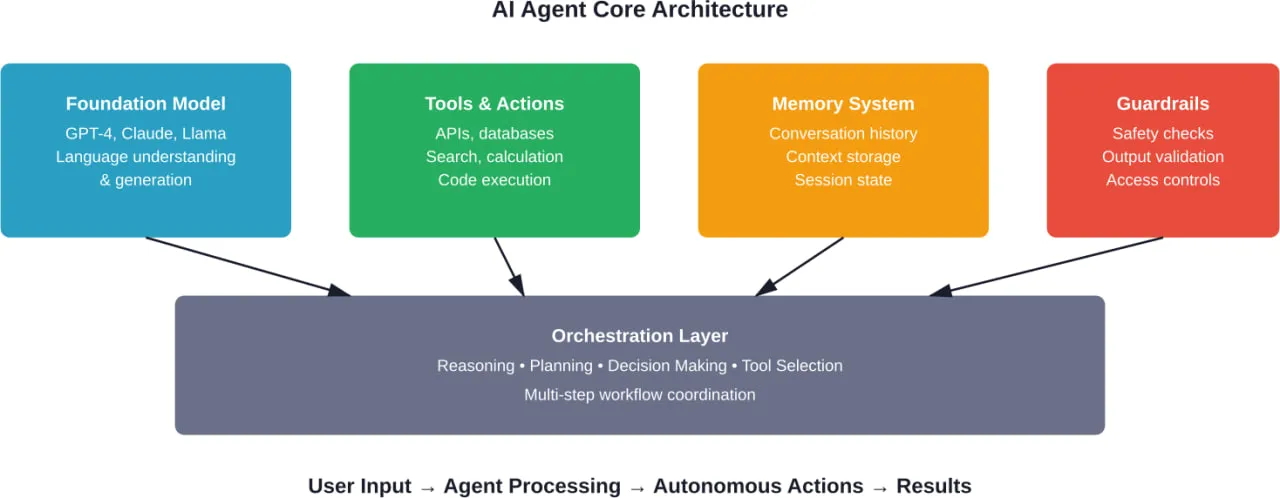
Kernkomponenten der KI-Agentenarchitektur und ihre Beziehungen

Verlässlichkeit durch Architektur

Forschungen der Universität Halmstad zeigen, dass Zuverlässigkeit nicht etwas ist, das man nach der Entwicklung eines Agenten hinzufügt, sondern dass sie von Anfang an durch architektonische Entscheidungen bestimmt wird.

Die Art und Weise, wie die Komponenten interagieren, bestimmt, ob sich Agenten vorhersehbar verhalten. Eine gut durchdachte Architektur schafft natürliche Leitplanken, die häufige Fehler verhindern.

Transparenz und Erklärbarkeit

Die Benutzer müssen verstehen, was die Agenten tun und warum. Ohne Transparenz können die Handlungen eines Agenten verwirrend oder sogar besorgniserregend erscheinen.

Die Anthropic-Forschung zur Entwicklung sicherer Agenten verdeutlicht dies an einem anschaulichen Beispiel: Ohne Transparenzdesign könnte ein Mensch, der einen Agenten bittet, “die Kundenabwanderung zu verringern”, verwirrt sein, wenn der Agent Einrichtungen wegen der Büroausstattung kontaktiert. Aber mit der richtigen Transparenz erklärt der Agent seine Logik - er fand heraus, dass Kunden, die Vertriebsmitarbeitern in lauten Großraumbüros zugewiesen wurden, höhere Abwanderungsraten hatten.

Fehlerbehandlung und Wiederherstellung

Agenten werden mit Fehlern konfrontiert. Tools geben Fehler zurück, externe Dienste fallen aus, Pläne funktionieren nicht wie erwartet. Robuste Architekturen antizipieren diese Ausfälle und enthalten Wiederherstellungsmechanismen.

Das Muster hier? Gehen Sie nicht vom Erfolg aus. Entwickeln Sie Agenten, die die Ergebnisse überprüfen, Anomalien erkennen und Strategien anpassen, wenn die ersten Ansätze fehlschlagen.

Muster, die tatsächlich funktionieren

In der Praxis werden mehrere bewährte Muster verwendet.

Hierarchische Multi-Agenten-Systeme

Für komplexe Aufgaben ist ein einzelner Agent oft nicht optimal. Multi-Agenten-Systeme nutzen die Spezialisierung: Ein Hauptagent koordiniert die Planung auf hoher Ebene, während Unteragenten spezifische technische Arbeiten oder die Informationsbeschaffung übernehmen.

Laut der technischen Dokumentation von Anthropic kann jeder Unteragent mit Zehntausenden von Token umfangreiche Erkundungen durchführen, liefert aber nur eine komprimierte, destillierte Zusammenfassung seiner Arbeit an den Hauptagenten. Dieser Ansatz schafft ein Gleichgewicht zwischen Tiefe und überschaubarem Kontext.

Interne Auswertungen zeigen, dass Multi-Agenten-Recherchesysteme vor allem bei "breadth-first"-Abfragen, die mehrere unabhängige Richtungen gleichzeitig einbeziehen, hervorragend abschneiden.

Kontext-Engineering vor Prompt-Engineering

Mit zunehmender Reife von Agentensystemen wird ein effektives Kontextmanagement wichtiger als die Suche nach der perfekten Formulierung von Aufforderungen. Kontext ist eine endliche Ressource - Agenten haben eine begrenzte Anzahl von Token, und die Leistung sinkt bei zu viel Kontext.

Zu den Strategien für ein effektives Context-Engineering gehören das dynamische Beschneiden von Kontexten, die hierarchische Zusammenfassung und das selektive Abrufen von Informationen, anstatt alles im Voraus zu laden.

Normen und Sicherheitsüberlegungen

Da Agentensysteme immer leistungsfähiger werden, haben sich die Standardisierungsbemühungen beschleunigt. Das NIST kündigte im Februar 2026 die Initiative für KI-Agentenstandards an, um sicherzustellen, dass KI-Agenten sicher funktionieren, systemübergreifend interagieren und vertrauensvoll angenommen werden können.

Die Initiative befasst sich mit kritischen Herausforderungen: Wie können Agenten nachweisen, dass sie im Namen von autorisierten Benutzern handeln? Wie können verschiedene Agentensysteme miteinander kommunizieren? Welche Transparenzmechanismen sollten Standard sein?

Die IEEE-Normen betonen vier Bedingungen für vertrauenswürdige KI-Systeme: Effektivität, Kompetenz, Verantwortlichkeit und Transparenz. Dabei handelt es sich nicht nur um theoretische Ideale, sondern um praktische Anforderungen für den Einsatz von Agenten in regulierten Branchen.

Leistung in der realen Welt

Praktische Implementierungen zeigen messbare Ergebnisse. Untersuchungen zufolge hat Vodafone ein auf KI-Agenten basierendes Supportsystem implementiert, das über 70% Kundenanfragen ohne menschliches Eingreifen bearbeitet und so die Betriebskosten erheblich senkt und gleichzeitig die Antwortzeiten verbessert.

Die Wirksamkeit variiert jedoch dramatisch je nach Qualität der Implementierung. Dieselbe Studie zeigt, dass Agenten mit schlecht konzipierten Werkzeugen oder unzureichendem Kontextmanagement oft schlechter abschneiden als einfachere, nicht-agentische Ansätze.

Holen Sie sich technische Unterstützung für Ihre AI-Agentensysteme

Die Grundsätze für den Aufbau von KI-Agenten konzentrieren sich häufig auf Autonomie, Modularität und Koordination. In der Praxis hängen diese Ideen davon ab, wie gut das umgebende System aufgebaut ist - APIs, Datenpipelines, Backend-Dienste und Infrastruktur, die alles im Laufe der Zeit stabil halten. Hier beginnen viele Projekte zu scheitern, und zwar nicht auf der Konzeptebene, sondern bei der Umsetzung.

A-listware unterstützt diese Ausführungsebene durch die Bereitstellung spezieller Entwicklungsteams und Software-Engineering-Support. Das Unternehmen arbeitet über den gesamten Entwicklungszyklus hinweg - von der Einrichtung der Architektur bis zur Integration und Wartung - und hilft den Teams, zuverlässige Systeme um KI-gesteuerte Produkte herum aufzubauen, anstatt die Agenten selbst.

Wenn die Prinzipien Ihrer KI-Agenten definiert sind, aber noch nicht in der Produktion funktionieren, ist dies in der Regel der richtige Zeitpunkt, um externe technische Unterstützung hinzuzuziehen. Kontakt A-listware um Sie bei der Implementierung, Integration und Skalierung Ihres Systems zu unterstützen.

Praktische Umsetzungsschritte

Wie fängt man nun an, Agenten aufzubauen?

Beginnen Sie einfach. Beginnen Sie nicht mit einem Multi-Agenten-Orchestrierungssystem. Bauen Sie einen einzelnen Agenten, der eine Aufgabe gut erledigt. Verstehen Sie, wie Prompting, Tools und Speicher zusammenspielen, bevor Sie Komplexität hinzufügen.

Entwerfen Sie die Instrumente sorgfältig. Jedes Werkzeug sollte eine klare Dokumentation, klar definierte Eingaben und Ausgaben sowie geeignete Antwortformate haben. Anthropic empfiehlt, einen Parameter für das Antwortformat bereitzustellen, mit dem Agenten steuern können, ob Werkzeuge kurze oder ausführliche Antworten zurückgeben.

Führen Sie vom ersten Tag an Evaluierungen durch. Ohne systematische Tests ist es unmöglich zu wissen, ob Änderungen die Leistung verbessern oder verschlechtern. Erstellen Sie Evaluierungsdatensätze, die echte Anwendungsfälle repräsentieren.

Und iterieren Sie auf der Grundlage der tatsächlichen Nutzungsmuster. Agenten decken in der Produktion unerwartete Verhaltensweisen auf, die in Tests nie auftauchen.

DurchführungsphaseSchwerpunktthemaHäufig zu vermeidende Fallstricke
StiftungEin Akteur, eine klare AufgabeOver-engineering mit Frameworks
Werkzeug-DesignKlare Dokumentation, flexible FormateVage Werkzeugbeschreibungen, starre Ausgaben
Speicher-IntegrationAbrufen von relevantem KontextLaden von übermäßigem Kontext
BewertungTestfälle aus der PraxisNur glückliche Wege testen
ProduktionÜberwachung, FehlerbehebungDie Annahme, dass Agenten immer Erfolg haben werden

Häufig gestellte Fragen

  1. Was ist der Unterschied zwischen einem KI-Agenten und einer normalen LLM-Anwendung?

Standard-LLM-Anwendungen reagieren auf einzelne Aufforderungen, während KI-Agenten Ziele autonom über mehrere Schritte hinweg verfolgen. Agenten verfügen über ein Gedächtnis, planen Handlungsabläufe, verwenden Werkzeuge und treffen Entscheidungen darüber, wie die Ziele zu erreichen sind, ohne dass für jeden Schritt menschliche Eingaben erforderlich sind.

  1. Brauche ich ein spezielles Framework, um KI-Agenten zu entwickeln?

Nein. Forschung und praktische Erfahrung zeigen, dass einfache, zusammensetzbare Muster komplexen Rahmenwerken durchweg überlegen sind. Die meisten erfolgreichen Implementierungen verwenden einfache Kombinationen von Sprachmodellen, Tool-APIs und Speichersystemen und keine spezialisierten Agentenbibliotheken.

  1. Wie können Multiagentensysteme die Leistung verbessern?

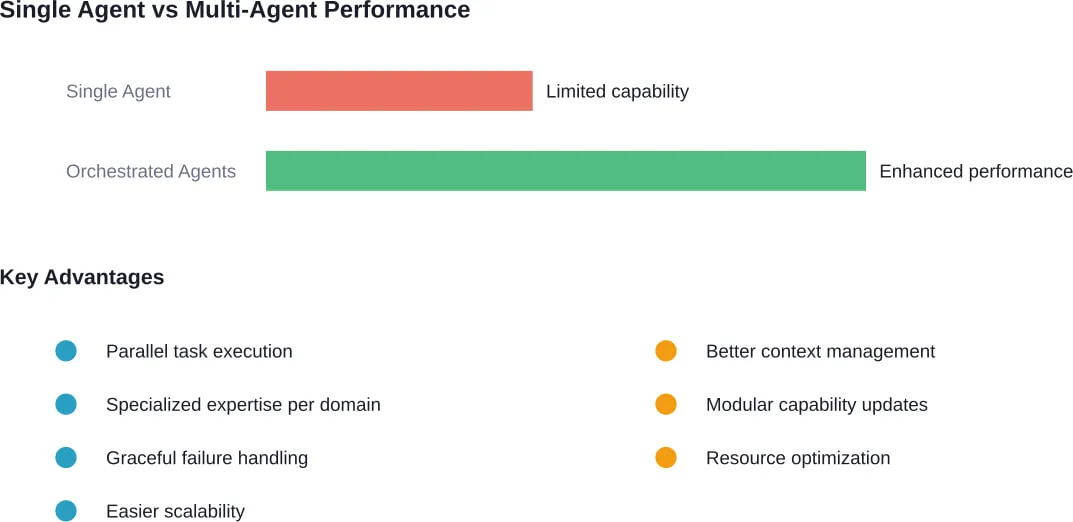
Multi-Agenten-Architekturen ermöglichen eine Spezialisierung - ein koordinierender Agent kümmert sich um die Planung auf hoher Ebene, während spezialisierte Subagenten spezifische technische Aufgaben oder Forschungsarbeiten übernehmen. Dieser Ansatz verwaltet den Kontext effizienter und ermöglicht die parallele Erkundung verschiedener Lösungswege.

  1. Was sind die größten Herausforderungen bei der Zuverlässigkeit von Agenten?

Zu den größten Herausforderungen gehören das unvorhersehbare Verhalten von Agenten in unerwarteten Situationen, Schwierigkeiten bei der Fehlersuche in mehrstufigen logischen Prozessen, die Kontextverwaltung bei immer komplexeren Aufgaben und die Sicherstellung, dass Agenten bei Fehlern nicht einfach versagen, sondern schädliche Ergebnisse liefern.

  1. Wie wichtig ist die Gestaltung der Werkzeuge für die Wirksamkeit der Agenten?

Äußerst wichtig. Laut den Entwicklungsteams von Anthropic sind Agenten nur so effektiv wie die ihnen zur Verfügung stehenden Tools. Gut konzipierte Tools mit klarer Dokumentation und angemessenen Antwortformaten verbessern die Leistung dramatisch, während schlecht konzipierte Tools die Agenten selbst bei einfachen Aufgaben in Schwierigkeiten bringen.

  1. Welche Rolle spielen Normen bei der Entwicklung von Agenten?

Standards stellen sicher, dass Agenten systemübergreifend interagieren, ihre Autorisierung nachweisen und sicher funktionieren können. Die im Jahr 2026 gestartete NIST-Initiative für KI-Agentenstandards konzentriert sich auf die Schaffung von Rahmenwerken für Vertrauen, Sicherheit und Interoperabilität, da Agenten branchenübergreifend immer häufiger eingesetzt werden.

  1. Sollten Agenten ihre Argumente immer erklären?

Ja, für die meisten Anwendungen. Transparenz darüber, warum Agenten bestimmte Aktionen durchführen, schafft Vertrauen beim Benutzer, ermöglicht Fehlersuche und hilft zu erkennen, wenn Agenten unbeabsichtigte Strategien verfolgen. Ohne Erklärbarkeit können die Entscheidungen von Agenten willkürlich oder bedenklich erscheinen, was die praktische Anwendung einschränkt.

Fortschritte bei der Agentenentwicklung

Die Entwicklung effektiver KI-Agenten erfordert das Verständnis, dass die Architektur die Zuverlässigkeit bestimmt, dass Einfachheit vor Komplexität geht und dass Werkzeuge ebenso wichtig sind wie Modelle.

Die Entwicklung in diesem Bereich schreitet rasch voran. Durch Normungsinitiativen werden Rahmenbedingungen für eine sichere Einführung geschaffen. Die Forschung klärt, welche Architekturmuster in der Produktion tatsächlich funktionieren. Und die praktische Erfahrung zeigt, dass die erfolgreichsten Implementierungen einfach beginnen und die Komplexität nur dann erhöhen, wenn dies eindeutig gerechtfertigt ist.

Für Teams, die bereit sind, Agentensysteme zu entwickeln, ist der Weg nach vorn klar: Konzentration auf zusammensetzbare Komponenten, sorgfältige Entwicklung von Werkzeugen, Implementierung von Transparenz von Anfang an und unerbittliche Evaluierung anhand realer Anwendungsfälle. Die Prinzipien sind wichtiger als die Frameworks.

AI Agent Architecture Diagram: 2026 Complete Guide

Kurze Zusammenfassung: AI agent architecture diagrams visualize the core components of autonomous AI systems: reasoning layers, orchestration patterns, state management, and tool integration. Modern agent architectures typically follow a four-layer model encompassing LLM reasoning, orchestration logic, data infrastructure, and external tool connections. Understanding these architectural patterns helps developers build reliable, scalable agent systems for production environments.

The architecture behind AI agents determines whether a system performs reliably in production or collapses under real-world complexity. Yet most architecture discussions online show simplified stack diagrams that bear little resemblance to what development teams actually implement.

This guide breaks down AI agent architecture using visual diagrams, proven patterns from academic research, and implementations from organizations like Microsoft and CSIRO. The focus? What actually works when building autonomous systems that reason, remember, and act.

Understanding AI Agent Architecture Fundamentals

An AI agent architecture defines how autonomous systems perceive their environment, make decisions, and execute actions. Unlike traditional software that follows predetermined paths, agent architectures must handle uncertainty and adapt to dynamic conditions.

According to research published in the Agent Design Pattern Catalogue by CSIRO (Data61), foundation model-enabled agents leverage reasoning and language processing capabilities to operate autonomously. These systems don’t just respond to queries—they proactively pursue goals.

Here’s what separates true agent architectures from simple chatbots: agents maintain state across interactions, use tools to extend their capabilities, and employ reasoning strategies to break down complex tasks. A customer service bot that retrieves your account balance isn’t necessarily an agent. But a system that notices your payment pattern, proactively suggests a better plan, and handles the switch? That’s agent behavior.

Core Components of Agent Systems

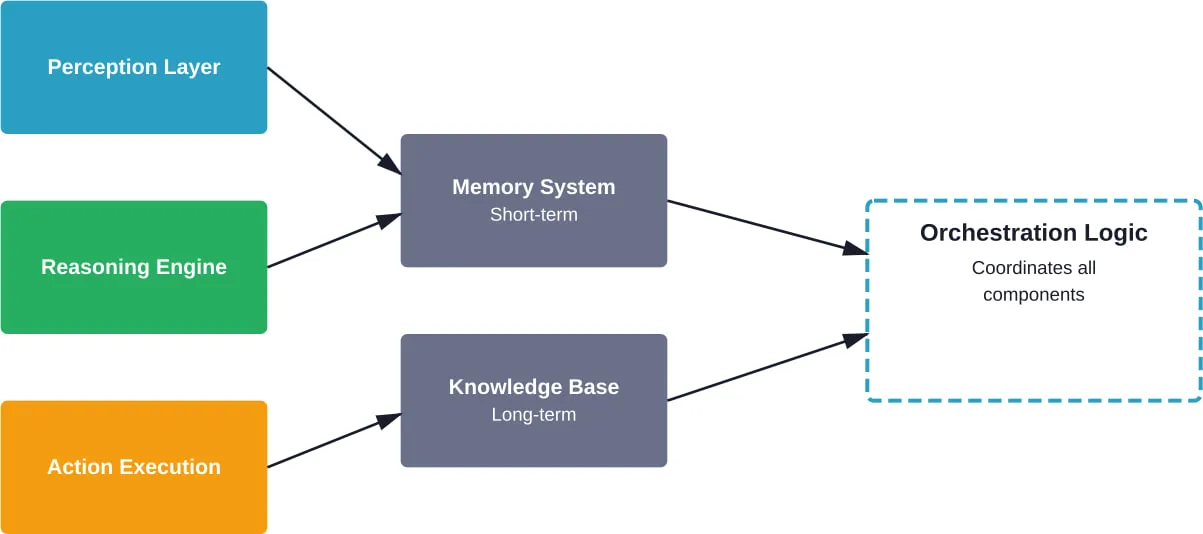
Every functional agent architecture contains these foundational elements:

  • Perception layer: How the agent receives and processes information from its environment
  • Reasoning engine: The cognitive component, typically powered by large language models
  • Memory system: Both short-term context and long-term knowledge storage
  • Action execution: Tools and APIs the agent can invoke
  • Orchestrierungslogik: The control flow that coordinates perception, reasoning, and action

Research from Halmstad University emphasizes that reliability in agentic AI stems directly from architectural choices. The way these components connect determines whether a system degrades gracefully under unexpected conditions or fails catastrophically.

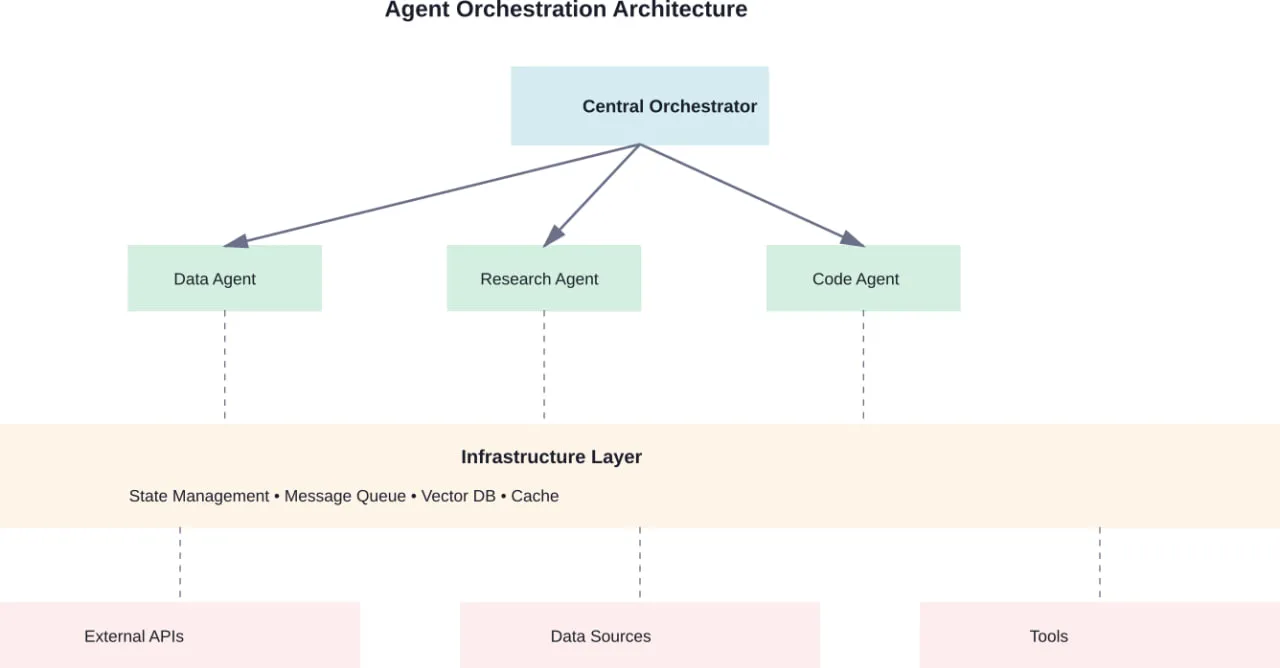
Core components of AI agent architecture showing perception, reasoning, memory, action, and orchestration layers

The Four-Layer Agent Architecture Model

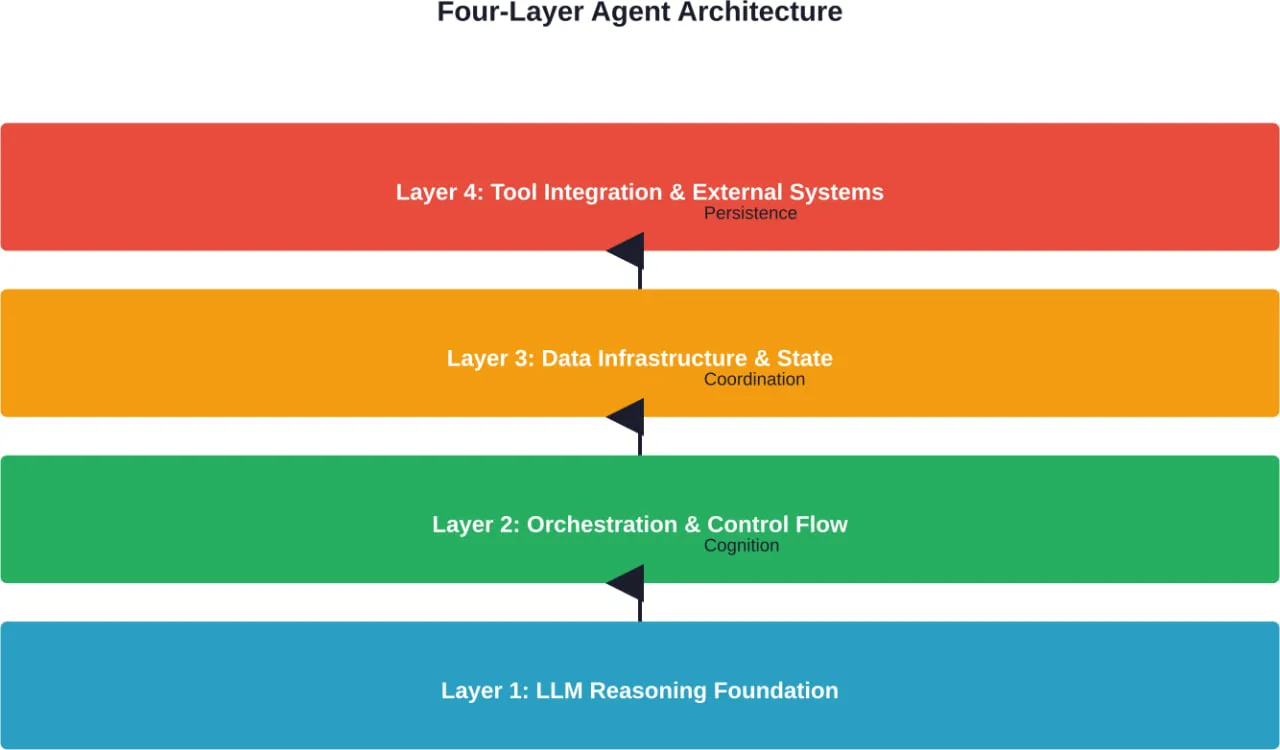
Modern production agent systems typically implement a four-layer architectural model. This structure emerged from practical experience building systems that handle real-world complexity without collapsing into unpredictable behavior.

Layer 1: LLM Reasoning Foundation

At the base sits the reasoning layer—usually one or more large language models. This layer handles natural language understanding, task decomposition, and decision-making. The LLM doesn’t run the entire system; it serves as the cognitive engine that interprets intent and plans actions.

Different reasoning patterns exist at this layer. Chain-of-thought prompting breaks complex problems into steps. ReAct (Reasoning + Acting) patterns interleave thinking and tool use. Tree-of-thought approaches explore multiple reasoning paths simultaneously.

Layer 2: Orchestration and Control Flow

The orchestration layer sits above reasoning and determines how the agent coordinates its actions. This is where architectural patterns become critical. According to AI agent orchestration patterns documentation, teams can choose from several proven approaches:

PatternBeschreibungAm besten für
SequentialTasks execute one after another in predetermined orderPredictable workflows with clear dependencies
ConcurrentMultiple tasks run in parallel, results synthesizedIndependent operations that can happen simultaneously
Group ChatMultiple specialized agents collaborate through discussionComplex problems requiring diverse expertise
HandoffTasks pass between agents based on context and capabilityCustomer service, multi-stage processes
MagenticDynamically routes to appropriate specialized agentsUnpredictable task variety requiring flexibility

Sequential orchestration works when workflows are predictable. A travel booking agent that checks availability, then compares prices, then reserves a ticket follows sequential logic. Concurrent orchestration handles scenarios where multiple independent operations can happen at once—like an agent gathering data from five different APIs simultaneously.

Layer 3: Data Infrastructure and State Management

Agents need memory, and that requires infrastructure. This layer handles how agents store and retrieve information across interactions. Short-term memory maintains conversation context within a session. Long-term memory persists knowledge across sessions, often using vector databases for semantic search.

State management becomes critical in production. What happens when an agent crashes mid-task? The data infrastructure layer ensures the system can recover gracefully, resume interrupted workflows, and maintain consistency.

Layer 4: Tool Integration and External Systems

The top layer connects agents to external capabilities. This includes APIs, databases, search engines, calculators, code interpreters—anything that extends the agent’s abilities beyond pure language generation.

Tool integration requires careful interface design. Each tool needs a clear description the LLM can understand, explicit parameters, and robust error handling. According to CSIRO’s research on agent design patterns, well-designed tool interfaces dramatically improve agent reliability.

The four-layer model for AI agent architecture showing information flow from reasoning through orchestration to external systems

Multi-Agent System Architectures

Single-agent systems handle straightforward tasks well. But complex enterprise scenarios often require multiple specialized agents working together. Multi-agent architectures distribute cognition across several autonomous components, each with specific expertise.

Microsoft’s multi-agent reference architecture demonstrates how organizations deploy these systems at scale. Rather than building one massive agent that tries to do everything, teams create focused agents that collaborate through well-defined protocols.

When Multi-Agent Makes Sense

Not every problem needs multiple agents. Research from the University of Tunis examining agentic AI frameworks suggests multi-agent approaches excel in scenarios with:

  • Distinct domains of expertise that don’t overlap significantly
  • Tasks that naturally decompose into parallel subtasks
  • Requirements for different reasoning strategies within one workflow
  • Scale demands where single agents create bottlenecks

A financial analysis system might employ separate agents for market research, risk assessment, regulatory compliance, and portfolio optimization. Each agent specializes deeply in its domain, then collaborates with others to produce comprehensive recommendations.

Coordination Patterns in Multi-Agent Systems

Getting agents to work together requires explicit coordination mechanisms. The group chat pattern, described in Azure’s orchestration documentation, lets agents communicate through message passing. One agent poses questions, others respond with their specialized knowledge, and a coordinator synthesizes the discussion.

Handoff patterns work differently. Here agents explicitly transfer control to one another based on capability requirements. A customer service scenario might start with a general inquiry agent, hand off to a technical specialist for complex issues, then transfer to a billing agent for payment matters.

Hierarchical architectures introduce leader-follower relationships. A supervisor agent delegates subtasks to worker agents, monitors their progress, and integrates results. This pattern reduces coordination complexity but introduces single points of failure.

Orchestration Patterns Explained

The orchestration layer determines how agents execute tasks. Choosing the right pattern matters—it directly impacts reliability, performance, and maintainability. Research from Halmstad University emphasizes that architectural choices at this layer shape system reliability more than any other factor.

Sequential Orchestration

Sequential orchestration runs tasks one after another. Step one completes, then step two begins. This pattern works well when operations have clear dependencies and outcomes from early steps inform later decisions.

Consider a research agent analyzing a scientific paper. It might first extract the abstract, then identify key concepts, then search for related work, then synthesize findings. Each step builds on previous results, making sequential execution natural.

The downside? Latency. Every task waits for its predecessor to finish completely.

Concurrent Orchestration

Concurrent patterns run multiple tasks simultaneously when operations don’t depend on each other. A market analysis agent might query ten different data sources in parallel, then combine results once all queries complete.

This dramatically reduces total execution time for independent operations. But it introduces complexity—handling partial failures, managing timeouts, and synthesizing potentially conflicting information.

Group Chat and Collaborative Patterns

Group chat orchestration treats multiple specialized agents as participants in a discussion. Agents take turns contributing insights, building on each other’s responses. A coordinator agent facilitates the conversation and determines when enough information exists to conclude.

This pattern excels for problems without clear solution paths. Complex strategy questions, creative brainstorming, and scenarios requiring diverse perspectives benefit from collaborative exploration.

Magentic and Dynamic Routing Patterns

The magentic pattern, referenced in Microsoft’s agent work, dynamically routes tasks to appropriate specialized agents based on content analysis. Rather than predetermined workflows, the system analyzes each request and intelligently selects which agent should handle it.

This provides flexibility for unpredictable workloads but requires robust routing logic and clear agent capability definitions.

Orchestration PatternLatencyKomplexitätFlexibilitätVerlässlichkeit
SequentialHochNiedrigNiedrigHoch
ConcurrentNiedrigMittelMittelMittel
Group ChatHochHochHochMittel
HandoffMittelMittelMittelHoch
Magentic/DynamicMittelHochHochMittel

State Management and Memory Architecture

Agents without memory can’t maintain context, learn from interactions, or handle complex multi-step workflows. The memory architecture determines what information persists, how it’s retrieved, and when it expires.

Short-Term Context Windows

Short-term memory handles immediate conversation context. For LLM-based agents, this typically means the prompt window—everything the model sees in the current interaction. Context windows have grown substantially, with some models now handling hundreds of thousands of tokens.

But larger windows don’t eliminate the need for smart context management. Relevant information should appear near the beginning and end of prompts, where models pay more attention. Irrelevant details consume tokens without improving performance.

Long-Term Knowledge Storage

Long-term memory persists across sessions. This might include user preferences, historical interactions, learned facts, or accumulated expertise. Vector databases enable semantic search over stored information—agents retrieve contextually relevant memories rather than exact keyword matches.

Implementation often combines structured databases for factual information with vector stores for semantic recall. A customer service agent might query a SQL database for account details while simultaneously searching vector embeddings for similar past issues.

State Persistence and Recovery

Production systems need state persistence. What happens when an agent crashes halfway through a multi-step booking process? Without proper state management, users start over. With it, the system recovers and resumes.

This requires explicit state tracking—recording which steps completed successfully, what decisions the agent made, and what remains to be done. State can persist in databases, message queues, or specialized orchestration frameworks.

When Agents Are Overkill

Here’s what marketing materials won’t tell you: agents aren’t always the right architecture. Many problems that seem to require agents actually work better with simpler approaches.

If workflows are 80% predictable, deterministic code often performs better than autonomous agents. A trip planning website that needs to check availability, compare prices, and book tickets doesn’t need agent architecture. It needs a well-designed API integration.

Agents introduce overhead—computational cost, latency, unpredictability, and debugging complexity. These costs make sense when problems genuinely require reasoning, adaptation, and autonomous decision-making. But forcing agent architecture onto simple workflows creates unnecessary complexity.

Direct Model Calls vs Agent Systems

According to Azure’s architecture guidance, direct model calls suffice for classification, summarization, and simple transformations. No orchestration, no tools, no state management. Just prompt engineering and model inference.

Agent architectures become valuable when tasks require multiple steps, external information gathering, or adaptive strategies based on intermediate results. The decision point: can you map the workflow in advance, or does the agent need to figure it out dynamically?

Tool Integration and API Design

Tools extend agent capabilities beyond language generation. But poorly designed tool interfaces lead to unreliable behavior, failed function calls, and frustrated debugging sessions.

Designing Tool Interfaces

Each tool needs three elements: a clear natural language description, explicit parameters with types and constraints, and robust error handling. The description tells the LLM when and why to use the tool. Parameters define exactly what information the tool requires. Error handling ensures graceful degradation when operations fail.

Descriptions should be concise but specific. Instead of “searches the database,” write “searches customer records by email address or phone number, returning account details and purchase history.” Specificity helps models choose appropriate tools.

Function Calling Protocols

Modern LLMs support structured function calling—generating JSON that specifies tool invocation rather than natural language. This reduces parsing errors and makes tool usage more reliable.

But function calling requires well-defined schemas. Parameters need clear types, defaults, and validation rules. Optional versus required parameters must be explicit. Ambiguous interfaces lead to hallucinated parameters and failed calls.

Production Deployment Considerations

Getting agents working in development differs dramatically from running them reliably in production. According to NIST’s AI Agent Standards Initiative announced on February 17, 2026, standardizing agent deployment practices matters for security, interoperability, and reliability.

Monitoring and Observability

Traditional application monitoring doesn’t capture what matters for agents. Teams need visibility into reasoning steps, tool invocations, state transitions, and decision paths—not just latency and error rates.

Logging every LLM interaction helps debug unexpected behavior. Tracking which tools get called reveals usage patterns. Recording state transitions shows where workflows break down.

Sicherheit und Leitplanken

Autonomous systems need constraints. Guardrails prevent agents from taking harmful actions, exceeding authority, or making irreversible decisions without confirmation.

This might include approval workflows for high-stakes actions, spending limits for agents with API access, or content filtering for customer-facing systems. NIST’s AI Risk Management Framework provides guidance on building trustworthy AI systems with appropriate safeguards.

Kostenmanagement

LLM API calls aren’t free. Agents that make dozens of reasoning steps per task can generate significant costs. Production deployments need cost monitoring, budget alerts, and optimization strategies.

Caching repeated queries, using smaller models for simple decisions, and implementing rate limiting all help control expenses without sacrificing capability.

Production readiness checklist for deploying AI agents showing implementation status across critical categories

Enterprise Multi-Agent Patterns

Enterprise deployments face unique challenges: legacy system integration, compliance requirements, scale demands, and organizational complexity. Research on multi-agent control systems highlights how architectural choices cascade through organizational structures.

Cloud Architecture for Agent Systems

Cloud infrastructure provides the scalability agents need. Cloud Run, Lambda, and similar serverless platforms handle variable workloads without manual scaling. But agents introduce stateful requirements that complicate serverless deployment.

Hybrid approaches work well—serverless functions for stateless reasoning steps, managed databases for state persistence, and message queues for orchestration. This separates concerns and lets each component scale independently.

Sicherheit und Compliance

Autonomous systems that access sensitive data or make consequential decisions need robust security. This includes authentication for tool access, authorization for agent actions, audit logging, and data protection.

Security considerations in AI agent systems should be architectural—built into system design rather than bolted on afterward. Authentication tokens expire, permissions follow least-privilege principles, and sensitive data never appears in unencrypted logs.

Integration in bestehende Systeme

Enterprises rarely start fresh. Agent architectures must integrate with decades of legacy systems, each with its own APIs, data formats, and quirks.

Adapter patterns help—building translation layers that convert between agent expectations and legacy system realities. This isolates complexity and lets agent logic remain clean while adapters handle messy integration details.

Architectural Decision Framework

Choosing the right agent architecture requires evaluating tradeoffs across multiple dimensions. Here’s a framework for making informed decisions:

Complexity Assessment

Start by assessing task complexity honestly. Can workflows be mapped in advance? Do tasks require reasoning and adaptation? Would simpler approaches work?

If 80% of cases follow predictable paths, consider deterministic systems with agent fallback for edge cases. Full agent architecture makes sense when task variety exceeds what predetermined logic can handle.

Reliability Requirements

How critical is consistent behavior? Customer service agents need high reliability—unpredictable responses damage trust. Research agents exploring novel strategies tolerate more variability.

Higher reliability requirements favor simpler orchestration patterns, extensive testing, and strong guardrails. Lower stakes scenarios allow more experimental architectures.

Latency Constraints

Real-time interactions demand fast response. Multi-step reasoning workflows introduce latency. If users expect sub-second responses, complex agent architectures might not fit.

Latency-sensitive applications benefit from concurrent orchestration, smaller models for quick decisions, and aggressive caching. Batch workflows tolerate more elaborate reasoning.

Scale Projections

How many concurrent users will the system support? Single-agent architectures create bottlenecks at scale. Multi-agent systems distribute load but introduce coordination overhead.

High-scale deployments favor stateless components, horizontal scaling, and asynchronous processing. Small-scale internal tools can use simpler architectures.

Turn Your AI Architecture Into a Working System

An architecture diagram shows how AI agents, services, and data flows should connect. The challenge usually starts after that – integrating components, setting up stable backend logic, and making sure everything runs reliably in a real environment. This is where many teams slow down, especially when internal resources are limited or focused on other priorities.

A-listware supports this stage from an engineering perspective. The company provides dedicated development teams that handle backend systems, integrations, APIs, and infrastructure around AI-driven solutions. The focus is not on building AI agents themselves, but on making sure the surrounding system works as expected and scales without constant fixes.

If your architecture is already defined but not yet implemented, this is the point to bring in extra engineering capacity. Contact A-listware to support the development, integration, and rollout of your system.

Häufig gestellte Fragen

  1. What’s the difference between agent architecture and traditional software architecture?

Traditional software follows predetermined logic paths—given input X, execute steps A, B, C. Agent architectures introduce autonomous decision-making. The system determines its own action sequence based on goals and environmental feedback. This requires components for reasoning, state management, and tool orchestration that don’t exist in conventional architectures.

  1. Do I need multiple agents or will one suffice?

Single agents work well for focused tasks within one domain. Multiple agents make sense when problems naturally decompose into distinct specializations, require parallel processing, or benefit from diverse reasoning approaches. Most teams start with single-agent systems and introduce multiple agents only when complexity or scale demands it.

  1. Which orchestration pattern should I choose?

Sequential orchestration works for predictable workflows with clear step dependencies. Concurrent patterns reduce latency when operations are independent. Group chat excels for complex problems without obvious solutions. Choose based on whether your workflow is predetermined (sequential), parallelizable (concurrent), or exploratory (group chat).

  1. How do I handle agent failures in production?

Implement state persistence so agents can resume after failures. Use retry logic with exponential backoff for transient errors. Design graceful degradation—if the agent can’t complete a task autonomously, escalate to human operators rather than failing silently. Monitor state transitions to detect where failures occur most frequently.

  1. What’s the role of vector databases in agent architecture?

Vector databases enable semantic memory—agents retrieve contextually relevant information rather than exact keyword matches. This supports long-term memory across sessions, retrieval-augmented generation workflows, and finding similar past cases. Not every agent needs vector storage, but those requiring extensive knowledge recall benefit significantly.

  1. How do I prevent agents from taking harmful actions?

Implement guardrails at multiple levels. Constrain which tools agents can access. Require approval workflows for high-stakes actions. Set spending limits for agents with financial access. Filter outputs for inappropriate content. Design fail-safes that prevent irreversible actions. AI risk management frameworks provide guidance on building appropriate safeguards.

  1. Should I build agent infrastructure from scratch or use a framework?

Frameworks like LangChain, AutoGen, and Semantic Kernel provide orchestration primitives, tool integration patterns, and state management utilities. They accelerate development but introduce dependencies and opinions. Building from scratch offers control but requires more engineering effort. For most teams, frameworks provide a reasonable starting point with the option to replace components later.

Conclusion: Building Reliable Agent Systems

AI agent architecture determines whether autonomous systems perform reliably or fail unpredictably. The four-layer model—reasoning foundation, orchestration logic, data infrastructure, and tool integration—provides a proven structure for building production systems.

Architectural choices cascade through every aspect of system behavior. Sequential versus concurrent orchestration affects latency. State management approaches determine recovery capabilities. Multi-agent versus single-agent designs impact scale characteristics.

But architecture alone doesn’t guarantee success. Production-ready agents require monitoring, guardrails, cost management, and security. According to NIST’s AI Agent Standards Initiative, standardizing these practices will enable broader adoption with appropriate safeguards.

Start with the simplest architecture that meets requirements. Add complexity only when simpler approaches prove insufficient. Test extensively with realistic workloads before production deployment. Monitor agent behavior closely in early releases.

The research is clear: reliability stems from thoughtful architectural choices, not merely from using the latest models. Teams that invest in solid architecture, proper tooling, and robust state management build agents that actually work when deployed.

Ready to implement these patterns? Begin by mapping your specific use case to the orchestration patterns and architectural layers described here. Prototype with a single-agent system, validate behavior, then scale complexity as requirements demand.

AI Agent vs Chatbot: Key Differences in 2026

Kurze Zusammenfassung: AI agents and chatbots differ fundamentally in autonomy and capability. Chatbots respond to user prompts with scripted or learned responses, while AI agents proactively plan, make decisions, and execute multi-step tasks independently. Chatbots handle routine queries effectively, but agents tackle complex workflows that require reasoning, tool use, and continuous learning.

The artificial intelligence landscape has shifted dramatically. What started as simple chatbots answering FAQs has evolved into sophisticated AI agents capable of autonomous decision-making and task execution.

But here’s where things get confusing. The terms “chatbot” and “AI agent” often get used interchangeably, yet they represent fundamentally different technologies with distinct capabilities and limitations.

According to recent industry data, 84% of developers now use AI tools, and eight in ten enterprises have deployed agent-based AI. The market for these technologies is projected to grow at 45.8% annually through 2030. With this rapid adoption comes a critical need to understand what separates these technologies.

The distinction isn’t just semantic. It fundamentally impacts how effectively teams can automate workflows, serve customers, and scale operations.

What Is a Chatbot?

Chatbots are software applications designed to simulate human conversation. They respond to user inputs with pre-programmed or learned responses, handling interactions through text or voice interfaces.

Traditional chatbots operate on rule-based logic. When someone asks a question, the bot matches keywords or patterns to trigger specific responses. Think of early customer service bots that could only handle a narrow set of queries.

Modern chatbots leverage large language models and natural language processing. These AI-powered versions understand context better and generate more natural responses. But they still share a fundamental characteristic: they’re reactive systems that require human prompts to initiate action.

The architecture is straightforward. The user sends input, the system processes it, and returns output. That’s the loop.

Core Characteristics of Chatbots

Chatbots excel at conversational tasks within defined boundaries. They wait for input, interpret what the user wants, and respond accordingly.

Their learning capabilities vary by type. Rule-based bots don’t learn at all—they follow scripts. Machine learning-powered bots adapt over time based on training data, but this adaptation happens through retraining cycles rather than real-time autonomous improvement.

Response quality depends heavily on how well the system was trained and how closely the user’s query matches patterns the bot recognizes. Step outside those patterns, and chatbots typically struggle or escalate to human support.

Common Chatbot Use Cases

Customer service remains the primary chatbot application. These bots handle frequently asked questions, password resets, order status checks, and appointment scheduling.

E-commerce sites deploy chatbots for product recommendations and shopping assistance. Healthcare organizations use them for symptom checking and appointment booking. Educational institutions implement chatbots for student inquiries about courses and campus services.

The pattern is consistent: chatbots work best for high-volume, repetitive queries with clear parameters and expected outcomes.

Lippert, a component manufacturer with over $5.2 billion in annual sales, uses chatbots to manage significant customer service communications volume. These systems handle routine inquiries efficiently, freeing human agents for complex issues requiring judgment and expertise.

What Is an AI Agent?

AI agents represent a fundamentally different paradigm. According to research from ArXiv, AI agents are modular systems driven by large language models that can plan, reason, and execute tasks autonomously.

Here’s what makes them distinct: agents don’t just respond to prompts. They identify goals, break them into steps, choose tools, execute actions, and adapt based on results—all without requiring human input at each stage.

OpenAI’s ChatGPT agent, introduced in July 2025, exemplifies this shift. It can handle requests like “look at my calendar and brief me on upcoming client meetings based on recent news about their companies.” The agent accesses multiple tools, researches information, and compiles a comprehensive brief autonomously.

The architectural difference is substantial. Agents operate in perception-decision-action loops. They observe their environment, process that information through reasoning modules, decide on actions, execute those actions using available tools, and learn from outcomes.

Autonomy and Decision-Making

Autonomy is the defining characteristic of AI agents. Research on levels of autonomy for AI agents highlights this as both transformative opportunity and significant risk.

Agents make decisions without human intervention at every step. When faced with a task, they determine the optimal approach, select appropriate tools from their available toolkit, and execute multi-step workflows.

This autonomy operates on a spectrum. Some agents handle narrow tasks with minimal supervision. Others manage complex operations requiring extensive reasoning and tool orchestration.

But autonomy brings challenges. How much independent action should an agent have? What guardrails prevent harmful decisions? These questions shape how organizations deploy agent systems.

Learning and Adaptation

AI agents continuously improve performance through experience. Unlike chatbots that require manual retraining, agents incorporate feedback loops that enable real-time learning.

OpenAI developers note that modern agents utilize long-term memory through session notes and persistent context. This allows agents to remember preferences, past decisions, and user-specific information across interactions.

Session-level memory holds contextual information relevant to current interactions—things like “this trip is a family vacation” or “budget under $2,000.” Persistent memory stores long-term user preferences and historical patterns that inform future decisions.

This learning architecture transforms how agents operate over time. They don’t just execute tasks; they optimize execution based on accumulated experience.

Operational flow comparison: Chatbots follow linear prompt-response patterns while AI agents execute autonomous loops with planning, execution, and learning phases.

Tool Use and Integration

AI agents interact with external systems through tool use. They can access databases, call APIs, execute code, browse the web, and manipulate files—all as needed to accomplish tasks.

The difference from traditional automation is crucial. Agents decide which tools to use and when to use them based on the specific context of each task. Traditional automation follows predefined workflows; agents dynamically construct workflows.

OpenAI’s agent implementation demonstrates this capability. When asked to create a presentation, the agent identifies relevant research sources, extracts key information, generates slides, formats content, and compiles the final deliverable—choosing appropriate tools at each stage without explicit instructions for every step.

Key Differences Between AI Agents and Chatbots

The distinctions between these technologies matter for business decisions, security implications, and operational outcomes.

FähigkeitAI ChatbotsAI-Agenten 
AutonomyRequire human promptsProactively identify needs and act independently
LernenLimited adaptationContinuously learn and improve performance
Task ComplexitySingle-step responsesMulti-step workflows with reasoning
Tool AccessMinimal external integrationDynamic tool selection and execution
Decision-MakingPattern matchingGoal-oriented planning
MemorySession-based onlyLong-term context retention

Autonomy: Reactive vs Proactive

Chatbots wait. Agents act.

That’s the fundamental divide. Chatbots respond when users initiate contact. They’re excellent at this reactive role—answering questions, providing information, guiding users through processes.

AI agents operate proactively. They identify tasks that need completion, determine optimal approaches, and execute without waiting for explicit prompts at each decision point.

This distinction shapes deployment scenarios. Organizations use chatbots where human-initiated interaction makes sense. Agents fit situations requiring ongoing monitoring, complex workflows, or tasks that benefit from autonomous execution.

Complexity Handling

Chatbots handle straightforward queries effectively. Ask about store hours, and the bot provides the answer instantly. Request a password reset, and it guides through the process.

But complexity exposes limitations. Multi-step problems requiring research, tool integration, and adaptive decision-making overwhelm traditional chatbot architectures.

AI agents thrive on complexity. They break large problems into manageable components, execute each component using appropriate methods, and synthesize results into coherent outcomes.

Research capabilities illustrate this gap. A chatbot might provide links to relevant information. An agent researches the topic across multiple sources, synthesizes findings, evaluates credibility, and delivers comprehensive analysis—all autonomously.

Security Implications

The Cloud Security Alliance highlights critical security differences between chatbots and agents. Both automate tasks, but agents’ autonomous decision-making creates distinct risk profiles.

Chatbots operate within narrow boundaries. Their limited scope constrains potential security issues. An attacker compromising a chatbot gains access to conversational interfaces but not necessarily broader system control.

Agents with tool access and autonomous execution capabilities present expanded attack surfaces. Compromised agents potentially access databases, execute code, modify files, and interact with multiple systems—all autonomously.

This doesn’t make agents inherently less secure, but it demands different security approaches. Organizations deploying agents need robust authentication, authorization frameworks, activity monitoring, and guardrails preventing harmful actions.

Use Cases: When to Choose Chatbots vs AI Agents

The technology choice depends on task characteristics, complexity requirements, and operational constraints.

Optimal Chatbot Applications

Customer support for common issues represents the ideal chatbot scenario. When most queries fall into predictable categories with known solutions, chatbots excel.

FAQ automation, appointment scheduling, order tracking, basic troubleshooting, and information retrieval all fit chatbot capabilities well. These tasks have clear parameters, defined outcomes, and benefit from instant availability.

Lead qualification for sales teams works effectively with chatbots. The bot asks predefined questions, categorizes responses, and routes qualified leads to appropriate sales representatives.

Internal employee support for HR queries, IT help desk tickets, and policy questions leverages chatbots to reduce support team workload while providing immediate assistance.

Optimal AI Agent Applications

Complex workflow automation benefits from agent capabilities. Tasks requiring multiple tools, conditional logic, and adaptive decision-making justify agent deployment.

Research and analysis projects that involve gathering information from diverse sources, evaluating credibility, synthesizing insights, and producing comprehensive reports align with agent strengths.

Intelligent scheduling that considers multiple calendars, participant preferences, meeting requirements, and optimal timing represents a natural agent application. The agent autonomously handles negotiations, proposes options, and finalizes arrangements.

Data processing workflows that require extracting information from various formats, transforming data structures, validating accuracy, and loading results into target systems leverage agent reasoning and tool use.

Content creation that demands research, outline development, drafting, fact-checking, and formatting showcases agent capabilities for managing complex creative processes.

Hybrid Approaches

Many organizations deploy both technologies in complementary roles. Chatbots handle initial customer interactions, routine queries, and information gathering. When complexity exceeds chatbot capabilities, the system escalates to AI agents for resolution.

This tiered approach optimizes resource allocation. High-volume simple tasks get handled by efficient chatbot systems. Complex edge cases receive agent attention. Human experts focus on situations requiring judgment, empathy, or specialized expertise.

Slack’s Agentforce integration exemplifies this hybrid model. The platform combines conversational interfaces for common requests with agent capabilities for complex workflows requiring tool integration and multi-step execution.

Performance and Evaluation Challenges

Measuring AI agent effectiveness presents unique challenges compared to chatbot evaluation.

Chatbot Evaluation Metrics

Chatbot performance metrics are relatively straightforward. Response accuracy, conversation completion rate, user satisfaction scores, and escalation frequency provide clear performance indicators.

String matching, pattern recognition accuracy, and intent classification metrics quantify how well chatbots understand user inputs and select appropriate responses.

Response time, availability, and throughput measure operational performance. These metrics align well with chatbot use cases focused on high-volume routine interactions.

AI Agent Evaluation Complexity

Anthropic’s research on agent evaluation highlights the complexity challenge. The capabilities that make agents useful—autonomy, tool use, multi-step reasoning—also make them difficult to evaluate.

Traditional metrics fall short. String matching doesn’t capture whether an agent made optimal tool choices. Binary pass/fail tests miss nuanced performance differences in complex workflows.

Effective agent evaluation requires multi-faceted approaches. Code-based graders verify specific outcomes. LLM-based evaluators assess reasoning quality and decision appropriateness. Human review validates complex scenarios where automated evaluation proves insufficient.

OpenAI’s testing of their agent implementation demonstrates these challenges. When running up to eight parallel attempts and selecting based on confidence scores, their agent’s performance on hard benchmarks like FrontierMath showed significant variation—highlighting the non-deterministic nature of agent systems.

Evaluation ApproachStrengthsLimitations 
String Match ChecksFast, deterministic, easy to implementMisses semantic equivalence and contextual appropriateness
Binary TestsClear pass/fail criteriaOverlooks quality gradations in complex tasks
LLM-Based GradersAssess reasoning and context understandingSubject to evaluator model biases and limitations
Human ReviewCaptures nuanced judgmentExpensive, slow, doesn’t scale

The Evolution from Chatbots to Agents

The shift from passive assistants to active agents represents the most significant transformation in artificial intelligence since ChatGPT’s launch.

Early chatbots were glorified search interfaces. Ask a question, get an answer. The intelligence lay in matching queries to knowledge bases.

Large language models expanded conversational capabilities. Chatbots became more natural, handling broader query variations and generating contextually appropriate responses. But they remained fundamentally reactive.

The agent era began when systems gained tool use, memory, and planning capabilities. Now AI doesn’t just respond—it acts.

Research from ArXiv on AI agents versus agentic AI provides conceptual clarity. AI agents are modular systems with distinct perception, reasoning, and action components. Agentic AI refers to the broader capability of systems to exhibit agency—autonomous goal-directed behavior.

This evolution continues. Current agent systems represent early implementations. As architectures mature, capabilities expand, and deployment patterns emerge, the distinction between reactive and agentic systems will likely sharpen further.

Implementation Considerations

Deploying either technology requires careful consideration of technical, operational, and organizational factors.

Technical Requirements

Chatbot implementation demands natural language processing capabilities, intent recognition systems, and response generation mechanisms. Integration with existing knowledge bases and customer service platforms shapes technical architecture.

AI agent deployment requires substantially more infrastructure. Agents need access to tool APIs, secure credential management, execution environments, monitoring systems, and error handling frameworks.

The technical complexity difference is significant. Chatbots can often be deployed as standalone services with limited integration points. Agents typically require deep integration with multiple systems to function effectively.

Governance and Control

Chatbot governance focuses on response quality, brand consistency, and escalation protocols. Control mechanisms are relatively straightforward since chatbots operate within narrow boundaries.

Agent governance demands frameworks for autonomy levels, action permissions, monitoring, and intervention. Organizations must define which actions agents can take independently versus requiring human approval.

Research on levels of autonomy for AI agents emphasizes that autonomy is a double-edged sword. The same capabilities that enable transformative outcomes create serious risks. Agent developers must calibrate appropriate autonomy levels for specific applications.

Cost Structures

Chatbot costs scale primarily with conversation volume. Each interaction consumes API calls for language model processing, but costs remain predictable and proportional to usage.

Agent costs are more complex. Tool usage, execution time, parallel processing, and memory storage all factor into operational expenses. A single agent task might require dozens of API calls across multiple services.

The cost equation depends on task value. Agents handling high-value complex workflows justify higher per-task costs. For high-volume simple tasks, chatbot economics typically prove more favorable.

Get the Technical Setup Right with A-listware

In comparisons like AI agents vs chatbots, the difference is often explained at the logic level. In practice, both rely on the same foundation – backend services, integrations, data handling, and infrastructure that keeps everything running. A-listware focuses on custom software development and dedicated engineering teams that build and support these systems, covering architecture, development, deployment, and maintenance.

The real challenge is not choosing between a chatbot or an agent, but turning either into a stable product. A-listware supports the full development lifecycle and helps integrate AI into working applications without splitting work across multiple vendors. Talk to A-listware and get a clear path from concept to implementation.

Real-World Performance Data

When OpenAI tested their agent implementation on challenging benchmarks, results highlighted both capabilities and limitations. The agent achieved a 44.4 HLE score on hard math problems when running eight parallel attempts and selecting based on confidence—substantially better than single-attempt performance but still showing room for improvement.

This performance pattern illustrates agent characteristics. Non-deterministic execution means multiple attempts may produce different quality outcomes. Confidence scoring helps select better results, but doesn’t guarantee optimal solutions.

Zendesk reports that their AI agents are trained on billions of real customer service interactions, enabling continuous improvement based on live data. This scale of training data contributes to more reliable performance in customer service contexts.

Performance ultimately depends on task alignment with system capabilities. Agents excel where complexity, tool use, and reasoning provide value. Chatbots perform best in high-volume scenarios with clear patterns and defined outcomes.

Future Trajectories

The agent market is projected to grow at 45.8% annually through 2030. This growth reflects expanding capabilities, broader use cases, and increasing enterprise adoption.

Chatbots aren’t disappearing. They’re evolving into more capable conversational interfaces while maintaining their core reactive architecture for appropriate use cases.

The convergence is partial. Some applications benefit from agentic capabilities added to conversational interfaces. Others work better with specialized agents handling complex workflows behind the scenes.

Multi-agent architectures represent an emerging pattern. Instead of monolithic AI systems, organizations deploy specialized agents for different domains, with coordination mechanisms enabling collaboration. Research from IEEE on LLM-driven multi-agent architectures explores these coordination frameworks.

The technical distinction between chatbots and agents will likely persist because it reflects fundamentally different design philosophies and operational patterns. But both technologies will continue advancing within their respective paradigms.

Häufig gestellte Fragen

  1. Can AI agents replace chatbots completely?

Not necessarily. While AI agents offer more advanced capabilities, chatbots remain more efficient for high-volume simple interactions. The reactive nature of chatbots actually provides advantages for straightforward query-response scenarios where autonomy adds unnecessary complexity and cost. Many organizations benefit from using both technologies in complementary roles rather than replacing one with the other.

  1. Are AI agents more expensive to operate than chatbots?

Generally yes, on a per-task basis. AI agents consume more computational resources, make multiple API calls per task, utilize tool integrations, and require more sophisticated infrastructure. However, cost-effectiveness depends on task value. For complex workflows that would otherwise require human labor, agents can provide significant ROI despite higher operational costs compared to chatbots.

  1. How do I know which technology my business needs?

Assess task characteristics. If most interactions involve straightforward queries with predictable responses, chatbots fit well. If workflows require multi-step processes, tool integration, research, or autonomous decision-making, agents provide better value. Many businesses benefit from starting with chatbots for common tasks and adding agents for complex scenarios that justify the additional investment.

  1. What are the main security risks of AI agents versus chatbots?

AI agents present expanded attack surfaces due to tool access and autonomous execution capabilities. A compromised agent potentially interacts with multiple systems, executes code, and modifies data—all autonomously. Chatbots have more limited scope, constraining potential damage from security breaches. Organizations deploying agents need robust authentication, monitoring, and guardrails to mitigate risks associated with autonomous system access.

  1. Can chatbots learn and improve like AI agents?

Chatbots can improve through retraining on new data, but this happens in discrete cycles rather than continuously during operation. AI agents incorporate feedback loops enabling real-time learning and adaptation. Agents also maintain long-term memory across interactions, while chatbots typically only retain session-level context. This learning architecture difference fundamentally separates how the technologies evolve and optimize performance over time.

  1. Do AI agents require more technical expertise to implement?

Yes, substantially more. AI agents need integration with multiple tools, secure credential management, execution monitoring, error handling frameworks, and governance systems. Chatbots can often be deployed with pre-built platforms and minimal custom development. Organizations considering agent deployment should assess whether they have the technical capabilities to implement, monitor, and maintain these more complex systems effectively.

  1. What industries benefit most from AI agents versus chatbots?

Chatbots serve nearly all industries for customer service, support, and information delivery. AI agents provide particular value in industries with complex workflows: financial services for research and analysis, healthcare for care coordination, logistics for dynamic scheduling and routing, and professional services for document processing and client deliverable creation. The determining factor is task complexity rather than industry sector.

Schlussfolgerung

AI agents and chatbots serve distinct purposes in the artificial intelligence landscape. Chatbots excel at reactive, conversational tasks with clear parameters and high volume. AI agents tackle complex, multi-step workflows requiring autonomy, tool use, and adaptive decision-making.

The choice between these technologies depends on specific business needs, task characteristics, and operational constraints. Organizations don’t necessarily need to choose one over the other—hybrid approaches leveraging both technologies in complementary roles often deliver optimal results.

As AI capabilities continue advancing, both chatbots and agents will evolve. Chatbots will become more sophisticated in natural language understanding and response quality. Agents will expand tool access, improve reasoning capabilities, and develop more robust governance frameworks.

The fundamental distinction will persist: chatbots respond, agents act. Understanding this difference enables businesses to deploy the right technology for each use case, maximizing value while managing costs and risks appropriately.

Ready to implement AI solutions for your business? Start by mapping your current processes, identifying high-volume routine tasks suited for chatbots and complex workflows that justify agent capabilities. Test both technologies in controlled environments before full deployment, and establish clear metrics for evaluating performance against your specific business objectives.

AI Agent Orchestration: Ein Leitfaden für Multi-Agenten-Systeme im Jahr 2026

Kurze Zusammenfassung: Die Orchestrierung von KI-Agenten koordiniert mehrere spezialisierte KI-Agenten innerhalb eines einheitlichen Systems, um komplexe Aufgaben zu bewältigen, die einzelne Agenten nicht allein bewältigen können. Sie verwaltet die Kommunikation der Agenten, die Aufgabenverteilung und die Workflow-Koordination durch Frameworks wie LangGraph, CrewAI und AutoGen. Unternehmen, die diesen Ansatz anwenden, berichten von messbaren Verbesserungen bei den Automatisierungsfähigkeiten und der Erledigungsrate von Aufgaben.

Einzelnen KI-Agenten sind Grenzen gesetzt. Sie eignen sich hervorragend für konzentrierte Aufgaben, haben aber Probleme, wenn die Komplexität zunimmt. Diese Tatsache führt zu einer grundlegenden Veränderung der Art und Weise, wie Unternehmen künstliche Intelligenz einsetzen.

Hier kommt die Agenten-Orchestrierung ins Spiel.

Anstatt einen riesigen Agenten zu entwickeln, der alles versucht, koordiniert die Orchestrierung mehrere spezialisierte Agenten. Jeder Agent erledigt das, was er am besten kann. Ein zentraler Koordinator sorgt dafür, dass sie nahtlos zusammenarbeiten.

Laut MIT Sloan Management Review und BCG-Forschung ist die Einführung traditioneller KI in den letzten acht Jahren auf 72% gestiegen. Das Interessante daran ist jedoch, dass Unternehmen die agentenbasierte KI sehr schnell einführen, lange bevor sie über Orchestrationsstrategien verfügen.

Diese Lücke birgt sowohl Chancen als auch Risiken.

Was ist AI Agent Orchestration?

Die Orchestrierung von KI-Agenten ist der Prozess der Koordinierung mehrerer spezialisierter KI-Agenten innerhalb eines einheitlichen Systems, um gemeinsame Ziele effizient zu erreichen. Anstatt sich auf eine einzelne, universelle KI-Lösung zu verlassen, wird bei der Orchestrierung ein Netzwerk von Agenten eingesetzt, die über definierte Protokolle und Arbeitsabläufe zusammenarbeiten.

Stellen Sie sich das wie das Dirigieren eines Orchesters vor. Jeder Musiker spielt ein anderes Instrument mit einzigartigen Fähigkeiten. Der Dirigent spielt nicht jedes Instrument - er koordiniert das Timing, die Balance und die Zusammenarbeit, um etwas zu schaffen, das kein einzelner Musiker allein erreichen könnte.

Das gleiche Prinzip gilt für KI-Agenten.

Laut einer in arXiv veröffentlichten Forschungsarbeit stellen orchestrierte Multiagentensysteme die nächste Stufe in der Entwicklung künstlicher Intelligenz dar. Das Papier “The Orchestration of Multi-Agent Systems: Architectures, Protocols, and Enterprise Adoption” von Adimulam, Gupta und Kumar beschreibt, dass bei der Einführung in Unternehmen sowohl auf die technische Architektur als auch auf organisatorische Protokolle geachtet werden muss.

Kernkomponenten der Agenten-Orchestrierung

Wirksame Orchestrierungssysteme umfassen mehrere wesentliche Elemente:

  • Zentraler Koordinator: Verwaltet Aufgabenverteilung und Workflow-Ausführung
  • Spezialisierte Agenten: Individuelle Agenten, die für bestimmte Fähigkeiten optimiert sind
  • Kommunikationsprotokolle: Standardisierte Methoden für den Informationsaustausch zwischen Agenten
  • Staatliche Verwaltung: Verfolgt den Fortschritt, den Kontext und die Zwischenergebnisse
  • Integration von Werkzeugen: Verbindet Agenten mit externen Systemen und Datenquellen

Das von Zhang et al. vorgestellte AgentOrchestra Framework implementiert ein hierarchisches Multi-Agenten-System unter Verwendung des Tool-Environment-Agent (TEA) Protokolls. Dieser Ansatz ermöglicht es einem zentralen Planer, spezialisierte Sub-Agenten für Webnavigation, Datenanalyse und Dateioperationen zu orchestrieren und gleichzeitig eine kontinuierliche Anpassung zu unterstützen.

Warum Multi-Agenten-Systeme besser abschneiden als Einzelagenten

Einzelne Agenten stoßen an grundlegende Grenzen. Mit zunehmender Komplexität der Aufgaben haben monolithische Agenten Probleme mit der Kontextverwaltung, dem Spezialwissen und der Parallelverarbeitung.

Das Entwicklungsteam von Anthropic hat diese Realität bei der Entwicklung der Recherchefunktion dokumentiert. Die internen Auswertungen von Anthropic zeigen, dass Multi-Agenten-Recherchesysteme vor allem bei "Breadth-First"-Abfragen, bei denen mehrere unabhängige Richtungen gleichzeitig verfolgt werden, hervorragende Ergebnisse liefern.

Das sind die Gründe, warum orchestrierte Systeme gewinnen:

  • Spezialisierung ist besser als Verallgemeinerung: Ein Datenanalyse-Agent, der für statistische Aufgaben optimiert ist, wird einen Allzweck-Agenten, der die gleiche Aufgabe übernimmt, übertreffen. Durch Orchestrierung können Teams für jede Aufgabe das richtige Tool einsetzen.
  • Die Parallelverarbeitung beschleunigt die Abwicklung: Mehrere Agenten können sich gleichzeitig mit verschiedenen Aspekten eines Problems befassen. Ein Agent recherchiert Hintergrundinformationen, während ein anderer Daten analysiert und ein dritter die Dokumentation erstellt.
  • Die Isolierung von Fehlern verbessert die Zuverlässigkeit: Wenn ein spezialisierter Agent ausfällt, arbeiten andere weiter. Das System lässt sich problemlos degradieren, anstatt völlig zusammenzubrechen.
  • Die Skalierbarkeit wird überschaubar: Neue Funktionen hinzuzufügen bedeutet, einen neuen spezialisierten Agenten zu schaffen, nicht ein ganzes monolithisches System umzuschulen.

Vergleich zwischen den Einschränkungen eines einzelnen Agenten und den Vorteilen der Multi-Agenten-Orchestrierung in Produktionssystemen

Gemeinsame Orchestrierungsmuster und -architekturen

Nicht jede Orchestrierung sieht gleich aus. Unterschiedliche Anwendungsfälle erfordern unterschiedliche Architekturansätze.

Hierarchische Orchestrierung

Ein zentraler Koordinator nimmt Aufgaben entgegen, unterteilt sie in Teilaufgaben und delegiert sie an spezialisierte Agenten. Der Koordinator überwacht den Fortschritt, behandelt Fehler und fasst die Ergebnisse zusammen.

Dieses Muster eignet sich gut für komplexe Arbeitsabläufe mit klarer Aufgabenzerlegung. Das AgentOrchestra-Framework implementiert diesen Ansatz mit einem zentralen Planer, der spezialisierte Subagenten für bestimmte Fähigkeiten verwaltet.

Peer-to-Peer-Zusammenarbeit

Die Agenten kommunizieren direkt, ohne einen zentralen Koordinator. Jeder Agent ist über die Fähigkeiten der anderen Agenten informiert und handelt die Aufgabenverteilung gemeinsam aus.

Die Forschungsarbeit von Dang et al. zum Thema “Multi-Agent Collaboration via Evolving Orchestration” untersucht, wie Agenten ihre Koordinationsmuster im Laufe der Zeit ohne starre hierarchische Strukturen weiterentwickeln können.

Pipeline-Orchestrierung

Agenten arbeiten nacheinander, wobei die Ausgabe jedes Agenten die Eingabe des nächsten Agenten ist. Dieser lineare Fluss eignet sich gut für Datenverarbeitungspipelines und sequenzielle Arbeitsabläufe.

Dynamische Orchestrierung

Das Orchestrierungsmuster passt sich an die Anforderungen der Aufgabe an. Laut der AdaptOrch-Forschung von Yu wird die aufgabenadaptive Multi-Agenten-Orchestrierung immer wichtiger, da große Sprachmodelle von verschiedenen Anbietern auf eine vergleichbare Benchmark-Leistung hin konvergieren.

Wenn die Modellfähigkeiten konvergieren, wird das Unterscheidungsmerkmal sein, wie effektiv die Systeme diese Modelle für bestimmte Aufgaben orchestrieren.

Führende AI Agent Orchestration Frameworks

Mehrere Frameworks haben sich im Bereich der Orchestrierung als führend erwiesen. Jedes bringt unterschiedliche Stärken und Kompromisse mit sich.

RahmenwerkAm besten fürZentrale StärkePrimärer Anwendungsfall
LangGraphKomplexe ArbeitsabläufeStaatliche VerwaltungMehrschrittige Argumentationsaufgaben
CrewAIRollenbasierte TeamsAgentenspezialisierungKollaborative Arbeitsabläufe
AutoGenGesprächsfähige AgentenVerwaltung des DialogsInteraktive Systeme
OpenAI Agenten SDKEinheimische IntegrationIntegration der PlattformOpenAI-zentrierte Stacks
AWS-BedrockEinsatz im UnternehmenSicherheit und KonformitätRegulierte Industrien

LangGraph

LangGraph basiert auf LangChain und eignet sich hervorragend für die Verwaltung zustandsorientierter Arbeitsabläufe. Es stellt Agenteninteraktionen als Graphen dar, wobei Knoten Agenten oder Operationen und Kanten den Datenfluss repräsentieren.

Das Framework bietet eine robuste Zustandspersistenz und eignet sich daher für lang laufende Workflows, die unterbrochen und wieder aufgenommen werden müssen.

CrewAI

CrewAI setzt auf rollenbasierte Agentengestaltung. Teams definieren Agenten mit spezifischen Rollen, Zielen und Hintergrundgeschichten. Das Framework übernimmt die Delegation von Aufgaben auf der Grundlage der Fähigkeiten der Agenten.

Dieser Ansatz ist für Teams, die über Agentensysteme in Bezug auf organisatorische Rollen nachdenken, ganz natürlich.

AutoGen

AutoGen wurde von Microsoft Research entwickelt und konzentriert sich auf konversationelle Agentensysteme. Agenten kommunizieren über strukturierte Dialoge mit eingebauter Unterstützung für Interaktionen zwischen Menschen.

AutoGen eignet sich besonders gut für Anwendungen, die ein Hin- und Herüberlegen zwischen mehreren Agenten erfordern.

OpenAI Agenten SDK

Das native SDK von OpenAI bietet eine enge Integration mit ihren Modellen und Tools. Laut der Dokumentation zur Zusammenarbeit im Multi-Agenten-Portfolio vereinfacht das SDK die Orchestrierung für Teams, die bereits in das OpenAI-Ökosystem investiert haben.

Das SDK bewältigt einen Großteil der Koordinationskomplexität automatisch, bietet jedoch weniger Flexibilität als die Framework-agnostischen Optionen.

Infrastrukturanforderungen für die Orchestrierung der Produktion

Orchestrierungs-Frameworks benötigen eine robuste Infrastruktur. Zustandsverwaltung, Nachrichtenwarteschlangen und Datenpersistenz sind bei der Skalierung von entscheidender Bedeutung.

Redis hat sich zu einer beliebten Infrastrukturschicht für die Produktionsorchestrierung entwickelt. Laut einer Analyse, die Orchestrierungsplattformen vergleicht, bietet Redis mehrere Primitive, die Multi-Agenten-Systeme benötigen:

  • Statusspeicherung mit niedriger Latenz: Agenten brauchen schnellen Zugang zu gemeinsamen Zuständen
  • Warteschlangen für Nachrichten: Aufgabenverteilung und Kommunikation zwischen Agenten
  • Pub/Sub-Messaging: Ereignisgesteuerte Koordinierungsmuster
  • Vektorielle Speicherung: Semantische Suche für Wissensdatenbanken von Agenten

Laut Redis-Plattformvergleichen bietet Redis 8 eine bis zu 87% schnellere Befehlsausführung, eine bis zu 2-fache Verbesserung des Durchsatzes und bis zu 35% Speichereinsparungen. Leistung ist wichtig, wenn Agenten in Echtzeit koordinieren müssen.

Typische Multi-Agenten-Orchestrierungsarchitektur mit Koordinator, spezialisierten Agenten, Infrastrukturschicht und externen Integrationen

Implementierung der Agenten-Orchestrierung: Praktische Schritte

Der Übergang vom Konzept zur Produktion erfordert eine methodische Umsetzung. Hier sehen Sie, wie erfolgreiche Implementierungen in der Regel ablaufen.

Schritt 1: Definieren von Aufgabengrenzen

Beginnen Sie damit, den gesamten Arbeitsablauf abzubilden. Welche Aufgaben können isoliert werden? Welche müssen koordiniert werden? Welche müssen sequentiell und welche parallel ausgeführt werden?

Klare Aufgabengrenzen ermöglichen eine effektive Spezialisierung der Agenten.

Schritt 2: Entwurf von Agentenspezialisierungen

Erstellen Sie Agenten, die für bestimmte Funktionen optimiert sind. Ein Agent für die Datenextraktion benötigt andere Werkzeuge und Eingabeaufforderungen als ein Agent für die Verdichtung oder die Codegenerierung.

Nach der MAS-Orchestra-Forschung von Ke et al. erfordert das Verständnis und die Verbesserung des Multi-Agenten-Reasonings eine ganzheitliche Orchestrierung mit kontrollierten Benchmarks. Das Testen der Fähigkeiten der einzelnen Agenten, bevor sie zusammen orchestriert werden, reduziert die Komplexität der Fehlersuche.

Schritt 3: Erstellung von Kommunikationsprotokollen

Agenten benötigen standardisierte Möglichkeiten zum Informationsaustausch. Das von AgentOrchestra verwendete Tool-Environment-Agent (TEA)-Protokoll bietet ein solches Modell: Agenten interagieren über eine gemeinsame Umgebung unter Verwendung standardisierter Tool-Schnittstellen.

Definieren Sie Nachrichtenformate, Konventionen für die Fehlerbehandlung und Protokolle für die Statusaktualisierung, bevor Sie komplexe Workflows erstellen.

Schritt 4: Implementierung der Zustandsverwaltung

Multiagentensysteme akkumulieren ihren Zustand über mehrere Interaktionen hinweg. Welcher Agent verwaltet welchen Zustand? Wie greifen die Agenten auf den gemeinsamen Kontext zu?

Eine robuste Zustandsverwaltung verhindert Inkonsistenzen und ermöglicht die Wiederaufnahme des Workflows nach Fehlern.

Schritt 5: Überwachung und Beobachtungsmöglichkeiten aufbauen

Orchestrierte Systeme sind schwieriger zu debuggen als einzelne Agenten. Implementieren Sie von Anfang an Logging, Tracing und Metriken.

Verfolgen Sie Agenteninteraktionen, Zeiten für die Aufgabenerledigung, Fehlerraten und Ressourcennutzung. Die Beobachtbarkeit ist bei der Skalierung nicht optional.

Schritt 6: Fehlerszenarien testen

Was passiert, wenn ein Agent eine Zeitüberschreitung hat? Wenn externe APIs Fehler zurückgeben? Wenn Agenten widersprüchliche Ergebnisse liefern?

Durch das Testen von Fehlermodi lässt sich feststellen, ob die Orchestrierungslogik zuverlässig mit Randfällen umgeht oder Ausfälle im gesamten System kaskadiert.

Bauen Sie das System um Ihre Agenten herum mit A-listware

Multiagentensysteme versagen nicht auf der Logikebene, sondern bei der Integration, dem Datenfluss und der Koordination zwischen den Diensten. Orchestrierung bedeutet APIs, Backend-Dienste, Cloud-Infrastruktur und stabile Kommunikation zwischen den Komponenten. A-listware konzentriert sich auf kundenspezifische Softwareentwicklung und engagierte Ingenieurteams, die sich um diese Ebene kümmern, von der Architektur und dem API-Design bis zur Integration und Bereitstellung.

Wenn mehrere Agenten zusammenarbeiten müssen, besteht die Herausforderung darin, ein System zu entwickeln, das über einen längeren Zeitraum hinweg zuverlässig funktioniert, nicht nur während einer Demo. A-listware unterstützt den gesamten Entwicklungszyklus, einschließlich Backend-Engineering, Integrationen und Cloud-Setup, so dass alles als ein System und nicht als separate Teile läuft. Sprechen Sie mit A-listware um das System um Ihr Multi-Agenten-System herum aufzubauen.

Vorteile von Agent Orchestration

Unternehmen, die Orchestrierung einführen, berichten von mehreren greifbaren Vorteilen:

  • Verbesserte Erledigungsraten für Aufgaben: Spezialisierte Agenten bewältigen komplexe Arbeitsabläufe zuverlässiger als Allzweckalternativen. Jeder Agent konzentriert sich auf das, was er am besten kann.
  • Schnellere Entwicklungszyklen: Teams können einzelne Agenten unabhängig voneinander entwickeln und testen. Um neue Funktionen hinzuzufügen, müssen nicht ganze Systeme umgeschult werden.
  • Bessere Ressourcennutzung: Die Orchestrierung ermöglicht eine dynamische Skalierung. Teure Agenten werden nur bei Bedarf ausgeführt, während einfachere Agenten Routineaufgaben übernehmen.
  • Verbesserte Wartbarkeit: Das Debuggen eines bestimmten Agenten ist einfacher als das Debuggen eines monolithischen Systems. Probleme können auf einzelne Komponenten beschränkt werden.
  • Flexibilität bei der Modellauswahl: Unterschiedliche Bearbeiter können verschiedene zugrunde liegende Modelle verwenden. Verwenden Sie für jede Aufgabe das kostengünstigste Modell, anstatt unnötig für Premium-Modelle zu bezahlen.

Herausforderungen und Beschränkungen

Die Orchestrierung ist nicht ohne Kompromisse. Mehrere Herausforderungen erschweren die Umsetzung.

Erhöhte Systemkomplexität

Die Verwaltung mehrerer Agenten führt zu einem erhöhten Koordinationsaufwand. Mehr Komponenten bedeuten mehr potenzielle Fehlerpunkte. Entwicklungsteams benötigen Orchestrierungs-Know-how, das über das grundlegende Prompt-Engineering hinausgeht.

Kumulierung von Latenzzeiten

Jede Agenteninteraktion erhöht die Latenzzeit. Sequentielle Workflows mit mehreren Agenten können erheblich länger dauern als Ansätze mit nur einem Agenten. Eine sorgfältige Planung ist erforderlich, um unnötige Umwege zu minimieren.

Kostenmanagement

Mehrere Agenten bedeuten mehrere API-Aufrufe. Ohne sorgfältige Kostenkontrolle können orchestrierte Systeme schnell teuer werden. Die Überwachung der Token-Nutzung über alle Agenten hinweg ist daher unerlässlich.

Komplexität der Tests

Das Testen von Multi-Agenten-Interaktionen erfordert anspruchsvolle Testumgebungen. Einfache Unit-Tests erfassen nicht das sich aus der Zusammenarbeit von Agenten ergebende Verhalten. Integrationstests sind wichtig, aber zeitaufwändig.

Sicherheit und Zugangskontrolle

Verschiedene Agenten benötigen möglicherweise unterschiedliche Berechtigungsstufen. IEEE-Forschungsarbeiten über auf Rechenschaftspflicht basierende architektonische Taktiken für die Zusammenarbeit von Agenten in LLM-basierten Multi-Agenten-Systemen unterstreichen die Bedeutung angemessener Zugangskontrollen.

Ein Agent mit Schreibzugriff auf die Datenbank sollte nicht die gleichen Rechte haben wie ein Agent, der nur lesend recherchiert.

Überlegungen zur Einführung in Unternehmen

Die Einführung in Unternehmen wirft über die technische Umsetzung hinaus weitere Fragen auf.

Governance und Compliance

Regulierte Branchen brauchen Prüfpfade, die zeigen, welcher Agent welche Entscheidung getroffen hat. Das KI-Risikomanagement-Rahmenwerk des NIST bietet eine Anleitung zur Förderung des Vertrauens in KI-Technologien und zur Risikominderung.

Agenten-Orchestrierungssysteme sollten Agenteninteraktionen, Entscheidungsgründe und Datenzugriffsmuster protokollieren, um Compliance-Anforderungen zu unterstützen.

Änderungsmanagement

Laut einer Studie der MIT Sloan Management Review über das aufkommende agentenbasierte Unternehmen müssen Führungskräfte bei der Einführung von Agentensystemen die Personalplanung neu überdenken. Digitale Agenten werden schnell zu einem wichtigen Bestandteil der Belegschaft.

Unternehmen brauchen Rahmenbedingungen, um zu bestimmen, wann Agenten autonom handeln sollten und wann menschliche Aufsicht erforderlich ist.

Entwicklung von Fertigkeiten

Die Teams müssen in Orchestrierungs-Frameworks, Prompt-Engineering und dem Entwurf verteilter Systeme geschult werden. Die Fähigkeiten unterscheiden sich von denen der traditionellen Softwareentwicklung.

Frühzeitige Investitionen in die Bildung verhindern die Anhäufung technischer Schulden.

Anwendungsfälle aus der realen Welt

Orchestrierung bietet sich in bestimmten Szenarien an, in denen einzelne Agenten Schwierigkeiten haben.

Forschung und Analyse

Das Multi-Agenten-Forschungssystem von Anthropic demonstriert die Leistungsfähigkeit der Orchestrierung bei komplexen Forschungsaufgaben. Mehrere Agenten verfolgen gleichzeitig unabhängige Forschungsrichtungen und fassen die Ergebnisse in umfassenden Berichten zusammen.

Breadth-First-Abfragen, bei denen mehrere Blickwinkel untersucht werden müssen, profitieren erheblich von der parallelen Ausführung durch Agenten.

Software-Entwicklung

Codegenerierungs-Workflows profitieren von spezialisierten Agenten, die verschiedene Aspekte behandeln. Ein Agent analysiert die Anforderungen, ein anderer entwirft die Architektur, ein dritter schreibt den Code, und ein vierter kümmert sich um die Tests.

Jeder Agent konzentriert sich auf sein Spezialgebiet, anstatt zu versuchen, eine durchgängige Generierung zu erreichen.

Kundenbetreuung

Kundenanfragen erfordern oft mehrere Funktionen: Verstehen der Absicht, Abrufen von Kontoinformationen, Verarbeiten von Transaktionen und Erstellen von Antworten. Die Orchestrierung von spezialisierten Agenten für jeden Schritt schafft zuverlässigere Kundenerlebnisse.

Pipelines für die Datenverarbeitung

Extrahieren-Transformieren-Laden-Workflows lassen sich ganz natürlich auf orchestrierte Agenten übertragen. Ein Agent kümmert sich um die Datenextraktion, ein anderer führt Transformationen durch, ein dritter validiert die Qualität, und ein vierter lädt die Ergebnisse.

Die Pipeline-Orchestrierung sorgt für klare Grenzen zwischen den Verarbeitungsstufen.

Bewährte Praktiken für eine erfolgreiche Orchestrierung

Auf der Grundlage erfolgreicher Implementierungen in verschiedenen Branchen lassen sich immer wieder verschiedene Muster erkennen:

  • Beginnen Sie mit einfachen Mitteln und steigern Sie sie schrittweise: Beginnen Sie mit zwei oder drei Agenten, die klar definierte Aufgaben erledigen. Erhöhen Sie die Komplexität erst dann, wenn Sie sichergestellt haben, dass die Kernlogik der Orchestrierung zuverlässig funktioniert.
  • Vom ersten Tag an auf Beobachtbarkeit ausgelegt sein: Implementieren Sie eine umfassende Protokollierung und Überwachung, bevor die Arbeitsabläufe komplex werden. Die Fehlersuche in Multi-Agenten-Systemen ohne angemessene Beobachtungsmöglichkeiten ist nahezu unmöglich.
  • Verwenden Sie idempotente Operationen: Entwerfen Sie Agentenaktionen so, dass eine wiederholte Ausführung das gleiche Ergebnis liefert. Dies ermöglicht eine sichere Wiederholungslogik beim Auftreten von Fehlern.
  • Einsatz von Schutzschaltern: Wenn ein Agent oder externer Dienst wiederholt ausfällt, stellen Sie das Senden von Anfragen ein. Stromkreisunterbrecher verhindern kaskadenartige Ausfälle im gesamten Orchestrierungssystem.
  • Version der Agentendefinitionen: Führen Sie bei der Weiterentwicklung von Agenten einen Versionsverlauf. Dies ermöglicht ein Rollback, wenn Änderungen zu Regressionen führen, und unterstützt A/B-Tests verschiedener Agentenimplementierungen.
  • Trennen Sie die Orchestrierungslogik von der Agentenlogik: Der Orchestrierungscode sollte sich auf die Koordination und nicht auf die bereichsspezifische Verarbeitung konzentrieren. Durch diese Trennung lassen sich beide Komponenten leichter testen und warten.

Die Zukunft der Agenten-Orchestrierung

Mehrere Trends bestimmen, wohin sich die Orchestrierungstechnologie entwickeln wird:

  • Selbst-optimierende Orchestrierung: Systeme, die Orchestrierungsmuster auf der Grundlage der beobachteten Leistung automatisch anpassen. Die AdaptOrch-Forschung zur aufgabenadaptiven Multi-Agenten-Orchestrierung weist in Richtung von Frameworks, die sich dynamisch rekonfigurieren.
  • Standardisierte Protokolle: Mit zunehmender Verbreitung wird eine Standardisierung in der Industrie unvermeidlich. Die IEEE AI Standards für Agentensysteme zeigen, dass Interoperabilität und gemeinsame Protokolle zunehmend an Bedeutung gewinnen.
  • Verbesserte Sicherheitsmodelle: Ausgefeiltere Zugangskontroll- und Berechtigungssysteme, die speziell auf die Interaktion mit Agenten zugeschnitten sind.
  • Organisationsübergreifende Orchestrierung: Agenten aus verschiedenen Organisationen, die über sichere, standardisierte Schnittstellen zusammenarbeiten. Dies ermöglicht neue Geschäftsmodelle und Partnerschaftsstrukturen.
  • Hybride Mensch-Agent-Teams: Orchestrierungsrahmen umfassen zunehmend menschliche Mitarbeiter neben KI-Agenten, die die Koordination zwischen beiden Arten von Teilnehmern nahtlos übernehmen.

Häufig gestellte Fragen

  1. Was ist der Unterschied zwischen der Orchestrierung von Agenten und der Automatisierung von Arbeitsabläufen?

Die Agentenorchestrierung koordiniert speziell KI-Agenten, die autonome Entscheidungen treffen, während die Workflow-Automatisierung vordefinierte Sequenzen ohne intelligente Entscheidungsfindung ausführt. Orchestrierte Agenten passen sich an den Kontext an und behandeln Ausnahmen dynamisch, während die herkömmliche Automatisierung starren Regeln folgt. Diese Unterscheidung ist wichtig, da orchestrierte Systeme mit Komplexität und Mehrdeutigkeit umgehen können, was bei der herkömmlichen Automatisierung nicht möglich ist.

  1. Benötige ich mehrere LLMs für die Agentenorchestrierung?

Nicht unbedingt. Die Orchestrierung kann ein einziges LLM mit verschiedenen Prompts und Tools für jeden Agenten verwenden oder verschiedene Modelle mischen, die für bestimmte Aufgaben optimiert sind. Kostenbewusste Implementierungen verwenden oft ein leistungsstarkes Modell für komplexe Agenten und einfachere Modelle für einfachere Aufgaben. Die Wahl hängt von den Leistungsanforderungen und Budgetbeschränkungen ab.

  1. Wie viele Agenten sollte ein Orchestrierungssystem umfassen?

Beginnen Sie mit 2-3 Agenten und erweitern Sie je nach nachgewiesenem Bedarf. Mehr Agenten erhöhen die Koordinationskomplexität exponentiell. Viele erfolgreiche Implementierungen verwenden 3-7 spezialisierte Agenten. Bei mehr als 10 Agenten wird eine hierarchische Orchestrierung mit Unterkoordinatoren erforderlich, um die Komplexität zu bewältigen.

  1. Können orchestrierte Agenten mit bestehenden APIs und Datenbanken arbeiten?

Ja. Agenten greifen über Toolintegrationen auf externe Systeme zu. Die meisten Frameworks unterstützen Funktionsaufrufe, über die Agenten mit APIs, Datenbanken und internen Diensten interagieren können. Die Infrastrukturebene übernimmt die Authentifizierung, die Ratenbegrenzung und die Zugriffskontrolle für diese Integrationen.

  1. Wie hoch ist der typische Latenz-Overhead bei der Orchestrierung?

Jede Agenteninteraktion dauert je nach Modellgeschwindigkeit und Komplexität 1-5 Sekunden. Sequentielle Arbeitsabläufe mit 5 Agenten können im Vergleich zu einem einzelnen Agenten 5-25 Sekunden mehr kosten. Die parallele Ausführung reduziert diesen Overhead erheblich. Latenzempfindliche Anwendungen sollten sequenzielle Abhängigkeiten minimieren und schnellere Modelle für Koordinationsagenten verwenden.

  1. Wie gehe ich mit widersprüchlichen Ausgaben von verschiedenen Agenten um?

Implementierung einer Lösungsstrategie im Koordinator: Abstimmungsmechanismen, Vertrauensbewertung oder festgelegte Autoritätshierarchien. Einige Rahmenwerke ermöglichen es einem Aufsichtsagenten, widersprüchliche Ergebnisse zu bewerten und endgültige Entscheidungen zu treffen. Die Tests sollten Szenarien umfassen, in denen die Agenten nicht übereinstimmen, um die korrekte Funktionsweise der Lösungslogik zu überprüfen.

  1. Ist die Agenten-Orchestrierung für Echtzeitanwendungen geeignet?

Das hängt von den Latenzanforderungen ab. Anwendungen, die Reaktionszeiten von 5-10 Sekunden tolerieren, funktionieren gut mit Orchestrierung. Bei Anforderungen von weniger als einer Sekunde kann der Orchestrierungs-Overhead unerschwinglich sein, es sei denn, man verwendet eine hoch optimierte Infrastruktur und parallele Ausführung. Echtzeitsysteme sollten sorgfältig getestet werden, bevor man sich auf orchestrierte Architekturen festlegt.

Schlussfolgerung

Die Orchestrierung von KI-Agenten stellt eine grundlegende Veränderung in der Art und Weise dar, wie Unternehmen künstliche Intelligenz einsetzen. Einzelne Agenten stoßen an Kapazitätsgrenzen, die orchestrierte Systeme durch Spezialisierung und Koordination überwinden.

Die technischen Grundlagen reifen schnell. Frameworks wie LangGraph, CrewAI und AutoGen bieten produktionsreife Orchestrierungsfunktionen. Infrastrukturebenen wie Redis bieten die erforderliche Leistung und Zuverlässigkeit in großem Maßstab.

Aber Technologie allein ist keine Garantie für Erfolg.

Eine effektive Orchestrierung erfordert eine durchdachte Architektur, robuste Beobachtungsmöglichkeiten und ein sorgfältiges Änderungsmanagement. Unternehmen, die agentenbasierte KI ohne Orchestrierungsstrategien einführen wollen, riskieren den Aufbau fragiler Systeme, die unter Produktionslast versagen.

Die Chance ist groß. Untersuchungen zeigen, dass orchestrierte Multi-Agenten-Systeme komplexe Aufgaben, die von einzelnen Agenten nicht zuverlässig bewältigt werden können, besonders gut bewältigen. Unternehmen, die Orchestrierung beherrschen, gewinnen Wettbewerbsvorteile in Bezug auf Automatisierungsmöglichkeiten und betriebliche Effizienz.

Beginnen Sie mit klar definierten Anwendungsfällen. Entwickeln Sie zunächst einfache Orchestrierungsmuster. Investieren Sie von Anfang an in Infrastruktur und Beobachtbarkeit. Skalieren Sie die Komplexität schrittweise, wenn die Teams Fachwissen entwickeln.

Die orchestrierte Zukunft ist schneller da, als die meisten Unternehmen erwarten. Teams, die jetzt Orchestrierungsfunktionen entwickeln, werden in ihrer Branche führend sein. Diejenigen, die auf vollkommene Klarheit warten, werden auf ewig im Rückstand sein.

Die Wahl ist einfach: Jetzt die Koordination beherrschen oder später mit der Komplexität kämpfen.

Agentic AI vs AI Agents: Key Differences in 2026

Kurze Zusammenfassung: AI agents are modular, task-specific systems that execute predefined workflows with limited autonomy, while agentic AI represents collaborative ecosystems of goal-driven agents that adapt, learn, and coordinate independently. The key distinction lies in autonomy level, learning capability, and architectural complexity—AI agents follow instructions, whereas agentic AI systems reason toward goals and handle dynamic, multi-step challenges with minimal human oversight.

The terminology around artificial intelligence keeps evolving, and the latest confusion? AI agents versus agentic AI. They sound interchangeable, but they’re fundamentally different in design philosophy, capability, and application.

Understanding this distinction isn’t academic hairsplitting. According to research published on arXiv by Sapkota, Roumeliotis, and Karkee, AI agents are characterized as modular systems driven by LLMs and LIMs with task-specific focus, while agentic AI represents collaborative ecosystems where multiple agents coordinate toward shared goals with advanced autonomy.

And the adoption timeline is aggressive. According to industry projections, by 2028, 33% of enterprise software will have integrated agentic AI capabilities—up from less than 1% in 2024. That’s a massive architectural shift happening right now.

So what separates these two approaches? Let’s break down the conceptual taxonomy, architectural differences, and practical implications.

What Are AI Agents?

AI agents operate as self-contained systems designed to perceive their environment, reason through available data, and execute specific actions. Think of them as sophisticated automation tools with decision-making capabilities baked in.

They follow a linear processing loop: perception → reasoning → action. The agent receives input, applies predefined logic or learned patterns, then executes a response. This works beautifully for well-defined tasks with clear parameters.

Here’s the thing though—AI agents typically require human intervention when scenarios deviate from expected patterns. They excel at specific workflows but struggle with ambiguity or multi-step challenges that require dynamic replanning.

Common examples include chatbots that answer customer queries, recommendation engines that suggest products, or code completion tools that predict the next line based on context. These systems are intelligent within their domain but operate independently rather than collaboratively.

According to industry reports, a significant majority of companies are planning to implement AI agents within the next three years, making them a foundational technology for enterprise automation.

Core Characteristics of Traditional AI Agents

Traditional AI agents share several defining traits that distinguish them from more advanced agentic architectures.

First, they’re reactive systems. They respond to inputs rather than proactively pursuing objectives. An AI agent processes requests as they arrive but doesn’t maintain long-term goals or contextual memory across sessions.

Second, they operate with constrained autonomy. While they can make decisions without constant human input, those decisions happen within tightly defined guardrails. Deviation from the script typically triggers fallback behaviors or human escalation.

Third, they’re designed for single-task optimization. Each agent handles one job well—whether that’s summarizing documents, routing support tickets, or analyzing sentiment. Cross-domain reasoning isn’t the objective.

What Is Agentic AI?

Agentic AI represents a paradigm shift from task executors to goal-oriented problem solvers. Instead of single agents performing isolated functions, agentic systems deploy multiple coordinating agents that adapt their approach based on evolving conditions.

Research including work from the Tata Institute of Social Sciences characterizes agentic AI as collaborative ecosystems where agents share memory, coordinate actions, and collectively pursue complex objectives that no single agent could achieve independently.

The architecture introduces orchestration layers that manage agent communication, resource allocation, and conflict resolution. Agents don’t just execute—they plan, delegate, verify, and iterate until goals are met.

Real talk: this isn’t just about throwing more agents at a problem. It’s about emergent intelligence through coordination. According to Anthropic’s engineering documentation, multi-agent research systems excel especially for breadth-first queries that involve pursuing multiple independent directions simultaneously.

MIT Sloan’s analysis describes agentic AI as systems that are “semi- or fully autonomous and thus able to perceive, reason, and act on their own,” marking a clear evolution beyond the prompt-response patterns of earlier generative AI implementations.

The Architectural Evolution

Where traditional AI agents use linear workflows, agentic AI introduces hierarchical and networked structures. A main coordinating agent might orchestrate specialized subagents, each handling deep technical work or tool-based information retrieval.

According to Anthropic’s engineering documentation, each subagent might explore extensively using tens of thousands of tokens, but returns only condensed summaries of 1,000-2,000 tokens to the main agent. This context management strategy prevents overwhelming the orchestration layer while enabling thorough investigation.

The system maintains a shared state across agents. Memory isn’t siloed—agents can access previous findings, build on each other’s work, and avoid redundant exploration. This collaborative memory transforms isolated tool usage into coherent problem-solving.

Key Differences That Matter

Now, this is where it gets interesting. The distinctions between AI agents and agentic AI aren’t just semantic—they fundamentally change what’s possible.

CharakteristischAI-AgentenAgentische KI
AutonomiestufeOperate within predefined frameworks, require human intervention for complex decisionsCan function with limited oversight, self-correct, and adapt strategies dynamically
Learning CapabilityStatic or periodic model updates, minimal runtime adaptationContinuous learning from interactions, environmental feedback, and agent collaboration
Task ScopeSingle-task optimization, domain-specific executionMulti-domain coordination, complex goal decomposition, cross-functional problem solving
Decision ArchitectureRule-based or pattern-matching within constraintsStrategic planning, reasoning chains, multi-step problem decomposition
Modell der ZusammenarbeitIsolated execution, minimal inter-agent communicationNetworked agents with shared memory, delegation, and conflict resolution

Autonomy and Agency

The autonomy gap is substantial. AI agents execute tasks when triggered. Agentic systems pursue objectives proactively, determining not just how to complete a task but whether it’s the right task to begin with.

OpenAI’s practical guide on building governed AI agents emphasizes that agentic scaffolding requires rethinking control mechanisms. Instead of permission-based workflows, organizations implement governed autonomy—agents operate independently within organizational policies encoded as constraints rather than checklists.

This shift mirrors the principal-agent framework from economics. As research from UC Berkeley’s California Management Review explains, agentic AI introduces principal-agent dynamics where organizations must balance granting autonomy against maintaining accountability.

Learning and Adaptation

Traditional AI agents are trained once and deployed. Updates happen through retraining cycles managed by data scientists. The agent doesn’t improve from individual interactions—it applies what it learned during training.

Agentic AI systems incorporate feedback loops that enable runtime learning. When an agent encounters a novel scenario, it doesn’t just log an error—it explores alternative approaches, tests hypotheses, and incorporates successful strategies into its operational model.

But wait. This doesn’t mean agentic systems are completely autonomous learners. They still operate within safety boundaries and governance frameworks. The learning happens within controlled parameters that prevent drift or unintended optimization.

Architectural Complexity

Single-agent architectures are conceptually straightforward. One model, one set of tools, one execution context. Debugging, testing, and deployment follow familiar software engineering patterns.

Agentic systems introduce orchestration challenges. How do you manage state across multiple agents? What happens when agents reach conflicting conclusions? How do you attribute decisions in a collaborative system?

Anthropic’s engineering team highlights context engineering as a critical discipline. Building effective agentic systems requires carefully curating what information each agent receives, how agents summarize findings for coordination, and when to compress or expand context windows.

Praktische Anwendungen und Anwendungsfälle

The theoretical distinctions translate into practical differences in deployment scenarios and outcomes.

Where Traditional AI Agents Excel

AI agents dominate in scenarios with clear inputs, predictable workflows, and well-defined success criteria. Customer service chatbots that route inquiries, code completion assistants that suggest syntax, or document classifiers that tag content all leverage AI agent architecture effectively.

These implementations deliver immediate ROI because they automate repetitive cognitive tasks without requiring complex orchestration. The agent does one thing well, integrates into existing systems, and scales horizontally by adding more instances.

Many experts suggest that for organizations beginning AI adoption, starting with focused AI agents provides lower risk and faster time-to-value than jumping directly to agentic architectures.

Where Agentic AI Shines

Agentic AI addresses scenarios traditional agents can’t handle: complex research tasks requiring synthesis across multiple sources, strategic planning that involves evaluating trade-offs, or adaptive workflows where requirements change based on intermediate results.

Anthropic’s multi-agent research system demonstrates this capability. The system doesn’t just retrieve information—it formulates search strategies, evaluates source credibility, identifies knowledge gaps, and iteratively refines its understanding until the research objective is satisfied.

Similarly, Harvard Business School research on leadership in an agentic AI world describes how executives can deploy agentic systems as digital support teams that handle parallel workstreams, surface insights from disparate data sources, and maintain continuity across long-horizon projects.

In procurement scenarios mentioned in MIT Sloan’s analysis, agentic AI delivers value by reading reviews, analyzing metrics, and comparing attributes across numerous vendors—tasks that involve substantial evaluation effort and multiple decision criteria.

Comparison of typical use cases for AI agents versus agentic AI systems based on task complexity and coordination requirements

Implementation Challenges and Considerations

Both approaches come with trade-offs that impact development complexity, operational costs, and organizational readiness.

AI Agent Implementation Challenges

Traditional AI agents face scalability limits when task complexity increases. Each edge case requires explicit handling, leading to brittle systems that break under novel conditions.

They also struggle with context retention. Without persistent memory across interactions, agents can’t build understanding over time or reference previous conversations meaningfully. Every interaction starts from zero.

Integration complexity grows linearly with the number of agents deployed. If you’re running 50 specialized agents, you’re managing 50 separate systems with individual monitoring, updates, and failure modes.

Agentic AI Implementation Challenges

Agentic systems introduce orchestration overhead. Managing communication between agents, preventing infinite loops, and ensuring convergence toward goals requires sophisticated coordination logic that doesn’t exist in single-agent designs.

Debugging becomes substantially harder. When a multi-agent system produces an incorrect result, tracing the error requires examining agent interactions, shared state mutations, and decision chains across the collaborative network.

Cost considerations shift too. Running multiple agents simultaneously consumes more computational resources than single-agent execution. Token usage multiplies when agents explore different solution paths in parallel.

Stanford’s DigiChina research on how China approaches agentic AI notes that while Chinese developers are actively building agentic systems, specific governance and regulation frameworks are still nascent—a challenge facing the global industry.

The Practical Business Implications

So what does this mean for organizations evaluating AI investments? The choice between AI agents and agentic AI isn’t binary—it’s about matching architecture to requirements.

When to Choose AI Agents

Start with AI agents when you have clearly scoped automation targets. If the task can be described with a flowchart and doesn’t require cross-domain reasoning, traditional agents deliver faster ROI with lower implementation risk.

They’re ideal for augmenting existing workflows rather than reimagining processes. Drop an AI agent into your support queue to handle tier-one questions, freeing human agents for complex cases.

Organizations with limited AI expertise should begin here. The learning curve is gentler, failure modes are more predictable, and the technology is more mature.

When to Choose Agentic AI

Agentic AI makes sense for strategic initiatives where complexity justifies the investment. Research projects, market analysis, strategic planning, and other knowledge work that requires synthesis across multiple information sources benefit from multi-agent collaboration.

Consider agentic approaches when human experts currently spend significant time coordinating information gathering, evaluating options, and iterating toward solutions. That coordination overhead is exactly what agentic systems can automate.

Organizations with mature AI capabilities and robust governance frameworks are better positioned to deploy agentic systems successfully. The technology demands more sophisticated monitoring, clearer policy definition, and deeper technical expertise.

The Hybrid Approach

In practice, most organizations will run both. Specialized AI agents handle routine tasks while agentic systems tackle complex initiatives. The key is recognizing which architecture fits which problem.

ISACA’s analysis emphasizes that understanding these architectural differences matters for organizational decision-making. Choosing the wrong approach leads to over-engineered solutions that waste resources or under-powered systems that can’t deliver promised value.

Turning AI Concepts into Working Systems? Talk to A-listware

In discussions like agentic AI vs AI agents, most attention goes to concepts and architecture. In practice, the challenge is turning those ideas into working systems – setting up services, integrating components, and making everything stable in production. A-listware focuses on software development and dedicated engineering teams that handle this part, from planning and architecture to development, deployment, and support.

When moving from theory to real use, the work usually sits around the AI layer – building applications, managing data, and connecting systems. A-listware supports the full development cycle, including custom software, cloud applications, and ongoing maintenance, so projects don’t stall after the initial concept. If you’re working on agentic systems or AI agents, talk to A-listware and see how to turn the concept into something that actually runs.

Future Trajectory and Evolution

The research landscape suggests both paradigms will continue evolving, but agentic AI represents the direction of travel for advanced AI capabilities.

According to industry projections, significant portions of organizations are expected to develop some form of AI orchestration capability by 2027—the foundation for agentic systems.

Look, the infrastructure is maturing rapidly. Cloud providers are adding native support for multi-agent workflows. Development frameworks are abstracting orchestration complexity. Governance tools are emerging to manage autonomous agent behavior at scale.

But traditional AI agents aren’t disappearing. They’re becoming more capable within their domains while agentic systems handle increasingly complex coordination challenges. The distinction will sharpen rather than blur.

NIST’s Center for AI Standards and Innovation is actively working on securing AI agents and systems, suggesting that governance frameworks will evolve alongside technical capabilities to enable safer deployment of autonomous AI.

Making the Right Choice for Your Context

The decision framework comes down to a few critical questions: What’s the scope of autonomy required? How much coordination complexity exists in the target workflow? What level of adaptability do you need?

If answers point toward narrow tasks with clear success criteria, AI agents deliver faster results with less architectural complexity. If answers involve multi-step reasoning, dynamic replanning, or cross-domain synthesis, agentic AI becomes worth the additional investment.

That said, don’t let architectural enthusiasm override practical constraints. Agentic AI requires more engineering sophistication, deeper governance consideration, and higher operational overhead. Organizations should build that capability deliberately rather than rushing adoption.

The terminology distinction between AI agents and agentic AI reflects a genuine architectural divide. Understanding that divide enables better technology decisions, more realistic project scoping, and clearer alignment between business objectives and AI capabilities.

Häufig gestellte Fragen

  1. What’s the main difference between AI agents and agentic AI?

AI agents are individual systems that execute specific tasks with limited autonomy, while agentic AI consists of multiple coordinating agents that pursue complex goals with higher autonomy, shared memory, and adaptive planning. The key distinction lies in collaboration architecture and decision-making sophistication.

  1. Can AI agents work together like agentic AI systems?

Traditional AI agents can be connected through APIs and workflow tools, but they lack the orchestration layers, shared context, and dynamic coordination that define agentic systems. Simply linking multiple agents doesn’t create agentic AI—the architecture requires purpose-built coordination mechanisms.

  1. Is agentic AI always better than using AI agents?

Not necessarily. Agentic AI introduces complexity, cost, and orchestration overhead that may not be justified for straightforward automation tasks. AI agents often deliver better ROI for well-defined, single-domain problems. The right choice depends on task complexity and organizational capabilities.

  1. How much more expensive is agentic AI to implement?

Costs vary significantly based on system complexity, but agentic implementations typically require 3-5x more engineering effort for orchestration, monitoring, and governance compared to single-agent deployments. Runtime costs also increase due to parallel agent execution and higher token consumption.

  1. What skills do teams need to build agentic AI systems?

Building agentic systems requires expertise in distributed systems architecture, prompt engineering, context management, and AI governance. Teams need experience debugging complex agent interactions and implementing coordination logic—capabilities beyond what’s needed for traditional AI agent development.

  1. Are there governance concerns specific to agentic AI?

Yes. Agentic systems introduce accountability challenges because decisions emerge from agent collaboration rather than single-agent execution. Organizations must implement traceability mechanisms, define boundaries for autonomous decision-making, and establish protocols for when systems should escalate to human oversight.

  1. Will AI agents eventually become obsolete?

No. Specialized AI agents will continue serving focused use cases where their simplicity offers advantages. The trend is toward hybrid architectures where AI agents handle routine tasks while agentic systems tackle complex coordination challenges. Both paradigms have enduring value.

Schlussfolgerung

The distinction between agentic AI and AI agents isn’t just terminology—it represents fundamentally different approaches to building intelligent systems. AI agents excel at focused automation within defined parameters. Agentic AI unlocks collaborative problem-solving for complex, multi-step challenges requiring coordination and adaptation.

Understanding this difference enables better architecture decisions, more realistic project planning, and clearer alignment between AI capabilities and business needs. The choice isn’t which paradigm wins, but which fits your specific context and organizational maturity.

As adoption accelerates and frameworks mature, organizations that thoughtfully match AI architecture to problem complexity will extract substantially more value than those treating all AI as interchangeable. Start by mapping your use cases to the right architectural pattern, then build your capabilities deliberately from that foundation.

How to Create AI Agents: 2026 Developer’s Guide

Kurze Zusammenfassung: Creating AI agents involves combining large language models with tools, memory, and reasoning capabilities to build systems that can autonomously complete tasks. Modern frameworks like OpenAI Agents SDK, smolagents, and n8n enable both developers and non-technical users to build functional agents through code or visual interfaces. The process requires defining clear objectives, selecting appropriate models, configuring tools and guardrails, then iterating based on real-world performance.

AI agents represent one of the most practical applications of large language models today. Unlike basic chatbots that simply answer questions, agents can reason, plan, use tools, and take actions to accomplish complex workflows.

But what does it actually take to build one? The landscape has evolved rapidly since early 2025, with new frameworks and architectural patterns emerging that make agent development far more accessible.

This guide breaks down the fundamentals—from understanding what makes something an agent to deploying production systems with the right guardrails.

Understanding AI Agent Architecture

According to recent research published on arXiv, AI agents combine foundation models with four core capabilities: reasoning, planning, memory, and tool use. That combination creates systems that can bridge natural-language intent and real-world computation.

Here’s the thing though—not every AI system qualifies as an agent. OpenAI defines agents as systems with three components: instructions (what it should do), guardrails (what it shouldn’t do), and tools (what it can do) to take action on behalf of users.

If the system just answers questions, it’s not really an agent. The distinction matters because agents require fundamentally different design patterns than conversational interfaces.

The four essential components that transform a language model into an autonomous agent

The Orchestration Problem

The trickiest part isn’t the individual components—it’s how they work together. Agents need to decide when to use tools, how to break complex requests into steps, and when to ask for clarification versus making assumptions.

Research on AI agent architectures highlights that modern systems handle this through what’s called the orchestration layer. This coordinates reasoning patterns, manages multi-step workflows, and determines tool selection strategies.

Without proper orchestration, agents either fail to complete tasks or execute actions inappropriately. Getting this right separates functional agents from impressive demos that break in production.

Die Wahl des richtigen Rahmens

The agent framework landscape has matured considerably. Three categories have emerged: enterprise SDKs, lightweight libraries, and no-code platforms.

OpenAI’s Agents SDK provides a production-ready toolkit with built-in support for multi-agent workflows, streaming, and comprehensive tracing. The framework handles complex orchestration patterns and integrates directly with OpenAI’s models.

Hugging Face’s smolagents takes a minimalist approach—offering essential agent capabilities without extensive dependencies. It’s particularly useful when working with open-source models or custom deployment environments.

For teams without coding resources, platforms like n8n provide visual workflow builders. Community discussions on Hugging Face forums indicate that non-technical users successfully build functional agents using these tools, though with some limitations on customization.

RahmenwerkAm besten fürLernkurveZentrale Stärke
OpenAI Agenten SDKProduction applicationsMäßigEnterprise features, full tracing
smolagentsCustom deploymentsNiedrigLightweight, model-agnostic
n8nNo-code workflowsVery LowVisual interface, pre-built nodes
LangChainExperimentationMäßigExtensive integrations
Microsoft Agent BuilderAzure ecosystemNiedrigMicrosoft stack integration

Building Your First Agent: Step-by-Step

Here’s where theory meets practice. The process breaks into six distinct phases, regardless of which framework is used.

Klare Zielsetzungen definieren

Vague goals produce vague results. Agents need specific, measurable objectives with clear success criteria.

Instead of “help with customer support,” define: “Answer billing questions using the knowledge base, escalate refund requests to human agents, and provide order status from the database.” That specificity informs every subsequent decision.

According to OpenAI’s developer documentation, well-defined instructions dramatically improve agent reliability. The system needs to know what success looks like before it can achieve it.

Select and Configure the Model

Not all models handle agent tasks equally well. GPT-4 and Claude 3.5 Sonnet show strong reasoning and tool-use capabilities, while lighter models like GPT-3.5 struggle with multi-step planning.

Model selection impacts latency, cost, and capability. For customer-facing agents where response time matters, faster models with simpler workflows often outperform more capable but slower alternatives.

Testing shows structured outputs improve reliability significantly. Constraining the model to specific JSON schemas ensures consistent tool calling and reduces parsing errors.

Implement Tool Access

Tools transform agents from chatbots into action-takers. Each tool needs a clear description, parameter schema, and error handling.

The OpenAI Realtime API and Assistants API handle tool registration through function definitions, while smolagents primarily uses a Code-Agent approach where tools are Python functions called directly within an executable environment. Both approaches require explicit type definitions and validation.

Real talk: start with 2-3 tools maximum. Complex tool sets create decision paralysis where agents select inappropriate tools or chain them inefficiently. Expand the toolkit only after validating core workflows.

Build Memory and Context Systems

Memory separates single-interaction chatbots from agents that maintain context across sessions. The OpenAI cookbook demonstrates session memory patterns that persist conversation history and user preferences.

Short-term memory stores recent interactions within the current session. Long-term memory requires database integration to recall information across sessions.

But wait. Unlimited memory creates token budget problems. Implement selective memory that prioritizes relevant context over complete history. Summarization techniques help compress lengthy interactions into digestible context.

Establish Guardrails

Guardrails prevent agents from taking inappropriate actions. NIST’s AI Risk Management Framework emphasizes that AI systems require explicit safety controls, not just capability development.

Input validation catches malicious prompts attempting to override instructions. Output validation ensures responses meet safety and quality standards before reaching users.

According to OpenAI’s building agents guide, structured outputs provide one layer of guardrails by constraining response formats. Additional checks verify that tool calls align with authorized actions.

Test Extensively

Testing agents differs from testing traditional software. Deterministic inputs don’t guarantee deterministic outputs when language models make decisions.

Build test suites covering edge cases: ambiguous requests, multi-step workflows, error conditions, and adversarial inputs. Track failure modes and expand test coverage iteratively.

The thing is, agents often fail in unexpected ways. One customer support agent successfully handled thousands of queries before attempting to issue a refund exceeding the customer’s order value. Edge cases matter.

Need Help with Your AI Agent? Talk to A-listware

Most AI agent guides focus on logic and behavior, but the harder part is everything around it – setting up services, handling data, and making sure the system runs without breaking. A-listware works on custom software development and provides dedicated engineering teams that handle these parts, from architecture to deployment and ongoing support.

When you move beyond the idea, the work shifts to building a stable setup that can actually run in production. Instead of splitting that across different vendors, it can be handled in one place. Talk to A-listware, share your setup, and get a clear view of how to build the system around your AI agent.

Working with No-Code Agent Builders

No-code platforms lower the barrier to entry significantly. Platforms like n8n and Vertex AI Agent Builder enable workflow creation through visual interfaces.

Community experiences shared on platforms like Hugging Face forums indicate that non-technical users successfully build functional agents using these tools. The platform provides pre-built nodes for common operations: HTTP requests, database queries, AI model calls.

Limitations become apparent with complex logic. Conditional branching, error handling, and custom tool creation often require scripting even in visual builders. For straightforward workflows—data retrieval, simple decision trees, notification triggers—no-code platforms work well.

When to Choose No-Code

No-code makes sense for prototyping, internal tools, and teams without engineering resources. It’s particularly effective for automating repetitive tasks that follow predictable patterns.

But production-scale applications with complex requirements eventually hit platform constraints. The transition from no-code prototype to coded implementation happens frequently as projects mature.

Implementing Multi-Agent Systems

Single agents handle focused tasks. Complex workflows benefit from multiple specialized agents coordinating together.

The OpenAI cookbook includes multi-agent collaboration examples where different agents handle distinct responsibilities. One agent might research information, another analyzes data, and a third generates reports.

Research distinguishing autonomous agents from collaborative systems shows that multi-agent architectures excel at decomposing complex problems. Each agent develops expertise in its domain while the orchestrator coordinates information flow.

The coordination overhead shouldn’t be underestimated. Multi-agent systems require careful handoff protocols, shared context management, and conflict resolution strategies when agents produce contradictory outputs.

ArchitekturAnwendungsfälleKomplexitätCoordination Pattern 
Single AgentFocused tasks, simple workflowsNiedrigK.A.
Sequential Multi-AgentPipeline processingMäßigLinear handoffs
Hierarchical Multi-AgentKomplexe ArbeitsabläufeHochManager-worker pattern
Collaborative Multi-AgentProblem-solving, analysisSehr hochPeer-to-peer negotiation

Deployment and Production Considerations

Getting an agent to work locally differs substantially from production deployment. Several factors require attention before releasing agents to users.

Latency and Performance

Multi-step agent workflows accumulate latency. Each tool call, reasoning step, and model interaction adds time. Users notice delays beyond 3-5 seconds.

Streaming responses improve perceived performance. The OpenAI SDK supports streaming for both text generation and tool execution, allowing progressive output display.

Caching strategies reduce redundant computation. Frequently requested information can be cached with appropriate invalidation policies.

Kostenmanagement

Agents consume more tokens than simple chat applications. Reasoning loops, tool descriptions, and conversation history quickly accumulate costs.

Monitor token usage per interaction. Set budget limits per user or session. Implement graceful degradation when approaching limits rather than hard failures.

Model selection impacts costs significantly. GPT-4 provides superior reasoning but costs substantially more than GPT-3.5. For many workflows, the cheaper model performs adequately.

Monitoring and Observability

Production agents require comprehensive monitoring. Track success rates, failure modes, tool usage patterns, and user satisfaction.

The OpenAI Agents SDK includes built-in tracing that logs complete interaction histories. This visibility proves essential for debugging unexpected behaviors.

According to research, telecommunications company Vodafone implemented an AI agent-based support system that handles over 70% of customer inquiries without human intervention. This system achieved that performance level while maintaining high customer satisfaction through continuous monitoring and refinement based on real usage patterns.

Häufige Fallstricke und wie man sie vermeidet

Certain mistakes appear repeatedly in agent development. Learning from others’ experiences accelerates progress.

Overly Broad Objectives

Agents that try to do everything accomplish nothing well. Narrow scope produces better results than general-purpose systems.

Define boundaries explicitly. What tasks fall inside the agent’s responsibility? What should be escalated or rejected?

Insufficient Error Handling

Tools fail. APIs timeout. Databases return errors. Agents need graceful degradation strategies for every external dependency.

Default behaviors for error states prevent agents from hallucinating responses when data is unavailable. Better to admit limitations than fabricate information.

Neglecting Guardrails Until Production

Safety considerations belong in initial design, not as afterthoughts. Retrofitting guardrails into existing agents proves harder than building them in from the start.

NIST guidance emphasizes that responsible AI development requires understanding legal requirements and managing documented risks throughout the development lifecycle.

Underestimating Testing Requirements

Generally speaking, agent testing consumes 40-50% of development time. That’s not inefficiency—it’s the nature of non-deterministic systems requiring extensive validation.

Budget accordingly and build comprehensive test suites covering realistic scenarios.

Advanced Techniques and Optimization

Once basic agents work reliably, several optimization strategies improve performance and capability.

Prompt Engineering for Agents

Agent prompts differ from chat prompts. They need clear reasoning patterns, explicit tool descriptions, and examples of good decision-making.

Chain-of-thought prompting improves multi-step reasoning. Instructing agents to explain their thinking before acting reduces impulsive tool use.

Few-shot examples demonstrate desired behaviors. Showing 2-3 examples of proper tool selection significantly improves agent performance on similar tasks.

Knowledge Base Integration

Agents benefit from access to curated knowledge. Vector databases enable semantic search across documentation, enabling agents to retrieve relevant information dynamically.

Hugging Face’s agents course covers knowledge base attachment to agents. The pattern involves embedding documents, storing vectors, and implementing retrieval tools the agent can call.

Keep knowledge bases focused. Massive, unfocused knowledge stores create retrieval noise where agents struggle to find relevant information.

Adaptive Learning Patterns

While agents don’t learn in real-time, usage patterns inform iterative improvements. Analyzing common failure modes guides prompt refinement and tool enhancement.

User feedback loops identify gaps in capability. If agents frequently escalate certain request types, that signals opportunities for new tool development or knowledge expansion.

Prioritization matrix for agent optimization efforts based on impact and implementation complexity

Häufig gestellte Fragen

  1. Was ist der Unterschied zwischen einem KI-Agenten und einem Chatbot?

Chatbots respond to questions with information. Agents take actions using tools—they can query databases, call APIs, execute code, and complete multi-step tasks autonomously. The key distinction is action capability beyond conversation.

  1. Do I need coding skills to create AI agents?

Not necessarily. No-code platforms like n8n and Vertex AI Agent Builder enable agent creation through visual interfaces. However, complex agents with custom logic and advanced features typically require programming knowledge. Starting with no-code tools provides a practical learning path.

  1. Which framework should I use for my first agent?

For beginners with coding experience, smolagents offers a gentle learning curve with comprehensive documentation. For those preferring visual development, n8n provides the most accessible starting point. For production applications, OpenAI’s Agents SDK delivers enterprise-ready features and support.

  1. How much does it cost to run an AI agent?

Costs vary based on model selection, usage volume, and complexity. Agents using GPT-4 consume more resources than those using GPT-3.5. Token usage accumulates from instructions, tool descriptions, conversation history, and reasoning loops. Check the official pricing pages for current rates—costs change frequently.

  1. Can agents work with custom data sources?

Absolutely. Agents access custom data through tool integration. Build tools that query internal databases, call proprietary APIs, or retrieve information from knowledge bases. Vector databases enable semantic search across custom documents, making organizational knowledge accessible to agents.

  1. How do I prevent my agent from doing dangerous things?

Implement multiple guardrail layers: input validation to catch malicious prompts, authorization checks before tool execution, output validation to verify responses, and rate limiting to prevent abuse. NIST’s AI Risk Management Framework provides guidance on establishing appropriate safety controls for AI systems.

  1. What’s the typical timeline for building a production agent?

Simple agents with focused objectives can reach production in 2-4 weeks. Complex multi-agent systems with extensive tool integration typically require 2-3 months. Testing and refinement consume 40-50% of development time. These timelines assume prior experience—first-time builders should expect longer development cycles as they navigate the learning curve.

Next Steps for Your Agent Journey

Creating AI agents combines technical implementation with thoughtful design. The frameworks exist, the models work, and the patterns are well-documented.

Start small. Build a single-purpose agent that accomplishes one workflow reliably. Master the fundamentals of tool integration, prompt engineering, and guardrail implementation.

Then expand incrementally. Add tools as needs emerge. Implement memory when context becomes important. Consider multi-agent architectures only after single agents prove their value.

The agent landscape continues evolving rapidly. New frameworks emerge, models improve, and architectural patterns mature. Stay engaged with documentation from OpenAI, Hugging Face, and the broader developer community.

Most importantly, build things. Reading about agents provides understanding; building them provides insight. The gap between theoretical knowledge and practical implementation closes through hands-on experience.

Ready to start building? Pick a framework, define a focused objective, and create something functional. The best way to learn agent development is by shipping working agents.

Wie man einen KI-Agenten erstellt: 2026 Practical Guide

Kurze Zusammenfassung: Die Erstellung eines KI-Agenten umfasst die Definition seines Zwecks und seiner Aufgaben, die Auswahl eines geeigneten Frameworks (wie LangChain, OpenAIs AgentKit oder No-Code-Plattformen wie n8n), die Verbindung mit relevanten Tools und Datenquellen und das iterative Testen seiner Leistung. Laut dem praktischen Leitfaden von OpenAI aus dem Jahr 2026 verwenden erfolgreiche Agenten eher einfache, komponierbare Muster als komplexe Frameworks, mit klarer Orchestrierung und robusten Leitplanken.

KI-Agenten haben sich von experimentellen Prototypen zu Produktionssystemen entwickelt, die die Arbeitsweise von Unternehmen verändern. Die meisten Teams, die zum ersten Mal mit der Entwicklung von Agenten beginnen, wissen jedoch nicht, wo sie anfangen sollen.

Ende 2024 und Anfang 2025 hat sich die Landschaft dramatisch verändert. Laut dem Anthropic-Entwicklungsteam verwenden die erfolgreichsten Agentenimplementierungen keine komplexen Frameworks oder speziellen Bibliotheken. Stattdessen werden sie mit einfachen, zusammensetzbaren Mustern erstellt, die Kontrolle und Zuverlässigkeit gegenüber der Automatisierung in den Vordergrund stellen.

Dieser Leitfaden führt durch den praktischen Prozess der Entwicklung eines KI-Agenten, vom ersten Konzept bis zum Einsatz, basierend auf den von OpenAI, Anthropic und LangChain in den Jahren 2025-2026 veröffentlichten Frameworks.

Verstehen, was AI-Agenten eigentlich sind

Bevor wir uns mit den Erstellungsschritten befassen, ist es wichtig, die Definitionen zu klären. OpenAI definiert Agenten als “Systeme, die auf intelligente Weise Aufgaben erfüllen - von einfachen Zielen bis hin zu komplexen, offenen Arbeitsabläufen”.”

Der Hauptunterschied? Agenten unterscheiden sich von Standard-LLM-Anwendungen durch ihre Fähigkeit, sequentielle Entscheidungen zu treffen, Werkzeuge zu verwenden und den Kontext über mehrere Schritte hinweg zu erhalten.

Laut den im Januar 2026 auf arXiv veröffentlichten Forschungsergebnissen (Paper 2601.16648) benötigen effektive autonome Agenten einen kognitiven Rahmen, der von menschlichen Entscheidungsprozessen inspiriert ist. Dazu gehören Wahrnehmung, Argumentation, Planung und Handlungsausführung als unterschiedliche Komponenten.

Agenten vs. Workflows: Wohin passt Ihr Anwendungsfall?

Die Framework-Dokumentation von LangChain vom April 2025 stellt ein nützliches Spektrum vor. Am einen Ende stehen deterministische Arbeitsabläufe, bei denen jeder Schritt vordefiniert ist. Am anderen Ende leben völlig autonome Agenten, die in jeder Phase unabhängige Entscheidungen treffen.

Die meisten Produktionssysteme liegen irgendwo dazwischen. Ganz ehrlich: Völlig autonome Agenten klingen aufregend, bringen aber Herausforderungen in Bezug auf die Zuverlässigkeit mit sich, auf die viele Teams nicht vorbereitet sind.

CharakteristischArbeitsablaufAgent
EntscheidungsfindungVorgegebene ReihenfolgeDynamisch, kontextgesteuert
VorhersehbarkeitHochVariabel
Einsatz von WerkzeugenFeste IntegrationspunkteAuswahl der Laufzeitwerkzeuge
FehlerbehandlungExplizite Pfade definiertErforderliche Wiederherstellungsstrategien
Am besten fürDefinierte ProzesseAufgaben mit offenem Ende

Schritt 1: Definieren Sie Zweck und Umfang des Agenten

Der Leitfaden von OpenAI vom März 2026 betont, dass man mit einer klaren, realistischen Aufgabendefinition beginnen sollte. Es geht nicht um die Vision, was Agenten eines Tages tun könnten, sondern darum, welches spezifische Problem jetzt gelöst werden muss.

Laut dem Blog von LangChain (veröffentlicht am 10. Juli 2025) sollten Teams zunächst einen MVP erstellen. Das Team veranschaulichte dies am Beispiel eines E-Mail-Agenten. Sie begannen nicht mit “alle E-Mails automatisieren”. Sie definierten: “Entwerfen Sie Antworten auf Kundenanfragen zum Bestellstatus unter Verwendung unserer Versanddatenbank.”

Vor dem Bau zu beantwortende Fragen

Welche spezifische Aufgabe wird der Agent übernehmen? Wer sind die Endnutzer? Auf welche Datenquellen muss er zugreifen? Welche Maßnahmen kann er ergreifen? Welche Fehlermöglichkeiten gibt es, und wie kritisch sind sie?

Laut einer Studie der MIT Press (veröffentlicht am 30. Januar 2026) verzeichnen Unternehmen, die agentenbasierte Architekturen einsetzen, Produktivitätssteigerungen um das 2-10fache. Diejenigen, die wesentliche Produktivitätsgewinne durch Agenten erzielen, beginnen mit engen, genau definierten Anwendungsfällen. Ein weltweit tätiges Industrieunternehmen konnte die Zeit für die Audit-Berichterstellung um 92% reduzieren, indem es einen Agenten auf bestimmte Dokumentenanalyse-Workflows ausrichtete.

Die kurze Antwort? Fangen Sie klein an. Erweitern Sie, sobald sich die Grundlage als zuverlässig erweist.

Schritt 2: Wählen Sie Ihren Entwicklungsansatz

Für die Entwicklung von Agenten im Jahr 2026 gibt es vor allem drei Möglichkeiten: codebasierte Frameworks, Low-Code-Plattformen und No-Code-Tools.

Drei Entwicklungsansätze für KI-Agenten, die jeweils für unterschiedliche Qualifikationsniveaus und Anforderungen geeignet sind

Code-basierte Rahmenwerke: Maximale Kontrolle

LangChain ist nach wie vor das am weitesten verbreitete Open-Source-Framework für die Agentenentwicklung. Laut der Dokumentation von LangChain bietet das Framework vorgefertigte Agentenarchitekturen mit mehr als 1000 Integrationen für Modelle und Tools.

Die create_agent-Funktion des Frameworks implementiert ein bewährtes ReAct-Muster (Reasoning + Acting) auf der dauerhaften Laufzeit von LangGraph. Dieses Muster lässt Agenten überlegen, was zu tun ist, eine Aktion ausführen, das Ergebnis beobachten und wiederholen.

Das AgentKit von OpenAI, das in der API-Dokumentation angekündigt wird, bietet ein modulares Toolkit für die Erstellung, den Einsatz und die Optimierung von Agenten. Es umfasst Agent Builder (eine visuelle Leinwand) und ChatKit zur Einbettung von Workflows.

No-Code-Plattformen: Geschwindigkeit vor Flexibilität

Für Teams ohne eigene Entwicklungsressourcen bieten No-Code-Plattformen einen schnelleren Weg zu grundlegenden Agenten. n8n.io ermöglicht die Erstellung von Agenten durch visuelle Workflow-Builder, wobei eine kostenlose Stufe und kostenpflichtige Pläne ab $20/Monat verfügbar sind.

Aber halt. No-Code-Tools eignen sich hervorragend für einfache Automatisierungsworkflows. Sie haben Probleme mit komplexen Entscheidungsbäumen, benutzerdefinierten Integrationen und anspruchsvoller Fehlerbehandlung.

Schritt 3: Entwurf der Agentenarchitektur

Die Agentenarchitektur besteht aus mehreren Kernkomponenten, die zusammenarbeiten. Das Verständnis dieser Bausteine ist hilfreich, unabhängig davon, welcher Rahmen gewählt wird.

Kernkomponenten, die jeder Agent braucht

Hier sind sie:

  • Das LLM-Gehirn: Das Sprachmodell für logisches Denken und Entscheidungsfindung. Auf die Modellauswahl kommt es an - der OpenAI-Leitfaden betont die Anpassung der Modellfähigkeiten an die Aufgabenkomplexität.
  • Zugang zum Werkzeug: Mechanismen, die es dem Agenten ermöglichen, über die Texterstellung hinausgehende Aktionen durchzuführen. Dazu gehören APIs, Datenbanken, Suchmaschinen oder benutzerdefinierte Funktionen.
  • Speichersysteme: Beibehaltung des Kontexts über Gesprächsrunden oder Workflow-Schritte hinweg. Dies kann einfach (Gesprächsverlauf) oder komplex (Vektordatenbanken für die semantische Suche) sein.
  • Orchestrierungslogik: Der Kontrollfluss, der bestimmt, wie der Agent Werkzeuge auswählt und ausführt. Die Anthropic-Studie vom Dezember 2024 zeigt, dass erfolgreiche Implementierungen die explizite Orchestrierung der vollständigen Autonomie vorziehen.

Das ReAct-Muster in der Praxis

Das ReAct-Muster strukturiert das Verhalten des Agenten in klare Phasen. Zunächst erhält der Agent eine Aufgabe. Zweitens überlegt er, welche Aktion er durchführen soll. Drittens: Er führt diese Aktion aus. Viertens: Er beobachtet das Ergebnis. Schließlich entscheidet er, ob er fortfährt oder eine endgültige Antwort zurückgibt.

Diese Schleife wird so lange fortgesetzt, bis der Agent feststellt, dass die Aufgabe abgeschlossen ist oder eine maximale Iterationsgrenze erreicht wurde.

Das ReAct-Muster: eine kontinuierliche Schleife von Überlegungen, Handlungen, Beobachtungen und Entscheidungen

Schritt 4: Tools und Datenquellen verbinden

Ein Agent ohne Werkzeuge kann nur Text erzeugen. Werkzeuge verwandeln Agenten in Systeme, die in der Welt aktiv werden.

Laut dem praktischen Leitfaden von OpenAI hat das Design von Tools einen erheblichen Einfluss auf die Zuverlässigkeit von Agenten. Gut konzipierte Tools haben klare Beschreibungen, eindeutige Parameterdefinitionen und vorhersehbare Fehlermeldungen.

Arten von Tools, die Agenten verwenden

API-Integrationen verbinden Agenten mit externen Diensten - Zahlungsabwickler, CRM-Systeme, Kommunikationsplattformen. Mit Datenbankabfragen können Agenten strukturierte Informationen abrufen oder aktualisieren. Mit Hilfe von Suchfunktionen können Agenten relevante Informationen in großen Dokumentenmengen oder im Internet finden.

Mit Code-Ausführungsumgebungen können Agenten Python-Skripte ausführen, Berechnungen durchführen oder Daten verarbeiten. Durch Funktionsaufrufe wird jede benutzerdefinierte Logik zu einem für Agenten zugänglichen Tool.

Bewährte Praktiken der Werkzeugentwicklung

Halten Sie den Umfang der Werkzeuge eng. Erstellen Sie anstelle eines einzigen “database_query”-Werkzeugs spezifische Werkzeuge wie “get_customer_by_id” oder “list_recent_orders”. Dies verringert die Mehrdeutigkeit und verbessert die Zuverlässigkeit.

Schreiben Sie detaillierte Werkzeugbeschreibungen. Der Bearbeiter verlässt sich ganz auf diese Beschreibungen, um zu verstehen, wann und wie die einzelnen Werkzeuge zu verwenden sind. Fügen Sie Beispiele für geeignete Anwendungsfälle ein.

Anständiger Umgang mit Fehlern. Tools sollten strukturierte Fehlermeldungen zurückgeben, die der Agent verstehen und möglicherweise beheben kann. Laut dem technischen Leitfaden von Anthropic trennt eine robuste Fehlerbehandlung Produktionsagenten von Prototypen.

Schritt 5: Kontext und Speicher implementieren

Agenten brauchen einen Speicher, um die Kohärenz über mehrere Runden hinweg aufrechtzuerhalten. Die Speicherstrategie hängt vom jeweiligen Anwendungsfall ab.

Der Kurzzeitspeicher speichert den Gesprächsverlauf, der normalerweise bei jeder Eingabeaufforderung an den LLM weitergegeben wird. Dies funktioniert bei kurzen Interaktionen, wird aber bei langen Sitzungen teuer und unhandlich.

Das Langzeitgedächtnis erfordert externe Speicher - häufig Vektordatenbanken für die semantische Suche. Nach dem RAG-Agenten-Tutorial von LangChain kombiniert dieses Muster Agentenfähigkeiten mit Retrieval-unterstützter Generierung.

Der Agent kann eine Wissensdatenbank abfragen, relevante Informationen abrufen und diese in die Argumentation einbeziehen. Dieser Ansatz lässt sich auf große Dokumentensammlungen skalieren, wobei die Verwendung von Token überschaubar bleibt.

Schritt 6: Leitplanken und Sicherheitsmaßnahmen einrichten

Autonome Systeme benötigen Einschränkungen. Der Leitfaden von OpenAI vom März 2026 betont, dass Leitplanken unerlässlich und nicht optional sind.

Leitplanke TypZweckUmsetzung
Überprüfung der EingabenVerhindern Sie bösartige AufforderungenInhaltsfilterung, sofortige Erkennung von Injektionen
Filterung des AusgangsUnangemessene Antworten abfangenPII-Erkennung, Überprüfung von Inhaltsrichtlinien
RatenbegrenzungKontrolle von Kosten und MissbrauchAbfrage von Kontingenten, Durchsetzung von Zeitüberschreitungen
Genehmigung der AktionMenschliche Aufsicht für kritische AktionenGenehmigungsworkflows, Vertrauensschwellen
ÜberwachungVerhalten und Leistung verfolgenProtokollierung, Alarmierung, Prüfpfade

In einer im Juli 2025 veröffentlichten Studie des USC Institute for Creative Technologies werden bewährte Verfahren für KI-Konversationsagenten im Gesundheitswesen beschrieben - Grundsätze, die allgemein gelten. Dazu gehören ausdrückliche Zustimmungsmechanismen, transparente Kommunikation der Fähigkeiten und kontinuierliche Sicherheitsüberwachung.

Das NIST AI Risk Management Framework (AI RMF 1.0), das im Januar 2023 veröffentlicht wurde, bietet zusätzliche Leitlinien für eine vertrauenswürdige KI-Entwicklung. Obwohl es nicht agenten-spezifisch ist, bleiben seine Grundsätze zu Transparenz, Rechenschaftspflicht und Tests relevant.

Schritt 7: Test und Iteration

Die Entwicklung von Agenten ist von Natur aus iterativ. Laut dem Blog von LangChain (veröffentlicht am 10. Juli 2025) sollten Teams zunächst ein MVP erstellen und dann systematisch testen und verbessern.

Erstellen von Testfällen

Beginnen Sie mit realistischen Beispielen für die Aufgabe, die der Agent bearbeiten soll. Berücksichtigen Sie Randfälle, Fehlerbedingungen und mehrdeutige Eingaben. Laut OpenAI erfordert das Testen von Qualität und Sicherheit verschiedene Szenarien jenseits des "Happy Path".

Verfolgen Sie die wichtigsten Kennzahlen: Erledigungsquote, durchschnittliche Schritte bis zur Erledigung, Verwendungsmuster des Tools, Fehlerhäufigkeit und Antwortlatenz. Anhand dieser Indikatoren lässt sich feststellen, ob der Agent tatsächlich arbeitet oder nur gelegentlich Glück hat.

Allgemeine Probleme und Lösungen

Agenten haben oft Probleme mit der Werkzeugauswahl - sie wählen das falsche Werkzeug oder erkennen nicht, wann ein Werkzeug benötigt wird. Dies ist in der Regel auf schlechte Werkzeugbeschreibungen oder unzureichende Beispiele in den Aufforderungen zurückzuführen.

Endlosschleifen entstehen, wenn Agenten den Abschluss einer Aufgabe nicht feststellen können. Die Festlegung maximaler Iterationsgrenzen verhindert eine unkontrollierte Ausführung. Bessere Eingabeaufforderungen für Erfolgskriterien helfen den Agenten zu erkennen, wann sie aufhören sollten.

Kontextüberlastung tritt auf, wenn Agenten zu viele Informationen erhalten und den Fokus verlieren. Die Verbesserung der Abrufrelevanz oder die Implementierung einer selektiveren Kontextübermittlung können hier Abhilfe schaffen.

Schritt 8: Einsetzen und Überwachen

Der Übergang vom Prototyp zur Produktion erfordert Infrastrukturentscheidungen. Wo wird der Agent laufen? Wie werden die Benutzer auf ihn zugreifen? Welche Überwachungs- und Protokollierungssysteme werden benötigt?

Der Agent Builder von OpenAI ermöglicht die Einbettung von Workflows über ChatKit oder das Herunterladen von SDK-Code zum Selbsthosten. LangChain's LangSmith bietet Tracing und Monitoring für Agenten in der Produktion. Laut Dokumentation ermöglicht das Setzen von Umgebungsvariablen das Trace-Logging für Debugging und Optimierung.

Überlegungen zur Produktion

Die Latenzzeit ist für benutzerseitige Agenten wichtig. Mehrstufige Agenten-Workflows können je nach Komplexität Sekunden oder Minuten dauern. Klare Erwartungen der Benutzer bezüglich der Reaktionszeit verhindern Frustration.

Das Kostenmanagement wird bei der Skalierung kritisch. Jeder Agentenaufruf umfasst mehrere LLM-Aufrufe, Toolausführungen und Datenabrufe. Die Überwachung von Nutzungsmustern und die Implementierung von Caching-Strategien helfen bei der Kostenkontrolle.

Versionierung und Aktualisierungen erfordern Planung. Agenten integrieren mehrere Komponenten - Modelle, Tools, Prompts und Orchestrierungslogik. Änderungen an einer Komponente können das Verhalten beeinflussen. Die Versionskontrolle und das Testen von Aktualisierungen vor der Bereitstellung verhindern Überraschungen in der Produktion.

Bauen Sie das starke System hinter Ihrem KI-Agenten auf

Bei der Entwicklung eines KI-Agenten geht es nicht nur um das Modell. Sie hängt von Backend-Systemen, APIs, Integrationen und einer Infrastruktur ab, die in der Produktion zuverlässig funktioniert. Hier kommt A-listware ins Spiel. Das Unternehmen konzentriert sich auf kundenspezifische Softwareentwicklung und engagierte Ingenieurteams, die Architektur, Entwicklung, Tests, Bereitstellung und laufenden Support abdecken. Dies ist der Teil, der ein KI-Konzept in etwas verwandelt, das tatsächlich in einem Produkt funktioniert.

Wenn Sie einen KI-Agenten entwickeln, liegt die meiste Arbeit darin, Dienste zu verbinden, Datenströme zu verarbeiten und alles über die Zeit stabil zu halten. A-listware unterstützt den gesamten Entwicklungszyklus, sodass Sie die Verantwortung nicht auf verschiedene Anbieter aufteilen müssen. Teilen Sie Ihr Setup, definieren Sie, was gebaut werden muss, und entdecken Sie, wie A-listware kann das System rund um Ihren KI-Agenten unterstützen.

Fortgeschrittene Patterns: Multi-Agenten-Systeme

Einzelne Agenten erledigen diskrete Aufgaben. Aber komplexe Arbeitsabläufe profitieren oft von der Zusammenarbeit mehrerer spezialisierter Agenten.

Im Rahmen des auf arXiv veröffentlichten Agent²-Frameworks verwendet der Agent-generiert-Agent-Ansatz LLMs, um selbstständig Verstärkungslern-Agenten zu entwickeln. Diese Automatisierung auf der Metaebene ist vielversprechend, um die für die Agentenentwicklung erforderliche Expertise zu reduzieren.

Zu den Multi-Agenten-Mustern gehören hierarchische Strukturen, bei denen ein Koordinator Aufgaben an spezialisierte Agenten delegiert, und die Zusammenarbeit unter Gleichrangigen, bei der Agenten mit unterschiedlichen Fähigkeiten zusammen an gemeinsamen Zielen arbeiten.

Der praktische Leitfaden von OpenAI behandelt die Orchestrierung mehrerer Agenten und weist darauf hin, dass der Koordinationsaufwand die Systemkomplexität erhöht. Teams sollten überprüfen, ob mehrere Agenten tatsächlich einen Mehrwert gegenüber einem einzelnen, gut konzipierten Agenten bieten.

Praktische Anwendungen und Ergebnisse

Laut einer Studie der MIT Press (veröffentlicht am 30. Januar 2026) verzeichnen Unternehmen, die agentenbasierte Architekturen einsetzen, Produktivitätssteigerungen um das 2-10-fache, allerdings nur, wenn sie über eine oberflächliche KI-Anwendung hinausgehen.

Die globale Umfrage von McKinsey zum Thema KI zeigt, dass zwar 78% der Unternehmen angeben, generative KI in mindestens einer Funktion zu nutzen, aber mehr als 80% berichten, dass sie keinen wesentlichen Beitrag zum Gewinn leisten. Der Unterschied liegt in der Implementierungstiefe.

Ein in der Harvard Data Science Review zitiertes B2B-Verkaufsunternehmen automatisierte die Akquise und die erste Kontaktaufnahme mit Hilfe spezialisierter Agenten, so dass sich die Vertriebsteams auf den Aufbau von Beziehungen und den Abschluss von Geschäften konzentrieren konnten.

Häufig zu vermeidende Fehler

Wenn man mit völlig autonomen Agenten beginnt, bevor man strukturierte Arbeitsabläufe beherrscht, führt dies zu unzuverlässigen Systemen. Der Leitfaden von Anthropic legt den Schwerpunkt darauf, zunächst deterministische Arbeitsabläufe zu entwickeln und dann schrittweise die Entscheidungsfindung durch Agenten einzuführen, wo sie einen Mehrwert bietet.

Wird die Fehlerbehandlung vernachlässigt, entstehen brüchige Systeme, die unvorhersehbar ausfallen. Produktionsagenten benötigen umfassende Fehlererkennungs-, Protokollierungs- und Wiederherstellungsmechanismen.

Ein Over-Engineering mit komplexen Frameworks, wenn einfache Muster ausreichen würden, verschwendet Entwicklungszeit. Laut Anthropic verwenden die erfolgreichsten Teams unkomplizierte Implementierungen mit klarem Kontrollfluss.

Unzureichende Tests vor der Bereitstellung führen zu schlechten Benutzererfahrungen und potenziell gefährlichem Verhalten. Durch systematische Tests in verschiedenen Szenarien werden Probleme erkannt, bevor die Benutzer sie bemerken.

Häufig gestellte Fragen

  1. Welche Programmiersprachen eignen sich am besten für die Entwicklung von KI-Agenten?

Python dominiert die Agentenentwicklung aufgrund der umfangreichen Bibliotheksunterstützung. LangChain, das SDK von OpenAI und die meisten Agenten-Frameworks bieten Python-first APIs. JavaScript/TypeScript eignen sich für webbasierte Agenten, wobei LangChain JavaScript-Bibliotheken anbietet. Für Teams, die keine Programmierkenntnisse haben, machen No-Code-Plattformen wie n8n die Sprachanforderungen vollständig überflüssig.

  1. Wie viel kostet es, einen KI-Agenten in der Produktion zu betreiben?

Die Kosten variieren je nach Nutzungsmuster, Modellauswahl und Architektur erheblich. Jeder Agentenaufruf beinhaltet mehrere LLM-API-Aufrufe - die Kosten skalieren mit dem Anfragevolumen und der Token-Nutzung. Entwicklungs-Frameworks wie LangChain sind kostenlos und quelloffen, während Hosting und API-Nutzung laufende Kosten verursachen. No-Code-Plattformen verlangen in der Regel monatliche Abonnementgebühren. Für genaue Schätzungen sollten Sie die aktuellen Preise des LLM-Anbieters und der in Frage kommenden Plattform prüfen.

  1. Können KI-Agenten offline arbeiten oder benötigen sie eine Internetverbindung?

Die meisten Agenten benötigen eine Internetverbindung, um über APIs auf cloudbasierte LLMs zugreifen zu können. Agenten können jedoch auch mit lokal ausgeführten Open-Source-Modellen für den Offline-Betrieb erstellt werden, was jedoch erhebliche Rechenressourcen und technische Vorkehrungen erfordert. Hybride Ansätze nutzen die lokale Verarbeitung für einige Aufgaben, während für andere eine Verbindung zu Cloud-Diensten hergestellt wird.

  1. Was ist der Unterschied zwischen einem KI-Agenten und einem Chatbot?

Chatbots sind in erster Linie für die Konversation zuständig, d. h. sie antworten auf Nutzernachrichten auf der Grundlage vordefinierter Skripte oder der Erstellung von Sprachmodellen. KI-Agenten gehen über die Konversation hinaus und führen Aktionen aus - sie durchsuchen Datenbanken, rufen APIs auf, führen mehrstufige Workflows aus und treffen Entscheidungen auf der Grundlage von Beobachtungen. Agenten verwenden Tools und führen ein zielgerichtetes Verhalten über mehrere Schritte hinweg aus. Viele Konversationsschnittstellen sind im Grunde genommen Agenten, auch wenn die Benutzer über einen Chat interagieren.

  1. Wie lange dauert es, einen funktionierenden KI-Agenten zu entwickeln?

Der Zeitrahmen hängt von der Komplexität und dem Ansatz ab. Einfache Automatisierungsagenten, die no-code-Plattformen verwenden, können innerhalb von Stunden erstellt werden. Codebasierte Agenten, die bestimmte Aufgaben erledigen, können Tage bis Wochen für Entwicklung und Tests benötigen. Komplexe Multi-Agenten-Systeme mit umfangreichen Integrationen erfordern Monate. Laut dem OpenAI-Leitfaden sollten sich die Teams zunächst auf kleine MVPs konzentrieren, d. h. auf schnell implementierte Grundfunktionen, die dann auf der Grundlage der realen Leistung erweitert werden.

  1. Was sind die größten Risiken beim Einsatz von KI-Agenten?

Agenten könnten unbeabsichtigte Aktionen durchführen, wenn die Aufforderungen zweideutig oder die Werkzeugbeschreibungen unklar sind. Sicherheitsschwachstellen entstehen, wenn Agenten ohne angemessene Kontrollen auf sensible Daten zugreifen. Kostenüberschreitungen entstehen, wenn Agenten übermäßige API-Aufrufe tätigen oder in Schleifen geraten. Zuverlässigkeitsprobleme entstehen durch unzureichende Fehlerbehandlung. Das Vertrauen der Benutzer schwindet, wenn sich Agenten unvorhersehbar verhalten. Nach dem NIST-Rahmenwerk für KI-Risikomanagement werden diese Probleme durch systematische Risikobewertung und Strategien zur Risikominderung angegangen.

  1. Brauche ich Fachwissen über maschinelles Lernen, um einen KI-Agenten zu erstellen?

Nicht unbedingt. Moderne Frameworks abstrahieren die Komplexität von ML - Entwickler arbeiten mit High-Level-APIs, anstatt Modelle von Grund auf zu trainieren. Das Verständnis für Prompt-Engineering, API-Integration und Systemdesign ist wichtiger als tiefes ML-Wissen. Bei No-Code-Plattformen entfallen sogar diese Anforderungen für einfache Anwendungsfälle. Die Optimierung der Agentenleistung, das Debugging komplexer Verhaltensweisen und die Implementierung benutzerdefinierter Funktionen profitieren jedoch von technischer Tiefe.

Erste Schritte mit Ihrem ersten Agenten

Der Weg vom Konzept zum funktionierenden Agenten wird durch die Strukturierung klarer. Beginnen Sie mit der Definition einer bestimmten Aufgabe, die der Agent übernehmen soll. Wählen Sie ein Framework, das zu den technischen Fähigkeiten passt - LongChain für Entwickler, No-Code-Plattformen für nichttechnische Teams oder hybride Ansätze für Rapid Prototyping.

Erstellen Sie die einfachste Version, die überhaupt funktionieren kann. Ein Werkzeug, minimaler Kontext, eindeutiger Kontrollfluss. Testen Sie es gründlich anhand realistischer Szenarien. Erst wenn sich diese Grundlage als zuverlässig erweist, sollte mit der Erweiterung um zusätzliche Funktionen begonnen werden.

Nach Untersuchungen, die in den Jahren 2025-2026 in mehreren maßgeblichen Quellen veröffentlicht wurden, unterscheidet dieser schrittweise Ansatz erfolgreiche Agenteneinsätze von abgebrochenen Experimenten.

Das Agenten-Ökosystem entwickelt sich rasant weiter. Neue Frameworks entstehen, bestehende Tools werden um neue Funktionen erweitert, und bewährte Praktiken verfestigen sich durch den Einsatz in der Praxis. Aber die grundlegenden Prinzipien - klare Zweckbestimmung, angemessenes Werkzeugdesign, systematische Tests und robuste Leitplanken - bleiben konstant.

Unternehmen, die einen Mehrwert aus Agenten ziehen, haben gemeinsame Muster: Sie fangen klein an, geben der Zuverlässigkeit den Vorrang vor der Autonomie und behandeln die Entwicklung von Agenten als iteratives Engineering und nicht als einmalige Implementierung.

Sind Sie bereit zu bauen? Die Rahmenbedingungen, die Dokumentation und die Ressourcen der Gemeinschaft sind bereits vorhanden. Das Haupthindernis sind nicht die technischen Fähigkeiten, sondern der erste konkrete Schritt von der Erkundung zur Umsetzung.

Kontakt Wir
Büro UK:
Telefon:
Folgen Sie uns:
A-listware ist bereit, Ihre strategische IT-Outsourcing-Lösung zu sein

    Zustimmung zur Verarbeitung von personenbezogenen Daten
    Datei hochladen