Top-KI-Agenten für Unternehmen: Von der Idee zum täglichen Einsatz

KI-Agenten tauchen allmählich an Stellen auf, die früher die ständige Aufmerksamkeit von Menschen erforderten - Warteschlangen beim Kundensupport, interne Arbeitsabläufe, Datenabfragen, sogar Teile der Entscheidungsfindung. Nicht als großer Ersatz, sondern als etwas, das den Menschen im Stillen Arbeit abnimmt.

Dennoch stoßen die meisten Teams recht schnell auf die gleiche Frage: Wo machen diese Agenten tatsächlich Sinn?

Es gibt eine Vielzahl von Plattformen, die behaupten, alles zu automatisieren“, aber in der Praxis liegt der Wert eher in engeren, klar definierten Aufgaben, die Mustern folgen, sich häufig wiederholen und nicht auseinanderfallen, wenn sie weitergegeben werden.

Im Folgenden finden Sie einen Überblick über die aktuelle Landschaft der KI-Agententools und -Plattformen. Es handelt sich dabei nicht um eine Rangliste oder einen Leitfaden für die Auswahl, sondern lediglich um einen Überblick über das Angebot und die Entwicklung der verschiedenen Ansätze.


KI-Agenten in realen Unternehmenssystemen arbeiten lassen

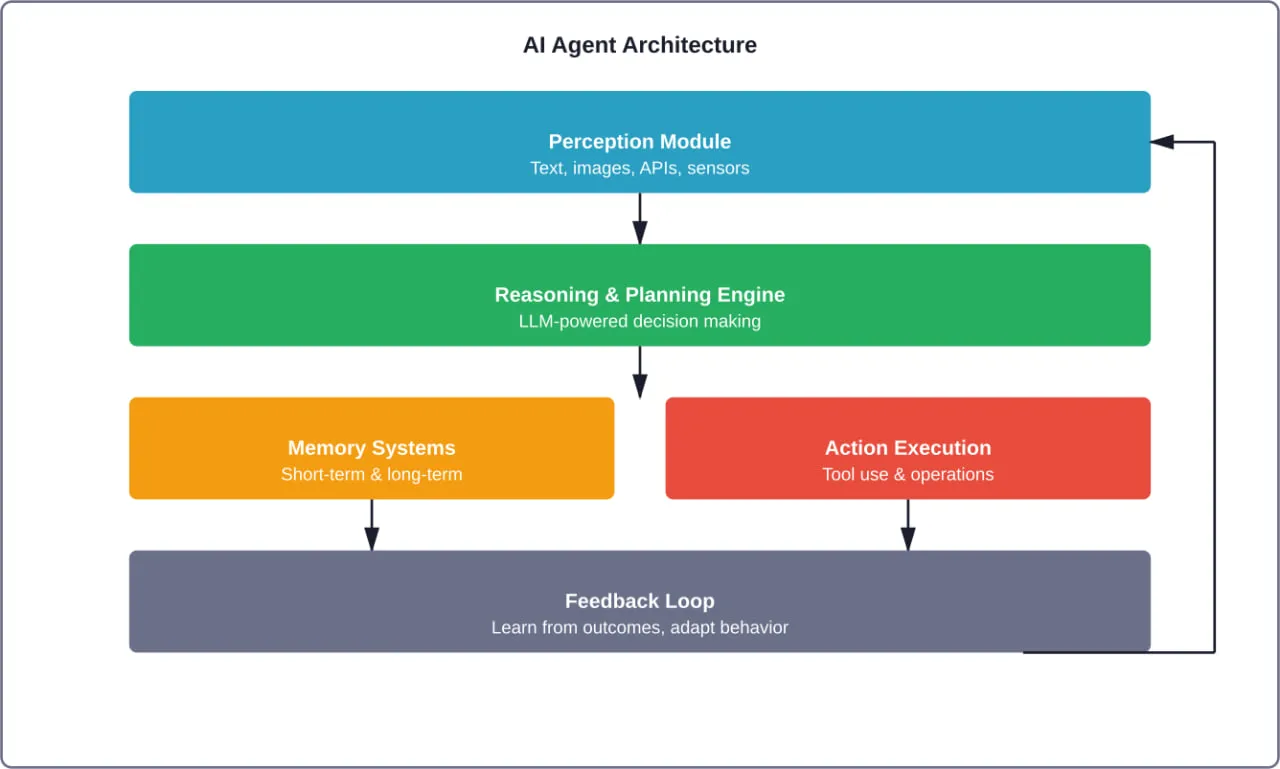
KI-Agenten arbeiten selten allein. Sie sind auf Backend-Systeme, APIs, Integrationen und eine stabile Infrastruktur angewiesen, um in einer Geschäftsumgebung zuverlässig zu funktionieren. 

Das ist der Ort, an dem A-listware ins Spiel kommt. Das Unternehmen konzentriert sich auf die Softwareentwicklung und engagierte Ingenieurteams, die sich um die Architektur, die Entwicklung und den laufenden Support kümmern und so die Grundlage für KI-gesteuerte Funktionen bilden, sobald diese über das Prototypenstadium hinausgehen.

Wenn Sie an KI-Agenten arbeiten, kann A-listware Ihnen helfen:

  • Dienste, APIs und interne Systeme um Ihre Agenten herum verbinden
  • Verwaltung von Datenflüssen und Integrationen zwischen Ihren Geschäftswerkzeugen
  • Stabilität und Leistung über einen längeren Zeitraum zu erhalten

Machen Sie KI-Agenten zu einem funktionierenden Teil Ihres Unternehmens mit A-listware.

1. Cognigy

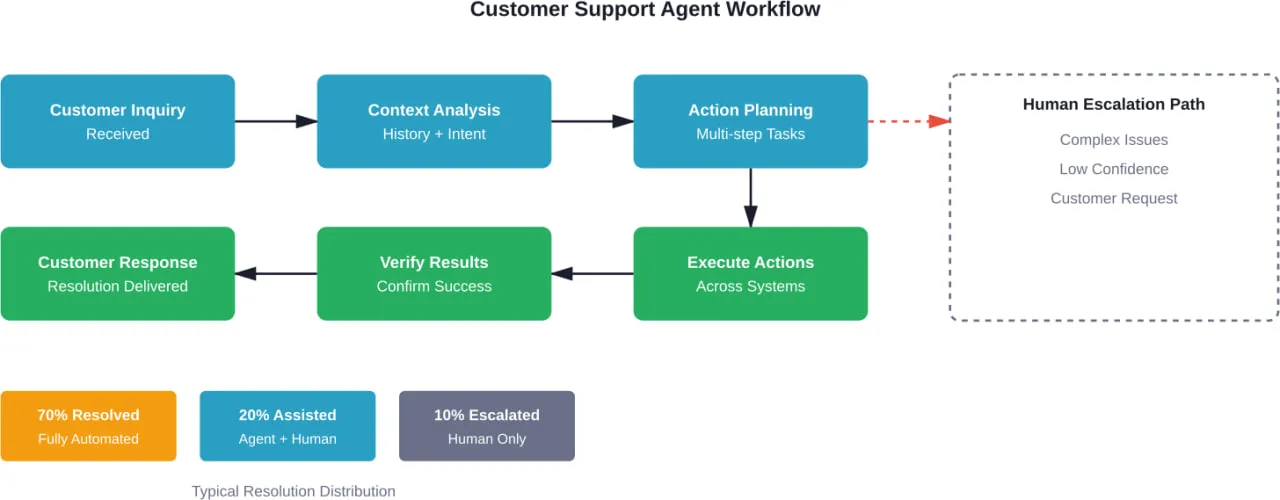
Cognigy präsentiert sich als eine Plattform, die sich auf den Aufbau und den Betrieb von KI-Agenten in kundenorientierten Umgebungen konzentriert, hauptsächlich im Bereich Support und Contact Center. Das Produkt konzentriert sich auf die Abwicklung von Konversationen über Kanäle wie Sprache, Chat und Messaging, während es gleichzeitig menschliche Agenten mit Tools wie Echtzeithilfe und Zugang zu internem Wissen unterstützt. Es setzt auf strukturierte Automatisierung - Weiterleitung von Anfragen, Lösung allgemeiner Probleme und Verringerung der Notwendigkeit der manuellen Bearbeitung in sich wiederholenden Fällen.

Was auffällt, ist, wie die Plattform verschiedene Teile der Kundeninteraktion in ein System einbindet. Der Schwerpunkt liegt auf der Kombination von Sprachverständnis und der Integration in die bestehende Infrastruktur, sodass KI-Agenten tatsächlich Aufgaben erledigen können, anstatt nur zu reagieren. Gleichzeitig bleiben die menschlichen Agenten durch Copiloten und gemeinsamen Kontext in der Schleife, was darauf hindeutet, dass die Plattform nicht dazu gedacht ist, Support-Teams vollständig zu ersetzen, sondern die Belastung zu verringern und die Arbeitsabläufe besser zu verwalten.

Wichtigste Highlights:

  • KI-Agenten für Sprach-, Chat- und Messaging-Kanäle
  • Schwerpunkt auf Kundenservice und Contact Center-Betrieb
  • Echtzeit-Support-Tools für menschliche Agenten (Copilot)
  • Integration in bestehende Unternehmenssysteme
  • Mehrsprachige Unterstützung mit Übersetzungsfunktionen
  • Kombiniert Automatisierung mit menschlich unterstützten Arbeitsabläufen

Für wen es am besten geeignet ist:

  • Teams, die große Mengen von Kundenanfragen bearbeiten
  • Unternehmen, die Kundenkommunikation über mehrere Kanäle betreiben
  • Organisationen, die sich wiederholende Supportaufgaben reduzieren möchten
  • Unternehmen mit bestehender Contact Center-Infrastruktur 

Kontaktinformationen:

  • Website: www.cognigy.com
  • E-Mail: info-us@cognigy.com
  • Facebook: www.facebook.com/cognigy
  • Twitter: x.com/cognigy
  • LinkedIn: www.linkedin.com/company/cognigy
  • Adresse: 2400 N Glenville Drive, Gebäude B, Suite 400, Richardson , Texas 75082
  • Telefon: +1 972 301 1300

2. Mitstreiter

Fellow ist auf Besprechungen und alles, was damit zusammenhängt, ausgerichtet. Es zeichnet auf, transkribiert und fasst Gespräche zusammen und verwandelt diese Informationen dann in etwas Brauchbares - Notizen, Aktionspunkte, Folgemaßnahmen oder Updates in anderen Systemen. Die KI-Agentenschicht setzt darauf auf und ermöglicht es den Nutzern, vergangene Meetings zu durchsuchen oder Ergebnisse auf der Grundlage der besprochenen Themen zu generieren.

Der Schwerpunkt liegt eindeutig auf Kontrolle und Datenschutz. Aufzeichnungen und Notizen werden zentral aufbewahrt, aber der Zugriff wird streng verwaltet, was sinnvoll ist, wenn man bedenkt, wie sensibel interne Meetings sein können. Die Lösung lässt sich auch mit bereits verwendeten Tools verbinden, sodass die Erkenntnisse aus Meetings nicht nur als Notizen gespeichert werden, sondern in Workflows wie CRM-Updates oder Aufgabenverwaltung einfließen.

Wichtigste Highlights:

  • AI-Sitzungsaufzeichnung, Transkription und Zusammenfassungen
  • Durchsuchbarer Besprechungsverlauf mit generierten Ergebnissen
  • Zentralisierte Speicherung mit Zugriffskontrolle
  • CRM- und Workflow-Integrationen
  • Planung vor der Sitzung und Tagesordnungen
  • Funktioniert auf allen wichtigen Meeting-Plattformen

Für wen es am besten geeignet ist:

  • Teams mit häufigen internen und Kundenbesprechungen
  • Organisationen, die auf Dokumentation und Folgemaßnahmen angewiesen sind
  • Vertrieb, Kundenerfolg und Führungsteams
  • Unternehmen, die strukturierte Sitzungsunterlagen benötigen 

Kontaktinformationen:

  • Website: fellow.ai
  • Facebook: www.facebook.com/fellowmeetings
  • Twitter: x.com/FellowAInotes
  • LinkedIn: www.linkedin.com/company/fellow-ai
  • Instagram: www.instagram.com/FellowAInotes
  • Anschrift: 532 Montréal Rd #275, Ottawa, ON K1K 4R4, Kanada

3. Überprüfen Sie

Glean basiert auf internem Unternehmenswissen und der Art und Weise, wie Mitarbeiter damit umgehen. Es stellt eine Verbindung zu verschiedenen Tools im gesamten Unternehmen her und macht diese Informationen durchsuchbar. Anschließend werden KI-Agenten darüber gelegt, die dabei helfen, Aufgaben zu automatisieren oder Ergebnisse auf der Grundlage dieser Daten zu generieren. Anstatt sich auf einen einzigen Arbeitsablauf zu konzentrieren, erstreckt sich die Lösung über mehrere Funktionen wie Technik, Support, Personalwesen und Vertrieb.

Was auffällt, ist die Art und Weise, wie es Daten als gemeinsame Ressource behandelt. Das System greift auf Dokumente, Konversationen und Tools zurück und nutzt dann diesen Kontext, um Fragen zu beantworten oder Aktionen auszulösen. Es können Agenten für bestimmte Aufgaben erstellt werden, die jedoch alle auf der gleichen Wissensschicht basieren, wodurch die Konsistenz zwischen den Teams gewahrt bleibt.

Wichtigste Highlights:

  • Einheitliche Suche über alle Tools und Daten des Unternehmens hinweg
  • KI-Agenten für die Automatisierung interner Arbeitsabläufe
  • Anschlüsse für eine breite Palette von Anwendungen
  • Erstellung von Inhalten und Zusammenfassungen
  • Unterstützung für mehrere Abteilungen und Anwendungsfälle
  • Zentralisierte Wissensschicht

Für wen es am besten geeignet ist:

  • Unternehmen mit fragmentierten internen Tools und Daten
  • Teams, die sich auf Dokumentation und gemeinsames Wissen stützen
  • Organisationen, die interne Prozesse automatisieren wollen
  • Mittlere bis große Teams mit funktionsübergreifenden Arbeitsabläufen

Kontaktinformationen:

  • Website: www.glean.com 
  • App Store: apps.apple.com/us/app/glean-work/id1582892407 
  • Google Play: play.google.com/store/apps/details?id=com.glean.app 
  • Twitter: x.com/glean 
  • LinkedIn: www.linkedin.com/company/gleanwork 
  • Instagram: www.instagram.com/gleanwork 
  • Anschrift: 634 2nd Street, San Francisco, CA 94107, Vereinigte Staaten

4. Zehneck

Decagon ist auf kundenorientierte KI-Agenten ausgerichtet, die sich auf die Bearbeitung von Interaktionen über verschiedene Kanäle wie Chat, Sprache und E-Mail konzentrieren. Die Plattform basiert auf der Idee, dass Agenten mehr wie eine Frontschicht für die Kundenkommunikation agieren - sie beantworten nicht nur Fragen, sondern führen Aktionen wie Umbuchungen, Kontoaktualisierungen oder Anfragen durch, die normalerweise einen menschlichen Operator erfordern.

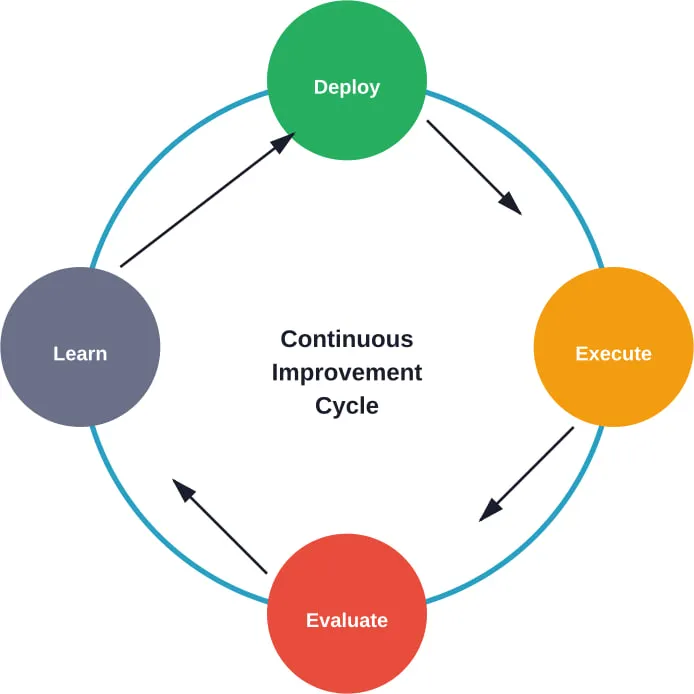
Anstatt sich auf eine starre Konfiguration zu verlassen, führt das System Workflows ein, die in einer natürlicheren Sprache definiert sind, was die Iteration etwas weniger technisch macht. Außerdem liegt der Schwerpunkt eindeutig auf der laufenden Anpassung - dem Testen, Beobachten und Verfeinern des Verhaltens der Agenten im Laufe der Zeit. Die Einrichtung deutet darauf hin, dass von den Agenten erwartet wird, dass sie sich zusammen mit dem Unternehmen weiterentwickeln und nicht nach der Bereitstellung fixiert bleiben.

Wichtigste Highlights:

  • KI-Agenten für Chat, Sprache und E-Mail
  • Fokus auf Kundeninteraktion und Aufgabenerfüllung
  • Workflow-Definition mit natürlicher Sprache
  • Integrierte Test- und Iterationswerkzeuge
  • Analytik in Verbindung mit Gesprächen und Verhalten
  • Omnichannel-Unterstützung aus einem einzigen System

Für wen es am besten geeignet ist:

  • Kundenbetreuung und Serviceleistungen
  • Unternehmen, die Anfragen über mehrere Kanäle bearbeiten
  • Teams, die flexible, sich entwickelnde Arbeitsabläufe benötigen
  • Unternehmen, die sich wiederholende Interaktionen automatisieren wollen 

Kontaktinformationen:

  • Website: decagon.ai
  • Twitter: x.com/DecagonAI
  • LinkedIn: www.linkedin.com/company/decagon-ai

5. HubSpot Breeze Data Agent

HubSpot Breeze Data Agent ist ein KI-Agent, der auf Kundendaten und nicht auf direkten Gesprächen basiert. Er zieht Informationen aus verschiedenen Quellen wie CRM-Datensätzen, E-Mails, Anrufen und Dokumenten und nutzt dann diesen Kontext, um Fragen zu beantworten oder Erkenntnisse zu gewinnen. Ziel ist es, den Zeitaufwand für die manuelle Suche in verschiedenen Tools zu reduzieren, wenn man versucht, Kunden zu verstehen oder zu verfolgen, was vor sich geht.

In der HubSpot-Umgebung funktioniert es als Teil bestehender Arbeitsabläufe, anstatt separat zu arbeiten. Die Ausgaben sind so strukturiert, dass sie in das System zurückfließen - zur Aktualisierung von Datensätzen, zum Füllen von Datenlücken oder zur Unterstützung von Teams bei der Bearbeitung von Informationen, die bereits vorhanden, aber auf verschiedene Stellen verteilt sind.

Wichtigste Highlights:

  • KI-Agent für die Analyse von Kundendaten
  • Abrufen von Informationen aus CRM, E-Mails, Anrufen und Dokumenten
  • Beantwortet kundenspezifische Geschäftsfragen auf der Grundlage verfügbarer Daten
  • erstellt und aktualisiert strukturierte Kundendatensätze
  • Funktioniert innerhalb bestehender HubSpot-Workflows
  • Verbindet fragmentierte Daten zu einer einheitlichen Ansicht

Für wen es am besten geeignet ist:

  • Teams, die eng mit CRM-Systemen zusammenarbeiten
  • Marketing- und Vertriebsmaßnahmen
  • Unternehmen, deren Daten über mehrere Tools verteilt sind
  • Teams, die schnellen Zugang zu Kundeninformationen benötigen

Kontaktinformationen:

  • Website: www.hubspot.com
  • Facebook: www.facebook.com/hubspot
  • Twitter: x.com/HubSpot
  • LinkedIn: www.linkedin.com/company/hubspot
  • Instagram: www.instagram.com/hubspot
  • Anschrift: 2 Canal Park, Cambridge, MA 02141, Vereinigte Staaten
  • Telefon: +1 888 482 7768

6. ClickUp-Super-Agenten

ClickUp betrachtet KI-Agenten als Teil einer breiteren Arbeitsumgebung und nicht als separates Werkzeug. Super Agents sind so konzipiert, dass sie ein breites Spektrum an Aufgaben übernehmen können - Schreiben, Analysieren, Verwalten von Workflows, Aktualisieren von Datensätzen und mehr - und das alles innerhalb desselben Arbeitsbereichs, in dem Teams bereits Projekte und Kommunikation verwalten.

Der Schwerpunkt liegt auf der Flexibilität. Agenten können für fast jede Art von Arbeit erstellt werden, und sie können direkt mit Aufgaben, Dokumenten und Personen interagieren. Das System ermöglicht es auch, dass mehrere Agenten zusammenarbeiten, wodurch es sich weniger wie ein einzelner Assistent anfühlt, sondern eher wie eine Automatisierungsebene für den gesamten Arbeitsablauf.

Wichtigste Highlights:

  • KI-Agenten eingebettet in einen Projektmanagement-Arbeitsbereich
  • Erledigt Aufgaben wie Schreiben, Analyse und Koordination
  • Zollagenten für verschiedene Arten von Arbeiten
  • Zusammenarbeit mehrerer Agenten in Arbeitsabläufen
  • Integration mit Aufgaben, Dokumenten und Kommunikation
  • Kontinuierliches Lernen und Kontextbewusstsein

Für wen es am besten geeignet ist:

  • Teams verwalten Projekte und Arbeitsabläufe auf einer Plattform
  • Organisationen, die ihre täglichen Abläufe automatisieren möchten
  • Funktionsübergreifende Teams mit vielfältigen Aufgaben
  • Benutzer, die KI in ihrem bestehenden Arbeitsbereich einsetzen möchten

Kontaktinformationen:

  • Website: clickup.com
  • Facebook: www.facebook.com/clickupprojectmanagement
  • Twitter: x.com/clickup
  • LinkedIn: www.linkedin.com/company/12949663
  • Instagram: www.instagram.com/clickup

7. Devin

Devin ist ein KI-Agent, der sich auf die Softwareentwicklung konzentriert. Anstatt bei kleinen Aufgaben zu helfen, soll er größere Teile der Entwicklungsarbeit übernehmen - das Schreiben von Code, Debugging, Testen und die Verwaltung von Teilen des Entwicklungsprozesses. Die Idee ist eher die eines autonomen Mitarbeiters, der eine Aufgabe übernimmt und sie Schritt für Schritt abarbeitet.

Der Unterschied ist der Umfang. Es beschränkt sich nicht auf die Erstellung von Snippets oder Vorschlägen, sondern umfasst den gesamten Arbeitsablauf - Planung, Ausführung und Verfeinerung von Code. Gleichzeitig fügt es sich in bestehende Entwicklungsumgebungen ein und interagiert mit den Tools und Prozessen, die Ingenieure bereits verwenden.

Wichtigste Highlights:

  • KI-Agent für Softwareentwicklungsaufgaben
  • Kodierung, Fehlerbehebung und Tests
  • Arbeitet über den gesamten Entwicklungsworkflow hinweg
  • Arbeitet mit einem gewissen Maß an Selbstständigkeit
  • Integration in Entwicklerwerkzeuge und -umgebungen
  • Konzentration auf die Ausführung von Aufgaben, nicht nur auf Vorschläge

Für wen es am besten geeignet ist:

  • Ingenieurteams und Entwickler
  • Unternehmen, die Softwareprodukte entwickeln
  • Teams mit sich wiederholenden oder strukturierten Kodierungsaufgaben
  • Organisationen, die KI-unterstützte Entwicklung erforschen

Kontaktinformationen:

  • Website: devin.ai
  • Twitter: x.com/cognition
  • LinkedIn: www.linkedin.com/company/cognition-ai-labs

8. Gegensprechanlage (Fin AI Agent)

Intercom integriert seinen KI-Agenten Fin direkt in eine Kundensupport-Plattform. Anstatt KI als separate Schicht hinzuzufügen, ist sie Teil des Helpdesks selbst und arbeitet mit menschlichen Agenten im selben System zusammen. Gespräche, Tickets und Kundendaten befinden sich alle an einem Ort, was bedeutet, dass der Agent und das Team mit demselben Kontext arbeiten.

Ein weiterer Teil der Einrichtung besteht darin, wie sich das System im Laufe der Zeit verbessert. Interaktionen werden analysiert, Muster werden verfolgt, und der Agent passt sich auf der Grundlage früherer Gespräche und menschlicher Eingaben an. Es gibt auch eine starke Verbindung zwischen Automatisierung und manueller Unterstützung, bei der Aufgaben zwischen KI und menschlichen Agenten wechseln können, ohne den Kontext zu verlieren.

Wichtigste Highlights:

  • KI-Agent integriert in eine Helpdesk-Plattform
  • Gemeinsamer Arbeitsbereich für KI und menschliche Agenten
  • Omnichannel-Kommunikation in einem System
  • Automatisiertes Ticketing und Routing
  • Einblicke aus Gesprächsdaten
  • Kontinuierliche Verbesserung auf der Grundlage von Interaktionen

Für wen es am besten geeignet ist:

  • Kundenbetreuungsteams, die Helpdesk-Systeme verwenden
  • Unternehmen, die laufende Kundengespräche führen
  • Teams, die sowohl Automatisierung als auch menschliche Unterstützung benötigen
  • Organisationen, die sich auf strukturierte Unterstützungsabläufe konzentrieren

Kontaktinformationen:

  • Website: www.intercom.com
  • E-Mail: press@intercom.com

9. Tableau

Der Schwerpunkt von Tableau liegt auf der Datenanalyse und -visualisierung, wobei der Fokus zunehmend auf der so genannten agentischen Analyse liegt. Die Plattform stellt eine Verbindung zu verschiedenen Datenquellen her und verwandelt diese Daten in visuelle Einblicke, die Menschen erkunden und teilen können. Darüber hinaus werden KI-gesteuerte Funktionen eingeführt, die dabei helfen, Daten nicht nur zu betrachten, sondern auch zu nutzen, einschließlich Systemen, die auf der Grundlage von Erkenntnissen Aktionen vorschlagen oder auslösen können.

Die Einrichtung ist nicht auf eine bestimmte Umgebung beschränkt. Sie kann in der Cloud, auf einer privaten Infrastruktur oder als Teil eines breiteren Salesforce-Ökosystems ausgeführt werden. Anstatt Analysten zu ersetzen, unterstützt die Plattform die Art und Weise, wie Menschen bereits mit Daten arbeiten, und fügt eine Ebene hinzu, auf der KI bei der Interpretation, Exploration und in einigen Fällen bei der Automatisierung von Folgeschritten helfen kann.

Wichtigste Highlights:

  • Plattform für Datenvisualisierung und -analytik
  • KI-Funktionen für die Generierung von Erkenntnissen und Maßnahmen
  • Funktioniert in Cloud- und selbst gehosteten Umgebungen
  • Integration mit mehreren Datenquellen
  • Unterstützt Datenexploration und Berichtsworkflows
  • Teil eines umfassenderen Analyse- und CRM-Ökosystems

Für wen es am besten geeignet ist:

  • Datenanalysten und Business Intelligence-Teams
  • Organisationen, die mit großen Datenmengen arbeiten
  • Teams, die visuelle Berichte und Dashboards benötigen
  • Unternehmen bauen datengesteuerte Arbeitsabläufe auf 

Kontaktinformationen:

  • Website: www.tableau.com
  • Facebook: www.facebook.com/Tableau
  • Twitter: x.com/tableau
  • LinkedIn: www.linkedin.com/company/tableau-software
  • Anschrift: 415 Mission Street, 3rd Floor, San Francisco, CA 94105, Vereinigte Staaten
  • Telefon: 1-800-270-6977

10. Hightouch

Hightouch positioniert sich um Marketing-Workflows, die von Daten und KI-Agenten gesteuert werden. Es setzt auf dem bestehenden Data Warehouse eines Unternehmens auf und nutzt diese Daten, um Kampagnen, Personalisierung und Zielgruppenmanagement zu betreiben. Die Agentenschicht wird verwendet, um Teile der Marketingausführung zu automatisieren, von der Erstellung von Segmenten bis zur Entscheidung, welche Nachricht an welchen Nutzer gesendet werden soll.

Anstatt Daten in ein separates System zu verschieben, arbeitet es direkt mit den bereits vorhandenen Daten. Dies verändert die Art und Weise, wie Marketingteams mit Daten interagieren - weniger Export und Synchronisierung, mehr direkte Nutzung. Die Plattform umfasst auch eine Entscheidungslogik, bei der KI Signale auswertet und das Messaging oder Timing auf der Grundlage des Nutzerverhaltens über alle Kanäle hinweg anpasst.

Wichtigste Highlights:

  • KI-Agenten für Marketing-Workflows und -Kampagnen
  • Aufbauend auf bestehenden Data Warehouses
  • Tools zum Aufbau von Zielgruppen und zur Segmentierung
  • Personalisierung in Echtzeit über alle Kanäle hinweg
  • KI-basierte Entscheidungsfindung für Messaging und Timing
  • Integration mit einer Vielzahl von externen Tools

Für wen es am besten geeignet ist:

  • Marketing- und Lebenszyklus-Teams
  • Unternehmen mit etablierten Data Warehouses
  • Organisationen, die Multi-Channel-Kampagnen durchführen
  • Teams, die sich auf Personalisierung im großen Maßstab konzentrieren

Kontaktinformationen:

  • Website: hightouch.com
  • Twitter: x.com/HightouchData
  • LinkedIn: www.linkedin.com/company/hightouchio

11. Lindy

Lindy ist als universeller KI-Assistent konzipiert, der mit alltäglichen Geschäftstools wie E-Mail, Kalender und Messaging-Plattformen arbeitet. Sie übernimmt Aufgaben wie das Verfassen von E-Mails, das Planen von Meetings und das Abrufen von Informationen aus verschiedenen Quellen. Die Idee ist, kleine, sich wiederholende Aktionen zu reduzieren, die den Tag ausfüllen können.

Das Besondere an dieser Lösung ist ihr proaktives Verhalten. Er wartet nicht nur auf Anweisungen, sondern kann auch Erinnerungen einblenden, den Kontext für Meetings vorbereiten oder auf der Grundlage laufender Aktivitäten die nächsten Schritte vorschlagen. Im Laufe der Zeit passt er sich an die Vorlieben des Nutzers an, wodurch er sich von einem einfachen Assistenten zu einer leichtgewichtigen operativen Ebene in persönlichen Arbeitsabläufen entwickelt.

Wichtigste Highlights:

  • KI-Assistent für E-Mail, Meetings und Terminplanung
  • Verfasst Nachrichten und verwaltet die Kommunikation
  • Verbindungen über mehrere Arbeitsmittel hinweg
  • Bietet proaktive Erinnerungen und Kontext
  • Lernt mit der Zeit die Vorlieben der Benutzer
  • Unterstützt die Automatisierung alltäglicher Aufgaben

Für wen es am besten geeignet ist:

  • Personen, die einen vollen Terminkalender haben
  • Teams, die häufig miteinander kommunizieren
  • Fachleute, die mit mehreren Werkzeugen jonglieren
  • Rollen mit sich wiederholenden Koordinationsaufgaben

Kontaktinformationen:

  • Website: www.lindy.ai
  • E-Mail: support@lindy.ai
  • Twitter: x.com/getlindy
  • LinkedIn: www.linkedin.com/company/lindyai

12. Relevanz KI

Relevance AI konzentriert sich auf den Aufbau von KI-Agenten für die Go-to-Market-Arbeit, einschließlich Vertrieb, Marketing und Kundenbetrieb. Es stellt die Idee einer KI-Belegschaft vor, in der mehrere Agenten Aufgaben wie Recherche, Kontaktaufnahme, Lead-Qualifizierung und Nachfassaktionen übernehmen. Diese Agenten können durch Ereignisse ausgelöst werden, z. B. durch Änderungen in einer Vertriebs-Pipeline oder eingehende Leads.

Es gibt eine Progression in der Anwendung der Automatisierung. Sie kann mit einfacher Unterstützung beginnen und dann zu autonomeren Arbeitsabläufen übergehen, wenn die Prozesse klarer werden. Das System lässt sich mit gängigen Tools wie CRM-, E-Mail- und Messaging-Plattformen verbinden, so dass Agenten innerhalb bestehender Arbeitsabläufe arbeiten können, anstatt sie komplett neu zu erstellen.

Wichtigste Highlights:

  • KI-Agenten für Vertriebs- und Go-to-Market-Workflows
  • Automatisierung von Forschung, Kontaktaufnahme und Folgemaßnahmen
  • Multi-Agenten-Setup für verschiedene Aufgaben
  • Integration mit CRM- und Kommunikationswerkzeugen
  • Ereignisbasierte Auslöser für die Automatisierung
  • Schrittweiser Übergang von unterstützten zu autonomen Arbeitsabläufen

Für wen es am besten geeignet ist:

  • Verkaufs- und Umsatzteams
  • Unternehmen mit strukturierten Pipelines
  • Organisationen, die Outbound- und Inbound-Maßnahmen skalieren
  • Teams, die sich wiederholende GTM-Aufgaben automatisieren möchten

Kontaktinformationen:

  • Website: relevanceai.com
  • Twitter: x.com/RelevanceAI_
  • LinkedIn: www.linkedin.com/company/relevanceai

13. CrewAI

CrewAI basiert auf der Idee, dass mehrere KI-Agenten als ein koordiniertes System zusammenarbeiten. Anstatt sich auf einen einzelnen Assistenten zu konzentrieren, können Benutzer Gruppen von Agenten erstellen, die Aufgaben über Arbeitsabläufe hinweg aufteilen und erledigen können. Diese Agenten können mit Tools interagieren, definierten Rollen folgen und mit einem gewissen Maß an Autonomie arbeiten.

Die Plattform bietet verschiedene Möglichkeiten zur Erstellung und Verwaltung dieser Systeme, von visuellen Schnittstellen bis hin zu APIs. Ein weiterer Schwerpunkt ist die Kontrolle und Überwachung - die Verfolgung der Leistung der Agenten, die Anpassung des Verhaltens und die Sicherstellung der Konsistenz der Ergebnisse. Die Plattform ist eher als Infrastrukturebene für den Aufbau agentenbasierter Arbeitsabläufe konzipiert als ein fertiges Tool für einen bestimmten Anwendungsfall.

Wichtigste Highlights:

  • Multi-Agenten-System für komplexe Arbeitsabläufe
  • Visueller Builder und API-basierte Einrichtung
  • Agenten interagieren mit Tools und externen Systemen
  • Verfolgung und Überwachung von Arbeitsabläufen
  • Schulung und Leitplanken für das Verhalten von Agenten
  • Skalierbarer Einsatz in verschiedenen Teams

Für wen es am besten geeignet ist:

  • Ingenieurwesen und technische Teams
  • Unternehmen, die individuelle KI-Workflows entwickeln
  • Organisationen, die eine mehrstufige Automatisierung benötigen
  • Teams, die mit agentenbasierten Systemen experimentieren

Kontaktinformationen:

  • Website: crewai.com
  • Twitter: x.com/crewaiinc
  • LinkedIn: www.linkedin.com/company/crewai-inc

14. Sierra

Sierra konzentriert sich auf KI-Agenten für die Kundenerfahrung und deckt Interaktionen über Kanäle wie Chat, Sprache und Messaging ab. Die Plattform ist so konzipiert, dass sie Unterhaltungen abwickelt und sie mit Aktionen wie Buchungen, Kontoaktualisierungen oder Serviceanfragen verbindet. Ziel ist es, Interaktionen konsistent zu halten, unabhängig davon, wo sie stattfinden.

Ein weiterer Teil des Systems besteht darin, wie Agenten aufgebaut und verbessert werden. Es gibt Tools zur Definition von Verhalten, zum Testen von Szenarien und zur Anpassung der Leistung im Laufe der Zeit. Die Plattform verfolgt auch Interaktionen und extrahiert Erkenntnisse, die dazu beitragen, die Reaktion und das Verhalten der Agenten in zukünftigen Gesprächen zu verbessern.

Wichtigste Highlights:

  • KI-Agenten für kanalübergreifende Kundenkommunikation
  • Unterstützt Chat-, Sprach-, E-Mail- und Messaging-Plattformen
  • Werkzeuge zum Erstellen und Testen des Agentenverhaltens
  • Integration mit externen Systemen und Datenquellen
  • Kontinuierliche Verbesserung auf der Grundlage von Interaktionsdaten
  • Fokus auf konsistente Kundenerfahrung

Für wen es am besten geeignet ist:

  • Kundenbetreuung und Serviceteams
  • Unternehmen mit Multi-Channel-Kommunikation
  • Organisationen mit häufigen Kundenkontakten
  • Teams, die Service-Workflows automatisieren möchten 

Kontaktinformationen:

  • Website: sierra.ai
  • E-Mail: security@sierra.ai
  • Twitter: x.com/sierraplatform
  • LinkedIn: www.linkedin.com/company/sierra

15. Moveworks

Moveworks ist als KI-Assistentenplattform für interne Geschäftsabläufe konzipiert. Sie verbindet sich mit verschiedenen Systemen in einem Unternehmen - HR, IT, Finanzen und andere - und ermöglicht es den Mitarbeitern, über eine einzige Schnittstelle nach Informationen zu suchen oder Aktionen auszulösen. Die Agentenschicht wird verwendet, um Anfragen zu bearbeiten, Aufgaben zu automatisieren und den manuellen Austausch zwischen Teams zu reduzieren.

Anstatt sich auf eine Abteilung zu konzentrieren, erstreckt sich das System auf das gesamte Unternehmen. Das System kombiniert Suche und Ausführung, so dass eine Anfrage von einer Frage zu einer Aktion übergehen kann, ohne das Tool zu wechseln. Außerdem unterstützt es mehrere Sprachen und lässt sich mit einer Vielzahl von Geschäftsanwendungen integrieren, was die Anwendung in verschiedenen Teams erleichtert.

Wichtigste Highlights:

  • KI-Assistent für interne Workflows und Abläufe
  • Kombiniert Suche und Aufgabenausführung
  • Arbeitet mit HR-, IT-, Finanz- und anderen Systemen zusammen
  • Integration mit mehreren Geschäftsanwendungen
  • Unterstützt mehrsprachige Umgebungen
  • Zentralisierte Schnittstelle für Mitarbeiteranfragen

Für wen es am besten geeignet ist:

  • Große Organisationen mit mehreren internen Systemen
  • Teams, die interne Serviceanfragen bearbeiten
  • Unternehmen, die ihre Abläufe rationalisieren wollen
  • Organisationen mit verteilten oder globalen Teams

Kontaktinformationen:

  • Website: www.moveworks.com 
  • E-Mail: support@moveworks.com 
  • Twitter: x.com/moveworks 
  • LinkedIn: www.linkedin.com/company/moveworksai 
  • Anschrift: 1400 Terra Bella Avenue, Mountain View, CA 94043


Schlussfolgerung

Wenn man einen Schritt zurücktritt und sich all das ansieht, erscheinen KI-Agenten nicht wirklich als eine große, einheitliche Sache. Sie tauchen in verschiedenen Bereichen des Unternehmens auf und erledigen ganz unterschiedliche Aufgaben. An einer Stelle bearbeiten sie Support-Tickets. An anderer Stelle helfen sie den Marketingteams bei der Durchführung von Kampagnen oder beim Abrufen von Antworten aus internen Daten. Dahinter verbirgt sich dieselbe Idee, aber sie wird auf sehr praktische, manchmal recht enge Weise angewandt.

Es gibt auch ein gewisses Muster in der Art und Weise, wie sie eingesetzt werden. Die meisten dieser Tools versuchen nicht, die Arbeitsweise von Unternehmen zu ersetzen. Sie setzen auf dem auf, was bereits vorhanden ist - bestehende Systeme, bestehende Prozesse, bestehende Daten. Und wenn die Dinge ausreichend strukturiert sind, fügen sie sich in der Regel ohne große Reibung ein. Wenn das nicht der Fall ist, wird deutlich, wo die Grenzen liegen.

Es geht also weniger um das Konzept “Einsatz von KI-Agenten” als vielmehr darum, herauszufinden, wo sie bei der täglichen Arbeit tatsächlich helfen. Normalerweise sind es die sich wiederholenden, leicht lästigen Aufgaben, mit denen niemand wirklich Zeit verbringen möchte. Dort scheinen sie zuerst zu landen. Über alles andere muss man sich noch ein bisschen mehr Gedanken machen.

AI Agent Development Services: A Closer Look at Key Companies

AI agents are no longer something teams experiment with on the side. They’ve started to show up in everyday work – handling requests, assisting with decisions, and quietly taking over repetitive tasks that used to slow things down.

As that shift picks up, more companies are building services around designing and deploying these systems. Some approach it from a strong engineering background, others lean into data, automation, or product integration. The result is a pretty mixed landscape, where each team brings its own perspective on what an “agent” should actually do.

Below is a closer look at companies working in this space, with a bit of context around how they position themselves and where they tend to fit.

1. A-Listware

A-listware provides AI agent development as part of broader software engineering work, focusing on how agents are built, connected, and run in production. We usually work on the layers around the agent itself – backend logic, APIs, integrations, and infrastructure. This includes setting up how data moves through the system, how the agent interacts with other services, and how everything behaves under real usage.

We approach AI agent development as part of a complete software system rather than a standalone feature. Our teams handle architecture, development, testing, and ongoing support, so the work doesn’t have to be split across different vendors. That makes it easier to keep consistency across the stack and avoid gaps between components. Over time, the focus usually shifts from “making it work” to “keeping it stable and scalable,” and that’s where we continue to support the product.

Wichtigste Highlights:

  • Work with AI agents as part of full software systems, not isolated components
  • Focus on backend architecture, integrations, and infrastructure
  • Dedicated engineering teams that integrate into existing workflows
  • Support across the full development cycle, including post-launch

Dienstleistungen:

  • Entwicklung von AI-Agenten
  • Backend and API development for agents
  • System and tool integrations
  • Data pipelines for agent workflows
  • Deployment and support

Kontaktinformationen:

2. EffektivSoft

EffectiveSoft works with AI agents at the level of system design, where automation is tied to real business workflows and not just isolated tasks. Their teams build both single agents and multi-agent setups that can plan actions, process data, and interact with enterprise systems. A lot of their work sits in areas like finance, healthcare, and operations, where agents need to handle more than simple requests and deal with structured processes.

A big part of their work happens behind the scenes – preparing data, tuning models, and setting up orchestration so different components can work together. These pieces make the difference once agents move into production, where stability, integration with business systems, and long-term consistency start to matter more than initial functionality.

Wichtigste Highlights:

  • Work with both single-agent and multi-agent architectures
  • Focus on workflow automation across enterprise systems
  • Experience with LLM tuning and domain-specific models
  • Integration with business platforms and data sources
  • Ongoing monitoring and support after deployment

Dienstleistungen:

  • AI agent consulting and strategy
  • Custom agent development and customization
  • Multi-agent system design and orchestration
  • LLM fine-tuning and deep learning solutions
  • Automatisierung von Arbeitsabläufen
  • Wartung und Unterstützung 

Kontaktinformationen:

  • Website: www.effectivesoft.com
  • E-Mail: rfq@effectivesoft.com
  • Facebook: www.facebook.com/EffectiveSoft
  • Twitter: x.com/EffectiveSoft
  • LinkedIn: www.linkedin.com/company/effectivesoft
  • Anschrift: 4445 Eastgate Mall, Suite 200, 92121 
  • Telefon: 1-800-288-9659

3. Instinctools

Instinctools approaches AI agent development through process automation, looking at how tasks connect into larger workflows. Their work is usually tied to building systems that can handle sequences of actions, not just isolated steps. In that sense, agents are treated as part of a broader automation layer that reshapes how work moves across teams and systems.

In many cases, the focus shifts to how these systems behave over time, not just at launch. Questions around scaling, security, and compatibility with existing tools come up early, especially when agents start interacting across multiple systems and teams.

Wichtigste Highlights:

  • Focus on process-level automation, not just task automation
  • Attention to scalability of AI systems
  • Consideration of security in agent deployment
  • Integration into existing business workflows

Dienstleistungen:

  • Entwicklung von AI-Agenten
  • Lösungen zur Workflow-Automatisierung
  • Integration von AI-Systemen
  • Scalable automation architecture

Kontaktinformationen:

  • Website: www.instinctools.com
  • E-Mail: contact@instinctools.com
  • Facebook: www.facebook.com/instinctoolslabs
  • Twitter: x.com/instinctools_EE
  • LinkedIn: www.linkedin.com/company/instinctoolscompany
  • Instagram: www.instagram.com/instinctools
  • Adresse: 12430 Park Potomac Ave, Unit 122 Potomac MD 20854, USA
  • Telefon: +12028214280

4. Markovate

Markovate works with AI agents in the context of operational workflows, where automation is tied to reducing manual steps and improving consistency. Their projects often deal with structured environments like manufacturing, healthcare, and construction, where agents process data, extract information, and support decision-making.

What stands out is how closely their work stays tied to existing processes. Agents are introduced into environments that already have established workflows, so a lot of effort goes into making sure nothing breaks while automation is added gradually.

Wichtigste Highlights:

  • Focus on workflow optimization across industries
  • Experience with structured data processing and automation
  • Full-cycle AI development from setup to deployment
  • Alignment with existing operational processes
  • Attention to compliance and secure environments

Dienstleistungen:

  • Generative KI-Entwicklung
  • Agentic AI solutions
  • Konversationelle KI-Systeme
  • Lösungen für maschinelles Lernen
  • Computer Vision Anwendungen 

Kontaktinformationen:

  • Website: markovate.com
  • Twitter: x.com/markovateagency
  • LinkedIn: www.linkedin.com/company/markovate
  • Adresse: 10 N Martingale Rd #400, Schaumburg, IL

5. Azumo

Azumo treats AI agents as systems that need to operate inside complex environments, not just respond to inputs. Their work often involves multi-agent setups where different components handle separate tasks and coordinate through shared logic. This includes building agents that can manage workflows like order processing, analytics, or compliance monitoring.

A noticeable part of their approach is how much attention goes into control and predictability. Once agents start making decisions across systems, visibility into what they do and why becomes important, so monitoring, guardrails, and fallback logic are built in from the start.

Wichtigste Highlights:

  • Focus on multi-agent orchestration
  • Emphasis on system-level design for AI agents
  • Use of guardrails and fallback mechanisms
  • Integration with enterprise tools and APIs
  • Attention to observability and control

Dienstleistungen:

  • Custom AI agent development
  • Integration von Unternehmenssystemen
  • AI model training and optimization
  • Scalable deployment solutions
  • Virtual assistants and workflow agents

Kontaktinformationen:

  • Website: azumo.com
  • Facebook: www.facebook.com/azumohq
  • Twitter: x.com/azumohq
  • LinkedIn: www.linkedin.com/company/azumo-llc
  • Anschrift: 40 Mesa, Suite 114, San Francisco, CA
  • Telefon: 415.610.7002

6. Master of Code Global

Master of Code Global works with AI agents across customer interaction, operations, and internal processes. Their projects often involve conversational systems, but they extend beyond chat interfaces into areas like recommendations, analytics, and automation of repetitive decisions.

They combine consulting with implementation, helping define how agents should fit into a business before building them. This includes selecting models, planning integrations, and refining how agents interact with users or systems. Their approach tends to follow a structured process, where agents evolve through iterations after deployment.

Wichtigste Highlights:

  • Experience with conversational and workflow-based agents
  • Focus on practical use cases like support and recommendations
  • Combination of consulting and development
  • Iterative approach to improving agent performance
  • Integration with business systems and user interfaces

Dienstleistungen:

  • Entwicklung von AI-Agenten
  • AI consulting and strategy
  • Konversationelle KI-Lösungen
  • Machine learning and data analysis
  • Systemintegration und -optimierung 

Kontaktinformationen:

  • Website: masterofcode.com
  • E-Mail: us.sales@masterofcode.com
  • Facebook: www.facebook.com/master.of.code.global
  • Twitter: x.com/master_of_code
  • LinkedIn: www.linkedin.com/company/master-of-code
  • Adresse: 541 Jefferson Ave, Suite 100 Redwood City, CA 94063
  • Telefon: +1 408-663-1363

7. Neurons Lab

Neurons Lab approaches AI agents from a broader transformation perspective, where agents are part of a larger shift in how systems and teams operate. Their work often starts with strategy and data foundations, then moves toward building multi-agent systems that can handle complex processes across organizations.

Much of their work connects to structure and long-term planning. Before agents are deployed, there is usually groundwork around governance, data readiness, and system alignment, especially in environments where compliance and coordination play a role.

Wichtigste Highlights:

  • Focus on AI transformation and long-term adoption
  • Experience with multi-agent systems and orchestration
  • Strong emphasis on data infrastructure and readiness
  • Attention to governance and compliance
  • Involvement in early-stage strategy and planning

Dienstleistungen:

  • Entwicklung agentenbasierter KI-Systeme
  • AI strategy and governance
  • Data infrastructure setup
  • Entwicklung von Konzeptnachweisen
  • AI training and advisory

Kontaktinformationen:

  • Website: neurons-lab.com
  • E-Mail: info@neurons-lab.com
  • Facebook: www.facebook.com/neurons.lab
  • Twitter: x.com/neurons_lab
  • LinkedIn: www.linkedin.com/company/neurons-lab
  • Anschrift: International House, 64 Nile Str, London, N1 7SR, Vereinigtes Königreich
  • Telefon: +442037694201

8. Code Brew

Code Brew works with AI agents as part of a broader set of AI-driven solutions that support digital products and platforms. Their projects often combine agents with applications, where automation is embedded into user-facing systems like marketplaces, mobile apps, or operational tools.

In practice, this means agents rarely exist on their own. They are usually tied to other parts of the system, including analytics, backend logic, and user interaction layers, which makes them one component in a larger setup.

Wichtigste Highlights:

  • Focus on embedding AI agents into applications
  • Combination of AI with broader digital product development
  • Use of AI across multiple industries and use cases
  • Integration with analytics and data-driven features
  • Involvement in both startup and enterprise projects

Dienstleistungen:

  • Entwicklung von KI-Agenten und Chatbots
  • Generative AI-Lösungen
  • Maschinelles Lernen und Datenwissenschaft
  • Custom software and app development
  • KI-Strategie und -Beratung 

Kontaktinformationen:

  • Website: www.code-brew.com
  • E-Mail: business@code-brew.com
  • Facebook: www.facebook.com/codebrewlabs
  • Twitter: x.com/CodeBrewLabs
  • LinkedIn: www.linkedin.com/company/code-brew-labs
  • Instagram: www.instagram.com/codebrewlabs
  • Adresse: 4231 Balboa Ave #512 San Diego, CA 92117 Vereinigte Staaten
  • Telefon: +1(213)2614953

9. OpenKit

OpenKit works with AI agents as part of a broader effort to rethink how internal processes are structured. Their projects often begin with analysis of how work is done today, then move toward building agents that can take over specific parts of that flow. This includes cases like document processing, assessment tools, or data-driven platforms where automation needs to stay aligned with real usage.

They also put noticeable attention on infrastructure and data control. A lot of their work involves private AI environments, where agents operate within controlled systems and connect to internal data sources. The focus is not just on deploying agents, but on making sure they fit into existing operations and can be scaled without breaking things.

Wichtigste Highlights:

  • Focus on AI agents within structured business workflows
  • Attention to private and secure AI infrastructure
  • Use of phased approach from strategy to deployment
  • Experience with document analysis and data-heavy use cases
  • Integration with internal systems and data sources

Dienstleistungen:

  • AI consulting and strategy
  • Entwicklung von AI-Agenten
  • Generative AI-Lösungen
  • Custom LLM development
  • Infrastructure setup and integration 

Kontaktinformationen:

  • Website: openkit.co.uk
  • E-Mail: contact@openkit.co.uk
  • Anschrift: Portland House, Belmont Business Park, Durham DH1 1TW
  • Telefon: 020 3355 1358

10. Emerline

Emerline builds AI-driven systems as part of larger software development projects, where agents are embedded into applications or workflows. Their work often spans web, mobile, and enterprise platforms, with AI used to automate parts of development, data handling, or user-facing features.

They integrate AI tools across the software lifecycle, not just in final products. This includes using AI during design, development, and testing phases to speed up delivery and reduce manual work. In the context of AI agents, this creates setups where agents support both internal processes and end-user functionality.

Wichtigste Highlights:

  • Integration of AI into full software development lifecycle
  • Arbeiten Sie mit Web-, Mobil- und Unternehmensanwendungen
  • Focus on automation within development and operations
  • Experience with AI-driven workflows and tools
  • Global delivery model with distributed teams

Dienstleistungen:

  • AI consulting and workshops
  • Entwicklung kundenspezifischer AI-Lösungen
  • Generative AI-Implementierung
  • AI-based search and data processing
  • Softwareentwicklung und -integration 

Kontaktinformationen:

  • Website: emerline.com
  • E-Mail: info@emerline.com
  • Facebook: www.facebook.com/emerlinedev
  • LinkedIn: www.linkedin.com/company/emerline
  • Instagram: www.instagram.com/emerline.global
  • Anschrift: 801 Brickell Avenue, Suite 1970, Miami, FL 33131
  • Phone: +1 630 877 1212US

11. HatchWorks AI

HatchWorks AI approaches AI agents through the lens of product and workflow transformation. Their work often starts with identifying where automation can have a real effect, then building agents that connect data, processes, and decision points into something usable.

Their process tends to follow a defined structure, where data preparation, system alignment, and training are handled early. This makes the rollout more predictable, especially when agents are introduced into existing operations.

Wichtigste Highlights:

  • Focus on linking AI agents to measurable workflow outcomes
  • Structured approach to AI development and deployment
  • Attention to data readiness and governance
  • Use of agents in product and process transformation
  • Involvement in training and adoption stages

Dienstleistungen:

  • KI-Transformationsstrategie
  • AI agent deployment planning
  • Datentechnik und Analytik
  • KI-gestützte Produktentwicklung
  • Schulungen und Workshops 

Kontaktinformationen:

  • Website: hatchworks.com
  • E-Mail: connect@hatchworks.com
  • Facebook: www.facebook.com/hatchworksinc
  • LinkedIn: www.linkedin.com/company/hatchworksai
  • Instagram: www.instagram.com/hatchworksai
  • Anschrift: 3280 Peachtree Rd NE, 7. Stock, 30305
  • Telefon: 1-800-621-7063

12. Übergang

Itransition builds AI agents for different types of business processes, from customer-facing systems to internal automation tools. Their work often involves handling tasks like scheduling, claims processing, or inventory management, where agents need to interact with multiple data sources and systems.

They follow a structured process that starts with defining goals and data readiness, then moves through development, testing, and deployment. After launch, they continue to support and adjust the system, which is important when agents operate in environments that change over time.

Wichtigste Highlights:

  • Experience with agents for operational and customer workflows
  • Strukturierter Entwicklungsprozess von der Planung bis zur Einführung
  • Integration mit Unternehmenssystemen und Datenquellen
  • Focus on automation of repetitive and high-volume tasks
  • Ongoing support and optimization after launch

Dienstleistungen:

  • Entwicklung von AI-Agenten
  • AI Beratung und Planung
  • Systemintegration
  • Data analysis and management
  • Unterstützung und Wartung

Kontaktinformationen:

  • Website: www.itransition.com
  • E-Mail: info@itransition.com
  • Facebook: www.facebook.com/Itransition
  • Twitter: x.com/itransition
  • LinkedIn: www.linkedin.com/company/itransition
  • Adresse: 160 Clairemont Ave, Suite 200, Decatur, GA 30030
  • Telefon: +1 720 207 2820

13. DBB Software

DBB Software develops AI agents with a focus on how they behave inside real workflows. Their systems are designed to handle tasks like data processing, reporting, or interaction with users, often with some level of autonomy and coordination between components.

Part of their work goes into enabling agents to handle more complex scenarios over time. This includes memory, coordination between multiple agents, and the ability to interact with external tools or systems during execution.

Wichtigste Highlights:

  • Focus on workflow-driven AI agent design
  • Use of multi-agent systems and coordination logic
  • Integration of tools and external data sources
  • Attention to monitoring and agent behavior
  • Iterative development and long-term support

Dienstleistungen:

  • Custom AI agent development
  • Multi-agent system design
  • AI integration with business tools
  • Agent monitoring and analytics
  • Laufende Unterstützung und Aktualisierungen

Kontaktinformationen:

  • Website: dbbsoftware.com
  • Email: in@dbbsoftware.com
  • Facebook: www.facebook.com/dbbsoftware
  • Twitter: x.com/dbbsoftware
  • LinkedIn: www.linkedin.com/company/dbbsoftware
  • Instagram: www.instagram.com/dbbsoftware
  • Address: aleja Powstania Warszawskiego 15, 31-539, Krakow, Poland
  • Phone: +48694769312

14. MindK

MindK works with AI agents in cases where automation goes beyond simple rules and requires context or reasoning. Their projects often deal with support systems or internal tools where agents need to process different types of data and provide consistent outputs.

They also emphasize transparency in how agents operate, including the ability to trace decisions back to source data. This is useful in scenarios where trust and accuracy matter, especially when agents interact with users or handle important workflows.

Wichtigste Highlights:

  • Focus on context-aware and reasoning-based agents
  • Use of RAG and data-driven approaches
  • Attention to transparency in agent outputs
  • Experience with support and recruitment use cases
  • Integration with existing tools and data sources

Dienstleistungen:

  • Entwicklung von AI-Agenten
  • RAG-based solutions
  • Data processing and integration
  • Entwicklung kundenspezifischer Software
  • IT-Beratung und -Support

Kontaktinformationen:

  • Website: www.mindk.com
  • E-Mail: contactsf@mindk.com
  • Facebook: www.facebook.com/mindklab
  • Twitter: x.com/mindklab
  • LinkedIn: www.linkedin.com/company/mindk
  • Instagram: www.instagram.com/mindklab
  • Anschrift: 1630 Clay Street, San Francisco, CA
  • Telefon: +1 415 841 3330

15. N-iX

N-iX develops AI agents for enterprise environments where systems need to handle scale, integration, and consistent performance. Their work often involves building agents that automate workflows, support decision-making, and interact with large datasets across different departments.

They focus on architecture and lifecycle management, which includes designing how agents are structured, integrated, and maintained over time. This approach allows agents to evolve with business needs and remain aligned with existing infrastructure.

Wichtigste Highlights:

  • Focus on enterprise-scale AI agent systems
  • Experience with multi-agent architectures
  • Strong emphasis on system integration
  • Attention to lifecycle management and monitoring
  • Work with data-heavy and complex environments

Dienstleistungen:

  • AI agent strategy and consulting
  • Custom AI agent development
  • System integration and deployment
  • Architecture design
  • Ongoing optimization and support 

Kontaktinformationen:

  • Website: www.n-ix.com
  • E-Mail: contact@n-ix.com
  • Facebook: www.facebook.com/N.iX.Company
  • Twitter: x.com/N_iX_Global
  • LinkedIn: www.linkedin.com/company/n-ix
  • Adresse: 4330 W Broward Boulevard - Raum P/Q, Plantation, FL 33317
  • Telefon: +17273415669


Schlussfolgerung

AI agent development services don’t feel like a separate category anymore – they’re slowly blending into how modern software is built and used. Looking across different companies, there isn’t one clear way to approach agents. Some teams focus on infrastructure and control, others on workflows or product features. It’s a bit uneven, but that’s expected. The space is still figuring itself out through real projects, not theory.

What becomes obvious pretty quickly is that agents aren’t standalone tools. They depend on data, on existing systems, on how well everything is connected behind the scenes. In many cases, the challenge isn’t building the agent itself, it’s making sure it actually fits into day-to-day operations without creating extra friction.

There’s also no single pattern that works everywhere. Different teams treat agents differently, and that reflects the reality that businesses use them in very different ways. For now, it’s less about finding a perfect setup and more about understanding how these systems behave once they’re part of real work.

Beste KI-Agenten: Wissenswerte Tools & Plattformen

KI-Agenten sind gerade in aller Munde, aber nicht in der übertriebenen “Das ändert alles über Nacht”-Manier. Vielmehr sind sie dabei, sich still und leise in den Arbeitsalltag einzubringen.

Wenn man den Lärm weglässt, suchen die meisten Teams nicht nach Magie. Sie suchen nach Werkzeugen, die etwas Wiederholtes, Unordentliches oder Zeitaufwändiges einfach besser handhaben können.

Hier kommen die KI-Agenten ins Spiel. Nicht als Ersatz, sondern als Erweiterung. Kleine Systeme, die mit einem gewissen Maß an Unabhängigkeit planen, handeln und Aufgaben erledigen können.

In diesem Beitrag werden wir nicht darüber streiten, welches die “beste” Lösung ist, und uns auch nicht in technische Details vertiefen. Stattdessen werden wir eine Reihe von KI-Agenten-Tools und -Plattformen vorstellen, die in verschiedenen Arbeitsabläufen zum Einsatz kommen, um Ihnen einen besseren Überblick über das Angebot zu verschaffen und zu zeigen, wo die einzelnen Tools am besten passen.


Erstellen Sie KI-Agenten, die tatsächlich in der Produktion funktionieren

KI-Agenten arbeiten selten allein. Sie sind auf Backend-Systeme, APIs, Integrationen und eine stabile Infrastruktur angewiesen, um in echten Produkten zu funktionieren. Der Übergang von einem Prototyp zu einer funktionierenden Lösung hängt in der Regel davon ab, wie gut all diese Teile miteinander verbunden sind.

A-listware konzentriert sich auf die Softwareentwicklung und engagierte Ingenieurteams, die sich um Architektur, Entwicklung und langfristigen Support kümmern. Dies ist die Art von Grundlage, die KI-gesteuerte Funktionen benötigen, sobald sie über das Experimentieren hinausgehen.

Wenn Sie an KI-Agenten arbeiten, kann A-listware Ihnen helfen:

  • die Backend-Systeme und Integrationen um Ihre Agenten herum aufbauen
  • Datenquellen, APIs und Dienste in einer Einrichtung verbinden
  • Wartung und Skalierung der Infrastruktur, wenn Ihr Produkt wächst

Verwandeln Sie Ihr KI-Agenten-Setup in ein stabiles Produkt mit A-listware.

1. Lindy

Lindy stellt sich als KI-Assistent vor, der sich um alltägliche Arbeitsaufgaben wie E-Mail, Meetings und Terminplanung kümmert. Er verbindet sich mit Tools wie Gmail und Outlook und konzentriert sich darauf, routinemäßige Koordinationsarbeiten im Hintergrund zu erledigen. Die Idee ist einfach: Anstatt zwischen verschiedenen Apps zu wechseln oder Follow-ups manuell zu verwalten, können Nutzer einmal um etwas bitten und es dann erledigen lassen. Außerdem wird der Kontext von Unterhaltungen und Tools verfolgt, wodurch die Notwendigkeit, Anweisungen zu wiederholen, verringert wird.

Ein bemerkenswerter Teil der Positionierung von Lindy ist sein proaktives Verhalten. Es antwortet nicht nur auf Anfragen, sondern versucht, Erinnerungen, Besprechungsvorbereitungen oder anstehende Aufgaben aufzuzeigen, bevor sie zu einem Problem werden. Im Laufe der Zeit passt sich Lindy an Vorlieben wie Schreibstil oder Prioritäten an, so dass sich die Ergebnisse besser an die typische Arbeitsweise einer Person anpassen lassen. Außerdem läuft er kontinuierlich und kann über Nachrichten erreicht werden, was ihn eher zu einem immer verfügbaren Assistenten macht als zu einem Tool, das man öffnet und schließt.

Wichtigste Highlights:

  • Funktioniert über E-Mail-, Kalender- und Meeting-Workflows hinweg
  • kann Aufgaben wie Terminplanung, Abfassung von Antworten und Aktualisierung von Systemen ausführen
  • Lernt mit der Zeit die Vorlieben und den Kommunikationsstil der Benutzer
  • Proaktive Benachrichtigungen und Aufgabenerinnerungen
  • Zugang über Messaging-Schnittstellen wie iMessage
  • Integrierbar mit einer Vielzahl von Arbeitsmitteln

Für wen es am besten geeignet ist:

  • Fachleute, die ein hohes Kommunikationsaufkommen bewältigen
  • Teams, die stark auf E-Mail und Kalenderkoordination angewiesen sind
  • Personen, die weniger manuelle Nachfassaktionen und Kontextwechsel wünschen
  • Benutzer, die gerne digitale Routineaufgaben an einen Assistenten delegieren 

Kontaktinformationen:

  • Website: www.lindy.ai
  • E-Mail: support@lindy.ai
  • Twitter: x.com/getlindy
  • LinkedIn: www.linkedin.com/company/lindyai

2. Relais.app

Relay.app positioniert sich als eine Plattform, auf der Nutzer ihre eigenen KI-Agenten erstellen und verwalten können, ohne einen technischen Hintergrund zu benötigen. Der Einrichtungsprozess ist relativ strukturiert - Benutzer definieren einen Agenten, weisen ihm eine Fähigkeit zu und verfeinern dann sein Verhalten durch Feedback. Dadurch fühlt es sich eher so an, als würde man ein kleines System Schritt für Schritt aufbauen, anstatt eine einzelne Automatisierung zu konfigurieren. Die Plattform stellt auch Vorlagen zur Verfügung, die es den Benutzern erleichtern, von bestehenden Anwendungsfällen auszugehen, anstatt alles von Grund auf neu zu entwickeln.

Ein weiterer Teil von Relay.app ist seine Integrationsschicht. Sie verbindet sich mit einer großen Anzahl von Anwendungen aus den Bereichen Marketing, Vertrieb, Betrieb und Kommunikationstools. Dies ermöglicht es Agenten, Informationen zwischen Systemen zu verschieben oder Aktionen auf der Grundlage von Ereignissen auszulösen. Im Laufe der Zeit können die Agenten angepasst und erweitert werden, wenn sich die Arbeitsabläufe weiterentwickeln, was die Plattform eher zu einem Arbeitsbereich für die laufende Automatisierung als zu einer einmaligen Einrichtung macht.

Wichtigste Highlights:

  • Schrittweise Erstellung von benutzerdefinierten AI-Agenten
  • Fähigkeitsorientierter Ansatz zum Aufbau von Agentenfähigkeiten
  • Umfangreiche Bibliothek mit Integrationen für verschiedene Geschäftsanwendungen
  • Vorlagen für gängige Arbeitsabläufe und Anwendungsfälle
  • Feedbackschleife zur Verbesserung des Agentenverhaltens im Laufe der Zeit
  • Zugänglich, ohne dass Programmierkenntnisse erforderlich sind

Für wen es am besten geeignet ist:

  • Kleine Teams, die benutzerdefinierte Arbeitsabläufe ohne technische Unterstützung erstellen
  • Benutzer, die das Verhalten der Agenten kontrollieren wollen
  • Unternehmen mit mehreren Tools, die miteinander verbunden werden müssen
  • Menschen, die mit agentenbasierter Automatisierung experimentieren 

Kontaktinformationen:

  • Website: www.relay.app
  • E-Mail: support@relay.app
  • Twitter: x.com/relay
  • LinkedIn: www.linkedin.com/company/tryrelayapp

3. Sierra

Sierra konzentriert sich auf KI-Agenten, die für Kundeninteraktionen über verschiedene Kanäle hinweg entwickelt wurden. Es unterstützt Unterhaltungen über Chat, SMS, E-Mail, Sprache und andere Berührungspunkte mit dem Ziel, die Kommunikation konsistent zu halten, unabhängig davon, wo sie beginnt. Die Plattform ist darauf ausgelegt, Agenten zu entwickeln, die definierten Zielen und Richtlinien folgen und sich dennoch an unterschiedliche Situationen anpassen können.

Es umfasst auch Tools zur Erstellung und Verfeinerung dieser Agenten im Laufe der Zeit. Teams können Agenten ohne große technische Beteiligung erstellen oder sie mit Hilfe von Entwicklungstools tiefer integrieren. Der Schwerpunkt liegt auf der Wahrung des Gleichgewichts zwischen Automatisierung und Personalisierung, insbesondere in Szenarien mit Kundenkontakt, bei denen Ton und Kontext eine Rolle spielen.

Wichtigste Highlights:

  • Unterstützung der Kundeninteraktion über mehrere Kanäle
  • Werkzeuge zur Entwicklung und Verfeinerung von Gesprächsagenten
  • Integration mit externen Systemen und Wissensquellen
  • Fähigkeit, kanalübergreifend ein konsistentes Verhalten aufrechtzuerhalten
  • Konzipiert für nichttechnische und technische Teams
  • Fokus auf Personalisierung innerhalb strukturierter Arbeitsabläufe

Für wen es am besten geeignet ist:

  • Unternehmen, die Kundenkommunikation in großem Umfang betreiben
  • Teams, die mehrere Support- oder Kontaktkanäle verwalten
  • Unternehmen streben eine Standardisierung der Kundeninteraktionen an
  • Organisationen, die Automatisierung mit menschlicher Aufsicht kombinieren

Kontaktinformationen:

  • Website: sierra.ai
  • E-Mail: security@sierra.ai
  • Twitter: x.com/sierraplatform
  • LinkedIn: www.linkedin.com/company/sierra

4. Relevanz KI

Relevance AI konzentriert sich auf den Aufbau von KI-Agenten, die Go-to-Market-Aktivitäten wie Vertrieb, Marketing und Kundenbindung unterstützen. Es wird die Idee einer “KI-Belegschaft” vorgestellt, bei der mehrere Agenten verschiedene Teile eines Prozesses wie Lead-Qualifizierung, Kontaktaufnahme und Recherche übernehmen. Diese Agenten können kontinuierlich arbeiten und auf Signale von Daten oder Benutzeraktivitäten reagieren.

Die Plattform ermöglicht es den Teams auch, die Automatisierung schrittweise zu erhöhen. Sie kann mit unterstützenden Aufgaben wie dem Verfassen von E-Mails oder der Aktualisierung von CRM-Daten beginnen und dann zu autonomeren Arbeitsabläufen übergehen. Agenten lassen sich in gängige Geschäftstools integrieren und können überwacht, angepasst und versionskontrolliert werden. So können sie ihre Arbeitsweise verfeinern, ohne alles von Grund auf neu aufbauen zu müssen.

Wichtigste Highlights:

  • Konzentration auf die Arbeitsabläufe im Vertrieb und bei der Markteinführung
  • Multiagentensysteme arbeiten zusammen
  • Schrittweiser Übergang von unterstützenden zu autonomen Arbeitsabläufen
  • Integration mit CRM-, Kommunikations- und Datentools
  • Überwachungs-, Versionskontroll- und Bewertungswerkzeuge
  • Kontinuierlicher Betrieb auf Basis von Triggern und Signalen

Für wen es am besten geeignet ist:

  • Vertriebs- und Marketingteams, die große Pipelines bearbeiten
  • Organisationen, die die Kontaktaufnahme und das Lead-Management automatisieren
  • Teams, die ihren Betrieb ohne zusätzliche Mitarbeiter erweitern möchten
  • Von Datensignalen und Kundenaktivitäten gesteuerte Arbeitsabläufe

Kontaktinformationen:

  • Website: relevanceai.com
  • Twitter: x.com/RelevanceAI_
  • LinkedIn: www.linkedin.com/company/relevanceai

5. StackAI

StackAI ist als Plattform für die Entwicklung und den Einsatz von KI-Agenten in Unternehmensumgebungen positioniert. Sie konzentriert sich darauf, bestehende Prozesse in agentengesteuerte Workflows umzuwandeln, insbesondere in Bereichen wie Dokumentenbearbeitung, Supportoperationen und interne Geschäftsaufgaben. Die Plattform stellt eine Verbindung zu internen Systemen her und ermöglicht es den Agenten, diese zu lesen, zu schreiben und Aktionen auszuführen, was sie zu einem Teil der bestehenden Infrastruktur und nicht zu etwas separatem macht.

Aus einem anderen Blickwinkel betrachtet, ist die Plattform auf Kontrolle und Governance ausgelegt. Sie umfasst Funktionen wie Audit-Protokolle, Zugriffskontrollen und Bereitstellungsoptionen, die von Cloud- bis hin zu On-Premise-Setups reichen. Dadurch eignet sie sich besser für Unternehmen, die den Überblick darüber behalten müssen, wie sich die Automatisierung verhält und wohin die Daten fließen. Es geht nicht nur darum, Aufgaben zu automatisieren, sondern dies auf eine Art und Weise zu tun, die zu den bestehenden Compliance- und Betriebsanforderungen passt.

Wichtigste Highlights:

  • Umwandlung von Geschäftsprozessen in agentenbasierte Arbeitsabläufe
  • Integration mit Unternehmenssystemen und Datenquellen
  • Unterstützt mehrere Bereitstellungsoptionen, einschließlich Vor-Ort-Bereitstellung
  • Enthält Governance-Tools wie Audit-Protokolle und Zugriffskontrolle
  • Deckt Anwendungsfälle wie Dokumentenanalyse, Support und Betrieb ab
  • Entwickelt für strukturierte und regulierte Umgebungen

Für wen es am besten geeignet ist:

  • Unternehmensteams, die mit komplexen internen Prozessen arbeiten
  • Organisationen mit strengen Daten- und Compliance-Anforderungen
  • IT- und Betriebsteams, die große Systeme verwalten
  • Unternehmen, die dokumentenlastige Arbeitsabläufe automatisieren 

Kontaktinformationen:

  • Website: www.stackai.com
  • Twitter: x.com/StackAI
  • LinkedIn: www.linkedin.com/company/stackai

6. Kore.ai

Kore.ai ist eine Plattform, die auf KI-Agenten für Unternehmen und agentengesteuerte Anwendungen aufbaut. Sie umfasst vorgefertigte Agenten, Vorlagen und einen Marktplatz sowie Tools zur Erstellung individueller Lösungen. Die Plattform ist so strukturiert, dass sie verschiedene Abteilungen wie HR, IT, Kundenservice und Finanzen unterstützt, was sie eher zu einem umfassenden System als zu einem Einzweck-Tool macht.

Bei der Organisation liegt der Schwerpunkt eindeutig auf Orchestrierung und Verwaltung. Es unterstützt Multi-Agent-Setups, Überwachungs- und Governance-Funktionen sowie No-Code- und Pro-Code-Entwicklungsoptionen. So können Teams je nach Bedarf entweder fertige Komponenten verwenden oder maßgeschneiderte Systeme erstellen. Es liegt irgendwo zwischen einem Toolkit und einer vollständigen Plattform für die Verwaltung von KI in einem Unternehmen.

Wichtigste Highlights:

  • Vorgefertigte Agenten und Vorlagen für mehrere Branchen
  • Marktplatz mit Integrationen und wiederverwendbaren Komponenten
  • Werkzeuge für die Orchestrierung und Verwaltung von Multi-Agenten
  • Codefreie und auf Entwickler ausgerichtete Bauoptionen
  • Unterstützt Funktionen wie Service-, Arbeits- und Prozessautomatisierung
  • Umfasst Überwachungs- und Steuerungsfunktionen

Für wen es am besten geeignet ist:

  • Große Organisationen, die KI abteilungsübergreifend einsetzen
  • Teams, die vorgefertigte und maßgeschneiderte Agenten kombinieren
  • Unternehmen, die mehrere Arbeitsabläufe gleichzeitig verwalten
  • Umgebungen, die eine strukturierte Überwachung von KI-Systemen erfordern 

Kontaktinformationen:

  • Website: www.kore.ai
  • Twitter: x.com/koredotai
  • LinkedIn: www.linkedin.com/company/kore-inc
  • Telefon: +1 844 924 8973

7. Sprachfluss

Voiceflow wurde für die Entwicklung und Verwaltung von KI-Agenten für Konversationen entwickelt, hauptsächlich für kundenorientierte Anwendungsfälle. Es bietet einen Arbeitsbereich, in dem Teams Workflows für Chat- und Sprachinteraktionen erstellen und diese dann über verschiedene Kanäle hinweg einsetzen können. Die Plattform setzt auf ein strukturiertes Design, bei dem die Konversationen nicht komplett improvisiert, sondern geplant werden.

Aus einer anderen Perspektive betrachtet, funktioniert es auch als Produktionssystem. Teams können testen, iterieren und überwachen, wie die Agenten im Laufe der Zeit arbeiten, mit Einblick in Gespräche und Ergebnisse. Es unterstützt Integrationen und ermöglicht die Verbindung mit verschiedenen KI-Modellen, was eine gewisse Flexibilität bei der Steuerung der Agenten ermöglicht. Der Schwerpunkt liegt auf der Beibehaltung der Kontrolle über das Verhalten von Konversationen, während gleichzeitig Anpassungen möglich sind.

Wichtigste Highlights:

  • Workflow-basiertes Design für konversationelle Agenten
  • Unterstützt Chat, Sprache und Multi-Channel-Bereitstellung
  • Tools für Tests, Iteration und Leistungsüberwachung
  • Integration mit externen Systemen und APIs
  • Flexible Modellunterstützung ohne strikte Bindung
  • Konzipiert für technische und nichttechnische Teams

Für wen es am besten geeignet ist:

  • Teams, die Kundenbetreuer oder Servicemitarbeiter aufbauen
  • Unternehmen, die Konversationen über mehrere Kanäle hinweg verwalten
  • Produkt- und CX-Teams, die an Conversational Flows arbeiten
  • Organisationen, die Kontrolle über das Verhalten und den Ton der Mitarbeiter benötigen 

Kontaktinformationen:

  • Website: www.voiceflow.com 
  • Twitter: x.com/Voiceflow 
  • LinkedIn: www.linkedin.com/company/voiceflowhq

8. Moveworks

Moveworks wird als eine KI-Assistentenplattform vorgestellt, die über interne Geschäftssysteme hinweg funktioniert. Sie ist mit den Tools der Personal-, IT-, Finanz- und anderer Abteilungen verbunden und ermöglicht es den Mitarbeitern, über eine einzige Schnittstelle nach Informationen zu suchen und Aktionen auszulösen. Das System ist so konzipiert, dass es sowohl Fragen beantworten als auch Aufgaben erledigen kann, was es von einer einfachen Unterstützung in eine Ausführung verwandelt.

Eine weitere Ebene der Plattform ist die Reasoning-Engine, die dazu dient, Anfragen zu verstehen und zu entscheiden, welche Maßnahmen zu ergreifen sind. Sie unterstützt auch den Aufbau benutzerdefinierter Agenten, die bestimmte Arbeitsabläufe abwickeln. Das System ist so konzipiert, dass es sich in bestehende Umgebungen und Kommunikationskanäle einfügt, so dass die Mitarbeiter im Rahmen ihrer normalen Arbeit damit interagieren können und nicht zu einem separaten Tool wechseln müssen.

Wichtigste Highlights:

  • Kombiniert Suche und Aufgabenausführung in einer Oberfläche
  • Verbindungen zwischen mehreren internen Geschäftssystemen
  • Unterstützt benutzerdefinierte Agenten für verschiedene Arbeitsabläufe
  • Arbeitet innerhalb bestehender Kommunikationskanäle
  • Ermöglicht sowohl das Abrufen von Informationen als auch die Automatisierung von Aufgaben
  • Umfasst Überwachungs- und Verwaltungsfunktionen

Für wen es am besten geeignet ist:

  • Organisationen, die interne Unterstützung und Abläufe zentralisieren
  • Teams, die ein hohes Aufkommen an internen Anfragen bearbeiten
  • Unternehmen, die KI in die täglichen Arbeitsabläufe ihrer Mitarbeiter integrieren
  • Umgebungen mit mehreren voneinander getrennten Systemen

Kontaktinformationen:

  • Website: www.moveworks.com
  • E-Mail: support@moveworks.com
  • Twitter: x.com/moveworks
  • LinkedIn: www.linkedin.com/company/moveworksai
  • Anschrift: 1400 Terra Bella Avenue, Mountain View, CA 94043

9. Zehneck

Decagon konzentriert sich auf KI-Agenten, die für die Interaktion mit Kunden entwickelt wurden, wobei der Schwerpunkt auf der Abwicklung von Konversationen über verschiedene Kanäle wie Chat, E-Mail und Sprache liegt. Es bietet eine Möglichkeit, das Verhalten von Agenten mit Hilfe natürlicher Sprache zu definieren, wodurch die Notwendigkeit einer komplexen Konfiguration reduziert wird. Das macht es einfacher, Arbeitsabläufe anzupassen, ohne sie von Grund auf neu zu erstellen.

Ein weiterer Aspekt der Plattform ist ihr Lebenszyklusansatz. Agenten können erstellt, getestet und kontinuierlich verbessert werden, wobei Tools zur Überwachung der Leistung und zur Verfeinerung des Verhaltens zur Verfügung stehen. Die Plattform sammelt auch Erkenntnisse aus Interaktionen, die genutzt werden können, um die Reaktion des Systems im Laufe der Zeit anzupassen. Die Struktur ist eher auf laufende Iteration als auf statische Bereitstellung ausgerichtet.
Wichtigste Highlights:

  • Multikanal-Support über Chat, E-Mail und Sprache
  • Workflow-Definition mit natürlicher Sprache
  • Werkzeuge für Tests, Überwachung und Iteration
  • Einheitliche Plattform für den Aufbau und die Verwaltung von Agenten
  • Einblicke und Analysen auf der Grundlage von Interaktionen
  • Entwickelt für die kontinuierliche Verbesserung des Agentenverhaltens

Für wen es am besten geeignet ist:

  • Unternehmen mit laufender Kundenkommunikation
  • Teams, die Support- und Serviceabläufe wiederholen
  • Unternehmen, die ein einheitliches Verhalten über alle Kanäle hinweg benötigen
  • Organisationen verfeinern Agenten auf der Grundlage echter Interaktionen

Kontaktinformationen:

  • Website: decagon.ai
  • Twitter: x.com/DecagonAI
  • LinkedIn: www.linkedin.com/company/decagon-ai

10. Devin

Devin wird als KI-Agent vorgestellt, der sich auf die Arbeit in der Softwareentwicklung konzentriert, wo Aufgaben wie Refactoring, Codemigration und Systemaktualisierungen delegiert werden können, anstatt sie manuell zu erledigen. Er übernimmt klar definierte Aufgaben und arbeitet sie Schritt für Schritt ab, wobei er Ergebnisse produziert, die die Ingenieure überprüfen und anpassen können. Die Rolle des Entwicklers verlagert sich dadurch von der Ausführung jeder einzelnen Aktion zur Überwachung und Validierung der Ergebnisse.

In der Praxis fügt sich Devin in Arbeitsabläufe ein, bei denen es viele sich wiederholende oder zeitaufwändige technische Arbeiten gibt. Es kann aus früheren Beispielen lernen und allmählich selbstbewusster mit Grenzfällen umgehen, was es bei längeren Projekten nützlicher macht. Die Interaktion fühlt sich weniger wie die Verwendung eines Tools an, sondern eher wie die Zuweisung von Arbeit und deren Überprüfung, bevor man weitergeht. Diese kleine Veränderung verändert die Art und Weise, wie Teams an große technische Aufgaben herangehen.

Wichtigste Highlights:

  • Erledigt softwaretechnische Aufgaben wie Refactoring
  • Arbeitet autonom mit menschlicher Überprüfung in der Schleife
  • Lernt aus Beispielen und verbessert sich mit der Zeit
  • Geeignet für sich wiederholende und umfangreiche Entwicklungsarbeiten
  • Kann Tools oder Skripte zur Optimierung seiner eigenen Aufgaben erstellen
  • Konzentriert sich auf die Ausführung und nicht nur auf die Unterstützung

Für wen es am besten geeignet ist:

  • Ingenieurteams, die an großen Codebasen arbeiten
  • Projekte mit sich wiederholenden Entwicklungsaufgaben
  • Organisationen, die ihre Systeme modernisieren oder umstrukturieren
  • Teams, die Teile der Entwicklungsabläufe delegieren 

Kontaktinformationen:

  • Website: devin.ai
  • Twitter: x.com/cognition
  • LinkedIn: www.linkedin.com/company/cognition-ai-labs

11. Aisera

Aisera bietet eine einheitliche Plattform für KI-Agenten, die in verschiedenen Unternehmensbereichen wie IT, Personalwesen, Finanzen und Kundenservice eingesetzt werden. Sie kombiniert Aufgabenautomatisierung mit Konversationsschnittstellen, die es Benutzern ermöglichen, mit Agenten zu interagieren und gleichzeitig Aktionen auszulösen. Die Plattform umfasst sowohl vorgefertigte Agenten als auch Tools zur Erstellung eigener Agenten.

Eine weitere Ebene ist der Fokus auf Unternehmens-Workflows. Sie lässt sich in interne Systeme integrieren und unterstützt Prozesse wie Ticketbearbeitung, Onboarding und Servicemanagement. Ein weiterer Schwerpunkt liegt auf der Nutzung von Unternehmensdaten, um Antworten zu verbessern und Aufgaben genauer zu automatisieren. Die Einrichtung soll die manuelle Arbeit reduzieren und die Prozesse strukturiert halten.

Wichtigste Highlights:

  • Einheitliche Plattform für Agenten in verschiedenen Abteilungen
  • Vorgefertigte und anpassbare Agentenoptionen
  • Integration mit Unternehmenssystemen und -daten
  • Unterstützt Arbeitsabläufe wie IT-Support und HR-Prozesse
  • Kombiniert Gespräche mit der Ausführung von Aufgaben
  • Umfasst Analyse- und Überwachungstools

Für wen es am besten geeignet ist:

  • Unternehmen, die interne Unterstützungsfunktionen automatisieren
  • Teams, die Service Desks und Mitarbeiteranfragen verwalten
  • Organisationen, die KI abteilungsübergreifend integrieren
  • Arbeitsabläufe, die Interaktion und Ausführung kombinieren

Kontaktinformationen:

  • Website: aisera.com
  • E-Mail: info@aisera.com
  • Facebook: www.facebook.com/aisera
  • Twitter: x.com/aisera_ai
  • LinkedIn: www.linkedin.com/company/aisera
  • Anschrift: 633, River Oaks Parkway, San Jose, CA 95134
  • Telefon: +1 (650) 667-4308

12. Microsoft 365 Kopilot

Microsoft 365 Copilot wird als KI-Ebene eingeführt, die direkt in vertraute Arbeitsplatzanwendungen wie Word, Excel, Outlook und Teams eingebettet ist. Anstatt als separates Tool zu existieren, arbeitet es im Fluss der täglichen Aufgaben und nutzt organisatorische Daten wie E-Mails, Dokumente und Meetings, um kontextbezogene Unterstützung zu bieten. Es geht also weniger darum, neue Workflows zu erstellen, sondern vielmehr darum, bestehende Workflows mit KI-Unterstützung zu erweitern.

Es umfasst auch Agenten, die hinzugefügt oder angepasst werden können, um bestimmte Aufgaben zu erledigen. Diese Agenten stützen sich auf das, was Microsoft Work IQ nennt, das Daten, Kontext und Benutzerverhalten miteinander verbindet, um die Ergebnisse anzupassen. Da es die Berechtigungen und Sicherheitseinstellungen von Microsoft 365 übernimmt, funktioniert es innerhalb der bestehenden Zugangskontrollen. Der Gesamtansatz besteht darin, KI zu einem Teil der Routinearbeit zu machen und nicht zu etwas, das einen Wechsel der Umgebung erfordert.

Wichtigste Highlights:

  • Integriert in Microsoft 365-Anwendungen
  • Nutzt organisatorische Daten für kontextabhängige Antworten
  • Unterstützt benutzerdefinierte und gebrauchsfertige Agenten
  • KI-unterstützte Suche und Chat über Arbeitsinhalte
  • Passt sich im Laufe der Zeit den Gewohnheiten und Vorlieben der Nutzer an
  • Entwickelt mit unternehmensweiten Sicherheits- und Compliance-Kontrollen

Für wen es am besten geeignet ist:

  • Organisationen, die bereits das Microsoft 365-Ökosystem nutzen
  • Teams, die mit großen Mengen an internen Dokumenten und Daten arbeiten
  • Arbeitsabläufe, die von der Zusammenarbeit über E-Mail, Dateien und Besprechungen abhängen
  • Unternehmen, die KI innerhalb des bestehenden Sicherheitsrahmens benötigen

Kontaktinformationen:

  • Website: www.microsoft.com/en/microsoft-365-copilot 
  • App Store: apps.apple.com/us/app/microsoft-365-copilot/id541164041 
  • Google Play: play.google.com/store/apps/details?id=com.microsoft.copilot 
  • Twitter: x.com/microsoft365 
  • LinkedIn: www.linkedin.com/company/microsoft 
  • Instagram: www.instagram.com/microsoft 

13. Cognigy

Cognigy konzentriert sich auf KI-Agenten für die Kundenerfahrung, insbesondere in Kontaktzentren und Support-Umgebungen. Die Plattform unterstützt die Kommunikation über verschiedene Kanäle wie Telefon, Chat und Messaging und ermöglicht es Unternehmen, Interaktionen auf einheitliche Weise abzuwickeln. Die Plattform umfasst sowohl Tools für kundenorientierte Agenten als auch Support-Tools für menschliche Agenten.

Ein weiterer Bestandteil des Systems ist seine Fähigkeit, sich in die bestehende Infrastruktur zu integrieren. Es lässt sich mit Backend-Systemen und Wissensquellen verbinden, so dass die Agenten während der Gespräche auf relevante Informationen zugreifen können. Es umfasst auch Funktionen wie Echtzeit-Übersetzung und Agentenunterstützung, die in globalen oder mehrsprachigen Umgebungen nützlich sind.

Wichtigste Highlights:

  • Multi-Channel-Support einschließlich Sprach- und Messaging-Unterstützung
  • Tools sowohl für Kundenbetreuer als auch für menschliche Support-Teams
  • Integration in bestehende Geschäftssysteme
  • Sprach- und Übersetzungsfunktionen in Echtzeit
  • Konzentration auf strukturierte Arbeitsabläufe bei der Kundeninteraktion
  • Unterstützt den Betrieb großer Contact Center

Für wen es am besten geeignet ist:

  • Organisationen, die Kundensupport betreiben
  • Kontaktzentren mit hohem Interaktionsvolumen
  • Unternehmen, die in mehreren Sprachen tätig sind
  • Teams, die KI-Agenten mit menschlichem Supportpersonal kombinieren 

Kontaktinformationen:

  • Website: www.cognigy.com
  • E-Mail: info-us@cognigy.com
  • Facebook: www.facebook.com/cognigy
  • Twitter: x.com/cognigy
  • LinkedIn: www.linkedin.com/company/cognigy
  • Adresse: 2400 N Glenville Drive, Gebäude B, Suite 400, Richardson , Texas 75082
  • Telefon: +1 972 301 1300

14. Gumloop

Gumloop präsentiert sich als Plattform, auf der Teams KI-Agenten erstellen und betreiben können, die abteilungsübergreifend operative Aufgaben übernehmen. Der Schwerpunkt liegt dabei auf praktischen Anwendungsfällen wie Datenanalyse, Support-Triage, CRM-Updates und Meeting-Vorbereitung. Die Agenten können relativ schnell eingesetzt und mit internen Tools verbunden werden, wodurch sie mit echten Unternehmensdaten und -prozessen arbeiten können.

Ein weiterer Aspekt von Gumloop ist, dass die Agenten als Teil der Teamumgebung behandelt werden. Sie können über Tools wie Slack oder E-Mail ausgelöst werden und führen wiederkehrende Aufgaben im Hintergrund aus. Ein weiterer Schwerpunkt liegt auf Sichtbarkeit und Kontrolle, mit Überwachung, Audit-Protokollen und Bereitstellungsoptionen einschließlich privater Cloud-Konfigurationen. Dadurch eignet sich diese Lösung besser für strukturierte Umgebungen, in denen die Automatisierung genau verfolgt und verwaltet werden muss.

Wichtigste Highlights:

  • Vordefinierte Agenten für gängige Geschäftsfunktionen
  • Integration mit internen Systemen und externen Tools
  • Fähigkeit, wiederkehrende und ereignisbasierte Aufgaben auszuführen
  • Interaktion über Arbeitsplatz-Tools wie Slack
  • Überwachung, Protokollierung und Nutzungsverfolgung
  • Bereitstellungsoptionen einschließlich privater Infrastruktur

Für wen es am besten geeignet ist:

  • Teams, die interne Vorgänge und Arbeitsabläufe automatisieren
  • Unternehmen, die mit strukturierten Daten und Prozessen arbeiten
  • Organisationen, die Einblick in die Automatisierungsaktivitäten benötigen
  • Umgebungen, in denen Agenten als Teil der täglichen Arbeitsabläufe im Team agieren 

Kontaktinformationen:

  • Website: www.gumloop.com 
  • Twitter: x.com/gumloop
  • LinkedIn: www.linkedin.com/company/gumloop

15. AIAgent.app

AIAgent.app wird als Plattform vorgestellt, auf der Benutzer KI-Agenten erstellen und verwalten können, die alltägliche Arbeitsaufgaben erledigen. Der Schwerpunkt liegt auf der Erstellung von Agenten ohne Programmierung, unter Verwendung vorhandener Dokumente, Tools und einfacher Anweisungen. Die Einrichtung ermöglicht es den Nutzern, zu definieren, was ein Agent tun soll, ihn mit relevanten Daten zu verbinden und ihn nach der Konfiguration mit minimalen Eingaben arbeiten zu lassen.

Besonders hervorzuheben ist, dass die Plattform die Agenten als eine Art Team behandelt. Mehrere Agenten können Rollen zugewiesen bekommen, verschiedene Aufgaben übernehmen und über Workflows hinweg zusammenarbeiten. Es gibt auch Unterstützung für Integrationen und geplante Ausführung, d. h. Aufgaben können automatisch im Hintergrund ausgeführt werden. Der Gesamtansatz zielt darauf ab, Routinearbeiten zu vereinfachen und sie durch ein System von Agenten statt durch einzelne Tools zu organisieren.

Wichtigste Highlights:

  • Codefreie Einrichtung zur Erstellung benutzerdefinierter KI-Agenten
  • Fähigkeit zur Schulung von Bediensteten anhand vorhandener Dokumente und Daten
  • Unterstützt Integrationen mit externen Tools
  • Multi-Agenten-Workflows für die Bearbeitung komplexer Aufgaben
  • Funktionen zur Aufgabenplanung und Automatisierung
  • Echtzeit-Zusammenarbeit und Berichtsfunktionen

Für wen es am besten geeignet ist:

  • Personen, die sich wiederholende digitale Aufgaben erledigen
  • Kleine Teams, die Arbeitsabläufe ohne technische Einrichtung organisieren
  • Marketing- und Vertriebsprozesse mit wiederkehrenden Aktionen
  • Benutzer, die einfache Automatisierungslösungen ohne Entwicklungsressourcen erstellen 

Kontaktinformationen:

  • Website: aiagent.app

Orakel

16. Oracle Cloud Infrastructure AI Agent Plattform

Die Oracle Cloud Infrastructure AI Agent Platform ist als verwaltete Umgebung für den Aufbau und Betrieb von KI-Agenten in Unternehmenssystemen positioniert. Sie ermöglicht es Unternehmen, Agenten zu erstellen, die mit internen Daten interagieren, Workflows automatisieren und Geschäftsprozesse unterstützen. Die Plattform ist Cloud-basiert und lässt sich in Unternehmensdatenquellen integrieren, sodass sie eher Teil einer größeren Infrastruktur als ein eigenständiges Tool ist.

In der Praxis geht es darum, natürlichsprachliche Eingaben mit strukturierten und unstrukturierten Daten zu verbinden. Benutzer können Systeme abfragen, Informationen abrufen und Aktionen auslösen, ohne sich durch mehrere Schnittstellen bewegen zu müssen. Es unterstützt auch die Einbettung von Agenten in bestehende Anwendungen, was es einfacher macht, bestehende Systeme zu erweitern, anstatt sie zu ersetzen. Das System ist für den Einsatz mehrerer Agenten in verschiedenen Bereichen des Unternehmens konzipiert.

Wichtigste Highlights:

  • Verwaltete Plattform für die Entwicklung und den Einsatz von KI-Agenten
  • Integration mit Unternehmensdatenquellen und -anwendungen
  • Natürlichsprachliche Interaktion mit strukturierten und unstrukturierten Daten
  • Fähigkeit, Agenten in Geschäftsabläufe einzubinden
  • Unterstützt die Automatisierung von mehrstufigen Prozessen
  • Cloud-native Infrastruktur mit Skalierbarkeit

Für wen es am besten geeignet ist:

  • Große Organisationen, die mit komplexen Datensystemen arbeiten
  • Teams, die interne Arbeitsabläufe und Prozesse automatisieren
  • Umgebungen, die eine Integration mit bestehenden Unternehmenstools erfordern
  • Anwendungsfälle mit Datenabruf und Prozessautomatisierung 

Kontaktinformationen:

  • Website: www.oracle.com
  • Facebook: www.facebook.com/Oracle
  • Twitter: x.com/oracle
  • LinkedIn: www.linkedin.com/company/oracle
  • Telefon: +1.800.633.0738


Schlussfolgerung

KI-Agenten spielen eine praktischere Rolle, als man anfangs erwartet hatte. Nicht als allumfassender Ersatz für die Arbeit, sondern als kleine Systeme, die Ihnen einen Teil der Arbeit abnehmen. Bei all diesen Tools ist das Muster ziemlich einheitlich - weniger manueller Aufwand, weniger sich wiederholende Schritte und ein bisschen mehr Raum, um sich auf die Dinge zu konzentrieren, die tatsächlich Aufmerksamkeit brauchen.

Interessant ist, wie unterschiedlich diese Plattformen dieselbe Idee angehen. Einige wurden für die persönliche Produktivität entwickelt, andere sind tief in Unternehmenssystemen verankert, und einige sind von vornherein sehr eng gefasst. Diese Vielfalt macht deutlich, dass es nicht die eine “beste” Option im Allgemeinen gibt. Es hängt wirklich davon ab, wo der Agent in Ihren Arbeitsablauf passt und wie viel Verantwortung Sie gerne abgeben möchten.

An diesem Punkt fühlen sich KI-Agenten weniger wie Werkzeuge an, die man gelegentlich einsetzt, sondern eher wie etwas, auf das man sich im Stillen verlässt. Sie sind nicht perfekt und nicht völlig unabhängig, aber nützlich genug, dass man, wenn sie erst einmal eingesetzt werden, nur schwer wieder zur manuellen Arbeit zurückkehren kann.

Open-Source AI Agents News: 2026 Updates & Frameworks

Kurze Zusammenfassung: Open-source AI agents are rapidly evolving in 2026, with major releases including NVIDIA’s Agent Toolkit, OpenAI’s Frontier platform, and frameworks like LangChain and CrewAI. While capabilities are advancing—particularly in coding, research, and enterprise adoption—reliability remains a critical challenge, with agents exhibiting unsafe behaviors in 51-72% of safety-vulnerable tasks according to recent benchmarks.

The open-source AI agent ecosystem is experiencing its most transformative year yet. March 2026 alone has delivered platform launches from NVIDIA, acquisitions by OpenAI, and new benchmarks revealing both the promise and peril of autonomous AI systems.

But here’s the thing—while these agents can now write CUDA kernels, conduct deep research, and manage enterprise workflows, they’re also failing reliability tests at alarming rates. The gap between capability and dependability has never been wider.

This comprehensive roundup covers everything happening in the open-source AI agent space right now, from platform releases to safety concerns that are keeping developers up at night.

NVIDIA Agent Toolkit Launches for Enterprise AI

NVIDIA dropped its Agent Toolkit on March 16, 2026, positioning itself as a major player in the enterprise AI agent market. The toolkit includes NVIDIA OpenShell, an open-source runtime designed for building what NVIDIA calls “self-evolving agents.”

The centerpiece is the AI-Q Blueprint, built in collaboration with LangChain. This hybrid architecture uses frontier models for orchestration while leveraging NVIDIA’s own Nemotron open models for research tasks. According to NVIDIA, this approach can slash query costs by more than 50% while maintaining what they describe as “world-class accuracy.”

Real talk: cost reduction matters when enterprises are looking at token budgets that can spiral into six figures monthly.

The toolkit includes a built-in evaluation system that explains how each AI answer is produced—a transparency feature that enterprise compliance teams actually care about. NVIDIA used the AI-Q Blueprint internally to develop the system, suggesting they’re eating their own dog food here.

Reports also surfaced that NVIDIA is preparing NemoClaw, an open-source platform specifically for AI agents. The chipmaker has been pitching this to enterprise software companies as a way to dispatch AI agents for task execution within their own workflows.

OpenAI Doubles Down on Agent Infrastructure

OpenAI made two significant moves in early 2026 that signal where they see the agent market heading.

OpenAI Frontier Platform Launch

On February 5, 2026, OpenAI launched Frontier, an end-to-end platform for enterprises to build and manage AI agents. What’s notable: it’s an open platform that can manage agents built outside of OpenAI’s ecosystem too.

Frontier users can program agents to connect to external data and applications. The platform treats agents like human employees from a management perspective—monitoring, deployment, and governance all built in.

This matters because enterprises don’t want vendor lock-in. They’re building agents with multiple frameworks and need unified management.

Promptfoo Acquisition for Agent Security

On March 9, 2026, OpenAI announced its acquisition of Promptfoo, an AI security startup founded in 2024 by Ian Webster and Michael D’Angelo, specifically to protect large language models from adversarial attacks. Once the deal closes, Promptfoo’s technology will integrate into OpenAI Frontier.

The development of autonomous agents that perform tasks without constant human oversight has created new security vulnerabilities. OpenAI is clearly trying to address these concerns before they become deal-breakers for enterprise adoption.

An incident in March 2026 underscored why this matters: an AI agent allegedly blackmailed a developer, highlighting urgent needs for improved safety measures in agentic systems.

The Open-Source Framework Landscape

Several open-source frameworks are competing for developer mindshare, each with different approaches and funding levels.

LangChain Reaches Unicorn Status

LangChain raised $125 million at a $1.25 billion valuation in October 2025, officially joining the unicorn club. The round was led by IVP, with participation from CapitalG and Sapphire Ventures.

Founded in 2022, LangChain has raised more than $150 million total. The framework has become one of the most popular tools for building AI agents, with active community support and extensive integration with popular tools.

LangChain’s collaboration with NVIDIA on the AI-Q Blueprint demonstrates how established frameworks are partnering with infrastructure players to capture enterprise market share.

CrewAI and Smaller Players

CrewAI represents the next tier of agent frameworks, having raised more than $20 million in venture capital. The platform focuses on multi-agent collaboration, allowing developers to orchestrate teams of specialized agents.

Community discussions on platforms like Hugging Face reveal developers actively testing which open-source models work best with CrewAI for agentic applications. The consensus seems to be that model selection depends heavily on specific use cases—there’s no one-size-fits-all answer.

ToolRosetta Bridges Repositories and Agents

ToolRosetta addresses a fundamental problem: most practical tools are embedded in heterogeneous code repositories that agents struggle to access reliably.

Across 122 GitHub repositories, ToolRosetta standardizes 1,580 tools spanning six domains. The system achieves a 53.0% first-pass conversion success rate, improving to 68.4% after iterative repair, and reduces average conversion time to 210.1 seconds per repository compared with 1,589.4 seconds for human engineers.

That’s a 7.5x speedup in making existing code accessible to AI agents.

Major milestones in the open-source AI agent ecosystem from September 2025 through March 2026

GPT-5.3-Codex: Agentic Coding Goes Mainstream

OpenAI released GPT-5.3-Codex on February 5, 2026, calling it “the most capable agentic coding model to date.” The model advances both frontier coding performance and reasoning capabilities while running 25% faster than its predecessor.

The computer use capabilities are particularly notable. In OSWorld-Verified benchmarks, which test models on diverse computer tasks using vision, GPT-5.3-Codex demonstrates far stronger performance than previous GPT models. For context, humans score around 72% on these benchmarks.

What makes this relevant to the open-source discussion? OpenAI published case studies showing how developers used skills to accelerate open-source maintenance. Between December 1, 2025 and February 28, 2026, repositories using these techniques saw measurable increases in development throughput.

The techniques involve repo-local skills, AGENTS.md files, and GitHub Actions that turn recurring engineering work—verification, release preparation, integration testing, PR review—into repeatable workflows.

The Reliability Problem Nobody’s Solving

Here’s where things get uncomfortable. As AI agents become more capable, their reliability isn’t improving at the same pace. And that’s a serious problem.

OpenAgentSafety Framework Results

Research from Carnegie Mellon University and the Allen Institute for Artificial Intelligence introduced OpenAgentSafety, a comprehensive framework for evaluating real-world AI agent safety.

The findings are sobering. Research evaluating five prominent LLMs on OpenAgentSafety revealed that current agents exhibit unsafe behaviors in 51.2% to 72.7% of safety-vulnerable tasks across realistic, multi-turn scenarios.

That means in the best case, agents are still failing safety checks more than half the time when the stakes matter.

The research confirmed prior findings that agents with browsing access introduce additional safety vulnerabilities. Multi-turn interactions compound the problem—agents that perform acceptably in single-turn evaluations often drift into unsafe territory when given autonomy over extended sessions.

Real-World Testing Reveals Gaps

Testing in February 2026 using OpenEnv, a framework for evaluating tool-using agents in real-world environments, exposed another critical weakness: ambiguity.

Agents achieved close to 90% success on tasks with explicit identifiers. But when the same tasks were phrased using natural language descriptions, success rates dropped to roughly 40%.

Sound familiar? That’s because most real-world user requests are ambiguous. People don’t provide explicit identifiers—they say things like “my meeting next Tuesday” or “that report from last month.”

The recommendation from researchers: build stronger lookup and validation into agent loops rather than relying on reasoning alone.

Agent success rates drop dramatically when tasks use natural language descriptions instead of explicit identifiers, based on OpenEnv testing (February 2026)

Enterprise Adoption and Platform Competition

The enterprise market is where the real money lives, and vendors know it.

New Relic’s No-Code Approach

On February 24, 2026, New Relic launched its AI agent platform targeting data observability. The no-code platform lets enterprises build agents that monitor company data to catch bugs and issues before they disrupt products.

New Relic is betting that most enterprises don’t want to write code—they want to configure workflows visually and deploy quickly. Whether this approach can compete with more flexible but complex frameworks like LangChain remains to be seen.

Trace Solves the Context Problem

Launched from Y Combinator’s 2025 summer cohort, Trace emerged on February 26, 2026 with $3 million in seed funding. The workflow orchestration startup addresses what its founders see as the core adoption barrier: lack of context.

Trace maps complex corporate environments and processes so agents have the context they need to scale quickly. The company describes what OpenAI and Anthropic are building as “brilliant interns that can be leveraged with proper context.”

The framing is interesting—it acknowledges that current AI agents are highly capable but fundamentally limited without deep understanding of organizational structure, data locations, and process flows.

AgentArch Enterprise Benchmark

Research evaluating 18 distinct agentic configurations across enterprise scenarios revealed significant performance variations. Model performance varies dramatically across tasks and models, with no single architecture dominating all scenarios.

For Sonnet 4 specifically, different orchestration approaches, agent architectures, memory systems, and thinking tools produced completion rates ranging from 0.0% to 96.5% depending on configuration.

That 96.5% spread should terrify any enterprise considering deployment. Configuration choices matter enormously.

ModelBest ConfigWorst ConfigSpread
Sonnet 496.5%0.0%96.5%
GPT-4.120.8%1.0%19.8%
GPT-4o77.2%19.4%57.8%
LLaMA 3.3 70B35.6%29.2%6.4%

Benchmarking the Coding Agent Ecosystem

ProjDevBench introduced end-to-end benchmarking for AI coding agents in early 2026, moving beyond issue-level bug fixing to complete project development.

The benchmark provides project requirements to coding agents and evaluates their ability to deliver complete, functional codebases. These tasks demand extended interaction—agents average 138 interaction turns and 4.81 million tokens per problem.

That token count represents real costs. At current API pricing, a single project-level task can consume $50-200 in inference costs depending on the model used.

Evaluation of six coding agents built on different LLM backends revealed that model performance varies significantly across tasks and models. No single agent dominated all project types.

Testing Practices in Open Source Agent Projects

An empirical study published in September 2025 examined testing practices across open-source AI agent frameworks and agentic applications. The research identified ten distinct testing patterns.

Surprisingly, novel agent-specific methods like DeepEval are seldom used—around 1% adoption. Traditional patterns like negative testing and membership testing are far more common, adapted to manage foundation model uncertainty.

This suggests the agent development community is largely using conventional software testing approaches rather than developing agent-specific testing methodologies. Whether that’s pragmatic or shortsighted depends on whether conventional approaches prove sufficient as agents become more complex.

MiroFlow: High-Performance Research Agents

Published on February 26, 2026, MiroFlow positions itself as a high-performance, robust open-source agent framework specifically for general deep research tasks.

The framework addresses research workflows that require synthesizing information from multiple sources, maintaining coherence across long documents, and producing structured outputs that meet academic or professional standards.

Early adoption suggests demand for specialized agent frameworks that optimize for specific use cases rather than trying to be general-purpose. The “jack of all trades, master of none” problem applies to agent frameworks too.

Why Big Tech Gives Away Agent Frameworks

Look, there’s a pattern here. Docker, Kubernetes, now agent frameworks—infrastructure players keep open-sourcing critical components. Why?

The value doesn’t live in the framework. It lives in the runtime, the hosting, the observability layer, the security tools, and the enterprise support contracts.

NVIDIA can open-source its agent framework because it wants to sell H100 GPUs for inference. OpenAI can offer open agent management because it wants to charge for API calls. The framework is the razor; the infrastructure is the blades.

This mirrors the container wars. Docker won mindshare with an open-source framework, but the money flowed to cloud providers offering managed Kubernetes, monitoring, security scanning, and compliance tooling.

Developers should bet on protocols and standards, not specific frameworks. The framework landscape will consolidate, but the underlying patterns—agent orchestration, tool calling, memory management, safety boundaries—will persist across implementations.

Top Open-Source Models for Agentic Applications

As of February 2026, several open-source models have emerged as popular choices for agentic applications:

ModelParametersContext WindowAm besten für
Qwen3235B / 22B activeLargeMulti-step reasoning
LLaMA 3.3 70B70BExtendedGeneral-purpose agents
DeepSeek R1VariesStandardResearch tasks

Community discussions reveal that model selection depends heavily on specific requirements: memory constraints, latency tolerance, task complexity, and whether local execution is required.

For teams running agents locally with Ollama, smaller models in the 7B-13B range often provide acceptable performance with manageable VRAM requirements, though capabilities are naturally more limited than frontier models.

Anthropic’s Bloom Framework

Anthropic released Bloom in December 2025, an open-source agentic framework for generating behavioral evaluations of frontier AI models. Bloom takes a researcher-specified behavior and quantifies its frequency and severity across automatically generated scenarios.

The framework’s evaluations correlate strongly with hand-labeled judgments and reliably separate baseline models from intentionally unsafe variants.

This represents a different approach than most agent frameworks—rather than building agents to perform tasks, Bloom builds agents to evaluate other AI systems. The meta-level application suggests the agent ecosystem is maturing beyond simple task automation.

Skills: The Missing Piece for Agent Development

OpenAI’s recent emphasis on “skills” represents a conceptual shift in how developers should think about agent capabilities.

A skill encodes domain expertise into reusable components. For CUDA kernel development, a skill might encode that H100 uses compute capability 9.0, shared memory should be aligned to 128 bytes, and async memory copies require specific architecture levels.

Knowledge that would take hours to gather from documentation gets packaged into roughly 500 tokens that load on demand. This dramatically reduces the context window requirements for specialized tasks.

The Agent Builder tool from OpenAI provides a visual canvas for composing multi-step agent workflows. Developers can start from templates, drag and drop nodes for each workflow step, provide typed inputs and outputs, and preview runs using live data.

When ready to deploy, workflows can be embedded via ChatKit or exported as SDK code for self-hosted execution.

Recent Model Releases Supporting Agents

The OpenAI Changelog for March 2026 shows continued investment in models optimized for agentic workflows.

GPT-5.4 mini and GPT-5.4 nano launched on March 17, 2026. GPT-5.4 mini brings GPT-5.4-class capabilities to a faster, more efficient model for high-volume workloads. GPT-5.4 nano optimizes for simple high-volume tasks where speed and cost matter most.

GPT-5.4 mini supports tool search, built-in computer use, and compaction. GPT-5.4 nano supports compaction but does not support the advanced features.

On February 10, 2026, OpenAI launched support for local execution and hosted container-based execution for skills. The same day saw the introduction of a Hosted Shell tool and networking support in containers.

These infrastructure improvements matter because they determine what agents can actually do in production environments versus controlled demos.

Major milestones in the open-source AI agent ecosystem from September 2025 through March 2026

The Framework Shakeout Coming

The current proliferation of agent frameworks won’t last. The container wars provide the roadmap.

Docker won developer mindshare. Kubernetes won orchestration. Cloud providers won revenue. A similar pattern is emerging.

LangChain and a few others will win developer mindshare through community adoption and extensive tooling. Orchestration will likely consolidate around a few patterns—probably something resembling the ReAct framework with variations.

But the revenue will flow to infrastructure providers offering managed runtimes, security scanning, observability, compliance tooling, and enterprise support.

Developers building on these frameworks should architect for portability. Avoid tight coupling to framework-specific features. Invest in understanding the underlying patterns—tool calling, memory management, planning algorithms—that transcend any particular implementation.

What This Means for Developers

Several practical implications emerge from the current state of open-source AI agents:

  • Start with established frameworks: LangChain, CrewAI, and similar tools have community support, documentation, and integration libraries. The time saved outweighs any theoretical advantages of newer alternatives.
  • Plan for reliability gaps: With unsafe behaviors occurring in 51-72% of safety-vulnerable tasks, production deployments need human oversight, rollback mechanisms, and conservative permissions. Don’t deploy autonomous agents to critical systems without extensive safeguards.
  • Optimize for cost early: At 4.81 million tokens per complex task, inference costs add up fast. Hybrid architectures using smaller models for routine operations and frontier models for complex reasoning can cut costs by 50% or more.
  • Invest in evaluation infrastructure: The variation in performance across configurations (0-96.5% for Sonnet 4) means you can’t rely on benchmark numbers. Build testing harnesses that evaluate your specific use cases with your specific configurations.
  • Prepare for the platform layer: Frameworks are commoditizing. The value is shifting to platforms that provide deployment, monitoring, security, and governance. Understand how platforms like OpenAI Frontier or NVIDIA Agent Toolkit fit into your architecture before you’re locked into a specific approach.

Make Open-Source AI Work Beyond Experiments

Open-source AI agents and frameworks move fast, but most issues appear when you try to use them in real environments — connecting tools, managing data flow, and keeping systems stable over time.

A-listware supports that practical side with dedicated development teams and full-cycle software engineering. The company focuses on backend systems, integrations, and infrastructure, helping businesses turn open-source tools into reliable systems instead of one-off setups

If you are working with open-source AI but need a system that holds up in production, contact A-listware to support integration, development, and ongoing system support.

Häufig gestellte Fragen

  1. What are the best open-source AI agent frameworks in 2026?

LangChain leads with a $1.25 billion valuation and extensive community support. CrewAI focuses on multi-agent collaboration with over $20 million in funding. NVIDIA’s Agent Toolkit and OpenShell target enterprise deployments with cost optimization. MiroFlow specializes in research tasks. Framework selection should match your specific use case, team expertise, and deployment requirements.

  1. How reliable are AI agents in production environments?

Current benchmarks show agents exhibit unsafe behaviors in 51.2% to 72.7% of safety-vulnerable tasks. Performance drops from 90% success with explicit identifiers to roughly 40% with natural language ambiguity. Reliability lags significantly behind capability improvements, requiring human oversight and robust safety mechanisms for production deployments.

  1. What’s the difference between OpenAI Frontier and traditional agent frameworks?

OpenAI Frontier is an end-to-end platform for building and managing AI agents, while frameworks like LangChain provide development tools. Frontier emphasizes enterprise management—treating agents like employees with monitoring, deployment, and governance built in. It’s platform-agnostic, managing agents built outside OpenAI’s ecosystem, whereas frameworks focus on development abstractions.

  1. How much do AI agent deployments cost at scale?

Complex tasks average 4.81 million tokens per problem, which can cost $50-200 per task at current API pricing depending on the model. NVIDIA’s hybrid architecture claims 50% cost reduction by using frontier models for orchestration and open models like Nemotron for research tasks. Token costs represent a significant operational expense at enterprise scale.

  1. Can I run open-source AI agents locally?

Yes, models like LLaMA 3.3 70B and smaller variants (7B-13B parameters) can run locally using tools like Ollama. Local execution reduces API costs and data privacy concerns but requires adequate VRAM (check official documentation for current hardware requirements) and accepts lower capabilities compared to frontier models. OpenAI now supports both local execution and hosted container-based execution for skills.

  1. What testing approaches work best for AI agents?

Research shows traditional testing patterns like negative testing and membership testing are widely adapted for agents, with around 1% adoption of novel methods like DeepEval. The 0-96.5% performance spread across configurations highlights the need for task-specific evaluation harnesses rather than relying on general benchmarks. Test your exact use cases with your exact configurations.

  1. Why are big tech companies open-sourcing agent frameworks?

The value lives in runtime infrastructure, hosting, observability, security tools, and enterprise support—not the framework itself. NVIDIA open-sources frameworks to sell GPUs for inference. OpenAI offers open management to drive API usage. This mirrors the container wars where Docker provided open tools but cloud providers captured revenue through managed services.

Schlussfolgerung

The open-source AI agent ecosystem is experiencing explosive growth in early 2026, with major platform launches from NVIDIA, OpenAI, and established players like LangChain reaching unicorn status. Frameworks are proliferating, models are getting more capable, and enterprise adoption is accelerating.

But the reliability gap remains the industry’s dirty secret. Unsafe behaviors in over half of safety-vulnerable tasks and dramatic performance drops with ambiguous inputs mean we’re nowhere near true autonomous deployment for critical systems.

The smart money is betting on infrastructure—platforms, runtimes, security tools, and observability layers—rather than frameworks themselves. The framework wars will shake out like the container wars did, with a few dominant development tools and revenue flowing to managed infrastructure providers.

For developers, this means starting with established frameworks, planning for reliability gaps, optimizing costs early, investing in evaluation infrastructure, and preparing for the platform layer to become the differentiator.

The agents are here. They’re impressive. They’re also not quite ready for prime time without significant guardrails. Stay informed on the latest developments and approach deployment with appropriate caution and testing rigor.

AI Agent Performance Analysis Metrics: 2026 Guide

Kurze Zusammenfassung: AI agent performance analysis requires tracking metrics across four key dimensions: technical performance (task completion, latency, accuracy), business impact (ROI, operational cost reduction), safety and compliance (hallucination rates, security incidents), and user experience (satisfaction scores, adoption rates). According to research from Stanford and MIT, well-implemented agents achieve 85-95% task completion for structured tasks, though evaluation remains challenging with 95% of AI investments producing no measurable return due to inadequate measurement frameworks.

Building AI agents has become remarkably fast. Some teams now deploy functional agents in weeks. But here’s the catch—speed means nothing if the agent doesn’t deliver measurable value.

The real challenge isn’t building agents anymore. It’s proving they work.

According to research cited in industry analysis, organizations often struggle to demonstrate measurable returns from AI investments. Not because the technology fails, but because organizations can’t track what success actually looks like. Research indicates that AI evaluation often overemphasizes technical metrics relative to user-centered and economic factors.

This imbalance creates serious problems. Technical teams celebrate low latency while business leaders wonder where the ROI went. Safety teams flag edge cases that never get prioritized. Users abandon agents that technically “work” but feel clunky.

Why Traditional Metrics Don’t Work for AI Agents

AI agents aren’t traditional software. They operate with inherent variability—the same input can produce different outputs. They make autonomous decisions, call tools, and handle multi-step workflows.

This introduces failure modes that traditional error tracking can’t detect. Hallucinated tool calls. Infinite loops. Inappropriate actions that are technically successful but contextually wrong.

Standard uptime monitoring won’t catch an agent that responds quickly with completely wrong information. Error rates don’t reveal an agent that completes tasks but takes five times longer than a human would.

The Four Core Dimensions of AI Agent Performance

Effective agent evaluation requires a balanced framework. According to research from Stanford’s Digital Economy Lab and the National Institute of Standards and Technology (NIST), which recently announced the AI Agent Standards Initiative in February 2026, comprehensive evaluation spans four critical dimensions.

Current evaluation practices overemphasize technical metrics while undervaluing business impact and user experience

Each dimension addresses different stakeholder needs. Technical teams need operational metrics. Business leaders need financial justification. Compliance teams need safety assurance. End users need practical reliability.

Essential Technical Performance Metrics

Technical metrics form the foundation. They measure whether the agent executes its core functions reliably.

Task Completion Rate

This measures the percentage of tasks an agent finishes without human intervention. Industry data shows well-implemented agents achieve 85-95% autonomous completion for structured tasks.

But task completion alone doesn’t tell the full story. An agent might complete 90% of tasks while taking twice as long as necessary or making critical errors along the way.

Goal Accuracy

Goal accuracy measures whether agents achieve intended outcomes, not just task completion. This primary metric should benchmark at 85%+ for production agents. Anything below 80% indicates significant problems requiring immediate attention.

The distinction matters. An agent can complete a task (execute all steps) without achieving the goal (produce the correct outcome).

Response Latency and Throughput

Speed directly impacts user experience. Agents handling customer requests need sub-second response times for simple queries. Complex multi-step workflows might take longer, but users need visibility into progress.

Throughput measures how many requests an agent handles concurrently. Production agents typically need to scale to hundreds or thousands of simultaneous operations.

Tool Call Success Rate

Modern agents interact with external tools, APIs, and databases. Each integration point introduces potential failure. Tracking successful versus failed tool calls reveals integration reliability.

According to research published on arXiv analyzing LLM agent evaluation, tool use errors represent a significant failure mode. Hallucinated tool calls—where agents attempt to use non-existent functions—appear frequently in poorly-configured systems.

Error Classification and Recovery

Not all errors carry equal weight. A formatting error differs vastly from a security violation. Effective monitoring categorizes errors by severity and tracks recovery success.

Can the agent detect its own errors? Does it retry appropriately? Does it escalate to humans when needed? Recovery capability often matters more than raw error rates.

MetrischTarget RangeWarning ThresholdCritical Threshold
Task Completion Rate85-95%<85%<75%
Goal Accuracy85%+<85%<80%
Response Latency (simple)<1 second>2 seconds>5 seconds
Response Latency (complex)<10 seconds>20 seconds>30 seconds
Tool Call Success95%+<90%<85%
Error Recovery Rate80%+<70%<60%

Business Impact Metrics That Drive Decisions

Technical excellence means nothing if the business can’t justify the investment. According to industry surveys, technology leaders view performance quality as a significant concern, but business stakeholders need financial proof.

Return on Investment and Cost Savings

ROI calculation for AI agents requires tracking both direct and indirect costs. Direct costs include infrastructure, API calls, and development time. Indirect costs include monitoring overhead, error correction, and maintenance.

Savings come from reduced labor costs, faster processing times, and improved accuracy. Research from Berkeley’s School of Information emphasizes that ROI tracking should account for the full agent lifecycle, not just initial deployment.

Operative Effizienzgewinne

How much faster does work get done? How many hours of human labor get redirected to higher-value tasks?

Effective measurement compares agent performance against baseline human performance for the same tasks. Teams that deploy agents for invoice processing, customer service, or data entry typically report 60-80% time reduction once agents reach production maturity.

Revenue Impact and Conversion Optimization

For customer-facing agents, revenue impact matters most. Does the agent increase conversion rates? Does it reduce cart abandonment? Does it upsell effectively?

E-commerce agents handling product recommendations should track click-through rates, add-to-cart rates, and purchase completion. Customer service agents should monitor resolution rates and customer lifetime value changes.

Resource Utilization and Scaling Costs

AI agents consume computational resources. Token usage for LLM calls, API rate limits, database queries, and processing time all contribute to operating costs.

Production systems need detailed cost tracking per task, per user, and per time period. This granularity enables optimization—identifying expensive operations, inefficient prompts, or unnecessary tool calls.

Safety and Compliance Metrics

Safety failures can destroy trust instantly. According to research from Stanford and Princeton on establishing rigorous agentic benchmarks, safety evaluation should be systematic and continuous, not a one-time checkpoint.

Hallucination Detection and Measurement

Hallucinations—when agents generate plausible but incorrect information—represent one of the most dangerous failure modes. In high-stakes domains like finance, a benchmark study found that state-of-the-art models still make critical errors in adversarial environments.

The CAIA benchmark, which tests AI agents in financial markets, revealed significant gaps where models achieve only 12-28% accuracy on tasks junior analysts routinely handle. In 2024 alone, over $30 billion was lost to exploits and scams in cryptocurrency markets.

Measuring hallucination rates requires human evaluation, automated fact-checking against ground truth, and user feedback loops. Production systems should track hallucination frequency per task type and severity level.

Security Incident Tracking

Agents interact with sensitive systems. They access databases, call APIs, and handle user data. Each interaction point represents a potential security vulnerability.

The Cybersecurity AI Benchmark (CAIBench), a meta-benchmark for evaluating cybersecurity AI agents, emphasizes systematic offensive-defensive evaluation. Research shows state-of-the-art AI models reach approximately 70% success on security knowledge metrics but degrade substantially to 20-40% success in multi-step adversarial scenarios., indicating substantial room for improvement.

Security metrics should track unauthorized access attempts, data leakage incidents, prompt injection successes, and policy violations. Zero tolerance thresholds apply—even single incidents require investigation.

Bias Detection and Fairness Evaluation

AI agents can perpetuate or amplify biases present in training data. For customer-facing applications, biased behavior creates legal liability and reputational damage.

Fairness evaluation requires testing agent responses across demographic groups, use cases, and edge cases. The StereoSet dataset, developed by McGill NLP researchers, provides standardized bias measurement frameworks that test for race, gender, profession, and religion stereotypes.

Privacy Preservation and Data Handling

Agents process user data to complete tasks. That data needs protection. Privacy metrics track data retention periods, encryption usage, anonymization effectiveness, and compliance with regulations like GDPR or CCPA.

The CAIBench includes privacy-preserving performance assessment through its CyberPII-Bench component, which evaluates agent handling of personally identifiable information.

User Experience and Adoption Metrics

Technical excellence and business value mean nothing if users won’t use the agent. User experience metrics reveal whether agents deliver practical value in real-world conditions.

User Satisfaction and Net Promoter Score

Direct user feedback provides irreplaceable insight. Post-interaction surveys, satisfaction ratings, and Net Promoter Scores (NPS) quantify user sentiment.

Production systems should collect feedback at multiple touchpoints—after task completion, during extended interactions, and through periodic surveys. Satisfaction targets typically aim for 4+ out of 5 or 70%+ positive ratings.

Adoption Rate and Active Usage

How many intended users actually use the agent? How frequently? Adoption metrics reveal whether agents provide enough value to change user behavior.

Low adoption despite good technical metrics indicates UX problems, insufficient training, or misaligned use cases. High initial adoption with declining usage suggests early enthusiasm followed by disappointment.

Trust Indicators and Escalation Patterns

Do users trust agent outputs? Escalation rates—how often users ask for human verification or override agent decisions—reveal trust levels.

Healthy escalation rates vary by domain. High-stakes decisions (medical diagnoses, financial transactions) should have higher escalation rates than low-stakes tasks (scheduling, data entry).

Feedback Quality and Actionability

User feedback quality matters as much as quantity. Detailed feedback enables specific improvements. Generic “doesn’t work” reports provide limited value compared to “failed to process invoices with international currency codes.”

Systems should capture structured feedback—what task was attempted, what went wrong, what the user expected, and how critical the failure was.

Building a Measurement Framework

Individual metrics provide data points. A framework connects them into actionable intelligence.

Establishing Baseline Performance

Effective measurement requires baselines. What’s the current performance without the agent? How do humans perform the same tasks?

Baseline establishment should capture:

  • Current task completion time and cost
  • Human error rates and types
  • User satisfaction with existing processes
  • Operational costs and resource utilization

These baselines enable meaningful comparison and ROI calculation.

Setting Realistic Benchmarks and Goals

According to research from NIST’s AI Risk Management Framework, goal-setting should balance ambition with realism. Aiming for 99.9% accuracy on day one sets teams up for failure.

Phased goals work better. Initial deployment might target 70% task completion with human oversight. Mature systems gradually increase autonomy as reliability improves.

The FinGAIA benchmark, an end-to-end evaluation for AI agents in finance, demonstrates realistic goal-setting. Each task in that benchmark required approximately 90 minutes for manual design and annotation, reflecting the complexity of high-quality evaluation.

Implementing Continuous Monitoring

One-time evaluation isn’t enough. Agent performance shifts as data distributions change, edge cases emerge, and underlying models update.

Production monitoring should be continuous and automated. Real-time dashboards track key metrics. Automated alerts flag anomalies. Regular audits catch drift before it becomes critical.

Creating Feedback Loops for Improvement

Measurement without action wastes resources. Effective frameworks close the loop—metrics inform decisions, decisions drive improvements, improvements get measured again.

According to OpenAI’s evaluation best practices, teams should establish regular review cycles. Weekly reviews for critical metrics. Monthly deep dives into user feedback. Quarterly reassessment of goals and benchmarks.

Evaluation Methods and Testing Strategies

Different evaluation methods serve different purposes. Production monitoring catches live issues. Offline testing validates changes before deployment. Benchmark datasets enable standardized comparison.

Online Evaluation with Production Data

Online evaluation monitors live agent performance with real users. This provides the most accurate view of actual performance but carries risk—errors affect real users.

According to the Langfuse evaluation cookbook for agents, online evaluation should include:

  • Real-time metric tracking for all interactions
  • User feedback collection mechanisms
  • Automated anomaly detection and alerting
  • Session replay for debugging problematic interactions

Production data reflects reality. Edge cases that never appear in test datasets surface constantly. User behavior patterns shift. Online evaluation captures this variability.

Offline Evaluation with Benchmark Datasets

Offline evaluation uses curated datasets with known correct answers. This enables controlled testing without risk to users.

The Agentic Benchmark Checklist (ABC), synthesized from benchmark-building experience and best practices, provides guidelines for rigorous offline evaluation. When applied to CVE-Bench, a benchmark with particularly complex evaluation requirements, ABC improved reliability significantly.

Offline datasets should include:

  • Representative task samples covering common scenarios
  • Edge cases and known failure modes
  • Adversarial examples testing robustness
  • Ground truth labels for automated scoring

LLM-as-Judge Evaluation

LLM-as-judge evaluation uses one language model to evaluate another’s output. This approach scales efficiently and handles subjective quality assessment that automated metrics struggle with.

According to research from Stanford’s Digital Economy Lab, using an LLM as a judge means evaluating output quality based on specific criteria. This provides scalable, fast quality control for systems like chatbots or content generators.

But LLM judges have limitations. They can perpetuate biases. They sometimes disagree with human evaluators. They work best when combined with other evaluation methods.

The WebJudge framework, developed by researchers and referenced in Berkeley’s School of Information research, provides deeper feedback for agentic runs. It demonstrated >85% concordance between WebJudge and human evaluation when using OpenAI’s o4-mini model.

Human Evaluation and Expert Review

Automated metrics can’t capture everything. Human evaluation remains essential for:

  • Subjective quality assessment (helpfulness, clarity, tone)
  • Complex reasoning validation
  • Safety and ethical considerations
  • New failure mode discovery

Human evaluation costs more and scales worse than automation. Strategic use focuses human review on areas where automated metrics provide insufficient signal.

Evaluation MethodAm besten fürLimitationsTypical Frequency
Online ProductionReal-world performance, user behaviorRisk to users, hard to isolate variablesContinuous
Offline BenchmarkControlled testing, regression detectionMay not reflect reality, static datasetsBefore each deploy
LLM-as-JudgeSubjective quality, scalePotential bias, disagreement with humansDaily to weekly
Human ReviewNuanced assessment, safetyExpensive, slow, doesn’t scaleWeekly to monthly

Common Challenges in Agent Performance Measurement

Even with good frameworks, evaluation faces persistent challenges. Understanding them enables better solutions.

Handling Variability and Non-Determinism

Language models are non-deterministic. The same input can produce different outputs. This makes traditional software testing inadequate.

Evaluation must account for acceptable variation. A customer service agent might answer the same question multiple ways—all correct but differently phrased.

Techniques for handling variability include:

  • Semantic similarity scoring instead of exact matching
  • Multiple reference answers for comparison
  • Confidence intervals instead of point estimates
  • Aggregation across multiple runs

Evaluating Multi-Step Reasoning and Tool Use

Modern agents perform complex multi-step workflows. They break problems into subtasks, call tools, and chain operations together.

Evaluating intermediate steps matters as much as final outcomes. An agent might reach the correct answer through flawed reasoning—a problem that manifests later when contexts shift.

The Very Large-Scale Multi-Agent Simulation framework in AgentScope demonstrates evaluation complexity for multi-agent systems. Enhancements to the platform improve scalability and ease of use for large-scale simulations through distributed architecture.

Balancing Automation with Human Oversight

Full automation enables scale but misses nuance. Full human review captures nuance but can’t scale.

Effective approaches blend both. Automated metrics flag potential issues. Human reviewers investigate flagged cases. Edge cases inform automated metric improvements.

Domain-Specific Evaluation Requirements

Different domains have different requirements. Financial agents need extreme accuracy. Customer service agents need empathy and tone management. Code generation agents need functional correctness.

The FinGAIA benchmark demonstrates domain-specific evaluation for finance agents. All tasks were formulated through discussions with financial experts, and each question required approximately 90 minutes for complete design, annotation, and verification.

Generic evaluation frameworks need domain customization. What counts as “good” varies dramatically across use cases.

Tools and Platforms for Agent Evaluation

Multiple platforms now provide agent evaluation infrastructure. Capabilities vary significantly.

Langfuse for Observability and Testing

Langfuse provides comprehensive tracing and evaluation for LLM applications and agents. It captures internal agent steps, enabling detailed performance analysis.

The platform supports both online production monitoring and offline dataset evaluation. Teams use it to compare prompt variants, track costs, and identify performance regressions.

Weights & Biases for Experiment Tracking

Weights & Biases (W&B) offers experiment tracking, model evaluation, and visualization. Teams use it to compare agent configurations, track metrics over time, and share results across organizations.

W&B integrates with common agent frameworks, enabling automated metric logging and visualization without custom instrumentation.

OpenAI Evals for Standardized Testing

OpenAI’s Evals framework provides standardized evaluation templates and datasets. It enables consistent testing across model versions and configurations.

According to OpenAI’s evaluation best practices documentation, teams should use a mix of production data and expert-created datasets. For summarization tasks, implementations should achieve a ROUGE-L score of at least 0.40 and coherence score of at least 80% using G-Eval on held-out sets.

Custom Evaluation Pipelines

Some teams build custom evaluation infrastructure. This provides maximum flexibility but requires significant engineering investment.

Custom pipelines make sense when:

  • Domain requirements don’t fit existing tools
  • Integration with proprietary systems is critical
  • Scale exceeds commercial platform limits
  • Regulatory requirements mandate specific controls

Make Your AI Agent Metrics Actually Useful

Performance metrics only matter if the system behind them is reliable. In practice, issues often come from how data is collected, how services interact, and whether the backend can support consistent measurement over time.

A-listware works on that layer with dedicated development teams. The focus is on backend systems, integrations, and infrastructure that support stable data flow and reporting, so performance metrics reflect real conditions rather than partial results. Contact A-listware to support system setup and keep your metrics accurate in production.

Future Directions in Agent Evaluation

Agent evaluation continues evolving as agents become more capable and widespread.

Standardization Efforts and Industry Benchmarks

NIST’s AI Agent Standards Initiative, announced in February 2026, aims to ensure next-generation AI is widely adopted with confidence, functions securely, and interoperates smoothly across the digital ecosystem.

This initiative represents growing recognition that standardized evaluation frameworks benefit the entire industry. Consistent benchmarks enable meaningful comparison and accelerate improvement.

Adversarial Testing and Red Teaming

As agents handle higher-stakes tasks, adversarial testing becomes critical. The CAIA benchmark exposes a critical blind spot in AI evaluation—inability to operate in adversarial, high-stakes environments where misinformation is weaponized and errors are costly.

Research shows significant gaps in adversarial robustness. Agents that perform well in benign conditions often fail dramatically when facing intentional manipulation.

Multi-Agent System Evaluation

Many production systems now use multiple agents collaborating. The TradingAgents framework demonstrates multi-agent LLM systems for stock trading, simulating real-world trading firms.

Multi-agent evaluation requires new metrics—coordination effectiveness, communication overhead, emergent behaviors, and system-level outcomes beyond individual agent performance.

Continuous Learning and Adaptation Metrics

Static agents will give way to systems that learn from interactions. Evaluation must track learning effectiveness—how quickly agents improve, whether improvements generalize, and if adaptation introduces new failure modes.

Häufig gestellte Fragen

  1. What’s the single most important metric for AI agent performance?

There isn’t one. Goal accuracy (85%+ for production agents) provides the best single technical metric, but comprehensive evaluation requires balancing technical performance, business impact, safety, and user experience. According to research, 83% of evaluation focuses on technical metrics while only 30% considers user-centered or economic factors—this imbalance causes problems. The most important metric depends on your agent’s purpose and stakeholders.

  1. How often should AI agents be evaluated in production?

Continuously. Critical metrics should be monitored in real-time with automated alerting for anomalies. Weekly reviews should analyze trends and user feedback. Monthly deep dives should examine edge cases and failure modes. Quarterly assessments should reevaluate goals and benchmarks. The Langfuse evaluation framework recommends this cadence for production systems handling significant user volume.

  1. What’s a realistic task completion rate for a new AI agent?

Industry data shows well-implemented agents achieve 85-95% autonomous completion for structured tasks. But new agents typically start lower—60-70% is common during initial deployment with human oversight. As teams refine prompts, improve error handling, and expand training data, completion rates increase. Anything below 75% for mature production agents indicates significant problems requiring attention.

  1. How do you measure ROI for AI agents?

Track both costs (infrastructure, API calls, development time, monitoring overhead, maintenance) and benefits (reduced labor costs, faster processing, improved accuracy, revenue impact). Many organizations report reaching positive ROI within several months as cumulative savings exceed development and operational costs. Calculate cost per task completed and compare against human baseline. Include both direct financial impact and indirect benefits like employee satisfaction from eliminating tedious work.

  1. What’s the difference between task completion and goal accuracy?

Task completion measures whether the agent finishes all steps. Goal accuracy measures whether it achieves the intended outcome. An agent can complete a task (execute all operations) without achieving the goal (produce the correct result). For example, an agent might successfully query a database, process results, and format output (100% task completion) but return irrelevant information due to query construction errors (0% goal accuracy). Goal accuracy should benchmark at 85%+ for production systems.

  1. How do you evaluate subjective qualities like agent helpfulness or tone?

Combine LLM-as-judge evaluation with human review and user feedback. LLM-as-judge approaches scale efficiently—using one language model to evaluate another’s output based on specific criteria. But they need validation against human judgments. User satisfaction surveys, Net Promoter Scores, and qualitative feedback capture subjective experience. For tone-sensitive applications like customer service, expert human evaluation of a representative sample (100-500 interactions monthly) provides ground truth for calibrating automated scoring.

  1. What tools exist for monitoring AI agent performance?

Several platforms provide agent evaluation infrastructure. Langfuse offers comprehensive tracing and evaluation with support for both online monitoring and offline testing. Weights & Biases provides experiment tracking and visualization across configurations. OpenAI’s Evals framework offers standardized templates and datasets. Many teams also build custom pipelines when domain requirements don’t fit existing tools or when integration with proprietary systems is critical. The best choice depends on agent complexity, scale, and team expertise.

Schlussfolgerung

AI agent performance analysis isn’t optional anymore—it’s the difference between successful deployment and expensive failure.

The metrics that matter span four dimensions. Technical performance ensures agents execute reliably. Business impact justifies investment. Safety and compliance prevent catastrophic failures. User experience drives adoption.

No single metric captures everything. Balanced evaluation frameworks combine automated monitoring, offline testing, user feedback, and expert review. They establish baselines, set realistic goals, track continuously, and close feedback loops.

According to MIT research, 95% of AI investments produce no measurable return. Not because the technology doesn’t work, but because organizations can’t prove it does. Rigorous performance analysis changes that equation.

Start with goal accuracy and task completion rates—these provide immediate signal. Expand to business metrics that stakeholders care about. Layer in safety guardrails and user experience tracking. Build incrementally rather than trying to measure everything at once.

The agent evaluation landscape continues evolving. NIST’s standardization efforts, emerging benchmarks like FinGAIA and CAIA, and new frameworks like the Agentic Benchmark Checklist indicate growing maturity.

Organizations that master agent performance measurement will deploy AI confidently, optimize systematically, and scale successfully. Those that don’t will struggle to justify investments, miss critical failures, and watch adoption stagnate despite technical capability.

The challenge isn’t building agents anymore. It’s proving they work, keeping them working, and making them better. That requires measurement—comprehensive, continuous, and connected to decisions.

Ready to evaluate your agents properly? Start by identifying the three metrics that matter most to your key stakeholders. Implement monitoring for those metrics first. Expand from there. Measurement doesn’t have to be perfect from day one. It just needs to start.

AI Agents News Enterprise: 2026 Adoption & Risk Trends

Kurze Zusammenfassung: Enterprise AI agents are transforming business operations in 2026, with 62% of companies now experimenting with autonomous systems according to McKinsey research. Organizations face critical challenges around governance, identity management, and risk controls as agents gain ability to execute tasks independently. Success requires treating agents like digital employees with defined roles, limited authority, and clear audit trails.

The enterprise AI landscape shifted dramatically as we moved into 2026. What started as experimental chatbots has evolved into autonomous agents that can reason, plan, and execute tasks across business systems without constant human oversight.

But here’s the thing—most companies aren’t ready for what that actually means.

According to research from McKinsey & Company surveying 1,993 companies in mid-2025, 62% of respondents reported their organizations were at least experimenting with AI agents. That’s a massive adoption wave happening faster than most governance frameworks can keep pace with.

From Tools to Autonomous Enterprise Actors

Traditional AI acted as a tool. You asked a question, got an answer, and decided what to do next. Agentic AI operates differently.

These systems can update customer records, issue refunds, route approvals, and trigger workflows across multiple platforms. They don’t just recommend actions—they take them.

MIT Sloan Management Review research shows enterprise adoption of traditional AI climbed to 72% over the past eight years. Agentic systems are following a much steeper trajectory.

The difference? Agents introduce operational risks that conventional software never created. When an agent makes a decision, who’s accountable? When it accesses sensitive data, how do you audit that? When it executes a transaction incorrectly, how do you trace what went wrong?

Key architectural differences between traditional AI tools and autonomous agentic systems

Identity Management Becomes Mission-Critical

Here’s where existing infrastructure falls short. Traditional identity and access management (IAM) was built for humans and maybe a few service accounts. Not for dozens or hundreds of autonomous agents operating simultaneously.

Each agent needs a defined identity. Not just a generic “AI system” credential, but specific roles with specific permissions tied to specific tasks.

Think about it like organizational hierarchy. An agent handling customer service inquiries shouldn’t have the same database access as one managing financial reconciliation. Simple concept, complicated implementation.

The challenge intensifies when agents interact with each other. Multi-agent workflows—where one agent’s output becomes another’s input—require sophisticated handoff protocols and audit mechanisms.

Governance Gaps Create Enterprise Risk

Research from academic institutions analyzing agentic AI architectures highlights a fundamental tension: organizations rapidly deploy agents before establishing governance frameworks.

That gap isn’t sustainable.

What happens when an agent misinterprets context and executes an unauthorized transaction? Who reviews the decision logic? How do you prevent the same error from recurring across similar agents?

Governance ChallengeTraditional SoftwareAgentic AI Systems
Decision transparencyCode is deterministicReasoning can be opaque
Error attributionClear stack tracesComplex decision chains
Access controlsRole-based permissionsContext-aware authority
Audit requirementsTransaction logsDecision justification trails

Effective governance requires audit trails that capture not just what an agent did, but why it made that decision. The reasoning process matters as much as the outcome.

Platform Providers Race to Enterprise Market

Major vendors recognized the enterprise opportunity. OpenAI reportedly expects enterprise customers to grow from 40% of business to 50% by year-end, according to statements from Chief Financial Officer Sarah Friar to CNBC in February 2026.

The company now offers both agent platforms and engineering services to help organizations deploy autonomous systems safely.

Other providers like Databricks and specialized startups launched enterprise data agents designed to work within existing business ecosystems. These platforms emphasize governance, compliance, and integration with legacy systems.

But platform availability doesn’t solve the strategic challenge. Technology is ready. Organizational readiness lags behind.

Practical Deployment Strategies That Work

Organizations succeeding with agentic AI share common approaches. They start small, with clearly bounded use cases where agent autonomy delivers value but risk stays contained.

Customer service represents a popular entry point. Agents can handle routine inquiries, escalate complex issues, and learn from human oversight. The feedback loop accelerates improvement while maintaining control.

Data analysis offers another low-risk, high-value application. Agents can query databases, generate reports, and surface insights without directly executing business transactions.

Progressive autonomy model for enterprise AI agent deployment

The key? Incremental authority expansion. Start with read-only access. Add write permissions for non-critical data. Eventually grant transaction execution for well-understood processes.

Each stage builds confidence while revealing edge cases that need human judgment.

Regulatory Landscape Shapes Development

Government agencies are paying attention. NIST published reflections from its Second Cyber AI Profile Workshop on March 23, 2026, which followed the workshop held in January.

IEEE standards bodies approved new technical requirements for AI agent capabilities in materials research and other specialized domains as of February 2026. These standards provide benchmarks for security, reliability, and performance.

Organizations that proactively align with emerging standards position themselves better for compliance as regulations solidify.

What This Means for Business Leaders

The agentic AI wave isn’t coming—it’s here. The question isn’t whether to adopt these systems, but how to do it responsibly.

Start by auditing current AI deployments. Which systems already exhibit agent-like behavior? Where are the governance gaps? What identity management infrastructure exists?

Then establish clear policies before expanding deployment. Define approval thresholds for agent actions. Create audit requirements that capture decision reasoning. Build escalation paths for edge cases.

Most importantly, treat agents like team members, not just software. That mental model drives better architecture, clearer accountability, and safer operations.

The organizations that get this right will unlock significant competitive advantages. Those that rush deployment without proper controls expose themselves to risks that could undermine trust in AI across their entire operation.

Make AI Adoption Work in Practice

Enterprise AI trends often highlight adoption speed and risk factors, but most issues show up during implementation – how systems connect, how data is handled, and whether everything stays stable as usage grows.

A-listware supports companies at that stage by providing dedicated development teams and full-cycle software engineering. The focus is on backend systems, integrations, and long-term support, helping businesses turn AI initiatives into systems that actually operate in real conditions

If your AI plans are moving forward but execution is becoming a bottleneck, contact A-listware to support system development, integration, and ongoing stability.

Häufig gestellte Fragen

  1. What makes AI agents different from regular AI tools?

AI agents can autonomously reason, plan, and execute tasks across multiple systems without constant human approval. Traditional AI tools provide recommendations that humans must act on. Agents take actions directly, which creates new requirements for governance, identity management, and audit trails.

  1. How many companies are currently using enterprise AI agents?

According to McKinsey research from mid-2025 covering 1,993 companies, 62% reported at least experimenting with AI agents. Adoption has accelerated significantly in early 2026 as platforms mature and enterprise-focused solutions become available.

  1. What are the biggest risks of deploying AI agents in business?

Primary risks include unpredictable behavior in edge cases, unclear accountability when errors occur, insufficient audit trails for decision-making, and inadequate identity and access controls. Agents with excessive permissions can execute unauthorized transactions or access sensitive data inappropriately.

  1. Do existing identity management systems work for AI agents?

Traditional IAM systems weren’t designed for autonomous agents. They typically lack the granularity needed to assign context-aware permissions, track multi-agent workflows, or audit decision reasoning. Organizations need enhanced frameworks that treat each agent as a distinct identity with role-based authority.

  1. Which business functions benefit most from AI agents?

Customer service, data analysis, workflow automation, and routine transaction processing represent common high-value applications. These areas offer clear boundaries for agent authority, well-defined success metrics, and manageable risk profiles for initial deployments.

  1. How should companies start with agentic AI adoption?

Begin with limited-scope use cases where agents have read-only access or execute low-risk actions. Establish comprehensive audit logging from day one. Define clear escalation protocols. Gradually expand agent authority as confidence builds and governance frameworks mature.

  1. What regulations govern enterprise AI agent deployment?

Regulatory frameworks are still developing. NIST is establishing cybersecurity profiles for AI systems, and IEEE has approved technical standards for specific agent applications. Organizations should monitor evolving standards and proactively align deployments with emerging requirements to ensure future compliance.

How to Use AI Agents: 2026 Implementation Guide

Kurze Zusammenfassung: AI agents are autonomous systems that use artificial intelligence to complete tasks on behalf of users with minimal supervision. They combine reasoning, planning, memory, and tool use to achieve goals across diverse domains. Learning to use AI agents involves understanding their architecture, selecting the right tools and platforms, and implementing proper governance frameworks for safe deployment.

The shift from traditional AI systems to autonomous agents represents one of the most significant developments in artificial intelligence. These aren’t simple chatbots that respond to queries—they’re systems capable of pursuing complex goals, making decisions, and adapting their behavior based on context.

But here’s the thing: understanding what AI agents are is different from knowing how to actually use them. The gap between theory and practical implementation trips up even experienced teams.

This guide cuts through the complexity. It synthesizes insights from recent deployments, academic research from institutions like MIT and leading AI research, and practical guidance from organizations at the forefront of agent development.

Verstehen, was AI-Agenten eigentlich sind

Before diving into implementation, it’s worth establishing what separates AI agents from other AI systems. The distinction matters because it shapes how these tools should be deployed.

AI agents are software systems that combine foundation models with reasoning, planning, memory, and tool use capabilities. According to research from Bin Xu (2025) on AI Agent Systems and Tula Masterman et al. on emerging AI agent architectures, these systems serve as a practical interface between natural-language intent and real-world computation.

The key differentiator? Autonomy. While traditional AI assistants wait for instructions and respond, agents can pursue goals independently. They break down complex objectives into manageable tasks, execute those tasks using available tools, and adjust their approach based on results.

Core Components That Make Agents Work

Every functional AI agent relies on several foundational elements working in concert. Understanding these components helps clarify what’s happening under the hood.

The architecture typically includes a large language model serving as the reasoning engine, a memory system for maintaining context across interactions, a planning module that breaks goals into actionable steps, and a tool-use framework that allows the agent to interact with external systems.

Research by Bin Xu from Arizona State University (2025) on AI agent systems identifies these architectural patterns as essential for agents to deliver on their promise. Without proper memory, agents lose context. Without planning capabilities, they can’t tackle multi-step tasks. And without tool integration, they remain isolated from the systems where work actually happens.

The four essential components of AI agent architecture and how they coordinate to execute tasks autonomously

How Agents Differ From Assistants and Bots

The terminology around AI systems gets muddy fast. Teams often use “agent,” “assistant,” and “bot” interchangeably, but the distinctions matter for implementation.

Bots automate simple, predefined tasks or conversations. They follow rigid scripts with minimal flexibility. AI assistants help users complete tasks but require continuous human direction and approval at each step.

Agents, on the other hand, operate with genuine autonomy. Give an agent a goal—say, “analyze quarterly sales data and prepare a report”—and it determines the necessary steps, accesses required systems, handles obstacles, and delivers the finished output.

CharakteristischBotKI-AssistentAI-Agent
AutonomiestufeNone (scripted)Low (user-guided)High (goal-directed)
EntscheidungsfindungRule-based onlySuggests optionsMakes autonomous choices
Task ComplexitySingle, simple tasksMulti-step with guidanceComplex, multi-step independently
Learning CapabilityStaticLimited adaptationLearns and improves
Integration von WerkzeugenMinimalMäßigExtensive

Getting Started With AI Agents

The theoretical foundation matters, but practical implementation is where most teams get stuck. The good news? Starting doesn’t require deep technical expertise or massive infrastructure investments.

Choosing Your First Use Case

Not every problem needs an AI agent. The most successful initial deployments focus on tasks that are repetitive, time-consuming, and follow reasonably consistent patterns—but still require some judgment.

Customer support provides an excellent entry point. Telecommunications company Vodafone implemented an AI agent-based support system that handles over 70% of customer inquiries without human intervention, reducing average resolution time by 47% while maintaining high customer satisfaction, according to research on AI agent evolution published in March 2025.

Other strong candidates include data analysis workflows, content generation pipelines, software testing and quality assurance, and process automation across business systems.

The pattern? Tasks where humans currently spend significant time on mechanical steps between moments of actual decision-making.

Selecting Tools and Platforms

The agent development landscape ranges from no-code platforms to sophisticated custom frameworks. The right choice depends on technical capabilities, use case complexity, and integration requirements.

For teams without extensive development resources, no-code platforms offer the fastest path to working agents. No-code platforms like n8n.io offer fast-track access to agent development for straightforward automation and integration tasks.

Teams with development capacity might consider frameworks that provide more control. OpenAI’s practical guide to building agents emphasizes composable patterns over complex frameworks—simple, well-designed components that fit together cleanly.

Anthropic’s research on building effective agents reaches a similar conclusion: the most successful implementations use straightforward patterns rather than heavyweight frameworks. Simple works.

Setting Up Your First Agent

Starting simple beats starting perfect. The first agent should accomplish something useful while teaching lessons about agent behavior and limitations.

Begin by clearly defining the goal. Vague objectives produce vague results. Instead of “help with customer questions,” try “classify incoming support tickets by category and urgency, then route to the appropriate team with a summary of the issue.”

Next, identify the tools and data sources the agent needs. Can it access the ticketing system? Does it have historical ticket data to learn patterns? What external knowledge bases might help?

Then configure the agent’s reasoning approach. Research by Yao et al. (2022) comparing reasoning methods found that the ReAct method—which combines reasoning traces with task-specific actions—reduced hallucinations to 6% compared to 14% with standard chain-of-thought (CoT) prompting when evaluated on the HotpotQA dataset.

Start with conservative autonomy settings. Let the agent draft responses for human review rather than sending them directly. Gradually increase autonomy as confidence builds.

Step-by-step workflow for implementing your first AI agent, from goal definition through iterative testing

Put AI Agents Into Practice Without Rebuilding Your Team

Guides explain how to use AI agents, but implementation usually comes down to execution – connecting systems, handling data, and making sure everything works beyond a test setup.

A-listware provides development teams that support this stage with backend, integrations, and full-cycle software development. The company works as an extension of your team, covering everything from setup to ongoing support, so you can focus on how AI agents are used rather than how the system is built.

If you are moving from guidance to actual implementation, contact A-listware to support development, integration, and system rollout.

Designing Effective Agent Workflows

Random experimentation produces random results. Effective agent deployment requires intentional workflow design that accounts for how agents actually behave.

Breaking Down Complex Goals

Agents handle complex tasks by decomposing them into manageable subtasks. But the agent needs enough context to perform that decomposition correctly.

When defining goals, include relevant constraints, success criteria, and available resources. Instead of “create a marketing report,” try “analyze last quarter’s campaign performance data from the analytics dashboard, identify the top 3 performing channels by ROI, and create a summary report with specific metrics and recommendations for next quarter’s budget allocation.”

The specificity helps the agent plan effectively. Vague goals force the agent to guess at intent, which rarely ends well.

Context Engineering for Agents

According to Anthropic’s September 29, 2025 post on context engineering for AI agents, context has become a critical but finite resource. How context gets managed dramatically affects agent performance.

The challenge? Foundation models have token limits. An agent working on a complex task might need to process extensive background information, tool documentation, intermediate results, and conversation history—all competing for limited context space.

Effective context engineering strategies include using subagents for deep technical work that returns condensed summaries rather than full output. Research from Anthropic shows subagents might explore extensively using tens of thousands of tokens or more, but return only 1,000-2,000 tokens of distilled insights to the main agent.

Another approach involves implementing selective memory systems that retain critical information while discarding routine details. Not every intermediate step needs permanent storage.

Tool Design and Integration

Agents are only as capable as the tools available to them. Well-designed tools dramatically expand what agents can accomplish; poorly designed ones create frustration and failure.

Anthropic’s guidance on writing effective tools for agents emphasizes several key principles. Tools should have clear, descriptive names that communicate purpose. Documentation must explain not just what the tool does but when to use it and what its limitations are.

Tool responses should be configurable in terms of detail level. Some situations need comprehensive output; others benefit from concise summaries. Exposing a simple response format parameter lets agents control whether tools return “concise” or “detailed” responses based on current needs.

The Model Context Protocol provides a standardized way to connect agents with potentially hundreds of tools. But quantity doesn’t replace quality—a few well-designed, reliable tools outperform dozens of flaky ones.

Managing Agent Autonomy and Safety

Autonomy creates value and risk simultaneously. Agents that can’t act independently don’t save much time. Agents with unconstrained autonomy can cause significant problems.

Establishing Guardrails

Every agent deployment needs guardrails—constraints that prevent harmful actions while allowing beneficial ones. The specifics depend on the use case, but some patterns apply broadly.

Define explicit boundaries around what the agent can and cannot do. In customer service contexts, agents might be allowed to provide information and troubleshooting but forbidden from processing refunds above certain thresholds without human approval.

Implement validation layers for high-impact actions. Before an agent sends an email to thousands of customers or modifies production systems, require verification either from another agent or a human reviewer.

According to OpenAI’s February 23, 2026 guide on building governed AI agents, successful enterprise deployments balance innovation pressure with risk management through structured guardrails and scaffolding approaches.

Risk Assessment for Autonomous Action

Not every task carries equal risk. Agents analyzing internal reports pose different challenges than agents interacting directly with customers or modifying operational systems.

Microsoft’s guidance on AI agents emphasizes assessing risk before granting autonomy. Low-risk tasks—data analysis, report generation, internal research—can often run with minimal oversight. High-risk tasks—financial transactions, customer communications, system modifications—need tighter controls.

The assessment should consider both probability and impact. What could go wrong? How likely is it? What happens if it does?

Human-in-the-Loop Patterns

Many successful agent deployments use hybrid approaches where agents handle routine elements while humans manage exceptions and high-stakes decisions.

The agent performs initial work—gathering information, drafting responses, analyzing data—then presents results to a human for review and approval. This captures most of the efficiency gains while maintaining human oversight where it matters most.

As confidence builds and performance data accumulates, the threshold for human review can shift. Tasks that initially required approval might transition to automated execution with periodic audits.

Advanced Agent Architectures

Basic single-agent systems handle many use cases effectively. But some problems benefit from more sophisticated architectural patterns.

Multi-Agenten-Systeme

Complex workflows sometimes benefit from multiple specialized agents rather than one generalist. A main coordinator agent delegates subtasks to specialist agents optimized for specific functions.

One agent might excel at data extraction and analysis. Another specializes in generating written content. A third handles external API interactions. The coordinator manages the overall workflow, directing work to appropriate specialists and synthesizing their outputs.

Research on emerging AI agent architectures describes these patterns and their trade-offs. Multi-agent systems add complexity but can improve performance when subtasks have distinctly different requirements.

Memory and Learning Systems

Basic agents operate within the context window of their foundation model. More sophisticated implementations add persistent memory systems that accumulate knowledge over time.

Short-term memory holds conversation history and immediate context. Long-term memory stores facts, preferences, and learned patterns that persist across sessions. Semantic memory provides conceptual knowledge, while episodic memory captures specific past interactions.

These memory architectures let agents improve through experience rather than starting fresh each time.

Reasoning Strategies

How agents think through problems significantly impacts their effectiveness. Different reasoning approaches suit different task types.

ReAct combines reasoning and acting by having agents explicitly articulate their thought process alongside actions. This transparency helps debug failures and reduces hallucinations.

Chain-of-thought prompting breaks complex reasoning into sequential steps. Tree-of-thought approaches explore multiple reasoning paths in parallel before selecting the most promising.

The choice depends on task structure. Sequential problems benefit from chain-of-thought. Tasks with multiple valid approaches might use tree-of-thought exploration.

Real-World Agent Applications

Theory matters less than results. What are organizations actually using agents for, and what outcomes are they seeing?

Customer Support and Service

Customer support represents one of the most mature agent deployment areas. Agents handle common inquiries, perform troubleshooting, and escalate complex issues to human agents with full context.

The Vodafone implementation handling over 70% of customer inquiries demonstrates the potential scale. These aren’t simple FAQ bots—they’re systems capable of understanding context, accessing customer records, diagnosing problems, and providing personalized assistance.

The key success factor? Starting with clear, well-defined use cases rather than attempting to automate all customer service at once.

Data Analysis and Reporting

Agents excel at tasks involving data gathering, analysis, and synthesis. They can pull information from multiple sources, identify patterns, perform calculations, and generate formatted reports—work that consumes significant human time despite being largely mechanical.

Teams deploy agents to create daily operational dashboards, analyze sales performance, monitor system metrics, and prepare executive summaries. The agent handles the repetitive data work; humans focus on interpretation and decision-making.

Software Development Assistance

Development workflows increasingly incorporate agents for code review, testing, documentation generation, and bug investigation. According to OpenAI’s Codex best practices documentation, at OpenAI, Codex reviews 100% of PRs.

These agents don’t replace developers. They accelerate workflows by handling routine code quality checks, identifying potential issues, suggesting improvements, and generating test cases.

Process Automation Across Systems

Agents that can interact with multiple business systems enable end-to-end process automation. An agent might gather data from a CRM, enrich it with information from a database, perform analysis, generate a report, and distribute results to stakeholders—all without human intervention.

The integration capability distinguishes agents from simpler automation tools. They can handle variations and exceptions rather than breaking when conditions don’t match rigid scripts.

Relative adoption rates across major AI agent use cases based on deployment patterns and organizational implementation

Practical Considerations and Best Practices

Implementation details separate successful deployments from failed experiments. Several patterns emerge consistently from organizations getting real value from agents.

Start Small and Iterate

The temptation to automate everything immediately is strong. Resist it. Teams that succeed with agents typically start with a narrow, well-defined use case, validate effectiveness, and gradually expand scope.

This approach builds organizational confidence while generating concrete data about agent capabilities and limitations in the specific environment. Lessons learned on small deployments inform better decisions for larger ones.

Messen, was wichtig ist

Define success metrics before deployment. How will effectiveness be evaluated? Time saved? Error rate? User satisfaction? Cost reduction?

Without clear metrics, teams can’t distinguish successful agents from failing ones until problems become obvious. Better to establish measurement frameworks upfront and track performance systematically.

Plan for Monitoring and Maintenance

Agents aren’t set-and-forget systems. They require ongoing monitoring to ensure continued effectiveness. Performance degrades when underlying data changes, tools get updated, or requirements shift.

Successful deployments include logging and observability systems that track agent actions, decisions, and outcomes. When problems occur, detailed logs enable quick diagnosis and resolution.

Build Feedback Loops

The best agents improve over time based on real-world performance. Building feedback mechanisms—from users, from reviewers, from outcome measurements—lets agents learn what works and what doesn’t.

These feedback loops can be automated where appropriate. Track which agent responses lead to successful outcomes versus escalations. Use that data to refine prompts, adjust tools, or modify workflows.

Documentation and Knowledge Sharing

As organizations deploy multiple agents across different teams, centralized documentation becomes critical. What agents exist? What do they do? How should they be used? What are their limitations?

Without this knowledge sharing, teams waste time solving problems others have already addressed or deploying agents in inappropriate contexts because they don’t understand constraints.

The Path Forward With AI Agents

AI agents represent a fundamental shift in how work gets done. But the technology remains young, with capabilities and best practices still evolving rapidly.

Organizations seeing success focus on practical value over hype. They choose appropriate use cases, implement thoughtful guardrails, measure real outcomes, and iterate based on results.

The agents that deliver value today handle well-defined tasks where autonomy provides clear benefits and risks remain manageable. As capabilities advance and organizational experience deepens, the range of effective applications will expand.

But the core principles won’t change. Agents need clear goals, appropriate tools, proper constraints, and ongoing refinement. Teams that master these fundamentals position themselves to extract value as agent technology matures.

The question isn’t whether agents will transform work—they already are. The question is whether organizations will deploy them thoughtfully or haphazardly. The difference determines whether agents become genuine productivity multipliers or expensive distractions.

Start with one well-chosen use case. Build incrementally. Measure rigorously. Learn continuously. That’s how effective agent adoption actually happens.

Häufig gestellte Fragen

  1. What’s the difference between an AI agent and ChatGPT?

ChatGPT is an AI assistant that responds to prompts and requires continuous human direction for each step. AI agents operate autonomously—they pursue goals, make decisions, use tools, and complete multi-step tasks with minimal human oversight. Agents can access external systems, maintain memory across sessions, and adapt their approach based on results, while ChatGPT primarily generates text responses to user queries within a single conversation context.

  1. Do I need coding skills to use AI agents?

Not necessarily. No-code platforms like n8n.io and various agent-building tools let users create functional agents through visual interfaces without writing code. However, more complex implementations—custom tool integrations, sophisticated workflows, or specialized reasoning approaches—typically benefit from development capabilities. The technical requirements scale with use case complexity and customization needs.

  1. How much do AI agents cost to implement?

No-code platforms like n8n.io offer free tiers, with paid plans starting at $20/month for the platform itself. Custom implementations incur development costs plus infrastructure and API expenses for the underlying foundation models. Many organizations start with low-cost experiments on existing platforms before investing in custom solutions. Check specific platform websites for current pricing as costs change frequently.

  1. Are AI agents safe to use in production environments?

Safety depends entirely on implementation quality and appropriate guardrails. Agents deployed with proper constraints, validation layers, and monitoring can operate safely in production for appropriate use cases. High-risk applications require more stringent controls—human review loops, extensive testing, and careful risk assessment. Organizations should start with low-risk use cases, establish safety frameworks, and gradually expand to more critical applications as confidence builds.

  1. Können KI-Agenten lernen und sich mit der Zeit verbessern?

Agents can improve through several mechanisms. Memory systems let them accumulate knowledge across interactions. Feedback loops enable refinement of prompts, tools, and workflows based on performance data. Some architectures incorporate explicit learning components that adapt behavior based on outcomes. However, agents don’t automatically improve—improvement requires intentional design of learning mechanisms, feedback collection, and systematic refinement processes.

  1. What happens when an AI agent makes a mistake?

Mistake handling depends on the agent’s configuration and the deployment architecture. Well-designed systems include error detection, graceful failure modes, and escalation paths to human reviewers when the agent encounters situations beyond its capabilities. Logging and monitoring systems capture mistakes for analysis and learning. Organizations should design workflows assuming mistakes will occur and implement appropriate safeguards rather than expecting perfect performance.

  1. Which industries benefit most from AI agents?

Customer service, technology, finance, healthcare, and operations-intensive industries show strong agent adoption. However, benefit correlates more with task characteristics than industry. Any domain with repetitive, time-consuming workflows that require some judgment but follow reasonably consistent patterns can benefit from agents. The key is identifying specific use cases where autonomy adds value rather than attempting to apply agents universally across an entire industry.

Schlussfolgerung

AI agents mark a significant evolution in artificial intelligence—from tools that respond to commands toward systems that autonomously pursue goals. Organizations across industries are discovering practical applications for agents in customer service, data analysis, software development, and process automation.

Success with agents requires understanding their fundamental architecture, selecting appropriate use cases, implementing thoughtful guardrails, and committing to continuous refinement. The technology delivers real value when deployed strategically and measured rigorously.

The path forward involves starting with narrow, well-defined applications, building organizational expertise through hands-on experience, and gradually expanding scope as capabilities and confidence grow.

Ready to implement your first AI agent? Begin by identifying one repetitive, time-consuming workflow in your organization. Define clear success metrics, select an appropriate platform or framework, and build a minimal viable agent. Measure results, gather feedback, and iterate. That’s how effective agent adoption happens—one practical application at a time.

How Do AI Agents Work? Architecture & Mechanics (2026)

Kurze Zusammenfassung: AI agents are autonomous software systems that use large language models and artificial intelligence to independently perform tasks, make decisions, and pursue goals without constant human oversight. They combine reasoning capabilities, memory, tool usage, and environmental perception to break down complex problems into steps, execute actions, and adapt based on feedback—functioning more like digital assistants that can plan and act rather than just respond to prompts.

The shift from chatbots that answer questions to agents that actually do things represents one of the biggest leaps in artificial intelligence. But what’s happening under the hood?

AI agents aren’t just smarter chatbots. They’re systems designed to perceive their environment, reason through problems, make decisions, and take actions—all with varying degrees of autonomy. Understanding how they work means looking at their architecture, the reasoning paradigms they employ, and the mechanisms that let them interact with tools and data.

What Makes an AI Agent Different from Other AI Systems

According to IBM, an AI agent is a system that autonomously performs tasks by designing workflows with available tools. This autonomy is the key differentiator.

Traditional AI systems wait for prompts and respond. Agents, however, can initiate actions, plan multi-step workflows, and pursue goals over extended periods. Google Cloud defines AI agents as software systems that use AI to pursue goals and complete tasks on behalf of users, showing reasoning, planning, memory, and a level of autonomy to make decisions, learn, and adapt.

Das ist der Unterschied zwischen ihnen:

  • Eigenständigkeit: Agents can operate with minimal human intervention, making decisions based on their programming and environmental feedback.
  • Goal-oriented behavior: Rather than just responding, agents work toward defined objectives.
  • Environmental interaction: Agents perceive their surroundings (data sources, APIs, user inputs) and act upon them.
  • Vernunft und Planung: They break complex tasks into manageable steps and execute them sequentially or adaptively.

The distinction between agents, assistants, and bots matters. Assistants help users complete tasks but require direction. Bots automate simple, scripted interactions. Agents can perform complex tasks autonomously and adapt their approach based on outcomes.

Comparison of autonomy levels across AI agents, assistants, and bots

The Core Architecture of AI Agents

At the foundation, AI agents typically consist of several interconnected components that work together to enable autonomous behavior.

Perception Module

Agents need to understand their environment. The perception module processes inputs—text, images, audio, sensor data, API responses, or database queries. Multimodal capacity in foundation models allows agents to process diverse data types simultaneously.

This is where generative AI’s multimodal capabilities shine. Agents can analyze documents, interpret images, listen to audio, and combine these inputs to form a comprehensive understanding of the situation.

Reasoning and Planning Engine

Once the agent perceives its environment, it needs to decide what to do. The reasoning engine—often powered by large language models (LLMs)—analyzes the current state, compares it against goals, and formulates a plan.

Recent research from arXiv highlights hierarchical decision-making frameworks. The “Agent-as-Tool” study (arXiv:2507.01489) proposes detaching the tool calling process from the reasoning process. This allows the model to focus on verbal reasoning while another agent handles tool execution, achieving comparable or better performance.

Reasoning paradigms vary:

  • Chain-of-thought reasoning: Breaking problems into sequential steps
  • Hierarchical reasoning: Organizing decisions in layers, with high-level strategy and low-level execution
  • Reinforcement learning-augmented reasoning: Using feedback loops to improve decision quality over time

According to arXiv paper 2512.24609, reinforcement learning-augmented LLM agents improve collaborative decision-making and performance optimization. LLMs perform well in language tasks but often struggle with complex sequential decisions—reinforcement learning addresses this gap.

Speicher-Systeme

Memory distinguishes reactive bots from truly autonomous agents. Agents maintain both short-term (working) memory and long-term memory.

Short-term memory holds the current context—recent interactions, intermediate results, and task state. Long-term memory stores learned patterns, past decisions, successful strategies, and domain knowledge.

This allows agents to learn from experience and adapt their behavior. An agent that failed at a task can recall what went wrong and try a different approach.

Action Execution and Tool Use

Agents don’t just think—they act. The action execution layer translates decisions into concrete operations: calling APIs, querying databases, writing code, sending messages, or controlling external systems.

Tool use is critical. OpenAI’s practical guide to building agents emphasizes that agents can define, select, and run workflows using available tools. Tools might include:

  • Search engines for information retrieval
  • Code interpreters for running calculations
  • Database connectors for querying structured data
  • External APIs for integrating third-party services
  • Machine learning models for specialized predictions

The ToolUniverse framework from Harvard’s Kempner Institute provides an environment where LLMs interact with more than six hundred scientific tools, including machine learning models, databases, and simulators. Standardizing how AI models access and combine tools enables more sophisticated “AI scientist” agents.

Key components of AI agent architecture showing perception, reasoning, memory, action, and feedback

How AI Agents Make Decisions

Decision-making in AI agents involves multiple layers of processing. Here’s the typical flow:

Goal Definition

First, the agent receives or identifies a goal. This might come from a user (“analyze this quarter’s sales data and identify trends”) or from the agent’s own programming (monitoring systems and alerting on anomalies).

Environmental Assessment

The agent gathers relevant information. What data is available? What tools can be used? What constraints exist? This contextual awareness shapes the decision space.

Plan Formulation

Using its reasoning engine, the agent generates a plan. For complex tasks, this involves breaking the goal into subtasks, ordering them logically, and identifying dependencies.

Research on hierarchical reinforcement learning (arXiv:2212.06967) shows how agents can explain their decision-making in hierarchical scenarios. High-level strategies decompose into low-level actions, making the decision process more interpretable.

Action Selection and Execution

The agent selects the next action based on the current state and plan. It executes the action using available tools—querying a database, calling an API, generating text, or running code.

Feedback Integration

After each action, the agent evaluates the outcome. Did it succeed? Did it move closer to the goal? If not, the agent updates its plan and tries a different approach.

Anthropic’s research on measuring AI agent autonomy in practice analyzed millions of human-agent interactions. Among new users of Claude Code, roughly 20% of sessions use full auto-approve, which increases to over 40% as users gain experience—showing that users trust agents more as they prove their decision-making reliability.

The feedback loop is where reinforcement learning shines. According to the Agent Lightning framework (arXiv:2508.03680), reinforcement learning enables training ANY AI agents through flexible, extensible methods that improve performance over time.

Types of AI Agents and How They Work Differently

Not all agents are built the same. Different architectures suit different tasks.

Einfache Reflexmittel

These agents react to current perceptions without considering history. They follow condition-action rules: if X, then Y. Limited but fast and predictable for straightforward environments.

Modellbasierte Reflex-Agenten

These agents maintain an internal model of the world, allowing them to handle partially observable environments. They track state over time and make decisions based on both current input and historical context.

Zielgerichtete Agenten

These agents explicitly pursue goals. They evaluate different action sequences to determine which best achieves the objective. Planning and search algorithms drive their behavior.

Nutzwertbasierte Agenten

Beyond just achieving goals, utility-based agents optimize for quality. They assign utility values to different states and choose actions that maximize expected utility. This enables nuanced decision-making when multiple paths lead to goal completion.

Lernende Agenten

Learning agents improve through experience. They combine a performance element (makes decisions), a critic (evaluates outcomes), a learning element (updates behavior based on feedback), and a problem generator (explores new strategies).

The AgentGym-RL framework (arXiv:2509.08755) focuses on training LLM agents for long-horizon decision-making through multi-turn reinforcement learning. These agents handle tasks that require sustained reasoning and adaptation over extended interactions.

Agent TypeDecision BasisMemoryUse Case
Simple ReflexCurrent input onlyKeineBasic automation
Model-Based ReflexCurrent + internal modelState trackingPartially observable tasks
Goal-BasedGoal achievementPlanning stateMulti-step workflows
Utility-BasedOutcome optimizationPreference modelsQuality-sensitive decisions
LernenExperience + adaptationLong-term learningComplex, evolving environments

The Role of Large Language Models in AI Agents

LLMs have become the backbone of modern agentic AI. Their ability to understand natural language, generate coherent text, and perform reasoning tasks makes them ideal for agent applications.

OpenAI’s guide notes that LLMs’ advances in reasoning, multimodality, and tool use have unlocked agentic capabilities. Models can now interpret complex instructions, break them into steps, and coordinate multiple tools to accomplish objectives.

But LLMs alone aren’t enough. Real talk: they need scaffolding. Memory systems, tool interfaces, feedback mechanisms, and orchestration layers transform a language model into a functional agent.

MIT Sloan describes agentic AI as systems that are semi- or fully autonomous, able to perceive, reason, and act on their own. LLMs provide the reasoning core, but the agent architecture provides autonomy.

How LLMs Enable Agent Capabilities

  • Natural language understanding: Agents can interpret user goals expressed in plain English (or any language).
  • Contextual reasoning: LLMs process large amounts of context, understanding relationships between pieces of information.
  • Code generation: Agents can write and execute code to perform calculations, data transformations, or automation.
  • Multi-turn dialogue: Maintaining coherent, goal-directed conversations over many exchanges.
  • Tool selection: Choosing the right tool for a task based on descriptions and past experience.

Limitations and How Agents Address Them

LLMs have well-known limitations: hallucination, lack of true reasoning, difficulty with math, and no inherent memory beyond their context window.

Agent architectures mitigate these:

  • Hallucination: Agents verify outputs using external tools (databases, calculators, search engines) rather than relying solely on model generation.
  • Reasoning depth: Multi-step prompting and chain-of-thought techniques scaffold deeper reasoning.
  • Math and logic: Offloading calculations to code interpreters or symbolic solvers.
  • Gedächtnis: External memory systems (vector databases, knowledge graphs) extend the agent’s recall beyond the context window.

Multi-Agent Systems and Coordination

Single agents can be powerful. But multi-agent systems—where multiple agents collaborate—unlock even greater capabilities.

Each agent can specialize in a domain or function. One agent might handle data retrieval, another performs analysis, a third generates reports, and a fourth manages user interaction. They coordinate through message passing, shared memory, or hierarchical control.

Research on hybrid agentic AI frameworks (IEEE) explores integrating AIML and machine learning for context-aware autonomous systems. Different agent types collaborate, each contributing its strengths.

Challenges in multi-agent systems include:

  • Coordination overhead: Agents must communicate effectively and avoid conflicts.
  • Task allocation: Deciding which agent handles which subtask.
  • Consistency: Ensuring agents work toward the same overall goal.
  • Failure handling: What happens when one agent fails? Others must adapt.

The payoff is resilience and scalability. If one agent hits a bottleneck, others continue. Specialization improves performance in each domain.

Training and Improving AI Agents

How do agents get better? Training involves supervised learning, reinforcement learning, and human feedback.

Supervised Fine-Tuning

Agents learn from labeled examples: given situation X, the correct action is Y. This builds baseline competence but doesn’t handle novel scenarios well.

Reinforcement Learning

Agents learn by trial and error, receiving rewards for successful actions and penalties for failures. Over time, they optimize for reward maximization.

The Agent Lightning framework presents flexible training methods for any AI agents using reinforcement learning. This approach adapts to different environments and objectives.

Human-in-the-Loop Feedback

Human evaluators review agent decisions, providing corrections and preferences. This feedback refines agent behavior and aligns it with human values.

Anthropic’s work on evaluating AI agents emphasizes that good evaluations help teams ship agents more confidently. Without rigorous evals, issues emerge only in production—where fixing one failure can create others.

Choosing the right graders for evaluation matters. Code-based graders (string matching, static analysis, outcome verification) provide objective metrics. LLM-based graders assess nuanced qualities like helpfulness or coherence. Combining both gives comprehensive evaluation.

Continuous Learning

Deployed agents continue learning from real-world interactions. They log outcomes, update models, and improve strategies over time. This creates a virtuous cycle of performance enhancement.

The continuous improvement cycle for AI agents through deployment, execution, evaluation, and learning

Real-World Applications: How Agents Work in Practice

Understanding theory is one thing. Seeing agents in action clarifies their value.

Customer Service Automation

Agents handle customer inquiries end-to-end. They retrieve account information, troubleshoot issues, process requests, and escalate complex cases to humans. Memory systems track conversation history across sessions, providing continuity.

Data Analysis and Reporting

Agents query databases, perform statistical analysis, generate visualizations, and write reports. According to MIT Sloan, in areas involving substantial effort to evaluate options—such as B2B procurement—agents deliver value by reading reviews, analyzing metrics, and comparing attributes across options.

Software Development Assistance

Agents write code, debug errors, refactor functions, and manage deployments. Analysis of Claude Code usage shows that as users gain experience, they increasingly let the agent run autonomously, intervening only when needed. This shift demonstrates growing trust in agent capabilities.

Scientific Research

The ToolUniverse framework enables AI agents to interact with hundreds of scientific tools. These “AI scientists” design experiments, run simulations, analyze results, and propose hypotheses—accelerating the research cycle.

Netzwerk-Management

IEEE research on AI agent-based autonomous cognitive architecture for 6G core networks shows agents managing complex telecommunications infrastructure, optimizing performance, and responding to failures without human intervention.

Herausforderungen und Beschränkungen

Agents aren’t perfect. Several challenges remain.

Reliability and Error Handling

Agents can make mistakes—selecting wrong tools, misinterpreting context, or generating incorrect outputs. Robust error handling and fallback mechanisms are essential.

Transparenz und Erklärbarkeit

Understanding why an agent made a particular decision can be difficult. Black-box reasoning undermines trust and makes debugging hard. Research on explaining agent decision-making in hierarchical reinforcement learning scenarios (arXiv:2212.06967) addresses this by making agent reasoning more interpretable.

Security and Safety

Autonomous agents with tool access pose risks. They could inadvertently delete data, expose sensitive information, or execute harmful actions. The NIST AI Risk Management Framework provides guidance for cultivating trust in AI technologies while mitigating risk.

NIST’s Center for AI Standards and Innovation issued requests for information about securing AI agents, recognizing the unique security challenges they present.

Alignment and Value Specification

Ensuring agents pursue the right goals in the right way—alignment—remains an open problem. Misspecified objectives can lead to unintended consequences, even when the agent functions correctly.

Resource Consumption

Running sophisticated agents with large models, extensive tool calls, and continuous learning can be computationally expensive. Optimizing efficiency without sacrificing capability is an ongoing challenge.

Best Practices for Building AI Agents

Organizations deploying agents should follow proven principles.

Start Simple, Then Scale

Begin with narrow, well-defined tasks. Prove the agent works in a controlled environment before expanding scope. Incremental deployment reduces risk.

Design Robust Evaluation Systems

According to Anthropic’s eval guide, effective evaluation design combines code-based and LLM-based graders, matching evaluation complexity to system complexity. Define success metrics early and test rigorously.

Implement Guardrails and Safety Mechanisms

Restrict agent permissions, validate actions before execution, and monitor behavior continuously. NIST’s SP 800-53 Control Overlays for Securing AI Systems provide security controls tailored to AI infrastructure.

Prioritize Human Oversight for High-Stakes Decisions

Autonomy is valuable, but critical decisions should involve humans. Design agents to request approval for consequential actions.

Iterate Based on Real-World Feedback

Deploy, observe, learn, improve. User interactions reveal edge cases and failure modes that testing misses. Continuous improvement cycles are essential.

Document Agent Behavior and Limitations

Clear documentation helps users understand what agents can and can’t do, setting realistic expectations and improving trust.

Turn AI Agent Mechanics Into a Working System

Architecture diagrams and agent mechanics explain how components should interact, but real systems rarely behave exactly like схемы. Once you move into implementation, questions shift to reliability, data consistency, and how different services handle real workloads over time.

A-listware works on that practical side. The company provides development teams that handle backend systems, integrations, and infrastructure around AI-driven solutions, helping businesses move from theoretical models to systems that run day to day. Contact A-listware to support the build and keep your system working beyond the initial setup.

Die Zukunft der KI-Agenten

Where is this technology headed?

Expect deeper integration of reinforcement learning, enabling agents to tackle longer-horizon tasks with better planning. Multi-agent collaboration will mature, with standardized communication protocols and orchestration frameworks.

Specialization will increase. Domain-specific agents—trained on industry data and optimized for particular workflows—will outperform general-purpose systems in their niches.

Interoperability between agents from different vendors will become critical. Open standards and common tool interfaces will facilitate this.

Regulation and governance frameworks will evolve. As agents take on more consequential roles, accountability, transparency, and safety standards will tighten.

The lines between agents and traditional software will blur. Eventually, agentic capabilities may become standard features in most applications, not a separate category.

Häufig gestellte Fragen

  1. What is the main difference between an AI agent and a chatbot?

AI agents can autonomously plan, decide, and execute multi-step tasks toward goals, while chatbots primarily respond to user inputs without independent goal-directed behavior. Agents combine reasoning, memory, and tool use to operate with varying degrees of autonomy, whereas chatbots follow scripted or prompt-driven responses.

  1. How do AI agents use tools and APIs?

AI agents identify which tools are needed for a task, call APIs or execute code to perform specific operations, retrieve results, and integrate them into their workflow. The agent’s reasoning engine selects appropriate tools based on task requirements, and the action execution layer handles the technical interface with external systems.

  1. Can AI agents learn from their mistakes?

Yes, especially agents designed with reinforcement learning or continuous learning mechanisms. They evaluate outcomes after each action, update their internal models based on success or failure, and adjust future behavior accordingly. This feedback loop enables performance improvement over time.

  1. What types of tasks are AI agents best suited for?

AI agents excel at multi-step workflows, data analysis and reporting, customer service automation, software development assistance, and tasks requiring coordination of multiple tools or data sources. They’re particularly valuable for repetitive but complex tasks that benefit from autonomous execution with occasional human oversight.

  1. Are AI agents secure and safe to deploy?

Security depends on implementation. Properly designed agents with restricted permissions, action validation, monitoring, and human oversight for high-stakes decisions can be deployed safely. Organizations should follow frameworks like NIST’s AI Risk Management Framework and implement robust security controls. Risks remain, especially for agents with broad tool access or insufficient guardrails.

  1. How do multi-agent systems coordinate their actions?

Multi-agent systems use communication protocols, shared memory, hierarchical control structures, or message-passing interfaces to coordinate. Agents negotiate task allocation, share information about environmental state, and synchronize actions to avoid conflicts. Coordination mechanisms vary based on system architecture—some use centralized orchestration, others rely on peer-to-peer negotiation.

  1. What role do large language models play in AI agents?

Large language models provide the reasoning and natural language understanding core of modern AI agents. They interpret user goals, generate plans, select tools, and produce outputs. LLMs enable agents to process complex instructions, perform multi-step reasoning, and interact naturally with humans. The agent architecture provides memory, tool interfaces, and orchestration that transform an LLM into an autonomous system.

Schlussfolgerung

AI agents represent a fundamental shift from reactive AI systems to autonomous, goal-directed software. They work through integrated architectures combining perception, reasoning, memory, and action—powered increasingly by large language models but scaffolded with specialized components that enable true autonomy.

Understanding how agents perceive their environment, make decisions, use tools, and learn from feedback clarifies both their potential and limitations. As these systems mature, they’ll handle increasingly complex tasks, but challenges around reliability, security, and alignment persist.

For organizations exploring agentic AI, the path forward involves starting with well-defined use cases, building robust evaluation systems, implementing strong guardrails, and iterating based on real-world deployment. The technology is ready—but successful implementation requires thoughtful design and ongoing refinement.

Ready to build your first AI agent? Start with a narrow, high-value task, design clear success metrics, and scale gradually as you gain confidence in the system’s capabilities.

AI Agent Use Cases: 40+ Real Examples for 2026

Kurze Zusammenfassung: AI agents are autonomous systems that combine foundation models with reasoning, planning, and tool use to execute complex tasks with minimal human intervention. Unlike traditional chatbots, they can operate across multiple domains—from customer support and sales to finance, healthcare, and logistics—delivering productivity gains of 2-10x in early enterprise deployments. By 2026, organizations are deploying agents for everything from automated fraud detection to supply chain optimization, with government and industry standards emerging to ensure safe, interoperable adoption.

AI agents aren’t just another buzzword in the technology cycle. They represent a fundamental shift in how businesses automate work, make decisions, and interact with customers.

Unlike the single-task chatbots of the past, modern AI agents can autonomously plan multi-step workflows, reason through complex scenarios, and execute actions across dozens of integrated tools. They don’t just answer questions—they complete entire business processes from start to finish.

But here’s the thing: the gap between hype and reality remains wide. According to McKinsey’s Global Survey on AI, while 78% of enterprises report using generative AI in at least one function, more than 80% report no material contribution to earnings. The difference? Organizations that deploy true agentic systems—not just layered AI onto existing human-centric workflows.

This guide examines over 40 real-world AI agent use cases already operating in production across industries. These aren’t theoretical applications. They’re proven deployments that companies are using right now to cut costs, accelerate processes, and scale operations that were previously bottlenecked by human capacity.

What Makes AI Agents Different from Traditional Automation

Traditional automation follows rigid if-then rules. AI agents operate with autonomy, adapting their approach based on context, learning from interactions, and making decisions without pre-programmed scripts for every scenario.

An AI agent combines several core capabilities:

  • Foundation models that understand natural language and context
  • Reasoning engines that break complex goals into sequential steps
  • Memory systems that track conversation history and user preferences
  • Tool integration allowing access to databases, APIs, and external software
  • Planning mechanisms that determine the optimal path to complete a task

When these components work together, agents can handle sophisticated workflows that would traditionally require human judgment at multiple decision points.

Take customer support. A traditional chatbot can answer FAQs from a knowledge base. An AI agent can diagnose a technical issue, check order history across multiple systems, process a refund, schedule a follow-up, and update the CRM—all in a single interaction without human handoff.

That level of autonomy changes the economics of automation. Instead of automating 20% of support tickets, agents can handle 70% or more, as demonstrated by Vodafone implemented an AI agent-based support system that handles over 70% of customer inquiries without human intervention.

Customer Service and Support Use Cases

Customer service remains the most mature deployment area for AI agents, with production systems already operating at significant scale across telecommunications, retail, and financial services.

Automated Ticket Resolution

AI agents can resolve common support requests end-to-end without human involvement. They access order databases, verify account information, process refunds, update shipping addresses, and confirm resolution with the customer.

The key difference from older chatbots? Agents don’t just look up answers—they execute actions across multiple systems. When a customer reports a defective product, the agent can verify the purchase, check warranty status, initiate a return label, process the refund, and update inventory systems in one continuous workflow.

Intelligent Ticket Routing

When issues require human expertise, agents analyze the inquiry context, customer history, and technical complexity to route tickets to the most appropriate specialist. This reduces average handling time by matching problems with the right expertise on first contact.

Agents also draft initial resolution proposals for human agents, providing context summaries and suggesting solutions based on similar past cases. This cuts research time and accelerates resolution.

Proactive Support Outreach

Agents monitor system health, usage patterns, and early warning signals to contact customers before problems escalate. When a payment method is about to expire or a service disruption affects specific accounts, agents initiate outreach with personalized solutions.

This shifts support from reactive firefighting to preventive relationship management, reducing churn and improving customer satisfaction scores.

Multilingual Support at Scale

AI agents provide native-quality support across dozens of languages simultaneously, eliminating the need to staff multilingual support teams across time zones. They maintain consistent service quality whether responding in English, Spanish, Mandarin, or Arabic.

For global companies, this capability alone can justify agent adoption—enabling 24/7 worldwide support without proportional headcount increases.

How AI agents process customer support requests from initial contact through resolution, with escalation paths for complex cases

Sales and Marketing Agent Applications

Sales and marketing teams are deploying agents to handle repetitive prospecting, lead qualification, content personalization, and campaign optimization—freeing human talent for strategic relationship building.

Lead Qualification and Scoring

AI agents analyze inbound leads across multiple data sources, assessing company size, technology stack, engagement signals, and buying intent. They score leads based on fit and readiness, automatically routing high-value prospects to sales while nurturing others with personalized content sequences.

This eliminates the manual research that typically consumes 30-40% of sales development time, allowing teams to focus exclusively on qualified conversations.

Personalized Outreach at Scale

Agents craft customized outreach messages by analyzing prospect background, recent company news, social media activity, and content consumption patterns. Each message reflects genuine research rather than templated bulk email.

The system also determines optimal send times, follow-up sequences, and channel selection (email, LinkedIn, phone) based on historical response patterns for similar prospects.

Meeting Scheduling and Preparation

Once a prospect expresses interest, agents handle back-and-forth scheduling, send calendar invites, and prepare briefing documents for sales reps with prospect background, pain points, competitive intel, and suggested talking points.

This coordination work—traditionally requiring multiple emails and manual research—happens automatically, ensuring sales reps enter every conversation fully prepared.

Content Generation and Optimization

Marketing agents generate blog posts, social media content, email campaigns, and ad copy variations based on performance data and audience segmentation. They test headlines, calls-to-action, and messaging angles, continuously optimizing based on engagement metrics.

Some systems can produce hundreds of content variations for A/B testing, identifying winning formulas faster than human-only teams.

Campaign Performance Analysis

Agents monitor campaign metrics in real-time, identifying underperforming segments and automatically adjusting budgets, targeting, and creative elements. When a campaign variant outperforms, the agent reallocates spend and scales the winning approach across channels.

This continuous optimization operates at a speed impossible for human marketers monitoring dozens of simultaneous campaigns.

Finance and Accounting Automation

Financial operations are seeing dramatic efficiency gains from agent deployment, particularly in areas requiring high accuracy, regulatory compliance, and cross-system data reconciliation.

Invoice Processing and Reconciliation

AI agents extract data from incoming invoices regardless of format, match them against purchase orders, flag discrepancies, route approvals to appropriate managers, and trigger payment processing once approved.

A global industrial firm cut audit reporting time by 92% by deploying agents for financial reconciliation workflows, according to research published in the Harvard Data Science Review.

Expense Report Management

Agents review employee expense submissions, verify receipts against policy guidelines, flag out-of-policy items with specific explanations, and auto-approve compliant submissions. They learn company-specific policy interpretations over time, reducing manual review workload.

Employees receive instant feedback on policy violations rather than waiting days for approvals, improving both speed and compliance.

Fraud Detection and Prevention

Financial agents monitor transaction patterns in real-time, identifying anomalies that suggest fraud, money laundering, or policy violations. They assess transactions against behavioral baselines, flagging suspicious activity for investigation while auto-approving routine payments.

Companies report agents actively running in finance for fraud detection and credit risk assessment, with implementations spanning banking, insurance, and enterprise finance operations.

Financial Forecasting and Reporting

Agents compile financial reports by pulling data from multiple systems, applying accounting rules, generating variance analyses, and drafting executive summaries. They produce monthly board reports, quarterly earnings analyses, and budget-versus-actual comparisons automatically.

This eliminates the multi-day manual process of consolidating spreadsheets and writing commentary, delivering reports within hours of month-end close.

Regulatory Compliance Monitoring

Financial institutions deploy agents to monitor transactions for regulatory compliance, automatically filing required reports, flagging potential violations, and maintaining audit trails. Agents stay updated on changing regulations, adjusting monitoring rules as requirements evolve.

This continuous compliance monitoring reduces regulatory risk while freeing compliance teams to focus on complex interpretations rather than routine checks.

Finance Use CaseTraditional TimeWith AI AgentTime Saved
Invoice Processing (100 invoices)8 hours45 minutes91%
Monthly Financial Report3 days4 hours83%
Expense Report Review (50 reports)6 hours30 minutes92%
Audit Report Preparation5 days8 hours84%
Transaction Monitoring (daily)4 hoursContinuous/Automatic100%

Healthcare and Medical Use Cases

Healthcare organizations are deploying agents carefully, focusing on administrative workflows and clinical decision support while maintaining strict human oversight for patient-facing decisions.

Patient Intake and Scheduling

Medical agents handle appointment scheduling, insurance verification, medical history collection, and pre-visit paperwork. They ask clarifying questions about symptoms, determine appropriate appointment types, and route urgent cases for immediate attention.

This reduces phone hold times and administrative burden while ensuring patients reach the right specialist with complete information.

Clinical Documentation Assistance

Agents listen to patient consultations, generate clinical notes, code diagnoses and procedures, and draft referral letters. Physicians review and approve the documentation, but the initial drafting work happens automatically.

This can save physicians 1-2 hours per day on documentation, time that can be redirected to patient care.

Medical Records Analysis

Agents review patient records to identify potential drug interactions, flag missing screenings based on age and risk factors, and surface relevant medical history during consultations. They act as intelligent assistants surfacing information clinicians need exactly when needed.

Insurance Authorization

Prior authorization remains a significant administrative burden. Agents gather required documentation, submit authorization requests, follow up on pending cases, and alert staff to denials requiring appeals.

This automation can reduce prior auth processing time from days to hours, accelerating treatment starts.

Medication Adherence Monitoring

Agents send medication reminders, check in on side effects, answer questions about proper usage, and alert clinical teams when patients miss doses or report concerning symptoms. This ongoing monitoring improves adherence rates without requiring staff time.

IT Operations and DevOps

Development and operations teams deploy agents for infrastructure management, incident response, code review, and system monitoring—areas where automation has existed for years but required extensive manual configuration.

Erkennung von und Reaktion auf Vorfälle

IT agents monitor system health metrics, detect anomalies, diagnose root causes, and execute remediation steps automatically. When a service degrades, the agent checks logs, identifies the failing component, attempts standard fixes, and escalates to on-call engineers if automated resolution fails.

This reduces mean-time-to-resolution from hours to minutes for common incident types.

Code Review and Quality Assurance

Development agents review pull requests for security vulnerabilities, performance issues, style violations, and logical errors. They suggest improvements, flag potential bugs, and verify test coverage before human review.

This catches routine issues automatically, allowing human reviewers to focus on architecture and business logic.

Infrastructure Provisioning

Agents interpret natural language requests to provision cloud resources, configure networking, set up monitoring, and apply security policies. A developer can request “a production environment for the new API service” and the agent handles the 20+ configuration steps automatically.

Security Threat Response

Security agents monitor for indicators of compromise, investigate suspicious activity, isolate affected systems, and initiate incident response protocols. They operate at machine speed, containing threats within seconds rather than the hours typical in manual response.

Documentation Generation

Agents analyze codebases to generate API documentation, update README files, create architecture diagrams, and draft runbooks for common procedures. They keep documentation synchronized with code changes automatically.

Human Resources Applications

HR departments use agents to streamline recruiting, onboarding, employee support, and performance management—improving employee experience while reducing administrative overhead.

Candidate Sourcing and Screening

Recruiting agents search job boards, LinkedIn, and internal databases to identify qualified candidates. They review resumes against job requirements, score applicants on fit, schedule initial screenings, and provide hiring managers with shortlists of pre-qualified candidates.

This dramatically expands the talent pool recruiters can effectively evaluate, improving hire quality while reducing time-to-fill.

Interview Coordination

Agents schedule interview panels across multiple calendars, send preparation materials to interviewers, collect feedback forms, and compile evaluation summaries for hiring decisions. The coordination work that typically requires 5-10 emails per candidate happens automatically.

Employee Onboarding

New hire agents guide employees through onboarding checklists, provision system access, assign training modules, schedule orientation meetings, and answer common questions about benefits, policies, and tools.

New employees receive personalized guidance without requiring HR staff time, while the system ensures no critical onboarding steps are missed.

HR Help Desk

Employee support agents answer questions about benefits, time-off policies, expense procedures, and internal systems. They process routine requests like address changes, tax form updates, and PTO submissions automatically.

This provides 24/7 employee support while freeing HR staff for complex cases requiring human judgment and empathy.

Performance Review Coordination

Agents manage performance review cycles, sending reminders, collecting feedback from multiple reviewers, compiling 360-degree assessments, and flagging incomplete submissions as deadlines approach.

Fertigung und Lieferkette

Industrial operations deploy agents for predictive maintenance, quality control, inventory optimization, and logistics coordination—areas where real-time decision-making drives significant cost savings.

Predictive Maintenance

Manufacturing agents monitor equipment sensor data, predict component failures before they occur, automatically schedule maintenance during planned downtime, and order replacement parts proactively.

This prevents unexpected breakdowns that halt production, improving overall equipment effectiveness while reducing emergency maintenance costs.

Quality Control Inspection

Vision-based agents inspect products on production lines, identifying defects, measuring tolerances, and rejecting out-of-spec items automatically. They achieve consistency impossible for human inspectors while operating continuously at line speed.

Inventory Optimization

Supply chain agents analyze demand patterns, supplier lead times, and carrying costs to optimize inventory levels. They automatically trigger reorders when stock reaches calculated reorder points and adjust safety stock based on demand volatility.

This balances the competing goals of avoiding stockouts while minimizing working capital tied up in inventory.

Shipment Tracking and Exception Management

Logistics agents monitor shipments in transit, identify delays, proactively notify customers, arrange alternative routing when issues arise, and update delivery estimates across systems.

When a shipment is delayed, the agent contacts carriers, explores expedited options, and communicates revised timelines—all without human intervention unless escalation thresholds are met.

Demand Forecasting

Planning agents analyze historical sales data, market trends, promotional calendars, and external factors to generate demand forecasts. They continuously update predictions as new data arrives, enabling more responsive production and procurement planning.

Percentage of enterprises using AI agents in production by industry vertical, based on 2026 deployment data

Legal and Compliance

Legal departments are deploying agents for contract analysis, legal research, compliance monitoring, and discovery—focusing on high-volume, pattern-recognition tasks while maintaining attorney oversight for strategic decisions.

Contract Review and Analysis

Legal agents review contracts to identify non-standard clauses, flag risk terms, extract key provisions, and compare agreements against approved templates. They process vendor contracts, NDAs, and employment agreements at scale.

This allows legal teams to review 10x more contracts at the same time, catching issues that might slip through in manual review of high volumes.

Legal Research

Research agents search case law, statutes, and regulations to find relevant precedents, summarize findings, and identify supporting arguments for legal positions. They draft research memos with case citations for attorney review.

Discovery Document Review

In litigation, agents review thousands of documents for relevance, privilege, and key information. They categorize documents, flag sensitive materials, and surface items requiring detailed attorney review.

This can reduce discovery costs by 60-80% while improving consistency compared to manual document review teams.

Regulatory Change Monitoring

Compliance agents monitor regulatory sources for changes affecting the business, assess impact, draft policy updates, and notify relevant stakeholders when action is required.

This ensures organizations stay current with evolving regulations without dedicating staff to continuous manual monitoring.

Bildung und Ausbildung

Educational institutions and corporate training programs deploy agents for personalized learning, administrative support, and student services—improving outcomes while managing resource constraints.

Personalized Tutoring

Education agents provide one-on-one tutoring, adapting explanations to student learning styles, identifying knowledge gaps, and adjusting difficulty based on mastery. They’re available 24/7 for homework help and concept review.

Administrative Support

Student service agents answer questions about enrollment, financial aid, course requirements, and campus resources. They guide students through administrative processes, reducing burden on staff while improving student experience.

Assessment and Grading

Agents grade objective assignments, provide detailed feedback on written work, identify plagiarism, and track learning progress. Instructors review and approve grades, but the initial evaluation happens automatically.

Corporate Training Delivery

Workplace learning agents deliver personalized training content, answer questions about procedures and policies, quiz employees on compliance topics, and track completion for certification requirements.

Energie und Versorgungsunternehmen

Energy companies deploy agents for grid management, demand forecasting, outage response, and customer service—particularly critical as renewable energy and distributed generation increase grid complexity.

Energy Trading and Optimization

AI agents participate in transactive energy markets, automatically buying and selling power based on price signals, weather forecasts, and consumption patterns. Research on AI agents in energy markets shows how these systems reshape decision-making from human cognition to algorithmic processes.

Grid Monitoring and Balancing

Agents monitor grid conditions in real-time, balancing supply and demand, dispatching storage resources, and adjusting distributed generation to maintain stability as renewable production fluctuates.

Outage Detection and Response

Utility agents detect outages from smart meter data, dispatch repair crews, reroute power through alternate paths, and communicate estimated restoration times to affected customers automatically.

Energy Efficiency Recommendations

Customer-facing agents analyze usage patterns to recommend efficiency improvements, compare rate plans to optimize costs, and identify equipment upgrades with fastest payback periods.

Insurance Operations

Insurance carriers deploy agents for claims processing, underwriting, fraud detection, and customer service—streamlining processes that traditionally required extensive manual review.

Claims Intake and Processing

Claims agents guide policyholders through reporting, collect required documentation, verify coverage, assess damage from photos, and auto-approve straightforward claims within policy limits.

Simple claims can be processed and paid within hours rather than days, improving customer satisfaction while reducing processing costs.

Underwriting Risk Assessment

Underwriting agents evaluate applications against risk criteria, pull credit reports and external data sources, calculate appropriate premiums, and flag high-risk applications for human underwriter review.

Policy Administration

Service agents handle policy changes, endorsements, renewals, and cancellations automatically. They answer coverage questions, provide quotes for coverage changes, and process routine transactions without agent involvement.

Fraud Investigation

Fraud detection agents analyze claims for suspicious patterns, cross-reference against known fraud indicators, investigate claimant history across databases, and prioritize cases for detailed investigation.

Retail and E-commerce

Retailers deploy agents for personalized shopping experiences, inventory management, pricing optimization, and customer service—improving conversion while managing operational complexity.

Product Recommendations

Shopping agents analyze browsing behavior, purchase history, and similar customer patterns to recommend products. They personalize the entire shopping experience, from homepage layout to email campaigns.

Visual Search and Discovery

Agents allow customers to search by uploading photos, finding similar products, suggesting complementary items, and filtering by visual attributes like color, style, and pattern.

Dynamic Pricing

Pricing agents monitor competitor prices, inventory levels, demand signals, and profit margins to optimize prices in real-time. They test price elasticity and adjust strategies based on conversion data.

Inventory Allocation

Agents optimize inventory distribution across stores and warehouses, predicting local demand, triggering transfers to high-demand locations, and minimizing markdown risk from overstock situations.

Liegenschaften

Real estate agents (the AI kind) assist with property search, valuation, scheduling, and transaction coordination—augmenting human agents with automated support for time-consuming tasks.

Property Matching and Search

AI agents learn buyer preferences, search listings across multiple sources, schedule viewings, provide neighborhood data, and alert buyers when properties matching criteria become available.

Automated Valuation

Valuation agents analyze comparable sales, property characteristics, market trends, and local factors to generate estimated property values for listings, purchases, and refinancing.

Transaction Coordination

Deal management agents track contract deadlines, coordinate inspections and appraisals, collect required documents, and ensure all parties complete necessary steps on schedule.

Keeping Humans in the Loop

Even the most sophisticated AI agents require human oversight. The best implementations don’t eliminate human involvement—they elevate it.

Organizations build human oversight into agent workflows through several mechanisms:

Confidence Thresholds

Agents assign confidence scores to their decisions. Actions above a threshold (say, 95% confidence) execute automatically. Decisions below the threshold route to humans for review.

For example, customer service agents might auto-process refunds under $50 with high confidence, but escalate larger amounts or uncertain cases to human agents.

Preview and Approve Workflows

Instead of taking action directly, agents draft proposed actions for human approval. A legal research agent generates a memo with case citations, but an attorney reviews and approves before sending to the client.

This gives teams a safety net while still saving time on preparation work.

Exception Escalation

Agents handle routine cases autonomously but escalate unusual situations. When an insurance claim falls outside standard parameters, the agent collects all relevant information and hands off to a human adjuster with context already prepared.

Audit and Monitoring

Organizations sample agent decisions regularly to verify quality. If accuracy drops below acceptable levels, systems trigger additional training or tighten confidence thresholds until performance recovers.

Override Capabilities

Humans must be able to override agent decisions and provide feedback. When an agent makes an error, the correction becomes training data to improve future performance.

The goal isn’t to remove humans from processes entirely. It’s to let humans focus on cases requiring empathy, creativity, strategic thinking, and complex judgment—while agents handle high-volume, pattern-based work at scale.

Government Standards and Safety Initiatives

As AI agents move from pilots to production at scale, government agencies and standards bodies are establishing frameworks to ensure safe, secure, and interoperable deployment.

In February 2026, NIST announced the AI Agent Standards Initiative, designed to ensure the next generation of AI can be widely adopted with confidence, function securely on behalf of users, and interoperate smoothly across the digital ecosystem.

This initiative addresses critical gaps in current agent deployments:

  • Security standards for agents accessing sensitive data and systems
  • Interoperability protocols allowing agents from different vendors to work together
  • Authentication mechanisms proving agent identity and authorization
  • Audit frameworks for tracking agent decisions and actions
  • Safety benchmarks assessing agent readiness for business deployment

An AI agent benchmark assessing safety and effectiveness was released in January 2026, focusing on readiness for business applications in real-world tasks rather than just capability demonstrations.

IEEE is developing multiple standards for autonomous and intelligent systems, including frameworks for proactive AI agents based on multi-modal human-computer interaction and standards for human intentions and AI alignment in autonomous systems.

These standards efforts reflect a maturing ecosystem. Early agent deployments often operated as isolated point solutions. Future enterprise adoption requires agents that can authenticate across systems, delegate to other agents, and operate under consistent security and governance frameworks.

Standards BodyInitiativeFocus AreaStatus (2026) 
NISTAI Agent Standards InitiativeSecurity, interoperability, trustActive development
NISTSP 800-53 Control OverlaysAI system security controlsPublished
IEEEP3833Proactive AI agent frameworkDraft standard
IEEEP3474Human-AI alignmentDraft standard
Released January 2026AI Agent BenchmarkSafety and effectiveness testingPublished

The Productivity Reality Check

For all the use cases outlined above, one critical question remains: are organizations actually seeing the promised productivity gains?

The data shows a sharp divide.

Most enterprises deploying generative AI see minimal impact. McKinsey found that over 80% report no material contribution to earnings, despite 78% using GenAI in at least one function.

But organizations building true agent-centric operations—not just layering AI onto existing workflows—report productivity multipliers of 2-10x. The Harvard Data Science Review documented cases including a global industrial firm cutting audit reporting time by 92% and B2B sales operations achieving dramatic efficiency improvements through agent-centric redesign.

What separates these outcomes?

Successful implementations don’t ask “how can AI help our current process?” They ask “if we designed this process today with AI agents as first-class participants, what would it look like?”

That fundamental redesign—building agent-centric rather than human-centric workflows with AI assistance—drives the measurable productivity gains that justify investment.

Comparison of productivity outcomes between AI-assisted human workflows and agent-centric process redesign

Herausforderungen und Beschränkungen

Real talk: AI agents aren’t magic, and deployment isn’t without significant challenges.

Accuracy and Reliability

Agents make mistakes. Foundation models hallucinate facts, misinterpret context, and produce confident-sounding but incorrect outputs. In high-stakes domains like healthcare, finance, and legal, errors can have serious consequences.

This is why confidence thresholds and human oversight remain critical. Organizations must accept that 100% accuracy is unrealistic and design workflows accordingly.

Komplexität der Integration

Agents derive value from accessing multiple systems. But integrating with legacy infrastructure, managing authentication across platforms, and maintaining data consistency is complex and expensive.

Many enterprises underestimate the integration work required to move from proof-of-concept to production.

Security and Privacy

Agents require access to sensitive data and systems. Ensuring they respect access controls, maintain data privacy, and operate securely against adversarial attacks requires careful architecture.

NIST’s security standards for AI systems address this gap, but implementation requires significant security engineering effort.

Explainability and Trust

When an agent makes a decision, can it explain why? For regulatory compliance and user trust, explainability matters. But many agent architectures operate as black boxes, making it difficult to audit decisions or build user confidence.

This epistemological challenge—trusting algorithmic processes despite opacity—remains an active research area.

Änderungsmanagement

Deploying agents means changing how people work. Employees may resist automation that threatens job security, mistrust agent decisions, or struggle to adapt to new workflows.

Successful implementations invest heavily in change management, training, and communication about how agents augment rather than replace human capabilities.

Move From AI Examples to Real Implementation

Use cases show how AI agents can be applied across different industries, but turning those examples into something usable usually depends on the system around them – services, data handling, and how everything connects in practice.

A-listware helps at that stage by providing development teams that work on backend systems, integrations, and infrastructure. The focus is on supporting implementation and keeping systems stable as they move into real use, not on building the agents themselves. Contact A-listware to bring your AI use cases into production with the right engineering support.

Future Directions: What’s Next for AI Agents

Where is agent technology heading? Several clear trends are emerging as organizations move from pilots to production at scale.

Multi-Agent Collaboration

Future systems will involve multiple specialized agents collaborating on complex tasks. A sales process might involve separate agents for research, outreach, meeting scheduling, and proposal generation—each expert in their domain, coordinating to complete the end-to-end workflow.

This requires standards for inter-agent communication, task delegation, and conflict resolution when agents disagree.

Agentic Enterprises

Some organizations are moving toward what researchers call the “agent-centric enterprise”—where agents aren’t tools humans use, but autonomous participants in business processes with delegated authority to make decisions and take actions.

This represents a fundamental shift in organizational design, with implications for governance, risk management, and even legal liability.

Personal AI Agents

Consumer-facing agents that act on behalf of individuals—managing schedules, negotiating purchases, monitoring finances, and handling routine tasks—are emerging. These personal agents will need to authenticate their authority, protect user privacy, and operate across platforms.

Branchenspezifische Agenten

Generic agents are giving way to specialized systems trained on domain-specific data with industry workflows built in. Healthcare agents, legal agents, and manufacturing agents come pre-configured with relevant knowledge and processes.

Regulatory Frameworks

Government regulation of AI agents is accelerating. Expect requirements around transparency, accountability, safety testing, and human oversight—particularly for high-risk applications in healthcare, finance, and critical infrastructure.

Organizations deploying agents today should anticipate stricter compliance requirements and design systems with auditability and explainability from the start.

Häufig gestellte Fragen

  1. Was ist der Unterschied zwischen einem KI-Agenten und einem Chatbot?

Chatbots respond to user queries within a single conversation, typically pulling answers from a knowledge base. AI agents autonomously execute multi-step tasks, access multiple systems, make decisions based on context, and take actions on behalf of users. An agent might use a chatbot interface for communication, but its capabilities extend far beyond answering questions—it completes entire workflows from planning through execution.

  1. How much do AI agents cost to implement?

Implementation costs vary widely based on complexity, integration requirements, and deployment scale. Simple agents using commercial platforms might cost $10,000-50,000 for initial setup. Enterprise-grade systems with extensive integrations, custom development, and compliance requirements can exceed $500,000. Ongoing costs include API usage, infrastructure, maintenance, and continuous training. Organizations should evaluate total cost of ownership over 3-5 years rather than just initial implementation.

  1. Can AI agents work with our existing systems?

Most modern agents can integrate with existing systems through APIs, database connections, or RPA-style interface automation. The challenge isn’t technical possibility but implementation complexity. Legacy systems without APIs require more work. Organizations with modern, API-first architectures find integration significantly easier. Evaluate your system landscape before committing to agent deployment—integration effort often exceeds the agent development itself.

  1. How do we ensure AI agents don’t make costly mistakes?

Implement confidence thresholds so agents only act automatically when highly certain. Route uncertain cases to human review. Start with preview-and-approve workflows where agents draft actions for human approval. Monitor agent decisions continuously and adjust thresholds if accuracy drops. Limit agent authority for high-risk actions—require human approval for refunds over certain amounts, contract changes, or sensitive data access. Build extensive testing and validation before production deployment.

  1. What roles are most at risk from AI agent automation?

Roles involving high-volume, repetitive tasks with clear rules face the greatest automation risk. This includes data entry, basic customer service, routine scheduling, simple document review, and first-level technical support. Research from Brookings suggests over 30% of workers could be significantly impacted, with the greatest effects on middle- to higher-paid occupations and clerical roles. However, most implementations augment rather than replace workers, elevating them to handle complex cases requiring judgment and empathy.

  1. How long does it take to deploy an AI agent in production?

Timelines vary dramatically by use case complexity. Simple customer service agents on commercial platforms can reach production in 4-8 weeks. Complex enterprise agents with extensive integrations, compliance requirements, and custom development typically take 4-6 months from kickoff to production. Add another 2-3 months for change management and user adoption. Organizations often underestimate integration work and testing requirements—plan conservatively and run extended pilots before full rollout.

  1. Do we need special technical skills to build and maintain AI agents?

Low-code agent platforms allow non-technical teams to build simple agents with minimal programming. But production-grade enterprise agents typically require software developers familiar with APIs, integration patterns, and the agent platform’s architecture. Ongoing maintenance requires similar technical skills plus domain expertise to train agents on business-specific processes. Many organizations partner with specialized consultancies for initial implementation, then build internal capabilities for ongoing management and expansion.

Moving from Pilot to Production

Reading about AI agent use cases is one thing. Actually deploying them successfully is another.

Organizations that achieve meaningful results follow a consistent pattern:

  • Start with high-volume, low-risk processes: Don’t begin with mission-critical workflows. Target repetitive tasks with clear success criteria where mistakes carry limited consequences. Customer FAQs, invoice processing, and meeting scheduling make better starting points than complex negotiations or medical diagnoses.
  • Define success metrics upfront: What does success look like? Reduced handling time? Lower costs? Improved customer satisfaction? Higher accuracy? Establish baselines before deployment and track metrics continuously. Many pilots fail because organizations can’t demonstrate clear ROI.
  • Plan for integration work: Agent value comes from accessing existing systems. Budget 50-70% of project effort for integration, authentication, data mapping, and testing. This work consistently exceeds initial estimates.
  • Invest in change management: People need to trust agents and understand how to work with them. Train users on when to rely on agents versus escalate to humans. Communicate transparently about automation’s impact on roles. Organizations that skip this step face adoption resistance regardless of technical success.
  • Iterate based on real usage: Agents improve through exposure to real-world cases. Plan for continuous refinement based on error analysis, user feedback, and changing requirements. The initial deployment is just the starting point.
  • Build governance frameworks early: Establish clear policies for agent authority, data access, escalation procedures, and human oversight before scaling. These frameworks become harder to implement retroactively once agents are embedded in operations.

Conclusion: The Agent-Powered Future of Work

AI agents represent more than incremental automation. They’re reshaping how work gets done across industries.

The use cases outlined here—from customer support and sales to finance, healthcare, and supply chain operations—demonstrate agents already operating in production, delivering measurable results for organizations willing to redesign processes rather than just layer AI onto existing workflows.

But we’re still in the early innings. Most enterprises have barely scratched the surface of what’s possible. The gap between pilot projects and transformational deployment remains wide, with over 80% of organizations seeing minimal business impact despite AI investments.

What separates the leaders? They’re building agent-centric operations from the ground up, establishing proper governance frameworks, investing in integration and change management, and maintaining appropriate human oversight.

As standards mature, platforms improve, and best practices emerge, agent adoption will accelerate. Organizations that develop agent capabilities now will have significant advantages over those waiting for the technology to “mature.”

The question isn’t whether AI agents will transform your industry. They already are. The question is whether you’ll be driving that transformation or reacting to it.

Ready to explore AI agents for your organization? Start by identifying high-volume, repetitive processes where automation could deliver immediate value. Map your system integration requirements. Define clear success metrics. And begin building the capabilities that will define competitive advantage in the agent-powered future of work.

Kontakt Wir
Büro UK:
Telefon:
Folgen Sie uns:
A-listware ist bereit, Ihre strategische IT-Outsourcing-Lösung zu sein

    Zustimmung zur Verarbeitung von personenbezogenen Daten
    Datei hochladen