Kurze Zusammenfassung: Die Orchestrierung von KI-Agenten koordiniert mehrere spezialisierte KI-Agenten innerhalb eines einheitlichen Systems, um komplexe Aufgaben zu bewältigen, die einzelne Agenten nicht allein bewältigen können. Sie verwaltet die Kommunikation der Agenten, die Aufgabenverteilung und die Workflow-Koordination durch Frameworks wie LangGraph, CrewAI und AutoGen. Unternehmen, die diesen Ansatz anwenden, berichten von messbaren Verbesserungen bei den Automatisierungsfähigkeiten und der Erledigungsrate von Aufgaben.
Einzelnen KI-Agenten sind Grenzen gesetzt. Sie eignen sich hervorragend für konzentrierte Aufgaben, haben aber Probleme, wenn die Komplexität zunimmt. Diese Tatsache führt zu einer grundlegenden Veränderung der Art und Weise, wie Unternehmen künstliche Intelligenz einsetzen.
Hier kommt die Agenten-Orchestrierung ins Spiel.
Anstatt einen riesigen Agenten zu entwickeln, der alles versucht, koordiniert die Orchestrierung mehrere spezialisierte Agenten. Jeder Agent erledigt das, was er am besten kann. Ein zentraler Koordinator sorgt dafür, dass sie nahtlos zusammenarbeiten.
Laut MIT Sloan Management Review und BCG-Forschung ist die Einführung traditioneller KI in den letzten acht Jahren auf 72% gestiegen. Das Interessante daran ist jedoch, dass Unternehmen die agentenbasierte KI sehr schnell einführen, lange bevor sie über Orchestrationsstrategien verfügen.
Diese Lücke birgt sowohl Chancen als auch Risiken.
Was ist AI Agent Orchestration?
Die Orchestrierung von KI-Agenten ist der Prozess der Koordinierung mehrerer spezialisierter KI-Agenten innerhalb eines einheitlichen Systems, um gemeinsame Ziele effizient zu erreichen. Anstatt sich auf eine einzelne, universelle KI-Lösung zu verlassen, wird bei der Orchestrierung ein Netzwerk von Agenten eingesetzt, die über definierte Protokolle und Arbeitsabläufe zusammenarbeiten.
Stellen Sie sich das wie das Dirigieren eines Orchesters vor. Jeder Musiker spielt ein anderes Instrument mit einzigartigen Fähigkeiten. Der Dirigent spielt nicht jedes Instrument - er koordiniert das Timing, die Balance und die Zusammenarbeit, um etwas zu schaffen, das kein einzelner Musiker allein erreichen könnte.
Das gleiche Prinzip gilt für KI-Agenten.
Laut einer in arXiv veröffentlichten Forschungsarbeit stellen orchestrierte Multiagentensysteme die nächste Stufe in der Entwicklung künstlicher Intelligenz dar. Das Papier “The Orchestration of Multi-Agent Systems: Architectures, Protocols, and Enterprise Adoption” von Adimulam, Gupta und Kumar beschreibt, dass bei der Einführung in Unternehmen sowohl auf die technische Architektur als auch auf organisatorische Protokolle geachtet werden muss.
Kernkomponenten der Agenten-Orchestrierung
Wirksame Orchestrierungssysteme umfassen mehrere wesentliche Elemente:
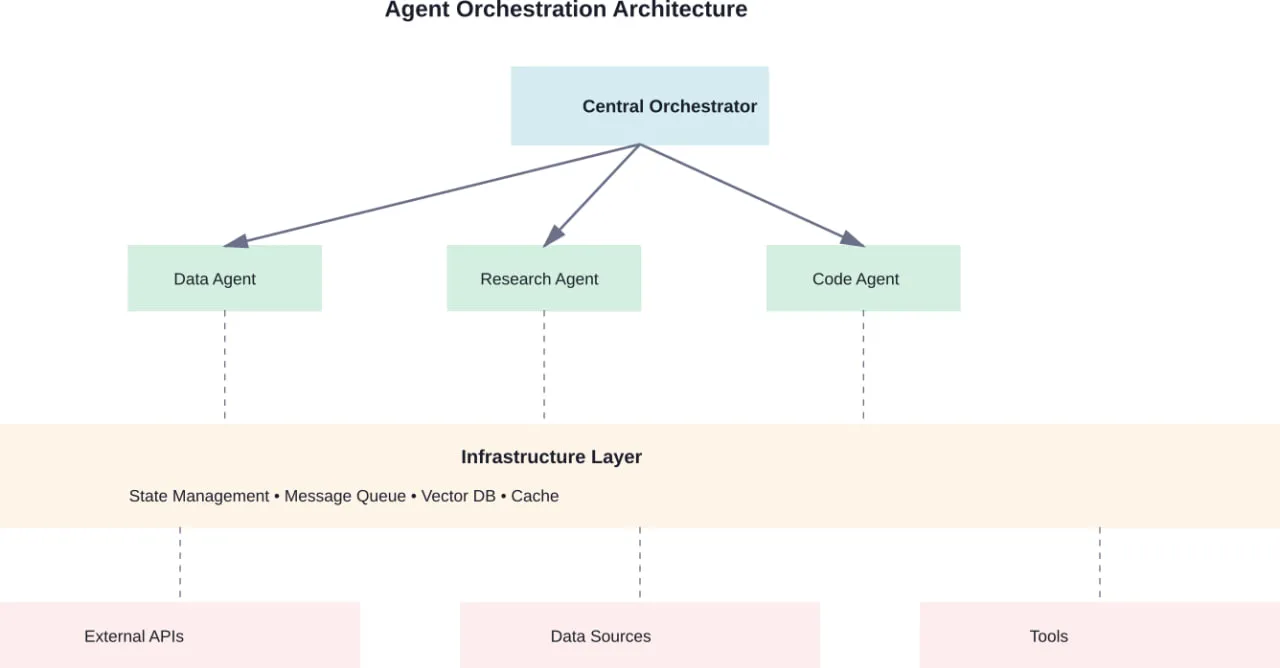
- Zentraler Koordinator: Verwaltet Aufgabenverteilung und Workflow-Ausführung
- Spezialisierte Agenten: Individuelle Agenten, die für bestimmte Fähigkeiten optimiert sind
- Kommunikationsprotokolle: Standardisierte Methoden für den Informationsaustausch zwischen Agenten
- Staatliche Verwaltung: Verfolgt den Fortschritt, den Kontext und die Zwischenergebnisse
- Integration von Werkzeugen: Verbindet Agenten mit externen Systemen und Datenquellen
Das von Zhang et al. vorgestellte AgentOrchestra Framework implementiert ein hierarchisches Multi-Agenten-System unter Verwendung des Tool-Environment-Agent (TEA) Protokolls. Dieser Ansatz ermöglicht es einem zentralen Planer, spezialisierte Sub-Agenten für Webnavigation, Datenanalyse und Dateioperationen zu orchestrieren und gleichzeitig eine kontinuierliche Anpassung zu unterstützen.
Warum Multi-Agenten-Systeme besser abschneiden als Einzelagenten
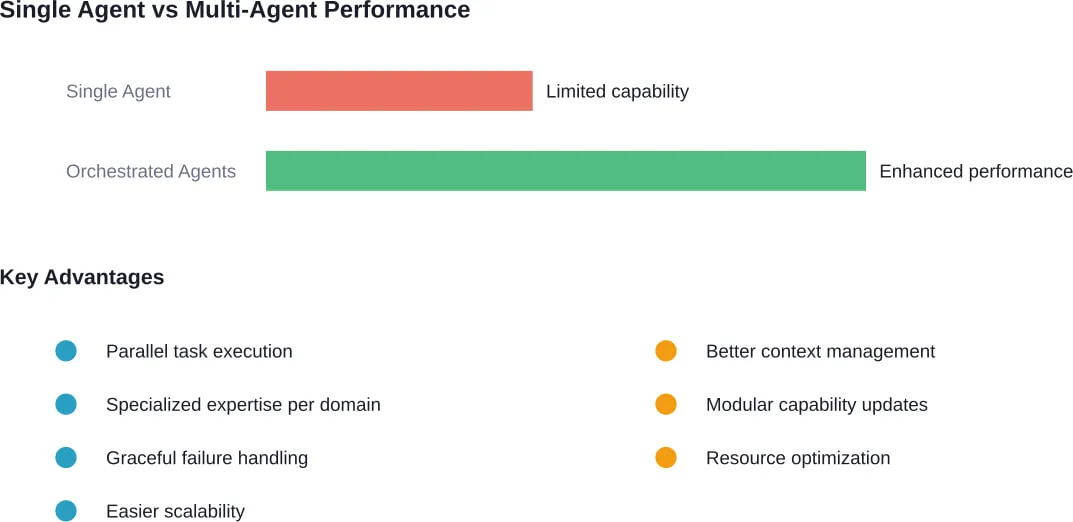
Einzelne Agenten stoßen an grundlegende Grenzen. Mit zunehmender Komplexität der Aufgaben haben monolithische Agenten Probleme mit der Kontextverwaltung, dem Spezialwissen und der Parallelverarbeitung.
Das Entwicklungsteam von Anthropic hat diese Realität bei der Entwicklung der Recherchefunktion dokumentiert. Die internen Auswertungen von Anthropic zeigen, dass Multi-Agenten-Recherchesysteme vor allem bei "Breadth-First"-Abfragen, bei denen mehrere unabhängige Richtungen gleichzeitig verfolgt werden, hervorragende Ergebnisse liefern.
Das sind die Gründe, warum orchestrierte Systeme gewinnen:
- Spezialisierung ist besser als Verallgemeinerung: Ein Datenanalyse-Agent, der für statistische Aufgaben optimiert ist, wird einen Allzweck-Agenten, der die gleiche Aufgabe übernimmt, übertreffen. Durch Orchestrierung können Teams für jede Aufgabe das richtige Tool einsetzen.
- Die Parallelverarbeitung beschleunigt die Abwicklung: Mehrere Agenten können sich gleichzeitig mit verschiedenen Aspekten eines Problems befassen. Ein Agent recherchiert Hintergrundinformationen, während ein anderer Daten analysiert und ein dritter die Dokumentation erstellt.
- Die Isolierung von Fehlern verbessert die Zuverlässigkeit: Wenn ein spezialisierter Agent ausfällt, arbeiten andere weiter. Das System lässt sich problemlos degradieren, anstatt völlig zusammenzubrechen.
- Die Skalierbarkeit wird überschaubar: Neue Funktionen hinzuzufügen bedeutet, einen neuen spezialisierten Agenten zu schaffen, nicht ein ganzes monolithisches System umzuschulen.
Gemeinsame Orchestrierungsmuster und -architekturen
Nicht jede Orchestrierung sieht gleich aus. Unterschiedliche Anwendungsfälle erfordern unterschiedliche Architekturansätze.
Hierarchische Orchestrierung
Ein zentraler Koordinator nimmt Aufgaben entgegen, unterteilt sie in Teilaufgaben und delegiert sie an spezialisierte Agenten. Der Koordinator überwacht den Fortschritt, behandelt Fehler und fasst die Ergebnisse zusammen.
Dieses Muster eignet sich gut für komplexe Arbeitsabläufe mit klarer Aufgabenzerlegung. Das AgentOrchestra-Framework implementiert diesen Ansatz mit einem zentralen Planer, der spezialisierte Subagenten für bestimmte Fähigkeiten verwaltet.
Peer-to-Peer-Zusammenarbeit
Die Agenten kommunizieren direkt, ohne einen zentralen Koordinator. Jeder Agent ist über die Fähigkeiten der anderen Agenten informiert und handelt die Aufgabenverteilung gemeinsam aus.
Die Forschungsarbeit von Dang et al. zum Thema “Multi-Agent Collaboration via Evolving Orchestration” untersucht, wie Agenten ihre Koordinationsmuster im Laufe der Zeit ohne starre hierarchische Strukturen weiterentwickeln können.
Pipeline-Orchestrierung
Agenten arbeiten nacheinander, wobei die Ausgabe jedes Agenten die Eingabe des nächsten Agenten ist. Dieser lineare Fluss eignet sich gut für Datenverarbeitungspipelines und sequenzielle Arbeitsabläufe.
Dynamische Orchestrierung
Das Orchestrierungsmuster passt sich an die Anforderungen der Aufgabe an. Laut der AdaptOrch-Forschung von Yu wird die aufgabenadaptive Multi-Agenten-Orchestrierung immer wichtiger, da große Sprachmodelle von verschiedenen Anbietern auf eine vergleichbare Benchmark-Leistung hin konvergieren.
Wenn die Modellfähigkeiten konvergieren, wird das Unterscheidungsmerkmal sein, wie effektiv die Systeme diese Modelle für bestimmte Aufgaben orchestrieren.
Führende AI Agent Orchestration Frameworks
Mehrere Frameworks haben sich im Bereich der Orchestrierung als führend erwiesen. Jedes bringt unterschiedliche Stärken und Kompromisse mit sich.
| Rahmenwerk | Am besten für | Zentrale Stärke | Primärer Anwendungsfall |
|---|---|---|---|
| LangGraph | Komplexe Arbeitsabläufe | Staatliche Verwaltung | Mehrschrittige Argumentationsaufgaben |
| CrewAI | Rollenbasierte Teams | Agentenspezialisierung | Kollaborative Arbeitsabläufe |
| AutoGen | Gesprächsfähige Agenten | Verwaltung des Dialogs | Interaktive Systeme |
| OpenAI Agenten SDK | Einheimische Integration | Integration der Plattform | OpenAI-zentrierte Stacks |
| AWS-Bedrock | Einsatz im Unternehmen | Sicherheit und Konformität | Regulierte Industrien |
LangGraph
LangGraph basiert auf LangChain und eignet sich hervorragend für die Verwaltung zustandsorientierter Arbeitsabläufe. Es stellt Agenteninteraktionen als Graphen dar, wobei Knoten Agenten oder Operationen und Kanten den Datenfluss repräsentieren.
Das Framework bietet eine robuste Zustandspersistenz und eignet sich daher für lang laufende Workflows, die unterbrochen und wieder aufgenommen werden müssen.
CrewAI
CrewAI setzt auf rollenbasierte Agentengestaltung. Teams definieren Agenten mit spezifischen Rollen, Zielen und Hintergrundgeschichten. Das Framework übernimmt die Delegation von Aufgaben auf der Grundlage der Fähigkeiten der Agenten.
Dieser Ansatz ist für Teams, die über Agentensysteme in Bezug auf organisatorische Rollen nachdenken, ganz natürlich.
AutoGen
AutoGen wurde von Microsoft Research entwickelt und konzentriert sich auf konversationelle Agentensysteme. Agenten kommunizieren über strukturierte Dialoge mit eingebauter Unterstützung für Interaktionen zwischen Menschen.
AutoGen eignet sich besonders gut für Anwendungen, die ein Hin- und Herüberlegen zwischen mehreren Agenten erfordern.
OpenAI Agenten SDK
Das native SDK von OpenAI bietet eine enge Integration mit ihren Modellen und Tools. Laut der Dokumentation zur Zusammenarbeit im Multi-Agenten-Portfolio vereinfacht das SDK die Orchestrierung für Teams, die bereits in das OpenAI-Ökosystem investiert haben.
Das SDK bewältigt einen Großteil der Koordinationskomplexität automatisch, bietet jedoch weniger Flexibilität als die Framework-agnostischen Optionen.
Infrastrukturanforderungen für die Orchestrierung der Produktion
Orchestrierungs-Frameworks benötigen eine robuste Infrastruktur. Zustandsverwaltung, Nachrichtenwarteschlangen und Datenpersistenz sind bei der Skalierung von entscheidender Bedeutung.
Redis hat sich zu einer beliebten Infrastrukturschicht für die Produktionsorchestrierung entwickelt. Laut einer Analyse, die Orchestrierungsplattformen vergleicht, bietet Redis mehrere Primitive, die Multi-Agenten-Systeme benötigen:
- Statusspeicherung mit niedriger Latenz: Agenten brauchen schnellen Zugang zu gemeinsamen Zuständen
- Warteschlangen für Nachrichten: Aufgabenverteilung und Kommunikation zwischen Agenten
- Pub/Sub-Messaging: Ereignisgesteuerte Koordinierungsmuster
- Vektorielle Speicherung: Semantische Suche für Wissensdatenbanken von Agenten
Laut Redis-Plattformvergleichen bietet Redis 8 eine bis zu 87% schnellere Befehlsausführung, eine bis zu 2-fache Verbesserung des Durchsatzes und bis zu 35% Speichereinsparungen. Leistung ist wichtig, wenn Agenten in Echtzeit koordinieren müssen.
Implementierung der Agenten-Orchestrierung: Praktische Schritte
Der Übergang vom Konzept zur Produktion erfordert eine methodische Umsetzung. Hier sehen Sie, wie erfolgreiche Implementierungen in der Regel ablaufen.
Schritt 1: Definieren von Aufgabengrenzen
Beginnen Sie damit, den gesamten Arbeitsablauf abzubilden. Welche Aufgaben können isoliert werden? Welche müssen koordiniert werden? Welche müssen sequentiell und welche parallel ausgeführt werden?
Klare Aufgabengrenzen ermöglichen eine effektive Spezialisierung der Agenten.
Schritt 2: Entwurf von Agentenspezialisierungen
Erstellen Sie Agenten, die für bestimmte Funktionen optimiert sind. Ein Agent für die Datenextraktion benötigt andere Werkzeuge und Eingabeaufforderungen als ein Agent für die Verdichtung oder die Codegenerierung.
Nach der MAS-Orchestra-Forschung von Ke et al. erfordert das Verständnis und die Verbesserung des Multi-Agenten-Reasonings eine ganzheitliche Orchestrierung mit kontrollierten Benchmarks. Das Testen der Fähigkeiten der einzelnen Agenten, bevor sie zusammen orchestriert werden, reduziert die Komplexität der Fehlersuche.
Schritt 3: Erstellung von Kommunikationsprotokollen
Agenten benötigen standardisierte Möglichkeiten zum Informationsaustausch. Das von AgentOrchestra verwendete Tool-Environment-Agent (TEA)-Protokoll bietet ein solches Modell: Agenten interagieren über eine gemeinsame Umgebung unter Verwendung standardisierter Tool-Schnittstellen.
Definieren Sie Nachrichtenformate, Konventionen für die Fehlerbehandlung und Protokolle für die Statusaktualisierung, bevor Sie komplexe Workflows erstellen.
Schritt 4: Implementierung der Zustandsverwaltung
Multiagentensysteme akkumulieren ihren Zustand über mehrere Interaktionen hinweg. Welcher Agent verwaltet welchen Zustand? Wie greifen die Agenten auf den gemeinsamen Kontext zu?
Eine robuste Zustandsverwaltung verhindert Inkonsistenzen und ermöglicht die Wiederaufnahme des Workflows nach Fehlern.
Schritt 5: Überwachung und Beobachtungsmöglichkeiten aufbauen
Orchestrierte Systeme sind schwieriger zu debuggen als einzelne Agenten. Implementieren Sie von Anfang an Logging, Tracing und Metriken.
Verfolgen Sie Agenteninteraktionen, Zeiten für die Aufgabenerledigung, Fehlerraten und Ressourcennutzung. Die Beobachtbarkeit ist bei der Skalierung nicht optional.
Schritt 6: Fehlerszenarien testen
Was passiert, wenn ein Agent eine Zeitüberschreitung hat? Wenn externe APIs Fehler zurückgeben? Wenn Agenten widersprüchliche Ergebnisse liefern?
Durch das Testen von Fehlermodi lässt sich feststellen, ob die Orchestrierungslogik zuverlässig mit Randfällen umgeht oder Ausfälle im gesamten System kaskadiert.
Bauen Sie das System um Ihre Agenten herum mit A-listware
Multiagentensysteme versagen nicht auf der Logikebene, sondern bei der Integration, dem Datenfluss und der Koordination zwischen den Diensten. Orchestrierung bedeutet APIs, Backend-Dienste, Cloud-Infrastruktur und stabile Kommunikation zwischen den Komponenten. A-listware konzentriert sich auf kundenspezifische Softwareentwicklung und engagierte Ingenieurteams, die sich um diese Ebene kümmern, von der Architektur und dem API-Design bis zur Integration und Bereitstellung.
Wenn mehrere Agenten zusammenarbeiten müssen, besteht die Herausforderung darin, ein System zu entwickeln, das über einen längeren Zeitraum hinweg zuverlässig funktioniert, nicht nur während einer Demo. A-listware unterstützt den gesamten Entwicklungszyklus, einschließlich Backend-Engineering, Integrationen und Cloud-Setup, so dass alles als ein System und nicht als separate Teile läuft. Sprechen Sie mit A-listware um das System um Ihr Multi-Agenten-System herum aufzubauen.
Vorteile von Agent Orchestration
Unternehmen, die Orchestrierung einführen, berichten von mehreren greifbaren Vorteilen:
- Verbesserte Erledigungsraten für Aufgaben: Spezialisierte Agenten bewältigen komplexe Arbeitsabläufe zuverlässiger als Allzweckalternativen. Jeder Agent konzentriert sich auf das, was er am besten kann.
- Schnellere Entwicklungszyklen: Teams können einzelne Agenten unabhängig voneinander entwickeln und testen. Um neue Funktionen hinzuzufügen, müssen nicht ganze Systeme umgeschult werden.
- Bessere Ressourcennutzung: Die Orchestrierung ermöglicht eine dynamische Skalierung. Teure Agenten werden nur bei Bedarf ausgeführt, während einfachere Agenten Routineaufgaben übernehmen.
- Verbesserte Wartbarkeit: Das Debuggen eines bestimmten Agenten ist einfacher als das Debuggen eines monolithischen Systems. Probleme können auf einzelne Komponenten beschränkt werden.
- Flexibilität bei der Modellauswahl: Unterschiedliche Bearbeiter können verschiedene zugrunde liegende Modelle verwenden. Verwenden Sie für jede Aufgabe das kostengünstigste Modell, anstatt unnötig für Premium-Modelle zu bezahlen.
Herausforderungen und Beschränkungen
Die Orchestrierung ist nicht ohne Kompromisse. Mehrere Herausforderungen erschweren die Umsetzung.
Erhöhte Systemkomplexität
Die Verwaltung mehrerer Agenten führt zu einem erhöhten Koordinationsaufwand. Mehr Komponenten bedeuten mehr potenzielle Fehlerpunkte. Entwicklungsteams benötigen Orchestrierungs-Know-how, das über das grundlegende Prompt-Engineering hinausgeht.
Kumulierung von Latenzzeiten
Jede Agenteninteraktion erhöht die Latenzzeit. Sequentielle Workflows mit mehreren Agenten können erheblich länger dauern als Ansätze mit nur einem Agenten. Eine sorgfältige Planung ist erforderlich, um unnötige Umwege zu minimieren.
Kostenmanagement
Mehrere Agenten bedeuten mehrere API-Aufrufe. Ohne sorgfältige Kostenkontrolle können orchestrierte Systeme schnell teuer werden. Die Überwachung der Token-Nutzung über alle Agenten hinweg ist daher unerlässlich.
Komplexität der Tests
Das Testen von Multi-Agenten-Interaktionen erfordert anspruchsvolle Testumgebungen. Einfache Unit-Tests erfassen nicht das sich aus der Zusammenarbeit von Agenten ergebende Verhalten. Integrationstests sind wichtig, aber zeitaufwändig.
Sicherheit und Zugangskontrolle
Verschiedene Agenten benötigen möglicherweise unterschiedliche Berechtigungsstufen. IEEE-Forschungsarbeiten über auf Rechenschaftspflicht basierende architektonische Taktiken für die Zusammenarbeit von Agenten in LLM-basierten Multi-Agenten-Systemen unterstreichen die Bedeutung angemessener Zugangskontrollen.
Ein Agent mit Schreibzugriff auf die Datenbank sollte nicht die gleichen Rechte haben wie ein Agent, der nur lesend recherchiert.
Überlegungen zur Einführung in Unternehmen
Die Einführung in Unternehmen wirft über die technische Umsetzung hinaus weitere Fragen auf.
Governance und Compliance
Regulierte Branchen brauchen Prüfpfade, die zeigen, welcher Agent welche Entscheidung getroffen hat. Das KI-Risikomanagement-Rahmenwerk des NIST bietet eine Anleitung zur Förderung des Vertrauens in KI-Technologien und zur Risikominderung.
Agenten-Orchestrierungssysteme sollten Agenteninteraktionen, Entscheidungsgründe und Datenzugriffsmuster protokollieren, um Compliance-Anforderungen zu unterstützen.
Änderungsmanagement
Laut einer Studie der MIT Sloan Management Review über das aufkommende agentenbasierte Unternehmen müssen Führungskräfte bei der Einführung von Agentensystemen die Personalplanung neu überdenken. Digitale Agenten werden schnell zu einem wichtigen Bestandteil der Belegschaft.
Unternehmen brauchen Rahmenbedingungen, um zu bestimmen, wann Agenten autonom handeln sollten und wann menschliche Aufsicht erforderlich ist.
Entwicklung von Fertigkeiten
Die Teams müssen in Orchestrierungs-Frameworks, Prompt-Engineering und dem Entwurf verteilter Systeme geschult werden. Die Fähigkeiten unterscheiden sich von denen der traditionellen Softwareentwicklung.
Frühzeitige Investitionen in die Bildung verhindern die Anhäufung technischer Schulden.
Anwendungsfälle aus der realen Welt
Orchestrierung bietet sich in bestimmten Szenarien an, in denen einzelne Agenten Schwierigkeiten haben.
Forschung und Analyse
Das Multi-Agenten-Forschungssystem von Anthropic demonstriert die Leistungsfähigkeit der Orchestrierung bei komplexen Forschungsaufgaben. Mehrere Agenten verfolgen gleichzeitig unabhängige Forschungsrichtungen und fassen die Ergebnisse in umfassenden Berichten zusammen.
Breadth-First-Abfragen, bei denen mehrere Blickwinkel untersucht werden müssen, profitieren erheblich von der parallelen Ausführung durch Agenten.
Software-Entwicklung
Codegenerierungs-Workflows profitieren von spezialisierten Agenten, die verschiedene Aspekte behandeln. Ein Agent analysiert die Anforderungen, ein anderer entwirft die Architektur, ein dritter schreibt den Code, und ein vierter kümmert sich um die Tests.
Jeder Agent konzentriert sich auf sein Spezialgebiet, anstatt zu versuchen, eine durchgängige Generierung zu erreichen.
Kundenbetreuung
Kundenanfragen erfordern oft mehrere Funktionen: Verstehen der Absicht, Abrufen von Kontoinformationen, Verarbeiten von Transaktionen und Erstellen von Antworten. Die Orchestrierung von spezialisierten Agenten für jeden Schritt schafft zuverlässigere Kundenerlebnisse.
Pipelines für die Datenverarbeitung
Extrahieren-Transformieren-Laden-Workflows lassen sich ganz natürlich auf orchestrierte Agenten übertragen. Ein Agent kümmert sich um die Datenextraktion, ein anderer führt Transformationen durch, ein dritter validiert die Qualität, und ein vierter lädt die Ergebnisse.
Die Pipeline-Orchestrierung sorgt für klare Grenzen zwischen den Verarbeitungsstufen.
Bewährte Praktiken für eine erfolgreiche Orchestrierung
Auf der Grundlage erfolgreicher Implementierungen in verschiedenen Branchen lassen sich immer wieder verschiedene Muster erkennen:
- Beginnen Sie mit einfachen Mitteln und steigern Sie sie schrittweise: Beginnen Sie mit zwei oder drei Agenten, die klar definierte Aufgaben erledigen. Erhöhen Sie die Komplexität erst dann, wenn Sie sichergestellt haben, dass die Kernlogik der Orchestrierung zuverlässig funktioniert.
- Vom ersten Tag an auf Beobachtbarkeit ausgelegt sein: Implementieren Sie eine umfassende Protokollierung und Überwachung, bevor die Arbeitsabläufe komplex werden. Die Fehlersuche in Multi-Agenten-Systemen ohne angemessene Beobachtungsmöglichkeiten ist nahezu unmöglich.
- Verwenden Sie idempotente Operationen: Entwerfen Sie Agentenaktionen so, dass eine wiederholte Ausführung das gleiche Ergebnis liefert. Dies ermöglicht eine sichere Wiederholungslogik beim Auftreten von Fehlern.
- Einsatz von Schutzschaltern: Wenn ein Agent oder externer Dienst wiederholt ausfällt, stellen Sie das Senden von Anfragen ein. Stromkreisunterbrecher verhindern kaskadenartige Ausfälle im gesamten Orchestrierungssystem.
- Version der Agentendefinitionen: Führen Sie bei der Weiterentwicklung von Agenten einen Versionsverlauf. Dies ermöglicht ein Rollback, wenn Änderungen zu Regressionen führen, und unterstützt A/B-Tests verschiedener Agentenimplementierungen.
- Trennen Sie die Orchestrierungslogik von der Agentenlogik: Der Orchestrierungscode sollte sich auf die Koordination und nicht auf die bereichsspezifische Verarbeitung konzentrieren. Durch diese Trennung lassen sich beide Komponenten leichter testen und warten.
Die Zukunft der Agenten-Orchestrierung
Mehrere Trends bestimmen, wohin sich die Orchestrierungstechnologie entwickeln wird:
- Selbst-optimierende Orchestrierung: Systeme, die Orchestrierungsmuster auf der Grundlage der beobachteten Leistung automatisch anpassen. Die AdaptOrch-Forschung zur aufgabenadaptiven Multi-Agenten-Orchestrierung weist in Richtung von Frameworks, die sich dynamisch rekonfigurieren.
- Standardisierte Protokolle: Mit zunehmender Verbreitung wird eine Standardisierung in der Industrie unvermeidlich. Die IEEE AI Standards für Agentensysteme zeigen, dass Interoperabilität und gemeinsame Protokolle zunehmend an Bedeutung gewinnen.
- Verbesserte Sicherheitsmodelle: Ausgefeiltere Zugangskontroll- und Berechtigungssysteme, die speziell auf die Interaktion mit Agenten zugeschnitten sind.
- Organisationsübergreifende Orchestrierung: Agenten aus verschiedenen Organisationen, die über sichere, standardisierte Schnittstellen zusammenarbeiten. Dies ermöglicht neue Geschäftsmodelle und Partnerschaftsstrukturen.
- Hybride Mensch-Agent-Teams: Orchestrierungsrahmen umfassen zunehmend menschliche Mitarbeiter neben KI-Agenten, die die Koordination zwischen beiden Arten von Teilnehmern nahtlos übernehmen.
Häufig gestellte Fragen
- Was ist der Unterschied zwischen der Orchestrierung von Agenten und der Automatisierung von Arbeitsabläufen?
Die Agentenorchestrierung koordiniert speziell KI-Agenten, die autonome Entscheidungen treffen, während die Workflow-Automatisierung vordefinierte Sequenzen ohne intelligente Entscheidungsfindung ausführt. Orchestrierte Agenten passen sich an den Kontext an und behandeln Ausnahmen dynamisch, während die herkömmliche Automatisierung starren Regeln folgt. Diese Unterscheidung ist wichtig, da orchestrierte Systeme mit Komplexität und Mehrdeutigkeit umgehen können, was bei der herkömmlichen Automatisierung nicht möglich ist.
- Benötige ich mehrere LLMs für die Agentenorchestrierung?
Nicht unbedingt. Die Orchestrierung kann ein einziges LLM mit verschiedenen Prompts und Tools für jeden Agenten verwenden oder verschiedene Modelle mischen, die für bestimmte Aufgaben optimiert sind. Kostenbewusste Implementierungen verwenden oft ein leistungsstarkes Modell für komplexe Agenten und einfachere Modelle für einfachere Aufgaben. Die Wahl hängt von den Leistungsanforderungen und Budgetbeschränkungen ab.
- Wie viele Agenten sollte ein Orchestrierungssystem umfassen?
Beginnen Sie mit 2-3 Agenten und erweitern Sie je nach nachgewiesenem Bedarf. Mehr Agenten erhöhen die Koordinationskomplexität exponentiell. Viele erfolgreiche Implementierungen verwenden 3-7 spezialisierte Agenten. Bei mehr als 10 Agenten wird eine hierarchische Orchestrierung mit Unterkoordinatoren erforderlich, um die Komplexität zu bewältigen.
- Können orchestrierte Agenten mit bestehenden APIs und Datenbanken arbeiten?
Ja. Agenten greifen über Toolintegrationen auf externe Systeme zu. Die meisten Frameworks unterstützen Funktionsaufrufe, über die Agenten mit APIs, Datenbanken und internen Diensten interagieren können. Die Infrastrukturebene übernimmt die Authentifizierung, die Ratenbegrenzung und die Zugriffskontrolle für diese Integrationen.
- Wie hoch ist der typische Latenz-Overhead bei der Orchestrierung?
Jede Agenteninteraktion dauert je nach Modellgeschwindigkeit und Komplexität 1-5 Sekunden. Sequentielle Arbeitsabläufe mit 5 Agenten können im Vergleich zu einem einzelnen Agenten 5-25 Sekunden mehr kosten. Die parallele Ausführung reduziert diesen Overhead erheblich. Latenzempfindliche Anwendungen sollten sequenzielle Abhängigkeiten minimieren und schnellere Modelle für Koordinationsagenten verwenden.
- Wie gehe ich mit widersprüchlichen Ausgaben von verschiedenen Agenten um?
Implementierung einer Lösungsstrategie im Koordinator: Abstimmungsmechanismen, Vertrauensbewertung oder festgelegte Autoritätshierarchien. Einige Rahmenwerke ermöglichen es einem Aufsichtsagenten, widersprüchliche Ergebnisse zu bewerten und endgültige Entscheidungen zu treffen. Die Tests sollten Szenarien umfassen, in denen die Agenten nicht übereinstimmen, um die korrekte Funktionsweise der Lösungslogik zu überprüfen.
- Ist die Agenten-Orchestrierung für Echtzeitanwendungen geeignet?
Das hängt von den Latenzanforderungen ab. Anwendungen, die Reaktionszeiten von 5-10 Sekunden tolerieren, funktionieren gut mit Orchestrierung. Bei Anforderungen von weniger als einer Sekunde kann der Orchestrierungs-Overhead unerschwinglich sein, es sei denn, man verwendet eine hoch optimierte Infrastruktur und parallele Ausführung. Echtzeitsysteme sollten sorgfältig getestet werden, bevor man sich auf orchestrierte Architekturen festlegt.
Schlussfolgerung
Die Orchestrierung von KI-Agenten stellt eine grundlegende Veränderung in der Art und Weise dar, wie Unternehmen künstliche Intelligenz einsetzen. Einzelne Agenten stoßen an Kapazitätsgrenzen, die orchestrierte Systeme durch Spezialisierung und Koordination überwinden.
Die technischen Grundlagen reifen schnell. Frameworks wie LangGraph, CrewAI und AutoGen bieten produktionsreife Orchestrierungsfunktionen. Infrastrukturebenen wie Redis bieten die erforderliche Leistung und Zuverlässigkeit in großem Maßstab.
Aber Technologie allein ist keine Garantie für Erfolg.
Eine effektive Orchestrierung erfordert eine durchdachte Architektur, robuste Beobachtungsmöglichkeiten und ein sorgfältiges Änderungsmanagement. Unternehmen, die agentenbasierte KI ohne Orchestrierungsstrategien einführen wollen, riskieren den Aufbau fragiler Systeme, die unter Produktionslast versagen.
Die Chance ist groß. Untersuchungen zeigen, dass orchestrierte Multi-Agenten-Systeme komplexe Aufgaben, die von einzelnen Agenten nicht zuverlässig bewältigt werden können, besonders gut bewältigen. Unternehmen, die Orchestrierung beherrschen, gewinnen Wettbewerbsvorteile in Bezug auf Automatisierungsmöglichkeiten und betriebliche Effizienz.
Beginnen Sie mit klar definierten Anwendungsfällen. Entwickeln Sie zunächst einfache Orchestrierungsmuster. Investieren Sie von Anfang an in Infrastruktur und Beobachtbarkeit. Skalieren Sie die Komplexität schrittweise, wenn die Teams Fachwissen entwickeln.
Die orchestrierte Zukunft ist schneller da, als die meisten Unternehmen erwarten. Teams, die jetzt Orchestrierungsfunktionen entwickeln, werden in ihrer Branche führend sein. Diejenigen, die auf vollkommene Klarheit warten, werden auf ewig im Rückstand sein.
Die Wahl ist einfach: Jetzt die Koordination beherrschen oder später mit der Komplexität kämpfen.


