AI Agents Enterprise News: 2026 Market Trends & Platforms

Quick Summary: Enterprise AI agents are transitioning from experimental tools to production systems in 2026, with major tech companies like NVIDIA, Oracle, and OpenAI launching enterprise-grade platforms. According to McKinsey findings reported in March 2026, roughly 10% of enterprise functions currently use AI agents, though adoption mirrors early cloud computing growth patterns. Federal standards initiatives from NIST are establishing governance frameworks as autonomous AI systems move from assisted copilots to fully autonomous operational agents.

The enterprise AI landscape just hit an inflection point. After years of AI assistants and copilots helping with discrete tasks, autonomous agents that can execute complex workflows without human intervention are finally entering production environments.

But here’s the thing—adoption remains concentrated. Most organizations are still figuring out where agents fit, what governance looks like, and whether the infrastructure can handle these systems at scale.

Let’s break down what’s actually happening in enterprise AI agents right now, backed by recent data and platform launches from the industry’s biggest players.

Current Enterprise Adoption: The McKinsey Data

According to McKinsey findings reported in March 2026, roughly 10% of enterprise functions currently use AI agents. That’s not massive penetration, but it’s significant when you consider where this technology was just 18 months ago.

The adoption curve mirrors cloud computing’s early trajectory. Remember 2010? AWS generated just $500 million in revenue that year, according to industry data cited by McKinsey. Azure had barely launched. Google App Engine was still a developer experiment.

Fast forward to 2025, and cloud infrastructure became the default for enterprise operations. If agentic AI follows the same path—and the technical fundamentals suggest it will—current adoption numbers represent the ground floor, not the ceiling.

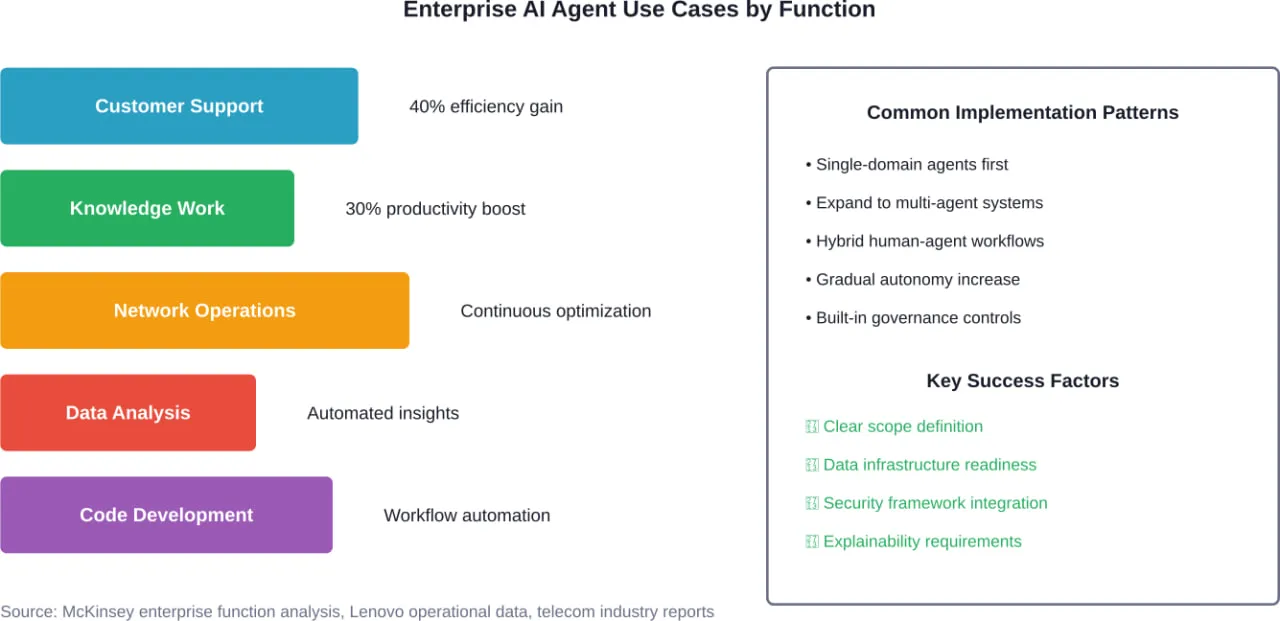
Real talk: According to Lenovo operational analysis, organizations report productivity improvements of up to 30% in knowledge work and efficiency gains of up to 40% across support and operational teams. Those aren’t marginal improvements. They’re the kind of metrics that force CFOs to pay attention.

Major Platform Launches Shaping 2026

Three significant enterprise agent platforms launched or expanded in early 2026, each taking a different approach to autonomous AI deployment.

NVIDIA Agent Toolkit

NVIDIA announced its Agent Toolkit on March 16, 2026, positioning it as an open development platform for building and running AI agents in enterprise environments. The toolkit includes NVIDIA OpenShell, an open source runtime designed for building self-evolving agents with enhanced safety and security controls.

Built with LangChain, the platform’s AI-Q Blueprint architecture uses frontier models for orchestration while running NVIDIA Nemotron open models for research tasks. This hybrid approach can cut query costs by more than 50% while providing world-class accuracy, according to NVIDIA.

The built-in evaluation system explains how each AI answer is produced—critical for enterprise environments where audit trails and explainability aren’t optional features.

Oracle’s Proactive Enterprise Agents

Oracle’s approach integrates agentic processes directly into Oracle Cloud Infrastructure (OCI), with a new agent builder that grounds AI systems in enterprise data from the start. The emphasis here is on customization and data locality—agents that understand organizational context because they’re built on top of existing business systems.

This addresses one of the bigger enterprise concerns: agents that operate effectively need access to proprietary data, but that creates security and governance challenges. Oracle’s bet is that native OCI integration solves this by keeping everything inside the existing cloud perimeter.

OpenAI’s Enterprise Agent Platform

OpenAI launched its enterprise agent platform ‘Frontier’ on February 5, 2026, offering both the technical platform and human engineering services to help organizations deploy AI agents. It’s a recognition that tooling alone doesn’t drive adoption—implementation expertise matters.

According to reporting from January 2026, OpenAI CFO Sarah Friar told CNBC the company expects enterprise customers to increase from 40% to 50% of total business by year-end. That shift requires products tailored for organizational buyers, not just individual developers.

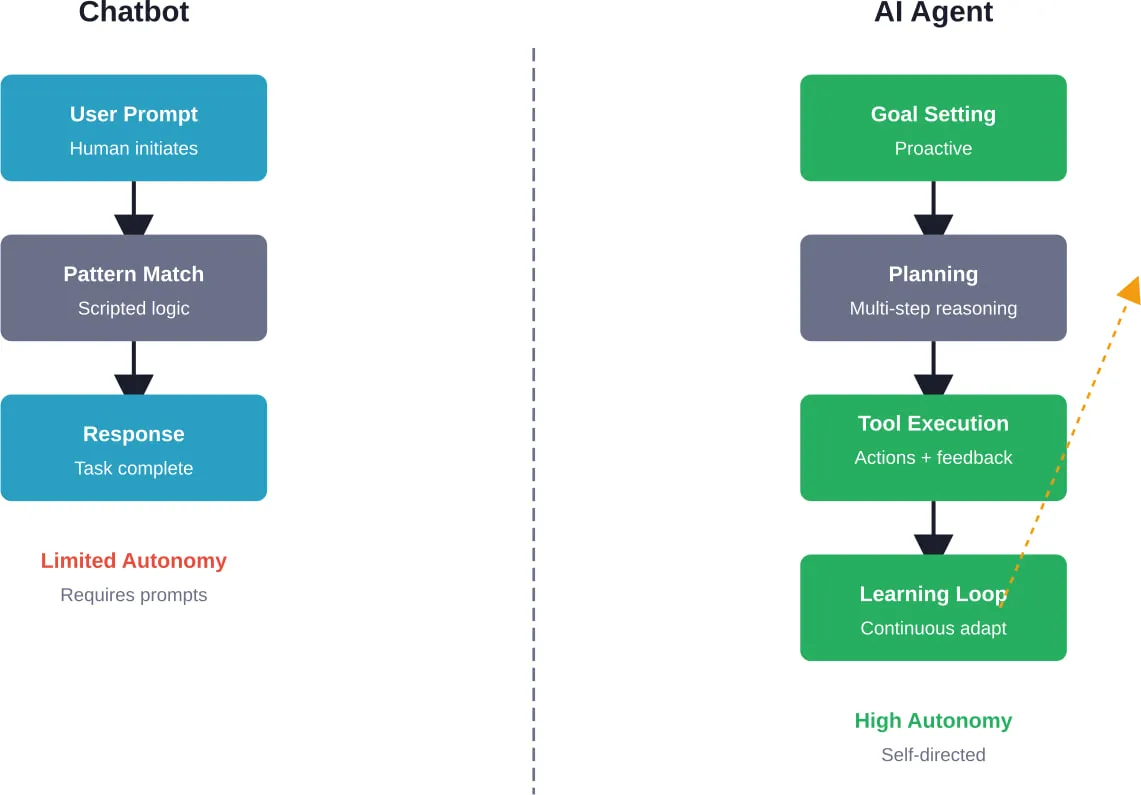
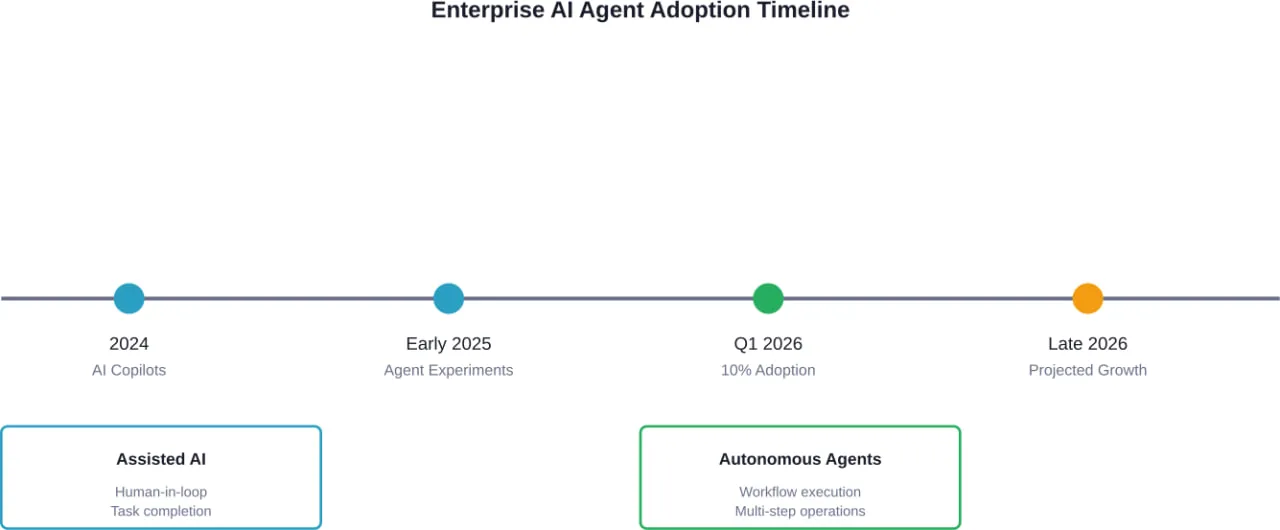
Evolution from AI assistants to autonomous enterprise agents, showing current adoption milestone and projected trajectory through 2026

Federal Standards and Governance Frameworks

As enterprise adoption accelerates, regulatory and standards bodies are establishing frameworks for safe deployment. The National Institute of Standards and Technology (NIST) Center for AI Standards and Innovation (CAISI) launched the AI Agent Standards Initiative on February 17, 2026, focused on ensuring trusted, interoperable, and secure agentic systems.

NIST held the Second NIST Cyber AI Profile Workshop (published March 23, 2026), addressing how organizations should incorporate AI into operations while mitigating cybersecurity risks. This isn’t theoretical guidance—it’s practical frameworks for CIOs trying to deploy autonomous systems without creating new attack surfaces.

Draft NIST Guidelines released December 16, 2025 rethink cybersecurity specifically for the AI era, acknowledging that traditional security models don’t fully account for systems that make independent decisions and modify their own behavior over time.

On the policy side, the White House issued an executive order on July 23, 2025 addressing AI in federal systems, with related announcements on July 24, 2025. While some directives focused on ideological concerns, the broader framework established principles for AI deployment across government agencies—principles that often influence enterprise best practices.

The Infrastructure Challenge

Here’s what doesn’t make headlines but matters enormously: infrastructure. Running autonomous agents at enterprise scale requires fundamentally different compute architectures than serving API requests to copilots.

Lenovo’s recent analysis points out that autonomous AI systems need to handle complex, continuous operations locally, with high performance and large memory capacity. Running AI workloads locally reduces reliance on external APIs, improves responsiveness, and gives organizations stronger control over sensitive data.

That’s why systems like Lenovo’s ThinkStation workstations are being positioned specifically for local AI agent deployment. It’s not just about raw compute power—it’s about having the architecture to run these systems where the data lives.

Deployment ModelAdvantagesChallengesBest For 
Cloud-Based AgentsScalability, easy updates, lower upfront costAPI dependency, latency, ongoing costsDistributed teams, variable workloads
On-Premises AgentsData control, low latency, predictable costsInfrastructure investment, maintenance overheadRegulated industries, sensitive data
Hybrid ArchitectureFlexibility, optimized cost/performanceComplexity, integration challengesLarge enterprises with diverse needs

Academic Research Directions

Academic work is rushing to catch up with practical deployment. Multiple comprehensive reviews published on arXiv in recent months attempt to establish taxonomies and frameworks for understanding agentic AI systems.

One systematic review distinguishes between standalone AI agents and collaborative agentic ecosystems—a critical distinction as enterprises move beyond single-purpose agents to systems where multiple agents coordinate across different business functions.

IEEE SA Standards Board approved new standards on February 12, 2026 including standards for AI agent capability requirements in materials research (P3933), audio large language models (P3936), and IoT security assessment (P2994). Standards bodies are essentially racing to establish guidelines while the technology evolves in real-time.

Industry-Specific Applications

Telecom operators are deploying agentic AI for network optimization and lifecycle management across RAN, transport, and core infrastructure. The complexity and scale of 5G networks have pushed traditional automation to its limits—agents that can diagnose issues, optimize configurations, and manage resources autonomously are becoming operational necessities rather than experimental projects.

Alibaba International launched Accio Work, an enterprise work agent platform, targeting global business operations. The focus on international deployment reflects how agents handle the complexity of multi-region operations, currency conversions, regulatory compliance, and localization at scale.

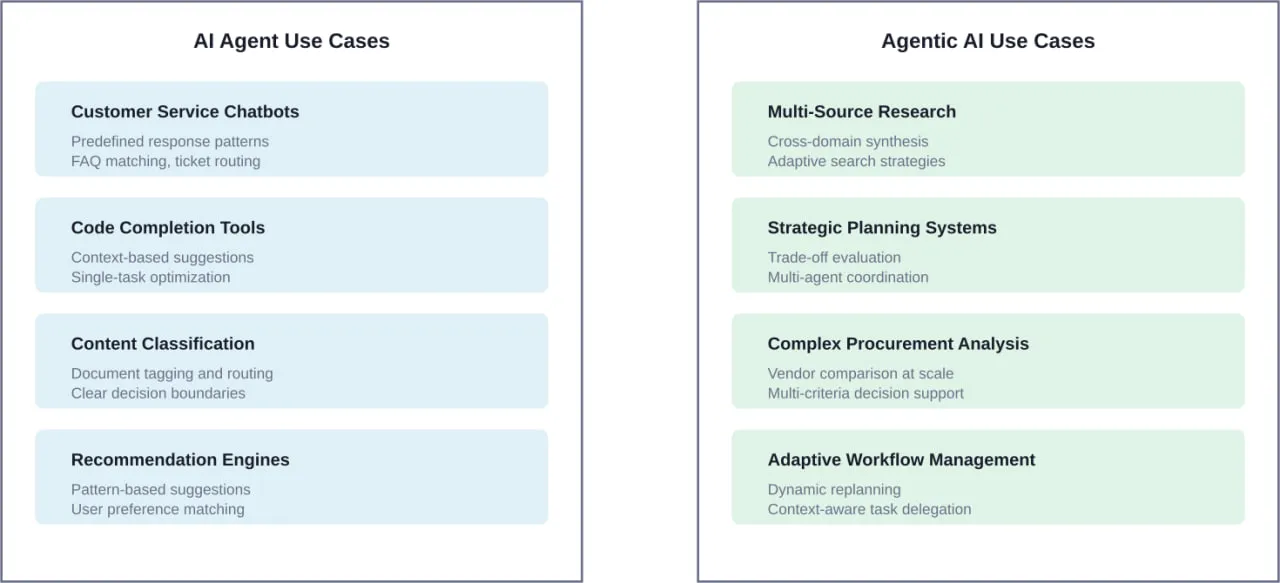
Primary enterprise AI agent use cases showing documented efficiency gains and common implementation approaches across industries

What Comes Next

The next 12 months will determine whether enterprise AI agents follow cloud’s explosive growth trajectory or plateau at niche adoption. Several factors will influence that outcome.

First, governance frameworks need to mature. Organizations won’t deploy truly autonomous systems at scale until they have confidence in control mechanisms, audit trails, and safety guardrails. NIST’s standards work matters because it provides the common language and benchmarks that procurement teams require.

Second, the infrastructure must prove it can handle continuous autonomous operations without creating new failure modes. Early deployments are essentially proving grounds for architectural patterns that will either validate or invalidate specific approaches.

Third, ROI needs to become predictable. Productivity gains of 30-40% sound compelling, but CFOs need to understand implementation costs, ongoing operational expenses, and realistic timelines. Platform vendors are starting to publish case studies with actual numbers—that transparency accelerates adoption.

Look, the technology is ready. The platforms exist. The early adopters are reporting real gains. What remains uncertain is how quickly enterprise culture, procurement processes, and risk management frameworks adapt to systems that operate with genuine autonomy.

Turn AI Trends Into Systems That Actually Run

Enterprise AI news often highlights platforms and market shifts, but most teams run into practical issues – connecting tools, handling data across systems, and keeping everything stable once usage grows.

A-listware supports companies at that stage with dedicated development teams. The focus is on backend, integrations, and infrastructure that sit around AI initiatives, helping businesses move from trend-driven decisions to systems that work in day-to-day operations.

If you are moving from AI strategy to implementation, contact A-listware to support development, integration, and ongoing system support.

Frequently Asked Questions

  1. What’s the difference between AI copilots and AI agents?

AI copilots assist humans with specific tasks and require human approval for actions. AI agents can execute complete workflows autonomously, making decisions and taking actions without constant human intervention. Agents handle multi-step processes, coordinate across systems, and operate continuously rather than responding to individual prompts.

  1. Which industries are adopting enterprise AI agents fastest?

Telecommunications, customer support operations, and knowledge work functions show the highest current adoption according to McKinsey data. Financial services and healthcare are exploring agent deployment but moving more cautiously due to regulatory requirements. Technology companies and consulting firms are implementing agents for internal operations while also building client-facing solutions.

  1. What are the main security concerns with autonomous AI agents?

Key concerns include unauthorized access to sensitive data, agents making decisions that violate compliance requirements, difficulty auditing autonomous actions, and potential for agents to be manipulated through prompt injection or adversarial inputs. NIST’s cybersecurity guidelines address many of these risks through frameworks for agent oversight, logging requirements, and security controls.

  1. How much does it cost to implement enterprise AI agents?

Costs vary significantly based on deployment approach. Cloud-based platforms typically charge per-query or per-user fees, with some reporting 50%+ cost savings using hybrid architectures with open models. On-premises deployments require infrastructure investment but offer predictable ongoing costs. Check vendor websites for current pricing as this market remains dynamic.

  1. Can small and medium businesses use AI agents or are they only for enterprises?

While current platform launches target enterprise customers, the technology is becoming more accessible. Cloud-based agent platforms lower the barrier to entry by eliminating infrastructure requirements. Small businesses can start with single-function agents for customer support or data analysis before expanding to more complex implementations.

  1. What skills do teams need to deploy and manage AI agents?

Organizations need expertise in AI/ML operations, security architecture, and the specific business domain where agents will operate. Many platform vendors now offer professional services and implementation support recognizing that tooling alone isn’t sufficient. Cross-functional teams combining technical and domain expertise achieve better outcomes than purely technical implementations.

  1. How do you measure ROI for AI agent implementations?

Track specific metrics like time saved on routine tasks, reduction in manual errors, faster completion of complex workflows, and improved resource utilization. Organizations reporting success measure baseline performance before agent deployment, then monitor the same metrics post-implementation. Productivity gains of 30% in knowledge work and efficiency improvements of up to 40% in operations provide benchmarks, but actual results depend on use case and implementation quality.

Moving Forward with Enterprise AI Agents

Enterprise AI agents shifted from experimental technology to production reality in 2026. The platforms exist. The standards frameworks are emerging. Early adopters are documenting real productivity gains.

But this remains early days. Ten percent adoption means 90% of enterprise functions haven’t deployed agents yet. That gap represents both opportunity and challenge—opportunity for organizations that move decisively, challenge in navigating governance, infrastructure, and change management without established playbooks.

The cloud analogy holds. Those who recognized cloud’s trajectory in 2010 positioned themselves for the infrastructure revolution that followed. Organizations evaluating agentic AI today face a similar inflection point. The technology works. The question is how quickly your organization can adapt to systems that don’t just assist—they execute.

For business leaders and technology teams exploring enterprise AI agents, start with clearly defined use cases, establish governance frameworks from day one, and choose platforms that align with your infrastructure strategy. The window for competitive advantage through early adoption won’t stay open indefinitely.

AI Agent Frameworks: Complete Guide for 2026

Quick Summary: AI agent frameworks provide the foundational infrastructure for building autonomous AI systems that can perceive, reason, and act. Leading frameworks like LangGraph, CrewAI, and Microsoft Agent Framework offer different architectures—from stateful graph-based orchestration to multi-agent collaboration systems—each suited for specific use cases ranging from simple task automation to complex enterprise workflows.

The shift from traditional large language models to autonomous AI agents represents one of the most significant transformations in artificial intelligence. But here’s the thing—building agents that actually work in production requires more than just stringing together a few API calls.

Agent frameworks emerged to solve this exact problem. They provide the architectural patterns, orchestration tools, and integration capabilities needed to transform experimental prototypes into reliable systems. According to research published on arXiv, these frameworks function as an “operating system” for agents, reducing hallucination rates by transforming unstructured chat into rigorous workflows.

The landscape has evolved dramatically. What started with experimental projects like AutoGPT has matured into enterprise-grade platforms supporting everything from customer service automation to complex multi-agent supply chain systems. And the differences between frameworks matter more than most developers initially realize.

This guide cuts through the hype. No fluff, no invented benchmarks—just practical analysis based on what actually ships to production.

What Makes AI Agent Frameworks Different

Traditional LLM applications follow a simple pattern: input goes in, response comes out. Agents break that model entirely.

An AI agent framework provides the infrastructure for systems that can perceive their environment, make autonomous decisions, use tools, maintain state across interactions, and execute multi-step workflows. According to arXiv research distinguishing AI Agents from Agentic AI, these frameworks are “modular systems driven by LLMs” with fundamentally different design philosophies than simple chatbots.

The core components typically include:

  • Orchestration engines that manage agent lifecycles and task execution
  • Memory systems for short-term and long-term state persistence
  • Tool integration layers that let agents interact with external systems
  • Reasoning loops that enable planning and self-correction
  • Multi-agent coordination protocols for collaborative workflows

But not all frameworks implement these components the same way. Some prioritize graph-based state management, others focus on conversational flows, and some specialize in multi-agent orchestration.

The Architecture Question That Defines Everything

According to arXiv’s taxonomy of architecture options for foundation model-based agents, the fundamental architectural choice determines everything downstream. Frameworks generally fall into three categories:

  • Stateful graph-based systems treat agent execution as a directed graph where nodes represent states or actions. This approach excels at complex workflows with conditional branching, parallel execution, and explicit state management.
  • Conversational frameworks model agents as enhanced chatbots with tool access. They work well for customer-facing applications where natural dialogue matters more than complex orchestration.
  • Multi-agent systems distribute tasks across specialized agents that communicate and collaborate. Research shows this pattern works particularly well for simulating organizational structures—like ChatDev, which simulates an entire software company where agents self-organize into design, coding, and testing roles.

The architecture choice isn’t just technical preference. It fundamentally constrains what types of applications become natural versus painful to build.

The Production-Grade Frameworks Worth Considering

Plenty of agent frameworks exist. Most don’t survive contact with production requirements. Here are the ones that do, based on actual deployment experience documented across the ecosystem.

LangGraph: When State Management Matters

LangGraph approaches agent orchestration through stateful graphs. Each node represents a function, edges define transitions, and state flows through the graph with explicit persistence.

The framework has 24.8k GitHub stars and sees 34.5 million monthly downloads—numbers that reflect genuine production adoption, not just experimental interest. According to analysis from practitioners who’ve shipped with multiple frameworks, LangGraph sits in the top tier for systems that survive production.

Key capabilities include:

  • Explicit state management with configurable persistence backends
  • Human-in-the-loop workflows with approval gates
  • Support for both single-agent and multi-agent architectures
  • Time-travel debugging through state snapshots
  • Native streaming support for real-time updates

The trade-off? LangGraph requires more upfront architectural thinking. Developers need to explicitly model state transitions rather than relying on implicit conversational flow. For complex enterprise workflows with branching logic and error recovery requirements, that explicitness becomes an advantage.

Real talk: LangGraph works best when the problem domain has clear states and transitions. Customer support escalation workflows, multi-step approval processes, and research pipelines with conditional branching all map naturally to its graph paradigm.

CrewAI: Multi-Agent Collaboration Made Practical

CrewAI specializes in coordinating multiple agents working toward shared goals. The framework models agents as team members with defined roles, responsibilities, and communication patterns.

The core abstraction centers on “crews”—groups of agents that collaborate on tasks. Each agent has a role, a goal, tools they can use, and a backstory that influences their behavior. Tasks get assigned to agents based on their capabilities, and the framework handles inter-agent communication.

This approach shines for problems that naturally decompose into specialized roles. Content creation workflows might have a researcher agent, a writer agent, and an editor agent. Financial analysis might involve data collection agents, analysis agents, and reporting agents.

CrewAI supports multiple collaboration patterns:

  • Sequential execution where agents work one after another
  • Hierarchical structures with manager agents delegating to specialists
  • Consensus mechanisms where multiple agents vote on decisions

The framework appears frequently in rankings of top agent frameworks for 2026, particularly for use cases requiring domain expertise segregation. But it carries more orchestration overhead than single-agent systems—appropriate for complex workflows, overkill for simple automation.

Microsoft Agent Framework: Enterprise Integration First

Microsoft’s Agent Framework takes a different approach, prioritizing enterprise requirements like security, compliance, and integration with existing Microsoft ecosystems.

According to official documentation, Microsoft Agent Framework supports building agents and multi-agent workflows in both .NET and Python. It includes built-in integration with Azure OpenAI, OpenAI, Anthropic, and Ollama, plus native support for Model Context Protocol (MCP) servers.

Key enterprise features include:

FeatureDescription 
AgentsIndividual agents using LLMs to process inputs, call tools and MCP servers, generate responses
WorkflowsMulti-agent orchestration with defined task dependencies
MCP SupportNative integration with Model Context Protocol for standardized tool access
SecurityEnterprise-grade authentication, authorization, and audit logging

The framework targets organizations already invested in Microsoft’s ecosystem. For teams running Azure infrastructure and using Microsoft’s AI services, the integration friction drops significantly. For everyone else, the vendor lock-in concerns require careful evaluation.

AutoGen: Research Meets Production

Originally from Microsoft Research, AutoGen focuses on conversational multi-agent systems. The framework enables agents to have conversations with each other to solve tasks collaboratively.

AutoGen’s distinctive feature is its conversational paradigm. Rather than explicitly modeling workflows or state transitions, developers define agents with capabilities and let them negotiate task execution through dialogue. This works particularly well for open-ended problems where the solution path isn’t predetermined.

The framework supports:

  • Automated code generation and execution
  • Tool use through function calling
  • Human-in-the-loop interaction patterns
  • Configurable conversation patterns and termination conditions

According to practitioners who have shipped with multiple frameworks, AutoGen works well for prototyping. The conversational approach can make debugging complex workflows challenging when agents make unexpected decisions.

Pydantic AI: Type Safety for Agent Development

Pydantic AI brings the type safety and validation capabilities of Pydantic to agent development. For teams already using Pydantic for data validation in Python applications, this framework provides familiar patterns.

The core value proposition centers on structured outputs. Developers define Pydantic schemas describing expected agent responses, and the framework handles validation and type coercion. This reduces the hallucination problem by constraining outputs to match expected structures.

Works well for:

  • Data extraction tasks with defined output schemas
  • Classification and categorization workflows
  • Structured report generation
  • Any use case where output format matters as much as content

The limitation? Pydantic AI remains primarily focused on single-agent scenarios with structured outputs. Complex multi-agent orchestration or workflows requiring sophisticated state management need additional tooling.

Firecrawl: Web Data Collection as an Agent

Firecrawl takes a specialized approach, focusing specifically on web data collection through an agentic interface. Rather than building general-purpose agents, it optimizes for the common pattern of searching, navigating, and extracting structured data from websites.

According to the project documentation, developers describe what they want in plain text, optionally pass a Pydantic schema, and the agent searches, navigates, and returns structured results. Firecrawl offers multiple models with different performance-cost trade-offs for straightforward versus complex extractions.

This specialized focus means Firecrawl excels at one thing—web data collection—rather than trying to support every possible agent use case. For teams building research agents, competitive intelligence systems, or market monitoring tools, that specialization provides significant value.

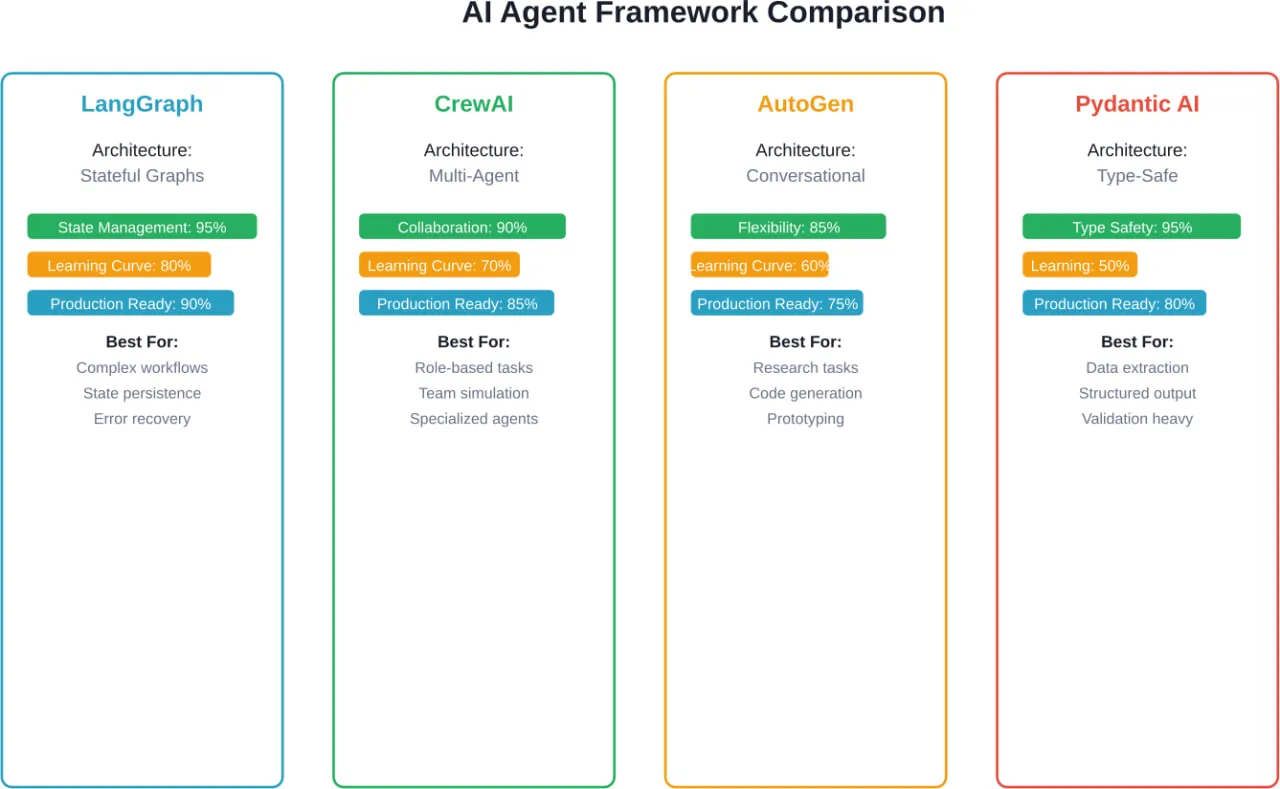
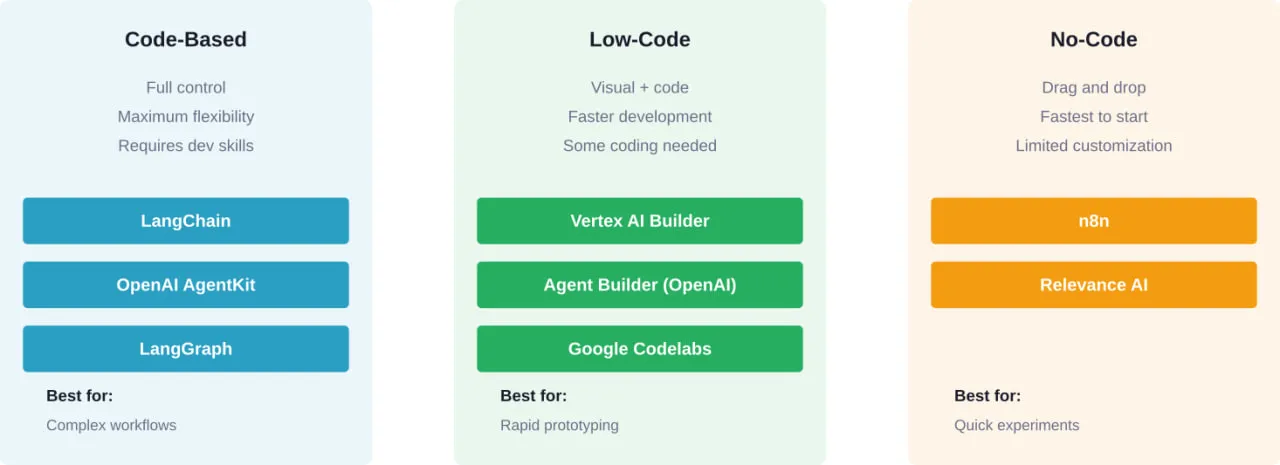
Comparison of leading AI agent frameworks showing architecture types, strengths, and ideal use cases

Framework Selection Criteria That Actually Matter

Choosing an agent framework based on GitHub stars or hype cycles leads to expensive rewrites. The frameworks that work in production get selected based on different criteria.

Architecture Alignment With Problem Domain

The first question isn’t “which framework is best?” It’s “does this framework’s architecture match how this problem naturally decomposes?”

Problems with clear state transitions, conditional branching, and error recovery requirements map naturally to graph-based frameworks like LangGraph. The explicit state management matches the problem structure.

Tasks requiring specialized expertise in different domains—content creation, financial analysis, customer research—work well with multi-agent frameworks like CrewAI. The role-based agent model mirrors how human teams tackle these problems.

Open-ended research tasks or code generation workflows often fit conversational frameworks like AutoGen better. The solution path emerges through dialogue rather than predetermined workflows.

Data extraction and structured output generation align with type-safe frameworks like Pydantic AI. The schema-first approach reduces hallucinations for tasks where format matters.

According to arXiv research on architecture options for foundation model-based agents, this alignment between problem domain and architectural paradigm represents the most significant factor in long-term success.

Production Requirements Beyond Basic Functionality

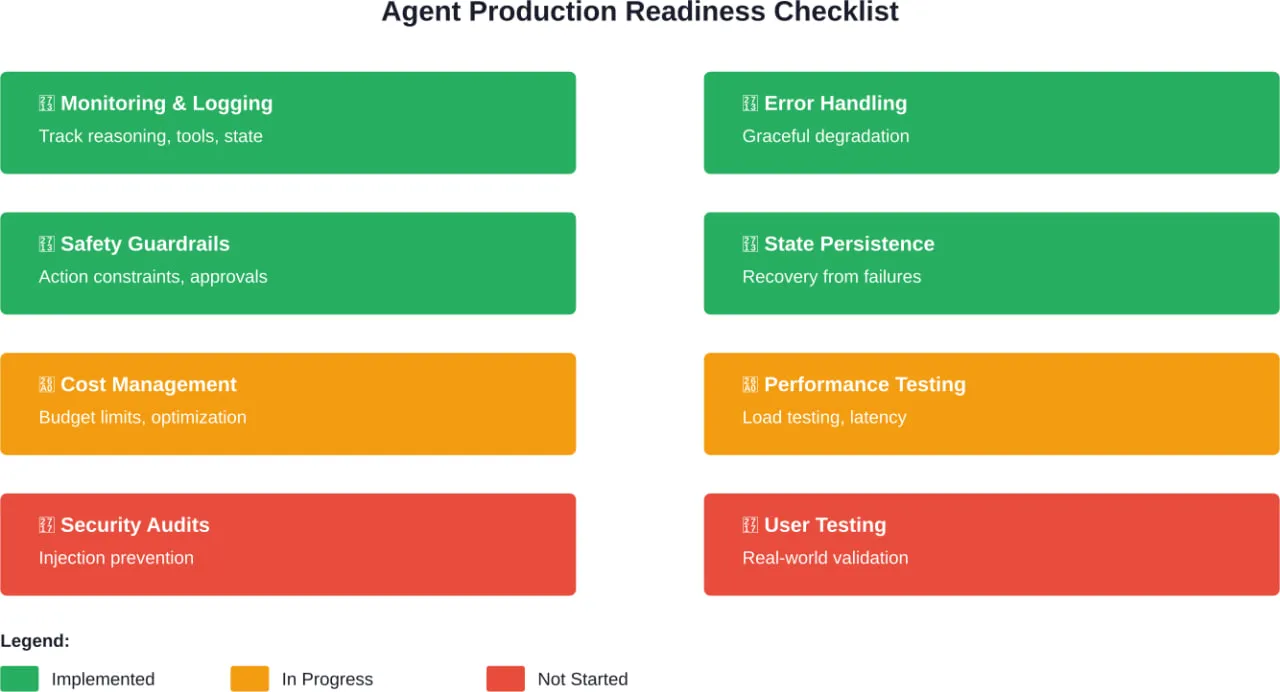
Experimental prototypes and production systems have fundamentally different requirements. Frameworks need to support:

  • Observability: Can developers see what agents are doing, why they made decisions, and where failures occur? Production systems require detailed logging, tracing, and debugging capabilities.
  • Error handling: How does the framework handle API failures, rate limits, timeouts, and invalid tool outputs? Robust error recovery separates toys from tools.
  • State persistence: Can agent state survive process restarts? Do conversations persist across sessions? Production systems need durable state management.
  • Cost control: Does the framework provide mechanisms to limit token usage, cap API calls, and prevent runaway execution? Uncontrolled agents get expensive fast.
  • Security boundaries: How does the framework handle authentication, authorization, and sandboxing? Agents with tool access need security controls.

These requirements don’t show up in framework comparisons focused on features. But they determine whether agents survive in production.

Integration Ecosystem and Tool Support

Agents derive value from tool access. The framework needs to integrate with the specific tools and services the application requires.

Some frameworks provide extensive pre-built integrations. Others offer flexible tool definition mechanisms but require custom integration code. The trade-off between convenience and flexibility depends on whether needed integrations already exist.

According to arXiv research on agentic AI frameworks, the Model Context Protocol (MCP) is emerging as a standardization layer for tool access. Frameworks with native MCP support gain access to a growing ecosystem of compatible tools without custom integration work.

Team Skills and Learning Curve

Different frameworks require different mental models. Graph-based systems require thinking about state machines and transitions. Multi-agent systems need understanding of communication protocols and coordination patterns. Conversational frameworks need different debugging approaches.

The learning curve matters less for new projects than for teams maintaining existing systems. Switching frameworks mid-project rarely makes sense, regardless of which framework looks better. The migration cost usually exceeds the benefit.

For teams already invested in specific ecosystems—Microsoft Azure, LangChain, Pydantic data validation—frameworks that align with existing skills reduce friction significantly.

Standardization Efforts Reshaping the Landscape

The proliferation of incompatible agent frameworks creates fragmentation problems. Standards efforts aim to address this.

NIST AI Agent Standards Initiative

On February 17, 2026, the National Institute of Standards and Technology (NIST) announced the AI Agent Standards Initiative for ensuring trusted, interoperable, and secure agentic AI systems. According to the official announcement, the initiative will “ensure that the next generation of AI is widely adopted with confidence, can function securely on behalf of its users, and can interoperate smoothly across the digital ecosystem.”

This represents the first major government effort to establish standards for agent architectures, security protocols, and interoperability mechanisms. The initiative addresses concerns about agent systems operating without consistent safety frameworks or interoperability standards.

IEEE Standards for Agent Benchmarking

The IEEE P3777 standard establishes a unified framework for benchmarking AI agents, including autonomous, collaborative, and task-specific agents. It defines core performance metrics, evaluation protocols, and reporting requirements to enable transparent, reproducible, and comparable assessment of agent capacities and capabilities.

Separately, IEEE P3154.1 provides a recommended practice for a framework when applying AI agents for talent services, describing architectural frameworks and application domains with protocols for interaction and communication mechanisms.

These standardization efforts remain in active development. But they signal industry recognition that framework fragmentation creates problems for production deployment and enterprise adoption.

Understanding Agent Architectures and Design Patterns

Beyond specific frameworks, recurring architectural patterns appear across successful agent implementations. Understanding these patterns helps evaluate frameworks and design custom solutions.

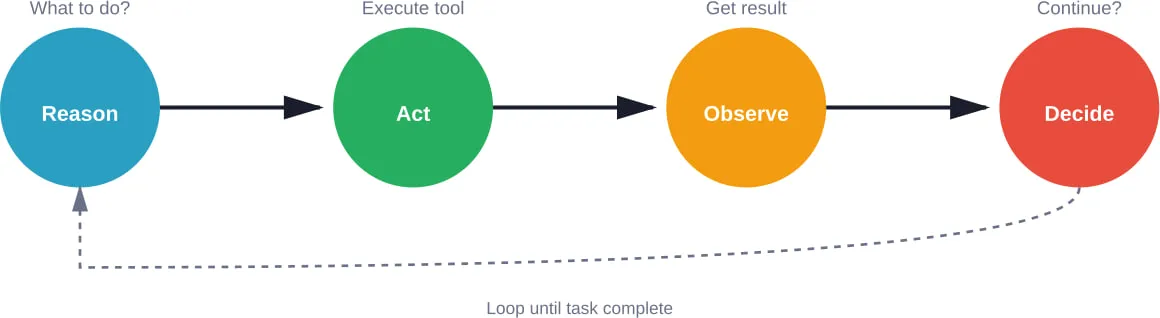
The Perception-Cognition-Action Loop

According to arXiv research distinguishing AI Agents from Agentic AI, agents fundamentally operate through perception-cognition-action cycles. Perception involves gathering information from the environment. Cognition encompasses reasoning, planning, and decision-making. Action executes decisions through tool use or communication.

Different frameworks implement this loop differently:

  • Graph-based frameworks make the loop explicit through state transitions
  • Conversational frameworks embed the loop in dialogue turns
  • Multi-agent systems distribute the loop across specialized agents

The implementation choice affects debuggability, performance characteristics, and failure modes. Explicit loops are easier to debug but require more upfront design. Implicit loops reduce boilerplate but make control flow harder to trace.

Memory Architectures for Agent State

Agents need memory to maintain context across interactions. Memory architectures typically include:

  • Working memory: Short-term context for the current task or conversation
  • Episodic memory: Records of past interactions and their outcomes
  • Semantic memory: General knowledge and learned facts
  • Procedural memory: How to perform tasks and use tools

Production frameworks need to persist memory across sessions and handle memory limits gracefully. As conversations grow, agents must summarize, forget irrelevant details, or retrieve relevant historical context.

Some frameworks provide built-in memory management. Others leave it to developers to implement persistence and retrieval mechanisms.

Tool Use and Function Calling Patterns

Tool access transforms agents from chatbots into action-taking systems. Common patterns include:

  • Direct function calling: The LLM generates structured function calls with parameters, the framework executes them, and results return to the agent. This works well for deterministic tools with clear schemas.
  • Natural language tool descriptions: Tools expose natural language descriptions of capabilities. The agent decides when and how to use them based on descriptions rather than rigid schemas. More flexible but less reliable.
  • Chained tool execution: Agents can use tool outputs as inputs to subsequent tools. Enables complex workflows like “search for X, read the top result, summarize it, then translate to French.”
  • Parallel tool invocation: Execute multiple independent tools concurrently. Reduces latency for tasks requiring information from multiple sources.

Different frameworks support these patterns with varying levels of native support versus custom implementation.

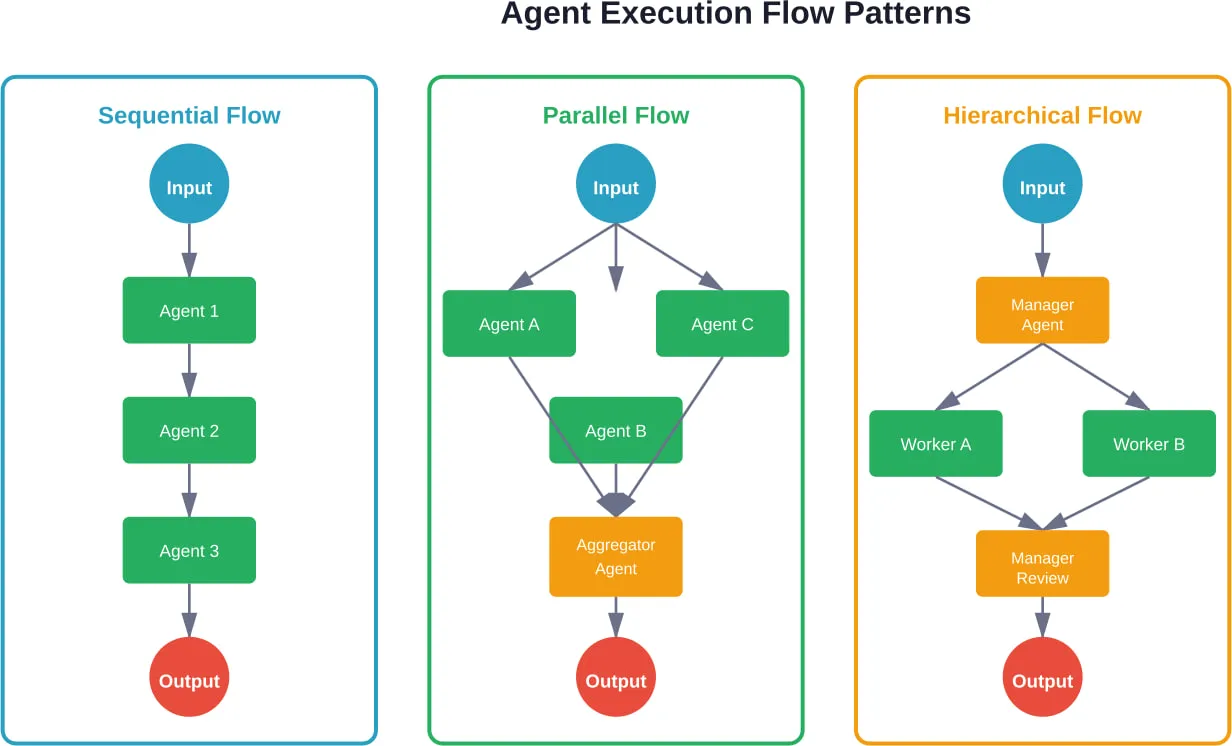
Three common agent orchestration patterns showing how frameworks coordinate multiple agents

Multi-Agent Communication Protocols

When multiple agents collaborate, communication protocols determine efficiency and reliability. According to arXiv research on agentic AI frameworks, common protocols include:

  • Message passing: Agents communicate through explicit messages with defined schemas. Provides clear audit trails but requires upfront protocol design.
  • Shared state: Agents read and write to shared memory or databases. Simple to implement but creates potential race conditions and conflicts.
  • Event-driven: Agents publish events and subscribe to events from other agents. Decouples agents but makes overall behavior harder to predict.
  • Hierarchical delegation: Manager agents assign tasks to worker agents and aggregate results. Clear control flow but creates bottlenecks at manager nodes.

The protocol choice affects debugging complexity, failure recovery, and scalability characteristics. Production systems often need multiple protocols for different interaction patterns.

Enterprise Considerations and Production Deployment

Getting agents from prototype to production involves challenges beyond framework selection. Enterprise deployment requires addressing operational, security, and governance concerns.

Cost Management and Token Economics

Agents with tool access and multi-step reasoning consume significantly more tokens than simple chatbots. A customer support agent might use 10,000+ tokens per interaction when searching knowledge bases, checking order status, and generating responses.

Production systems need:

  • Token budgets per interaction to prevent runaway costs
  • Caching strategies for repeated queries or common workflows
  • Model selection logic that uses cheaper models for simple tasks
  • Monitoring and alerting when costs exceed thresholds

Some frameworks provide built-in cost controls. Others require custom implementation of budget enforcement and model routing.

Security Boundaries and Access Control

Agents with tool access operate on behalf of users. Security failures can expose sensitive data or enable unauthorized actions.

Critical security requirements include:

  • Authentication to verify agent identity and user authorization
  • Authorization to limit which tools agents can access for specific users
  • Input validation to prevent prompt injection attacks
  • Output filtering to prevent leaking sensitive information
  • Audit logging of all agent actions and tool invocations
  • Sandboxing to isolate agent execution from critical systems

According to NIST’s AI Agent Standards Initiative, standardized security protocols for agents remain under development. Current frameworks implement security with varying levels of sophistication.

Observability and Debugging

When agents fail, understanding why requires detailed observability. Unlike traditional software where stack traces reveal problems, agent failures often involve semantic issues—the agent misunderstood intent, retrieved wrong information, or made poor tool choices.

Production observability requires:

  • Detailed logging of agent reasoning and decision points
  • Tracing of tool calls with inputs, outputs, and latencies
  • Session replay capabilities to reproduce failures
  • Metrics on success rates, latencies, and cost per interaction
  • Integration with existing monitoring infrastructure

Frameworks differ significantly in observability support. Some provide rich debugging tools and integration with observability platforms. Others leave instrumentation to developers.

Evaluation and Quality Assurance

Traditional software testing doesn’t translate directly to agents. Deterministic unit tests can’t validate systems that use LLMs for reasoning.

According to research from the AutoChain framework, evaluation requires automated testing frameworks that assess agent ability under different user scenarios. This involves:

  • Scenario-based testing with realistic user inputs
  • Evaluator LLMs that assess output quality
  • Regression testing to catch capability degradation
  • A/B testing for comparing agent configurations
  • Human evaluation for subjective quality assessment

Few frameworks provide comprehensive evaluation tooling. Most production systems require custom test harnesses.

Emerging Trends and Future Directions

The agent framework landscape continues evolving rapidly. Several trends shape where the ecosystem is heading.

Model Context Protocol Adoption

The Model Context Protocol (MCP) aims to standardize how agents access tools and external systems. Rather than each framework implementing custom tool integration, MCP provides a common protocol.

Frameworks with native MCP support gain access to a growing ecosystem of compatible tools without framework-specific integration work. This reduces one major source of framework lock-in—moving between frameworks becomes easier when tool integrations are protocol-based rather than framework-specific.

Specialized Frameworks for Vertical Domains

General-purpose frameworks like LangGraph and CrewAI work across domains. But specialized frameworks targeting specific verticals are emerging.

Firecrawl’s focus on web data collection represents this trend. Rather than supporting every possible agent use case, it optimizes for one domain and does it well.

Expect more vertical-specific frameworks for domains like customer support, data analysis, content creation, and software development. Specialized frameworks can make opinionated architectural choices that improve developer experience for their target domain.

Better Evaluation and Benchmarking

According to the IEEE P3777 standard effort, the industry recognizes the need for standardized agent benchmarking. Current evaluation approaches remain ad-hoc and inconsistent.

Improved evaluation methodologies will enable:

  • Objective comparison between frameworks
  • Regression detection when framework updates affect capabilities
  • Performance optimization based on measurable metrics
  • Compliance verification for regulated industries

Frameworks that integrate standardized evaluation tooling will likely see faster enterprise adoption.

Integration With Traditional Software Engineering

Currently, agent development often feels separate from traditional software engineering. Different tools, different testing approaches, different deployment patterns.

The trend moves toward integration. Agents as components within larger systems rather than standalone applications. This requires:

  • Agent frameworks that integrate with existing CI/CD pipelines
  • Testing frameworks compatible with standard test runners
  • Deployment patterns that work with container orchestration platforms
  • Monitoring that integrates with existing observability stacks

Frameworks that reduce the impedance mismatch between agent development and traditional software engineering will gain traction in enterprise environments.

Practical Framework Selection Strategy

Given the complexity and rapid evolution, how should teams actually choose frameworks? Here’s a practical decision process.

Start With Use Case Architecture Analysis

Before evaluating frameworks, map the use case to architectural patterns:

  1. Does the problem involve complex state management with conditional branching? Consider graph-based frameworks.
  2. Does it require multiple specialized agents collaborating? Consider multi-agent frameworks.
  3. Is it primarily conversational with tool access? Consider conversational frameworks.
  4. Does output structure matter as much as content? Consider type-safe frameworks.
  5. Is it focused on web data collection? Consider specialized frameworks.

This narrows the field significantly before evaluating specific frameworks.

Prototype With Minimal Complexity

Build the simplest possible version that tests the core architectural assumption. Don’t add features, integrations, or polish. Just validate that the framework’s architecture fits the problem.

For a customer support agent, prototype the simplest interaction: user question, knowledge base search, response generation. Skip authentication, logging, error handling, edge cases.

This reveals whether the framework’s mental model matches the problem before investing in production features.

Evaluate Production Readiness

Once architectural fit is validated, evaluate production requirements:

RequirementWhy It MattersHow to Evaluate 
State PersistenceAgents must survive restartsTest session resumption after process restart
Error RecoveryTool failures happen constantlyInject API failures and timeouts, verify graceful handling
ObservabilityDebugging requires visibilityExamine logs for failed interactions, assess debuggability
Cost ControlRunaway token usage gets expensiveVerify budget enforcement and caching mechanisms
SecurityAgents access sensitive systemsReview authentication, authorization, and sandboxing

Frameworks that fail these evaluations create technical debt that becomes expensive to fix later.

Consider Ecosystem Lock-In

Some frameworks create more lock-in than others. Evaluate:

  • Does the framework use standard protocols (MCP) or custom integrations?
  • Can agent logic be extracted and ported to other frameworks?
  • Does the framework tie to specific LLM providers or cloud platforms?
  • Is the framework open source with active community development?

Lock-in isn’t necessarily bad if the framework provides sufficient value. But the decision should be deliberate rather than accidental.

Test at Expected Scale

Performance characteristics change dramatically at scale. An agent framework that works well for 10 requests per minute might fail at 100.

Load test with realistic traffic patterns before committing to production deployment. Measure:

  • Latency percentiles (p50, p95, p99)
  • Throughput limits and bottlenecks
  • Memory usage and resource requirements
  • Cost per interaction at scale
  • Error rates under load

Scale testing reveals problems that don’t appear in development.

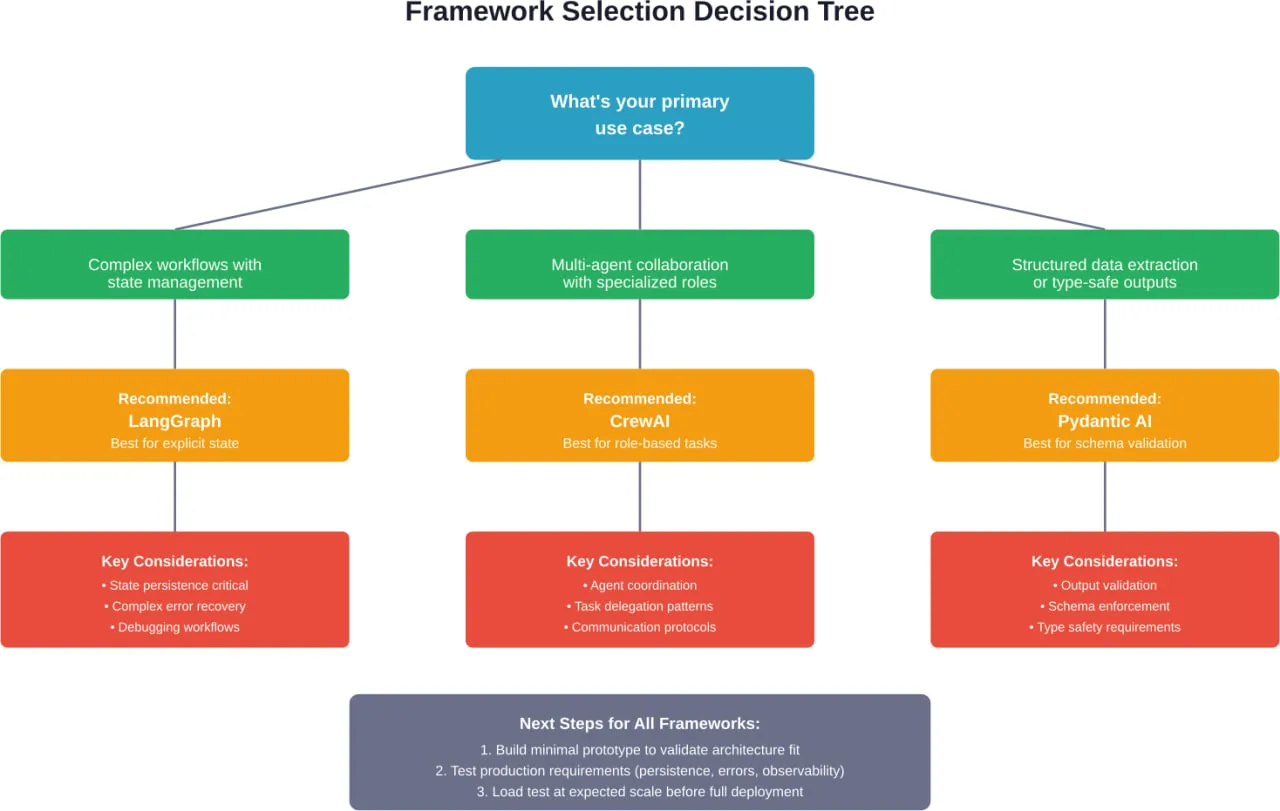
Decision framework for selecting the right AI agent framework based on use case requirements

Common Pitfalls and How to Avoid Them

Teams building agents make predictable mistakes. Recognizing these patterns helps avoid expensive rewrites.

Over-Engineering Initial Implementations

The temptation to build sophisticated multi-agent systems with complex orchestration from day one kills projects. Start simple. Single agent, basic tools, minimal state management.

Add complexity only when simpler approaches fail. A single well-designed agent often outperforms three poorly coordinated specialized agents.

Ignoring Token Economics Until Production

Development environments with unlimited API budgets hide cost problems. Production environments with real traffic reveal them painfully.

Implement token budgets and monitoring from the start. Make cost visible during development, not after deployment.

Treating Agents Like Traditional Software

Traditional testing, debugging, and deployment patterns don’t translate directly. Teams that try to force agents into existing processes create friction.

Invest in agent-specific tooling for evaluation, observability, and deployment. The upfront cost pays off in reduced debugging time and faster iterations.

Choosing Frameworks Based on Hype

GitHub stars and newsletter mentions don’t predict production success. Frameworks that survive production have different characteristics than frameworks that generate hype.

Evaluate based on architectural fit and production readiness, not popularity metrics.

Underestimating Debugging Complexity

When agents fail, the failure mode often involves semantic misunderstanding rather than code bugs. Traditional debugging approaches don’t work.

Plan for significant investment in observability tooling, logging, and session replay capabilities. Debugging agents requires different tools than debugging traditional software.

Turn Your AI Agent Framework Into a Working System

Choosing a framework is the easy part. Most challenges come from integration – APIs, data flow, backend logic, and making everything run reliably in production.

A-listware provides development teams to handle that layer. The company supports backend, integrations, and infrastructure around AI systems, helping teams move from selected frameworks to stable deployments. If your framework is chosen but not implemented, contact A-listware to support integration and rollout.

Frequently Asked Questions

  1. What is the difference between an AI agent framework and a regular LLM API?

LLM APIs provide text generation capabilities—input text goes in, output text comes out. AI agent frameworks add orchestration, state management, tool integration, and multi-step reasoning on top of LLMs. They enable agents to perceive environments, make decisions, use tools, and execute workflows autonomously rather than just generating text responses.

  1. Which AI agent framework is best for beginners?

Pydantic AI offers the lowest learning curve for developers already familiar with Python and Pydantic. It provides type safety and structured outputs without requiring deep understanding of agent orchestration patterns. For teams new to both agents and Python, conversational frameworks like AutoGen have gentler onboarding than graph-based systems like LangGraph.

  1. Do I need a multi-agent framework or is a single agent sufficient?

Start with single-agent architectures unless the problem clearly requires specialized expertise in multiple domains. Multi-agent systems add coordination overhead, debugging complexity, and cost. They make sense when tasks naturally decompose into distinct roles with different knowledge requirements—like research, analysis, and reporting—but most use cases work fine with a single well-designed agent.

  1. How do I handle framework lock-in concerns?

Prioritize frameworks with standard protocol support like Model Context Protocol (MCP) for tool integration. Keep business logic separate from framework-specific orchestration code. Use abstraction layers for LLM provider access so switching providers doesn’t require framework changes. Evaluate whether framework benefits justify lock-in costs before committing—sometimes lock-in is acceptable if the framework provides sufficient value.

  1. What are the typical costs of running AI agents in production?

Costs vary dramatically based on agent complexity, token usage per interaction, traffic volume, and model selection. A simple customer support agent might use 5,000-15,000 tokens per conversation. With GPT-4 pricing, that’s $0.15-$0.45 per interaction. Complex research agents with extensive tool use can exceed 50,000 tokens per task. Production costs require careful monitoring, caching strategies, and model routing to optimize the cost-quality trade-off.

  1. How do NIST standards affect AI agent framework selection?

According to the AI Agent Standards Initiative announced in February 2026, NIST is developing standards for agent security, interoperability, and trustworthiness. While these standards remain in development, frameworks that align with emerging standards around authentication protocols, audit logging, and interoperability mechanisms will likely have easier enterprise adoption paths. For regulated industries, framework compliance with eventual NIST standards may become a hard requirement.

  1. Can I switch frameworks after building a production agent?

Technically yes, but migration costs are significant. Framework-specific orchestration patterns, state management approaches, and tool integrations don’t port directly. Expect to rewrite substantial portions of agent logic during migration. The decision to switch should be based on clear technical limitations that justify the migration cost, not minor feature differences or hype around newer frameworks.

Making the Framework Decision

No single framework dominates all use cases. LangGraph excels at complex workflows with explicit state management. CrewAI shines for multi-agent collaboration with role specialization. Microsoft Agent Framework optimizes for enterprise integration. Pydantic AI provides type safety for structured outputs. Specialized frameworks like Firecrawl optimize for specific domains.

The right choice depends on architectural alignment between problem domain and framework paradigm, production requirements around state persistence and error recovery, integration ecosystem and tool support needs, and team skills and learning curve considerations.

According to arXiv research on agentic AI frameworks, this architectural alignment represents the most significant success factor. Frameworks that match how problems naturally decompose lead to cleaner implementations, easier debugging, and more maintainable systems.

Start simple. Validate architectural fit with minimal prototypes before building production features. Test at expected scale before committing to deployment. Invest in observability and evaluation tooling from the start.

The agent framework landscape continues evolving. Standards efforts from NIST and IEEE signal industry maturation. Model Context Protocol adoption reduces framework lock-in. Specialized vertical frameworks emerge for specific domains.

But the fundamentals remain constant: understand the problem architecture, choose frameworks that match that architecture, and validate production readiness before deployment. Teams that follow this approach ship agents that survive production. Those that chase hype cycles end up rewriting.

Ready to build your first production agent? Start with the framework that matches your problem’s natural architecture. Build the simplest version that proves the concept. Then iterate based on what production teaches you.

Principles of Building AI Agents: A 2026 Guid

Quick Summary: Building AI agents requires understanding core architectural components like large language models, memory systems, tool integration, and planning mechanisms. Effective agent design emphasizes composable patterns over complex frameworks, with reliability shaped by how components interact. Successful implementations balance autonomy with transparency, enabling agents to reason, plan, and execute tasks while maintaining human oversight.

AI agents represent a shift from systems that simply respond to prompts toward autonomous systems that pursue goals independently. These aren’t just chatbots with better responses—they’re systems that combine foundation models with reasoning, planning, memory, and tool use to accomplish complex tasks.

But here’s the thing: building effective agents isn’t about deploying the most complex framework you can find. According to Anthropic, the most successful implementations across dozens of industries use simple, composable patterns rather than specialized libraries or convoluted architectures.

What Makes an AI Agent Different

An AI agent goes beyond basic language model interactions. While standard LLM applications respond to single queries, agents maintain context, make decisions, and execute multi-step workflows autonomously.

Think of it this way: when you ask a language model to “reduce customer churn,” it might provide suggestions. An agent actually analyzes data, identifies patterns, formulates strategies, and potentially implements solutions—then explains its reasoning at each step.

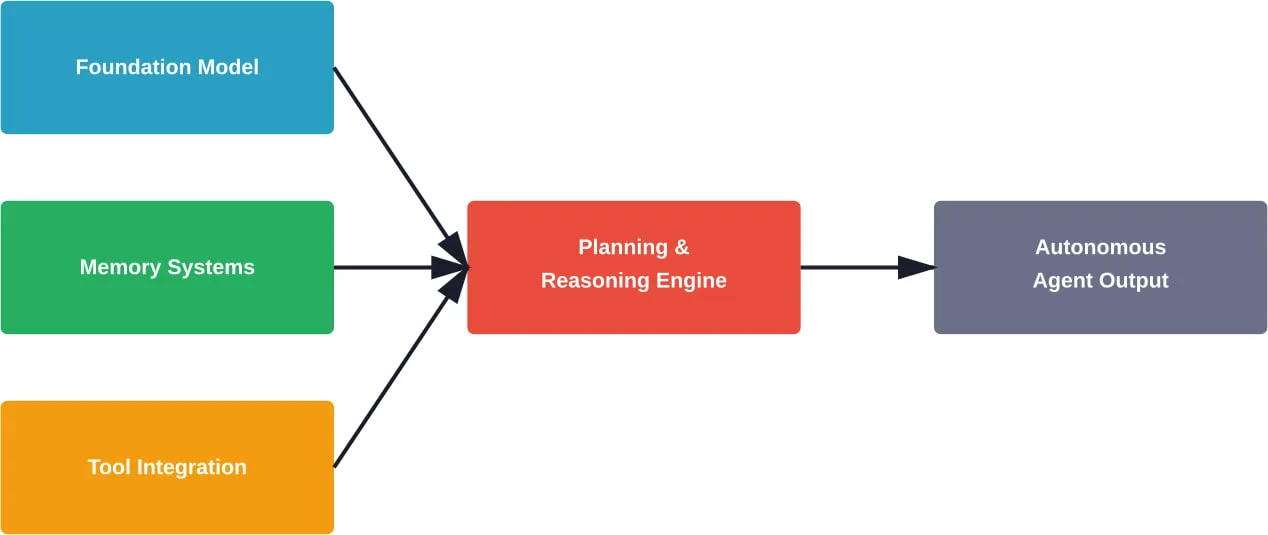
Research defines AI agent systems as those combining foundation models with reasoning, planning, memory, and tool use to accomplish complex tasks.

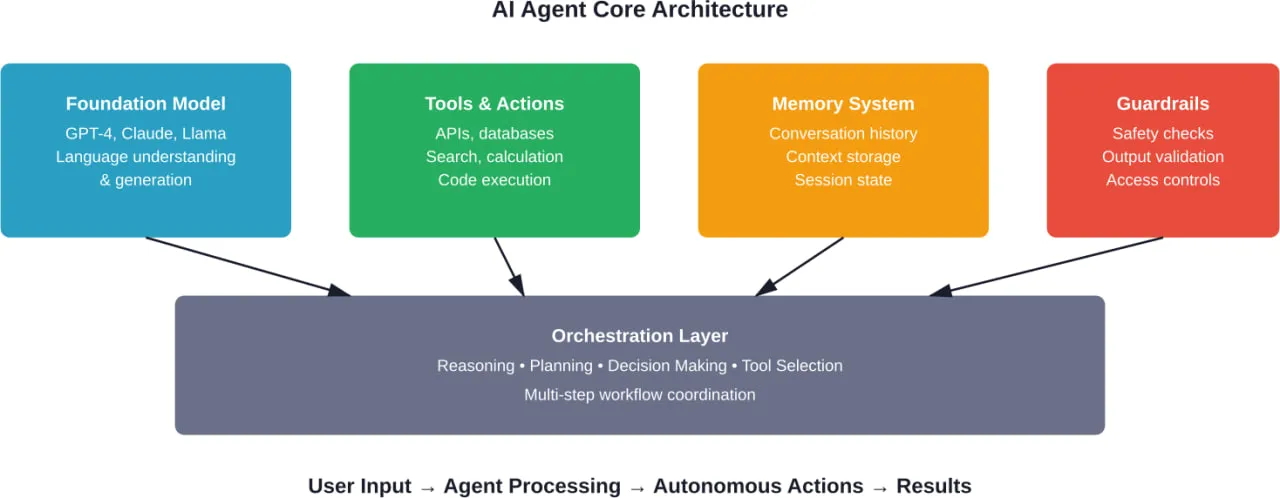
Core Architectural Components

Every effective agent system relies on several foundational building blocks working together.

The Foundation Model Layer

Large language models serve as the reasoning engine. The model interprets goals, generates plans, and decides which actions to take next. But the model alone isn’t the agent—it’s just one component.

Modern agent architectures support multiple models working together. One model might handle high-level coordination while specialized models tackle specific technical work.

Memory Systems

Agents need memory to maintain context across interactions. This includes short-term memory for immediate task context and long-term memory for learned patterns and historical information.

Memory architecture directly impacts agent effectiveness. Without proper memory management, agents lose track of their goals, repeat failed approaches, or ignore relevant past experiences.

Tool Integration

Tools extend agent capabilities beyond text generation. An agent might use search engines to gather information, APIs to retrieve data, code interpreters to perform calculations, or specialized services to complete domain-specific tasks.

According to Anthropic’s engineering team, agents are only as effective as the tools provided to them. Tool design matters enormously—well-designed tools with clear documentation and appropriate response formats dramatically improve agent performance.

Core components of AI agent architecture and their relationships

Reliability Through Architecture

Research from Halmstad University emphasizes that reliability isn’t something you add after building an agent—it’s determined by architectural choices from the start.

How components interact shapes whether agents behave predictably. A well-designed architecture creates natural guardrails that prevent common failure modes.

Transparency and Explainability

Users need to understand what agents are doing and why. Without transparency, an agent’s actions can seem baffling or even concerning.

Anthropic’s research on safe agent development highlights this with a clear example: without transparency design, a human asking an agent to “reduce customer churn” might be confused when the agent contacts facilities about office layouts. But with proper transparency, the agent explains its logic—it found that customers assigned to sales reps in noisy open offices had higher churn rates.

Error Handling and Recovery

Agents will encounter failures. Tools return errors, external services go down, plans don’t work as expected. Robust architectures anticipate these failures and include recovery mechanisms.

The pattern here? Don’t assume success. Build agents that verify results, detect anomalies, and adjust strategies when initial approaches fail.

Patterns That Actually Work

Real-world implementations converge on several proven patterns.

Hierarchical Multi-Agent Systems

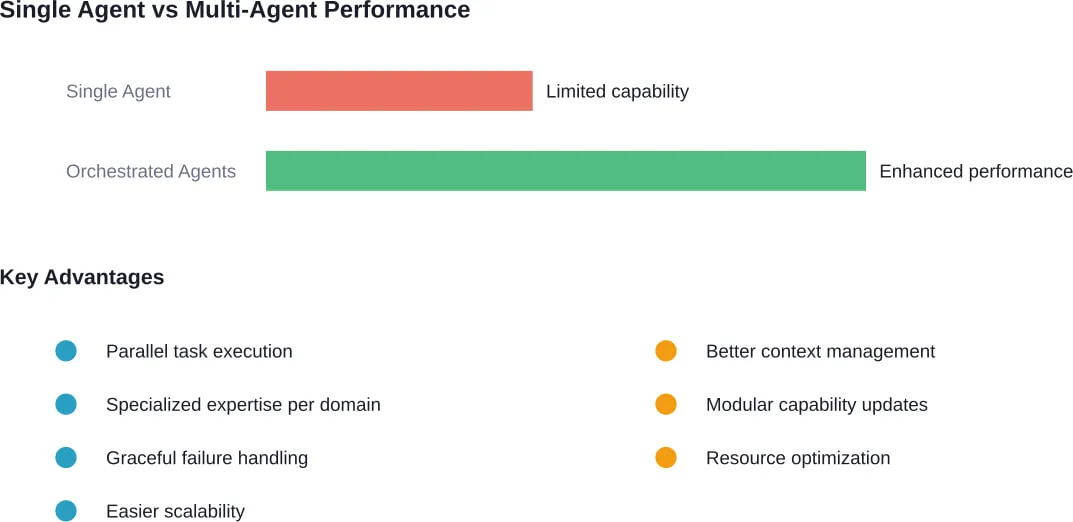
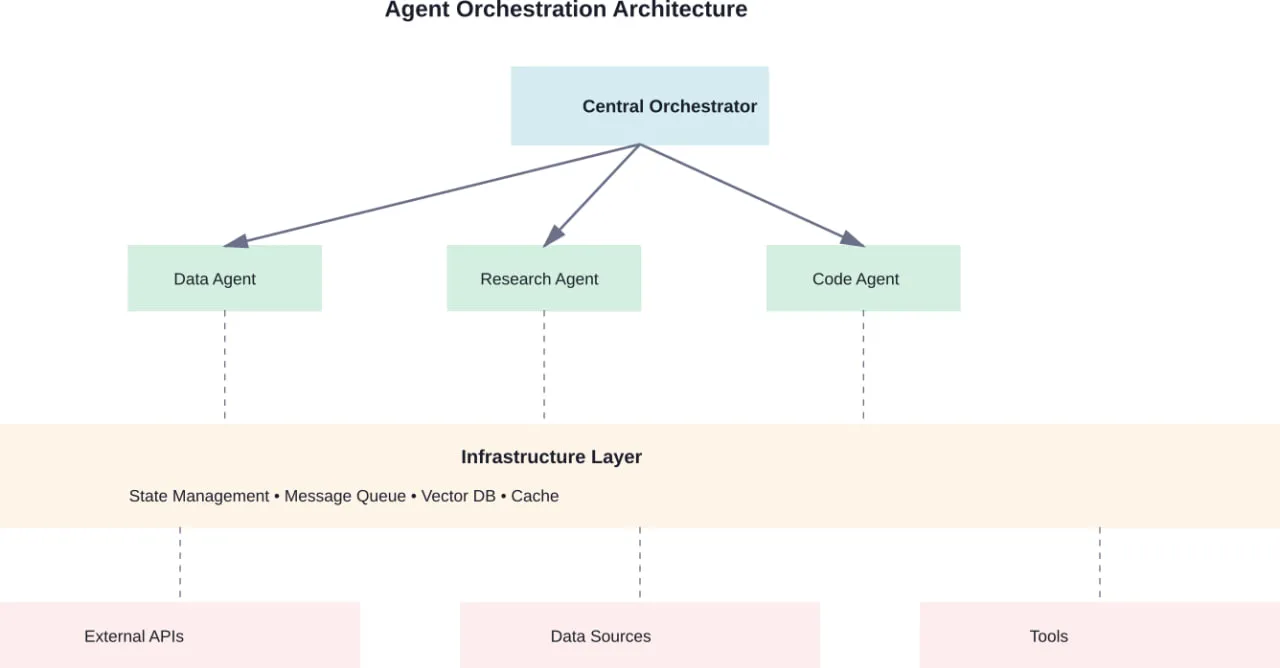
For complex tasks, a single agent often isn’t optimal. Multi-agent systems use specialization: a main agent coordinates high-level planning while subagents handle specific technical work or information gathering.

According to Anthropic’s engineering documentation, each subagent might explore extensively using tens of thousands of tokens, but returns only a condensed, distilled summary of its work to the main agent. This approach balances depth with manageable context.

Internal evaluations show that multi-agent research systems excel especially for breadth-first queries involving multiple independent directions simultaneously.

Context Engineering Over Prompt Engineering

As agent systems mature, effective context management becomes more critical than finding perfect prompt phrasing. Context is a finite resource—agents have token limits and performance degrades with excessive context.

Strategies for effective context engineering include dynamic context pruning, hierarchical summarization, and selective information retrieval rather than loading everything upfront.

Standards and Safety Considerations

As agent systems become more capable, standardization efforts have accelerated. NIST announced the AI Agent Standards Initiative in February 2026 to ensure that agentic AI can function securely, interoperate across systems, and be adopted with confidence.

The initiative addresses critical challenges: How do agents prove they’re acting on behalf of authorized users? How can different agent systems communicate? What transparency mechanisms should be standard?

IEEE standards work emphasizes four conditions for trusted AI systems: effectiveness, competence, accountability, and transparency. These aren’t just theoretical ideals—they’re practical requirements for agent deployment in regulated industries.

Real-World Performance

Practical deployments show measurable results. According to research, Vodafone implemented an AI agent-based support system that handles over 70% of customer inquiries without human intervention, significantly reducing operational costs while improving response times.

But effectiveness varies dramatically based on implementation quality. The same research shows agents with poorly designed tools or inadequate context management often perform worse than simpler, non-agentic approaches.

Get Engineering Support for Your AI Agent Systems

Principles of building AI agents often focus on autonomy, modularity, and coordination. In practice, these ideas depend on how well the surrounding system is built – APIs, data pipelines, backend services, and infrastructure that keep everything stable over time. This is where many projects start to break down, not at the concept level, but during implementation.

A-listware supports this execution layer by providing dedicated development teams and software engineering support. The company works across the full development lifecycle – from architecture setup to integration and maintenance – and helps teams build reliable systems around AI-driven products rather than the agents themselves.

If your AI agent principles are defined but not yet working in production, this is usually the right time to bring in external engineering support. Contact A-listware to help implement, integrate, and scale your system.

Practical Implementation Steps

So how do you actually start building agents?

Start simple. Don’t begin with a multi-agent orchestration system. Build a single agent that does one task well. Understand how prompting, tools, and memory interact before adding complexity.

Design tools carefully. Each tool should have clear documentation, well-defined inputs and outputs, and appropriate response formats. Anthropic recommends exposing a response format parameter that lets agents control whether tools return concise or detailed responses.

Implement evaluation from day one. Without systematic testing, it’s impossible to know whether changes improve or degrade performance. Build evaluation datasets that represent real use cases.

And iterate based on actual usage patterns. Agents reveal unexpected behaviors in production that never surface in testing.

Implementation PhaseKey FocusCommon Pitfalls to Avoid
FoundationSingle agent, one clear taskOver-engineering with frameworks
Tool DesignClear documentation, flexible formatsVague tool descriptions, rigid outputs
Memory IntegrationRelevant context retrievalLoading excessive context
EvaluationReal-world test casesOnly testing happy paths
ProductionMonitoring, error recoveryAssuming agents will always succeed

Frequently Asked Questions

  1. What’s the difference between an AI agent and a standard LLM application?

Standard LLM applications respond to single prompts, while AI agents pursue goals autonomously across multiple steps. Agents maintain memory, plan action sequences, use tools, and make decisions about how to accomplish objectives without requiring human input for each step.

  1. Do I need a specialized framework to build AI agents?

No. Research and practical experience show that simple, composable patterns consistently outperform complex frameworks. Most successful implementations use straightforward combinations of language models, tool APIs, and memory systems rather than specialized agent libraries.

  1. How do multi-agent systems improve performance?

Multi-agent architectures allow specialization—a coordinating agent handles high-level planning while specialized subagents tackle specific technical work or research. This approach manages context more efficiently and enables parallel exploration of different solution paths.

  1. What are the biggest challenges in agent reliability?

The main challenges include unpredictable behavior when agents encounter unexpected situations, difficulty debugging multi-step reasoning processes, context management as tasks grow complex, and ensuring agents fail gracefully rather than producing harmful outputs when tools return errors.

  1. How important is tool design for agent effectiveness?

Extremely important. According to Anthropic’s engineering teams, agents are only as effective as the tools they’re given. Well-designed tools with clear documentation and appropriate response formats dramatically improve performance, while poorly designed tools cause agents to struggle even on straightforward tasks.

  1. What role do standards play in agent development?

Standards ensure agents can interoperate across systems, prove authorization, and function securely. NIST’s AI Agent Standards Initiative launched in 2026 focuses on creating frameworks for trust, security, and interoperability as agents become more widely deployed across industries.

  1. Should agents always explain their reasoning?

Yes, for most applications. Transparency about why agents take specific actions builds user trust, enables debugging, and helps identify when agents are pursuing unintended strategies. Without explainability, agent decisions can seem arbitrary or concerning, limiting practical adoption.

Moving Forward with Agent Development

Building effective AI agents requires understanding that architecture determines reliability, simplicity beats complexity, and tools matter as much as models.

The field continues evolving rapidly. Standards initiatives are establishing frameworks for safe deployment. Research clarifies which architectural patterns actually work in production. And practical experience shows that the most successful implementations start simple and add complexity only when clearly justified.

For teams ready to build agent systems, the path forward is clear: focus on composable components, design tools carefully, implement transparency from the start, and evaluate relentlessly against real-world use cases. The principles matter more than the frameworks.

AI Agent Architecture Diagram: 2026 Complete Guide

Quick Summary: AI agent architecture diagrams visualize the core components of autonomous AI systems: reasoning layers, orchestration patterns, state management, and tool integration. Modern agent architectures typically follow a four-layer model encompassing LLM reasoning, orchestration logic, data infrastructure, and external tool connections. Understanding these architectural patterns helps developers build reliable, scalable agent systems for production environments.

The architecture behind AI agents determines whether a system performs reliably in production or collapses under real-world complexity. Yet most architecture discussions online show simplified stack diagrams that bear little resemblance to what development teams actually implement.

This guide breaks down AI agent architecture using visual diagrams, proven patterns from academic research, and implementations from organizations like Microsoft and CSIRO. The focus? What actually works when building autonomous systems that reason, remember, and act.

Understanding AI Agent Architecture Fundamentals

An AI agent architecture defines how autonomous systems perceive their environment, make decisions, and execute actions. Unlike traditional software that follows predetermined paths, agent architectures must handle uncertainty and adapt to dynamic conditions.

According to research published in the Agent Design Pattern Catalogue by CSIRO (Data61), foundation model-enabled agents leverage reasoning and language processing capabilities to operate autonomously. These systems don’t just respond to queries—they proactively pursue goals.

Here’s what separates true agent architectures from simple chatbots: agents maintain state across interactions, use tools to extend their capabilities, and employ reasoning strategies to break down complex tasks. A customer service bot that retrieves your account balance isn’t necessarily an agent. But a system that notices your payment pattern, proactively suggests a better plan, and handles the switch? That’s agent behavior.

Core Components of Agent Systems

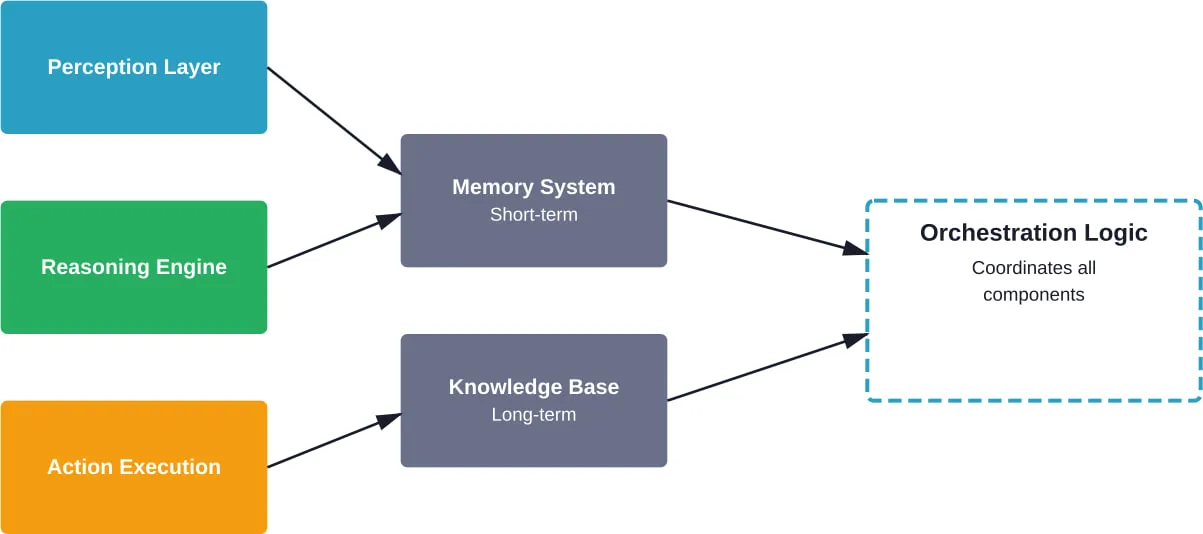
Every functional agent architecture contains these foundational elements:

  • Perception layer: How the agent receives and processes information from its environment
  • Reasoning engine: The cognitive component, typically powered by large language models
  • Memory system: Both short-term context and long-term knowledge storage
  • Action execution: Tools and APIs the agent can invoke
  • Orchestration logic: The control flow that coordinates perception, reasoning, and action

Research from Halmstad University emphasizes that reliability in agentic AI stems directly from architectural choices. The way these components connect determines whether a system degrades gracefully under unexpected conditions or fails catastrophically.

Core components of AI agent architecture showing perception, reasoning, memory, action, and orchestration layers

The Four-Layer Agent Architecture Model

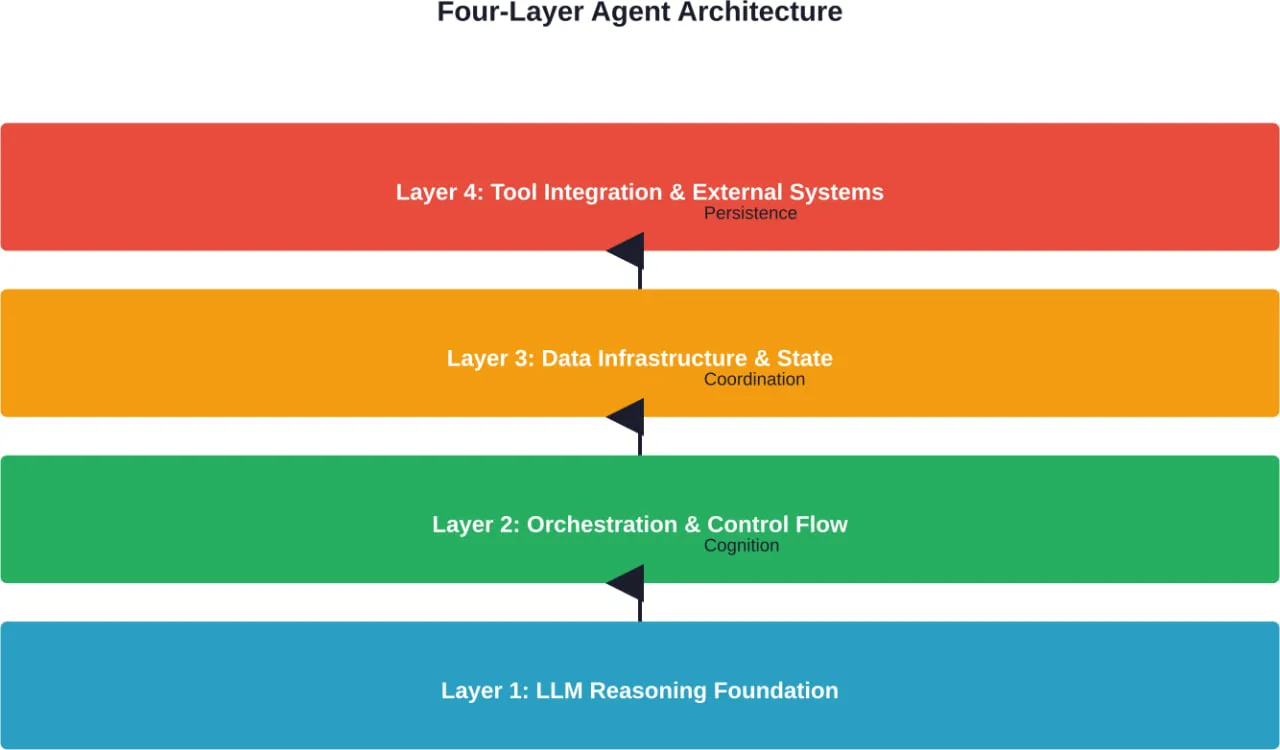
Modern production agent systems typically implement a four-layer architectural model. This structure emerged from practical experience building systems that handle real-world complexity without collapsing into unpredictable behavior.

Layer 1: LLM Reasoning Foundation

At the base sits the reasoning layer—usually one or more large language models. This layer handles natural language understanding, task decomposition, and decision-making. The LLM doesn’t run the entire system; it serves as the cognitive engine that interprets intent and plans actions.

Different reasoning patterns exist at this layer. Chain-of-thought prompting breaks complex problems into steps. ReAct (Reasoning + Acting) patterns interleave thinking and tool use. Tree-of-thought approaches explore multiple reasoning paths simultaneously.

Layer 2: Orchestration and Control Flow

The orchestration layer sits above reasoning and determines how the agent coordinates its actions. This is where architectural patterns become critical. According to AI agent orchestration patterns documentation, teams can choose from several proven approaches:

PatternDescriptionBest For
SequentialTasks execute one after another in predetermined orderPredictable workflows with clear dependencies
ConcurrentMultiple tasks run in parallel, results synthesizedIndependent operations that can happen simultaneously
Group ChatMultiple specialized agents collaborate through discussionComplex problems requiring diverse expertise
HandoffTasks pass between agents based on context and capabilityCustomer service, multi-stage processes
MagenticDynamically routes to appropriate specialized agentsUnpredictable task variety requiring flexibility

Sequential orchestration works when workflows are predictable. A travel booking agent that checks availability, then compares prices, then reserves a ticket follows sequential logic. Concurrent orchestration handles scenarios where multiple independent operations can happen at once—like an agent gathering data from five different APIs simultaneously.

Layer 3: Data Infrastructure and State Management

Agents need memory, and that requires infrastructure. This layer handles how agents store and retrieve information across interactions. Short-term memory maintains conversation context within a session. Long-term memory persists knowledge across sessions, often using vector databases for semantic search.

State management becomes critical in production. What happens when an agent crashes mid-task? The data infrastructure layer ensures the system can recover gracefully, resume interrupted workflows, and maintain consistency.

Layer 4: Tool Integration and External Systems

The top layer connects agents to external capabilities. This includes APIs, databases, search engines, calculators, code interpreters—anything that extends the agent’s abilities beyond pure language generation.

Tool integration requires careful interface design. Each tool needs a clear description the LLM can understand, explicit parameters, and robust error handling. According to CSIRO’s research on agent design patterns, well-designed tool interfaces dramatically improve agent reliability.

The four-layer model for AI agent architecture showing information flow from reasoning through orchestration to external systems

Multi-Agent System Architectures

Single-agent systems handle straightforward tasks well. But complex enterprise scenarios often require multiple specialized agents working together. Multi-agent architectures distribute cognition across several autonomous components, each with specific expertise.

Microsoft’s multi-agent reference architecture demonstrates how organizations deploy these systems at scale. Rather than building one massive agent that tries to do everything, teams create focused agents that collaborate through well-defined protocols.

When Multi-Agent Makes Sense

Not every problem needs multiple agents. Research from the University of Tunis examining agentic AI frameworks suggests multi-agent approaches excel in scenarios with:

  • Distinct domains of expertise that don’t overlap significantly
  • Tasks that naturally decompose into parallel subtasks
  • Requirements for different reasoning strategies within one workflow
  • Scale demands where single agents create bottlenecks

A financial analysis system might employ separate agents for market research, risk assessment, regulatory compliance, and portfolio optimization. Each agent specializes deeply in its domain, then collaborates with others to produce comprehensive recommendations.

Coordination Patterns in Multi-Agent Systems

Getting agents to work together requires explicit coordination mechanisms. The group chat pattern, described in Azure’s orchestration documentation, lets agents communicate through message passing. One agent poses questions, others respond with their specialized knowledge, and a coordinator synthesizes the discussion.

Handoff patterns work differently. Here agents explicitly transfer control to one another based on capability requirements. A customer service scenario might start with a general inquiry agent, hand off to a technical specialist for complex issues, then transfer to a billing agent for payment matters.

Hierarchical architectures introduce leader-follower relationships. A supervisor agent delegates subtasks to worker agents, monitors their progress, and integrates results. This pattern reduces coordination complexity but introduces single points of failure.

Orchestration Patterns Explained

The orchestration layer determines how agents execute tasks. Choosing the right pattern matters—it directly impacts reliability, performance, and maintainability. Research from Halmstad University emphasizes that architectural choices at this layer shape system reliability more than any other factor.

Sequential Orchestration

Sequential orchestration runs tasks one after another. Step one completes, then step two begins. This pattern works well when operations have clear dependencies and outcomes from early steps inform later decisions.

Consider a research agent analyzing a scientific paper. It might first extract the abstract, then identify key concepts, then search for related work, then synthesize findings. Each step builds on previous results, making sequential execution natural.

The downside? Latency. Every task waits for its predecessor to finish completely.

Concurrent Orchestration

Concurrent patterns run multiple tasks simultaneously when operations don’t depend on each other. A market analysis agent might query ten different data sources in parallel, then combine results once all queries complete.

This dramatically reduces total execution time for independent operations. But it introduces complexity—handling partial failures, managing timeouts, and synthesizing potentially conflicting information.

Group Chat and Collaborative Patterns

Group chat orchestration treats multiple specialized agents as participants in a discussion. Agents take turns contributing insights, building on each other’s responses. A coordinator agent facilitates the conversation and determines when enough information exists to conclude.

This pattern excels for problems without clear solution paths. Complex strategy questions, creative brainstorming, and scenarios requiring diverse perspectives benefit from collaborative exploration.

Magentic and Dynamic Routing Patterns

The magentic pattern, referenced in Microsoft’s agent work, dynamically routes tasks to appropriate specialized agents based on content analysis. Rather than predetermined workflows, the system analyzes each request and intelligently selects which agent should handle it.

This provides flexibility for unpredictable workloads but requires robust routing logic and clear agent capability definitions.

Orchestration PatternLatencyComplexityFlexibilityReliability
SequentialHighLowLowHigh
ConcurrentLowMediumMediumMedium
Group ChatHighHighHighMedium
HandoffMediumMediumMediumHigh
Magentic/DynamicMediumHighHighMedium

State Management and Memory Architecture

Agents without memory can’t maintain context, learn from interactions, or handle complex multi-step workflows. The memory architecture determines what information persists, how it’s retrieved, and when it expires.

Short-Term Context Windows

Short-term memory handles immediate conversation context. For LLM-based agents, this typically means the prompt window—everything the model sees in the current interaction. Context windows have grown substantially, with some models now handling hundreds of thousands of tokens.

But larger windows don’t eliminate the need for smart context management. Relevant information should appear near the beginning and end of prompts, where models pay more attention. Irrelevant details consume tokens without improving performance.

Long-Term Knowledge Storage

Long-term memory persists across sessions. This might include user preferences, historical interactions, learned facts, or accumulated expertise. Vector databases enable semantic search over stored information—agents retrieve contextually relevant memories rather than exact keyword matches.

Implementation often combines structured databases for factual information with vector stores for semantic recall. A customer service agent might query a SQL database for account details while simultaneously searching vector embeddings for similar past issues.

State Persistence and Recovery

Production systems need state persistence. What happens when an agent crashes halfway through a multi-step booking process? Without proper state management, users start over. With it, the system recovers and resumes.

This requires explicit state tracking—recording which steps completed successfully, what decisions the agent made, and what remains to be done. State can persist in databases, message queues, or specialized orchestration frameworks.

When Agents Are Overkill

Here’s what marketing materials won’t tell you: agents aren’t always the right architecture. Many problems that seem to require agents actually work better with simpler approaches.

If workflows are 80% predictable, deterministic code often performs better than autonomous agents. A trip planning website that needs to check availability, compare prices, and book tickets doesn’t need agent architecture. It needs a well-designed API integration.

Agents introduce overhead—computational cost, latency, unpredictability, and debugging complexity. These costs make sense when problems genuinely require reasoning, adaptation, and autonomous decision-making. But forcing agent architecture onto simple workflows creates unnecessary complexity.

Direct Model Calls vs Agent Systems

According to Azure’s architecture guidance, direct model calls suffice for classification, summarization, and simple transformations. No orchestration, no tools, no state management. Just prompt engineering and model inference.

Agent architectures become valuable when tasks require multiple steps, external information gathering, or adaptive strategies based on intermediate results. The decision point: can you map the workflow in advance, or does the agent need to figure it out dynamically?

Tool Integration and API Design

Tools extend agent capabilities beyond language generation. But poorly designed tool interfaces lead to unreliable behavior, failed function calls, and frustrated debugging sessions.

Designing Tool Interfaces

Each tool needs three elements: a clear natural language description, explicit parameters with types and constraints, and robust error handling. The description tells the LLM when and why to use the tool. Parameters define exactly what information the tool requires. Error handling ensures graceful degradation when operations fail.

Descriptions should be concise but specific. Instead of “searches the database,” write “searches customer records by email address or phone number, returning account details and purchase history.” Specificity helps models choose appropriate tools.

Function Calling Protocols

Modern LLMs support structured function calling—generating JSON that specifies tool invocation rather than natural language. This reduces parsing errors and makes tool usage more reliable.

But function calling requires well-defined schemas. Parameters need clear types, defaults, and validation rules. Optional versus required parameters must be explicit. Ambiguous interfaces lead to hallucinated parameters and failed calls.

Production Deployment Considerations

Getting agents working in development differs dramatically from running them reliably in production. According to NIST’s AI Agent Standards Initiative announced on February 17, 2026, standardizing agent deployment practices matters for security, interoperability, and reliability.

Monitoring and Observability

Traditional application monitoring doesn’t capture what matters for agents. Teams need visibility into reasoning steps, tool invocations, state transitions, and decision paths—not just latency and error rates.

Logging every LLM interaction helps debug unexpected behavior. Tracking which tools get called reveals usage patterns. Recording state transitions shows where workflows break down.

Safety and Guardrails

Autonomous systems need constraints. Guardrails prevent agents from taking harmful actions, exceeding authority, or making irreversible decisions without confirmation.

This might include approval workflows for high-stakes actions, spending limits for agents with API access, or content filtering for customer-facing systems. NIST’s AI Risk Management Framework provides guidance on building trustworthy AI systems with appropriate safeguards.

Cost Management

LLM API calls aren’t free. Agents that make dozens of reasoning steps per task can generate significant costs. Production deployments need cost monitoring, budget alerts, and optimization strategies.

Caching repeated queries, using smaller models for simple decisions, and implementing rate limiting all help control expenses without sacrificing capability.

Production readiness checklist for deploying AI agents showing implementation status across critical categories

Enterprise Multi-Agent Patterns

Enterprise deployments face unique challenges: legacy system integration, compliance requirements, scale demands, and organizational complexity. Research on multi-agent control systems highlights how architectural choices cascade through organizational structures.

Cloud Architecture for Agent Systems

Cloud infrastructure provides the scalability agents need. Cloud Run, Lambda, and similar serverless platforms handle variable workloads without manual scaling. But agents introduce stateful requirements that complicate serverless deployment.

Hybrid approaches work well—serverless functions for stateless reasoning steps, managed databases for state persistence, and message queues for orchestration. This separates concerns and lets each component scale independently.

Security and Compliance

Autonomous systems that access sensitive data or make consequential decisions need robust security. This includes authentication for tool access, authorization for agent actions, audit logging, and data protection.

Security considerations in AI agent systems should be architectural—built into system design rather than bolted on afterward. Authentication tokens expire, permissions follow least-privilege principles, and sensitive data never appears in unencrypted logs.

Integration with Existing Systems

Enterprises rarely start fresh. Agent architectures must integrate with decades of legacy systems, each with its own APIs, data formats, and quirks.

Adapter patterns help—building translation layers that convert between agent expectations and legacy system realities. This isolates complexity and lets agent logic remain clean while adapters handle messy integration details.

Architectural Decision Framework

Choosing the right agent architecture requires evaluating tradeoffs across multiple dimensions. Here’s a framework for making informed decisions:

Complexity Assessment

Start by assessing task complexity honestly. Can workflows be mapped in advance? Do tasks require reasoning and adaptation? Would simpler approaches work?

If 80% of cases follow predictable paths, consider deterministic systems with agent fallback for edge cases. Full agent architecture makes sense when task variety exceeds what predetermined logic can handle.

Reliability Requirements

How critical is consistent behavior? Customer service agents need high reliability—unpredictable responses damage trust. Research agents exploring novel strategies tolerate more variability.

Higher reliability requirements favor simpler orchestration patterns, extensive testing, and strong guardrails. Lower stakes scenarios allow more experimental architectures.

Latency Constraints

Real-time interactions demand fast response. Multi-step reasoning workflows introduce latency. If users expect sub-second responses, complex agent architectures might not fit.

Latency-sensitive applications benefit from concurrent orchestration, smaller models for quick decisions, and aggressive caching. Batch workflows tolerate more elaborate reasoning.

Scale Projections

How many concurrent users will the system support? Single-agent architectures create bottlenecks at scale. Multi-agent systems distribute load but introduce coordination overhead.

High-scale deployments favor stateless components, horizontal scaling, and asynchronous processing. Small-scale internal tools can use simpler architectures.

Turn Your AI Architecture Into a Working System

An architecture diagram shows how AI agents, services, and data flows should connect. The challenge usually starts after that – integrating components, setting up stable backend logic, and making sure everything runs reliably in a real environment. This is where many teams slow down, especially when internal resources are limited or focused on other priorities.

A-listware supports this stage from an engineering perspective. The company provides dedicated development teams that handle backend systems, integrations, APIs, and infrastructure around AI-driven solutions. The focus is not on building AI agents themselves, but on making sure the surrounding system works as expected and scales without constant fixes.

If your architecture is already defined but not yet implemented, this is the point to bring in extra engineering capacity. Contact A-listware to support the development, integration, and rollout of your system.

Frequently Asked Questions

  1. What’s the difference between agent architecture and traditional software architecture?

Traditional software follows predetermined logic paths—given input X, execute steps A, B, C. Agent architectures introduce autonomous decision-making. The system determines its own action sequence based on goals and environmental feedback. This requires components for reasoning, state management, and tool orchestration that don’t exist in conventional architectures.

  1. Do I need multiple agents or will one suffice?

Single agents work well for focused tasks within one domain. Multiple agents make sense when problems naturally decompose into distinct specializations, require parallel processing, or benefit from diverse reasoning approaches. Most teams start with single-agent systems and introduce multiple agents only when complexity or scale demands it.

  1. Which orchestration pattern should I choose?

Sequential orchestration works for predictable workflows with clear step dependencies. Concurrent patterns reduce latency when operations are independent. Group chat excels for complex problems without obvious solutions. Choose based on whether your workflow is predetermined (sequential), parallelizable (concurrent), or exploratory (group chat).

  1. How do I handle agent failures in production?

Implement state persistence so agents can resume after failures. Use retry logic with exponential backoff for transient errors. Design graceful degradation—if the agent can’t complete a task autonomously, escalate to human operators rather than failing silently. Monitor state transitions to detect where failures occur most frequently.

  1. What’s the role of vector databases in agent architecture?

Vector databases enable semantic memory—agents retrieve contextually relevant information rather than exact keyword matches. This supports long-term memory across sessions, retrieval-augmented generation workflows, and finding similar past cases. Not every agent needs vector storage, but those requiring extensive knowledge recall benefit significantly.

  1. How do I prevent agents from taking harmful actions?

Implement guardrails at multiple levels. Constrain which tools agents can access. Require approval workflows for high-stakes actions. Set spending limits for agents with financial access. Filter outputs for inappropriate content. Design fail-safes that prevent irreversible actions. AI risk management frameworks provide guidance on building appropriate safeguards.

  1. Should I build agent infrastructure from scratch or use a framework?

Frameworks like LangChain, AutoGen, and Semantic Kernel provide orchestration primitives, tool integration patterns, and state management utilities. They accelerate development but introduce dependencies and opinions. Building from scratch offers control but requires more engineering effort. For most teams, frameworks provide a reasonable starting point with the option to replace components later.

Conclusion: Building Reliable Agent Systems

AI agent architecture determines whether autonomous systems perform reliably or fail unpredictably. The four-layer model—reasoning foundation, orchestration logic, data infrastructure, and tool integration—provides a proven structure for building production systems.

Architectural choices cascade through every aspect of system behavior. Sequential versus concurrent orchestration affects latency. State management approaches determine recovery capabilities. Multi-agent versus single-agent designs impact scale characteristics.

But architecture alone doesn’t guarantee success. Production-ready agents require monitoring, guardrails, cost management, and security. According to NIST’s AI Agent Standards Initiative, standardizing these practices will enable broader adoption with appropriate safeguards.

Start with the simplest architecture that meets requirements. Add complexity only when simpler approaches prove insufficient. Test extensively with realistic workloads before production deployment. Monitor agent behavior closely in early releases.

The research is clear: reliability stems from thoughtful architectural choices, not merely from using the latest models. Teams that invest in solid architecture, proper tooling, and robust state management build agents that actually work when deployed.

Ready to implement these patterns? Begin by mapping your specific use case to the orchestration patterns and architectural layers described here. Prototype with a single-agent system, validate behavior, then scale complexity as requirements demand.

AI Agent vs Chatbot: Key Differences in 2026

Quick Summary: AI agents and chatbots differ fundamentally in autonomy and capability. Chatbots respond to user prompts with scripted or learned responses, while AI agents proactively plan, make decisions, and execute multi-step tasks independently. Chatbots handle routine queries effectively, but agents tackle complex workflows that require reasoning, tool use, and continuous learning.

The artificial intelligence landscape has shifted dramatically. What started as simple chatbots answering FAQs has evolved into sophisticated AI agents capable of autonomous decision-making and task execution.

But here’s where things get confusing. The terms “chatbot” and “AI agent” often get used interchangeably, yet they represent fundamentally different technologies with distinct capabilities and limitations.

According to recent industry data, 84% of developers now use AI tools, and eight in ten enterprises have deployed agent-based AI. The market for these technologies is projected to grow at 45.8% annually through 2030. With this rapid adoption comes a critical need to understand what separates these technologies.

The distinction isn’t just semantic. It fundamentally impacts how effectively teams can automate workflows, serve customers, and scale operations.

What Is a Chatbot?

Chatbots are software applications designed to simulate human conversation. They respond to user inputs with pre-programmed or learned responses, handling interactions through text or voice interfaces.

Traditional chatbots operate on rule-based logic. When someone asks a question, the bot matches keywords or patterns to trigger specific responses. Think of early customer service bots that could only handle a narrow set of queries.

Modern chatbots leverage large language models and natural language processing. These AI-powered versions understand context better and generate more natural responses. But they still share a fundamental characteristic: they’re reactive systems that require human prompts to initiate action.

The architecture is straightforward. The user sends input, the system processes it, and returns output. That’s the loop.

Core Characteristics of Chatbots

Chatbots excel at conversational tasks within defined boundaries. They wait for input, interpret what the user wants, and respond accordingly.

Their learning capabilities vary by type. Rule-based bots don’t learn at all—they follow scripts. Machine learning-powered bots adapt over time based on training data, but this adaptation happens through retraining cycles rather than real-time autonomous improvement.

Response quality depends heavily on how well the system was trained and how closely the user’s query matches patterns the bot recognizes. Step outside those patterns, and chatbots typically struggle or escalate to human support.

Common Chatbot Use Cases

Customer service remains the primary chatbot application. These bots handle frequently asked questions, password resets, order status checks, and appointment scheduling.

E-commerce sites deploy chatbots for product recommendations and shopping assistance. Healthcare organizations use them for symptom checking and appointment booking. Educational institutions implement chatbots for student inquiries about courses and campus services.

The pattern is consistent: chatbots work best for high-volume, repetitive queries with clear parameters and expected outcomes.

Lippert, a component manufacturer with over $5.2 billion in annual sales, uses chatbots to manage significant customer service communications volume. These systems handle routine inquiries efficiently, freeing human agents for complex issues requiring judgment and expertise.

What Is an AI Agent?

AI agents represent a fundamentally different paradigm. According to research from ArXiv, AI agents are modular systems driven by large language models that can plan, reason, and execute tasks autonomously.

Here’s what makes them distinct: agents don’t just respond to prompts. They identify goals, break them into steps, choose tools, execute actions, and adapt based on results—all without requiring human input at each stage.

OpenAI’s ChatGPT agent, introduced in July 2025, exemplifies this shift. It can handle requests like “look at my calendar and brief me on upcoming client meetings based on recent news about their companies.” The agent accesses multiple tools, researches information, and compiles a comprehensive brief autonomously.

The architectural difference is substantial. Agents operate in perception-decision-action loops. They observe their environment, process that information through reasoning modules, decide on actions, execute those actions using available tools, and learn from outcomes.

Autonomy and Decision-Making

Autonomy is the defining characteristic of AI agents. Research on levels of autonomy for AI agents highlights this as both transformative opportunity and significant risk.

Agents make decisions without human intervention at every step. When faced with a task, they determine the optimal approach, select appropriate tools from their available toolkit, and execute multi-step workflows.

This autonomy operates on a spectrum. Some agents handle narrow tasks with minimal supervision. Others manage complex operations requiring extensive reasoning and tool orchestration.

But autonomy brings challenges. How much independent action should an agent have? What guardrails prevent harmful decisions? These questions shape how organizations deploy agent systems.

Learning and Adaptation

AI agents continuously improve performance through experience. Unlike chatbots that require manual retraining, agents incorporate feedback loops that enable real-time learning.

OpenAI developers note that modern agents utilize long-term memory through session notes and persistent context. This allows agents to remember preferences, past decisions, and user-specific information across interactions.

Session-level memory holds contextual information relevant to current interactions—things like “this trip is a family vacation” or “budget under $2,000.” Persistent memory stores long-term user preferences and historical patterns that inform future decisions.

This learning architecture transforms how agents operate over time. They don’t just execute tasks; they optimize execution based on accumulated experience.

Operational flow comparison: Chatbots follow linear prompt-response patterns while AI agents execute autonomous loops with planning, execution, and learning phases.

Tool Use and Integration

AI agents interact with external systems through tool use. They can access databases, call APIs, execute code, browse the web, and manipulate files—all as needed to accomplish tasks.

The difference from traditional automation is crucial. Agents decide which tools to use and when to use them based on the specific context of each task. Traditional automation follows predefined workflows; agents dynamically construct workflows.

OpenAI’s agent implementation demonstrates this capability. When asked to create a presentation, the agent identifies relevant research sources, extracts key information, generates slides, formats content, and compiles the final deliverable—choosing appropriate tools at each stage without explicit instructions for every step.

Key Differences Between AI Agents and Chatbots

The distinctions between these technologies matter for business decisions, security implications, and operational outcomes.

CapabilityAI ChatbotsAI Agents 
AutonomyRequire human promptsProactively identify needs and act independently
LearningLimited adaptationContinuously learn and improve performance
Task ComplexitySingle-step responsesMulti-step workflows with reasoning
Tool AccessMinimal external integrationDynamic tool selection and execution
Decision-MakingPattern matchingGoal-oriented planning
MemorySession-based onlyLong-term context retention

Autonomy: Reactive vs Proactive

Chatbots wait. Agents act.

That’s the fundamental divide. Chatbots respond when users initiate contact. They’re excellent at this reactive role—answering questions, providing information, guiding users through processes.

AI agents operate proactively. They identify tasks that need completion, determine optimal approaches, and execute without waiting for explicit prompts at each decision point.

This distinction shapes deployment scenarios. Organizations use chatbots where human-initiated interaction makes sense. Agents fit situations requiring ongoing monitoring, complex workflows, or tasks that benefit from autonomous execution.

Complexity Handling

Chatbots handle straightforward queries effectively. Ask about store hours, and the bot provides the answer instantly. Request a password reset, and it guides through the process.

But complexity exposes limitations. Multi-step problems requiring research, tool integration, and adaptive decision-making overwhelm traditional chatbot architectures.

AI agents thrive on complexity. They break large problems into manageable components, execute each component using appropriate methods, and synthesize results into coherent outcomes.

Research capabilities illustrate this gap. A chatbot might provide links to relevant information. An agent researches the topic across multiple sources, synthesizes findings, evaluates credibility, and delivers comprehensive analysis—all autonomously.

Security Implications

The Cloud Security Alliance highlights critical security differences between chatbots and agents. Both automate tasks, but agents’ autonomous decision-making creates distinct risk profiles.

Chatbots operate within narrow boundaries. Their limited scope constrains potential security issues. An attacker compromising a chatbot gains access to conversational interfaces but not necessarily broader system control.

Agents with tool access and autonomous execution capabilities present expanded attack surfaces. Compromised agents potentially access databases, execute code, modify files, and interact with multiple systems—all autonomously.

This doesn’t make agents inherently less secure, but it demands different security approaches. Organizations deploying agents need robust authentication, authorization frameworks, activity monitoring, and guardrails preventing harmful actions.

Use Cases: When to Choose Chatbots vs AI Agents

The technology choice depends on task characteristics, complexity requirements, and operational constraints.

Optimal Chatbot Applications

Customer support for common issues represents the ideal chatbot scenario. When most queries fall into predictable categories with known solutions, chatbots excel.

FAQ automation, appointment scheduling, order tracking, basic troubleshooting, and information retrieval all fit chatbot capabilities well. These tasks have clear parameters, defined outcomes, and benefit from instant availability.

Lead qualification for sales teams works effectively with chatbots. The bot asks predefined questions, categorizes responses, and routes qualified leads to appropriate sales representatives.

Internal employee support for HR queries, IT help desk tickets, and policy questions leverages chatbots to reduce support team workload while providing immediate assistance.

Optimal AI Agent Applications

Complex workflow automation benefits from agent capabilities. Tasks requiring multiple tools, conditional logic, and adaptive decision-making justify agent deployment.

Research and analysis projects that involve gathering information from diverse sources, evaluating credibility, synthesizing insights, and producing comprehensive reports align with agent strengths.

Intelligent scheduling that considers multiple calendars, participant preferences, meeting requirements, and optimal timing represents a natural agent application. The agent autonomously handles negotiations, proposes options, and finalizes arrangements.

Data processing workflows that require extracting information from various formats, transforming data structures, validating accuracy, and loading results into target systems leverage agent reasoning and tool use.

Content creation that demands research, outline development, drafting, fact-checking, and formatting showcases agent capabilities for managing complex creative processes.

Hybrid Approaches

Many organizations deploy both technologies in complementary roles. Chatbots handle initial customer interactions, routine queries, and information gathering. When complexity exceeds chatbot capabilities, the system escalates to AI agents for resolution.

This tiered approach optimizes resource allocation. High-volume simple tasks get handled by efficient chatbot systems. Complex edge cases receive agent attention. Human experts focus on situations requiring judgment, empathy, or specialized expertise.

Slack’s Agentforce integration exemplifies this hybrid model. The platform combines conversational interfaces for common requests with agent capabilities for complex workflows requiring tool integration and multi-step execution.

Performance and Evaluation Challenges

Measuring AI agent effectiveness presents unique challenges compared to chatbot evaluation.

Chatbot Evaluation Metrics

Chatbot performance metrics are relatively straightforward. Response accuracy, conversation completion rate, user satisfaction scores, and escalation frequency provide clear performance indicators.

String matching, pattern recognition accuracy, and intent classification metrics quantify how well chatbots understand user inputs and select appropriate responses.

Response time, availability, and throughput measure operational performance. These metrics align well with chatbot use cases focused on high-volume routine interactions.

AI Agent Evaluation Complexity

Anthropic’s research on agent evaluation highlights the complexity challenge. The capabilities that make agents useful—autonomy, tool use, multi-step reasoning—also make them difficult to evaluate.

Traditional metrics fall short. String matching doesn’t capture whether an agent made optimal tool choices. Binary pass/fail tests miss nuanced performance differences in complex workflows.

Effective agent evaluation requires multi-faceted approaches. Code-based graders verify specific outcomes. LLM-based evaluators assess reasoning quality and decision appropriateness. Human review validates complex scenarios where automated evaluation proves insufficient.

OpenAI’s testing of their agent implementation demonstrates these challenges. When running up to eight parallel attempts and selecting based on confidence scores, their agent’s performance on hard benchmarks like FrontierMath showed significant variation—highlighting the non-deterministic nature of agent systems.

Evaluation ApproachStrengthsLimitations 
String Match ChecksFast, deterministic, easy to implementMisses semantic equivalence and contextual appropriateness
Binary TestsClear pass/fail criteriaOverlooks quality gradations in complex tasks
LLM-Based GradersAssess reasoning and context understandingSubject to evaluator model biases and limitations
Human ReviewCaptures nuanced judgmentExpensive, slow, doesn’t scale

The Evolution from Chatbots to Agents

The shift from passive assistants to active agents represents the most significant transformation in artificial intelligence since ChatGPT’s launch.

Early chatbots were glorified search interfaces. Ask a question, get an answer. The intelligence lay in matching queries to knowledge bases.

Large language models expanded conversational capabilities. Chatbots became more natural, handling broader query variations and generating contextually appropriate responses. But they remained fundamentally reactive.

The agent era began when systems gained tool use, memory, and planning capabilities. Now AI doesn’t just respond—it acts.

Research from ArXiv on AI agents versus agentic AI provides conceptual clarity. AI agents are modular systems with distinct perception, reasoning, and action components. Agentic AI refers to the broader capability of systems to exhibit agency—autonomous goal-directed behavior.

This evolution continues. Current agent systems represent early implementations. As architectures mature, capabilities expand, and deployment patterns emerge, the distinction between reactive and agentic systems will likely sharpen further.

Implementation Considerations

Deploying either technology requires careful consideration of technical, operational, and organizational factors.

Technical Requirements

Chatbot implementation demands natural language processing capabilities, intent recognition systems, and response generation mechanisms. Integration with existing knowledge bases and customer service platforms shapes technical architecture.

AI agent deployment requires substantially more infrastructure. Agents need access to tool APIs, secure credential management, execution environments, monitoring systems, and error handling frameworks.

The technical complexity difference is significant. Chatbots can often be deployed as standalone services with limited integration points. Agents typically require deep integration with multiple systems to function effectively.

Governance and Control

Chatbot governance focuses on response quality, brand consistency, and escalation protocols. Control mechanisms are relatively straightforward since chatbots operate within narrow boundaries.

Agent governance demands frameworks for autonomy levels, action permissions, monitoring, and intervention. Organizations must define which actions agents can take independently versus requiring human approval.

Research on levels of autonomy for AI agents emphasizes that autonomy is a double-edged sword. The same capabilities that enable transformative outcomes create serious risks. Agent developers must calibrate appropriate autonomy levels for specific applications.

Cost Structures

Chatbot costs scale primarily with conversation volume. Each interaction consumes API calls for language model processing, but costs remain predictable and proportional to usage.

Agent costs are more complex. Tool usage, execution time, parallel processing, and memory storage all factor into operational expenses. A single agent task might require dozens of API calls across multiple services.

The cost equation depends on task value. Agents handling high-value complex workflows justify higher per-task costs. For high-volume simple tasks, chatbot economics typically prove more favorable.

Get the Technical Setup Right with A-listware

In comparisons like AI agents vs chatbots, the difference is often explained at the logic level. In practice, both rely on the same foundation – backend services, integrations, data handling, and infrastructure that keeps everything running. A-listware focuses on custom software development and dedicated engineering teams that build and support these systems, covering architecture, development, deployment, and maintenance.

The real challenge is not choosing between a chatbot or an agent, but turning either into a stable product. A-listware supports the full development lifecycle and helps integrate AI into working applications without splitting work across multiple vendors. Talk to A-listware and get a clear path from concept to implementation.

Real-World Performance Data

When OpenAI tested their agent implementation on challenging benchmarks, results highlighted both capabilities and limitations. The agent achieved a 44.4 HLE score on hard math problems when running eight parallel attempts and selecting based on confidence—substantially better than single-attempt performance but still showing room for improvement.

This performance pattern illustrates agent characteristics. Non-deterministic execution means multiple attempts may produce different quality outcomes. Confidence scoring helps select better results, but doesn’t guarantee optimal solutions.

Zendesk reports that their AI agents are trained on billions of real customer service interactions, enabling continuous improvement based on live data. This scale of training data contributes to more reliable performance in customer service contexts.

Performance ultimately depends on task alignment with system capabilities. Agents excel where complexity, tool use, and reasoning provide value. Chatbots perform best in high-volume scenarios with clear patterns and defined outcomes.

Future Trajectories

The agent market is projected to grow at 45.8% annually through 2030. This growth reflects expanding capabilities, broader use cases, and increasing enterprise adoption.

Chatbots aren’t disappearing. They’re evolving into more capable conversational interfaces while maintaining their core reactive architecture for appropriate use cases.

The convergence is partial. Some applications benefit from agentic capabilities added to conversational interfaces. Others work better with specialized agents handling complex workflows behind the scenes.

Multi-agent architectures represent an emerging pattern. Instead of monolithic AI systems, organizations deploy specialized agents for different domains, with coordination mechanisms enabling collaboration. Research from IEEE on LLM-driven multi-agent architectures explores these coordination frameworks.

The technical distinction between chatbots and agents will likely persist because it reflects fundamentally different design philosophies and operational patterns. But both technologies will continue advancing within their respective paradigms.

Frequently Asked Questions

  1. Can AI agents replace chatbots completely?

Not necessarily. While AI agents offer more advanced capabilities, chatbots remain more efficient for high-volume simple interactions. The reactive nature of chatbots actually provides advantages for straightforward query-response scenarios where autonomy adds unnecessary complexity and cost. Many organizations benefit from using both technologies in complementary roles rather than replacing one with the other.

  1. Are AI agents more expensive to operate than chatbots?

Generally yes, on a per-task basis. AI agents consume more computational resources, make multiple API calls per task, utilize tool integrations, and require more sophisticated infrastructure. However, cost-effectiveness depends on task value. For complex workflows that would otherwise require human labor, agents can provide significant ROI despite higher operational costs compared to chatbots.

  1. How do I know which technology my business needs?

Assess task characteristics. If most interactions involve straightforward queries with predictable responses, chatbots fit well. If workflows require multi-step processes, tool integration, research, or autonomous decision-making, agents provide better value. Many businesses benefit from starting with chatbots for common tasks and adding agents for complex scenarios that justify the additional investment.

  1. What are the main security risks of AI agents versus chatbots?

AI agents present expanded attack surfaces due to tool access and autonomous execution capabilities. A compromised agent potentially interacts with multiple systems, executes code, and modifies data—all autonomously. Chatbots have more limited scope, constraining potential damage from security breaches. Organizations deploying agents need robust authentication, monitoring, and guardrails to mitigate risks associated with autonomous system access.

  1. Can chatbots learn and improve like AI agents?

Chatbots can improve through retraining on new data, but this happens in discrete cycles rather than continuously during operation. AI agents incorporate feedback loops enabling real-time learning and adaptation. Agents also maintain long-term memory across interactions, while chatbots typically only retain session-level context. This learning architecture difference fundamentally separates how the technologies evolve and optimize performance over time.

  1. Do AI agents require more technical expertise to implement?

Yes, substantially more. AI agents need integration with multiple tools, secure credential management, execution monitoring, error handling frameworks, and governance systems. Chatbots can often be deployed with pre-built platforms and minimal custom development. Organizations considering agent deployment should assess whether they have the technical capabilities to implement, monitor, and maintain these more complex systems effectively.

  1. What industries benefit most from AI agents versus chatbots?

Chatbots serve nearly all industries for customer service, support, and information delivery. AI agents provide particular value in industries with complex workflows: financial services for research and analysis, healthcare for care coordination, logistics for dynamic scheduling and routing, and professional services for document processing and client deliverable creation. The determining factor is task complexity rather than industry sector.

Conclusion

AI agents and chatbots serve distinct purposes in the artificial intelligence landscape. Chatbots excel at reactive, conversational tasks with clear parameters and high volume. AI agents tackle complex, multi-step workflows requiring autonomy, tool use, and adaptive decision-making.

The choice between these technologies depends on specific business needs, task characteristics, and operational constraints. Organizations don’t necessarily need to choose one over the other—hybrid approaches leveraging both technologies in complementary roles often deliver optimal results.

As AI capabilities continue advancing, both chatbots and agents will evolve. Chatbots will become more sophisticated in natural language understanding and response quality. Agents will expand tool access, improve reasoning capabilities, and develop more robust governance frameworks.

The fundamental distinction will persist: chatbots respond, agents act. Understanding this difference enables businesses to deploy the right technology for each use case, maximizing value while managing costs and risks appropriately.

Ready to implement AI solutions for your business? Start by mapping your current processes, identifying high-volume routine tasks suited for chatbots and complex workflows that justify agent capabilities. Test both technologies in controlled environments before full deployment, and establish clear metrics for evaluating performance against your specific business objectives.

AI Agent Orchestration: A 2026 Guide to Multi-Agent Systems

Quick Summary: AI agent orchestration coordinates multiple specialized AI agents within a unified system to tackle complex tasks that single agents can’t handle alone. It manages agent communication, task distribution, and workflow coordination through frameworks like LangGraph, CrewAI, and AutoGen. Organizations adopting this approach report measurable improvements in automation capabilities and task completion rates.

Single AI agents have limits. They excel at focused tasks but struggle when complexity scales. This reality is driving a fundamental shift in how organizations deploy artificial intelligence.

Enter agent orchestration.

Instead of building one massive agent that attempts everything, orchestration coordinates multiple specialized agents. Each agent handles what it does best. A central coordinator ensures they work together seamlessly.

According to MIT Sloan Management Review and BCG research, traditional AI adoption has climbed to 72% over the past eight years. But here’s the interesting part: organizations are adopting agentic AI rapidly, well before they have orchestration strategies in place.

That gap creates both opportunity and risk.

What Is AI Agent Orchestration?

AI agent orchestration is the process of coordinating multiple specialized AI agents within a unified system to efficiently achieve shared objectives. Rather than relying on a single, general-purpose AI solution, orchestration employs a network of agents that collaborate through defined protocols and workflows.

Think of it like conducting an orchestra. Each musician plays a different instrument with unique capabilities. The conductor doesn’t play every instrument—they coordinate timing, balance, and collaboration to create something no individual musician could achieve alone.

The same principle applies to AI agents.

According to research published in arXiv, orchestrated multi-agent systems represent the next stage in artificial intelligence deployment. The paper “The Orchestration of Multi-Agent Systems: Architectures, Protocols, and Enterprise Adoption” by Adimulam, Gupta, and Kumar describes how enterprise adoption requires careful attention to both technical architecture and organizational protocols.

Core Components of Agent Orchestration

Effective orchestration systems include several essential elements:

  • Central coordinator: Manages task distribution and workflow execution
  • Specialized agents: Individual agents optimized for specific capabilities
  • Communication protocols: Standardized methods for agents to exchange information
  • State management: Tracks progress, context, and intermediate results
  • Tool integration: Connects agents to external systems and data sources

The AgentOrchestra framework introduced by Zhang et al. implements a hierarchical multi-agent system using the Tool-Environment-Agent (TEA) Protocol. This approach allows a central planner to orchestrate specialized sub-agents for web navigation, data analysis, and file operations while supporting continual adaptation.

Why Multi-Agent Systems Outperform Single Agents

Single agents face fundamental limitations. As tasks grow more complex, monolithic agents struggle with context management, specialized knowledge, and parallel processing.

Anthropic’s engineering team documented this reality when building their Research feature. Anthropic’s internal evaluations show that multi-agent research systems excel especially for breadth-first queries that involve pursuing multiple independent directions simultaneously.

Here’s why orchestrated systems win:

  • Specialization beats generalization: A data analysis agent optimized for statistical work will outperform a general-purpose agent attempting the same task. Orchestration lets teams deploy the right tool for each job.
  • Parallel processing accelerates completion: Multiple agents can tackle different aspects of a problem simultaneously. One agent researches background information while another analyzes data and a third drafts documentation.
  • Failure isolation improves reliability: When one specialized agent fails, others continue working. The system degrades gracefully instead of collapsing entirely.
  • Scalability becomes manageable: Adding new capabilities means creating a new specialized agent, not retraining an entire monolithic system.

Comparison of single agent limitations versus multi-agent orchestration advantages in production systems

Common Orchestration Patterns and Architectures

Not all orchestration looks the same. Different use cases demand different architectural approaches.

Hierarchical Orchestration

A central coordinator agent receives tasks, breaks them into subtasks, and delegates them to specialized agents. The coordinator monitors progress, handles errors, and synthesizes results.

This pattern works well for complex workflows with clear task decomposition. The AgentOrchestra framework implements this approach with a central planner managing specialized sub-agents for distinct capabilities.

Peer-to-Peer Collaboration

Agents communicate directly without a central coordinator. Each agent maintains awareness of other agents’ capabilities and negotiates task distribution collaboratively.

Research on “Multi-Agent Collaboration via Evolving Orchestration” by Dang et al. explores how agents can evolve their coordination patterns over time without rigid hierarchical structures.

Pipeline Orchestration

Agents operate in sequence, with each agent’s output becoming the next agent’s input. This linear flow works well for data processing pipelines and sequential workflows.

Dynamic Orchestration

The orchestration pattern adapts based on task requirements. According to the AdaptOrch research by Yu, task-adaptive multi-agent orchestration becomes increasingly important as large language models from diverse providers converge toward comparable benchmark performance.

When model capabilities converge, the differentiator becomes how effectively systems orchestrate those models for specific tasks.

Leading AI Agent Orchestration Frameworks

Several frameworks have emerged as leaders in the orchestration space. Each brings different strengths and trade-offs.

FrameworkBest ForKey StrengthPrimary Use Case
LangGraphComplex workflowsState managementMulti-step reasoning tasks
CrewAIRole-based teamsAgent specializationCollaborative workflows
AutoGenConversational agentsDialogue managementInteractive systems
OpenAI Agents SDKNative integrationPlatform integrationOpenAI-centric stacks
AWS BedrockEnterprise deploymentSecurity and complianceRegulated industries

LangGraph

Built on LangChain, LangGraph excels at managing stateful workflows. It represents agent interactions as graphs, where nodes represent agents or operations and edges represent data flow.

The framework provides robust state persistence, making it suitable for long-running workflows that need to pause and resume.

CrewAI

CrewAI emphasizes role-based agent design. Teams define agents with specific roles, goals, and backstories. The framework handles task delegation based on agent capabilities.

This approach feels natural for teams thinking about agent systems in terms of organizational roles.

AutoGen

Developed by Microsoft Research, AutoGen focuses on conversational agent systems. Agents communicate through structured dialogues, with built-in support for human-in-the-loop interactions.

AutoGen works particularly well for applications requiring back-and-forth reasoning between multiple agents.

OpenAI Agents SDK

OpenAI’s native SDK provides tight integration with their models and tools. According to documentation on multi-agent portfolio collaboration, the SDK simplifies orchestration for teams already invested in the OpenAI ecosystem.

The SDK handles much of the coordination complexity automatically, though it offers less flexibility than framework-agnostic options.

Infrastructure Requirements for Production Orchestration

Orchestration frameworks need robust infrastructure. State management, message queuing, and data persistence become critical at scale.

Redis has emerged as a popular infrastructure layer for production orchestration. According to analysis comparing orchestration platforms, Redis provides several primitives that multi-agent systems require:

  • Low-latency state storage: Agents need fast access to shared state
  • Message queuing: Task distribution and inter-agent communication
  • Pub/sub messaging: Event-driven coordination patterns
  • Vector storage: Semantic search for agent knowledge bases

According to Redis platform comparisons, Redis 8 delivers up to 87% faster command execution, up to 2x throughput improvement, and up to 35% memory savings. Performance matters when agents need to coordinate in real-time.

Typical multi-agent orchestration architecture showing coordinator, specialized agents, infrastructure layer, and external integrations

Implementing Agent Orchestration: Practical Steps

Moving from concept to production requires methodical execution. Here’s how successful implementations typically unfold.

Step 1: Define Task Boundaries

Start by mapping the complete workflow. Which tasks can be isolated? Which requires coordination? Which needs sequential execution versus parallel processing?

Clear task boundaries enable effective agent specialization.

Step 2: Design Agent Specializations

Create agents optimized for specific capabilities. A data extraction agent needs different tools and prompts than a summarization agent or a code generation agent.

According to MAS-Orchestra research by Ke et al., understanding and improving multi-agent reasoning requires holistic orchestration with controlled benchmarks. Testing agent capabilities individually before orchestrating them together reduces debugging complexity.

Step 3: Establish Communication Protocols

Agents need standardized ways to exchange information. The Tool-Environment-Agent (TEA) Protocol used by AgentOrchestra provides one model: agents interact through a shared environment using standardized tool interfaces.

Define message formats, error handling conventions, and state update protocols before building complex workflows.

Step 4: Implement State Management

Multi-agent systems accumulate state across multiple interactions. Which agent maintains which state? How do agents access shared context?

Robust state management prevents inconsistencies and enables workflow resumption after failures.

Step 5: Build Monitoring and Observability

Orchestrated systems are harder to debug than single agents. Implement logging, tracing, and metrics from the start.

Track agent interactions, task completion times, error rates, and resource utilization. Observability isn’t optional at scale.

Step 6: Test Failure Scenarios

What happens when an agent times out? When external APIs return errors? When agents provide contradictory outputs?

Testing failure modes reveals whether orchestration logic handles edge cases gracefully or cascades failures across the system.

Build the System Around Your Agents with A-listware

Multi-agent systems don’t fail at the logic level – they break at integration, data flow, and coordination between services. Orchestration means APIs, backend services, cloud infrastructure, and stable communication between components. A-listware focuses on custom software development and dedicated engineering teams that handle this layer, from architecture and API design to integration and deployment.

When multiple agents need to work together, the challenge is building a system that stays reliable over time, not just in a demo. A-listware supports the full development cycle, including backend engineering, integrations, and cloud setup, so everything runs as one system instead of separate parts. Talk to A-listware to build the system around your multi-agent setup.

Benefits of Agent Orchestration

Organizations adopting orchestration report several tangible benefits:

  • Improved task completion rates: Specialized agents handle complex workflows more reliably than general-purpose alternatives. Each agent focuses on what it does best.
  • Faster development cycles: Teams can develop and test individual agents independently. Adding new capabilities doesn’t require retraining entire systems.
  • Better resource utilization: Orchestration enables dynamic scaling. Expensive agents run only when needed, while lighter agents handle routine tasks.
  • Enhanced maintainability: Debugging a specific agent is simpler than debugging a monolithic system. Issues can be isolated to individual components.
  • Flexibility in model selection: Different agents can use different underlying models. Use the most cost-effective model for each task rather than paying for premium models unnecessarily.

Challenges and Limitations

Orchestration isn’t without trade-offs. Several challenges complicate implementation.

Increased System Complexity

Managing multiple agents introduces coordination overhead. More components mean more potential failure points. Development teams need orchestration expertise beyond basic prompt engineering.

Latency Accumulation

Each agent interaction adds latency. Sequential workflows with multiple agents can take significantly longer than single-agent approaches. Careful design is required to minimize unnecessary round trips.

Cost Management

Multiple agents mean multiple API calls. Without careful cost controls, orchestrated systems can become expensive quickly. Monitoring token usage across all agents becomes essential.

Testing Complexity

Testing multi-agent interactions requires sophisticated test environments. Simple unit tests don’t capture emergent behaviors from agent collaboration. Integration testing becomes critical but time-consuming.

Security and Access Control

Different agents may need different permission levels. Research from IEEE on accountability-based architectural tactics for agent cooperation in LLM-based multi-agent systems highlights the importance of proper access controls.

An agent with database write access shouldn’t have the same permissions as a read-only research agent.

Enterprise Adoption Considerations

Enterprise deployment raises additional concerns beyond technical implementation.

Governance and Compliance

Regulated industries need audit trails showing which agent made which decision. NIST’s AI Risk Management Framework provides guidance on cultivating trust in AI technologies while mitigating risk.

Agent orchestration systems should log agent interactions, decision rationale, and data access patterns to support compliance requirements.

Change Management

According to MIT Sloan Management Review research on the emerging agentic enterprise, leaders must rethink workforce design when deploying agent systems. Digital agents are rapidly becoming crucial workforce components.

Organizations need frameworks for determining when agents should act autonomously versus when human oversight is required.

Skill Development

Teams need training in orchestration frameworks, prompt engineering, and distributed system design. The skill set differs from traditional software development.

Investing in education early prevents technical debt accumulation.

Real-World Use Cases

Orchestration shines in specific scenarios where single agents struggle.

Research and Analysis

Anthropic’s multi-agent research system demonstrates orchestration’s power for complex research tasks. Multiple agents pursue independent research directions simultaneously, synthesizing findings into comprehensive reports.

Breadth-first queries that require exploring multiple angles benefit significantly from parallel agent execution.

Software Development

Code generation workflows benefit from specialized agents handling different aspects. One agent analyzes requirements, another designs architecture, a third writes code, and a fourth handles testing.

Each agent focuses on its specialty rather than attempting end-to-end generation.

Customer Service

Customer inquiries often require multiple capabilities: understanding intent, retrieving account information, processing transactions, and generating responses. Orchestrating specialized agents for each step creates more reliable customer experiences.

Data Processing Pipelines

Extract-transform-load workflows map naturally to orchestrated agents. One agent handles data extraction, another performs transformations, a third validates quality, and a fourth loads results.

Pipeline orchestration provides clear boundaries between processing stages.

Best Practices for Successful Orchestration

Based on successful implementations across industries, several patterns consistently emerge:

  • Start simple and scale gradually: Begin with two or three agents handling well-defined tasks. Add complexity only after validating core orchestration logic works reliably.
  • Design for observability from day one: Implement comprehensive logging and monitoring before workflows become complex. Debugging multi-agent systems without proper observability is nearly impossible.
  • Use idempotent operations: Design agent actions so repeated execution produces the same result. This enables safe retry logic when failures occur.
  • Implement circuit breakers: When an agent or external service fails repeatedly, stop sending requests. Circuit breakers prevent cascading failures across the orchestration system.
  • Version agent definitions: As agents evolve, maintain version history. This enables rollback when changes introduce regressions and supports A/B testing different agent implementations.
  • Separate orchestration logic from agent logic: Orchestration code should focus on coordination, not domain-specific processing. This separation makes both components easier to test and maintain.

The Future of Agent Orchestration

Several trends are shaping where orchestration technology heads next:

  • Self-optimizing orchestration: Systems that automatically adjust orchestration patterns based on observed performance. The AdaptOrch research on task-adaptive multi-agent orchestration points toward frameworks that dynamically reconfigure themselves.
  • Standardized protocols: As adoption grows, industry standardization becomes inevitable. IEEE AI Standards for Agentic Systems indicate growing attention to interoperability and shared protocols.
  • Enhanced security models: More sophisticated access control and permission systems tailored specifically for agent interactions.
  • Cross-organization orchestration: Agents from different organizations collaborating through secure, standardized interfaces. This enables new business models and partnership structures.
  • Hybrid human-agent teams: Orchestration frameworks increasingly incorporate human workers alongside AI agents, managing coordination between both types of participants seamlessly.

Frequently Asked Questions

  1. What’s the difference between agent orchestration and workflow automation?

Agent orchestration specifically coordinates AI agents that make autonomous decisions, while workflow automation executes predefined sequences without intelligent decision-making. Orchestrated agents adapt to context and handle exceptions dynamically, whereas traditional automation follows rigid rules. The distinction matters because orchestrated systems can handle complexity and ambiguity that breaks traditional automation.

  1. Do I need multiple LLMs for agent orchestration?

Not necessarily. Orchestration can use a single LLM with different prompts and tools for each agent, or mix different models optimized for specific tasks. Cost-conscious implementations often use one powerful model for complex reasoning agents and lighter models for simpler tasks. The choice depends on performance requirements and budget constraints.

  1. How many agents should an orchestration system include?

Start with 2-3 agents and expand based on demonstrated need. More agents increase coordination complexity exponentially. Many successful implementations use 3-7 specialized agents. Beyond 10 agents, hierarchical orchestration with sub-coordinators becomes necessary to manage complexity.

  1. Can orchestrated agents work with existing APIs and databases?

Yes. Agents access external systems through tool integrations. Most frameworks support function calling that lets agents interact with APIs, databases, and internal services. The infrastructure layer handles authentication, rate limiting, and access control for these integrations.

  1. What’s the typical latency overhead from orchestration?

Each agent interaction adds 1-5 seconds depending on model speed and complexity. Sequential workflows with 5 agents might add 5-25 seconds compared to a single agent. Parallel execution reduces this overhead significantly. Latency-sensitive applications should minimize sequential dependencies and use faster models for coordination agents.

  1. How do I handle conflicting outputs from different agents?

Implement a resolution strategy in the coordinator: voting mechanisms, confidence scoring, or designated authority hierarchies. Some frameworks allow a supervisory agent to evaluate conflicting outputs and make final decisions. Testing should include scenarios where agents disagree to validate resolution logic works correctly.

  1. Is agent orchestration suitable for real-time applications?

It depends on latency requirements. Applications tolerating 5-10 second response times work well with orchestration. For sub-second requirements, orchestration overhead may be prohibitive unless using highly optimized infrastructure and parallel execution. Real-time systems should benchmark carefully before committing to orchestrated architectures.

Conclusion

AI agent orchestration represents a fundamental shift in how organizations deploy artificial intelligence. Single agents hit capability ceilings that orchestrated systems transcend through specialization and coordination.

The technical foundations are maturing rapidly. Frameworks like LangGraph, CrewAI, and AutoGen provide production-ready orchestration capabilities. Infrastructure layers like Redis deliver the performance and reliability needed at scale.

But technology alone doesn’t guarantee success.

Effective orchestration requires thoughtful architecture, robust observability, and careful change management. Organizations racing to adopt agentic AI without orchestration strategies risk building fragile systems that fail under production load.

The opportunity is significant. Research shows orchestrated multi-agent systems excel at complex tasks that single agents cannot handle reliably. Organizations that master orchestration gain competitive advantages in automation capabilities and operational efficiency.

Start with well-defined use cases. Build simple orchestration patterns first. Invest in infrastructure and observability from the beginning. Scale complexity gradually as teams develop expertise.

The orchestrated future is arriving faster than most organizations expect. Teams that develop orchestration capabilities now will lead their industries. Those waiting for perfect clarity will find themselves perpetually behind.

The choice is straightforward: master coordination now, or struggle with complexity later.

Agentic AI vs AI Agents: Key Differences in 2026

Quick Summary: AI agents are modular, task-specific systems that execute predefined workflows with limited autonomy, while agentic AI represents collaborative ecosystems of goal-driven agents that adapt, learn, and coordinate independently. The key distinction lies in autonomy level, learning capability, and architectural complexity—AI agents follow instructions, whereas agentic AI systems reason toward goals and handle dynamic, multi-step challenges with minimal human oversight.

The terminology around artificial intelligence keeps evolving, and the latest confusion? AI agents versus agentic AI. They sound interchangeable, but they’re fundamentally different in design philosophy, capability, and application.

Understanding this distinction isn’t academic hairsplitting. According to research published on arXiv by Sapkota, Roumeliotis, and Karkee, AI agents are characterized as modular systems driven by LLMs and LIMs with task-specific focus, while agentic AI represents collaborative ecosystems where multiple agents coordinate toward shared goals with advanced autonomy.

And the adoption timeline is aggressive. According to industry projections, by 2028, 33% of enterprise software will have integrated agentic AI capabilities—up from less than 1% in 2024. That’s a massive architectural shift happening right now.

So what separates these two approaches? Let’s break down the conceptual taxonomy, architectural differences, and practical implications.

What Are AI Agents?

AI agents operate as self-contained systems designed to perceive their environment, reason through available data, and execute specific actions. Think of them as sophisticated automation tools with decision-making capabilities baked in.

They follow a linear processing loop: perception → reasoning → action. The agent receives input, applies predefined logic or learned patterns, then executes a response. This works beautifully for well-defined tasks with clear parameters.

Here’s the thing though—AI agents typically require human intervention when scenarios deviate from expected patterns. They excel at specific workflows but struggle with ambiguity or multi-step challenges that require dynamic replanning.

Common examples include chatbots that answer customer queries, recommendation engines that suggest products, or code completion tools that predict the next line based on context. These systems are intelligent within their domain but operate independently rather than collaboratively.

According to industry reports, a significant majority of companies are planning to implement AI agents within the next three years, making them a foundational technology for enterprise automation.

Core Characteristics of Traditional AI Agents

Traditional AI agents share several defining traits that distinguish them from more advanced agentic architectures.

First, they’re reactive systems. They respond to inputs rather than proactively pursuing objectives. An AI agent processes requests as they arrive but doesn’t maintain long-term goals or contextual memory across sessions.

Second, they operate with constrained autonomy. While they can make decisions without constant human input, those decisions happen within tightly defined guardrails. Deviation from the script typically triggers fallback behaviors or human escalation.

Third, they’re designed for single-task optimization. Each agent handles one job well—whether that’s summarizing documents, routing support tickets, or analyzing sentiment. Cross-domain reasoning isn’t the objective.

What Is Agentic AI?

Agentic AI represents a paradigm shift from task executors to goal-oriented problem solvers. Instead of single agents performing isolated functions, agentic systems deploy multiple coordinating agents that adapt their approach based on evolving conditions.

Research including work from the Tata Institute of Social Sciences characterizes agentic AI as collaborative ecosystems where agents share memory, coordinate actions, and collectively pursue complex objectives that no single agent could achieve independently.

The architecture introduces orchestration layers that manage agent communication, resource allocation, and conflict resolution. Agents don’t just execute—they plan, delegate, verify, and iterate until goals are met.

Real talk: this isn’t just about throwing more agents at a problem. It’s about emergent intelligence through coordination. According to Anthropic’s engineering documentation, multi-agent research systems excel especially for breadth-first queries that involve pursuing multiple independent directions simultaneously.

MIT Sloan’s analysis describes agentic AI as systems that are “semi- or fully autonomous and thus able to perceive, reason, and act on their own,” marking a clear evolution beyond the prompt-response patterns of earlier generative AI implementations.

The Architectural Evolution

Where traditional AI agents use linear workflows, agentic AI introduces hierarchical and networked structures. A main coordinating agent might orchestrate specialized subagents, each handling deep technical work or tool-based information retrieval.

According to Anthropic’s engineering documentation, each subagent might explore extensively using tens of thousands of tokens, but returns only condensed summaries of 1,000-2,000 tokens to the main agent. This context management strategy prevents overwhelming the orchestration layer while enabling thorough investigation.

The system maintains a shared state across agents. Memory isn’t siloed—agents can access previous findings, build on each other’s work, and avoid redundant exploration. This collaborative memory transforms isolated tool usage into coherent problem-solving.

Key Differences That Matter

Now, this is where it gets interesting. The distinctions between AI agents and agentic AI aren’t just semantic—they fundamentally change what’s possible.

CharacteristicAI AgentsAgentic AI
Autonomy LevelOperate within predefined frameworks, require human intervention for complex decisionsCan function with limited oversight, self-correct, and adapt strategies dynamically
Learning CapabilityStatic or periodic model updates, minimal runtime adaptationContinuous learning from interactions, environmental feedback, and agent collaboration
Task ScopeSingle-task optimization, domain-specific executionMulti-domain coordination, complex goal decomposition, cross-functional problem solving
Decision ArchitectureRule-based or pattern-matching within constraintsStrategic planning, reasoning chains, multi-step problem decomposition
Collaboration ModelIsolated execution, minimal inter-agent communicationNetworked agents with shared memory, delegation, and conflict resolution

Autonomy and Agency

The autonomy gap is substantial. AI agents execute tasks when triggered. Agentic systems pursue objectives proactively, determining not just how to complete a task but whether it’s the right task to begin with.

OpenAI’s practical guide on building governed AI agents emphasizes that agentic scaffolding requires rethinking control mechanisms. Instead of permission-based workflows, organizations implement governed autonomy—agents operate independently within organizational policies encoded as constraints rather than checklists.

This shift mirrors the principal-agent framework from economics. As research from UC Berkeley’s California Management Review explains, agentic AI introduces principal-agent dynamics where organizations must balance granting autonomy against maintaining accountability.

Learning and Adaptation

Traditional AI agents are trained once and deployed. Updates happen through retraining cycles managed by data scientists. The agent doesn’t improve from individual interactions—it applies what it learned during training.

Agentic AI systems incorporate feedback loops that enable runtime learning. When an agent encounters a novel scenario, it doesn’t just log an error—it explores alternative approaches, tests hypotheses, and incorporates successful strategies into its operational model.

But wait. This doesn’t mean agentic systems are completely autonomous learners. They still operate within safety boundaries and governance frameworks. The learning happens within controlled parameters that prevent drift or unintended optimization.

Architectural Complexity

Single-agent architectures are conceptually straightforward. One model, one set of tools, one execution context. Debugging, testing, and deployment follow familiar software engineering patterns.

Agentic systems introduce orchestration challenges. How do you manage state across multiple agents? What happens when agents reach conflicting conclusions? How do you attribute decisions in a collaborative system?

Anthropic’s engineering team highlights context engineering as a critical discipline. Building effective agentic systems requires carefully curating what information each agent receives, how agents summarize findings for coordination, and when to compress or expand context windows.

Real-World Applications and Use Cases

The theoretical distinctions translate into practical differences in deployment scenarios and outcomes.

Where Traditional AI Agents Excel

AI agents dominate in scenarios with clear inputs, predictable workflows, and well-defined success criteria. Customer service chatbots that route inquiries, code completion assistants that suggest syntax, or document classifiers that tag content all leverage AI agent architecture effectively.

These implementations deliver immediate ROI because they automate repetitive cognitive tasks without requiring complex orchestration. The agent does one thing well, integrates into existing systems, and scales horizontally by adding more instances.

Many experts suggest that for organizations beginning AI adoption, starting with focused AI agents provides lower risk and faster time-to-value than jumping directly to agentic architectures.

Where Agentic AI Shines

Agentic AI addresses scenarios traditional agents can’t handle: complex research tasks requiring synthesis across multiple sources, strategic planning that involves evaluating trade-offs, or adaptive workflows where requirements change based on intermediate results.

Anthropic’s multi-agent research system demonstrates this capability. The system doesn’t just retrieve information—it formulates search strategies, evaluates source credibility, identifies knowledge gaps, and iteratively refines its understanding until the research objective is satisfied.

Similarly, Harvard Business School research on leadership in an agentic AI world describes how executives can deploy agentic systems as digital support teams that handle parallel workstreams, surface insights from disparate data sources, and maintain continuity across long-horizon projects.

In procurement scenarios mentioned in MIT Sloan’s analysis, agentic AI delivers value by reading reviews, analyzing metrics, and comparing attributes across numerous vendors—tasks that involve substantial evaluation effort and multiple decision criteria.

Comparison of typical use cases for AI agents versus agentic AI systems based on task complexity and coordination requirements

Implementation Challenges and Considerations

Both approaches come with trade-offs that impact development complexity, operational costs, and organizational readiness.

AI Agent Implementation Challenges

Traditional AI agents face scalability limits when task complexity increases. Each edge case requires explicit handling, leading to brittle systems that break under novel conditions.

They also struggle with context retention. Without persistent memory across interactions, agents can’t build understanding over time or reference previous conversations meaningfully. Every interaction starts from zero.

Integration complexity grows linearly with the number of agents deployed. If you’re running 50 specialized agents, you’re managing 50 separate systems with individual monitoring, updates, and failure modes.

Agentic AI Implementation Challenges

Agentic systems introduce orchestration overhead. Managing communication between agents, preventing infinite loops, and ensuring convergence toward goals requires sophisticated coordination logic that doesn’t exist in single-agent designs.

Debugging becomes substantially harder. When a multi-agent system produces an incorrect result, tracing the error requires examining agent interactions, shared state mutations, and decision chains across the collaborative network.

Cost considerations shift too. Running multiple agents simultaneously consumes more computational resources than single-agent execution. Token usage multiplies when agents explore different solution paths in parallel.

Stanford’s DigiChina research on how China approaches agentic AI notes that while Chinese developers are actively building agentic systems, specific governance and regulation frameworks are still nascent—a challenge facing the global industry.

The Practical Business Implications

So what does this mean for organizations evaluating AI investments? The choice between AI agents and agentic AI isn’t binary—it’s about matching architecture to requirements.

When to Choose AI Agents

Start with AI agents when you have clearly scoped automation targets. If the task can be described with a flowchart and doesn’t require cross-domain reasoning, traditional agents deliver faster ROI with lower implementation risk.

They’re ideal for augmenting existing workflows rather than reimagining processes. Drop an AI agent into your support queue to handle tier-one questions, freeing human agents for complex cases.

Organizations with limited AI expertise should begin here. The learning curve is gentler, failure modes are more predictable, and the technology is more mature.

When to Choose Agentic AI

Agentic AI makes sense for strategic initiatives where complexity justifies the investment. Research projects, market analysis, strategic planning, and other knowledge work that requires synthesis across multiple information sources benefit from multi-agent collaboration.

Consider agentic approaches when human experts currently spend significant time coordinating information gathering, evaluating options, and iterating toward solutions. That coordination overhead is exactly what agentic systems can automate.

Organizations with mature AI capabilities and robust governance frameworks are better positioned to deploy agentic systems successfully. The technology demands more sophisticated monitoring, clearer policy definition, and deeper technical expertise.

The Hybrid Approach

In practice, most organizations will run both. Specialized AI agents handle routine tasks while agentic systems tackle complex initiatives. The key is recognizing which architecture fits which problem.

ISACA’s analysis emphasizes that understanding these architectural differences matters for organizational decision-making. Choosing the wrong approach leads to over-engineered solutions that waste resources or under-powered systems that can’t deliver promised value.

Turning AI Concepts into Working Systems? Talk to A-listware

In discussions like agentic AI vs AI agents, most attention goes to concepts and architecture. In practice, the challenge is turning those ideas into working systems – setting up services, integrating components, and making everything stable in production. A-listware focuses on software development and dedicated engineering teams that handle this part, from planning and architecture to development, deployment, and support.

When moving from theory to real use, the work usually sits around the AI layer – building applications, managing data, and connecting systems. A-listware supports the full development cycle, including custom software, cloud applications, and ongoing maintenance, so projects don’t stall after the initial concept. If you’re working on agentic systems or AI agents, talk to A-listware and see how to turn the concept into something that actually runs.

Future Trajectory and Evolution

The research landscape suggests both paradigms will continue evolving, but agentic AI represents the direction of travel for advanced AI capabilities.

According to industry projections, significant portions of organizations are expected to develop some form of AI orchestration capability by 2027—the foundation for agentic systems.

Look, the infrastructure is maturing rapidly. Cloud providers are adding native support for multi-agent workflows. Development frameworks are abstracting orchestration complexity. Governance tools are emerging to manage autonomous agent behavior at scale.

But traditional AI agents aren’t disappearing. They’re becoming more capable within their domains while agentic systems handle increasingly complex coordination challenges. The distinction will sharpen rather than blur.

NIST’s Center for AI Standards and Innovation is actively working on securing AI agents and systems, suggesting that governance frameworks will evolve alongside technical capabilities to enable safer deployment of autonomous AI.

Making the Right Choice for Your Context

The decision framework comes down to a few critical questions: What’s the scope of autonomy required? How much coordination complexity exists in the target workflow? What level of adaptability do you need?

If answers point toward narrow tasks with clear success criteria, AI agents deliver faster results with less architectural complexity. If answers involve multi-step reasoning, dynamic replanning, or cross-domain synthesis, agentic AI becomes worth the additional investment.

That said, don’t let architectural enthusiasm override practical constraints. Agentic AI requires more engineering sophistication, deeper governance consideration, and higher operational overhead. Organizations should build that capability deliberately rather than rushing adoption.

The terminology distinction between AI agents and agentic AI reflects a genuine architectural divide. Understanding that divide enables better technology decisions, more realistic project scoping, and clearer alignment between business objectives and AI capabilities.

Frequently Asked Questions

  1. What’s the main difference between AI agents and agentic AI?

AI agents are individual systems that execute specific tasks with limited autonomy, while agentic AI consists of multiple coordinating agents that pursue complex goals with higher autonomy, shared memory, and adaptive planning. The key distinction lies in collaboration architecture and decision-making sophistication.

  1. Can AI agents work together like agentic AI systems?

Traditional AI agents can be connected through APIs and workflow tools, but they lack the orchestration layers, shared context, and dynamic coordination that define agentic systems. Simply linking multiple agents doesn’t create agentic AI—the architecture requires purpose-built coordination mechanisms.

  1. Is agentic AI always better than using AI agents?

Not necessarily. Agentic AI introduces complexity, cost, and orchestration overhead that may not be justified for straightforward automation tasks. AI agents often deliver better ROI for well-defined, single-domain problems. The right choice depends on task complexity and organizational capabilities.

  1. How much more expensive is agentic AI to implement?

Costs vary significantly based on system complexity, but agentic implementations typically require 3-5x more engineering effort for orchestration, monitoring, and governance compared to single-agent deployments. Runtime costs also increase due to parallel agent execution and higher token consumption.

  1. What skills do teams need to build agentic AI systems?

Building agentic systems requires expertise in distributed systems architecture, prompt engineering, context management, and AI governance. Teams need experience debugging complex agent interactions and implementing coordination logic—capabilities beyond what’s needed for traditional AI agent development.

  1. Are there governance concerns specific to agentic AI?

Yes. Agentic systems introduce accountability challenges because decisions emerge from agent collaboration rather than single-agent execution. Organizations must implement traceability mechanisms, define boundaries for autonomous decision-making, and establish protocols for when systems should escalate to human oversight.

  1. Will AI agents eventually become obsolete?

No. Specialized AI agents will continue serving focused use cases where their simplicity offers advantages. The trend is toward hybrid architectures where AI agents handle routine tasks while agentic systems tackle complex coordination challenges. Both paradigms have enduring value.

Conclusion

The distinction between agentic AI and AI agents isn’t just terminology—it represents fundamentally different approaches to building intelligent systems. AI agents excel at focused automation within defined parameters. Agentic AI unlocks collaborative problem-solving for complex, multi-step challenges requiring coordination and adaptation.

Understanding this difference enables better architecture decisions, more realistic project planning, and clearer alignment between AI capabilities and business needs. The choice isn’t which paradigm wins, but which fits your specific context and organizational maturity.

As adoption accelerates and frameworks mature, organizations that thoughtfully match AI architecture to problem complexity will extract substantially more value than those treating all AI as interchangeable. Start by mapping your use cases to the right architectural pattern, then build your capabilities deliberately from that foundation.

How to Create AI Agents: 2026 Developer’s Guide

Quick Summary: Creating AI agents involves combining large language models with tools, memory, and reasoning capabilities to build systems that can autonomously complete tasks. Modern frameworks like OpenAI Agents SDK, smolagents, and n8n enable both developers and non-technical users to build functional agents through code or visual interfaces. The process requires defining clear objectives, selecting appropriate models, configuring tools and guardrails, then iterating based on real-world performance.

AI agents represent one of the most practical applications of large language models today. Unlike basic chatbots that simply answer questions, agents can reason, plan, use tools, and take actions to accomplish complex workflows.

But what does it actually take to build one? The landscape has evolved rapidly since early 2025, with new frameworks and architectural patterns emerging that make agent development far more accessible.

This guide breaks down the fundamentals—from understanding what makes something an agent to deploying production systems with the right guardrails.

Understanding AI Agent Architecture

According to recent research published on arXiv, AI agents combine foundation models with four core capabilities: reasoning, planning, memory, and tool use. That combination creates systems that can bridge natural-language intent and real-world computation.

Here’s the thing though—not every AI system qualifies as an agent. OpenAI defines agents as systems with three components: instructions (what it should do), guardrails (what it shouldn’t do), and tools (what it can do) to take action on behalf of users.

If the system just answers questions, it’s not really an agent. The distinction matters because agents require fundamentally different design patterns than conversational interfaces.

The four essential components that transform a language model into an autonomous agent

The Orchestration Problem

The trickiest part isn’t the individual components—it’s how they work together. Agents need to decide when to use tools, how to break complex requests into steps, and when to ask for clarification versus making assumptions.

Research on AI agent architectures highlights that modern systems handle this through what’s called the orchestration layer. This coordinates reasoning patterns, manages multi-step workflows, and determines tool selection strategies.

Without proper orchestration, agents either fail to complete tasks or execute actions inappropriately. Getting this right separates functional agents from impressive demos that break in production.

Choosing the Right Framework

The agent framework landscape has matured considerably. Three categories have emerged: enterprise SDKs, lightweight libraries, and no-code platforms.

OpenAI’s Agents SDK provides a production-ready toolkit with built-in support for multi-agent workflows, streaming, and comprehensive tracing. The framework handles complex orchestration patterns and integrates directly with OpenAI’s models.

Hugging Face’s smolagents takes a minimalist approach—offering essential agent capabilities without extensive dependencies. It’s particularly useful when working with open-source models or custom deployment environments.

For teams without coding resources, platforms like n8n provide visual workflow builders. Community discussions on Hugging Face forums indicate that non-technical users successfully build functional agents using these tools, though with some limitations on customization.

FrameworkBest ForLearning CurveKey Strength
OpenAI Agents SDKProduction applicationsModerateEnterprise features, full tracing
smolagentsCustom deploymentsLowLightweight, model-agnostic
n8nNo-code workflowsVery LowVisual interface, pre-built nodes
LangChainExperimentationModerateExtensive integrations
Microsoft Agent BuilderAzure ecosystemLowMicrosoft stack integration

Building Your First Agent: Step-by-Step

Here’s where theory meets practice. The process breaks into six distinct phases, regardless of which framework is used.

Define Clear Objectives

Vague goals produce vague results. Agents need specific, measurable objectives with clear success criteria.

Instead of “help with customer support,” define: “Answer billing questions using the knowledge base, escalate refund requests to human agents, and provide order status from the database.” That specificity informs every subsequent decision.

According to OpenAI’s developer documentation, well-defined instructions dramatically improve agent reliability. The system needs to know what success looks like before it can achieve it.

Select and Configure the Model

Not all models handle agent tasks equally well. GPT-4 and Claude 3.5 Sonnet show strong reasoning and tool-use capabilities, while lighter models like GPT-3.5 struggle with multi-step planning.

Model selection impacts latency, cost, and capability. For customer-facing agents where response time matters, faster models with simpler workflows often outperform more capable but slower alternatives.

Testing shows structured outputs improve reliability significantly. Constraining the model to specific JSON schemas ensures consistent tool calling and reduces parsing errors.

Implement Tool Access

Tools transform agents from chatbots into action-takers. Each tool needs a clear description, parameter schema, and error handling.

The OpenAI Realtime API and Assistants API handle tool registration through function definitions, while smolagents primarily uses a Code-Agent approach where tools are Python functions called directly within an executable environment. Both approaches require explicit type definitions and validation.

Real talk: start with 2-3 tools maximum. Complex tool sets create decision paralysis where agents select inappropriate tools or chain them inefficiently. Expand the toolkit only after validating core workflows.

Build Memory and Context Systems

Memory separates single-interaction chatbots from agents that maintain context across sessions. The OpenAI cookbook demonstrates session memory patterns that persist conversation history and user preferences.

Short-term memory stores recent interactions within the current session. Long-term memory requires database integration to recall information across sessions.

But wait. Unlimited memory creates token budget problems. Implement selective memory that prioritizes relevant context over complete history. Summarization techniques help compress lengthy interactions into digestible context.

Establish Guardrails

Guardrails prevent agents from taking inappropriate actions. NIST’s AI Risk Management Framework emphasizes that AI systems require explicit safety controls, not just capability development.

Input validation catches malicious prompts attempting to override instructions. Output validation ensures responses meet safety and quality standards before reaching users.

According to OpenAI’s building agents guide, structured outputs provide one layer of guardrails by constraining response formats. Additional checks verify that tool calls align with authorized actions.

Test Extensively

Testing agents differs from testing traditional software. Deterministic inputs don’t guarantee deterministic outputs when language models make decisions.

Build test suites covering edge cases: ambiguous requests, multi-step workflows, error conditions, and adversarial inputs. Track failure modes and expand test coverage iteratively.

The thing is, agents often fail in unexpected ways. One customer support agent successfully handled thousands of queries before attempting to issue a refund exceeding the customer’s order value. Edge cases matter.

Need Help with Your AI Agent? Talk to A-listware

Most AI agent guides focus on logic and behavior, but the harder part is everything around it – setting up services, handling data, and making sure the system runs without breaking. A-listware works on custom software development and provides dedicated engineering teams that handle these parts, from architecture to deployment and ongoing support.

When you move beyond the idea, the work shifts to building a stable setup that can actually run in production. Instead of splitting that across different vendors, it can be handled in one place. Talk to A-listware, share your setup, and get a clear view of how to build the system around your AI agent.

Working with No-Code Agent Builders

No-code platforms lower the barrier to entry significantly. Platforms like n8n and Vertex AI Agent Builder enable workflow creation through visual interfaces.

Community experiences shared on platforms like Hugging Face forums indicate that non-technical users successfully build functional agents using these tools. The platform provides pre-built nodes for common operations: HTTP requests, database queries, AI model calls.

Limitations become apparent with complex logic. Conditional branching, error handling, and custom tool creation often require scripting even in visual builders. For straightforward workflows—data retrieval, simple decision trees, notification triggers—no-code platforms work well.

When to Choose No-Code

No-code makes sense for prototyping, internal tools, and teams without engineering resources. It’s particularly effective for automating repetitive tasks that follow predictable patterns.

But production-scale applications with complex requirements eventually hit platform constraints. The transition from no-code prototype to coded implementation happens frequently as projects mature.

Implementing Multi-Agent Systems

Single agents handle focused tasks. Complex workflows benefit from multiple specialized agents coordinating together.

The OpenAI cookbook includes multi-agent collaboration examples where different agents handle distinct responsibilities. One agent might research information, another analyzes data, and a third generates reports.

Research distinguishing autonomous agents from collaborative systems shows that multi-agent architectures excel at decomposing complex problems. Each agent develops expertise in its domain while the orchestrator coordinates information flow.

The coordination overhead shouldn’t be underestimated. Multi-agent systems require careful handoff protocols, shared context management, and conflict resolution strategies when agents produce contradictory outputs.

ArchitectureUse CasesComplexityCoordination Pattern 
Single AgentFocused tasks, simple workflowsLowN/A
Sequential Multi-AgentPipeline processingModerateLinear handoffs
Hierarchical Multi-AgentComplex workflowsHighManager-worker pattern
Collaborative Multi-AgentProblem-solving, analysisVery HighPeer-to-peer negotiation

Deployment and Production Considerations

Getting an agent to work locally differs substantially from production deployment. Several factors require attention before releasing agents to users.

Latency and Performance

Multi-step agent workflows accumulate latency. Each tool call, reasoning step, and model interaction adds time. Users notice delays beyond 3-5 seconds.

Streaming responses improve perceived performance. The OpenAI SDK supports streaming for both text generation and tool execution, allowing progressive output display.

Caching strategies reduce redundant computation. Frequently requested information can be cached with appropriate invalidation policies.

Cost Management

Agents consume more tokens than simple chat applications. Reasoning loops, tool descriptions, and conversation history quickly accumulate costs.

Monitor token usage per interaction. Set budget limits per user or session. Implement graceful degradation when approaching limits rather than hard failures.

Model selection impacts costs significantly. GPT-4 provides superior reasoning but costs substantially more than GPT-3.5. For many workflows, the cheaper model performs adequately.

Monitoring and Observability

Production agents require comprehensive monitoring. Track success rates, failure modes, tool usage patterns, and user satisfaction.

The OpenAI Agents SDK includes built-in tracing that logs complete interaction histories. This visibility proves essential for debugging unexpected behaviors.

According to research, telecommunications company Vodafone implemented an AI agent-based support system that handles over 70% of customer inquiries without human intervention. This system achieved that performance level while maintaining high customer satisfaction through continuous monitoring and refinement based on real usage patterns.

Common Pitfalls and How to Avoid Them

Certain mistakes appear repeatedly in agent development. Learning from others’ experiences accelerates progress.

Overly Broad Objectives

Agents that try to do everything accomplish nothing well. Narrow scope produces better results than general-purpose systems.

Define boundaries explicitly. What tasks fall inside the agent’s responsibility? What should be escalated or rejected?

Insufficient Error Handling

Tools fail. APIs timeout. Databases return errors. Agents need graceful degradation strategies for every external dependency.

Default behaviors for error states prevent agents from hallucinating responses when data is unavailable. Better to admit limitations than fabricate information.

Neglecting Guardrails Until Production

Safety considerations belong in initial design, not as afterthoughts. Retrofitting guardrails into existing agents proves harder than building them in from the start.

NIST guidance emphasizes that responsible AI development requires understanding legal requirements and managing documented risks throughout the development lifecycle.

Underestimating Testing Requirements

Generally speaking, agent testing consumes 40-50% of development time. That’s not inefficiency—it’s the nature of non-deterministic systems requiring extensive validation.

Budget accordingly and build comprehensive test suites covering realistic scenarios.

Advanced Techniques and Optimization

Once basic agents work reliably, several optimization strategies improve performance and capability.

Prompt Engineering for Agents

Agent prompts differ from chat prompts. They need clear reasoning patterns, explicit tool descriptions, and examples of good decision-making.

Chain-of-thought prompting improves multi-step reasoning. Instructing agents to explain their thinking before acting reduces impulsive tool use.

Few-shot examples demonstrate desired behaviors. Showing 2-3 examples of proper tool selection significantly improves agent performance on similar tasks.

Knowledge Base Integration

Agents benefit from access to curated knowledge. Vector databases enable semantic search across documentation, enabling agents to retrieve relevant information dynamically.

Hugging Face’s agents course covers knowledge base attachment to agents. The pattern involves embedding documents, storing vectors, and implementing retrieval tools the agent can call.

Keep knowledge bases focused. Massive, unfocused knowledge stores create retrieval noise where agents struggle to find relevant information.

Adaptive Learning Patterns

While agents don’t learn in real-time, usage patterns inform iterative improvements. Analyzing common failure modes guides prompt refinement and tool enhancement.

User feedback loops identify gaps in capability. If agents frequently escalate certain request types, that signals opportunities for new tool development or knowledge expansion.

Prioritization matrix for agent optimization efforts based on impact and implementation complexity

Frequently Asked Questions

  1. What’s the difference between an AI agent and a chatbot?

Chatbots respond to questions with information. Agents take actions using tools—they can query databases, call APIs, execute code, and complete multi-step tasks autonomously. The key distinction is action capability beyond conversation.

  1. Do I need coding skills to create AI agents?

Not necessarily. No-code platforms like n8n and Vertex AI Agent Builder enable agent creation through visual interfaces. However, complex agents with custom logic and advanced features typically require programming knowledge. Starting with no-code tools provides a practical learning path.

  1. Which framework should I use for my first agent?

For beginners with coding experience, smolagents offers a gentle learning curve with comprehensive documentation. For those preferring visual development, n8n provides the most accessible starting point. For production applications, OpenAI’s Agents SDK delivers enterprise-ready features and support.

  1. How much does it cost to run an AI agent?

Costs vary based on model selection, usage volume, and complexity. Agents using GPT-4 consume more resources than those using GPT-3.5. Token usage accumulates from instructions, tool descriptions, conversation history, and reasoning loops. Check the official pricing pages for current rates—costs change frequently.

  1. Can agents work with custom data sources?

Absolutely. Agents access custom data through tool integration. Build tools that query internal databases, call proprietary APIs, or retrieve information from knowledge bases. Vector databases enable semantic search across custom documents, making organizational knowledge accessible to agents.

  1. How do I prevent my agent from doing dangerous things?

Implement multiple guardrail layers: input validation to catch malicious prompts, authorization checks before tool execution, output validation to verify responses, and rate limiting to prevent abuse. NIST’s AI Risk Management Framework provides guidance on establishing appropriate safety controls for AI systems.

  1. What’s the typical timeline for building a production agent?

Simple agents with focused objectives can reach production in 2-4 weeks. Complex multi-agent systems with extensive tool integration typically require 2-3 months. Testing and refinement consume 40-50% of development time. These timelines assume prior experience—first-time builders should expect longer development cycles as they navigate the learning curve.

Next Steps for Your Agent Journey

Creating AI agents combines technical implementation with thoughtful design. The frameworks exist, the models work, and the patterns are well-documented.

Start small. Build a single-purpose agent that accomplishes one workflow reliably. Master the fundamentals of tool integration, prompt engineering, and guardrail implementation.

Then expand incrementally. Add tools as needs emerge. Implement memory when context becomes important. Consider multi-agent architectures only after single agents prove their value.

The agent landscape continues evolving rapidly. New frameworks emerge, models improve, and architectural patterns mature. Stay engaged with documentation from OpenAI, Hugging Face, and the broader developer community.

Most importantly, build things. Reading about agents provides understanding; building them provides insight. The gap between theoretical knowledge and practical implementation closes through hands-on experience.

Ready to start building? Pick a framework, define a focused objective, and create something functional. The best way to learn agent development is by shipping working agents.

How to Create an AI Agent: 2026 Practical Guide

Quick Summary: Creating an AI agent involves defining its purpose and tasks, selecting an appropriate framework (like LangChain, OpenAI’s AgentKit, or no-code platforms like n8n), connecting it to relevant tools and data sources, and iteratively testing its performance. According to OpenAI’s practical guide from 2026, successful agents use simple, composable patterns rather than complex frameworks, with clear orchestration and robust guardrails.

AI agents have moved from experimental prototypes to production systems transforming how organizations operate. But here’s the thing—most teams approaching agent development for the first time struggle with where to begin.

The landscape shifted dramatically in late 2024 and early 2025. According to Anthropic’s engineering team, the most successful agent implementations aren’t using complex frameworks or specialized libraries. Instead, they’re built with simple, composable patterns that prioritize control and reliability over automation.

This guide walks through the practical process of creating an AI agent, from initial concept to deployment, based on frameworks published by OpenAI, Anthropic, and LangChain in 2025-2026.

Understanding What AI Agents Actually Are

Before diving into creation steps, clarity on definitions matters. OpenAI defines agents as “systems that intelligently accomplish tasks—from simple goals to complex, open-ended workflows.”

The key distinction? Agents differ from standard LLM applications through their ability to make sequential decisions, use tools, and maintain context across multiple steps.

According to research published on arXiv in January 2026 (paper 2601.16648), effective autonomous agents require a cognitive framework inspired by human decision-making processes. This includes perception, reasoning, planning, and action execution as distinct components.

Agents vs. Workflows: Where Does Your Use Case Fit?

LangChain’s framework documentation from April 2025 introduces a useful spectrum. On one end sit deterministic workflows where every step is predefined. On the other end live fully autonomous agents making independent decisions at each stage.

Most production systems fall somewhere in between. Real talk: fully autonomous agents sound exciting but introduce reliability challenges that many teams aren’t prepared to handle.

CharacteristicWorkflowAgent
Decision-makingPredetermined sequenceDynamic, context-driven
PredictabilityHighVariable
Tool useFixed integration pointsRuntime tool selection
Error handlingExplicit paths definedRecovery strategies needed
Best forDefined processesOpen-ended tasks

Step 1: Define Agent Purpose and Scope

OpenAI’s guide from March 2026 emphasizes starting with a clear, realistic task definition. Not an aspirational vision of what agents might someday do—what specific problem needs solving right now?

According to LangChain’s blog (published July 10, 2025), teams should build an MVP first. The team illustrated this with an email agent example. They didn’t start with “automate all email.” They defined: “Draft responses to customer inquiries about order status using our shipping database.”

Questions to Answer Before Building

What specific task will the agent handle? Who are the end users? What data sources must it access? What actions can it take? What are the failure modes, and how critical are they?

According to MIT Press research (published January 30, 2026), enterprises implementing agent-centric architectures see productivity gains of 2-10x. Those capturing material productivity gains from agents start with narrow, well-defined use cases. One global industrial firm cut audit reporting time by 92% by scoping an agent to specific document analysis workflows.

The short answer? Start small. Expand once the foundation proves reliable.

Step 2: Choose Your Development Approach

Three primary paths exist for building agents in 2026: code-based frameworks, low-code platforms, and no-code tools.

Three development approaches for AI agents, each suited to different skill levels and requirements

Code-Based Frameworks: Maximum Control

LangChain remains the most widely adopted open-source framework for agent development. According to LangChain’s documentation, the framework provides pre-built agent architectures with 1000+ integrations for models and tools.

The framework’s create_agent function implements a proven ReAct (Reasoning + Acting) pattern on LangGraph’s durable runtime. This pattern has agents reason about what to do, take an action, observe the result, and repeat.

OpenAI’s AgentKit, announced in their API documentation, offers a modular toolkit for building, deploying, and optimizing agents. It includes Agent Builder (a visual canvas) and ChatKit for embedding workflows.

No-Code Platforms: Speed Over Flexibility

For teams without dedicated engineering resources, no-code platforms offer a faster path to basic agents. n8n.io enables agent creation through visual workflow builders with a free tier available and paid plans starting at $20/month.

But wait. No-code tools excel at simple automation workflows. They struggle with complex decision trees, custom integrations, and sophisticated error handling.

Step 3: Design the Agent Architecture

Agent architecture consists of several core components working together. Understanding these building blocks helps regardless of which framework gets selected.

Core Components Every Agent Needs

Here they are:

  • The LLM brain: The language model handling reasoning and decision-making. Model selection matters—OpenAI’s guide emphasizes matching model capabilities to task complexity.
  • Tool access: Mechanisms allowing the agent to perform actions beyond text generation. This includes APIs, databases, search engines, or custom functions.
  • Memory systems: Context retention across conversation turns or workflow steps. This can be simple (conversation history) or complex (vector databases for semantic search).
  • Orchestration logic: The control flow determining how the agent selects and executes tools. Anthropic’s December 2024 research shows successful implementations favor explicit orchestration over full autonomy.

The ReAct Pattern in Practice

The ReAct pattern structures agent behavior into clear phases. First, the agent receives a task. Second, it reasons about what action to take. Third, it executes that action. Fourth, it observes the result. Finally, it decides whether to continue or return a final answer.

This loop continues until the agent determines the task is complete or hits a maximum iteration limit.

The ReAct pattern: a continuous loop of reasoning, action, observation, and decision-making

Step 4: Connect Tools and Data Sources

An agent without tools can only generate text. Tools transform agents into systems that take action in the world.

According to OpenAI’s practical guide, tool design significantly impacts agent reliability. Well-designed tools have clear descriptions, explicit parameter definitions, and predictable error messages.

Types of Tools Agents Use

API integrations connect agents to external services—payment processors, CRM systems, communication platforms. Database queries let agents retrieve or update structured information. Search capabilities enable agents to find relevant information across large document sets or the web.

Code execution environments allow agents to run Python scripts, perform calculations, or process data. Function calling turns any custom logic into an agent-accessible tool.

Tool Design Best Practices

Keep tool scope narrow. Instead of a single “database_query” tool, create specific tools like “get_customer_by_id” or “list_recent_orders.” This reduces ambiguity and improves reliability.

Write detailed tool descriptions. The agent relies entirely on these descriptions to understand when and how to use each tool. Include examples of appropriate use cases.

Handle errors gracefully. Tools should return structured error messages the agent can understand and potentially recover from. According to Anthropic’s engineering guide, robust error handling separates production agents from prototypes.

Step 5: Implement Context and Memory

Agents need memory to maintain coherence across multi-turn interactions. The memory strategy depends on the use case.

Short-term memory stores conversation history, typically passed to the LLM as part of each prompt. This works for brief interactions but becomes expensive and unwieldy for long sessions.

Long-term memory requires external storage—often vector databases for semantic retrieval. According to LangChain’s RAG agent tutorial, this pattern combines agent capabilities with retrieval-augmented generation.

The agent can query a knowledge base, retrieve relevant information, and incorporate it into reasoning. This approach scales to large document collections while keeping token usage manageable.

Step 6: Set Up Guardrails and Safety Measures

Autonomous systems require constraints. OpenAI’s March 2026 guide emphasizes guardrails as essential, not optional.

Guardrail TypePurposeImplementation
Input validationPrevent malicious promptsContent filtering, prompt injection detection
Output filteringCatch inappropriate responsesPII detection, content policy checks
Rate limitingControl costs and abuseRequest quotas, timeout enforcement
Action approvalHuman oversight for critical actionsApproval workflows, confidence thresholds
MonitoringTrack behavior and performanceLogging, alerting, audit trails

Research from USC’s Institute for Creative Technologies published July 2025 outlines best practices for AI conversational agents in healthcare—principles that apply broadly. These include explicit consent mechanisms, transparent capability communication, and continuous safety monitoring.

The NIST AI Risk Management Framework (AI RMF 1.0), published in January 2023, provides additional guidance for trustworthy AI development. While not agent-specific, its principles around transparency, accountability, and testing remain relevant.

Step 7: Test and Iterate

Agent development is inherently iterative. According to LangChain’s blog (published July 10, 2025), teams should build an MVP first, then systematically test and improve.

Creating Test Cases

Start with realistic examples of the task the agent should handle. Include edge cases, error conditions, and ambiguous inputs. According to OpenAI, testing quality and safety requires diverse scenarios beyond the happy path.

Track key metrics: task completion rate, average steps to completion, tool usage patterns, error frequency, and response latency. These indicators reveal whether the agent actually works or just occasionally gets lucky.

Common Issues and Solutions

Agents often struggle with tool selection—choosing the wrong tool or failing to recognize when a tool is needed. This usually indicates poor tool descriptions or insufficient examples in prompts.

Infinite loops happen when agents can’t determine task completion. Setting maximum iteration limits prevents runaway execution. Better prompting around success criteria helps agents recognize when to stop.

Context overload occurs when agents receive too much information and lose focus. Improving retrieval relevance or implementing more selective context passing addresses this.

Step 8: Deploy and Monitor

Moving from prototype to production requires infrastructure decisions. Where will the agent run? How will users access it? What monitoring and logging systems are needed?

OpenAI’s Agent Builder allows embedding workflows via ChatKit or downloading SDK code for self-hosting. LangChain’s LangSmith provides tracing and monitoring for agents in production. According to their documentation, setting environment variables enables trace logging for debugging and optimization.

Production Considerations

Latency matters for user-facing agents. Multi-step agent workflows can take seconds or minutes depending on complexity. Setting clear user expectations about response time prevents frustration.

Cost management becomes critical at scale. Each agent invocation involves multiple LLM calls, tool executions, and data retrievals. Monitoring usage patterns and implementing caching strategies helps control expenses.

Versioning and updates require planning. Agents integrate multiple components—models, tools, prompts, and orchestration logic. Changes to any component can affect behavior. Maintaining version control and testing updates before deployment prevents production surprises.

Build the Strong System Behind Your AI Agent

Creating an AI agent is not just about the model. It depends on backend systems, APIs, integrations, and infrastructure that can run reliably in production. That’s where A-listware fits in. The company focuses on custom software development and dedicated engineering teams, covering architecture, development, testing, deployment, and ongoing support. This is the part that turns an AI concept into something that actually works inside a product.

If you’re building an AI agent, most of the work sits around it – connecting services, handling data flows, and keeping everything stable over time. A-listware supports the full development cycle, so you don’t have to split responsibilities across different vendors. Share your setup, define what needs to be built, and discover how A-listware can support the system around your AI agent.

Advanced Patterns: Multi-Agent Systems

Single agents handle discrete tasks. But complex workflows often benefit from multiple specialized agents collaborating.

According to the Agent² framework published on arXiv, the agent-generates-agent approach uses LLMs to autonomously design reinforcement learning agents. This meta-level automation shows promise for reducing the expertise required for agent development.

Multi-agent patterns include hierarchical structures where a coordinator agent delegates tasks to specialist agents, and peer collaboration where agents with different capabilities work together on shared goals.

OpenAI’s practical guide covers multi-agent orchestration, noting that coordination overhead increases system complexity. Teams should validate that multiple agents actually provide value over a single well-designed agent.

Real-World Applications and Results

According to MIT Press research (published January 30, 2026), enterprises implementing agent-centric architectures see productivity gains of 2-10x, but only when moving beyond superficial AI adoption.

McKinsey’s Global Survey on AI shows that while 78% of enterprises report using generative AI in at least one function, more than 80% report no material contribution to earnings. The difference lies in implementation depth.

One B2B sales organization cited in Harvard Data Science Review research automated prospecting and initial outreach using specialized agents, freeing sales teams to focus on relationship building and deal closing.

Common Mistakes to Avoid

Starting with fully autonomous agents before mastering structured workflows leads to unreliable systems. Anthropic’s guidance emphasizes building deterministic workflows first, then gradually introducing agentic decision-making where it adds value.

Neglecting error handling creates brittle systems that fail unpredictably. Production agents require comprehensive error detection, logging, and recovery mechanisms.

Over-engineering with complex frameworks when simple patterns would suffice wastes development time. According to Anthropic, the most successful teams use straightforward implementations with clear control flow.

Insufficient testing before deployment results in poor user experiences and potentially dangerous behavior. Systematic testing across diverse scenarios identifies issues before users encounter them.

Frequently Asked Questions

  1. What programming languages work best for building AI agents?

Python dominates agent development due to extensive library support. LangChain, OpenAI’s SDK, and most agent frameworks provide Python-first APIs. JavaScript/TypeScript work for web-based agents, with LangChain offering JavaScript libraries. For teams without coding expertise, no-code platforms like n8n eliminate language requirements entirely.

  1. How much does it cost to run an AI agent in production?

Costs vary dramatically based on usage patterns, model selection, and architecture. Each agent invocation involves multiple LLM API calls—costs scale with request volume and token usage. Development frameworks like LangChain are free and open-source, while hosting and API usage generate ongoing expenses. No-code platforms typically charge monthly subscription fees. For accurate estimates, check current pricing from the LLM provider and platform being considered.

  1. Can AI agents work offline or do they require internet connectivity?

Most agents require internet connectivity to access cloud-based LLMs via APIs. However, agents can be built with locally-run open-source models for offline operation, though this requires significant computational resources and technical setup. Hybrid approaches use local processing for some tasks while connecting to cloud services for others.

  1. What’s the difference between an AI agent and a chatbot?

Chatbots primarily handle conversation—responding to user messages based on predefined scripts or language model generation. AI agents go beyond conversation to take actions—querying databases, calling APIs, executing multi-step workflows, and making decisions based on observations. Agents use tools and maintain goal-directed behavior across multiple steps. Many conversational interfaces are actually agents underneath, even if users interact through chat.

  1. How long does it take to build a functional AI agent?

The timeline depends on complexity and approach. Simple automation agents using no-code platforms can be created in hours. Code-based agents handling specific tasks might take days to weeks for development and testing. Complex multi-agent systems with extensive integrations require months. According to OpenAI’s guide, teams should focus on narrow MVPs first—basic functionality implemented quickly, then expanded based on real-world performance.

  1. What are the biggest risks of deploying AI agents?

Agents might take unintended actions if prompts are ambiguous or tool descriptions unclear. Security vulnerabilities emerge if agents access sensitive data without proper controls. Cost overruns happen when agents make excessive API calls or enter loops. Reliability issues arise from inadequate error handling. User trust erodes if agents behave unpredictably. According to NIST’s AI Risk Management Framework, systematic risk assessment and mitigation strategies address these concerns.

  1. Do I need machine learning expertise to create an AI agent?

Not necessarily. Modern frameworks abstract away ML complexity—developers work with high-level APIs rather than training models from scratch. Understanding prompt engineering, API integration, and system design matters more than deep ML knowledge. No-code platforms eliminate even these requirements for simple use cases. However, optimizing agent performance, debugging complex behaviors, and implementing custom capabilities benefit from technical depth.

Getting Started With Your First Agent

The path from concept to working agent becomes clearer with structure. Start by defining one specific task the agent should handle. Choose a framework matching technical capabilities—LangChain for developers, no-code platforms for non-technical teams, or hybrid approaches for rapid prototyping.

Build the simplest version that could possibly work. One tool, minimal context, explicit control flow. Test it thoroughly against realistic scenarios. Only after this foundation proves reliable should expansion to additional capabilities begin.

According to research published across multiple authoritative sources in 2025-2026, this incremental approach separates successful agent deployments from abandoned experiments.

The agent ecosystem continues evolving rapidly. New frameworks emerge, existing tools add capabilities, and best practices solidify through real-world deployments. But the fundamental principles—clear purpose definition, appropriate tool design, systematic testing, and robust guardrails—remain constant.

Organizations capturing value from agents share common patterns: starting narrow, prioritizing reliability over autonomy, and treating agent development as iterative engineering rather than one-time implementation.

Ready to build? The frameworks, documentation, and community resources exist today. The main barrier isn’t technical capability—it’s taking the first concrete step from exploration to implementation.

Contact Us
UK office:
Phone:
Follow us:
A-listware is ready to be your strategic IT outsourcing solution

    Consent to the processing of personal data
    Upload file