Résumé rapide : La transformation numérique pour les bijoutiers implique l'intégration de la technologie dans la conception, la fabrication, la gestion des stocks et l'engagement des clients pour rester compétitif. McKinsey estime que le marché du commerce électronique de la bijouterie fine de marque atteindra $60-80 milliards d'ici 2025, captant 18-21% des ventes mondiales de bijouterie fine. Une transformation réussie nécessite l'adoption de systèmes ERP, d'outils d'essayage virtuel, d'une personnalisation alimentée par l'IA et de stratégies omnicanales, tout en maintenant les traditions artisanales.
Le secteur de la bijouterie est à la croisée des chemins. L'artisanat traditionnel rencontre la technologie de pointe, et les marques qui s'engagent dans cette voie bénéficient d'avantages concurrentiels considérables.
Selon une étude de McKinsey & Company soutenue par Business of Fashion, le marché de la bijouterie de marque en ligne doublera entre 2019 et 2025, pour atteindre un chiffre d'affaires annuel de $60 à $80 milliards. Cela représente 18 à 21 % des ventes mondiales de bijoux fins.
Mais la transformation numérique ne se limite pas à la vente en ligne. Il s'agit d'une réorganisation complète du fonctionnement des entreprises de joaillerie, depuis le studio de création jusqu'au doigt du client.
Pourquoi les solutions numériques sont essentielles pour les bijoutiers
Le secteur de la bijouterie est confronté à des défis uniques qui rendent la transformation numérique particulièrement urgente. Les stocks de grande valeur nécessitent un suivi précis. Les attentes des clients ont radicalement changé. La concurrence des marques en ligne s'intensifie chaque jour.
D'ici 2026, plus de 60% des consommateurs de produits de luxe devraient effectuer au moins un achat de bijoux de grande valeur en ligne chaque année. (Note : la source indique que cette projection s'étend jusqu'en 2026, bien que les données primaires de McKinsey couvrent jusqu'en 2025) Les bijoutiers traditionnels qui résistent à ce changement risquent de perdre des parts de marché substantielles.
La transformation numérique ne signifie pas pour autant l'abandon de la tradition. Il s'agit d'améliorer ce que les bijoutiers font déjà bien grâce à des outils qui éliminent les inefficacités et élargissent la portée.
Les technologies de base remodèlent les entreprises du secteur de la bijouterie
Systèmes ERP pour la fabrication de bijoux
Les systèmes de planification des ressources de l'entreprise sont devenus des outils qui changent la donne pour les fabricants de bijoux. Ces plateformes intègrent la planification de la production, le suivi des stocks et la gestion des clients dans des systèmes unifiés.
Les concepts de fabrication s'appuient aujourd'hui fortement sur la surveillance numérique. La visibilité en temps réel des étapes de la production élimine les goulets d'étranglement. La facturation automatisée réduit les erreurs humaines. Les niveaux de stock sont mis à jour instantanément sur tous les canaux.
Le rôle de l'ERP va au-delà de la fabrication et s'étend aux opérations de vente au détail, créant un flux de données transparent de l'atelier à la salle d'exposition.
Technologie d'essayage virtuel
De grandes marques de bijoux comme Ritani ont intégré des expériences d'essayage virtuel qui permettent aux clients de visualiser les pièces avant de les acheter. Cette technologie répond à la principale hésitation des consommateurs à acheter des bijoux en ligne.
Les applications de réalité augmentée superposent des représentations numériques de bagues, de colliers et de boucles d'oreilles à des flux vidéo en direct. Les clients voient ainsi à quoi ressemblent les pièces sur leurs mains ou leurs visages réels, et non sur des modèles génériques.
La personnalisation par l'IA
Selon les discussions du panel CIBJO sur l'IA dans la chaîne de valeur de la joaillerie, l'intelligence artificielle crée des changements significatifs dans l'engagement des clients et l'efficacité opérationnelle. Mais elle est également susceptible de provoquer des pertes d'emplois et des déplacements d'emplois dans l'ensemble du secteur.
L'IA analyse les habitudes de navigation, l'historique des achats et les préférences des clients pour recommander des articles pertinents. Les techniques de marketing s'améliorent considérablement lorsqu'elles s'appuient sur des données plutôt que sur des hypothèses.
La technologie permet de prédire les modèles qui trouveront un écho auprès de segments de clientèle spécifiques, ce qui permet de réduire le gaspillage des stocks et d'augmenter les taux de conversion.
Caractéristiques essentielles pour la transformation numérique
Toutes les technologies ne méritent pas un investissement. Les bijoutiers doivent donner la priorité aux solutions qui répondent à des défis commerciaux spécifiques.
| Catégorie d'article | Capacités clés | Impact sur les entreprises |
|---|---|---|
| Gestion des stocks | Suivi en temps réel, lecture de codes-barres, synchronisation entre plusieurs sites | Réduit les écarts de stock et évite les ventes excessives |
| Plate-forme de commerce électronique | Optimisation mobile, paiements sécurisés, personnalisation des produits | S'emparer d'une part croissante du marché en ligne |
| Plate-forme de données clients | Historique des achats, préférences, suivi de l'engagement | Permet de personnaliser le marketing et le service |
| Outils de conception | Logiciel de CAO, rendu 3D, prototypage virtuel | Accélération du processus de conception, réduction des échantillons physiques |
| Transparence de la chaîne d'approvisionnement | Suivi de la blockchain, gestion de la certification, enregistrements des sources d'approvisionnement. | Répond aux exigences en matière de durabilité et d'approvisionnement responsable |
Stratégie de vente au détail omnicanale
La bijouterie moderne fonctionne sur plusieurs points de contact simultanément. Un client peut découvrir une pièce sur Instagram, faire des recherches sur un site web, l'essayer virtuellement via une application mobile, puis l'acheter en magasin.
Les systèmes omnicanaux garantissent la cohérence des stocks, des prix et des données clients sur tous les canaux. Cela permet d'éviter les scénarios frustrants où les niveaux de stock en ligne ne correspondent pas à la disponibilité physique.
Les marques de joaillerie qui créent des transitions transparentes entre les expériences numériques et physiques fidélisent leurs clients plus efficacement que celles qui opèrent en silos.
Relever les défis de la transformation numérique
Le chemin vers la maturité numérique n'est pas simple. Les bijoutiers rencontrent des obstacles spécifiques qui nécessitent des solutions réfléchies.
Équilibrer la tradition et l'innovation
Le secteur de la bijouterie est ancré dans la tradition et de nombreux artisans considèrent la technologie avec scepticisme. Une transformation numérique réussie respecte le patrimoine tout en améliorant l'efficacité.
Plutôt que de remplacer les artisans par l'automatisation, les bijoutiers intelligents utilisent la technologie pour gérer les tâches répétitives, libérant ainsi les artisans pour le travail créatif que les machines ne peuvent pas reproduire.
Sécurité et transparence des données
Les stocks de grande valeur et les données financières des clients font des bijouteries des cibles attrayantes pour les cybercriminels. La sécurité numérique devient non négociable au cours de la transformation.
Selon la recherche de CIBJO sur les solutions technologiques pour la durabilité et l'approvisionnement responsable, la blockchain et les technologies similaires offrent une transparence qui renforce la confiance des consommateurs tout en sécurisant les informations sensibles.
Les chaînes d'approvisionnement traçables vérifient les allégations d'approvisionnement éthique, répondant ainsi à la demande croissante des consommateurs pour des bijoux produits de manière responsable.
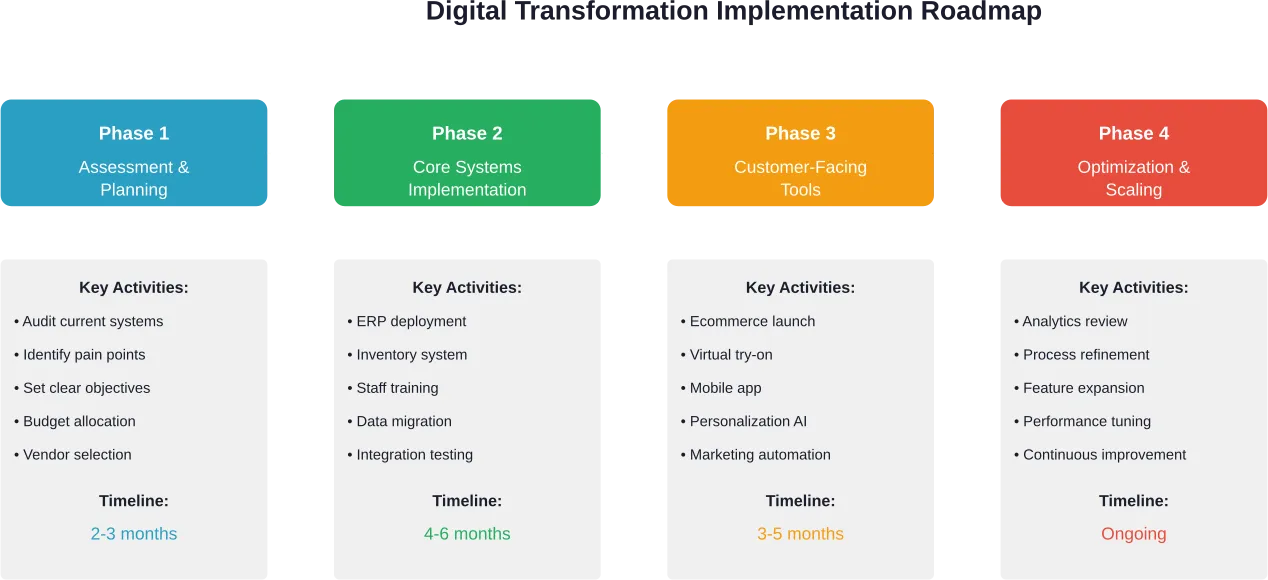
Les tendances B2B et B2C façonnent la stratégie numérique de la joaillerie
Les canaux business-to-business et business-to-consumer requièrent des approches numériques différentes, bien que certaines technologies soient utilisées dans les deux cas.
Les plateformes de bijouterie B2B intègrent de plus en plus des salles d'exposition virtuelles où les détaillants parcourent les collections à distance. Des catalogues numériques avec des images haute résolution à 360 degrés remplacent les échantillons physiques pour la sélection initiale.
Pour les canaux B2C, les expériences des clients sont centrées sur la personnalisation et la commodité. Des fonctionnalités telles que les listes de souhaits, les notifications de réapprovisionnement et les rappels d'anniversaire créent un engagement continu au-delà des transactions individuelles.
Comprendre les exigences des clients d'aujourd'hui
Les attentes des consommateurs ont considérablement évolué. Les acheteurs de bijoux d'aujourd'hui exigent la transparence en matière d'approvisionnement, des options de personnalisation et des parcours d'achat flexibles.
Ils effectuent des recherches approfondies avant d'acheter, en consultant les avis, en comparant les prix entre les différents détaillants et en recherchant la validation des médias sociaux. Les outils numériques doivent soutenir ce parcours de recherche en fournissant des informations détaillées sur les produits, des témoignages de clients et un contenu éducatif.
Les jeunes apprécient particulièrement les expériences plutôt que les transactions. Les consultations virtuelles sur la conception, les aperçus de gravures personnalisées et la fabrication interactive de bagues créent des engagements mémorables qui justifient un prix élevé.
Tendances technologiques futures dans la joaillerie
À l'avenir, plusieurs technologies émergentes promettent de remodeler encore davantage les entreprises de bijouterie.
L'IA générative contribuera probablement à l'idéation de la conception, en créant des variations sur des thèmes que les concepteurs affineront. Le rapport spécial sur la technologie 2025 de la CIBJO met en évidence les opportunités de transformation et les défis que l'IA présente, y compris le risque de déplacement d'emplois que les entreprises doivent aborder de manière responsable.
L'adoption de la blockchain pour le suivi de la provenance se développera à mesure que les consommateurs exigeront des déclarations vérifiables en matière de durabilité et d'approvisionnement éthique. Les solutions technologiques documentées par le CIBJO montrent comment les outils numériques soutiennent la vérification de l'approvisionnement responsable.
La technologie de l'impression 3D continue de progresser, permettant le prototypage rapide et même la production de certaines pièces. Cela permet de réduire le délai entre la conception et la commercialisation tout en minimisant les déchets matériels.
Simplifiez le fonctionnement quotidien de votre entreprise de joaillerie
Les entreprises de joaillerie sont souvent confrontées à des données de stock dispersées, à des processus manuels et à une visibilité limitée entre les magasins, les ateliers et les ventes en ligne. A-listware étudie la manière dont les opérations se déroulent réellement dans l'entreprise, puis remodèle les systèmes pour soutenir ce flux de manière plus fiable. Au lieu d'ajouter de nouveaux outils, ils se concentrent sur la connexion de ce qui est déjà en place, sur l'amélioration de la circulation des informations et sur la suppression des étapes qui ralentissent les équipes. Leur travail consiste généralement à examiner les systèmes actuels, à définir une configuration pratique et à s'impliquer dans le déploiement afin que les changements soient appliqués dans la réalité.
Pour les bijoutiers, cela se traduit par un suivi plus précis des stocks, des informations plus claires sur les ventes et une réduction des écarts entre les processus de vente et d'arrière-guichet. Si vos opérations vous semblent plus difficiles à gérer qu'elles ne devraient l'être, prenez contact avec Logiciel de liste A et obtenir une vision claire de ce qui peut être corrigé et par où commencer.
Questions fréquemment posées
- Qu'est-ce que la transformation numérique pour les bijoutiers ?
La transformation numérique pour les bijoutiers signifie l'intégration de la technologie dans tous les aspects de l'activité - conception, fabrication, gestion des stocks, ventes et service à la clientèle. Elle comprend l'adoption de systèmes ERP, de plateformes de commerce électronique, d'outils d'essayage virtuel et d'analyses de données afin d'améliorer l'efficacité et l'expérience des clients tout en maintenant la qualité de l'artisanat.
- Quel est le coût de la transformation numérique pour une entreprise de joaillerie ?
Les coûts varient considérablement en fonction de la taille de l'entreprise et des technologies choisies. Les petits détaillants peuvent dépenser entre 10 000 et 50 000 euros pour des systèmes de base de commerce électronique et d'inventaire, tandis que les fabricants qui mettent en œuvre des solutions ERP complètes peuvent investir entre 100 000 et 500 000 euros. Renseignez-vous auprès des fournisseurs pour connaître les prix actuels, qui changent fréquemment.
- Les bijoutiers traditionnels peuvent-ils rivaliser avec les marques en ligne ?
Absolument. Les bijoutiers traditionnels disposent d'avantages tels qu'une réputation bien établie, des locaux pour les essayages et un personnel spécialisé. L'ajout de capacités numériques - vente au détail omni-canal, consultations virtuelles, catalogues en ligne - combine les atouts traditionnels avec la commodité moderne, créant ainsi une différenciation concurrentielle que les marques exclusivement en ligne ne peuvent égaler.
- Quel est le plus grand défi de la transformation numérique des bijoux ?
Le plus grand défi consiste à trouver un équilibre entre l'innovation technologique et le patrimoine et les traditions artisanales. La résistance du personnel, la crainte de perdre le contact personnel et la complexité de l'intégration des nouveaux systèmes dans les flux de travail existants exigent une gestion prudente du changement et le respect de ce qui fait la spécificité des entreprises de joaillerie.
- Combien de temps la transformation numérique prend-elle pour les entreprises de joaillerie ?
Une transformation complète nécessite généralement 12 à 18 mois pour une mise en œuvre complète, bien que les capacités de base puissent être lancées en 3 à 6 mois. Le processus est continu plutôt que fini - les technologies évoluent, les attentes des clients changent et l'optimisation continue devient partie intégrante des opérations normales.
- Les clients veulent-ils vraiment acheter des bijoux coûteux en ligne ?
Oui. D'ici 2026, plus de 60% des consommateurs de produits de luxe devraient effectuer au moins un achat de bijoux de grande valeur en ligne chaque année. (La technologie d'essayage virtuel, l'imagerie détaillée, les politiques de retour généreuses et les transactions sécurisées ont permis de surmonter les réticences traditionnelles à l'égard de l'achat de bijoux en ligne.
- Quelles technologies les bijoutiers devraient-ils privilégier en premier lieu ?
Commencez par les systèmes fondamentaux : une solide gestion des stocks et des bases de données clients. Ces systèmes créent l'infrastructure nécessaire à tout le reste. Ensuite, développez des capacités de commerce électronique pour capter la demande en ligne. Les fonctions avancées telles que la personnalisation par l'IA et l'essayage virtuel peuvent suivre une fois que les systèmes de base fonctionnent sans problème.
Conclusion
La transformation numérique représente une opportunité, et non une menace, pour les entreprises de bijouterie désireuses de s'adapter. L'expansion du marché du commerce électronique de la bijouterie fine de marque, qui atteint $60-80 milliards d'euros, démontre la demande massive de bijoux achetés par l'intermédiaire des canaux numériques.
Mais une transformation réussie nécessite une réflexion stratégique. La technologie sert les objectifs de l'entreprise, elle ne les remplace pas. Les bijoutiers doivent identifier les problèmes spécifiques - stocks insuffisants, portée limitée, données insuffisantes sur les clients - et sélectionner les technologies qui répondent directement à ces défis.
Les marques qui prospéreront en 2026 associent l'artisanat traditionnel à des outils modernes. Elles offrent à leurs clients la possibilité de naviguer en ligne et d'acheter en magasin, ou vice versa. Elles suivent les stocks avec précision tout en maintenant le service personnalisé qui différencie les bijoutiers des grandes surfaces.
Commencez modestement si nécessaire. Même les capacités numériques de base - un site de commerce électronique fonctionnel, une base de données clients organisée, un système d'inventaire rationalisé - offrent des avantages concurrentiels. Développez à partir de là, au fur et à mesure que le budget et l'expertise augmentent.
La frontière numérique dans le secteur de la bijouterie n'est pas à venir, elle est déjà là. La question n'est pas de savoir s'il faut se transformer, mais de savoir avec quelle rapidité et quelle stratégie les entreprises peuvent s'adapter tout en préservant ce qui fait la spécificité de la joaillerie : l'art, l'émotion et le lien humain.


