Kurze Zusammenfassung: Die digitale Transformation für Bauunternehmen beinhaltet die Einführung moderner Technologien wie BIM, cloudbasiertes Projektmanagement, IoT-Sensoren und KI-gestützte Analysen, um manuelle, papierbasierte Arbeitsabläufe zu ersetzen. Während der Bausektor im Vergleich zu anderen Branchen zurückgeblieben ist - laut einer Studie der University of Chicago ist die Produktivität in den letzten 50 Jahren um 40% gesunken -, berichten Bauunternehmen, die digitale Tools einsetzen, von 34% Produktivitätssteigerungen und 33% verbesserten Kundenerfahrungen. Um erfolgreich zu sein, bedarf es einer strategischen Planung, der Schulung der Mitarbeiter und der Auswahl von Technologien, die sich nahtlos in die bestehenden Abläufe integrieren lassen.
Die Bauwirtschaft steht an einem Wendepunkt. Während sich die Produktivität in den meisten Branchen in den letzten fünf Jahrzehnten verdoppelt hat, hat sich das Baugewerbe in die entgegengesetzte Richtung entwickelt. Eine Studie der University of Chicago aus dem Jahr 2023 ergab einen erschreckenden Rückgang des Produktivitätswerts im Baugewerbe um 40% in diesem Zeitraum.
Das ist nicht nur eine Statistik. Es geht um echtes Geld, das auf dem Tisch liegt, um Projekte, die den Zeitplan überschreiten, und um Auftragnehmer, die in einem zunehmend wettbewerbsorientierten Markt um ihre Gewinnspannen kämpfen.
Aber die Sache ist die: Bauunternehmen, die sich der digitalen Transformation verschrieben haben, erzielen ganz andere Ergebnisse. Untersuchungen zeigen, dass diejenigen, die digitale Tools einsetzen, eine um 34% gesteigerte Produktivität und eine um 33% verbesserte Kundenzufriedenheit erleben. Die Kluft zwischen digital ausgereiften Auftragnehmern und solchen, die noch auf papierbasierte Prozesse setzen, wird von Quartal zu Quartal größer.
Was also bedeutet die digitale Transformation für Bauunternehmen? Wie können Unternehmen diesen Wandel bewältigen, ohne den laufenden Betrieb zu stören? Und welche Technologien liefern messbare Erträge im Gegensatz zu leeren Versprechungen?
Was die digitale Transformation für Bauunternehmer bedeutet
Bei der digitalen Transformation geht es nicht darum, die neueste Software zu kaufen und dies als Fortschritt zu bezeichnen. Sie bedeutet einen grundlegenden Wandel in der Art und Weise, wie Bauunternehmen Bauprojekte vom ersten Angebot bis zum endgültigen Abschluss planen, ausführen und verwalten.
Im Kern geht es bei der digitalen Transformation darum, manuelle, unzusammenhängende Prozesse durch integrierte digitale Arbeitsabläufe zu ersetzen. Das bedeutet, dass man von Tabellenkalkulationen und Papierplänen zu cloudbasierten Plattformen übergeht, auf denen alle Projektbeteiligten auf Echtzeitinformationen zugreifen können.
Die Umstellung betrifft jeden Aspekt der Vertragsabwicklung:
- Die Kalkulation wird von statischen Tabellenkalkulationen auf dynamische Plattformen verlagert, die aktuelle Materialkosten und Arbeitssätze abrufen
- Projektmanagement wird von Klemmbrettern und Telefongesprächen zu mobilen Anwendungen mit sofortigen Aktualisierungen umgestellt
- Die Qualitätskontrolle entwickelt sich von Papier-Checklisten zu digitalen Inspektionen mit Fotodokumentation und automatischer Berichterstattung
- Die Einhaltung von Sicherheitsvorschriften wird durch IoT-Sensoren und prädiktive Analysen proaktiv und nicht mehr durch reaktive Berichterstattung über Vorfälle.
- Die Dokumentenverwaltung verlagert sich von Aktenschränken und E-Mail-Threads zu zentralen Ablagen mit Versionskontrolle
Laut Stanford's Center for Integrated Facility Engineering (CIFE) helfen digitale Strategieframeworks den Auftragnehmern, durch das Verständnis der grundlegenden Kräfte, die die technologische Entscheidungsfindung beeinflussen, umsetzbare Erkenntnisse zu gewinnen. Ohne diese strategische Grundlage wird die Technologieeinführung zufällig und führt zu unzusammenhängenden Systemen, die mehr Probleme schaffen als lösen.
Warum das Baugewerbe bei der Einführung digitaler Technologien zurückgeblieben ist
Das Baugewerbe ist nach wie vor einer der am wenigsten digitalisierten Sektoren, obwohl sein Wert bis 2027 voraussichtlich $2,2 Billionen erreichen wird. Mehrere Faktoren erklären diesen Widerstand gegen den technologischen Fortschritt.
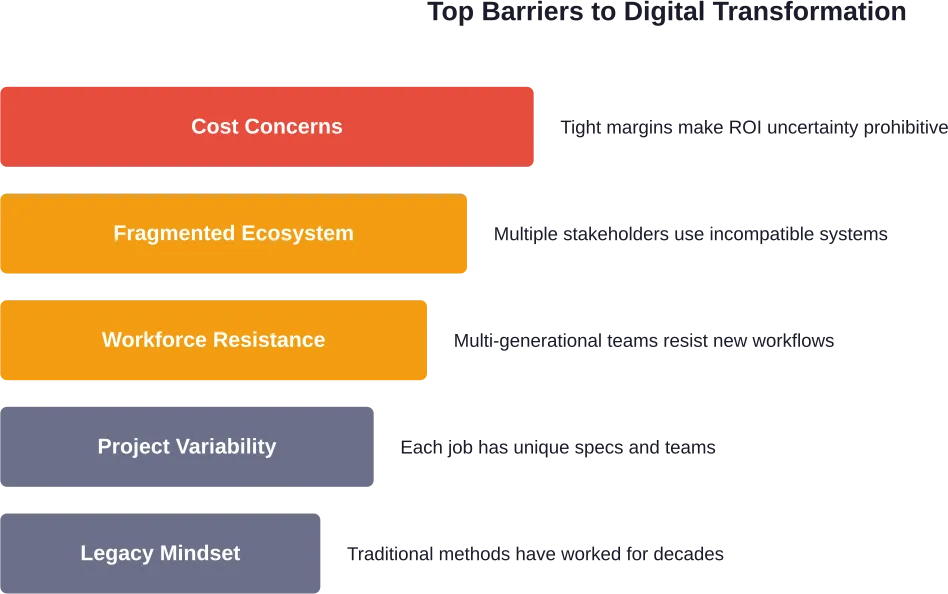
Projektbezogene Arbeit bringt einzigartige Herausforderungen mit sich. An jedem Bauprojekt sind unterschiedliche Akteure, Standorte und Spezifikationen beteiligt. Diese Variabilität erschwert die Standardisierung im Vergleich zu Fertigungs- oder Einzelhandelsbetrieben, in denen sich die Prozesse ständig wiederholen.
Die fragmentierte Struktur der Branche verschärft diese Herausforderungen. An einem typischen Projekt sind Generalunternehmer, spezialisierte Subunternehmer, Zulieferer, Architekten, Ingenieure und Eigentümer beteiligt, die alle ihre eigenen Systeme und Verfahren verwenden. Um alle Beteiligten zur Einführung kompatibler Technologien zu bewegen, ist eine Koordination erforderlich, die oft unmöglich erscheint.
Knappe Gewinnspannen lassen wenig Spielraum für Experimente. Auftragnehmer arbeiten mit geringen Gewinnquoten, so dass sich Technologieinvestitionen riskant anfühlen, wenn der unmittelbare ROI nicht garantiert ist. Aus Angst, die falschen Werkzeuge zu wählen und das begrenzte Kapital zu verschwenden, bleiben viele Unternehmen bei den vertrauten manuellen Prozessen hängen.
Auch die Demografie der Belegschaft spielt eine Rolle. Im Baugewerbe sind Mitarbeiter mehrerer Generationen beschäftigt, die sich im Umgang mit Technologie sehr unterschiedlich wohl fühlen. Außendienstmitarbeiter, die an Papierpläne gewöhnt sind, könnten sich ungeachtet der potenziellen Vorteile gegen Tablet-basierte Workflows sträuben.
Und dann ist da noch die Denkweise der Altlasten: “Wir haben das schon immer so gemacht.” Wenn Unternehmen jahrzehntelang mit traditionellen Methoden überlebt haben, erscheinen Veränderungen unnötig, selbst wenn der Wettbewerbsdruck steigt.
Digitale Transformation für Auftragnehmer
Bauunternehmen profitieren von Systemen, die das Projektmanagement, die Teamkoordination und die Kundenkommunikation verbessern. A-listware liefert maßgeschneiderte Lösungen mit engagierter technischer Unterstützung.
Schwerpunktbereiche:
- Projektverfolgung und Terminplanung
- Ressourcenmanagement
- Berichterstattung vor Ort und mobile Tools
- Integration mit Buchhaltungs- und CRM-Systemen
Das Team kann bestehende Tools integrieren oder komplette digitale Projekte leiten. Kontakt zu A-listware um Ihr Unternehmen noch heute zu verbessern.
Kerntechnologien für die Transformation von Auftragnehmern
Bestimmte Technologien haben sich als grundlegend für Auftragnehmer erwiesen, die es mit der digitalen Transformation ernst meinen. Dabei handelt es sich nicht um experimentelle Tools, sondern um bewährte Lösungen, die in Unternehmen aller Größenordnungen messbare Ergebnisse liefern.
Gebäudedatenmodellierung (BIM)
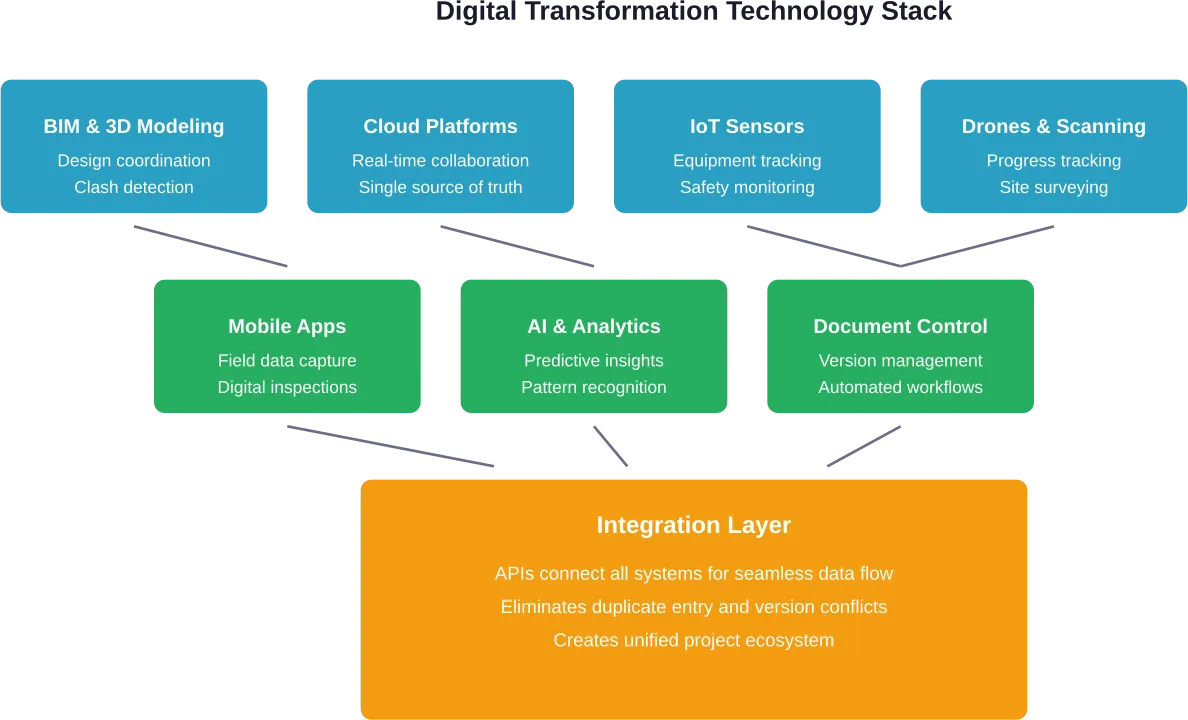
BIM erstellt intelligente 3D-Modelle, die weit über herkömmliche CAD-Zeichnungen hinausgehen. Diese Modelle enthalten umfangreiche Daten zu jeder Gebäudekomponente - Materialien, Kosten, Installationsabläufe, Wartungsanforderungen und mehr.
Für Bauunternehmer ermöglicht BIM die Erkennung von Konflikten vor dem ersten Spatenstich. Mechanische, elektrische und sanitäre Systeme können virtuell koordiniert werden, um Konflikte zu erkennen, die sonst teure Nacharbeiten verursachen würden. Mengenermittlungen werden automatisiert und nicht mehr manuell durchgeführt. Die zeitliche Abfolge wird in 4D visualisiert und zeigt genau, wie sich das Projekt im Laufe der Zeit entwickelt.
Die Technologie erleichtert die Zusammenarbeit zwischen allen Projektbeteiligten, die mit einem einzigen gemeinsamen Modell arbeiten, anstatt mit unzusammenhängenden Zeichnungen, die schnell aus dem Gleichgewicht geraten.
Cloud-basierte Projektmanagement-Plattformen
Cloud-Plattformen zentralisieren Projektinformationen, auf die von jedem Gerät mit Internetanschluss aus zugegriffen werden kann. Außendienstteams aktualisieren den Fortschritt von Tablets und Smartphones aus. Büromitarbeiter verfolgen Budgets und Zeitpläne in Echtzeit, anstatt auf wöchentliche Berichte zu warten.
Diese Systeme schaffen eine einzige Quelle der Wahrheit. Wenn jemand eine Zeichnung aktualisiert, eine Aufgabe als erledigt markiert oder ein Problem protokolliert, sieht jeder, der Zugriff hat, die Änderung sofort. Es gibt keine Verwirrung mehr darüber, welche Dokumentversion aktuell ist oder ob der Bauleiter die letzte RFI-Antwort erhalten hat.
Die Integrationsfähigkeit ist von enormer Bedeutung. Die besten Plattformen lassen sich mit Buchhaltungssoftware, Kalkulationstools und Spezialanwendungen verbinden, um doppelte Dateneingaben in unverbundenen Systemen zu vermeiden.
Internet der Dinge (IoT) Sensoren und Wearables
IoT-Geräte überwachen automatisch die Bedingungen am Arbeitsplatz und die Aktivitäten der Arbeiter. Umgebungssensoren überwachen Temperatur, Luftfeuchtigkeit und Luftqualität. Gerätesensoren protokollieren Betriebsstunden, Kraftstoffverbrauch und Wartungsbedarf. Am Körper zu tragende Geräte erkennen unsichere Bewegungen der Arbeiter oder die Nähe zu Gefahrenquellen.
Diese kontinuierliche Überwachung ermöglicht ein proaktives Management. Die Geräte werden auf der Grundlage der tatsächlichen Nutzung gewartet und nicht nach willkürlichen Zeitplänen. Sicherheitseingriffe erfolgen, bevor es zu Zwischenfällen kommt. Die Umgebungssteuerung passt sich automatisch an, um optimale Bedingungen für die Aushärtung des Betons zu gewährleisten.
Die von diesen Geräten erzeugten Daten fließen in Analyseplattformen ein, die Muster erkennen und Probleme vorhersagen, bevor sie den Projektplan stören.
Drohnen und Reality Capture
Drohnen erfassen Standorte in Minuten, für die die Teams mit herkömmlichen Methoden Tage brauchen würden. Die Luftbilder und 3D-Scans, die sie erfassen, dokumentieren die bestehenden Bedingungen, verfolgen den Fortschritt und überprüfen die Mengen mit einer Präzision, die durch manuelle Messungen unmöglich ist.
Die Reality-Capture-Technologie erzeugt digitale Zwillinge - exakte virtuelle Nachbildungen der physischen Konstruktion. Der Vergleich dieser digitalen Zwillinge mit BIM-Modellen zeigt Abweichungen von der Planungsabsicht sofort und nicht erst bei der Endabnahme, wo Korrekturen exponentiell mehr kosten.
Künstliche Intelligenz und prädiktive Analytik
KI analysiert historische Projektdaten, um die Kalkulationsgenauigkeit zu verbessern, mögliche Verzögerungen vorherzusagen und die Ressourcenzuweisung zu optimieren. Algorithmen des maschinellen Lernens erkennen Muster in Tausenden von Projekten, die menschliche Kalkulatoren niemals erkennen könnten.
Laut NIST-Leitfaden zur Unterstützung der digitalen Transformation mit Legacy-Komponenten können Unternehmen Analysefunktionen nutzen, um verwertbare Erkenntnisse zu gewinnen. Ohne Analytik werden Daten eher überwältigend als aufschlussreich.
Prognosemodelle sagen auf der Grundlage von Frühwarnindikatoren voraus, welche Projekte Budgets überschreiten oder Fristen nicht einhalten werden. Diese Vorausschau ermöglicht Korrekturmaßnahmen, solange noch Optionen zur Verfügung stehen, und keine Schadensbegrenzung, wenn sich Probleme verfestigen.
Messbare Vorteile, die Auftragnehmer tatsächlich erreichen
Die digitale Transformation bringt konkrete Verbesserungen in mehreren Leistungsdimensionen, wenn sie strategisch umgesetzt wird.
Gesteigerte Produktivität
Untersuchungen zeigen 34% Produktivitätssteigerungen für Auftragnehmer, die digitale Tools einsetzen. Dies ergibt sich aus der Beseitigung redundanter Dateneingaben, der Verringerung der Zeit für die Suche nach Informationen und der Automatisierung von Routineaufgaben, die früher Stunden in Anspruch nahmen.
Zusammenarbeit in Echtzeit bedeutet weniger Verzögerungen beim Warten auf Antworten. Außendienstmitarbeiter greifen sofort auf aktuelle Zeichnungen zu, anstatt mit veralteten Ausdrucken zu arbeiten. RFIs werden in Stunden statt in Tagen gelöst. Änderungsaufträge werden dank digitaler Workflows und Genehmigungen schneller bearbeitet.
Verbesserte Kundenerfahrung
Kunden erhalten über Bauherrenportale mit aktuellen Zeitplänen, Budgets und Fotodokumentationen Einblick in den Projektstatus. Diese Transparenz schafft Vertrauen und verringert die konträre Dynamik, die viele Baubeziehungen plagt.
Die mit dem 33% erzielte Verbesserung der Kundenerfahrung führt zu Wiederholungsaufträgen und Empfehlungen - die profitabelste Arbeit, die sich ein Bauunternehmer sichern kann.
Bessere Sicherheitsergebnisse
Digitale Sicherheitsmanagementsysteme stellen sicher, dass die Mitarbeiter die erforderlichen Schulungen absolvieren, bevor sie die Baustelle betreten. Tägliche Gefährdungsbeurteilungen werden mit Fotos dokumentiert, und Abhilfemaßnahmen werden bis zum Abschluss verfolgt. Die Berichterstattung über Beinaheunfälle wird einfacher, und es werden Lehren gezogen, die zukünftige Vorfälle verhindern.
IoT-Wearables erkennen Ermüdung, Hitzestress und die Nähe zu sich bewegenden Geräten und ermöglichen ein Eingreifen, bevor es zu Unfällen kommt, statt nachträgliche Untersuchungen durchzuführen.
Geringere Kosten und weniger Abfall
Genaue Mengenangaben auf der Grundlage von BIM-Modellen verringern die Überbestellung von Material. Durch die Budgetverfolgung in Echtzeit werden Überschreitungen frühzeitig erkannt, sodass Korrekturen noch möglich sind. Die Überwachung der Anlagennutzung stellt sicher, dass die Anlagen produktiv bleiben und nicht ungenutzt bleiben.
Nacharbeiten sind einer der größten Kostenfaktoren im Bauwesen. Die digitale Koordination durch die BIM-Kollisionserkennung eliminiert viele Konflikte, die sonst teure Korrekturen während des Baus erfordern würden.
Differenzierung im Wettbewerb
Da die digitale Reife bei größeren Projekten immer wichtiger wird, werden Auftragnehmer ohne diese Fähigkeiten von Ausschreibungen ausgeschlossen. Bauherren verlangen zunehmend BIM-Leistungen und Cloud-Zusammenarbeit als Vertragsvoraussetzungen.
Unternehmen, die frühzeitig digitale Kompetenzen aufbauen, sind im Vorteil, wenn sich diese Erwartungen durchsetzen.
| Leistungsbereich | Typische Verbesserung | Schlüsseltechnologien |
|---|---|---|
| Produktivität | 34% Erhöhung | Cloud-Plattformen, mobile Anwendungen, BIM |
| Kundenerfahrung | 33% Verbesserung | Eigentümerportale, Echtzeit-Berichterstattung |
| Sicherheitsrelevante Vorfälle | 20-30% Ermäßigung | IoT-Wearables, digitale Inspektionen |
| Materialabfälle | 15-25% abnehmen | BIM-Mengenermittlungen, Verfolgungssysteme |
| Nacharbeitskosten | 30-40% unten | BIM-Kollisionserkennung, Qualitätsanwendungen |
| Dokumentensuche Zeit | 50-70% schneller | Dokumentenverwaltung in der Cloud |
Häufige Herausforderungen und wie man sie überwindet
Selbst Auftragnehmer, die sich der digitalen Transformation verschrieben haben, stoßen auf vorhersehbare Hindernisse. Wenn man diese Herausforderungen im Vorfeld kennt, kann man proaktive Strategien zur Abhilfe entwickeln.
Komplexität der Integration
Die meisten Bauunternehmen verwenden bereits Software - Buchhaltungssysteme, Kalkulationstools, Terminplanungsanwendungen. Das Hinzufügen neuer Technologien führt zu Integrationsproblemen, wenn diese Systeme nicht miteinander kommunizieren.
Die Lösung beginnt damit, den aktuellen Technologiebestand zu verstehen und die Integrationsanforderungen zu ermitteln, bevor neue Tools ausgewählt werden. Plattformen mit robusten API-Funktionen und vorgefertigten Konnektoren zu gängiger Konstruktionssoftware verringern die Reibungsverluste bei der Integration erheblich.
Manchmal ist ein schrittweiser Austausch sinnvoller als der Versuch, inkompatible Altsysteme auf unbestimmte Zeit zu integrieren.
Änderungsmanagement und Schulung
Die Einführung von Technologien scheitert, wenn die Schulung der Mitarbeiter als nachträglicher Gedanke behandelt wird. Außendienstmitarbeiter brauchen praktische Übungen mit neuen Werkzeugen, bevor Projekte beginnen, und keine Tutorials, die ihnen während kritischer Fristen vorgesetzt werden.
Erfolgreiche Auftragnehmer ernennen digitale Champions innerhalb jeder Mannschaft - technisch versierte Mitarbeiter, die eine Weiterbildung erhalten und dann ihre Kollegen coachen. Diese gegenseitige Unterstützung erweist sich als effektiver als Top-Down-Mandate des Managements.
Pilotprojekte ermöglichen es den Teams, bei kleineren Aufgaben Kompetenzen aufzubauen, bevor sie sich an größere Aufgaben wagen. Die Erwartung einer perfekten Ausführung beim ersten Versuch mit einer neuen Technologie garantiert Frustration.
Datensicherheit und Cybersecurity
Cloud-basierte Systeme und vernetzte Geräte schaffen Schwachstellen in der Cybersicherheit, die es bei Papierprozessen nicht gab. Nach den Richtlinien des NIST-Rahmenwerks für Cybersicherheit benötigen Organisationen systematische Ansätze für das Verständnis und die Verwaltung von Cybersicherheitsrisiken, um Risiken in der Industrie und in Behörden zu verringern.
Auftragnehmer sollten eine grundlegende Sicherheitshygiene einführen: Multi-Faktor-Authentifizierung, regelmäßige Software-Updates, Mitarbeiterschulungen zum Thema Sicherheit und Datensicherungsprotokolle. Die Zusammenarbeit mit Technologieanbietern, die die SOC-2-Richtlinien einhalten, bietet zusätzliche Sicherheit.
Projektdaten enthalten oft sensible Informationen über den Eigentümer und geschützte Details, die für die Konkurrenz von Interesse sind. Der Schutz dieser Informationen ist nicht optional - er ist eine vertragliche Verpflichtung und eine wettbewerbsrechtliche Notwendigkeit.
Anforderungen an Vorabinvestitionen
Software-Abonnements, Hardware-Käufe und Schulungszeit stellen reale Kosten dar, die sich auf die ohnehin schon knappen Gewinnspannen auswirken. Bauunternehmer brauchen klare ROI-Erwartungen, bevor sie Kapital für Technologieinvestitionen bereitstellen.
Wenn man mit hochwirksamen, kostengünstigen Lösungen beginnt, entsteht eine Eigendynamik. Cloud-Projektmanagement-Plattformen bringen oft schnelle Erfolge durch verbesserte Kommunikation und Dokumentation ohne große Vorabinvestitionen.
Speziell für die Bautechnik gibt es Finanzierungsmöglichkeiten. Einige Anbieter bieten eine aufgeschobene Zahlung oder eine erfolgsabhängige Preisgestaltung an, bei der die Kosten mit der Nutzung skalieren, anstatt große anfängliche Verpflichtungen einzugehen.
Erstellung einer Roadmap für die digitale Transformation
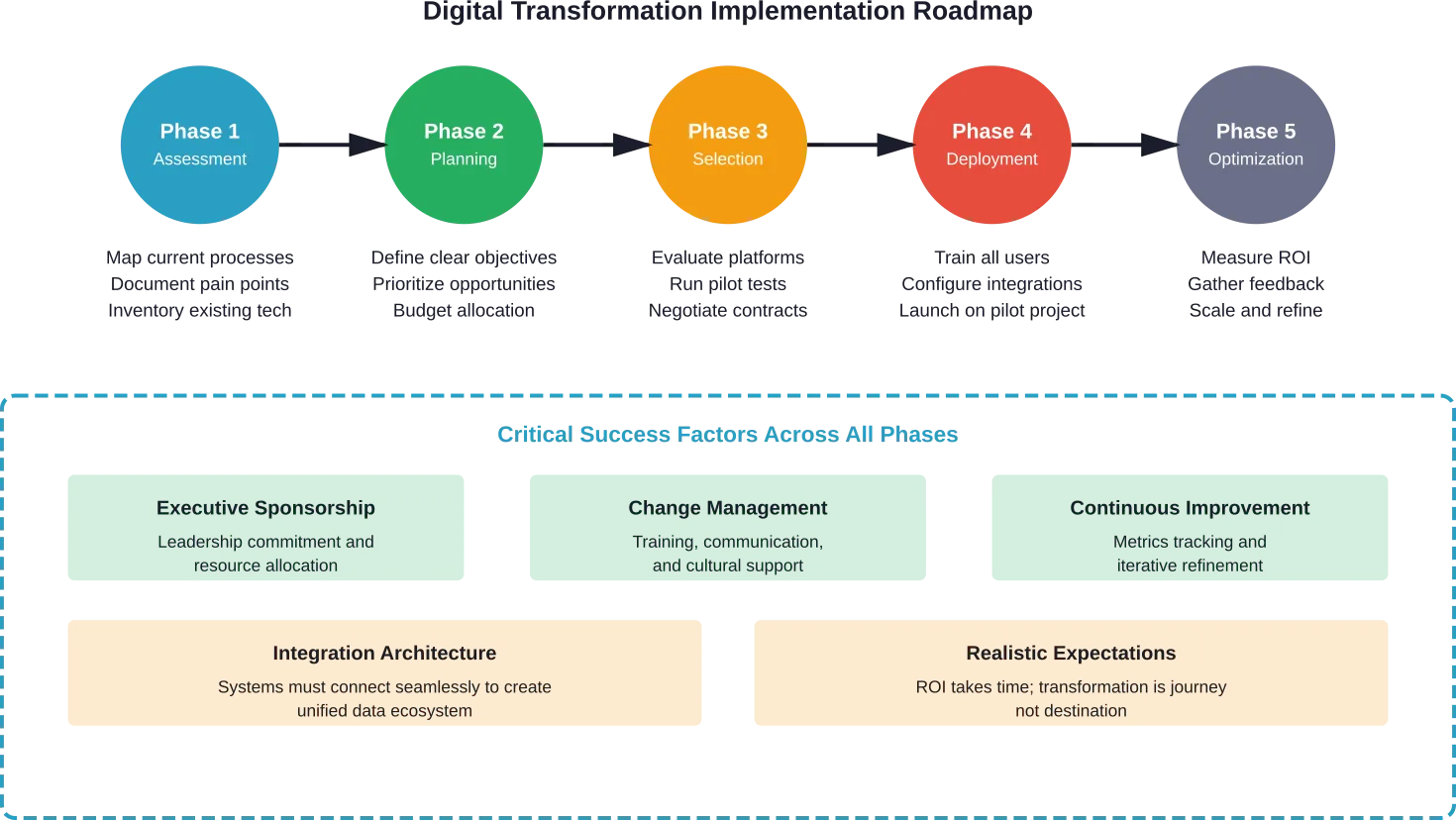
Die strategische digitale Transformation erfordert eine bewusste Planung und nicht reaktive Technologiekäufe bei jedem Anruf von Vertriebsmitarbeitern.
Bewertung des aktuellen Zustands
Beginnen Sie damit, die bestehenden Prozesse und Probleme zu dokumentieren. Welche Tätigkeiten verbrauchen überproportional viel Zeit? Wo treten am häufigsten Fehler auf? Was verursacht Projektverzögerungen?
Erstellen Sie eine ehrliche Bestandsaufnahme der derzeitigen Technologienutzung. Viele Unternehmen stellen fest, dass sie für Software zahlen, die niemand wirklich nutzt, oder dass verschiedene Abteilungen konkurrierende Tools für dieselbe Funktion gekauft haben.
Klare Zielsetzungen definieren
Welche spezifischen Ergebnisse muss die digitale Transformation erzielen? Verringerung der Zeit für die Erstellung von Kostenvoranschlägen um 30%? Sicherheitsvorfälle um die Hälfte reduzieren? Verbesserung der Projektmarge um 2 Prozentpunkte?
Vage Ziele wie “digitaler werden” bieten keine Grundlage für die Bewertung von Fortschritten oder die Priorisierung von Investitionen. Quantifizierbare Ziele ermöglichen Messung und Rechenschaftspflicht.
Priorisieren Sie wirkungsvolle Möglichkeiten
Nicht jeder Prozess muss sofort digitalisiert werden. Konzentrieren Sie sich zunächst auf die Bereiche, in denen manuelle Methoden die größten Probleme oder Risiken verursachen. Für einige Auftragnehmer ist das die Kalkulation. Für andere ist es die Qualitätskontrolle oder die Einhaltung von Sicherheitsvorschriften.
Schnelle Erfolge schaffen Vertrauen in das Unternehmen und führen zu Einsparungen, die die nachfolgenden Phasen finanzieren. Der Versuch, alles gleichzeitig zu digitalisieren, überfordert die Teams und verwässert den Fokus.
Kompatible Technologien auswählen
Die Technologieauswahl sollte sich an den strategischen Zielen orientieren, nicht an den Marketingversprechen der Anbieter. Bewerten Sie Plattformen nach folgenden Kriterien:
- Integrationsmöglichkeiten mit bestehenden Systemen
- Benutzerfreundlichkeit für Ihr spezifisches Personal
- Stabilität und Supportqualität des Anbieters
- Gesamtbetriebskosten einschließlich Schulung und Wartung
- Skalierbarkeit bei wachsendem Unternehmen oder veränderten Anforderungen
Pilotversuche mit kleinen Gruppen vor der unternehmensweiten Einführung decken Probleme auf, während die Einsätze gering bleiben.
Investitionen in Ausbildung und Unterstützung
Budgetieren Sie 20-30% der Technologiekosten für Schulung und Change Management. Technologie ist nur dann wertvoll, wenn die Menschen sie auch richtig nutzen.
Eine Schulung kann nicht einmalig sein. Neue Mitarbeiter müssen eingearbeitet werden. Software-Updates führen neue Funktionen ein. Auffrischungssitzungen behandeln schlechte Gewohnheiten, die sich im Laufe der Zeit entwickeln.
Messen und iterieren
Verfolgen Sie wichtige Kennzahlen: tatsächliche Produktivitätsänderungen, Fehlerquoten, Kundenzufriedenheitswerte, Sicherheitsstatistiken. Vergleichen Sie die Leistung vor und nach der Implementierung, um die ROI-Annahmen zu überprüfen.
Seien Sie bereit, den Kurs zu ändern. Wenn eine Technologie nach einer angemessenen Einführungszeit nicht den erwarteten Nutzen bringt, sollten Sie nach den Gründen suchen. Manchmal liegt es an Schulungslücken, manchmal an Integrationsproblemen und gelegentlich am falschen Tool für Ihre speziellen Anforderungen.
Die Rolle von Regierungs- und Industrienormen
Regierungsinitiativen und Industriestandards beeinflussen zunehmend die digitale Transformation der Auftragnehmer.
Bundesprojekte schreiben oft bestimmte digitale Leistungen vor. Die digitalen Initiativen der US-Bundesbehörde für Bauwesen (SBA) laufen jetzt im Rahmen der ‘Executive Order on Modernizing Federal Construction’ von 2025, die die Verwendung von OpenBIM-Standards für alle Auftragnehmer bei Bundesprojekten mit einem Volumen von mehr als $5 Millionen vorschreibt. Auftragnehmer, die für die Regierung arbeiten, müssen diese sich entwickelnden digitalen Anforderungen erfüllen.
Das NIST bietet Rahmenwerke und Leitlinien für die Digitalisierung des Bauwesens. Ihr Rahmenwerk für Cybersicherheit hilft Unternehmen dabei, Cybersicherheitsrisiken zu verstehen und besser zu verwalten - ein wichtiger Aspekt bei der Einführung von Cloud-Plattformen und IoT-Geräten durch Bauunternehmen. Die jüngsten NIST-Richtlinien befassen sich mit der Einbindung von KI in den Betrieb bei gleichzeitiger Abschwächung von Cybersicherheitsrisiken, was von Bedeutung ist, wenn Bauunternehmen KI-gestützte Analysen erforschen.
Branchenverbände entwickeln Standards für die BIM-Implementierung, Datenaustauschformate und Protokolle für die digitale Zusammenarbeit. Die Vertrautheit mit diesen Standards verhindert, dass Bauunternehmen proprietäre Ansätze umsetzen, die die Interoperabilität mit Projektpartnern einschränken.
Blick in die Zukunft: Die Zukunft des digitalen Bauens
Die digitale Transformation wird sich eher beschleunigen als stagnieren. Mehrere Trends werden die nächste Phase der Entwicklung der Bautechnologie bestimmen.
Die Möglichkeiten der künstlichen Intelligenz werden sich über die Analyse hinaus auf die autonome Entscheidungsfindung ausweiten. KI-Planungsassistenten werden die Ressourcenzuweisung in Echtzeit optimieren, wenn sich die Bedingungen ändern. Das maschinelle Lernen wird Kostenschätzungen auf der Grundlage von projektspezifischen Parametern und nicht von historischen Durchschnittswerten verfeinern.
Augmented Reality wird eine Brücke zwischen digitalen und physischen Umgebungen schlagen. Durch eine AR-Brille werden Installationsanweisungen, Standorte von Versorgungseinrichtungen und Qualitätskontrollpunkte in das Sichtfeld der Arbeiter eingeblendet. Dies reduziert Fehler und die Einarbeitungszeit für komplexe Aufgaben.
Digitale Zwillinge werden eher zum Standard als zum Experiment. Diese virtuellen Nachbildungen ermöglichen es den Eigentümern, verschiedene Betriebsszenarien zu simulieren, den Wartungsbedarf vorherzusagen und die Gebäudeleistung zu optimieren, lange nachdem die Auftragnehmer die Baustelle verlassen haben.
Die Blockchain-Technologie kann die Vertragsverwaltung und die Zahlungsprozesse verändern. Intelligente Verträge könnten die Freigabe von Zahlungen automatisieren, wenn Meilensteine digital verifiziert werden, wodurch Streitigkeiten verringert und der Cashflow verbessert wird.
Robotik und Automatisierung werden sich wiederholende oder gefährliche Aufgaben übernehmen. Autonome Geräte werden Baustellen planieren, Ziegelsteine verlegen und Bewehrungsstäbe mit einer Präzision und Konsistenz anbringen, die für menschliche Arbeitskräfte unmöglich ist - auch wenn dies Fragen zum Übergang der Arbeitskräfte aufwirft, mit denen sich die Branche sorgfältig auseinandersetzen muss.
Die Auftragnehmer, die erfolgreich sein werden, betrachten die digitale Transformation als kontinuierliche Entwicklung und nicht als einmalige Implementierung. Die technologischen Fähigkeiten entwickeln sich ständig weiter. Wettbewerbsvorteile haben die Unternehmen, die organisatorisches Lernen und Anpassung in ihre Kultur einbauen.
Häufig gestellte Fragen
- Wie sieht der typische ROI-Zeitplan für Investitionen in die digitale Transformation bei Auftragnehmern aus?
Der ROI-Zeitrahmen hängt davon ab, welche Technologien die Auftragnehmer implementieren und wie weit sie in der Digitalisierung sind. Cloud-Projektmanagement-Plattformen zeigen oft messbare Produktivitätssteigerungen innerhalb von 3-6 Monaten durch geringere Kommunikationsverzögerungen und verbesserte Dokumentation. Bei BIM-Investitionen dauert es in der Regel 12 bis 18 Monate, bis die Vorteile voll zum Tragen kommen, da die Teams mit der Technologie vertraut sind und Projekte abschließen. Die meisten Auftragnehmer sehen einen kumulativen positiven ROI innerhalb von 18-24 Monaten, wenn die Implementierung nach strategischen Plänen und nicht nach zufälligen Technologiekäufen erfolgt.
- Wie viel sollten Auftragnehmer für die digitale Transformation einplanen?
Die Technologieausgaben sollten sich an den Einnahmen und strategischen Prioritäten orientieren und nicht an willkürlichen Prozentsätzen. Im Allgemeinen geben Auftragnehmer, die es mit der digitalen Transformation ernst meinen, 3-5% des Jahresumsatzes für Software-Abonnements, Hardware, Schulungen und Support aus. Kleinere Unternehmen beginnen vielleicht mit $20.000-50.000 pro Jahr und konzentrieren sich auf Cloud-Plattformen und mobile Anwendungen. Mittlere Bauunternehmen investieren oft $100.000-300.000, einschließlich BIM-Funktionen und integrierter Systeme. Große Unternehmen können mehr als $1 Million jährlich in Unternehmensplattformen, IoT-Infrastruktur und spezielle Teams für die digitale Transformation investieren.
- Können kleine Auftragnehmer im digitalen Wettbewerb mit größeren Unternehmen mithalten?
Ganz genau. Cloud-basierte Plattformen haben den Zugang zu Funktionen auf Unternehmensniveau demokratisiert, ohne dass massive Investitionen in die IT-Infrastruktur erforderlich sind. Kleine Auftragnehmer übernehmen neue Technologien oft schneller als größere Firmen, weil sie weniger Altsysteme und weniger organisatorische Trägheit haben. Zu den Schwerpunktbereichen für kleinere Unternehmen gehören mobile Plattformen für den Außendienst, Dokumentenmanagement in der Cloud und Tools für die digitale Angebotserstellung. Diese bieten einen unmittelbaren Nutzen, ohne die begrenzten Mitarbeiter zu überfordern. Der wichtigste Vorteil kleinerer Unternehmen ist ihre Flexibilität - die Fähigkeit, schnell zu testen, zu lernen und sich anzupassen.
- Was geschieht mit Arbeitnehmern, die mit der neuen Technologie nicht zurechtkommen?
Erfolgreiche Auftragnehmer gehen dieses Problem durch vielschichtige Schulungskonzepte an. Praktische Übungen funktionieren besser als Vorlesungen im Klassenzimmer für Außendienstmitarbeiter. Die Ernennung von technisch versierten Peer-Coaches in jedem Team bietet kontinuierliche Unterstützung bei der täglichen Arbeit. Wenn man mit benutzerfreundlichen, intuitiven Plattformen beginnt, verringert sich die Lernkurve. Einige Unternehmen haben eine stufenweise Einführung vorgesehen, bei der die technisch versierten Mitarbeiter die neuen Tools zuerst übernehmen, während andere schrittweise umsteigen. Ziel ist es, alle Mitarbeiter mitzunehmen, anstatt eine digitale Kluft innerhalb der Belegschaft zu schaffen. Die meisten Arbeitnehmer passen sich an, wenn sie angemessen unterstützt werden und wenn sie sehen, dass die Technologie ihre Arbeit erleichtert und nicht erschwert.
- Wie gewährleisten die Auftragnehmer die Datensicherheit bei cloudbasierten Systemen?
Datensicherheit erfordert mehrere Verteidigungsebenen. Beginnen Sie mit der Auswahl des Anbieters: Wählen Sie Plattformen, die die SOC 2-Konformität und die Sicherheitszertifizierung für Unternehmen aufrechterhalten. Implementieren Sie eine mehrstufige Authentifizierung für alle Benutzerkonten. Legen Sie klare Datenzugriffsrichtlinien fest, die einschränken, wer sensible Projektinformationen einsehen kann. Führen Sie regelmäßige Schulungen zum Sicherheitsbewusstsein durch, damit die Mitarbeiter Phishing-Versuche und verdächtige Aktivitäten erkennen können. Führen Sie verschlüsselte Backups kritischer Daten durch, die getrennt von den Primärsystemen gespeichert werden. Überprüfen Sie jährlich die Sicherheitspraktiken der Anbieter und verlangen Sie eine Benachrichtigung über etwaige Verstöße. Laut NIST-Anleitung helfen systematische Ansätze für das Management von Cybersecurity-Risiken Unternehmen dabei, sensible Informationen zu schützen und gleichzeitig digitale Abläufe zu ermöglichen.
- Sollten Auftragnehmer individuelle Software entwickeln oder kommerzielle Plattformen nutzen?
Kommerzielle Plattformen sind für die große Mehrheit der Bauunternehmen sinnvoll. Die Entwicklung kundenspezifischer Software erfordert laufende Wartung, Updates und Support, für die den meisten Bauunternehmen die Ressourcen fehlen. Moderne kommerzielle Plattformen bieten Anpassungsmöglichkeiten durch Konfigurationseinstellungen und Integrationen, ohne dass eine Code-Entwicklung erforderlich ist. Eine Ausnahme bilden vielleicht sehr große Bauunternehmen mit wirklich einzigartigen Prozessen und einem Budget, das es ihnen ermöglicht, spezielle Entwicklungsteams zu unterhalten. Selbst dann erweist sich die Anpassung kommerzieller Plattformen über APIs oft als kosteneffizienter als eine komplette Neuentwicklung. Konzentrieren Sie Ihre Ressourcen auf die strategische Implementierung bewährter Tools, anstatt das technologische Rad neu zu erfinden.
- Wie können Auftragnehmer den Erfolg der digitalen Transformation messen?
Legen Sie vor der Implementierung grundlegende Messwerte fest und verfolgen Sie dann die Veränderungen im Laufe der Zeit. Zu den wichtigsten Leistungsindikatoren gehören Abweichungen vom Projektplan, Budgetgenauigkeit, Sicherheitsvorfälle, Kundenzufriedenheit und Mitarbeiterproduktivität. Auch technologiespezifische Kennzahlen sind von Bedeutung: Systemakzeptanz, Zeitaufwand für die Informationssuche, Fehler in der Dokumentversion und die Nutzung mobiler Anwendungen. Vergleichen Sie Projekte, die mit digitalen Tools durchgeführt wurden, mit ähnlichen Projekten, die mit herkömmlichen Methoden abgeschlossen wurden. Führen Sie vierteljährliche Überprüfungen durch, um die Fortschritte bei der Erreichung der in den Planungsphasen festgelegten strategischen Ziele zu bewerten. Bei der Erfolgsmessung sollten quantitative Daten mit qualitativen Rückmeldungen von Teams kombiniert werden, die die Technologie tatsächlich täglich nutzen.
Schlussfolgerung: Der Imperativ zum Handeln
Die digitale Transformation ist die größte Chance für Bauunternehmer, den jahrzehntelangen Produktivitätsrückgang umzukehren und ihre Unternehmen für einen nachhaltigen Wettbewerbsvorteil zu positionieren.
Der Produktivitätsrückgang im Baugewerbe um 40%, während andere Branchen ihren Output verdoppeln konnten, ist nicht unvermeidlich - er ist eine Folge des Widerstands gegen den technologischen Fortschritt. Bauunternehmen, die sich weiterhin auf papierbasierte Prozesse und unverbundene Systeme verlassen, werden sich zunehmend außerstande sehen, mit digital ausgereiften Konkurrenten um profitable Aufträge zu konkurrieren.
Die Umgestaltung erfordert jedoch keine massiven Veränderungen über Nacht. Strategische Auftragnehmer beginnen mit hochwirksamen Möglichkeiten, bauen ihre Kompetenz durch Pilotprojekte auf und erweitern sie systematisch, wenn sich ihre Fähigkeiten entwickeln. Die 34% Produktivitätsverbesserungen und 33% Verbesserungen des Kundenerlebnisses, die von Digitalanwendern erzielt wurden, bestätigen diesen maßvollen Ansatz.
Die Technologie wird weiter voranschreiten, unabhängig davon, ob einzelne Bauunternehmen daran teilnehmen. Die Frage ist nicht, ob die digitale Transformation die Baubranche umgestalten wird - das ist bereits der Fall. Die Frage ist, ob Ihr Unternehmen diesen Wandel anführen oder von ihm abgehängt werden wird.
Beginnen Sie Ihre digitale Transformation noch heute. Beurteilen Sie die aktuellen Prozesse, ermitteln Sie Problembereiche und evaluieren Sie Plattformen, die Ihren spezifischen Herausforderungen gerecht werden. Im Jahr 2026 und darüber hinaus werden diejenigen Unternehmen erfolgreich sein, die die digitale Transformation nicht als optionales Technologieexperiment, sondern als grundlegende geschäftliche Notwendigkeit erkannt haben.


