Quick Summary: Digital transformation for service delivery modernizes how organizations interact with customers through technology, automation, and data-driven insights. It streamlines operations, reduces processing times, and enhances customer satisfaction across public and private sectors. According to the U.S. Government Accountability Office, automation and digital tools have led to a 25% reduction in processing times for administrative tasks across federal agencies.
Inefficient scheduling, communication breakdowns, and mountains of paperwork. These aren’t just minor annoyances anymore.
They’re strategic liabilities that cost organizations millions in lost productivity and customer dissatisfaction. With budgets tightening and skilled labor becoming scarcer, the pressure to modernize service delivery has never been more intense.
Digital transformation isn’t about slapping new software onto old processes. It’s a fundamental reimagining of how services reach customers, how teams collaborate, and how data drives decisions. Organizations that embrace this shift see measurable improvements—from faster response times to dramatically higher customer satisfaction scores.
Here’s the thing though—successful transformation requires more than just technology. It demands a clear understanding of what digital transformation actually means for service delivery, which capabilities matter most, and how to implement changes without disrupting existing operations.
What Digital Transformation Means for Service Delivery
Digital transformation in service delivery represents the strategic integration of digital technologies into every aspect of how organizations deliver value to customers. It goes beyond simple digitization of paper forms.
The core principle is straightforward: use technology to fundamentally improve how services are accessed, delivered, and experienced. This applies equally to field service technicians dispatched to repair equipment and government agencies processing benefit applications.
For field service operations specifically, transformation means replacing manual scheduling with intelligent automation, paper work orders with mobile apps, and reactive maintenance with predictive analytics. The goal isn’t just efficiency—it’s creating service experiences that meet modern customer expectations.
Federal agencies have made this a priority. The 21st Century Integrated Digital Experience Act requires government websites to adopt best practices for digital service delivery, ensuring millions of citizens can access unemployment support, file taxes, and apply for assistance online without unnecessary friction.
Real talk: transformation doesn’t happen overnight. Organizations typically start with high-impact areas where digital tools can quickly demonstrate value, then expand systematically across other service domains.
Why Digital Transformation Matters Now
Customer expectations have fundamentally shifted. Consumers accustomed to one-click ordering and real-time tracking now expect similar experiences from every service provider—including government agencies and B2B field service companies.
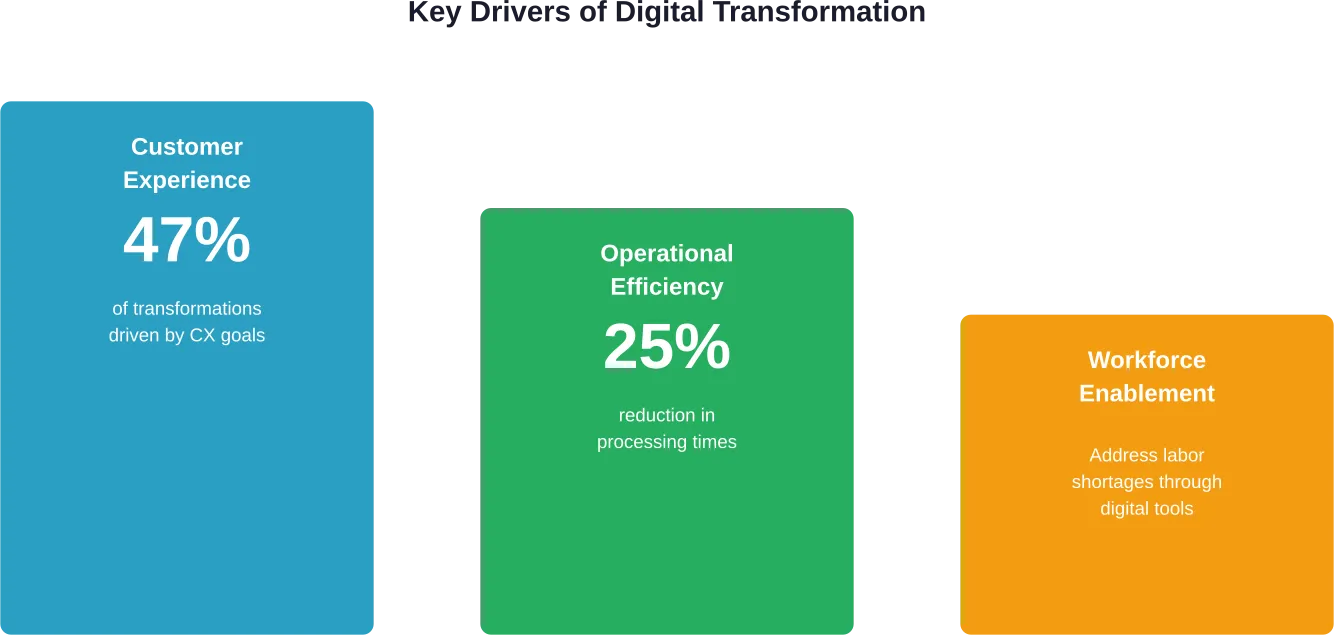
Research indicates that enhancing customer satisfaction is the key driving factor for nearly half of all digital transformations. Organizations recognize that better customer experiences directly correlate with retention, referrals, and revenue growth.
But wait. There’s a compelling operational case too.
According to a 2023 report by the U.S. Government Accountability Office, automation and digital tools have led to a 25% reduction in processing times for administrative tasks across federal agencies. This reduction stems from deploying advanced workflow management systems and robotic process automation.
That’s not marginal improvement—it’s a fundamental shift in operational capacity. Organizations can process more requests with the same headcount, redirect resources to higher-value activities, and respond faster to urgent needs.
The skilled labor shortage adds urgency. With fewer experienced technicians and service professionals available, organizations must enable their existing workforce to accomplish more. Digital tools like remote diagnostics, augmented reality guidance, and AI-assisted troubleshooting help less-experienced workers perform at higher levels.
Enhance Service Delivery through Digital Transformation
Optimized service delivery relies on systems that track, manage, and automate operations. A-listware provides engineering teams to design and maintain reliable platforms.
Key support areas:
- service scheduling and dispatch systems
- customer portals and support tools
- workflow automation
- performance monitoring
Teams can join your existing operations or handle full system implementation. Transform your service delivery with A-listware now.
Core Capabilities That Define Modern Service Delivery
Not all digital capabilities deliver equal value. Organizations that successfully transform focus on specific areas where technology creates measurable impact.
Intelligent Scheduling and Dispatch
Manual scheduling wastes hours daily. Intelligent systems analyze technician skills, location, availability, and job requirements to optimize assignments automatically.
Advanced platforms factor in traffic patterns, parts availability, and service history. The result? Fewer missed appointments, reduced travel time, and higher first-time fix rates.
Mobile-First Service Execution
Paper work orders belong in museums, not service vehicles. Mobile applications give technicians instant access to customer history, equipment documentation, and troubleshooting guides while on-site.
These tools enable real-time updates, digital signatures, photo documentation, and inventory tracking. Technicians spend less time on administrative tasks and more time actually solving customer problems.
Data-Driven Decision Making
Every service interaction generates data. Forward-thinking organizations capture and analyze this information to identify patterns, predict failures, and optimize operations.
Predictive analytics can flag equipment likely to fail within the next 30 days, enabling proactive service that prevents costly emergencies. Performance dashboards reveal which technicians need additional training and which service processes create bottlenecks.
Seamless Customer Communication
Customers want visibility. Automated notifications keep them informed about appointment times, technician arrival, service completion, and next steps.
Self-service portals let customers schedule appointments, track service status, and access documentation without phone calls or emails. This reduces call center volume while improving customer satisfaction.
Integrated Systems and Workflows
Siloed systems create friction. Modern service delivery platforms integrate with CRM, ERP, inventory management, and billing systems to create seamless end-to-end workflows.
When a service call is completed, the system automatically updates inventory, generates invoices, and triggers follow-up communications. No manual handoffs, no data re-entry, no gaps where requests fall through cracks.
| Capability | Primary Benefit | Implementation Complexity |
|---|---|---|
| Intelligent Scheduling | 30-40% improvement in technician utilization | Medium |
| Mobile Service Apps | 50% reduction in paperwork time | Low to Medium |
| Predictive Analytics | 20-25% decrease in emergency calls | High |
| Customer Self-Service | 40% reduction in call center volume | Medium |
| System Integration | Eliminates duplicate data entry | High |
Digital Transformation in Public Sector Service Delivery
Government agencies face unique challenges. Legacy systems, regulatory requirements, and diverse user populations complicate transformation efforts.
Yet the imperative is clear. For millions, access to digital services is critical—from unemployment support to student loan applications to housing assistance. The public expects government services to match the convenience they experience with commercial providers.
NIST (National Institute of Standards and Technology) has been addressing how organizations can support digital transformation while maintaining legacy components.
Federal agencies are making progress. The 21st Century Integrated Digital Experience Act and its implementing guidance in OMB M-23-22 require agencies to enact best practices for website standards, accessibility, and user experience.
The impact shows in the data. That 25% reduction in processing times across federal agencies doesn’t just represent efficiency—it means faster access to critical services for citizens who depend on them.
Security remains paramount. NIST Special Publication 800-63-4 provides comprehensive guidelines for digital identity proofing, authentication, and federation in government systems. These standards ensure that digital transformation doesn’t compromise security or privacy.
Practical Steps for Successful Implementation
Theory is great. Execution is everything.
Organizations that successfully transform service delivery follow a structured approach that balances ambition with pragmatism.
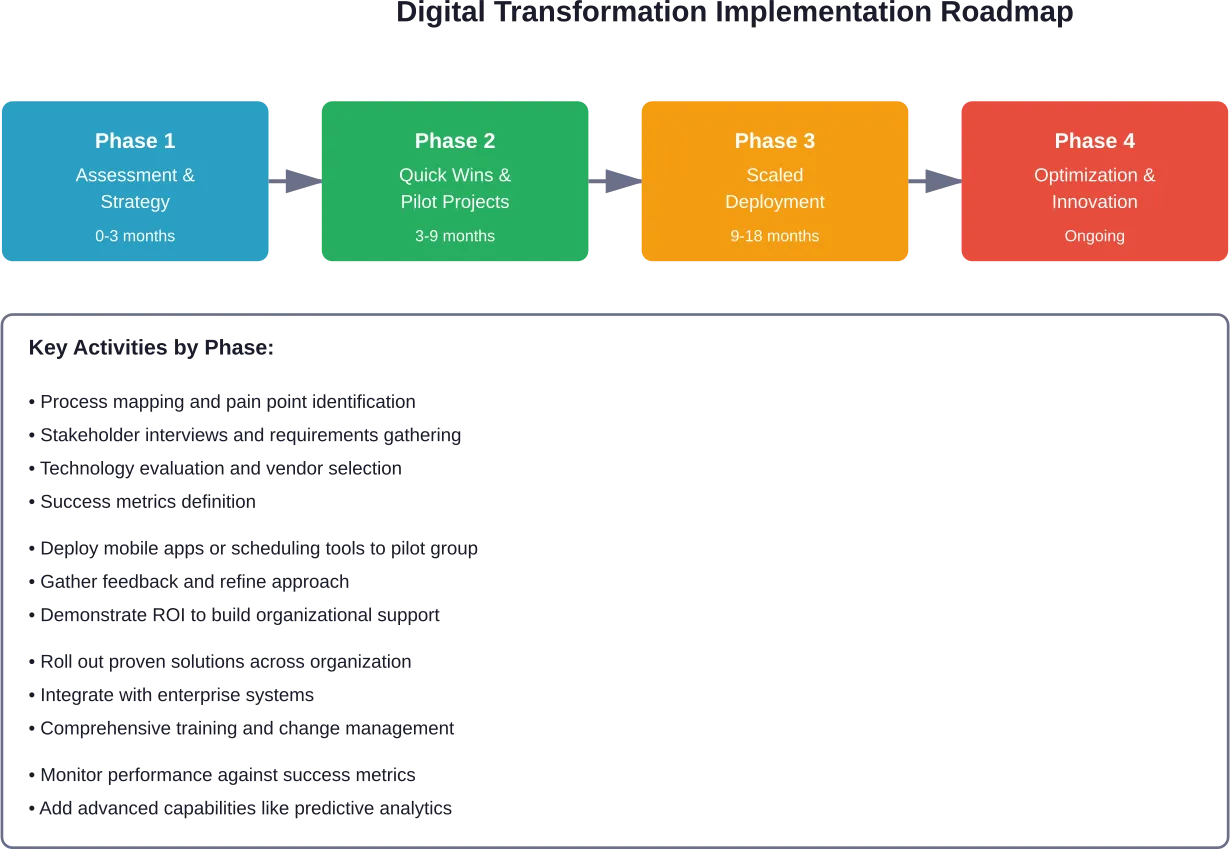
Start with Strategic Assessment
Before selecting technologies, understand current state challenges. Map existing service workflows, identify pain points, and quantify their business impact.
Survey customers and frontline service teams. Their insights reveal which problems actually matter versus which ones just seem important from an executive perspective.
Define Clear Success Metrics
Vague goals produce vague results. Establish specific, measurable objectives: reduce average service time by 20%, increase first-time fix rate to 85%, achieve 90% customer satisfaction scores.
These metrics provide focus during implementation and create accountability afterward. If the technology doesn’t move these numbers, it’s not delivering value.
Prioritize Based on Impact and Feasibility
Not every capability needs to launch simultaneously. Identify quick wins that demonstrate value and build momentum.
Mobile service apps typically offer high impact with moderate implementation complexity. Start there, prove the concept, then expand to more complex capabilities like predictive analytics.
Invest in Change Management
Technology is the easy part. People are the challenge.
Frontline workers resist new systems that seem to complicate their jobs. Address this through early involvement, comprehensive training, and clear communication about benefits.
Demonstrate how new tools make their work easier, not harder. Show technicians how mobile apps eliminate redundant data entry. Explain how better scheduling reduces their windshield time.
Plan for Integration from Day One
Standalone systems create new silos. Ensure that service delivery platforms integrate with existing business systems.
This might require API development, middleware platforms, or data synchronization tools. The investment pays dividends by creating seamless workflows that span departments.
Measure, Learn, Iterate
Transformation is a journey, not a destination. Continuously monitor performance metrics, gather user feedback, and refine processes.
What works in one service context might not work in another. Be prepared to adapt approaches based on real-world results rather than theoretical best practices.
Common Pitfalls to Avoid
Most transformation failures follow predictable patterns. Recognize these traps early.
- Technology-First Thinking: Selecting platforms before understanding requirements leads to expensive mismatches. Define what success looks like, then find technology that enables it.
- Ignoring Legacy System Constraints: Many organizations underestimate the complexity of integrating new digital platforms with existing systems. According to NIST guidance, organizations should carefully plan integration of legacy components with digital transformation initiatives, considering data formats, security protocols, and system interfaces.
- Underestimating Change Management: The best technology fails if people won’t use it. Budget adequate resources for training, communication, and addressing resistance.
- Lack of Executive Sponsorship: Transformation crosses departmental boundaries and disrupts established workflows. Without strong executive backing, initiatives stall when they encounter organizational resistance.
- No Clear Ownership: Transformation efforts led by committees or task forces without clear accountability tend to drift. Assign a single leader with authority and resources to drive the initiative.
Real-World Impact Across Industries
Digital transformation reshapes service delivery in diverse contexts.
Field service organizations deploy predictive maintenance algorithms that analyze equipment sensor data to forecast failures before they occur. This shifts service from reactive to proactive, reducing emergency calls while improving customer uptime.
Financial institutions use digital platforms to streamline customer onboarding, reducing account opening times from days to minutes. Mobile apps give customers instant access to account information and services that previously required branch visits.
Healthcare providers implement telehealth platforms that extend care access to rural populations. Digital appointment scheduling, electronic health records, and remote monitoring capabilities fundamentally change how medical services are delivered.
The service industry overall benefits from technologies that enhance customer interactions—from chatbots handling routine inquiries to AI systems that personalize service recommendations based on customer history.
The Role of Standards and Best Practices
Successful transformation builds on proven frameworks rather than reinventing approaches.
Federal website standards established under the 21st Century Integrated Digital Experience Act provide a solid foundation for public sector digital services. These standards address accessibility, mobile responsiveness, security, and user experience.
NIST guidelines for digital identity management ensure that authentication systems balance security with usability. Organizations implementing customer portals or mobile apps should reference NIST SP 800-63-4 for current best practices in identity proofing and authentication.
Industry-specific frameworks also exist. Field service organizations can reference best practices from professional associations, while healthcare providers must align digital initiatives with HIPAA requirements and medical privacy regulations.
The key is adapting these frameworks to specific organizational contexts rather than applying them rigidly. Standards provide guardrails, not straitjackets.
Future Directions in Service Delivery Transformation
Emerging technologies continue reshaping what’s possible.
Artificial intelligence and machine learning enable increasingly sophisticated automation. Systems can now route service requests, diagnose problems, and even resolve common issues without human intervention.
Augmented reality tools guide less-experienced technicians through complex repairs by overlaying step-by-step instructions on real-world equipment views. This democratizes expertise and reduces dependence on scarce specialized knowledge.
Internet of Things (IoT) sensors embedded in equipment provide continuous performance monitoring. This data feeds predictive analytics systems that optimize maintenance schedules and parts inventory.
Blockchain technology shows promise for service verification and warranty management, creating tamper-proof records of service history.
The organizations that thrive won’t necessarily adopt every emerging technology. They’ll thoughtfully evaluate which innovations address real business needs and integrate them strategically into existing service delivery frameworks.
Frequently Asked Questions
- What is the biggest benefit of digital transformation for service delivery?
The most significant benefit is dramatically improved operational efficiency. Federal agencies have seen 25% reductions in processing times through automation and digital workflow tools. Field service organizations report 30-40% improvements in technician utilization through intelligent scheduling. These efficiency gains translate directly to cost savings and capacity to serve more customers with existing resources.
- How long does digital transformation typically take?
There’s no single timeline—it depends on organizational size, existing technology infrastructure, and transformation scope. Quick wins from pilot projects can deliver results in 3-6 months. Comprehensive transformation across an enterprise typically requires 18-36 months for full deployment. Organizations should plan for phased implementation rather than attempting everything simultaneously.
- What technologies are most important for service delivery transformation?
Mobile applications for field service execution, intelligent scheduling and dispatch systems, customer self-service portals, and data analytics platforms consistently deliver high value. The specific technology stack depends on service context—field service organizations prioritize different tools than government agencies processing benefits applications. Focus on technologies that address documented pain points rather than chasing trends.
- How do organizations handle resistance to digital transformation?
Change management is critical. Successful organizations involve frontline workers early in the process, clearly communicate benefits, provide comprehensive training, and demonstrate quick wins that prove value. Addressing resistance requires understanding its sources—fear of job loss, concerns about learning new systems, or skepticism about whether leadership will support the change long-term.
- Can small organizations benefit from digital transformation?
Absolutely. Cloud-based platforms make enterprise-grade capabilities accessible at small business prices. Small field service companies can deploy mobile apps and scheduling tools without major IT infrastructure investments. The key is starting with focused initiatives that address specific pain points rather than attempting comprehensive transformation all at once.
- What metrics should organizations track to measure transformation success?
Track metrics directly tied to business objectives: customer satisfaction scores, service completion times, first-time fix rates, technician utilization, operational costs per service interaction, and customer retention rates. For government agencies, processing times and citizen satisfaction are primary indicators. Establish baseline measurements before transformation begins so improvement can be quantified.
- How do security and privacy concerns affect digital transformation?
Security must be designed in from the start, not bolted on afterward. Organizations handling sensitive customer data should reference frameworks like NIST SP 800-63-4 for digital identity management. Ensure compliance with applicable regulations—HIPAA for healthcare, GDPR for European customer data, or federal security standards for government systems. Security shouldn’t block transformation, but it requires deliberate planning and appropriate controls.
Moving Forward with Digital Transformation
Digital transformation for service delivery isn’t optional anymore. Organizations that delay face growing gaps between customer expectations and service reality.
The good news? Proven approaches exist. Start with clear assessment of current challenges, define specific success metrics, prioritize high-impact capabilities, and implement in phases that deliver quick wins while building toward comprehensive transformation.
Technology enables transformation, but people execute it. Invest in change management, training, and communication with the same rigor applied to platform selection.
The organizations succeeding today didn’t wait for perfect conditions. They started with focused initiatives, learned from early results, and systematically expanded what worked. That same approach remains available to any organization ready to transform how it delivers services.
Now is the time to begin. Assess current service delivery challenges, identify technology gaps, and map a realistic transformation roadmap. The 25% efficiency gains and dramatically improved customer satisfaction are achievable—for organizations willing to commit to the journey.


