Quick Summary: Digital transformation for security integrates cybersecurity measures throughout organizational modernization efforts, protecting data, systems, and operations as businesses adopt cloud infrastructure, AI technologies, and digital-first processes. According to NIST and CISA frameworks, secure transformation requires zero-trust architectures, continuous monitoring, and risk-based approaches that treat security as a foundational pillar rather than an afterthought.
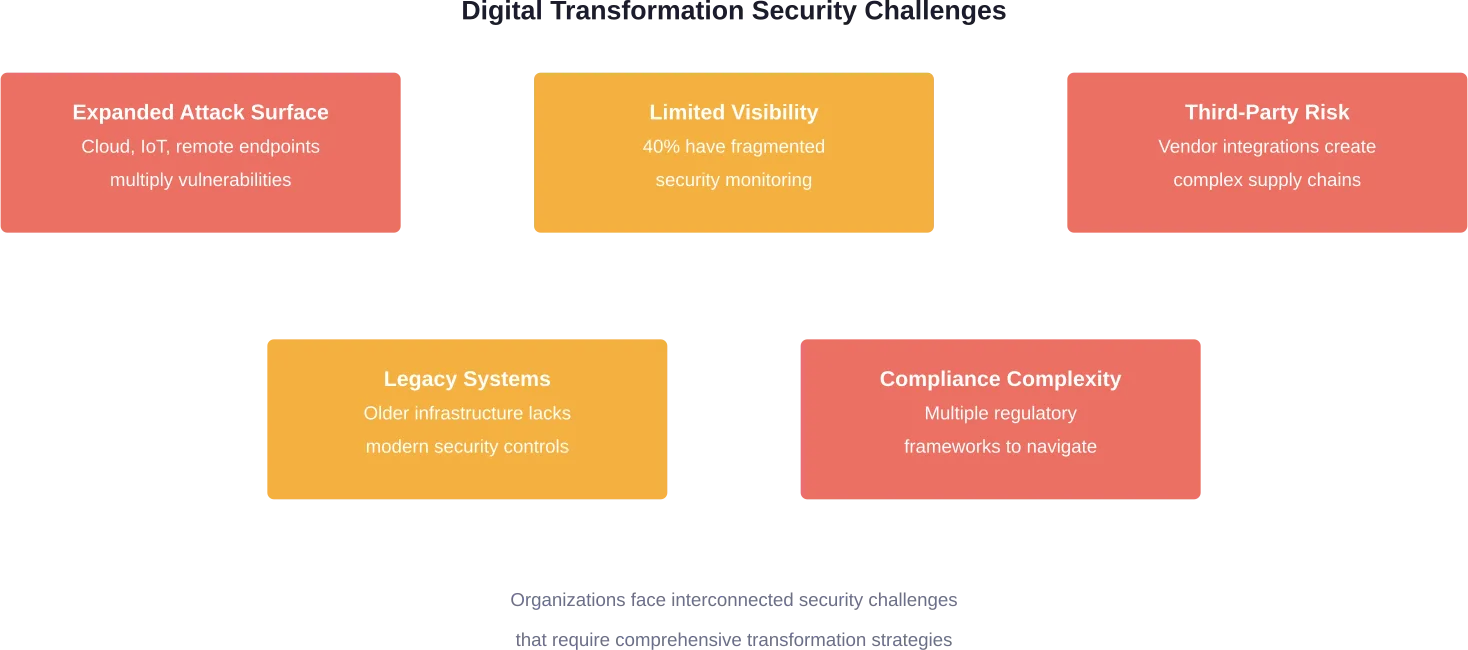
Organizations worldwide are accelerating their digital transformation initiatives. But here’s the thing—while companies rush to adopt cloud services, artificial intelligence, and IoT technologies, they’re simultaneously expanding their attack surfaces.
The question isn’t whether to transform digitally anymore. It’s how to do it securely.
According to the SANS State of ICS/OT Security 2025 Report, only 14 percent of organizations felt fully prepared for emerging cyber threats in their operational environments. That’s a troubling statistic when you consider that more than one in five organizations (21.5%) reported experiencing a cybersecurity incident over the past year, and four in 10 of those events caused operational disruption.
Security can’t be bolted on afterward. It needs to be woven into the transformation fabric from day one.
What Is Digital Transformation for Security?
Digital transformation for security represents the strategic integration of cybersecurity principles, technologies, and practices into every phase of organizational modernization. It’s not about adding firewalls to cloud infrastructure—it’s about fundamentally rethinking how security operates in digitally native environments.
Traditional security models assumed a defined network perimeter. Employees worked inside the office, applications lived in data centers, and security teams could draw clear boundaries around what needed protection.
Those days are gone.
Modern organizations operate across hybrid cloud environments, support remote workforces, and integrate third-party services constantly. According to CISA’s Zero Trust Maturity Model, the goal is to prevent unauthorized access to data and services by enforcing accurate, least-privilege per-request access decisions—even when viewing the network as already compromised.
Secure digital transformation leverages technologies like cloud computing, mobility, and machine learning to drive agility while securing every connection point. Organizations must modernize both their business operations and their security posture simultaneously.
Improve Security with Digital Transformation
Security transformation only works when systems are properly built and maintained. A-listware provides dedicated engineering teams to help implement secure architectures and support them long term.
With experience in enterprise technologies and cloud platforms, the team supports:
- modernization of legacy systems
- implementation of secure cloud environments
- integration of monitoring and access control
- maintenance and scaling of security-critical infrastructure
Depending on project needs, the team can integrate into existing workflows or take ownership of specific system components. Contact A-listware to discuss your security transformation and get the right engineering support.
Why Cybersecurity Is Central to Digital Transformation
Data has become extraordinarily valuable. Not just to companies and customers, but to cybercriminals looking to profit. A 2020 Ponemon Institute survey revealed that over 80 percent of participants believe their organizations’ data has become more valuable over time.
As value increases, so does risk.
Digital transformation creates new vulnerabilities. Cloud migration exposes data to different threat vectors. IoT devices multiply endpoints that need monitoring. Remote work eliminates the traditional network perimeter. Artificial intelligence introduces new attack surfaces and amplifies existing threats.
The rapid expansion of AI, smart technologies, and cloud-first infrastructure has pushed global digital transformation into a new phase. What was once optional has become essential for survival.
According to ISO standards on information security, organizations must treat data protection as a cornerstone of value creation in an era defined by digital interconnection. This invaluable resource faces constant threats from increasingly sophisticated and global cybercriminals.
The Changing Threat Landscape
Threat actors aren’t standing still. They’re evolving their techniques alongside legitimate technological advances.
The SANS Institute’s analysis of emerging attack techniques at RSAC 2025 highlighted threats that blend technical sophistication, operational disruption, and legal uncertainty. Defenders must prepare for adversaries who exploit the same digital transformation technologies organizations are implementing.
Only 13 percent of respondents reported full visibility across the ICS cyber kill chain, while more than 40 percent described their visibility as partial and fragmented, with major gaps.
Without comprehensive visibility, threat intelligence can’t be applied effectively. Organizations might know about risks theoretically but lack the operational context to act on that knowledge.
Implementing Zero Trust Architecture
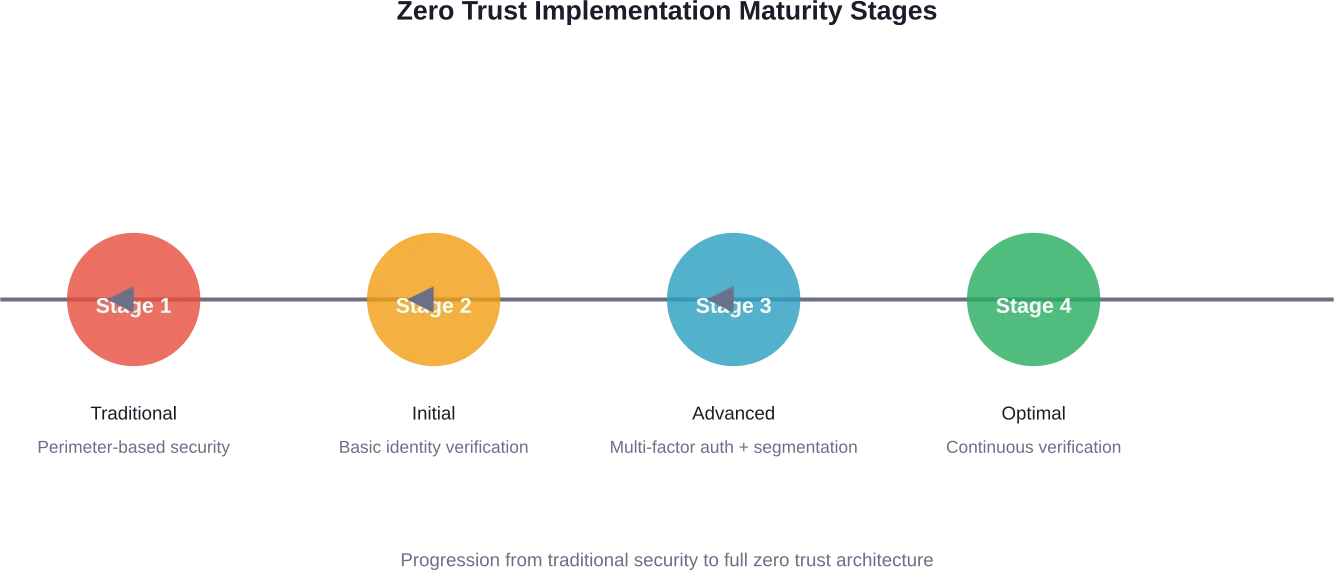
Zero trust has emerged as the foundational security model for digital transformation. The concept is straightforward: never trust, always verify.
CISA’s Zero Trust Maturity Model provides a collection of concepts designed to minimize uncertainty in enforcing accurate, least-privilege access decisions. The approach assumes the network is already compromised and requires verification for every access request, regardless of where it originates.
This matters because traditional perimeter-based security models break down in cloud and hybrid environments. When applications live in multiple clouds, data flows across various services, and employees work from anywhere, there’s no single perimeter to defend.
Zero trust architecture addresses this by implementing several key principles:
- Verify explicitly using all available data points for authentication
- Apply least-privilege access to limit user permissions to only what’s necessary
- Assume breach and minimize blast radius through segmentation
- Inspect and log all traffic for continuous monitoring
- Use encryption everywhere data moves or rests
The NIST Cybersecurity Framework complements zero trust by helping organizations better understand and improve their management of cybersecurity risk through a structured approach to identifying, protecting, detecting, responding to, and recovering from threats.
Building Security Into Cloud Transformation
Cloud adoption is accelerating. With 5G networks offering speeds up to 10 Gbps, employees can access applications and data faster over mobile networks than through traditional office connections.
But cloud transformation introduces unique security considerations. Shared responsibility models mean organizations must understand which security controls they own versus what cloud providers manage. Misconfigurations remain one of the most common causes of cloud security incidents.
Secure cloud transformation requires:
- Identity and access management systems that work across hybrid environments
- Data classification and protection policies that follow information wherever it moves
- Security monitoring that provides visibility into cloud workloads and services
- Compliance automation to maintain regulatory requirements across platforms
- Incident response plans adapted for cloud-native architectures
Organizations must also consider how different cloud service models—IaaS, PaaS, SaaS—affect their security responsibilities. The more the provider manages, the less direct control security teams have over underlying infrastructure.
| Security Component | Traditional Infrastructure | Cloud Environment |
|---|---|---|
| Physical Security | Organization manages | Provider manages |
| Network Controls | Full control | Shared responsibility |
| Identity Management | On-premises directory | Cloud-native IAM |
| Data Encryption | Organization implements | Organization configures |
| Compliance Monitoring | Manual audits | Automated compliance tools |
| Incident Response | Direct access to systems | API-driven investigation |
Managing Security in AI-Driven Transformation
Artificial intelligence is reshaping both business operations and cybersecurity. Organizations are embedding AI into products, services, and internal processes at unprecedented rates.
This creates a paradox. AI enhances security capabilities through improved threat detection, automated response, and behavioral analysis. Simultaneously, it introduces new vulnerabilities and amplifies existing risks.
Adversaries are using AI to craft more convincing phishing campaigns, automate vulnerability discovery, and evade traditional security controls. The sophistication gap is narrowing as AI tools become commoditized and accessible to threat actors with limited technical expertise.
According to recent analysis, high reliance on third parties in AI-driven transformation compounds these risks. Organizations often integrate AI services from vendors without fully understanding the security implications of those dependencies.
Security Considerations for AI Integration
Organizations implementing AI technologies must address several security dimensions:
- Model security to prevent adversarial attacks that manipulate AI behavior
- Data privacy protections for the training data and inference inputs
- Supply chain security for AI frameworks, libraries, and pre-trained models
- Bias and fairness monitoring to prevent discriminatory outcomes
- Explainability requirements for compliance and accountability
The rapid pace of AI advancement means security practices are still maturing. Many experts suggest treating AI systems with additional scrutiny during security reviews and threat modeling exercises.
Bridging the Gap Between Security and Business Leadership
One persistent challenge in secure digital transformation is the disconnect between security teams and business leadership. Executives focus on innovation speed, competitive advantage, and customer experience. Security professionals emphasize risk mitigation, compliance, and threat prevention.
These priorities aren’t inherently opposed, but they’re often communicated in incompatible languages.
Security needs to frame discussions in business terms. Rather than talking about vulnerability counts and patch cycles, effective security leaders translate technical risks into business impacts: revenue loss from downtime, reputation damage from breaches, regulatory penalties from non-compliance.
Four approaches help bridge this gap:
- Quantify risk in financial terms that resonate with executive decision-making
- Align security initiatives with business objectives and transformation goals
- Demonstrate security as an enabler of innovation rather than a blocker
- Establish security key performance indicators that business leaders understand
Organizations that successfully integrate security into digital transformation treat it as a strategic business function, not a technical afterthought. Security leaders participate in transformation planning from the beginning, ensuring protection is architected into new systems rather than retrofitted later.
Building Continuous Monitoring and Response Capabilities
Static security controls can’t keep pace with dynamic digital environments. Organizations need continuous monitoring that adapts to changing infrastructure, emerging threats, and evolving business requirements.
According to the SANS State of ICS/OT Security 2025 Report, visibility gaps represent a critical weakness. Without comprehensive monitoring across all systems—including cloud workloads, on-premises infrastructure, IoT devices, and operational technology—security teams operate partially blind.
Effective continuous monitoring requires:
- Centralized logging that aggregates data from all systems and services
- Automated threat detection using behavioral analytics and machine learning
- Real-time alerting with intelligent prioritization to reduce noise
- Integrated response workflows that accelerate investigation and remediation
- Metrics and dashboards that provide visibility into security posture
The goal isn’t just detecting threats faster. It’s building organizational resilience—the ability to withstand attacks, minimize impact, and recover quickly when incidents occur.
| Security Capability | Reactive Approach | Proactive Approach |
|---|---|---|
| Threat Detection | Signature-based scanning | Behavioral analytics + threat intelligence |
| Incident Response | Manual investigation | Automated playbooks + orchestration |
| Vulnerability Management | Periodic scanning | Continuous assessment + prioritization |
| Security Testing | Annual penetration tests | Continuous validation + red teaming |
| Compliance Monitoring | Point-in-time audits | Continuous compliance verification |
Addressing Third-Party and Supply Chain Security
Modern organizations rarely operate in isolation. They integrate services from cloud providers, SaaS vendors, API partners, and technology suppliers. Each integration point represents a potential security weakness.
Supply chain attacks have become increasingly sophisticated. Adversaries target less-secure vendors as entry points to more-protected organizations. Once inside a trusted partner’s environment, attackers can pivot to their ultimate targets.
Managing third-party risk requires:
- Vendor security assessments before integration approval
- Continuous monitoring of third-party security posture
- Contractual security requirements with clear responsibilities
- Incident response coordination across organizational boundaries
- Segmentation to limit third-party access to only necessary systems
Organizations must also consider the security implications of open-source dependencies, particularly in AI and machine learning implementations where pre-trained models and frameworks come from external sources.
Practical Steps for Secure Digital Transformation
So where should organizations start? Digital transformation security can feel overwhelming, but breaking it into manageable steps makes progress achievable.
Begin with assessment. Understand current security posture, identify transformation initiatives underway or planned, and map where security gaps might emerge. Use frameworks like NIST or ISO standards to structure the evaluation.
Prioritize based on risk. Not all security improvements deliver equal value. Focus first on protecting critical assets, addressing high-probability threats, and closing gaps that would cause the most business damage if exploited.
Integrate security into transformation planning. Security teams should participate in architecture reviews, vendor selections, and implementation decisions from the beginning. Retrofitting security after deployment costs more and works less effectively.
Invest in visibility and monitoring. Organizations can’t protect what they can’t see. Comprehensive visibility across hybrid environments enables faster threat detection and more effective response.
Build security awareness across the organization. Technical controls only go so far. Employees need to understand their role in maintaining security, especially as phishing and social engineering attacks grow more sophisticated.
Test continuously. Regular security testing—including vulnerability assessments, penetration testing, and red team exercises—validates that controls work as intended and identifies weaknesses before attackers do.
Frequently Asked Questions
- What is digital transformation for security?
Digital transformation for security is the strategic integration of cybersecurity principles, technologies, and practices throughout organizational modernization initiatives. It involves protecting data, systems, and operations as businesses adopt cloud infrastructure, AI technologies, IoT devices, and digital-first processes using frameworks like zero trust architecture and continuous monitoring.
- Why is security important in digital transformation?
Security is critical because digital transformation expands attack surfaces, introduces new vulnerabilities, and increases the value and accessibility of organizational data. Without security integration, transformation initiatives create risks that can lead to data breaches, operational disruptions, compliance violations, and financial losses. According to SANS research, more than one in five organizations (21.5%) reported experiencing a cybersecurity incident that caused operational disruption in 2025.
- What is zero trust architecture?
Zero trust architecture is a security model that assumes networks are already compromised and requires verification for every access request regardless of origin. Based on CISA’s Zero Trust Maturity Model, it enforces least-privilege access, verifies explicitly using all available data, segments networks to minimize breach impact, and continuously monitors all activity rather than relying on perimeter defenses.
- How does cloud transformation affect security?
Cloud transformation shifts security responsibilities through shared responsibility models where providers manage physical infrastructure while organizations configure and secure their applications, data, and access controls. It requires new approaches to identity management, data protection, compliance monitoring, and incident response adapted for distributed, API-driven environments where traditional perimeter controls don’t apply.
- What security challenges does AI introduce?
AI introduces several security challenges including adversarial attacks that manipulate model behavior, privacy risks from training data and inference inputs, supply chain vulnerabilities in frameworks and pre-trained models, and the democratization of sophisticated attack techniques. Organizations must also address bias monitoring, explainability requirements, and the security implications of high reliance on third-party AI services.
- How can security teams work better with business leaders?
Security teams can improve collaboration by translating technical risks into business impacts, quantifying security issues in financial terms, aligning security initiatives with transformation goals, and demonstrating how protection enables innovation rather than blocking it. Effective communication focuses on business outcomes like revenue protection, reputation preservation, and competitive advantage rather than technical metrics.
- What should organizations prioritize in secure transformation?
Organizations should prioritize comprehensive visibility and monitoring across hybrid environments, zero trust architecture implementation, integration of security into transformation planning from the beginning, risk-based prioritization that protects critical assets first, continuous security testing and validation, and building security awareness across all employees who interact with digital systems and data.
Moving Forward With Secure Transformation
Digital transformation isn’t optional anymore. Organizations that fail to modernize risk losing competitive relevance as customer expectations, market conditions, and technological capabilities evolve.
But transformation without security is a recipe for disaster. The same technologies that enable business innovation also create opportunities for adversaries. Cloud adoption, AI integration, IoT deployment, and remote work all expand the attack surface that security teams must defend.
The good news? Security doesn’t have to slow transformation. When properly integrated from the beginning, security enables faster, more confident innovation by reducing risks and building stakeholder trust.
Organizations that treat security as a foundational transformation component—not an afterthought—position themselves to capture digital opportunities while protecting the assets, data, and operations that make their business viable. Frameworks from NIST, CISA, and ISO provide proven structures for building secure transformation programs.
The question isn’t whether to transform securely. It’s how quickly organizations can evolve their security posture to match the pace of their digital ambitions.
Start by assessing current capabilities, identifying transformation priorities, and building security partnerships between technical teams and business leadership. The path to secure digital transformation begins with that first integrated step.


