Quick Summary: Digital transformation in real estate involves integrating advanced technologies like AI, IoT, and proptech platforms to modernize property operations, enhance tenant experiences, and improve decision-making. As of 2026, the global proptech market is projected to reach $44.59 billion, with AI-driven workflows and data analytics leading the change. Real estate organizations embracing digital transformation gain competitive advantages through operational efficiency, sustainability, and responsive property management.
What Digital Transformation Means for Real Estate
The real estate industry has historically lagged behind other sectors in technology adoption. That’s changing fast.
Digital transformation in real estate represents the fundamental shift from traditional, paper-based processes to integrated technology ecosystems. This involves adopting digital tools across the entire property lifecycle—from acquisition and development to operations and tenant engagement.
According to MIT Executive Education research, Business Fortune Insights projects the global proptech market to grow from $44.59 billion in 2026 to $104.57 billion by 2034. This explosive growth reflects the urgency organizations feel to modernize operations as tenants, investors, and regulators increasingly demand sustainability and real-time insight.
But here’s the thing: digital transformation isn’t just about buying software. McKinsey research from March 2026 emphasizes that 2026 will be the year leaders redesign end-to-end workflows to drive true performance and competitive advantage. Agentic AI—artificial intelligence that can take actions and make decisions autonomously—is moving real estate beyond pilot projects into actual operating impact.
The Current State of Digitalization
Real talk: the industry still has considerable catching up to do.
MIT Sloan research found that only 58% of real estate companies have a digital strategy in place. A digitalization study by ZIA and EY Real Estate that surveyed 220 employees from real estate-related companies, paints a more nuanced picture than the typical narrative of complete technological stagnation.
Some segments are advancing faster than others. According to the National Association of REALTORS® 2025 Technology Survey, eSignature (79%) remains the most widely used technology, followed by social media (75%). The top tech tools producing the highest number of quality leads in the last 12 months were social media, CRM systems, and local MLS platforms.
Commercial real estate faces different challenges. JLL research from October 2025 reveals that despite low maturity in AI adoption, the speed of AI-related change is unprecedented. Organizations are selecting AI pilots based on business impact rather than low-hanging fruit—a strategic shift that signals serious commitment.
Upgrade Your Real Estate Platforms With Dedicated Technical Talent
Implementing digital tools for property management, automated valuations, or virtual viewings requires specific technical expertise that is often difficult to source through traditional hiring. For real estate firms and developers, the bottleneck is usually finding and retaining developers who can integrate these platforms with existing CRM and listing databases. A-Listware solves this by providing dedicated development teams and IT staff augmentation, allowing you to build and scale your digital ecosystem without the overhead of a large internal HR department.
- Vetted Technical Talent: Access developers experienced in cloud architecture, mobile apps, and data-driven platforms.
- Reduced Operational Costs: Eliminate the high expenses of local recruitment, employee benefits, and office space.
- Rapid Team Scaling: Expand your technical capacity quickly for specific project launches or platform upgrades.
- Direct Collaboration: Dedicated specialists work as an extension of your business to maintain and update your software.
Start your digital transformation with A-Listware.
Key Technologies Driving Transformation
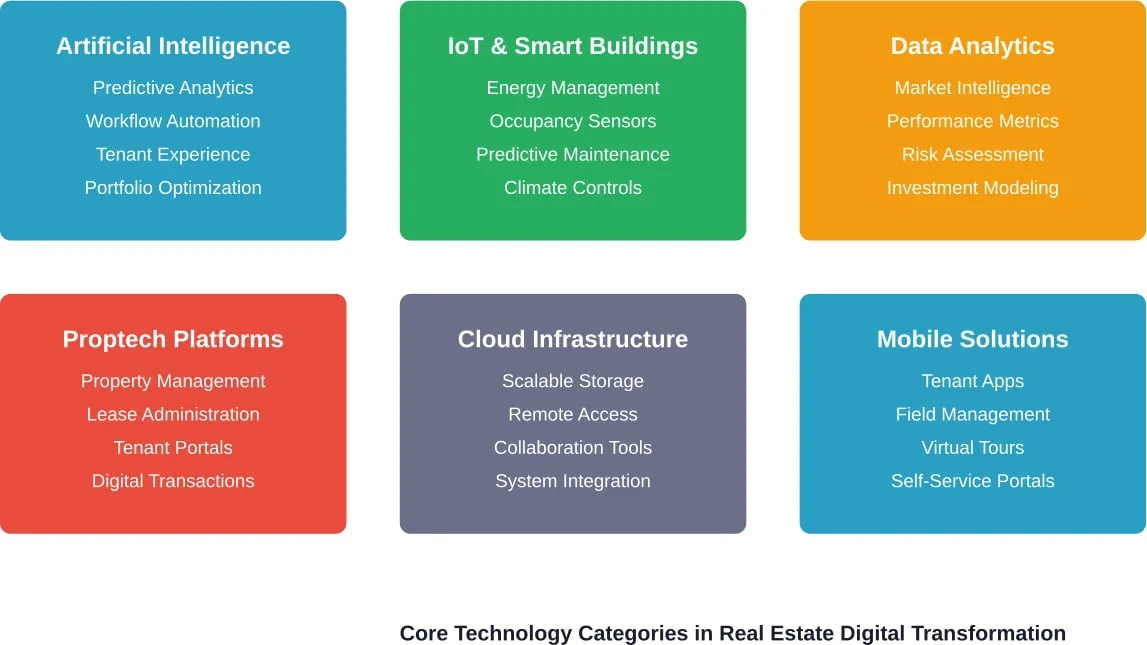
Several technology categories are reshaping the real estate landscape. Understanding these tools helps organizations prioritize investments.
Artificial Intelligence and Machine Learning
AI represents the most transformative technology entering real estate in 2026.
McKinsey’s March 2026 analysis highlights that agentic AI—systems capable of autonomous action and decision-making—is moving the industry beyond experimental phases. These systems redesign workflows from the ground up rather than simply automating existing processes.
According to JLL’s Global Real Estate Technology Survey from October 2025, real estate investors are fast-tracking AI implementation after seeing wider societal transformation. Technology now provides a competitive edge in the current economic climate.
Practical AI applications in real estate include predictive maintenance, automated property valuations, tenant sentiment analysis, lease abstraction, portfolio optimization, and investment risk modeling. The technology greatly reduces the cost and time it takes to deploy models, enabling brokerage firms, title companies, lenders, and operators to experiment at unprecedented pace.
Data Analytics Challenges
Here’s where it gets tricky. AI needs data—and real estate data is often a mess.
According to Deloitte research cited in competitor content, only 14% of respondents believe their companies have well-structured data collection and management processes in place with robust privacy policies. This creates a fundamental barrier to AI adoption.
Existing technology maturity gaps widen with AI rather than close through leapfrogging. Organizations that neglected foundational digital infrastructure now face compounded challenges when implementing advanced analytics.
Benefits Driving Adoption
Despite implementation challenges, the benefits of digital transformation are compelling enough to drive continued investment.
Enhanced Tenant Experience
Modern tenants expect technology-enabled conveniences. Period.
According to cited research, 72% of tenants care about tech perks when choosing a property. Mobile apps and self-service portals offering instant access allow tenants to control their environment with a tap or swipe.
The World Economic Forum’s Taskforce on Digital Transformation identifies tenant experience as a primary value driver for commercial real estate technology adoption. With widespread hybrid work adoption creating uncertainty about office futures, understanding and responding to occupant preferences becomes essential.
Operational Efficiency Gains
Digital tools dramatically reduce manual workload and operational costs.
Automated lease administration, digital document management, IoT-enabled predictive maintenance, and integrated property management systems free staff from repetitive tasks. This allows teams to focus on strategic activities that drive value rather than administrative overhead.
BCG research from March 2026 emphasizes that real estate value now concentrates around properties functioning as part of broader ecosystems—locations delivering experiences, identity, and interaction rather than just space. Achieving this requires operational sophistication that only digital systems can provide.
Data-Driven Decision Making
Real estate has historically relied heavily on intuition and local knowledge. Digital transformation enables evidence-based decisions.
Advanced analytics provide real-time market intelligence, portfolio performance metrics, risk assessment capabilities, and investment modeling. This reduces uncertainty in capital allocation decisions and improves returns.
| Benefit Category | Impact Area | Key Metrics |
|---|---|---|
| Tenant Experience | Satisfaction & Retention | 72% of tenants prioritize tech amenities |
| Operational Efficiency | Cost Reduction | Automated workflows reduce manual tasks |
| Data Analytics | Investment Performance | Evidence-based capital allocation |
| Sustainability | ESG Compliance | Real-time energy monitoring and reporting |
| Risk Management | Portfolio Protection | Predictive modeling for market changes |
Implementation Challenges
Understanding obstacles helps organizations plan realistic transformation roadmaps.
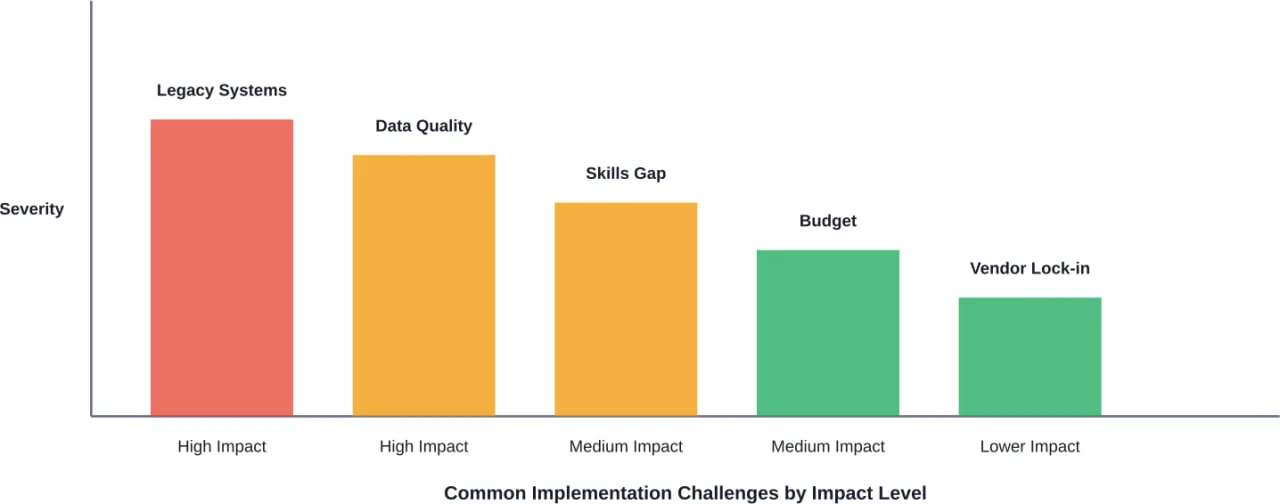
Legacy Systems and Integration
Most real estate organizations operate patchwork technology environments built incrementally over decades.
Integrating new digital platforms with legacy systems presents significant technical challenges. Data often lives in incompatible formats across disconnected databases. Migration risks include data loss, workflow disruption, and user resistance.
Data Quality and Management
Poor data infrastructure undermines digital initiatives before they start.
As noted earlier, only 14% of real estate companies have robust data management processes. Incomplete property records, inconsistent data standards, privacy compliance gaps, and siloed information repositories create barriers to effective analytics and AI implementation.
Change Management and Skills Gaps
Technology implementation fails more often due to people issues than technical problems.
Real estate professionals may lack digital literacy or resist workflow changes. Organizations struggle to recruit and retain technology talent in a competitive labor market. Training existing staff requires time and investment that many firms underestimate.
MIT Sloan research notes that only 58% of real estate companies have a digital strategy in place—suggesting that strategic planning gaps compound implementation challenges.
Strategic Implementation Approach
Successful digital transformation requires methodical planning rather than technology-first thinking.
Start with Business Objectives
Technology serves business goals—not the other way around.
Organizations should identify specific performance gaps or opportunities before selecting tools. Common objectives include reducing operational costs by a target percentage, improving tenant retention rates, accelerating lease cycles, enhancing sustainability metrics, or expanding portfolio visibility.
JLL’s October 2025 research found that AI pilot selection is now driven by business impact rather than low-hanging fruit. This strategic approach increases the likelihood of generating meaningful ROI.
Assess Current State
Understanding existing capabilities prevents redundant investment and identifies critical gaps.
Conduct thorough audits of current technology infrastructure, data quality and accessibility, staff digital skills, process documentation, and integration points between systems. This baseline assessment informs realistic transformation timelines and budgets.
Prioritize High-Impact Use Cases
Attempting comprehensive transformation simultaneously often fails. Focused initiatives build momentum.
Select 2-3 use cases that align with strategic priorities and offer measurable benefits. Implement these as pilots, gather results, refine approaches, and then scale. This iterative methodology reduces risk and demonstrates value to stakeholders.
Invest in Data Infrastructure
Advanced capabilities require solid foundations.
Before implementing AI or advanced analytics, establish data governance frameworks, standardize data collection processes, implement master data management, ensure privacy compliance, and build integration capabilities. Organizations that skip this foundational work face repeated implementation failures.
The 2026 Landscape and Future Outlook
Real estate is at an inflection point. Several trends will shape the next phase of digital transformation.
Agentic AI Becomes Operational
As McKinsey noted in March 2026, this year marks the transition from AI experimentation to operational deployment.
Agentic AI systems that autonomously execute workflows, make decisions within defined parameters, and continuously optimize processes will move from pilot projects to production environments. This shift will separate industry leaders from laggards.
Ecosystems Over Assets
BCG’s March 2026 research highlights a fundamental shift in value creation.
In both office and residential markets, value concentrates around properties functioning as parts of broader ecosystems. Properties must deliver experiences, identity, and interaction—not just space. This requires buildings to function as platforms that are adaptable, resilient, and continuously optimized.
Digital infrastructure enables this transformation by connecting properties to services, amenities, and community features that create differentiated value.
Sustainability Integration
ESG requirements increasingly drive technology adoption.
Investors and regulators demand real-time sustainability reporting. IoT sensors, energy management systems, and analytics platforms provide the measurement and control capabilities needed for compliance and performance improvement.
Proptech Market Growth
The projected growth from $44.59 billion in 2026 to $104.57 billion by 2034 signals sustained investment in real estate technology.
This capital influx will accelerate innovation, expand solution availability, and drive competitive pressure to adopt digital capabilities. Organizations that delay transformation risk falling irreversibly behind.
Frequently Asked Questions
- What is digital transformation in real estate?
Digital transformation in real estate refers to the comprehensive integration of digital technologies across all aspects of property operations, from acquisition and development to management and tenant engagement. This involves adopting tools like AI, IoT, data analytics, proptech platforms, and cloud infrastructure to modernize workflows, enhance decision-making, and improve experiences for tenants, investors, and operators.
- Why has real estate been slow to adopt digital technology?
The real estate industry has historically been slower than other sectors to embrace digital technology due to several factors: reliance on relationship-based transactions, fragmented ownership structures, long asset lifecycles that reduce urgency for change, significant legacy system investments, and conservative organizational cultures. However, changing tenant expectations, competitive pressure, and regulatory requirements are accelerating adoption.
- What is proptech and how does it relate to digital transformation?
Proptech—short for property technology—refers to the suite of digital tools, platforms, and innovations specifically designed for real estate applications. This includes property management software, tenant experience apps, virtual tour technology, digital transaction platforms, and analytics tools. Proptech represents the practical implementation layer of digital transformation, providing the specific solutions that modernize real estate operations.
- How much does digital transformation cost for real estate companies?
Digital transformation costs vary widely based on organization size, current technology maturity, and transformation scope. Investments range from tens of thousands of dollars for small firms implementing basic cloud platforms and property management systems to millions for large commercial real estate organizations deploying enterprise AI, IoT infrastructure, and integrated data ecosystems. Costs should be evaluated against operational savings and revenue improvements rather than as standalone expenditures.
- What are the most important technologies for real estate companies to adopt first?
Priority technologies depend on specific business objectives, but foundational investments typically include cloud-based property management systems for operational efficiency, CRM platforms for relationship management, data governance frameworks for analytics readiness, mobile solutions for tenant engagement, and IoT sensors for building performance monitoring. Organizations should prioritize technologies that address their most significant performance gaps or strategic opportunities rather than chasing trends.
- How can real estate companies measure ROI from digital transformation?
ROI measurement should align with the specific objectives driving transformation initiatives. Common metrics include operational cost reduction percentages, tenant retention rate improvements, lease cycle time decreases, portfolio performance variance reduction, energy consumption declines, staff productivity gains, and revenue per square foot increases. Establishing baseline measurements before implementation and tracking changes systematically provides evidence of transformation impact.
- What role does AI play in real estate digital transformation?
According to McKinsey research from March 2026, AI—particularly agentic AI capable of autonomous decision-making—is moving real estate beyond pilot projects into operational impact. AI applications include predictive maintenance that reduces equipment failures, automated property valuations for faster transactions, tenant sentiment analysis for retention improvement, portfolio optimization for capital allocation, and risk modeling for investment decisions. AI represents the leading edge of real estate transformation in 2026.
Moving Forward with Digital Transformation
The commercial and residential real estate sectors stand at a crossroads.
Organizations that embrace digital transformation strategically—focusing on business outcomes, building solid data foundations, and implementing technologies systematically—will capture competitive advantages in operational efficiency, tenant satisfaction, investment performance, and sustainability compliance.
Those that delay face widening gaps as technology-enabled competitors capture market share and talent. The projected growth of the proptech market from $44.59 billion in 2026 to $104.57 billion by 2034 signals that transformation momentum will only accelerate.
The question is no longer whether to pursue digital transformation. The question is how quickly organizations can build the capabilities needed to compete in an increasingly technology-driven industry.
Start with clarity about business objectives. Invest in foundational data infrastructure. Select high-impact pilot projects. Measure results rigorously. Scale what works. The organizations that follow this disciplined approach will define the future of real estate.


