Quick Summary: Digital transformation for mobile workforces involves leveraging mobile technologies, apps, and connected devices to enhance productivity, streamline operations, and engage distributed teams. Organizations are implementing mobile-first strategies to empower frontline workers, optimize field service management, and drive innovation across industries. Success requires understanding the unique needs of mobile employees while addressing challenges like connectivity, security, and technology adoption.
The workplace has fundamentally changed. According to the International Data Corporation (IDC), the U.S. mobile worker population reached 93.5 million in 2024, and by 2026, mobile-first operational roles are projected to expand as 90% of G2000 organizations integrate GenAI and automation into frontline workflows. That’s not a trend—that’s a complete restructuring of how business gets done.
Mobile devices have evolved from simple communication tools into essential drivers of productivity, collaboration, and innovation. But here’s the thing: rolling out smartphones and tablets isn’t digital transformation. Real transformation happens when organizations rethink their entire operational model around the needs of distributed teams.
And the stakes are high. IEEE research shows that at the most basic level, digital transformation involves using digital technologies to change a business process to become more efficient or effective. The idea is to use technology not to replicate an existing service in a digital format, but to fundamentally reimagine how work happens.
Understanding the Modern Mobile Workforce
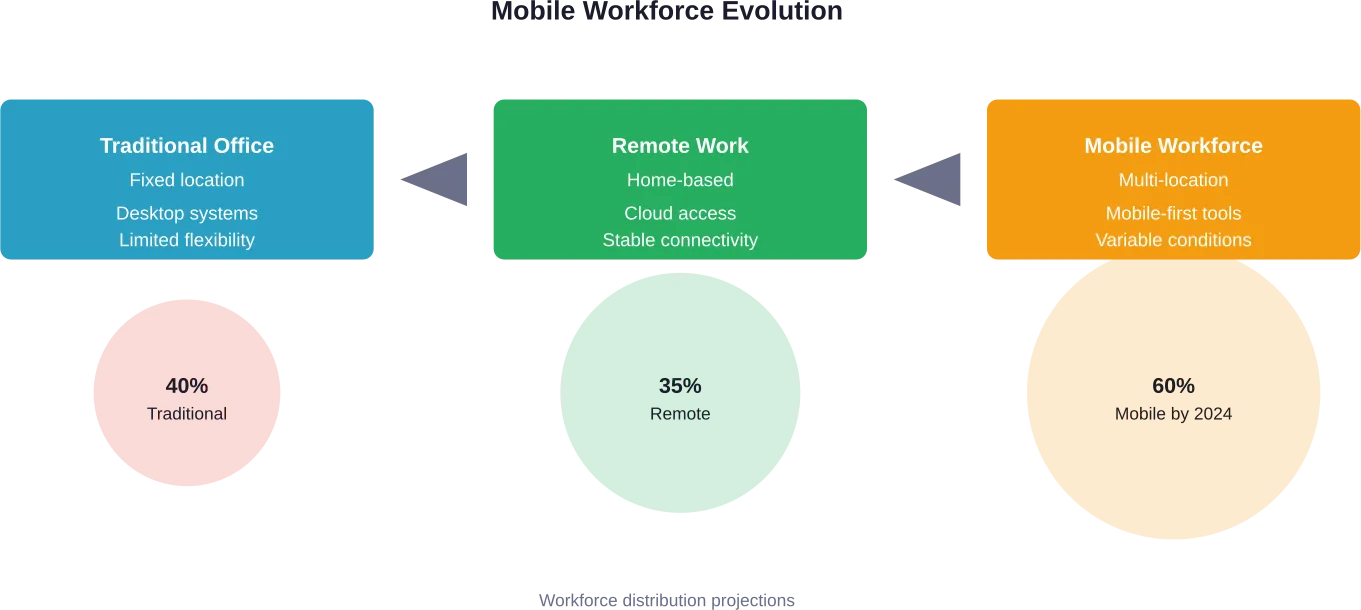
A mobile workforce includes employees who work outside traditional office environments—field technicians, sales representatives, healthcare workers, delivery drivers, and remote knowledge workers. These aren’t just people checking email on their phones. They’re professionals who rely on mobile technology to execute core business functions.
The distinction matters. While remote workers might operate from home offices with full desktop setups, mobile workers need solutions that function seamlessly across locations, often with variable connectivity and environmental challenges.
Research from Pew Research Center shows that nearly one-in-ten American adults have earned money from digital work platforms in the last year. This represents just one facet of the broader mobile workforce ecosystem that’s reshaping how organizations operate.
Why Mobile Technologies Drive Transformation
Mobile devices have become vital components of workplace operations, driving digital transformation and innovation across various industries. They’re no longer seen as mere tools of convenience—they’ve evolved into essential business infrastructure.
The numbers tell the story. It’s estimated that an overwhelming 70% of businesses that have been successful with digital transformations have done so by leveraging mobile solutions. That’s because mobile technology addresses real operational challenges: real-time communication, instant data access, location-based services, and on-demand workflows.
Productivity and Operational Efficiency
Mobile technologies eliminate bottlenecks that have plagued distributed teams for decades. Field technicians can access equipment manuals, update work orders, and capture customer signatures without returning to the office. Sales teams can check inventory, process orders, and respond to customer inquiries from anywhere.
Consider the results achieved by Baxi, a field service organization that implemented advanced mobile scheduling solutions. By optimizing routes and managing resources more effectively through mobile platforms, Baxi achieved a 15% reduction in travel costs and a 10% increase in customer satisfaction.
Enhanced Communication and Collaboration
Mobile platforms break down silos that naturally form when teams work across different locations. Video conferencing, instant messaging, and collaborative document editing happen seamlessly on mobile devices, keeping distributed teams aligned.
But it’s not just about having the tools. It’s about building workflows that accommodate how mobile workers actually operate—often in short bursts between customer visits or during brief connectivity windows.
Digital Transformation for Mobile Workforces
Agencies with mobile teams need systems that keep employees connected, productive, and secure. A-listware helps implement scalable mobile solutions and ensures ongoing support.
Support includes:
- mobile apps for field operations
- cloud-based collaboration tools
- real-time data access and reporting
- secure communications and monitoring
The team can integrate into your current workflow or manage full mobile platform projects. Start your mobile workforce transformation with A-listware today.
Key Components of Mobile Workforce Transformation
Successful digital transformation for mobile workforces requires more than deploying apps. It demands a comprehensive approach that addresses technology, processes, and organizational culture.
| Component | Purpose | Impact on Mobile Workers |
|---|---|---|
| Enterprise Mobile Apps | Streamline specific workflows | Task completion without desktop access |
| Cloud Infrastructure | Enable data access anywhere | Real-time information synchronization |
| Collaboration Platforms | Connect distributed teams | Reduced isolation and improved coordination |
| Analytics and Insights | Optimize operations | Data-driven decision making in the field |
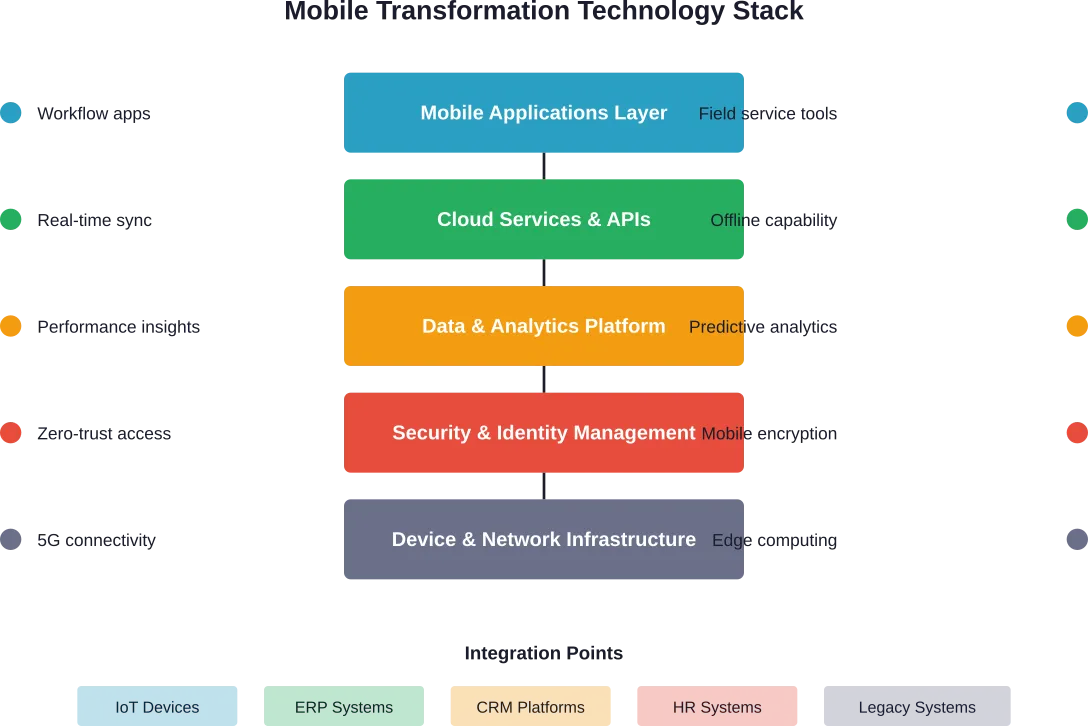
| Security Solutions | Protect data and devices | Safe access to sensitive information |
Mobile-First Application Development
Generic software adapted for mobile use doesn’t cut it anymore. Mobile-first development means designing applications specifically for the constraints and advantages of mobile devices—touch interfaces, smaller screens, offline functionality, and location services.
Products like guided digital workflow platforms support and guide workers through complex processes on mobile devices. These solutions don’t just replicate desktop experiences—they reimagine workflows for mobile execution.
Connectivity and Infrastructure
Here’s where things get complicated. Pew Research Center data shows that Americans with higher household incomes are more likely to have multiple devices that enable them to go online. Roughly six-in-ten adults living in households earning $100,000 or more annually have home broadband services, a smartphone, a desktop or laptop computer, and a tablet.
But mobile workers operate in variable conditions. Organizations need solutions that function both online and offline, syncing data when connectivity becomes available. This isn’t optional—it’s fundamental to supporting workers in remote locations, underground facilities, or areas with poor coverage.
Emerging Trends Shaping Mobile Workforce Transformation
The mobile workforce landscape continues to evolve rapidly. Understanding where things are headed helps organizations stay ahead rather than constantly playing catch-up.
Artificial Intelligence and Automation
AI integration in mobile applications goes beyond chatbots. Think predictive maintenance alerts sent to technicians’ devices before equipment fails, or route optimization that adapts in real-time to traffic and priority changes.
Automation handles routine tasks that previously consumed mobile workers’ time—data entry, report generation, scheduling confirmations. This shifts focus to higher-value activities that require human judgment and expertise.
Internet of Things Integration
Mobile devices increasingly serve as control centers for IoT ecosystems. Technicians monitor sensor data, adjust equipment settings, and diagnose issues through mobile interfaces connected to industrial IoT networks.
The convergence creates new possibilities for preventive maintenance, real-time monitoring, and rapid response to operational anomalies.
The Digital Divide Challenge
Not everyone starts from the same place. Pew Research Center findings reveal that some digital divides persist between rural, urban, and suburban America. Rural adults are less likely than suburban adults to have home broadband and less likely than urban adults to own a smartphone, tablet computer, or traditional computer.
This matters for organizations with geographically dispersed workforces. Transformation strategies must account for varying levels of technology access and digital literacy across different worker populations.
Implementation Challenges and Solutions
Theory and practice often diverge. Organizations face real obstacles when implementing mobile workforce transformation initiatives.
Security and Compliance Concerns
Mobile devices accessing corporate systems from countless locations create security challenges that didn’t exist in office-bound environments. Data breaches, lost devices, and unsecured networks represent genuine risks.
Solutions involve multi-layered approaches: device management platforms, zero-trust network access, containerization of corporate data, and comprehensive security policies. The goal isn’t to eliminate risk—that’s impossible—but to manage it to acceptable levels.
Technology Adoption and Change Management
Even the best mobile solutions fail if workers don’t adopt them. Resistance comes from multiple sources: unfamiliarity with technology, concerns about job security, or simple preference for established workflows.
Successful implementations prioritize user experience and provide adequate training. Mobile solutions are less likely to cause friction in adoption when they leverage familiar consumer technology patterns that workers already understand.
| Challenge | Common Causes | Effective Approaches |
|---|---|---|
| Low Adoption Rates | Poor UX, inadequate training | User-centered design, hands-on training |
| Security Breaches | Weak policies, unmanaged devices | MDM platforms, regular audits |
| Integration Failures | Legacy system incompatibility | API-first architecture, middleware |
| Cost Overruns | Scope creep, poor planning | Phased rollouts, clear milestones |
| Performance Issues | Network limitations, poor optimization | Offline modes, progressive loading |
Measuring Success and ROI
How do organizations know if transformation efforts are working? Generic productivity metrics often miss the nuances of mobile work.
Better approaches track specific indicators: time from dispatch to job completion, first-time fix rates, customer satisfaction scores, and data accuracy improvements. These metrics connect directly to business outcomes rather than just technology utilization.
Industry-Specific Applications
Mobile workforce transformation plays out differently across sectors, each with unique requirements and constraints.
Field Service Management
Field technicians benefit enormously from mobile transformation. Real-time scheduling adjustments, instant access to service histories, digital work order management, and integrated parts ordering transform service delivery.
Organizations leverage insights and analytics from mobile workforce solutions to optimize routes, predict maintenance needs, and improve resource allocation—all while keeping mobile teams productive and connected regardless of location.
Healthcare and Life Sciences
Healthcare workers need secure mobile access to patient records, medication databases, and imaging systems. Compliance with regulations adds complexity, but mobile solutions enable better care coordination and faster clinical decision-making.
Retail and Hospitality
Mobile point-of-sale systems, inventory management apps, and customer engagement tools empower frontline workers to deliver superior customer experiences. Real-time inventory visibility prevents stockouts and enables seamless omnichannel experiences.
Best Practices for Mobile Workforce Transformation
Certain approaches consistently yield better outcomes when implementing mobile workforce strategies.
Start with clear objectives. Organization leaders need to look at why they are undertaking digital transformation initiatives, not just what technologies they’ll deploy. Understanding the business problems being solved keeps projects focused and measurable.
Prioritize user experience. Workers won’t use tools that make their jobs harder, no matter how sophisticated the underlying technology. Involve actual mobile workers in design and testing processes.
Build for integration. Mobile solutions rarely exist in isolation. They need to connect with enterprise resource planning systems, customer relationship management platforms, and other business applications. API-first architectures enable these connections without creating maintenance nightmares.
Plan for offline scenarios. Connectivity isn’t guaranteed for mobile workers. Applications must function when network access drops, syncing data when connections return.
Invest in training and support. Technology is only part of the equation. Workers need confidence using new tools and ready access to help when issues arise.
The Future of Mobile Workforce Transformation
Looking ahead, several developments will shape how organizations approach mobile workforce strategies.
5G networks will enable capabilities that weren’t practical with previous connectivity standards—high-quality video streaming, augmented reality applications, and massive IoT deployments that enhance mobile worker capabilities.
58% of adults say the internet has been essential during the pandemic, according to Pew Research Center, with that importance growing over time. This heightened dependence on digital connectivity will drive continued investment in mobile infrastructure and applications.
Augmented and virtual reality applications will move beyond novelty to practical business tools. Technicians will receive visual overlays with repair instructions. Training will happen through immersive simulations accessible on mobile devices.
Edge computing will reduce latency for mobile applications by processing data closer to where it’s generated. This enables real-time analytics and decision support that current cloud-centric architectures struggle to deliver.
Frequently Asked Questions
- What’s the difference between remote work and mobile workforce transformation?
Remote work typically involves employees working from fixed locations outside the office, often using similar tools to office workers. Mobile workforce transformation focuses on employees who work across multiple locations, often in the field, requiring specialized mobile-first solutions that function in variable conditions with intermittent connectivity.
- How long does mobile workforce transformation typically take?
Implementation timelines vary based on organization size, complexity, and scope. Phased approaches often show initial results within 3-6 months, with full transformation taking 18-36 months. Organizations that rush implementation without adequate planning and change management typically face higher failure rates.
- What industries benefit most from mobile workforce solutions?
Field service, healthcare, retail, hospitality, transportation, construction, and utilities see particularly strong benefits. However, any organization with employees working outside traditional office environments can gain advantages from mobile workforce transformation.
- How do organizations address security concerns with mobile devices?
Comprehensive mobile security involves multiple layers: mobile device management platforms, application containerization, zero-trust network architectures, regular security audits, and clear usage policies. Encryption for data at rest and in transit is essential, along with remote wipe capabilities for lost or stolen devices.
- What’s the typical ROI for mobile workforce transformation?
ROI varies significantly by industry and implementation scope. Organizations commonly see 15-25% improvements in productivity, 10-20% reductions in operational costs, and measurable increases in customer satisfaction. The most successful implementations tie mobile transformation directly to specific business outcomes rather than just technology deployment.
- Can small businesses implement mobile workforce solutions effectively?
Absolutely. Cloud-based mobile solutions have dramatically reduced entry costs, making sophisticated capabilities accessible to organizations of all sizes. Many platforms offer scalable pricing models that grow with the business. The key is starting with clear objectives and choosing solutions that match actual business needs rather than pursuing unnecessary complexity.
- How does AI fit into mobile workforce transformation?
AI enhances mobile solutions through predictive maintenance, intelligent routing, automated scheduling, natural language interfaces, and real-time decision support. Rather than replacing mobile workers, AI typically augments their capabilities by handling routine analysis and providing actionable insights that improve field performance.
Conclusion
Digital transformation for mobile workforces represents more than technology adoption—it’s a fundamental rethinking of how distributed teams operate, communicate, and deliver value. With nearly 60% of the workforce operating in mobile roles by 2024, organizations that successfully implement mobile-first strategies gain significant competitive advantages.
The evidence is clear. Organizations leveraging mobile solutions achieve measurable improvements in productivity, cost efficiency, and customer satisfaction. But success requires more than deploying apps and devices. It demands careful planning, user-centered design, robust security, and ongoing commitment to supporting mobile workers.
The future of work is mobile. The question isn’t whether to embrace mobile workforce transformation, but how quickly organizations can implement it effectively. Those who treat mobile workers as an afterthought—trying to force desktop workflows onto mobile devices—will struggle. Those who reimagine processes around mobile capabilities will thrive.
Ready to transform your mobile workforce? Start by understanding the specific challenges your mobile workers face, identify technologies that address those needs, and build a roadmap that prioritizes user adoption and business outcomes over technical complexity.


