Короткий виклад: Digital transformation for travel means using modern technologies like AI, mobile apps, contactless payments, and data analytics to create seamless, personalized experiences for travelers. It’s reshaping how travel businesses operate, from booking to destination, while improving efficiency and customer satisfaction. According to Booking.com data cited in source material, 80% of travelers use mobile apps when researching trips.
The travel industry has shifted dramatically. What once meant standing in line at a travel agency now happens in seconds on a smartphone.
Digital transformation isn’t just about having a website anymore. It’s about creating integrated, intelligent experiences that meet travelers where they are—and where they’re going.
Modern travelers expect seamless journeys. They want personalized recommendations, instant booking confirmations, contactless check-ins, and real-time updates. The companies that deliver these experiences win. Those that don’t get left behind.
The numbers tell the story. UN Tourism reported that Morocco welcomed 17.4 million international tourists in 2024, a 20% increase over 2023, with digital infrastructure playing a major role in that growth. Globally, international arrivals increased by 140 million in 2024, representing an 11% jump over 2023.
What Digital Transformation Means for Travel
Digital transformation in travel goes beyond digitizing existing processes. It’s a fundamental rethinking of how travel businesses operate, engage customers, and create value.
At its core, this transformation involves integrating technology into every aspect of the travel experience. From the moment someone starts dreaming about a trip to when they share photos afterward, digital touchpoints shape the journey.
But here’s the thing—it’s not just customer-facing. Backend systems, data management, revenue optimization, and operational efficiency all get overhauled too.
The World Travel & Tourism Council (WTTC) and Trip.com Group research (released March 2025) highlighted AI-powered travel assistance as a pioneering innovation. These innovations span artificial intelligence, mobile platforms, payment systems, and traveler assistance tools.
Real talk: travel companies that treat digital transformation as an IT project will struggle. Those that see it as a business strategy succeed.
Чому цифрова трансформація важлива зараз
Traveler expectations have changed permanently. The digital native is now the dominant customer segment.
According to Booking.com data, 80% of travelers use mobile apps when researching trips, and 50% rely on them throughout their journey. These aren’t optional channels anymore—they’re primary touchpoints.
The IATA Global Passenger Survey found that over two-thirds of respondents prefer online visa applications before travel. Even more striking: nearly 91% of passengers expressed interest in trusted traveler programs that use technology to speed them through security faster.
Sound familiar? Travelers want speed, convenience, and personalization. They’ll choose brands that deliver these experiences over those that don’t.
The business case is compelling too. A WTTC report revealed that smarter border management using digital technologies could add $401 billion to the global economy and create 14 million new jobs across G20, EU, and African Union nations by 2035.
Australian airports demonstrate what’s possible. By June 2025, 79% of arrivals were eligible for SmartGate facial recognition technology, with three-quarters opting to use it. Processing times dropped significantly.
Ключові технології, що сприяють трансформації
Several technology categories are reshaping travel operations and experiences. Let’s break down the ones making the biggest impact.
Штучний інтелект і машинне навчання
AI has moved from experimental to essential. Travel companies use it for personalized recommendations, dynamic pricing, chatbot support, and predictive maintenance.
Airlines deploy machine learning models to optimize routes and fuel consumption. Hotels use AI and machine learning models to forecast demand and adjust staffing. Booking platforms leverage it to suggest destinations based on browsing behavior and past trips.
The WTTC and Trip.com Group research (released March 2025) highlighted AI-powered travel assistance as a pioneering innovation. These systems understand natural language, handle complex multi-step bookings, and learn from each interaction.
But AI isn’t perfect. It requires quality data, careful training, and human oversight. The best implementations augment human decision-making rather than replacing it entirely.
Mobile-First Platforms
Mobile apps have become the primary interface for travel planning and management. They consolidate everything travelers need in one place.
Trip.com Group emphasized Super Apps as a game-changing trend—single applications that handle flights, hotels, car rentals, activities, and customer service. Travelers no longer need to juggle multiple apps and accounts.
Mobile platforms enable features impossible with traditional channels: location-based recommendations, real-time flight updates, mobile check-in, digital boarding passes, and instant customer support.
For businesses, mobile apps provide rich behavioral data. Companies can see where users get stuck, which features get used, and what drives conversions.
Contactless and Biometric Technology
Contactless solutions accelerated dramatically during the pandemic and haven’t slowed down. Travelers value the speed and hygiene benefits.
Facial recognition technology at airports has become standard in advanced markets. It handles identity verification, boarding, and customs processing. The Australian SmartGate example shows adoption rates climbing fast.
Hotels now offer mobile key access—no physical cards needed. Restaurants use QR code menus and payment. Car rental companies enable app-based vehicle access.
According to Booking.com research, 72% of travelers in 2022 said traveling would be worth it in 2023, but they continued expecting digital, touchless experiences even as pandemic concerns faded.
Аналітика даних та бізнес-аналітика
Data has become the most valuable asset in travel. Companies collect information at every touchpoint, but the winners are those who actually use it effectively.
Advanced analytics enable revenue management systems that adjust prices based on variables including demand patterns, competitor pricing, weather forecasts, local events, booking window, and customer segment. Airlines have done this for decades, but hotels, car rental companies, and tour operators are catching up.
Predictive analytics help forecast trends, identify at-risk customers, and optimize inventory. A hotel can predict cancellation likelihood and proactively offer upgrades or incentives to improve retention.
The challenge isn’t collecting data—it’s integrating it across systems and turning it into actionable insights.
Fix What Slows Down Your Travel Operations
Digital transformation in travel is rarely about adding new booking features or apps. The real friction usually sits deeper – disconnected systems, manual processes, and data that doesn’t move cleanly between platforms. A-listware works with companies to analyze how their current setup actually runs, identify where operations break down, and redesign processes so everything from bookings to internal workflows runs more consistently.
They cover the full cycle –from assessing the current state and defining a transformation approach to implementation and ongoing support. That includes modernizing legacy systems, improving integrations, and making data easier to manage across teams. If your travel systems feel harder to manage than they should be, it’s a good moment to step back, review what’s actually happening behind the scenes, and talk to Програмне забезпечення списку А about where to start.
Practical Examples of Digital Transformation
Theory is one thing. Seeing how companies actually implement these technologies is another.
Mobile Booking and Management Apps
Airlines, hotels, and booking platforms have built comprehensive mobile experiences. Travelers can search, compare, book, modify, and cancel trips without ever touching a computer.
The best apps go further. They send proactive notifications about gate changes, baggage status, and local recommendations. They store documents securely. They enable instant customer service through in-app chat.
According to available data, 80% of travelers use mobile apps for trip research. That’s not a nice-to-have feature—it’s table stakes.
Dynamic Pricing and Revenue Management
Sophisticated algorithms adjust prices based on variables including demand patterns, competitor pricing, weather forecasts, local events, booking window, and customer segment.
What used to require teams of analysts happens automatically. The systems learn what works and refine their strategies over time.
Hotels that implement dynamic pricing can see significant revenue increases. Airlines have been doing this for years, but the technology has become accessible to smaller operators.
Chatbots and Virtual Assistants
AI-powered chatbots handle routine customer service inquiries 24/7. They answer questions about bookings, policies, amenities, and destinations without human intervention.
The key is knowing when to escalate to humans. The best implementations recognize complex or emotional situations and transfer smoothly to live agents.
Trip.com Group highlighted AI-powered travel assistance as a core innovation. These systems understand context, remember previous conversations, and can handle multi-step transactions.
Personalized Recommendations
Travel platforms use browsing history, past bookings, and demographic data to suggest relevant destinations, hotels, and activities.
The algorithms consider factors like travel dates, budget range, preferred amenities, and similar user behavior. Someone who books beach resorts in winter will see different recommendations than someone who prefers city hotels.
Done well, personalization feels helpful rather than creepy. It saves time and helps travelers discover options they might have missed.
Challenges in Implementing Digital Transformation
Digital transformation sounds great in theory. In practice, companies face significant obstacles.
Legacy Systems Integration
Many travel companies run on decades-old reservation and management systems. These platforms weren’t designed to integrate with modern APIs and cloud services.
Replacing them completely is expensive and risky. Integrating them with new technologies is complex and often requires custom middleware solutions.
The temptation is to build workarounds, but this creates technical debt that compounds over time.
Data Privacy and Security
Travel companies handle sensitive personal information: passport details, payment credentials, travel history, and location data.
Regulations like GDPR in Europe and various state laws in the US impose strict requirements on data collection, storage, and usage. Non-compliance carries heavy penalties.
Security breaches damage reputation and customer trust. Implementing robust security while maintaining smooth user experiences requires careful balance.
Організаційний опір
Technology isn’t the hardest part of digital transformation. People are.
Employees accustomed to existing processes resist change. Departments operate in silos and resist integration. Leadership may lack technical understanding or commitment.
WTTC and Deloitte jointly launched an initiative on the Future of Work in travel (announced September 19, 2019), recognizing that workforce transformation needs to accompany digital transformation.
Successful transformations require executive sponsorship, clear communication, training programs, and realistic timelines. Quick wins help build momentum.
Investment and ROI Uncertainty
Digital transformation requires significant upfront investment. Technology costs, consulting fees, training expenses, and productivity losses during transition add up quickly.
UN Tourism noted that understanding and measuring tourism investments remains challenging due to the sector’s multi-dimensional nature and dynamic capital flows, particularly toward Travel Tech startups.
The return on investment often takes years to materialize fully. That makes it hard to justify to boards and shareholders focused on quarterly results.
Investment Trends in Travel Technology
Despite challenges, investment in travel technology continues growing. Investors recognize the sector’s potential and long-term trajectory.
The fDi Tourism Investment Report 2024 (“Global greenfield investment trends in tourism”), released by the Financial Times in collaboration with UN Tourism, examined greenfield investment trends. The report showed that greenfield investments into tourism continue to rise, with growing interest in sustainability and innovation projects.
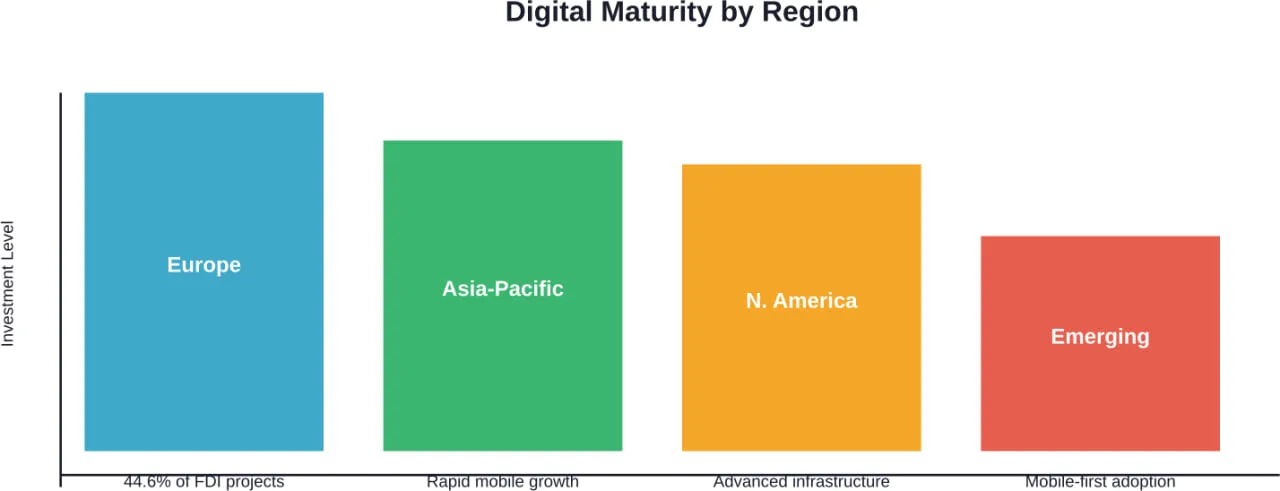
Europe led in tourism FDI projects between 2019 and 2023, attracting 867 projects and accounting for 44.6% of total global investment, according to the fDi Tourism Investment Report 2024. That leadership reflects both the region’s tourism importance and its advanced digital infrastructure.
Capital flows toward Travel Tech startups have grown despite economic uncertainties. UN Tourism noted that the tourism ecosystem’s multi-dimensional nature makes measuring these investments challenging, but the trend is clearly upward.
Areas attracting significant investment include:
- AI-powered booking and customer service platforms
- Mobile-first travel management solutions
- Payment technology and fraud prevention systems
- Sustainability tracking and carbon offset platforms
- Data analytics and business intelligence tools
- Biometric identification and security systems
Future Trends Shaping Travel Technology
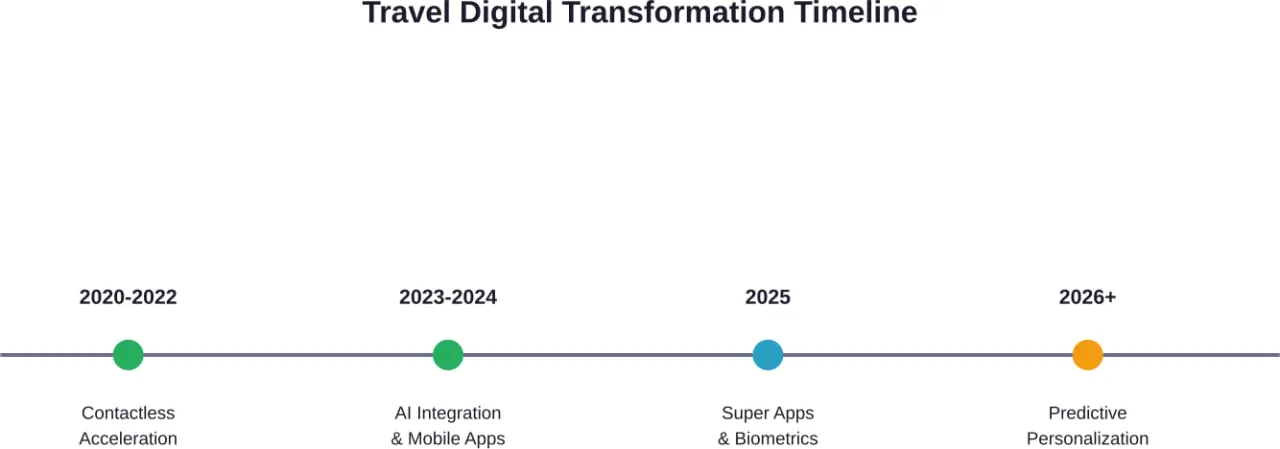
Looking ahead to 2026 and beyond, several trends will define the next phase of digital transformation in travel.
Predictive Personalization
AI systems will anticipate traveler needs before they articulate them. Based on context like weather, local events, past behavior, and current location, platforms will proactively suggest experiences and services.
This goes beyond basic recommendations. A system might notice flight delays and automatically rebook connections, reserve lounge access, and arrange ground transportation—all without being asked.
Seamless Multi-Modal Journeys
The boundaries between flights, trains, buses, rental cars, and ride-sharing will blur. Travelers will book complete door-to-door journeys through single platforms that optimize for time, cost, or sustainability.
Real-time adjustments will handle disruptions automatically. If a flight delays, the system will notify the hotel, adjust the rental car pickup time, and reschedule dinner reservations.
Інтеграція сталого розвитку
Environmental concerns are reshaping travel choices. Digital platforms will surface carbon footprint data at every decision point.
According to UN Tourism’s Roadmap for Recovery, the tourism sector accounts for a comparatively low share, accounting for 5% of CO2 emissions. The sector is committed to progressively reducing its carbon emissions and contributing to the transformation toward a green economy.
Booking systems will highlight lower-emission options. They’ll offer verified carbon offset programs. Analytics will help businesses measure and reduce their environmental impact.
Blockchain for Identity and Payments
Distributed ledger technology could solve persistent problems in travel: identity verification, loyalty program interoperability, and payment settlement across borders.
Travelers might store verified credentials in digital wallets that work across airlines, hotels, and countries. Smart contracts could automate refunds and compensation for service failures.
The technology is still maturing, but pilot projects show promise.
Voice and Ambient Interfaces
As voice recognition improves, verbal commands will handle more travel tasks. In hotel rooms, guests will control lighting, temperature, and entertainment by speaking. In cars, voice assistants will manage navigation and reservations.
Ambient computing—where technology fades into the background—will make travel experiences feel more natural and less transactional.
| Technology Trend | Current Status (2026) | Expected Impact | Adoption Timeline |
|---|---|---|---|
| AI Personalization | Widely deployed | High – drives bookings and satisfaction | Now |
| Mobile Super Apps | Growing adoption | High – consolidates user experience | 1-2 years |
| Biometric ID | Airport rollout | Medium – speeds processing | 2-3 years |
| Blockchain Identity | Pilot stage | Medium – improves security | 3-5 years |
| Predictive AI | Early deployment | High – anticipates needs | 2-4 years |
| Voice Interfaces | Limited use | Medium – convenience feature | 3-5 years |
How Travel Companies Can Succeed
Digital transformation isn’t a single project with a defined endpoint. It’s an ongoing process of adaptation and improvement.
Here’s what successful travel companies do differently:
Start with Customer Pain Points
Don’t implement technology because it’s trendy. Identify specific customer frustrations and solve them.
Long wait times? Add mobile check-in. Lack of personalization? Implement recommendation engines. Poor communication? Deploy automated notifications.
Technology should solve real problems, not create new ones.
Think in Platforms, Not Point Solutions
Avoid the temptation to add disconnected tools that solve individual problems. Build or adopt integrated platforms where data flows seamlessly.
When systems connect, the value multiplies. Customer service can see booking history. Marketing can track campaign effectiveness. Operations can predict demand.
Інвестуйте в інфраструктуру даних
Advanced analytics and AI require clean, organized data. Most companies discover their data is scattered across incompatible systems, formatted inconsistently, and filled with errors.
Cleaning and organizing data isn’t glamorous, but it’s essential. Companies that do this groundwork see much better results from their technology investments.
Prioritize Security and Privacy
Build security into systems from the start, not as an afterthought. Encrypt sensitive data. Implement strong authentication. Conduct regular security audits.
Be transparent about data collection and usage. Give travelers control over their information. Privacy-conscious practices build trust and ensure compliance.
Focus on Change Management
Technology transformation requires organizational transformation. Invest in training programs. Communicate the vision clearly. Celebrate early wins. Support employees through the transition.
The Deloitte and WTTC Future of Work initiative recognized that workforce development must accompany technological change. Companies need people who understand both travel operations and digital tools.
Regional Differences in Digital Adoption
Digital transformation isn’t happening uniformly worldwide. Regional differences in infrastructure, regulations, and consumer behavior shape adoption patterns.
Europe leads in investment but faces strict data privacy regulations. Asia-Pacific shows rapid mobile adoption but diverse market maturity. North America has advanced infrastructure but fragmented regulations. Emerging markets leapfrog desktop entirely, going straight to mobile-first solutions.
Travel companies operating globally need strategies that adapt to regional realities while maintaining consistent brand experiences.
Поширені запитання
- What is digital transformation in the travel industry?
Digital transformation in travel means integrating modern technologies like AI, mobile apps, data analytics, and contactless systems into every aspect of the travel experience. It’s about creating seamless, personalized journeys while improving operational efficiency and business outcomes.
- How much does digital transformation cost for travel companies?
Costs vary dramatically based on company size, existing systems, and transformation scope. Small operators might spend $50,000-$200,000 on focused improvements like mobile apps or booking system upgrades. Large enterprises can invest millions in comprehensive platform overhauls. The key is starting with high-ROI projects that fund subsequent phases.
- What are the biggest challenges in travel digital transformation?
The main obstacles include integrating or replacing legacy systems, ensuring data security and privacy compliance, overcoming organizational resistance to change, and justifying long-term ROI to stakeholders. Technical challenges are often easier to solve than human and organizational ones.
- How are travelers responding to digital innovations?
Travelers have embraced digital tools enthusiastically. According to Booking.com, 80% use mobile apps when researching trips. IATA found that nearly 91% of passengers want trusted traveler programs that use technology to speed security processing. The demand for digital, contactless experiences remains strong even after pandemic concerns have faded.
- What role does AI play in travel digital transformation?
AI powers personalized recommendations, dynamic pricing, chatbot customer service, predictive maintenance, and demand forecasting. It analyzes massive datasets to identify patterns humans would miss. The WTTC identified AI-powered travel assistance as one of 16 transformative technologies reshaping the industry.
- Is digital transformation only for large travel companies?
Not at all. Small and medium-sized operators can benefit significantly from digital tools. Cloud-based platforms make enterprise-grade technology accessible at affordable prices. Mobile apps, online booking systems, automated marketing, and data analytics are available to businesses of all sizes. Starting small with focused improvements often works better than attempting massive overhauls.
- How does digital transformation impact sustainability in travel?
Digital tools help track and reduce environmental impact. Booking platforms surface carbon footprint data. Analytics identify inefficiencies. Optimization algorithms reduce fuel consumption and waste. According to UN Tourism, the sector accounts for approximately 5% of CO2 emissions and is committed to progressively reducing that through technology and innovation.
Рухаємося вперед з цифровою трансформацією
Digital transformation in travel isn’t optional anymore. It’s the baseline for staying competitive.
Travelers expect seamless, personalized experiences across every touchpoint. They want speed, convenience, and transparency. Companies that deliver these experiences grow. Those that don’t lose market share.
The good news? The technology exists and is becoming more accessible. Cloud platforms, AI services, and mobile development tools have democratized capabilities once available only to tech giants.
The challenge is execution. Successful transformation requires clear strategy, executive commitment, customer focus, and patience. It’s a marathon, not a sprint.
Start with customer pain points. Implement solutions that deliver measurable value. Build on success. And remember—digital transformation is ongoing. The moment you think you’re done, you’re falling behind.
The travel industry has always been about connecting people to places and experiences. Digital technology makes those connections richer, easier, and more meaningful. Companies that embrace this reality will thrive in 2026 and beyond.


