Короткий виклад: Цифрова трансформація для агентств передбачає інтеграцію сучасних технологій, можливостей роботи з даними та культурних змін, щоб забезпечити кращі результати для клієнтів, залишаючись при цьому конкурентоспроможними. Успішна трансформація вимагає чіткої стратегії, інвестицій у правильні інструменти, безперервного навчання та готовності кидати виклик застарілим процесам. За даними Forbes, сім з десяти ініціатив з цифрової трансформації зазнають невдачі, що робить стратегічне планування та належне виконання критично важливими для агенцій, які прагнуть процвітати в цьому мінливому ландшафті.
Цифрова трансформація - це вже не просто ще одне модне слово, яке агенції можуть дозволити собі ігнорувати. Інтеграція цифрових технологій в усі сфери бізнес-операцій докорінно змінює те, як агенції працюють і надають цінність клієнтам.
Але ось у чому річ - трансформація йде глибше, ніж просто впровадження нових інструментів. Це культурний зсув, який вимагає від організацій постійно кидати виклик статус-кво, експериментувати з новими підходами і, так, звикати до невдач на цьому шляху.
За даними Forbes, сім з кожних десяти процесів цифрової трансформації зрештою зазнають невдачі. Ці невдачі не повинні заплямувати цифрову трансформацію. Навпаки, вони підкреслюють, наскільки важливо правильно розпочати процес із самого початку.
Чому цифрова трансформація важлива для агентств зараз
Тиск на агентства ще ніколи не був таким сильним. Клієнти очікують швидшого виконання завдань, глибшого розуміння та вимірюваних результатів у все більш складних цифрових каналах. Традиційні робочі процеси та застарілі системи просто не встигають за ними.
Дослідження показують, що 67% керівників компаній очікують, що їм доведеться змінити свої бізнес-моделі через цифрову трансформацію. Для агенцій ця реальність є ще складнішою - їм потрібно не лише трансформувати власну діяльність, а й супроводжувати клієнтів на шляху до трансформації.
Фонд технологічної модернізації Адміністрації загальних служб США інвестував мільйони доларів у модернізацію критично важливих послуг, завдяки чому проекти допомогли понад 1 мільйону людей отримати доступ до модернізованих державних послуг. Це демонструє, як ініціативи з трансформації, за умови належного виконання, забезпечують реальний вплив у масштабах усього світу.
Застарілі технології створюють дорогий бар'єр. Як пояснює Бет Девін (Beth Devin), керуючий директор і керівник відділу інноваційної мережі та нових технологій у Citi Ventures: якщо установи витрачають 70-80% ІТ-бюджету на експлуатацію та обслуговування застарілих систем, у них залишається не так багато коштів, щоб скористатися новими можливостями або інвестувати в інновації.
Прискорення зростання за допомогою цифрової трансформації для агентств
Цифрова трансформація допомагає агентствам оптимізувати операції, покращити якість обслуговування клієнтів та ефективно масштабуватися. A-listware надає спеціалізовані команди інженерів для впровадження сучасних систем та їхньої довготривалої підтримки.
Маючи досвід роботи з корпоративними технологіями та хмарними платформами, команда надає підтримку:
- автоматизація робочих процесів та управління проектами
- інтеграція CRM та інструментів для роботи з клієнтами
- розробка масштабованих веб- та мобільних рішень
- обслуговування та оптимізація критично важливих систем агентства
Залежно від потреб проекту, команда може інтегруватися в існуючі робочі процеси або взяти на себе відповідальність за конкретні компоненти системи. Почніть працювати з програмним забезпеченням зі списку А вже зараз спланувати цифрову трансформацію вашої агенції та отримати експертну інженерну підтримку.
Основні елементи цифрової трансформації агенції
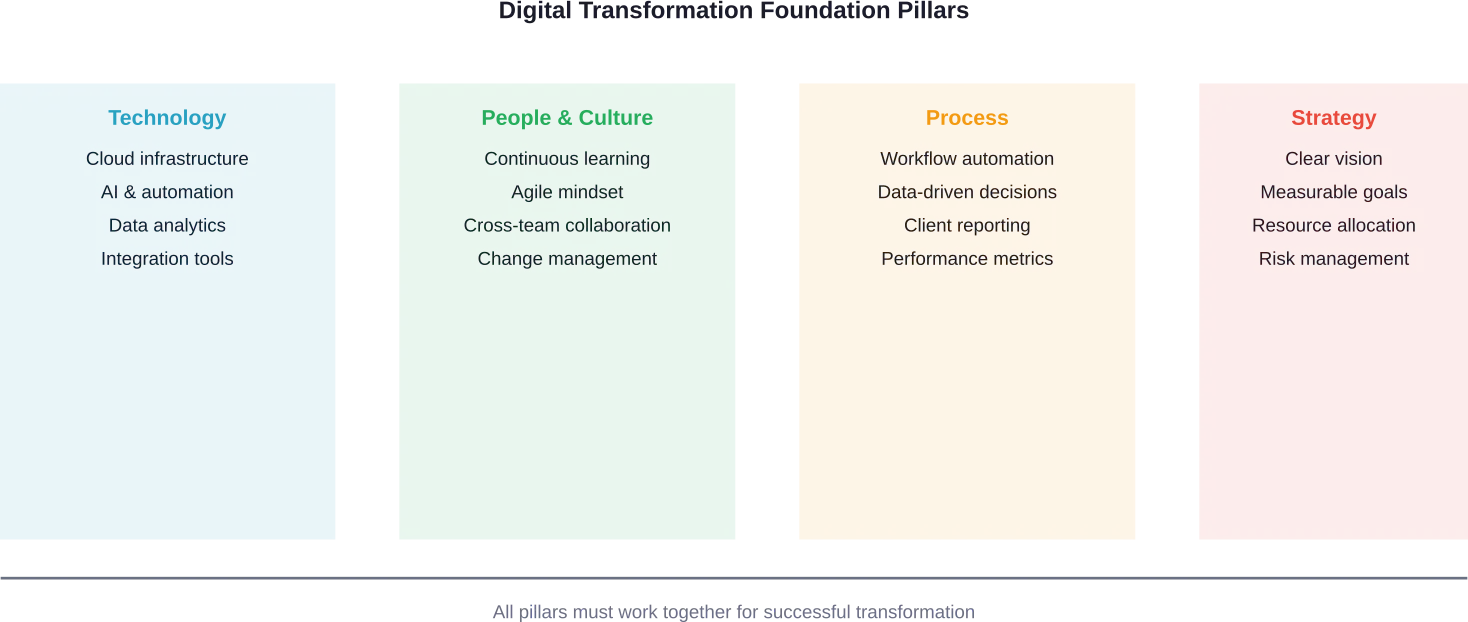
Успішна трансформація ґрунтується на кількох фундаментальних засадах, які установи повинні вирішувати одночасно, а не послідовно.
Технологічна інфраструктура та інтеграція
Сучасні технології слугують основою трансформаційних зусиль. Вони включають хмарну інфраструктуру, платформи автоматизації, можливості штучного інтелекту та інструменти аналізу даних, які безперешкодно працюють разом.
Але одними технологіями тут не обійтися. Справжній виклик полягає в інтеграції, яка дозволяє розрізненим системам ефективно взаємодіяти, зберігаючи при цьому цілісність даних і стандарти безпеки.
Згідно з аналізом GSA, установи середнього розміру можуть уникнути витрат на 42% завдяки впровадженню SD-WAN. Цифри говорять самі за себе, коли правильна технологія розгорнута належним чином.
Можливості даних та аналітики
Дані, отримані від перших осіб, стали безцінними, оскільки сторонні файли cookie поступово відмовляються від них, а правила конфіденційності стають більш жорсткими. Агентствам потрібні надійні системи для збору, аналізу та активації клієнтських даних через різні канали.
Розширена аналітика виходить за рамки базової звітності. Вона виявляє закономірності, прогнозує тенденції та інформує про стратегічні рішення, які дають клієнтам конкурентні переваги. Це означає інвестування в аналітичні платформи та створення команд, які можуть видобувати дієві ідеї зі складних наборів даних.
Культурна трансформація
Технологічні зміни відбуваються легше, ніж культурні. Побудова технологічної культури в компанії вимагає підтримки від керівництва до кожного члена команди.
Це передбачає створення середовища, в якому заохочуються експерименти, невдачі розглядаються як можливості для навчання, а постійне вдосконалення стає частиною ДНК агентства. Команди повинні бути готові кидати виклик усталеним процесам і впроваджувати нові способи роботи.
Практичні стратегії трансформації агентств
Перехід від теорії до практики вимагає конкретних дій. Пропонуємо вашій увазі перевірені підходи, які допоможуть установам успішно пройти шлях трансформації.
Почніть з чіткого бачення
Трансформація без напрямку - це просто хаос. Установам потрібне чітке бачення, яке пояснює, куди вони рухаються і чому це важливо.
Це бачення має бути безпосередньо пов'язане з клієнтською цінністю та бізнес-результатами. Які нові можливості запропонує агентство? Як покращиться надання послуг? Які конкурентні переваги створить трансформація?
Згідно з дослідженням Центру технологій в уряді Університету Олбані, створення суспільної цінності за допомогою цифрової трансформації вимагає від лідерів усвідомлення того, що здатність створювати стійку цінність залежить від контексту. Не існує універсального підходу - відомства повинні розуміти свій унікальний контекст трансформації.
Інвестуйте в розширену аналітику та автоматизацію
Аналітика та автоматизація приносять негайну користь, водночас створюючи можливості для майбутнього. Автоматизація повторюваних завдань - закупівля медіа, звітність, рутинні оптимізації - дозволяє членам команди зосередитися на стратегії та творчому вирішенні проблем.
Консалтингова компанія Roland Berger прогнозує, що великі моделі, як очікується, знизять операційні витрати у сфері державних послуг на 1,8%.
Для агенцій це означає визначити, які процеси забирають непропорційно багато часу порівняно з їхньою цінністю, а потім впровадити інструменти, які ефективно справляються з цими завданнями.
| Область процесу | Ручний підхід | Автоматизований підхід | Економія часу |
|---|---|---|---|
| Звітність клієнтів | 5-10 годин на тиждень | 30 хвилин/тиждень | 90% скорочення |
| Медіа-баїнг | 8-15 годин на тиждень | 2-3 години/тиждень | 75% скорочення |
| Збір даних | 6-8 годин на тиждень | Автоматизований в режимі реального часу | 95% скорочення |
| Моніторинг ефективності | 4-6 годин на тиждень | Безперервний автоматизований | 85% скорочення |
Створюйте невеликі команди для вивчення нових технологій
Масштабна трансформація не відбувається за одну ніч. Створення невеликих гнучких команд для експериментів з новими технологіями дозволяє агентствам тестувати нові можливості, не порушуючи основної діяльності.
Ці інноваційні команди можуть досліджувати застосування штучного інтелекту, тестувати нові платформи та розробляти проекти, що підтверджують концепцію, які демонструють цінність перед ширшим розгортанням. Досвід цих експериментів допомагає приймати більш масштабні трансформаційні рішення.
Вузький фокус і стратегічна спеціалізація
Намагання бути всім для всіх розмиває зусилля з трансформації. Багато успішних агентств виявили, що звуження спектру послуг і зосередження на конкретних вертикалях або можливостях прискорює трансформацію.
Спеціалізація дозволяє глибше інвестувати у відповідні технології та експертизу. Це також позиціонує агентство як справжнього експерта, а не універсала, що знаходить відгук у клієнтів, які шукають спеціалізовані знання.
Безперешкодно інтегруйте медіа-канали
Клієнти працюють на кількох каналах і очікують від агентств цілісних стратегій, які працюють разом. Трансформація має стосуватися того, як агентство інтегрує планування, виконання та вимірювання в платних, власних та зароблених медіа.
Для цього потрібні платформи, які надають уніфіковані погляди на ефективність кампанії, та команди, структуровані для співпраці між різними спеціалістами, а не для роботи в ізоляції.
Типові помилки, яких слід уникати
Розуміння того, що гальмує трансформацію, так само важливе, як і знання того, що сприяє успіху. Ці поширені помилки стають на заваді навіть для агенцій з найкращими намірами.
Технологія без стратегії
Купівля інструментів без чіткої стратегії призводить до марнування ресурсів і створює плутанину. Кожне технологічне рішення має бути пов'язане з конкретними бізнес-цілями та потребами клієнта.
Не поспішайте обирати правильну технологію. Поспішні рішення призводять до того, що платформи не інтегруються належним чином, можливості залишаються невикористаними, а команди чинять опір впровадженню, бо технологія насправді не вирішує їхніх проблем.
Недооцінка управління змінами
Технічна реалізація часто є найлегшою частиною. Складніше змусити людей змінити свої підходи до роботи. Агенції повинні інвестувати в навчання, комунікацію та системи підтримки, які допомагають командам адаптуватися.
Опір змінам - це природно. Подолайте його, чітко пояснюючи переваги, проводячи практичні тренінги та заохочуючи тих, хто першими впроваджує нові підходи.
Ставлення до трансформації як до проекту
Трансформація не є чимось, що має фінішну пряму. Це постійний процес еволюції та адаптації, оскільки технології розвиваються, а потреби клієнтів змінюються.
Агенції, які розглядають трансформацію як одноразовий проект, неминуче знову опиняються позаду. Вбудуйте безперервне навчання та вдосконалення в культуру агентства.
Вимірювання успіху трансформації
Що вимірюється, тим і управляється. Установам потрібні чіткі показники, які демонструють, чи приносять зусилля з трансформації заплановані результати.
Ключові показники ефективності повинні охоплювати кілька вимірів: операційну ефективність, задоволеність клієнтів, залученість працівників та фінансові показники. Зверніть увагу на такі показники, як час, заощаджений завдяки автоматизації, рівень утримання клієнтів, дохід на одного працівника та швидкість надання послуг.
Але пам'ятайте - не всі цінності відображаються в електронних таблицях одразу. Культурні зміни, покращення співпраці та розширення можливостей можуть зайняти певний час, щоб повністю матеріалізуватися в традиційних показниках.
ПОШИРЕНІ ЗАПИТАННЯ
- Що таке цифрова трансформація для агенцій?
Цифрова трансформація для агенцій - це інтеграція цифрових технологій в усі сфери діяльності, що докорінно змінює те, як агенція працює та надає цінність клієнтам. Вона передбачає впровадження нових інструментів, автоматизацію процесів, використання аналітики даних та зміну організаційної культури, яка передбачає постійні зміни та інновації.
- Чому більшість ініціатив з цифрової трансформації зазнають невдачі?
За даними Forbes, сім з десяти процесів цифрової трансформації зазнають невдачі. Серед найпоширеніших причин - відсутність чіткої стратегії, неналежне управління змінами, опір членів команди, вибір неправильних технологій, недооцінка потреб у ресурсах і ставлення до трансформації як до одноразового проєкту, а не як до постійного процесу.
- Скільки часу займає цифрова трансформація для агентства?
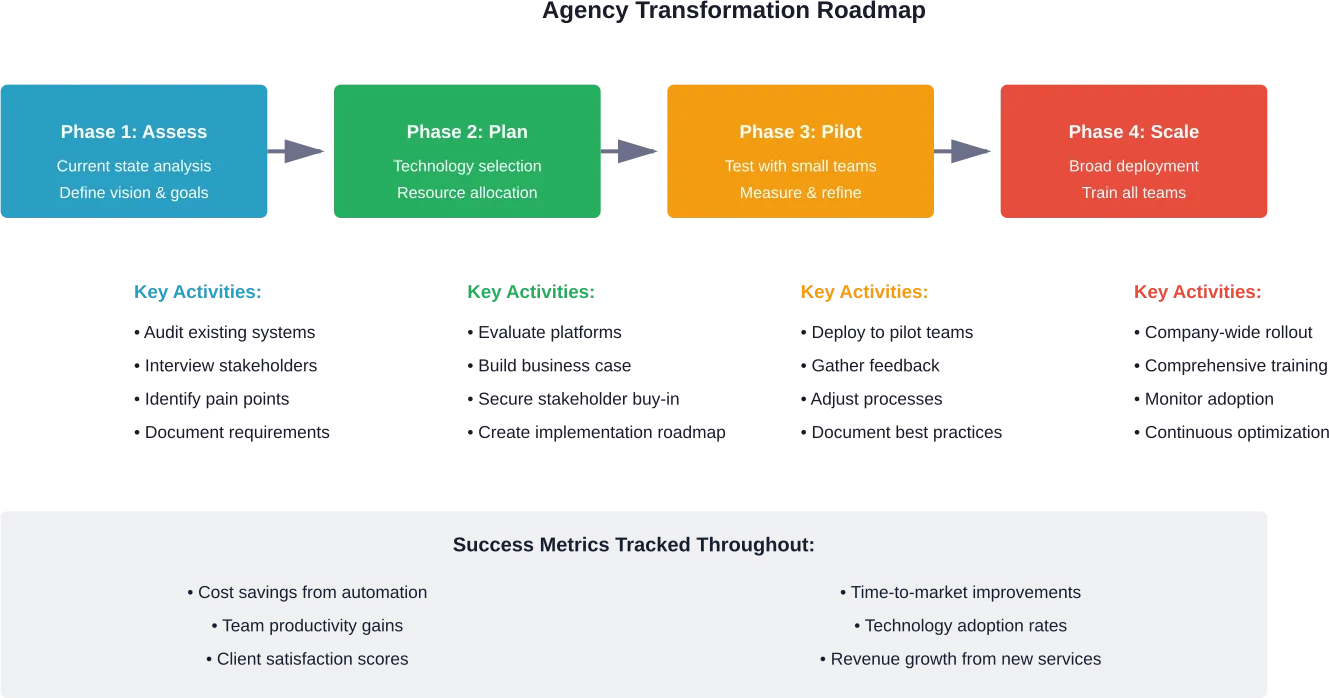
Цифрова трансформація - це скоріше безперервна подорож, ніж пункт призначення. Початкові етапи оцінки та планування можуть зайняти 2-3 місяці, пілотне впровадження - ще 3-6 місяців, а більш широке розгортання - 6-12 місяців. Однак по-справжньому успішні агенції вбудовують постійне вдосконалення у свою культуру, постійно розвиваючись разом зі змінами технологій та потреб клієнтів.
- Яким технологіям агентства повинні надавати пріоритет?
Пріоритетні технології залежать від конкретних потреб відомства, але зазвичай цінні інвестиції включають хмарну інфраструктуру для гнучкості та масштабованості, платформи автоматизації для рутинних завдань, передові аналітичні інструменти для аналізу даних, можливості штучного інтелекту для персоналізації та прогнозування, а також інтегровані платформи, які об'єднують розрізнені системи та канали.
- Скільки коштує цифрова трансформація агентства?
Витрати дуже різняться залежно від розміру агентства, поточного стану технологій та масштабу трансформації. Невеликі відомства можуть інвестувати $50 000-$200 000 на початкових етапах, тоді як більші відомства можуть витратити мільйони. Однак урядові дані показують, що середні організації уникають витрат у розмірі 42% завдяки стратегічному впровадженню технологій, таких як SD-WAN, що свідчить про те, що трансформація може відносно швидко забезпечити позитивну рентабельність інвестицій.
- Чи потрібно установам наймати нових співробітників для цифрової трансформації?
Не обов'язково. Багато установ успішно трансформуються, підвищуючи кваліфікацію наявного персоналу за допомогою навчальних програм та ініціатив з безперервного навчання. Однак залучення спеціалізованих експертів - аналітиків даних, фахівців з автоматизації або консультантів з трансформації - може прискорити прогрес і заповнити критичні прогалини в можливостях, які не можуть бути створені власними силами достатньо швидко.
- Як агентства підтримують обслуговування клієнтів під час трансформації?
Успішні організації використовують поетапне впровадження, яке мінімізує збої в роботі. Почніть з пілотних команд, які тестують нові підходи, поки інші підтримують поточну діяльність. Документуйте найкращі практики під час пілотних проектів, а потім поступово розширюйте їх. Прозоро спілкуйтеся з клієнтами про покращення, які вони побачать, і підтримуйте резервні процеси, поки нові системи не доведуть свою надійність.
Впевнено рухаємося вперед
Цифрова трансформація - це одночасно і виклик, і можливість для агенцій. Ті, хто приймає її, стратегічно позиціонують себе для досягнення найкращих результатів для клієнтів, залучення найкращих талантів та побудови стійких конкурентних переваг.
Успіх вимагає одночасного збалансування кількох елементів - технологій, людей, процесів і стратегії. Жоден компонент сам по собі не є рушієм трансформації. Вони повинні працювати разом як інтегрована система.
Почніть з чіткого бачення. Інвестуйте в правильні технології для конкретних потреб, а не ганяйтеся за кожним новим інструментом. Створіть культуру, яка підтримує зміни та безперервне навчання. Вимірюйте прогрес за допомогою значущих показників. І пам'ятайте, що трансформація - це подорож, а не пункт призначення.
Сьогодні процвітаючі агенції - це не обов'язково ті, що мають найбільші бюджети чи найсучасніші інструменти. Це ті, які взяли на себе зобов'язання щодо трансформації, вдумливо виконували їх, вчилися на невдачах і продовжували розвиватися. Цей підхід працює незалежно від розміру чи спеціалізації агенції.
Готові трансформувати можливості своєї агенції та надавати кращі результати для клієнтів? Почніть з оцінки вашого поточного стану, визначення бачення трансформації та перших конкретних кроків до майбутнього, на яке заслуговує ваша агенція.


