Короткий виклад: Цифрова трансформація для високотехнологічних компаній передбачає інтеграцію передових технологій, таких як штучний інтелект, хмарні обчислення та Інтернет речей, в основні бізнес-операції для прискорення інновацій, покращення клієнтського досвіду та збереження конкурентних переваг. На відміну від інших галузей, високотехнологічні компанії повинні одночасно впроваджувати цифрову трансформацію для клієнтів і трансформувати власну діяльність, долаючи такі виклики, як швидкі продуктові цикли, дефіцит кваліфікованих кадрів та ризики кібербезпеки. Успіх вимагає стратегічної архітектури підприємства, гнучких методологій та культури, яка охоплює постійні інновації.
Індустрія високих технологій перебуває в унікальному становищі. Вона не просто переживає цифрову трансформацію - вона активно будує інструменти, платформи та інфраструктуру, які уможливлюють трансформацію в усіх інших секторах.
Але ось у чому парадокс: технологічні компанії не можуть просто продавати цифрові інновації. Вони повинні жити ними. А у 2026 році це означає протистояння прискореним продуктовим циклам, підриву GenAI, загрозам кібербезпеки та дефіциту талантів, які роблять трансформацію одночасно нагальною та складною.
Йдеться не про розгортання однієї технології чи запуск пілотного проекту. Цифрова трансформація для хай-тек означає фундаментальне переосмислення того, як розробляються продукти, як проходять потоки даних між системами, як клієнти взаємодіють з рішеннями і як організації швидко адаптуються до змін.
Давайте розберемося, як це виглядає насправді.
Що означає цифрова трансформація для високотехнологічних компаній
Цифрова трансформація - це інтеграція цифрових технологій в усі сфери бізнесу, що докорінно змінює його функціонування та створення цінності. Для високотехнологічних компаній це визначення набуває додаткових шарів.
По-перше, це операційна сторона. Технологічні компанії повинні модернізувати застарілі системи, зруйнувати ізоляцію даних і створити інтегровані платформи, які підтримують швидку розробку і розгортання. Згідно з дослідженням NIST щодо підтримки цифрової трансформації за допомогою застарілих компонентів (опубліковане 2021-07-20), багато організацій намагаються підтримувати програми кібербезпеки як в ІТ-середовищі, так і в середовищі операційних технологій, одночасно модернізуючи інфраструктуру.
По-друге, це продуктовий вимір. Високотехнологічні компанії створюють рішення, які стають частиною цифрової трансформації їхніх клієнтів. Це означає, що самі продукти повинні бути хмарними, API-орієнтованими, керованими даними та безпечними за своєю конструкцією.
По-третє, це організаційний виклик. Цифрова трансформація вимагає культурних змін, нових навичок та гнучких методологій, які дозволяють командам швидко ітерації без шкоди для якості та безпеки.
Подвійний мандат
Перед високотехнологічними компаніями стоїть те, що можна назвати подвійним мандатом. Вони повинні сприяти цифровій трансформації в усіх галузях, надаючи програмне забезпечення, обладнання, хмарні сервіси та консалтингові послуги, що сприяють змінам у сфері охорони здоров'я, фінансів, виробництва та інших галузях.
Водночас вони повинні трансформуватися самі. А це складніше, ніж здається.
Чому? Тому що технологічні організації часто мають технічний борг за роки стрімкого зростання. Системи, які працювали зі 100 співробітниками, не масштабуються до 10 000. Архітектури продуктів, розроблені для локального розгортання, не можуть бути легко переведені в моделі SaaS. Процеси продажу, розроблені для корпоративного програмного забезпечення, не підходять для економії на підписці.
Фактор швидкості
Життєві цикли продуктів у сфері високих технологій різко скоротилися. Те, що колись займало 18-24 місяці від концепції до виходу на ринок, тепер відбувається за 6-9 місяців. Згідно з дослідженням NSF щодо цифровізації та хмарних обчислень, хмарна інфраструктура прискорила експерименти, замінивши великі капітальні витрати послугами з оплатою за фактом використання, що докорінно змінило те, як компанії впроваджують інновації.
Така швидкість створює тиск на всю організацію. Інженерні команди потребують безперервної інтеграції та конвеєрів розгортання. Менеджерам по продуктах потрібні цикли зворотного зв'язку з клієнтами в реальному часі. Командам підтримки потрібні інструменти на основі штучного інтелекту, щоб впоратися зі зростаючою складністю.
Цифрова трансформація стає інфраструктурою, яка робить швидкість стійкою, а не хаотичною.
Цифрова трансформація для високотехнологічних компаній
Високотехнологічні компанії потребують масштабованих, безпечних систем для швидкого впровадження інновацій. A-listware надає команди, що мають досвід роботи з корпоративними технологіями, для підтримки вашого цифрового зростання.
Основні напрямки підтримки:
- розробка програмного забезпечення на замовлення
- хмарна архітектура та інтеграції
- автоматизація внутрішніх процесів
- аналітика даних та моніторинг системи
Команди можуть працювати у вашому поточному середовищі або взяти на себе відповідальність за повне впровадження. Прискорте свою високотехнологічну трансформацію за допомогою Програмне забезпечення списку А сьогодні.
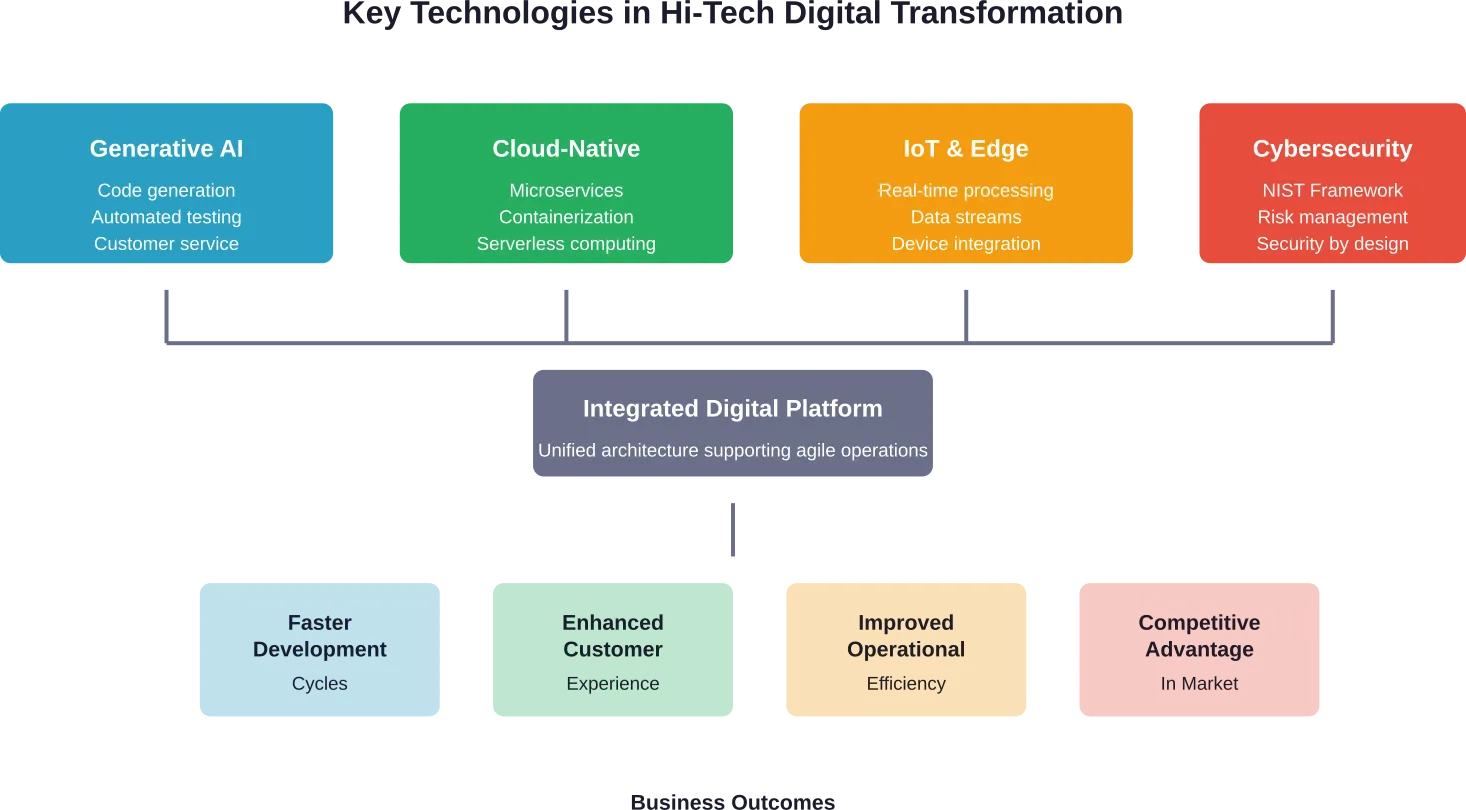
Ключові технології, що сприятимуть трансформації у 2026 році
У 2026 році кілька технологій перейшли з розряду експериментальних у число основних для високотехнологічних компаній. Це не просто тенденції - це фундаментальні зміни в тому, як працює технологічний бізнес.
Генеративний ШІ та машинне навчання
GenAI підштовхнув цифрову трансформацію до того, що компанія Forrester описує як “фазу без планів”. Понад десять років трансформація відбувалася за перевіреними сценаріями зі зрілими архітектурами та прискорювачами впровадження зі зрілими архітектурами та прискорювачами впровадження. GenAI змінює цю схему.
Зараз високотехнологічні компанії використовують генеративні моделі для генерації коду, автоматизованого тестування, обслуговування клієнтів, створення контенту та дизайну продуктів. Але технології розвиваються швидше, ніж кращі практики встигають закріпитися.
Результат? Компанії повинні експериментувати, ітерації та адаптуватися, не маючи підстраховки у вигляді усталених шаблонів. Моделі машинного навчання оптимізують все - від логістики ланцюгів поставок до цінових стратегій та інструментів для підвищення продуктивності розробників.
Хмарна архітектура
Хмарні обчислення продовжують залишатися фундаментальними, але фокус змістився. Недостатньо просто перенести робочі навантаження в хмару. Високотехнологічні компанії зараз створюють хмарні додатки з нуля - архітектури мікросервісів, контейнеризація, безсерверні обчислення та периферійна обробка.
Цей архітектурний зсув забезпечує гнучкість, з якою не можуть зрівнятися традиційні монолітні системи. Функції можна розгортати незалежно. Сервіси можуть еластично масштабуватися. Команди розробників можуть працювати паралельно, не заважаючи одна одній.
Згідно з даними NSF про тенденції цифровізації, впровадження хмарних технологій знижує бар'єри для експериментів з новими цифровими бізнес-моделями, особливо для компаній, які випробовують інноваційні підходи до надання послуг.
Інтернет речей та периферійні обчислення
Пристрої Інтернету речей генерують величезні потоки даних, які живлять системи аналітики, автоматизації та інтелекту. Високотехнологічні компанії, що виробляють апаратне забезпечення, повинні розробляти продукти, які взаємодіють, оновлюються віддалено та інтегруються у великі екосистеми.
Граничні обчислення наближають обчислювальну потужність до джерел даних, зменшуючи затримки і дозволяючи приймати рішення в режимі реального часу. Для компаній, що виробляють промислове обладнання, побутову електроніку або інфраструктурні рішення, периферійні можливості більше не є необов'язковими.
Рамки кібербезпеки
Цифрова трансформація розширює можливості для атак. Більше підключених систем означає більше потенційних вразливостей. Рамкова концепція кібербезпеки NIST стала важливим керівництвом для високотехнологічних компаній, які управляють ризиками в цифрових екосистемах.
Безпека не може бути прикручена постфактум. Вона має бути інтегрована в процеси розробки, архітектурні рішення та операційні практики. Високотехнологічні компанії повинні захищати не лише власні системи, але й платформи та інструменти, від яких залежать їхні клієнти.
Згідно з дослідженням NIST, організації потребують структурованих підходів для розуміння та вдосконалення управління ризиками кібербезпеки, особливо в умовах інтеграції застарілих компонентів у сучасні цифрові інфраструктури.
Чотири критичні сфери цифрової трансформації
Цифрова трансформація не відбувається рівномірно. Вона зачіпає різні сфери бізнесу, кожна з яких вимагає специфічних стратегій і технологій.
Трансформація процесів
Трансформація процесів фокусується на тому, як виконується робота. Для високотехнологічних компаній це означає автоматизацію повторюваних завдань, оптимізацію робочих процесів та усунення "вузьких місць", які сповільнюють розробку та доставку.
Прикладами можуть слугувати конвеєри безперервної інтеграції та безперервного розгортання, які автоматизують процеси тестування та випуску. Або системи закупівель, які використовують штучний інтелект для оптимізації вибору постачальників і управління контрактами. Або потоки залучення клієнтів, які зменшують тертя і прискорюють отримання прибутку.
Згідно з дослідженням IEEE щодо архітектури підприємства для цифрової трансформації, ефективна трансформація процесів вимагає мапування поточної архітектури стану, виявлення больових точок і проектування майбутніх систем стану, які підтримують організаційні цілі.
Трансформація бізнес-моделі
Багато високотехнологічних компаній перейшли від безстрокових ліцензій до моделей підписки, від локального програмного забезпечення до хмарних сервісів, від продуктів до платформ. Це не просто цінові зміни - це фундаментальні трансформації бізнес-моделей.
Цей зсув вимагає нових можливостей. Підприємства, що продають передплату, потребують аналітики використання, прогнозування відтоку клієнтів та операцій з досягнення успіху, яких не існувало в традиційному продажі програмного забезпечення. Платформні бізнеси потребують екосистем розробників, управління API та операцій на ринку.
Реальна розмова: трансформація бізнес-моделі є найскладнішим типом, оскільки вона кидає виклик основним припущенням про те, як створюється і фіксується цінність.
Трансформація домену
Трансформація домену означає вихід на нові ринки або переосмислення існуючих. Компанія, що виробляє апаратне забезпечення, може додати програмні послуги. Компанія-розробник програмного забезпечення може створювати апаратне забезпечення. Продуктова компанія може пропонувати консалтингові послуги.
Для високотехнологічних компаній трансформація домену часто передбачає використання даних і штучного інтелекту для створення абсолютно нових пропозицій. Компанія, яка виробляє промислове обладнання, може додати послуги з предиктивного технічного обслуговування. Фірма, що продає програмне забезпечення для безпеки, може запропонувати кероване виявлення загроз.
Культурна та організаційна трансформація
Технології самі по собі не трансформують організації. Це роблять люди та культура.
Культурна трансформація передбачає перехід від ієрархічного прийняття рішень до розподіленої автономії. Від річних циклів планування до безперервного коригування стратегії. Від уникнення ризиків до експериментального мислення.
Організаційна трансформація може означати реструктуризацію навколо міжфункціональних продуктових команд, а не функціональних відділів. Або створення центрів передового досвіду для нових технологій. Або впровадження гнучких методологій в інженерії, продукті та операціях.
Громадські дискусії постійно підкреслюють, що опір змінам є одним з найбільших бар'єрів. Технічні перетворення зазнають невдачі, коли організації не звертають уваги на людський фактор.
Основні виклики, з якими стикаються високотехнологічні компанії
Цифрова трансформація звучить чудово в теорії. На практиці ж високотехнологічні компанії стикаються зі значними перешкодами.
Дефіцит кваліфікованих кадрів
Згідно з дослідженням KPMG, на яке посилаються в контент-аналізі конкурентів, некваліфікований персонал є значною перешкодою для впровадження цифрових технологій з вагою 27%. Темпи технологічних змін означають, що набори навичок швидко застарівають.
Компаніям потрібні хмарні архітектори, інженери з обробки даних, фахівці зі штучного інтелекту, експерти з кібербезпеки та DevOps-інженери - часто одночасно. Рекрутинг є конкурентним, а утримання персоналу - складним завданням, коли кожна компанія пропонує однакові пільги та гнучкість у віддаленій роботі.
Навчання наявного персоналу потребує часу та ресурсів. Зовнішній найм коштує дорого. Підрядники надають тимчасове полегшення, але не розвивають інституційні знання.
Капітальні та ресурсні обмеження
Ті ж самі дані KPMG показують, що брак капіталу/фінансування (вага 22%) та недостатні ресурси для нових технологій (вага 21%) були названі основними проблемами в галузевих дослідженнях.
Цифрова трансформація вимагає інвестицій в інфраструктуру, інструменти, навчання, а часто і зовнішню експертизу. Для стартапів та середніх компаній ці витрати конкурують з пріоритетами розвитку продукту та продажів.
Навіть великі підприємства стикаються з бюджетними обмеженнями. Обслуговування застарілих систем забирає ресурси, які можна було б спрямувати на інновації. ІТ-борг зростає, коли модернізацію постійно відкладають.
Безпека та конфіденційність даних
Розширення цифрових слідів створює нові можливості для атак. Високотехнологічні компанії керують конфіденційними даними клієнтів, інтелектуальною власністю та критично важливою інфраструктурою.
Безпека даних є одночасно і викликом, і пріоритетом. Згідно з галузевими дослідженнями, питання безпеки даних є важливим фактором при прийнятті рішень щодо цифрової трансформації.
Вимоги дотримання нормативних вимог додають складнощів. GDPR, CCPA та галузеві нормативні акти вимагають ретельного управління даними. Порушення безпеки завдають шкоди репутації та довірі клієнтів, яку важко виправити.
Інтеграція застарілих систем
Дослідження NIST присвячені проблемі підтримки цифрової трансформації за допомогою застарілих компонентів. Багато високотехнологічних компаній будували свою інфраструктуру десятиліттями. Ці системи все ще працюють - вони просто не призначені для сучасних моделей інтеграції.
Повна заміна застарілих систем є ризикованою та дорогою. Їх нескінченна підтримка обмежує інновації. Середній шлях - поступова модернізація з ретельною інтеграцією - вимагає складного архітектурного планування та реалізації.
Організаційний опір
Зміни - це некомфортно. Працівники, які опанували існуючі інструменти та процеси, можуть чинити опір новим підходам. Керівники середньої ланки іноді сприймають трансформацію як загрозу їхньому досвіду або авторитету.
Історії успіху таких компаній, як Enel (яка відокремилася від Open Fiber, ринкова вартість якої у 2019 році оцінюється у 8 мільярдів євро) та Zensar Technologies, показують, що трансформація вимагає прихильності керівництва, чіткої комунікації та справжньої організаційної прихильності.
| Виклик | Вплив на трансформацію | Стратегії пом'якшення наслідків |
|---|---|---|
| Дефіцит кваліфікованих кадрів (27%) | Затримує впровадження, обмежує можливості | Програми підвищення кваліфікації, стратегічний найм, партнерства |
| Капітальні обмеження (22%) | Уповільнює прийняття, змушує розставляти пріоритети | Поетапне розгортання, хмарна економіка, фокус на ROI |
| Недостатньо ресурсів (21%) | Розпорошує команди, знижує якість | Автоматизація, керовані послуги, підвищення ефективності |
| Прогалини в захисті даних | Створює вразливості, комплаєнс-ризики | NIST Framework, безпека за задумом, аудити |
| Застарілий системний борг | Перешкоджає інтеграції, обмежує гнучкість | Поступова модернізація, рівні API, контейнеризація |
| Опір змінам | Підриває усиновлення, створює тертя | Вирівнювання лідерства, комунікація, заохочення |
Архітектура підприємства як основа трансформації
Архітектура підприємства є основою для цифрової трансформації. Це не просто технічна документація - це стратегічне планування, яке узгоджує технологічні інвестиції з бізнес-цілями.
Побудова ефективної комплексної архітектури підприємства
Дослідження IEEE щодо практичних посібників для побудови ефективної складної архітектури підприємства наголошує на найкращих практиках, що базуються на досвіді. Складні системи вимагають продуманого дизайну, який враховує поточні можливості, майбутні потреби та шляхи переходу.
Ефективна архітектура підприємства включає кілька рівнів:
- Архітектура бізнесу визначає процеси, організаційні структури та можливості
- Архітектура даних встановлює, як інформація рухається та зберігається
- Архітектура програми картографічні програмні системи та інтеграції
- Технологічна архітектура визначає інфраструктуру, платформи та безпеку
Ці шари повинні збігатися. Рішення додатків повинні підтримувати бізнес-процеси. Архітектура даних повинна забезпечувати аналітику та штучний інтелект. Технологічна інфраструктура повинна забезпечувати надійність і масштабування.
Гнучка архітектура підприємства
Традиційна архітектура підприємства працювала на основі довгих циклів планування. Проектні рішення були зафіксовані на роки. Це не працює, коли ринкові умови та технології змінюються щоквартально.
Дослідження IEEE, присвячене аспектам гнучкої архітектури підприємств, вивчає, як організації можуть підтримувати архітектурну узгодженість, залишаючись при цьому гнучкими. Гнучкі підходи підкреслюють:
- Ітеративний дизайн замість комплексного попереднього планування
- Модульні компоненти, які можуть розвиватися незалежно
- Чіткі інтерфейси, які ізолюють системи від змін одна одної
- Постійна оцінка та коригування у міру зміни потреб
Гнучка архітектура визнає невизначеність. Вона планує зміни, а не намагається передбачити все наперед.
Розробка дорожньої карти
Згідно з дослідженням IEEE, присвяченим дорожнім картам побудови складної архітектури підприємства, ефективна трансформація вимагає чіткої послідовності. Не все може відбутися одночасно.
Ефективні дорожні карти визначають залежності, встановлюють пріоритети для ініціатив з високим рівнем впливу та балансують між швидкими перемогами та довгостроковою фундаментальною роботою. Вони створюють спільне розуміння зацікавленими сторонами того, що відбувається, коли і чому.
Дорожні карти мають бути живими документами, які адаптуються в міру того, як організація дізнається, що працює, а що ні.
Реальні приклади цифрової трансформації
Абстрактні принципи мають менше значення, ніж конкретні реалізації. Кілька високотехнологічних компаній успішно пройшли через серйозні трансформації.
Розробка продукту, орієнтованого на деталі
Один із прикладів галузевого аналізу стосується підвищення ефективності за допомогою детально-орієнтованого підходу до розробки продукту. Замість того, щоб керувати продуктами як монолітними утвореннями, компанії структурують розробку навколо компонентів і частин, які можна повторно використовувати, тестувати незалежно і розвивати окремо.
Ця архітектурна зміна зменшує дублювання, покращує якість і прискорює розробку. Коли компонент потребує оновлення, зміни поширюються на всі продукти, які його використовують, а не вимагають ручного оновлення в декількох проектах.
Управління зростаючою складністю
Оскільки високотехнологічні продукти стають дедалі складнішими - більші машини, більше датчиків, більше інтеграції програмного забезпечення - управління даними про продукт стає критично важливим. Компанії стандартизували єдині рішення, які надають уніфіковані уявлення про конфігурації, вимоги та результати випробувань.
Така стандартизація усуває неефективність розрізнених інструментів, коли інженери використовують одну систему, виробництво - іншу, а служба підтримки - третю. Інтеграція стає простішою, коли всі працюють зі спільними даними.
Капітальний ремонт силосних науково-дослідних систем
Розрізнені системи досліджень і розробок створюють бар'єри між командами та уповільнюють інновації. Деякі високотехнологічні компанії здійснили капітальний ремонт, щоб створити об'єднане науково-дослідницьке середовище, де дані вільно поширюються, співпраця відбувається природно, а ідеї обмінюються між групами.
Ці трансформації уможливлюють масштабування. Системи, які працювали, коли в компанії було 50 інженерів, не ламаються, коли вона зростає до 500.
Побічні ефекти цифрової інфраструктури
Згідно з тематичними дослідженнями бізнес-шкіл, такі компанії, як Enel, створювали окремі цифрові підрозділи, що зосереджувалися саме на нових моделях інфраструктури. Enel виділила Open Fiber як окрему компанію, що спеціалізується на цифровому зв'язку, яка в кінцевому підсумку оцінюється приблизно в 8 мільярдів євро.
Такий підхід дозволяє цифровим ініціативам працювати зі швидкістю стартапів, використовуючи при цьому ресурси та досвід материнської компанії.
Стратегічні підходи для успішної трансформації
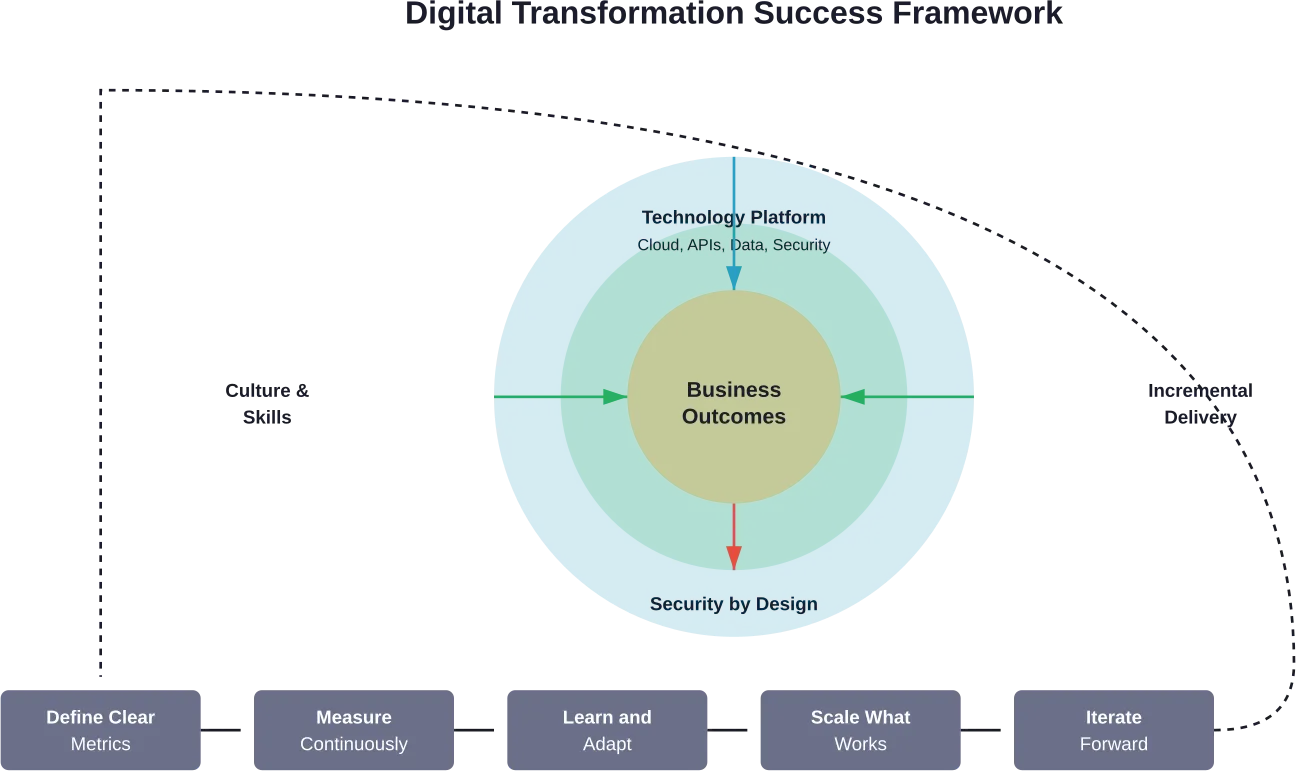
Успішна цифрова трансформація у сфері високих технологій має певні закономірності. Хоча кожна організація є унікальною, певні стратегії незмінно приносять результати.
Почніть з бізнес-результатів
Технологія сама по собі не створює цінності. Ініціативи з трансформації повинні починатися з чітких бізнес-цілей. Які проблеми клієнтів ми вирішуємо? Які ринкові можливості ми реалізуємо? Які операційні неефективності ми усуваємо?
Коли результати визначені, вибір технології стає зрозумілішим. Мета полягає не в тому, щоб використовувати найновіші інструменти, а в тому, щоб досягти конкретних результатів.
Перейняти платформне мислення
Архітектури платформ забезпечують гнучкість і масштабованість, з якими не можуть зрівнятися монолітні системи. Створення внутрішніх платформ - для даних, API, розгортання - створює можливості багаторазового використання, які прискорюють реалізацію майбутніх ініціатив.
Платформне мислення також застосовується зовні. Багато високотехнологічних компаній перейшли від продажу продуктів до управління платформами, де треті сторони створюють додаткову цінність.
Впроваджуйте поступові зміни
Трансформації за принципом "великого вибуху" рідко бувають успішними. Масштаб занадто великий, ризик занадто високий, а навчання занадто затягнуте.
Поетапні підходи приносять користь безперервно. Кожна фаза дає вимірювані результати, забезпечує навчання, яке є основою для наступних фаз, і підтримує організаційний імпульс.
Інвестуйте в навички та культуру
Інвестиції в технології не матимуть успіху без відповідних інвестицій у людей. Навчальні програми, стратегії найму та культурні ініціативи потребують однакової уваги до впровадження технологій.
Організації, які успішно трансформуються, створюють середовище, де заохочуються експерименти, невдачі розглядаються як навчання, і очікується постійне вдосконалення.
Від самого початку визначте пріоритет безпеки
NIST Cybersecurity Framework надає структуроване керівництво для управління ризиками. Замість того, щоб розглядати безпеку як контрольний список відповідності, провідні організації інтегрують мислення про безпеку в архітектуру, розробку та операції.
Захист за проектом дешевший і ефективніший, ніж захист, встановлений згодом.
Постійно вимірюйте прогрес
Що вимірюється, тим можна керувати. Ініціативи з цифрової трансформації потребують чітких показників, які відстежують як випереджаючі індикатори (рівень впровадження, продуктивність системи), так і відстаючі (задоволеність клієнтів, вплив на доходи).
Регулярна оцінка дозволяє скоригувати курс до того, як маленькі проблеми стануть великими перешкодами.
Роль Індустрії 5.0 та передового виробництва
Дослідження IEEE щодо інформаційних технологій як основи для переходу до цифрового суспільства та Індустрії 5.0 досліджує наступний етап промислової еволюції.
Індустрія 5.0 наголошує на співпраці людини та машини, сталості та стійкості. Для високотехнологічних компаній, що виробляють промислове обладнання, робототехніку або виробничі системи, це є одночасно і можливістю, і викликом.
Цифрова трансформація забезпечує можливості Індустрії 5.0:
- Системи штучного інтелекту, які допомагають людині приймати рішення, а не замінюють працівників
- IoT-датчики, які оптимізують споживання енергії та використання ресурсів
- Цифрові двійники, які моделюють виробничі сценарії та віртуально тестують покращення
- Блокчейн і розподілені реєстри, які створюють прозорі ланцюги поставок
Високотехнологічні компанії, які створюють рішення для Індустрії 5.0, повинні самі працювати за цими принципами. Важко продавати стійкі, життєздатні виробничі системи, працюючи при цьому неефективно.
Нові тенденції, що формують трансформацію високих технологій у 2026 році
Кілька тенденцій будуть особливо впливовими у 2026 році, формуючи те, як високотехнологічні компанії підходять до цифрової трансформації.
Етап без проекту
Як зазначається в аналізі компанії Forrester, GenAI підштовхнув трансформацію до фази, в якій немає жодних планів. Перевірених сценаріїв, які працювали для міграції в хмару або гнучкого впровадження, ще не існує для інтеграції генеративного ШІ.
Компанії повинні експериментувати, не маючи підстраховки у вигляді усталених найкращих практик. Це вимагає толерантності до невизначеності, швидких ітерацій та готовності змінювати підходи, коли вони не спрацьовують.
Інтегровані середовища розробки
Інструменти розробки все частіше інтегрують допомогу штучного інтелекту, автоматизоване тестування, сканування безпеки та моніторинг продуктивності. Ці інтегровані середовища прискорюють продуктивність, але вимагають нових навичок і робочих процесів.
Проблема полягає не в застосуванні окремих інструментів, а у створенні цілісного досвіду розробки, де інструменти працюють разом бездоганно.
Архітектури "від краю до хмари
Чисті хмарні стратегії поступаються місцем периферійно-хмарним архітектурам, які обробляють дані близько до джерел, коли затримка має значення, і централізовано, коли важливі масштаби та аналітика.
Цей гібридний підхід вимагає складної оркестровки та управління даними в розподілених середовищах.
Вимоги до сталого розвитку
Клієнти та регуляторні органи все частіше вимагають сталого ведення бізнесу. Високотехнологічні компанії стикаються з необхідністю зменшувати споживання енергії, мінімізувати електронні відходи та впроваджувати підходи циркулярної економіки до апаратного забезпечення.
Цифрова трансформація забезпечує сталий розвиток завдяки оптимізованому розподілу ресурсів, прогнозованому технічному обслуговуванню, що подовжує термін служби обладнання, та управлінню енергоспоживанням на основі даних.
Безпека з нульовою довірою
Традиційна система безпеки на периметрі не працює, коли працівники розподілені, системи хмарні, а партнери інтегруються безпосередньо з основними системами.
Архітектура нульової довіри передбачає, що жоден користувач чи система не заслуговують на довіру за замовчуванням. Кожен запит на доступ перевіряється, кожна транзакція аутентифікується, а кожен потік даних контролюється.
Розбудова організаційної спроможності
Впровадження технологій є успішним або провальним, залежно від організаційної готовності. Високотехнологічні компанії потребують специфічних здібностей, щоб ефективно здійснювати трансформації.
Міжфункціональні команди
Ізольовані функціональні відділи сповільнюють прийняття рішень і створюють затримки в передачі повноважень. Крос-функціональні продуктові команди об'єднують інженерію, дизайн, управління продуктом, операційну діяльність та успіх клієнтів.
Ці команди володіють результатами, а не діяльністю. Вони можуть швидко приймати рішення, бо мають для цього досвід і повноваження.
Грамотність даних
Коли дані визначають рішення, кожен потребує базової інформаційної грамотності. Інженери повинні розуміти аналітику. Продакт-менеджери повинні добре володіти A/B-тестуванням. Команди по роботі з клієнтами повинні ефективно використовувати дашборди.
Просунуті навички роботи з даними - статистичний аналіз, машинне навчання, інженерія даних - потребують фахівців. Але фундаментальна грамотність у роботі з даними має бути універсальною.
Управління змінами
Технічні проекти зазнають невдачі, коли організації нехтують управлінням змінами. Залучення зацікавлених сторін, планування комунікацій, навчальні програми та механізми зворотного зв'язку не є необов'язковими - вони необхідні.
Управління змінами полягає не в тому, щоб переконати людей прийняти рішення. Йдеться про те, щоб залучити їх до формування рішень, щоб вони відчували відповідальність за результати.
Екосистема постачальників та партнерів
Жодна компанія не будує все власними силами. Стратегічні відносини з постачальниками та партнерські екосистеми розширюють можливості, не вимагаючи найму для кожної навички.
Керовані послуги, консалтингові партнерства, технологічні альянси та аутсорсингові угоди дозволяють організаціям отримувати доступ до експертних знань за потреби.
Вимірювання успіху цифрової трансформації
Як організації дізнаються, чи працює трансформація? Метрики дають об'єктивну оцінку.
Технічні показники
Технічні показники вимірюють продуктивність системи та швидкість розвитку:
- Частота розгортання (як часто випускаються нові функції)
- Час на впровадження змін (час від прийняття зобов'язань до виробництва)
- Середній час відновлення (як швидко вирішуються інциденти)
- Частота збоїв змін (відсоток розгортань, що викликають проблеми)
- Час безвідмовної роботи та надійність системи
- Час відгуку та пропускна здатність API
Ці показники показують, чи дійсно технічні перетворення покращують можливості.
Бізнес-показники
Бізнес-індикатори пов'язують трансформацію з організаційними результатами:
- Зростання доходів та частки ринку
- Вартість залучення клієнтів та життєва цінність
- Час циклу розробки продукту
- Час виходити на ринок з новими пропозиціями
- Задоволеність клієнтів та індекс індексу задоволеності клієнтів (Net Promoter Score)
- Залучення та утримання працівників
Технічні вдосконалення повинні сприяти покращенню бізнес-результатів. Якщо системи працюють швидше, але дохід не зростає, щось не так.
Випереджаючі та відстаючі індикатори
Відстаючі індикатори (дохід, частка ринку) показують, що сталося. Випереджаючі індикатори (рівень впровадження, залучення користувачів) передбачають, що станеться.
Ефективне вимірювання поєднує в собі і те, і інше. Відстаючі індикатори підтверджують вплив. Випереджаючі індикатори забезпечують раннє попередження, коли ініціативи не досягають поставлених цілей.
| Метрична категорія | Приклади заходів | Що вона показує |
|---|---|---|
| Швидкість розвитку | Частота розгортання, час виконання | Як швидко команди можуть впроваджувати інновації |
| Надійність системи | Час безвідмовної роботи, MTTR, частота помилок | Стабільність і стійкість платформи |
| Вплив на клієнтів | NPS, показники задоволеності, відтік | Чи покращують зміни досвід |
| Фінансові показники | Зростання виручки, CAC, LTV | Цінність трансформації для бізнесу |
| Операційна ефективність | Вартість однієї транзакції, рівень автоматизації | Ефективність оптимізації ресурсів |
| Інноваційний потенціал | Експерименти завершено, час виходити на ринок | Швидкість організаційного навчання |
Типові помилки та як їх уникнути
Навіть досвідчені організації роблять передбачувані помилки.
Мислення, орієнтоване на технології
Вибір технологій до визначення проблем призводить до пошуку рішень для їх застосування. Почніть з потреб бізнесу, а потім оберіть відповідні технології.
Недооцінка управління змінами
Технічне впровадження є простішим порівняно з організаційними змінами. Розподіляйте час і ресурси пропорційно.
Ігнорування технічного боргу
Нові системи накопичують власний технічний борг. Постійний рефакторинг і модернізація повинні бути вбудовані в процеси, а не розглядатися як виняткові проекти.
Намагаючись зробити занадто багато одночасно
Трансформація вимагає фокусу. Організації, які запускають десятки ініціатив одночасно, розпорошують ресурси та увагу. Розставляйте пріоритети безжально.
Недостатня виконавча підтримка
Зусилля з трансформації, очолювані керівниками середньої ланки, рідко досягають масштабного успіху. Спонсорство з боку керівництва - це не церемоніал, а робота. Лідери повинні активно підтримувати ініціативи через фінансування, визначення пріоритетів та культурні повідомлення.
Нехтування безпекою та комплаєнсом
Проблеми з безпекою та дотриманням нормативних вимог, які виникають на пізніх стадіях проекту, дорого коштують і можуть зірвати запуск. Інтегруйте ці міркування з самого початку.
Погляд у майбутнє: Безперервний характер трансформації
Ось незручна правда: цифрова трансформація ніколи не закінчується.
Технології безперервно розвиваються. Очікування клієнтів постійно зростають. Конкурентний тиск посилюється. Те, що сьогодні здається передовим, завтра може стати звичайною справою.
Успішні високотехнологічні компанії не розглядають трансформацію як проект із визначеною датою завершення. Вони створюють організаційні можливості для безперервної еволюції.
Це означає створення культури, в якій цінується навчання, заохочується експеримент і очікується адаптація. Це означає, що архітектура має бути орієнтована на зміни, а не на стабільність. Це означає процеси, які покращуються поступово, а не чекають на кардинальну перебудову.
У документі NSF від грудня 2025 року про технології, інновації та партнерства підкреслюється необхідність швидкого реагування агентств на швидкі зміни в науково-технічному середовищі. Цей принцип стосується як окремих компаній, так і національних агентств.
Цифрова трансформація для хай-тек - це не просто досягнення пункту призначення. Вона полягає у створенні можливостей для навігації в тому, що відбувається далі.
Поширені запитання
- Що таке цифрова трансформація у високотехнологічній галузі?
Цифрова трансформація у сфері високих технологій означає інтеграцію передових технологій, таких як штучний інтелект, хмарні обчислення, інтернет речей та аналітика даних, в основні бізнес-операції для прискорення інновацій, покращення клієнтського досвіду та збереження конкурентних переваг. На відміну від інших галузей, які впроваджують технології, створені в інших місцях, високотехнологічні компанії повинні одночасно створювати цифрові рішення для клієнтів і трансформувати свої власні операції, що створює унікальний подвійний мандат.
- Скільки часу займає цифрова трансформація для технологічних компаній?
Цифрова трансформація - це не проект з фіксованою тривалістю та чітким кінцевим результатом, а безперервний процес постійної адаптації. Початкові етапи, зосереджені на конкретних ініціативах (наприклад, міграція в хмару або автоматизація процесів), можуть зайняти 12-24 місяці, але організаціям слід очікувати, що трансформація - це багаторічна подорож. Що ще важливіше, успішні компанії створюють можливості для безперервного розвитку, а не розглядають трансформацію як одноразове зусилля з визначеною датою завершення.
- З якими найбільшими викликами стикаються високотехнологічні компанії під час цифрової трансформації?
Згідно з дослідженням KPMG, найбільшими проблемами є нестача кваліфікованих кадрів (27% організацій вказали на це), брак капіталу або фінансування (22%), недостатні ресурси для нових технологій (21%) та проблеми з безпекою даних. Серед додаткових перешкод - інтеграція застарілих систем із сучасними архітектурами, організаційний опір змінам і відсутність перевірених схем для нових технологій, таких як генеративний ШІ, що підштовхнуло трансформацію до того, що Forrester називає “фазою без схем”.”
- Як кібербезпека вписується в стратегії цифрової трансформації?
Кібербезпека повинна бути інтегрована в цифрову трансформацію з самого початку, а не розглядатися як другорядне питання. Рамкова концепція кібербезпеки NIST надає структуровані рекомендації щодо управління ризиками в ІТ-середовищі та середовищі операційних технологій. Оскільки цифрова трансформація розширює можливості для атак завдяки збільшенню кількості підключень і впровадженню хмарних технологій, безпека за задумом набуває особливого значення. Високотехнологічні компанії повинні захищати не лише власні системи, але й платформи та інструменти, від яких залежать їхні клієнти, перетворюючи безпеку на конкурентну перевагу, а не лише на вимогу дотримання нормативних вимог.
- Яку роль відіграє архітектура підприємства в успішній трансформації?
Архітектура підприємства забезпечує стратегічний план, який узгоджує технологічні інвестиції з бізнес-цілями. Згідно з дослідженням IEEE щодо побудови ефективної комплексної архітектури підприємства, успішні підходи включають бізнес-архітектуру (процеси та можливості), архітектуру даних (інформаційні потоки), архітектуру додатків (програмні системи) та технологічну архітектуру (інфраструктура та безпека). Гнучка архітектура підприємства робить акцент на ітеративному дизайні, модульних компонентах і постійній адаптації, а не на жорсткому довгостроковому плануванні, що дозволяє організаціям підтримувати узгодженість, залишаючись гнучкими в міру розвитку технологій і ринкових умов.
- Як високотехнологічні компанії можуть виміряти успіх цифрової трансформації?
Вимірювання успіху має поєднувати технічні показники (частота розгортання, час впровадження змін, час безвідмовної роботи системи, частота відмов змін) з бізнес-показниками (зростання доходу, вартість залучення клієнтів, час виходу на ринок, задоволеність клієнтів, залученість працівників). Випереджаючі показники, такі як рівень впровадження та залучення користувачів, передбачають майбутні результати, тоді як відстаючі показники, такі як дохід та частка ринку, підтверджують вплив. Ефективне вимірювання безперервно відстежує обидва виміри, дозволяючи організаціям коригувати курс до того, як невеликі проблеми перетворяться на серйозні перешкоди.
- Як генеративний ШІ впливає на високотехнологічну цифрову трансформацію?
Генеративний ШІ докорінно змінив цифрову трансформацію, перевівши її у “фазу без проектів”, згідно з аналізом компанії Forrester. Понад десятиліття трансформація відбувалася за перевіреними сценаріями з розвиненою архітектурою та прискорювачами впровадження. GenAI змінює цю схему - тепер компанії повинні експериментувати з генерацією коду, автоматизованим тестуванням, додатками для обслуговування клієнтів і створенням контенту без усталених найкращих практик. Це вимагає більшої толерантності до невизначеності, швидкої ітерації та готовності швидко змінювати підходи, коли вони не працюють так, як очікувалося.
Висновок: Розбудова спроможності до трансформації на довгострокову перспективу
Цифрова трансформація для високотехнологічних компаній у 2026 році вимагає балансування кількох пріоритетів одночасно. Організації повинні впроваджувати нові технології, такі як генеративний штучний інтелект, без перевірених схем. Вони повинні модернізувати застарілі системи, зберігаючи при цьому операційну безперервність. Вони повинні вирішувати проблему нестачі талантів, одночасно прискорюючи інноваційні цикли.
Успіх приходить не від бездоганного виконання детальних планів, а від розбудови організаційної спроможності, яка уможливлює постійну адаптацію. Це означає створення гнучких систем, культивування культури, яка підтримує експерименти, інвестиції в розвиток навичок і постійну орієнтацію на результат для клієнта.
Процвітатимуть не ті високотехнологічні компанії, які завершать цифрову трансформацію. Це будуть ті, хто нарощує м'язи для постійної трансформації - здатності відчувати ринкові зміни, експериментувати з відповідями, масштабувати те, що працює, і відмовлятися від того, що не працює.
Технології створюють можливості. Але люди, процеси та культура визначають, чи стануть ці можливості реальністю. Найдосконаліший штучний інтелект, найелегантніша архітектура та найсучасніші платформи не трансформують організації, яким бракує волі, навичок та структур для змін.
Питання для лідерів хай-тек полягає не в тому, чи проводити цифрову трансформацію - динаміка ринку робить її обов'язковою. Питання полягає в тому, чи підходити до неї як до проекту, який потрібно завершити, чи як до здатності, яку потрібно розвивати. Організації, які обирають останній варіант, створюють стійку конкурентну перевагу, яка з часом посилюється.
Готові прискорити цифрову трансформацію у вашій організації? Почніть з оцінки поточного потенціалу, визначення можливостей з високим рівнем впливу та створення міжфункціональних команд, здатних експериментувати та ітеративно розвиватися. Компанії, які діють рішуче сьогодні, визначатимуть конкурентний ландшафт завтра.


