Les meilleures entreprises de développement Laravel en Inde : Partenaires technologiques de premier plan

Lorsque les entreprises cherchent à créer des applications web modernes et évolutives, Laravel s'impose souvent comme le framework de choix. Sa syntaxe élégante, ses outils intégrés pour la sécurité et la performance, et sa capacité à tout gérer, des sites simples aux systèmes d'entreprise complexes, le rendent incroyablement populaire. En Inde, un nombre croissant d'équipes de développement spécialisées maîtrisent Laravel, ce qui en fait une solution de choix pour les entreprises du monde entier à la recherche d'un développement backend fiable.

Ces entreprises de développement Laravel en Inde réunissent une expertise technique approfondie, un grand nombre de développeurs expérimentés et une forte concentration sur la fourniture d'une valeur commerciale réelle. Que vous soyez une startup ayant besoin d'un MVP rapide ou une organisation établie cherchant à moderniser son infrastructure numérique, un partenariat avec la bonne équipe peut faire toute la différence - en offrant des cycles de développement plus rapides, une intégration transparente et des solutions qui grandissent réellement avec vos ambitions.

1. Logiciel de liste A

Chez A-listware, nous fournissons des services de développement de logiciels et d'externalisation des technologies de l'information en mettant l'accent sur la constitution d'équipes dédiées fiables. Nous sélectionnons et gérons avec soin des développeurs expérimentés qui travaillent comme une extension naturelle des équipes de nos clients. Cette approche aide les entreprises à avancer dans leurs projets, y compris les applications web basées sur Laravel, sans passer des mois sur l'embauche et l'onboarding.

Nous nous occupons de tout, depuis les entretiens initiaux et la constitution de l'équipe jusqu'à la gestion quotidienne et l'assistance continue. Nombre de nos clients apprécient de pouvoir faire évoluer rapidement leur capacité de développement tout en gardant un contrôle total sur l'orientation du travail. Nous avons également des capacités de livraison en Inde, où nous mettons en place des équipes dédiées au développement de Laravel et à d'autres projets de logiciels personnalisés lorsque les clients ont besoin de ressources rentables et qualifiées dans cette région.

Faits marquants :

  • Des équipes de développement dédiées qui s'intègrent parfaitement aux processus des clients
  • Processus d'embauche et de mise en place de l'équipe pris en charge de bout en bout
  • Développement de logiciels et d'applications web sur mesure, y compris Laravel
  • Maintenance et soutien continus de l'application
  • Des options flexibles de mise à l'échelle de la capacité de développement

Services :

  • Développement Laravel
  • Développement d'applications Web Laravel
  • Développement de l'API et du backend Laravel
  • Maintenance et support Laravel
  • Migration et mise à niveau de Laravel
  • Conseil en informatique

Informations de contact :

2. Acquaint Softtech

Acquaint Softtech travaille en tant que partenaire officiel de Laravel et s'occupe du développement de logiciels personnalisés ainsi que de l'augmentation du personnel. L'entreprise crée des applications, des API et des produits numériques basés sur Laravel qui s'intègrent dans des systèmes existants ou qui partent de zéro. Les projets comprennent généralement une planification minutieuse, des tests de qualité et une intégration harmonieuse afin que la solution finale reste stable et facile à maintenir au fil du temps.

Les clients proviennent souvent de secteurs tels que la santé, l'immobilier, la fintech, l'éducation et les plateformes SaaS. L'approche combine des développeurs dédiés à distance avec une livraison complète de bout en bout en fonction des besoins du projet. La communication reste claire tout au long du projet avec des mises à jour régulières et l'accent mis sur l'alignement du code avec les objectifs du client.

Faits marquants :

  • Partenaire officiel de Laravel
  • Renforcement du personnel et équipes spécialisées
  • Mettre l'accent sur un code maintenable et une livraison de qualité
  • Projets réalisés dans de nombreux secteurs d'activité
  • Intégration avec des technologies connexes telles que Statamic et Bagisto

Services :

  • Services de développement Laravel
  • Développement de logiciels sur mesure
  • Engager des développeurs Laravel
  • Renforcement du personnel
  • Développement de produits logiciels
  • Services de développement en marque blanche
  • Externalisation de logiciels de bout en bout

Informations de contact :

  • Site web : acquaintsoft.com
  • Téléphone : +91 7940370622
  • Courriel : sales@acquaintsoft.com
  • Adresse : 203/204, Shapath-II, Near Silver Leaf Hotel, Opp. Rajpath Club, SG Highway, Ahmedabad-380054, Gujarat
  • LinkedIn : www.linkedin.com/company/acquaintsofttech
  • Facebook : www.facebook.com/acquaintsoft
  • Twitter : x.com/acquaintsoft
  • Instagram : www.instagram.com/acquaintsofttech

3. WPWeb Infotech

WPWeb Infotech crée des applications web et des sites web en utilisant Laravel comme cadre principal. L'entreprise crée des solutions personnalisées qui visent une performance, une sécurité et une évolutivité élevées tout en répondant aux exigences spécifiques de l'entreprise. Le travail de développement couvre souvent l'intégration d'API, l'optimisation des performances et des fonctionnalités qui aident à améliorer les opérations quotidiennes et l'expérience des utilisateurs.

De nombreux projets se concentrent sur des domaines tels que le commerce électronique, les soins de santé, l'immobilier et les médias. Le processus commence par la compréhension des besoins du client, puis passe par la planification de l'architecture, le développement et l'assistance continue après le lancement. Différentes options d'engagement permettent aux clients de choisir le niveau d'implication qui convient à leur budget et à leur calendrier.

Faits marquants :

  • Développeurs Laravel certifiés
  • Solutions d'entreprise et travaux de CMS
  • Capacités de migration des données
  • Applications axées sur les soins de santé
  • Accent mis sur la qualité du code et la sécurité

Services :

  • Développement Laravel sur mesure
  • Solutions d'entreprise Laravel
  • Services de conseil Laravel
  • Développement CMS Laravel
  • Développement eCommerce Laravel
  • Développement de modules et d'API Laravel
  • Services de migration et de mise à niveau des données
  • Développement Laravel dans le domaine de la santé
  • Support et maintenance Laravel

Informations de contact :

  • Site web : wpwebinfotech.com
  • Téléphone : +917487953665
  • Courriel : sales@wpwebinfotech.com
  • Adresse : 902 - 906, The Empire, S. G. Highway, Opp. Kargil Petrol Pump, Sola, Ahmedabad - 380061
  • LinkedIn : www.linkedin.com/company/wpwebinfotech
  • Facebook : www.facebook.com/wpwebinfotech
  • Twitter : x.com/wpwebinfotech
  • Instagram : www.instagram.com/wpwebinfotech

4. Clarion Technologies

Clarion Technologies fournit des services d'ingénierie logicielle et inclut le développement de Laravel dans les travaux de backend et de pile complète. L'entreprise offre la possibilité d'embaucher des développeurs Laravel dédiés qui rejoignent les projets des clients en fonction des besoins. Le développement associe Laravel à d'autres technologies, en particulier lorsque des éléments d'IA ou des solutions cloud entrent en jeu.

Les projets couvrent des secteurs tels que la finance, les soins de santé, la fabrication, la vente au détail et la logistique. La livraison suit des étapes structurées qui comprennent la planification, l'exécution agile, les tests et le soutien continu. Les ingénieurs s'efforcent de bien s'intégrer aux équipes existantes tout en maintenant des normes de qualité et de sécurité élevées tout au long du processus.

Faits marquants :

  • Expérience en ingénierie logicielle
  • Engager des développeurs Laravel dédiés
  • Approche de développement axée sur l'IA
  • Travailler dans la finance, les soins de santé et l'industrie
  • Modèle de livraison axé sur l'informatique en nuage

Services :

  • Engager un développeur Laravel
  • Services de développement PHP
  • Développement de logiciels sur mesure
  • Développement d'applications web
  • Services d'externalisation du développement de logiciels

Informations de contact :

  • Site web : www.clariontech.com
  • Téléphone : +1 (888)-551-0371
  • Courriel : info@clariontech.com
  • Adresse : The Hive, Raja Bahadur Mill Rd, Beside Sheraton Grand Hotel, Sangamvadi, Pune - 411001
  • LinkedIn : www.linkedin.com/company/clariontechnologies
  • Twitter : x.com/Clarion_Tech
  • Instagram : www.instagram.com/clarion_technologies

5. Système zélé

Zealous System opère en tant que société de développement offshore Laravel et crée des applications web qui incluent parfois des fonctions d'IA pour plus d'intelligence. L'équipe travaille avec les outils de base de Laravel tels que le routage, la mise en cache, l'authentification et la gestion des bases de données pour construire un code propre et organisé. Les solutions proposées vont des applications web standard aux plateformes qui gèrent des charges d'utilisateurs plus importantes et des fonctions complexes.

Le développement suit généralement des pratiques agiles afin que les changements puissent se faire en douceur au fur et à mesure de l'évolution du projet. L'entreprise gère également la création de CMS, de plateformes de commerce électronique, d'API, de migrations et de maintenance continue. L'assistance se poursuit après le lancement, avec un suivi et des mises à jour pour que les applications restent sécurisées et performantes.

Faits marquants :

  • Développement d'applications web Laravel
  • Options d'intégration de l'IA
  • API et services de migration
  • Soutien continu à la maintenance
  • Des solutions personnalisées pour répondre aux différents besoins des entreprises

Services :

  • Développement d'applications Web Laravel
  • Développement Laravel basé sur l'IA
  • Laravel CMS et développement eCommerce
  • Développement d'API Laravel
  • Migration et mise à niveau de Laravel
  • Support et maintenance Laravel

Informations de contact :

  • Site web : www.zealousys.com
  • Téléphone : +91 97242-14511 +91 97242-14511
  • Courriel : info@zealousys.com
  • Adresse : A-805, Safal Profitaire, Corporate Road, Prahlad Nagar : A-805, Safal Profitaire, Corporate Road, Prahlad Nagar,
  • Ahmedabad - 380015, Gujarat, Inde
  • LinkedIn : www.linkedin.com/company/zealous-system-pvt-ltd-
  • Facebook : www.facebook.com/ZealousSystemPvtLtd
  • Twitter : x.com/zealousys
  • Instagram : www.instagram.com/zealous_system_official

6. Systèmes d'information Aalpha

Aalpha Information Systems fournit des solutions logicielles personnalisées et utilise Laravel dans des projets qui nécessitent une architecture microservices ou des plateformes SaaS. L'entreprise crée des applications web et des systèmes d'entreprise qui prennent en charge divers processus commerciaux. Laravel apparaît souvent dans la couche dorsale pour aider à créer des structures évolutives et faciles à maintenir.

Les travaux couvrent des secteurs tels que la santé, la fintech, la logistique, l'éducation et la fabrication. Le processus passe par les étapes de découverte, de conception, de développement, de test et d'optimisation, avec un retour d'information régulier de la part du client. La sécurité fait l'objet d'une attention constante afin que les systèmes finaux répondent aux besoins de conformité de l'industrie tout en soutenant la croissance à long terme.

Faits marquants :

  • Expérience en matière de solutions logicielles
  • Expertise en architecture de microservices
  • Développement de produits SaaS
  • Projets réalisés dans plusieurs pays
  • Processus agile et transparent

Services :

  • Développement d'applications web
  • Développement de microservices
  • Développement SaaS
  • Solutions logicielles personnalisées
  • Développement de produits logiciels

Informations de contact :

  • Site web : www.aalpha.net
  • Téléphone : +91- +91-9845619104
  • Courriel : contact@aalpha.net
  • Adresse : Block #10, Daimond Corner Opp. Sawai Gandharava Hall, Deshpande Nagar, Hubli-580029, Karnataka India
  • LinkedIn : www.linkedin.com/company/aalphaindia
  • Facebook : www.facebook.com/aalphaindia
  • Twitter : x.com/aalphaindia

7. SPEC Inde

SPEC India fournit des solutions logicielles d'entreprise qui comprennent le développement web et backend avec PHP et Laravel. L'entreprise travaille sur des applications personnalisées et des projets de transformation numérique où des systèmes sécurisés et pratiques répondent aux besoins réels des entreprises. Le développement couvre tout, du concept initial au déploiement final dans différents contextes industriels.

Les projets concernent des domaines tels que la vente au détail, la fabrication, la logistique, les soins de santé, la finance et l'éducation. Le processus combine le travail technique et l'attention portée aux flux de travail afin que les solutions restent utilisables et alignées sur les opérations du client. La communication et les étapes structurées permettent de maintenir les projets sur la bonne voie sans complications inutiles.

Faits marquants :

  • Développement d'applications personnalisées
  • Services d'ingénierie des produits
  • Projets de transformation numérique
  • Développement web et backend avec Laravel
  • Migration dans le nuage et ingénierie des données

Services :

  • Développement de logiciels d'entreprise
  • Développement d'applications personnalisées
  • Développement PHP et Laravel
  • Solutions d'IA et de ML
  • Développement d'ERP et de CRM
  • Services de transformation numérique

Informations de contact :

  • Site web : www.spec-india.com
  • Téléphone : +91-79- +91-79-26404031
  • Courriel : lead@spec-india.com
  • Adresse : SPEC House, Parth Complex, Near Swastik Cross Roads, Navarangpura, Ahmedabad 380009, INDIA
  • LinkedIn : www.linkedin.com/company/spec-india
  • Facebook : www.facebook.com/SPECINDIA.IT
  • Twitter : x.com/infospec_india
  • Instagram : www.instagram.com/spec_india

8. eTatvaSoft

eTatvaSoft crée des applications web en utilisant Laravel et PHP ainsi que d'autres outils frontaux et dorsaux. L'entreprise crée des solutions pour les plateformes de commerce électronique, les applications à page unique et les systèmes personnalisés qui visent à soutenir les opérations commerciales. Le développement comprend l'intégration avec des bases de données et des cadres modernes afin que le résultat final reste fonctionnel et évolutif en cas de besoin.

Les travaux portent sur des secteurs tels que les soins de santé, l'inspection immobilière, les réseaux professionnels et la vente au détail en ligne. L'approche commence par la collecte des besoins, puis passe à la conception et à la mise en œuvre avec l'apport régulier du client. Les options d'engagement vont des ressources dédiées aux projets à portée fixe, en fonction de la clarté du projet et des préférences du client.

Faits marquants :

  • Développement web Laravel et PHP
  • Travail sur la plate-forme de commerce électronique
  • Solutions axées sur l'UI/UX
  • Style de partenariat à long terme
  • Création d'applications basées sur l'informatique en nuage

Services :

  • Développement d'applications web
  • Développement Laravel
  • Développement du commerce électronique
  • Développement d'applications mobiles
  • Services de conception UI/UX
  • Ressources de développement dédiées

Informations de contact :

  • Site web : www.etatvasoft.com
  • Téléphone : +91-997-427-8220 +91-997-427-8220
  • Courriel : info@etatvasoft.com
  • Adresse : 2nd Floor, TatvaSoft House, Rajpath Club Road, Near Shivalik Business Center, Opp. Golf Academy, Off S G Road, Ahmedabad - 380054, Gujarat, Inde
  • Facebook : www.facebook.com/eTatvaSoft
  • Twitter : x.com/eTatvaSoft

9. IndiaNIC

IndiaNIC propose des services de développement d'applications web qui incluent PHP et Laravel pour des solutions personnalisées et réactives. L'entreprise prend en charge le travail complet avec l'intégration des technologies frontales et dorsales pour créer des applications évolutives. Les projets combinent souvent le développement web avec des éléments de commerce électronique ou d'autres fonctions spécialisées.

Les clients travaillent dans des secteurs tels que l'immobilier, l'automobile et le commerce de détail, où les outils numériques pratiques facilitent les processus quotidiens. Le processus suit des étapes structurées, de la découverte et de la conception à la construction et à la livraison, en mettant l'accent sur une communication claire. Des options de développeur dédié permettent aux clients d'ajuster leur participation au fur et à mesure de l'évolution du projet.

Faits marquants :

  • Développement d'applications web personnalisées
  • Expertise en PHP et Laravel
  • Solutions de commerce électronique
  • Travail d'intégration complète
  • Options en matière d'IA et d'apprentissage automatique

Services :

  • Développement d'applications web
  • Développement Laravel
  • Développement du commerce électronique
  • Développement d'applications mobiles
  • Développement de logiciels sur mesure
  • Services d'intégration API

Informations de contact :

  • Site web : www.indianic.com
  • Téléphone : +91 79 6191 6000 +91 79 6191 6000
  • Courriel : hello@indianic.com
  • Adresse : Deuxième, B-201, Devarc Mall, S.G. Highway, Satellite, Ahmedabad, Gujarat, 380015
  • LinkedIn : www.linkedin.com/company/indianic
  • Facebook : www.facebook.com/indianicinfotechlimited
  • Twitter : x.com/indianic
  • Instagram : www.instagram.com/indianic

10. Unified Infotech

Unified Infotech fournit des services d'ingénierie de produits logiciels et de transformation numérique qui couvrent le développement de sites web et d'applications personnalisées. L'entreprise travaille sur des solutions backend et des structures API pour améliorer les performances dans différents contextes commerciaux. Le développement comprend la modernisation des systèmes existants ainsi que de nouvelles constructions qui soutiennent les besoins opérationnels.

Les projets couvrent des secteurs tels que les soins de santé, l'éducation, l'immobilier, la finance et le commerce électronique, où des expériences numériques sur mesure aident à rationaliser le travail. L'approche utilise des étapes agiles depuis la planification et la conception jusqu'aux tests et à la maintenance. L'accent est mis sur la création de solutions qui répondent à des besoins spécifiques, sans imposer un modèle standard à chaque client.

Faits marquants :

  • Ingénierie des produits logiciels
  • Services de transformation numérique
  • Développement de sites web et d'applications
  • Travail sur les API et les microservices
  • Modernisation des applications

Services :

  • Développement de logiciels sur mesure
  • Développement de sites web
  • Développement du commerce électronique
  • Développement de l'API
  • Modernisation des applications
  • Tests de logiciels et assurance qualité

Informations de contact :

  • Site web : www.unifiedinfotech.net
  • Téléphone : +91 93309 01942 +91 93309 01942
  • Courriel : hello@unifiedinfotech.net
  • Adresse : DN 53, Salt Lake City, Sec V, Kol-700091, Inde
  • LinkedIn : www.linkedin.com/company/unifiedinfotech
  • Facebook : www.facebook.com/unifiedinfotech
  • Twitter : x.com/unified_infotec
  • Instagram : www.instagram.com/unified.infotech

11. Prakash Infotech

Prakash Infotech fournit des solutions logicielles personnalisées et des applications d'entreprise avec une expertise dans les cadres PHP, y compris Laravel. L'entreprise s'occupe du développement d'applications web et mobiles en même temps que de l'augmentation du personnel afin que les clients puissent adapter leurs projets à l'évolution de leurs besoins. Le développement combine souvent le travail de backend avec les technologies de frontend pour créer des systèmes fonctionnels qui s'adaptent à des processus d'affaires spécifiques.

Les projets apparaissent dans des secteurs comme la santé, la finance, la vente au détail, la logistique et l'éducation. L'approche comprend le conseil en logiciels et les efforts de transformation numérique où les éléments d'IA soutiennent parfois l'automatisation ou le traitement des données. Les modèles d'engagement vont des ressources dédiées à la livraison complète du projet en fonction des besoins du client et de la portée du projet.

Faits marquants :

  • Spécialistes Laravel dans l'augmentation du personnel
  • Logiciels personnalisés et solutions d'entreprise
  • Développement d'applications web et mobiles
  • Développement et conseil en matière d'IA
  • Services de transformation numérique

Services :

  • Services de développement de l'IA
  • Développement de logiciels sur mesure
  • Développement d'applications web
  • Développement d'applications mobiles
  • Renforcement du personnel
  • Conseil en logiciels

Informations de contact :

  • Site web : prakashinfotech.com
  • Téléphone : +91- +91-8799465558
  • Courriel : info@prakashinfotech.com
  • Adresse : 12ème étage, Anam2, à côté du pont Vakil Saheb, Bopal Ambli Road, Bopal, Ahmedabad- 380058
  • LinkedIn : www.linkedin.com/company/prakash-software-solutions-pvt-ltd
  • Facebook : www.facebook.com/PrakashSoftwareSolutions
  • Twitter : x.com/PrakashSoftware
  • Instagram : www.instagram.com/prakashsoftware

12. eSparkBiz

eSparkBiz propose des services de développement de logiciels personnalisés et d'applications web avec la possibilité d'embaucher des développeurs Laravel dédiés. La société construit des solutions évolutives qui comprennent des plateformes SaaS, des MVP et la modernisation d'applications pour différents contextes commerciaux. Les travaux de backend sont souvent associés à des technologies frontales et à des services cloud afin de garantir des performances et une intégration optimales.

Le travail concerne des secteurs tels que le commerce électronique, les soins de santé, la finance, l'éducation et l'immobilier. Le processus commence par la découverte des besoins, puis se poursuit par une livraison agile avec des mises à jour régulières de l'état d'avancement. Les clients peuvent opter pour des modèles de renforcement du personnel ou d'externalisation complète afin de s'adapter à leur capacité interne et aux délais du projet.

Faits marquants :

  • Embaucher des développeurs Laravel
  • Développement de logiciels personnalisés et SaaS
  • Développement d'applications web
  • Modernisation des applications
  • Options d'intégration de l'IA et du cloud

Services :

  • Développement de logiciels sur mesure
  • Développement d'applications web
  • Engager des développeurs Laravel
  • Développement SaaS
  • Développement du MVP
  • Renforcement du personnel
  • Services en nuage

Informations de contact :

  • Site web : www.esparkinfo.com
  • Téléphone : (+91) - 6353453248
  • Courriel : sales@esparkinfo.com
  • Adresse : The Orion, Near Shree Balaji Temple, SG Highway, Ahmedabad - 382481, Gujarat
  • LinkedIn : www.linkedin.com/company/esparkinfo
  • Facebook : www.facebook.com/esparkbiz
  • Twitter : x.com/esparkbiz
  • Instagram : www.instagram.com/esparkbiz

13. Technologie Bacancy

Bacancy Technology fournit des services de développement complets et agit en tant que partenaire Laravel pour les applications web et d'entreprise. L'entreprise gère des projets de logiciels personnalisés ainsi que l'augmentation du personnel et des équipes de développement dédiées. Le travail comprend souvent la transformation numérique et l'automatisation des processus d'affaires où Laravel prend en charge les besoins de backend.

Les projets couvrent des domaines tels que les soins de santé, les services financiers, la vente au détail, l'éducation et la logistique. La prestation suit des étapes structurées, de la planification au soutien continu, en mettant l'accent sur une communication claire et des contrôles de qualité. Les clients ont parfois recours à l'option "entretien avant embauche" lorsqu'il s'agit de mettre en place des ressources dédiées.

Faits marquants :

  • Partenaire Laravel
  • Développement complet
  • Développement de logiciels personnalisés
  • Renforcement du personnel et équipes spécialisées
  • Services de transformation numérique

Services :

  • Développement Laravel
  • Développement de logiciels sur mesure
  • Développement d'applications web
  • Développement d'applications d'entreprise
  • Renforcement du personnel
  • Équipes de développement dédiées

Informations de contact :

  • Site web : www.bacancytechnology.com
  • Courriel : career@bacancy.com
  • Adresse : 422-A, 4th Floor, Pragya Tower, Road 11, Block 15, Zone 1, SEZ-PA, Gandhinagar, 382355
  • LinkedIn : www.linkedin.com/company/bacancy-technology
  • Facebook : www.facebook.com/BacancyTechnologyLimited
  • Twitter : x.com/bacancyTech
  • Instagram : www.instagram.com/bacancytechnology

14. Techvoot

Techvoot se concentre sur l'ingénierie des produits numériques et les services de développement web pour les sites web et les applications. L'entreprise crée des solutions personnalisées qui visent l'évolutivité et la conception conviviale pour différents types de projets. Le développement comprend des travaux frontaux et des éléments dorsaux afin de fournir des produits numériques complets.

Les travaux sont réalisés dans des secteurs tels que les soins de santé, la vente au détail, la finance, l'éducation et le commerce électronique. Le processus va de la planification à la construction et à l'optimisation, avec une attention particulière portée aux performances et à la fiabilité. Des services supplémentaires tels que l'automatisation des flux de travail et la consultation ERP complètent parfois les principaux efforts de développement.

Faits marquants :

  • Ingénierie des produits numériques
  • Développement web et mobile
  • Développement d'applications personnalisées
  • Développement du commerce électronique
  • Solutions frontales et dorsales

Services :

  • Développement Web
  • Développement d'applications mobiles
  • Développement du commerce électronique
  • Ingénierie des produits numériques
  • Développement frontal

Informations de contact :

  • Site web : www.techvoot.com
  • Téléphone : 917567023674
  • Courriel : hello@techvoot.com
  • Adresse : 703, Venus Atlantis Business Park, 100 Feet Anand Nagar Road, near Shell Petrol Pump, Prahlad Nagar, Ahmedabad, Gujarat-380054
  • LinkedIn : www.linkedin.com/company/techvoot-solutions
  • Facebook : www.facebook.com/TechvootSolutions
  • Twitter : x.com/TVootSolutions
  • Instagram : www.instagram.com/techvoot_solutions

15. Fingent

Fingent fournit des solutions d'entreprise et de développement de logiciels sur mesure, en mettant l'accent sur le développement d'applications web. L'entreprise intègre des fonctions d'intelligence dans les projets et s'occupe de l'intégration des systèmes ainsi que du travail basé sur le cloud. Le développement comprend souvent la modernisation d'applications existantes afin qu'elles répondent aux besoins actuels de l'entreprise sans perturbations majeures.

Les projets concernent des secteurs tels que les services financiers, les soins de santé, la fabrication, la vente au détail, la logistique et l'immobilier. L'approche combine le conseil avec une livraison complète et un support continu pour assurer le bon fonctionnement des systèmes. Différentes options d'engagement permettent aux clients d'adapter le niveau d'implication à leur structure interne et aux besoins du projet.

Faits marquants :

  • Développement de logiciels personnalisés
  • Développement d'applications web
  • Solutions logicielles pour les entreprises
  • Services d'intégration de systèmes
  • Modernisation des applications

Services :

  • Développement de logiciels sur mesure
  • Développement d'applications web
  • Développement de logiciels d'entreprise
  • Développement d'applications en nuage
  • Intégration des systèmes
  • Modernisation des applications patrimoniales
  • Soutien à l'application

Informations de contact :

  • Site web : www.fingent.com
  • Téléphone : +91 773 664 4544 +91 773 664 4544
  • Courriel : info@fingent.com
  • Adresse : 3rd Floor Site No. 218, IndiQube Hexa, A & 191, Sector 6, HSR Layout, Bengaluru, Karnataka 560102, India
  • LinkedIn : www.linkedin.com/company/fingent-technologies
  • Facebook : www.facebook.com/Fingent
  • Twitter : x.com/fingent
  • Instagram : www.instagram.com/fingentcorporation

16. Kellton

Kellton fournit des services de transformation numérique et d'ingénierie de produits avec une expertise en conseil technologique. L'entreprise travaille sur des solutions personnalisées qui comprennent le développement de sites web et d'applications pour soutenir les opérations commerciales. Les projets impliquent souvent une intégration avec les systèmes d'entreprise et des efforts de modernisation pour des flux de travail plus fluides.

Les travaux touchent des secteurs tels que la finance, les soins de santé, la fabrication et la vente au détail, où des outils numériques pratiques aident à gérer les processus quotidiens. La livraison suit une planification structurée et une exécution agile avec une attention particulière aux besoins d'évolutivité et de sécurité. Les clients peuvent choisir des ressources dédiées ou une gestion complète du projet en fonction de leurs préférences.

Faits marquants :

  • Services de transformation numérique
  • Ingénierie des produits
  • Conseil en technologie
  • Développement d'applications personnalisées
  • Travaux d'intégration des systèmes

Services :

  • Transformation numérique
  • Ingénierie des produits
  • Conseil en technologie
  • Développement de logiciels sur mesure
  • Développement d'applications web
  • Modernisation des applications

Informations de contact :

  • Site web : www.kellton.com
  • Téléphone : +91.124.469.8900 +91.124.469.8900
  • Courriel : ask@kellton.com
  • Adresse : Plot No - 404-405, 6th Floor, ILABS Centre, Udyog Vihar, Phase- III, Gurugram, Haryana 122016
  • LinkedIn : www.linkedin.com/company/kellton
  • Facebook : www.facebook.com/people/Kellton/61577491124169
  • Twitter : x.com/kelltontech


Conclusion

Choisir le bon partenaire pour le développement de Laravel en Inde peut sembler être une décision importante, surtout lorsqu'il y a tant d'options disponibles. Ce qui compte le plus au final, c'est de trouver une équipe qui non seulement connaît parfaitement le framework, mais qui sait aussi comment le faire fonctionner pour atteindre vos objectifs commerciaux spécifiques. Que vous construisiez une nouvelle application web à partir de zéro ou que vous modernisiez un système existant, la différence se résume souvent à une communication claire, à une livraison fiable et à la capacité de s'intégrer en douceur avec votre propre personnel.

En fin de compte, Laravel continue de briller par sa rapidité sans sacrifier la qualité ou la sécurité. L'Inde est devenue une plaque tournante pour ce type de travail, offrant des développeurs qualifiés et des solutions rentables qui aident les projets à avancer sans retards inutiles. Si vous étudiez vos options, prenez le temps de regarder au-delà de la surface - parlez à quelques entreprises, demandez-leur comment elles gèrent les défis d'un projet réel, et voyez qui se sent comme une véritable extension de votre équipe. Le bon partenariat peut transformer une bonne idée en quelque chose de réellement évolutif et durable.

Digital Transformation for Travel: 2026 Trends & Guide

Résumé rapide : Digital transformation for travel means using modern technologies like AI, mobile apps, contactless payments, and data analytics to create seamless, personalized experiences for travelers. It’s reshaping how travel businesses operate, from booking to destination, while improving efficiency and customer satisfaction. According to Booking.com data cited in source material, 80% of travelers use mobile apps when researching trips.

The travel industry has shifted dramatically. What once meant standing in line at a travel agency now happens in seconds on a smartphone.

Digital transformation isn’t just about having a website anymore. It’s about creating integrated, intelligent experiences that meet travelers where they are—and where they’re going.

Modern travelers expect seamless journeys. They want personalized recommendations, instant booking confirmations, contactless check-ins, and real-time updates. The companies that deliver these experiences win. Those that don’t get left behind.

The numbers tell the story. UN Tourism reported that Morocco welcomed 17.4 million international tourists in 2024, a 20% increase over 2023, with digital infrastructure playing a major role in that growth. Globally, international arrivals increased by 140 million in 2024, representing an 11% jump over 2023.

What Digital Transformation Means for Travel

Digital transformation in travel goes beyond digitizing existing processes. It’s a fundamental rethinking of how travel businesses operate, engage customers, and create value.

At its core, this transformation involves integrating technology into every aspect of the travel experience. From the moment someone starts dreaming about a trip to when they share photos afterward, digital touchpoints shape the journey.

But here’s the thing—it’s not just customer-facing. Backend systems, data management, revenue optimization, and operational efficiency all get overhauled too.

The World Travel & Tourism Council (WTTC) and Trip.com Group research (released March 2025) highlighted AI-powered travel assistance as a pioneering innovation. These innovations span artificial intelligence, mobile platforms, payment systems, and traveler assistance tools.

Real talk: travel companies that treat digital transformation as an IT project will struggle. Those that see it as a business strategy succeed.

Pourquoi la transformation numérique est importante aujourd'hui

Traveler expectations have changed permanently. The digital native is now the dominant customer segment.

According to Booking.com data, 80% of travelers use mobile apps when researching trips, and 50% rely on them throughout their journey. These aren’t optional channels anymore—they’re primary touchpoints.

The IATA Global Passenger Survey found that over two-thirds of respondents prefer online visa applications before travel. Even more striking: nearly 91% of passengers expressed interest in trusted traveler programs that use technology to speed them through security faster.

Sound familiar? Travelers want speed, convenience, and personalization. They’ll choose brands that deliver these experiences over those that don’t.

The business case is compelling too. A WTTC report revealed that smarter border management using digital technologies could add $401 billion to the global economy and create 14 million new jobs across G20, EU, and African Union nations by 2035.

Australian airports demonstrate what’s possible. By June 2025, 79% of arrivals were eligible for SmartGate facial recognition technology, with three-quarters opting to use it. Processing times dropped significantly.

Key Technologies Driving Transformation

Several technology categories are reshaping travel operations and experiences. Let’s break down the ones making the biggest impact.

Intelligence artificielle et apprentissage automatique

AI has moved from experimental to essential. Travel companies use it for personalized recommendations, dynamic pricing, chatbot support, and predictive maintenance.

Airlines deploy machine learning models to optimize routes and fuel consumption. Hotels use AI and machine learning models to forecast demand and adjust staffing. Booking platforms leverage it to suggest destinations based on browsing behavior and past trips.

The WTTC and Trip.com Group research (released March 2025) highlighted AI-powered travel assistance as a pioneering innovation. These systems understand natural language, handle complex multi-step bookings, and learn from each interaction.

But AI isn’t perfect. It requires quality data, careful training, and human oversight. The best implementations augment human decision-making rather than replacing it entirely.

Mobile-First Platforms

Mobile apps have become the primary interface for travel planning and management. They consolidate everything travelers need in one place.

Trip.com Group emphasized Super Apps as a game-changing trend—single applications that handle flights, hotels, car rentals, activities, and customer service. Travelers no longer need to juggle multiple apps and accounts.

Mobile platforms enable features impossible with traditional channels: location-based recommendations, real-time flight updates, mobile check-in, digital boarding passes, and instant customer support.

For businesses, mobile apps provide rich behavioral data. Companies can see where users get stuck, which features get used, and what drives conversions.

Contactless and Biometric Technology

Contactless solutions accelerated dramatically during the pandemic and haven’t slowed down. Travelers value the speed and hygiene benefits.

Facial recognition technology at airports has become standard in advanced markets. It handles identity verification, boarding, and customs processing. The Australian SmartGate example shows adoption rates climbing fast.

Hotels now offer mobile key access—no physical cards needed. Restaurants use QR code menus and payment. Car rental companies enable app-based vehicle access.

According to Booking.com research, 72% of travelers in 2022 said traveling would be worth it in 2023, but they continued expecting digital, touchless experiences even as pandemic concerns faded.

Analyse des données et intelligence économique

Data has become the most valuable asset in travel. Companies collect information at every touchpoint, but the winners are those who actually use it effectively.

Advanced analytics enable revenue management systems that adjust prices based on variables including demand patterns, competitor pricing, weather forecasts, local events, booking window, and customer segment. Airlines have done this for decades, but hotels, car rental companies, and tour operators are catching up.

Predictive analytics help forecast trends, identify at-risk customers, and optimize inventory. A hotel can predict cancellation likelihood and proactively offer upgrades or incentives to improve retention.

The challenge isn’t collecting data—it’s integrating it across systems and turning it into actionable insights.

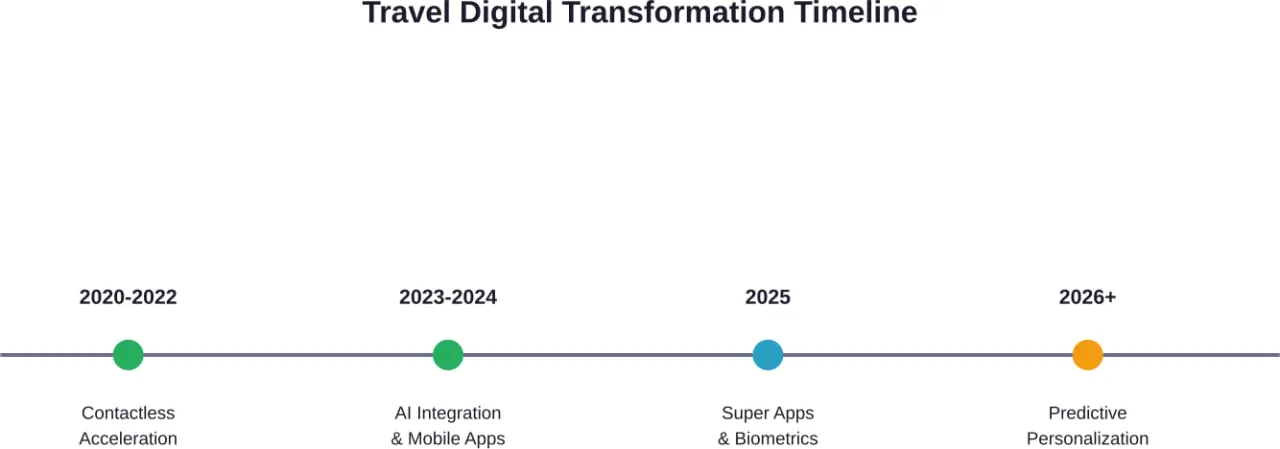
Major phases of digital transformation in the travel industry from 2020 to 2026

Fix What Slows Down Your Travel Operations

Digital transformation in travel is rarely about adding new booking features or apps. The real friction usually sits deeper – disconnected systems, manual processes, and data that doesn’t move cleanly between platforms. A-listware works with companies to analyze how their current setup actually runs, identify where operations break down, and redesign processes so everything from bookings to internal workflows runs more consistently.

They cover the full cycle –from assessing the current state and defining a transformation approach to implementation and ongoing support. That includes modernizing legacy systems, improving integrations, and making data easier to manage across teams. If your travel systems feel harder to manage than they should be, it’s a good moment to step back, review what’s actually happening behind the scenes, and talk to Logiciel de liste A about where to start.

Practical Examples of Digital Transformation

Theory is one thing. Seeing how companies actually implement these technologies is another.

Mobile Booking and Management Apps

Airlines, hotels, and booking platforms have built comprehensive mobile experiences. Travelers can search, compare, book, modify, and cancel trips without ever touching a computer.

The best apps go further. They send proactive notifications about gate changes, baggage status, and local recommendations. They store documents securely. They enable instant customer service through in-app chat.

According to available data, 80% of travelers use mobile apps for trip research. That’s not a nice-to-have feature—it’s table stakes.

Dynamic Pricing and Revenue Management

Sophisticated algorithms adjust prices based on variables including demand patterns, competitor pricing, weather forecasts, local events, booking window, and customer segment.

What used to require teams of analysts happens automatically. The systems learn what works and refine their strategies over time.

Hotels that implement dynamic pricing can see significant revenue increases. Airlines have been doing this for years, but the technology has become accessible to smaller operators.

Chatbots and Virtual Assistants

AI-powered chatbots handle routine customer service inquiries 24/7. They answer questions about bookings, policies, amenities, and destinations without human intervention.

The key is knowing when to escalate to humans. The best implementations recognize complex or emotional situations and transfer smoothly to live agents.

Trip.com Group highlighted AI-powered travel assistance as a core innovation. These systems understand context, remember previous conversations, and can handle multi-step transactions.

Personalized Recommendations

Travel platforms use browsing history, past bookings, and demographic data to suggest relevant destinations, hotels, and activities.

The algorithms consider factors like travel dates, budget range, preferred amenities, and similar user behavior. Someone who books beach resorts in winter will see different recommendations than someone who prefers city hotels.

Done well, personalization feels helpful rather than creepy. It saves time and helps travelers discover options they might have missed.

Challenges in Implementing Digital Transformation

Digital transformation sounds great in theory. In practice, companies face significant obstacles.

Intégration des systèmes existants

Many travel companies run on decades-old reservation and management systems. These platforms weren’t designed to integrate with modern APIs and cloud services.

Replacing them completely is expensive and risky. Integrating them with new technologies is complex and often requires custom middleware solutions.

The temptation is to build workarounds, but this creates technical debt that compounds over time.

Data Privacy and Security

Travel companies handle sensitive personal information: passport details, payment credentials, travel history, and location data.

Regulations like GDPR in Europe and various state laws in the US impose strict requirements on data collection, storage, and usage. Non-compliance carries heavy penalties.

Security breaches damage reputation and customer trust. Implementing robust security while maintaining smooth user experiences requires careful balance.

Résistance organisationnelle

Technology isn’t the hardest part of digital transformation. People are.

Employees accustomed to existing processes resist change. Departments operate in silos and resist integration. Leadership may lack technical understanding or commitment.

WTTC and Deloitte jointly launched an initiative on the Future of Work in travel (announced September 19, 2019), recognizing that workforce transformation needs to accompany digital transformation.

Successful transformations require executive sponsorship, clear communication, training programs, and realistic timelines. Quick wins help build momentum.

Investment and ROI Uncertainty

Digital transformation requires significant upfront investment. Technology costs, consulting fees, training expenses, and productivity losses during transition add up quickly.

UN Tourism noted that understanding and measuring tourism investments remains challenging due to the sector’s multi-dimensional nature and dynamic capital flows, particularly toward Travel Tech startups.

The return on investment often takes years to materialize fully. That makes it hard to justify to boards and shareholders focused on quarterly results.

Investment Trends in Travel Technology

Despite challenges, investment in travel technology continues growing. Investors recognize the sector’s potential and long-term trajectory.

The fDi Tourism Investment Report 2024 (“Global greenfield investment trends in tourism”), released by the Financial Times in collaboration with UN Tourism, examined greenfield investment trends. The report showed that greenfield investments into tourism continue to rise, with growing interest in sustainability and innovation projects.

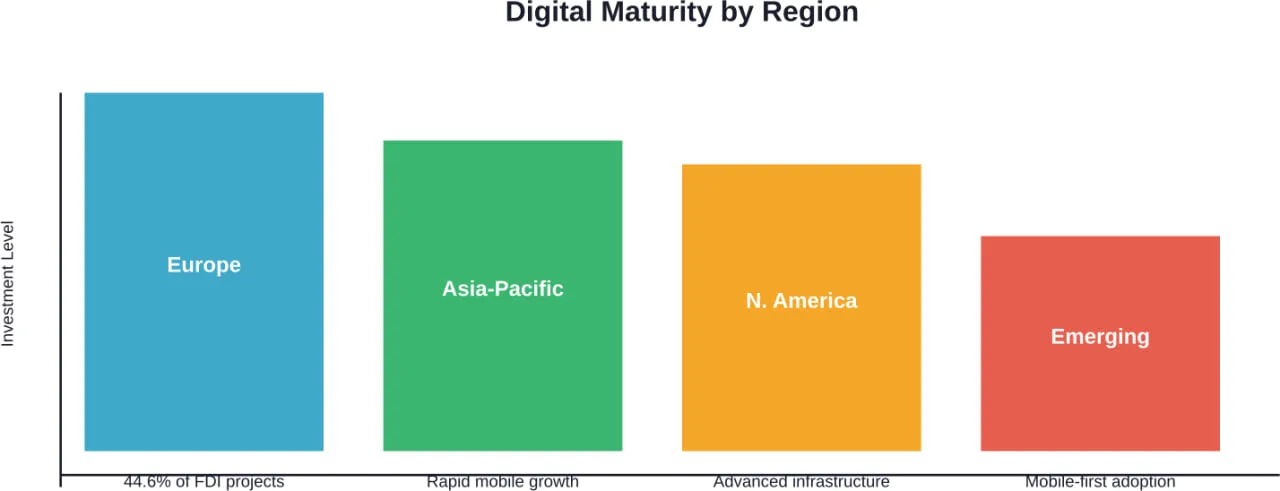
Europe led in tourism FDI projects between 2019 and 2023, attracting 867 projects and accounting for 44.6% of total global investment, according to the fDi Tourism Investment Report 2024. That leadership reflects both the region’s tourism importance and its advanced digital infrastructure.

Capital flows toward Travel Tech startups have grown despite economic uncertainties. UN Tourism noted that the tourism ecosystem’s multi-dimensional nature makes measuring these investments challenging, but the trend is clearly upward.

Areas attracting significant investment include:

  • AI-powered booking and customer service platforms
  • Mobile-first travel management solutions
  • Payment technology and fraud prevention systems
  • Sustainability tracking and carbon offset platforms
  • Data analytics and business intelligence tools
  • Biometric identification and security systems

Future Trends Shaping Travel Technology

Looking ahead to 2026 and beyond, several trends will define the next phase of digital transformation in travel.

Predictive Personalization

AI systems will anticipate traveler needs before they articulate them. Based on context like weather, local events, past behavior, and current location, platforms will proactively suggest experiences and services.

This goes beyond basic recommendations. A system might notice flight delays and automatically rebook connections, reserve lounge access, and arrange ground transportation—all without being asked.

Seamless Multi-Modal Journeys

The boundaries between flights, trains, buses, rental cars, and ride-sharing will blur. Travelers will book complete door-to-door journeys through single platforms that optimize for time, cost, or sustainability.

Real-time adjustments will handle disruptions automatically. If a flight delays, the system will notify the hotel, adjust the rental car pickup time, and reschedule dinner reservations.

Intégration de la durabilité

Environmental concerns are reshaping travel choices. Digital platforms will surface carbon footprint data at every decision point.

According to UN Tourism’s Roadmap for Recovery, the tourism sector accounts for a comparatively low share, accounting for 5% of CO2 emissions. The sector is committed to progressively reducing its carbon emissions and contributing to the transformation toward a green economy.

Booking systems will highlight lower-emission options. They’ll offer verified carbon offset programs. Analytics will help businesses measure and reduce their environmental impact.

Blockchain for Identity and Payments

Distributed ledger technology could solve persistent problems in travel: identity verification, loyalty program interoperability, and payment settlement across borders.

Travelers might store verified credentials in digital wallets that work across airlines, hotels, and countries. Smart contracts could automate refunds and compensation for service failures.

The technology is still maturing, but pilot projects show promise.

Voice and Ambient Interfaces

As voice recognition improves, verbal commands will handle more travel tasks. In hotel rooms, guests will control lighting, temperature, and entertainment by speaking. In cars, voice assistants will manage navigation and reservations.

Ambient computing—where technology fades into the background—will make travel experiences feel more natural and less transactional.

Technology TrendCurrent Status (2026)Expected ImpactAdoption Timeline 
AI PersonalizationWidely deployedHigh – drives bookings and satisfactionNow
Mobile Super AppsGrowing adoptionHigh – consolidates user experience1-2 years
Biometric IDAirport rolloutMedium – speeds processing2-3 years
Blockchain IdentityPilot stageMedium – improves security3-5 years
Predictive AIEarly deploymentHigh – anticipates needs2-4 years
Voice InterfacesLimited useMedium – convenience feature3-5 years

How Travel Companies Can Succeed

Digital transformation isn’t a single project with a defined endpoint. It’s an ongoing process of adaptation and improvement.

Here’s what successful travel companies do differently:

Start with Customer Pain Points

Don’t implement technology because it’s trendy. Identify specific customer frustrations and solve them.

Long wait times? Add mobile check-in. Lack of personalization? Implement recommendation engines. Poor communication? Deploy automated notifications.

Technology should solve real problems, not create new ones.

Think in Platforms, Not Point Solutions

Avoid the temptation to add disconnected tools that solve individual problems. Build or adopt integrated platforms where data flows seamlessly.

When systems connect, the value multiplies. Customer service can see booking history. Marketing can track campaign effectiveness. Operations can predict demand.

Investir dans l'infrastructure de données

Advanced analytics and AI require clean, organized data. Most companies discover their data is scattered across incompatible systems, formatted inconsistently, and filled with errors.

Cleaning and organizing data isn’t glamorous, but it’s essential. Companies that do this groundwork see much better results from their technology investments.

Prioritize Security and Privacy

Build security into systems from the start, not as an afterthought. Encrypt sensitive data. Implement strong authentication. Conduct regular security audits.

Be transparent about data collection and usage. Give travelers control over their information. Privacy-conscious practices build trust and ensure compliance.

Focus on Change Management

Technology transformation requires organizational transformation. Invest in training programs. Communicate the vision clearly. Celebrate early wins. Support employees through the transition.

The Deloitte and WTTC Future of Work initiative recognized that workforce development must accompany technological change. Companies need people who understand both travel operations and digital tools.

Regional Differences in Digital Adoption

Digital transformation isn’t happening uniformly worldwide. Regional differences in infrastructure, regulations, and consumer behavior shape adoption patterns.

Europe leads in investment but faces strict data privacy regulations. Asia-Pacific shows rapid mobile adoption but diverse market maturity. North America has advanced infrastructure but fragmented regulations. Emerging markets leapfrog desktop entirely, going straight to mobile-first solutions.

Travel companies operating globally need strategies that adapt to regional realities while maintaining consistent brand experiences.

Comparative digital transformation investment and adoption across global regions

Questions fréquemment posées

  1. What is digital transformation in the travel industry?

Digital transformation in travel means integrating modern technologies like AI, mobile apps, data analytics, and contactless systems into every aspect of the travel experience. It’s about creating seamless, personalized journeys while improving operational efficiency and business outcomes.

  1. How much does digital transformation cost for travel companies?

Costs vary dramatically based on company size, existing systems, and transformation scope. Small operators might spend $50,000-$200,000 on focused improvements like mobile apps or booking system upgrades. Large enterprises can invest millions in comprehensive platform overhauls. The key is starting with high-ROI projects that fund subsequent phases.

  1. What are the biggest challenges in travel digital transformation?

The main obstacles include integrating or replacing legacy systems, ensuring data security and privacy compliance, overcoming organizational resistance to change, and justifying long-term ROI to stakeholders. Technical challenges are often easier to solve than human and organizational ones.

  1. How are travelers responding to digital innovations?

Travelers have embraced digital tools enthusiastically. According to Booking.com, 80% use mobile apps when researching trips. IATA found that nearly 91% of passengers want trusted traveler programs that use technology to speed security processing. The demand for digital, contactless experiences remains strong even after pandemic concerns have faded.

  1. What role does AI play in travel digital transformation?

AI powers personalized recommendations, dynamic pricing, chatbot customer service, predictive maintenance, and demand forecasting. It analyzes massive datasets to identify patterns humans would miss. The WTTC identified AI-powered travel assistance as one of 16 transformative technologies reshaping the industry.

  1. Is digital transformation only for large travel companies?

Not at all. Small and medium-sized operators can benefit significantly from digital tools. Cloud-based platforms make enterprise-grade technology accessible at affordable prices. Mobile apps, online booking systems, automated marketing, and data analytics are available to businesses of all sizes. Starting small with focused improvements often works better than attempting massive overhauls.

  1. How does digital transformation impact sustainability in travel?

Digital tools help track and reduce environmental impact. Booking platforms surface carbon footprint data. Analytics identify inefficiencies. Optimization algorithms reduce fuel consumption and waste. According to UN Tourism, the sector accounts for approximately 5% of CO2 emissions and is committed to progressively reducing that through technology and innovation.

Aller de l'avant avec la transformation numérique

Digital transformation in travel isn’t optional anymore. It’s the baseline for staying competitive.

Travelers expect seamless, personalized experiences across every touchpoint. They want speed, convenience, and transparency. Companies that deliver these experiences grow. Those that don’t lose market share.

The good news? The technology exists and is becoming more accessible. Cloud platforms, AI services, and mobile development tools have democratized capabilities once available only to tech giants.

The challenge is execution. Successful transformation requires clear strategy, executive commitment, customer focus, and patience. It’s a marathon, not a sprint.

Start with customer pain points. Implement solutions that deliver measurable value. Build on success. And remember—digital transformation is ongoing. The moment you think you’re done, you’re falling behind.

The travel industry has always been about connecting people to places and experiences. Digital technology makes those connections richer, easier, and more meaningful. Companies that embrace this reality will thrive in 2026 and beyond.

Transformation numérique des flux de documents en 2026

Résumé rapide : La transformation numérique des flux documentaires convertit les processus manuels sur papier en systèmes numériques automatisés qui améliorent considérablement l'efficacité, réduisent les erreurs et garantissent la conformité. Les organisations qui mettent en œuvre des flux documentaires automatisés constatent généralement des réductions 70-80% du temps d'inactivité des documents et une baisse significative des coûts opérationnels. Les solutions modernes combinent la capture intelligente, le routage automatisé, l'extraction de données alimentée par l'IA et une sécurité robuste pour transformer la façon dont les documents circulent dans l'entreprise.

La manipulation manuelle des documents reste l'un des plus grands gouffres de productivité dans les organisations modernes. Les dossiers papier sont égarés. Les processus d'approbation sont bloqués dans la boîte de réception de quelqu'un. Les équipes perdent des heures à rechercher des informations qui devraient être accessibles instantanément.

Cela vous rappelle quelque chose ?

Le passage à des flux de documents numériques ne consiste pas seulement à éliminer le papier, mais aussi à revoir fondamentalement la façon dont l'information circule dans une organisation. Et les résultats parlent d'eux-mêmes.

Pourquoi la transformation du flux de documents est importante aujourd'hui

Selon l'AIIM, les systèmes de gestion de documents stockent, gèrent et suivent les documents électroniques et les images électroniques d'informations sur papier capturées par des scanners de documents. Mais voilà : la gestion traditionnelle des documents ne fait qu'effleurer les possibilités offertes par l'automatisation moderne des flux de travail.

Une étude citée par IDC a montré que les organisations les plus avancées en matière de numérisation avaient une avance de 45% sur les revenus par rapport à celles qui étaient à la traîne. Il ne s'agit pas d'une amélioration marginale. Il s'agit d'un gouffre concurrentiel.

Les données de Forrester montrent que 72% des personnes interrogées ont signalé des problèmes d'oubli ou de perte de documents dans les flux de travail traditionnels. Chaque document manquant représente une perte de temps, des décisions retardées et des employés frustrés.

La crise du flux de documents dans les organisations traditionnelles

La plupart des entreprises fonctionnent encore avec des systèmes hybrides qui créent des goulets d'étranglement partout. Les documents papier arrivent et nécessitent une saisie manuelle des données. Les fichiers numériques sont stockés dans des lecteurs partagés sans routage clair ni contrôle de version. Les processus d'approbation reposent sur des chaînes de courrier électronique dont il est impossible d'assurer le suivi.

Le coût cumulé ? Les entreprises consacrent d'innombrables heures à des tâches qu'une automatisation intelligente pourrait traiter en quelques secondes.

Les flux de documents manuels souffrent de points d'échec prévisibles :

  • Les documents restent dans les files d'attente en attendant l'attention d'une personne.
  • Les conventions de dénomination incohérentes rendent la recherche presque impossible.
  • Il n'existe pas de pistes d'audit permettant de savoir qui a accédé à quoi ou l'a modifié.
  • Les risques de non-conformité se multiplient à mesure que les réglementations se durcissent
  • Le partage incontrôlé de documents est à l'origine de vulnérabilités en matière de sécurité

Il ne s'agit pas d'inconvénients mineurs. Il s'agit de problèmes structurels fondamentaux auxquels l'automatisation s'attaque directement.

Composants essentiels des flux de documents numériques

Pour transformer les flux de documents, il faut comprendre les technologies et les processus clés qui rendent l'automatisation efficace. Chaque composant joue un rôle spécifique dans la création d'un traitement transparent et intelligent des documents.

Capture intelligente de documents

La capture moderne va bien au-delà de la simple numérisation. Les systèmes intelligents reconnaissent automatiquement les types de documents, extraient les données pertinentes et valident les informations par rapport aux règles de l'entreprise, le tout sans intervention manuelle.

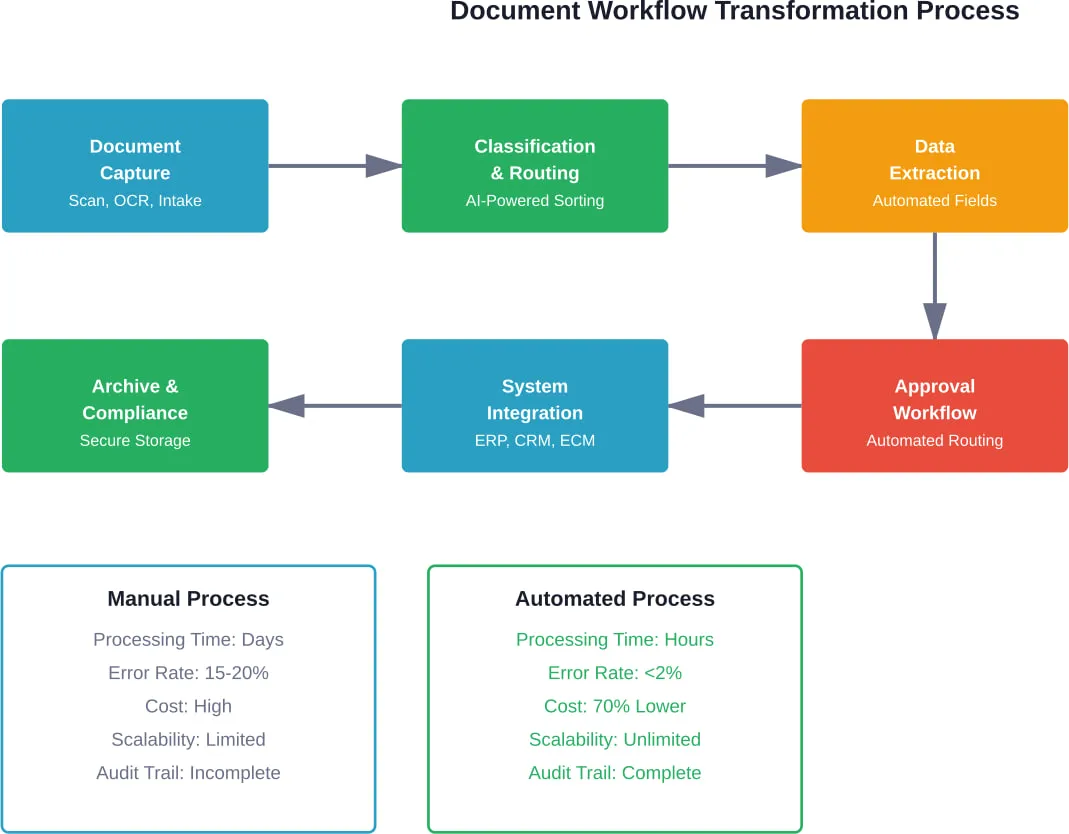
Les organisations qui mettent en œuvre une classification et un routage automatisés signalent généralement une réduction de 70-80% du temps d'inactivité des documents. C'est la différence entre des documents qui restent inactifs pendant des jours et des documents qui traversent les chaînes d'approbation en quelques heures.

Les systèmes de capture avancés gèrent des sources d'entrée multiples : papier numérisé, pièces jointes aux courriels, formulaires web, téléchargements mobiles. Le système traite tout par le biais de flux de travail unifiés, quelle que soit l'origine.

Classification automatisée du contenu et routage

Une fois capturés, les documents doivent parvenir aux bonnes personnes au bon moment. Les systèmes de routage automatisés analysent le contenu, identifient les types de documents et envoient les fichiers aux flux de travail appropriés sans tri manuel.

C'est là que les choses deviennent intéressantes. Le routage intelligent ne se contente pas de suivre des règles statiques, il apprend à partir de modèles. Le système reconnaît que les factures de certains fournisseurs nécessitent des niveaux d'approbation particuliers. Les modifications de contrat sont automatiquement soumises à un examen juridique sur la base de la détection des clauses.

Ces systèmes de routage intelligents réduisent considérablement le temps d'attente des documents, remédiant ainsi à l'une des inefficacités les plus importantes des flux de documents traditionnels.

Comparaison des processus manuels et automatisés de traitement des documents montrant des gains d'efficacité et une réduction des taux d'erreur

Extraction et validation des données par l'IA

L'extraction de données à partir de documents nécessitait autrefois des armées d'employés chargés de la saisie des données. L'IA moderne change complètement cette équation.

Les solutions de traitement intelligent des documents combinent les capacités de l'IA pour révolutionner l'intégration et le traitement des documents. Selon l'étude de l'AIIM, ces solutions s'avèrent particulièrement utiles dans les secteurs des services financiers, de la banque, de l'assurance et de la santé - des secteurs où le volume de documents et les exigences de précision sont tous deux extraordinairement élevés.

La technologie reconnaît les champs dans divers formats de documents : factures, bons de commande, contrats, formulaires, reçus. Elle extrait les points de données pertinents et les valide par rapport aux règles de l'entreprise, en signalant les anomalies pour qu'elles fassent l'objet d'un examen humain.

En réalité, le système n'a pas besoin d'être parfait. Les meilleures pratiques recommandent d'automatiser 70-80% du traitement des documents d'une organisation tout en réservant l'intervention humaine experte pour le dernier 20%. Cet équilibre permet de maximiser l'efficacité tout en maintenant le contrôle de la qualité.

Des stratégies de mise en œuvre qui fonctionnent

Une transformation numérique réussie ne se fait pas du jour au lendemain. Les organisations qui s'empressent de remplacer tous les systèmes créent souvent plus de problèmes qu'elles n'en résolvent.

Commencer par des flux de travail à fort impact

Identifier les processus à forte intensité documentaire les plus pénibles : traitement des factures, gestion des contrats, intégration des employés, applications clients. Cibler un ou deux flux de travail dans un premier temps plutôt que de tenter une transformation simultanée à l'échelle de l'entreprise.

Les gains rapides créent une dynamique. Lorsque le service financier voit le temps de traitement des factures passer de quelques jours à quelques heures, les autres services commencent à poser des questions. Cette demande interne entraîne une adoption plus large, bien plus efficacement que les mandats imposés d'en haut.

S'intégrer aux systèmes existants

Les flux de documents ne sont pas isolés. L'étude de l'AIIM indique que les entreprises gèrent un nombre croissant de systèmes de contenu - CRM, ERP, plateformes de collaboration, applications sectorielles spécialisées.

Le défi ? La gestion de plusieurs systèmes entraîne des coûts supplémentaires en termes de licences, de maintenance et d'assistance. Une transformation efficace du flux de travail nécessite une intégration qui relie les processus documentaires à ces systèmes d'entreprise existants.

Les plateformes de workflow modernes fournissent des API et des connecteurs qui relient les référentiels de documents aux applications d'entreprise. Lorsqu'une facture est approuvée dans le système de flux de travail, elle est automatiquement mise à jour dans l'ERP. L'achèvement de la signature d'un contrat déclenche la mise à jour des enregistrements CRM.

Ces intégrations éliminent le transfert manuel de données et garantissent la cohérence des informations entre les systèmes.

Donner la priorité à la sécurité et à la conformité dès le premier jour

La transformation numérique ne réduit pas les exigences de conformité - elle en accroît la visibilité. L'AIIM insiste sur le fait que les stratégies de conformité et d'archivage doivent commencer dès le début, et non pas après coup.

Les flux de travail automatisés créent des pistes d'audit complètes indiquant qui a accédé aux documents, quelles modifications ont été apportées et quand les approbations ont eu lieu. Les politiques de conservation permettent d'archiver ou de purger automatiquement les documents en fonction des exigences réglementaires.

Les contrôles de sécurité précisent exactement qui peut consulter, modifier ou partager des documents sensibles. Le cryptage protège les données en transit et au repos. Le contrôle des versions empêche les écrasements accidentels ou les modifications non autorisées.

Composant de sécuritéRisque lié au flux de travail manuelProtection automatisée des flux de travail
Contrôle d'accèsPartage de documents non tracésAutorisations basées sur les rôles avec journaux d'audit
Gestion des versionsPlusieurs copies contradictoiresSource unique de vérité avec historique des versions
Cryptage des donnéesFichiers stockés en clairCryptage de bout en bout de tous les documents
Piste d'auditPas de visibilité sur l'historique des accèsConsignation complète de toutes les interactions avec les documents
Politique de conservationArchivage et suppression manuelsGestion automatisée du cycle de vie
Rapport de conformitéCompilation manuelle fastidieuseRapports instantanés avec documentation complète

Repensez le fonctionnement de vos flux documentaires

La transformation numérique est souvent réduite aux outils, mais dans les processus à forte densité de documents, le vrai problème est généralement la façon dont les systèmes et les flux de travail sont structurés. A-listware travaille avec les entreprises pour examiner comment les opérations se déroulent aujourd'hui, identifier les lacunes entre les systèmes et remodeler les processus afin que les documents circulent sans manipulation manuelle constante ou duplication.

Ils couvrent l'ensemble du cycle - de l'évaluation de la configuration actuelle et de la définition d'une approche de transformation à la mise en œuvre et à l'assistance continue. Cela inclut la modernisation des systèmes existants, l'amélioration de l'intégration entre les outils et la cohérence du flux de données entre les équipes. Si votre configuration actuelle ralentit encore les gens, il est judicieux d'obtenir une vision claire et externe de ce qui est à l'origine de ce ralentissement. Logiciel de liste A et voir ce qui peut être simplifié.

Mesurer le succès : Des analyses qui comptent

Les initiatives de transformation numérique ont besoin de mesures concrètes. Des objectifs vagues tels que “améliorer l'efficacité” ne permettent pas d'obtenir un retour d'information exploitable.

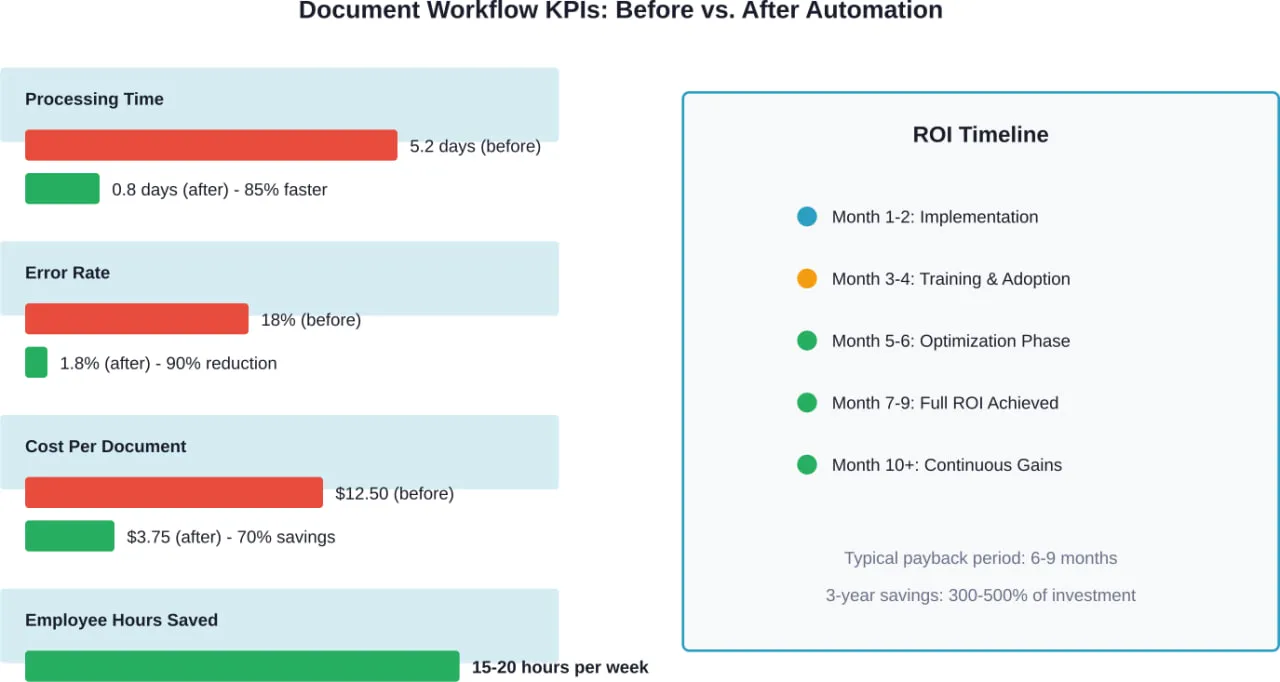
Les indicateurs clés de performance pour la transformation du flux de documents sont les suivants

  • Temps moyen de traitement des documents, de la réception à l'achèvement
  • Taux d'erreur dans l'extraction et l'acheminement des données
  • Coût par document traité
  • Temps consacré par les employés aux tâches liées aux documents
  • Taux de réussite des audits de conformité
  • Temps de récupération des documents en cas de besoin d'information

Les organisations devraient établir des mesures de référence avant l'automatisation, puis suivre les améliorations en continu. Les données révèlent quels flux de travail offrent le meilleur retour sur investissement et où les goulets d'étranglement persistent.

Mais attendez. Les mesures seules ne permettent pas d'améliorer les choses. Des sessions de révision régulières doivent permettre d'examiner les données et d'identifier les possibilités d'optimisation. Peut-être que certains types de documents nécessitent encore une intervention manuelle excessive. Les règles de routage doivent peut-être être affinées sur la base des schémas d'utilisation réels.

L'amélioration continue distingue les organisations qui obtiennent une valeur durable de celles qui mettent en œuvre l'automatisation une fois pour toutes.

Mesures de performance clés démontrant les améliorations typiques après la mise en œuvre de flux de travail documentaires automatisés

Défis communs et comment les surmonter

La transformation numérique semble être une bonne chose en théorie. La réalité de la mise en œuvre apporte des obstacles prévisibles.

Résistance au changement

Les employés qui se sentent à l'aise avec les processus existants résistent souvent aux nouveaux systèmes, même lorsque ces systèmes faciliteraient leur travail. La solution n'est pas une meilleure technologie, mais une meilleure gestion du changement.

Impliquer les utilisateurs finaux dès le début du processus de sélection. Lorsque les utilisateurs se sentent écoutés et que leurs besoins sont pris en compte dans la solution finale, l'adoption de la solution s'améliore considérablement. Les sessions de formation doivent mettre l'accent sur les avantages plutôt que sur les fonctionnalités.

Complexité de l'intégration

Les systèmes hérités font rarement bon ménage avec les plateformes modernes. Les organisations sont confrontées à des choix : créer des intégrations personnalisées, utiliser des plates-formes intermédiaires ou remplacer entièrement les systèmes incompatibles.

La bonne réponse dépend des circonstances spécifiques. Les systèmes critiques dont le remplacement n'est pas prévu nécessitent des solutions d'intégration. Les plates-formes vieillissantes dont le remplacement est prévu ne justifient peut-être pas un investissement dans l'intégration.

Variabilité de la qualité des documents

L'extraction assistée par l'IA fonctionne parfaitement avec des documents propres et structurés. Elle a du mal avec les scans de mauvaise qualité, les notes manuscrites ou les formats incohérents.

La solution consiste à améliorer la qualité de la capture : meilleurs scanners, applications mobiles de capture avec contrôle de la qualité, formulaires numériques normalisés. Pour les documents qui restent problématiques, des approches hybrides permettent aux humains de gérer les exceptions tandis que l'automatisation traite les cas standard.

Le rôle de l'intelligence artificielle dans les flux de documents modernes

L'IA n'est pas un simple mot à la mode dans le domaine de l'automatisation des documents, c'est la technologie habilitante qui rend possible le traitement intelligent.

Une enquête menée par Keypoint Intelligence auprès des utilisateurs finaux montre que 95% des entreprises américaines explorent au moins l'IA pour les flux de documents et l'automatisation, en s'éloignant des tâches manuelles et des systèmes cloisonnés. L'objectif ? Rendre les flux de travail plus intelligents, plus rapides et plus sûrs.

Les modèles d'apprentissage automatique s'améliorent continuellement au fur et à mesure qu'ils traitent un plus grand nombre de documents. Le système qui, au départ, nécessite des corrections humaines fréquentes, traite progressivement les cas particuliers de manière autonome. La reconnaissance des formes permet d'identifier des anomalies qui pourraient échapper à l'homme : factures en double, schémas d'approbation suspects, violations de la conformité.

Le traitement du langage naturel permet d'extraire le sens d'un texte non structuré. Le système ne se contente pas de lire les clauses des contrats ; il comprend leurs implications pour les dates de renouvellement, les conditions de paiement et l'exposition à la responsabilité.

Mais voici le point essentiel : L'IA complète la prise de décision humaine et ne la remplace pas. La technologie se charge de la classification répétitive, de l'extraction des données et de l'acheminement. Les humains se concentrent sur les exceptions, les décisions stratégiques et la résolution de problèmes complexes nécessitant un jugement.

Applications spécifiques à l'industrie

La transformation des flux documentaires varie d'un secteur à l'autre en fonction des exigences spécifiques et de l'environnement réglementaire.

Services financiers et bancaires

Les banques traitent d'énormes volumes de documents : demandes de prêt, ouvertures de compte, déclarations de conformité, enregistrements de transactions. Les flux de travail automatisés accélèrent l'accueil des clients tout en maintenant des normes de conformité rigoureuses.

Les contrôles de lutte contre le blanchiment d'argent, la vérification de la connaissance du client et l'évaluation du crédit bénéficient tous d'un traitement intelligent des documents qui extrait les données et les valide dans plusieurs bases de données simultanément.

Soins de santé

Les organismes de soins de santé sont confrontés à des défis uniques pour concilier l'accessibilité et la confidentialité. Les dossiers des patients doivent être instantanément disponibles pour les prestataires autorisés tout en restant totalement sécurisés contre les accès non autorisés.

L'automatisation des flux de travail permet de gérer la documentation clinique, la vérification des assurances, le traitement des demandes de remboursement et les rapports réglementaires. La technologie garantit la conformité avec les exigences HIPAA tout en améliorant la coordination des soins.

Juridique

Les cabinets d'avocats gèrent les documents d'enquête, les contrats, les dossiers et les communications avec les clients. La recherche intelligente et la classification automatisée aident les avocats à trouver les précédents pertinents et les documents d'appui dans des référentiels documentaires massifs.

Les outils d'analyse des contrats permettent d'identifier les clauses clés, de repérer les risques potentiels et de suivre les obligations dans des milliers d'accords - un travail qui nécessiterait des armées d'associés juniors utilisant des méthodes traditionnelles.

Construire une feuille de route pour la transformation du flux de documents

La planification stratégique détermine si les initiatives de transformation apportent de la valeur ou créent des perturbations coûteuses.

Les organisations devraient adopter une approche progressive :

  1. Évaluation : Documenter les flux de travail actuels, identifier les points problématiques et mesurer les performances de base.
  2. Établissement de priorités : Classer les flux de travail en fonction de leur impact potentiel et de la complexité de leur mise en œuvre
  3. Preuve de concept : Mettre en œuvre l'automatisation d'un flux de travail à fort impact pour en démontrer la valeur
  4. Expansion : Appliquer l'automatisation à d'autres flux de travail sur la base des enseignements tirés.
  5. Optimisation : Améliorer en permanence les processus en utilisant les analyses et le retour d'information des utilisateurs.
  6. L'innovation : Explorer les capacités émergentes telles que l'IA avancée et l'analyse prédictive.

Le délai varie en fonction de la taille et de la complexité de l'organisation. Les petites et moyennes entreprises peuvent achever la mise en œuvre initiale en 3 à 6 mois. Les déploiements d'entreprises couvrant plusieurs départements et zones géographiques nécessitent souvent 12 à 18 mois pour une transformation complète.

Tendances futures de la technologie du flux de documents

L'évolution technologique ne s'arrête jamais. Plusieurs tendances émergentes vont remodeler les flux de documents au cours des prochaines années.

Les modèles d'IA avancés traiteront des documents de plus en plus complexes avec une formation minimale. Les capacités d'apprentissage zéro permettent aux systèmes de traiter de nouveaux types de documents sans avoir besoin d'un grand nombre d'exemples.

L'intégration de la blockchain fournit des pistes d'audit immuables pour les flux de travail critiques en matière de conformité. Les contrats intelligents exécutent automatiquement les actions déclenchées par les documents lorsque les conditions sont remplies.

Le traitement en périphérie permet la capture de documents et le traitement initial sur des appareils mobiles avant que les données n'atteignent les systèmes centraux, ce qui améliore la vitesse tout en réduisant les besoins en bande passante.

Les analyses prédictives anticipent les goulets d'étranglement du flux de travail et les besoins en ressources avant qu'ils ne deviennent des problèmes. Le système propose un routage optimal basé sur la distribution actuelle de la charge de travail et sur des modèles historiques.

Questions fréquemment posées

  1. Quel est le délai de retour sur investissement typique pour l'automatisation des flux documentaires ?

La plupart des organisations constatent un retour sur investissement positif dans les 6 à 9 mois suivant la mise en œuvre. Les avantages initiaux proviennent de la réduction du temps de traitement et des taux d'erreur. Les gains à long terme découlent de l'amélioration de la conformité, de l'amélioration de la prise de décision et de la libération des capacités des employés pour des tâches à plus forte valeur ajoutée. Les économies réalisées sur trois ans atteignent généralement 300-500% des coûts d'investissement initiaux.

  1. Les petites entreprises peuvent-elles bénéficier de l'automatisation des flux documentaires ou celle-ci est-elle réservée aux grandes entreprises ?

Les petites entreprises bénéficient souvent d'avantages proportionnellement plus importants, car le traitement manuel des documents représente un pourcentage plus élevé du temps total du personnel. Les solutions modernes basées sur le cloud offrent des points d'entrée abordables sans investissement majeur dans l'infrastructure. Commencer par un seul flux de travail, comme le traitement des factures ou l'accueil des clients, permet de démontrer la valeur de la solution avant de l'étendre à d'autres processus.

  1. Comment le traitement automatisé des documents traite-t-il les exceptions et les cas inhabituels ?

Les systèmes intelligents transmettent les exceptions aux réviseurs humains en fonction de seuils de confiance. Lorsque l'IA rencontre un type de document qu'elle ne reconnaît pas ou des données qui ne sont pas validées correctement, elle signale l'élément pour qu'il soit examiné manuellement plutôt que de forcer une décision potentiellement incorrecte. Les meilleures pratiques recommandent d'automatiser 70-80% du traitement des documents d'une organisation et de réserver l'expertise humaine aux 20% situations complexes restantes.

  1. Quelles mesures de sécurité protègent les documents sensibles dans les flux de travail automatisés ?

Les plateformes de flux de travail modernes mettent en œuvre plusieurs couches de sécurité : cryptage de bout en bout des données en transit et au repos, contrôles d'accès basés sur les rôles limitant les personnes autorisées à consulter ou à modifier des types de documents spécifiques, pistes d'audit complètes retraçant tous les accès et toutes les modifications, et politiques de conservation automatisées garantissant que les documents sont archivés ou purgés conformément aux exigences réglementaires. Ces contrôles dépassent souvent la sécurité possible avec des flux de travail numériques manuels ou sur papier.

  1. Est-il difficile d'intégrer l'automatisation du traitement des documents dans les systèmes d'entreprise existants ?

La complexité de l'intégration dépend des systèmes spécifiques impliqués. La plupart des plateformes de workflow modernes proposent des connecteurs prédéfinis pour les ERP, les CRM et les outils de collaboration les plus courants. Les systèmes hérités peuvent nécessiter le développement d'API personnalisées ou de solutions middleware. Les organisations doivent évaluer les exigences d'intégration dès le début du processus de sélection et prendre en compte les efforts d'intégration dans les calendriers de mise en œuvre.

  1. Qu'advient-il des documents papier existants lors de la mise en œuvre de flux de travail numériques ?

En règle générale, les entreprises archivent les documents essentiels en les numérisant et en les indexant. La numérisation complète des archives n'est pas toujours nécessaire - de nombreuses entreprises mettent en œuvre des flux de travail numériques tournés vers l'avenir tout en conservant les archives papier existantes conformément aux calendriers de conservation. La priorité est donnée à la numérisation des documents fréquemment consultés et de ceux qui sont soumis à des exigences de conformité permanentes.

  1. Comment les employés réagissent-ils généralement à l'automatisation des flux de travail et comment les entreprises peuvent-elles encourager leur adoption ?

La résistance initiale est fréquente, en particulier chez les employés qui ont acquis une expertise des processus existants. Pour réussir l'adoption, il faut impliquer les utilisateurs finaux dans la sélection du système, fournir une formation complète axée sur les avantages plutôt que sur les fonctionnalités, commencer par les flux de travail les plus pénibles où les améliorations sont immédiatement évidentes, et célébrer les premières victoires pour créer une dynamique. Lorsque les employés constatent que l'automatisation élimine les tâches frustrantes, l'adoption s'accélère naturellement.

Faire le premier pas vers la transformation

La transformation numérique des flux documentaires n'est pas un projet unique avec une finalité définie. Il s'agit d'une évolution permanente vers une gestion de l'information plus efficace, plus sûre et plus intelligente.

Les organisations qui prospèrent n'attendent pas de solutions parfaites ou de certitude totale. Elles commencent par un flux de travail, tirent des enseignements de la mise en œuvre et étendent systématiquement leurs activités en fonction des résultats obtenus.

Les données montrent régulièrement que les organisations qui mettent en œuvre une classification et un routage automatisés enregistrent généralement une réduction de 70 à 80% du temps d'inactivité des documents en attente d'attention, des taux d'erreur nettement inférieurs et des économies substantielles. Les organisations plus avancées en matière de numérisation affichent un avantage de 45% en termes de revenus par rapport à celles qui sont à la traîne.

Ces chiffres représentent un véritable avantage concurrentiel sur des marchés où l'efficacité et l'agilité déterminent le succès.

La question n'est pas de savoir s'il faut transformer les flux de documents. Il s'agit de savoir s'il faut commencer maintenant ou regarder les concurrents prendre de l'avance pendant que votre organisation continue à se débattre avec des processus manuels qui font perdre du temps, de l'argent et du potentiel aux employés.

Commencez par identifier un flux de travail à forte intensité documentaire qui crée des difficultés considérables dans votre entreprise. Cartographiez le processus actuel, mesurez les performances de base et explorez les solutions d'automatisation conçues pour ce cas d'utilisation spécifique.

Cette transformation unique du flux de travail fournit la preuve du concept, renforce la confiance de l'organisation et crée un élan pour un changement plus large. La technologie fonctionne. L'analyse de rentabilité est claire. Ce qu'il faut, c'est s'engager à faire le premier pas.

Digital Transformation for Real Estate: 2026 Guide

Résumé rapide : Digital transformation in real estate involves integrating advanced technologies like AI, IoT, and proptech platforms to modernize property operations, enhance tenant experiences, and improve decision-making. As of 2026, the global proptech market is projected to reach $44.59 billion, with AI-driven workflows and data analytics leading the change. Real estate organizations embracing digital transformation gain competitive advantages through operational efficiency, sustainability, and responsive property management.

What Digital Transformation Means for Real Estate

The real estate industry has historically lagged behind other sectors in technology adoption. That’s changing fast.

Digital transformation in real estate represents the fundamental shift from traditional, paper-based processes to integrated technology ecosystems. This involves adopting digital tools across the entire property lifecycle—from acquisition and development to operations and tenant engagement.

According to MIT Executive Education research, Business Fortune Insights projects the global proptech market to grow from $44.59 billion in 2026 to $104.57 billion by 2034. This explosive growth reflects the urgency organizations feel to modernize operations as tenants, investors, and regulators increasingly demand sustainability and real-time insight.

But here’s the thing: digital transformation isn’t just about buying software. McKinsey research from March 2026 emphasizes that 2026 will be the year leaders redesign end-to-end workflows to drive true performance and competitive advantage. Agentic AI—artificial intelligence that can take actions and make decisions autonomously—is moving real estate beyond pilot projects into actual operating impact.

The Current State of Digitalization

Real talk: the industry still has considerable catching up to do.

MIT Sloan research found that only 58% of real estate companies have a digital strategy in place. A digitalization study by ZIA and EY Real Estate that surveyed 220 employees from real estate-related companies, paints a more nuanced picture than the typical narrative of complete technological stagnation.

Some segments are advancing faster than others. According to the National Association of REALTORS® 2025 Technology Survey, eSignature (79%) remains the most widely used technology, followed by social media (75%). The top tech tools producing the highest number of quality leads in the last 12 months were social media, CRM systems, and local MLS platforms.

Commercial real estate faces different challenges. JLL research from October 2025 reveals that despite low maturity in AI adoption, the speed of AI-related change is unprecedented. Organizations are selecting AI pilots based on business impact rather than low-hanging fruit—a strategic shift that signals serious commitment.

Upgrade Your Real Estate Platforms With Dedicated Technical Talent

Implementing digital tools for property management, automated valuations, or virtual viewings requires specific technical expertise that is often difficult to source through traditional hiring. For real estate firms and developers, the bottleneck is usually finding and retaining developers who can integrate these platforms with existing CRM and listing databases. A-Listware solves this by providing dedicated development teams and IT staff augmentation, allowing you to build and scale your digital ecosystem without the overhead of a large internal HR department.

  • Talents techniques vérifiés : Access developers experienced in cloud architecture, mobile apps, and data-driven platforms.
  • Reduced Operational Costs: Eliminate the high expenses of local recruitment, employee benefits, and office space.
  • Rapid Team Scaling: Expand your technical capacity quickly for specific project launches or platform upgrades.
  • Collaboration directe : Dedicated specialists work as an extension of your business to maintain and update your software.

Commencez votre transformation numérique avec A-Listware.

Key Technologies Driving Transformation

Several technology categories are reshaping the real estate landscape. Understanding these tools helps organizations prioritize investments.

Six primary technology categories driving digital transformation across residential and commercial real estate operations

Intelligence artificielle et apprentissage automatique

AI represents the most transformative technology entering real estate in 2026.

McKinsey’s March 2026 analysis highlights that agentic AI—systems capable of autonomous action and decision-making—is moving the industry beyond experimental phases. These systems redesign workflows from the ground up rather than simply automating existing processes.

According to JLL’s Global Real Estate Technology Survey from October 2025, real estate investors are fast-tracking AI implementation after seeing wider societal transformation. Technology now provides a competitive edge in the current economic climate.

Practical AI applications in real estate include predictive maintenance, automated property valuations, tenant sentiment analysis, lease abstraction, portfolio optimization, and investment risk modeling. The technology greatly reduces the cost and time it takes to deploy models, enabling brokerage firms, title companies, lenders, and operators to experiment at unprecedented pace.

Data Analytics Challenges

Here’s where it gets tricky. AI needs data—and real estate data is often a mess.

According to Deloitte research cited in competitor content, only 14% of respondents believe their companies have well-structured data collection and management processes in place with robust privacy policies. This creates a fundamental barrier to AI adoption.

Existing technology maturity gaps widen with AI rather than close through leapfrogging. Organizations that neglected foundational digital infrastructure now face compounded challenges when implementing advanced analytics.

Benefits Driving Adoption

Despite implementation challenges, the benefits of digital transformation are compelling enough to drive continued investment.

Enhanced Tenant Experience

Modern tenants expect technology-enabled conveniences. Period.

According to cited research, 72% of tenants care about tech perks when choosing a property. Mobile apps and self-service portals offering instant access allow tenants to control their environment with a tap or swipe.

The World Economic Forum’s Taskforce on Digital Transformation identifies tenant experience as a primary value driver for commercial real estate technology adoption. With widespread hybrid work adoption creating uncertainty about office futures, understanding and responding to occupant preferences becomes essential.

Gains d'efficacité opérationnelle

Digital tools dramatically reduce manual workload and operational costs.

Automated lease administration, digital document management, IoT-enabled predictive maintenance, and integrated property management systems free staff from repetitive tasks. This allows teams to focus on strategic activities that drive value rather than administrative overhead.

BCG research from March 2026 emphasizes that real estate value now concentrates around properties functioning as part of broader ecosystems—locations delivering experiences, identity, and interaction rather than just space. Achieving this requires operational sophistication that only digital systems can provide.

Prise de décision fondée sur les données

Real estate has historically relied heavily on intuition and local knowledge. Digital transformation enables evidence-based decisions.

Advanced analytics provide real-time market intelligence, portfolio performance metrics, risk assessment capabilities, and investment modeling. This reduces uncertainty in capital allocation decisions and improves returns.

Benefit CategoryZone d'impactPrincipaux indicateurs
Tenant ExperienceSatisfaction & Retention72% of tenants prioritize tech amenities
Efficacité opérationnelleRéduction des coûtsAutomated workflows reduce manual tasks
Analyse des donnéesInvestment PerformanceEvidence-based capital allocation
DurabilitéESG ComplianceReal-time energy monitoring and reporting
Gestion des risquesPortfolio ProtectionPredictive modeling for market changes

Implementation Challenges

Understanding obstacles helps organizations plan realistic transformation roadmaps.

Legacy Systems and Integration

Most real estate organizations operate patchwork technology environments built incrementally over decades.

Integrating new digital platforms with legacy systems presents significant technical challenges. Data often lives in incompatible formats across disconnected databases. Migration risks include data loss, workflow disruption, and user resistance.

Data Quality and Management

Poor data infrastructure undermines digital initiatives before they start.

As noted earlier, only 14% of real estate companies have robust data management processes. Incomplete property records, inconsistent data standards, privacy compliance gaps, and siloed information repositories create barriers to effective analytics and AI implementation.

Change Management and Skills Gaps

Technology implementation fails more often due to people issues than technical problems.

Real estate professionals may lack digital literacy or resist workflow changes. Organizations struggle to recruit and retain technology talent in a competitive labor market. Training existing staff requires time and investment that many firms underestimate.

MIT Sloan research notes that only 58% of real estate companies have a digital strategy in place—suggesting that strategic planning gaps compound implementation challenges.

Relative impact of common digital transformation challenges in real estate, with legacy systems and data quality presenting the most significant barriers

Strategic Implementation Approach

Successful digital transformation requires methodical planning rather than technology-first thinking.

Start with Business Objectives

Technology serves business goals—not the other way around.

Organizations should identify specific performance gaps or opportunities before selecting tools. Common objectives include reducing operational costs by a target percentage, improving tenant retention rates, accelerating lease cycles, enhancing sustainability metrics, or expanding portfolio visibility.

JLL’s October 2025 research found that AI pilot selection is now driven by business impact rather than low-hanging fruit. This strategic approach increases the likelihood of generating meaningful ROI.

Évaluer l'état actuel

Understanding existing capabilities prevents redundant investment and identifies critical gaps.

Conduct thorough audits of current technology infrastructure, data quality and accessibility, staff digital skills, process documentation, and integration points between systems. This baseline assessment informs realistic transformation timelines and budgets.

Prioritize High-Impact Use Cases

Attempting comprehensive transformation simultaneously often fails. Focused initiatives build momentum.

Select 2-3 use cases that align with strategic priorities and offer measurable benefits. Implement these as pilots, gather results, refine approaches, and then scale. This iterative methodology reduces risk and demonstrates value to stakeholders.

Investir dans l'infrastructure de données

Advanced capabilities require solid foundations.

Before implementing AI or advanced analytics, establish data governance frameworks, standardize data collection processes, implement master data management, ensure privacy compliance, and build integration capabilities. Organizations that skip this foundational work face repeated implementation failures.

The 2026 Landscape and Future Outlook

Real estate is at an inflection point. Several trends will shape the next phase of digital transformation.

Agentic AI Becomes Operational

As McKinsey noted in March 2026, this year marks the transition from AI experimentation to operational deployment.

Agentic AI systems that autonomously execute workflows, make decisions within defined parameters, and continuously optimize processes will move from pilot projects to production environments. This shift will separate industry leaders from laggards.

Ecosystems Over Assets

BCG’s March 2026 research highlights a fundamental shift in value creation.

In both office and residential markets, value concentrates around properties functioning as parts of broader ecosystems. Properties must deliver experiences, identity, and interaction—not just space. This requires buildings to function as platforms that are adaptable, resilient, and continuously optimized.

Digital infrastructure enables this transformation by connecting properties to services, amenities, and community features that create differentiated value.

Intégration de la durabilité

ESG requirements increasingly drive technology adoption.

Investors and regulators demand real-time sustainability reporting. IoT sensors, energy management systems, and analytics platforms provide the measurement and control capabilities needed for compliance and performance improvement.

Proptech Market Growth

The projected growth from $44.59 billion in 2026 to $104.57 billion by 2034 signals sustained investment in real estate technology.

This capital influx will accelerate innovation, expand solution availability, and drive competitive pressure to adopt digital capabilities. Organizations that delay transformation risk falling irreversibly behind.

Questions fréquemment posées

  1. What is digital transformation in real estate?

Digital transformation in real estate refers to the comprehensive integration of digital technologies across all aspects of property operations, from acquisition and development to management and tenant engagement. This involves adopting tools like AI, IoT, data analytics, proptech platforms, and cloud infrastructure to modernize workflows, enhance decision-making, and improve experiences for tenants, investors, and operators.

  1. Why has real estate been slow to adopt digital technology?

The real estate industry has historically been slower than other sectors to embrace digital technology due to several factors: reliance on relationship-based transactions, fragmented ownership structures, long asset lifecycles that reduce urgency for change, significant legacy system investments, and conservative organizational cultures. However, changing tenant expectations, competitive pressure, and regulatory requirements are accelerating adoption.

  1. What is proptech and how does it relate to digital transformation?

Proptech—short for property technology—refers to the suite of digital tools, platforms, and innovations specifically designed for real estate applications. This includes property management software, tenant experience apps, virtual tour technology, digital transaction platforms, and analytics tools. Proptech represents the practical implementation layer of digital transformation, providing the specific solutions that modernize real estate operations.

  1. How much does digital transformation cost for real estate companies?

Digital transformation costs vary widely based on organization size, current technology maturity, and transformation scope. Investments range from tens of thousands of dollars for small firms implementing basic cloud platforms and property management systems to millions for large commercial real estate organizations deploying enterprise AI, IoT infrastructure, and integrated data ecosystems. Costs should be evaluated against operational savings and revenue improvements rather than as standalone expenditures.

  1. What are the most important technologies for real estate companies to adopt first?

Priority technologies depend on specific business objectives, but foundational investments typically include cloud-based property management systems for operational efficiency, CRM platforms for relationship management, data governance frameworks for analytics readiness, mobile solutions for tenant engagement, and IoT sensors for building performance monitoring. Organizations should prioritize technologies that address their most significant performance gaps or strategic opportunities rather than chasing trends.

  1. How can real estate companies measure ROI from digital transformation?

ROI measurement should align with the specific objectives driving transformation initiatives. Common metrics include operational cost reduction percentages, tenant retention rate improvements, lease cycle time decreases, portfolio performance variance reduction, energy consumption declines, staff productivity gains, and revenue per square foot increases. Establishing baseline measurements before implementation and tracking changes systematically provides evidence of transformation impact.

  1. What role does AI play in real estate digital transformation?

According to McKinsey research from March 2026, AI—particularly agentic AI capable of autonomous decision-making—is moving real estate beyond pilot projects into operational impact. AI applications include predictive maintenance that reduces equipment failures, automated property valuations for faster transactions, tenant sentiment analysis for retention improvement, portfolio optimization for capital allocation, and risk modeling for investment decisions. AI represents the leading edge of real estate transformation in 2026.

Aller de l'avant avec la transformation numérique

The commercial and residential real estate sectors stand at a crossroads.

Organizations that embrace digital transformation strategically—focusing on business outcomes, building solid data foundations, and implementing technologies systematically—will capture competitive advantages in operational efficiency, tenant satisfaction, investment performance, and sustainability compliance.

Those that delay face widening gaps as technology-enabled competitors capture market share and talent. The projected growth of the proptech market from $44.59 billion in 2026 to $104.57 billion by 2034 signals that transformation momentum will only accelerate.

The question is no longer whether to pursue digital transformation. The question is how quickly organizations can build the capabilities needed to compete in an increasingly technology-driven industry.

Start with clarity about business objectives. Invest in foundational data infrastructure. Select high-impact pilot projects. Measure results rigorously. Scale what works. The organizations that follow this disciplined approach will define the future of real estate.


Digital Transformation for Energy: 2026 Gu

Résumé rapide : Digital transformation for energy involves modernizing power infrastructure through smart grids, AI-driven analytics, IoT sensors, and cloud-based platforms to improve efficiency, integrate renewable sources, and meet decarbonization goals. According to the U.S. Department of Energy, America’s grid connects over 9,200 generating units to more than 600,000 miles of transmission lines—an ecosystem requiring digital upgrades to handle distributed energy resources and real-time demand management. ABI Research forecasts that energy companies will invest $713 billion in grid digitalization over the next six years, signaling a sector-wide shift from reactive maintenance to predictive, data-driven operations.

The energy sector stands at a crossroads. For more than a century, utilities have operated on a relatively simple model: generate power at centralized plants, push it through transmission lines, and bill customers for consumption. That model is collapsing under the weight of climate commitments, distributed generation, and consumer expectations shaped by the digital economy.

Digital transformation is no longer optional. It’s the only viable path to a resilient, low-carbon energy future.

But what does digital transformation actually mean when applied to power grids, renewable integration, and utility operations? And how can energy companies navigate the technical, financial, and regulatory hurdles that come with modernizing infrastructure built decades ago?

This guide breaks down the technologies driving change, the practical challenges slowing adoption, and the strategies that leading utilities are using to accelerate their digital journey.

What Digital Transformation Means for the Energy Industry

Digital transformation in energy isn’t about slapping software onto old infrastructure. It’s a fundamental shift in how power systems are designed, operated, and optimized.

Traditional energy systems were built around predictable, centralized generation. Coal plants, nuclear reactors, and large-scale hydroelectric dams produced steady baseload power. Demand followed known patterns. Grid operators could forecast loads with reasonable accuracy and dispatch generation accordingly.

That world is gone.

Today’s grids must integrate thousands of distributed energy resources—rooftop solar panels, residential battery storage, electric vehicle chargers, and wind farms scattered across remote regions. These assets introduce variability and bidirectional power flows that legacy control systems were never designed to handle.

Digital transformation addresses this complexity by replacing rule-based decision models with data-driven intelligence. Instead of reactive repairs when equipment fails, predictive maintenance algorithms analyze sensor data to forecast failures weeks in advance. Instead of isolated billing systems, platform ecosystems connect generation, transmission, distribution, and customer services into unified operational views.

According to NREL, solar costs had fallen 99%, while solar and wind have become the leading source of new electric generation capacity in the United States. These economics are forcing a rethink of grid architecture—and digital tools are the only way to manage the resulting complexity at scale.

Support Your Energy Infrastructure With Dedicated Development Teams

Modernizing energy grids and implementing smart monitoring systems requires specialized software engineering to manage massive data sets and ensure system security. Finding local developers with the right technical background for these complex integrations is often a slow and expensive process. A-Listware provides dedicated engineering teams and IT staff augmentation, allowing energy companies to upgrade their digital infrastructure and automate reporting without the delays of traditional recruitment.

  • Specialized Engineering: Access developers skilled in IoT, big data analytics, and secure cloud systems.
  • Flexible Capacity: Quickly scale your technical team to meet project-specific milestones or regulatory deadlines.
  • Operational Savings: Reduce the high overhead costs of in-house hiring, training, and office infrastructure.
  • Seamless Collaboration: Dedicated specialists work as an extension of your organization to maintain and modernize legacy software.

Commencez votre transformation numérique avec A-Listware.

The Core Technologies Driving Energy Digitalization

Several technology categories form the backbone of modern energy digitalization initiatives. Each addresses specific operational challenges while contributing to broader system resilience and efficiency.

Smart Grid Infrastructure and IoT Sensors

Smart grid technologies bring electricity delivery systems into the 21st century through networked sensors, automated switches, and real-time communication. At its core, the smart grid relies on networked sensors, automated switches, and real-time communication between grid components.

IoT sensors monitor voltage, frequency, temperature, and load at thousands of points across the grid. This telemetry enables operators to detect anomalies, reroute power around congestion, and isolate faults before they cascade into regional blackouts.

Smart meters sit at the grid edge, recording consumption patterns at 15-minute or sub-hour intervals. This granular data supports dynamic pricing, demand response programs, and accurate forecasting of distributed generation impacts.

IEEE technical standards, including IEEE 2030.5 (Smart Energy Profile 2.0), provide interoperability frameworks for distributed energy resources communicating with utility control systems. These standards ensure that devices from different manufacturers can exchange data reliably, reducing vendor lock-in and accelerating deployment.

Intelligence artificielle et apprentissage automatique

AI algorithms excel at pattern recognition in complex, high-dimensional datasets—exactly the challenge grid operators face when balancing supply and demand across thousands of generation sources and millions of consumption points.

Machine learning models forecast renewable generation by analyzing weather patterns, historical output, and real-time atmospheric conditions. They predict demand spikes by correlating temperature, time of day, day of week, and special events. They optimize battery dispatch to maximize value from energy arbitrage and grid services.

Generative AI is beginning to automate engineering workflows. Large language models can draft regulatory filings, summarize grid incident reports, and generate synthetic training data for edge cases that rarely occur but have catastrophic consequences when they do.

The key advantage? AI scales human expertise. A single algorithm can monitor thousands of assets simultaneously, identifying subtle degradation patterns that would escape manual inspection.

Digital Twins for Grid Simulation

A digital twin is a virtual replica of a physical system, continuously updated with real-world sensor data. For energy grids, digital twins model power flows, equipment behavior, and failure modes in software before implementing changes in hardware.

Grid planners use digital twins to test infrastructure upgrades, evaluate interconnection requests for new generation, and simulate extreme weather scenarios. Operators use them during outages to visualize restoration paths and prioritize crew deployment.

Digital twins compress decision timelines. Instead of waiting months for field tests, engineers can simulate outcomes in hours and iterate rapidly on design parameters.

Cloud Platforms and Edge Computing

Modern energy operations generate petabytes of data annually. Storing, processing, and analyzing this volume requires cloud-scale infrastructure that utilities historically haven’t built in-house.

Cloud platforms provide elastic compute resources, managed databases, and pre-built analytics services that reduce time-to-value for digital initiatives. They enable collaboration across geographically distributed teams and integrate with third-party data sources like weather APIs and commodity markets.

But not all processing can happen in centralized data centers. Edge computing deploys lightweight analytics at substations, smart meters, and renewable sites to reduce latency and bandwidth consumption. Local controllers make millisecond decisions about voltage regulation or fault isolation without waiting for round-trip communication to the cloud.

The hybrid architecture—cloud for strategic planning and historical analysis, edge for real-time control—balances performance with operational flexibility.

Core technology pillars supporting energy digitalization and their convergence into integrated operational ecosystems

Practical Applications Transforming Energy Operations

Theory matters less than results. Here’s how digital technologies translate into operational improvements across the energy value chain.

Predictive Maintenance Replacing Reactive Repairs

Traditional maintenance follows fixed schedules or responds to failures. A transformer gets inspected every three years whether it needs attention or not. A turbine runs until it breaks, then waits for a repair crew.

Predictive maintenance flips this model. Sensors track vibration signatures, oil quality, thermal patterns, and electrical characteristics. Machine learning algorithms establish baseline behavior for each asset and flag deviations that correlate with impending failures.

Utilities schedule maintenance during planned outage windows, order parts before failures occur, and extend asset life by addressing minor issues before they cause cascading damage. The economic impact is substantial—reducing unplanned downtime, lowering inventory costs, and optimizing crew deployment.

Renewable Integration and Distributed Energy Resource Management

Integrating variable renewable generation requires second-by-second balancing of supply and demand. When cloud cover reduces solar output across a region, grid operators must ramp conventional generation or discharge storage within minutes to maintain frequency stability.

Digital platforms aggregate forecasts from thousands of distributed assets, coordinate battery dispatch, and trigger demand response programs that temporarily reduce consumption. Advanced inverters at renewable sites provide grid services like voltage support and frequency regulation, transforming what were once passive generators into active grid participants.

The U.S. Department of Energy’s Grid Modernization Initiative partners with national laboratories to develop advanced grid technologies that enable higher renewable penetration without compromising reliability.

Dynamic Pricing and Demand Response Programs

Smart meters enable time-variant pricing that reflects real-time grid conditions. During peak demand hours, prices rise to discourage discretionary consumption. During periods of excess renewable generation, prices drop to encourage charging electric vehicles or running industrial processes.

Demand response programs pay customers to reduce consumption during stress events. Commercial buildings pre-cool before hot afternoons, industrial facilities shift production schedules, and residential thermostats adjust setpoints automatically.

These programs reduce the need for peaker plants—expensive, rarely used generators that historically met peak demand but operate inefficiently and emit heavily. Shifting 5-10% of peak load can defer billions in generation capacity investments.

Virtual Power Plants Aggregating Distributed Assets

A virtual power plant treats distributed assets—rooftop solar, home batteries, EV chargers, smart thermostats—as a unified resource that can be dispatched like a conventional power plant.

Software platforms coordinate thousands of small assets to deliver grid services at scale. During a heat wave, the virtual power plant discharges residential batteries, reduces air conditioner setpoints by two degrees, and delays EV charging until evening. The aggregate capacity rivals a gas turbine, but with no fuel costs and faster response times.

Virtual power plants also create revenue opportunities for asset owners. Homeowners earn payments for allowing their batteries to participate in frequency regulation markets. Commercial fleets monetize EV batteries during idle hours.

The Business Case: Why Energy Companies Are Investing in Digitalization

Digital transformation requires substantial upfront investment. ABI Research forecasts $713 billion in grid digitalization spending over the next six years. That’s real money competing with traditional infrastructure needs like replacing aging transformers and hardening lines against extreme weather.

So why commit?

Efficacité opérationnelle et réduction des coûts

Digital tools reduce operating expenses across multiple categories. Predictive maintenance cuts unplanned outage costs. Automated meter reading eliminates truck rolls. Optimized power flow reduces transmission losses. AI-driven load forecasting improves fuel procurement and reduces need for expensive reserves.

These savings compound over decades. A utility that reduces annual operating costs by 3-5% through digitalization saves hundreds of millions over a 20-year planning horizon.

Regulatory Compliance and Decarbonization Mandates

Many jurisdictions have legislated emissions reductions—50% by 2030, net-zero by 2050. Achieving these targets requires massive renewable integration, electrification of transportation and heating, and demand-side flexibility.

Digital infrastructure is the enabling layer. Without real-time visibility, automated coordination, and predictive analytics, grids cannot reliably operate at 70-80% renewable penetration. DNV’s research highlights collective belief that achieving net-zero emissions by 2050 is only possible through digitalizing energy systems.

Utilities face penalties for missing emissions targets and reputational damage that affects credit ratings and regulatory relationships. Digital transformation mitigates these risks by providing the tools needed to meet commitments.

Customer Expectations and Competitive Pressure

Energy consumers increasingly expect digital interfaces, real-time usage data, and personalized service. Retail electricity markets are introducing new entrants offering sleek mobile apps, carbon tracking, and integrated home energy management.

Traditional utilities risk losing high-value customers if they maintain legacy billing systems and annual paper statements. Digital platforms enable self-service portals, proactive outage notifications, and personalized efficiency recommendations that match consumer expectations shaped by other industries.

Resilience and Grid Security

Extreme weather events and cyber threats are growing risks. Digital tools improve resilience through faster fault detection, automated restoration, and predictive modeling of storm impacts.

But digitalization also expands attack surfaces. IoT devices, cloud connections, and networked controls introduce vulnerabilities. Utilities must balance connectivity with security—segmenting networks, encrypting communications, and continuously monitoring for intrusions.

The Department of Energy’s Grid Modernization Lab Consortium works with utilities to develop secure-by-design architectures that protect critical infrastructure while enabling digital capabilities.

Business DriverSolution numériqueImpact typique 
Operating Cost ReductionPredictive maintenance, automated operations3-5% annual savings
Renewable IntegrationForecasting, DER management, storage optimization20-40% higher renewable penetration
Satisfaction des clientsSelf-service portals, real-time data, personalized insights15-25% reduction in call center volume
Grid ReliabilityAutomated fault isolation, predictive outage analytics10-20% reduction in outage duration
Conformité réglementaireEmissions tracking, renewable dispatch optimizationAvoidance of penalties and mandates

Challenges Slowing Digital Transformation in Energy

Digital transformation sounds compelling in strategy documents. Implementation hits obstacles that delay timelines and inflate budgets.

Legacy Infrastructure and Technical Debt

Energy grids include equipment installed decades ago—transformers from the 1970s, control systems running DOS, SCADA networks using proprietary protocols. This legacy infrastructure lacks digital interfaces and cannot communicate with modern platforms.

Retrofitting sensors onto analog equipment is expensive and sometimes impractical. Replacing assets before end-of-life strands capital and faces regulatory scrutiny. Utilities must balance incremental upgrades with long-term modernization roadmaps, often extending transformation timelines to 10-15 years.

Data Silos and Interoperability Gaps

Most utilities operate separate systems for generation, transmission, distribution, billing, customer service, and asset management. These systems store data in incompatible formats, use different identifiers for the same assets, and don’t communicate with each other.

Building unified data platforms requires extensive integration work—mapping schemas, resolving conflicts, establishing master data management practices. Many digital initiatives stall because promised data turns out to be incomplete, inconsistent, or locked in legacy systems.

Cybersecurity Risks and Regulatory Constraints

Energy infrastructure is critical national security assets. Cyber attacks can cause blackouts affecting millions. Regulatory frameworks impose strict security requirements—network segmentation, access controls, incident reporting, audit trails.

These requirements slow deployment. Every IoT device must be vetted, every cloud connection approved, every software update tested. Utilities face tension between agility and security, often erring toward caution that delays innovation.

Lacunes en matière de compétences de la main-d'œuvre

Traditional utility workforces include electrical engineers, lineworkers, and power plant operators. Digital transformation demands data scientists, software developers, cybersecurity specialists, and AI engineers.

Recruiting these skills into a regulated utility environment is challenging. Compensation may lag tech industry norms, locations are often non-urban, and career paths are unclear. Utilities must invest in training existing staff, partnering with universities, and competing for talent in tight labor markets.

Financing and Cost Recovery Uncertainty

Regulated utilities recover costs through rate cases approved by public utility commissions. Digital investments don’t fit neatly into traditional capital expenditure categories. Is a software subscription operating expense or capital? Can utilities earn returns on cloud infrastructure they don’t own?

Regulatory uncertainty around cost recovery creates risk. Utilities hesitate to commit billions to digital platforms without clear paths to recovering investments through rates. Progressive regulators are developing frameworks that recognize software and data as rate-base-eligible assets, but adoption varies by jurisdiction.

Primary obstacles facing energy companies during digital transformation initiatives and strategic approaches to address them

Strategic Roadmap: How to Accelerate Digital Transformation

Successful digital transformation requires clear strategy, not random technology adoption. Leading utilities follow structured approaches that balance ambition with practical constraints.

Start With High-Value Use Cases

Not all digital initiatives deliver equal returns. Prioritize use cases with clear business cases, measurable outcomes, and rapid payback periods.

Predictive maintenance for high-value assets—large transformers, critical transmission lines—often ranks high. Failures are expensive, data is available from existing sensors, and algorithms are mature. Quick wins build momentum and justify subsequent investments.

Avoid boiling-the-ocean approaches that try to digitize everything simultaneously. Complexity compounds, timelines stretch, and stakeholders lose confidence before value materializes.

Build on Open Standards and Interoperable Platforms

Vendor lock-in multiplies long-term costs and limits flexibility. Prioritize technologies based on open standards—IEEE 2030.5 for DER communication, IEC 61850 for substation automation, OpenADR for demand response.

Interoperable platforms integrate data from diverse sources without custom interfaces for every device. They enable competition among vendors, reduce switching costs, and future-proof investments as technology evolves.

The Department of Energy’s Grid Modernization Initiative emphasizes interoperability as a foundational principle for modern grid architecture.

Invest in Data Foundations Before Advanced Analytics

AI algorithms require clean, structured, comprehensive data. Many utilities discover too late that promised datasets are incomplete, inconsistent, or inaccessible.

Establish data governance practices—ownership, quality standards, access policies—before deploying analytics. Build data lakes that aggregate operational, customer, and external data into unified repositories. Implement master data management to resolve conflicts and establish single sources of truth.

These foundational investments lack glamour but determine whether advanced analytics succeed or fail.

Partner With Technology Providers and Research Institutions

Utilities don’t need to build every capability in-house. Strategic partnerships with cloud providers, software vendors, and research institutions accelerate timelines and reduce risk.

The Grid Modernization Lab Consortium connects utilities with national laboratories conducting cutting-edge research on grid technologies. Industry consortia share lessons learned and develop reference architectures that members can adopt.

But partnerships require clear governance. Define roles, intellectual property rights, data ownership, and exit terms upfront to avoid conflicts later.

Cultivate Digital Skills and Cultural Change

Technology alone doesn’t transform organizations. People must adopt new tools, workflows, and decision frameworks.

Invest in training programs that upskill existing staff. Engineers learn data analytics. Operators learn to interpret AI recommendations. Customer service representatives learn digital engagement platforms.

Leadership must model digital-first behaviors—using dashboards for decision-making, challenging assumptions with data, rewarding experimentation. Cultural transformation takes years and determines whether digital investments deliver lasting value or become shelfware.

Real-World Examples: Utilities Leading Digital Transformation

Several energy companies have made substantial progress on digitalization, offering lessons for peers navigating similar journeys.

Grid Operators Adopting AI for Demand Forecasting

Independent system operators use machine learning to predict hourly demand across multi-state regions. Models incorporate weather forecasts, historical patterns, economic indicators, and event calendars. Forecast accuracy improvements of 5-10% translate to millions in fuel cost savings and reduced reserve requirements.

Distribution Utilities Deploying Digital Twins

Several European utilities have built digital twins of distribution networks spanning hundreds of substations and thousands of circuit miles. Engineers test infrastructure upgrades, evaluate interconnection impacts, and optimize voltage profiles in simulation before field implementation. Planning cycles shorten from months to weeks.

Renewable Operators Using Predictive Maintenance

Wind farm operators analyze turbine sensor data to forecast gearbox failures, blade imbalances, and generator issues. Maintenance teams schedule interventions during low-wind periods, minimizing lost generation. Turbine availability improves by 2-3%, directly increasing revenue.

Virtual Power Plant Aggregators Coordinating Distributed Assets

Companies aggregate residential batteries, EV chargers, and smart thermostats into virtual power plants delivering grid services. These platforms bid into wholesale markets, providing frequency regulation and demand response at scale. Participants earn revenue while supporting grid stability.

These examples demonstrate that digital transformation isn’t theoretical. Practical implementations are delivering measurable operational and financial benefits today.

Future Trends Shaping Energy Digitalization Through 2030

Digital transformation is accelerating. Several emerging trends will define the next phase of grid modernization.

Generative AI Automating Engineering Workflows

Large language models will draft engineering documents, generate code for grid control algorithms, and synthesize insights from operational data. Engineers will spend less time on routine tasks and more on strategic problem-solving.

But generative AI introduces new risks—hallucinated recommendations, opaque decision logic, potential biases. Utilities will need governance frameworks that balance automation benefits with safety and reliability requirements.

Blockchain for Peer-to-Peer Energy Trading

Distributed ledger technologies enable direct energy transactions between prosumers—households that both generate and consume power. Solar panel owners sell excess generation to neighbors without utility intermediation, settling transactions automatically via smart contracts.

This model challenges traditional utility business models but offers efficiency gains by reducing intermediation costs and enabling hyper-local markets.

Quantum Computing for Optimization Problems

Grid operations involve complex optimization—balancing supply and demand across thousands of assets while respecting transmission constraints, equipment limits, and market rules. Classical computers struggle with large-scale multi-objective optimization.

Quantum computers promise exponential speedups for specific problem classes. Early applications may include unit commitment optimization, transmission planning, and real-time market clearing.

6G Networks Enabling Ultra-Low-Latency Control

Next-generation wireless networks will deliver sub-millisecond latency and massive device connectivity. This enables real-time coordination of millions of grid-edge devices—EVs, batteries, inverters—without wired infrastructure.

Distributed control schemes that today require dedicated fiber connections will operate over 6G networks, reducing deployment costs and accelerating renewable integration.

Autonomous Grid Operations

Advanced AI will shift grid operations from human-supervised automation to autonomous decision-making. Algorithms will detect disturbances, execute restoration sequences, and optimize resource dispatch without human intervention.

This raises profound governance questions. Who is accountable when autonomous systems make errors? How transparent must decision logic be? Regulatory frameworks will evolve slowly, but technology capabilities are advancing rapidly.

Emerging TechnologyExpected TimelineApplication primaire
IA générative2025-2027Engineering automation, documentation, code generation
Blockchain/DLT2026-2028Peer-to-peer trading, transaction settlement
Informatique quantique2028-2032Optimization, market clearing, planning
6G Networks2029-2033Ultra-low-latency device coordination
Autonomous Operations2030+Self-healing grids, autonomous restoration

Environmental Impact: Digitalization Enabling Decarbonization

Digital transformation isn’t just about efficiency and cost savings. It’s essential infrastructure for achieving climate commitments.

NREL’s research shows that comprehensive decarbonization of the U.S. energy system was considered futuristic as recently as 2013. Today, with solar costs down 99% and wind surpassing natural gas as the leading source of new capacity, decarbonization timelines have compressed dramatically.

But technical potential doesn’t equal operational feasibility. Grids must reliably operate with 70-80% renewable penetration—handling hourly, daily, and seasonal variability without compromising stability.

Digital technologies provide the coordination layer that makes high-renewable grids viable. Forecasting reduces uncertainty. Storage optimization smooths variability. Demand response provides flexibility. Virtual power plants aggregate distributed resources.

Without digitalization, renewable integration stalls at lower penetration levels, forcing continued reliance on fossil generation to maintain reliability. With digitalization, pathways to net-zero emissions become technically and economically achievable.

According to competitor source material, software alone may account for around 14% of the global CO₂ footprint by 2040. Energy digitalization must account for its own carbon footprint—optimizing data center efficiency, using renewable-powered cloud infrastructure, and designing algorithms that balance accuracy with computational intensity.

Cybersecurity and Resilience: Protecting Digital Energy Infrastructure

Increased connectivity creates vulnerabilities. Energy grids are high-value targets for nation-state actors, ransomware operators, and hacktivists.

Successful attacks can cause blackouts, damage equipment, and compromise sensitive operational data. The consequences extend beyond financial losses to national security and public safety.

Defense-in-Depth Architecture

Modern grid cybersecurity follows layered defense principles. Perimeter firewalls block unauthorized access. Network segmentation isolates critical systems. Intrusion detection monitors traffic patterns. Encryption protects data in transit and at rest.

But security is a process, not a product. Utilities conduct regular penetration testing, update systems promptly, and maintain incident response playbooks. Security operations centers monitor networks 24/7 for anomalies.

Gestion des risques de la chaîne d'approvisionnement

Hardware and software from compromised vendors can introduce backdoors, malware, or vulnerabilities. Utilities must vet suppliers, audit source code, and test equipment before deployment.

Geopolitical tensions complicate procurement. Some jurisdictions restrict equipment from specific countries due to national security concerns. Balancing security, cost, and availability requires careful vendor diversification strategies.

Workforce Training and Insider Threat Mitigation

Human error causes many security incidents. Phishing attacks compromise credentials. Misconfigured systems expose data. Negligent practices bypass controls.

Regular training reduces human-factor risks. Employees learn to recognize social engineering attempts, follow secure coding practices, and report suspicious activity. Background checks and access controls limit insider threats.

Regulatory and Policy Considerations

Digital transformation intersects with complex regulatory frameworks governing utility operations, rate recovery, and infrastructure investment.

Cost Recovery and Rate Base Treatment

Regulated utilities earn returns on capital investments included in rate base. Historically, rate base consisted of physical assets—power plants, transmission lines, substations.

Digital investments challenge traditional categories. Is cloud infrastructure rate-base-eligible if the utility doesn’t own servers? Can software subscriptions earn returns, or are they operating expenses? Should data itself be valued as an asset?

Progressive regulators are developing frameworks that recognize digital infrastructure as essential and recoverable through rates. But inconsistency across jurisdictions creates planning uncertainty.

Data Privacy and Customer Consent

Smart meters collect granular consumption data revealing occupancy patterns, appliance usage, and lifestyle habits. This raises privacy concerns and requires robust data governance.

Regulations increasingly require customer consent for data sharing, transparency about usage, and opt-out mechanisms for programs like demand response. Utilities must balance operational needs for data with privacy obligations.

Interoperability Mandates and Standards Development

Some jurisdictions mandate open standards for distributed energy resource communication, smart meter interfaces, and customer data access. These mandates prevent vendor lock-in and enable innovation.

Industry working groups develop technical standards through consensus processes involving utilities, vendors, regulators, and research institutions. Participation in standards development shapes future requirements and ensures technologies align with operational needs.

Choosing Technology Partners and Avoiding Vendor Lock-In

Selecting technology vendors is among the most consequential decisions utilities make during digital transformation. Poor choices create technical debt, inflate costs, and limit flexibility for decades.

Evaluation Criteria Beyond Feature Checklists

Vendor selection shouldn’t reduce to feature comparison spreadsheets. Consider:

  • Financial stability and long-term viability
  • Commitment to open standards and interoperability
  • Quality of support and training programs
  • Track record with similar utilities
  • Roadmap alignment with strategic priorities
  • Data ownership and portability terms

Reference checks with existing customers reveal operational realities that marketing materials obscure. Visit live deployments to see systems under production load.

Mitigating Lock-In Through Architecture Choices

Avoid monolithic platforms that bundle functionality with proprietary interfaces. Prefer modular architectures with well-defined APIs enabling component substitution.

Negotiate contract terms that preserve flexibility—data export rights, source code escrow, interoperability testing requirements. Build switching costs into total-cost-of-ownership models.

Multi-vendor strategies distribute risk but increase integration complexity. Balance standardization benefits against innovation opportunities from specialized best-of-breed solutions.

Workforce Development and Organizational Change Management

Technology investments fail without human capability to use them effectively. Organizational change management deserves equal attention to technology selection.

Upskilling Existing Staff

Many utilities focus on external hiring for digital skills, overlooking opportunities to train existing employees who understand operational contexts but lack technical depth.

Structured training programs can convert engineers into data analysts, operators into dashboard designers, and planners into modelers. These employees bring domain expertise that accelerates adoption and reduces resistance.

Recruiting Digital Talent

Some roles—data scientists, cybersecurity specialists, cloud architects—require external hiring. Utilities compete with tech companies offering higher compensation and more exciting work environments.

Differentiation comes from mission. Energy work impacts millions of lives, enables decarbonization, and solves genuinely complex problems. Marketing these aspects attracts talent motivated by purpose beyond paychecks.

Fostering Collaboration Between Operational and IT Functions

Digital transformation requires tight integration between operational technology (OT) managing physical systems and information technology (IT) managing data systems. These groups historically operate independently with different priorities, cultures, and governance.

Cross-functional teams, shared objectives, and executive sponsorship break down silos. OT brings reliability and safety disciplines. IT brings agility and innovation practices. Synthesis produces effective digital solutions.

Measuring Success: KPIs for Digital Transformation

Digital transformation initiatives need clear metrics to track progress and justify continued investment.

Mesures opérationnelles

  • System average interruption duration index (SAIDI) reduction
  • Peak demand reduction from demand response programs
  • Renewable energy curtailment percentage
  • Asset utilization rates
  • Forecast accuracy improvement

Mesures financières

  • Operating cost per megawatt-hour delivered
  • Unplanned outage costs
  • Fuel procurement savings from improved forecasting
  • Return on digital infrastructure investments
  • Customer acquisition cost reduction

Mesures de la clientèle

  • Digital channel adoption rates
  • Customer satisfaction scores
  • Call center volume reduction
  • Bill pay accuracy and dispute resolution time
  • Program enrollment in demand response and time-of-use rates

Mesures de durabilité

  • Carbon emissions per megawatt-hour
  • Renewable energy penetration percentage
  • Energy storage utilization
  • Electric vehicle charging load management
  • Progress toward net-zero commitments

Track metrics consistently, establish baselines before initiatives launch, and attribute changes carefully. Many factors influence grid performance—separating digital transformation impacts from weather, load growth, and economic conditions requires rigorous analysis.

Questions fréquemment posées

  1. What is digital transformation in the energy sector?

Digital transformation in energy involves replacing manual, rule-based operations with automated, data-driven systems. It includes deploying smart grid infrastructure, IoT sensors, AI analytics, cloud platforms, and digital customer interfaces to improve efficiency, integrate renewable generation, and deliver customer-centric services. Smart grid technologies bring electricity delivery into the 21st century through real-time monitoring, automated controls, and bidirectional communication.

  1. How much are energy companies investing in digitalization?

ABI Research forecasts that energy companies will spend $713 billion on grid digitalization over the next six years. This investment spans smart meters, distribution automation, advanced analytics platforms, cybersecurity infrastructure, and cloud migration. Spending varies by region based on grid age, regulatory support, and renewable penetration targets.

  1. What are the biggest challenges to energy digitalization?

Legacy infrastructure with limited digital interfaces, data silos preventing unified analytics, cybersecurity risks from expanded attack surfaces, workforce skills gaps, and regulatory uncertainty around cost recovery represent primary obstacles. Many utilities operate equipment installed decades ago that can’t communicate with modern platforms, requiring expensive retrofits or premature replacement. Integrating data across generation, transmission, distribution, and customer systems requires extensive work to resolve incompatible formats and establish interoperability.

  1. How does digitalization support renewable energy integration?

Digital technologies enable grid operators to manage renewable variability through improved forecasting, automated coordination of distributed resources, energy storage optimization, and demand response programs. AI algorithms predict solar and wind output using weather data, coordinate battery dispatch to smooth fluctuations, and trigger load reduction during supply shortages. NREL research shows these capabilities are essential for achieving high renewable penetration while maintaining reliability.

  1. What is a virtual power plant?

A virtual power plant aggregates distributed energy resources—rooftop solar, home batteries, EV chargers, smart thermostats—into a unified system that can be dispatched like a conventional generator. Software platforms coordinate thousands of small assets to provide grid services including frequency regulation, demand response, and energy arbitrage. Participants earn revenue by allowing their assets to be controlled during grid stress events while maintaining comfort and convenience.

  1. Are smart grids secure from cyber attacks?

Smart grids face substantial cybersecurity risks due to increased connectivity and networked controls. Leading utilities implement defense-in-depth strategies including perimeter firewalls, network segmentation, encryption, continuous monitoring, and regular penetration testing. The Department of Energy’s Grid Modernization Lab Consortium develops secure-by-design architectures to protect critical infrastructure. But security is an ongoing process requiring continuous investment, staff training, and adaptation to evolving threats.

  1. What skills do utilities need for digital transformation?

Digital transformation requires data scientists to build analytics models, software developers to create applications, cybersecurity specialists to protect systems, cloud architects to design scalable infrastructure, and change management professionals to drive adoption. Utilities must recruit externally for specialized roles while upskilling existing engineers, operators, and planners in data literacy, digital tools, and agile workflows. Cross-functional collaboration between operational technology and information technology teams is essential for success.

Conclusion: The Imperative of Energy Digitalization

Digital transformation is reshaping the energy sector as fundamentally as electrification did a century ago. The grid that powered 20th-century industrial economies cannot meet 21st-century demands for decarbonization, resilience, and customer choice.

Forward-looking utilities recognize that digitalization isn’t optional. It’s the enabling infrastructure for renewable integration, climate commitments, and competitive positioning. The $713 billion investment forecast by ABI Research reflects this reality—companies are committing capital because delays impose greater costs than action.

But successful transformation requires more than technology budgets. It demands strategic clarity about which capabilities deliver the highest value, rigorous data foundations before advanced analytics, open architectures that prevent vendor lock-in, and cultural change that empowers staff to embrace new ways of working.

The path is neither simple nor short. Legacy infrastructure, regulatory complexity, cybersecurity risks, and workforce constraints slow progress. Utilities will navigate these challenges over decades, not years.

Yet momentum is building. NREL’s work shows that decarbonization timelines once considered futuristic are now achievable with available technologies. The Department of Energy’s Grid Modernization Initiative demonstrates federal commitment to modernization. Industry consortia share lessons learned and accelerate adoption of proven approaches.

For energy companies, the strategic question isn’t whether to pursue digital transformation—it’s how quickly they can execute while managing operational risks and stakeholder expectations. Early movers will establish competitive advantages, meet regulatory mandates ahead of deadlines, and position themselves as leaders in the clean energy transition.

The digital energy future isn’t coming. It’s already here. Utilities must decide whether they’ll shape it or be disrupted by it.

Ready to begin your digital transformation journey? Start by identifying high-value use cases, assessing data readiness, and engaging stakeholders across operational and IT functions. The path to modernization begins with a single strategic initiative that builds momentum for broader change.

Digital Transformation for Advertising: 2026 Guide

Résumé rapide : Digital transformation for advertising represents the fundamental shift from traditional advertising methods to AI-powered, data-driven strategies that enable personalized customer experiences at scale. Companies now spend 19.9% of marketing budgets on marketing technology, projected to reach 30.9% within five years, as AI and automation reshape how brands connect with audiences across digital channels.

The advertising industry stands at a crossroads. Traditional methods that dominated for decades are giving way to sophisticated digital systems powered by artificial intelligence, automation, and real-time data analytics.

But here’s the thing—this isn’t just about swapping billboards for banner ads. The transformation runs deeper, fundamentally changing how brands understand audiences, deliver messages, and measure success.

According to Forrester, global tech spend reached $4.7 trillion in 2024, growing 5.3% as economic conditions improved. Media and advertising captured a significant portion of this investment, with companies betting heavily on technologies that promise better reach and engagement.

What Digital Transformation Actually Means for Advertising

Digital transformation in advertising refers to the comprehensive integration of digital technologies into all aspects of advertising operations. This fundamentally changes how agencies and brands create, distribute, and optimize campaigns.

The shift goes beyond simply adding digital channels. It involves rethinking entire workflows, data strategies, and customer engagement models.

Marketing technology adoption has accelerated dramatically. Companies now allocate 19.9% of marketing budgets to martech, with projections showing this will grow to 30.9% over the next five years, according to The CMO Survey from Duke’s Fuqua School of Business.

Yet there’s a catch. Only 56.4% of purchased martech tools are being fully utilized, signaling a gap between adoption and effective implementation.

The Core Components Driving Change

Several key technologies form the foundation of advertising’s digital transformation:

  • Artificial intelligence and machine learning for audience targeting and creative optimization
  • Programmatic advertising platforms that automate media buying
  • Customer data platforms that unify disparate data sources
  • Marketing automation systems for personalized campaign delivery
  • Advanced analytics and attribution modeling

In the USA alone, programmatic advertising spending reached approximately $123.22 billion in 2022, compared to $103.52 billion in 2021. The automation of media buying has become table stakes for competitive advertising operations.

Access Specialized Developers to Build High-Performance Adtech

Developing custom programmatic platforms, attribution models, or automated creative tools requires engineering talent that is often scarce and expensive to hire locally. For advertising agencies and networks, the delay in finding the right developers can lead to lost opportunities in a fast-moving market. A-Listware solves this by providing dedicated development teams and IT staff augmentation, allowing you to deploy the technical resources needed to build and scale your advertising technology.

  • Engineering Expertise: Access developers skilled in high-load systems, data analytics, and cloud infrastructure.
  • Faster Time-to-Market: Skip the lengthy recruitment cycle and start building your product immediately.
  • Cost Control: Lower operational overhead by utilizing a flexible, external team model without compromising on quality.
  • Direct Control: Dedicated developers work exclusively for you, integrating directly into your existing workflows.

Commencez votre transformation numérique avec A-Listware.

AI’s Role in Reshaping Advertising Fundamentals

Artificial intelligence has moved from experimental to essential. The IAB’s State of Data 2025 report revealed that AI is set to transform the advertising industry at its core, though full transformation hasn’t arrived yet.

Look, the gap between potential and reality remains significant. The IAB’s 2026 research uncovered a disconnect between advertiser optimism and consumer sentiment toward AI-generated ads, prompting the release of the industry’s first AI Transparency and Disclosure Framework in January 2026.

This framework aims to balance transparency with operational efficiency, helping brands navigate responsible AI use without creating disclosure fatigue through universal labeling requirements.

The progression of AI adoption in advertising shows most companies currently operating in predictive analytics stages while leading brands move toward autonomous systems.

Practical Applications Showing Results

Marketing Mix Modeling has re-emerged as a critical tool, but only when modernized for today’s reality. According to IAB’s December 2025 guidance, planning cycles are moving faster, privacy constraints are limiting identifiers, and traditional MMM approaches can’t keep pace.

The solution? AI-powered MMM that incorporates real-time data streams and adapts to signal loss from privacy regulations.

Digital audio presents another interesting case. While 80% of Americans listen to digital audio monthly, the channel lags in advertising investment. IAB’s guide on measuring digital audio in MMM explores why this gap exists and how better measurement can unlock budgets.

The Data Transparency Challenge

Transparency remains a long-standing challenge in advertising. While ad spending grows by leaps and bounds, trust in advertising transparency continues to fall.

The statistics are sobering: around 74% of marketers would increase ad spending by as much as 50% if they had better transparency into where their money goes and what results it generates.

That’s a massive amount of potential revenue locked behind trust issues.

First-Party Data Becomes Essential

Privacy regulations have accelerated the shift toward first-party data strategies. Brands can no longer rely on third-party cookies and external data brokers to the same degree.

This forces a fundamental rethinking of data collection and audience building. Companies must now create direct relationships with customers, gathering data through owned channels and interactions.

The FTC’s guidelines on online advertising and marketing emphasize that truth-in-advertising standards apply across digital channels, with specific attention to how websites and apps collect and use consumer information.

La personnalisation à grande échelle

Personalized experiences across channels represent one of digital transformation’s most significant opportunities. Customers expect brands to recognize them and tailor messages to their preferences, regardless of touchpoint.

According to a study by McKinsey, firms that engage in co-creation claim a 20 percent increase in consumer satisfaction and willingness to pay premium prices.

But delivering personalization requires sophisticated data infrastructure, content management systems, and automation platforms working in concert.

Personalization LevelTechnology RequiredTypical ResultsComplexité de la mise en œuvre 
Basic SegmentationEmail platform, CRM10-15% engagement liftFaible
Behavioral TargetingAnalytics, DMP, automation20-30% engagement liftMoyen
Dynamic ContentCDP, CMS, AI engines35-50% engagement liftHaut
Real-time 1:1AI, streaming data, orchestration50%+ engagement liftTrès élevé

The Channel Coordination Problem

Delivering consistent personalization across email, social media, websites, mobile apps, and offline channels requires orchestration tools that most organizations still lack.

Different teams often manage different channels using separate platforms with isolated data. Breaking down these silos represents a major hurdle in digital transformation efforts.

Reaching Younger Audiences in Digital Environments

Forrester’s Q2 2023 B2C Marketing CMO Pulse Survey found that 86% of B2C marketing executives said finding better ways to reach Gen Z and Millennials is a priority.

These audiences spend their entertainment time on nonpremium video and gaming environments, with around 40% of young adults in the US and the UK saying that they’re on TikTok constantly.

Traditional advertising approaches don’t resonate. These demographics expect authenticity, value exchange, and entertainment—not interruption.

The rise of generative AI, combined with stabilizing advertising revenue, gave media companies renewed confidence in 2024, according to Forrester’s predictions. Meta’s strong Q2 performance and the overall resilience of platforms like Google, Meta, and TikTok despite legal challenges demonstrated the industry’s fundamental strength.

Automation of Advertising Operations

Repeatable processes in ad sales teams have become prime candidates for automation. Manual tasks that once consumed hours—proposal generation, insertion order processing, campaign reporting—can now be handled by software.

This frees teams to focus on strategic activities: developing creative concepts, building client relationships, and identifying new opportunities.

Automation shifts team focus from operational tasks to strategic activities that drive business growth and client value.

The ROI of Process Automation

Automation delivers benefits beyond time savings. Error rates drop significantly when systems handle data entry and calculations. Consistency improves across campaigns and clients.

Response times accelerate—proposals that took days can be generated in hours. Campaign optimizations that happened weekly can occur in real-time.

Implementation Challenges That Derail Transformation

Many businesses say they don’t have the budget to properly embark on digital transformation. According to IDC, companies spend as much as 90% of IT budgets on current systems, leaving little for future investments.

Legacy systems and the services that support them consume huge portions of digital budgets. In fact, 68% of digital business leaders plan to increase budgets for tech maintenance and updates, according to Forrester. About 25% of this budget will be redirected toward new tech implementations and strategies.

The Skills Gap

Technology is only part of the equation. Organizations need people who understand how to leverage these tools effectively.

The CMO Survey found that while martech spending is increasing, only 56.4% of tools are being used to their full potential. This utilization gap often stems from insufficient training, unclear processes, or lack of integration with existing workflows.

Marketing professionals must blend cutting-edge technology knowledge with customer insights. This combination of technical and strategic skills remains scarce in the talent market.

Complexité de l'intégration

Modern marketing stacks often include 20-30 different tools. Getting these systems to communicate and share data seamlessly presents enormous technical challenges.

APIs break, data formats conflict, and systems that should work together often require expensive middleware or custom development to integrate properly.

Challenge CategoryPrimary IssueImpact on TimelineTypical Solution 
Contraintes budgétaires90% spent on legacy systemsDelays start by 6-12 monthsPhased implementation approach
Le déficit de compétencesLow tool utilization ratesReduces ROI by 40-50%Training programs and hiring
Integration IssuesSystem incompatibilityExtends timeline by 3-6 monthsMiddleware or platform consolidation
Résistance au changementTeam adoption reluctanceLimits effectiveness indefinitelyChange management and incentives

Measuring Success in Digital Advertising

Marketing performance has never mattered more—and yet the systems used to measure it are under strain. Privacy regulation, signal loss, platform-embedded optimization, and fragmented data environments have made it harder to connect media exposure to outcomes with confidence.

The IAB’s State of Data 2026 report explores how AI is reshaping marketing measurement, from attribution to MMM, and identifies gaps that must be closed to scale responsibly.

Real talk: traditional metrics like impressions and clicks no longer tell the full story. Advertisers need to understand business outcomes—revenue influenced, customer lifetime value impact, brand perception shifts.

Attribution in a Privacy-First World

Multi-touch attribution models that relied on tracking users across devices and platforms are breaking down as privacy regulations expand and third-party cookies disappear.

Measurement strategies must evolve to work within these constraints. Techniques include:

  • Incrementality testing to isolate true campaign impact
  • Media mix modeling updated with faster refresh rates
  • Conversion lift studies using holdout groups
  • Synthetic control methods for causal inference

Industry Standards Shaping the Future

The IAB released General Terms for Digital Advertising Agreements for public comment in May 2025, aiming to cut complexity, lower costs, and speed deal-making across the digital ecosystem.

After more than one year of collaboration with agencies, brands, publishers, and technology providers, the framework addresses common friction points in advertising contracts.

Standards like these create a foundation for interoperability. When systems and agreements follow common frameworks, integration becomes easier and innovation accelerates.

The IAB’s AI Transparency and Disclosure Framework, released in January 2026, provides another example. It helps balance transparency with operational efficiency, avoiding disclosure fatigue while maintaining consumer trust.

Practical Steps to Start Transformation

So how do organizations actually begin this journey? The scope can feel overwhelming, but successful transformations typically follow a pattern.

Start with Data Infrastructure

Before adding sophisticated tools, establish a solid data foundation. This means:

  • Auditing current data sources and quality
  • Implementing a customer data platform or data warehouse
  • Establishing data governance policies
  • Creating unified customer identifiers where privacy allows

Without clean, accessible data, advanced tools can’t deliver their promised value.

Prioritize High-Impact Use Cases

Don’t try to transform everything at once. Identify specific use cases where digital tools can deliver measurable improvements quickly.

Common high-impact starting points include campaign reporting automation, audience segmentation refinement, or creative testing frameworks.

Win early, demonstrate value, build momentum. Then expand to more complex use cases.

Invest in Team Capabilities

Technology without skilled operators delivers little value. Allocate budget for training existing teams and hiring specialized talent where needed.

Consider the mix of in-house expertise versus agency partnerships. Many organizations find success with a hybrid model—strategic capabilities in-house, specialized execution through partners.

The Road Ahead

Digital transformation in advertising isn’t a destination—it’s an ongoing evolution as technology advances and consumer behaviors shift.

AI capabilities will continue expanding. Privacy regulations will tighten further. New channels and formats will emerge.

Organizations that build adaptable systems, invest in continuous learning, and maintain focus on customer value will thrive. Those that treat digital transformation as a one-time project risk falling behind competitors who understand the perpetual nature of change.

The advertising industry stands at an inflection point. The tools and technologies exist to deliver more relevant, effective campaigns than ever before. But realizing that potential requires thoughtful strategy, proper investment, and commitment to fundamental operational change.

Questions fréquemment posées

  1. What percentage of marketing budgets should go toward digital transformation?

Companies currently spend 19.9% of marketing budgets on marketing technology, with projections showing growth to 30.9% over the next five years according to The CMO Survey. The right allocation depends on industry, current capabilities, and strategic priorities, but this range provides a helpful benchmark.

  1. How long does digital transformation typically take for advertising operations?

There’s no fixed timeline as transformation is ongoing rather than a single project. Initial implementations of core platforms typically take 6-18 months, but optimization and expansion continue indefinitely. Organizations should plan for multi-year journeys rather than quick fixes.

  1. What’s the biggest obstacle to successful digital transformation in advertising?

Budget constraints rank high, with companies spending up to 90% of IT budgets maintaining legacy systems according to IDC. However, the skills gap and low utilization rates often present bigger challenges—only 56.4% of purchased martech tools are fully utilized, suggesting adoption and expertise issues limit success more than technology availability.

  1. How does AI transparency affect advertising effectiveness?

The IAB’s 2026 research revealed a disconnect between advertiser optimism and consumer sentiment toward AI-generated ads. The AI Transparency and Disclosure Framework released in January 2026 aims to close this trust gap through balanced disclosure practices that build credibility without creating disclosure fatigue.

  1. Can small advertising agencies compete in a digitally transformed landscape?

Yes, though the approach differs from large agencies. Smaller agencies can leverage cloud-based platforms that require lower upfront investment, focus on specialized niches where they can build deep expertise, and partner with technology providers for capabilities they can’t build in-house. Agility and focus often trump scale in digital environments.

  1. What role does programmatic advertising play in digital transformation?

Programmatic advertising represents a fundamental shift from manual media buying to automated, data-driven purchasing. In the USA alone, programmatic advertising spending is expected to reach nearly $95 billion in 2022, compared to $79 billion in 2021. It’s become table stakes for competitive operations, enabling real-time optimization and audience targeting at scale.

  1. How do privacy regulations impact digital transformation strategies?

Privacy regulations fundamentally reshape data strategies, forcing shifts from third-party to first-party data collection. This accelerates investment in owned channels, customer data platforms, and direct relationship building. While adding complexity, these constraints also push innovation in privacy-preserving measurement techniques like incrementality testing and synthetic controls.

Moving Forward with Confidence

The advertising industry’s digital transformation continues accelerating. Organizations that approach this shift strategically—balancing technology investment with skills development, starting with high-impact use cases, and maintaining focus on customer outcomes—position themselves for sustained success.

The data shows clear momentum. Tech spending is growing, AI capabilities are maturing, and the tools for delivering personalized experiences at scale are more accessible than ever.

What separates successful transformations from failed attempts? Realistic expectations, proper resource allocation, and commitment to ongoing evolution rather than one-time projects.

Start where current pain points are sharpest. Build from there. The transformation journey may be long, but the competitive advantages it delivers make the effort worthwhile.

Digital Transformation for Entrepreneurs: 2026 Guide

Résumé rapide : Digital transformation for entrepreneurs involves integrating digital technologies into all business operations to fundamentally change how value is delivered to customers. According to research published by the Small Business & Entrepreneurship Council (SBE Council), 75% of small business owners have adopted digital tools like CRM systems and cloud platforms, with 86% believing these tools contribute to their success. Success requires not just technology adoption, but cultural change, strategic planning, and a willingness to experiment and adapt quickly in today’s fast-paced economy.

Technology allows small businesses to be more competitive in today’s fast-paced economy. The federal government has adopted artificial intelligence as a way to help them better serve the public, and entrepreneurs are following suit.

But here’s the thing—digital transformation isn’t just about buying new software or setting up a website.

It’s about fundamentally changing how businesses operate and deliver value to customers. It’s also a cultural change that requires organizations to continually challenge the status quo, experiment, and get comfortable with failure.

What Is Digital Transformation for Entrepreneurs?

Digital transformation is the integration of digital technology into all areas of a business. It fundamentally changes how entrepreneurs operate and deliver value to customers.

The U.S. Small Business Administration has been leading by example. In January 2025, Administrator Isabel Casillas Guzman announced the new MySBA digital platform, transforming how America’s more than 34 million small businesses interact with the agency.

Key highlights from the MySBA platform include features allowing business owners to apply for disaster loans, get matched with SBA-approved lenders via Lender Match, and manage existing SBA loans with modern features like mobile-friendly design and recurring payments. The platform achieved a 50% reduction in processing times.

That’s the kind of impact real digital transformation delivers.

For entrepreneurs, this means rethinking business processes from the ground up. Not just digitizing what already exists, but reimagining how work gets done.

Les éléments essentiels

Digital transformation touches every part of a business. Technology is the enabler, but strategy drives the change.

Most successful transformations involve three layers:

  • Customer-facing systems that improve how value is delivered
  • Internal operations that increase efficiency and reduce costs
  • Data analytics that enable better decision-making

According to research published in the Journal of Marketing & Social Research, 72.7% of entrepreneurs have adopted digital tools in their business operations, indicating a strong trend toward digital integration.

And the results? 86% of respondents believe that access to digital tools directly contributes to their entrepreneurial success.

Survey data showing digital tool adoption rates and impact on entrepreneurial success

Pourquoi la transformation numérique est importante aujourd'hui

The most disruptive startups today aren’t necessarily the flashiest. They aren’t chasing every trend or burning through capital on unproven technology.

True digital transformation is about using technology to remove friction and complexity, allowing the human experience to become effortless.

Look at the numbers. Research shows that businesses investing in digital transformation experience measurable growth across multiple metrics—revenue, customer satisfaction, operational efficiency, and market share.

The Legacy Technology Trap

Here’s where many entrepreneurs get stuck.

As Beth Devin, Managing Director and Head of Innovation Network & Emerging Technology at Citi Ventures, has explained, legacy tech can become a costly barrier to transformation. “If you’re spending 70 to 80 percent of the IT budget operating and maintaining legacy systems, there’s not much left to seize new opportunities.”

That’s the challenge. And it’s not just about money.

Old systems create technical debt that slows down innovation. They make it harder to integrate new tools, respond to customer needs, or scale operations efficiently.

Speed Without Breaking Everything

Entrepreneurs want to move fast. But speed without strategy leads to chaos.

The key is building systems that can evolve. Not just for today’s needs, but for challenges that don’t exist yet.

The U.S. Small Business Administration’s digital strategy demonstrates this approach. In 2012, the federal Chief Information Officer released a directive entitled “Digital Government: Building a 21st Century Platform to Better Serve the American People.”

The goal? Enable more efficient and coordinated delivery of digital information across the federal space.

Entrepreneurs can apply the same principles—build platforms, not just products. Create systems that support continuous improvement, not one-time upgrades.

Scale Your Product Development with Dedicated Engineering Teams

Launching and scaling a digital product requires consistent technical talent that many entrepreneurs struggle to find through traditional local hiring. The time and cost associated with recruitment can often delay a product’s market entry. A-Listware addresses this by providing dedicated development teams and IT staff augmentation, allowing founders to scale their engineering capacity quickly and focus on their core business strategy.

  • Talents techniques vérifiés : Access developers skilled in AI, cloud architecture, and mobile platforms.
  • Capital Efficiency: Reduce the high overhead costs of internal HR, benefits, and office space.
  • Agile Resource Scaling: Adjust your team size dynamically based on funding rounds or project phases.
  • Intégration directe : Dedicated specialists work as an extension of your company to build and maintain your software.

Commencez votre transformation numérique avec A-Listware.

Key Components of Entrepreneurial Digital Transformation

Digital transformation isn’t a single project. It’s an ongoing process that touches every aspect of how businesses operate.

Let’s break down what actually matters.

Technology Infrastructure

The foundation starts with the right technical infrastructure. Cloud computing, mobile capabilities, and data systems form the backbone.

Small businesses can use AI tools and applications to find solutions for all kinds of issues. As a small business owner, AI can help businesses do more with less.

The SBA is dedicated to informing small businesses about both the risks and benefits of AI adoption. This balanced approach matters—technology should solve problems, not create new ones.

Domaine technologiqueBénéfice principalCommon Applications 
Informatique en nuageÉvolutivité et flexibilitéData storage, collaboration tools, SaaS platforms
Intelligence artificielleAutomation and insightsCustomer service, data analysis, predictive modeling
CRM SystemsGestion de la relation clientSales tracking, marketing automation, support tickets
Plates-formes mobilesAccessibility and convenienceMobile apps, responsive design, mobile payments
Analyse des donnéesInformed decision-makingBusiness intelligence, reporting, trend analysis

Transformation culturelle

Technology alone doesn’t create transformation. Culture does.

Organizations need to challenge the status quo continually. Experiment with new approaches. Get comfortable with failure.

This cultural shift separates successful digital transformations from expensive technology implementations that deliver no real value.

What does this look like in practice? Teams that question assumptions. Leaders who encourage calculated risks. Systems that capture lessons from both successes and failures.

Customer Experience Focus

Digital transformation must deliver value to customers. Otherwise, what’s the point?

The MySBA platform reduced disaster loan application processing times by 50%. That’s real value—entrepreneurs can access capital faster when they need it most.

Customer-centric transformation means understanding pain points in the current experience and using technology to eliminate them. Not just making things digital, but making them better.

Digital Transformation Frameworks for Entrepreneurs

Frameworks provide structure. They help entrepreneurs move from abstract concepts to concrete actions.

The National Institute of Standards and Technology has been helping organizations better understand and improve their management of cybersecurity risk since 2013. Their Cybersecurity Framework supports digital transformation efforts by ensuring security doesn’t become an afterthought.

Because here’s the thing—transformation initiatives that ignore security create vulnerabilities that can destroy businesses.

Building a Digital Strategy

The U.S. Small Business Administration publishes a Digital Strategy Report that provides a breakdown of their digital strategy approach.

Key components include:

  • IT policy development and governance
  • Data center optimization initiatives
  • Strategic planning with measurable milestones
  • Cost savings identification and tracking

Entrepreneurs can adapt this government framework for their own needs. Start with clear objectives. Define measurable outcomes. Track progress systematically.

Comprehensive framework showing the four stages of digital transformation and supporting elements

Supporting Legacy Systems During Transformation

Michael Pease from the National Institute of Standards and Technology has more than 25 years of experience supporting information technology, cybersecurity, and maintaining cybersecurity programs for IT and operational technology environments.

His work focuses on cybersecurity for industrial control systems and their operating environments.

Digital transformation doesn’t mean abandoning everything that works. It means strategically updating systems while maintaining business continuity.

Legacy components can coexist with modern systems during transformation. The trick is building bridges—APIs, data integrations, and middleware that connect old and new.

Practical Steps for Entrepreneurial Digital Transformation

Theory is great. But what do entrepreneurs actually do on Monday morning?

Start With Customer Pain Points

The best digital transformation initiatives solve real problems. Not hypothetical ones.

Map out the customer journey. Where do people struggle? What takes too long? What causes frustration?

Those pain points are transformation opportunities.

Donner la priorité aux gains rapides

Big transformations start with small victories. Quick wins build momentum and prove value.

Look for processes that are:

  • High-impact for customers or operations
  • Relatively simple to digitize
  • Measurable in terms of improvement

Automate repetitive tasks first. Implement cloud-based collaboration tools. Deploy CRM systems to track customer interactions better.

These changes deliver value fast while building organizational confidence in digital approaches.

Investir dans le développement des compétences

Technology is only as good as the people using it.

Entrepreneurs need to invest in skills development—for themselves and their teams. This includes technical skills like data analysis and cloud platform management, but also soft skills like adaptability and digital literacy.

The good news? Resources abound. The SBA provides information and support for small businesses exploring AI and other digital technologies.

Build Data Capabilities

Data drives modern business decisions. But raw data isn’t enough—businesses need analytics capabilities to extract insights.

Start by identifying what data matters most. Customer behavior? Operational efficiency? Financial performance?

Then build systems to collect, store, and analyze that data. Cloud platforms make this more accessible than ever for small businesses.

Défis courants de la transformation numérique

Not every transformation succeeds. Understanding common pitfalls helps entrepreneurs avoid them.

Contraintes budgétaires

Digital transformation costs money. Entrepreneurs often face tight budgets and competing priorities.

The solution isn’t necessarily spending more—it’s spending smarter. Focus on high-ROI initiatives. Leverage cloud services that reduce upfront capital expenses. Take advantage of free or low-cost tools for early-stage businesses.

Government data shows strategic approaches to IT spending can dramatically reduce costs. The SBA’s own initiatives included contract re-scoping, IT infrastructure optimization, and data center consolidation.

Résistance au changement

People resist change. It’s human nature.

Successful transformation requires managing this resistance through communication, training, and involvement. Teams that participate in designing new processes are more likely to embrace them.

Cultural transformation takes time. Leaders need patience and persistence.

Sécurité et protection de la vie privée

Digital systems create new vulnerabilities. Cybersecurity must be part of transformation planning from day one.

The NIST Cybersecurity Framework provides guidance for organizations of all sizes. It helps businesses understand and improve their management of cybersecurity risk.

Entrepreneurs should implement security best practices: regular software updates, employee training, data encryption, access controls, and incident response plans.

DéfiImpactApproche de la solution 
Contraintes budgétairesLimits technology options and implementation speedPrioritize high-ROI projects, leverage cloud services, phase implementations
Résistance au changementSlows adoption and reduces effectivenessCommunicate benefits, involve teams in planning, provide training
Systèmes héritésCreates technical debt and integration challengesBuild bridges with APIs, modernize incrementally, plan migration paths
Lacunes en matière de compétencesLimits ability to implement and optimize technologyInvest in training, hire strategically, partner with experts
Security RisksExposes business to cyber threats and data breachesImplement NIST framework, regular updates, employee training

Mesurer le succès de la transformation numérique

What gets measured gets managed. Entrepreneurs need clear metrics to track transformation progress.

Indicateurs clés de performance

The right metrics depend on business objectives. But some common KPIs include:

  • Customer satisfaction scores and Net Promoter Score
  • Process efficiency metrics like cycle time and error rates
  • Revenue growth and customer acquisition costs
  • Employee productivity and engagement
  • Technology adoption rates across the organization

The MySBA platform demonstrated clear success with its 50% reduction in loan processing times. That’s a concrete, measurable outcome.

Return on Investment

Digital transformation requires investment. Entrepreneurs need to understand the return.

ROI calculations should include both tangible benefits like cost savings and efficiency gains, and intangible benefits like improved customer satisfaction and competitive advantage.

Research shows that 72.7% of entrepreneurs who adopted digital tools experienced measurable business growth. That’s a strong indicator of positive ROI across the board.

Amélioration continue

Transformation isn’t a one-time event. It’s an ongoing process.

Successful entrepreneurs build systems for continuous improvement. Regular reviews of technology performance. Feedback loops from customers and employees. Experimentation with new tools and approaches.

This mindset separates businesses that stay competitive from those that fall behind.

Key metrics demonstrating the impact and challenges of digital transformation initiatives

Digital Transformation Trends for 2026

The digital landscape evolves constantly. Staying current matters.

IA et apprentissage automatique

Artificial intelligence is no longer just for large corporations. Small businesses can use AI tools and applications to find solutions for all kinds of issues.

AI applications for entrepreneurs include customer service chatbots, predictive analytics for inventory management, personalized marketing automation, and financial forecasting.

The SBA provides guidance on both the risks and benefits of AI adoption, helping entrepreneurs make informed decisions.

Mobile-First Experiences

Mobile isn’t the future—it’s the present. Customers expect seamless mobile experiences.

The MySBA platform emphasized mobile-friendly design as a core feature. This reflects broader trends toward mobile-first digital transformation.

Entrepreneurs need to ensure their digital tools, websites, and customer interfaces work flawlessly on mobile devices.

Architecture Cloud-Native

Cloud computing continues to transform how businesses operate. The advantages—scalability, flexibility, reduced capital expenses—make cloud platforms essential for modern entrepreneurs.

Cloud-native architecture means building systems designed for cloud environments from the start, rather than migrating legacy systems.

Cybersecurity as a Core Function

Security can’t be an afterthought. As businesses become more digital, cyber threats increase.

The NIST Cybersecurity Framework, initially published in 2014, continues to evolve. Entrepreneurs need to implement comprehensive security programs that protect customer data, business operations, and intellectual property.

Exemples concrets de transformation numérique

Looking at successful transformations helps entrepreneurs understand what works.

Government Leadership

The U.S. Small Business Administration’s transformation demonstrates what’s possible. Starting with the 2012 federal directive on digital government, the SBA has systematically improved its online capabilities.

The MySBA platform launched in January 2025 represents years of strategic planning and execution. It includes modern features like disaster loan applications, lender matching services, and loan management with recurring payment options.

The 50% reduction in processing times shows real impact—not just digital for digital’s sake, but meaningful improvements in service delivery.

Private Sector Innovation

Research published in academic journals reveals patterns in successful digital entrepreneurship. Key characteristics include:

  • Focus on customer value rather than technology for its own sake
  • Willingness to experiment and learn from failures
  • Investment in both technology and organizational capabilities
  • Strategic rather than opportunistic technology adoption

These patterns appear consistently across industries and business sizes.

Getting Started With Digital Transformation

The journey begins with a single step. But which step?

Évaluer l'état actuel

Before transforming, understand where things stand now. Audit existing technology, processes, and capabilities.

Questions to ask: What works well? What causes problems? Where do bottlenecks occur? What do customers complain about?

This assessment provides the baseline for measuring progress.

Définir des objectifs clairs

Vague goals lead to vague results. Digital transformation needs specific, measurable objectives.

Not “improve customer experience” but “reduce customer service response time by 40%.” Not “modernize technology” but “migrate 75% of applications to cloud platforms within 18 months.”

Clear objectives drive action and enable accountability.

Start Small, Think Big

The best transformations combine ambitious vision with practical execution. Think big about where the business is heading. Start small with concrete projects that deliver value quickly.

This approach builds momentum while managing risk. Quick wins fund larger initiatives. Early successes convince skeptics.

Partner Strategically

Entrepreneurs don’t need to figure everything out alone. Strategic partnerships extend capabilities without requiring full-time hires.

Technology vendors, consultants, and service providers can accelerate transformation. The key is choosing partners who understand entrepreneurial constraints and opportunities.

Questions fréquemment posées

  1. What is digital transformation for entrepreneurs?

Digital transformation for entrepreneurs is the integration of digital technology into all areas of a business, fundamentally changing how operations work and how value is delivered to customers. It involves not just adopting new tools, but rethinking business processes and culture. According to the U.S. Small Business Administration, successful transformation requires continuous experimentation and willingness to challenge existing approaches.

  1. How much does digital transformation cost for small businesses?

Costs vary widely based on business size, industry, and scope of transformation. Research from Citi Ventures indicates that many businesses spend 70-80% of IT budgets maintaining legacy systems, leaving limited resources for transformation. Cloud-based solutions reduce upfront costs by shifting from capital expenses to operational expenses. Entrepreneurs should focus on high-ROI initiatives first and phase implementations to manage costs effectively.

  1. What percentage of entrepreneurs have adopted digital tools?

According to research published in the Journal of Marketing & Social Research, 72.7% of entrepreneurs have adopted digital tools such as CRM systems, cloud platforms, and digital marketing solutions in their business operations. Furthermore, 86% of respondents believe that access to digital tools directly contributes to their entrepreneurial success, with the majority reporting measurable business growth after adoption.

  1. Combien de temps dure la transformation numérique ?

Digital transformation isn’t a one-time project with a fixed endpoint—it’s an ongoing process. The U.S. Small Business Administration’s digital initiatives began with a 2012 federal directive and continue evolving today, with major milestones like the MySBA platform launching in January 2025. For entrepreneurs, initial implementations might take 6-18 months, but continuous improvement should be built into business operations indefinitely.

  1. What are the biggest challenges in digital transformation?

The most common challenges include budget constraints, resistance to organizational change, legacy system limitations, skills gaps, and cybersecurity concerns. Research from Citi Ventures shows that spending 70-80% of IT budgets on legacy system maintenance leaves little for innovation. Cultural resistance also matters—digital transformation requires not just new technology but new mindsets and willingness to experiment and accept failure as part of learning.

  1. Do I need to replace all existing systems for digital transformation?

No. Digital transformation doesn’t require abandoning everything at once. According to NIST research on supporting digital transformation with legacy components, businesses can maintain existing systems while gradually modernizing. The key is building bridges between old and new systems through APIs, data integrations, and middleware. This approach maintains business continuity while enabling innovation.

  1. What cybersecurity considerations matter for digital transformation?

Cybersecurity must be integrated into transformation planning from the beginning. The National Institute of Standards and Technology provides a Cybersecurity Framework to help organizations understand and improve their management of cybersecurity risk. Essential practices include regular software updates, employee training, data encryption, access controls, and incident response plans. Protecting information and operational technology environments is critical for successful digital transformation.

Conclusion

Digital transformation isn’t optional for entrepreneurs who want to compete in today’s economy. Technology allows small businesses to be more competitive in the fast-paced market.

The data tells a compelling story. Over 72% of entrepreneurs have already adopted digital tools. Among those who have, 86% see direct links between technology and business success. The U.S. Small Business Administration achieved 50% faster processing times through strategic digital transformation.

But success requires more than just buying software.

True transformation involves integrating technology across all business operations, building cultures that embrace change and experimentation, focusing relentlessly on customer value, and continuously improving based on data and feedback.

The frameworks exist. Government agencies like the SBA and NIST provide guidance, templates, and best practices. Cloud platforms make enterprise-level technology accessible to small businesses. AI tools help entrepreneurs do more with less.

The question isn’t whether to pursue digital transformation. It’s how to do it strategically—moving fast without breaking everything, building for the future while maintaining current operations, and delivering real value rather than just implementing technology for its own sake.

Start with customer pain points. Prioritize quick wins that demonstrate value. Invest in both technology and the people who use it. Measure results rigorously. Iterate continuously.

Ready to transform your business? The U.S. Small Business Administration offers resources, guidance, and support for entrepreneurs exploring digital transformation. Visit their website to learn about digital tools, AI applications, and strategies that work for small businesses.

The future belongs to entrepreneurs who embrace digital transformation strategically. The tools are available. The roadmap is clear. The time to start is now.

Digital Transformation for Museums: 2026 Guide

Résumé rapide : Digital transformation for museums involves adopting technologies like AI, virtual experiences, and smart visitor management systems to enhance engagement, streamline operations, and expand accessibility. Museums are moving beyond static exhibitions toward interactive, data-driven experiences that connect with modern audiences while preserving cultural heritage. Successful transformation requires addressing challenges like workforce training, ethical AI implementation, and strategic planning.

Museums aren’t what they used to be. Walk into most cultural institutions today and the experience extends far beyond dusty display cases and velvet ropes. Digital transformation has fundamentally altered how museums operate, engage audiences, and preserve heritage.

The shift accelerated dramatically during the pandemic. When doors closed, museums turned to virtual tours, online collections, and digital programming. But this wasn’t just emergency pivoting. It revealed something deeper: audiences want technology-enhanced experiences that blend physical and digital worlds.

According to the American Alliance of Museums, artificial intelligence in museums is shaping a new era for the sector. As one AAM article notes: “The future has arrived: artificial intelligence (AI) in museums is shaping a new era for the sector.” Institutions that resist risk irrelevance.

The Evolution From Static Galleries to Dynamic Digital Spaces

Museum digital transformation isn’t about replacing human experiences with screens. It’s about augmenting what museums do best: telling stories, preserving culture, and creating connections.

Traditional museums faced inherent limitations. Physical space constraints meant only a fraction of collections could be displayed. Geographic barriers prevented many people from ever visiting. Paper-based operations created inefficiencies that drained resources.

Digital tools eliminate these constraints. Museums can now share entire collections online, reaching global audiences. Virtual reality transports visitors to reconstructed ancient sites. Smart data analytics reveal visitor patterns that inform better curation.

The San Diego Natural History Museum exemplifies this shift. During pandemic closures, they produced a “Career Spotlight” video series connecting audiences with collection managers through Zoom. This wasn’t replacing in-person visits—it was creating entirely new engagement pathways.

Some institutions even monetized virtual experiences. According to AAM’s Digital Awakening report, the Cincinnati Zoo offered paid Zoom appearances, with Fiona the Hippo available at the rate of $750 for 15 minutes. Museums have sustained revenue by tying free content to membership pitches and underwriting by funders.

Build Immersive Cultural Experiences With Specialized Engineering Support

Modernizing museum operations—from digital archiving and virtual tours to interactive visitor apps—requires specialized technical skills that are often difficult to find within the nonprofit sector. Building an internal development team from the ground up can be slow and cost-prohibitive. A-Listware solves this by providing dedicated development teams and IT staff augmentation, allowing museums to integrate modern technology into their exhibits and management systems without the friction of traditional hiring.

  • Targeted Technical Skills: Access developers experienced in AR/VR, mobile applications, and secure cloud storage.
  • Reduced Overhead: Minimize the costs of recruitment, training, and long-term employee benefits.
  • Flexible Project Scaling: Quickly expand your technical capacity for specific exhibitions or digital launches.
  • Seamless Collaboration: Dedicated specialists work as a direct extension of your staff to modernize legacy databases.

Commencez votre transformation numérique avec A-Listware.

Key Technologies Reshaping Museum Operations

Several technology trends are driving transformation across the museum sector. Each addresses specific operational challenges while opening new possibilities for visitor engagement.

Intelligence artificielle et apprentissage automatique

AI applications in museums extend far beyond chatbots. According to the American Alliance of Museums, 89 percent of survey respondents from their “AI for Career Growth” workshop indicated they are using AI, predominantly for professional purposes—signaling this is no longer just an IT department concern.

AI transforms museum workflows through automated cataloging, pattern recognition in collections data, and predictive analytics for visitor management. Machine learning algorithms can identify objects in photographs, suggest conservation priorities, and even detect forgeries.

But AI raises ethical questions. Science museums have focused exhibitions on exploring AI’s potential while examining its limitations. The conversation around ethical AI implementation has moved beyond IT offices into broader institutional planning.

As researchers noted in the journal Exhibition, AI in museums requires solving for ethics across entire organizations, not just technical departments. This means establishing governance frameworks, ensuring algorithmic transparency, and addressing bias in training data.

Digital Collections Management

Collections documentation has undergone radical transformation. The International Council of Museums promotes standards like LIDO (Lightweight Information for Describing Objects) for digital documentation. Current version 7.1 of CIDOC-CRM (The CIDOC Conceptual Reference Model), published in 2021, provides frameworks for museum object information.

Digital asset management systems centralize photographs, condition reports, provenance research, and conservation records. Cloud storage ensures accessibility while backup protocols protect against loss.

The Institute of Museum and Library Services invests in digital technology grants focused on expanding digital content in library and museum collections, building capacity for managing digital assets, and promoting innovative uses of technology.

Interconnected pillars of museum digital transformation, from collections management to visitor engagement and heritage preservation

Virtual and Augmented Reality

Immersive technologies create experiences impossible in physical space. VR reconstructions let visitors walk through demolished buildings or see artifacts in original contexts. Augmented reality overlays digital information onto physical exhibits.

These aren’t gimmicks. They’re pedagogical tools that deepen understanding. A visitor examining Roman pottery can see how it looked intact, watch it being made, or explore the archaeological site where it was discovered.

The technology has matured rapidly. Early VR required expensive headsets and dedicated spaces. Now web-based experiences work on smartphones, dramatically lowering barriers to access.

Smart Visitor Management Systems

Paper tickets and manual counting belong to the past. Digital visitor management platforms integrate ticketing, capacity monitoring, contact tracing, and analytics into unified systems.

These platforms provide real-time data on visitor flow, popular exhibits, and dwell times. Museums can identify bottlenecks, optimize staffing, and improve visitor routing. During health crises, they enable timed entry and capacity limits.

The data collected feeds strategic planning. Which exhibits attract return visits? What times see highest attendance? How do different demographics engage with collections? Answers inform everything from exhibition design to marketing campaigns.

Overcoming Barriers to Digital Adoption

Despite clear benefits, many museums struggle with digital transformation. Research from the University of Leicester’s “One by One” project identified lack of confidence as a key challenge in building digitally confident museums.

Several barriers consistently emerge across institutions.

Lacunes en matière de compétences de la main-d'œuvre

Curators trained in art history or archaeology didn’t learn database management or web development. Expecting existing staff to master new technologies without support is unrealistic.

The Institute of Museum and Library Services addresses this through the 21st Century Museum Professionals program, which builds career pathways, strengthens professional networks, and shares effective workforce education practices across the museum field.

Training programs must go beyond technical skills. Staff need to understand how digital tools serve institutional missions. A collections manager should see how databases improve scholarship, not just administrative efficiency.

Contraintes budgétaires

Digital infrastructure requires investment. Software licenses, hardware upgrades, cloud storage, and technical staff all cost money. Smaller institutions operating on tight budgets struggle to allocate resources.

Grant funding helps. The Institute of Museum and Library Services distributes over $160 million annually through the Grants to States program, the largest source of federal funding support for library services in the U.S. Administrative discretionary grants have supported digital initiatives from fiscal year 1996 through fiscal year 2014, according to IMLS grant data.

But grants aren’t sustainable long-term funding. Museums need business models that generate revenue from digital offerings—whether through virtual memberships, online programming fees, or e-commerce tied to digital collections.

DéfiImpactApproche de la solution 
Staff digital literacy gapsLow technology adoption ratesTargeted training programs, peer mentorship
Limited budgetsOutdated systems, missed opportunitiesGrant funding, phased implementation, open-source tools
Intégration des systèmes existantsData silos, workflow inefficienciesAPI-based integration, gradual migration strategies
Résistance au changementSlow adoption, staff frustrationChange management, demonstrating quick wins
Data governance uncertaintyPrivacy risks, compliance issuesClear policies, ethical frameworks, legal consultation

Institutional Resistance

Museums are inherently conservative institutions. Their mission centers on preservation—maintaining things as they are. Digital transformation asks them to embrace change, which can feel contradictory.

Senior leadership often lacks technology expertise. Board members may prioritize traditional metrics like attendance over digital engagement. Changing organizational culture requires demonstrating value in terms stakeholders understand.

Quick wins help. A successful virtual exhibition that reaches thousands builds credibility for larger initiatives. Pilot projects with measurable outcomes prove concepts before major investments.

The Role of Data in Modern Museum Strategy

Museums have always collected data—accession records, visitor counts, donor information. But digital transformation enables entirely new approaches to data collection, analysis, and application.

According to Dexbit founder Angie Judge and digital strategist Dacia Massengill, understanding how to collect data and knowing what to use it for are essential for the museum field. Data literacy has become a core professional competency.

Analytics platforms track digital engagement metrics: website traffic, social media interactions, virtual tour completions, app downloads. These complement physical attendance data, creating comprehensive pictures of audience behavior.

The challenge lies in interpretation. Raw numbers don’t tell stories—context does. A spike in website traffic means little without understanding what content attracted visitors or whether engagement translated to donations or memberships.

Privacy concerns complicate data collection. Regulations like GDPR impose requirements on how visitor information can be gathered and used. Museums must balance analytical benefits against ethical obligations to protect privacy.

Digital Transformation and Accessibility

One of digital transformation’s most significant benefits is expanded accessibility. Technology removes barriers that excluded many people from museum experiences.

Geographic barriers disappear when collections go online. Someone in rural Montana can explore the Metropolitan Museum’s holdings as easily as a Manhattan resident. Global audiences access cultural heritage previously available only to those who could travel.

Physical disabilities become less limiting. Visitors with mobility challenges can take virtual tours of spaces they couldn’t physically navigate. Audio descriptions and screen reader compatibility help visually impaired visitors engage with digital collections.

Language barriers shrink through automated translation. Digital content can be offered in dozens of languages without the cost of printing multilingual labels or hiring interpreters.

But digital accessibility isn’t automatic. Poorly designed websites create new barriers. Videos without captions exclude deaf visitors. Complex interfaces frustrate those with cognitive disabilities. True accessibility requires intentional design following WCAG guidelines.

Phased approach to museum digital transformation, from initial assessment through ongoing optimization

The Future of Digital Museums

Digital transformation isn’t a destination—it’s an ongoing process. Technologies evolve, audience expectations shift, and new possibilities emerge constantly.

Several trends will shape the next phase of museum digitalization.

Hybrid Experiences Become Standard

The pandemic forced museums to choose between physical and digital. Post-pandemic reality recognizes this is a false dichotomy. The most effective approach combines both.

Visitors might explore collections online before visiting, use apps during their visit for enhanced information, then continue engagement through virtual programs afterward. Each mode reinforces the others.

Museums are increasingly designing exhibitions with digital components from the start, rather than as afterthoughts. Physical and virtual experiences are increasingly being conceived as integrated wholes.

Artificial Intelligence Deepens Personalization

AI enables personalized experiences at scale. Recommendation algorithms suggest content based on interests. Chatbots answer questions in multiple languages. Computer vision identifies visitor engagement patterns.

But personalization raises privacy questions. How much data should museums collect? How long should it be retained? Who has access? Museums must develop ethical frameworks that balance personalization benefits against privacy rights.

Collaborative Digital Platforms

Individual museums have finite resources. Collaborative platforms let institutions share infrastructure, expertise, and content.

The “Towards a National Collection” initiative represents collaborative digital approaches—a five-year research program connecting people to the UK’s industrial past. The Congruence Engine is a three-year research project (one of the five Discovery Projects under the ‘Towards a National Collection’ programme) that uses AI and digital tools to connect industrial heritage collections across the UK.

Similar collaborative efforts will proliferate, enabling smaller institutions to access capabilities they couldn’t develop independently.

Implementing Your Digital Strategy

Museums considering digital transformation should approach it strategically, not haphazardly. Successful implementation requires planning, resources, and stakeholder buy-in.

Start with clear goals. What problems need solving? Improved visitor engagement? Better collections management? Expanded accessibility? Goals determine which technologies make sense.

Audit existing capabilities honestly. What systems are in place? What skills does staff possess? Where are the gaps? Understanding the starting point informs realistic planning.

Prioritize quick wins alongside long-term initiatives. A successful pilot project builds momentum and credibility. It demonstrates value to skeptics and generates enthusiasm among staff.

Invest in training. Technology alone doesn’t create transformation—people using technology effectively do. Staff development is as important as software licenses.

Build partnerships. Other museums, technology vendors, academic institutions, and funders all bring valuable resources. Collaboration accelerates progress and shares risk.

Measure outcomes. Define success metrics upfront. Track progress regularly. Adjust strategies based on data, not assumptions.

Questions fréquemment posées

  1. What is digital transformation for museums?

Digital transformation for museums involves integrating technology across operations—from collections management and visitor engagement to educational programming and accessibility. It’s not just adding websites or apps, but fundamentally rethinking how museums serve missions through digital capabilities. This includes AI-powered cataloging, virtual exhibitions, smart visitor management systems, and data analytics that inform strategic decisions.

  1. How much does museum digital transformation cost?

Costs vary enormously based on institution size, existing infrastructure, and scope. Small museums might start with basic website upgrades and digital ticketing for under $50,000, while comprehensive transformations at large institutions can require millions. The Institute of Museum and Library Services provides grants that help offset costs—check official grant programs for current funding opportunities. Many museums phase implementation to spread expenses over multiple budget cycles.

  1. What are the biggest challenges museums face in digital transformation?

Research identifies several key barriers: staff digital literacy gaps, limited budgets, legacy system integration difficulties, institutional resistance to change, and data governance uncertainties. The University of Leicester’s “One by One” project found lack of confidence particularly prevalent. According to the American Alliance of Museums, 89 percent of survey respondents from their “AI for Career Growth” workshop indicated they are using AI, but many lack implementation guidance. Addressing these requires strategic training, change management, and demonstrating clear value.

  1. How can small museums with limited budgets pursue digital transformation?

Small institutions should focus on phased implementation and leveraging free or low-cost tools. Open-source collections management systems, social media platforms, and cloud storage offer capabilities without major licensing fees. Grant funding from programs like the Institute of Museum and Library Services’ Grants to States program distributes over $160 million annually to support digital initiatives. Collaborative platforms allow resource sharing with other institutions. Starting with one successful pilot project builds momentum for larger efforts.

  1. What role does AI play in modern museums?

Artificial intelligence transforms museum workflows through automated cataloging, pattern recognition in collections data, predictive visitor analytics, and enhanced accessibility features like automated translations or image descriptions. Science museums have explored AI’s potential through exhibitions while addressing ethical concerns. According to the American Alliance of Museums, AI implementation should extend beyond IT departments to involve ethical governance frameworks, algorithmic transparency, and bias mitigation across entire organizations.

  1. How does digital transformation improve museum accessibility?

Digital tools remove geographic, physical, and language barriers. Online collections reach global audiences who can’t travel to physical locations. Virtual tours accommodate visitors with mobility challenges. Audio descriptions and screen reader compatibility help visually impaired audiences engage. Automated translation makes content available in multiple languages without printing costs. However, true accessibility requires intentional design following WCAG guidelines—poorly designed digital experiences can create new barriers rather than removing them.

  1. What standards exist for museum digital collections?

The International Council of Museums promotes standards like LIDO (Lightweight Information for Describing Objects) and CIDOC-CRM for museum documentation. Current CIDOC-CRM version 7.1, published in 2021, provides frameworks for museum object information in both English and French. These standards ensure interoperability between institutions, support long-term digital preservation, and enable collaborative platforms. The ICOM Documentation committee maintains guidelines covering acquisition, documentation, terminology, security, and conservation best practices.

Embracing the Digital Future

Digital transformation represents both challenge and opportunity for museums. Technology won’t replace the fundamental human experiences museums provide—the wonder of standing before original artifacts, the serendipity of unexpected discoveries, the social connections formed during visits.

But digital tools extend these experiences beyond physical walls. They make collections accessible to people who could never visit in person. They provide context and connections that deepen understanding. They enable operations that would be impossible manually.

Museums that embrace transformation thoughtfully—with clear strategies, adequate resources, and commitment to their core missions—will thrive. Those that resist risk becoming irrelevant to audiences who increasingly expect digital engagement.

The future of museums is neither purely physical nor entirely virtual. It’s hybrid, integrated, and constantly evolving. Success requires viewing digital transformation not as a threat to traditional practices but as an enhancement that makes museums more effective at what they’ve always done best: preserving culture and connecting people with heritage.

Start planning your institution’s digital journey today. Audit capabilities, identify goals, build stakeholder support, and take that first step. The future is already here—museums just need to catch up.

Digital Transformation for Service Businesses 2026

Résumé rapide : Digital transformation for service businesses involves integrating modern technology into all aspects of service delivery, operations, and customer experience. It enhances efficiency, customer satisfaction, and competitive advantage through automation, data-driven insights, and digital tools. Nearly half of all digital transformations aim to deliver uniquely better customer experiences while addressing challenges like inefficient scheduling, communication breakdowns, and resource constraints.

Service businesses face a stark reality: inefficient scheduling, communication breakdowns, and mountains of paperwork consume resources daily. With budgets tightening and skilled labor becoming scarcer, these operational challenges aren’t just inconvenient—they’re existential threats.

But here’s where it gets interesting. Digital transformation offers service organizations a path forward, fundamentally reshaping how they operate and deliver value to customers.

What Digital Transformation Means for Service Organizations

Digital transformation bridges the gap between traditional service delivery and modern customer expectations. According to Gartner’s definition, it involves applying digital technologies to support overall business strategy.

For service businesses specifically, this means more than just adopting new software. It’s about rethinking entire operational models.

The Digital Government Strategy was issued by the Federal Chief Information Officer in 2012, but it was a White House initiative (Office of Management and Budget) for all federal agencies, not a specific recognition by the U.S. Small Business Administration. This wasn’t just government bureaucracy—it signaled a fundamental change in how organizations needed to approach customer interaction.

Les éléments essentiels

Service business transformation typically encompasses several key areas. Technology infrastructure forms the foundation, but that’s just the starting point.

Process optimization follows, streamlining workflows that have remained unchanged for decades. Then comes data utilization—turning raw information into actionable insights that drive decision-making.

Customer experience sits at the center of everything. Research indicates that the key driving factor for nearly half of all digital transformations is the ability to provide uniquely better customer experiences.

Scale Your Service Platform with Dedicated Technical Talent

Transitioning to a digital-first service model requires reliable software to handle scheduling, client communications, and automated billing. Many service businesses struggle with the high cost and long timelines of hiring local developers to build these custom tools. A-Listware solves this by providing dedicated engineering teams and IT staff augmentation, allowing you to deploy professional software solutions without the overhead of a traditional in-house IT department.

  • Vetted Developers: Access specialists in mobile app development, cloud infrastructure, and data security.
  • Cost Efficiency: Reduce the expenses associated with recruitment, office space, and employee benefits.
  • Déploiement rapide : Scale your technical capacity quickly to meet new project demands or seasonal peaks.
  • Intégration directe : Dedicated teams work as a seamless extension of your business to modernize legacy systems.

Commencez votre transformation numérique avec A-Listware.

Why Service Businesses Must Transform Now

The pressure to digitize isn’t just about keeping up with trends. Real operational challenges demand immediate attention.

Field service management teams contend with scheduling nightmares daily. Communication gaps lead to missed appointments and frustrated customers. Paper-based systems create delays and errors that cascade through entire organizations.

With tightening budgets and worsening skilled labor shortages, organizations can’t afford to waste resources on inefficient processes. Digital transformation directly addresses these pain points.

Distribution of primary drivers behind service business digital transformation initiatives

The Financial Reality

Organizations can’t ignore the investment required. A Forbes and McKinsey study found that $900 billion was wasted on digital transformation initiatives, with 70% of projects failing.

That’s a sobering statistic. But it doesn’t mean transformation should be avoided—it means it must be done strategically.

More recent research on AI implementation costs reveals that becoming an AI-enabled organization requires long-term commitment. Technology, data integration, and talent investments all add up quickly.

Harvard Business School research from November 25, 2025 emphasizes that while AI can accelerate insights and increase efficiency, achieving those benefits demands significant upfront investment.

Essential Capabilities for Service Business Transformation

Field service operations represent one of the most transformation-ready areas in service businesses. Seven core capabilities drive successful digitization in this space.

Ordonnancement et répartition intelligents

Manual scheduling wastes hours every week. Digital platforms optimize technician assignments based on skills, location, availability, and job requirements automatically.

This capability alone transforms operational efficiency. Technicians spend more time serving customers and less time driving or waiting for assignment clarity.

Mobile Workforce Enablement

Technicians need access to information in the field. Mobile applications provide real-time access to customer history, service documentation, and troubleshooting guides.

Communication flows bidirectionally. Field workers update job status instantly while office teams monitor progress and respond to changing circumstances.

Données et analyses en temps réel

Data becomes truly valuable when it informs decisions. Service management platforms collect information from every customer interaction, job completion, and system transaction.

Analytics turn this data into insights about performance trends, customer satisfaction patterns, and operational bottlenecks. Organizations can identify problems before they escalate.

Customer Self-Service Portals

Customers expect convenience. Self-service portals let them schedule appointments, track technician arrival, access service history, and submit feedback without phone calls or emails.

This reduces administrative burden while improving customer satisfaction. People appreciate control over their service experience.

Digital CapabilityBénéfice principalComplexité de la mise en œuvre
Programmation intelligenteReduces travel time 30-40%Moyen
Mobile Workforce ToolsEliminates paperwork delaysFaible à moyen
Real-Time AnalyticsImproves decision speedHaut
Self-Service PortalsReduces call volume 25-35%Moyen
Intégration de l'IdOEnables predictive maintenanceHaut
Payment AutomationAccelerates cash flowFaible
Knowledge ManagementReduces resolution timeMoyen

Intégration avec les systèmes existants

Digital tools can’t exist in isolation. Integration with enterprise resource planning systems, customer relationship management platforms, and accounting software ensures data consistency.

The National Institute of Standards and Technology published guidance on July 20, 2021 about supporting digital transformation with legacy components. Organizations don’t need to abandon existing investments—they need to connect them strategically.

Professional Services Face Unique Transformation Challenges

Professional services organizations—consultancies, legal firms, accounting practices, and similar businesses—face different pressures than field service operations.

The shift to remote work during the pandemic accelerated change. Organizations that resisted digital collaboration tools suddenly had no choice.

Subscription-Style Service Models

Traditional project-based billing is giving way to subscription models. Customers prefer predictable costs and ongoing relationships over one-time engagements.

This shift requires new operational capabilities. Service delivery must be standardized enough to scale while remaining flexible enough to address individual client needs.

Centralized Talent Pools

Geographic constraints used to limit who could work on which projects. Digital collaboration tools eliminate these boundaries.

Organizations can now build centralized talent pools, matching the best-qualified professionals to client needs regardless of location. This improves service quality while optimizing resource utilization.

Automation of Routine Work

Much professional services work involves repetitive tasks. Document preparation, data analysis, research, and reporting often follow predictable patterns.

Automation handles these tasks more efficiently. Professionals focus on high-value activities like strategy, relationship management, and complex problem-solving.

The Service Management Framework for Transformation

IT Service Management provides a proven framework for transformation. The ISO/IEC 20000-1 standard offers guidance that extends beyond IT departments.

Orange Business Services, part of the Orange Group which boasts 260 million customers across 28 countries and an annual sales revenue of EUR 41 billion, uses this standard to help organizations turn data into business assets.

Service management principles apply to any service business. Define services clearly. Establish service level agreements. Measure performance consistently. Continuously improve based on data.

The four-stage transformation journey with continuous improvement feedback loop

Critical Success Factors for Implementation

Digital transformation projects fail more often than they succeed. Understanding why helps organizations avoid common pitfalls.

Leadership Commitment

Transformation requires executive sponsorship. Technology investments mean nothing without organizational commitment to change.

Leaders must communicate vision clearly. They need to allocate resources, remove obstacles, and hold teams accountable for progress.

Change Management Focus

Technology is the easy part. People make transformation hard.

Employees resist change when they don’t understand it or fear it threatens their roles. Effective change management addresses these concerns proactively through communication, training, and involvement in the transformation process.

Starting with Business Outcomes

Too many organizations pick technology first and figure out applications later. This backwards approach leads to expensive tools that don’t solve real problems.

Define desired business outcomes first. What needs to improve? Customer satisfaction? Operational efficiency? Revenue growth? Cost reduction?

Then identify technology that drives those specific outcomes.

Measuring What Matters

Berkeley Executive Education research from September 17, 2025 challenges conventional wisdom about measuring transformation success. Return on investment may be the wrong metric entirely.

The research proposes Return on Efficiency as an alternative. Time savings and productivity gains matter more than pure revenue increases in many service contexts.

When marketing teams reduce content creation time from hours to minutes, or legal teams accelerate contract review, those efficiency gains create value even if revenue stays constant.

Les pièges les plus courants et comment les éviter

Understanding failure patterns helps organizations navigate transformation more successfully.

Underestimating Implementation Complexity

Organizations often expect transformation to happen faster and easier than reality allows. Systems don’t integrate seamlessly. Data migration uncovers quality issues. Users need more training than anticipated.

Build realistic timelines with buffer for inevitable complications. Plan for the unexpected.

Neglecting Cybersecurity

Digital transformation expands the attack surface for cyber threats. More connected systems mean more potential vulnerabilities.

The National Institute of Standards and Technology maintains a comprehensive Cybersecurity Framework specifically to help organizations manage risk during digital change. Cybersecurity can’t be an afterthought—it must be built into transformation from the beginning.

Ignoring the Human Element

Industry expert Sami Kallio noted that digital transformation efforts must be built around people and their expectations, not the technology itself.

Organizations that focus exclusively on technical implementation miss the point. Service businesses exist to serve people—both customers and employees. Technology should enhance those human relationships, not replace them.

Common PitfallWarning SignsStratégie de prévention
Poor executive buy-inInconsistent funding, conflicting prioritiesSecure commitment before starting
Inadequate trainingLow adoption rates, workaroundsInvest in comprehensive training programs
Technology-first approachTools seeking problems to solveDefine business outcomes first
Weak change managementResistance, complaints, turnoverCommunicate early and often
Ignoring data qualityUnreliable reports, duplicate recordsClean data before migration
Attempting too muchProject delays, scope creepPhase implementation strategically

Practical Steps to Begin Transformation

Where should service businesses start? The journey seems overwhelming when viewed as a whole.

Break it into manageable phases.

Phase One: Assessment and Planning

Document current processes thoroughly. Where do bottlenecks occur? What tasks consume the most time? Which customer complaints repeat most frequently?

Talk to frontline employees. They understand operational realities better than executives often realize.

Analyze existing data. Even organizations without sophisticated analytics typically have useful information buried in spreadsheets, databases, and transaction logs.

Phase Two: Quick Wins

Identify high-impact, low-complexity improvements. These quick wins build momentum and demonstrate value.

Perhaps that’s automating appointment confirmations. Maybe it’s implementing mobile access to work orders. Could be digitizing paper forms that technicians currently complete by hand.

Quick wins prove the concept and generate enthusiasm for larger changes.

Phase Three: Core Platform Implementation

After proving value with quick wins, tackle more substantial platform investments. This might mean implementing a comprehensive field service management system or adopting an integrated service management platform.

These larger projects require careful planning, phased rollout, and intensive change management.

Phase Four: Advanced Capabilities

Once core platforms are stable, organizations can add advanced capabilities. Predictive analytics. Artificial intelligence for scheduling optimization. Internet of Things integration for proactive maintenance.

Advanced capabilities deliver significant value but require mature operational foundations.

Mesurer le succès de la transformation

How do organizations know if transformation efforts are working? Multiple metrics matter.

Customer-Focused Metrics

Customer satisfaction scores should improve. Net promoter scores indicate whether customers would recommend services to others. First-contact resolution rates show whether issues get solved efficiently.

These metrics directly measure whether transformation enhances customer experience—the primary goal for nearly half of all transformation initiatives.

Operational Efficiency Indicators

Time to complete service calls should decrease. Technician utilization rates should increase. Administrative overhead should decline.

These efficiency gains translate directly to cost savings and capacity for growth.

Performance financière

Revenue per employee indicates productivity improvements. Profit margins show whether efficiency gains reach the bottom line. Cash flow metrics reveal whether process improvements accelerate payment collection.

But remember Berkeley’s insight: traditional ROI measurements may miss important value creation.

The Government Perspective on Small Business Digitization

The U.S. Small Business Administration hasn’t just encouraged digital transformation—it has actively facilitated it.

In January 2022, the SBA partnered with Business Forward to launch the Small Business Digital Alliance. This public-private collaboration helps small businesses accelerate online and social media strategies to power e-commerce and better engage customers.

More recently, in July 2024, Administrator Isabel Casillas Guzman announced the transformation of customer experience for federal contracting certifications. The MySBA Certifications platform gives small business owners an enhanced digital experience for applying and managing certifications for programs including Women-Owned Small Business, Veteran-Owned Small Business, and related designations.

These government initiatives recognize that small service businesses need support navigating digital transformation. The resources exist—organizations just need to access them.

Looking Toward the Future

Digital transformation isn’t a destination. It’s an ongoing journey of adaptation and improvement.

As the world continues rebounding from the global pandemic, 80% of organizations have accelerated their digital transformation initiatives. This shift is permanent.

Service businesses that resist transformation risk obsolescence. Competitors will deliver better experiences, operate more efficiently, and adapt faster to changing customer expectations.

But transformation doesn’t require perfection. It requires commitment to continuous improvement, willingness to experiment, and focus on delivering value to customers and employees alike.

Start where it makes sense for your organization. Build on successes. Learn from failures. Keep moving forward.

Questions fréquemment posées

  1. What is digital transformation for service businesses?

Digital transformation involves integrating modern technology throughout all aspects of a service business, fundamentally changing how the organization operates and delivers value. It encompasses process automation, data analytics, mobile capabilities, and customer-facing digital tools that improve efficiency and experience.

  1. How much does digital transformation cost for a service business?

Costs vary dramatically based on organization size, existing technology infrastructure, and transformation scope. Small implementations might cost tens of thousands, while enterprise-wide transformations can require millions. Focus on phased approaches that deliver quick wins before major platform investments to manage costs and demonstrate value progressively.

  1. Why do so many digital transformation projects fail?

Research shows 70% of digital transformation projects fail, often due to inadequate change management, poor executive sponsorship, technology-first approaches that ignore business outcomes, underestimated complexity, and insufficient attention to people and culture. Success requires equal focus on technology, process, and human elements.

  1. Combien de temps dure la transformation numérique ?

Transformation is an ongoing journey rather than a finite project. Initial quick wins might take weeks or months, core platform implementations typically require 6-18 months, and full maturity takes years. Organizations should think in terms of continuous improvement rather than completion.

  1. What metrics should service businesses track during transformation?

Track customer satisfaction scores, first-contact resolution rates, technician utilization, time to complete service calls, administrative overhead, revenue per employee, and cash flow metrics. Consider Return on Efficiency alongside traditional ROI, measuring time savings and productivity gains that may not immediately show in revenue increases.

  1. Do service businesses need to replace all existing systems?

Not necessarily. The National Institute of Standards and Technology provides guidance on supporting digital transformation with legacy components. Integration often makes more sense than wholesale replacement. Modern platforms can connect existing systems, preserving past investments while adding new capabilities.

  1. How can small service businesses afford digital transformation?

Small businesses should start with affordable quick wins that demonstrate value before major investments. The U.S. Small Business Administration offers resources through the Small Business Digital Alliance. Cloud-based platforms reduce upfront costs through subscription models. Focus on solving specific pain points rather than attempting comprehensive transformation immediately.

Agir pour la transformation numérique

Service businesses can’t afford to delay digital transformation. Customer expectations continue rising. Competitive pressures intensify. Operational inefficiencies compound.

But successful transformation doesn’t happen accidentally. It requires strategy, commitment, and disciplined execution.

Start by assessing current capabilities honestly. Identify the biggest pain points limiting growth or frustrating customers. Define clear business outcomes that matter most to your organization.

Then take action. Build momentum with quick wins. Invest in core platforms that address priority needs. Measure results rigorously and adjust based on data.

The organizations that thrive in the coming years will be those that embrace change, learn continuously, and put both customers and employees at the center of transformation efforts.

Digital transformation isn’t about technology. It’s about building service businesses capable of delivering exceptional value in an increasingly digital world.

Contact Nous
Bureau au Royaume-Uni :
Téléphone :
Suivez-nous :
A-listware est prêt à devenir votre solution stratégique d'externalisation des technologies de l'information.

    Consentement au traitement des données personnelles
    Télécharger le fichier