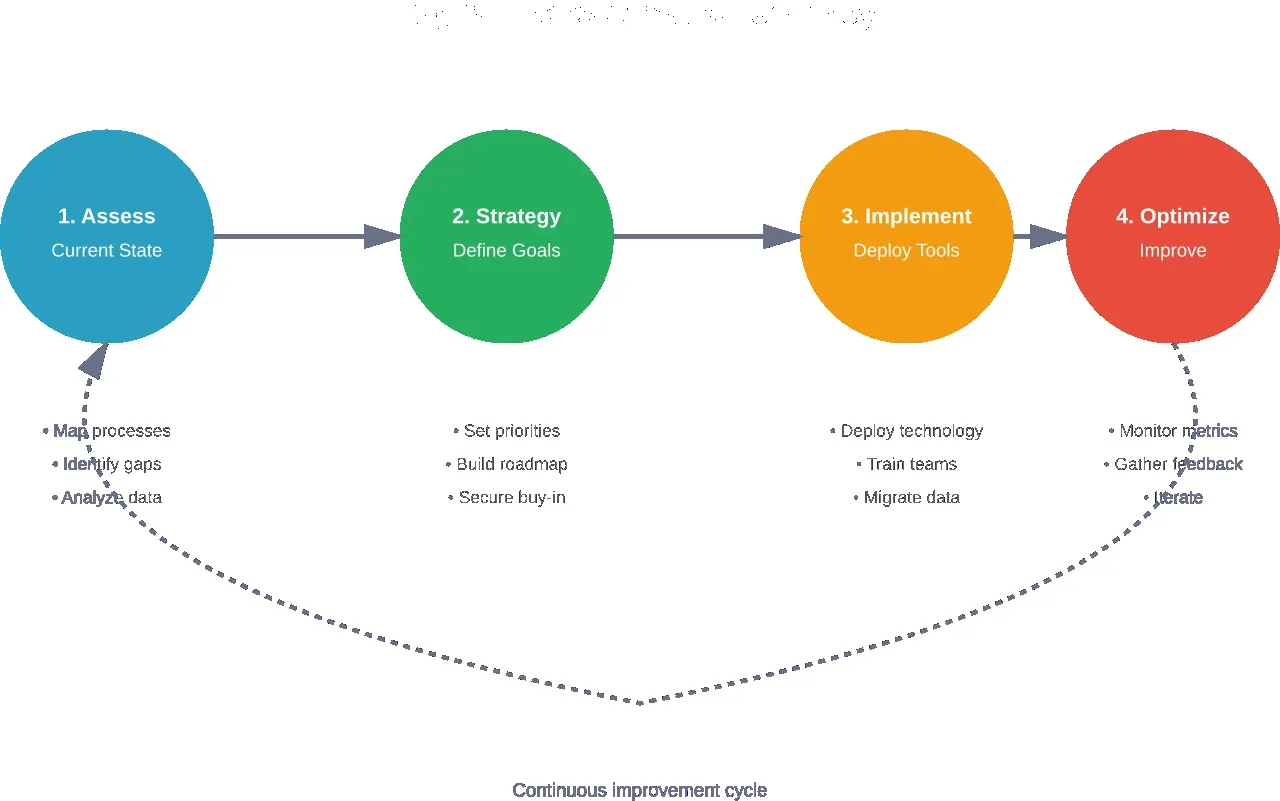
Digital Transformation for Sustainability in 2026

Короткий виклад: Digital transformation and sustainability are converging to create powerful solutions for environmental challenges. Organizations leveraging AI, IoT, blockchain, and cloud computing can reduce carbon footprints, optimize resource use, and drive measurable environmental impact while maintaining business growth. The integration of digital technologies with sustainability goals represents a critical pathway toward meeting global climate targets and achieving long-term resilience.

The intersection of digital innovation and environmental responsibility has become impossible to ignore. As climate change accelerates and regulatory pressure mounts, businesses face a dual challenge: modernize operations while simultaneously reducing environmental impact.

But here’s the thing—digital transformation isn’t just about efficiency anymore. It’s becoming the backbone of how organizations address their sustainability commitments. From smart energy grids to AI-powered waste reduction, technology is reshaping what’s possible in environmental management.

According to the World Economic Forum, digital technologies could help reduce up to 20 percent of global greenhouse gas (GHG) emissions by 2050. That’s not a small number. Yet many organizations still treat digital initiatives and sustainability efforts as separate tracks, missing the tremendous synergies between them.

The question isn’t whether to pursue digital transformation or sustainability. It’s how to integrate both strategies into a unified approach that delivers environmental and business results simultaneously.

Understanding the Digital-Sustainability Convergence

Digital transformation fundamentally changes how organizations operate, make decisions, and create value. Sustainability transformation addresses how businesses impact the environment and society. When these two forces combine, something powerful happens.

The U.S. Environmental Protection Agency notes that embodied carbon—emissions from constructing, maintaining, and demolishing buildings—is responsible for 11 percent of global greenhouse gas emissions. Material recovery through improved recycling technologies represents one pathway to reducing this impact, which is why the EPA supports technology development through programs focused on circular economy solutions.

Real talk: the relationship works both ways. Digital technologies enable better sustainability outcomes through monitoring, optimization, and transparency. Simultaneously, sustainability goals drive innovation in digital solutions, pushing developers to create energy-aware computing and clean AI systems.

Research published in Frontiers in Environmental Science examined how digital transformation impacts corporate sustainability across Chinese listed companies. The analysis revealed positive correlations between digitalization initiatives and environmental performance, suggesting that strategic technology adoption contributes measurably to sustainability outcomes.

Core Technologies Driving Sustainable Digital Transformation

Several digital technologies stand out as particularly impactful for sustainability efforts. Understanding their specific applications helps organizations prioritize investments and build effective strategies.

Штучний інтелект і машинне навчання

AI-driven systems excel at optimizing complex processes where human decision-making can’t keep pace with data volume. Energy management represents one of the clearest use cases.

Smart building systems use machine learning algorithms to predict heating, cooling, and lighting needs based on occupancy patterns, weather forecasts, and historical usage. These systems adjust in real-time, reducing energy consumption without sacrificing comfort or productivity.

Manufacturing operations deploy AI to minimize waste by predicting equipment failures, optimizing production schedules, and identifying quality issues before defective products consume additional resources. The combination of predictive maintenance and quality optimization cuts both operational costs and environmental impact.

That said, AI itself carries environmental costs. The computing power required for training large models generates significant carbon emissions. Organizations pursuing sustainable AI need to consider model efficiency, renewable energy sources for data centers, and the net environmental benefit of each application.

Internet of Things (IoT) for Environmental Monitoring

IoT sensors provide the real-time data foundation for many sustainability initiatives. Deployed across natural ecosystems, these devices monitor air quality, water levels, soil conditions, and wildlife movements with unprecedented granularity.

Conservation efforts benefit enormously from this continuous monitoring capability. Park managers detect illegal logging or poaching activities faster. Water resource managers identify contamination events before they spread. Agricultural operations optimize irrigation based on actual soil moisture rather than schedules.

Supply chain applications of IoT enable tracking of products throughout their lifecycle, monitoring conditions like temperature and humidity that affect product quality and waste. Retailers reduce spoilage of perishable goods. Manufacturers ensure proper handling of sensitive materials.

Blockchain for Supply Chain Transparency

Sustainability claims mean nothing without verification. Blockchain technology creates immutable records of product journeys, making greenwashing significantly harder.

Fashion brands use blockchain to trace garments from raw material sourcing through manufacturing and distribution. Consumers scan QR codes to verify claims about organic cotton, fair labor practices, or carbon-neutral shipping.

Food supply chains deploy similar systems to track organic certifications, sustainable fishing practices, and humane animal treatment. The transparency creates accountability at every step, rewarding genuinely sustainable practices and exposing problematic ones.

Carbon credit markets also benefit from blockchain’s verification capabilities. Trading platforms record emissions reductions and credit transfers with high transparency, reducing fraud and increasing confidence in offset programs.

Cloud Computing and Data Centers

Cloud infrastructure enables the scalability and data processing that powers other sustainability technologies. But data centers themselves consume massive amounts of energy.

Major cloud providers have responded by committing to renewable energy and improving efficiency. Consolidating workloads in hyperscale facilities typically consumes less total energy than distributed on-premises infrastructure, though the net benefit depends on specific circumstances.

Organizations migrating to cloud platforms should evaluate providers based on renewable energy commitments, power usage effectiveness ratings, and data center locations. Geographic choices affect both the carbon intensity of electricity and cooling requirements. Specific power usage effectiveness ratings should be evaluated when selecting providers.

Practical Applications Across Industries

Different sectors face unique sustainability challenges that digital transformation addresses in sector-specific ways.

Manufacturing and Production

Sustainable manufacturing leverages digital twins—virtual replicas of physical production systems that enable testing and optimization without resource consumption. Engineers simulate process changes, identify bottlenecks, and predict outcomes before implementing changes on factory floors.

Additive manufacturing (3D printing) reduces material waste by building products layer-by-layer rather than cutting away excess material. Complex geometries that minimize weight while maintaining strength become feasible, reducing material use and transportation emissions simultaneously.

Predictive maintenance systems monitor equipment health, scheduling repairs before failures occur. This prevents both unplanned downtime and the environmental impact of catastrophic equipment failures that might release hazardous materials or require energy-intensive emergency responses.

Energy and Utilities

Smart grids represent perhaps the most transformative application of digital technology to sustainability. These systems balance supply and demand in real-time, integrating variable renewable sources like solar and wind more effectively than traditional infrastructure.

Distributed energy resources—rooftop solar, battery storage, electric vehicles—create bidirectional power flows that require sophisticated digital management. AI algorithms predict generation and consumption patterns, optimize storage charging cycles, and maintain grid stability.

The World Resources Institute’s Energy Access Explorer tool demonstrates how geospatial data and digital platforms accelerate energy access planning. As the first Digital Public Good in the energy domain, it analyzes high-resolution information to support evidence-based infrastructure decisions.

Транспорт і логістика

Route optimization algorithms reduce fuel consumption by analyzing traffic patterns, delivery windows, and vehicle capacities. Fleet management systems track driver behavior, identifying inefficient practices like excessive idling or aggressive acceleration.

Electric vehicle adoption accelerates as charging infrastructure becomes smarter. Demand response programs charge vehicles when renewable generation peaks, aligning transportation electrification with clean energy availability.

Shared mobility platforms reduce total vehicle miles traveled by matching riders and optimizing vehicle utilization. The sustainability benefit depends on displacing private car trips rather than public transit, making implementation details critical.

Agriculture and Food Systems

Precision agriculture uses GPS, sensors, and data analytics to apply water, fertilizer, and pesticides only where needed. This targeted approach reduces chemical runoff, conserves water, and lowers input costs while maintaining or improving yields.

Vertical farming systems leverage IoT sensors and automated controls to grow crops in controlled environments with dramatically reduced water consumption and no pesticide requirements. While energy-intensive, facilities powered by renewable sources can produce food with lower overall environmental impact than traditional agriculture.

Supply chain digitalization reduces food waste by improving demand forecasting, optimizing inventory levels, and coordinating harvesting with market needs. Given that food waste contributes significantly to global emissions, these improvements carry substantial environmental significance.

Measuring and Reporting Environmental Impact

Effective sustainability transformation requires rigorous measurement. Digital tools make this increasingly feasible and standardized.

The ISO 14019-4:2026 standard addresses principles and requirements for bodies validating and verifying sustainability information. This framework supports credible environmental reporting as stakeholder demands for transparency intensify.

Software platforms now automate carbon accounting, pulling data from utility bills, travel records, procurement systems, and production logs. These tools calculate Scope 1, 2, and 3 emissions according to established protocols, reducing the manual effort that previously made comprehensive accounting impractical for many organizations.

Real-time dashboards track sustainability metrics alongside traditional business KPIs, making environmental performance visible to decision-makers. This integration helps sustainability considerations influence operational decisions rather than remaining siloed in dedicated departments.

Open data initiatives play crucial roles in climate action. According to the World Resources Institute, shared data and information are fundamental to mainstreaming climate responses across government and society. Open data publication enables civil society scrutiny while allowing developers to create tools that broaden impact and engage new audiences.

Категорія вимірюванняDigital ToolsКлючові показникиReporting Frequency 
Carbon EmissionsAutomated accounting platformsScope 1, 2, 3 emissions (tCO2e)Monthly/Quarterly
Energy ConsumptionIoT sensors, building management systemskWh total, kWh per unit outputReal-time/Daily
Water UsageSmart meters, flow sensorsGallons total, water intensity ratiosDaily/Weekly
Waste GenerationWaste tracking software, weighing systemsTotal waste, diversion rate, recycling %Weekly/Monthly
Supply Chain ImpactBlockchain platforms, supplier portalsSupplier emissions, certificationsQuarterly/Annual

Подолання викликів, пов'язаних із впровадженням

Digital transformation for sustainability sounds compelling in theory. Implementation brings real challenges that organizations must navigate.

Data Quality and Integration

Sustainability initiatives often require integrating data from disparate sources never designed to work together. Legacy manufacturing equipment, utility billing systems, transportation management platforms, and procurement databases all store relevant information in incompatible formats.

Solving this requires investment in data infrastructure—APIs, data lakes, integration platforms—before analytics can deliver insights. Organizations underestimate both the technical complexity and organizational change management required to establish quality data flows.

Skills and Capabilities

Effective sustainable digital transformation requires hybrid expertise: professionals who understand both technology and environmental science. These individuals remain scarce.

Building internal capabilities through training takes time. Partnering with consultants provides faster starts but risks leaving knowledge gaps when engagements end. Most organizations need balanced approaches combining external expertise for initial implementations with deliberate internal skill development.

Investment Justification

Sustainability investments face scrutiny around financial returns. While some initiatives deliver clear cost savings—energy efficiency, waste reduction—others generate primarily environmental and reputational benefits.

Framing matters enormously. Investments positioned purely as sustainability spending face tougher approval than those highlighting operational resilience, regulatory compliance, customer requirements, and competitive positioning alongside environmental benefits.

Technology Selection and Vendor Lock-in

The sustainability technology landscape evolves rapidly. Solutions that seem cutting-edge today may become obsolete quickly, and vendor consolidation creates lock-in risks.

Organizations should prioritize platforms with open APIs and standard data formats. Building on proprietary systems creates dependencies that become expensive to unwind as needs evolve or better alternatives emerge.

Emerging Standards and Frameworks

Standardization helps organizations navigate complexity and ensure credibility. Several new frameworks specifically address digital sustainability.

ISO/IEC TS 20125-1:2026 establishes ecopractices for digital services across life cycle stages. This Technical Specification provides guidance on ecodesign principles specifically tailored to information technology services, addressing how digital offerings can minimize environmental impact from conception through retirement.

These standards matter because they create common languages and expectations. Suppliers and customers can align on sustainability requirements without negotiating definitions from scratch. Auditors can assess performance against established criteria rather than subjective claims.

Adoption remains voluntary in most jurisdictions, but regulatory trends suggest mandatory sustainability reporting will expand. Organizations building capabilities now position themselves advantageously for future compliance requirements.

Best Practices for Success

Organizations achieving meaningful results share common approaches that distinguish successful implementations from failed initiatives.

Start with Business-Aligned Use Cases

The most successful digital sustainability initiatives solve real business problems while delivering environmental benefits. Energy optimization reduces costs. Predictive maintenance prevents downtime. Supply chain transparency manages reputational risk.

Starting with these dual-benefit opportunities builds momentum and secures ongoing support. Pure sustainability plays a struggle when budget pressures mount unless they’re embedded in core operations.

Invest in Data Infrastructure Early

Organizations that defer data infrastructure investments in favor of quick application deployments often regret it. Fragmented point solutions create integration nightmares, and rebuilding foundations while maintaining operational systems proves difficult.

Upfront investment in sensors, data platforms, and integration capabilities enables faster iteration on analytics and applications. The infrastructure becomes an asset supporting multiple use cases over time.

Combine Internal Expertise with External Partnerships

No organization possesses all necessary capabilities internally. Technology vendors, sustainability consultants, industry consortia, and academic researchers all bring valuable perspectives.

The key is maintaining strategic direction internally while leveraging external expertise tactically. Organizations that outsource strategic thinking lose control of their sustainability transformations.

Communicate Progress and Setbacks Transparently

Stakeholders increasingly value honest sustainability reporting over polished marketing. Organizations that acknowledge challenges and share learnings build credibility that purely promotional communications don’t achieve.

Transparency also creates accountability that drives results. Public commitments with regular progress reporting make backsliding more difficult and keep initiatives prioritized during competing pressures.

Build Sustainable Digital Systems With A-listware

Sustainability initiatives often fail because the technology behind them is fragmented or outdated. Digital transformation helps fix that by connecting data, improving operational visibility, and reducing inefficiencies across the organization. A‑listware digital transformation services focus on analyzing existing systems, identifying process gaps, and implementing practical technology improvements that support long-term operational change.

A-listware works with companies that need to modernize infrastructure, digitize workflows, and build software systems that support real business operations. Their teams handle strategy, implementation, and ongoing support, helping organizations move away from legacy tools and adopt scalable digital platforms that improve efficiency and reduce operational waste.

Поговоріть з Програмне забезпечення списку А about your digital transformation project and see where modernization can start delivering measurable results.

The Role of Digital in Achieving Development Goals

Sustainable development extends beyond environmental concerns to encompass social equity, economic opportunity, and governance. Digital transformation influences all these dimensions.

Access to information empowers marginalized communities to participate in decisions affecting them. The World Resources Institute emphasizes that locally led adaptation—where local actors hold decision-making power—plays essential roles in achieving successful and sustainable adaptation. Digital tools facilitate the participation and knowledge-sharing that make locally led approaches possible.

Economic development increasingly depends on digital infrastructure and literacy. The digital divide represents not just a technology gap but a barrier to economic opportunity that perpetuates inequality. Sustainable digital transformation must address accessibility and inclusion alongside environmental concerns.

Generally speaking, the most impactful initiatives consider environmental, social, and economic sustainability together rather than optimizing one dimension at the expense of others.

Looking Ahead: Trends Shaping the Future

Several emerging trends will shape how digital transformation and sustainability evolve together over coming years.

Regulatory Pressure and Mandatory Disclosure

Voluntary sustainability reporting is giving way to mandatory disclosure requirements in major markets. These regulations demand verified data, driving adoption of measurement and reporting technologies.

Organizations building robust sustainability data capabilities now will adapt more easily as requirements expand. Those treating reporting as compliance checkbox exercises will struggle with deeper scrutiny.

AI Ethics and Sustainable Computing

The environmental and social costs of AI are receiving increasing attention. Sustainable computing practices—optimizing algorithms for efficiency, using renewable energy, considering model necessity—will become standard expectations rather than nice-to-haves.

Frameworks for evaluating AI sustainability impacts are emerging. Organizations deploying AI for sustainability purposes must ensure the solutions themselves meet sustainability standards.

Circular Economy Business Models

Digital technologies enable new circular business models where companies maintain ownership of products and materials, providing services rather than selling goods. These models require sophisticated tracking, reverse logistics, and lifecycle management that digital platforms facilitate.

Product-as-a-service offerings align provider incentives with durability and recyclability rather than planned obsolescence. Digital connectivity and IoT sensors make monitoring and maintaining distributed assets economically feasible.

Ecosystem Collaboration Platforms

Complex sustainability challenges exceed individual organizational boundaries. Digital platforms that facilitate collaboration across supply chains, industries, and sectors will become increasingly important.

Shared data standards, interoperable systems, and collaborative governance models enable coordination that fragmented approaches can’t achieve. Success requires willingness to participate in ecosystems rather than controlling proprietary solutions.

ТенденціяХронологіяImpact LevelRequired Actions
Mandatory ESG disclosure2026-2028ВисокийImplement verified data collection systems
Carbon pricing expansion2026-2030ВисокийDeploy carbon accounting and optimization tools
Sustainable AI standards2027-2029СереднійAdopt energy-aware computing practices
Circular economy models2026-2032СереднійDevelop product tracking and take-back systems
Ecosystem platforms2028-2035СереднійParticipate in industry collaboration initiatives

Поширені запитання

  1. How does digital transformation reduce carbon emissions?

Digital technologies reduce emissions through multiple mechanisms: optimizing energy consumption with AI and IoT sensors, enabling remote work that eliminates commuting, improving logistics efficiency to reduce transportation fuel use, and facilitating renewable energy integration through smart grids. Manufacturing benefits from digital twins that reduce waste and predictive maintenance that prevents resource-intensive failures. The World Economic Forum estimates these technologies could reduce global emissions by up to 20 percent by 2050.

  1. What are the environmental costs of digital transformation itself?

Digital technologies carry their own environmental footprint. Data centers consume significant electricity, with carbon intensity depending on energy sources. Manufacturing hardware requires raw materials extraction and processing. The digital sector’s carbon footprint already exceeds aviation. Electronic waste presents disposal challenges. Organizations must evaluate net environmental impact, ensuring that sustainability solutions deliver benefits exceeding their own costs. Sustainable computing practices, renewable energy commitments, and circular hardware models help address these concerns.

  1. Which industries benefit most from digital sustainability initiatives?

Energy-intensive industries see particularly strong benefits: manufacturing, transportation, agriculture, and building operations. These sectors consume substantial resources where optimization delivers measurable impact. However, every industry faces sustainability pressures. Retail and consumer goods companies use digital tools for supply chain transparency. Financial services apply them to ESG risk assessment. Healthcare leverages telehealth to reduce facility energy use. The specific applications vary, but opportunities exist across all sectors.

  1. How long does implementing digital sustainability transformation take?

Timeline depends on scope and starting point. Initial assessments and pilot projects typically require 6-12 months. Building data infrastructure and capabilities extends 12-24 months. Enterprise-wide transformation unfolds over 3-5 years. Organizations should expect phased implementation rather than instant results. Quick wins in energy management or waste reduction can deliver value within months, while comprehensive supply chain transparency or circular business models require multi-year commitments. Starting with focused initiatives that expand over time proves more successful than attempting everything simultaneously.

  1. What skills do teams need for sustainable digital transformation?

Success requires hybrid capabilities spanning technology and sustainability domains. Data scientists who understand environmental metrics, sustainability professionals comfortable with digital tools, and business leaders who integrate both perspectives into strategy. Specific technical skills include IoT deployment, data analytics, carbon accounting software, and integration platforms. Many organizations struggle finding individuals with complete skill sets, making training programs and cross-functional collaboration essential. Partnerships with specialized consultants and technology vendors can supplement internal capabilities during skill development.

  1. How do organizations measure ROI on sustainability technology investments?

Measuring return requires broader frameworks than traditional financial metrics alone. Direct cost savings from reduced energy, materials, and waste provide quantifiable returns. Risk mitigation value comes from regulatory compliance, supply chain resilience, and reputation protection. Revenue opportunities emerge from sustainable product differentiation and new market access. Employee attraction and retention benefits have measurable financial impacts. Leading organizations use balanced scorecards incorporating environmental KPIs alongside financial metrics, recognizing that some sustainability investments generate strategic value not captured in short-term ROI calculations.

  1. What standards should organizations follow for sustainability reporting?

Multiple frameworks guide sustainability disclosure. ISO 14019-4:2026 addresses validation and verification of sustainability information. The GHG Protocol provides carbon accounting standards widely used for emissions reporting. TCFD recommendations structure climate-related financial disclosures. SASB standards focus on financially material sustainability topics by industry. Organizations increasingly adopt multiple frameworks as stakeholders reference different standards. The ISO/IEC TS 20125-1:2026 Technical Specification specifically addresses ecodesign for digital services. Regulatory requirements in specific jurisdictions may mandate particular frameworks, making compliance landscape assessment important.

Висновок

Digital transformation and sustainability aren’t separate initiatives competing for resources and attention. They’re complementary forces that organizations must integrate to remain competitive and responsible.

The technologies enabling digital transformation—AI, IoT, blockchain, cloud computing—provide the capabilities needed to measure, manage, and reduce environmental impact at scales previously impossible. Meanwhile, sustainability imperatives drive innovation in digital solutions, pushing development of energy-efficient computing, transparent supply chains, and circular business models.

Organizations that treat these as unified strategies position themselves for long-term success. Those that pursue digital transformation without sustainability considerations accumulate environmental debt and regulatory risk. Those that pursue sustainability without digital enablement lack the data, automation, and optimization capabilities that make ambitious targets achievable.

The path forward requires honest assessment of current capabilities, strategic investment in data infrastructure, focused pilots that deliver business and environmental value, and sustained commitment through inevitable challenges. Standards like ISO 14019-4:2026 and ISO/IEC TS 20125-1:2026 provide frameworks for credible implementation and reporting.

Start by identifying where digital technologies can solve real business problems while advancing sustainability goals. Build the data foundation that enables measurement and optimization. Partner strategically to access capabilities beyond internal expertise. Communicate progress transparently to build stakeholder trust.

The convergence of digital transformation and sustainability represents one of the defining business challenges and opportunities of this decade. Organizations that act decisively will shape their industries’ responses while building resilient, responsible operations positioned for long-term success.

Ready to begin your sustainable digital transformation journey? Start with a baseline assessment of your current environmental impact and identify the highest-value opportunities where digital technologies can drive measurable improvement.

Digital Transformation for Fieldwork in 2026

Короткий виклад: Digital transformation for fieldwork modernizes field operations through mobile technology, real-time data access, automation, and connected systems. Organizations implementing digital fieldwork solutions report streamlined operations, improved customer satisfaction, and significant cost savings—with some uncovering up to $20 million in annual savings. The shift from paper-based processes to digital workflows enhances safety, compliance, decision-making, and operational efficiency across industries from energy to utilities.

Inefficient scheduling, communication breakdowns, and mountains of paperwork. These challenges plague field service operations daily, draining resources and frustrating teams. But the frontline is changing.

Field technicians, inspectors, and frontline workers no longer operate in isolation. Digital transformation has moved beyond office environments, reaching the workers who install equipment, conduct inspections, and maintain critical infrastructure. The shift is happening now, driven by pressing needs: tightening budgets, skilled labor shortages, aging infrastructure, and rising customer expectations.

Here’s the thing though—digital transformation for fieldwork isn’t just about swapping paper forms for tablets. It’s fundamentally reimagining how field operations function, from scheduling and routing to real-time data capture and automated decision-making.

What Digital Transformation Actually Means for Field Operations

Digital transformation in fieldwork represents the integration of digital technologies into every aspect of field service operations. This means mobile devices replace clipboards. Cloud-based systems replace filing cabinets. Real-time communication replaces radio static and phone tag.

The transformation touches several core areas. Field technicians gain immediate access to work orders, equipment histories, and technical documentation on rugged mobile devices. Managers track workforce location and job progress in real time. Customers receive automated updates and accurate arrival windows.

But wait. The technology itself isn’t the transformation—it’s the operational changes technology enables. When field data flows seamlessly into enterprise systems, organizations can analyze patterns, predict equipment failures, and optimize routing algorithms. That’s where real value emerges.

Post-pandemic industries have evolved how they support frontline workers. Organizations recognize that field technicians carrying out work orders, inspections, and equipment repairs need the same digital tools their office counterparts take for granted.

Why Organizations Are Prioritizing Digital Fieldwork Now

The driving factors behind digital transformation adoption are clear and urgent. Nearly half of all digital transformations prioritize enhanced customer satisfaction. Research indicates customers expect service experiences that match their digital lives—real-time updates, accurate scheduling, and transparent communication.

Sound familiar? Budget pressures compound these expectations. Organizations face the challenge of doing more with less. By some estimates, organizations may uncover significant annual cost savings by adopting new digital approaches, with some estimates reaching $20 million. This increase in revenue stems from improved technological capabilities that streamline operations and reduce waste.

The skilled labor shortage makes efficiency even more critical. When experienced technicians retire, organizations need systems that capture institutional knowledge and help newer workers perform at higher levels faster. Digital tools provide guided workflows, instant access to technical documentation, and automated quality checks.

Then there’s infrastructure reality. Energy keeps the world running, but keeping energy systems running has never been more complex. Demand is rising, infrastructure is aging, and the push for lower emissions is reshaping how power is generated and delivered. Supply chains remain strained, regulations continue tightening, and these pressures aren’t easing.

Основні технології, що рухають трансформацію

Several key technologies form the foundation of digital fieldwork transformation. Understanding these building blocks helps organizations plan effective implementations.

Mobile Computing and Rugged Devices

Mobile computing has reached field environments. Rugged tablets and smartphones withstand harsh conditions—extreme temperatures, drops, dust, and moisture. These devices run specialized field service applications that replace paper forms with intelligent digital workflows.

Field technicians access work orders, equipment histories, schematics, and procedures directly on mobile devices. They capture photos, collect signatures, record measurements, and update job status in real time. When connectivity drops, offline capability ensures work continues uninterrupted.

Cloud-Based Field Service Management

Cloud platforms centralize field service management, connecting dispatchers, technicians, customers, and backend systems. These platforms handle scheduling optimization, routing, inventory management, and workforce tracking.

Real-time synchronization means everyone works from the same information. When a technician updates a job status, dispatchers see it immediately. When parts arrive, inventory systems update automatically. When customers reschedule, routing algorithms adjust instantly.

Edge Computing for Field Operations

Edge computing allows devices, sensors, and automated systems to process data locally rather than relying solely on cloud servers. With market growth exceeding 35% annually, its impact on energy operations and other field-intensive industries continues expanding.

Edge computing enables faster decision-making at remote sites. Sensors detect anomalies and trigger alerts without waiting for cloud round-trips. Local processing reduces bandwidth requirements and maintains functionality even when connectivity is limited.

Internet of Things and Connected Equipment

Connected sensors and IoT devices transform reactive maintenance into predictive maintenance. Equipment reports its own health status, usage patterns, and performance metrics. Analytics identify failure patterns before breakdowns occur.

Field technicians arrive on-site already knowing what’s wrong and which parts to bring. This reduces truck rolls, improves first-time fix rates, and minimizes equipment downtime.

ТехнологіяОсновна вигодаСкладність реалізаціїROI Timeline 
Mobile DevicesImmediate data accessНизький3-6 місяців
Cloud FSM PlatformCentralized operationsСередній6-12 місяців
Граничні обчисленняLocal processing powerВисокий12-18 місяців
IoT SensorsPredictive maintenanceMedium-High9-15 months
Аналітика штучного інтелектуІнтелектуальна автоматизаціяВисокий12-24 місяці

Practical Applications Across Industries

Digital transformation for fieldwork manifests differently across industries, but common patterns emerge. Let’s examine how various sectors apply these technologies.

Energy and Utilities

The energy industry sits in the middle of massive transformation. Utilities use digital field solutions to manage aging infrastructure while integrating renewable energy sources. Field crews conduct inspections using mobile apps that capture condition data, photos, and GPS coordinates.

Data-driven decision-making helps utilities prioritize maintenance and capital investments. Instead of time-based maintenance schedules, analytics identify which equipment needs attention based on actual condition and performance data. This reduces costs and improves grid reliability.

Digital workflows also enhance safety and compliance. Automated checklists ensure technicians follow proper procedures. Digital permits and safety observations create audit trails. When incidents occur, complete documentation already exists.

Телекомунікації

Telecom field technicians install, maintain, and repair network infrastructure—from fiber optic cables to cell towers. Digital transformation streamlines these operations through automated dispatching, optimized routing, and real-time inventory management.

Technicians receive installation or repair assignments with complete site information, customer history, and equipment specifications. They verify network performance using connected test equipment that automatically logs results. Customer notifications happen automatically throughout the service journey.

Healthcare Equipment Services

Medical equipment requires regular maintenance and rapid repair response. Digital field service management tracks service histories, regulatory compliance, and scheduled maintenance. Technicians access equipment manuals, calibration procedures, and parts diagrams on mobile devices.

Predictive maintenance helps prevent critical equipment failures in healthcare settings where downtime can be life-threatening. Connected medical devices report usage patterns and performance metrics that trigger proactive service visits.

Benefits Organizations Actually Experience

The theoretical benefits sound impressive, but what happens in practice? Organizations implementing digital fieldwork transformation report several consistent outcomes.

Підвищення операційної ефективності

Digital workflows eliminate redundant data entry, reduce travel time through optimized routing, and improve first-time fix rates through better preparation. Technicians complete more jobs per day without working longer hours.

Automated scheduling considers technician skills, location, availability, and parts inventory. The system assigns the right technician to each job and sequences work to minimize drive time. These optimizations compound into substantial efficiency improvements.

Enhanced Customer Satisfaction

Customers benefit from accurate appointment windows, real-time technician tracking, and proactive communication. They receive notifications when technicians are dispatched, en route, and completed. Digital receipts, service reports, and photos document work performed.

Self-service portals let customers schedule appointments, track service history, and access documentation. This transparency builds trust and reduces call center volume.

Improved Safety and Compliance

Digital safety checklists ensure consistent adherence to procedures. Technicians can’t skip steps or mark items complete without proper verification. Photo documentation provides evidence of safety measures and site conditions.

Regulatory compliance becomes easier when digital systems automatically capture required information, maintain audit trails, and generate compliance reports. Organizations spend less time preparing for audits and more time on productive work.

Data-Driven Insights

Digital systems capture comprehensive data about field operations—job durations, travel times, equipment failures, parts usage, and more. Analytics transform this data into actionable insights about performance trends, training needs, and process improvements.

Managers identify top performers and understand what makes them successful. They spot inefficiencies and bottlenecks. They forecast workforce needs based on historical patterns and seasonal variations.

Quantified benefits organizations report from digital fieldwork transformation initiatives

Виклики та рішення щодо впровадження

Digital transformation for fieldwork isn’t without obstacles. Organizations face several common challenges during implementation.

Workforce Adoption and Change Management

Experienced field technicians may resist new technology, particularly if they’ve successfully used traditional methods for years. Overcoming this resistance requires demonstrating clear benefits—not just for the organization, but for individual workers.

Effective training matters. Hands-on sessions, peer mentoring, and ongoing support help technicians gain confidence. Starting with enthusiastic early adopters creates internal champions who encourage broader adoption.

Складність системної інтеграції

Field service applications must integrate with existing enterprise systems—ERP, CRM, inventory management, billing, and more. Legacy systems may lack modern APIs or use incompatible data formats.

Phased implementations reduce risk. Organizations often start with core field service functionality, then progressively add integrations. Middleware platforms can bridge gaps between incompatible systems.

Connectivity Limitations

Field environments frequently lack reliable cellular coverage. Remote sites, underground locations, and rural areas present connectivity challenges. Digital systems must function effectively even when disconnected.

Offline-capable mobile applications cache necessary data locally. Technicians access work orders, reference materials, and forms without connectivity. When connections restore, systems automatically synchronize changes.

Security and Data Privacy

Mobile devices accessing enterprise systems create security considerations. Lost or stolen devices could expose sensitive customer or operational data. Regulatory requirements like GDPR add compliance complexity.

Mobile device management solutions enforce security policies, enable remote wipe capabilities, and ensure data encryption. Multi-factor authentication protects system access. Regular security training keeps technicians aware of threats like phishing.

Building an Effective Implementation Strategy

Successful digital transformation for fieldwork requires careful planning and execution. Organizations that succeed follow several best practices.

Почніть з чітких бізнес-цілей

Define specific, measurable goals before selecting technologies. Are you trying to reduce response times? Improve first-time fix rates? Cut fuel costs? Enhance customer satisfaction scores? Clear objectives guide technology selection and provide success metrics.

Involve Field Workers Early

Frontline technicians understand operational realities that office staff might miss. Their input during system selection and configuration prevents costly mistakes. Pilot programs with representative field workers identify issues before full deployment.

Prioritize User Experience

Complex, unintuitive interfaces doom adoption. Field service applications must be simple, fast, and purpose-built for technician workflows. Every extra tap or screen costs time multiplied across thousands of jobs annually.

Plan for Connectivity Realities

Design systems assuming connectivity will be intermittent or absent. Offline functionality shouldn’t be an afterthought—it’s essential for field environments. Test thoroughly in realistic conditions, not just office Wi-Fi.

Вимірюйте та чергуйте

Track key performance indicators from the start. Compare pre- and post-implementation metrics. Gather ongoing feedback from field workers about what works and what doesn’t. Continuous improvement beats trying to perfect everything before launch.

Етап впровадженняТипова тривалістьОсновні напрямки діяльностіІндикатори успіху 
Planning & Assessment1-2 місяціDefine objectives, assess current state, select solutionsClear goals, stakeholder alignment
Pilot Program2-3 місяціDeploy to small group, gather feedback, refine processesPositive user feedback, measurable improvements
Phased Rollout3-6 місяцівExpand deployment, train users, monitor adoptionHigh adoption rates, minimal disruption
ОптимізаціяТриваєAnalyze data, adjust workflows, add capabilitiesContinuous improvement, ROI achievement

Cut Fieldwork Costs With Practical Digital Transformation 

Field teams often rely on outdated systems, manual reporting, and disconnected tools. Over time this slows down operations, increases errors, and makes it harder to track what is actually happening in the field. A-listware works with companies that want to fix these problems by modernizing the systems behind their operations – from mobile applications and cloud infrastructure to data platforms that keep field data organized and accessible.

Their team helps companies review existing processes, build a practical transformation plan, and implement software that supports real fieldwork conditions. This can include replacing legacy systems, connecting field apps with internal platforms, or automating reporting and data collection. The goal is simple: fewer manual tasks, clearer data, and tools that actually support people working outside the office.

Talk to the Програмне забезпечення списку А team and explore how a structured digital transformation can simplify your field operations.

Emerging Trends Shaping the Future

Digital transformation for fieldwork continues evolving. Several emerging trends will shape the next phase of innovation.

Штучний інтелект і машинне навчання

AI-powered solutions are moving beyond simple automation into intelligent decision support. Predictive maintenance algorithms forecast equipment failures with increasing accuracy. Dynamic scheduling systems optimize routes and assignments in real time, adapting to changing conditions.

Natural language processing enables voice-controlled field applications. Technicians can update job status, search knowledge bases, or request parts hands-free—critical when working on equipment or wearing protective gear.

Augmented Reality for Technical Support

AR applications overlay digital information onto physical equipment. Technicians see installation instructions, part identifications, or diagnostic data superimposed on their field of view through smart glasses or tablet cameras.

Remote expert assistance becomes more effective when specialists can see what field technicians see and provide visual guidance. This extends the capabilities of less-experienced workers and reduces the need for multiple site visits.

Advanced Analytics and Digital Twins

Digital twin technology creates virtual replicas of physical assets. These models incorporate real-time sensor data, maintenance histories, and operational parameters. Organizations can simulate scenarios, predict failures, and optimize maintenance strategies without touching actual equipment.

Autonomous Systems and Robotics

Drones conduct infrastructure inspections in hazardous or hard-to-reach locations. Autonomous vehicles may eventually transport equipment or even technicians to job sites. Robotic systems handle repetitive or dangerous tasks while human workers focus on complex problem-solving.

Unmanned aerial vehicles for field equipment inspection represent examples of how autonomous systems are being applied in field operations.

Поширені запитання

  1. What is digital transformation in fieldwork?

Digital transformation in fieldwork means replacing manual, paper-based processes with digital technologies that connect field workers, mobile devices, sensors, and enterprise systems. This includes mobile applications for work orders, cloud-based scheduling and dispatching, real-time data synchronization, IoT sensors for equipment monitoring, and analytics for operational insights. The goal is streamlining field operations, improving efficiency, and delivering better customer experiences.

  1. How much does digital fieldwork transformation cost?

Costs vary significantly based on organization size, complexity, and scope. Small deployments might involve only mobile device costs and software subscriptions starting at a few hundred dollars per user annually. Enterprise implementations including custom integrations, IoT infrastructure, and advanced analytics can reach millions. However, organizations report substantial returns—some uncovering up to $20 million in annual cost savings through improved efficiency and reduced waste. Most implementations achieve positive ROI within 6-18 months.

  1. What are the biggest challenges in implementing digital fieldwork solutions?

The primary challenges include workforce adoption resistance, particularly from experienced technicians comfortable with traditional methods; system integration complexity when connecting field applications with legacy enterprise systems; connectivity limitations in remote or underground field environments; security concerns around mobile devices and data access; and change management across the organization. Success requires addressing these through comprehensive training, phased implementations, offline-capable applications, robust security measures, and clear communication of benefits.

  1. How long does digital transformation for fieldwork take?

Timeline depends on scope and approach. A basic mobile forms deployment might take 2-3 months from planning through initial rollout. Comprehensive transformations including scheduling optimization, IoT integration, and analytics typically require 6-12 months for full implementation. Organizations typically follow a phased approach: 1-2 months planning, 2-3 months pilot program, 3-6 months phased rollout, then ongoing optimization. Starting small and expanding progressively reduces risk and allows learning from early experiences.

  1. Can digital fieldwork solutions work without internet connectivity?

Yes, effective digital fieldwork solutions include offline capabilities essential for field environments where connectivity is unreliable or absent. Mobile applications cache work orders, reference materials, forms, and customer data locally on devices. Technicians can access information, complete work, and capture data completely offline. When connectivity restores, applications automatically synchronize changes with central systems. This offline-first design ensures productivity regardless of network availability.

  1. What ROI can organizations expect from digital fieldwork transformation?

ROI varies by industry and implementation quality, but organizations consistently report significant returns. Cost savings come from reduced paperwork and administrative time, optimized routing reducing fuel costs, improved first-time fix rates minimizing repeat visits, better inventory management, and increased jobs completed per technician. Some organizations uncover up to $20 million in annual savings. Additionally, enhanced customer satisfaction drives revenue growth through retention and referrals. Most implementations achieve positive ROI within 6-18 months.

  1. What technologies are essential for digital fieldwork transformation?

Core technologies include rugged mobile devices for field data access and capture, cloud-based field service management platforms for scheduling and dispatching, mobile applications with offline capabilities, IoT sensors for equipment monitoring, GPS and mapping for routing optimization, and analytics platforms for operational insights. More advanced implementations add edge computing for local data processing, AI for predictive maintenance and intelligent scheduling, AR for remote assistance, and automated workflows for process streamlining. Start with mobile and cloud foundations, then add capabilities progressively.

Conclusion: The Competitive Imperative

Digital transformation for fieldwork has moved beyond optional innovation to competitive necessity. Organizations still relying on paper-based processes, disconnected systems, and reactive maintenance face mounting disadvantages.

The benefits are substantial and proven. Streamlined operations, reduced costs, improved customer satisfaction, enhanced safety, and data-driven decision-making deliver measurable value. The enabling technologies have matured—mobile devices are rugged and capable, cloud platforms are reliable and scalable, analytics provide actionable insights.

But technology alone doesn’t deliver transformation. Success requires clear objectives, workforce engagement, phased implementation, and continuous improvement. Organizations that involve field workers early, prioritize user experience, and design for real-world conditions achieve better outcomes.

The future promises even more capability. AI-powered automation, augmented reality support, digital twins, and autonomous systems will further enhance field operations. Organizations building digital foundations now position themselves to adopt these advances as they mature.

The question isn’t whether to pursue digital transformation for fieldwork. It’s how quickly and effectively organizations can execute the transition. Competitors are moving. Customer expectations keep rising. The time to act is now.

Ready to transform your field operations? Start by assessing current processes, identifying pain points, and defining clear objectives. Engage field workers in the planning process. Pilot solutions in controlled environments before full deployment. The journey to digital fieldwork begins with a single step—but that step needs to happen today.

Digital Transformation for Cost Savings: 2026 Guide

Короткий виклад: Digital transformation for cost savings involves strategically deploying technologies like cloud computing, automation, and AI to reduce operational expenses while improving efficiency. According to previous data, large enterprises invested around $27.5 million in digital projects, but only 25% of AI initiatives deliver expected ROI. Success requires focusing on measurable cost reduction targets, reshaping processes from the ground up, and avoiding common pitfalls like underestimating integration costs.

Digital transformation isn’t just about staying relevant anymore. It’s become one of the most powerful levers for reducing costs while improving how businesses operate.

But here’s the challenge: transformation costs vary significantly depending on scale and ambition. According to the International Data Corporation (IDC), global spending on digital transformation is expected to reach $3.9 trillion by 2027, with the average large enterprise budget for DX initiatives exceeding $40 million.

For midsize to enterprise companies, transformation costs can range anywhere from $250,000 to five million dollars. That’s a massive investment, and the question becomes: how do organizations ensure they’re actually saving money rather than just spending it?

The data shows a sobering reality. A recent IBM study found that only 25% of AI initiatives have delivered expected ROI over the last few years, and only 16% have scaled enterprise-wide. Similar dismal statistics appear elsewhere in the research.

So what separates successful cost-saving transformations from expensive failures? That’s exactly what this guide unpacks.

Understanding Digital Transformation Costs

Before diving into cost-saving strategies, it’s crucial to understand what drives transformation expenses in the first place.

Digital transformation involves integrating digital technologies into all aspects of a business, fundamentally changing how the organization operates and delivers value to customers. This isn’t just about buying new software—it’s about reshaping entire functions and processes from the ground up.

What Drives Transformation Expenses

Technology acquisition represents just one piece of the puzzle. The real costs come from integration, data migration, talent acquisition, training, and ongoing maintenance.

Solutions designed for 100 users often break at 1,000. Performance degrades while costs escalate. What seemed like a bargain in the pilot phase becomes prohibitively expensive at scale.

Many organizations underestimate what it takes to implement successfully. While AI can accelerate insights, strengthen decision-making, and increase efficiency, achieving that requires significant investment in technology, data, integration, and talent.

Transformation CategoryBudget EstimateDetails 
Small-scope digitization$50,000 – $250,000Deploying digital solutions in targeted business areas or enhancing current systems
Mid-level transformation$250,000 – $2 millionMultiple departments, integrated systems, moderate process redesign
Enterprise-wide transformation$2 million – $27.5 million+Comprehensive digital projects across all business functions

Hidden Costs Most Teams Forget About

The obvious expenses get budgeted. It’s the hidden costs that derail transformation initiatives.

Integration complexity often catches organizations off guard. Legacy systems don’t play nicely with modern platforms. Data migration requires cleaning, mapping, and validation—processes that consume far more time and resources than initial estimates suggest.

Change management represents another frequently underestimated cost. Employees need training. Workflows need redesigning. Resistance needs managing. Without proper investment in the human side of transformation, even the best technology fails to deliver value.

Cybersecurity concerns compound these challenges. According to a Gartner survey, 61% of CEOs are concerned about cybersecurity threats and 85% believe cybersecurity is critical for business growth. Without a proper cybersecurity strategy, organizations face significant risks.

Typical distribution of digital transformation expenses across key categories

Cost-Saving Strategies That Actually Work

More than 90% of executives recognize AI’s pivotal role in reducing costs over the next 18 months. But translating productivity gains into lasting financial value can be tough.

Real talk: not all transformation initiatives deliver savings. Success requires deliberate strategy, not just technology deployment.

Leverage Automation for Process Efficiency

Automation stands out as one of the most reliable cost-reduction mechanisms. When implemented correctly, it eliminates repetitive manual tasks, reduces errors, and frees employees for higher-value work.

Look at marketing functions. Companies have used GenAI to develop marketing content—primarily text and images—for existing campaigns, which reduced content production costs significantly while maintaining quality standards.

The key isn’t just deploying automation tools. It’s identifying which processes generate the highest volume of repetitive work and the most errors. Those represent the sweet spot for automation ROI.

Cloud Migration for Infrastructure Cost Reduction

Cloud computing continues to deliver substantial operational savings by eliminating on-premises infrastructure costs, reducing maintenance overhead, and enabling more flexible scaling.

Organizations can reduce infrastructure costs by eliminating expensive data centers, hardware commitments, and large IT staffing requirements. Cloud providers handle maintenance, security updates, and capacity planning.

That said, cloud costs can spiral without proper governance. Successful organizations implement rigorous monitoring, optimize resource allocation, and establish clear policies around usage and spending.

AI Implementation Done Right

Here’s where it gets interesting. AI offers tremendous cost-saving potential, but becoming an AI-enabled organization is a long-term commitment that affects every business function.

The health sector continues to lag in developing the robust digital health infrastructure necessary to fully realize innovations, limiting potential gains in efficiency, access, prevention, diagnosis, treatment, discovery, and public health outcomes.

Companies that succeed with AI for cost transformation focus on three critical drivers:

  • First, they rigorously measure value and cost reduction targets. Vague promises of “improved efficiency” don’t cut it. Successful initiatives define specific, measurable targets before deployment and track progress relentlessly.
  • Second, they reshape functions and processes from the ground up. Simply overlaying AI onto existing inefficient processes doesn’t work. Organizations need to rethink workflows entirely, designing them around what AI does best.
  • Third, they apply AI in conjunction with traditional cost-savings measures. Technology alone doesn’t reduce costs. It needs to work alongside process optimization, organizational restructuring, and cultural change.

Strategic framework for achieving higher AI implementation success rates and cost reduction

Real-World Cost Reduction Examples

Theory matters less than practice. What works in the real world?

Marketing Content Generation

One company focused on using GenAI to develop marketing content for existing campaigns. Once the organization verified outputs were reliable, it shifted to scaling up successful programs.

This approach reduced content production costs substantially while maintaining brand standards and quality requirements. The key? Starting with verification before scaling. Too many organizations rush to scale before confirming quality.

Operational Process Automation

Manufacturing and logistics operations show particularly strong cost-reduction results from digitalization. Automated inventory management reduces carrying costs. Predictive maintenance prevents expensive equipment failures. Route optimization cuts transportation expenses.

These aren’t glamorous use cases, but they deliver measurable, sustainable cost savings that flow directly to the bottom line.

Administrative Function Streamlining

Back-office functions like HR, finance, and procurement often harbor significant cost-reduction opportunities. Automation eliminates manual data entry, reduces processing time, and minimizes errors that create expensive downstream problems.

Where Digital Transformation Fails

Understanding failure modes matters just as much as knowing success patterns.

Scaling Without Validation

The most common mistake? Scaling initiatives before validating they actually work and deliver value.

Pilot projects succeed in controlled environments with dedicated resources and attention. But scaling reveals hidden problems: integration issues, performance degradation, user resistance, and cost escalation.

Smart organizations pilot aggressively but scale cautiously, validating results at each stage before expanding further.

Ignoring Change Management

Technology deployment without change management consistently fails. Employees revert to old processes. New systems sit unused. Investments deliver no value.

Successful transformations invest heavily in training, communication, and support. They involve affected employees early, address concerns proactively, and provide ongoing assistance during transitions.

Underestimating Integration Complexity

Modern organizations run on dozens or hundreds of interconnected systems. Adding new technology means integrating with existing infrastructure—and that’s where complexity explodes.

Data formats don’t match. APIs don’t exist. Security requirements conflict. Performance bottlenecks emerge. What seemed straightforward in demos becomes a months-long integration nightmare.

Organizations that succeed build integration costs, time, and complexity into initial planning rather than discovering them mid-project.

Common Failure ModeImpact on CostsСтратегія профілактики 
Premature scaling2-3x cost overrunsValidate thoroughly before expanding
Poor change management50-70% value lossInvest in training and support
Integration underestimation40-60% timeline delaysBudget 30-40% for integration
Inadequate cybersecurityRisk of catastrophic lossesBuild security from day one

Measuring Digital Transformation ROI

Cost remains a critical strategic priority for organizations deploying new technology. But measuring actual return on investment requires discipline and clarity.

Defining Clear Metrics

Vague goals like “improve efficiency” don’t work. Successful organizations define specific, measurable targets: reduce processing time by 40%, cut error rates by 60%, decrease operational costs by $2 million annually.

These concrete targets enable tracking, accountability, and course correction when results don’t materialize.

Tracking Both Hard and Soft Savings

Hard savings—direct cost reductions—get tracked easily. Soft savings—improved productivity, better decision-making, enhanced customer satisfaction—prove harder to quantify but matter just as much.

Organizations need frameworks for capturing both. Time freed up by automation only creates value if redirected to higher-value activities. Better data only improves outcomes if decisions actually change.

Long-Term Value vs. Short-Term Costs

Digital transformation investments often show negative ROI initially. Implementation costs hit immediately while benefits accrue over time.

Organizations need patience and executive commitment to weather the initial investment period. Pulling back too early means paying transformation costs without reaping benefits.

That said, initiatives that show no progress after 12-18 months likely suffer from fundamental problems requiring reassessment.

Building a Cost-Conscious Transformation Strategy

So how should organizations approach digital transformation to maximize cost savings while minimizing risks?

Start with Business Outcomes

Technology should serve business goals, not the reverse. Organizations that start with “we need AI” or “we should move to cloud” often fail.

Better approach: identify specific business problems or opportunities, then evaluate which technologies might address them effectively. This ensures technology investments connect directly to value creation.

Prioritize Quick Wins

Building momentum matters. Early successes create organizational buy-in, demonstrate value, and generate funding for larger initiatives.

Smart organizations identify high-impact, low-complexity opportunities for initial projects. Success builds credibility and support for more ambitious transformations later.

Build or Buy Strategically

Not everything requires custom development. Commercial solutions work well for standard business processes. Custom development makes sense for unique competitive advantages or highly specialized requirements.

The cost difference is substantial. Commercial software typically costs $50,000-$250,000 for deployment, while custom development generally requires investment of several hundred thousand dollars and beyond.

Invest in Talent and Training

Technology without skilled people delivers no value. Organizations need employees who understand new tools, can optimize their use, and continuously improve processes.

Training represents one of the highest-ROI investments in transformation initiatives. Employees who understand systems fully extract far more value than those who learn just enough to get by.

Phased approach to digital transformation with key success factors for cost optimization

Cut Operational Costs With a Clear Digital Transformation Plan

Many companies start digital transformation because costs are rising faster than the business can adapt. Legacy systems require constant maintenance, manual processes slow teams down, and disconnected tools create unnecessary overhead. Instead of simply adding new software, the goal should be to simplify operations, automate repetitive work, and modernize systems that drain resources.

This is where A-listware often helps organizations move forward. Their team reviews existing infrastructure, identifies inefficient workflows, and builds practical solutions such as system integrations, cloud migrations, or custom software that reduces operational friction. The focus is not on adding more tools, but on fixing the systems that quietly increase costs across departments.

If your goal for digital transformation is straightforward – lower operating costs and run a leaner operation – working with an experienced engineering team can shorten the path. Contact Програмне забезпечення списку А to modernize systems, automate routine work, and remove the technical bottlenecks that quietly increase expenses.

Cybersecurity as Cost Protection

Digital transformation expands attack surfaces. More connected systems mean more vulnerability points. More cloud services mean more potential breaches.

Organizations extend their efforts in digital transformation, cloud computing, hybrid work and AI technologies—but these same technologies create new risks.

Cybersecurity isn’t just about preventing breaches. It’s about protecting the cost savings that transformation delivers. A single significant breach can erase years of efficiency gains.

According to research, 85% of CEOs believe cybersecurity is critical for business growth. Without a proper cybersecurity strategy integrated into transformation initiatives from the beginning, organizations face risks that dwarf potential savings.

Industry-Specific Considerations

Digital transformation strategies need tailoring to specific industry contexts.

Охорона здоров'я

The health sector continues to lag in developing robust digital health infrastructure necessary to fully realize innovations. This limits potential gains in efficiency, access, prevention, diagnosis, treatment, discovery, and public health outcomes.

Healthcare organizations face unique challenges: regulatory compliance, patient privacy, legacy systems, and fragmented data. Transformation initiatives must navigate these constraints while delivering cost reductions.

Виробництво

Manufacturing shows particularly strong ROI from digitalization. IoT sensors, predictive maintenance, automated quality control, and optimized production scheduling deliver measurable cost savings.

Supply chain digital transformation offers additional opportunities. Better demand forecasting reduces inventory costs. Optimized logistics cut transportation expenses. Real-time visibility prevents costly disruptions.

Фінансові послуги

Financial institutions often lead in digital transformation maturity. Automated underwriting, algorithmic trading, fraud detection, and customer service automation all reduce operational costs substantially.

But legacy system integration remains a major challenge. Banks and insurers run on decades-old core systems that resist modernization.

Common Questions About Digital Transformation Cost Savings

  1. What’s the typical ROI timeline for digital transformation?

Most organizations see initial returns within 12-18 months, with full ROI realized over 3-5 years. Quick wins in automation and cloud migration can deliver value faster, while comprehensive enterprise transformations require longer timeframes. The 25% of AI initiatives that deliver expected ROI typically show measurable results within the first year, but scaling to enterprise-wide adoption takes substantially longer.

  1. How much should companies budget for digital transformation?

Midsize companies should expect costs between $250,000 and $5 million depending on scope. Small-scope digitization projects targeting specific business areas run $50,000 to $250,000. Organizations should budget an additional 30-40% beyond initial estimates for integration, training, and unexpected complications.

  1. Which areas deliver the fastest cost savings?

Automation of repetitive manual processes typically delivers the fastest returns. Invoice processing, expense reporting, data entry, and customer service automation show measurable savings within 3-6 months. Cloud migration for infrastructure also delivers relatively quick wins by eliminating hardware costs and reducing IT overhead. Marketing content generation using AI has shown rapid cost reduction in recent implementations.

  1. Why do so many digital transformation initiatives fail to deliver ROI?

Based on IBM research, only 25% of AI initiatives deliver expected ROI and only 16% scale enterprise-wide. Common failure modes include scaling before validating results, underestimating integration complexity, inadequate change management, and focusing on technology deployment rather than process transformation. Organizations that fail typically treat transformation as an IT project rather than a business transformation requiring organizational change.

  1. How can organizations avoid cost overruns?

Start with clear, measurable objectives and rigorous cost tracking from day one. Build integration costs into initial budgets—don’t treat them as unexpected additions. Pilot thoroughly before scaling. Invest in change management to ensure adoption and value realization. Plan for 30-40% cost contingency beyond initial estimates. Most importantly, validate that each phase delivers promised value before expanding to the next phase.

  1. Should companies build custom solutions or buy commercial software?

Commercial software works well for standard business processes and costs substantially less—typically $50,000 to $250,000 for deployment. Custom development makes sense for unique competitive advantages or highly specialized requirements but generally requires investment of several hundred thousand dollars and beyond. Most successful transformations use a hybrid approach: commercial solutions for standard functions, custom development only where differentiation matters.

  1. How important is cybersecurity in cost-saving initiatives?

Critical. A Gartner survey found 61% of CEOs are concerned about cybersecurity threats and 85% believe it’s essential for business growth. Digital transformation expands attack surfaces, creating new vulnerabilities. A single significant breach can erase years of cost savings. Organizations need to integrate cybersecurity into transformation initiatives from the beginning, not add it as an afterthought. The cost of proper security is far less than the potential cost of a breach.

Шлях вперед

Digital transformation offers substantial cost-saving potential. Organizations can reduce operational expenses by 20-40% through strategic automation, cloud migration, and AI deployment.

But success isn’t guaranteed. The data shows only 25% of AI initiatives deliver expected ROI. Many organizations invest millions without seeing meaningful returns.

What separates winners from losers? Three critical factors emerge consistently.

First, successful organizations measure relentlessly. They define specific cost reduction targets before deployment and track progress rigorously. Vague efficiency goals don’t work.

Second, they reshape processes fundamentally. Simply adding technology to existing inefficient workflows doesn’t deliver value. Organizations need to redesign how work gets done.

Third, they combine technology with organizational change. AI and automation work best alongside process optimization, talent development, and cultural transformation.

The organizations seeing the strongest cost savings start small, validate thoroughly, and scale carefully. They invest in integration, training, and change management. They build cybersecurity from day one. And they maintain executive commitment through the initial investment period before benefits fully materialize.

Digital transformation isn’t cheap. But for organizations that approach it strategically, the cost savings can be substantial and sustained over years.

Ready to develop a transformation strategy for your organization? Start by identifying high-impact, low-complexity opportunities where technology can eliminate repetitive work or reduce errors. Pilot one initiative with clear cost reduction targets and rigorous measurement. Validate results thoroughly before scaling. That’s how sustainable cost savings begin.

Digital Transformation for Sales: 2026 Strategy Guide

Короткий виклад: Digital transformation for sales is the strategic integration of digital technologies into every aspect of sales operations to improve efficiency, customer experience, and revenue growth. It encompasses automating repetitive tasks, leveraging data analytics for insights, adopting AI-powered tools, and reimagining traditional sales processes for the modern buyer. Successful digital sales transformation balances technology adoption with human relationships while measuring ROI through comprehensive KPIs beyond just productivity.

The way companies sell has fundamentally changed. What worked five years ago doesn’t cut it anymore.

Buyers now expect personalized experiences, instant responses, and seamless digital interactions throughout their journey. Sales teams that cling to outdated methods find themselves outpaced by competitors who’ve embraced digital transformation. But here’s the thing—digital transformation in sales isn’t just about adopting the latest tools. It’s about reimagining the entire sales operation for the digital age.

According to Statista data from 2020, 37% of companies were expected to grow the digitization of the customer experience. That was six years ago. Today, digitization isn’t optional—it’s the baseline.

What Is Digital Transformation for Sales?

Digital sales transformation is the process of integrating digital technologies into all aspects of a company’s sales operations. Think of it as a subset of broader digital transformation initiatives, but focused specifically on how organizations sell, engage prospects, and grow revenue.

This goes beyond just buying a CRM or setting up email automation. Real transformation touches everything: prospecting methods, customer engagement strategies, sales collateral delivery, proposal generation, pricing negotiations, and post-sale relationship management.

The goal? Making sales processes more efficient while simultaneously improving the customer experience. Sales teams that get this right don’t just work faster—they work smarter, closing deals that matter while building stronger relationships.

Основні компоненти

Digital transformation in sales typically involves several key elements working together:

  • Automation of repetitive tasks that waste sellers’ time on non-selling activities
  • Data analytics and insights that reveal customer behavior patterns and sales opportunities
  • AI-powered tools for forecasting, lead scoring, and personalization at scale
  • Digital-first customer engagement across multiple channels and touchpoints
  • Integrated technology stacks that eliminate silos between sales, marketing, and customer success

Research from UAB Collat School of Business highlights how AI is reshaping sales strategies across various stakeholder groups. Sales teams leveraging these technologies report higher efficiency and responsiveness compared to those relying on traditional methods alone.

Why Digital Transformation Matters for Sales Teams

Customer expectations have shifted dramatically. According to Salesforce research, over half of customers said technology has significantly changed their expectations of how companies should interact with them. More specifically, 73% prefer doing business with brands that personalize their experience.

That’s a tall order for sales teams using spreadsheets and generic email templates.

Digital transformation addresses this gap. It enables sales organizations to meet modern buyers where they are—online, mobile, researching independently—while providing the personalized attention those buyers demand.

The Competitive Imperative

MIT CISR research on digital transformation identified what they call “future-ready” firms—organizations that have transformed on both customer experience and operational efficiency dimensions. These top performers report average revenue growth of 17.3 percentage points and a net margin of 14.0 percentage points above their industry average.

Those aren’t small differences. They’re the kind of advantages that determine market leaders versus followers.

Companies that delay digital transformation in sales don’t just miss opportunities for growth. They actively cede ground to competitors who can respond faster, personalize better, and close more efficiently.

The Role of AI in Sales Transformation

Artificial intelligence has become a central pillar of digital sales transformation. But adoption remains uneven and understanding remains limited.

According to research from California Management Review, only some of sales leaders feel confident in their understanding of generative AI, according to California Management Review research. Adoption rates correlate strongly with company size—large enterprises are 48 times more likely to deploy Sales AI than smaller firms, according to California Management Review research.

How Sales AI Creates Value

Sales AI reshapes the sales landscape by revolutionizing how organizations identify opportunities, engage prospects, and optimize performance. The technology excels in several specific applications:

  • Lead scoring and prioritization: AI algorithms analyze historical data to predict which prospects are most likely to convert, allowing sales teams to focus their energy where it matters most.
  • Personalization at scale: Machine learning enables customized outreach to thousands of prospects simultaneously—something impossible through manual effort alone.
  • Forecasting accuracy: AI-powered forecasting models incorporate far more variables than traditional methods, improving prediction reliability for pipeline and revenue.
  • Conversation intelligence: Natural language processing analyzes sales calls to identify successful techniques, coaching opportunities, and compliance risks.

Real talk: AI won’t replace human salespeople. The Berkeley research emphasizes balancing AI effectiveness with human-led relationships. Technology handles data-heavy analytical tasks while humans focus on relationship building, complex negotiation, and strategic thinking.

The Adoption Challenge

Despite AI’s potential, implementation faces real obstacles. Many sales organizations struggle with data quality issues, integration complexity, and change management resistance.

Gartner predicts that by 2028, 60% of B2B sales seller work will be executed by AI (GenAI). This suggests companies often implement new technologies without fundamentally transforming underlying processes—a common pitfall.

Successful AI adoption in sales requires more than just deploying tools. It demands process redesign, ongoing training, and cultural shifts toward data-driven decision making.

Key Strategies for Digital Sales Transformation

Transformation doesn’t happen by accident. It requires deliberate strategy and systematic execution across multiple dimensions.

Start With Customer Experience

The best digital transformations begin with understanding what customers actually want. Modern buyers expect seamless omnichannel experiences, instant access to information, and personalized interactions that respect their time.

Sales teams should map the entire customer journey—from initial awareness through purchase and beyond—identifying friction points where digital tools could improve the experience. Where do prospects drop off? When do they request information that could be self-served? What manual processes create delays?

This customer-centric approach ensures technology investments actually solve real problems rather than just adding complexity.

Automate Low-Value Activities

Sales professionals spend too much time on administrative tasks instead of selling. Data entry, meeting scheduling, proposal generation, follow-up reminders—these necessary but low-value activities eat up hours every week.

Digital transformation should aggressively automate these repetitive tasks. CRM systems that auto-capture email interactions, AI assistants that schedule meetings, proposal software that generates quotes from templates—these tools free up time for actual customer engagement.

The goal isn’t just efficiency. It’s refocusing human talent on high-value activities where people excel: building relationships, solving complex problems, and strategic thinking.

Leverage Data for Insights

Sales teams generate enormous amounts of data—customer interactions, deal progression, win/loss patterns, engagement metrics. Most of this valuable information goes underutilized.

Effective digital transformation harnesses this data for actionable insights. Which marketing channels produce the best leads? What deal characteristics predict successful closes? Which customer segments offer the highest lifetime value? How do top performers differ from average ones?

Analytics platforms can answer these questions, but only if organizations invest in data quality, integration, and analysis capabilities. Garbage data produces garbage insights.

Build Integrated Technology Stacks

Sales doesn’t operate in isolation. Modern selling requires tight coordination between sales, marketing, customer success, and operations.

Digital transformation should break down silos through integrated technology stacks where data flows seamlessly between systems. Marketing automation platforms connect to CRMs, which integrate with customer success tools, which feed back into product development.

This integration creates a unified view of each customer, eliminates duplicate data entry, and ensures everyone works from the same information. According to Forrester research on revenue enablement, only 45% of REP owners effectively surface ‘what to show’ and ‘what to know’ assets for sellers at each buyer journey inflection point, indicating widespread taxonomy and asset management challenges.

Develop Digital-First Capabilities

MIT CISR research identified ten capabilities that future-ready firms develop to accelerate digital transformation. While the full list spans both customer and operational dimensions, several prove particularly relevant for sales:

СпроможністьSales ApplicationВплив 
Операційна досконалістьStreamlined sales processes with minimal frictionFaster deal cycles, higher productivity
Прийняття рішень на основі данихAnalytics-based territory planning and forecastingBetter resource allocation, accuracy
Rapid ExperimentationA/B testing outreach strategies and messagingContinuous improvement, optimization
Одержимість клієнтаPersonalized engagement based on behavior dataHigher conversion rates, loyalty
Technology IntegrationUnified sales tech stack eliminating silosComplete customer view, efficiency

Developing these capabilities requires sustained investment in people, processes, and technology—not just one-time tool purchases.

A structured approach to digital sales transformation ensures comprehensive change across people, processes, and technology

Measuring Digital Transformation ROI

How do organizations know if their digital transformation actually works? Measurement matters.

According to Deloitte research, 81% of organizations use productivity as the primary measure of digital transformation ROI. But that’s far too narrow. Organizations with a more holistic mindset are 20% more likely to attribute medium-to-high enterprise value to their digital transformations.

Deloitte identified a taxonomy of 46 digital transformation KPIs. The most comprehensive measurement frameworks track metrics across multiple dimensions:

Financial Metrics

  • Revenue growth and deal size increases
  • Sales cycle length reduction
  • Customer acquisition cost decreases
  • Profit margin improvements
  • Customer lifetime value growth

Operational Metrics

  • Sales productivity and time allocation
  • Process cycle times and automation rates
  • Technology adoption and utilization rates
  • Data quality and completeness scores
  • System integration and uptime metrics

Показники клієнтів

  • Customer satisfaction and NPS scores
  • Retention and churn rates
  • Engagement levels across channels
  • Response time and issue resolution speed
  • Personalization effectiveness measures

In healthcare specifically, Deloitte research shows how targeted personalization through digital transformation can drive significant financial benefits. A health plan with 500,000 members could potentially increase annual revenue by $55 million to $150 million through reduced churn rates of customer service inbound calls.

That’s the kind of impact that makes transformation investments pay off.

The Attribution Challenge

Here’s where it gets tricky. Digital transformation initiatives often run alongside other business changes, making direct attribution difficult. Did revenue increase because of the new CRM, the improved compensation plan, or favorable market conditions?

Sophisticated organizations address this through controlled experiments where possible, baseline comparisons, and multivariate analysis. They also track leading indicators—adoption rates, user satisfaction, process compliance—that predict eventual business outcomes.

The key is establishing clear baseline metrics before transformation begins and tracking consistently throughout implementation.

Поширені проблеми та шляхи їх подолання

Digital transformation sounds great in theory. In practice, most initiatives face significant obstacles.

Legacy System Constraints

Many organizations wrestle with outdated systems that don’t integrate well with modern tools. These legacy platforms create data silos, slow processes, and limit what’s possible.

The solution rarely involves ripping everything out and starting fresh. That’s too risky and expensive. Instead, successful transformations use middleware and APIs to connect old and new systems, gradually modernizing the stack over time.

Опір змінам

Sales professionals often resist new tools and processes, particularly when they’ve found success with existing methods. This resistance can kill even well-designed transformations.

Overcoming resistance requires involving sales teams early in the planning process, clearly communicating benefits, providing adequate training, and demonstrating quick wins. Transformation works best when it’s done with salespeople, not to them.

Питання якості даних

AI and analytics only work well with clean, accurate data. Many organizations discover their data quality falls short when they begin transformation initiatives.

Addressing this requires both technology solutions—deduplication tools, validation rules, enrichment services—and process changes like mandatory field completion and regular data hygiene reviews.

Прогалини у навичках

Digital transformation often requires capabilities the current team lacks. Data analysis, technology administration, process design—these skills may not exist in traditional sales organizations.

Organizations can address gaps through hiring, training existing staff, or partnering with external specialists. The important thing is recognizing the gap and addressing it rather than assuming people will figure it out.

Unclear Strategy

Some organizations jump into digital transformation by buying tools without clear strategy. They end up with expensive technology that doesn’t drive results.

Successful transformation starts with strategy: What specific business outcomes are we targeting? Which processes need to change? How will we measure success? Technology selection comes after these questions are answered.

ВикликВпливПідхід до вирішення проблеми
Застарілі системиData silos, slow processesAPI integration, phased modernization
Опір змінамLow adoption, wasted investmentEarly involvement, clear communication, training
Якість данихInaccurate insights, poor AI performanceValidation rules, deduplication, enrichment
Прогалини у навичкахUnderutilized capabilities, slow progressTargeted hiring, upskilling, external partners
Unclear StrategyMisaligned tools, unclear ROIDefine objectives first, then select technology

The Human Element in Digital Sales

Here’s what too many organizations forget: digital transformation isn’t about replacing people with technology. It’s about augmenting human capabilities.

The Berkeley research on Sales AI emphasizes balancing AI effectiveness with human-led relationships. Technology excels at data processing, pattern recognition, and task automation. Humans excel at empathy, complex problem solving, and relationship building.

The best digital sales operations leverage both.

What Humans Do Best

Even in highly digital sales environments, certain activities remain fundamentally human:

  • Building trust and rapport: Authentic relationship building requires emotional intelligence, empathy, and personal connection—things AI can’t replicate.
  • Navigating complex negotiations: High-stakes deals with multiple stakeholders and competing interests demand human judgment and flexibility.
  • Creative problem solving: When customers have unique requirements or challenges, human creativity and experience find solutions technology might miss.
  • Strategic account management: Long-term customer relationships built on deep understanding and mutual value creation remain human endeavors.

What Technology Does Best

Technology should handle the tasks that don’t require human judgment but consume significant time:

Data entry and CRM updates. Lead research and qualification. Meeting scheduling and follow-up reminders. Proposal generation from templates. Performance tracking and reporting. Pattern recognition across large datasets.

When technology handles these activities, sales professionals can focus their energy where they create the most value—with customers.

Future Trends in Digital Sales Transformation

Digital transformation isn’t a one-time project. Technology continues evolving, creating new capabilities and opportunities.

Generative AI Expansion

Generative AI tools are becoming more sophisticated and sales-specific. Beyond generic chatbots, we’re seeing AI that drafts personalized emails, creates custom proposals, generates meeting summaries, and even coaches sellers in real-time during calls.

But remember—only 21% of sales leaders currently feel confident in their understanding of generative AI. As the technology matures and education improves, adoption will accelerate.

Self-Learning Systems

According to Forrester research, the industry is moving toward self-discovering AI taxonomy for revenue enablement tools. These systems would automatically learn which content assets correlate with successful deals, continuously optimizing recommendations without manual configuration.

When this capability becomes mainstream, it’ll be a game-changer for sales enablement effectiveness.

Deeper Integration

Technology stacks will continue consolidating and integrating. Rather than managing ten separate tools with manual data transfers, sales teams will work with unified platforms where data flows automatically between functions.

This integration creates the single source of truth organizations need for accurate forecasting, complete customer views, and efficient operations.

Privacy and Trust Focus

As digital selling becomes more data-driven, privacy and trust concerns grow more important. Regulations like GDPR set baselines, but customers increasingly expect transparency about how their data is used.

Future digital sales transformation will need to balance personalization capabilities with clear privacy protections and ethical data practices.

The evolution of sales technology continues accelerating from basic automation toward intelligent, self-optimizing systems

Створення дорожньої карти трансформації

So where should organizations start? Effective digital transformation follows a deliberate roadmap rather than random tool adoption.

Phase 1: Foundation (Months 1-3)

Assess current state across processes, technology, data, and capabilities. Map the customer journey identifying pain points. Audit existing tools for gaps and overlaps. Establish baseline metrics. Define clear objectives and success criteria.

This foundation phase prevents the common mistake of buying solutions before understanding problems.

Phase 2: Quick Wins (Months 3-6)

Identify high-impact, low-complexity improvements that deliver fast results. These might include automating specific manual tasks, implementing email templates, or improving data quality in key fields.

Quick wins build momentum and demonstrate value, making it easier to secure support for longer-term initiatives.

Phase 3: Core Transformation (Months 6-18)

Deploy major technology platforms, redesign core processes, integrate systems, migrate data, and train teams extensively. This phase requires significant investment and change management.

Break this phase into manageable increments rather than attempting everything simultaneously. Phased rollouts reduce risk and allow learning along the way.

Phase 4: Optimization (Month 18+)

Monitor performance against established KPIs, gather user feedback, identify optimization opportunities, and continuously refine processes and configurations.

Digital transformation never really ends. Technology evolves, business needs change, and new opportunities emerge. The optimization phase becomes an ongoing operating model.

Start Your Sales Digital Transformation with A-listware

Sales teams often struggle with fragmented tools, outdated CRM setups, and manual reporting. Digital transformation usually starts by fixing that foundation. A-listware works with companies that want to modernize internal systems, connect sales data across departments, and build software that supports faster, more transparent sales operations. Their team typically begins by reviewing current workflows and infrastructure, then designing a practical transformation plan that may include CRM integration, automation, analytics, and custom platform development.

The same approach applies to customer-facing sales environments such as e-commerce or retail platforms. A-listware helps businesses integrate modern technologies, improve how customer data is used, and build systems that give sales teams clearer insight into performance. If your sales infrastructure still depends on disconnected tools or legacy systems, A-listware can help restructure the technical side of the sales process so it actually supports growth.

If you want to modernize how your sales organization works, contact Програмне забезпечення списку А to help you turn scattered tools and manual processes into a connected digital sales system.

Поширені запитання

  1. What is digital transformation for sales?

Digital transformation for sales is the strategic integration of digital technologies into all aspects of sales operations to improve efficiency, customer experience, and revenue growth. It involves automating repetitive tasks, leveraging data analytics for insights, adopting AI-powered tools, and reimagining traditional sales processes for modern buyers. The goal is making sales teams more effective while simultaneously enhancing customer interactions.

  1. How long does sales digital transformation take?

Most comprehensive sales digital transformation initiatives take 12-24 months for core implementation, though optimization continues indefinitely. The timeline depends on organization size, existing technology maturity, scope of changes, and resource availability. Quick wins can often be achieved within 3-6 months to build momentum, while full transformation across processes, technology, and culture requires longer investment.

  1. What’s the ROI of digital sales transformation?

According to MIT CISR research, future-ready firms that successfully transform report average revenue growth of 17.3 percentage points and a net margin of 14.0 percentage points above industry averages. However, ROI varies significantly based on implementation quality, industry context, and measurement approach. Organizations that use holistic KPIs beyond just productivity are 20% more likely to attribute medium-to-high enterprise value to their transformations, according to Deloitte research.

  1. Do we need to replace our entire sales team for digital transformation?

No. Digital transformation augments human capabilities rather than replacing people. The U.S. Census Bureau’s 2023 Annual Business Survey (referring to 2022 data) indicated that only 3.8% of businesses used AI, and while impact on employment was limited due to low adoption, firms using AI often reported a need for higher skill levels. The focus should be on training existing teams to work effectively with new tools while leveraging technology to handle data-heavy tasks, freeing salespeople to focus on relationship building and strategic activities where humans excel.

  1. What are the biggest challenges in digital sales transformation?

Common challenges include legacy system constraints that create data silos, change resistance from sales teams comfortable with existing methods, poor data quality that undermines AI and analytics, skills gaps in areas like data analysis and technology administration, and unclear strategy that leads to misaligned tool purchases. Successful transformations address these through phased modernization, early stakeholder involvement, data quality initiatives, targeted training, and clear strategic planning before technology selection.

  1. How important is AI in sales transformation?

AI has become central to digital sales transformation, though adoption remains uneven. Sales AI enables lead scoring and prioritization, personalization at scale, improved forecasting accuracy, and conversation intelligence for coaching. However, only a part of sales leaders feel confident in their understanding of generative AI according to California Management Review research. Success requires balancing AI effectiveness with human-led relationships—technology handles analytical tasks while humans focus on relationship building and complex problem solving.

  1. Should small businesses pursue digital sales transformation?

Yes, though the scope and approach may differ from enterprise initiatives. Small businesses face the same customer expectations for digital experiences and personalized interactions. However, resource constraints mean focusing on high-impact areas first: basic automation of repetitive tasks, CRM implementation for better data management, and customer-centric process improvements. Small businesses can often move faster than large enterprises due to less complexity, turning size into an advantage during transformation.

Висновок: Шлях вперед

Digital transformation for sales isn’t optional anymore. Customer expectations, competitive pressures, and technology capabilities have fundamentally changed the selling landscape.

Organizations that cling to traditional methods fall behind—gradually at first, then dramatically. The performance gap between future-ready firms and laggards continues widening as digital capabilities compound over time.

But successful transformation requires more than just buying the latest tools. It demands strategic thinking about what customers need, honest assessment of current capabilities, deliberate process redesign, and sustained investment in people development alongside technology deployment.

The good news? Organizations don’t need to transform everything overnight. Start with clear objectives, focus on high-impact areas, demonstrate quick wins, and build from there. Each improvement creates momentum for the next.

Digital sales transformation balances technology effectiveness with human strengths. AI handles data analysis, automation eliminates repetitive tasks, and analyzes surface insights—freeing sales professionals to focus on what they do best: building relationships, solving complex problems, and creating value for customers.

That combination of human expertise and digital capability defines the future of sales. The organizations that master this balance will dominate their markets. Those that don’t will wonder what happened.

Ready to transform your sales operations? Start by assessing where you are today, defining where you want to go, and identifying the first high-impact changes that will move you forward. The technology exists, the roadmap is proven, and the results speak for themselves.

Digital Transformation for Mining: 2026 Industry Guide

Короткий виклад: Digital transformation in mining integrates advanced technologies like AI, IoT, autonomous systems, and predictive analytics across the mining value chain to unlock operational efficiency, enhance safety, reduce costs, and meet sustainability goals. Leading mining companies are leveraging Industry 4.0 solutions to address declining ore grades, workforce challenges, and environmental pressures while creating hundreds of millions in untapped value.

The mining industry stands at a technological crossroads. Climate change pressures, declining ore grades, tightening regulations, and persistent safety challenges demand a fundamental shift in how mining companies operate.

Digital transformation isn’t just another buzzword here—it’s becoming an operational necessity. A senior technology executive at a major mining firm recently suggested that digital transformation initiatives could unlock “hundreds of millions of dollars of untapped value a year.”

But here’s the thing: knowing digital transformation matters and actually implementing it effectively are two very different challenges. Only 25% of metals and mining companies currently use customized digital solutions, with most settling for generalized, off-the-shelf options that don’t address their specific operational realities.

This guide examines what digital transformation actually means for mining operations in 2026, which technologies deliver measurable results, and how mining organizations can transition from legacy systems to integrated digital ecosystems.

What Digital Transformation Means for the Mining Sector

Digital transformation in mining represents the comprehensive digitization of data and processes across the entire mining value chain—from exploration and extraction through processing, logistics, and reclamation.

It’s not simply installing new software or buying autonomous trucks. Real transformation integrates Industry 4.0 technologies into a unified, cross-functional approach that fundamentally changes how mining operations function.

The transformation touches every stage:

  • Exploration benefits from advanced geological modeling and AI-driven resource identification
  • Extraction operations deploy autonomous equipment and real-time monitoring systems
  • Processing plants implement digital twins and predictive maintenance protocols
  • Supply chains leverage IoT sensors and smart logistics platforms
  • Environmental compliance utilizes continuous monitoring and automated reporting

According to ICMM, minerals and metals are fundamental to modern life and the global effort to combat climate change. Mining companies have a responsibility to operate in ways that protect, restore, and enhance the natural environment while meeting rising demand for critical minerals needed for clean energy transitions.

Core Technologies Driving Mining Digital Transformation

Several technology categories form the foundation of digital transformation initiatives across the mining industry.

Штучний інтелект і машинне навчання

AI applications in mining have moved beyond pilot projects into production deployment. Machine learning algorithms now analyze millions of sensor data points to identify equipment performance variations before failures occur.

Rio Tinto’s Asset Health Centre uses predictive analytics to identify issues before they result in failure, which has been reported to improve maintenance productivity and reduce costs.

Autonomous haul trucks represent another major AI application. They deliver approximately 10-15% reduction in fuel consumption and an average productivity increase of about 20%.

Internet of Things and Industrial Sensors

IoT infrastructure creates the data foundation that makes other digital technologies possible. Industrial sensors distributed throughout mining operations continuously monitor:

  • Equipment health and performance metrics
  • Environmental conditions including air quality and ground stability
  • Material flow rates and quality parameters
  • Energy consumption patterns
  • Worker location and safety conditions

IEEE research on leveraging Industrial IoT infrastructure for remote sensing and edge computing in the mining sector demonstrates how connected devices enable real-time decision-making at the operational edge, reducing latency and bandwidth requirements.

Automation and Autonomous Systems

The global mining automation market is projected to grow from nearly $5 billion USD in 2024 to approximately $8-9 billion USD by 2032, with a CAGR of around 7-8%.

Automation extends beyond haul trucks to include:

  • Autonomous drilling systems that optimize blast patterns
  • Robotic inspection systems for hazardous environments
  • Automated material sorting and processing
  • Smart conveyor systems with adaptive speed controls

CharIN’s partnership with ICMM to launch a mining taskforce addresses technical bottlenecks around the interoperability of battery-electric charging systems for zero-emission mining vehicles, expected to begin deployment this decade.

How core Industry 4.0 technologies integrate to create value across mining operations

Digital Twins and Virtual Modeling

Digital twins create virtual replicas of physical assets, processes, or entire operations. These models use real-time data from IoT sensors to mirror actual conditions and enable scenario testing without operational risk.

For minerals processing plants, digital twins enable operators to test process changes, optimize reagent dosing, and predict equipment behavior under different conditions—all before implementing changes in the physical environment.

The technology proves particularly valuable for optimizing complex processes where multiple variables interact. A copper concentrator using digital twin technology can model how changes in ore characteristics affect reagent consumption, recovery rates, and equipment wear simultaneously.

Practical Applications Across the Mining Value Chain

Digital transformation delivers measurable value when applied to specific operational challenges.

Minerals Processing Optimization

Processing plants represent a critical segment where digital solutions deliver immediate ROI. Real-world implementations demonstrate tangible benefits:

A gold plant implemented a purpose-built digital solution to optimize gold calculations, resulting in more reliable and accurate production reporting. The system integrated assay data, flow measurements, and metallurgical balances into a unified platform that eliminated manual reconciliation errors.

Another copper concentrator created a net smelter return model that optimized concentrate quality against transportation costs and smelter penalties. The model continuously adjusts processing parameters to maximize economic returns rather than simply maximizing recovery rates.

Predictive Maintenance and Asset Management

Equipment failures in mining operations carry enormous costs—not just repair expenses but production losses during downtime. Predictive maintenance shifts the approach from scheduled or reactive maintenance to condition-based intervention.

Advanced modeling analyzes sensor data to detect subtle performance degradation patterns that precede failures. Temperature variations, vibration anomalies, power consumption changes, and lubrication quality all provide early warning signals when properly analyzed.

This data-driven approach extends equipment life, reduces maintenance costs, and prevents unplanned downtime that disrupts production schedules.

Environmental Compliance and Sustainability

ICMM recently published new tools aimed at helping mining and metals companies improve circularity—minimizing waste and maximizing value throughout every stage of the life cycle, from sourcing through production, use, and recovery.

Digital systems enable:

  • Continuous emissions monitoring with automated regulatory reporting
  • Water usage optimization and quality tracking across operations
  • Energy consumption analysis identifying efficiency opportunities
  • Waste stream characterization for valorization potential
  • Biodiversity monitoring around mine sites

Real talk: environmental performance increasingly influences social license to operate. Digital systems that provide transparent, verifiable environmental data help mining companies demonstrate responsible stewardship.

Проблеми впровадження та шляхи їх вирішення

Digital transformation faces significant obstacles in mining environments. Understanding these challenges helps organizations develop realistic implementation strategies.

ВикликВпливСтратегія пом'якшення наслідків
Інтеграція застарілих системIncompatible data formats and communication protocols create silosImplement middleware platforms that translate between legacy and modern systems
Connectivity LimitationsRemote locations and underground operations lack reliable network infrastructureDeploy edge computing solutions that process data locally with periodic synchronization
Customization GapsGeneric solutions don’t address mining-specific operational realitiesPartner with vendors offering industry-specific solutions or develop in-house capabilities
Skills ShortagesWorkforce lacks digital literacy and data analysis capabilitiesInvest in training programs and hire digital specialists with mining experience
Питання якості данихInconsistent, incomplete, or inaccurate data undermines analytical valueEstablish data governance frameworks and invest in data cleaning processes

The customization challenge deserves particular attention. Only 25% of metals and mining companies use customized digital solutions, with most opting for generalized platforms that require extensive adaptation.

Mining operations face unique challenges—extreme environmental conditions, highly variable ore characteristics, complex metallurgical processes, and stringent safety requirements. Off-the-shelf solutions rarely address these specific needs without significant modification.

Building a Successful Digital Transformation Roadmap

Effective digital transformation requires a structured approach rather than ad-hoc technology adoption.

Assess Current Digital Maturity

Organizations should start by honestly evaluating their current state across several dimensions:

  • Technology infrastructure and system integration levels
  • Data collection, storage, and analytical capabilities
  • Workforce digital skills and change readiness
  • Process digitization and automation extent
  • Leadership commitment and digital strategy clarity

Digital maturity assessments provide baseline measurements and identify priority improvement areas.

Define Clear Business Objectives

Technology for technology’s sake delivers limited value. Successful transformations start with specific business objectives:

  • Reduce unplanned equipment downtime by a specific percentage
  • Improve ore recovery rates while maintaining concentrate quality
  • Decrease energy consumption per ton processed
  • Enhance worker safety through hazard detection systems
  • Accelerate environmental reporting and compliance verification

Each objective should connect to measurable outcomes with defined timelines and success criteria.

Structured approach to implementing digital transformation in mining operations

Start with High-Impact Pilot Projects

Rather than attempting enterprise-wide transformation immediately, successful organizations start with focused pilots that:

  • Address significant pain points with clear ROI potential
  • Can be implemented in controlled environments
  • Generate learnings applicable to broader deployment
  • Build internal credibility and momentum
  • Demonstrate value to skeptical stakeholders

A pilot project might focus on predictive maintenance for a specific equipment type, process optimization for a single production line, or autonomous operation in a defined area.

Scale Systematically Based on Proven Results

Once pilots validate the approach and deliver measurable results, organizations can scale systematically. This requires:

  • Standardizing successful solutions for broader deployment
  • Building internal expertise to support expanding implementations
  • Integrating point solutions into unified platforms
  • Establishing data governance frameworks
  • Developing change management protocols

Scaling also means extending beyond initial use cases to related applications that leverage existing infrastructure and capabilities.

Build a Practical Digital Transformation Plan for Mining

Mining companies often deal with legacy systems, fragmented operational data, and processes that were designed long before modern analytics or automation became standard. A-listware works with organizations to review existing infrastructure, identify inefficiencies, and build a realistic transformation roadmap. Their teams handle everything from system analysis and strategy development to implementation of new digital solutions such as cloud infrastructure, data platforms, and custom software that supports more efficient operations.

For mining companies, this kind of support can mean modernizing operational systems, improving data visibility across sites, or connecting equipment and reporting tools into a single digital environment. A-listware typically supports the entire process – starting with business analysis, then building the transformation strategy, implementing new systems, and providing ongoing technical support once the new infrastructure is in place. 

If your mining operation is planning a digital shift, talk to the Програмне забезпечення списку А team and discuss what modernization could realistically look like for your operation.

The Role of Standards and Interoperability

ISO technical standards play an increasingly important role in digital transformation for mining. ISO/TC 184 focuses on standardization in the field of automation systems and their integration for design, manufacturing, production, and support.

These standards address critical interoperability challenges that emerge when integrating equipment and systems from multiple vendors. Without common protocols and data formats, mining companies face vendor lock-in and integration complexity.

The CharIN Mining Taskforce partnership with ICMM specifically addresses technical bottlenecks around the interoperability of battery-electric charging systems for mining vehicles—demonstrating how industry collaboration on standards accelerates transformation.

Вимірювання успіху цифрової трансформації

What gets measured gets managed. Successful digital transformation programs establish clear metrics across several categories:

КатегоріяПриклад метрикЧому це важливо
Операційна ефективністьEquipment utilization rates, throughput per shift, cycle timesQuantifies productivity improvements from digital systems
Asset PerformanceUnplanned downtime hours, mean time between failures, maintenance costsDemonstrates predictive maintenance and optimization value
Safety OutcomesIncident rates, near-miss frequency, hazard detection speedShows how technology enhances worker protection
Environmental ImpactEnergy per ton processed, water consumption, emissions intensityValidates sustainability improvements from digital solutions
Financial ReturnsCost savings, revenue increases, ROI, payback periodJustifies continued investment and expansion

But here’s what matters most: these metrics should connect directly to the business objectives defined during strategy development. Don’t track metrics simply because they’re available—focus on measurements that reflect actual value creation.

Looking Ahead: The Future of Mining Digital Transformation

Several trends will shape digital transformation in mining over the coming years.

Autonomous operations will expand beyond haul trucks to encompass drilling, blasting, loading, and material handling. Fully autonomous mine sites operating with minimal human intervention will transition from pilot projects to commercial reality.

Edge computing will become standard in mining environments where connectivity limitations make cloud-dependent solutions impractical. Processing data at the operational edge reduces latency, bandwidth requirements, and dependency on network reliability.

Integration of digital twins with AI will create self-optimizing operations that continuously adjust parameters based on changing conditions. These systems will move beyond human-in-the-loop optimization to autonomous process control.

Circularity and resource efficiency will drive digital innovation. ICMM’s focus on minimizing waste and maximizing value throughout the mining life cycle will accelerate development of technologies that optimize resource recovery and enable closed-loop material flows.

Workforce transformation will continue as mining evolves from manual labor toward data analysis, system management, and remote operations. The industry must address this skills transition through training, recruitment, and collaboration with educational institutions.

Поширені запитання

  1. What is digital transformation in the mining industry?

Digital transformation in mining represents the comprehensive integration of Industry 4.0 technologies—including AI, IoT, autonomous systems, and digital twins—across the entire mining value chain. It fundamentally changes how mining operations function, moving from manual processes and isolated systems to integrated digital ecosystems that enable data-driven decision-making, predictive operations, and continuous optimization.

  1. How much value can digital transformation create for mining companies?

A senior technology executive at a major mining firm indicated that digital transformation initiatives could unlock “hundreds of millions of dollars of untapped value a year.” Specific applications demonstrate measurable returns: autonomous haul trucks deliver a 20% productivity boost with 10-15% fuel consumption reduction, while predictive maintenance systems prevent costly equipment failures and reduce unplanned downtime.

  1. What are the biggest challenges mining companies face with digital transformation?

Mining companies encounter several significant obstacles: integrating new technologies with legacy systems, addressing connectivity limitations in remote and underground locations, finding customized solutions for mining-specific needs, developing workforce digital skills, and ensuring data quality. Only 25% of mining companies currently use customized digital solutions, with most relying on generic platforms that require extensive adaptation.

  1. Which mining processes benefit most from digital transformation?

Minerals processing plants see particularly strong returns from digital solutions through process optimization, predictive maintenance, and digital twin modeling. Autonomous equipment in extraction operations delivers productivity and safety improvements. Supply chain optimization through IoT sensors enhances logistics efficiency. Environmental monitoring and reporting systems strengthen compliance and sustainability performance across all operations.

  1. How should mining companies start their digital transformation journey?

Organizations should begin by assessing current digital maturity, defining clear business objectives tied to measurable outcomes, and identifying high-impact use cases for pilot projects. Starting with focused pilots in controlled environments allows companies to validate approaches, demonstrate ROI, and build internal capabilities before scaling systematically across broader operations.

  1. What role do standards play in mining digital transformation?

Technical standards from organizations like ISO provide critical frameworks for interoperability, ensuring that equipment and systems from different vendors can communicate effectively. The CharIN Mining Taskforce partnership with ICMM addresses interoperability for battery-electric charging systems, demonstrating how industry collaboration on standards removes technical bottlenecks and accelerates transformation.

  1. How does digital transformation support mining sustainability goals?

Digital technologies enable continuous environmental monitoring, energy consumption optimization, waste minimization, and water usage tracking. ICMM emphasizes that mining companies have a responsibility to operate in ways that protect, restore, and enhance the natural environment. Digital systems provide the transparent, verifiable data needed to demonstrate environmental stewardship and support circularity initiatives that minimize waste throughout the mining life cycle.

Conclusion: Time to Transform

Digital transformation isn’t a luxury for forward-thinking mining companies—it’s becoming an operational imperative driven by declining ore grades, environmental pressures, safety requirements, and competitive dynamics.

The technologies exist. Real-world implementations demonstrate measurable value. Industry standards increasingly support interoperability. The question isn’t whether mining companies should pursue digital transformation, but how quickly they can implement it effectively.

Success requires moving beyond generic solutions toward mining-specific applications, starting with focused pilots before scaling systematically, investing in workforce development alongside technology deployment, and maintaining clear focus on business outcomes rather than technology for its own sake.

Mining companies that embrace comprehensive digital transformation will unlock operational efficiency, enhance safety, reduce environmental impact, and create sustainable competitive advantages. Those that delay risk falling behind as Industry 4.0 becomes the baseline expectation rather than a differentiator.

The transformation journey starts with honest assessment, clear strategy, and commitment to sustained investment in both technology and people. What’s your next step?

Цифрова трансформація для брендів: посібник зі стратегії до 2026 року

Короткий виклад: Цифрова трансформація для брендів означає інтеграцію цифрових технологій в усі бізнес-операції для покращення клієнтського досвіду, оптимізації процесів та створення нової цінності. Це не просто впровадження нових інструментів - це фундаментальне переосмислення того, як бренди працюють, конкурують і створюють цінність у світі, де переважають цифрові технології. Успішна трансформація вимагає чіткої стратегії, культурних змін та постійних експериментів, а не одноразового впровадження технологій.

Цифрова трансформація не нова. Але ось у чому річ - більшість брендів все ще розуміють її неправильно.

Вони ставляться до цього як до технологічного проекту. Купити кілька хмарних сервісів, впровадити кілька аналітичних інструментів, можливо, запустити мобільний додаток. Готово, так? Навіть близько не так.

Справжня цифрова трансформація змінює те, як працює бренд, докорінно. Вона зачіпає кожен процес, кожну взаємодію з клієнтами, кожне рішення. Згідно з дослідженням MIT Sloan Management Review та Deloitte, лише 15% компаній на ранніх стадіях цифрової зрілості мають чітку та послідовну цифрову стратегію. Серед цифрових зрілих організацій ця цифра різко зростає.

У чому різниця? Стратегія рухає трансформацію, а не технологія.

Це важливо, оскільки трансформація може або створити значну ринкову вартість, або повністю її знищити. Аналіз 4600 компаній, проведений компанією Deloitte, показав, що можливості цифрових змін сприяють або перешкоджають трансформаційним зусиллям. Ефективно використовуючи ці можливості, бренди отримують конкурентну перевагу. Неправильне поводження з ними призведе до зупинки прогресу та витоку ресурсів.

Що ж відрізняє переможців від переможених у цифровій трансформації? Як бренди переходять від поверхневого впровадження технологій до справжньої трансформації?

Давайте розберемося.

Що насправді означає цифрова трансформація для брендів

Цифрова трансформація впроваджує цифрові технології в усі бізнес-операції. Це визначення з підручника, і воно технічно точне.

Але вона також стає дедалі неповнішою.

Трансформація - це вже не просто оцифрування існуючих процесів. Йдеться про фундаментальне переосмислення того, що роблять бренди і як вони створюють цінність. Це різниця між скануванням паперових форм у PDF та повною відмовою від них за допомогою автоматизованих робочих процесів.

Згідно з галузевим аналізом, інформація стала найважливішим активом 21-го століття, а аналітика слугує ключовим інструментом для вилучення цінності з даних. Ця перспектива відображає дещо важливе - необроблені дані нічого не означають без систем, які витягують з них цінність.

Для брендів це означає три основні виміри:

  • Операційна трансформація: Зміна способу виконання роботи за допомогою автоматизації, інтеграції даних та редизайну процесів.
  • Трансформація клієнтського досвіду: Переосмислення кожної точки дотику, де клієнти взаємодіють з брендом. Більше половини клієнтів, опитаних для звіту Salesforce “Стан підключеного клієнта”, сказали, що технології значно змінили їхні очікування щодо того, як компанії повинні взаємодіяти з ними. Ще 57% сказали, що для компаній абсолютно необхідно передбачати їхні потреби.
  • Трансформація бізнес-моделі: Створення абсолютно нових способів надання та отримання цінності. Дослідження SAP показало, що лише 111% респондентів вважають, що їхні поточні бізнес-моделі залишаться економічно життєздатними до 2023 року (за даними опитування SAP), тоді як 641% респондентів стверджують, що їхнім компаніям необхідно будувати нові цифрові бізнеси.

Бренди, які досягли успіху в трансформації, фокусуються на всіх трьох вимірах одночасно. Ті, що зазнають труднощів, розглядають трансформацію як єдиний процес з єдиною метрикою - як правило, повернення інвестицій вимірюється занадто рано.

Чому стратегія важливіша за технології

Саме тут більшість зусиль з трансформації йдуть убік.

Компанії бачать, як конкуренти впроваджують хмарні обчислення, штучний інтелект або мобільні платформи. Вони панікують і починають купувати технології, не розуміючи, які проблеми вони вирішують і яких результатів прагнуть досягти.

Дослідження MIT CISR (Rethink Your Approach to Digital Strategy: Experiment and Engage) показує, що успішні цифрові стратегії покладаються не стільки на стратегічний аналіз і великі ставки, скільки на експерименти та навчання. Візьміть хоча б Airbnb, який виріс з віри в те, що люди будуть платити за те, щоб спати на надувному матраці на чужій підлозі. Це не був ретельно проаналізований стратегічний план - це був експеримент, який виявив неочікуваний ринок.

Цифрові стратегії повинні вирішувати дві фундаментальні невизначеності:

  1. Як цифрові технології можуть допомогти у вирішенні проблем клієнтів
  2. За які рішення клієнти насправді платять

Золота середина знаходиться на перетині цих двох невизначеностей. Цифрові пропозиції з'являються там, де технологічно можливе відповідає тому, чого насправді хочуть клієнти.

Але цей перетин постійно рухається. Розвиваються технологічні можливості. Змінюються очікування клієнтів. Те, що працювало торік, сьогодні може стати ставкою.

Ця реальність вимагає іншого підходу до формулювання стратегії. Замість п'ятирічних стратегічних планів брендам потрібні безперервні потоки бізнес-експериментів у поєднанні з постійним залученням клієнтів. Їм потрібно утримувати увагу на цій рухомій точці перетину.

Дослідження MIT Sloan показує, що компанії, які досягли цифрової зрілості, по-іншому підходять до стратегії. Вони не просто аналізують - вони експериментують. Вони не просто планують - вони взаємодіють з клієнтами, щоб швидко перевірити припущення.

Ця звичка відрізняє лідерів від аутсайдерів.

Три етапи трансформації бренду

Цифрова трансформація - це не одномоментна подія. Вона розгортається поетапно, кожен з яких спирається на попередній.

Дослідження MIT Sloan, присвячене виробничим компаніям, визначило триступеневий підхід, який підвищує успішність трансформації. Хоча дослідження було зосереджене на виробниках, ця концепція може бути застосована до всіх галузей промисловості:

Етап 1: Будівництво фундаменту

На першому етапі створюється технічний та організаційний фундамент. Бренди модернізують основні системи, консолідують джерела даних і створюють базові цифрові можливості.

Цей етап часто передбачає міграцію на хмарні платформи, впровадження інструментів аналітики та оцифрування ручних процесів. Це необхідно, але недостатньо для трансформації.

Ключовий виклик? Уникнути розростання технологій. Нещодавні дослідження показують, що компанії витрачають 30-50% своїх SaaS-бюджетів на невикористані ліцензії та дублікати систем. Те, що виглядає як інновація, часто призводить до неефективності, коли команди керують десятками чи сотнями розрізнених інструментів.

Етап 2: Інтеграція та оптимізація

На другому етапі ці базові технології об'єднуються в інтегровані системи. Потоки даних переміщуються між відділами. Процеси виходять за функціональні межі. Взаємодія з клієнтами синхронізується по всіх каналах.

Цей етап вимагає переосмислення організаційних структур і робочих процесів. Технології уможливлюють зміни, але культура та лідерство визначають, чи відбудуться вони насправді.

Бренди часто виявляють, що їхні найбільші перешкоди не технічні, а людські. Співробітники чинять опір новим методам роботи. Відділи захищають свою територію. Застарілі показники заохочують старі моделі поведінки.

Етап 3: Інновації та диференціація

На третьому етапі інтегровані цифрові можливості використовуються для створення нової цінності. Бренди випускають нові продукти, виходять на нові ринки або докорінно переосмислюють свої бізнес-моделі.

Саме тут трансформація стає по-справжньому трансформаційною. Але бренди не можуть перейти до цього етапу, не побудувавши спочатку фундамент та не здійснивши інтеграцію.

Звучить знайомо? Багато організацій намагаються одразу перейти до третього етапу, запускаючи яскраві інноваційні проекти, в той час як їхні основні системи залишаються роз'єднаними, а дані - ізольованими.

Це не працює.

Етап трансформаціїОсновний фокусОсновні напрямки діяльностіЗагальні виклики 
Будівництво фундаментуТехнічні можливостіМіграція в хмару, впровадження інструментів, оцифрування процесівРозростання технологій, марнотратство бюджету, роз'єднані системи
Інтеграція та оптимізаціяОрганізаційне узгодженняІнтеграція даних, реорганізація робочих процесів, міжфункціональна співпрацяКультурний опір, відомча замкнутість, застарілі стимули
Інновації та диференціаціяСтворення нової цінностіНові продукти, бізнес-моделі, розширення ринкуПідтримка імпульсу, вимірювання впливу, успіхи в масштабуванні

Цифрова зрілість: На якому етапі знаходиться ваш бренд?

Не всі бренди починають трансформацію з одного й того ж місця. Рівень цифрової зрілості в різних організаціях кардинально відрізняється.

Дослідження MIT Sloan Management Review та Deloitte визначають різні рівні зрілості. Компанії на ранніх стадіях зосереджуються на вирішенні окремих бізнес-завдань за допомогою окремих цифрових технологій. Вони впроваджують інструменти реактивно, часто у відповідь на дії конкурентів або скарги клієнтів.

Зрілі цифрові компанії застосовують принципово інший підхід. Вони зосереджуються на інтеграції цифрових технологій - соціальних, мобільних, аналітичних, хмарних - для трансформації роботи свого бізнесу.

Різниця проявляється у чіткості стратегії. Серед організацій на стадії зрілості понад 80% мають чітку та послідовну цифрову стратегію. Лише 15% компаній на ранніх стадіях мають таку стратегію.

Це також відображається на результатах. Згідно з аналізом тисяч компаній, проведеним компанією Deloitte, здатність до цифрових змін безпосередньо впливає на ринкову вартість. Організації, які розвивають потужні можливості для змін, бачать значне зростання вартості. Ті ж, що не розвивають, часто стикаються з ерозією вартості, незважаючи на значні інвестиції в технології.

Що ж відрізняє цифрові зрілі бренди від незрілих?

Стратегічна ясність

Зрілі бренди точно знають, чому вони трансформуються і як виглядає успіх. Вони визначили чіткі цілі, прив'язані до бізнес-результатів, а не лише до показників впровадження технологій.

Культурна готовність

Ці організації культивують культуру, яка заохочує експерименти, сприймає невдачі як навчання та винагороджує адаптацію. Вони визнають, що трансформація вимагає зміни того, як люди думають і працюють, а не лише того, які інструменти вони використовують.

Зобов'язання керівництва

Цифрова трансформація зазнає невдачі, коли керівники ставляться до неї як до ІТ-проекту. Вона досягає успіху, коли керівники відстоюють її як бізнес-імператив і відповідно розподіляють ресурси.

Клієнтоорієнтованість

Зрілі бренди зосереджені на потребах клієнтів і будують свої трансформаційні зусилля на покращенні клієнтського досвіду. Вони впроваджують технології не тому, що це круто, а тому, що вони вирішують реальні проблеми клієнтів.

Прийняття рішень на основі даних

Ці організації розбудовують спроможність збирати, аналізувати та діяти на основі даних у великих масштабах. Вони використовують аналітику для формування стратегії, вимірювання прогресу та виявлення можливостей.

Цифрова зрілість розвивається від реактивного впровадження технологій до безперервних інновацій, а стратегічна чіткість слугує ключовою відмінністю між організаціями, що знаходяться на ранній стадії розвитку, та організаціями, що розвиваються.

Ключові технології, що сприяють трансформації бренду

Певні технології постійно з'являються в успішних трансформаційних ініціативах. Не тому, що вони модні, а тому, що уможливлюють фундаментальні зміни в бізнесі.

Хмарні обчислення

Хмарні платформи є основою для сучасних цифрових операцій. Вони забезпечують масштабованість, знижують витрати на інфраструктуру та підтримують розподілені команди, які працюють з будь-якого місця.

Що ще важливіше, хмарні обчислення переводять ІТ з категорії капітальних витрат в категорію операційних. Бренди можуть експериментувати з новими можливостями без значних початкових інвестицій.

Аналітика даних та штучний інтелект

Аналітика перетворює дані на інсайти. Штучний інтелект автоматизує рішення в масштабах.

Разом ці технології дозволяють брендам розуміти поведінку клієнтів, оптимізувати операції, прогнозувати тенденції та персоналізувати досвід. Галузевий аналіз підкреслює, що інформація слугує критично важливим активом, а аналітика є ключовим інструментом для вилучення цінності з даних.

Мобільні платформи

Мобільні додатки роблять досвід бренду доступним для клієнтів. Для багатьох галузей мобільні додатки стали основним інтерфейсом для клієнтів.

Але мобільна трансформація виходить за рамки додатків. Йдеться про розробку досвіду відповідно до того, як люди насправді живуть - постійно рухаються, часто відволікаються, очікують миттєвого доступу до інформації.

Інструменти автоматизації

Автоматизація усуває повторювані завдання, зменшує кількість помилок і звільняє працівників для більш цінної роботи. Роботизована автоматизація процесів, системи документообігу та інтелектуальні агенти трансформують операції.

Компанія Huntington-Ingalls інвестувала значний капітал у суднобудівні верфі для створення цифрових планів і комп'ютеризованого зварювання, як зазначено в тематичних дослідженнях з трансформації, демонструючи, як навіть традиційні виробничі галузі використовують автоматизацію для трансформації.

Соціальні платформи та платформи для співпраці

Соціальні технології змінюють те, як бренди залучають клієнтів і як співробітники співпрацюють всередині компанії. Вони руйнують комунікаційні бар'єри та прискорюють обмін інформацією.

Дослідження MIT Sloan визначає соціальні, мобільні, аналітичні та хмарні технології як основні технології, які зрілі цифрові компанії інтегрують для трансформації своєї діяльності.

Реальні приклади трансформації в різних галузях

Цифрова трансформація відбувається по-різному в різних галузях. Контекст має значення. Те, що працює для роздрібної торгівлі, може не працювати для виробництва. Те, що має сенс для банківської справи, може не спрацювати в охороні здоров'я.

Але вимальовуються певні закономірності.

Трансформація роздрібної торгівлі

Ритейл-бренди трансформуються, об'єднуючи онлайн і офлайн досвід. Вони використовують дані для персоналізації рекомендацій, оптимізації запасів і прогнозування попиту.

Мобільні додатки уможливлюють такі функції, як сканування та оформлення замовлення, промо-акції на основі даних про місцезнаходження та інтегровані програми лояльності. За лаштунками ШІ динамічно оптимізує ціноутворення та керує складними ланцюгами поставок.

Банківські та фінансові послуги

Банки переходять на цифрові технології, щоб підвищити зручність для клієнтів і знизити операційні витрати. Мобільні банківські додатки дозволяють клієнтам здійснювати транзакції будь-де. Чат-боти на основі штучного інтелекту миттєво відповідають на типові запитання.

Але трансформація йде глибше. Банки використовують аналітику для виявлення шахрайства, оцінки кредитного ризику та визначення можливостей для перехресних продажів. Вони створюють платформи, які сторонні розробники можуть розширювати за допомогою API.

Трансформація страхування

Страхові компанії використовують цифрові технології для оптимізації обробки страхових випадків, підвищення точності андеррайтингу та покращення обслуговування клієнтів.

Телематичні пристрої відстежують поведінку водія для розробки політик на основі використання. Штучний інтелект аналізує зображення, щоб оцінити пошкодження майна. Мобільні додатки дозволяють клієнтам миттєво подавати заяви та завантажувати документацію.

Еволюція виробництва

Виробники використовують датчики та пристрої Інтернету речей для моніторингу обладнання, прогнозування потреб у технічному обслуговуванні та оптимізації виробництва. Цифрові двійники моделюють операції перед тим, як впроваджувати зміни.

Дослідження NIST наголошує на підтримці цифрової трансформації при управлінні застарілими компонентами у виробничому середовищі. Багато промислових систем управління не можна просто замінити - вони повинні бути ретельно інтегровані в сучасні цифрові екосистеми.

Зміни у сфері послуг

Сервісні бренди трансформують взаємодію з клієнтами через цифрові канали. Дослідження Salesforce показує приклади трансформації в різних галузях сфери послуг - від оптимізації обслуговування на місцях до автоматизованої маршрутизації справ і баз знань для самообслуговування.

Що спільного? Використання технологій для зменшення тертя, збільшення швидкості та покращення результатів для клієнтів.

Як успішно впровадити цифрову трансформацію

Знання того, як виглядає трансформація, має менше значення, ніж знання того, як її здійснити. Впровадження відокремлює успішні трансформації від дорогих невдач.

Крок 1: Визначте чіткі цілі

Почніть з бізнес-результатів, а не з технологічних можливостей. Які проблеми потребують вирішення? Які можливості існують? Як би виглядав успіх?

Нечіткі цілі на кшталт “стати більш цифровими” прирікають трансформації на провал з самого початку. Конкретні цілі на кшталт “скоротити час адаптації клієнтів на 50%” або “підвищити операційну ефективність на 30%” дають чіткі орієнтири.

Крок 2: Оцініть поточний стан

Розуміння того, де знаходиться організація сьогодні, виявляє розрив між поточним і бажаним станом. Ця оцінка охоплює технології, процеси, навички, культуру та дані.

Будьте чесними. Замовчування слабких сторін створює проблеми пізніше.

Крок 3: Розробіть поетапну дорожню карту

Трансформація відбувається поетапно, а не за одну ніч. Створіть реалістичну дорожню карту з логічною послідовністю ініціатив.

Ранні перемоги створюють імпульс і виправдовують подальші інвестиції. Швидкі невдачі забезпечують навчання з меншими витратами, ніж пізні невдачі.

Крок 4: Створіть правильну команду

Трансформація вимагає різноманітних навичок - технічної експертизи, управління змінами, бізнес-аналізу, лідерства в проектах. Жодна людина не володіє всіма цими здібностями.

Дослідження MIT Sloan показує, що успішна трансформація більше залежить від цифрових здібностей - здатності пов'язувати здібності співробітників з результатами роботи - ніж від одного лише цифрового IQ. Наявність розумних людей недостатньо, якщо вони не можуть ефективно виконувати свою роботу.

Крок 5: Почніть експериментувати

Запускайте невеликі експерименти, щоб перевірити припущення, перш ніж робити великі ставки. Дослідження MIT CISR підкреслює, що успішні цифрові стратегії покладаються на експерименти та навчання, а не на чистий стратегічний аналіз.

Запустити пілотів. Збирайте дані. Вчіться швидко. Масштабуйте те, що працює. Знищити те, що не працює.

Крок 6: Постійно залучайте клієнтів

Потреби клієнтів і технологічні можливості постійно змінюються. Щоб відслідковувати, де вони перетинаються, потрібна постійна взаємодія з клієнтами.

Не припускайте потреби клієнтів. Тестуйте з реальними користувачами. Вносьте зміни на основі зворотного зв'язку.

Крок 7: Активно керуйте змінами

Технології змінюються швидше, ніж культура. Найскладніша частина трансформації полягає не у впровадженні нових систем, а в тому, щоб змусити людей використовувати їх по-іншому.

Інвестуйте в управління змінами. Постійно спілкуйтеся. Святкуйте успіхи. Звертайтеся до опору напряму.

Крок 8: Ретельно вимірюйте прогрес

Визначте метрики, які мають значення, і ретельно відстежуйте їх. Поєднуйте випереджаючі показники, які передбачають майбутній успіх, з відстаючими показниками, які підтверджують минулі досягнення.

Скоригуйте план на основі того, що показують дані. Дорожні карти трансформації повинні розвиватися в міру накопичення досвіду.

Успішна цифрова трансформація слідує структурованій, але ітеративній дорожній карті впровадження, що передбачає експерименти, залучення клієнтів та вимірювання для постійного вдосконалення підходу.

Сплануйте цифровий перехід вашого бренду за допомогою програмного забезпечення A-list

Цифрова трансформація часто починається з простої проблеми. Застарілі системи сповільнюють роботу, даними стає важче керувати, а команди покладаються на інструменти, які більше не відповідають тому, як насправді працює бізнес. A-listware працює з компаніями в таких ситуаціях. Їх команда аналізує існуючі системи, виявляє прогалини та допомагає розробити практичний план трансформації, заснований на реальних робочих процесах та цілях компанії.

Вони підтримують весь процес - від аналізу та стратегії до розробки та довгострокової підтримки. Це може включати модернізацію застарілих платформ, впровадження хмарних рішень, покращення обробки даних або створення спеціального програмного забезпечення, яке відповідає особливостям роботи бренду. Якщо ваш бренд планує серйозну цифрову трансформацію у 2026 році, Програмне забезпечення списку А це команда, з якою варто поговорити до початку роботи.

Поширені помилки, які гальмують трансформацію

Важливо розуміти, що працює. Але не менш важливим є розуміння того, що не працює.

Ставлення до трансформації як до технологічного проекту

Найбільша помилка, якої припускаються бренди? Трансформація мислення - це купівля технологій.

Це не так. Технології уможливлюють трансформацію, але стратегія, культура та виконання визначають успіх. Компанії, які доручають трансформацію ІТ-відділам і відходять від неї, майже завжди зазнають невдачі.

Відсутність виконавчої волі

Трансформація вимагає постійної прихильності вищого керівництва. Коли керівники ставляться до неї як до побічного проекту або повністю делегують повноваження, ініціативи пробуксовують.

Справжня прихильність означає виділення ресурсів, усунення перешкод та особисте сприяння змінам.

Ігнорування культурного опору

Культура їсть стратегію на сніданок. Вона також їсть цифрову трансформацію.

Працівники чинять опір змінам з раціональних причин - страх застарілості, комфорт від поточних процесів, скептицизм щодо переваг. Ігнорування цього опору не призводить до його зникнення. Це просто заганяє його в підпілля, де він тихо саботує зусилля з трансформації.

Прагнення до технологій заради технологій

Синдром блискучого об'єкта вбиває трансформацію. Бренди бачать, як конкуренти впроваджують штучний інтелект або блокчейн, і панічно купують подібні можливості без чітких кейсів використання.

Технологія повинна вирішувати конкретні проблеми або відкривати конкретні можливості. Якщо бізнес-кейсу не існує, то і технології не повинно бути.

Недооцінка часу та ресурсів

Трансформація займає більше часу і коштує дорожче, ніж передбачалося в початкових оцінках. Завжди.

Організації, які оптимістично складають бюджет, вичерпують ресурси ще до того, як досягають значущих результатів. В результаті вони отримують частково впроваджені системи, деморалізовані команди і нічим не виправдовують значні інвестиції.

Відсутність належного вимірювання

Деякі бренди відстежують неправильні показники. Вони вимірюють впровадження технологій, а не бізнес-результати. Вони святкують встановлення нових систем, не підтверджуючи, що ці системи дійсно покращують продуктивність.

Інші бренди вимірюють занадто рано. Трансформація створює цінність з часом. Вимога негайної рентабельності інвестицій в ініціативи, які вимагають культурних та операційних змін, створює нереалістичні очікування.

Створення організаційних силосів

Трансформація працює, коли вона охоплює всю організацію. Вона зазнає невдачі, коли відділи переслідують незалежні ініціативи без координації.

Розрізнена трансформація створює саме той технологічний розкид і неефективність, які марнують 30-50% бюджетів SaaS. Системи не інтегруються. Дані не перетікають. Клієнти отримують непослідовний досвід у різних точках взаємодії.

Підводний каміньЧому це відбуваєтьсяЯк уникнути 
Технологічний фокусЛегше купити інструменти, ніж змінити культуруПочніть з бізнес-стратегії, а не з вибору технології
Слабка підтримка керівництваЛідери делегують, а не керуютьПотребують виконавчого спонсорства та регулярного залучення
Культурний опірЗміни загрожують статус-квоІнвестуйте значні кошти в управління змінами та комунікації
Синдром блискучого предметаFOMO керує технологічними рішеннямиВимагайте чітких бізнес-обґрунтувань перед впровадженням технології
Нестача ресурсівОптимістичне плануванняБюджет консервативний з резервами на випадок непередбачених обставин
Неправильні метрикиВимірювання діяльності замість результатівВизначте показники успіху, прив'язані до бізнес-цілей
Розрізнені зусилляВідомча автономіяНалагодити міжфункціональне управління та інтеграцію

Роль лідерства у впровадженні змін

Лідери створюють або руйнують цифрову трансформацію.

Не тому, що вони найрозумніші технологи - зазвичай це не так. А тому, що вони формують бачення, розподіляють ресурси, моделюють поведінку та забезпечують підзвітність організацій.

Дослідження постійно показують, що цифрова зрілість корелює із залученістю лідерів. Зрілі цифрові компанії мають лідерів, які розуміють трансформацію як бізнес-імператив, а не як технологічну ініціативу.

Як виглядає ефективне лідерство в умовах трансформації?

Налаштування чіткого бачення

Лідери чітко формулюють, чому трансформація важлива і як виглядає успіх. Вони пов'язують трансформацію з бізнес-стратегією, щоб усі розуміли, як технологічні зміни сприяють досягненню стратегічних цілей.

Моделювання нової поведінки

Керівники не можуть вимагати від працівників використовувати цифрові інструменти, продовжуючи працювати по-старому. Коли керівники моделюють нову поведінку - використовують дані для прийняття рішень, співпрацюють у цифровому форматі, відкрито експериментують - організації слідують за ними.

Прийняття складних рішень

Трансформація вимагає складного вибору. Які застарілі системи відправити на пенсію? Які процеси перепроектувати? Які ініціативи фінансувати?

Лідери, які уникають складних рішень, створюють невизначеність, яка гальмує прогрес. Лідери, які приймають рішучі рішення, навіть недосконалі, підтримують динаміку.

Захист зусиль з трансформації

Кожна організація стикається з кризами, які загрожують зірвати довгострокові ініціативи. Квартальний тиск. Конкурентні загрози. Внутрішня політика.

Ефективні лідери захищають трансформацію від короткострокового мислення. Вони підтримують інвестиції у важкі періоди і не піддаються спокусі урізати бюджети на трансформацію, коли результати не є негайними.

Розбудова цифрового потенціалу

Дослідження MIT Sloan підкреслює, що цифрові здібності - зв'язок між здібностями працівника та результатами його роботи - мають більше значення, ніж цифровий IQ. Лідери розвивають ці здібності шляхом навчання, найму та створення середовища, де люди можуть розвивати нові навички.

Вимірювання успіху трансформації

Як організації дізнаються, чи працює трансформація?

Вимірювання має значення, оскільки воно сприяє підзвітності, інформує про рішення та виправдовує подальші інвестиції. Але вимірювання трансформації вимагає нюансів.

Випереджаючі та відстаючі індикатори

Відстаючі індикатори показують результати постфактум - зростання доходів, скорочення витрат, частки ринку. Вони підтверджують успіх, але не передбачають його.

Випереджаючі індикатори передбачають майбутній успіх - рівень адаптації користувачів, швидкість експериментів, зростання потенціалу співробітників. Вони дають змогу скоригувати курс до того, як проблеми ускладняться.

Ефективне вимірювання поєднує в собі і те, і інше.

Показники бізнес-результатів

Зрештою, трансформація є успішною, коли вона покращує бізнес-результати. Відповідні показники залежать від галузі та цілей, але можуть включати в себе наступне:

  • Вартість залучення клієнтів
  • Цінність для клієнта впродовж усього життя
  • Показник чистого промоутерського індексу
  • Коефіцієнти операційної ефективності
  • Дохід на одного працівника
  • Час виходити на ринок з новими пропозиціями
  • Цифровий дохід у відсотках від загального

Показники розвитку спроможностей

Вони вимірюють, чи розбудовує організація спроможності, яких вимагає трансформація:

  • Результати оцінки цифрових навичок працівників
  • Рівні інтеграції системи
  • Якість та доступність даних
  • Рівень автоматизації процесів
  • Частота міжфункціональної співпраці

Показники клієнтського досвіду

Враховуючи, що очікування клієнтів є рушійною силою багатьох трансформацій, вимірювання клієнтського досвіду забезпечує критичний зворотній зв'язок:

  • Показники задоволеності клієнтів
  • Коефіцієнти використання цифрових каналів
  • Показники завершення транзакцій
  • Час дозволу на обслуговування
  • Оцінка зусиль клієнта

Вплив на ринкову вартість

Аналіз 4600 компаній, проведений компанією Deloitte, показав, що здатність до цифрових змін безпосередньо впливає на ринкову вартість. Організації з потужним потенціалом бачать зростання вартості. Ті, що не мають таких можливостей, бачать ерозію вартості, незважаючи на інвестиції в технології.

Ринкові показники, такі як котирування акцій, мультиплікатори оцінки та конкурентне позиціонування, забезпечують зовнішнє підтвердження успіху трансформації.

Розбудова культури, що підтримує трансформацію

Технології - це легка частина. Культура - це те, де трансформація стає важкою.

Організації потребують культури, яка приймає зміни, заохочує експерименти та сприймає невдачі як досвід. Традиційні корпоративні культури - ієрархічні, не схильні до ризику, зосереджені на ефективності - активно протистоять цим характеристикам.

Як бренди будують культуру, готову до трансформації?

Психологічна безпека

Люди повинні відчувати себе в безпеці, пропонуючи ідеї, випробовуючи нові підходи та визнаючи помилки без страху покарання. Психологічна безпека уможливлює експерименти, яких вимагає успішна трансформація.

Орієнтація навчання

Трансформація вимагає безперервного навчання. Технології розвиваються. Клієнт потребує змін. Змінюється динаміка конкуренції.

Організації, які надають пріоритет навчанню, адаптуються швидше та працюють ефективніше, ніж ті, які цього не роблять.

Одержимість клієнта

Поставивши клієнтів у центр рішень щодо трансформації, ми запобігаємо ініціативам “технології заради технології”. Коли питання завжди стоїть так: "Як це покращить клієнтський досвід?", організації роблять кращий вибір.

Міжфункціональна співпраця

Трансформація охоплює відділи. Успіх вимагає, щоб маркетинг, ІТ, операційна діяльність, фінанси та інші функції працювали разом, а не захищали свою територію.

Культури, які віддають перевагу співпраці, а не конкуренції, уможливлюють інтеграцію, якої вимагає трансформація.

Спритність та адаптивність

Плани змінюються. Виникають несподівані перешкоди. З'являються нові можливості.

Організації, які швидко адаптуються, досягають успіху. Ті, що жорстко дотримуються застарілих планів, зазнають поразки.

Погляд у майбутнє: Майбутні тенденції, що формують трансформацію

Цифрова трансформація - це не кінцевий пункт призначення, це безперервна подорож. Нові технології та еволюція очікувань клієнтів постійно змінюють уявлення про те, що означає трансформація.

Які тенденції формують майбутнє трансформації брендів?

Масштабна персоналізація на основі штучного інтелекту

Штучний інтелект все частіше дозволяє брендам надавати персоналізований досвід мільйонам клієнтів одночасно. Персоналізація виходить за рамки простої сегментації і переходить до кастомізації на індивідуальному рівні.

Стратегії екосистеми та платформи

Бренди все частіше працюють як платформи, організовуючи екосистеми партнерів, розробників і клієнтів, а не контролюючи наскрізні ланцюжки створення вартості.

Дослідження MIT Sloan щодо платформ та екосистем показує, що цей зсув фундаментально змінює конкурентну динаміку та бізнес-моделі.

Вбудована аналітика та автоматизація прийняття рішень

Аналітика переходить від періодичних звітів до підтримки прийняття рішень у режимі реального часу, вбудованої безпосередньо в операційні процеси. Зрештою, багато рішень повністю автоматизуються, а системи штучного інтелекту діють у межах визначених параметрів.

Конфіденційність і довіра як диференціатори

В умовах зростання кількості витоків даних і занепокоєння щодо конфіденційності, бренди, які завойовують довіру клієнтів завдяки прозорим методам роботи з даними та надійній системі безпеки, отримують конкурентну перевагу.

Настанови NIST з цифрової ідентичності стосуються автентифікації, підтвердження ідентичності та технічних вимог до федерації, які підтримують надійну цифрову взаємодію.

Стійкі та адаптивні системи

Бренди створюють системи, які автоматично адаптуються до мінливих умов. Стійкість стає принципом дизайну, а не заднім числом.

Сталий розвиток через цифрову оптимізацію

Цифрові технології дозволяють брендам зменшити вплив на навколишнє середовище завдяки оптимізації операцій, зменшенню відходів та підвищенню ефективності використання ресурсів. Сталий розвиток і трансформація дедалі більше зближуються.

Поширені запитання

  1. У чому різниця між оцифруванням та цифровою трансформацією?

Оцифрування перетворює аналогову інформацію в цифровий формат, як сканування паперових документів у PDF. Цифрова трансформація докорінно змінює бізнес-моделі, процеси та клієнтський досвід за допомогою цифрових технологій. Оцифрування - це тактична діяльність, а трансформація - стратегічна ініціатива. Компанії можуть оцифровувати, не трансформуючись, але вони не можуть трансформуватися без певної оцифровки.

  1. Скільки часу займає цифрова трансформація?

Трансформація - це скоріше безперервна подорож, ніж проект з чітко визначеною кінцевою точкою. При цьому для більшості організацій значний прогрес зазвичай займає 3-5 років. Перші перемоги можуть з'явитися протягом 6-12 місяців, але фундаментальна трансформація культури, можливостей і бізнес-моделей вимагає постійних зусиль протягом багатьох років. Організації, які підходять до трансформації як до безперервної еволюції, а не одноразової зміни, як правило, досягають успіху.

  1. Цифрова трансформація потрібна малим брендам чи лише великим підприємствам?

Кожен бренд, незалежно від розміру, повинен реагувати на мінливі очікування клієнтів та динаміку конкуренції, зумовлену цифровими технологіями. Невеликі бренди часто мають переваги - меншу застарілу інфраструктуру, більшу гнучкість, швидше прийняття рішень. Але вони все одно потребують цілеспрямованих стратегій використання цифрових можливостей. Масштаби та підходи відрізняються від великих підприємств, але імператив залишається незмінним.

  1. Що є найбільшою причиною невдач цифрових трансформацій?

Дослідження постійно вказують на культурний опір та відсутність чіткої стратегії як основні причини невдач, а не технологічні проблеми. Згідно з дослідженням MIT Sloan, лише 15% компаній на ранніх стадіях розвитку мають чітку цифрову стратегію. Коли бренди ставляться до трансформації як до технологічного проекту, а не як до ініціативи зі зміни бізнесу, або коли їм не вдається подолати культурний опір, трансформації буксують, незалежно від того, скільки вони витрачають на технології. Прихильність керівництва та управління змінами мають більше значення, ніж вибір технології.

  1. Скільки бренди повинні виділяти на цифрову трансформацію?

Бюджетні потреби суттєво різняться залежно від розміру організації, галузі, поточного стану та рівня амбіцій. Загалом, брендам слід очікувати, що трансформація становитиме 15-25% загальних ІТ-витрат, з додатковими інвестиціями в управління змінами, навчання та редизайн процесів. Компанії, які складають оптимістичний бюджет, часто вичерпують ресурси ще до досягнення результатів. Консервативне бюджетування з резервами на непередбачувані витрати виявляється більш успішним, ніж агресивна недооцінка.

  1. Чи можуть бренди досягти трансформації за допомогою існуючих співробітників, чи їм потрібно наймати нові таланти?

Успішна трансформація, як правило, вимагає як розвитку існуючих працівників, так і залучення нових здібностей. Теперішні працівники розуміють бізнес, клієнтську базу та організаційну динаміку - знання, яких бракує новим працівникам. Але трансформація часто вимагає навичок, яких нинішні працівники не мають. Найефективніший підхід поєднує в собі підвищення кваліфікації наявних працівників, стратегічний найм для заповнення критичних прогалин, а іноді й партнерство із зовнішніми експертами для отримання спеціалізованих навичок. Дослідження MIT Sloan підкреслює, що цифрові здібності - зв'язок між ними та продуктивністю - мають більше значення, ніж просто наявність високого IQ.

  1. Яку роль відіграє кібербезпека в цифровій трансформації?

Кібербезпека є основою успішної трансформації, а не окремою проблемою. У міру того, як бренди оцифровують операції та об'єднують системи, розширюються можливості для атак. Довіра клієнтів залежить від захисту даних і підтримки безпечних систем. NIST надає вичерпні рекомендації щодо кібербезпеки цифрових систем, включаючи автентифікацію особистості та безпеку промислових систем управління. Організації повинні інтегрувати безпеку в ініціативи з трансформації з самого початку, а не додавати її потім. Вартість порушень безпеки - фінансова, репутаційна та регуляторна - набагато перевищує інвестиції в належну архітектуру безпеки.

Висновок: Як зробити так, щоб трансформація працювала на ваш бренд

Цифрова трансформація формує конкурентну перевагу в кожній галузі. Бренди, які ефективно трансформуються, забезпечують кращий клієнтський досвід, працюють ефективніше та швидше адаптуються до змін.

Але трансформація - це нелегка справа. Вона вимагає чіткої стратегії, стійкої прихильності керівництва, культурних змін і безперервного навчання. Вона вимагає терпіння для досягнення довгострокових результатів, зберігаючи при цьому терміновість для короткострокового прогресу.

Бренди, які досягають успіху, дотримуються певних шаблонів. Вони ставлять стратегію вище за технології. Вони постійно експериментують і постійно залучають клієнтів. Вони систематично нарощують потенціал, адаптуючи плани на основі отриманих знань.

Вони визнають, що трансформація - це не кінцевий пункт призначення, а безперервна подорож. Цифрові технології та очікування клієнтів будуть продовжувати розвиватися. Робота ніколи не закінчується.

Найголовніше, що успішні бренди підходять до трансформації як до бізнес-ініціативи, а не як до технологічного проєкту. Вони розуміють, що можливості цифрових змін - здатність організації ефективно управляти трансформацією - визначають результати більше, ніж вибір технології.

На якому етапі знаходиться ваш бренд? Чи визначили ви чіткі цілі трансформації? Чи маєте ви стратегію, культуру та можливості для їх виконання? Чи вимірюєте ви прогрес належним чином?

Час починати вже зараз. Конкуренти вже трансформуються. Очікування клієнтів продовжують зростати. Розрив між цифровими лідерами та відстаючими збільшується з кожним кварталом.

Але правильна трансформація створює значну цінність. Вона дозволяє брендам ефективно конкурувати, краще обслуговувати клієнтів і створювати стійкі переваги на цифрових ринках.

Почніть зі стратегії. Створіть правильні можливості. Залучайте клієнтів. Постійно експериментуйте. Ретельно вимірюйте. Очолюйте зміни.

Саме так успішно трансформуються бренди.

Digital Transformation for Ministries: 2026 Guide

Короткий виклад: Digital transformation for ministries involves leveraging technology—from cloud platforms and AI to mobile apps and online giving—to modernize operations, expand reach, and deliver better services to congregations. Government agencies are leading this shift through IT modernization initiatives, while churches and faith-based organizations are adopting digital tools to overcome resource constraints and engage communities more effectively.

Technology has fundamentally reshaped how organizations operate. Ministries—whether government agencies delivering public services or faith-based organizations serving congregations—are no exception.

The shift isn’t just about adding a website or social media account. Real digital transformation means rethinking core processes, adopting cloud infrastructure, leveraging data analytics, and creating seamless digital experiences for the communities served.

According to Digital.gov, artificial intelligence can analyze vast amounts of data to identify patterns and trends, providing insights to improve decisions in areas like resource allocation and risk management. This capability transforms how ministries allocate budgets and plan initiatives.

Why Digital Transformation Matters for Government Ministries

Federal agencies face mounting pressure to deliver efficient, transparent, and citizen-focused services. Legacy systems drain resources while failing to meet modern expectations.

The Office of Management and Budget issued the Federal Source Code Policy (M-16-21) in August 2016 to support reuse of custom-developed federal source code. This initiative alone demonstrates how digital transformation extends beyond front-end services into fundamental infrastructure.

Effective product and project management practices are cornerstones of success for federal agencies, according to Digital.gov. These practices streamline resource allocation, mitigate risk, and ensure impactful delivery of essential digital services.

Here’s what that looks like in practice:

  • Cloud migration reduces infrastructure costs and improves scalability
  • AI-powered tools automate manual processes and surface actionable insights
  • Open source code sharing eliminates redundant development across agencies
  • Digital journey mapping improves citizen experience at every touchpoint

The General Services Administration established Centers of Excellence in October 2017 to accelerate IT modernization across government. These teams provide technical expertise and repeatable approaches based on best practices from industry and government stakeholders.

Four pillars of digital transformation work together to deliver improved ministry outcomes

Support Ministry Modernization With A-listware

Ministries often need help replacing outdated systems, improving internal platforms, and adding technical capacity to digital projects. Програмне забезпечення списку А provides software development, IT consulting, infrastructure services, data analytics, cybersecurity, and dedicated development teams. The company can support ministries with custom software development, legacy modernization, and ongoing engineering support.

Need a Team to Build or Update Ministry Systems?

Поговоріть з програмним забезпеченням A-list для:

  • modernize legacy software and internal systems
  • build custom digital tools for ministry operations
  • додати розробників, спеціалістів з обробки даних або безпеки

Почніть із запиту на консультацію з A-listware.

Cloud Adoption and IT Modernization

Cloud infrastructure forms the foundation of modern digital transformation. But migration isn’t just about moving files to new servers.

The GSA Cloud Adoption Center of Excellence facilitates successful integration of cloud services by helping agencies select and design the right migration path. Research indicates that only 20% of organizational data is in structured format, meaning up to 80% of agency data remains in unstructured or analog formats.

Federal agencies now have access to significant cost savings. In December 2025, GSA announced a OneGov agreement with SAP providing up to 80% discounts on license-based products and cloud services for federal agencies. For the next 18 months, agencies can access 80% discount on specific license-based products including SAP HANA, ASE, IQ, SQL Anywhere, Replication Server, and PowerDesigner.

The Federal Risk and Authorization Management Program (FedRAMP) underwent major transformation in August 2025, streamlining cloud authorization processes while maintaining security standards.

Cloud Migration BenefitImpact for Ministries 
Reduced Infrastructure CostsEliminate physical server maintenance and upgrade cycles
МасштабованістьHandle traffic spikes and growing data needs without manual intervention
Аварійне відновленняAutomated backups and geographic redundancy protect critical data
ДоступністьStaff and constituents access services from anywhere
БезпекаEnterprise-grade protections exceed most on-premise capabilities

Digital Transformation in Faith-Based Ministries

Churches and faith-based organizations face unique challenges. Limited budgets, volunteer-heavy operations, and traditional practices can create resistance to change.

But the evidence shows adoption works. According to Pushpay’s State of Church Technology Report, 9 out of 10 churches surveyed offer the hybrid church service model. Of those churches, 81 percent say they plan on continuing this model into the future.

A 2025 study published in the Open Journal of Business and Management (Vol.13 No.5, September 2025) explored digital transformation strategies used by small rural church leaders to increase revenues and meet budgetary goals. All (100%) participants confirmed the importance of leveraging digital platforms to create innovative financial solutions.

Key Digital Tools for Churches

Technology adoption in faith communities centers on three core areas: communication, management, and financial operations.

Streaming platforms extended church reach beyond physical buildings. Mobile apps create connection points throughout the week. Digital giving systems remove friction from contributions—Flocklink’s user-friendly giving tools allow members to contribute through online or mobile app options while reducing transaction fees as low as 1.8%, with more funds directly supporting ministry work.

Management software handles member databases, volunteer scheduling, facility booking, and administrative tasks that previously consumed staff time.

Overcoming Adoption Barriers

Rogers’ Diffusion of Innovations theory (1962) identifies five adopter categories based on how innovations spread through social systems over time. Ministry leaders must navigate these different comfort levels within their communities.

The 2025 study found five key themes among successful digital transformation strategies:

  • Leveraging digital platforms for innovative solutions
  • Overcoming implementation challenges through training
  • Building leadership and congregational engagement
  • Improving financial management and transparency
  • Increasing digital presence and visibility

Small rural churches particularly benefit from digital tools that overcome geographic limitations and resource constraints.

The five-phase approach to digital transformation shows realistic timelines for ministry implementation

Practical Implementation Strategies

Successful digital transformation requires more than purchasing software. Strategic implementation determines whether technology investments deliver value.

Start with journey mapping. As Digital.gov explains, journey maps visually represent end-to-end customer experiences with products or services. These maps describe the entire journey, including parts that occur before and after direct contact with the organization.

For government agencies, this might map a citizen’s experience applying for benefits. For churches, it could trace a visitor’s path from discovering the church online through attending services and joining the community.

Визначте пріоритети у сферах високого впливу

Not every system needs immediate transformation. Focus resources where digital tools create the most value.

Communication platforms typically deliver quick wins. Online service streaming, email newsletters, and social media presence require relatively low investment while significantly expanding reach.

Financial systems merit early attention. Digital giving removes barriers to contribution and provides better tracking for donors and administrators.

Administrative automation eliminates repetitive manual work, freeing staff for higher-value activities.

Build Internal Capability

External consultants can accelerate transformation, but sustainable change requires building internal expertise.

Training programs help staff develop digital competencies. Communities of practice connect practitioners across organizations to share lessons learned. The GSA maintains several communities focused on cloud infrastructure, IT sustainability, and other modernization topics.

Leadership commitment determines adoption success. When ministry leaders actively champion digital tools and model their use, staff and constituents follow.

Вимірювання успіху цифрової трансформації

Transformation initiatives require measurement frameworks to track progress and demonstrate value.

The OECD Digital Government Index assesses countries’ digital government by examining the comprehensiveness of strategies and initiatives to leverage data and technology. The framework evaluates six dimensions covering whole-of-government and human-centric transformation.

Ministries can adapt similar frameworks to their context, tracking metrics like:

  • Service delivery efficiency (time, cost, error rates)
  • Digital engagement levels (online participation, app usage)
  • Resource optimization (cost savings, reallocation capacity)
  • User satisfaction (feedback scores, complaint resolution)
  • Staff productivity (automation impact, time savings)
Success MetricMeasurement MethodTarget Timeframe 
Digital ReachOnline engagement vs. physical attendanceQuarterly review
Операційна ефективністьStaff hours saved through automationMonthly tracking
Financial HealthDigital giving vs. traditional contributionsMonthly analysis
User SatisfactionSurveys and feedback mechanismsAnnual assessment
Надійність системиUptime, incident response, security metricsПостійний моніторинг

Поширені запитання

  1. What is digital transformation for ministries?

Digital transformation for ministries involves strategically adopting technology to modernize operations, improve service delivery, and expand organizational reach. This includes cloud migration, process automation, digital engagement platforms, and data-driven decision making. The goal extends beyond simply adding technology to fundamentally reimagining how ministries operate and serve their communities.

  1. How much does digital transformation cost for small ministries?

Costs vary dramatically based on scope and existing infrastructure. Small faith-based ministries might start with basic tools for under $200 monthly, covering streaming services, communication platforms, and simple management software. Government agencies face higher costs due to security requirements and scale, but programs like the GSA OneGov agreement with SAP offer up to 80% discounts on enterprise solutions, estimated to generate $165 million in savings for federal agencies over the agreement’s duration. Prioritizing high-impact areas and phasing implementation helps manage budgets effectively.

  1. What are the biggest challenges in ministry digital transformation?

Resistance to change tops the list, particularly in traditional organizations. Limited technical expertise and budget constraints create barriers for smaller ministries. Security and compliance requirements add complexity for government agencies. Data migration from legacy systems proves technically challenging. The 2025 research on small rural churches found successful leaders overcame these challenges through leadership engagement, staff training, and focusing on innovative solutions rather than perfect implementations.

  1. Скільки часу займає цифрова трансформація?

Full transformation typically requires 12-24 months, though complex government migrations may extend beyond two years. Quick wins appear within 3-6 months when focusing on high-impact areas like communication platforms or digital giving. The timeline depends on organizational size, technical debt, resource availability, and transformation scope. Phased approaches deliver value incrementally rather than waiting for complete system overhauls.

  1. What technology should ministries prioritize first?

Communication and engagement platforms typically offer the highest early value. For faith-based ministries, streaming services and digital giving systems create immediate impact. Government agencies should prioritize cloud infrastructure and citizen-facing service portals. Assessment of current pain points guides prioritization—focus resources where digital tools solve the most significant operational challenges or best serve constituent needs.

  1. Do ministries need dedicated IT staff for digital transformation?

Not necessarily for initial phases. Cloud-based software-as-a-service solutions reduce technical requirements. Small ministries often succeed with trained staff members managing systems part-time, supplemented by vendor support. As transformation matures and complexity increases, dedicated technical capacity becomes valuable. Government agencies typically need IT specialists due to security requirements and scale. Building internal capability through training proves more sustainable than complete reliance on external consultants.

  1. How does AI fit into ministry digital transformation?

According to Digital.gov, AI analyzes vast amounts of data to identify patterns and trends, improving decisions in resource allocation and risk management. Ministries use AI for predictive analytics, automated customer service, content personalization, and administrative automation. The White House released ‘Winning the AI Race: America’s AI Action Plan’ on July 23, 2025, identifying over 90 Federal policy actions across three pillars—Accelerating Innovation, Building American AI Infrastructure, and Leading in International Diplomacy and Security. Agencies must follow organizational guidance on security and best practices when implementing AI solutions.

Рухаємося вперед з цифровою трансформацією

Digital transformation represents opportunity, not obligation. But ministries that embrace strategic technology adoption gain significant advantages in efficiency, reach, and service quality.

The evidence from government agencies and faith-based organizations demonstrates that successful transformation requires more than technology purchases. It demands leadership commitment, staff training, phased implementation, and continuous measurement.

Start with assessment. Map current processes and identify pain points where digital tools create the most value. Build a realistic roadmap with clear priorities and success metrics.

Look, transformation feels overwhelming. That’s normal. But breaking it into phases makes the journey manageable. Quick wins build momentum and demonstrate value, making subsequent phases easier to implement.

Resources exist to support the journey. Government agencies can leverage GSA Centers of Excellence, community practice groups, and federal initiatives. Faith-based ministries benefit from technology vendors specializing in church management, research on successful implementation strategies, and peer networks sharing lessons learned.

The digital landscape continues evolving. Ministries that build transformation capability position themselves to adapt continuously rather than facing periodic crisis-driven overhauls.

Ready to begin? Assess your current state, define your vision, and take the first step. Digital transformation isn’t a destination—it’s an ongoing commitment to leveraging technology in service of your mission.

Digital Transformation for Carriers: 2026 Guide

Короткий виклад: Digital transformation for carriers involves modernizing operations through 5G networks, cloud computing, AI, and IoT technologies to improve efficiency, reduce costs, and enable new service offerings. According to GSMA data, mobile technologies and digital transformation are set to boost global GDP by $11 trillion by 2030, with telecommunications carriers playing a central role in this economic shift.

The pressure to transform is real. Carriers across telecommunications and logistics sectors are facing a stark choice: modernize operations with digital technologies or watch competitors pull ahead.

For telecommunications carriers, the landscape has been shifting nonstop for five decades. According to IDC data, the worldwide telecommunications services revenue reached approximately $1.5 trillion in 2025. That’s not a sustainable trajectory.

But here’s where it gets interesting. GSMA Intelligence reports that mobile technologies and digital transformation are set to boost global GDP by $11 trillion by 2030. The opportunity is massive, and carriers positioned to capitalize on this shift will see significant returns.

For logistics carriers, digital transformation isn’t just about keeping up with technology trends. It’s about replacing outdated, expensive-to-run processes with automated solutions that increase productivity. Organizations that had to accelerate transformation plans during recent disruptions discovered something critical: engaging with the digital economy requires reviewing core activities and identifying which technologies actually move the needle.

What Digital Transformation Actually Means for Carriers

Digital transformation goes beyond just implementing new software. It’s a fundamental rethinking of how carriers operate, deliver services, and create value.

For telecommunications carriers, this means leveraging 5G networks as the foundation for new service offerings. Since its introduction in 2019, 5G has spread rapidly. By the end of 2024, two billion people worldwide relied on 5G connections. That number is expected to nearly quadruple to 7.7 billion by 2028, according to IEEE technical standards data.

The United States has taken a leadership role in deploying fifth-generation networks by major wireless carriers. Over 75% of American subscribers can now access 5G. Through the Bipartisan Infrastructure Deal in 2021, the federal government pledged to invest an additional $65 billion.

For logistics and freight carriers, digital transformation involves integrating smart systems, artificial intelligence, and IoT devices to streamline operations. These aren’t just buzzwords. They’re technologies that enable real-time visibility, predictive maintenance, and automated decision-making.

The Technology Stack Driving Transformation

Carriers implementing successful digital transformation typically focus on several core technologies working in concert.

5G networks deliver the connectivity backbone. According to IEEE standards documentation, 5G defines target performance values including latency under 1 millisecond, peak data rates of 20Gbps downlink and 10Gbps uplink, and peak spectral efficiency of 30bps/Hz downlink and 15bps/Hz uplink. Those aren’t just technical specs—they enable entirely new use cases.

Cloud computing provides the scalable infrastructure. Data centers currently account for 1,5%-3% of global electricity consumption, and that share is expected to rise to 4% by 2030. Carriers moving operations to cloud platforms gain flexibility and reduce capital expenditure on physical infrastructure.

AI and analytics turn data into actionable insights. AI, mobile connectivity, and associated devices will account for nearly 45% of all digital transformation spending in the MENA region, according to GSMA research published in November 2025.

IoT devices create connected ecosystems. Saudi Arabia leads globally in IoT adoption with expectations of fast return-on-investment periods at just 3.3 years, compared to a MENA average of 4.7 years.

How core technologies integrate to create comprehensive carrier transformation platforms

Modernize Carrier Software and Infrastructure With A-listware

Carriers often depend on software that supports operations, coordination, and service delivery every day. Програмне забезпечення списку А provides software development, IT consulting, infrastructure services, data analytics, cybersecurity, and dedicated development teams. The company can help carriers modernize legacy systems, build custom operational software, and add technical support where internal teams are stretched.

Need Extra Development Support for Carrier Operations?

Поговоріть з програмним забезпеченням A-list для:

  • modernize software used in daily operations
  • build custom tools for internal workflows
  • add developers, DevOps, or infrastructure specialists

Почніть із запиту на консультацію з A-listware.

Why Carriers Can’t Afford to Wait

The competitive landscape isn’t forgiving. Carriers delaying transformation face mounting challenges from multiple directions.

Disruptive startups are entering markets with digital-first approaches. They don’t carry legacy infrastructure costs or outdated processes. Tech behemoths are expanding into carrier territories, leveraging massive technology investments and customer ecosystems.

Meanwhile, customer expectations continue escalating. Real-time visibility, instant communication, and seamless experiences are baseline requirements, not differentiators.

Regional Leadership in Digital Adoption

Some regions are pulling ahead dramatically. GSMA research published in November 2025 found that Saudi Arabia, Qatar, and the UAE rank among the world’s leaders on digital transformation. Enterprises across MENA are scaling AI, 5G, and cloud adoption faster than many developed markets.

Qatar ranks highest worldwide for enterprise use of AI, big data, and private 5G networks. The MENA mobile sector is set to contribute $470 billion in economic value. That’s not abstract potential—it’s measurable economic impact driven by carriers embracing transformation.

Organizations that engage with the digital economy need to review their core activities systematically. They identify aspects of the business that need transformation, determine which technologies to adopt, and prioritize investments based on expected returns.

Measurable Benefits Driving Transformation

Digital transformation delivers tangible returns when implemented strategically. But what does success actually look like in measurable terms?

Підвищення операційної ефективності

Automated solutions replace manual processes that are inefficient and expensive to run. For logistics carriers, this means eliminating paper-based documentation, reducing administrative overhead, and accelerating shipment processing.

Smart systems enable predictive maintenance. Instead of reactive repairs causing downtime, carriers identify potential failures before they occur. Equipment utilization improves, maintenance costs decrease, and service reliability increases.

Real-time visibility across operations allows dynamic optimization. Route planning adjusts to traffic conditions, load balancing happens automatically, and resource allocation responds to demand patterns.

Cost Reduction Across Operations

Digital processes address fundamental cost challenges in the logistics industry. Fuel expenses, labor costs, and equipment maintenance represent major expenditures. Optimization through digital tools directly impacts these line items.

Cloud infrastructure reduces capital expenditure on data centers and IT hardware. Carriers shift from large upfront investments to operational expenses that scale with usage. That flexibility matters enormously for managing cash flow and adapting to market changes.

Revenue Growth Through New Services

5G networks enable service offerings that weren’t previously viable. According to IEEE standards work, 5G has emerged as a key enabler of digitalization in vertical industries. This opens transformative opportunities in manufacturing, energy, utilities, ports, mining, transportation, public safety, and agriculture.

Telecommunications carriers can offer private 5G networks to enterprises seeking dedicated, high-performance connectivity. IoT connectivity services support massive deployments of connected devices. Edge computing capabilities bring processing power closer to data sources.

For logistics carriers, digital platforms enable new customer-facing services. Real-time tracking, automated notifications, and self-service portals improve customer experience while reducing support costs. Data analytics services help customers optimize their own supply chains.

Implementation Challenges Carriers Face

Despite clear benefits, digital transformation involves significant challenges. Understanding these obstacles helps carriers prepare realistic strategies.

High Implementation Costs

Digital transformation requires substantial financial investment. According to GSMA analysis, organizations need deep cooperation between policymakers, network operators, and enterprises to overcome barriers like high implementation costs.

Legacy system integration adds complexity and expense. Carriers often operate on infrastructure built over decades. Connecting modern digital platforms to these systems requires careful planning and significant development work.

Successful transformations take time. Organizations reporting significant progress note that digital transformation is a continuous process of learning and pivoting to adapt to an evolving competitive landscape.

Technical Expertise Gaps

Lack of technical expertise represents a major barrier to enterprise adoption. The technologies driving transformation—5G networks, AI algorithms, cloud architectures, IoT platforms—require specialized skills.

Telecommunications carriers need professionals who understand both network engineering and software development. Logistics carriers need teams that combine operational knowledge with data science capabilities.

Many organizations find the talent market challenging. Competition for skilled professionals is intense, and building internal capabilities takes time. Strategic partnerships with technology providers can help bridge gaps, but selecting the right partners requires its own expertise.

Організаційний опір

Digital transformation isn’t purely technical. It requires changing how people work, how decisions get made, and how success gets measured.

Legacy processes often have organizational momentum. Teams accustomed to established workflows may resist changes, even when new approaches offer clear advantages. Change management becomes as important as technology implementation.

Leadership commitment matters enormously. Transformations that succeed typically have executive sponsors who actively champion the initiative, allocate resources, and remove organizational obstacles.

Strategic Priorities for Carrier Transformation

Successful digital transformation follows strategic priorities rather than chasing every technology trend. What should carriers focus on?

Network Modernization

For telecommunications carriers, 5G network deployment forms the foundation. But it’s not just about coverage—it’s about capabilities.

5G Advanced is already emerging as the evolution toward eventual 6G networks. As IEEE testbed research notes, the industry is setting sights on the next frontier even as 5G continues expanding. Carriers investing in flexible, software-defined network architectures position themselves to evolve continuously.

Exposure APIs allow external developers to build applications leveraging network capabilities. This creates ecosystems around carrier platforms, multiplying the value delivered to enterprises and consumers.

Data Center Evolution

Data centers are central to global business today, as evidenced by their proliferation in major urban centers. The transition to cloud-native architectures enables the flexibility digital services require.

Edge computing brings processing closer to data sources and end users. For carriers, this means distributed infrastructure that reduces latency and enables real-time applications. Smart grid applications, industrial automation, autonomous vehicles—these use cases demand edge capabilities.

Analytics and Intelligence

Data becomes valuable when it drives decisions. Carriers generate massive amounts of operational data—network performance metrics, customer usage patterns, equipment telemetry, logistics operations.

AI and analytics platforms turn this data into actionable intelligence. Predictive models identify network congestion before it impacts users. Machine learning optimizes route planning in real-time. Pattern recognition detects fraud and security threats.

The key is moving from reactive to proactive operations. Instead of responding to problems, carriers anticipate and prevent them.

Industry-Specific Transformation Applications

Digital transformation manifests differently across carrier types. The technologies are similar, but applications vary significantly.

Telecommunications Carriers

5G networks enable telecommunications carriers to serve vertical industries in unprecedented ways. Manufacturing facilities deploy private 5G networks for factory automation. Energy utilities use 5G connectivity to manage smart grids more efficiently.

According to IEEE research on smart grid applications, 5G communication makes electrical grids more intelligent. The world’s primary energy consumption grew 45% over the past 20 years and is expected to grow 39% over the next 20 years. Managing this demand requires advanced connectivity.

Transportation and public safety applications leverage ultra-reliable low-latency communication. Autonomous operations in ports and mining become viable with 5G capabilities that weren’t possible with previous generations.

Logistics and Freight Carriers

For logistics companies, digital transformation centers on supply chain visibility and optimization. IoT sensors track shipments in real-time, monitoring location, temperature, humidity, and shock.

Digital freight platforms connect shippers, carriers, and receivers in integrated ecosystems. Automated documentation reduces paperwork, accelerates customs clearance, and minimizes errors.

Fleet management systems leverage telematics data to optimize maintenance schedules, reduce fuel consumption, and improve driver safety. The cumulative impact on operational efficiency is substantial.

Cross-Industry Convergence

The lines between carrier types are blurring. Telecommunications carriers offer logistics and tracking services. Logistics carriers deploy their own IoT networks and connectivity solutions.

This convergence creates opportunities for integrated services that span connectivity, logistics, and digital platforms. Organizations positioned at these intersections can capture significant value.

Carrier TypePrimary TechnologiesKey ApplicationsExpected ROI Timeline
Телекомунікації5G, edge computing, network APIsPrivate networks, IoT connectivity, enterprise services4-5 years
LogisticsIoT, AI analytics, cloud platformsReal-time tracking, route optimization, predictive maintenance3-4 years
FreightDigital platforms, automation, telematicsLoad matching, documentation, fleet management3-4 years

Створення дорожньої карти трансформації

Strategic transformation requires phased approaches rather than wholesale replacement of existing systems. How should carriers structure their initiatives?

Assessment and Prioritization

Start by evaluating current operations against digital capabilities. Identify processes that are outdated, inefficient, or expensive to run. Not everything needs transformation simultaneously—prioritize based on potential impact and feasibility.

Benchmark against industry leaders. Understanding where competitors are investing and what results they’re achieving provides context for strategic decisions.

Engage stakeholders across the organization. Technical teams understand system constraints, operations teams know process pain points, and customer-facing teams hear market demands. Comprehensive assessment requires multiple perspectives.

Pilot Programs and Proof of Value

Large-scale transformations carry risk. Pilot programs allow testing technologies, refining approaches, and demonstrating value before major investments.

Select pilot initiatives that are meaningful but bounded. A single route for logistics optimization, a specific customer segment for new services, a defined geographic area for network upgrades—these provide concrete learning without betting the entire operation.

Define success metrics upfront. How will the pilot be evaluated? Cost reduction, efficiency gains, revenue growth, customer satisfaction—clear metrics enable objective assessment.

Scaling What Works

Successful pilots provide blueprints for broader deployment. But scaling introduces new challenges around integration, training, and change management.

Build incrementally rather than attempting organization-wide rollouts. Each phase should deliver measurable value while setting the stage for subsequent expansion.

Continuous learning matters throughout the process. Digital transformation isn’t a project with a defined end—it’s an ongoing evolution adapting to technological advances and market changes.

Phased approach to carrier digital transformation with typical timelines and critical success factors

Technology Partnership Strategies

Few carriers possess all the expertise needed for comprehensive digital transformation internally. Strategic partnerships extend capabilities and accelerate timelines.

Selecting Technology Vendors

The vendor landscape is crowded with providers claiming to offer complete solutions. Evaluation requires looking beyond marketing claims to actual capabilities and track records.

Consider vendors with carrier-specific experience. Generic enterprise software often needs significant customization to address carrier requirements. Providers with domain expertise deliver faster implementations and better outcomes.

Assess integration capabilities carefully. New platforms must connect to existing systems, and the complexity of integration frequently exceeds initial estimates. Vendors with proven integration frameworks and support reduce risk.

Building Ecosystem Partnerships

Transformation often requires multiple specialized partners working together. A telecommunications carrier deploying private 5G solutions for enterprises might partner with equipment manufacturers, systems integrators, and application developers.

Ecosystem strategies multiply capabilities beyond what any single organization can develop. But they require coordination and governance to ensure components work together effectively.

Вимірювання успіху трансформації

What gets measured gets managed. Defining success metrics upfront keeps transformation initiatives focused on business value rather than technology deployment for its own sake.

Financial Metrics

ROI calculations should account for both direct cost savings and revenue growth. Implementation costs include technology investments, integration expenses, and organizational change efforts.

Saudi Arabia’s IoT adoption demonstrates fast ROI at 3.3 years—shorter than the MENA regional average of 4.7 years. Understanding what drives faster returns helps carriers structure their own initiatives.

Total cost of ownership extends beyond initial deployment. Cloud platforms shift expenses from capital to operational, changing financial profiles. Long-term cost models should reflect these structural changes.

Operational Metrics

Efficiency gains manifest in reduced processing times, lower error rates, and improved resource utilization. Track specific metrics tied to business processes being transformed.

For logistics carriers, relevant metrics include on-time delivery rates, fuel efficiency, vehicle utilization, and administrative processing times. For telecommunications carriers, network performance metrics, service provisioning speed, and customer acquisition costs matter.

Customer Impact Metrics

Digital transformation should improve customer experiences. Customer satisfaction scores, net promoter scores, and customer retention rates provide feedback on whether transformation delivers value to those being served.

Service level improvements—reduced wait times, faster issue resolution, more accurate information—translate to competitive advantages when markets offer customers choices.

Метрична категоріяПриклад метрикПокращення цільових показників
FinancialROI, cost per transaction, revenue per customer15-30% improvement within 3 years
ОперативноProcessing time, error rates, asset utilization20-40% improvement within 2 years
CustomerSatisfaction scores, retention rates, NPS10-25% improvement within 2 years
ІнноваціїNew services launched, market expansion2-3 new offerings within 3 years

Future-Proofing Carrier Operations

Digital transformation isn’t a destination—it’s a continuous evolution. Carriers need strategies that adapt to emerging technologies and changing market conditions.

Preparing for 6G and Beyond

5G Advanced represents the evolution toward eventual 6G networks. IEEE testbed research shows the industry is already exploring next-generation capabilities while 5G continues expanding.

Carriers investing in flexible, software-defined architectures position themselves to evolve as standards advance. Monolithic legacy systems create technical debt that becomes increasingly expensive to maintain.

AI and Automation Acceleration

AI capabilities are advancing rapidly. Qatar’s leadership in enterprise AI adoption—ranking highest worldwide according to GSMA research—demonstrates the competitive advantage early adopters gain.

Automation will continue expanding from simple repetitive tasks to complex decision-making. Carriers building data platforms and analytics capabilities now create foundations for progressively sophisticated automation.

Інтеграція сталого розвитку

Energy consumption matters increasingly. Data centers account for 3% of global electricity consumption today, expected to rise to 4% by 2030. Carriers incorporating energy efficiency and sustainability into transformation strategies address both cost pressures and regulatory requirements.

Green technologies—renewable energy sources, energy-efficient cooling systems, optimized workload distribution—reduce both environmental impact and operational expenses.

Поширені запитання

  1. What is digital transformation for carriers?

Digital transformation for carriers involves modernizing operations through technologies like 5G networks, cloud computing, AI, and IoT devices. It replaces outdated, manual processes with automated solutions that improve efficiency, reduce costs, and enable new service offerings. For telecommunications carriers, this includes network virtualization and private 5G services. For logistics carriers, it focuses on real-time tracking, predictive maintenance, and supply chain optimization.

  1. How much does carrier digital transformation cost?

Implementation costs vary significantly based on carrier size, existing infrastructure, and transformation scope. According to GSMA research, high implementation costs represent a major barrier requiring deep cooperation between policymakers, network operators, and enterprises. ROI timelines typically range from 3.3 to 4.7 years, with Saudi Arabia achieving the fastest returns globally at 3.3 years for IoT adoption. Financial investment includes technology platforms, integration work, training, and change management efforts.

  1. Which technologies are most important for carrier transformation?

Core technologies driving carrier transformation include 5G networks (providing ultra-low latency and high bandwidth), cloud computing (enabling scalable infrastructure), AI and analytics (turning data into actionable insights), and IoT devices (creating connected ecosystems). According to GSMA data, AI, mobile connectivity, and associated devices account for nearly 45% of digital transformation spending in leading regions. The specific technology priorities depend on carrier type and strategic objectives.

  1. How long does digital transformation take for carriers?

Digital transformation is an ongoing process rather than a one-time project. Initial assessment and prioritization typically takes 3-6 months. Pilot programs run 6-12 months to test approaches and demonstrate value. Scaling successful initiatives spans 12-24 months. Organizations reporting significant progress note that digital transformation requires continuous learning and pivoting to adapt to evolving competitive landscapes. ROI breakeven typically occurs at 3-4 years, with sustained benefits growing over time.

  1. What are the biggest challenges carriers face in digital transformation?

Major challenges include high implementation costs requiring substantial financial investment, lack of technical expertise in specialized areas like 5G, AI, and cloud architectures, and organizational resistance to changing established processes. Legacy system integration adds complexity and expense. According to industry analysis, overcoming these barriers requires collaboration between policymakers, network operators, and enterprises, along with strong executive sponsorship and realistic timeline expectations.

  1. How is 5G driving carrier transformation?

Since its introduction in 2019, 5G has spread rapidly with two billion users by end of 2024, expected to reach 7.7 billion by 2028 according to IEEE data. Over 75% of American subscribers now access 5G. The technology enables new capabilities through ultra-low latency under 1 millisecond, peak data rates of 20Gbps downlink, and reliable connectivity for industrial applications. 5G emerged as a key enabler of digitalization across manufacturing, energy, utilities, ports, transportation, and other vertical industries.

  1. What ROI can carriers expect from digital transformation?

According to GSMA Intelligence, mobile technologies and digital transformation are set to boost global GDP by $11 trillion by 2030, with carriers playing a central role. Specific carrier ROI varies based on implementation approach and industry segment. Saudi Arabia leads globally with IoT ROI expectations at just 3.3 years, compared to regional averages of 4.7 years. The MENA mobile sector alone is expected to contribute $470 billion in economic value. Typical improvements include 15-30% financial gains, 20-40% operational efficiency increases, and 10-25% customer satisfaction improvements within 2-3 years.

Рухаючись вперед з трансформацією

Digital transformation represents both opportunity and necessity for carriers across telecommunications and logistics sectors. The technologies are proven, the business case is compelling, and competitive pressure is mounting.

Organizations that engage strategically—assessing priorities, piloting approaches, scaling successes, and evolving continuously—position themselves for sustained competitive advantage. Those that delay face increasingly difficult catch-up challenges as competitors and new entrants leverage digital capabilities.

The economic impact is measurable. GSMA’s research shows mobile technologies and digital transformation contributing $11 trillion to global GDP by 2030. Regional leaders like Saudi Arabia, Qatar, and the UAE demonstrate what’s possible when carriers, policymakers, and enterprises collaborate effectively.

Start with clear assessment of current operations. Identify processes that are outdated, inefficient, or expensive. Prioritize opportunities based on potential impact and feasibility. Build partnerships that extend internal capabilities.

Digital transformation isn’t about technology alone. It’s about fundamentally rethinking how carriers operate, deliver value, and compete in rapidly evolving markets. Organizations that embrace this broader perspective—combining technological capabilities with strategic vision and organizational change—will thrive in the connected, intelligent future taking shape.

The question isn’t whether to transform. It’s how quickly carriers can move from planning to implementation, from pilots to scaled deployment, from current operations to digital-first organizations positioned for sustainable success.

Цифрова трансформація для залучення працівників 2026

Короткий виклад: Цифрова трансформація докорінно змінює залученість працівників, впроваджуючи нові технології, робочі моделі та комунікаційні платформи, які можуть як надихати, так і відштовхувати робочу силу. Успіх залежить від пріоритетності досвіду співробітників поряд з технічним впровадженням, використання інсайтів на основі даних та подолання опору за допомогою стратегічного управління змінами. Організації, які інтегрують стратегії залучення у свої дорожні карти трансформації, демонструють вищий рівень впровадження, кращу продуктивність і міцніше утримання персоналу.

Робоче місце зазнає сейсмічних змін. Цифрова трансформація - це не просто впровадження нового програмного забезпечення чи перехід на хмарні платформи, це фундаментальне переосмислення того, як люди спілкуються, співпрацюють і роблять свій внесок. Але ось у чому річ: самі по собі технології не приведуть до успіху.

Згідно з дослідженням SHRM, у 2023 році лише третина працівників буде залучена до роботи, а решта дві третини або не будуть задіяні, або активно працюватимуть проти цілей організації. Коли компанії просувають цифрову трансформацію, не враховуючи людський фактор, ці цифри стають гіршими, а не кращими.

Реальна розмова: цифрова трансформація та залучення працівників нероздільні. Організації, які ставляться до них як до окремих ініціатив, в результаті отримують складні технології, які ніхто не хоче використовувати, і працівників, які відчувають себе більш роз'єднаними, ніж будь-коли.

Поточний стан залучення працівників під час цифрових змін

Ландшафт кардинально змінився. Оскільки майже 80% компаній перейшли на гібридні робочі моделі, інфраструктура, що підтримує зв'язок між працівниками, потребує повного переосмислення. Дефіцит робочої сили залишався головною проблемою для 80% HR-фахівців у 2022 році, що робить утримання персоналу постійним викликом, який цифрова трансформація повинна вирішити, а не погіршити.

Дослідження Gartner, проведене в березні 2024 року, виявило тривожну невідповідність: лише 33% працівників стверджують, що їхні організації послідовно виконують обіцянки, і лише 21% вважають, що їхня компанія адекватно комунікує про ціннісну пропозицію для працівників. Коли цифрова трансформація входить у це середовище без чітких комунікаційних стратегій, скептицизм посилюється.

Сама робоча сила є більш різноманітною, ніж це було в недалекому минулому. За статистикою, 24% чоловіків і близько 16% жінок у віці 65 років і старше продовжують брати активну участь у трудовій діяльності. Така різниця між поколіннями означає, що цифрові ініціативи повинні враховувати дуже різні рівні технологічного комфорту та робочі вподобання.

Розуміння зв'язку між технологіями та залученням

Цифрова трансформація створює нові вимоги та тиск на роботу. У дослідженні, в якому взяли участь 225 працівників, вивчалося, як технічні стресори, самоефективність та особистісні риси впливають на залученість до роботи під час цифрової трансформації підприємства. Результати дослідження визначили три окремі шляхи, які сприяють залученості: відкритість до досвіду сумлінності, підходи, що ґрунтуються на самоефективності, та гальмування технічних стресів.

Але дослідження також виявило темний бік. Виявилися стани низької залученості в роботу, спричинені гальмуванням згоди та екстраверсією - особистісними факторами, які зазвичай підтримують співпрацю та згуртованість колективу. Переклад? Цифрова трансформація може активно пригнічувати людські якості, які змушують команди працювати.

MIT Sloan Management Review задокументував шлях трансформації IBM, що розпочався у 2015 році. Компанія зіткнулася зі зниженням доходів від нових технологій і потребувала переходу до штучного інтелекту та гібридних хмарних сервісів. На заваді стояла застаріла система управління продуктивністю, яка не могла підтримувати гнучкі робочі процеси та швидкі інноваційні цикли.

IBM переосмислила весь свій підхід до управління талантами та ефективністю в рамках цифрової трансформації. Зростання хмарних технологій, штучного інтелекту, послуг з кібербезпеки та блокчейну сприяло такому повороту, і зараз близько половини доходів компанії приносять нові напрямки бізнесу. Який урок? Трансформація технологій вимагає паралельної трансформації людських систем.

Ключові фактори залученості на цифрових робочих місцях

Аналітика на основі даних та інтелектуальні технології

Інтелектуальні дані є одним з найпотужніших інструментів для підвищення залученості. Тепер організації можуть збирати інформацію про досвід співробітників у режимі реального часу, визначаючи точки тертя до того, як вони переростуть у проблеми з утриманням персоналу. Йдеться не про спостереження, а про розуміння закономірностей і проактивне реагування.

За даними компанії Ricoh USA, що посилається на дані Gallup, приблизно 30% працівників залучені до роботи, тоді як 16% активно не залучені і “руйнують те, що будують найзалученіші працівники”. Решта 51% не є ані залученими, ані активно не залученими - вони просто з'являються. Дані допомагають визначити, які інтервенції переміщують людей із середньої категорії до справжньої залученості.

Платформи бізнес-аналітики дозволяють керівникам відстежувати рівень впровадження, моделі використання та показники задоволеності цифровими інструментами. Якщо дані про впровадження показують, що певні команди борються з новими технологіями, цілеспрямована підтримка може усунути конкретні бар'єри, а не застосувати загальне навчання.

Гнучкість та підключені платформи

Забезпечення гнучкості за допомогою централізованих структур підтримки на підключених платформах дає стратегічну перевагу. Згідно з дослідженнями SHRM, відповідальність за створення позитивного досвіду для працівників лежить на всіх співробітниках організації, а не лише на відділах управління персоналом чи ІТ.

Об'єднані платформи вирішують критичну проблему: технологічну фрагментацію. Коли працівники жонглюють вісьмома різними інструментами для комунікації, управління проектами, документування та співпраці, когнітивні накладні витрати вбивають продуктивність та ентузіазм. Об'єднані платформи зменшують тертя і створюють безперебійні робочі процеси.

Дистанційні та гібридні моделі роботи вимагають інфраструктури, спеціально розробленої для розподіленої співпраці. Дослідження Массачусетського технологічного інституту щодо побудови людських зв'язків у віддаленому середовищі підкреслює, що лідери повинні застосовувати інші стратегії для віртуальних членів команди, ніж ті, що вони використовували б особисто. Платформи, що підтримують таку роботу, потребують функцій, спеціально розроблених для асинхронної комунікації та побудови віддалених стосунків.

Індивідуальний досвід співробітників

Сучасна робоча сила очікує кастомізації. Як зазначила Люсі Адамс, генеральний директор Disruptive HR, у серії публікацій SHRM "Створення зв'язної робочої сили", ширший досвід співробітників охоплює організаційну подорож, але залученість зачіпає глибше - емоційну прихильність і поведінкову відданість, які сприяють утриманню, продуктивності та задоволеності.

У зв'язку з цим постає важливе питання: що працівники шукають в якості персоналізованого досвіду, коли приходять на робоче місце? Відповідь залежить від ролі, покоління, стилю роботи та індивідуальних уподобань. Цифрова трансформація уможливлює таку персоналізацію завдяки конфігурованим інтерфейсам, рольовим інструментам та гнучким робочим процесам.

Взаємопов'язані фактори залучення працівників під час цифрової трансформації, що показують, як аналіз даних, підключені платформи та кастомізація об'єднуються для покращення результатів роботи на робочому місці при одночасному управлінні притаманними їм ризиками.

Створюйте кращі платформи для співробітників за допомогою програмного забезпечення A-list

Залученість працівників часто залежить від якості програмного забезпечення, що лежить в основі HR, комунікації та внутрішніх робочих процесів. Програмне забезпечення списку А надає послуги з розробки програмного забезпечення, ІТ-консалтингу, інфраструктурних послуг, аналізу даних та виділених команд розробників. Компанія може допомогти бізнесу створити внутрішні платформи, вдосконалити робочі інструменти та підтримати цифрові проекти за допомогою додаткових інженерів.

Потрібна підтримка в розробці інструментів для взаємодії з працівниками?

Поговоріть з програмним забезпеченням A-list для:

  • створити або вдосконалити HR та внутрішні платформи
  • підтримувати портали та інструменти комунікації для співробітників
  • додати розробників, DevOps або спеціалістів з обробки даних

Почніть із запиту на консультацію з A-listware.

Подолання опору та підвищення самооцінки

Опір працівників новим технологіям є одним з найбільш значних бар'єрів на шляху до успішної цифрової трансформації. Здатність вчитися і використовувати особисті ресурси для підвищення залученості в роботу в умовах технологічного тиску стає критично важливою.

Самоефективність - віра у власну здатність досягти успіху в конкретних ситуаціях - стає ключовим фактором. Дослідження, в якому взяли участь 225 працівників, показало, що шляхи, засновані на самоефективності, сприяють залученню до роботи під час цифрової трансформації. Працівники, які вірять, що можуть опанувати нові інструменти, охочіше долучаються до ініціатив змін.

Організації потребують структурованих підходів до розбудови такої впевненості. Комплексні навчальні програми допомагають, але мережі підтримки колег часто виявляються більш ефективними. Коли працівники бачать, як їхні колеги успішно орієнтуються в нових системах, їхня власна впевненість зростає завдяки соціальному моделюванню.

Необхідно чітко враховувати чинники техностресу - фактори, що викликають стрес, пов'язаний з використанням технологій. До них відносяться техноперевантаження (занадто багато інформації), техновторгнення (розмивання межі між роботою і особистим життям), техноскладність (складні інтерфейси), технонебезпека (страх втратити роботу через автоматизацію) і техноневизначеність (постійні системні зміни).

Стратегічні підходи до реалізації

Узгодження цифрових інструментів з бізнес-цілями

Технологія заради технології не спрацьовує. Цифрова трансформація повинна відповідати чітким бізнес-цілям і потребам співробітників. Досвід IBM демонструє цей принцип - компанія не просто впровадила нові інструменти, вона узгодила весь свій підхід до управління талантами зі стратегічним переходом до штучного інтелекту та хмарних сервісів.

Перш ніж обирати платформи, організаціям слід скласти карту переміщень співробітників і визначити конкретні больові точки. Де відбуваються збої при передачі завдань? Які завдання забирають непропорційно багато часу? Які комунікаційні прогалини викликають найбільше розчарувань? Цифрові рішення мають бути націлені на задокументовані проблеми, а не на теоретичні.

Комунікація та управління змінами

Дослідження Gartner, згідно з яким лише 21% працівників стверджують, що їхня організація адекватно комунікує про ціннісну пропозицію для працівників, вказує на фундаментальний недолік. Цифрова трансформація посилює цю проблему, коли комунікаційні стратегії не розвиваються разом із технологіями.

HR-лідери мають у своєму розпорядженні численні канали: посадові інструкції, кар'єрні сайти, співбесіди, адаптація, зустрічі в команді, інтранет компанії, робочі групи співробітників тощо. Згідно з опитуванням Gartner, проведеним у березні 2024 року серед 3500 респондентів, з кожним додатковим каналом, через який працівники дізнаються про свого EVP, вони на 24% більше схильні погоджуватися з тим, що їхня організація послідовно виконує обіцянки.

Але кількості недостатньо. Повідомлення мають бути послідовними, прозорими та двонаправленими. Працівники повинні мати чітке уявлення про те, чому відбуваються зміни, чого від них очікують і як їх підтримуватимуть. Регулярні механізми зворотного зв'язку дозволяють виявити проблеми до того, як вони переростуть у кризу.

Поетапне впровадження та постійне вдосконалення

Організації, які впроваджують цифрову трансформацію як одномоментну подію, зазвичай стикаються з труднощами. Поетапні підходи дають змогу вчитися і пристосовуватися. Пілотні програми з першопрохідцями генерують інсайти, які покращують подальші розгортання.

Постійне вдосконалення вимагає вимірювання. Організації повинні встановити базові показники залученості ще до початку трансформації, а потім відстежувати зміни протягом усього процесу впровадження. Опитування, аналітика використання та якісний зворотній зв'язок - все це дає цінну інформацію.

Етап впровадженняОсновні напрямки діяльностіФокус на залученняПоказники успіху
ВідкриттяКартування подорожі, визначення больових точок, інтерв'ю зі стейкхолдерамиЗалучайте працівників до визначення проблемиРівень участі, якість зворотного зв'язку
ПлануванняВибір рішення, розробка дорожньої карти, комунікаційна стратегіяПрозорий обмін планами та обґрунтуваннямПоказники розуміння, індикатори довіри
ПілотОбмежене розгортання, інтенсивна підтримка, швидка ітераціяЕнтузіазм першопрохідців, чемпіони серед однолітківКоефіцієнт прийняття, рівень задоволеності, глибина використання
РозширенняШирше розгортання, масштабоване навчання, інтеграція зворотного зв'язкуПодолання опору, святкування успіхівКрос-командне впровадження, зменшення кількості звернень до служби підтримки
ОптимізаціяДоопрацювання функцій, підвищення кваліфікації, впровадження культуриРозвиток потужних користувачів, навчання за принципом "рівний-рівномуПідвищення продуктивності, покращення утримання персоналу

Роль лідерства в цифровій взаємодії

Прихильність керівництва створює або руйнує ініціативи цифрової трансформації. Коли керівники підтримують нові інструменти і наочно використовують їх у своїй роботі, впровадження прискорюється. Коли ж лідери делегують цифрову трансформацію ІТ-спеціалістам, а самі продовжують використовувати старі робочі процеси, поширюється цинізм.

Згідно з дослідженням Массачусетського технологічного інституту, лідери, які будують зв'язок з віртуальними членами команди, повинні застосовувати інші стратегії, ніж ті, що застосовуються при особистих зустрічах. Це вимагає свідомого розвитку навичок - більшість топ-лідерів будували свою кар'єру в переважно офісному середовищі.

Лідерство також формує культуру навчання та експериментів. В організаціях, де за невдачу карають, працівники уникають нових інструментів, які можуть викрити їхню недосвідченість. Культури, які нормалізують криві навчання і відзначають прогрес, а не досконалість, досягають більшої залученості під час перехідних періодів.

Вимірювання впливу на залученість працівників

Вимірювання дисциплінує зусилля із залучення. Організаціям потрібні як кількісні показники, так і якісні інсайти, щоб зрозуміти, що працює.

Кількісні показники можуть включати

  • Рівень впровадження інструментів у різних відділах та ролях
  • Час на освоєння нових систем
  • Показники продуктивності до та після впровадження
  • Оцінки чистого промоутера співробітників
  • Коефіцієнт добровільної плинності кадрів
  • Внутрішня мобільність та просування по службі

Звідки приходять якісні інсайти:

  • Регулярні пульсові опитування з відкритими запитаннями
  • Фокус-групи, що представляють різні сегменти працівників
  • Вихідні інтерв'ю, які досліджують технології та фактори залучення
  • Неформальні канали зворотного зв'язку, такі як скриньки для пропозицій або чат-форуми

Ключовим моментом є зв'язок між показниками цифрової трансформації та результатами залучення. Високі показники впровадження мало що означають, якщо працівники відчувають стрес і роз'єднаність. Успіх вимагає вдосконалення як використання технологій, так і людського досвіду.

Траєкторії залучення, що порівнюють стратегічну цифрову трансформацію, орієнтовану на працівників, із впровадженням лише технологій, показуючи початковий період адаптації та довгострокові результати для обох підходів.

Створення культури, що підтримує цифрову взаємодію

Технології уможливлюють залучення, але культура підтримує його. Організаціям потрібні культурні основи, які підтримують безперервне навчання, психологічну безпеку та розподілену власність на досвід співробітників.

Культура безперервного навчання нормалізує розвиток навичок. Коли безперервне навчання стає частиною регулярного робочого ритму, а не спорадичними навчальними заходами, працівники легше адаптуються до технологічних змін. Мікронавчальні модулі, сесії взаємного навчання та вбудовані довідкові ресурси - все це підтримує такий підхід.

Психологічна безпека - віра в те, що людину не покарають чи не принизять за те, що вона висловлює свої ідеї, запитання, занепокоєння чи помилки, - виявляється дуже важливою під час трансформації. Працівникам потрібен дозвіл боротися з новими системами, ставити базові запитання та пропонувати вдосконалення без страху осуду.

Розподілена відповідальність означає, що залученість - це не лише відповідальність відділу кадрів. Менеджери, лідери команд та окремі учасники відіграють важливу роль у створенні позитивного досвіду. Технології можуть сприяти цьому за допомогою систем розпізнавання, інструментів зворотного зв'язку та прозорих каналів комунікації.

Майбутні тенденції цифрової трансформації та взаємодії

У майбутньому кілька тенденцій визначатимуть підхід організацій до цифрової трансформації та залучення працівників. Штучний інтелект все більше персоналізуватиме досвід співробітників, адаптуючи інтерфейси та робочі процеси до індивідуальних уподобань і стилів роботи.

Прогностична аналітика допоможе організаціям виявити ризики, пов'язані із залученістю, до того, як вони проявляться в кадровому обороті. Аналізуючи закономірності частоти спілкування, мережі співпраці та використання інструментів, системи можуть відмічати команди або окремих осіб, які демонструють ранні ознаки роз'єднання.

Технології віртуальної та доповненої реальності можуть вирішити деякі проблеми зі зв'язком у віддаленій роботі. У міру того, як ці інструменти розвиватимуться і ставатимуть доступнішими, вони можуть забезпечити багатший досвід спільної роботи, ніж сучасні платформи для відеоконференцій.

Інтеграція моніторингу благополуччя - з відповідним захистом конфіденційності - допоможе організаціям зрозуміти, як цифрові моделі роботи впливають на здоров'я працівників. Ці дані можуть бути використані для формування політики щодо розкладу зустрічей, норм асинхронного зв'язку та захисту права на відключення від мережі.

Типові помилки, яких слід уникати

Розуміння того, що не працює, допомагає організаціям уникнути дорогих помилок. 

Кілька моделей постійно підривають ініціативи цифрової трансформації:

  • Мандати згори донизу без консультацій. Коли керівництво диктує вибір технологій без участі працівників, адаптація страждає. Люди чинять опір системам, які не відповідають їхнім реальним потребам або створюють більше роботи, ніж вирішують.
  • Недостатня підготовка та підтримка. Організації часто недооцінюють час і ресурси, необхідні для ефективного навчання. Одноразові орієнтаційні сесії рідко забезпечують достатню підтримку для постійного підвищення кваліфікації.
  • Ігнорування втоми від змін. Кілька одночасних трансформаційних ініціатив виснажують працівників. Послідовність змін і час на адаптацію покращують результати.
  • Вимірювання технологічних показників замість результатів залучення. Високі показники входу не свідчать про залученість, якщо працівники ненавидять систему. Організації повинні відстежувати як використання, так і досвід.
  • Нехтування менеджерами середньої ланки. Під час трансформацій менеджери першої лінії часто відчувають себе затиснутими - від них очікують, що вони впроваджуватимуть зміни, водночас керуючи власною адаптацією. Підтримка саме цієї групи приносить свої дивіденди.
Підводний каміньНаслідокСтратегія профілактики
Мандати за принципом "зверху-внизНизький рівень прийняття, опір, обхідні шляхиЗалучайте працівників до процесу відбору, пілотуйте з волонтерами
Недостатня підготовкаРозчарування, неповне використання, втрата продуктивностіМультимодальне навчання, постійна підтримка, колеги-чемпіони
Змінити втомуВідстороненість, цинізм, плинність кадрівВпорядковуйте ініціативи, повідомляйте про терміни, визначайте періоди відновлення
Неправильні метрикиХибні сигнали успіху, пропущені проблемиЗбалансувати кількісне використання з якісними даними про досвід
Нехтування менеджеромВузькі місця у впровадженні, непослідовне розгортанняСпеціальне навчання менеджерів, мережі підтримки колег, додаткові ресурси

Поширені запитання

  1. Скільки часу потрібно, щоб побачити покращення залученості від цифрової трансформації?

Часові рамки залежать від масштабу та підходу, але дослідження вказують на початковий період адаптації, коли залученість може тимчасово знизитися, оскільки працівники адаптуються до нових систем. Організації, які впроваджують стратегічні зміни, зазвичай бачать помітні покращення протягом 3-6 місяців, а стійкі результати зберігаються протягом 12 місяців і довше. Підходи, що зосереджуються лише на технологіях, але не фокусуються на залученні, демонструють повільніші та менш послідовні покращення.

  1. Якої найбільшої помилки припускаються організації при цифровій трансформації та залученні?

Розглядати їх як окремі ініціативи - найпоширеніша і найдорожча помилка. Коли технологічні команди керують трансформацією без участі HR, або коли програми залучення ігнорують технологічні зміни, обидва зусилля не приносять бажаного результату. Інтеграція зі стадії планування дає значно кращі результати, ніж спроби координації після початку впровадження.

  1. Як малі організації з обмеженим бюджетом можуть покращити цифрову залученість?

Бюджетні обмеження не заважають досягненню успіху - вони вимагають зосередженості. Невеликі організації повинні визначити найболючіші точки і в першу чергу вирішити їх за допомогою цілеспрямованих рішень. Безкоштовні або недорогі платформи для спільної роботи в поєднанні з ефективним управлінням змінами та комунікацією часто перевершують дорогі корпоративні системи, впроваджені неякісно. Людський фактор - навчання, підтримка, комунікація - має більше значення, ніж досконалість програмного забезпечення.

  1. Яку роль повинні відігравати працівники у виборі цифрових інструментів?

Безпосередня участь покращує як якість відбору, так і подальше прийняття рішень. Організації повинні залучати до процесу оцінювання представників різних ролей, відділів та рівнів володіння. Їхній внесок допомагає визначити, які функції є найбільш важливими і які постачальники розуміють реальні робочі вимоги. Пілотне тестування з реальними користувачами перед повним впровадженням дозволяє виявити проблеми, які не можна помітити під час демонстрації.

  1. Як ви вимірюєте рентабельність інвестицій у залучення працівників під час цифрової трансформації?

Комплексне вимірювання рентабельності інвестицій поєднує в собі "тверді" та "м'які" показники. До "твердих" показників належать показники утримання, продуктивності, часу виходу на продуктивність і скорочення витрат на підтримку. М'які показники включають результати опитувань щодо залученості, рівень внутрішньої мобільності та силу бренду роботодавця. Найбільш переконливі історії про рентабельність інвестицій пов'язують покращення залученості з бізнес-результатами - наприклад, показують, як вища залученість у цифрових командах корелює із задоволеністю клієнтів або інноваційною діяльністю.

  1. Чи може цифрова трансформація працювати для працівників, які не мають доступу до робочого місця?

Безумовно, хоча це вимагає продуманого вибору інструментів. Мобільні платформи, системи зв'язку на основі SMS, кіоски в кімнатах відпочинку та політика BYOD можуть принести переваги цифрової трансформації працівникам, які працюють на передовій. Ключовим моментом є те, щоб доступність технологій відповідала робочим моделям. Очікувати, що працівники складу перевірятимуть електронну пошту, - марна справа; надання їм мобільних додатків для перегляду розкладу, запитів на відгули та розпізнавання створює реальну цінність.

  1. Який зв'язок між цифровою трансформацією та віддаленою роботою?

Цифрова трансформація уможливлює ефективну віддалену роботу, але віддалена робота також вимагає специфічних цифрових можливостей. Згідно з дослідженням SHRM, майже 80% компаній переходять на гібридні моделі, що створює нагальну потребу в кращій інфраструктурі. Дистанційна взаємодія вимагає інструментів, спеціально розроблених для розподіленої співпраці, асинхронного спілкування та побудови відносин на відстані. Організації, які ставляться до віддаленої роботи як до другорядної складової своєї стратегії трансформації, стикаються з проблемами як у впровадженні технологій, так і в залученні співробітників.

Вжиття заходів щодо цифрового залучення

Цифрова трансформація для залучення співробітників не є необов'язковою в сучасних організаціях - вона має фундаментальне значення для конкурентоспроможності та виживання. Але успіх вимагає цілеспрямованої інтеграції людських і технологічних аспектів на ранніх стадіях планування.

Організаціям слід почати з чесної оцінки поточного рівня залученості та визначення конкретних проблемних моментів у досвіді співробітників. Ці больові точки стають основою для визначення пріоритетності цифрових ініціатив, які принесуть реальну користь, а не додадуть складнощів.

Прихильність керівництва, залучення працівників, комплексні структури підтримки та постійне вимірювання створюють умови для трансформації, яка дійсно покращує враження людей від роботи. Технологія має значення, але стратегія її впровадження має ще більше значення.

Організації, які процвітають у цьому новому ландшафті, - це ті, що розглядають цифрову трансформацію не як ІТ-проект, а як фундаментальне переосмислення досвіду співробітників. Вони вимірюють успіх не розгорнутими системами, а людьми, яких залучають, утримують і надихають своєю роботою.

Почніть з малого, якщо це необхідно, але починайте стратегічно. Визначте одну важливу сферу, де цифрові інструменти можуть усунути тертя або сприяти кращій співпраці. Залучіть працівників до вибору рішення. Впроваджуйте з надійною підтримкою. Вимірюйте як використання, так і досвід. Вчіться, коригуйте та розширюйте.

Майбутнє роботи - цифрове, але воно також глибоко людське. Організації, які поважають обидва виміри, отримають конкурентну перевагу завдяки залученим, уповноваженим працівникам, готовим вирішувати будь-які виклики, що виникатимуть у майбутньому.

Контакти Нас
Британський офіс:
Телефон:
Ідіть за нами:
A-listware готова стати вашим стратегічним рішенням для ІТ-аутсорсингу

    Згода на обробку персональних даних
    Завантажити файл